- A1: Dawn (2 23)
- A2: Stars & Butterflies (1 58)
- A3: The Living Sculptures Of Pemberley (3 00)
- A4: Meryton Townhall (1 14)
- A5: The Militia Marches In (0 58)
- A6: Georgiana (1 35)
- A7: Arrival To Netherfield (1 37)
- A8: A Postcard To Henry Purcell (2 39)
- A9: Liz On Top Of The World (1 12)
- A10: Leaving Netherfield (1 38)
- B1: Another Dance (1 17)
- B2: The Secret Life Of Daydreams (2 41)
- B3: Darcy's Letter (3 11)
- B4: Can't Slow Down (4 42)
- B5: Your Hands Are Cold (2 43)
- B6: Mrs Darcy (2 48)
- B7: Credits (4 57)
Cerca:various
- A1: Malavoi - Te Traigo Guajira
- A2: Los Caraibes - Donde
- A3: Tropicana - Amor En Chachacha
- A4: Ryco Jazz - Wachi Wara
- A5: Eugene Balthazar - Dap Pignan
- A6: Roger Jaffort - Oye Mi Consejo
- A7: Les Kings - Oriza
- B1: Les Supers Jaguars - Tatalibaba
- B2: Super Combo De Pointe A Pitre - Serrana
- B3: L'ensemble Abricot - Se Quedo Boogaloo
- B4: Henri Guedon - Bilonga
- B5: Les Aiglons - Pensando En Ti
- B6: Los Martiniquenos - Caterate
In Guadeloupe, many people think that jazz and ka music are like a ring and a finger. To some extent, the same could be said about so called Latin music and the music played in the French West Indies.
Both aesthetics were born in the Caribbean and bear so many connections that they can easily be considered cousins. In constant dialogue, there are lots of examples of their fruitful alliance and have been for a while. The English country dance that used to be practiced in European lounges came to be called kadrille in Martinique and contradanza in Cuba. They both featured additional percussion instruments inherited from the transatlantic deportation. Drawing from shared feelings about the same traumatized identity – later to be creolized – it would be hard not to assume that they were meant to inspire each other. The golden age of the orchestras that graced the Pigalle nights during the interwar period further proves the point. As soon as the 1930s, Havana-born Don Barreto naturally mixed danzón and biguine music in a combo based at Melody's Bar. In the following decade, Félix Valvert, a conductor who was born and raised in Basse-Terre in Guadelupe, also worked wonders in Montparnasse with La Coupole, which was an orchestra made up of eclectic musicians. Afro- Caribbean performers of various origins were often hired on rhythm and brass sections in jazz bands, which used to enliven the typical French balls of the capital. In the 1930s and onwards, Rico’s Creole Band was one of them.
Martinican violinist-clarinettist Ernest Léardée, who would become the king of biguine music as well as the main figure of French Uncle Ben's TV commercials (a dark stigma of post-colonial stereotypes), had musicians from the whole Caribbean sphere play at his Bal Blomet – and they all enchanted "ces Zazous-là" (according the words of Léardée's biguine-calypso piece). In les Antilles (French for French West Indies), music history started to speed up in the 1950s, when trade expanded and radio stations grew bigger. The Guadelupean and Martiniquais youth tuned in their old galena radio sets to South American and Caribbean music. As for the women traders, les pacotilleuses, they bought and sold goods across different islands (the "passing of items through various hands" was thought to be most pleasurable) and brought back countless sounds in their luggage. Such was the case of Madame Balthazar, who once returned from Puerto Rico with the first 45rpm and 33rpm to ever enter Martinique.
Out of this adventure was created the famous Martinican label La Maison des Merengues, a music business she opened and undertook with her husband and which proved to be a major landmark. At the end of the 1950s, in Puerto Rico, Marius Cultier competed in the Piano International Contest playing a version of Monk's Round 'Midnight. He won the first prize and this distinction foreshadowed everything that was to come. Cultier, the heretic Monk of jazz, was quickly praised for writing superb melodies, always tinged with a twist that conferred a unique sound to his music. It didn't take long for the gifted self-taught musician to get to play with Los Cubanos, making a name for himself thanks to his impressive maestria on merengues.
The rest is history. Besides, in the late 1950s, Frantz Charles-Denis, born into the upper middle class in Saint-Pierre and better known by his first name Francisco, went back home after working at La Cabane Cubaine – a club located rue Fontaine where he had caught the Latin fever. Francisco's music was therefore heavily marked by his Cuban cousins' influence, which gave the combos he led a specific style and also led to renewal. Things were swinging hard in La Savane, located in the main square in Fort-de-France. He set up the Shango club close by and tested out the biguine lélé there, a new music formula spiced up with Latin rhythms. Soon afterwards, fate had him fly to Puerto Rico and Venezuela.
As for percussionist Henri Guédon (percussions were only a part of his many talents), he was born in Fort-de-France in May 22nd 1944, the day marking the celebration of the abolition of slavery. As an old man, he could remember that in " his father's Teppaz, a lot of hectic 6/8 music was constantly playing...". In the opening lines of his Lettre à Dizzy, a small illustrated collection of writings published by Del Arco, he highlighted the huge impact that cubop had on him as a teenage boy, around 1960. He eventually turned out to be the lider maximo in La Contesta, a big band steeped in Latin jazz. He was also the one who originated the word zouk to describe music which brought the sound of the New York barrio to Paris. It was the culmination of a journey that started in Sainte-Marie: "a mythical place for bélé, the equivalent of Cuban guaguancó". In the early 1960s, the tertiary economy developed to the detriment of agriculture. Yet rural life was where roots music emerged in Martinique and in Guadeloupe.
Record companies played a major part in the process of Latin versions sweeping across the islands – before reaching everywhere else. Producer Célini, boss of the great Aux Ondes label, and Marcel Mavounzy, both the head of Émeraude records - a firm which was founded in 1953 - as well as the brother of famous saxophonist Robert Mavounzy, were big names to bear in mind. Although there were many of them - all of whom are featured on this record - Henri Debs was definitely the major figure in the recording adventure. He proved to be so influential that he even got compared to Berry Gordy. In the mid 1950s, when he acquired his first Teppaz, he worked on his first compositions: a bolero and a chachacha. Then, he became the one man who made people discover Caribbean music, from calypso to merengue. He was among the first ones to rush out to San Juan, Puerto Rico, to buy records and distribute them through a store run by one of his brothers in Fort-de-France. He had members of the Fania All Star come and perform there, which he was madly proud about. He was also the first one to pay attention to Haitian music, such as compas direct and various other rhythms which would soon flood the market. As a result, many of the combos hitting his legendary studio would end up boosted by widespread "Afro-Latin" rhythms. However, he never denied his identity: gwo ka drums were given a major role, although they were instruments which had long been banned from the "official" music spheres. The present selection bears witness to such a creative swarming. Here are fourteen tracks of untimely yet unprecedented cross-fertilization: all types of music rooted in the Creole archipelago have found their way, whatsoever, to the tracklisting. Whether originating from the city or being more rural, they all go back to what Edouard Glissant, in an interview about the place of West Indian music in the Afro-American scope, called "the trace of singing, the one which got erased by slavery." "It is so in jazz, but also in reggae, calypso, biguine, salsa... This trace also manifests through the drums, whether Guadelupean, Dominican, Jamaican or Cuban... None of them being quite the same. They all point to the idea of a trace, seeking it out and connecting to each other through it. This is the hallmark of the African diaspora: its ability to create something new, in relation to itself, out of a trace. It may be the memory of a rhythm, the crafting of a drum, a means of expression which doesn't resort to an old language but to the modalities of it." The opening track features one of the emblematic orchestras of this aesthetic identity, criscrossing many music types from the archipelago. The 1974 Ray Barretto guajira – Ray Barretto was a major New York drummer influenced by Charlie Parker and Chano Pozzo – is magnificently performed by Malavoi, a legendary Fayolais group (i.e from Fort-de-France). Additionally, the compilation ends on a piece by Los Martiniqueños de Francisco. It symbolically closes the circle as it is a genuine potomitan of Martinique culture which also functions as a tireless campaigner for Afro-Caribbean music. Practicing the danmyé rounds (a kind of capoeiria) to the rhythm of the bèlè drum, it delivers a terrific Caterete, a kind of champeta of Afro- Colombian obedience which was originally composed by Colombian Fabián Ramón Veloz Fernández for the group Wgenda Kenya. The icing on the cake is Brazilian Marku Ribas, who found refuge in Martinique in the early 1970s, bringing his singing to the last trance-inducing track. These two "versions" convey the whole tone of a selection composed of rarities and classics of the tropicalized genre, swarming with tonic accents and convoluted rhythms. It is the sort of cocktail that the West Indians never failed to spice up with their own ingredients. For instance, the Los Caraïbes cover of Dónde, a famous Cuban theme composed by producer Ernesto Duarte Brito, has a typical violin and features renowned Martinique singer Joby Valente and his piquant voice.
The track used to be – or so we think – their only existing 45rpm. The meaningful Amor en chachachá by L'Ensemble Tropicana, a band which included Haitian musicians among whom was composer and leader Michel Desgrotte, also recalls how Latin music was pervasive in the tropics in the mid-1960s. They were the ones keeping people dancing at Le Cocoteraie in Guadelupe and La Bananeraie in Martinique. Around the same time, another "foreign" band, Congolese Freddy Mars N'Kounkou's Ryco Jazz, achieved some success on both islands by covering Latin jazz classics – such as their adaptation of Wachi Wara, a "soul sauce" by Dizzy Gillespie and Chano Pozo whose interweaving of strings and percussions can have anyone hit the dancefloor. How can you resist Dap Pinian indeed, a powerful guaguancó by Eugene Balthazar, performed by the Tropicana Orchestra and published by the Martinique-founded La Maison des Merengues? It also acts as a symbol of the maelstrom at work. Going by the name Paco et L'orchestre Cachunga, Roger Jaffory used to play guaguancó too: his Fania-inspired Oye mi consejo is one example of his style. Baila!!!!! Dancing was also one of the Kings' focus points. Oriza is a Puerto Rican bomba and a "classic" originally composed by Nuevayorquino trumpeter Ernie Agosto, which reserves major space for brasses, giving it a special sheen.
Emerging from the New York barrios crucible was also La Perfecta, a Martinique group originating from Trinidad, whose name directly references the totemic Eddie Palmieri figure as well as his own band, also called La Perfecta. Here they borrow Toumbadora from Colombian producer and composer Efraín Lancheros and interpret it by emphasizing percussions, which set fire to the track even more than the wind instruments. The same goes for Martinique's Super Jaguars, who use Tatalibaba – a composition by Cuban guitarist Florencio "Picolo" Santana which was made famous by Celia Cruz & La Sonora Matencera – as a pretext for sending their cadences into a frenzy. In a more typically salsa vein, the Super Combo, a famous Guadelupean orchestra from Pointe-Noire that was formed around the Desplan family and had Roger Plonquitte and Elie Bianay on board, adapt Serana, a theme by Roberto Angleró Pepín, a Puerto Rican composer, singer and musician also known for his song Soy Boricua. Here again, their vision comes close to surpassing the original. In the 1970s, L'Ensemble Abricot provided a handful of tracks of different syles, hence reaching the pinnacle of the art of achieving variety and giving pleasure. They played boleros, biguines, compas direct, guaguancó and even a good old boogaloo - the type they wanted to keep close to their hearts for ever, "pour toujours", as they sang along together in one of their songs. Léon Bertide's Martinican ensemble excelled at the boogaloo which had been composed by Puerto Rican saxophonist Hector Santos for the legendary El Gran Combo.
Three years later, in 1972, Henri Guédon, with the help of Paul Rosine on the vibraphone, tackled the Bilongo made famous by Eddie Palmieri. Such a classic!!!!! And so were the Aiglons, the band from Guadelupe: choosing to execute Pensando en tí, a composition by Dominican Aniceto Batista, on a cooler tempo than the original, they noticeably used a wonderfully (un)tuned keyboard in place of the accordion. On the high-value collectible single – the first one released by Les Aiglons under the Duli Disc label – there is a sticker classifying the track under the generic name "Afro". Now that is what we call a symbol. Jacques Denis
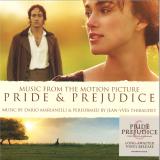
After several years, revered dub techno craftsman Andrey Pushkarev finally return with a solo release - Simbioza. Taking its name from the Romanian word for symbiosis, this release is a testament to creative exchange, built entirely from collaborations with dear friends & artists that have crossed Pushkarev’s path numerous times during his 20 years long musical journey. While staying true to Andrey’s signature deep & dubby aesthetic, the release also includes the artist’s first drum and bass output, featuring Los Angeles based Svetti’s haunting & mesmerizing vocals. The EP will be released on the well regarded BERG AUDIO during the month of September 2025 - limited vinyl copies.
- A1: Talco - Noche Especial
- A2: Dj Lelewel - Piano Dub (Milord Remix)
- A3: El Latino Man - Boss En San Andrés
- A4: Ray Ridha - Non Va Bene (Luca Sorrentini Remix)
- B1: Vanitas By Contessa Pinina Garavaglia - Audace Ci Piace (New Sound Mix)
- B2: Tonny Montana - Amore Me Conbenso
- B3: All Trouvee - Darling (Instrumental)
- B4: Gabriella Bove - Autoblu
An incredible journey through the dark and seductive soundtracks of the Italian nights, this compilation takes you deep into the after-hours soul of Rimini, Riccione, and Milan between the late 1980s and the early 1990s — a period of wild experimentation, underground parties, and sonic exploration. Eight rare and visionary tracks, all produced in the Belpaese, reflect a sound that was too ahead of its time to be fully appreciated back then, yet feels incredibly fresh and relevant today, as if they were made for the dancefloors of now.
In the middle of this evocative collection, a blasting remix by Milord stands out — a peak-time weapon that has already destroyed dozens of dancefloors with its hypnotic energy and raw power. Also featured is the stunning debut of Luca Sorrentini, who breathes new life into an obscure Italo-Arabic track originally composed by Ray Ridha
Credits.
NECHTO returns with its second 12” vinyl compilation, continuing the mission of presenting forward-thinking techno from both rising talents and trusted names. Each of the six tracks adds a unique voice to the raw and honest collection.
Mecha opens the record with “All My Love”, a hypnotic debut techno track shaped by years in drum and bass. Contakt follows with “Peak Jam”, a one-take hardware jam built around the warmth of a signature synth. “16th Symphony” by Human Safari is a jazz-influenced cut intended for special moments in a DJ set. Unspent delivers “Moog Gorning”, a track that shifts from percussive 4x4 to broken rhythm, carrying deep personal emotion. ARGIE’s “Strangers” captures the tension of connection and distance with layered percussion and melody. Franz Jäger closes with “Get Simon to sync”, a rave-influenced hybrid track designed for peak-time impact.
With contributions from the UK, Poland, Malta, France, the Netherlands, and Sweden, this compilation once again highlights NECHTO’s dedication to showcasing both emerging and established artists while pushing the boundaries of modern techno.
- A1: Uncle Joe\'S Afri-Beat - Eshe Wo Kon Ho
- A2: Thomas Frempong - Mada Meho So
- A3: Native Spirit - Odo San Bra Fie
- B1: George Darko - Medo Menuanom (12" Version)
- B2: Wilson Boateng - Mabre Agu
- B3: Paa Jude - Odo Refre Wo
- C1: Aban - Efie Nny
- C2: Wilson Boateng - Asew Watchman
- C3: Uncle Joe\'S Afri-Beat - Mr Dj
- D1: George Darko - Obi Abayewa
- D2: Dr K Gyasi\'S Noble Kings - Damfo Agoo/David Akofo/ Obegyaa Nowa/Okwantuni Moboro (Medley)
- A1: Mediterranean Sundance / Rio Ancho
- A2: Short Tales Of The Black Forest
- B1: Frevo Rasgado
- B2: Fantasia Suite
- B3: Guardian Angel
Friday Night in San Francisco is a live album by Al Di Meola, John McLaughlin, and Paco de Lucía.
It was recorded live at the Warfield Theatre in San Francisco,
on December 5 in 1980. The album is considered an iconic recording and was described by jazz author Walter Kolosky as
"a musical event that could be compared to the Benny Goodman Band's performance at Carnegie Hall in 1938...
it may be considered the most influential of all live acoustic guitar albums."
Al Di Meola is an acclaimed Italian American jazz fusion and Latin jazz guitarist, composer, and record producer.
He experienced a celebrated career that has spanned four decades and earned him critical accolades,
three gold albums and more than six million record sales worldwide.
Di Meola has amassed over 20 albums as a leader while collaborating on a dozen or so others.
John McLaughlin, also known as Mahavishnu, is an English guitarist, bandleader, and composer.
He is a pioneer of jazz fusion, combining elements of jazz with rock, world music,
Indian classical music, Western classical music, flamenco, and blues. He received multiple "Guitarist of the Year"
and "Best Jazz Guitarist" Awards from magazines such as Downbeat and Guitar Player and was ranked 49th in Rolling Stone
magazine's list of "100 Greatest Guitarists of All Time". Jeff Beck called him "the best guitarist alive".
Paco de Lucía was a Spanish virtuoso flamenco guitarist, composer, and record producer.
He was one of the first flamenco guitarists to branch into classical and jazz. De Lucía was noted for his fast and fluent fingerstyle runs
and gained popularity outside Spain after collaborating with McLaughlin and Di Meola. Richard Chapman and
Eric Clapton described de Lucía as a "titanic figure in the world of flamenco guitar."
Friday Night in San Francisco is available as a limited edition of 1000 individually numbered copies on purple coloured vinyl and includes an insert.
Tony Lavrutz & Scruscru join forces for this latest fiery 45 rpm on Scruniversal. First up, they also call on Mr. And-7 to get involved on 'La Malanga 25', a sunny funk jam with raw horns that bring a Mexican twist to the percussive drums and lively pianos. Marelua steps up for the flip side, 'Paragunde 45', which slows things down and burns warm and bright with Portuguese vocals and plenty of gorgeous acoustic guitar trills. Both of these are primed and ready to inject Latin flavour into any set the moment the sun comes out, so are likely to fly off the shelves.
Fragments Of Reality is an ongoing series from 20/20 Visions that explores interplanetary sounds, and this seventh outing is another doozy. American artist Miles Mercer kicks off with the crunchy drums and big hits of his acid-laced electro-tech fusion, 'Voice Control.' Shaked flip the script with a funky minimal jam that's wired up with innocent sounding melodies and lush colours that feel psychoactive. Label curator Luther Vine then flips things once again with his punchy 'Take The Wheel' with its bold bassline and tight tech bounce, while London's Pach serves up 'Critical Emergency' which hits a sweet spot between trip-out cosmic synth work and kinetic drum programming. Four tasteful tools once more from this fine old label.
- 1: Spunk - La Bimin
- 2: Kalima - (Where Is The) Sunshine Pt. 1
- 3: Calvin Keys - You Are All I Need
- 4: Lenny White - Sweet Dreamer
- 5: Steve Parks - Still Thinking Of You (Instrumental)
- 1: Steve Harvey - Island In The Sky
- 2: Father’s Children - Linda Movement
- 3: The Chronicle Church - Mystery
- 4: 2 Carat Black, Larhonda Legette - Speak Low
- 5: General Lee & Lost Weekend - Little Black Child
Black[26,01 €]
Spiritual Soul ist das nächste Ziel auf der Reise der Eccentric Soul Serie und bietet einen seltenen Groove mit einem transzendenten, introspektiven Flair. Gespickt mit üppigen Bläserarrangements und verankert durch warme, reflektierende Rhythmen, kanalisiert diese Compilation den meditativen Puls einer spirituellen Seele. Ein solider Begleiter für die stille Kontemplation - ob Sie nun in eine Sonntagslektüre vertieft sind oder durch die stillen Predigten der Natur wandern.
- 1: Spunk - La Bimin
- 2: Kalima - (Where Is The) Sunshine Pt. 1
- 3: Calvin Keys - You Are All I Need
- 4: Lenny White - Sweet Dreamer
- 5: Steve Parks - Still Thinking Of You (Instrumental)
- 1: Steve Harvey - Island In The Sky
- 2: Father’s Children - Linda Movement
- 3: The Chronicle Church - Mystery
- 4: 2 Carat Black, Larhonda Legette - Speak Low
- 5: General Lee & Lost Weekend - Little Black Child
Bimini Blue[27,31 €]
The next destination on the Eccentric Soul journey, Eccentric Spiritual Soul is a rare groove with a transcendent, introspective f lair. Laced with lush wind arrangements and anchored by warm, reflective rhythms, this compilation channels the meditative pulse of a spiritual soul. A Solid companion for quiet contemplation—whether you’re deep in a Sunday read or wandering through nature’s quiet sermons. Flute Not Included.
- Just Be Simple
- Blue Factory Flame
- The Dark Don't Hide It
- Leave The City
- When Your Love Has Gone
- The Old Black Hen
- Everything Should Try Again
- Lioness
- Whip-Poor-Will
- Hard To Love A Man
- Shadow Answers The Wall
Comet Dust Red Vinyl. Jason Molina war ein Künstler, der nicht gerne zurückblickte. Während seines gesamten Lebens und seiner Karriere als Singer-Songwriter trieb ihn ein rastloser und sich ständig weiterentwickelnder kreativer Impuls voran, der seinen Fokus auf das Wesentliche richtete. Seine unermüdliche Kreativität und Arbeitsmoral trugen Früchte. In seinem kurzen Leben erreichte Molina das, wonach die meisten Musiker streben: einen Sound, der sofort wiedererkennbar ist, sich aber selten wiederholt. Von den Ufern des Eriesees in seiner Heimatstadt Lorain, Ohio, bis hin zu internationalen Bühnen mit seinen Bands Songs: Ohia und Magnolia Electric Co. spielte Molina sein umfangreiches Repertoire an geheimnisvollen, romantischen, stürmischen und monumentalen Songs, die gleichzeitig innovativ und in der amerikanischen Tradition verwurzelt waren. Er tüftelte ständig an seinem Sound, seinem Image, seiner Band und seinem Zuhause, um seine Muse zu befriedigen. Ein Tenor-Gitarre spielender Außenseiter. Ein liebeskranker Lo-Fi-Indie-Rocker. Ein trauriger Slowcore-Barde. Ein Pionier des Roots-Rock des 21. Jahrhunderts. Ein kanonischer Songwriter des Mittleren Westens. Jason Molina hat seine kreative Flagge in all diesen Bereichen gehisst - um seinen Anspruch zu markieren, um zu zeigen, wie weit er gekommen war, und um eine Spur wertvoller Talismane zu hinterlassen. Mit ,I Will Swim to You: A Tribute to Jason Molina" - benannt nach einer Zeile aus Molinas Song ,Lioness" - würdigen Run For Cover Records und eine Gruppe befreundeter Künstler den bleibenden Einfluss des Songwriters. Die Compilation mit Molina-Covers wurde von einigen der visionärsten Singer-Songwritern der Gegenwart eingespielt, darunter MJ Lenderman, Hand Habits, Horse Jumper of Love, Sun June und viele mehr, und enthält einzigartige Interpretationen von Molina-Fan-Favoriten und weniger bekannten Stücken aus seinen Soloalben und weniger bekannten EPs. Das Ergebnis ist eine unverwechselbare Liebeserklärung, eine oft atemberaubende Gesamtdarbietung generationenübergreifender Talente, die einem der begabtesten, aber unterschätzten amerikanischen Songwriter Tribut zollen.
- Ricochet - Ningyo Touge
- Ricochet - Blue Melody
- C. Memi - Ishin-Denshin
- C. Memi - Hitojichi
- C. Memi + Neo Matisse - Dream's Dream
- Harumi Shimada - Yako Shonen
- Harumi Shimada - Midnight Boy
- D.r.y. Project - Digital Wave
- D.r.y. Project - Requiem For
- Neo Museum - Area
- Neo Museum - Ethno-Music
- Dendö Marionette - Alchemist
- Dendö Marionette - Dendö Marionette
- Anima - Grey City
- Anima - Not Only One
- Mikan Mukku - Kan
- Mikan Mukku - Chin Dan
- Shinobu - Earth
- Shinobu - Ceramic Love
- Ricochet - Dream World
- Neo Museum - Sen-Ya Ichiya (Live)
- D.r.y Project - Sat Ist Fayler
- Anima - Melt Into The City
- Dendö Marionette - Sentinel
2[35,25 €]
Japan’s electronic music scene has always stood out as uniquely distinctive. In the late 1970s and early 1980s, a wave of underground projects, bands, and independent labels—primarily based in Tokyo and Osaka—began crafting their own sound. Inspired by the post-punk, new wave, and experimental movements emerging from Europe and North America, these artists embraced a DIY ethic, using whatever technology they had access to in order to forge something entirely their own.
This movement, often referred to as the "Nippon-wave" scene, remained largely hidden from the outside world. Many of its releases—on cassette tapes, flexi-discs, and privately pressed vinyl—were never distributed beyond Japan’s borders, making them rare treasures for the few who managed to discover them. “Nihon No Wave” presents a selection of these long-overlooked recordings, making them accessible to listeners beyond Japan for the first time.
- Hinomaru Factory - Chinese Boy
- Hinomaru Factory - Mercy Of Doom
- Hinomaru Factory - Modern Romance
- Dea - Draw The Curve
- Dea - Pretty Smile
- Vinyl Kaitai Koujou - Arigato Sensei
- Vinyl Kaitai Koujou - Katadore
- Vinyl Kaitai Koujou - Puraneri No Kopī
- Excentrique Noiz - Still In My Heart
- Excentrique Noiz - Dark Crystal Day
- Inpull Caco - Rakuda
- Inpull Caco - Cable Dance
- Tomoko Higuchi - Feel Me Up
- Tomoko Higuchi - Futari Demo Ima
- Gekko Imonkyaku - Sakyū Nite
- Gekko Imonkyaku - Aozora
- Juma - Object Glass
- Juma - Velvet Noise
- Juma - Clockwork Circus
- The Flag - Through The Heavenly Eyes
1[39,45 €]
After the success of the first volume, “Nihon No Wave 2” continues to unearth the hidden history of Japan’s underground electronic scene from the ’80s. This second installment digs even deeper into the archives, showcasing more rare tracks from obscure artists who operated on the fringes of Japan’s independent music world.
Like its predecessor, “Nihon No Wave 2” captures the raw energy and experimental spirit of the "Nippon-wave" era—where lo-fi synths, minimal rhythms, and post-punk aesthetics converged into a uniquely Japanese take on global sounds. Many of these recordings, originally released on cassette compilations or small-run vinyl with no international reach, have remained virtually unknown outside Japan.
"Arvo Pärt zum 90. Geburtstag
Am 11. September feiert Arvo Pärt seinen 90. Geburtstag, ein Komponist, dessen Musik zu einer universellen Sprache des Friedens geworden ist. Um dieses Jubiläum zu feiern, versammelt die Vinyl PAX einige seiner friedvollsten Werke - Kompositionen, die zu Stille, Besinnung und spiritueller Klarheit einladen. Verwurzelt in Einfachheit und Stille, bietet Pärts Musik einen kraftvollen Weg zu innerem Frieden, während sie gleichzeitig einen tieferen Ruf nach globaler Harmonie erklingen lässt. In einer Zeit des Lärms und der Unruhe ist PAX zeitgemäß und zeitlos zugleich - ein unverzichtbares Hörerlebnis."
Anlässlich des hundertjährigen Jubiläums von Sergei Eisensteins legendärem Stummfilm Battleship Potemkin wird der gefeierte Soundtrack von Tennant und Lowe (Pet Shop Boys) bei Parlophone Records veröffentlicht – als remasterte Einzel-CD und erstmals als Doppel-LP auf Vinyl.
"David Oistrachs legendäres Album erstmals in Stereo auf Vinyl:
Dieses ikonische Album, ein Meilenstein in der Diskografie David Oistrachs, präsentiert zwei Eckpfeiler des Violinrepertoires: Tartinis Teufels-Triller-Sonate und Mozarts Violinsonate in B-Dur, KV 454. Seit langem für seine interpretatorische Tiefe und technische Brillanz gefeiert, hat sich diese Aufnahme zu einem begehrten Sammlerstück entwickelt. Zum ersten Mal ist dieses Album nun in Stereo auf Vinyl erhältlich. Es wurde 2024 sorgfältig von den Originalbändern für die Oistrach-Warner Classics- Edition neu gemastert. Als besonderes Highlight enthält diese Veröffentlichung zudem Debussys Clair de lune aus Oistrachs Album Encores, das die Vielseitigkeit des Künstlers unterstreicht."