
Suche:various


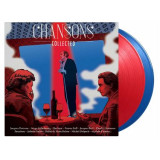

- A1: The Edwin Hawkins Singers - "Oh Happy Day
- A2: Elvis Presley - "Take My Hands Precious Lord
- A3: The Staple Singers - Silent Night
- A4: The Harmonizing Four - "Motherless Child
- A5: The Argo Singers - "Stand Up For Jesus
- A6: The Golden Gate Quartet - "White Christmas
- A7: Evelyn Freeman & The Exciting Voices Chorus - "Didn't It Rain
- B1: Aretha Franklin - "God Bless The Child
- B2: Louis Armstrong - "When The Saints Go Marching In
- B3: Nat King Cole - "O Little Town Of Bethlehem
- B4: Louis Prima & Keely Smith - "Shadrack" (Feat Sam Butera & The Witnesses)
- B5: Johnny Mathis With Percy Faith & His Orchestra - "What Child Is This?
- B6: Little Richard - "Just A Closer Walk With Thee
- B7: Johnny Cash - "My God Is Real
- B8: Mahalia Jackson - "Joshua Fit The Battle Of Jericho
15
re-release Typische Weihnachtslieder wie "Stille Nacht" haben die Meisten wahrscheinlich schon so oft gehört, dass sie zu beiden Ohren raushängen. Deswegen muss man in der Adventszeit trotzdem nicht auf die bewährten Weihnachtsklassiker verzichten. Denn mit "Noël Gospel" bringt das französische Label Wagram eine Kompilation heraus, die 15 ergreifende Gospelversionen bekannter, und auch einiger weniger bekannter Weihnachtstitel versammelt, zum Beispiel "Oh Happy Day", "Silent Night" oder "White Christmas". So ist für besinnliche Stimmung und ein aufregend neues Hörerlebnis gesorgt. Mit auf der LP vertreten sind die Superstars des Gospels wie Aretha Franklin, Mahalia Jackson, The Edwin Hawkins Singers, Elvis Presley, The Staple Singers, Johnny Cash und The Golden Gate Quartet. Hinzu kommen mit Louis Armstrong, Nat "King" Cole und Little Richard stimmgewaltige Sänger, die man auch unterm Tannenbaum immer wieder gerne hören mag.

6
For their sixth instalment, Lowlife Cartel follow up to their last two compilations (“Pimps Improvisations” in 2018 and “Omnia Vanitas” in 2020) with a new six-track VA named “Kodoku”; a vortical release, both bold and forward-looking, while fully geared for the club environment. Taking its title from a poisonous magic from the medieval Japanese era obtained by placing several venomous insects in a jar and letting them kill one another until only one survives, “Kodoku” - which interestingly also translates as “solitude” - features a cast of producers old and new to the fold including Saverio Celestri, the faceless △, Prince de Takicardie, Tundramane & Ko$te, Solar Alliance and Shampoo.
A staple element of the Lowlife Cartel bunch, Saverio Celestri paves the way and dishes out one of his signature jagged, EBM-informed weapons in “Sundays”. Through this hotchpotch of acid-steeped bass entangled with a frantic newbeat-ish swing and razor-sharp synthwaves, the Italian producer shows off the raw and playful facets of his craft to optimal effect. Unknown contributor △ clocks in with “Crachats de Lune”, a proper ominous banger going straight for the jugular with its clever mix of dusty, drum-laden churn, processed vox stabs and sci-fi-indebted laser bursts flashing by unrelentingly. Tailored for hi-octane action at the defunct Boccaccio or Hacienda, Prince de Takicardie “Jam’on’Acid (House Mix)” blows the winds of euphoria across the club like it was done in 1995. Vibing to a pulsating mix of rabid snares, 303-vehicled charges and mangled vocal samples on a classic free rave tip, throwback material that packs a punch.
Flip it over and here is North-American duo Tundramane & Ko$te shifting the scope to Memphis chopped-and-screwed in true hardcore fashion. Straight-out aggression, “Brick To The Face” lives up to its title, so expect leaving the place with a few teeth out your mouth and a good concussion, though more side effects could appear over repeated listens. A radical U-turn from the previous, Ute.- related triplet Solar Alliance - alias Ekkel, Oprofessionell and Mikkel Rev - bring their dashing trance touch to the comp with “Quest for Kiba”, an uptemp maelstrom for the senses, swirling and whirling up until space and time make no damn sense any more. Topping off that versatile tour de force, Japanese producer Shampoo adds his delectably sensuous spin on the record with the lush, sample-heavy lo-fi appeal of “四季ノ歌”. Unpolished feelgood vibes, sun- streaked soulfulness and deft-handed MPC wizardry are on the menu for this ultimate ride and jolly finale.


4


Los Angeles Free Music Society (LAFMS) formed in the mid-1970s as a loose-knit experimental music collective and multimedia publishing vehicle. Founded by teenage Le Forte Four members Chip Chapman, Joe Potts and Rick Potts and soon joined by Tom Recchion of Doo-Dooettes, LAFMS incorporated free improvisation, modular synthesizers, tape music, sampling, musique concrète, homemade instruments, noise, mail art and avant-rock in permissive and anarchic sessions at the Raymond Building and Poo-Bah Record Shop in old Pasadena. Inspired by The Residents, LAFMS self-released records and periodicals, organized performances and connected with fellow outsiders via post in the years before punk. Their uninhibited, egalitarian ideal of music-making and DIY distribution would influence generations of underground musicians.
In 1977, LAFMS released Blorp Esette, one of several compilations tracking the collective's growth and wild-eyed experimentation. Ace Farren Ford, an early LAFMS recruit from the Poo-Bah circle, produced the album and solicited cover artwork by Don Van Vliet (Captain Beefheart). Ford appears in various configurations alongside members of Smegma, Le Forte Four and "unknown artist" (as the credit for more than one piece reads). The Residents, showing their affinity with LAFMS, contributed "Whoopy Snorp" for their first non-Ralph Records release. Blorp Esette shows the artists grasping for new, non-idiomatic voicings and collaborative modes, anticipating LAFMS affiliates and offshoots such as Airway, Human Hands and Monitor. A second volume would come out in 1980, featuring Ford's punk band The Child Molesters. If you're looking for the missing link between mid-'70s art practice and outsider music, then look no further.
This first-time vinyl reissue is limited to 500 numbered copies. Comes with inserts.

5
Part 5 of the various artists series is at it again with 5 tracks by 5 different producers and a mixture of feel good party time music and contemplative music. You will hear familiar Running Back names like Storken (this time together with JStaaf) refining their comic tropes (or imagine Foreigner doing house music) next to newcomers like Archie Ward. His Pizza Girl puts musical toppings on a pounding underbelly that wouldn't be out of place in any warehouse, while Moritz and Amount dial it back a bit. Their respective tracks are gleaming with a special kind of elegant end-of-night euphoria that is hard to come by - and all the nicer if it happens. Remember: trance is a state of mind! Last but not least, Australia's Jonus Eric delivers an IDM-leaning piece of outsider dance. Hot soup, hot swallow!

4
Freude am Tanzen is back for a very special occasion. In 2022, three Various Artists EPs will be released, celebrating the 24th anniversary of the label from Thuringia. Whilst occasions like this would
normally be celebrated on the quarter century, this release makes sense not only on the mathematical level. 3 compilations with 4 tracks provide the half of 24.
The release however also makes sense in terms of history. Freude am Tanzen is showcasing a broad range of electronic music, never neglecting their history but also looking into the future.
The second Edition of the Compilation features tracks from Caldera, Freund der Familie, Gathaspar and Front Left. The A-Side focusses on Dub-House. Calderas Track ‚30 Friends‘ gets a smooth yet groovy vibe across. Freund der Familie contributes a hypnotic production, which would suit well incorporated in a warm up or on the home speakers.
The flip side goes deeper into the minimalistic region of electronic music. Gathaspar has produced a trippy journey, featuring the vocals of Anna Partini. One for the morning hours on the dance floor.
Front Left praises the groove with his track ‚AM3N‘. Very playful and delicate and a lovely selection of percussion. Do not miss!5.

- A1: Stephen Ham & Alain Leroux - Up Country
- A2: Fabio Frizzi - Cocktail Molotov
- A3: Enrico Pierannunzi & Silvano Chimenti - I Love Blondes
- A4: Carlo Maria Cordio - M21
- A5: Carlo Maria Cordio - M29
- A6: Carlo Maria Cordio - M20
- A7: Carlo Maria Cordio - M15
- B1: Carlo Maria Cordio - M13
- B2: Carlo Maria Cordio - M31
- B3: Stelvio Cipriani - A Strange Symbol
- B4: Stelvio Cipriani - Carlotta And The Professor
- B5: Stelvio Cipriani - Deathwatch
- B6: Stelvio Cipriani - Deathwatch (Unused Alternate Version 1)
- B7: Stelvio Cipriani - Deathwatch (Unused Alternate Version 2)
14
2022 repress
This limited edition vinyl includes numerous songs by Italian composer Stelvio Cipriani, the man behind the superb soundtrack of Poliziottesco movie La Polizia Sta A Guardare (1973) whose main theme was reborn in 2007 on Quentin Tarantino’s Death Proof, multiple scores for Spaghetti Western movies starring Tony Anthony, as well as a Nastro d’Argento award for best score for The Anonymous Venetian (1970).
Also found on Pieces are compositions by Carla Maria Cordo who scored Joe D’Amato’s gorefest Absurd (1981) that some might know as Anthropophagus 2, Monster Hunter, Horrible or The Grim Reaper 2 - a movie so shockingly violent it became one of the Video Nasties of the UK and was successfully prosecuted under the Obscene Publications Acts in 1984.
Lucio Fulci’s frequent collaborator Fabio Frizzi (responsible for the music of classic horror movies Zombie aka Zombi 2, L’Aldilà aka The Beyond, City of the Living Dead aka The Gates of Hell and the list goes on) also makes a special appearance with the sexy « Cocktail Molotov ».

Los Angeles Free Music Society (LAFMS) formed in the mid-1970s as a loose-knit experimental music collective and multimedia publishing vehicle. Founded by teenage Le Forte Four members Chip Chapman, Joe Potts and Rick Potts and soon joined by Tom Recchion of Doo-Dooettes, LAFMS incorporated free improvisation, modular synthesizers, tape music, sampling, musique concrète, homemade instruments, noise, mail art and avant-rock in permissive and anarchic sessions at the Raymond Building and Poo-Bah Record Shop in old Pasadena. Inspired by The Residents, LAFMS self-released records and periodicals, organized performances and connected with fellow outsiders via post in the years before punk. Their uninhibited, egalitarian ideal of music-making and DIY distribution would influence generations of underground musicians.
LAFMS primarily reached outside Los Angeles via word-of-mouth and the United States Postal Service, foreshadowing the self-publishing and cassette trading networks of post-punk and industrial subcultures. In 1976, Joe Potts solicited recordings from LAFMS affiliates and admirers to edit and compile I.D. Art #2, utilizing correspondence art's technique of "assemblings." (The first installment in this series was a magazine, and the third was a coloring book.) Potts received dozens of pieces by members of Le Forte Four, Doo-Dooettes, Smegma and Ace & Duce as well as painters, filmmakers and non-artists with few recording credits to their name, creating a delirious, winking sound-art collage of field recordings, voicemails and improvisations. Participants purchased time on the record and received one copy each of the finished LP, realizing the philosophy contained in LAFMS' motto: "The music is free, but you have to pay for the plastic, paper, ink, glue and stamps."
This first-time vinyl reissue is limited to 500 numbered copies. Comes with insert.

Sound: An Exhibition of Sound Sculpture, Instrument Building and Acoustically Tuned Spaces opened at the Los Angeles Institute of Contemporary Art in the summer of 1979 (and was also on view later that year at PS1 in New York). Curated by Bob Wilhiteand Robert Smith, the exhibition surveyed the field of sound art. The forty-four participants were painters pivoted toward performance, conceptual artists attracted to time-based mediums, self-styled creators of environments, and musicians (formally trained and otherwise) fashioning new instruments from household items and consumer electronics. They were more or less object-oriented and, at the same time, more or less music-oriented. What brought them all together, as the exhibition catalog gamely asserted, was sculpting in three-dimensional space.
The Sound exhibit included installations, recordings played in the exhibition space and a series of live performances, demonstrating instruments that otherwise rested inert in the gallery. For a broader sense of the show than a single visit provided, the curators also produced a compilation album featuring short pieces, or excerpts from longer works, by many of the participants. (Artists in the exhibition, but not on the LP include Alvin Lucier and Mike Kelley.) Selections from bright lights of the 20th century avant-garde – such as composers Bill Fontana, Yoshi Wada and Paul DeMarinis; conceptual artists and performance artists Terry Fox, Tom Marioni and Jim Pomeroy; experimental vocalist Joan La Barbara; and Los Angeles Free Music Society members Tom Recchion and John Duncan – feature alongside the sounds of Jim Hobart's tuned jars, Ivor Darreg's fretless banjo, Doug Hollis' aeolian harp and Richard Dunlap's rubber bands.
This first-time reissue is limited to 500 numbered copies. Comes with poster.
