Repress.
Minimoonstar' on the first record, gets a special underwater treatment by ex-Londoner Shackleton (Skull Disco). On the A-side, we find a special 12"edit of the original, to make it fit on wax. The full-lenght version will be supplied with the CD (PERL69CD), expected sometime later this year. This time the remix gets delivered by Amsterdam based San Proper, who is known for his superb releases on Rush Hour.
Cerca:vasco
Fata Morgana's concept draws from Ispirian ́s live sets in the USA. Then, back in Europe, Vasco refined his performance and the live takes were finally mixed and mastered in Madrid. The project sees the light in 2023, after the global impasse the world went through, as a two EP installment: Fata Morgana I & II.
Fata Morgana ́s second installment is a 4 track EP that kicks off with a bass- driven cinematic promise (Ohdee) which unfolds in titillating layers, crafting a superb lushness and building up momentum (Flashing on Flushing) and then, fiery reaching climax in a vague, abstract electronic background (Escape into the Sunset) only to usher the shape-shifter (My Pleasure), an edgy alt-ambient closer with a grounding dialogue on pleasure and pain which is Ispirian ́s reflective statement.
Like a complex optical illusion perceived as a banner over the sea horizon, where sight is significantly distorted and changes rapidly, unlike any other ordinary mirage, a true Fata Morgana comprises several inverted and steepled illusions, stacked on one another, showing alternating compressed and stretched sonic lands.
The term named after the Mistress of the Fairies of the Salt Sea, King Arthur's half-sister Morgan le Fay, encapsulates the hallucinatory prowess of the seduction myth, a symbol of incantation and sensorial catharsis among the pleasure and the pain meanders.
Musically the 5 track EP presents an uncharted lysergic soundscape unfolding with hallucinatory electro-glitter and gritty fat notes (Wickbush), evolving like the poisoning stages of a vividly cosmic intake- dub acid darkness (Acid Tears) conveying a magnetic grip, a true obsession which turns to be a spell (Una y Otra Vez), steadily building up a hypnotic subtle theme that takes you as high as an astral trip (Mirage) and slowly descends from the alternate consciousness state on the latter, March 3rd as a premise of the deepen future journey blazing ahead.
Little Hill goes dark!
A mysterious artist on the hill for this release named Vasco serving us, on Roman label, an ep with deep and glacial techno sounds; the two original tracks take us to the universe of the artist, cold and dark.
On other side the first remix is produced by Agazzi and follow the musicline of the originals so pulling out a paranoid march, other remix on bside is made by Valent and it's a peaktime modern techno percussive device.
Mastered by Rashad Backer at Dubplates&Mastering
Photo made by Valerio Gorga
- A1: La Fine Equipe & Fakear - 5Th Season
- A2: Clement Bazin - Xo Ft. Jt Soul
- A3: Robert Robert - Okay Alright Okay
- A4: Fakear - Mana
- A5: Leska - Waterfall Ft. Madjo
- A6: Lénéré - Living Waters Ft. Clara Sergent
- B1: Jumo - Tout Ira Bien
- B2: Gangue - Geste Propre
- B3: Everydayz - Secret Fire
- B4: Kultur - Second Youth
- B5: Yann Kesz - Parabox 432H
- B6: Skence - The Speech
- C1: Fakear - Skyline
- C2: Clement Bazin - "Romeo
- C4: La Fine Equipe - Make U Greedy
- C5: Douchka - This Mood Ft. Hi Levelz
- C6: Everydayz & Phazz - Algeria
- C7: Robert Robert - Let Her Go Ft. Lia & Le Vasco
- D1: Unno - Walls
- D2: Jumo - Nomade
- D3: Awir Leon - Maybe We Land
- D4: Brnkfd - Sixteen Ft. Camille Michelle Gray
- D5: Hugo Lx - Doma Ft. Nia Andrews
- D6: Hoosky - Rush Hour
* Five years have passed since the first release of Nowadays Records.Launched with Fakear's signature (seen on Ninja Tune), the label founded by oOgo and Chomsky from La Fine Equipe has seen the growth of many projects such as Clément Bazin, Everydayz, Phazz (who produced for Travis Porter, did remixes for Soulection, Interscope and Mad Decent), Leska, Jumo and many others, all of them carried by the irreplaceable quartet of La Fine Equipe.
Five years during which Nowadays Records released 75 EPs and LPs, toured in and outside of France, and generated several hundred millions stream plays.With its heart in the right place, its eyes on the emerging scene and its ears open on the world, Nowadays built itself a singular and racy identity through the time. Fed by inspirations like Stone Throw, Ninja Tune or Warp, the label places itself as an ambassador of a fast growing scene, defending it through its shows, releases, and events like the two Boiler Room shows in Paris and London.Without sticking itself to a musical gender, Nowadays keeps on widening its horizons by working with foreign artists and mixing the inspirations through its releases, driven by its sound and visual trademarks and aesthetics.
In order to celebrate those five years spent defending as many projects as musical crushes they had, and to thank its community made of more than 150 000 followers around the world, Nowadays unveils the 'Nowadays V', double album with a digital and physical release on November 30th.Through this compilation, Nowadays gathers on one side the tracks that marked its history and, on the other side, unreleased tracks that sometimes lead to collaborations such as the one between Clément Bazin and Leska, or the one between Fakear and La Fine Equipe.
Spiritual, intimate and revolutionary, yet firmly rooted in Brazil's folklore. Africadeus was the breakthrough album of the mighty Naná Vasconcelos, in which he discovered the berimbau to the world and took the instrument to a universal level, abstracting it from its original context of capoeira. Having played in the shadows for other artists such as Milton Nascimento, Gato Barbieri or Som Imaginario, Naná is here finally in the spotlight.
Recorded in 1973 in France for Pierre Barouh's Saravah label, this is the album that definitely imprinted Naná's name in the international scene, on his track to becoming one of the best percussionists of all times.
Immensely proud to offer a quality reissue of both his early 70s albums for the French label Saravah.
Africadeus comes in its original gatefold cover, and is available in standard black vinyl and a limited edition of 200 copies on red transparent vinyl.
- Gong
- Gagaku
- Argile
- Ntsano
- Credo
- Desormais
In 1983 Nana Vasconcelos came into contact with a group of young musicians from Quebec City, who combined their association with the avant-garde with a visceral love for Africa and the Far East. The entire album encompasses the musicians' multifaceted music experience infused by a sense of spirituality and mystery - immersed in an ocean of rhythm with one shore in Brazil and the other in Africa. Ntsano is now available on CD for the first time, plus 180g vinyl with cutting and pressing by Pallas Group, Germany. The limited edition LP is presented in a gatefold sleeve with booklet & each copy is hand numbered. The audio has been transfered from original analogue tapes.
British electronic music pioneers Graham Massey (founding member of Manchester legends 808 State) and Brian Dougans (the mind behind acid house milestone Humanoid and one half of The Future Sound Of London) join forces for their debut collaboration In Place Of Language, released on Belgian label De:tuned.
Both 808 State and Humanoid helped shape the UK's early rave and acid house movement. Here, Massey and Dougans channel that legacy into a beautifully balanced four-track EP that radiates warmth and energy, drawing on more than three decades of experience in electronic music. Inspired by key elements of the '89-91 era while embracing a contemporary edge, the duo merge their distinct sonic identities into a sound that feels both timeless and forward-looking.
In Place Of Language is not a nostalgia trip, but a natural evolution: a meeting point between foundation and future, and a blueprint for a new wave of electronic experimentation!
Kevin Foakes (Openmind, DJ Food, Ninja Tune) created all the graphic work. Mastered by Matt Colton at Metropolis. A separate digital release will also be available at the usual digital shops. Stay tuned!
British electronic music pioneers Graham Massey (founding member of Manchester legends 808 State) and Brian Dougans (the mind behind acid house milestone Humanoid and one half of The Future Sound Of London) join forces for their debut collaboration In Place Of Language, released on Belgian label De:tuned.
Both 808 State and Humanoid helped shape the UK's early rave and acid house movement. Here, Massey and Dougans channel that legacy into a beautifully balanced four-track EP that radiates warmth and energy, drawing on more than three decades of experience in electronic music. Inspired by key elements of the '89-91 era while embracing a contemporary edge, the duo merge their distinct sonic identities into a sound that feels both timeless and forward-looking.
In Place Of Language is not a nostalgia trip, but a natural evolution: a meeting point between foundation and future, and a blueprint for a new wave of electronic experimentation!
Kevin Foakes (Openmind, DJ Food, Ninja Tune) created all the graphic work. Mastered by Matt Colton at Metropolis. A separate digital release will also be available at the usual digital shops. Stay tuned!
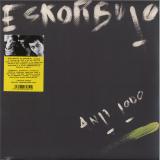
"Anti Todo" is Eskorbuto's most celebrated album, recorded in the shortest time imaginable and released in 1985. It shows what the Spanish punk band did best: hitting the studio with as much raw energy, provocation, inspiration, and natural talent as possible. A new remastering for this edition has given the album the richer, more vibrant sound it always deserved. We can once again enjoy the urgency, simplicity, and rage of this refreshed "Anti Todo", a true classic recorded at Eskorbuto's peak of their creativity and energy. It includes a large poster and insert with notes. DESCRIPTION 1985 was a landmark year for punk rock in the Basque country, and possibly for the whole of Spain. Punk merged with the Basque Radical Rock (Rock Radikal Vasco or RRV) movement, although this was not necessarily always the case. For instance, Eskorbuto invariably kept their distance from the movement and everything related to it. Hardship was part and parcel of Eskorbuto's life and musical career. All their albums were recorded in the shortest time imaginable, partly due to tight budgets (studios were expensive, labels were close-fisted), and partly because Josu and Jualma needed to spend the money on other things_ When it came to recording "Anti Todo", Eskorbuto stuck to what they did best: hitting the studio with as much raw energy, provocation, inspiration, and natural talent as possible. It was their best record and we have to ask: what would Eskorbuto have been capable of if they had more time, a bigger budget, and tighter control? The song 'Tamara' was practically composed on the spot in the studio in less than two recording days, as was much of 'Ha llegado el momento'. The experienced sound technician did an outstanding job, but a new remastering for this rerelease has given the album the richer, more vibrant sound it always deserved. We can once again enjoy the urgency, simplicity, and rage of this refreshed "Anti Todo", a true classic in our musical history, originally released in 1985 at Eskorbuto's peak of their creativity and energy. This edition of the album includes a large poster and insert with notes.
Tunnel was made in Naples in 1978 by Giorgio Verdelli and Danilo Rustici only on 7inch and it was the theme song for two RAI radio programs. Going through the names of the musicians we begin with the inimitable voice and the splendid guitars of Danilo Rustici, then passing through the saxophones of Enzo Avitabile we arrive at the keyboards of Joe Amoruso, musician-arranger who left a great void with his untimely death. For Joe, who crossed his experience with Premiata Forneria Marconi, Zucchero, Vasco Rossi, Mauro Pagani and was part of that 'dream team' of Pino Daniele - made up of technically extraordinary musicians, but above all gifted with an inimitable sound - this one-off project represented his recording debut. 'Tunnel Lights' and 'Speed Up' have been brought to light by Dario Di Pace and Claudio Casalini, two visionaries who believe that Neapolitan music is a sonic mixture of ancient and modern musical registers even if it sometimes develops a conflict between tradition and modernity as the recovery of popular tradition is strongly opposed to the push for innovation. This therefore is the reason for a 12" reissue in which the evocative original songs - from almost 50 years ago - are reflected in the new versions created by a bevy of talented DJ-arrangers including Massimo Berardi (with the bassist Luca Andreozzi) and by the industrious and passionate Francisco & Malkuth (ed: Francesco De Bellis and Cosimo 'Cosmo' Mandorino in disguise) in turn assisted by other zealous musicians and dee-jays - including the very good and always very collaborative Raffaele Arcella - who took part in a remix of this EP with enormous fervor The 12" reissue of Tunnel was released both on the classic black vinyl and in the very limited red vinyl version, in order to reflect the lips of the extravagant cover, a graphic work by another brilliant and multifaceted artist: Lino Vairetti, legendary singer of the historic prog rock band Osanna. The envelope developed by Best Record is embossed (front and back cover) to further enhance the passion that Neapolitan musicians have always had in knowing how to combine their roots with all the other musical genres of the world.
- A1: Teresa Winter - No Love Is Sorrow
- A2: Susu Laroche - Black Is The Colour Of My True Love S Hair
- A3: Alex Zhang Hungtai - Me And My Shadow
- A4: Aya - Lovesong
- A5: Maria Minerva - The Storms Are On The Ocean
- A6: Christina Vantzou - Hot Springs (Feat Ezra Fieremans)
- B1: Spivak - Just As You Are
- B2: Flora Yin Wong - The Roof
- B3: Salamanda - La Fille Aux Yeuh De Lin
- B4: Claire Rousay - Breakfast In Bed
- B5: Wild Terrier Orchestra - Cool Waves
- B6: Dania - No Need To Argue
Commissioned and curated by Flora Yin Wong for her label and publishing house Doyenne, ‘Venus Rising From The Sea’ is a collection of love-themed cover versions featuring Teresa Winter, Susu Laroche, Alex Zhang Hungtai, aya, Maria Minerva, Christina Vantzou, Spivak, Salamanda, clare rousay, Wild Terrier Orchestra, Dania and Flora Yin Wong herself covering songs by The Cure, Robert Wyatt, Mariah Carey, The Cranberries, Pentangle, The Carter Family, Spiritualized, Debussy and more.
‘Venus Rising From The Sea’ takes its cues from the classical deity Aphrodite - whose name literally means “sea foam” - for an ever necessary expression of love in the modern age. The label asked friends and collaborators to interpret “love” in whichever way they saw fit, be it obsession, self-love, unrequited, unconditional, whatever. But despite the open brief, and the vastly different modes of execution, all the artists involved somehow ended up linking hands with a shared determination to smudge the original songs into bleary-eyed, uncanny traces of the originals.
To open, Pentangle's jaunty 'No Love is Sorrow' is puffed into stormy clouds by Teresa Winter, who retains the original’s unmistakable bass twang and teases Jacqui McShee's siren song into a saturated buzz of layered, obfuscated words. Verses twist into verses, lines into echoed-out lines, capturing the song’s boundless yearning, rather than tracing its exact contours. Next, Susu Laroche yields one of the set’s highlights on a brilliantly nuanced, highly impactful version of Nina Simone’s take on folk standard ‘Black is the Colour of My True Love’s Hair’, turning the original’s multi-faceted Appalachian/Scottish routes into a heart-stopping, Nico-esque fuzz we haven’t stopped playing for weeks. Christina Vantzou (the CV ov CV & JAB) is joined by pianist Ezra Fieremans in the absorbingly filmic scenes of ‘Hot Springs’, while Maria Spivak's interpretation of Robert Wyatt's 'Just as You Are' finds her singing Brazilian vocalist Mônica Vasconcelos' words with reverence, smearing them into a hypnagogic fantasy.
Flora Yin Wong takes an inconspicuous approach on her love-letter to Mariah Carey's 'The Roof (Back in Time)', itself a melodramatic interpolation of Mobb Deep's Herbie Hancock-sampling 'Shook Ones, Part II'. The unmistakable piano line is frayed into a granulated gurgle, fleshed out by gauzy cries; Mariah's ecstatic diva logic haunts the edges like a furtive glance, hanging beautifully behind Wong's dense soundscapes. Alex Zhang Hungtai's take on the 1927 standard 'Me and My Shadow' is even more atomised, reduced to a disembodied vocal that oozes around a clattering woodblock.
Always a standout, aya's tribute to The Cure's 'Lovesong' infuses the 1989 classic with the same self-investigatory charm she exhibited on 'im hole', slowing it down to a giddy, infatuated lurch, and replacing the guitars with eerily-tuned oscillations and drums with hollowed-out, electrically charged thuds. "I will always love you," she moans through a wall of static, like some lost “Pop Artificielle” addendum. The album’s biggest surprise is saved for last, however, a cover of The Cranberries' 'No Need To Argue' from Paralaxe Editions boss Dania Shihab. Already a poignant memory of a faded romance, Dania's version is even more glacial, her tender voice gusting over inverted guitars and looping, wordless moans, guiding us ever so gracefully into the nether-world.
‘Venus Rising From The Sea’ is a gooey, emotionally raw set of recollections and affirmations from some of the scene's most open-hearted operatives. In the end, the love that's most evident is the love each of the artists has for their source material, somehow binding loose threads into a rich tapestry that will leave you gasping, perhaps a little tearful too.
(Produced, Arranged and Conducted by Claus Ogerman)
Not long after the dawn of her career, as a teenager in Rio de Janeiro, Joyce was declared “one of the greatest singers” by Antonio Carlos Jobim. Yet despite reputable accolades and the fact that she has since recorded over thirty acclaimed albums, Joyce never quite achieved the international recognition of the likes of Jobim, João Gilberto and Sergio Mendes, all of whom became global stars after releasing with major labels in the US.
There was a moment when it seemed she might be on the cusp of an international breakthrough. While living in New York, Joyce was approached by the great German producer Claus Ogerman. Ogerman had already played a pivotal role in the development and popularisation of Brazilian music in the 1960s, recording with some of the all-time greats like Jobim and João Gilberto, as well as North American idols like Frank Sinatra, Billie Holiday and Bill Evans.
"I met him in New York City, in 1977”, recalls Joyce. “I was living and playing there, and João Palma, Brazilian drummer who used to play with Jobim, introduced me to Claus. We had an audition, he liked what we were doing and decided to produce an album with us.”
Featuring fellow Brazilian musicians Mauricio Maestro (who wrote/co-wrote four of the songs), Nana Vasconcelos and Tutty Moreno, and some of the most in-demand stateside players including Michael Brecker, Joe Farrell and Buster Williams, the recordings for Natureza took place at Columbia Studios and Ogerman produced the album, provided the arrangements and conducted the orchestra.
But mysteriously, Natureza was never released, and what should have been Joyce’s big moment never happened. As Joyce remembers, “I returned home, but Claus and I remained in contact, by letters and phone calls. He was very enthusiastic about the album and tried to hook me up with Michael Franks. He wanted me to go back to NYC in order to re-record the vocals in English with new lyrics, which I actually wasn’t too happy about. But then I got pregnant with my third child and could not leave Brazil. And little by little our contact became rare, until I lost track of him completely. And that was it. I never heard from him again."
While Claus was known to be something of an elusive character, the album’s disappearance might also have been a result of timing. The Brazilian craze was coming to an end, making way for disco and new wave at the end of the seventies, and Ogerman struggled to find a major label interested in a new Brazilian sensation. Additionally, as Joyce mentions, it wasn’t quite finished. Ogerman wanted to add finishing touches to the mix and to record alternative English lyrics for the US and international markets - a critical artistic difference between Joyce and Ogerman.
As the military dictatorship’s grip on Brazil began to subside in the 1980s, Joyce had a handful of hits in her home county, including a tribute to her daughters ‘Clareana’, and the iconic ‘Feminina’ - an intergenerational conversation between mother and daughter about what it means to be a woman. But already a feminist pioneer, these successes were hard fought. Joyce had caused controversy as a nineteen-year-old when she became the first in Brazil to sing from the first-person feminine perspective, and the institutional sexism she faced was worsened by the dictatorship who would often censor her music. Even once the Junta was out of the way, Joyce found herself up against the male-dominated major record companies in Brazil, who sought to dictate her career and sexualise her image, before dropping her for refusing to play along.
A few years after the success of her albums Feminina and Agua E Luz in Brazil, Joyce’s music began to find its way to the UK, Europe and Japan, and “Feminina” and “Aldeia de Ogum” became classics on the underground jazz-dance scenes of the mid to late-eighties and early-nineties.
The full-length version of “Feminina” from the Natureza sessions was first heard on a Brazilian Jazz compilation in 1999 and “Descompassadamente” was licensed for a CD compiling the work of Claus Ogerman in 2002. Following these, word began to get out about an unreleased Joyce album with Claus Ogerman and the legend of Natureza grew.
Forty-five years since it was recorded, Natureza finally sees the light of day, as Joyce intended: with her own Portuguese lyrics and vocals. Featuring the fabled 11-minute version of ‘Feminina’, as well as the never before heard ‘Coração Sonhador’ composed and performed by Mauricio Maestro, Natureza’s release is a landmark in Brazilian music history and represents a triumphant, if overdue victory for Joyce as an outspoken female artist who has consistently refused to bow to patriarchal pressure.
***Disclaimer! While “Feminina” and “Descompassadamente'' were mixed by legendary engineer Al Schmitt and mastered from the original master tapes, the remaining five tracks are unmixed. Due to significant deterioration of the master-tapes, the best audio source for these tracks was an unmixed tape copy Joyce had kept of the recordings. The best care has been taken in the restoration and mastering of this release, but the sound quality may differ from other releases on Far Out Recordings. We advise listening to sound clips before buying where possible.
In Mikey’s own words, ““Myths of the MediterrAlien” is a high-octane voyage through a universe where ancient cultures collide with futuristic visions.” For him “the MediterrAlien is a hybrid character who drifts between mythology and outer space, carrying fragments of both history and hyperspace into the club.” Across four explosive tracks, the EP reimagines deconstructed club and experimental bass through a fast, hyper-energetic lens. Each piece feels like a different chapter in the MediterrAlien’s journey, spiralling through cosmic turbulence, touching down on ancient shores, and refracting tradition through the intensity of a distant galaxy.
Designed for the late-night fringes of the dance floor, Myths of the MediterrAlien is both a personal mythology and a sonic wormhole—bridging the universe where Jensen Interceptor’s comes from with where his imagination is heading next.
All tracks written and produced by Jensen Interceptor. Master by Carlos Nascimento at Qualia Audio Lab. Artwork by Conhecido João & Diogo Vasconcelos
- A1: Star Fruit
- A2: Banana Fruit
- B1: Under The Papaya Tree
- B2: Mango Fruit
- B3: Papaya Fruit
Rob Mazurek graces the Keroxen Records waves with a genre defying album of field recordings, modular electronics, trumpet harmonies and spirit call chants.
An unstoppable force since his first recordings in the early 90’s Rob Mazurek has been at the forefront of experimen-tation and adventurous improvised music for most of the last 4 decades. The American composer, cornetist, and visual artist has been developing his own style of improvisational music with a myriad of collaborators, too many to list but amongst them true giants of the 20th and 21st century music cannon like Bill Dixon, Pharoah Sanders, Jeff Parker, Roscoe Mitchell, Yusef Lateef and Naná Vasconcelos amongst many many others.
Nestor’s Nest is yet another addition to Mazurek’s mammoth catalogue of cosmic unity, coming like a spur of the moment whilst staying at Nestor and Pura’s house in Tenerife during the Keroxen Festival edition of 2023. Dead time doesn’t exist for the American cornetist and whilst hanging at the organisers house Mazurek decided to record and interact with his colourful tropical surroundings. Mangos, Papayas and Star Fruits all make an appearance here as does the quietness of an idyllic garden juxtaposed with Mazurek's stormy interferences, unleashing his modular synths and other acoustic paraphernalia into an ecstatic mix of pure celestial energy. As he beautifully states on the albums back cover:
Fruit from the trees of life, Stop All War. Stop the Killing, Open the senses, Breath. Listen . Feel!
Rob Mazurek: Modular Synths, Moog Sub 37, PolyEvolver, Trumpets, Voice, Bells, flutes
Made from field recordings in and around the Keroxen Tanque and the House of Nestor and Pura in Tenerife, Canary Islands.
Final mix at Marfa Experimental Studio, Marfa Texas
Mastered by Daniel Baez
Cover photo by RM
Sistro (Sistrum) is a kind of percussion instrument that has had several incarnations and names in various cultures since the time of the Sumerians and throughout history has always been associated with religious rituals. It’s from this relationship between music and the transcendent that Nuno Oliveira (Nuno O, Judas Triste, José Pinhal Post-Mortem Experience), Tito Silva (Vasco da Ganza, José Pinhal Post-Mortem Experience) and Rodolfo Oliveira (Oficinas TK) were gradually inspired to create a trio that pays homage to this instrument of ancient times.
The project was born casually and without intentionality throughout several incursions into megalithic monuments in the hills and mountains of northern Portugal, culminating in an unusual two-day session of musical experimentation in Esposende, in September 2019. In this two-day session, codenamed “Arménio Sessions”, the trio explored a sound based on sea soundscapes, electronic beats, electric noises and the strings of na altered guitar. Channeling the strength of the elements and the mystique of the place in the form of a musical experience.
In 2021, Sistro collaborated with Mario Klingemann (aka Quasimondo) who created a music video especially for the band, created using a vintage video mixing board. Then using feedback loops and a process that Klingemann calls “Neural Edit”, which uses an artificial intelligence algorithm to correlate the raw video material with the sound.
After a long period of incubation, the group's first full-length release sees the light of day on the 31th October, 2023, moment in which a sequence of rituals begins to present and celebrate the relationship between music and the transcendent. Sistro's debut album will be released by Favela Discos, having been mixed by Tito Silva and mastered by Pedro Augusto. The photography and graphics are by Oficinas TK.
Devilish is an album surrounded by a darkest atmosphere, its lyrics show urges experienced in our century, such as the constant degradation of the Amazon rainforest and the population increasingly affected by psychological illnesses such as anxiety and depression At the same time, it opens windows of escape for an imaginary world inspired by games, series and fiction books. In their second album with the new lineup, Mayara Puertas (Voice), Rene Simionato (Guitar), Castor (Bass) and Amilcar Christofaro (Drums) transcend the sound of extreme metal with maturity, incorporating progressive metal, influences from Brazilian music and symphonic elements.
The album also honors Brazilian heroes with a participation of Andreas Kisser (Sepultura) in the track "Buried Alive", and a tribute to Rickson Gracie the resilient fighter of Jiu Jitsu considered one of the greatest legends in this sport, the theme of the track "Warrior". The band also mobilized several musicians related to indigenous causes in their country to collaborate on the song "Uatuma", making an appeal for the preservation of the Amazon in a song that flows in an powerful way with the speeches of the indigenous leader Raoni Metuktire and tribal rhythms. For the cover art, the band had Marcelo Vasco, a Brazilian illustrator who has already created artworks for Slayer, Dimmu Borgir, Soulfly among others.
Singer-songwriter Dora Morelenbaum is one of the stunning voices at the forefront of Brazil’s exciting new musical wave. Her sublime 'Vento De Beirada' EP takes you on a trip into the sensuous sounds of Dora's world. On first hearing her music, we were reminded of the transformational moment when we first discovered the Brazilian singer-songwriter, Joyce. The music is completely new to you, yet instantly familiar, like rediscovering a past love.
Dora is a member of the Brazilian Latin-Grammy-winning superstar quartet Bala Desejo; a trailblazing light opening up Brazilian music to a whole new audience outside of the country. 'Vento De Beirada' EP showcases a different sound to the riotous, joyful, avant-garde Tropicália sound of Bala Desejo. This solo set takes a more dream-like, downbeat, MPB stance. It is firmly contemporary, yet you can also trace the lines of influence back to idols such as Gal Costa and Maria Bethânia.
The EP is comprised of four tracks that have already garnered critical acclaim following their digital release. It starts with the tender and gentle 'Japão', which was inspired by the melodies of the legendary Japanese composer, Ryuichi Sakamoto. Sakamoto once collaborated with Dora's musician parents, Paula and Jaques Morelenbaum, when she was young. 'Dó a Dó' is drenched in lush, sweeping strings that were arranged by her father himself, and is co-written by Dora and Tom Veloso of the band, Dônica. There’s further collaboration on the EP, including production from one of the lynchpins and stars of the current Rio scene, Ana Frango Elétrico. Fellow Bala Desejo band member, Lucas Nunes, contributes towards the production, writing, and guitar with Guilherme Lírio also on production, guitar, and bass. Whilst Bala Desejo’s Zé Ibarra penned the song 'Vento De Beirada' with Lucas and Victor Vasconcellos.
The four-track EP has been cut to 12" and mastered for vinyl by Joker (Liam McLean). With crystalline beauty and a breezy sense of ease and serenity, sounding classic yet contemporary. This release serves as the perfect introduction to an extraordinary talent.
Gatos Negros, aka Madrid DJs/ producers Christian C. & Iván Smoka, second album 'Hi Score' is a texture and abstraction gambling project now on sale via Vasco Ispirian's Made in Green Records label.
'Hi Score' sees the duo sailing ethereal ambient soundscapes, shady alt rock waves, experimental grooves almost horizontally danceable, acid electro-pop & avant-garde electronica- all in an utterly smart, consistent, and effective vocal fashion.
'In 1972, trumpeter Baikida Carroll and some of his colleagues from the Black Artists Group (more precisely saxophonist/flutist Oliver Lake, trombonist Joseph Bowie, drummer Charles "Bobo" Shaw and trumpeter Floyd LeFlore) took the advice of their friends in the Art Ensemble Of Chicago and left their native Missouri to come and discover the bright lights of Paris for themselves. The following year they would even get the chance to record their only album which would rapidly attain mythical status and a collector’s item: “In Paris, Aries 1973”.
Therefore, it was not surprising that they crossed paths with Jef Gilson in the capital. He was always on the lookout for new artists for his recently formed Palm label and had been active on many fronts in jazz since the end of the 50s. The French bandleader / pianist / composer / sound engineer had already recorded, in the preceding months other American musicians who would go on to have great careers: Byard Lancaster, Keno Speller, Clint Jackson III, Khan Jamal... Gilson therefore offered Baikida Carroll the chance to record his first album under his own name, which would be the 13th release on the label. Carroll logically asked Oliver Lake to join him. He also recruited Manuel Villaroel, a young Franco-Chilien pianist from the group Matchi-Oul, who had already released an album on Futura in 1971 and would release another on Palm in 1976. The group was completed with the addition of Brazilian percussionist Naná Vasconcelos, who had just released a well-received album on the Saravah label. They were ready to enter the studio for the 3rd, 4th and 5th June 1974.
The first side of the album is divided into two long tracks which send free jazz back to its long-lost African roots. The opener “Orange Fish Tears” indeed rolls out a jungle of percussion of all sorts and sizes -the whole group is involved- which weave and mix together reaching a point where all bearings are lost, lending a sense of wonder to the majestic entry of the brass and woodwinds, flying suddenly out from the undergrowth. “Forest Scorpion” (sic) is a real voodoo ceremony where a venomous percussive groove backs the fiery solos from keyboards and saxophone in a furious trance. A warning; after these two tracks listeners are physically and emotionally wiped out!
The other side is more introspective. Deliberately using dissonance and repetition, “Rue Roger” -the only composition by Oliver Lake- in a long dialogue between trumpet and saxophone, could almost remind us of Terry Riley in his favourite ballpark. “Porte D'Orléans”, the fourth and final track on the album, has the group back to their old tricks in a long hallucinatory jam which owes as much to the contemporary music of György Ligeti as to the most angst-ridden Jerry Goldsmith soundtrack music (remember the heavy chords which beat through “Planet of the Apes»).
With these two sides, and in under 45m, Baikida Carroll and his musicians show just what they can do, from cerebral to charnel without ever simplifying things. This is an essential album if you are a fan of free-wheeling avant-garde music from the Art Ensemble of Chicago to Sonic Youth and including Shabaka Hutchings and Rob Mazurek. For those with good taste, in other words.'
"Split 1.0" is definitely a split release! Side A delivers some fresh hypnotic techno sounds by Bastian Balders himself while side B catches up with some groovy house tracks by Anton Kubikov, who is active since the mid 90s and well known for his minimalistic dub techno-house style. Side A ends with a mysterious electronica outro while Anton produced some chilled guitar riffs combined with acoustic signals and delays to finish the whole EP. Don't miss this limited hand-stamped record!
Early bird support by:
Vincent Neumann, Cecilia Tosh, Truncate, Alexander Kowalski, Kaiser, illousion, ForestOn Stasys, Kontinum, Richie Hawtin, Cristian Varela, Virgo, Hellix, Vasco Valente, Frank Leicher, Ina Kacz, Carlotta Jacobi, Hypnotic Black Magic, Clubberia / Nori, Juho Kusti, DJ W!ld, Rich NXT, Marcel Dettmann, JosephCapriati, Wlderz, JakoJako & many more.
Cult album of Brazilian music finally reissued || Official reissue of this real tour de force of Brazilian creativity, where the mighty Naná Vasconcelos is joined by his friends Nelson Angelo and Novelli (both members of the legendary Clube da Esquina) to create one of the greatest Brazilian albums ever recorded outside of Brazil.
The three musicians grasp here for the kind of musical freedom that could then only be achieved outside of their country. A boundary-pushing experimentation that makes your soul flow and is to be enjoyed at large.
Recorded in 1975 and released in Pierre Barouh's label Saravah. Artwork by the great Belgian artist Jean-Michel Folon.
Cult album of Brazilian music finally reissued || Official reissue of this real tour de force of Brazilian creativity, where the mighty Naná Vasconcelos is joined by his friends Nelson Angelo and Novelli (both members of the legendary Clube da Esquina) to create one of the greatest Brazilian albums ever recorded outside of Brazil.
The three musicians grasp here for the kind of musical freedom that could then only be achieved outside of their country. A boundary-pushing experimentation that makes your soul flow and is to be enjoyed at large.
Recorded in 1975 and released in Pierre Barouh's label Saravah. Artwork by the great Belgian artist Jean-Michel Folon.
Das im März 1979 aufgenommene Album Saudades des brasilianischen Perkussionisten Naná Vasconcelos war die Erfüllung eines Traums für einen Musiker, der sich schon lange danach gesehnt hatte, die Berimbau in einem orchestralen Kontext zu hören. Dieses ”Konzert” für einen innovativen Spieler eines traditionellen Instruments wurde durch den kreativen Beitrag von Egberto Gismonti ermöglicht, der hier das Material für Streicher arrangiert hat und auch als Mitkomponist und begleitender Solist fungiert.
Das Radio-Sinfonieorchester Stuttgart wurde von Mladen Gutesha dirigiert (der mit ECM bereits an transidiomatischen Projekten mit Keith Jarrett, Jan Garbarek und Terje Rypdal gearbeitet hatte). Produziert von Manfred Eicher, bleibt Saudades eine außergewöhnliche Reise, ein Album, das seiner Zeit voraus war
und gewissermaßen darauf wartete, von der Welt eingeholt zu werden. Diese Wiederveröffentlichung auf Vinyl in einer Klapphülle enthält neue Liner Notes mit historischem Kontext und Hintergrundinformationen.
ECMs neue audiophile Vinyl-Serie ( Luminessence Series ):
Schätze aus dem renommierten Label-Katalog, die lange vergriffen oder noch nie auf Vinyl erhältlich waren, in eleganten, hochwertigen Editionen präsentiert. Von den originalen Masterbändern geschnitten
Herstellung in Europa und analog, wo möglich.
Lawrence Hayward knew that he wanted to be a pop star as a teen, and he devised a plan to release ten albums and ten singles over ten years to make that dream come true. A particular and determined individual, he would only be known as Lawrence from that day forward. His hopes for stardom would be pinned on his newly formed band, the succinctly named Felt. Soon signed to Cherry Red Records, Lawrence’s achingly cool vocals and the group’s way with walking melodies were evident on their debut for the label, “Something Sends Me To Sleep.” This compilation collects material from Felt’s Cherry Red period of 1981 to 1985, kicking off with that confident start, assembling numerous high points, and closing with their biggest hit, “Primitive Painters.”
This phase of the band is defined by the songwriting partnership and unique interplay of Lawrence and guitarist Maurice Deebank, with Deebank’s stylish and confident playing the envy of many of their counterparts. He delivers a constant string of shimmering hooks that wrap themselves around and over top of Lawrence’s more traditional beat combo song structures, as if trying to fit four songs worth of ideas into a pre-set radio friendly cutoff time. It works wonderfully as Lawrence always counters with a solid bedrock.
In one of many brushes with the brass ring, in 1984 Felt recorded versions of “Dismantled King Is Off The Throne” and “Sunlight Bathed The Golden Glow,” for the newly formed and Warners-backed label Blanco y Negro, in hopes that the band would follow their A+R man Mike Alway to the executive suite. Despite putting forward two of their finest songs, it was not to be. While major label dreams had to remain on the shelf, fans were delighted to be able to hear these beautifully stripped down and more direct versions when this compilation was released a few years later.
By 1985 the Felt roller coaster was something Maurice Deebank was constantly getting on and off of. As Gary Ainge always kept the beat, and Lawrence never lost focus, they were joined by local teen prodigy Martin Duffy on keyboards, filling out the arrangements, and following Deebank’s racing six-string cascades in “The Day The Rain Came Down” you can even hear a tiny hint of the next phase of the band in Duffy’s organ before Maurice swoops to the finish. The newly expanded Felt would then put everything they had into making one of the defining releases of the 80s: “Primitive Painters.”
Lawrence Hayward knew that he wanted to be a pop star as a teen, and he devised a plan to release ten albums and ten singles over ten years to make that dream come true. A particular and determined individual, he would only be known as Lawrence from that day forward. His hopes for stardom would be pinned on his newly formed band, the succinctly named Felt. Soon signed to Cherry Red Records, Lawrence’s achingly cool vocals and the group’s way with walking melodies were evident on their debut for the label, “Something Sends Me To Sleep.” This compilation collects material from Felt’s Cherry Red period of 1981 to 1985, kicking off with that confident start, assembling numerous high points, and closing with their biggest hit, “Primitive Painters.”
This phase of the band is defined by the songwriting partnership and unique interplay of Lawrence and guitarist Maurice Deebank, with Deebank’s stylish and confident playing the envy of many of their counterparts. He delivers a constant string of shimmering hooks that wrap themselves around and over top of Lawrence’s more traditional beat combo song structures, as if trying to fit four songs worth of ideas into a pre-set radio friendly cutoff time. It works wonderfully as Lawrence always counters with a solid bedrock.
In one of many brushes with the brass ring, in 1984 Felt recorded versions of “Dismantled King Is Off The Throne” and “Sunlight Bathed The Golden Glow,” for the newly formed and Warners-backed label Blanco y Negro, in hopes that the band would follow their A+R man Mike Alway to the executive suite. Despite putting forward two of their finest songs, it was not to be. While major label dreams had to remain on the shelf, fans were delighted to be able to hear these beautifully stripped down and more direct versions when this compilation was released a few years later.
By 1985 the Felt roller coaster was something Maurice Deebank was constantly getting on and off of. As Gary Ainge always kept the beat, and Lawrence never lost focus, they were joined by local teen prodigy Martin Duffy on keyboards, filling out the arrangements, and following Deebank’s racing six-string cascades in “The Day The Rain Came Down” you can even hear a tiny hint of the next phase of the band in Duffy’s organ before Maurice swoops to the finish. The newly expanded Felt would then put everything they had into making one of the defining releases of the 80s: “Primitive Painters.”
After more than 45 years forgotten in the personal archives of Jean Schwarz, Transversales Disques is very happy to release this previously unpublished recording which brings together the great Don Cherry and his friend, composer Jean Schwarz, pioneer in electro-acoustic music and member of G.R.M.
This concert was recorded in 1977 at the Paris MIX festival (Théatre Récamier) organised by G.R.M and hosted by director François Bayle. An elegant mix of spiritual jazz and electronic sounds around this astounding quintet made up of JF Jenny Clark, Nana Vasconcelos and Michel Portal.
Remastered from the original master tapes. Exclusive pictures and liner notes
Desumanos' fresh mixture of guitar driven melodies is as evocative as it is playful. This instrumental project is made up of a dream-team of Brazilian producers and musicians. Kassin, on bass, was member of The +2's band and co-produced Gilles Peterson's Brazilian project Sonzeira, featuring legendary artists such as Elza Soares, Naná Vasconcelos, Wilson Das Neves_ While Liminha, on guitar, is a former member of Os Mutantes. His signature sound is heavily influenced by classic instrumental surf music, but tropical rhythms are also dropped in the mix. The band is completed with Felipe and Manoel Cordeiro (on guitar), one of the lambada originators, and Stephane San Juan (drums), currently playing with David Byrne. Across the tracklist of this Desumanos debut album we can find a unique combination of musical styles that are all filtered through the sieve of instrumental surf music without losing their roots anchored in tropical sounds such as cumbia, African rhythms and, of course, popular genres from Brazil such as forró or lambada. Ten original songs in which the guitar is the undisputed protagonist and the tropical atmosphere emanates through each note.
REPRESS!
Returning for 2019 with our first 12-inch release, Made in Green Records concludes Rooteo & Mahura’s opening salvo, with reinterpretations from the artists themselves and the label head putting their marks on already-outstanding material. Leading off the release, we find the original ‘Caxixi’ from their debut LP, Mettā, with its tablas and vocals rubbing against billowing clouds of bass and dubwise effects; Made in Green boss Vasco Ispirian turns in the first rework, a thickly layered, relaxed tempo dub techno trip. Barely- recognizable remnants of the original’s percussion and vocal lines occasionally surface out of the subaquatic haze before surging kick drums push them back beneath the surface. Appearing here under his recently-birthed 4NYØN3 project, Rooteo, best known as Marcos In Dub, closes the release with a pounding techno remake that utterly transforms his own & Mahura’s work. Squashing the original’s ambient sonics into unstable delay traps that reappear prominently in the breakdowns, he grafts this into stringent techno, adroitly wrought and with details to spare, the scrambled fragments of sound emerging between heavy drums and contributing to the dark and downcast mood that pervades the piece.
Note price increase and cat number change from last time around. In the late 1960s, the American trumpet player and free jazz pioneer Don Cherry (1936-1995) and the Swedish visual artist and designer Moki Cherry (1943-2009) began a collaboration that imagined an alternative space for creative music, most succinctly expressed in Moki's aphorism "the stage is home and home is a stage." By 1972, they had given name to a concept that united Don's music, Moki's art, and their family life in rural Tagårp, Sweden into one holistic entity: Organic Music Theatre. Captured here is the historic first Organic Music Theatre performance from the 1972 Festival de jazz de Chateauvallon in the South of France, mastered from tapes recorded during its original live broadcast on public TV. A life-affirming, multicultural patchwork of borrowed tunes suffused with the hallowed aura of Don's extensive global travels, the performance documents the moment he publicly jettisoned his identity as a jazz musician, and represents the start of his communal "mystical" period, later crystallized in recordings such as Organic Music Society, Relativity Suite, Brown Rice, and the soundtrack for Alejandro Jodorowsky's The Holy Mountain. The musicians in Don Cherry's New Researches, hailing from Brazil, Sweden, France, and the US, converged on Chateauvallon from all over Europe. The five-person band Don and Moki Cherry, Christer Bothén, Gérard "Doudou" Gouirand, and Naná Vasconcelos performed in an outdoor amphitheater and were joined onstage by a dozen adults and children, including Swedish friends who tagged along for the trip and Det Lilla Circus (The Little Circus), a Danish puppet troupe based in Christiania, Copenhagen. The platform was lined with Moki's carpets and her handmade, brightly colored tapestries, depicting Indian scales and bearing the words Organic Music Theatre, dressed the stage. As the musicians played, members of Det Lilla, led by Annie Hedvard, danced, sang, and mounted an improvised puppet show on poles high up in the air. The music in the Chateauvallon concert aspired to a universal language that would bring people together through song. In a fairly unprecedented move, Don abandoned his signature pocket trumpet for the piano and harmonium, thereby liberating his voice as an instrument for shamanic guidance. The show opens with him beckoning the audience to clap their hands and sing the Indian theta "Dha Dhin Na, Dha Tin Na," and the set cycles through uplifting and sacred tunes of Malian, South African, Brazilian, and Native American provenance including pieces that would later appear on Don's albums Organic Music Society and Home Boy (Sister Out) all punctuated by outbursts of possessed glossolalia from the puppeteers. "Relativity Suite, Part 1" notably spotlights Bothén on donso ngoni, a Malian hunter's guitar, prior to Vasconcelos taking an extended solo on berimbau. A vortex of wah-like microtonal rattling, Vasconcelos's masterful demonstration of this single-stringed Brazilian instrument is a harbinger of his work to come as a member, with Don, of the acclaimed group Codona. The sounds of children playing on the ensemble's achingly tender rendition of Jim Pepper's oft-covered beacon of spiritual optimism, "Witchi Tai To," lends the proceedings an especially intimate, domestic glow. Given the context of the star-studded international jazz festival, the concert's laid back, communal vibe feels like an attempt by the Cherrys to show Don's jazz audience that he was moving on. At the same time, however, Don was extending a warmhearted invitation for them to come along for the ride. With liner notes by Magnus Nygren. Track list: 1. Intro: Dha Dhin Na, Dha Tin Na 2. Butterfly Friend 3. Elixir 4. Amazwe 5. Interlude with Puppets 6. Ganesh 7. Elixir Reprise / Witchi Tai To 8. Resa 9. Relativity Suite, Part 1 10. Berimbau Solo 11. Interlude / North Brazilian Ceremonial Hymn 12. Elixir Reprise / Ganesh 13. Ntsikana's Bell / Traditional Melody
- A1: Maria Maria
- A2: Cozinha
- A3: Pilar (Do Pila) (Do Pila)
- A4: Trabalhos (Essa Voz) (Essa Voz)
- B1: Lilia
- B2: A Chamada
- B3: Era Rei E Sou Escravo
- B4: Os Escravos De Jo
- B5: Tema Dos Deuses
- C1: Santos Catholicos X Candomble
- C2: Pai Grande
- C3: Seducao
- D1: Francisco
- D2: Maria Solidaria
- D3: De Repente Maria Sumiu
- D4: Eu Sou Uma Preta Velha Aqui Sentada No Sol
- D5: Boca A Boca
- D6: Maria Maria
Repress incoming...
Far Out Recordings proudly presents Milton Nascimento's Maria Maria. Recorded in 1974 and unreleased until almost thirty years later, the album was written as the soundtrack to a ballet which dealt with the legacy of slavery in Brazil. Raw, atmospheric and emotionally charged, Maria Maria reveals one of Brazil's greatest ever songwriters at his creative peak. Featuring an all-star cast of fellow Brazilian legends including Nana Vasconcelos, Joao Donato, Paulinho Jobim, and members of Som Imaginario, Maria Maria holds what Milton considers to be the definitive versions of some of his classic songs, including 'Os Escravos De Jó' and 'Maria Maria'.
Originally released in 2003 as a double CD package, with Milton Nascimento's 1984 follow up ballet soundtrack Ultimo Trem, Maria Maria will be available on vinyl for the very first time from December 2019, with Ultimo Trem set for vinyl release early 2020.
Milton Nascimento possesses one of the most immediately recognizable voices in Brazilian music: high and sweet and as breathtakingly sublime as that of any soul singer. It was this voice that the legendary Brazilian singer Elis Regina fell in love with back in 1964, having heard Milton perform his song 'Canção do Sal (Sultry Song)' at a private party in Sao Paulo. Ellis went on to record the song in 1967 -giving Milton his first hit in Brazil and beginning a career that has spanned over 50 years.
Born in Rio on the 26th October 1942, Milton moved with his adoptive parents at the age of 18 months to Tres Pontas, a rural town in the state of Minas Gerais, 500 miles north of Rio. He began his musical career as a young teenager, singing in a crooner style he learnt from listening to Brazilian singers and US groups such as The Platters on the radio. Hungry for more opportunities to perform, Milton moved to Belo Horizonte, the capital of Minas Gerais, at the age of twenty. By the beginning of the 60s Milton had made a name for himself both as an accomplished singer and guitarist.
Milton became part of a local network of musicians, film makers, dancers, theatre directors and writers that included the journalist and song writer Fernando Brant as well as lyricist Marcio Borges and his younger brother Lo Borges. Together these four wrote and produced what would become Milton's milestone album, 'Clube da Esquina (Club on the Corner)'. The originality of 'Club da Esquina' shaped the local scene, and it reflects the essence of 'the Nascimento Sound'. Milton's religious upbringing as an Afro-Brazilian Catholic saw him exposed to church choral music from an early age. His love of this genre of music is apparent in both his celestial falsetto and vocal choral arrangements. This collection also displays his early fascination with evocative, non-verbal, scat-style singing, spare, harmonic guitar work and local folk music, jazz and rock.
In 1976, Milton and Fernando Brant teamed up with a new contemporary dance company called Grupo Corpo, whose Argentinian choreographer Oscar Araiz, would become a collaborator with the two musicians. Together, they conceived a show based on the composite life story of the daughter of a black slave called Maria. Nascimento wrote music to Brant's lyrics and "Maria Maria" was premiered in the main theatre of the Belo Horizonte Palacio das Artes that year. "Fernando wrote the lyrics for the ballet, but there were originally no lyrics for the theme song, "Maria Maria'". Milton and Fernando worked on the lyrics together, basing them on folk stories about black women of the countryside. Adds Milton "These memories are mostly things that we witnessed – Fernando and I – rather than what we experienced ourselves.
Milton's music is impressionistic, emotional and romantic. Relying on songs without lyrics as well as evocative vocalizing and choruses, Milton experimented heavily with Afro-Brazilian percussion and taped jungle sounds. His composing method for these recordings was highly unconventional: "I wrote the music for 'Maria Maria' in a tiny Rio apartment with friends and their kids running around and having fun! I love to be in noisy places, surrounded by people", he says.
The music on 'Maria Maria' was performed by an impressive group of young musicians who are today household names in Brazilian music, including Naná Vasconcelos (percussion and effects), Toninho Horta (guitars) and Paulo Moura (sax). Several vocalist including Naná Caymmi, Fafá de Belém, Beto Guedes, and Milton himself, had hits in years to come with reworkings of these songs.
Milton says his compositions follow his visions "like a movie", and he believes that reflects his long love affair with cinema. "I only began composing because of enjoying the movies so much," he says. "I wrote my first song "Peace for the Coming Love" after seeing 'Jules et Jim' (the cult 60s French film directed by François Truffaut), with my friend Marcio Borges. We went early in the morning and watched it four or five times in a row, then went to Márcio's home and wrote the song."
The songs also include solo spoken passages set to music, clearly influenced by this style of French art cinema. On the title track, Maria's story is narrated and translated to music through the use of African Percussion, drums and metal signifying the field slave tools of the day. 'Trabalhos (Works)' runs to work rhythms and whipcracks: no words, just pain. 'Lília' documents the beating of the slave woman. After 'A Chamada (The call)' and the triumphant 'Era Rei e Sou Escravo (I was a king now I am a slave' things begin to turn and Milton employs tropical jungle cries to symbolize freedom. 'Santos Catholicos x Candomble (Catholic Saints vs Candomble)' represents the battle between African and European religions through the music of both sides. Milton's heavenly falsetto pours into 'Francisco' and 'Pai Grande (Great Father)' and the outstanding 'Eu Sou Uma Preta Velha Aqui Sentada no Sol (I'm an old black lady, sitting under the sun)' conjures images of an old woman sitting deep in the forest, her memories painted in drums, piano and voices.
"This fabled 11 minute+ version of Brazilian icon Joyce's groundbreaking "Feminina" was recorded at Columbia Studios, New York in 1977, for the as yet unreleased Natureza album. Produced, arranged and conducted by the great Claus Ogerman (Frank Sinatra, Antonio Carlos Jobim, Billie Holiday... the list goes on), Natureza would have ostensibly been Joyce's big break to international stardom, but mysteriously it was never released. With Joyce came fellow Brazilian icons Mauricio Maestro, Nana Vasconcelos and Tutty Moreno, and Ogerman employed North American jazz legends Joe Farrell, Michael Brecker, Buster Williams and Mike Manieri. In anticipation of the monumental forthcoming Natureza album release via Far Out Recordings, this astonishing version of a true classic gets it's first proper 12" release for Record Store Day 2022. In the spirit of making the release special for RSD, rather than make it a single sided 12", Far Out boss called up Joyce to talk about the recording, recorded the conversation, and pressed it to vinyl on the B side."
It is no surprise that the most populated Serpente record to date is also his most vibrant and emancipated. With collaborations from Maxwell Sterling, Kelly Jayne Jones, Pedro Sousa, Vasco Alves and Gabriel Ferrandini, “Dias da Aranha” is a leap from previous releases like “Parada” and “Fé/Vazio”, both on Ecstatic.
If you’re keeping in touch with Portuguese electronic music, then Bruno Silva’s music should be no stranger to you. If you’ve also been keeping tabs on his evolution throughout our catalogue, you’ll notice how mature and resolved his sounds feels in “Dias da Aranha”. There’s no restrain here, the beats evolve in a self-confident way and the way it assembles and incorporates other people's sounds is a bliss. Go straight to the last track, “Ritos de Poeira”, and listen to how organic everything feels, the endless rhythm and how Pedro Sousa’s saxophone is incorporated as a beautiful hopeful lament. Just put it on repeat. Bliss.
We have never heard Bruno – as Serpente or Ondness – so sure of himself. Escapism is very present in his music. In the past the idea of searching for it was key, in “Dias da Aranha” he lives in it. It is daring and luminous, streaming a continuous beam of bright ideas, making sure that they find the right course on their own (“Meio Ondness”). It never stops, keeps evolving, getting better and finding ways to surprise the listener. In some moments you can listen to the music breathing. Or sense some kind of field recordings shape. It doesn’t rely anymore on the idea of music as a work in progress. This is evolution. Welcome to the Serpente Era.
Mainly known to DJs for the funk groover "Te Queria", Rota-Mar is the first solo album by the charismatic Zéca do Trombone. During a vertiginous career which started in the late 60s, Zéca was a permanent member of Wilson Simonal's band, toured with Luiz Eça's Sagrada Família (alongside Joyce, Naná Vasconcelos, Nelson Angelo and others), recorded the seminal Brazilian funk "Coluna do Meio" for his joint effort with Roberto Sax, and played and recorded for some of the big names of Brazilian music such as Tim Maia or Martinho da Vila. Particularly for samba artists such as Alcione, Leci Brandão or Moreira da Silva, Zéca do Trombone was the trombonist of choice.
Rota-Mar displays the work of an established musician who has nothing to prove. Impregnated with Zéca's characteristic voice, the songs draw inspiration from the sea, love and bohemian life, and let us all dream of what life in Rio the Janeiro was during that time. "Te Queria", penned by Zéca's childhood friend Elízio de Búzios (known for his highly collectable funk/boogie single "Tamanqueiro") is the obvious highlight, although we believe the real beauty of the album lies in the relaxed sea-side groove and MPB in the rest of the songs, including Zéca's superb take on Martinho da Vila's "Manteiga de Garrafa".
clear red vinyl / incl. poster
The fourth release (ZC-ELEC004) of the Electro Acid Series has arrived. With "Lightsplitter", you can expect four dancefloor fillers that also provide truly captivating listening experiences. Created by The Human Behind Pluto, Johnfaustus and VSO who's passion for electro, acid and IDM meet on this high-quality release.
About the artists:
Human Behind Pluto: Born somewhere else, raised liked a human... using synthesizers, some hardware some not to express something hard to grasp... Eclectic mixes between IDM, Braindance, Electronica and Ambient is a good guess of what it would sound like if you join the ride...
Johnfaustus: Piano lesson in the 80's, rocking the guitar in the 90's, pacing free party since the end of the millennium (followed by a hardware addiction), johnfaustus is still making noise. Versatile producer, he navigates from dub to death metal with of course some mental acidcore in between.
VSO: VSO, aka Vasco Oliveira, based in Porto, started his journey in electronic music around 2017. Since then, he has been experimenting with acid, electro, IDM, breakbeat and ambient.
Human Behind Pluto - Lightsplitter
the Human Behind Pluto delivers an excellent up-tempo electro track with 'Lightsplitter' Superb atmospheres are driven by subtly distorted beats and a razor-sharp arrangement that manages to split light to be projected into the mind's eye. A truly captivating track that enchants instantly!
johnfaustus - Red Sonjia
With 'Red Sonjia' John Faustus tells a dark and ominous tale voiced by analog synths and mesmerizing vocals. A hypnotizing 303 line tops of this high-quality sonic adventure, where Sonjia manages just fine without Conan.
VSO - Sinking
With 'Sinking', VSO has created a beautiful and all-encompassing electro adventure. The hard-hitting beats won't stop you from sinking in the sonic pool filled with melancholy and acidic creatures.
VSO - Complacency
'Complacency' by VSO is an offbeat electro killer accompanied by 303 basslines and distant electrofied voxes. Don't get too comfortable balancing between the beautiful contrast of the intense beats and the dream state vibe because complacency is on the lurk.
After a trilogy of spectacular explorations of relentlessly driving rhythms – Sagittarian Domain (2012), Quixotism (2014) and Hubris (2016) – Simian Angel finds Oren Ambarchi renewing his focus on his singular approach to the electric guitar, returning in part to the spacious canvases of classic releases like Grapes from the Estate while also following his muse down previously unexplored byways. Reflecting Ambarchi's profound love of Brazilian music – an aspect of his omnivorous musical appetite not immediately apparent in his own work until now – Simian Angel features the remarkable percussive talents of the legendary Cyro Baptista, a key part of the Downtown scene who has collaborated with everyone from John Zorn and Derek Bailey to Robert Palmer and Herbie Hancock. Like the music of Nana Vasconcelos and Airto Moreira, Simian Angel places Baptista's dexterous and rhythmically nuanced handling of traditional Brazilian percussion instruments into an unexpected musical context. On the first side, 'Palm Sugar Candy', Baptista's spare and halting rhythms wind their way through a landscape of gliding electronic tones, gently rising up and momentarily subsiding until the piece's final minutes leave Ambarchi's guitar unaccompanied. While the rich, swirling harmonics of Ambarchi's guitar performance are familiar to listeners from his previous recordings, the subtly wavering, synthetic guitar tone we hear is quite new, coming across at times like an abstracted, splayed-out take on the 80s guitar-synth work of Pat Metheny or Bill Frisell. Equally new is the harmonic complexity of Ambarchi's playing, which leaves behind the minimalist simplicity of much of his previous work for a constantly-shifting play between lush consonance and uneasy dissonance. Beginning with a beautiful passage of unaccompanied percussion dominated by the berimbau, the side-long title piece carries on the first side's exploration of subtle, non-linear dynamic arcs, taking the form of a gently episodic suite, in which distinctive moments, like a lyrical passage of guitar-triggered piano, unexpectedly arise from intervals of drifting tones like dream images suddenly cohering. In the piece's second half, the piano tones becomes increasingly more clipped and synthetic, scattering themselves into aleatoric melodies that call to mind an imaginary collaboration between Albert Marcoeur and David Behrman, grounded all the while by the pulse of Baptista's percussion. Subtle yet complex, fleeting yet emotionally affecting, Simian Angel is an essential chapter in Ambarchi's restlessly exploratory oeuvre. --- Oren Ambarchi - guitars & whatnot Cyro Baptista - percussion & voice Recorded by Randall Dunn, Joerg Hiller, Iuri Oriente and Oren Ambarchi. Edited by Joerg Hiller and Oren Ambarchi at Choose Studios, Berlin. Mixed by Joe Talia and Oren Ambarchi at Good Mixture, Tokyo. Cut by Rashad Becker at D&M, Berlin. Executive Producers: Konrad Sprenger & Dick Wolf. Photography by Traianos Pakioufakis. Design by Lasse Marhaug.
Legendary master drummer Ivan ‘Mamão’ Conti teams up with Brazilian producer grassmass on two experimental funk monsters of the highest order that perfectly illustrate the Azymuth founding member’s constant desire to push his signature sound towards the future.
Recife born/São Paulo based bass player, producer and founder of experimental label UIVO Records Rodrigo Coelho aka grassmass is not only a long time collaborator with influential names like Naná Vasconcelos, Arto Lindsay and Ivan Conti “Mamão”, but also hosts projects with some of today's brazilian edgiest talents Negro Leo and Thiago Nassif. Advanced Brazilian music on Rush Hour's sister label New Dawn.