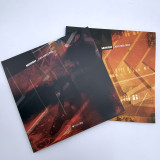
You Out Tonight? is the first book from Tough Luck, the Instagram account with over 46k followers that spotlights up-and-coming youth culture photographers from around the world. It features the work of 15 photographers from different backgrounds and styles, all united by their passion for capturing contemporary club culture with over 300 photographs from around the world. The book is 17.5cm x 24cm, and the 160 pages are printed and bound on heavyweight 150gsm paper with a hardback cover.
Search:velo
Grandeza, the debut album by Sao Paulo’s Sessa, points to new, subtle directions for modern Brazilian music – a deep, minimalist, almost insinuated use of the rich textures that define the songwriting history of Brazil, one which Sessa now joins among its most promising new voices. His songs are sung in Portuguese, with visceral, sensual lyrics in the vein of Caetano Veloso, and the melodic flourishes of Tom Jobim and Arthur Verocai.
However, the music gets a deliberate minimalist treatment rarely found in contemporary Brazilian music, more reminiscent of the bareness of Leonard Cohen, with touches of tropicalia, psychedelia, and the mystic jazz of Moondog and Pharoah Sanders. Recorded in various locations between São Paulo and New York City.
The EP by Bézier "Negative Velocity" sees the Californian artist (now for a few years a Berlin resident) initiate the launch of their new German-based record label "Körperspannung".
For 'Negative Velocity', Bézier collaborated with Bay Area drummer and avant-garde musician Dave Easlick taking live recordings of him on a drum kit warping and wrapping his pieces into curves and ellipses to project mappings outward into the atmosphere. From Easlick's source material Bézier generates a technological, multi-dimensional landscape through mental manipulation of sound waves bending the fabric of time and space. For both the title track and on the b-side 'Diabolical Embroidery' the lattice work here involved sampling and resampling every puncture from Easlick to atomize, pressurise, polish and disintegrate into fine particulate matter while reassembling parts back together fortifying the sonic tapestry further.
'Deep Sea State' is an exercise showcasing the raw form of Easlick's drumming but laced with an adamantium frame. Melodies from Bézier's musical training past haunt the entire interlude.
- A1: Il Sole Sorge Sempre (4 48)
- A2: Giustizia Di Strada/Lavora Fino Alla Morte (4 53)
- A3: La Vipera (3 41)
- A4: Vendetta (Tema) (3 00)
- A5: La Bara Restera Chiusa (2 57)
- A6: Cocktail Party (1 29)
- B1: Il Tesoro Di Sardegna (5 15)
- B2: Nell' Ora Blu (5 34)
- B3: Il Chiamante Silenzioso (5 13)
- B4: Tortura Al Telefono (3 30)
- B5: Pomeriggio Di Novembre Nel Parco/Occhi Che Osservano (3 37)
- C1: Il Ritorno Del Chiamante Silenzioso (3 34)
- C2: Solo La Morte Ti Ammanetta (4 20)
- C3: Il Gatto Morto (8 10)
- C4: Guidando Veloce Verso La Campagna (2 37)
- D1: L'omicidio (2 01)
- D2: Resti Umani (2 14)
- D3: Sorge Anche Il Sole (5 14)
- D4: Ritorno All'oscurita (4 29)
black 2x12"[34,87 €]
Sechstes Studioalbum und zweifellos das bislang radikalste der britischen Psychedelic und Doom-Band. 'Nell' Ora Blu' sticht aus der sterilen Rock'n'Roll-Wüste des Jahres 2024 hervor wie ein blutdurchtränktes Leuchtfeuer. Eine epische Hommage an das italienische Kriminalkino der späten 60er/frühen 70er Jahre. Inkl. exklusiver Gastauftritte von Topstars der italienischen Giallo- und Poliziotteschi-Filmgenres, darunter Franco Nero und Edwige Fenech. Was uns dieser schillernde Abstecher über die Zukunft von Uncle Acid & The Deadbeats verrät, bleibt ein Rätsel, aber Nell' Ora Blu ist eine exzentrische Glanzleistung der Band. Eine aurale Fortsetzung italienischer Kult-Soundtracks, Musik für Träume und nicht zuletzt…Albträume.
Live-Auftritte des Albums in voller Länge an ausgewählten europäischen Veranstaltungsorten werden bald bekannt gegeben. Neben der CD gibt es schwarzes Doppel-Vinyl und eine limitierte Version in Türkis.
- A1: Fé De Sábio - Crepúsculo
- A2: Nuno Rebelo - Vê-Se Das Nuvens
- A3: Vítor Rúa - T
- A4: Tó Neto - Daly
- B1: Luis Cilia - Saxofonía
- B2: Spqr - Flow
- B3: Telectu - Untitled
- B4: Pilar - Voz Do Mar
- C1: Carlos María Trindade - Em Campo Aberto
- C2: Balladium - Andrómeda
- C3: Ban - Irreal Social
- D1: Pop Dell'arte - Querelle
- D2: Santa Maria Gasolina Em Teu Ventre - Optical Sunday Without William Burroughs
- D3: Croix Sainte - We Build Cities
- D4: Linha Geral - Hino À Nossa Luta
Unveiling an unheard scene: Glossy Mistakes presents "Atlantic Mavericks: a Decade of Experimental Music in Portugal 1982-1993"
Glossy Mistakes is proud to announce the upcoming release of "Atlantic Mavericks: a Decade of Experimental Music in Portugal 1982-1993," a groundbreaking double LP compilation that offers a unique glimpse into the vibrant landscape of Portuguese experimental music. Set to launch on June 10th, this monumental release showcases the evolution and innovation of the Portuguese music scene during a transformative decade marked by political upheaval and artistic experimentation.
Compiled by Glossy Mario and featuring liner notes by Rui Miguel Abreu, "Atlantic Mavericks" captures the essence of a generation of artists who dared to challenge conventions and push the boundaries of what was possible in music.
The compilation stands as a testament to the eclecticism of the Portuguese music scene during this period, featuring a diverse range of genres and styles. From ambient and new age to electro, rock, and synth-pop, "Atlantic Mavericks" offers something for every listener, inviting them to explore the rich tapestry of sounds that defined the era.
The 1980s in Portugal were a time of profound transformation, marked by the aftermath of a peaceful revolution and a burgeoning desire for artistic expression. As the country emerged from political turbulence, a new generation of musicians began to explore uncharted territories, paving the way for a wave of experimentation and innovation.
From the emergence of artists like Rui Veloso and bands like UHF, who ushered in a new era of Portuguese rock, to the founding of independent record labels like Fundação Atlântica and Ama Romanta, the 1980s saw a surge in creativity and a desire for independence within the music industry.
"Atlantic Mavericks: a Decade of Experimental Music in Portugal 1982-1993" offers a comprehensive overview of this dynamic period, featuring tracks that span the spectrum of experimental music. Each song tells a story of artistic evolution and creative risk-taking, reflecting the diverse influences and eclectic tastes of the Portuguese music scene during this transformative decade.
Spanning from 1982 to 1993, the compilation includes contributions from a wide range of artists, including SPQR, Croix Sainte, Linha Geral, Balladium, Ban, Santa Maria, Gasolina Em Teu Ventre!, Fé de Sábio, and Telectu, among others. With each track carefully curated to showcase the breadth and depth of Portuguese experimental music, "Atlantic Mavericks" promises to be a must-have for music enthusiasts and adventurous listeners alike.
"Atlantic Mavericks: a Decade of Experimental Music in Portugal 1982-1993" will be available on June 10th as a double LP release, offering listeners a chance to immerse themselves in the sonic landscapes of 1980s Portugal. Whether experienced on vinyl or through digital channels, this monumental compilation is sure to leave a lasting impression on all who encounter it.
Rapid-fire with the releases like it’s effortless, minimal donny Velvet Velour steps up with his latest 4-tracker. Strong tech house currents in a similar vein to Kepler’s recent ‘Lowlife’ EP, but with extra zonk - it’s a head turning label debut.
The growing catalogue of releases belies a relatively short time spent producing. That said, he’s already a key proponent of the sound’s contemporary vanguard and XK035 might be the most vital effort to date.
Die Sages Comme Des Sauvages sind nicht die, für die Du sie hälst. Du dachtest, sie seien naiv und nett, aber sie sind anarchistisch und wütend. In der Peripherie angesiedelt, bahnen sie sich ihren Weg zwischen dem Populären und dem Coolen. Ihre Lieder sind ein Gegenmittel gegen die schlechten Nachrichten, ein Versuch, den hohlen Raum wieder zu verzaubern. Ismaël Colombani begann im Alter von 6 Jahren mit dem Geigenspiel und spielte in mehreren Avantgarde-Musikgruppen. Er komponiert auch Musik für die Bühne, vor allem für die Tanzgruppe Peeping Tom. Ava Carrère studierte an den Beaux-Arts, bis sie das Bedürfnis verspürte, einen direkteren Weg zu finden, um die Menschen anzusprechen. In der Welt des Berliner Metakabaretts entdeckte sie, dass sie voll von Liedern war. Kaugummi und LSD sind Beispiele für Serendipität. Das sind Dinge, die man findet, ohne sie zu suchen. Sages Comme Des Sauvages ist ein anderes. Ismaël war nicht dazu bestimmt, Ava zu treffen, so wie griechische Instrumente nicht dazu bestimmt waren, die Musik von La Réunion zu spielen. Als sie ihre Stimmen mischten, entstand ein drittes Wesen, das der Gruppe. Sie fanden Spuren einer Musik, die nicht vollständig vom Kommerz beherrscht wurde, und brachten Instrumente, Freundschaften und die Idee mit, dass die Kreolisierung der Welt verstärkt werden sollte. Sages Comme Des sauvages wurde zu einem Begriff, veröffentlichte zwei Alben, wurde von französischsprachigen Radiosendern wie France Inter und RTBF gespielt und gab Hunderte von Konzerten. Und nun ist es an der Zeit sie zu entdecken.
"Espontaneamente se Tenta: Aventuras Sonoras de Djalma Corrêa is an album of deeply exploratory pieces by legendary percussionist and composer Djalma Corrêa. This double-LP set features previously unreleased recordings that cover a wide range of sonic experiments, revealing an unknown side of the prolific and groundbreaking Brazilian artist. Most of the tracks on this album were digitized for the first time – directly from the original tapes – and were compiled in collaboration with Corrêa just before he passed.
The result is a wild and unsettling collage that shows us just how original and intense Corrêa could be: from the unorthodox electroacoustic piece Evolução (Para Fita e Filme), which channels ancestral African inspirations to create a sonic cosmogonical narrative, to the proto-mixtape Exemplo de Sintetizadores, in which he transitions from transcendental drones to astral cha-cha-chas.
While the compilation might seem disjointed at first listen, it is in fact the most accurate translation or representation of his central concept: spontaneous music. Djalma's relationship with sound was always guided by his fearless approach to listening, and by his audacious and dynamic interaction with both musicians and equipment, which enabled him to work across a wide array of genres: from jazz to completely abstract music, always through a personal DIY ethic.
Corrêa developed a strong bond with experimentalist and inventor Walter Smetak, with whom he shared a studio during his formative years at Universidade Federal da Bahia. Suite Contagotas, featured in this collection, is no less than a sonic materialization of that bond: an experiment revolving around dripping water and its randomness – a tentative exploration of the ideas and possibilities envisioned by Smetak for his audacious, albeit unrealized, Estúdio OVO.
Djalma, however, is best known for his studio work in historical albums, including many by Caetano Veloso, Gilberto Gil and Jorge Ben, and for his own polyrhythmic opus Baiafro. The last track is an early recording called Bossa 2000 dC, first performed by Djalma at the 1964 Nós, Por Exemplo concert, an event which is often cited as marking the beginning of the Tropicalia movement. At the time, he was the only artist in the lineup using electronic devices to create sounds, e.g. medical oscillators and contact mics to augment his percussive palette.
The artwork is an amalgamation of material found in the Djalma Corrêa Archive (currently managed by his son Caetano Corrêa) and other material created during the period in which the record was being put together. The intention is to guide the listeners through this possibly tempestuous soundscape, giving them additional resources so that they may draw their own meanings and make their own sense of this extremely immersive and original experience – which is like nothing we've ever heard before."
Musikdeutschland erwartet ein spektakuläres Album der anderen Art. Denn Roy Bianco & Die Abbrunzati Boys bringen im Frühjahr 2024 ihr lang ersehntes drittes Studioalbum. Ihren neuen Langspieler: »Kult«. Als zeitloses Meisterwerk im schillernden Gewand des Italo-Schlagers reiht sich das Album in die begonnene Serie der vorherigen zwei Alben »Greatest Hits« und »Mille Grazie« ein und vollendet so das gesamtkünstlerische Triptychon des Projekts: Eskapismus à la bonne heur. »Kult« steht für sich und Roy Bianco & Die Abbrunzati Boys stehen für Kult – es ist ein musikalisches Denkmal, das man sich so fast nur selbst setzen kann. Und sie tun es.
In a flurry of madcap sampling pitched towards the heat of the night, Pedro Zopelar builds on the premise of his 2022 electro- funk love letter Charme, shifting his approach towards a particular
90s flair and a method with a specific end result. Ritmo Freak took root in studio experiments for a momentous — and rare — live set at São Paulo festival Não Existe in 2023, where Zopelar was caught up in one of those right-place, right- time moments we carry with us through life. As he explains himself: “This album is dedicated to freaky club culture. While I was playing at the festival there was a crazy tropical storm outside and the room was packed with the freakiest crowd. I’ve tried hard to immortalize that feeling on this record.” With the intended energy in mind, Zopelar focused on a particular mode of production centred around 12-bit sampling from his ample record collection. Considering his background as a trained pianist, here his musical instincts are forced to work within the limitations of short, snappy cuts from dusty 12”s. The lo-fi sound sources and the resourceful ways Zopelar works them gives the record an unmistakable old-skool flavour which he applies to forthright house, techno and electro funk rhythms, always taking care to draw out the soul of the music.
The stylistic touchstones flow past thick and fast on Ritmo Freak. From the amped up fierceness of the title track with its gaudy, cut n’ paste, vintage techno flavour to the effervescent electro funk of ‘Gabriellinha’s Boogie’ on to the surreal Balearic inversion of ‘Distraction’, this is a high-velocity, endlessly charming record bursting with the musicality Zopelar has made his name on. As the driving force behind many warehouse parties in São Paulo,
Zopelar has been immersed in club culture for a long time, and his distinctive catalogue of jazz, funk, acid and techno has graced highly respected labels like Apron, Selva Discos and Mother Tongue. Throughout, he’s displayed an affinity for the tangled roots of the groove with an open-eared, big-hearted sound. That’s what comes through on Ritmo Freak
High-class monitor stereo headphones
Closed, circumaural, dynamic stereo headphones
Very good attenuation of background noise makes them especially suitable for use as monitoring headphones in a noisy environment, film and theater applications, DJ or recording applications
Very high output power
Powerful 45 mm neodymium magnet and HQ voice coil
Enhanced frequency response tuned to deliver high-output bass with extended highs
Well-padded, adjustable leatherette headband
Soft circumaural ear pads
Optimal wearer-comfort due to single OFC cable
Gold-plated 3.5 mm stereo jack with 6.3 mm adapter
Incl. velour bag for safe transportation
Frequency range: 10 - 26000 Hz
Sensitivity: 98 dB
Max. SPL: 98 dB
Rated power: 1800 mW
Cable length: approx. 3 m
Connector type: 6.3 mm jack (stereo); 3.5 mm jack (stereo)
Connections: Headphones via 6.3 mm jack (stereo)
Headphones via 3.5 mm jack (stereo)
Speakers: (1.75") approx 4.5 cm with Neodymiummagnet
Transducer type: Dynamic
Type (Headphones): Closed, earenclosing
Weight: 0.34 kg
Ring Ring Ring! The dawn of a fresh day brings a new release near. Squid Recordings inks its way into existence with a heavy foot on rave Americana.
With releases on Rush Hour, Velocity and his own Nylon Recordings, James ‘Nylon’ Thomas sees his Nylosphere project reborn, remastered and retouched (over two decades later) for the modern world.
The two widely varying title tracks, backed with equally contrasting mixes, are a microcosm of what late 90s, American-made dance music embodied. That is, a web of genre hopping maximalism, analog driven punchiness and a beautiful uncertainty to a post millennia world.
1994 was a year of fervent resistance against the encroaching Criminal Justice Act in the UK. Amidst the clamour of dissent, three historic demonstrations echoed through the streets of London, challenging the very fabric of authority and transforming the nature of peaceful protest, forever.
Through the lens of Matt Smith (Exist To Resist), witness the raw energy and unity of the protests that shook the capital. Each image in this zine is a testament to the power of the people, capturing not just moments frozen in time, but the spirit of a generation refusing to accept oppressive legislation.
Pages: 68
Size: A5 (21cm x 14.8cm)
Binding: Staple bound
Print: Black & white
Front cover design: Tom Booth Woodger
Interior design: Jez Tucke
In a partnership between Lost Realm Records and Classic Metal Records, we bring you the vinyl edition of Sacred Alien's first studio album "The World Doesn't Care About You" In 2020 we already had the opportunity to work with these NWOBHM legends, with the vinyl release of "Legends" (compilation of studio and unreleased songs recorded between 1980 and 1983), which was a success given the tremendous acceptance by fans and followers of this British band.
An edition that was sold out in less than 2 months! "The Universe Doesn't Care About You" is the logical continuation of the band's legacy. With a total of 9 songs, Sacred Alien once again offers us a sonic journey between parallel universes, extraterrestrial forces and the meaning of life.
Following the singles "Zanzare" and "Barocco", Chiaré is the self-titled debut album from songwriter and multi-instrumentalist Chiaré, aka Chiara Ianniciello, the latest recipient of the Bianca D'Aponte Award for emerging Italian singer-songwriters.
The album, which will be out on April 19th, contains eight atmospheric and intimate tracks where Chiara's warm and gentle voice weaves snapshots from her feelings and her personal story over retro-flavoured, jazz-infused arrangements that are reminiscent of some of Italy's finest singer-songwriters (Lucio Battisti and Pino Daniele in particular).
"It all started about three years ago," says Chiara. "Ernesto Massimino Voza and I started from a sound that somehow wasn't really me, and after a long process of trial and error, we finally found what seemed to be right for me. Peppe Maiellano, who arranged all the music, brought it full circle. The album has a common thread: love. Almost all of the songs are about strategic love, the fear of freely loving someone and the frustration at not being able to get out of an on-and-off relationship that made me suffer, but that I've tried to narrate with some irony. If my writing were an artistic movement, it would be naturalism. I drew a lot of inspiration from Pino Daniele, Eduardo De Crescenzo, and Lucio Battisti, while trying to develop my own personal, authentic style."
Chiara holds a diploma in jazz singing and is now completing her studies in classical double bass. In her debut album she uses both standard Italian and the Neapolitan dialect, mixing jazz, soul and R'n'B. Modernity and tradition come together, creating a delicate yet irresistible sound.
As mood changers go, this track is up there with the best. Last year whilst DJing with miche at Shapes festival in the snow-capped mountains of Switzerland, a breathtaking yet ominous Alpine sky suddenly became a picture postcard moment. The clouds parted and a double rainbow formed, as miche dropped Studio Rio's bossa nova remake of Bill Withers’ all-time classic 'Lovely Day'. From there, the dancefloor shifted gears and morphed into full-swing feel-good vibes, in a beautiful, spontaneous moment nobody could have planned for.
Mr Bongo now proudly presents a reissue of this brilliant, bossa-channelling Bill Withers reinterpretation from Studio Rio’s 2014 release ‘The Brazil Connection’. Masterminded by the German Grammy award-winning Berman Brothers, the project was born out of their deep love of Brazilian music. “Our goal was to bring the Brazilian joie de vivre to iconic performances by well-known artists. What would these classic songs sound like had they been recorded in the studios of Rio de Janeiro in the first place, with the best Brazilian musicians and arrangers?” the brothers reflect.
Capturing the life force of Brazil, the beating heart that is its music, they set out to find the musicians who would fit best with their concept. Landing in Rio in 2013 a series of coincidences led to them being introduced to their idols Marcos Valle and Roberto Menescal, who both agreed to come on board. The Berman Brothers also wanted to find some of the musicians who recorded with one of Brazil’s most influential composers Tom Jobim. “Fifty years after Jobim made the music that really defines bossa nova, we found that many of his sidemen were still active, including Paulo Braga of Jobim’s famed rhythm section. It was magic; everything just fell into place.”
There's no question that the original of ‘Lovely Day’ is up there as one of the most feel-good, spirit-lifting anthems of all time. Here the brothers, with the help of a whole host of Brazil’s finest musicians, rework Bill’s soul-fuelled groove into a bossa nova slice of sunshine. With the blessing of Bill and Sony, they were given access to the original multitracks so they could incorporate Bill’s vocals perfectly into the new arrangement.
Joy-injected horns and bouncing double bass blend with the smile-inducing samba flavour of Pretinho da Serrinha’s cavaquinho playing. Tying it all together Torcuato Marinao who worked with the likes of Gal Costa, Gilberto Gil and Caetano Veloso, completes the line-up as arranger of the songs.
The perfect end-of-the-night track, mood lifter or soul warmer, remakes don’t get much better than this.
Brazilian singer and composer Arthur Melo turns to the ‘70s & ‘80s, to the musical greats like Caetano Veloso and Milton Nascimento, channelling his love of director Brian de Palma and old detective films, and positioning himself amongst a new generation of contemporary musicians
Arthur Melo, a young Brazilian composer, guitarist and singer returns to releasing music, with his second single after a 3 year break, with a new album Mirantes Emocionais, set for release on British label Wonderfulsound. Backed by his band O Ministério da Consciência it’s a work that pays homage to Arthur’s heroes of Brazilian music from the ‘70s and ‘80s yet goes much beyond throwback. Like his previous post-tropicalia, psychedelic and percussive material, it honours Brazil’s divergent musical history but always looking forward, treading new paths and placing Arthur in a venerable category of explorative, young Brazilian artists alongside the likes of Sessa & Ana Frango Elétrico.
- A1: Playland
- A2: The Right Thing Right
- A3: Easy Money
- A4 25: Hours
- B1: New Town Velocity
- B2: The Headmaster Ritual
- B3: The Messenger
- B4: Back In The Box
- C1: Generate! Generate!
- C2: Bigmouth Strikes Again
- C3: Boys Get Straight
- C4: Candidate
- D1: Getting Away With It
- D2: There Is A Light That Never Goes Out
- D3: Dynamo
- D4: I Fought The Law
- D5: How Soon Is Now?
Full of Hell Coagulated Bliss bio Full of Hell burst forth with incredible force from the small, dagger-shaped city of Ocean City, Maryland, 15 years ago. Over five full-lengths, five collaborative full-lengths, and countless splits, EPs, singles, and noise compilations, they’ve evolved at extraordinary speed, their music becoming more complicated and technical without ever slowing down or losing its soul. Everything on a Full of Hell album feels like a blur: smears of guitar, harsh noise shaken like gravel in a bag, singer Dylan Walker’s snarl and bite carrying him into outer space or into the core of the earth. They’re coiled, interlocking, impossible to penetrate, and they move with alarming speed. They have now reached terminal velocity. Having created their own context, they’re now able to walk around within it, to survey its terrain, to visit far corners and see who’s nearby. Coagulated Bliss sounds like Full of Hell, but it’s nothing like any Full of Hell record that’s come before it. These songs are trimmer, less freighted with anxiety, more interested in opening up than speeding away. Its bile is sometimes funneled into traditional song structures. It never shies away from the extreme harsh noise, unrelenting spirit, and pitch-black sadness of previous Full of Hell records; if anything, the leanness of these songs makes them feel even heavier. Nevertheless, there are tracks here you might find yourself whistling hours after listening. It’s an extraordinary and unexpected evolution in sound for a band who made their name on rapid metamorphosis, and it’s the logical endpoint of everything Full of Hell has covered so far..
The artist Mau Mau has a body of work which stretches back to the 1990s. His street art has chronicled the evolving nature of UK counter-culture and larger world themes which have impacted it. Aside from walls, barns, boats and an array of other interesting places to paint, his work has appeared on prints, canvases, magazines, clothing and record covers and in exhibition spaces for over 25 years.
Talking Out of My Art is a chronological journey through Mau Mau’s artwork and features high-quality, full-colour photos of his most iconic artworks and an in-depth exploration of his life, influences, and artistic journey. Scroll down the page for an eight page preview.
The book is 245mm x 245mm, and the 240 pages are printed and bound on heavyweight 150gsm paper with a hardback cover
Jim Ottewill’s exploration of UK club culture and the urban landscapes that have housed it returns in a newly remixed form. This extended version features a new chapter exploring hidden histories and untold stories within Birmingham’s nocturnal scene to provide more insights into the past, present and future of electronic music culture.
BALANCE OF POWER are back with new band members and a brand-new album! Founding members Tony Ritchie (bass) and Lionel Hicks (drums) are joined the band's new lead vocalist Hazel Jade as well
as guitarists Chris Young and Adam Wardle, who have since taken over the reins from guitarists Chris Masimore and Stoney Wagner, with whom the band worked on and recorded the upcoming album
"Fresh From The Abyss"
BALANCE OF POWER melden sich mit neuen Bandmitgliedern und einem brandneuen Album zurück!
Zu den Gründungsmitgliedern Tony Ritchie (Bass) und Lionel Hicks (Schlagzeug) gesellen sich die neue Leadsängerin Hazel Jade sowie die Gitarristen Chris Young und Adam Wardle, die inzwischen in die Fußstapfen der Gitarristen Chris Masimore und Stoney Wagner getreten sind, mit denen die Band am kommenden Album "Fresh From The Abyss" gearbeitet und es gemeinsam aufgenommen haben.
"Fresh From The Abyss" ist eine Kollektion von Songs, die entweder die Uhr anhält und auf einen bestimmten Moment in der Zeit verweist oder zurückblickt und die Unendlichkeit von Zeit und Raum, des Lebens und des Sterbens thematisiert.
finally repressed !
ARCHIELONG LP album consists of 8 intensely rolled tracks dating between 2012-2020. The release unfolds on 4 discs of 180gr, with gatefold covers, coated in Sani Stranskiʼs artwork.
Throughout ARCHIELONG LP, we are absorbed by what typically characterizes his narrative: a peculiar style of story in constant development. Structure and flow are a hallmark feature of his selections, adding one more trippy, eerie minimal style on top of the other, creating a rich and quirky haunted sphere.
A – The opening track, I HEAR VOICES THROUGH THE PIPE sets the scene for whatʼs to come, stirring the imagination with its dreamy, cinematic, organic sounds in disguise. The track provides a guidebook to distilling story, emotion and image into sonic form.
B – EXCESS ALL AREAS – hypnotizes the dancers with endless, reverberating grooves and a punchy 4/4 beat, introducing the audience to his gloomy world of emotions.
C – LA MANIA – lights up some dark pitched atmosphere around you and makes you feel like you are on the mythical La Mania club dancefloor in complete harmony, surrounded by strange and beautiful trippers. The song is like a painting, with frames that evoke flashbacks.
D – NEW LIFE – is a perfect minimalist setup of a percussion loop, throbbing chords and a sinewy walking bass, and itʼs almost intimidatingly heady. Its militant kick and incessant hi-hats propel the beat – definitely a dancefloor highlight.
E – MELODROM – percolates with Latin percussion and shuffling snares, which commingle with an array of voices and whispers that come from every corner of the song. From toolish to melodic, itʼs the diversity that creates the magic.
F – SING AND RUN – is one of those tracks that gives you nostalgia and reminds us of early mornings at the end of the party when the sun would be coming in through the windows and the dancefloor was in total harmony. Could easily cast a spell with the right audience.
G –RUMBLING DREAM – is a ritualistic-sounding slice, crossing towards the kind of slow-burning, atmospheric cuts that doubtless inspire his intricate studio productions. The vocals are unusually illustrative and make a lasting impression.
H – KLAUS DID IT – is an intriguing interplay between dark functionality and high velocity grooves — the type of deep, trippy, IDM-tipped tunes. Its warped tones are forming dank, lurching rhythms that trap you like a spiderweb, venturing into a bizarre, rewarding territory. The conclusion? You can spend a decade honing a very particular personal vision and not run short of inspiration. Mihigh is a world-builder: everything he does is about further extending and reinforcing that world.
ARCHIELONG LP is capturing the beauty at the intersection of experiment and perpetual learning
Recorded in the past 25 years in different parts of the world, Encyclopedia Sónica Vol. 1 compiles the music and sounds of Leo Heiblum. Comes with insert.
Since Leo Heiblum was a little boy, he always found music everywhere. Listening to the engine of his mother's car and hearing incredible rhythms. He always thought every sound we hear can be made into music, every sound that we hear can be heard as music and it can be felt and understood as music. Every sound has an attack, a decay; some have a pitch. What is more beautiful, the sound of a flute, a bird, a trumpet, a car horn, a violin or a mosquito buzzing? They can all be used to make music.
Leo Heiblum believes that If we learn to hear all sounds as “musical” or at least to have the potential to be used to make music, we might look at the world and listen to the world more lovingly. That car passing by had a beautiful crescendo. That dog barking in the distance created a fantastic melody with an impossible-to- transcribe rhythm. Is there no creative intention behind those sounds? Can the listener give them an intention, can the listener transform them into art? Leo Heiblum is trying to organise them and use them in a way that will be musical for us. He hopes that the next time we hear an ocean wave breaking a bond, fire crackling, or a fly flying, we can enjoy the notes and the rhythms they are making. They are being created by something; who knows what the intention is, but some of the most unique beats he's heard come from rocks falling in cenotes or ice breaking down in a glacier. And the melodies he's heard from bats, dogs fighting, or a newborn dog are both haunting and beautiful. The timber from sounds such as the thorn of a cactus, the voice of a homeless person in the street or a mosquito buzzing can be used to create instruments as beautiful as any instrument. And they have a new sound or a familiar old sound used differently. A way that invites us to hear the music created by this planet.
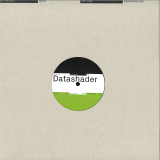
Datashader emerges from the shadows with a striking breaks- and bass-heavy debut release that challenges the fabric of our digital existence. Replete with a Dopplereffekt remix, it nods to the legacy of revered anonymous acts such as Scopex, Drexciya and Underground Resistance, pushing the boundaries of both electronic music exploration and its conceptual underpinnings. As a critique of the erosion of genuine human connection in the digital age, Datashader delivers a barrage of billowing subs, infectious electro, recontextualized jungle, and techno, serving as a poignant counterbalance to current dance floor-centric norms. It’s a contemporary anti-soundtrack that offers a haunting mirror to the societal costs of technological convenience.
In a world engulfed by the digital realm, where social media platforms thrive and dominate every aspect of our lives, the enigmatic project known as Datashader was founded to reflect on the pervasive erosion of authentic human connection through various virtual realities. Artistically, Datashader seeks to critique the impact of technology on human identity and relationships, breaking with an archetype of digital conformity and expressing a profound disillusionment with the superficiality of online interactions through music. Genuine human connection and art cannot be quantified by likes, comments, or followers but rather thrives in the visceral realm of shared sonic experience and human emotion. This idea is at the core idea of Datashader, whose artistic expression ranges from avant-garde composition and electronic experimentations to art, installation, film and more.
Expressed within the varied contexts of diverse artistic mediums, Datashader explores the concept of “technological gentrification”, which describes the gradual displacement of human interaction by technology. Just as gentrification alters the urban landscape, driving out communities and cultures, digital gentrification transforms the social landscape, replacing genuine connection with curated online personas.
Musically, Datashader’s practice confronts this dystopian reality, highlighting the alarming consequence of people becoming mere nodes in a network, reduced to a collection of data points. This is manifested sonically by a blistering assault of breaks, recontextualized IDM, abstract electronics and otherworldly synthscapes, conceived as the aesthetic counterbalance to much of contemporary electronic music’s dancefloor focus.
Datashader dives deep into genres and influences which stand for a form of sonic resistance: A contemporary anti- soundtrack – a sonic mirror of the price we pay for convenience and instant gratification. A self-image in constant flux. No false technological idols.
Neither Timothy J. Fairplay, nor Norwell are strangers to the Dalmata Daniel family: both of them are trustworthy contributors to DD compilation albums of earlier years, plus Norwell has released his 'ODD' EP and 'Joint Spaceflights' EP back in 2017 and 2019 on the label. So this time, it's a return for Norwell, and a debut for Mr. Fairplay: their DDS09 split EP is here to present 4 tracks full of outer space lights, eerie vibes, mesmerizing beats and cosmic energies.
Timothy J. Fairplay's side A starts with the explicit kicks and ominous basslines of 'Caliber 9'. Slowly and steadily, the laser blasts and relentless drums all add up to define a world of space cadets on the run, where any odd-looking figure can turn out to be a malignant, speedy alien. 'TV Tower' takes us to another planet with an even higher rotation velocity. Fast percussion elements and squished lower frequencies take center stage in this intergalactic episode, but the whistle-like melodies and descending, bubbling robot signals make the journey complete.
Flip to side B, and enter the contemplating, otherworldly atmospheres of Norwell. 'Midnight Rituals' gives you the chills with its breath-like swooshes, grievous sirens and deadly asteroid belts. Yet, there is no need to worry: after an intense ride with your spaceship, eventually you end up in the same spot, where you started: in the stable and steady mid-tempo beats of an expertly-programmed drummachine. The orbital mission comes to an end with 'Natives', a dense and heroic hymn with emotive structures and well-crafted harmonics. The track starts with the bittersweet, lamenting synths of a solo voice, pouring their heart out in the spotlight, all alone on the stage. All of a sudden, a hard-hitting, rhythmic groove commences its last rush of dedicated cadences. It is full of breaks, it is full of 303s, completed with airy echoes and dreamy, light gestures. 'Natives' keeps on building its structure with elegant paces, providing a massive, yet delicate experience of Norwell's defined aesthetics. The track lets the last strokes of its gloomy synths roll out, along with the final round of looping drums, thus putting an end to DDS09.
ZOMBI melden sich mit ihrem neuen Album Direct Inject zurück, auf das sie lange gewartet haben! Es fängt den Geist früherer Alben wie "Escape
Velocity" und "Surface To Air" ein und erweitert gleichzeitig die Klangpalette der Band, die von 80er-Synth-Rock ("Direct Inject") bis zu
saxophonlastigen Slow Jams ("Sessuale II") reicht.
Direct Inject ist ein unverzichtbares ZOMBI-Album und möglicherweise ihr bisher vielfältigstes und fesselndstes. Direct Inject ist ZOMBI in ihrer besten
Form, bei der sie aus Improvisationen Gold schürfen.
Am 11.08.2023, passend zum Jubiläum von 50 Jahre Hip-Hop, erscheint ”Hochkultur 2”, das neue Album vom Samy Deluxe. Mit der Single ”Roter Velour” hat Samy nicht nur einen sensationellen Auftakt in die Kampagne hingelegt sondern auch einen vielversprechenden Vorgeschmack auf ”Hochkultur 2” gegeben.
Passend zum Albumrelease findet am 13.08. die Blockparty Deluxe statt, in Samys hometown Hamburg.
Die Blockparty Deluxe wird die einzige Gelegenheit sein Samy 2023 live zu sehen und hat alles von Rap, Graffti, DJing bis zu Breakdance zu bieten.
After capturing the attention of audiences, DJs worldwide and the media with the brilliant "Flight Of Sagittarius", Brazilian Diogo Strausz, signed to Parisian label Goutte d'Or Records, presents : Samba From Outer Space This second opus takes us on a journey through time and style, from jazz-funk to dance music and Afrobeat, invoking masters such as Caetano Veloso, Giorgio Moroder or Tony Allen.
"This idea of "Samba From Outer Space" comes from dance music being a universal language beyond electronic but mainly a form of gathering people together in the same frequency." says Diogo. We could summarize everything in "Electronic dance music is nothing but samba from outer space."
Da Buze BruvazpresentsClever 1 X Lord Beatjitzu
Master Sip, Legendary teacher of Bruce Lo Da First Drunken
Grilchy Party presents another epic from Da Buze Bruvaz own Clever 1 and mysterious production wizard Lord Beatjitzu. This new adventure follows where the last one, Perverted and Drunken, left off. They have cooked up another album following the footsteps of their classic Perverted and Drunken LP. This new adventure follows where the last one left off. Introducing Master Sip, Legendary Teacher Of Bruce Lo Da First Drunken. It is illuminating one of the many chambers of their Drunken Fly Chi style, the martial arts mind states of Clever 1 and Lord Beatjitzu combining as the "Fly Chi School Of Da Drunken Artz". The duo pops the listener in the face With vicious, bloody Nunchuck Lyrics over high-velocity, swift kick-in-the-chest production. With these seasoned masters of their perspective arts, they form a powerful, unstoppable combo and truly take no prisoners in this Action-Packed sophomore foray. It's a pure Saturday morning Kung Fu sound theater where Wing Chun enters the world of Drunken Fist on Wax. Beware as you enter the Dojo and watch your step!
Having failed at rapping, what’s next for an endlessly passionate rap nerd? In this sequel to the acclaimed memoir Wiggaz With Attitude, it turns out what’s next is a sometimes controversial career in rap journalism.
Write Lines: Adventures in Rap Journalism tells the tale of hip-hop writing from the inside. From death threats to interviewing Lauryn Hill while she’s in the shower. From calling Jay-Z a c*** to his face, to letting a notorious rapper sleep in his bath, it’s a hilarious, anecdote-studded tale that takes in hip-hop's first-ever magazine and lifts the lid on rivalries, squabbles and how music journalism really works.
Brutally honest, and endlessly opinionated, this story is also a love letter to hip-hop as it changed seismically through the decades. Write Lines charts those changes from the front line through encounters with many of the greats of rap: Chuck D, Missy Elliott, RZA, Eminem, Jazzy Jeff and Gang Starr among them. This is an unfiltered tale of hip-hop that is both heartfelt and scabrously funny.
“With its relatable take on growing up in the 80s, Andrew Emery’s Wiggaz With Attitude marked his card as a vivid memoirist. He might have failed as a wannabe rapper, but the music he loved gained multitudes from his work for Hip-Hop Connection. A pivotal force in the magazine’s 90s/00s heyday, never short of a telling opinion or four, Andrew set a high bar for its other writers to reach. Write Lines is a transportive account of his many travails in that murky world. Packed with eye-watering encounters and witty asides, his compulsive, self-deprecating and brutally honest reflections will resonate widely and change perspectives on rap journalism forever.” - Andy Cowan, HHC Editor & Publisher, author of B-Side: A Flipsided History of Pop.
Paperback: 304 pages
Product Dimensions: 12.9 cm x 19.8 cm x 2.1 cm
• Details the story of the legendary DiY Collective in all their eclectic, outrageous and occasionally deranged glory from early acid house to DJ collective, sound system and record label.
• The first autobiographical account of the remarkable and historically overlooked nineties free party/festival movement from someone who played a pivotal role and was involved from the start.
• Covers truly historic events such as the huge Castlemorton free festival and Criminal Justice Bill riots via wild stories of Britain’s rave counter-culture and mass trips to Ibiza, Amsterdam and San Francisco.
Emerging from Nottingham in the summer of 1989, the DiY Collective were one of the first house sound systems in the UK. Merging the anarchic lineage of the free festival scene, the cultural and political anger of bands like Crass with the new, irresistible electronic pulse of acid house, they bridged the idealistic void left by the moral implosion of the commercial rave scene.
From Castlemorton to the Café del Mar, the DiY sound and DJs became internationally renowned and beneath their banners of liberty, collectivism and untrammelled hedonism achieved an underground cult status that endures to this day. Having celebrated their thirtieth anniversary in 2019, DiY continue to challenge the idea that dance music is apolitical and to celebrate the ideology of liberation through fun.
Written by Harry Harrison, one of DiY’s founding members, this book traces their origins back to early formative experiences, describing in detail the seminal clubs, parties, festivals and records that forged the collective. Dreaming in Yellow is an attempt to distil the story of DiY’s tumultuous existence and the remarkably eclectic, outrageous and occasionally deranged story of them doing it themselves.
“Culturally, the most dangerous people in the country.”
Tony Wilson’s In the City Music Festival brochure 1997
• The first up to date, post-pandemic, no-borders era book to cover Berlin’s role as an electronic music and cultural capital. Coming To Berlin breaks the tradition of Berlin’s perception as techno ground zero and shows the true diversity and richness that make up the city.
• Connects musical and cultural dots over a 120 year timeline, including the Weimar era, krautrock, the 80s art scene that involved Einsturzende Neubauten and Nick Cave, the East Berlin punk movement, through to Berlin’s role as a techno capital with the Love Parade, Tresor and Berghain, and into the post-techno, post-genre, post-gender future that takes in the refugee crisis, gentrification, ambience and lockdown.
• Written by a former Londoner who made Berlin his home, the book captures nuances and details of living in Berlin that will be immediately relateble to fellow Berliners yet at the same time captures the city’s creative, free-living essence to anyone with a curiosity for Berlin and a love of electronic music.
Coming To Berlin reflects, through the lives and music of migrants, settlers and newcomers, how a constantly in flux city with a tumultuous history has evolved into the de facto cultural capital of Europe. And how at the heart of this, electronic music and club culture play a unique role. A plea for multiculturalism and a love letter to the borderless potential of music, the book breaks the tradition of Berlin’s perception as techno ground zero and shows the true diversity and richness that make up this city.
Told through Paul Hanford’s novelistic narration, Coming To Berlin mixes imagination and interview, psychogeography and narrative, humour and horror. Each chapter follows encounters with people who have made the city their own. Club legends Mark Reeder, Danelle DePicciotto and Monika Kruse. The journey of a young Syrian refugee who has immersed himself in DJing and UK Drill. Ferruccio Busoni, an Italian Weimar era composer whose influence has echoed subliminally for over a century.
We catch glimpses of the 1980s punk and art movement, the Genialle Dillentanten, and how it led towards the birth of modern club culture in the city. We follow the Turkish hip-hop scene on the streets of Kreuzberg. And under threat from gentrification, into the post-pandemic world where clubs, a thirty-year long pulse stopped, we hang out with artists reshaping electronic music into new genres and even new genders.
The organic minimalism of composer and producer Kirk Barley is collected on his new studio album Marionette, released via Odda Recordings.
Whether drawing from field recordings, found sound, instrumental improvisations or synthetic processes, Barley’s compositions evoke unfolding sound worlds, as simple ideas or motifs are layered and developed into complex set-pieces that reveal themselves over time.
Marionette showcases the breadth and variety of the Yorkshire-born artist’s sound, weaving together familiar and uncanny moods of rural England and its Victorian architecture, as suggested by the gated garden print of the album’s cover. Unfurling between physical textures – the patina of vinyl crackle or gentle rain – and the hyper-real spaces that his music inhabits, Barley describes the compositions as “landscape or static scene paintings,” with many of the album’s tracks taking nature’s rhythms as their compositional cue.
On ‘Seafarer’, this manifests in the repeated synth swells of a boat on rough waters, while title track ‘Marionette’ imagines an eerie scene, were shadows flicker by an open fire. Similarly,‘Lake of Gold’ layers plucked strings at different scales and velocities to create what Barley calls the “rain-like quality” of the rhythm.
Drawing from jazz, minimalism and techno, Barley focuses on the detailed qualities of sound, experimenting with time signatures, temporals and tuning systems. His esoteric alter-ego Bambooman (2013-2018) found a home on Matthew Herbert’s Accidental imprint, releasing the album Whispers in 2017.
In contrast, under the pseudonym Church Andrews (most notably in collaboration with drummer Matt Davies), he produces synthetic, often beat-focused music, using digital synthesis and algorithmic composition techniques, with the live drum performances triggering and modulating Barley’s synths. The duo has recently performed at festivals such as Rewire and Waking Life, filmed sessions for Fact Magazine and Slate & Ash, and recently had their music played out by Aphex Twin.
Under his own name, Barley released his debut album Landscapes in 2019 on 33-33 Records and received support from the likes of NTS Radio and BBC 6 Music. Barley has performed at events across the UK and Europe alongside the likes of Andy Stott, Beatrice Dillon, Jan Jelinek, MF DOOM and Madlib. He has also completed commissioned work for the British Art Show, Camden Arts Centre, MSCTY and the Open Music Archive.
Written by veteran journalist Shawn Reynaldo, First Floor is a weekly newsletter that focuses on electronic music, along with the culture and industry that surround it. Over the course of just a few years, it’s become one of electronic music’s most influential platforms, routinely putting many of the genre’s thorniest issues under the microscope while reckoning with changes in the culture during a time of profound transformation.
A collection of Reynaldo’s most thought-provoking essays, First Floor Volume 1 provides a nuanced, wide-ranging look at contemporary electronic music culture, with a particular focus on systemic issues that often go undiscussed.
Topics covered included the evolving nature of electronic music fandom and artistry, value shifts brought on by the current changing of the generational guard, the shortcomings of the modern music press and the growing gap between electronic music’s foundational rhetoric and the genre’s present-day norms.
Incorporating both pieces originally published in the newsletter (all of which have been updated) and exclusive new material from Reynaldo himself, the book also features a foreword by veteran artist and 3024 label founder Martyn.
Egostrip Book 1 is a beautifully designed collection of Dan Lish’s stunning character illustrations from the world of hip hop and beyond. There are 138 illustrations of pioneering artists from hip hop’s golden era, such as De La Soul, Madlib, DJ Premier, Mobb Deep, Nas, Cypress Hill, J.Period, J Dilla, Kool Keith, MF DOOM, The Roots, Biggie Smalls, A Tribe Called Quest, Biz Markie and The Beastie Boys.
The book is 27.2cm x 29.4cm, and the 160 pages are printed and bound on heavyweight 130gsm paper with a hardback cover. It’s also available as a limited edition 20cm square art print (see left for design).
Let the Music Play: How R&B Fell in Love with 80s Synths is the overlooked story of how R&B, disco and funk were transformed by the explosion of music tech in the era of ghetto blasters and Ronald Reagan. It traces how pioneers like Stevie Wonder and Herbie Hancock inspired a new generation of black musicians and producers to reinvent music with a whole new set of rules.
From superstars like Prince and Sade to production geniuses like Kashif and Jam & Lewis, it tells the fascinating stories of the artists involved and how they made some of the best-loved records of the era – creating a blueprint for music today.
»In Words« is the first solo album by the Danish musician, composer, and visual artist Alexander Tillegreen. The album represents a series of varied electronic music pieces while also carrying examples of ongoing work with psychoacoustic phenomena. Composed partly of material taken from his artistic practice as an installation artist and his ongoing interdisciplinary artistic research into psychoacoustic phenomena, Tillegreen investigates subjective sonic perception and the negotiation of language. Particularly, these investigations are done through the use of the phantom word illusion, originally discovered by music psychologist Diana Deutsch. Parts of the album were conceived when Tillegreen was the first artist ever in resident at the Max Planck Institute for Empirical Aesthetics. Triggering the brain’s tendency to interpret language-based auditory illusions as meaningful information and as words within the mind of the listener, Tillegreen’s unique sound works unfold like a kaleidoscope of phonetic mirrors which render possibilities to reflect upon the listener’s own psychological and culturally situated linguistic embeddedness. Gender-distorted voice perception, speech and language borders are all challenged and thematized throughout Tillegreen’s work. The listener’s head and bodily movement drastically affect the listening and the word interpretation. Their psychological subconsciousness, recent events, memories, and expectations as well as the listener’s motion in space all become co-creative and co- composing factors in a reactive and choreographic process of listening. The polyrhythmic seriality of spatialized syllabic structures is accompanied by elements of heavy bass drops, high-frequency tensions, undulating synth lines, and hypnotic effects. Some of the many compositional potentials of the phantom word illusions are exercised and unfolded in selected tracks throughout the album. The notion of language borders is approached from an entirely different and even more “anti-logocentric” perspective on the “eponymous” closing track »Assimilate (in Words)«, where the listener experiences the struggle and collapse of interpersonal communication through conversation. Other parts of the album represent more diverse approaches to abstract electronic music. »In Words« morphs soundscapes into glacial, spherical passages of ambient backdrops, while at other times emphasizes raw tectonic blocks of hyper-panning drones that erupt into high-velocity outlets of energetic, granular fields. Tillegreen is alternating between cyclical, minimalist, hypnotic approaches and complex, glitchy polyrhythmic melodic structures that shift and melt into evocative ambiences. The phantom words and the nature of Tillegreen’s musical visions progressively demand more of the listener’s attention and represent the artist’s ongoing artistic work and scientific research into psychoacoustics and language. While »In Words« is a highly conceptual album, the musical bandwidth is extensive.
- 1: Ponta De Lanca Africano (Umbabarauma) - Jorge Ben
- 1: 2 Sonho Meu - Maria Bethânia & Gal Costa
- 1: 3 So Quero Um Xodo - Gilberto Gil
- 1: 4 Um Canto De Afoxé Para O Bloco De Ilê (Ilê Ayê) - Caeta
- 1: 5 Leaozinho - Caetano Veloso
- 1: 6 Cacada - Chico Buarque
- 1: 7 Calice - Chico Buarque
- 1: 8 Equatorial - Lô Borges
- 1: 9 San Vicente - Milton Nascimento
- 2: 1 Quilombo, O El Dorado Negro - Gilberto Gil
- 2: Caramba!... Galileu Da Galileia - Jorge Ben
- 2: 3 Caixa De Sol - Nazaré Pereira
- 2: 4 Maculelê - Nazaré Pereira
- 2: 5 Queixa - Caetano Veloso
- 2: 6 Andar Com Fé - Gilberto Gil
- 2: 7 Fio Maravilha - Jorge Ben
- 2: 8 Anima - Milton Nascimento
- 2: 9 Terra - Caetano Veloso
First released in 1989, these songs represent but a small sampling of the fruits of a flowering in Brazilian creativity. The innovations in structure, lyrics and arrangements, combined with a very restrained but heartfelt intensity, are unique to Brazilian pop music... and in their own way, are as radical, seductive and beautiful as the best english language pop