Eight years have passed since 8 regards obliques, the album in which Jaumet reinvented his spiritual jazz classics, letting them drift into other dimensions. Since then, an intense tour alongside Thomas de Pourquery and a new recording adventure with Zombie Zombie have taken him on the road. Yet it is in the inspiring calm of his brand-new studio in Bagnolet that he found the material for Du cortex à l’iris, his new album recorded for his label Versatile Records. Du cortex à l’iris continues this delicate balance that defines Jaumet’s signature: a constant tension between hypnotic abstraction and an almost animal groove. "To reduce the distance between my cortex and my senses, in order to compose mental images with sounds," he says. This intention runs through the entire album: a desire to make people dance, yes, but with echoes of EBM, bursts of cinematic landscapes, and that singular way of slowly inducing trance rather than declaring it. Saxophone, synths, analog drum machines: the arsenal remains familiar, but the approach is even more direct. Playing fast, composing in the moment, letting the hand run before the mind corrects. Capturing something primal, spontaneous, almost raw – as if the sound were really passing, this time, directly from the cortex to the iris.
Cerca:versa
- O Yes My Lord
- I'm Drunk & I'm Real High (In The Spirit Of God)
- Sinnerman
- I Thank The Lord
- God's Been Good To Me
- Wade In The Water
- Thoughs Were The Days
- Walk With Me
- Heaven
- Motherless Child
- Faith
- Time To Go Home
- Peace When He Comes
Über die Jahre hat Numero eine Menge Aufnahmen aus den Tiefen Detroits ausgegraben. Aus allen möglichen Mini-Motowns haben wir Soul, R&B, Funk, Disco, Boogie und aufgrund der Nähe auch Gospel entdeckt. Frühere Untersuchungen der Labels Revival und Big Mack brachten mehr als nur ein paar neue apokryphe Hymnen zutage, und Great Lakes Gospel Vol. 2 versammelt ein Dutzend interessanter Kirchengruppen, die sich hingebungsvoll an die Ausläufer des Genres heranwagen. Verlier dich in ekstatischem Chor-Funk, Kanzel-Rap, direkt eingespeisten Gitarrensoli und dem Heiligen Geist, sollte er dich bewegen. Schau dich im Raum um. Mit diesem Ding könntest du eine Kirche gründen.
ORANGE BLACK SPLIT VERSION! With no compromises on sound quality and an exclusive pressing designed for true vinyl enthusiasts, KRONERT002 is more than just a record—it's a collectible statement of artistry and innovation. Don’t miss your chance to own a piece of this journey.
Pushing sonic exploration even further, KRONERT002 embodies the raw essence of underground house music, capturing its energy, groove, and timeless appeal. This limited Coloured Splatter/Split vinyl is more than just a record—it’s a statement, a collector’s piece for those who live and breathe the rhythm.
Kronert crafts a hypnotic blend of rolling basslines, shuffled drum patterns, and atmospheric pads, seamlessly fusing classic house elements with a forward-thinking approach. The EP’s warm textures and intricate grooves ensure its versatility—whether igniting peak-time dance floors or setting the tone for deep, late-night sessions.
- The Beginning And The End
- Seventh Degraded Hymn
- Memorial Environment #4
- Eighth Degraded Hymn
- Memorial Environment #5
- Ninth Degraded Hymn
- Memorial Environment #6
- Tenth Degraded Hymn
- The End Of Life In Sound
Der postklassische Komponist, Klangkünstler und Kurator Matthew Patton ist mit seinem zweiten Album als Those Who Walk Away zurück. "Afterlife Requiem" ist eine Elegie für seinen Freund und Kollegen Jóhann Jóhannsson. Drones, Elektroakustik und fast vollständige Stille, extrahiert aus unvollendeten Aufnahmen auf Jóhannssons Festplatten, bilden die Grundlage für zwei Streichquintette - Ghost Orchestra (Reykjavík) und Possible Orchestra (Winnipeg) -, die in einem traurigen, langatmigen Werk verarbeitet und ausgelöscht werden. Patton hat auch wieder mit Andy Rudolph (Guy Maddin) und Paul Corley (Sigur Rós, Ben Frost) an der Koproduktion und dem Sounddesign gearbeitet, um eine brodelnde Körperlichkeit zu schaffen, die brodelnde Tiefen mit eindringlichen Bewegungen gespenstischer Streicher kontrastiert. ,Alles, was ich je geschrieben habe, ist ein Requiem. Alles ist ein Ende. Der Tod ist überall in dieser Musik präsent. In meinen Werken geht es um das Verschwinden - der Gegenwart, der Vergangenheit, von allem. Afterlife Requiem wird im Laufe seiner Dauer immer langsamer, es ist ein einziges großes Ritardando, die Zeit verlangsamt sich nicht nur, sie verschwindet. Ohne dass ich darüber nachgedacht hätte, ereigneten sich zwei miteinander verbundene Tragödien, die während des Schreibens, Aufnehmens und Arbeitens organisch an die Oberfläche kamen: der Tod meiner Mutter und der Tod des Komponisten und Freundes Jóhann Jóhannsson. Wenn ich mit dem Schreiben anfange, denke ich an nichts Bestimmtes, ich schreibe einfach, komponiere, nehme auf und höre zu ... aber irgendwas macht sich immer auf unvorhergesehene Weise bemerkbar oder drängt sich in den Vordergrund. Nach dem medizinisch assistierten Tod meiner Mutter wurde mir beim Ausräumen ihrer Wohnung klar, dass ich auch die physische Manifestation ihrer Welt auslöschte - und dass ich genau dasselbe mit der Musik tat, die ich schrieb und aufnahm. Während dieser Zeit wurde mir auch Jóhanns Tod immer wieder bewusst. Für Afterlife Requiem habe ich kurze, verlassene Fragmente aus Jóhann Jóhannssons Festplatten genommen und diese körperlosen Audio-Geister abwechselnd in meine eigene Musik eingebaut, wobei ich sie unrein gelassen habe - und dabei die Grenze zwischen Schaffen und Zerstören verwischt habe. Nach seinem Tod hatte ich diese Festplatten aus Jóhannssons Berliner Studio zum Anhören bekommen. Diese Musik war aufgegeben worden, in verschiedenen Stadien der Entstehung und Auflösung: ein Verzeichnis zerfallener und toter Erinnerungen, vergessen und jetzt nur noch in einer Reihe ineinandergreifender mechanischer Teile vorhanden, die mit der Zeit selbst versagen und verschwinden werden, wie alles andere auch. Monatelang hörte ich mir diese Überreste von Jóhanns Musik obsessiv an und versuchte, Hinweise auf Jóhann vor seinem Tod zu finden. Oft stellte ich fest, dass er das Aufnahmegerät noch lange nach Ende der aufgenommenen Musik laufen gelassen hatte. Er schien nicht zu bemerken, dass die Musik aufgehört hatte, oder registrierte nicht, dass dies das Ende der Musik war, oder vielleicht war er durch etwas anderes abgelenkt. Aber ich fand diese langen Stillephasen zutiefst emotional und berührend. Die verschwindenden Elegien von Afterlife Requiem sind weniger Musik als vielmehr Überreste von Musik. Auf diese Weise arbeite ich immer auf die Subtraktion von Bedeutung hin. Die Musik ist fern und verschwommen, beschädigt, geisterhaft und gespenstisch und deutet nur wie eine halb vergessene Erinnerung an das, was einmal existierte, eine verdichtete Darstellung von Verfall und Auslöschung. Ich habe dieses neue Stück von Anfang bis Ende mit diesen körperlosen Stillephasen aus Jóhanns eigenem Werk, Raum und Zeit unterlegt. Jetzt für immer verschwunden, bleibt seine aufgezeichnete Stille zurück; eine monumentale Leere, die der Welt verloren gegangen ist. Im gesamten Stück, insbesondere in den Abschnitten ,Memorial Environment", habe ich auch unzählige Geräusche aus der Natur integriert, von vulkanischer Lava über Lastenaufzüge bis hin zum menschlichen Blutfluss, dem Zischen von Turbinen und Selbstmordinjektionen. Der Künstler Robert Smithson sagte vor Jahrzehnten: ,Es ist die Dimension der Abwesenheit, die es noch zu finden gilt." Für mich misst diese Musik auch, wie die Zeit abläuft. Tatsächlich ist die Zeit bereits abgelaufen. Die Ewigkeit hat bereits begonnen." - Matthew Patton (Those Who Walk Away)
- A1: Song Of Island
- A2: Morning Tide
- A3: Kemo Sabe
- A4: Groovy Samba
- A5: Song For Hope
- A6: Cumorah
- A7: Phoebus
- A8: ? Samba Ii
- B1: Cumulonimbus
- B2: Burning Cloud
- B3: Planets
- B4: Wolf’s Theme
- B5: Honey Sanba
- B6: Kirisame
- B7: Black Nile
- B8: Acoustic Chicken
Volume 4[43,66 €]
BBE Music presents J Jazz volume 3, the latest in its definitive compilation series exploring the finest modern jazz from Japan. Since the first volume in February 2018, the J Jazz compilation series has showcased some of the most creative, inspired and sought-after jazz recorded in Japan during a golden period spanning the 1960s to the 1980s. Illustrating the richness and versatility of the composers and musicians on this collection, the music spans a wide yet coherent range of styles: samba, funk fusion, modal, spiritual, post-bop and bossa all combine to present an aural portrait of a jazz scene that was constantly moving and shifting its multiple musical centres of gravity. Mastered at the Grammy-nominated Carvery studio in London, many of the tracks featured are reissued for the first time, including mega-rare private press cuts from the Yasuhiro Kohno Trio, Masaru Imada Trio, and Hideyasu Terakawa Quartet. There’s heavy post modal bop by J Jazz legends Kohsuke Mine and Koichi Matsukaze; samba heat from Tatsuya Nakamura, Hideo Shiraki and Seiichi Nakamura; and funky dance floor energy by Hiroshi Murakami, Ryojiro Furusawa Quartet and Shigeharu Mukai. Selected albums from which the tracks are drawn will be reissued in full as part of the acclaimed BBE Music J Jazz Masterclass Series. Released as a deluxe, heavyweight x3 vinyl set in a gatefold sleeve with obi strip and insert, the collection comes with extensive artist biographies and track information. J Jazz volume 3 is also available in a x2 CD set with three bonus tracks, and selected tracks are available across digital platforms for download and streaming. J Jazz is conceived, compiled and annotated by Tony Higgins and Mike Peden for BBE Music.
Warehouse Find! Test Pressing!
Andre Lodemann is a highly regarded producer from Berlin whose debut release dropped in 2004 on Mike Grant's legendary Moods & Grooves label.
Last year saw Andre Lodemann release his Innervisions debut Leaving The Comfort Zone EP.
He has remixed for labels such as Innervisions, Buzzin' Fly, Poker Flat and Rebirth.
Squares is a brand new side-project from Fish Go Deep, focusing on completely hardware-based productions and slightly more experimental, left field deep house.
Tony Lionni continues to impress following his Osgut Ton smash Found A Place (which continues to drive dance floors into a frenzy worldwide) with releases on Versatile, Mule, Wave and Madhouse.
Limited obi strip edition, exclusively in our store!
To celebrate the 10th anniversary of Salty Nuts, label head Fabe returns with his first EP of 2026.
The record captures the unmistakable signature of the label: groove-driven drum work, punchy basslines, and razor-sharp sample chops, all coming together to form the infectious sound Salty Nuts is known for.
Across four carefully crafted club tracks, Fabe delivers music designed to work at any moment on the dance floor. Each cut carries peak-time energy while remaining versatile enough to set the tone in early hours or drive the floor deep into the morning.
- Joao Gilberto - Bim Bom
- Elizete Cardoso - Outra Vez
- Luiz Bonfa - Copacabana
- Antônio Carlos Jobim & Roberto Paiva - Eu E O Meu Amor
- Joao Donato - Tim-Dom-Dom
- Carlos Lyra - Você E Eu (You And Me)
- Baden Powell - Improviso Em Bossa Nova
- Salinas - Tenha Fé, Pois Amanha Um Lindo Dia Vai Nascer
- Stan Getz & Charlie Byrd - Desafinado
- Sérgio Mendes - Oba-La-La
- Pery Ribeiro - Garota De Ipanema
- Orlandivo - Onde Anda O Meu Amor
- Shorty Rogers & His Giants - Chega De Saudade (No More
- Sylvia Telles - Corcovado
- Grant Green - Brazil
- Maysa - Agua De Beber
- Quincy Jones & His Orchestra - Soul Bossa Nova
- Trio Mocoto - Nao Adianta
- David K (Feat. Rolando Faria) - Mas Que Nada (David K R
- Tom & Joy - Para Bailar
- Seu Jorge - Carolina
- Salome De Bahia - Outro Lugar (Edit)
- Carlinhos Brown - Brasil Brasil (Ole Ole)
- Caetano Veloso - Hino Da Bahia
- Suba (Feat. Cibelle) - Felicidade
- Marcelinho Da Lua (Feat. Seu Jorge) - Cotidiano (Buzzin
- Bebel Gilberto - August Day Song
- Negrocan - Cada Vez (Grant Nelson Vocal Mix Edit)
Mit Brazil Greatest Hits veröffentlicht Wagram eine musikalische Reise durch die farbenfrohe Welt Brasiliens - von zeitlosen Bossa-Nova-Klassikern bis zu modernen Latin-Grooves. Auf zwei sorgfältig zusammengestellten Vinyl-LPs versammeln sich legendäre Aufnahmen und internationale Club-Favorites, die den Spirit von Rio, die Leichtigkeit des Samba und den warmen Sound des Tropenlands einfangen. Die erste LP präsentiert ikonische Stimmen und Instrumentalstücke der goldenen Bossa-Nova-Ära - voller Eleganz, Rhythmus und Melodie. Auf LP 2 geht es moderner und tanzbarer weiter: brasilianische Funk-Einflüsse, Remix-Perlen und energiegeladene Tracks zeigen, wie lebendig und vielfältig die Musikszene Brasiliens bis heute ist.
- 1: The Ancient Ones
- 2: Apocalyptic Nightmare
- 3: The Following Century (Darkland Ii)
- 4: Rhetorical Dictums
- 5: In Memory
- 6: Broken Illusions
- 7: Retributive Strike
Dass es jede Menge deutsche Thrash-Legenden gibt ist ja nun kein Geheimnis ... Aber statt sich immer nur die alten Standards reinzutun, sollte man sich lieber mal mit einer Underground-Perle beschäftigen, die der eine oder andere von euch kennen sollte: Necronomicon! Noch nie gehört? Tja... Das Leben als Thrasher hätte so schön sein können, wenn...ja, wenn Necronomicon Mitte der 80er nicht so ein Pech mit ihrem Label Scratchcore gehabt hätten... „Apocalyptic Nightmare“ von 1987 wurde hierzulande erstmal großflächig und schändlich ignoriert. In den Staaten, in Südamerika und in allen Skandinavischen Ländern wurde das zweite Album der Baden-Württemberger dagegen mächtig abgefeiert – und dass man in diesen Ländern was von guter Musik versteht, ist ja wohl klar. Sänger Freddy braucht den Vergleich mit Destructions Schmier nicht zu scheuen, und der Gitarrensound auf „Apocalyptic Nightmare“ ist schon des Öfteren mit den frühen Celtic Frost verglichen worden. Während ein kleines, obskures Label Necronomicon damals den Start versaut hat, werden High Roller Records es besser machen – und zwar mit der Deluxe-Re-Edition von „Apocalyptic Nightmare“! Mit dem Signing bei High Roller geht für die Band endlich eine echte Odyssee zu Ende!
Partisan’s stacked catalogue continues to evolve with another spaced out whirlwind. Heading up the release is jack-of-all-trades iO (Mulen), whose versatile sound and consistent craftsmanship have long defined his reputation for distinct, high-calibre production. His Hyperspace EP delivers four high-energy, acid-tinged cuts that pay testament to his trademark precision — modern in execution yet infused with a nostalgic rave soul. Leaning into techno, new beat, and gritty tech house with attitude, each track feels purpose-built for peak-time impact. It’s no surprise that a label as established as Partisan and a timeless producer like iO (Mulen) have crossed paths, exceeding the high expectations their names evoke.
Another essential addition to Anthea’s Partisan artillery.
- A1: Joshua - Joshua Underwater
- A2: Joshua - Vignette No.1
- A3: Joshua - To Each His Own Remark
- A4: Joshua - Long Prowl
- A5: Joshua - Long Prowl, Underwater
- B1: Same Day Walking - Anticipation Of The Passed Baton
- B2: Same Day Walking - Little Sister
- B3: Same Day Walking - Violence In Repetition
- B4: Same Day Walking - Same Day Walking
- B5: Same Day Walking - To Be You
- B6: Same Day Walking - Moon Over
- B7: Same Day Walking - At Peace
"On a dozen restlessly expressive instrumentals recorded between Marin and Reykjavík, the American guitarist finds turbulent beauty at the edges of the fingerstyle tradition." - PITCHFORK 7.9/10
"The greatest living guitar player" - Hayden Pedigo
Today, guitarist Mason Lindahl — whose “unabashedly beautiful" (Aquarium Drunkard) sound "balances the romantic dynamics of flamenco and the meticulousness of Windham Hill with the unguarded qualities of improvised music" (Pitchfork) — announces a pair of new albums: Joshua / Same Day Walking via Mt. Brings Death.
Though packaged together, Joshua and Same Day Walking chart distinct worlds. Recorded in northern California and produced by Robby Moncrieff (Dirty Projectors, Zach Hill), Joshua is woolier and warmer, evoking haze, humidity, and overgrown Spanish moss. Meanwhile, Same Day Walking — recorded in Iceland and produced by Moncrieff alongside two-time GRAMMY-winning composer / sound designer Sam Slater (Joker, Chernobyl) — is, appropriate for its icier climes, windswept and beholden to the vast emptiness of harsh landscapes. As a pair, they provide a thorough portrait of Lindahl's singular and versatile playing.
Amid Lindahl's purely evident virtuosity, close listeners can savor wonderful imperfections freckled throughout Joshua / Same Day Walking: buzzing strings, minimal electronic ambience, soft undulations of tempo. Lindahl isn’t here to pageant his craft; he's adventuring within, uncovering fresh avenues of sound and emotive gesture.
Described by friend and contemporary Hayden Pedigo as “the greatest living guitar player,” Mason Lindahl’s “austere, gothic flamenco...dares you to submit to this odd and immersive sonic universe" (Uncut). The Northern California native's solo instrumental debut Kissing Rosy in the Rain, released in 2021 via Tompkins Square, was praised as "gorgeous" (Petal Motel) and "a minimalist gem" (Everything Is Noise). Prior to that, his only other solo release is 2009's Serrated Man Sound.
- Sabalo Caliente
- Marucha
- La Gustadera
- Fiestas Cordobesas
- Los Sampayos
- Chicha Sabrosa
- Chambac
- Pantaln Caliente
- El Mosquito
- El Da Que Te Vi
- Recuerdo Al Viento
- Se Atropella El Castellano
First time reissue of this mega rare album by Angel Vásquez, versatile Colombian accordion master of Antillean shades, that comprises a muscular, rhythm-packed ride moving from pachanga to paseaito, passing through charanga, porro, son and cumbia. Here, direct lines are drawn between Colombian coastal folklore and Afro-Antillean sound. A must-have release! Angel Vásquez brought Antillean shades into the accordion tradition of a region overflowing with juglares, as the Colombian northern coast has always been. Vásquez built a monumental songbook where pachanga, charanga, son, cumbia, and even the Puerto Rican countryside, Boricua sound, played leading roles. His few recordings carried a remarkable stylistic range, making it difficult to put him into any single category-a quality that led to a style he himself called vasquesón. In the early seventies, he released through Discos Fuentes a single that would become one of the anthems of the Barranquilla Carnival: 'Pica pica en carnaval', a tropical, electrifying gem with a guarachero flow so unmistakable that it's still a staple in verbenas, neighborhood dances, and picó parties today.
- A1: Des Plumes Dans La Tête (Variation 1) 1:15
- A2: Situation Initiale 1:20
- A3: Pour Les Oiseaux 1:16
- A4: Feu 0:24
- A5: Le Brasier De Tristesse 3:36
- A6: Ferme Les Yeux 1:08
- A7: Des Plumes Dans La Tête (Variation 2) 1:15
- A8: Les Débutants 1 1:50
- A9: Pour Les Oiseaux (Variation 1) 1:17
- B1: Anthracite 1:28
- B2: Nocturne Urbain 2 0:59
- B3: Pour Les Oiseaux (Variation 2) 0:39
- B4: Sinon Le Vent Qui Passe 0:41
- B5: Noir 1:19
- B6: Ferme Les Yeux (Variation) 0:42
- B7: Les Débutants 2 1:16
- B8: Pour Les Oiseaux (Variation 3) 0:36
- B9: Blanche Comme L'infini 1:58
- B10: Situation Finale 2:02
- B11: Des Plumes Dans La Tête 1:20
- Un Autre Décembre Lp
- C1: Minéral 3:28
- C2: Sous Tes Yeux Probablement 1:16
- C3: Granulation 1 1:38
- C4: Neuf Cents Lunes 3:56
- C5: Alors La Lumière Vacille 1:07
- C6: Granulation 2 0:56
- D1: Il Fait Nuit Noire À Berlin 2:12
- D2: La Lettre Qu'il N'envoya Jamais 2:00
- D3: Granulation 3 1:35
- D4: Un Autre Décembre 2:24
- D5: Granulation 4 1:26
- D6: Du Rève Dans Les Yeux 1:30
- Nocturne Impalpable Lp
- E1: Blanc 2:23
- E2: Cet Enfer Miraculeux 2:59
- E3: Radiophonie N°1 2:54
- E4: Doucement, Le Grain De Sa Peau 3:41
- E5: 0:36
- E6: Ocre 2:47
- E7: 0:35
- E8: Radiophonie N°2 3:15
- E9: Adieu Miséricorde 1:14
- E10: 0:31
- E11: Léger 2:25
- E12: 0:40
- F1: Le Monde Intérieur 4:01
- F2: Arachnéenne Encore 1:29
- F3: 0:27
- F4: Je Me Suis Bâti Sur Une Colonne Absente 4:04
- F5: 0:33
- F6: Radiophonie N°3 2:07
- F7: Nocturne Urbain 4:56
Minority Records is releasing a unique boxset Politique du silence with three early albums from Sylvain Chauveau, French composer of minimalist neoclassical music.
“When I made my first albums as a composer, I was obsessed with minimalism, and this quote from the film director Robert Bresson summed up my state of mind. I set myself three principles: 1) Use silence as a starting point, 2) Only add sound when it's absolutely essential, 3) Don't imitate the Anglo-Saxon musicians I admired, but draw on the musical culture of my country, France which lead me to listen intensively to Satie, Debussy and Ravel.” Chauveau explains the background to his work.
The collection Politique du silence contains the recordings of Des plumes dans la tête (2004), Un autre Décembre (2003) and Nocturne impalpable (2001) on coloured 180 gram vinyls. The cover features artwork by French photographer Valéry Lorenzo.
“When I discovered the simple and powerful black and white pictures by Valéry Lorenzo, in the 90s, I immediately fell in love with them. We became good friends and since then I ask him to let me use one of his photos for most of my album covers, or to make my portrait for press shots. It has become a real collaboration, music and images, for more than 25 years. It was then logical to ask him again for the cover of this boxset, like a gentle reflection on my piano and strings era. It's a true honour for me to see my early music recollected, repackaged, remastered after all this time. Which gives me hope that this music, in which I've put all my soul and heart during the years 2001 to 2003, is maybe not forgotten yet.” Chauveau himself adds of his collaboration with Valéry Lorenzo.
Nocturne impalpable and Un autre Décembre were re-issued by Minority Records in 2014 and 2015 and both titles completely sold out. This year’s release also includes the album Des plumes dans la tête in its world premiere on vinyl.
Nocturne Impalpable is a world of minimalism, abstraction, and contemporary rendition of classical music with variations for the piano, clarinet, strings, and accordion which are often compared to the compositions of composers Harold Budd and Claude Debussy. Here, Chauveau partially reveals his versatility as a composer by connecting electronic elements, noises, and ambient planes with monumental strings and piano preludes. The
album of piano variations Un autre Décembre is interspersed with field recordings and electronic noises. The inspiration for the recording of the album and for its name was the song Jaurès by the Belgian singer and composer Jacques Brel. This song tells the story of the grandparents’ generation who toiled in the mines. “Comfort and health won’t protect our generation from sadness and discontent. We also live through winter times, even if these are slightly warmer due to the current climate.” An album of 20 short instrumental sketches with several delicate intermezzos for the piano, string quartet, and the clarinet, Des plumes dans la tête, was composed for the eponymous film by director Thomas de Thier.
Sylvain Chauveau was born in 1971 in the French town of Bayonne and currently lives in Barcelona. His extensive discography of mainly meditative neo-classical recordings for the music labels FatCat, Sub Rosa, Sonic Pieces, and Flau is enriched by several collaborations and his participation in the Ensemble 0, Arca, and On projects. Chauveau has also composed many film soundtracks as well as music for the theatre. He has presented his works in Prague several times, most recently in the spring of 2024 at the Spectaculare festival. His compositions get tens of millions of streams on streaming services, and he’s been called the French king of minimalism.
After appearances on Freakadelle’s ’44’ compilation series as well as on a Night Defined Recordings 12inch alongside Mesak, Even Tuell and Mary Yalex, Nurah presents his debut album, which will also be the last release of the Freakadelle imprint before entering new waters.
CTRL aims to point out that the world of perception is strongly guided by frequencies in music. CTRL combines modified sounds with minimal sonic structures and creates rhythms that transcend genres. From an artistic point of view, CTRL auditorily as well as visually hints at the versatility of earthly sensations.
Nurah explores electronic music in its many facets and places his ever-gro-wing, musical challenges at the forefront of his work.
- A1: I'm 9 Today (2019 Remaster)
- A2: Smell Memory (2019 Remaster)
- B1: There Is A Number Of Small Things (2019 Remaster)
- B2: Random Summer (2019 Remaster)
- B3: Asleep On A Train (2019 Remaster)
- C1: Awake On A Train (2019 Remaster)
- C2: The Ballað Of The Broken Birdie Records (2019 Remaster)
- C3: The Ballað Of The Broken String (2019 Remaster)
- D1: Sunday Night Just Keeps On Rolling (2019 Remaster)
- D2: Slow Bicycle (2019 Remaster)
- E1: The Ballað Of The Broken Birdie Records (Ruxpin Remix Ii)
- E2: Smell Memory (Bix Remix)
- E3: There Is A Number Of Small Things & The Ballað Of The Broken Birdie Records (Μ-Ziq Straight Mix)
- E4: The Ballað Of The Broken Birdie Records (Biogen Mix)
- F1: Smell Memory Kronos Quartet
- F2: Random Summer Hauschka
- F3: The Ballað Of The Broken String Sóley
In 1999, on December 23 to be precise, the electronic music landscape changed forever. On that day, the now legendary Icelandic band múm released their debut album “Yesterday Was Dramatic – Today Is OK”. The thing is though, back in the day, hardly anybody realized. It was Christmas after all, people were busy with potentially more important things and didn’t pay attention to some kids selling records on Reykjavík’s high street. Little did those shoppers know.
Thankfully, those 10 tracks weren’t overlooked for long. On the contrary: the album went on to become one of the most influential building blocks of what back then was called electronica and today is considered an art form playing a crucial and important role in shaping and defining the rich electronic music culture of the 21st century. Now, 20 years after the record dropped onto planet Earth, Morr Music is re-issuing the remastered album with its original artwork, adding newly commissioned re-works: A note-for-note representation of “Smell Memory“ by Kronos Quartet (with additional drums by múm’s Samuli Kosminen), a gentle reinterpretation of “Random Summer” by acclaimed pianist and composer Hauschka and an otherworldly new version of “Ballad Of The Broken String” recorded by label mate Sóley. Additionally, four remixes produced in the early 2000s are made available for the first time ever on vinyl here.
In 1999, electronic music was in full bloom. The dance floors were thriving worldwide.Yet the concept of using electronic sounds in acoustic-based productions (or vice versa) was still in its infancy. Many producers were trying, most of them failed. The results felt often forced, fabricated, unimaginative, random and forgettable. New ideas require new mindsets after all. With “Yesterday Was Dramatic – Today Is OK”, múm established a new approach in music production. Instead of setting a fixed agenda and working with a distinct hierarchy for their sonic palette, Gyða Valtýsdóttir, Kristín Anna Valtýsdóttir, Gunnar Örn Tynes and Örvar Smárason let each instrument and sound source be true to itself, creating an ever-evolving universe of sonic bliss. Listening to the album in 2019 still makes every music lover’s heart jump. Combining Drill-and-Bass-inspired beat-chopping, future-informed DSP-programming, ethereal vocal work, indie rock’s boominess, folk music’s soulful brittleness and a lofty feeling for melody and arrangement, the album is a rare example of musical transcendence and remains impossible to categorize.
Many of the ideas formulated and recorded for the album quickly became an integral part of the canonical self-conception musicians around the world were and still are aspiring to. How these ideas really came about, though, is not known – the dynamics, the struggles, the qualms, the sudden realization of having achieved something which might actually stick. Maybe that is a good thing. Örvar Smárason remembers that most of the album “was recorded in a tiny, sweaty room in the summer of 1999 with carpenters banging nails around us, but sometimes we put on headphones so we couldn’t hear them.” It is a good thing they did. As is often the case with classics, all one can do is listen closely and let the magic sink in – again and again.
Repress!
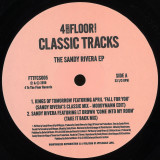
4 To The Floor is committed to delivering seminal house music to wax, making sought after heritage tracks readily available on vinyl for crate diggers to add to their collections. The fourth edition of the series pays homage to one of the most loved names in house music – Sandy Rivera. Known for his soulful dancefloor cuts he has produced timeless classics, with his long-lasting career and multitude of aliases captured by this 12” release. Opening the A-side is the Moodymann Edit of Kings of Tomorrow’s ‘Fall For You’, featuring the stunning vocals of long-time collaborator April Morgan, followed by Sandy’s grooving ‘Come Into My Room’ which features LT Brown. On the flip is Soul Vision’s ‘Don’t Stop’ with its atmospheric strings and gospel vocal. The release is closed with Kings Of Tomorrow featuring Elzi Hall ‘Show Me’, an atmospheric club cut that shows the versatility of this house legend.
- 1: Came From
- 2: Paf.no / Ya Baba (Anik Khan Remix)
- 3: Not Enough
- 4: Htly (Feat. Ali Sethi)
- 5: Spoiled Brown Men (Feat. Ginni)
- 6: Brown Gold
- 7: Drop Hot (Feat. Moh Flow & Ruby)
- 8: East2West (Feat. Nesta)
- 9: Up & Down (Feat. Surtaal Singh)
- 10: Ma's Dua
- 11: Over // Under
- 12: Getaway
- 13: Infinite Netic (Feat. Netic)
ONĒK’s self-titled album is a bold statement of identity, blending cultural heritage, personal struggle, and self-discovery while showcasing his versatility as an artist. Rooted in seven languages carrying universal themes, ONEK by Anik Khan is a bridge between past and future, tradition and innovation. It reflects ONĒK’s deep connection to his roots while pushing boundaries musically, weaving together influences from around the world into a singular, powerful voice. 12 SONGS. 12 STORIES. 7 LANGUAGES. The album will be released in two phases, beginning with Pack 1, which lays the foundation for ONĒK’s journey, followed by the full album release, expanding into themes of personal evolution, confidence, and legacy.
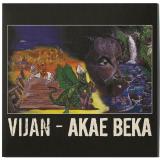
Vijan, originally released in 2003 by I Grade Records, is a seminal release from the “golden era” of St. Croix roots reggae, now available for the first time on 12” vinyl courtesy of Before Zero Records.
Produced by the legendary combination of Vaughn Benjamin and Laurent “Tippy I” Alfred, Vijan balances the raw, spiritual intensity of Vaughn’s songwriting with the sophisticated, melodic arrangements that became the hallmark of the I Grade sound.
This album features an incredible lineup of musicians who helped shape the sound of Virgin Islands reggae. The production credits boast the textured guitar layers of Tuff Lion , the deep, driving bass of Kenyatta Itola , and the rhythmic precision of Dion “Bosie” Hopkins. Uniquely, this album also showcases Vaughn Benjamin’s versatility as a multi-instrumentalist, contributing drums, bass, and keys on standout tracks like “All Ye Naashan” and “Thanks for Life”.
Akae Beka’s inimitable style of rich, deep, multi-layered songwriting and uncompromising devotion to RasTafari is on full display here. At the point of his untimely passing in 2019, Vaughn Benjamin had released over 70 albums, solidifying his place as one of the most prolific reggae artists ever known. Vijan remains
a glowing highlight in this expansive catalogue, capturing a specific moment of creative brilliance in the early 2000s.
The vinyl reissue allows listeners to engage with the album’s analogue richness and features the striking original artwork by Marcus Wilson, presented here as a 12” square masterpiece.
KANONENFIEBER: "In der Schule lernen wir, dass Krieg etwas Schlechtes ist. Vom Prager Fenstersturz bis zur Ermordung des Thronfolgers in Sarajevo - Krieg bedeutet immer Gewalt. Wir hören von politischen Spannungen, gewagten Feldzügen und zermürbenden Materialschlachten. Untermauert wird all das von Zahlen, so gewaltig und abstrakt, dass sie beinahe irreal wirken: 17 Millionen Tote allein im Ersten Weltkrieg.
Wenn sich der Pulverdampf vom Schlachtfeld verzogen hat, bleiben nur noch Tote zurück - keine Menschen. Doch wer war der Mann, der erschossen im Granatentrichter liegt? Wer war der kaum 17-jährige Junge, der nach einem Minentreffer im Unterstand erstickte, schreiend nach seiner Mutter? Wer war der Feldwebel, der Fahnenjunker, der Pionier - der einfache Soldat, der innerhalb weniger Sekunden sein Leben und seine Identität verlor? Ein einzelnes Schicksal, das im Schatten des "großen Ganzen" so winzig erscheint, dass es kaum Beachtung findet.
Genau hier setzt Soldatenschicksale an.
Von der Landung der Amerikaner an der Westfront über den erbarmungslosen Winterkrieg im Osten bis hin zu den Kämpfen auf und unter der Wasseroberfläche der Nordsee - es geht um Menschen. Um Stimmen. Um Geschichten, die in Vergessenheit geraten. "Soldatenschicksale" versammelt überarbeitete Fassungen von "Yankee Division" (2022), "Der Füsilier" (2023) und "U-Bootsmann" (2023) sowie zwei neue Stücke, die als "Skagerrak" fungieren.
Skagerrak. Die größte Seeschlacht des Ersten Weltkriegs.
Nach jahrelangem Wettrüsten zwischen dem Deutschen Kaiserreich und Großbritannien ist es am 31. Mai 1916 so weit: zwei Großmächte prallen aufeinander. In den Songs "Z-Vor!" und "Heizer Tenner" wird der Untergang des Kleinen Kreuzers SMS WIESBADEN geschildert, erzählt aus der Sicht eines Marinemelders und eines Heizers. Artillerie, Flammen, Maschinenlärm - und mittendrin: zwei Männer, die Teil einer Geschichte werden, die keiner überlebt."
Ltd. CD Mediabook, Ltd. Gatefold LP & LP-Booklet, LP, Digital album.
- 1: Heatsick (Feat. Hilary Jeffery)
- 2: Plastic Fascist
- 3: Praya (Feat. Bendik Giske, Maria W.horn)
- 4: Past Blast
- 5: Mancini Sighs
- 6: Black Metal Rewind (Night Drive Astra, 200)
- 7: Death By Nostalgia, 1688
- 8: Passengers (Feat. Bendik Giske, Maria W Horn, Adam Betts)
Loaded with tension and anchored by bold textural and stylistic contrasts, Sam Slater’s third solo full-length finds the British sound artist, composer, and engineer grappling with his creative contradictions head-on.
Having spent a life time in bands and producing records, Sam transitioned somewhat by accident through his work with Johan Johansson into working as a composer on high profile projects such as his collaboration with Hildur Guðnadóttir on the Grammy Award-winning Joker and Chernobyl, and with Pulitzer Prize-winning journalist Mstyslav Chernov on the soundtrack to the lauded 2000 Meters to Andriivka. Having a vast set of interests and influences is an asset when helping realise a directors vision for a soundtrack, but one's own musical voice can end up being constrained. In Lunng, Slater has gone back to his wildly divergent range of influences and rather than shy away from the extremes, he's used them to create a singular vision.
Take the opening track “Heatsick”: Slater imagines an extravagant fusion of 2000s drone metal and vintage British brass, welding ear-splitting overdriven drones and blown-out choral vocals to stirring trombone swells from veteran player Hilary Jeffery. On paper, it’s hard to imagine—but Slater’s intentionality conducts these polarizing elements into a surreal blur of sonic extremes, with the guitars’ relative harshness softened by Jeffery’s eerily nostalgic colliery echoes.
His last solo album, I do not wish to be known as a Vandal (Bedroom Community, 2022), showcased this breadth by assembling a team of collaborators including Sam Dunscombe and Yair Elazar Glotman. On this record he’s linking up with acclaimed multi-instrumentalist Maria W. Horn, idiosyncratic sax virtuoso Bendik Giske, versatile percussionist Adam Betts, and the aforementioned Jeffery, Slater ushers these players toward a lattice of calculated confutations.
Working to explore the tension between the divergent practices of his collaborators—Lunng was meant to be challenging. On “Praya”, Giske’s familiar overblown horn phrases are almost vaporized, vanishing among Slater’s weightless synths and Horn’s chillingly hoarse vocals. There are traces of Horn’s Funeral Folk project, but Slater shifts the emphasis, letting her voice brush past the other elements like a hallucination.
Slater’s use of extremes isn’t just in the micro; dynamics drive the album’s overall flow. “Praya” sets the stage for the record’s heaviest, most prickly moment: “Passengers”. Here, Horn’s voice cracks, rasps, and gurgles over serrated synths and Betts’ ritualistic drums. Slater turns an industrial symphony into a folk opera—dark, dramatic, and strangely beautiful—etched with Giske’s fluttering phrases.
But the mood soon shifts. Slater careens toward chaos, unleashing double-time rhythms and piercing textures familiar to anyone with a soft spot for classic black metal. These grotesque incongruities are deliberate; Slater surveys years of musical conflict and leans in, using dissent as fuel to build kinetic energy.
The weight of sentimentality bears down on “Black Metal Rewind (Night Drive Astra, 2006)”, melting teenage memories into hypnagogic ambience—shoegaze dreams whirled with angelic choral delusions. On “Death by Nostalgia, 1688”, he ventures further into polarizing territory, distorting AutoTuned voices with cryptic strings and medieval tonalities, unsettling any stable sense of past or present.
In this record Slater focuses on pure energy, color, and mood. Lunng distills years of listening into a bracing brew—boiling each sound down to its essence, then serving it with unflinching intent.
John Twells, 2025
Grupo um celebrate 50 years with release of lost dictatorship-era album nineteen seventy seven!
First time release - vinyl comes with printed innersleeves
Brazilian avant-jazz vanguardists Grupo Um celebrate their 50th anniversary, sharing a second previously lost 1970s album from the vaults. Nineteen Seventy Seven (titled after the year it was recorded) is another rip-roaring instrumental fusion treasure from the band which spawned from within Hermeto Pascoal’s famed mid-1970s São Paulo collective.
Like their debut album Starting Point, Grupo Um’s Nineteen Seventy Seven was recorded when Brazil's military dictatorship was at its most repressive. “There were no open doors to those who dreamt to be protagonists in creative instrumental music”, remembers drummer Zé Eduardo Nazario, “even popular composers and singers had to submit their songs to censors and many records were banned and confiscated from the stores.”
Just like Hermeto Pascoal's Viajando Com O Som (1977) and Grupo Um's previous album Starting Point (1975), both of which remained unreleased until the 21st century, Zé Eduardo asserts that the 1977 album was flatly 'without any chance to be released at that time."
Recorded at Rogério Duprat’s Vice-Versa Studios in São Paulo, the group were under both time and space restraints, “we chose the small Studio B,” Lelo Nazario recalls, “which had a Tascam (TE AC) 12x8 console and a 4-channel AMPEX AG 440 machine. Therefore, we had to record without overdubs, everything straight to tape.”
Expanding from a trio to a quintet, original Grupo Um members Lelo Nazario (keys), Zé Eduardo Nazario (drums), and Zeca Assumpção (bass) were joined by saxophonist Roberto Sion and percussionist Carlinhos Gonçalves. Carlinhos, Zé and Zeca had already played together in the group Mandala, while brothers Lelo and Zé had just finished a stint backing Hermeto Pascoal during his years in São Paulo.
Lelo was deeply immersed in modular synthesizer experimentation during this period, working extensively with the ARP2600 and EMS Synthi AKS. These electroacoustic explorations formed the sonic foundation for "Mobile/Stabile," one of his first compositions to merge modular synthesis with Brazilian music, a fusion that would ripple throughout the Brazilian jazz scene. The piece premiered at the first São Paulo International Jazz Festival in 1978, performed by Grupo Um with guest trumpeter Márcio Montarroyos. In a shocking moment, festival organizers interrupted the show mid-performance, sparking fierce backlash from both audience members and journalists who denounced the incident as artistic censorship during Brazil's era of political and cultural repression. The version on Nineteen Seventy Seven is the first recording of the composition.
Nineteen Seventy Seven combines Afro-Brazilian rhythm, modular synthesis and a plethora of whistles, percussion and effects pedals. Album opener “Absurdo Mudo” - so titled for the absurd difficulty it poses to the musicians performing it - starts out in a cloud of mysterious dissonance, before the haze breaks for a glorious keyboard and saxophone interplay atop an uptempo samba groove. “Cortejo dos Reis Negros (Version 2)” (Procession of the Black Kings), based on the maracatu rhythm, inverts the traditional jazz song structure by beginning with improvisations, which are followed by the theme and a final coda. “The studio also had two Parasound electronic reverb units,” Lelo notes, “and the timbre is very audible on the soprano sax and percussion.”
Grupo Um’s daring music represents a manifesto of resistance during the dictatorship years, but it’s one which remains just as relevant today. As Lelo puts it: “For me, the aesthetic issue has always been about combining contemporary avant-garde languages with Brazilian music, independent of categories and commercial interests. The result of this fusion takes music to a new level.”
Recording credits (1977)
Recorded at Vice-Versa B Studio, São Paulo, November 9, 1977
Produced by Lelo Nazario and Zé Eduardo Nazario
Engineered by Ricardo “Franja” Carvalheira
Lelo Nazario – Wurlitzer electric piano, acoustic piano, signal generator, percussion
Zé Eduardo Nazario – drums, percussion
Zeca Assumpção – electric bass
Carlinhos Gonçalves – percussion
Roberto Sion – soprano sax, clarinet
Release credits (2025)
Produced by UTOPIA Studio, São Paulo
Project Coordination in Brazil by Irati Antonio (Utopia Studio)
Tape Restoration and Digital Mastering by Lelo Nazario at Utopia Studio, July 2025
Liner Notes by Lelo Nazario and Zé Eduardo Nazario
Photography by Jorge Las Heras, Lelo Nazario, and artists' personal archives
Photo Restoration by Lelo Nazario
Artwork and Design by Alessandro Renaldin
- 1: Moanin' At Midnight
- 2: How Many More Years
- 3: Smokestack Lightnin
- 4: Baby, How Long
- 5: No Place To Go (You Gonna Break My Life)
- 6: All Night Boogie
- 7: The Red Rooster
- 8: Spoonful
- 9: Evil (Is Goin' On)
- 10: I'm Leavin' You
- 11: Moanin' For My Baby
- 12: I Asked For Water (She Gave Me Gasoline)
- 13: Forty- Four
- 14: Somebody In My Home
- 15: So Glad
- 16: Back Door Man
Moanin’ in the Moonlight, Wolfs erstes Langspielalbum aus dem Jahr 1958, versammelte ein Dutzend
Singles, die er im Laufe des vorangegangenen Jahrzehnts aufgenommen hatte, darunter die Favoriten
„Smokestack Lightnin’“, „Evil“ und „How Many More Years“.
Holen Sie sich den Sound des größten Blues-Labels Amerikas in High Fidelity mit der Chess Records 75th
Anniversary Series nach Hause. Diese audiophilen Neuauflagen klassischer Alben und Compilations aus der
Chess-Diskografie wurden von den originalen Analogbändern remastert und bei Quality Record Pressings
(QRP) auf 180-Gramm-Vinyl gepresst. Jede Platte ist in einer Tip-On-Gatefold-Hülle aus hochwertigem
Karton verpackt.
g 7 The Red Rooster [aka Little Red Rooster]
[g] 7 The Red Rooster [aka Little Red Rooster]
- 1: Puritatem Tuam Interiorem Serva
- 2: Todeslied
- 3: The Road
- 4: Hero And Leander
- 5: Mariner's Song
- 6: Shores In Flames
- 7: White Dress
Blue, Grey & Black Marble vinyl[23,49 €]
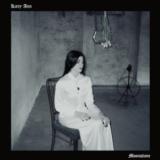
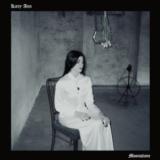
Through crushing riffs and haunting vocals, it reflects on loss, the forces of nature, and existential struggle. The production balances raw intensity with a deep, immersive atmosphere, enhancing the album's emotional depth. The album opens with a song in Latin, setting the tone with a ritualistic invocation. As its title suggests, it serves as a reminder to preserve one's inner purity in a decaying world, weaving ancient echoes into the album's foundation.
Todeslied follows as a hymn to death, carrying a solemn mood. The record also draws upon literary inspirations: one track is based on The Road by Cormac McCarthy, evoking apocalyptic desolation and the desperate fight for survival, while Dress in flames gives voice to the fury and imprisonment of Bertha Mason, the tormented character in Charlotte Bronte's victorian novel Jane Eyre. Compared to her previous release, which was more personal, Moonstone marks a shift towards greater collaboration within the band, with a more unified approach to songwriting and arrangements. The album, featuring two tracks by bassist Francesca Papi, has been arranged and refined together with Davide Rosa (guitar) and Fabio Orticoni (drums). The release also includes a powerful tribute to Bathory with a reinterpretation of Shores in Flames.
Recorded at Produzione Rumorose, mixed by Maurizio Baggio, and mastered by Giovanni Versari, this record represents a powerful evolution in the band's sound, sharpening their identity and pushing the boundaries of their musical expression.
Through crushing riffs and haunting vocals, it reflects on loss, the forces of nature, and existential struggle. The production balances raw intensity with a deep, immersive atmosphere, enhancing the album's emotional depth. The album opens with a song in Latin, setting the tone with a ritualistic invocation. As its title suggests, it serves as a reminder to preserve one's inner purity in a decaying world, weaving ancient echoes into the album's foundation.
Todeslied follows as a hymn to death, carrying a solemn mood. The record also draws upon literary inspirations: one track is based on The Road by Cormac McCarthy, evoking apocalyptic desolation and the desperate fight for survival, while Dress in flames gives voice to the fury and imprisonment of Bertha Mason, the tormented character in Charlotte Bronte's victorian novel Jane Eyre. Compared to her previous release, which was more personal, Moonstone marks a shift towards greater collaboration within the band, with a more unified approach to songwriting and arrangements. The album, featuring two tracks by bassist Francesca Papi, has been arranged and refined together with Davide Rosa (guitar) and Fabio Orticoni (drums). The release also includes a powerful tribute to Bathory with a reinterpretation of Shores in Flames.
Recorded at Produzione Rumorose, mixed by Maurizio Baggio, and mastered by Giovanni Versari, this record represents a powerful evolution in the band's sound, sharpening their identity and pushing the boundaries of their musical expression.
Mathias Kaden returns to Rekids with the 'Circulate' EP, featuring a William Kiss Remix.
Mathias Kaden is back on Rekids after 2022’s ‘Blackbird’ EP, this time with the four-track ‘Circulate’ EP featuring a remix from the hotly tipped William Kiss. Kaden’s ‘Freedom’ kicks things off with stripped-back machine rhythm, tasteful stab melodies and a deeply satisfying low-end groove before an iconic gospel vocal joins in. Title track ‘Circulate’ is another infectious low-slung crawler with crunchy synth hits and a hypnotic and classy vibe that will get the dancefloor moving.
On the flip, William Kiss remixes Mathias Kaden’s ‘Freedom’ following his recent EP on Rekids' sibling label RSPX and the release of his collaborative project, Not Without Friends, with Luke Alessi and Jordan Brando on RÜFÜS DU SOL’s Rose Avenue. Kiss turns the track into a pumping peak-time cut with additional percussion and plenty of his signature Jackin’
flavour. Closing out the record, Kaden’s ‘Twisting Shadows’ introduces an acidic bassline and warped, dubbed-out vocals before dropping into an energetic trip.
Active since the mid-90s, Mathias Kaden appeared on Radio Slave’s Rekids for the first time in 2019 for ‘Liberate Drums’. He now returns to the label with the ‘Circulate’ EP, adding to his versatile discography on labels like Dyinamic and Vakant while also remixing work by Matthias Tanzmann, Onur Özer, Anja Schneider, and Trentemöller.
- A1: Conrad Schnitzler Ballet Statique
- A2: Faust I've Heard That One Before/Watch Your Step
- A3: Eno Moebius Roedelius Foreign Affairs
- A4: Harald Grosskopf Emphasis
- A5: Cluster 21:32 (Bureau B Edit)
- A6: Moebius & Plank Rastakraut Pasta
- B1: Roedelius Glaubersalz
- B2: Pyrolator Minimal Tape 3/7 2
- B3: Riechmann Himmelblau (Bureau B Edit)
- B4: Kluster Kluster 2 (Electric Music) (Bureau B Edit)
- B5: Günter Schickert Apricot Brandy Ii (Bureau B Edit)
- B6: Asmus Tietchens Falter-Lamento
Was ist Krautrock? Genre, Provokation oder Mythos? Diese Compilation liefert keine endgültige Antwort - aber zwölf ausgewählte Tracks aus fünf Jahrzehnten musikalischer Grenzüberschreitung. In Zusammenarbeit mit Bureau B entstanden, versammelt diese Platte Highlights aus einer größeren, kommentierten Diskografie. Kein Kanon, sondern ein Impuls: zum Wiederhören, Weiterdenken, Diskutieren. Krautrock bleibt Streitfall - und genau das macht ihn lebendig. Jetzt auf transparentem Vinyl - limitiert und unverzichtbar.
Childhood Intelligence’s 18th release by ADSR aka. Todd Nickolas & Dominic Paterson from Toronto, Canada. The 2x12” album presents mostly tracks written and produced by Todd, with A1/D1 being in collaboration with Paterson. "Give a teenager in a rural Canadian setting an analog synthesizer, a drum machine and a four-track cassette recorder and feed him a steady diet of 80s EBM, Post-Punk, Synthpop, Electro, Dub, Acid, Hip Hop and House, and you’ll get the kind of genre melding electronic-based music that Todd Nickolas has been known for since his early days of writing and producing." The end result is a versatile one, with “Passive Articulation” presenting abstract Techno - House - Electro visions, and fusing all the elements of vintage Intelligent Dance Music that we cherish so much: warm basslines, beautiful chord progressions, diverse and surprising arrangements infused with haunting melodies, hypnotic cyber sounds, detached vocal cuts and dubbed percussion.…Overall fresh & timeless classiness for the present, past & future.
Recorded various locations New Hamburg, Kitchener-Waterloo, Ottawa, Toronto, San Francisco and Los Angeles. ADSR greatly thanks those who were there from the start, those who joined along the journey and those here now.
Announcing Perseverance Flow, the latest album from acclaimed Chicago-based ensemble Natural Information Society (NIS), release date 2024-10-24. After a trilogy of double LPs by expanded manifestations of the band that began in 2018 with Mandatory Reality & continued through Since Time Is Gravity (a Pitchfork Best Jazz & Experimental Album of the Year selection & Mojo’s #1 Underground Album of 2023), NIS returns to its core formation of Lisa Alvarado on harmonium, Mikel Patrick Avery on drums, Jason Stein on bass clarinet, & composer/multi-instrumentalist Joshua Abrams on guimbri for one continuous 37 minute composition across a single LP. As the rocket boosters on spaceship earth sputter closer to burnout, lower your stylus into a soundfield that grows stronger the deeper you travel into it; a dose of the medicine many of us look to music to deliver awaits you inside.
One of the deep contemplations of this natural information (thanks Bill Callahan) is the wide range of source materials Abrams draws from over the band’s more than 15 year history: Ideas from minimalism, modal jazz & traditional musics are regularly reimagined in these compositions. The 2021 double LP descension (Out of Our Constrictions), with guest soloist Evan Parker, reflected aspects of Abrams’ love of party music, Chicago house, & John Coltrane. *But even veteran travelers with the NIS best brace themselves for the Perseverance Flow.
Speaking to the history & the inspirations behind the album, Abrams offers: “We played the piece for a year in concert before the recording. At Electrical (Audio Studios, Chicago) we went in at 11 & were done in time to pick our kids up from school.” Abrams continues: "In a reference world, I imagine Perseverance Flow like a live extended realization of a Jaylib lost instrumental as remixed by Kevin Shields. Or vice versa. I also think it has sympathies to some of the more rhythmically intricate dance musics out of Chicago & Lisbon.”
The core NIS ensemble heard on Perseverance Flow always address Abrams’ writing with the discipline of orchestra musicians & the creativity of improvisers. But this time around, instead of inviting living legend status musicians Evan or William Parker or Ari Brown as honored guests to solo freely over the composed materials, Abrams’ invited guest collaborator was the medium of the recording studio itself. Situated at the board with engineer Greg Norman, Abrams pushed post production techniques found only sporadically on earlier NIS records deep into the heart of the music, distorting & reshaping instruments to subtly &, at times, aggressively mutate timbre & texture, color & time.
Refracting the band’s signature mesmerizing chains of overlapping rhythmic patterns through the sonic funhouse of dub makes Perseverance Flow the most formally experimental NIS album to date. Now a soundworld fully unique to itself is listening to itself, consoling & humoring itself, & consoling & humoring you. A destruction myth & a creation myth of a soundworld together at once —”energetically nutritious” (October 2025 Issue 500 The Wire) supernatural information society.
“Perseverance Flow is skipping rope in slo-mo. A dance of co-operation to rally guts & humors & keep marching through pouring tears” (Abrams).
- Control
- Koru Mindset
- Pretender
- Grow
- Leviathan
- Wandern
- Wicked Game
GAVIAL sind zurück. Deutlicher. Verletzlicher. Größer als je zuvor. Fast drei Jahre sind vergangen, seit Gavial mit "VOR" ein kraftvolles Statement abgegeben haben. Drei Jahre voller politischer Brüche, gesellschaftlicher Abgründe und persönlicher Erschütterungen. Drei Jahre, die Spuren hinterlassen haben - hörbar, fühlbar, unausweichlich. Jetzt kehrt das Quartett aus Dresden/Leipzig/Berlin mit einem neuen Album zurück. Hier prallen Soul und Gospel auf Country, Psychedelic-Blues auf pure, unverstellte Emotion. Gavial erschaffen Klangwelten, in denen Gitarren, Bass und Stimme zu etwas Größerem verschmelzen. Melancholie, die nachhallt. Hypnose durch Klang. Energie, die nicht mehr loslässt. Mit Vehemenz präsentieren sich Gavial so roh und kompromisslos wie noch nie. Ihre Songs sind Spiegel - von allem, was brennt: Eine Welt, die sich selbst zerfrisst. Gesellschaften, die verlernt haben zuzuhören. Technologien, die uns überholen. Militarismus, der zurückkehrt. Menschenrechte, die zu Worthülsen verkommen. Institutionen, die versagen. Und Egoismus, der gedeiht. "Thanks, I Hate It" ist keine Kapitulation. Es ist ein Soundtrack zu einer Zeit, die uns täglich prüft. Gavial sind hier, um uns zu erinnern: Wir sind noch da. Wir fühlen noch. Wir hören noch zu. Und manchmal lautet die einzig ehrliche Antwort auf diese Welt: Thanks, I Hate It.
Sivert Høyem – The Best Of versammelt die Höhepunkte von einem der unverwechselbarsten und kraftvollsten Stimmen Norwegens. Das Album dient sowohl als Einführung für neue Hörer als auch als musikalische Reise für diejenigen, die Høyem während seiner gesamten Solokarriere begleitet haben.
Die Sammlung präsentiert seine größten Songs, die die norwegische Rockgeschichte geprägt haben, sowie die intimeren Stücke, in denen Høyem allein im Rampenlicht steht.
The Best Of ist daher nicht nur eine Zusammenstellung beliebter Tracks, sondern ein Porträt eines Künstlers, der während seiner gesamten Karriere riesige emotionale Räume mit einer einzigartigen und sofort erkennbaren musikalischen Handschrift verbunden hat. Für viele Hörer wird sich dieses Album wie eine Hommage anfühlen – nicht nur an die Musik, sondern an die Atmosphäre, die Geschichten und den leicht dunklen Schimmer von Schönheit, der Sivert Høyem stets begleitet.
Man O To from the elusive producer NU is finally set to be released as a single on Crosstown Rebels, featuring remixes from Parisian producer Pépé Bradock who producers two amazing takes on the original. Since its inclusion on Acid Pauli's Get Lost Compilation in 2012, the track has gained huge support and become a modern-day electronic classic.
A nomad of modern times, NU has travelled the continents with his diverse music to unearth his imitable style. Represented heavily in Man O To, where instruments amalgamate with electronic production to become solid rhythms. An extra spark come from its lyrics, outtakes from an old Persian poem from the well known poet Rumi, who speaks of true happiness in love here performed by Ghazal Shakeri from an original recording made by renowned French composer Armand Amar.
Julien Auger aka Pépé Bradock is a widely respected producer best known for his ground breaking remixes and releases on labwes such a Avatisme, Classic and Versatile Recordings. As a DJ, he has spun in almost every major club in the world and is known for his versatile, and mesmerising style. Bradock conjures a trippy remix and dub version of Man O To and fitting ode to the original.
The RIOT DJ-BACKPACK XL is a high-end, extremely rugged-built backpack designed for the heavy-travelling Pro-DJ. It comfortably holds any digital gear from Kontrol S4 to battle-mixers such as Rane Sixty-Two or Pioneer DJM-S9 along with a laptop and accessories. Constructed entirely from hardwearing PVC Tarpaulin, its outer shell and all zippers are fully waterproof which ensures your gear is protected even in the worst weather. The featured “Zip-Around-Expansion-System” means the main compartment’s capacity can be doubled, turning the RIOT DJ-Backpack into the ultimate versatile packing monster.
+ FITS
Laptop up to 17"
Ableton Push2
Akai MPK-25
Akai MPC Renaissance
Denon MC-4000
NI Kontrol S5
NI Kontrol S4 MK2
NI Kontrol S2 MK2
NI Kontrol S2 MK3
NI Kontrol D2
NI Kontrol Z2
NI Maschine+
NI Maschine
Numark Mixtrack Pro 2
Pioneer DDJ-SB2
Pioneer DDJ-SB3
Pioneer DDJ-400
Pioneer DDJ-RB
Pioneer DJM-S11
Pioneer DJM-S9
Pioneer DJM-S7
Pioneer DJM-900 SRT/NXT
Rane Seventy-Two
Rane Sixty-Two
Rane Sixty-Eigth
Reloop Elite
Roland DJ-202
Vestax VCI-400
Vestax VCI-380
12“ Vinyl
Accessories
+ BASICS
Crafted from hardwearing and 100% waterproof PVC Tarpaulin
Soft-fleece lining
PVC-coated (waterproof zippers)
Lockable zippers on main and laptop compartment
Rubber corner protectors and rubber feet
Main compartment includes several removable adjustment foams, a divider and a protection panel
The “Zip-Around-Expansion-System” doubles the main compartment’s capacity
Main compartment can be packed and unloaded in the “DJ-booth-friendly” stand-up position or in the fully opened and unfolded position to gain easy access
Separate and fully padded laptop-compartment up to 17”
Two large front pockets with internal mesh pouches provide perfect organization of small accessories
Padded back panel with airflow system, ergonomic backpack straps and chest straps
Top and side carrying handles
Detachable trolley sling
Hand luggage compatible
+ SPECS
+ Outer dimensions: 56 x 37 x 23 cm
+ Inner dimensions: 51 x 32 x 8 cm
+ Weight: 3,0 kg
- A1: Down
- A2: Run It Up
- A3: Put Yo Hands Up
- A4: Let's Get Down
- A5: Sad Songs
- A6: Set Me Free
- A7: Room To Fall
- B1: Angklung Life
- B2: Earthquake
- B3: Falling To Pieces
- B4: Here We Go Again
- B5: Rescue Me
- B6: Proud
Die Trilogie ist komplett, und zum ersten Mal überhaupt erscheint Marshmellos „Joytime III“ auf Vinyl in einer speziellen 10-Jahres-Jubiläumsausgabe, die eines seiner bisher ambitioniertesten und kollaborativsten Projekte feiert. Als entscheidender Moment in der Joytime-Saga hat dieses Album den Mello-Sound in neues, mutiges Terrain vorangetrieben und hochoktanige EDM mit emotionalen Melodien und festivaltauglicher Energie vereint.
Von „Rescue Me“ mit A Day to Remember bis hin zur explosiven Trap-Hymne „Room to Fall“ (mit Flux Pavilion und Elohim) – dem unbestreitbaren Smash-Hit des Albums – ist Joytime III ein Kaleidoskop des Sounds. Marshmello versammelt eine All-Star-Besetzung, darunter Slushii, YULTRON, Wiwek, Crankdat und TYNAN, zu einer genreübergreifenden Feier der Einheit, Kreativität und puren Klangfreude.
Joytime III ist ein kraftvoller Abschluss der Joytime-Reihe, ein mutiges, emotionales und mitreißendes Statement, das nun zum ersten Mal auf Vinyl verewigt wurde.
Feiern Sie 10 Jahre musikalische Entwicklung, Zusammenarbeit und Mello-Magie mit dieser unverzichtbaren Ausgabe eines modernen Dance-Klassikers.
- 1: Awakening
- 2: Under The Wire
- 3: Contact
- 4: Tug
- 5: Profess
- 6: Altar Of The
- 7: Ancestors
- 8: Quixotica
- 9: Postscript
He cast off his old skin, fundamentally altering his studies, homeland, and life, thereby charting a new future. Recorded at Sound on Sound Studios in Montclair, New Jersey, in January, 2024, 'Ancestral' was influenced, in part, by O'Gallagher's PhD studies into the music of John Coltrane, and reunites the versatile reeds player with guitarist Ben Monder while, notably, features the first-ever recorded collaboration between master drummers Andrew Cyrille and Billy Hart. "Basically, my PhD (available on O'Gallagher's website) is an analysis where I transcribed all of Trane's solos, spelling out what he does on his late recordings 'Interstellar Space' and 'Stellar Regions'. And it shows that free music is not free, not the way people think it is.
Trane was definitely thinking about organization in those records. This research definitely gave me ideas about how to be freer within the systems that I had developed, and how to perceive them in a more organic way." O'Gallagher's latest recording marks a significant artistic evolution, following a period of considerable personal change. After leaving Brooklyn, New York, he and his wife relocated to the UK before ultimately settling in Lisbon, Portugal. This journey, coupled with dedicated study, profoundly shaped his new music. O'Gallagher, Monder, Cyrille, Hart, and Coltrane: a potent brew. In an album consisting largely of first takes, O'Gallagher's compositions vary from through- composed pieces to skeletal charts to full- blown group compositions/ improvisations.
- Tell My Why
- Gas Crisis
- Cold Sweat
- New Left
- I Hate Hippies
- Angry Youth
- All The President's Skin
- Fucking Zones
- (I Can't Take It) No More
HAND SCREENED SLEEVE/COL. LP/BOOKLET[27,31 €]
USA Hardcore/Punk Geschichte! M.I.A. wurden 1980 in Las Vegas gegründet, zogen 1981 nach Orange County und begannen im berüchtigten Cuckoo's Nest zusammen mit Fear, Shattered Faith, T.S.OL. u.a. Shows zu spieln. Ende '81 gingen sie in ein lokales Tonstudio in Costa Mesa und nahmen an einem Nachmittag neun Songs auf, bis ihnen das Geld ausging - 300 Dollar gut angelegt! Eine Kassette wurde rasch kopiert und herumgereicht. Eine Kopie der Kassette wurde KevinSeconds bei einem Gig mit 7 Seconds in Reno gegeben. Kevin gab sie an Tim Yohannan von Maximum Rocknroll weiter. Schließlich gelangte sie in die Hände von Felix Alanis von Smoke Seven und Greg Shaw von Bomp. Mitte 1982 waren M.I.A. dann auf drei Vinyl-Veröffentlichungen vertreten: "Tell Me Why" auf der Compilation American Youth Report von Bomp, "New Left" auf Maximum Rocknroll Presents: Not So Quiet On the Western Front von Alternative Tentacles und acht der neun Tracks landeten auf der berüchtigten Split-LP mit Last Rites auf Smoke Seven. Alle 9 Tracks des ersten Tapes sind hier versammelt, zum ersten Mal richtig abgemischt. Der Begin von M.I.A. (US) und gleichzeitig das letzte Lapitel der Moder City Records-Reissue-Reihe zur Band. « ...In one corner is M.I.A., a band originally from Las Vegas, the champions of punk's positive side. They've managed to fuse a super tight thrash sound with enlightened attitudes_"I Hate Hippies" is obviously meant as a satire with a moral, and the results are absolutely stunning. » _Jeff Bale's 1982 review of the Last Rites for...-Split-LP in Maximum Rocknroll #2 Farbiges Vinyl plus 24seitigem Booklet.
USA Hardcore/Punk Geschichte! M.I.A. wurden 1980 in Las Vegas gegründet, zogen 1981 nach Orange County und begannen im berüchtigten Cuckoo's Nest zusammen mit Fear, Shattered Faith, T.S.OL. u.a. Shows zu spieln. Ende '81 gingen sie in ein lokales Tonstudio in Costa Mesa und nahmen an einem Nachmittag neun Songs auf, bis ihnen das Geld ausging - 300 Dollar gut angelegt! Eine Kassette wurde rasch kopiert und herumgereicht. Eine Kopie der Kassette wurde KevinSeconds bei einem Gig mit 7 Seconds in Reno gegeben. Kevin gab sie an Tim Yohannan von Maximum Rocknroll weiter. Schließlich gelangte sie in die Hände von Felix Alanis von Smoke Seven und Greg Shaw von Bomp. Mitte 1982 waren M.I.A. dann auf drei Vinyl-Veröffentlichungen vertreten: "Tell Me Why" auf der Compilation American Youth Report von Bomp, "New Left" auf Maximum Rocknroll Presents: Not So Quiet On the Western Front von Alternative Tentacles und acht der neun Tracks landeten auf der berüchtigten Split-LP mit Last Rites auf Smoke Seven. Alle 9 Tracks des ersten Tapes sind hier versammelt, zum ersten Mal richtig abgemischt. Der Begin von M.I.A. (US) und gleichzeitig das letzte Lapitel der Moder City Records-Reissue-Reihe zur Band. « ...In one corner is M.I.A., a band originally from Las Vegas, the champions of punk's positive side. They've managed to fuse a super tight thrash sound with enlightened attitudes_"I Hate Hippies" is obviously meant as a satire with a moral, and the results are absolutely stunning. » _Jeff Bale's 1982 review of the Last Rites for...-Split-LP in Maximum Rocknroll #2 Handgedrucktes Lithographie-Sleeve, farbiges Vinyl plus 24seitigem Booklet (weltweite Limitierung 300 Stück).
Meltdown Deejays Recordings welcomes Finnish producer Båssanova with Warrior, a 12" that blends deep techno energy, classic house drive and breakbeat motion.
Heavy basslines, dub textures and crisp percussion form the backbone of this record, powerful, hypnotic and built for big systems.
Each version takes the theme a little further, from straight club pressure to more spaced-out territory. A versatile and timeless EP for DJs who like their tracks raw and direct.
- A1: You Can Close Your Eyes
- A2: Heaven (Butterflies)
- A3: Thom Thumb
- A4: Fairytale Lullaby
- A5: Norwegian Wood
- A6: Keep An Eye On Summer
- B1: I Know (A Little)
- B2: Where Did My Apple Fall?
- B3: Sweet Melody
- B4: Icarus
- B5: Something Heavy
Following the kaleidoscopic ambition of Djesse Vol. 4, Jacob returns with The Light For Days – a stripped-back, emotionally resonant body of work that is reflective of the quiet core of his artistry.
Recorded in just four days in the very room where his career first took flight, The Light For Days trades scale for intimacy, spotlighting Jacob’s unmistakable voice and a deepening relationship with the guitar. The result is a collection of originals and handpicked covers that feel immediate, heartfelt, and timeless.
The Light For Days is a powerful reminder of the versatility that has earned Jacob seven GRAMMYs across various genres. For those who’ve seen Jacob live, this record will feel like coming home. For everyone else, it’s an invitation to see and to hear him in a new light.
- 1: Beehive!!
- 2: Questions - Theme
- 3: Koi No Yokan
- 4: Le Cactus
- 5 45:
- 6: Honey Pye
- 7: I Want You
- 8: Brighton Beach
- 9: Howling Bowl
- 10: I Am I
- 11: I Got My Mojo Working
- 12: Yoakenotori Ga Naita
Their original pop-infused songs blend rock, punk, and garage rock, and--together with their wild stage presence--have made them unforgettable to anyone who sees them live. Last year, the power trio even provided the soundtrack for a Ryukyu Nissan commercial--appearing in it themselves. Now, it's time for their debut LP: "Best Answer"! The album is incredibly catchy and versatile. From wild, lo-fi punk instrumentals like "Beehive!!" and "Howling Bowl", to cool pop- punk tracks like "I Want You", "45", and "Questions- theme".
There are also danceable garage punk songs like "Brighton Beach", "Koi no yokan", and "Yoakenotori ga naita". The track "I am I" references the SONICS' guitar sound and adds cool Japanese female vocals, screams, and harmonies. The album also includes two wild, punky cover versions: the R&B classic "I Got My Mojo Working", and a charming yet incredibly cool take on Jacques Dutronc's "Les Cactus". And with "Honey Pye", they even deliver a catchy off- beat tune with a feelgood pop-punk attitude. This album is top-quality Japanese rock--from beginning to end!
What We Do When in Silence is the trio of Nicola Ratti, Alessandra Novaga and Enrico Malatesta.
Imagine a series of small movements in an empty space. Imagine their shadows on the floor, there’s a natural light sliding in from the 3 windows on your right side. There’s no silence here. There are people outside waiting for others, waiting for the people since what we do is not visible, since we do it when in silence and there is no silence here. Synthesizer, piano, whistling, electric guitar and percussions.
Nicola Ratti is a versatile musician and sound designer who has long been active across diverse experimental fields. His sound production creates systems shaped by repetition and expansion, with a particular focus on building environments that resonate with the spaces and architectures we inhabit, and on balancing the emotional and perceptual orientations to which we are accustomed.
Alessandra Novaga is a guitarist who has been exploring, for years, the possible territories her instrument can lead her to. She has crossed through the most classical worlds, reaching into intangible abstractions without setting boundaries between the two. Sound, meanings, encounters, and narratives are the elements that guide her path.
Enrico Malatesta is a percussionist and independent researcher working within experimental contexts that intersect music, performance, and territorial investigation. His practice explores the relationship between sound, space, and movement, and the vitality of materials, with a particular focus on surfaces, listening modes, and the articulation of multiple layers of information through an ecological and sustainable approach to percussion instruments.