Поиск:versions

Стили
Все
STEF KAMIL CARLENS - BO WHO YOU WANNA BE LP

STEF KAMIL CARLENS

BO WHO YOU WANNA BE LP

12inchSMR449
STARMAN Records
12.09.2025

The song sets the tone of this album. A simple structure, over which a web of rhythm is woven using an instrumentation of old drum machines in dialogue with live drums and percussion. Lots of sax, tenor and baritone! A pumping bass. A frisky pizzicato violin. And some classic keyboards: the Fender Rhodes, the Hohner Clavinette D6, the L-100 Hammond organ. And lots of analogue synthesisers: a rippling Juno-106 marks the path to follow, which is crossed with phrases from other museum pieces: Crumar's Stratus, Farfisa's Synthorchestra, Sequential's Prophet-10. Or still the Casio Club M-100, which is basically a toy, but has been subtly colouring SKC's songs for years!

SKC has often dived deep into the repertoire of artists he holds in high esteem, looking for pearls, forgotten or not, to work on. Likewise on this album with versions of songs by Prince, Dez Mona, Alain Bashung…

Сделать предзаказ12.09.2025

он должен быть опубликован на 12.09.2025

23,95
Various - Dolores: Salsa & Guaracha From 70's French West Indies

In Guadeloupe, many people think that jazz and ka music are like a ring and a finger. To some extent, the same could be said about so called Latin music and the music played in the French West Indies.

Both aesthetics were born in the Caribbean and bear so many connections that they can easily be considered cousins. In constant dialogue, there are lots of examples of their fruitful alliance and have been for a while. The English country dance that used to be practiced in European lounges came to be called kadrille in Martinique and contradanza in Cuba. They both featured additional percussion instruments inherited from the transatlantic deportation. Drawing from shared feelings about the same traumatized identity – later to be creolized – it would be hard not to assume that they were meant to inspire each other. The golden age of the orchestras that graced the Pigalle nights during the interwar period further proves the point. As soon as the 1930s, Havana-born Don Barreto naturally mixed danzón and biguine music in a combo based at Melody's Bar. In the following decade, Félix Valvert, a conductor who was born and raised in Basse-Terre in Guadelupe, also worked wonders in Montparnasse with La Coupole, which was an orchestra made up of eclectic musicians. Afro- Caribbean performers of various origins were often hired on rhythm and brass sections in jazz bands, which used to enliven the typical French balls of the capital. In the 1930s and onwards, Rico’s Creole Band was one of them.


Martinican violinist-clarinettist Ernest Léardée, who would become the king of biguine music as well as the main figure of French Uncle Ben's TV commercials (a dark stigma of post-colonial stereotypes), had musicians from the whole Caribbean sphere play at his Bal Blomet – and they all enchanted "ces Zazous-là" (according the words of Léardée's biguine-calypso piece). In les Antilles (French for French West Indies), music history started to speed up in the 1950s, when trade expanded and radio stations grew bigger. The Guadelupean and Martiniquais youth tuned in their old galena radio sets to South American and Caribbean music. As for the women traders, les pacotilleuses, they bought and sold goods across different islands (the "passing of items through various hands" was thought to be most pleasurable) and brought back countless sounds in their luggage. Such was the case of Madame Balthazar, who once returned from Puerto Rico with the first 45rpm and 33rpm to ever enter Martinique.

Out of this adventure was created the famous Martinican label La Maison des Merengues, a music business she opened and undertook with her husband and which proved to be a major landmark. At the end of the 1950s, in Puerto Rico, Marius Cultier competed in the Piano International Contest playing a version of Monk's Round 'Midnight. He won the first prize and this distinction foreshadowed everything that was to come. Cultier, the heretic Monk of jazz, was quickly praised for writing superb melodies, always tinged with a twist that conferred a unique sound to his music. It didn't take long for the gifted self-taught musician to get to play with Los Cubanos, making a name for himself thanks to his impressive maestria on merengues.

The rest is history. Besides, in the late 1950s, Frantz Charles-Denis, born into the upper middle class in Saint-Pierre and better known by his first name Francisco, went back home after working at La Cabane Cubaine – a club located rue Fontaine where he had caught the Latin fever. Francisco's music was therefore heavily marked by his Cuban cousins' influence, which gave the combos he led a specific style and also led to renewal. Things were swinging hard in La Savane, located in the main square in Fort-de-France. He set up the Shango club close by and tested out the biguine lélé there, a new music formula spiced up with Latin rhythms. Soon afterwards, fate had him fly to Puerto Rico and Venezuela.

As for percussionist Henri Guédon (percussions were only a part of his many talents), he was born in Fort-de-France in May 22nd 1944, the day marking the celebration of the abolition of slavery. As an old man, he could remember that in " his father's Teppaz, a lot of hectic 6/8 music was constantly playing...". In the opening lines of his Lettre à Dizzy, a small illustrated collection of writings published by Del Arco, he highlighted the huge impact that cubop had on him as a teenage boy, around 1960. He eventually turned out to be the lider maximo in La Contesta, a big band steeped in Latin jazz. He was also the one who originated the word zouk to describe music which brought the sound of the New York barrio to Paris. It was the culmination of a journey that started in Sainte-Marie: "a mythical place for bélé, the equivalent of Cuban guaguancó". In the early 1960s, the tertiary economy developed to the detriment of agriculture. Yet rural life was where roots music emerged in Martinique and in Guadeloupe.

Record companies played a major part in the process of Latin versions sweeping across the islands – before reaching everywhere else. Producer Célini, boss of the great Aux Ondes label, and Marcel Mavounzy, both the head of Émeraude records - a firm which was founded in 1953 - as well as the brother of famous saxophonist Robert Mavounzy, were big names to bear in mind. Although there were many of them - all of whom are featured on this record - Henri Debs was definitely the major figure in the recording adventure. He proved to be so influential that he even got compared to Berry Gordy. In the mid 1950s, when he acquired his first Teppaz, he worked on his first compositions: a bolero and a chachacha. Then, he became the one man who made people discover Caribbean music, from calypso to merengue. He was among the first ones to rush out to San Juan, Puerto Rico, to buy records and distribute them through a store run by one of his brothers in Fort-de-France. He had members of the Fania All Star come and perform there, which he was madly proud about. He was also the first one to pay attention to Haitian music, such as compas direct and various other rhythms which would soon flood the market. As a result, many of the combos hitting his legendary studio would end up boosted by widespread "Afro-Latin" rhythms. However, he never denied his identity: gwo ka drums were given a major role, although they were instruments which had long been banned from the "official" music spheres. The present selection bears witness to such a creative swarming. Here are fourteen tracks of untimely yet unprecedented cross-fertilization: all types of music rooted in the Creole archipelago have found their way, whatsoever, to the tracklisting. Whether originating from the city or being more rural, they all go back to what Edouard Glissant, in an interview about the place of West Indian music in the Afro-American scope, called "the trace of singing, the one which got erased by slavery." "It is so in jazz, but also in reggae, calypso, biguine, salsa... This trace also manifests through the drums, whether Guadelupean, Dominican, Jamaican or Cuban... None of them being quite the same. They all point to the idea of a trace, seeking it out and connecting to each other through it. This is the hallmark of the African diaspora: its ability to create something new, in relation to itself, out of a trace. It may be the memory of a rhythm, the crafting of a drum, a means of expression which doesn't resort to an old language but to the modalities of it." The opening track features one of the emblematic orchestras of this aesthetic identity, criscrossing many music types from the archipelago. The 1974 Ray Barretto guajira – Ray Barretto was a major New York drummer influenced by Charlie Parker and Chano Pozzo – is magnificently performed by Malavoi, a legendary Fayolais group (i.e from Fort-de-France). Additionally, the compilation ends on a piece by Los Martiniqueños de Francisco. It symbolically closes the circle as it is a genuine potomitan of Martinique culture which also functions as a tireless campaigner for Afro-Caribbean music. Practicing the danmyé rounds (a kind of capoeiria) to the rhythm of the bèlè drum, it delivers a terrific Caterete, a kind of champeta of Afro- Colombian obedience which was originally composed by Colombian Fabián Ramón Veloz Fernández for the group Wgenda Kenya. The icing on the cake is Brazilian Marku Ribas, who found refuge in Martinique in the early 1970s, bringing his singing to the last trance-inducing track. These two "versions" convey the whole tone of a selection composed of rarities and classics of the tropicalized genre, swarming with tonic accents and convoluted rhythms. It is the sort of cocktail that the West Indians never failed to spice up with their own ingredients. For instance, the Los Caraïbes cover of Dónde, a famous Cuban theme composed by producer Ernesto Duarte Brito, has a typical violin and features renowned Martinique singer Joby Valente and his piquant voice.


The track used to be – or so we think – their only existing 45rpm. The meaningful Amor en chachachá by L'Ensemble Tropicana, a band which included Haitian musicians among whom was composer and leader Michel Desgrotte, also recalls how Latin music was pervasive in the tropics in the mid-1960s. They were the ones keeping people dancing at Le Cocoteraie in Guadelupe and La Bananeraie in Martinique. Around the same time, another "foreign" band, Congolese Freddy Mars N'Kounkou's Ryco Jazz, achieved some success on both islands by covering Latin jazz classics – such as their adaptation of Wachi Wara, a "soul sauce" by Dizzy Gillespie and Chano Pozo whose interweaving of strings and percussions can have anyone hit the dancefloor. How can you resist Dap Pinian indeed, a powerful guaguancó by Eugene Balthazar, performed by the Tropicana Orchestra and published by the Martinique-founded La Maison des Merengues? It also acts as a symbol of the maelstrom at work. Going by the name Paco et L'orchestre Cachunga, Roger Jaffory used to play guaguancó too: his Fania-inspired Oye mi consejo is one example of his style. Baila!!!!! Dancing was also one of the Kings' focus points. Oriza is a Puerto Rican bomba and a "classic" originally composed by Nuevayorquino trumpeter Ernie Agosto, which reserves major space for brasses, giving it a special sheen.

Emerging from the New York barrios crucible was also La Perfecta, a Martinique group originating from Trinidad, whose name directly references the totemic Eddie Palmieri figure as well as his own band, also called La Perfecta. Here they borrow Toumbadora from Colombian producer and composer Efraín Lancheros and interpret it by emphasizing percussions, which set fire to the track even more than the wind instruments. The same goes for Martinique's Super Jaguars, who use Tatalibaba – a composition by Cuban guitarist Florencio "Picolo" Santana which was made famous by Celia Cruz & La Sonora Matencera – as a pretext for sending their cadences into a frenzy. In a more typically salsa vein, the Super Combo, a famous Guadelupean orchestra from Pointe-Noire that was formed around the Desplan family and had Roger Plonquitte and Elie Bianay on board, adapt Serana, a theme by Roberto Angleró Pepín, a Puerto Rican composer, singer and musician also known for his song Soy Boricua. Here again, their vision comes close to surpassing the original. In the 1970s, L'Ensemble Abricot provided a handful of tracks of different syles, hence reaching the pinnacle of the art of achieving variety and giving pleasure. They played boleros, biguines, compas direct, guaguancó and even a good old boogaloo - the type they wanted to keep close to their hearts for ever, "pour toujours", as they sang along together in one of their songs. Léon Bertide's Martinican ensemble excelled at the boogaloo which had been composed by Puerto Rican saxophonist Hector Santos for the legendary El Gran Combo.


Three years later, in 1972, Henri Guédon, with the help of Paul Rosine on the vibraphone, tackled the Bilongo made famous by Eddie Palmieri. Such a classic!!!!! And so were the Aiglons, the band from Guadelupe: choosing to execute Pensando en tí, a composition by Dominican Aniceto Batista, on a cooler tempo than the original, they noticeably used a wonderfully (un)tuned keyboard in place of the accordion. On the high-value collectible single – the first one released by Les Aiglons under the Duli Disc label – there is a sticker classifying the track under the generic name "Afro". Now that is what we call a symbol. Jacques Denis

нет на складе

Закажите сейчас, и мы закажем товар для вас у нашего поставщика.

21,43

Последний логин: 31 дн. назад
Lu Colombo - Nuda

Lu Colombo

Nuda

12inchMD33-012
Maledetta Discoteca
09.09.2025

A Side: Er Mar (Submarine Mix) "Maracaibo, dance to the barracuda, yes but dance naked, zà zà! " So sang Maria Luisa Colombo, known to all of us as Lu Colombo. It was 1982, the meteoric song became and still is today a worldwide Hit that everyone has sung at least once in their life and almost never sober. Let's make a leap in time, we are in 1993 the track is taken up and remixed in several versions between Latin and Euro House, we have taken up the track Er Mar (Submarine Mix), dreamy, lustful, psychedelic, evocative, Summer in its purest form. To dance on the beach, preferably in company of Miguel and naked

B Side: FeelFly – Onda Erotica Remix A Cosmic sabba in the forest. You’ll get lost with this hypnotic sound and a minute later you’re ready for a proper trip into your hidden Erotic Dreams. With this almost ten minutes long and original version, Feel Fly delivers to all of us a signature track of the highest order. Feel Fly is an Italian electronic musician and DJ. Defined by Gerd Janson as a linchpin of the underground scene, he recently released some Balearic trance tracks on International Feel and Internasjonal by Prins Thomas, as well as transversal EPs on New Interplanetary Melodies and Hell Yeah.

нет на складе

Закажите сейчас, и мы закажем товар для вас у нашего поставщика.

17,23

Последний логин: 3 мес. назад
Weval - Chorophobiar LP

Weval

Chorophobiar LP

12inchTCLR062
TECHNICOLOUR
05.09.2025
  • A1: Chorophobia
  • A2: Moving On
  • A3: Movement
  • A4: Just Friends
  • A5: Head First
  • A6: Dopamine
  • B1: This Is…
  • B2: Better
  • B3: Open Up That Door
  • B4: Mercator
  • B5: Free
также имеющийся в продаже

Yellow Marbled Vinyl[27,10 €]


Das von Kritiker:innen gefeierte niederländische Elektronik-Duo, Weval (bestehend aus Harm Coolen und Merijn Scholte Albers) ist mit seinem lang erwarteten neuen Album, „CHOROPHOBIA“, auf dem Ninja Tune-Sublabel Technicolour zurück!

Als es darum ging, ihr viertes Album, „CHOROPHOBIA“, zu produzieren, stellten sich Weval ihren Ängsten. Obwohl Harm Coolen und Merijn Scholte Albers seit ihrer 2013 veröffentlichten Debüt-EP, „Half Age“, in der Dance-Szene verankert sind und mit ihrer fünfköpfigen Band Festivalbühnen wie Nuits Sonores, Lowlands, Primavera, Best Kept Secret, Pukkelpop und DGTL Amsterdam bespielten, haben sie sich aktiv davon entfernt, als Floorfiller-Act bekannt zu sein. Doch als die beiden vor kurzem über den Begriff Chorophobie stolperten - was so viel bedeutet wie Angst vor dem Tanzen -, beschlossen sie, sich der Ironie hinzugeben und aus ihrer Komfortzone herauszukommen. „Bis zu diesem Zeitpunkt hatten wir immer mit einer ‚Zuhör‘-Mentalität an unseren Platten gearbeitet.“, sagt Harm über die Herangehensweise beim zweiten und dritten Weval-Album („The Weight“ von 2019 und „Remember“ von 2023), „und uns wurde klar, dass wir während unserer gesamten Reise als Produzenten Angst davor hatten, Tanzmusik zu machen.“.
Der Sprung ins kalte Wasser hat zu Wevals bisher extrovertiertesten Tracks geführt. Während sie diese neue Richtung bereits mit der groovigeren „Night Versions“-EP von 2024 für Technicolour angedeutet hatten, erforderte das Loslassen ihrer Hemmungen eine geduldige künstlerische Entwicklung. „Wir wollten uns auf eine Art und Weise engagieren, die sich noch immer befreiend und wahrhaftig anfühlt.“, erklärt Harm und fügt hinzu, dass die Bezeichnung als Dance-Album sich nicht nur wie eine Kehrtwende anfühlt, sondern sie auch von den Grenzen und Klischees bestimmter Kategorien befreit.

Сделать предзаказ05.09.2025

он должен быть опубликован на 05.09.2025

27,10
Weval - Chorophobiar LP

Weval

Chorophobiar LP

12inchTCLR062ND
TECHNICOLOUR
05.09.2025

Das von Kritiker:innen gefeierte niederländische Elektronik-Duo, Weval (bestehend aus Harm Coolen und Merijn Scholte Albers) ist mit seinem lang erwarteten neuen Album, „CHOROPHOBIA“, auf dem Ninja Tune-Sublabel Technicolour zurück!

Als es darum ging, ihr viertes Album, „CHOROPHOBIA“, zu produzieren, stellten sich Weval ihren Ängsten. Obwohl Harm Coolen und Merijn Scholte Albers seit ihrer 2013 veröffentlichten Debüt-EP, „Half Age“, in der Dance-Szene verankert sind und mit ihrer fünfköpfigen Band Festivalbühnen wie Nuits Sonores, Lowlands, Primavera, Best Kept Secret, Pukkelpop und DGTL Amsterdam bespielten, haben sie sich aktiv davon entfernt, als Floorfiller-Act bekannt zu sein. Doch als die beiden vor kurzem über den Begriff Chorophobie stolperten - was so viel bedeutet wie Angst vor dem Tanzen -, beschlossen sie, sich der Ironie hinzugeben und aus ihrer Komfortzone herauszukommen. „Bis zu diesem Zeitpunkt hatten wir immer mit einer ‚Zuhör‘-Mentalität an unseren Platten gearbeitet.“, sagt Harm über die Herangehensweise beim zweiten und dritten Weval-Album („The Weight“ von 2019 und „Remember“ von 2023), „und uns wurde klar, dass wir während unserer gesamten Reise als Produzenten Angst davor hatten, Tanzmusik zu machen.“.
Der Sprung ins kalte Wasser hat zu Wevals bisher extrovertiertesten Tracks geführt. Während sie diese neue Richtung bereits mit der groovigeren „Night Versions“-EP von 2024 für Technicolour angedeutet hatten, erforderte das Loslassen ihrer Hemmungen eine geduldige künstlerische Entwicklung. „Wir wollten uns auf eine Art und Weise engagieren, die sich noch immer befreiend und wahrhaftig anfühlt.“, erklärt Harm und fügt hinzu, dass die Bezeichnung als Dance-Album sich nicht nur wie eine Kehrtwende anfühlt, sondern sie auch von den Grenzen und Klischees bestimmter Kategorien befreit.

Сделать предзаказ05.09.2025

он должен быть опубликован на 05.09.2025

27,10
GRUPO AMIGOS - PALOMA MENSAJERA
  • No Sabes Que Me Siento Bien
  • Mujer
  • Dama
  • Son Las 5
  • En El Campo
  • Everybody Is Free Bonus Track
  • Ensueño
  • El Tren Del Señor Taylor
  • Atardecer De Un Verano
  • Buscando Un Hogar
  • Psiquiatra
  • Dirty Girl Bonus Track

"Paloma mensajera" (featuring members of New Juggler Sound / Laghonia) shows the shift that was taking place within Peruvian rock away from psych and hard rock which had predominated during the early 70s. The style adopted by Grupo Amigos (and other bands and artists during this period) highlights the influence of soft rock, UK, US and Latin American folk rock and, above all, the desire to keep the melodic greatness of The Beatles alive. This reissue includes bonus tracks and extensive liner notes. DESCRIPTION "Paloma mensajera" (featuring members of New Juggler Sound / Laghonia) shows the shift that was taking place within Peruvian rock away from psych and hard rock which had predominated during the early 70s. The style adopted by Grupo Amigos (and other bands and artists during this period) highlights the influence of soft rock, UK, US and Latin American folk rock and, above all, the desire to keep the melodic greatness of The Beatles alive. The positive reception albums by artists such as We All Together, Telegraph Avenue and Zulu garnered between 1972 and 1975, marked a change of paradigm and in preferences within the Peruvian rock scene. Eclecticism gained new ground, to the detriment of the sectarian and orthodox, while melody grew more present and visible, moving away from the progressive experimentation that typified underground Peruvian rock up to the beginning of the 70s. For their first single on MAG, included on this reissue, the band adopted a formula in which Beatles harmonies converged symmetrically with folk motifs. 'Dirty Girl' was a hit on the radio. A full album followed but only a fairly small number of copies of the album were pressed, which seems to have been the main reason for omitting it from the historical accounts of Peruvian rock music from the late 90s onwards. In "Paloma mensajera" all compositions were penned by the group, after several years during which cover versions were a staple. Some of the musical resources that the band had at their disposal in terms of composition and arrangements are striking and even surprising, considering that they were a debut band, whose members were under the age of 20. The arrangements included the clever use of a Moog synthesizer which had just arrived at the MAG studio. The success achieved by the Beatles tribute performances played by the members of Grupo Amigos for decades have eclipsed the songs that Edmundo, Andrés Da Ros and Simón Ames composed with youthful enthusiasm and energy between 1972 and 1973 to the point where they have almost been forgotten. This re-release of "Paloma mensajera" should help rectify this major injustice. It includes bonus tracks and extensive liner notes.

Сделать предзаказ05.09.2025

он должен быть опубликован на 05.09.2025

22,27
Ryan Adams - Heartbreaker 25th Anniversary Edition
  • A1: Damn, Sam (I Love A Woman That Rains)
  • A2: My Winding Wheel
  • A3: To Be Young (Is To Be Sad, Is To Be High)
  • A4: Why Do They Leave?
  • A5: Oh My Sweet Carolina
  • A6: Amy
  • B1: Bartering Lines
  • B2: Shakedown On 9Th Street
  • B3: In My Time Of Need
  • B4: Come Pick Me Up
  • B5: Call Me On Your Way Back Home

Celebrating a quarter-century of Ryan Adams’ 2000 debut solo album release Heartbreaker. This release features 11 re-imagined tracks from the critically acclaimed record that helped define a generation of alt-country and Americana.

Newly re-worked with fresh emotion and stripped-back intensity, these new versions offer a deeper take on the originals with a sprinkling of strings.The heartbreak never ended.

Сделать предзаказ05.09.2025

он должен быть опубликован на 05.09.2025

27,69
DIANE DENOIR & EDUARDO MATEO - INEDITAS
  • Je Suis Sans Toi
  • Rendez-Vous D'automne
  • La Dernière Valse
  • Le Lendemain
  • Un Amour, Un Sourire, Une Fleur
  • Corcovado
  • Gua De Beber
  • Berimbau
  • Vivo Sonhando
  • Fever
  • Garota De Ipanema
  • So Nice
  • Las Flores Nuevas
  • Y Hoy Te Vi
  • Esa Tristeza
  • Mejor Me Voy

Born as Diana Reches, Diane Denoir made her debut as a singer in 1966, backed by Eduardo Mateo on guitar. Influenced by Françoise Hardy and Astrud Gilberto, along with her own unique style, she performed a special blend of chanson française, bossa nova (sung in Portuguese, English, and French), and jazz. By then, Mateo was already a well-known guitarist in the Uruguayan music scene and a sought-after arranger. He was also beginning to establish himself as an incredible songwriter, connecting different musical universes in unique ways. The two formed a fruitful artistic partnership that lasted until the early seventies. This album, originally released in 1998 on CD, is a compilation of various unreleased recordings from different sources (concerts, radio and TV recordings, homemade tapes) made between 1966 and 1968. It is a unique document that showcases their incredible musicianship and creativity in their early years. The duo swings from bossa nova classics like "The Girl from Ipanema" to the rhythm and blues of "Fever," including chanson française standards like "Le lendemain" and "La Dernière Valse." The album also features earlier versions of the three best-known Mateo songs performed by Diane: "Y hoy te vi," "Esa tristeza," and "Mejor me voy," all of which were inspired by Diane. Inéditas unveils a new dimension of South American music from an unforgettable era.

Сделать предзаказ05.09.2025

он должен быть опубликован на 05.09.2025

35,50
Mystical Powa, Danny Red & Eddie Tbone - Zion / Kunta Kinte

Influenced by the vibrant Caribbean community and the reggae sounds that permeated his environment, Danny Red was drawn to music at a young age. His journey began in the 1980s, but it was in the early 1990s that Danny Red truly started to make his mark in the reggae scene. Rise to prominence was marked by his unique voice and his commitment to the Rastafari movement, which heavily influenced his music. In the 1990s, as dancehall began to dominate the reggae scene, Danny Red stayed true to his roots reggae origins, focusing on socially conscious themes and spiritual messages.

Known for his powerful vocal delivery and a profound lyrical approach, Danny Red’s music often explores themes of cultural identity, social justice, and spiritual awareness. Here teamed up with south Italian collective Mystical Powa to bring lyrically rich and musically vibrant single. Exploring Rasta believe in holy place called Mount Zion that awaits for each good person. Backed with highly popular anthem horn piece entitled Kunta Kinte played by Eddie T-Bone. Both tunes comes with tuff dub versions ready to mash up all dances worldwide.

нет на складе

Закажите сейчас, и мы закажем товар для вас у нашего поставщика.

17,61

Последний логин: 7 мес. назад
BAD RELIGION - ALL AGES - US EDITION

Spanning some eight albums and multiple line-ups, "All Ages" contains the very best of Bad Religion"s Epitaph years. It includes live versions of "Do What You Want" and "Fuck Armageddon..." with artwork that is culled from original show flyers! The lyrics sheets are also the original hand-written versions; some of which were scribed on bedroom walls!

Сделать предзаказ29.08.2025

он должен быть опубликован на 29.08.2025

22,65
Various - Hamam House Vol. 2

Various

Hamam House Vol. 2

12inchHAMAMHOUSE02
HAMAM HOUSE
29.08.2025

ll star cast from 4 different cosmic corners comes the more electronic side of Hamam. T hink of it as the dorian gray of Frankfurt airport , but instead it's at the hamam in istanbul. Fattish - no stranger to electronic versions of loved and cherished turkish songs, Fattish delivers a monster cinematic piece, strings section...the whole lot...check anything he puts his hands on, this one made it to the wax Kozmonotosman - our man on the moon, he visits regularly so if u need any rocks or bits ask him he will bring u, I got loads of rock so u can ask me alternatively.

My man delivers a super dope and groovy number from a not so well known jam from the 70's . Just get down and boogie on this. Kurt Adam - one of the new faves of the Hamam camp, delivers a taverna cut in a housey affair. Don't be fooled by the electronics, I drink raki to this any day at the drinkery. Hold me down if u can m gonna dance in euphoria, hear the wolfman roarrr.

нет на складе

Закажите сейчас, и мы закажем товар для вас у нашего поставщика.

13,03

Последний логин: 4 мес. назад
Suburban Architecture - Architecture Dub #006 (10")

Suburban Architecture are pleased to announce the sixth instalment in their 'Architecture Dubs' series of limited edition 10" vinyl releases. While previous editions have seen some of the most revered names active during the mid 90s golden era of Drum & Bass deliver remixes of Suburban Architecture material, this final release from the series sees the remix duties handled by the duo themselves.

Following on from the now sold out release of Architecture Dub #001 to #005 (featuring remixes from Peshay, Blame, Nookie, Ray Keith and 4Hero among others), edition #006 features a pair of VIP versions, previously only heard in Suburban Architecture DJ sets.

The A-Side features a rework of the track that started it all, 'Visions '96', the title cut from the duo's 2019 debut EP. The familiar pitched Rhodes pads, ominous vocals and intricately chopped Apache breaks of the original are all present, but new layers of atmospherics, tougher drum programming and a full, deep bass all serve to elevate the track in this 2025 rework.

On the flip, 'Future Jazz '95', originally featured on the duo's 2020 sophomore EP 'Alternative Futures', gets a musical rework. Maintaining much of the structure of the popular original, the original vocals and some of the drums remain while, Rhodes, Bass, Atmospherics and more are all replaced, delivering a cut which manages to feature largely new material while retaining the feel of the original.

Pressed on 10" vinyl and housed in brown Kraft paper sleeves, the series makes visual reference to the exclusive dubplate pressings which introduced so many classic cuts to the UK's dancefloors in the 90s.

нет на складе

Закажите сейчас, и мы закажем товар для вас у нашего поставщика.

11,35

Последний логин: 7 мес. назад
THE STONE ROSES - Turns Into Stone 2x12"
  • A1: Elephant Stone
  • A2: The Hardest Thing In The World
  • A3: Going Down
  • A4: Mersey Paradise
  • B1: Standing Here
  • B2: Where Angels Play
  • B3: Simone
  • C1: Fools Gold
  • C2: What The World Is Waiting For
  • D1: One Love
  • D2: Something’s Burning

Originally released in 1992 (as a single LP), Turns Into Stone pulled together many of the Stone Roses finest non album tracks - early singles, B-sides and extended versions – into one compelling collection. It begins with their first release from their ultimately turbulent tenure at Silvertone Records, ‘Elephant Stone’ and includes perhaps the bands finest moment, ‘Fools Gold.’ An essential companion to their timeless debut album, like the latter it contains some of best British guitar-driven pop/rock of the era, here spread over four sides of vinyl, the better to showcase the stretched-out grooves that helped them to become, for a time, probably the most exciting and influential band in the country.

Сделать предзаказ29.08.2025

он должен быть опубликован на 29.08.2025

29,37
Block Sistem - DON'T LEAVE ME NOW

Limited remastered edition of an all time italo classic gem from 1983. Today is one of the rarest italo releases in big demand by collectors, now reissued in the right form including both vocal and extended instrumental versions.

нет на складе

Закажите сейчас, и мы закажем товар для вас у нашего поставщика.

17,44

Последний логин: 87 дн. назад
The Allegorist - From Birth Until Death LP

A“This album is about what it means to be human, and its creation is my offering. I attempt to tell a tale of the human experience in the reflection of my own.”

‘In the Andean mythology, condors are believed to be immortal. It is said that once they feel old, without energy, and useless, they climb to the highest peak and let themselves fall to death.’

The Allegorist is a visionary, enigmatic, transmedia, and boundary-pushing artist known for crafting deep, immersive dark sonic tales. Embracing a wide array of influences, weaving together the mysteries, art and spirituality, the art project defies categorisation, resonating with those who seek the unconventional.

From Birth Until Death is an introspective and immersive concept album that reflects on the essence of the human experience. Crafted over six years by The Allegorist (aka Anna Jordan), the album traces the arc of life—from its fragile beginnings to its inevitable end—using sound art to explore existential and philosophical terrain. Inspired by the Andean mythology of the condor – a symbol of immortality – the album blends electronic soundscapes with raw field recordings, evoking a deep sense of connection between the natural world and human existence.

The album’s progression mirrors the stages of life, starting with the birth of new beginnings and culminating in death, with each track offering a unique reflection on the moments in between. From the dynamic energy of Momentum, to the ethereal, illusionary world of Fata Morgana, the tracks guide the listener through emotions, perceptions, and experiences that shape the human condition.

A distinctive feature of From Birth Until Death is its intricate production. The album incorporates field recordings from Grunewald Forest, a distant roar of a jet, barking dogs, blending the sounds of nature – footsteps in the snow, birdsong, ocean waves – with layered synthesisers and electronic beats. The bass and ambient textures are crafted using an array of analog hardware, while all vocals, both lead and backing, are performed and recorded by Jordan. Some of the vocal takes were intentionally left raw, capturing the spontaneous energy of early recordings, while others were re-recorded to balance the album’s organic yet polished feel. Each element is meticulously crafted, revealing its deeper meaning as the album unfolds like a multidimensional, living sculpture.

At its core, From Birth Until Death is a meditation on the full spectrum of life. The album’s title track, From Birth Until Death, encapsulates this journey, reflecting on the passage of time and the unique experience of being human. The final track, Death, offers a melancholic yet beautiful exploration of endings, not as finalities, but as moments in the grand cycle of life. With its combination of evocative sound design and deeply personal themes, From Birth Until Death invites listeners to contemplate their own lives, offering a moving experience of reflection, growth, and transformation.

About From Birth Until Death
Words By Robin Rimbaud (Scanner)

From Birth Until Death is a deeply personal and reflective album and beautifully crafted. A detailed listen reveals that Jordan was in search of a profoundly human and authentic expression. In an era when so much around us seems defined by speed, Anna Jordan, aka The Allegorist, stands apart – aware that skimming the surface of life is neither sufficient nor rewarding. She reminds us of the value of deep, authentic listening.

The track Andean Condor seductively draws us into a smoky, blurred rhythmic soundscape, capturing the essence of the darkest Berlin nightclub, while Birth pulses with an almost shamanic transformation of sound, moving from the organic to the musical. It features a recording of Jordan’s footsteps in the snow in Grunewald Forest, Germany.

At times, the music feels almost sculptural in shape and tone – lifting, pushing, lilting, opening, and closing – where each piece is given room to fully develop. Many of the works blend synthetic sound with the natural, incorporating the human voice alongside environmental recordings: the wild waves of the ocean, a jet flying overhead, and barking dogs.

With From Birth Until Death, Jordan, like an alchemical architect revealing in the process of getting lost and relinquishing control, leaves us with a taut, immersive soundtrack in which to lose ourselves.

About the album ‘From Birth Until Death’
words by The Allegorist

“The album From Birth Until Death did not come easily to me. I started working on it in 2019, and it underwent many alterations over the years. I produced multiple versions of the tracks each year, but the album name, the track titles, and the album cover art stayed the same for 6 years. Not everything I did fit into the album’s final form, but I hope the heavy selection just made it better. I played this piece live in my techno live set between 2019 and 2020, and in the years after, I performed different art, ambient, and vocal versions of it, most notably the one at the church St. Marienkirche in Berlin in 2022. It just wanted to live and didn’t want to be finished. As I aged, this album aged with me. And now I’m ready to let it go.”

нет на складе

Закажите сейчас, и мы закажем товар для вас у нашего поставщика.

26,47

Последний логин: 7 мес. назад
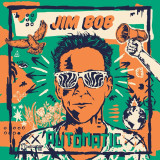
JIM BOB - AUTOMATIC LP

JIM BOB

AUTOMATIC LP

12inchBRED927
CHERRY RED
22.08.2025

Cherry Red Records is double delighted to present not one, but TWO brilliant brand-new albums from Jim Bob this summer! • Following his sold-out show at London’s O2 Shepherd’s Bush Empire in April, Jim Bob (Carter USM, Jamie Wednesday) returns with two new solo records (his 13th and 14th), released on the same day – Friday 22nd August 2025.

One album is ‘AUTOMATIC’ and one album is ‘STICK’. This is NOT a double album, double albums allow filler in and there is NO filler on ‘Automatic’ or ‘Stick’. You won’t find any skippable Instrumentals or reprised versions on these beauties, just wall-to-wall, floor-toceiling bangers - 22 of them – 11 songs on each excellent record. ‘Automatic’ features the full band from the last three Jim Bob albums (‘Pop Up Jim Bob’, ‘Who Do We Hate Today’ and ‘Thanks For Reaching Out’ - also available on Cherry Red Records) and includes the opening sing-a-long ‘Victoria Knits The Wars’ which features on the first 7” single. ‘Stick’ is a punkier, dirty power-trio, guitar record and features the poppin’ punky ‘S’ side of the 7” ‘Every Day’s a Discotheque’. Both albums are also available in colour gatefold vinyl and digital formats. ‘Automatic’ and ‘Stick’ are both the greatest album Jim Bob has ever made

Сделать предзаказ22.08.2025

он должен быть опубликован на 22.08.2025

28,53
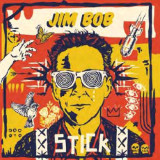
JIM BOB - STICK LP

JIM BOB

STICK LP

12inchBRED928
CHERRY RED
22.08.2025

Cherry Red Records is double delighted to present not one, but TWO brilliant brand-new albums from Jim Bob this summer! • Following his sold-out show at London’s O2 Shepherd’s Bush Empire in April, Jim Bob (Carter USM, Jamie Wednesday) returns with two new solo records (his 13th and 14th), released on the same day – Friday 22nd August 2025. • One album is ‘AUTOMATIC’ and one album is ‘STICK’. This is NOT a double album, double albums allow filler in and there is NO filler on ‘Automatic’ or ‘Stick’. You won’t find any skippable Instrumentals or reprised versions on these beauties, just wall-to-wall, floor-toceiling bangers - 22 of them – 11 songs on each excellent record. ‘Automatic’ features the full band from the last three Jim Bob albums (‘Pop Up Jim Bob’, ‘Who Do We Hate Today’ and ‘Thanks For Reaching Out’ - also available on Cherry Red Records) and includes the opening sing-a-long ‘Victoria Knits The Wars’ which features on the first 7” single. ‘Stick’ is a punkier, dirty power-trio, guitar record and features the poppin’ punky ‘S’ side of the 7” ‘Every Day’s a Discotheque’. Both albums are also available in colour gatefold vinyl and digital formats. ‘Automatic’ and ‘Stick’ are both the greatest album Jim Bob has ever made.

Сделать предзаказ22.08.2025

он должен быть опубликован на 22.08.2025

28,53
Horace Andy - Get Wise
  • 1: I Will Forgive You
  • 2: Root Of All Evil
  • 3: Holy Mount Zion
  • 4: Sexy Jean
  • 5: Let The Teardrops Fall
  • 6: I Don’t Want To Be Outside
  • 7: Eighty Percent Badness
  • 8: Get Wise
  • 9: Youth Of Today
  • 10: Feel Good

With his honeyed falsetto, Horace Andy has long been considered one of roots reggae's most inimitable voices. His signature tune, "Skylarking," is one of a handful of songs that can be instantly recognized by even the most casual of reggae fans. Making his debut with producer and mentor Phil Pratt at the age of sixteen, Andy's expressive vocal style is immediately distinctive, bearing the soulful influence of American artists Otis Redding and Smokey Robinson as well as fellow countryman Alton Ellis.

1975's Get Wise collects a series of singles produced by Pratt including versions of hits "Money, Money" ("Root Of All Evil") and "Zion Gate" ("I Don't Want To Be Outside"). Recorded between 1972 and 1974, these sides were captured at legendary studios Channel One, Black Ark, Dynamic Sound and Randy's Studio 17 with house engineers Ernest Hoo Kim, Lee Perry, Carlton Lee and Errol Thompson at the helm.

Originally released on Pratt's Sunshot label, the album doubles as a showcase for The Soul Syndicate Band, a typically ad-hoc session group which featured Sly & Robbie, Aston "Family Man" Barrett and Earl "Chinna" Smith, among others.

Get Wise delivers ten tracks of Andy's finest material and should be in the collection of any aficionado of the classic '70s Kingston sound. Liner notes by JR Gonne.

Сделать предзаказ22.08.2025

он должен быть опубликован на 22.08.2025

26,47
Eden Burns & Christopher Tubbs - Burns & Tubbs Vol. IV

We welcome back Tubbs & Burns on Public Possession offering yet another highly danceable selection of tunes.
The main title on this EP features Paula Tape and has it all: seductive vocals, a mesmerizing acid baseline and the classic hypnotic Tubbs & Burns touch.
It comes in three versions incl. an epic Todd Modes remix. Cheeky Bonus and potentially a secret Deejays favorite is Colter Carsons remix of the previously released „Where were you in 92“ turning it up a few gears, ready for some festival MainStage plays

нет на складе

Закажите сейчас, и мы закажем товар для вас у нашего поставщика.

12,56

Последний логин: 3 мес. назад
Fantastic Man - Genesis

A dense and driving club interpretation of the well-loved ethereal classic “Genesis,” reworked into a hypnotic instrumental with plenty of low-end weight and emotional charge.
Built for impact, not nostalgia, it comes in four versions — each tuned with a different tone for different zones of the night. Out on vinyl and digital via Axis of People.

На складе от22.04.2026

13,03

Последний логин: 22 дн. назад
Продуктов на странице:
N/ABPM
Vinyl