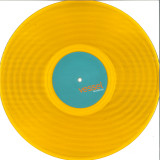
Ira James - owner and orchestrator of Vessel Recordings Group US - is treating us to plenty of newness this month and first up is Natural Rhythm with this transparent yellow vinyl 12". It's pure deep house bliss from the off with 'No Clothes' pairing rubbery and punchy kicks with some liquid synths that bring colour and depth. After the delightful '1985' comes 'City Life' which has a more dubby and bulbous low end that disappears out of sight as snappy snares power along the groove. 'Dust Redux' closes out with some sleek synth work and tech house minimalism that is pure dancing bait for the heads.
Cerca:vessel
Nonfiction very much keeps it real with this new outing on Vessel Recordings - owned and orchestrated by Ira James - which comes on a rather fascinating transparent 'coke bottle' green vinyl. The title cut 'B-Boy Basix' gets things underway with a physical drum line that is brought to life with old school hip-hop scratches and chopped-up James Brown vocals. There is more wildness to 'Get Loose', 'To The Top' is hardcore deep house heaviness and 'Itz Like This' is a militant stepper with dubby chords. 'Initiate' rounds out this most effective yet stylish EP with some paired back beats.
The Vessel Recordings label - with owner/orchestrator Ira James at its helm - has pretty much won us over right from the off. It has dropped a slew of early releases all at once and they are all well-crafted and original deep house EPs that marry soul and drive to perfection. 'Body' licks off and has a humid and sexy throb to it, while 'Freespeech' is more raw and dirty. It's brilliant, too, with deft chords and seductive vocals woven into the mix. 'Hourglass' shuts down with some crisp percussive house action and proper nice chord work that oozes soul. A great collab from Juwan Rates and Jlove, a pair we can't wait to hear more from.
Vessel Recordings Group is a new label from the United States and kicks off with Natural Rhythm aka the duo of Thomas White and Pete Williams. They have been working since the 90s on their own brand of house and as this EP shows it is stylish, rooted in tradition but full of contemporary designs. 'Jillybean' is raw, stripped back and perfect for backrooms. 'The Chase' is a slamming cut that pushes on with classic vocal samples twisted into something new, and great swing. 'Son Of Orange' is another lo-fi, high-class house sound with real weight and machine soul and 'Pocket Ops' closes out with dubby techno energy. A fantastic, no-frills EP to get this label underway.
New from Dreams (Apron, Private Selection)
Two killer broken techno cuts for fans of Surgeon, Batu and Karenn
Early support from Carista and Identified Patient (‘Paraxotica’ featured in his recent Crack Mag mix)
In 2022, Dreams launched a new label, Dance Data, which has quickly gained the attention of the underground dance music community - and set the stage with a new two track EP called ‘Paraxotica/Vessel’.
New Pagans create music that's not only vivid and engaging but also home to massive riffs and rare dynamics. The bands audible influences range from PJ Harvey to Sonic Youth while lyrically the band deliver protest songs, songs about women, songs about mothers and songs about conversations overheard on Belfast's public transport systems. Their live shows are also something to behold and have just been the recipients of the best live act at The Northern Island Music Prize 2020. Music is the focus and an important vehicle for the healthy message the band promotes. New Pagans is a proud advocate for women’s rights, visibility and inclusion in the global music industry – an industry dogged with a history of stark gender inequality. The arts community and media have responded to the bands refreshing social and historical lyrical stance which includes protest songs, songs of suffrage and an ode to Lily Yeats, the often overlooked sister of Jack and William B and a key mover in the world of Irish arts and crafts back in the day along with her younger sister, Elizabeth. New Pagans have headlined events as part of Women’s Work and Lyndsey McDougall has proudly embraced the demands of live performance and recording whilst pregnant twice!. The band are committed to promoting honest inclusion, demonstrating the female force and showing that you can be born as or identify as female, raise a family and have your place as a career musician. Young women, young mothers see Lyndsey as a symbol of strength and hope in her fearless and forthright attitude to motherhood whilst fronting a band. A lot of young mothers feel the need to hide that aspect of their personal life for fear of how people may perceive it as a limit in achieving creative breakthroughs. New Pagans are that breakthrough, a visible work in motion
Yotogi' sees the light of day through Vessel records. The record itself contains three tracks and three sound skits that recreate the atmosphere in which it was produced - deep in the bowels of Osaka, Japan. A big arigatou to Shindo for allowing us to make it available, and to our friends in Japan for sharing their honest approach to house music culture.
Following on from his percussion driven 'Rhythm Trainx Vol 2' EP on the renowned Running Back Ketiov returns with something special for the fourth outing on his own self-titled label. The 'King Of Hypocrisy' LP is a journey of personal development and musical discovery built around soundscapes, field recordings and new monotone arrangements. From the start the Ketiov alias has been about free expression and musical direction and in stark contrast to the Running Back EP this record shows the broad spectrum of the artist's influences and inspirations. Each track holds a special meaning and background story, written in private and kept private until totally finished. From the spooky vocals of 'the Wait' to the blissed-out guitars of 'Today' and the analogue arpeggiators of 'Dual Morality' the ten short tracks come together as an exceptional personal listening experience, which leave us wondering... what else does Ketiov have in store for the future
Electronic Leatherette is the new label from Riga based producer Dmitry Distant. After years of making electro and wave music he decided to create a new story and run his label. With a first release label provides a series of 4 basic nature elements. As a fundament of everything this release is dedicated to element Earth and can bring you though atmosphere of esotoric electronic music within guides from Vessel in Distress, Heinrich Dressel, Franck Kartell and new comer name from same planet MSRG. Enjoy your travel and sound scape.
Silk Road Assassins, a trio consisting of Tom E Vercetti, Chemist and Lovedr0id, return to Planet Mu with their debut full-length 'State Of Ruin' two years after their first EP 'Reflection Spaces'.
The trio recorded over two years, working together to start with, then across different studios and via the internet when their lives became more separated. They also finessed the album at Abbey Road studios, making use of some short time to add in extra layers.
The three producers day jobs are in production music, music designed and created specifically for film and games, and this album uses these skills to explore the musical forms that they love. The album explores how trap and grime's minimalist form can be built and curved into musical architecture: elegant, opaque and layered, turning the sound into lush, melodic world-building.
The work gone into the album is revealed on repeated listens, every sound on this record feels built to sit within it's delicate ecosystem. The fundamentals of the music are given their own sense of purpose: hand claps spray, bells tumble, guitars splinter and lush melodies waft over and fill the track's spaces like light, glinting across snapping, crisp rhythms and deep bass tones.
Die Beiden Ambient/krautrock/avantgarde-meisterwerke "plight & Premonition" (1988) Und "flux & Mutability" (1989) Entstanden Ende Der 1980er Im Can-studio Bei Köln, Bestehen Aus Jeweils Zwei Überlangen Tracks Und Gelten Als Klassiker Ihres Genres. An Den Aufnahmen Waren Neben Sylvian Und Czukay Auch Die Beiden Can-musiker Jaki Liebezeit (an Beiden Alben) Und Michael Karoli Sowie Marcus Stockhausen, Trompeter Und Sohn Des Berühmten Komponisten Karl-heinz Stockhausen, Beteiligt (letztere Nur An "flux & Mutability"). Der Re-release Auf Grönland Erscheint In Chicen Doppelformaten Mit Neuen Linernotes Des Renommierten Britischen Journalisten David Topp. Beide Alben Sind Nicht Bestandteil Der Jüngst Erschienenen Holger Czukay-retrospektive "cinema" Und Seit Ihrer Original-veröffentlichung Damals Auf Venture/virgin Records Und Limitierten Reissues Anfang Der 1990er In Japan Und Uk Nicht Mehr Erhältlich Gewesen.
Alan Abrahams aka Portable aka Bodycode is an artist very much defined by his past and his journey from South Africa to Paris via Berlin and Lisbon has seen him develop into a critically acclaimed producer, singer and video artist working with some of the biggest players in house and techno.Part of his constant drive to evolve and challenge himself, this autumn Abrahams launches new project RANGEr, teaming up with London label Waella's Choice for the debut release. The five tracks on Portable Presents RANGEr are a delicate mélange of jazz , soul and electronic and one of Abraham's most explicit nods to his South African roots.
On the A-side, the EP makes a steady start with 'Bazokonwaba' accompanied by a lullaby from South African a capella group Korus, hailing from the small township of Mbekweni in the Western Cape. They also feature heavily on the EP's most exuberant moment in 'Nomaliso' - already a favourite in Esa's recent Boiler Room - and the more languid B-side opener 'Indaba' with a choir of cowbells all harmonizing in unison. 'Reset' and 'Vessel' provide a self-reflective conclusion to the EP, holding their own as instrumentals with Cameroonian bass player Stan on bass and Parisian saxophonist Chisneg lending a hand on the latter. Early support from Tama Sumo, Lakuti, Gilles Peterson, Rinse FM, Esa, Stamp The Wax, Dimensions Recordings
Death Is Not The End collaborate with Uzbek label Maqom Soul to deliver an LP counterpart to last year's mixtape of the same title, compiling specially picked & fully licensed individual belters from the ex-soviet studios of Central Asian republics between 1978 and 1989 - incl. Uzbek, Tajik, Kurdish & Uyghur artists pulling traditional folk motifs together with pop & rock and psych elements.
"These recordings do not form a smooth or coherent history. They feel more like a sequence of discoveries made at different moments and in different circumstances. Songs and instrumental pieces that once lived inside specific contexts radio broadcasts, philharmonic programs, touring routes now sit side by side, revealing hidden connections as well as clear fractures between them.
Nasiba Abdullaeva appears here as a voice from the end of an era. Trained within a conservatory system, she worked inside the format of the Soviet pop song while filling it with melodic logic that did not come from Moscow or Leningrad. Her voice is soft and sustained, shaped by Eastern melisma, and it never functions as decoration. Even in tightly structured songs there is a sense of resistance, an effort to preserve a musical language rooted in Uzbek tradition rather than fully adapted to an all Union standard.
The ensemble Sintez, later renamed Navo, represents a different path. Beginning as a student rock group, the band was gradually absorbed into the official VIA system with all its limitations and compromises. Yet it was precisely within those boundaries that Sintez and Navo developed a recognizable sound. Electric guitars and jazz rock harmonies do not overpower the folk material but remain in tension with it. Their recordings feel like negotiations between what the musicians wanted to play and what they were allowed to perform.
The Tajik ensemble Gulshan reflects an institutional approach carried to a high professional level. Formed under television and radio structures, the group treated folk material almost as a written score. Carefully constructed arrangements, close attention to orchestration, and restrained use of pop techniques define their sound. There is less spontaneity here, but a strong sense of discipline and structure, where national melody becomes part of a carefully controlled sonic framework.
Koma Wetan occupies a very different space. Formed in the 1970s, this Kurdish rock group approached poetry and folklore as tools of cultural assertion. Their psychedelic rock never feels like a stylistic borrowing. Instead it functions as a contemporary vessel for language and themes that might otherwise have remained unheard. Even today these recordings sound fragile and stubborn at the same time.
The Uyghur ensemble Yashlik, closely connected to a musical drama theatre, operated somewhere between stage performance and popular music. Their songs are built on folk melodies but shaped for wide audiences. What emerges is a constant attempt to preserve the recognizability of Uyghur musical identity without freezing it in a folkloric frame. Yashlik's music exists in a state of balance between representation and development.
Digging Central Asia does not attempt to establish hierarchies or offer a single wayof listening. Names and dates matter less than the sound itself. Tape noise, abrupt transitions, and unexpected timbres remain part of the material rather than flaws to be corrected. This music existed at the crossroads of multiple routes geographic, cultural, and ideological. Heard today in a new context, it no longer feels peripheral. Instead it stands as a reminder that the history of popular music is far more fragmented, layered, and polyphonic than it is usually allowed to be."

Traversing wormholes and flexing versatility, Nicola Cruz gets back on his club-ready biz.
No proper introductions needed here. Sometimes you just have to sit back and appreciate someone at the top of their game. The third portal thing, done masterfully. Hats off.
Time-honoured templates that provide the foundations for his hybrid mutations. Three mescaline-strength techno incursions backed up with a vivid projection of fractal electro.
Big on murk. Properly steeped in introspection, expanding consciousness and horizons. The vision quest endures for the duration.
New levels of insectoid detail and lysergic flourish revealed with every close listen, but he’s always keeping it robust. Giving it chest with some serious dancefloor dramatics until the final unfurling.
Joe Fujinoki centered the compositions of his latest album Glass Torso round the idea of the fragility of the human body. Fujinoki described the narrative thread of the album as that of “holding the shape of a human body as if it might shatter like glass”. The precariousness of the body, the essence of the body as defined by Fujinoki as the torso, and the object relations between the boundaries of dialectical exercises pack themselves into his creative process.
Fujinoki recorded Glass Torso exclusively with analog synthesizers, stumbling in and out of structural loops to find space for accidental discoveries. The ten pieces of recorded material feel somewhere on the edge of typified form, feeling like a vascular system pumping in and out its undulating liquidities. Maybe this is the hollowed space held together by Fujinoki’s notion of the torso where you hear a microscopic world, dubby and generative. Fujinoki is adept at organizing this realm of subtle sound sources, giving proper considerations of shared tonal space. Seemingly, this handling of the precarity of sonic material elucidates Fujinoki’s mature attention to detail.
Ambient music genre tropes often affirm the listeners vessel for escape and dissociation. It provides an intoxicating allure by respite from an overwhelming exterior reality far outside the listeners controls. Here this space becomes apolitical, or its protest vocabulary softer and subtle. Fujinoki does not aim to tackle hyperobject topics on how to course correct the world, but he does something increasingly rarer to come across. On Glass Torso an alternative space is created not as shelter, but as a meditation on negotiation and compromise. This twenty eight minutes of audio lays down a foundation for imagination, for imagining how to negotiate the fragility of the self. Zoomed out, the implications of his negotiative sonics can be a playground for broader reflections on distributive care and attention.
Fujinoki says he feels “alert” to his physicality and placement in the world amidst vast digital cultures creating impositions on him and his surroundings. On Glass Torso he creates a concretized space on a vinyl record, where the virtual and the tangible antagonize one another that create the spectacle of the listening experience. This spectacle is a soft one, a considered one, and an utmost enjoyable one. Fujinoki juggles opposing forces brilliantly, and formulates an exquisite palette of soft passing music so he can also help the listener with the exquisite burden of their own Glass Torso.”
- Nick Klein, January 2026