Early support from Timo Maas, Paco Osuna, Ilario Alicante, Just Her, Adriatique, and more. Igor Vicente joins forces with Dka for the ‘Ecstatic’ EP this November, released via Belgian imprint Move Recordings, including a remix from Gregor Tresher.
Move Recordings is a Belgian electronic music label founded and helmed by veteran DJ/producer End-Jy (Jérôme Naujoks), known for his roots in the 1990s techno scene of Tournai and major collaborations with acts like Marco Bailey. Now reborn in 2025, the label returns with more powerful electronic music for the modern-day discerning listener. This time, it welcomes fellow Belgian DJ and producer Igor Vicente, renowned for his genre-blending style and releases on labels such as Mobilee, Hot Creations, and Visionquest, once again in collaboration with fellow Belgian DkA, who’s racked up releases on labels like Get Physical, Constant State, and Mau5trap Recordings—a striking sign of his ability to explore a variety of genres and styles.
The original version of ‘Ecstatic’ leads, featuring subtly blooming atmospherics, a nuanced synth hook, oscillating percussion, and raw drums, all building towards a climatic breakdown and a powerful drop in the latter stages. Gregor Tresher reshapes the original with his signature twist, extracting fragments of the track and fusing them with elongated bass grooves, heavily shuffled, crunchy drums, and intricately intertwined melodious elements.
‘Planets’ opens the B-side, a nine-minute excursion through squelchy acid bass notes, cinematic pads, robust drums, and chuggy arpeggio synth lines. The ‘Ecstatic (Dub Mix)’ then concludes the EP, shifting focus solely onto the raw groove and hypnotic melody of the original composition, as the name suggests.
Suche:vice
Elations Recordings presents "Depois do Silêncio", an intimate, forward-looking acoustic bass, digital keyboard and synthesiser recording by Brazilian avant-garde jazz luminaries Zeca Assumpção and Lelo Nazario. This release celebrates almost fifty years of the duo's friendship and musical affinity, continuing a musical dialogue between long-time collaborators. The duo began working together with Hermeto Pascoal's "Grupo Vice Versa" in the mid 1970s before forging one of Brazil's most adventurous experimental jazz groups "Grupo Um" in 1976; releasing three albums with a shared avant-garde and lateral, exploratory approach to sound fusing jazz and contemporary synthesis with expanded and prepared acoustic playing.
"Depois do Silêncio" reflects the duo's long development of a shared conception of music, resulting in a work that is both timeless and modern. The music on the album was primarily recorded in Nazario's UTOPIA Studio, São Paulo, in 1994, featuring Assumpção on acoustic bass and Nazario on his newly acquired Ensoniq TS-12; these recordings were supplemented with acoustic bass for "Quintal da Memória" in 2018 and completed with an additional layer of rich, complex analog and virtual synthesis following their rediscovery of the material in 2022.
Assumpção's deeply expressive acoustic bass playing forms the backbone of these compositions, augmented by Nazario's expansive and exploratory approach to synthesis, its constantly shifting timbres "making music a living organism, which adapts to situations as they appear." Nazario explains that "although the themes are written, much of the music is improvised based on an organic development of ideas, all intertwined and interrelated exactly as happens in a living organism".
The album title "Depois do Silêncio" (After Silence) references a phrase by the writer Aldous Huxley; "after silence, that which comes nearest to expressing the inexpressible is music". Assumpção and Nazario continue a search for new forms of musical expression, and here they succeed in creating music that "expands the sound of musical instruments, so opening new horizons in the minds of listeners".
We Release JAZZ is honored to announce the release Shoals, a magnificent full-length album from Earth and Bones, the duo consisting of Liran Donin and Idris Rahman of acclaimed jazz outfit Ill Considered. Their majestic offering is available in an ultra limited edition 180g vinyl LP housed in a heavyweight sleeve with an original artwork by Dutch artist Vincent de Boer.
Carried by Liran Donin on double bass and shakers, and Idris Rahman on bass clarinet, tenor sax, shell, and Tibetan singing bowl, the 5-track album is a deeply entrancing meditative-shamanistic-ambient-jazz journey. The members of Earth and Bones poured their heart and beliefs into the project:
"From shamanic cultures and forgotten traditions, we delved deeper searching our ancient healers, exploring who they heal, what they heal, and how they do it. We wanted to focus on the poisonous human attributes that affect our animal kingdom, as well as how we can heal ourselves by balancing darkness and light. We express our forever gratitude to our community, tribe and animal kingdom.
Despite how governments and multinational corporations try to isolate us from one another, we can't make it alone without our shoal. To truly have a shoal, we need to accept each other for what we are."
Their friend, Vincent de Boer, delivers the visual side of Shoals:
"The living world and all its particular (eco)systems s increasingly a source of inspiration for my art process. When Idris and Liran showed me the new recording and the thoughts behind it, it immediately fell onto good grounds. A school of fish is eminently a metaphor for collective improvisation, something we are all engaged in on an artistic level. The group decisions go beyond causality, the energies provide a simultaneous awareness for choices of direction. The space between the entities thus form a new entity. Non-matter becomes matter and vice versa: an area where music and visual art meet.
I drew a school of fish and tried to make it look like a fixed entity, so that multiple lives become one collective. As a bird and perhaps as a rock or cave: outside becomes inside becomes outside: so that all domains of the living world are linked: the swimming, the crawling, the flying and the playing. The spiritual connection with the music of Idris and Liran is grand, the places it takes me are at once very distant and extremely close. From otherworldly to within the body: the opposites as well as the harmonies are of shamanistic proportions."
Points of interests
For fans of ambient-jazz, meditative music, shamanistic rituals, improvisational process, deep vibes, Ill Considered, Vincent de Boer, heartful connections, healers and healing, the body, the otherworld, life within and outside.
.Super limited edition vinyl of Earth and Bones' debut !
TCHDWN — former DMC Vice World Champion and Barcelona-based artist — makes his vinyl debut on Track Deluxe with BCN City Of Mind Spring Collection, a sonic tribute to the city that shaped his journey.
The EP includes five original tracks, an intro, interlude, outro, and a unique scratch bank sourced from the project itself. A locked groove nods to TCHDWN’s turntablism roots, making this a treat for vinyl heads.
“Every beat is infused with the energy and inspiration I’ve found here,” says the artist. The result is a fresh, timeless soundtrack that captures the essence of a Barcelona spring.
Early support from: Velasco, Gabbs, Lukas...
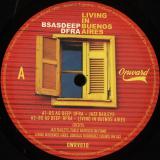
In this vinyl we maintain the format that we have been proposing for a few years.
The idea is to include musicians to be able to achieve really musical tracks.
In this case we have the interventions in the different tracks of:
Jazz baileys: Pablo Raposso on Piano
Living In Buenos Aires : Gonzalo Rodriguez Vicente On Sax
Rhodes Senses: Pablo Daniel Quipildor on keys
Kiss My Soul: Juan Klass on sax and flute, Pablo Raposso on Piano,
Ezequiel Dutil on Bass.
all tracks produced and by Bs As deep and DFRA.
- A1: Zigy Zigy Za
- A2: Make Love To Me
- A3: Baiao
- A4: Touching You
- A5: Take It Easy My Brother Charlie
- B1: Gingele
- B2: Where Have You Been?
- B3: General Da Banda
- B4: Bridges
- B5: Daybreak (Walking Out On Yesterday)
Released in 1972 as the follow-up to the previous year's classic CTI album with Stanley Turrentine, Now is Astrud Gilberto's tenth studio album and her only recording on Perception, and wow does she make the most of the musicians available to her on this recording. Produced by Astrud herself and with all songs arranged by fellow Brazilian Eumar Deodato, the all-star line-up on Now includes Deodato on acoustic guitar, more Brazilian flavours from Airto Moreira on percussion, label vice-President and production genius Patrick Adams on Bass duties (along with Bob Cranshaw and Ron Carter), Dizzy Gillespie Quintet and Jazzberry Patch band member Mike Longo on keyboards and the mighty Billy Cobham on drums.
On June 27, 2025, a long-dormant signal reactivates from Hamburg’s hidden places: Helena Hauff and F#X return as Black Sites with R4 on Tresor Records—their first full-length album and the first release under the moniker since 2014. Like a hieroglyphic recently discovered and translated, R4 feels more like a long-awaited resumption than a comeback.
Recorded to tape with minimal editing or post-production the record is a classic example of the symbiotic relationship that can come from the interaction of human and machine. This punk ethos isn’t invoked through distortion alone, but through method; in the album’s breaking from the received wisdom of hardness tethered to speed as most of the tougher pieces are lower BPM and vice versa (with one notable exception in the mind-melting stomp of BLOKK).
Across ten tracks, Black Sites traverse a landscape where genre dissolves into intention. It migrates through electro’s danceability, acid house’s corrosion, and into the liminal realm of machine funk—a genre coined by Andrew Weatherall, which sounds like the results of technology dreaming of soul where the emphasis is on live execution, on immediacy over perfection—a sound forged in the act of creating, not polishing.
In a 2013 interview, around the time of the first Black Sites EP, Hauff was quoted as saying that she wants “things to fit together properly, but on another level, I really want them to make sense together.” That principle animates R4: The album’s form reveals itself in time, with each movement echoing and amplifying the others to create a synergistic whole.
From the opening crawl of C4 (a name that like the music foreshadows the explosions to come) to the end-of-the-night bliss of MOTHERJAM via the intense peaks of BLOKK, 707, and classic acid track 3D it’s clear that R4 is a work made with serious intent; a refutation of a world where streaming has made the two-minute single the dominant musical form again. R4 demands immersion, not just attention. It is not a collection of tracks, but a singular, recursive experience: a mirror in which sound and listener repeatedly rediscover one another.
“To Model Phenomena” is a scientific concept that describes a computer’s ability to emulate, regardless of whether the emulated phenomenon exists outside its circuits or is purely imaginary.
Modeling communication platforms enables us to interact with each other or with computers. Modeling behavior patterns, nuclear fusion, or, as in the case of scientists from the Human Brain Project, a virtual human brain, allows us to simulate cognitive processes such as perception, memory, and decision-making, providing insight into the nature of human thought.
In this record, the phenomena modeled are those moments when the mind leaps into the void, confronting new paradigms. For instance, when science, art, or mass media introduces new information, propelling us into a transformed reality.
From this starting point, European musician Shifting Heigo maps a path between realities, evolving his narrative as his music unfolds. This work draws inspiration from Curtis Roads (vice chair of Media Arts and Technology at the UCSB) and his studies on granular synthesis and time scales, where each track on To Model Phenomena evokes a sense of movement, where nothing begins or ends in quite the same way.
A musician with strong ties to new technologies, Shifting Heigo has collaborated with the University of Málaga (Spain) in its PH Degree Program in video game design, composing interactive music, while also singing as part of the tenor section in the Qatar Concert Choir, affiliated with the Qatar Philharmonic Orchestra.
Currently based in Abu Dhabi, he is now part of a circle of electronic musicians surrounding the New York University Abu Dhabi, an institution that supports electronic and experimental music across the Middle East.
To Model Phenomena is the result of his search for a unique voice as a musician, where ternary rhythms, noise, and silence shape the narrative. This is a discourse from a musician’s perspective on the changes that science, technology, art, and the rapid flow of information demand of us. A direct gaze into the fear of change.
“… it was dance music, it had lyrics, it had songs, it wasn’t all instrumental, it was basically uptempo soul music, to be exact.”*
This quote from Timmy Regisford already sums up everything you need to know about his remix of Basic Black’s “Don’t Make Me Fall In Love.” Signed to Motown during Regisford’s reign as vice president and A&R, their self-titled debut album from 1990 is a testament to the massive popularity of new jack swing at the time. In his remix, the co-founder, resident DJ, and key figure of Club Shelter reconfigures the song’s structure with the signature sounds of New York’s prime dance floor scene, while preserving the heartfelt storytelling of the lyrics and the group’s voices on top of an irresistible groove and a bassline to die for.
At the time, it was only available in the record crates of the Big Apple’s DJ elite and later on as a white label in specialist shops. This soulful, yet driving piece, however, never saw an official single release—until now. Lifted from a DAT tape in Tony Humphries’ archive and carefully and faithfully restored, it now even features a condensed, never-before-released instrumental version of the remix, as well as a bass-and-beats-only edit for mixing purposes by yours truly. New jack swing transformed into New York club music by a king. This remix is a testament to Timmy Regisford’s prowess in the studio, but also honors the roots of the music he loves and grew up on—serving as a perpetual piece of the city’s vast history in underground dance music.
Gerd Janson
- A1: Flôr Di Nha Esperança
- A2: Vaquinha Mansa
- A3: Amor Di Mundo
- A4: Paraiso Di Atlantico
- B1: Sorte
- B2: Carnaval De São Vicente
- B3: Desilusão Dum Amdjer
- B4: Nho Antone Escaderode
- C1: Beijo De Longe
- C2: Roma Criola
- C3: Perseguida
- C4: Maria Elena
- D1: Cabo Verde Mandá Mantenha
- D2: Terezinha
- D3: Sodade (Bonus Track)
- D4: Luiza (Bonus Track)
A native of the island nation of Cape Verde, Cesaria Evora was known as the country’s foremost practitioner of the morna, a combination of West African percussion with Portuguese fados, Brazilian modinhas, and British sea shanties. After a short singing career in the 1970’s, she returned in the late ‘80s with a string of fine albums.
Her 1999 album Café Atlantico (a reference to her home where she frequently entertained guests) is a much-acclaimed masterpiece, finding Cesaria Evora venturing into more Latin American musical landscapes, as opposed to Portuguese, which dominated her previous albums. Evora draws from traditional Cuban and Brazilian music to mesmerizing effect. The music is heart-breaking and nostalgic, warm and tragic all at once.
Café Atlantico is available as a limited edition of 1000 numbered copies on gold coloured vinyl, housed in a gatefold sleeve.
INHERIT proudly unveils its latest Various Artist compilation, available digitally and on vinyl a powerful showcase of the labels distinct sound and vision. This release embodies INHERITs essence, delivering a curated selection of cutting-edge techno that reflects the energy of techno.
With tracks from Parallx, Ferdinger, Introversion, OFF/GRID, Insolate, Alex Ranzino, Leon Schanzenbach, Echion, Disguised, Daniel Heinrich, FANK, and Isaiah, this compilation highlights each artists unique contribution while painting a cohesive sonic picture that is unmistakably INHERIT. From industrial grit to deep, hypnotic rhythms, the VA captures the spectrum of sounds that define the label.
This release is more than a collection of tracks its a statement of INHERITs dedication to pushing the boundaries of modern techno.
Since 1982 'Looking Up To You' has become one of the signature tracks of the modern soul world and played out regularly at events to this day. It is co-written by Leon Ware with Zane Grey (of Grey & Hanks) and produced by Webster Lewis, all giants in this music genre. The song has also been much sampled, most notably by Zhane (Hey Mr. DJ), Ortega Cartel (Miami Vice), Yusher (Gorodskie Uzory) and three this year alone by Skule Toyama (To You), Jericho Jackson (Seventeen) and Saint Duck (Bamboo). This 7' version has also become more in demand, as too the B side 'Tell Me Why', both condensed to four minutes. Michael Wycoff was from Los Angeles and worked with Stevie Wonder on 'Songs In The Key of Life' prior to his three albums for RCA
The Viceroys were a Jamaican reggae vocal group formed in the late 1960s. Their lineup consisted of Wesley Tinglin, Neville Ingram, and Daniel Bernard plus Musicians: Bass: Robert 'Robbie' Shakespeare, Drums: Carlton 'Carlie' Barrett & Noel Donlan, Keyboards: Ansel 'Pinkie' Collins, Lead Guitar: Radcliffe 'Dougie' Bryan & Bertram "Ranchie" McLean' Rhythm Guitar: Radcliffe "Dougie" Bryan & Eric 'Bingy Bunny' Lamont, Percussion: Noel 'Zoot'/ 'Scully' Simms, Recorded at: Channel One. Produced by: Phil Pratt.
They gained popularity with their harmonious vocal style and catchy melodies. One of their most famous songs is "Heart Made of Stone," which became a hit in Jamaica and internationally. They recorded songs that reflected the social and political issues of the time. Their music continues to be celebrated among reggae enthusiasts for its soulful harmonies and uplifting messages.
Influential industrial pioneers Skinny Puppy welcomed audiences into the embrace of the seminal Too Dark Park in 1990. One of the band’s most influential records, it includes “Tormentor,” “Spasmolytic,” and more. In addition to praise from Vice and many more, Metal Hammer fittingly named it one of the “10 Best Industrial Albums,” and Spin summed it up best as a “return to the bloodbath.” A menacing and massive pastiche of H.P. Lovecraft-style cosmic horror, addiction, mental disarray, and the disintegration of nature, Too Dark Park remains a cataclysmic and chaotic classic through and through. Now available on vinyl for the first time in 30 years to celebrate the 35th anniversary since relea. Legends of electronic industrial music. Restored to original art on classic black vinyl. “10 best industrial albums - metal hammer”
Dark Entries again shines a spotlight on bathhouse disco don Patrick Cowley with a newly remastered release of Kickin’ In. Although Cowley tragically passed from AIDS-related illness in 1982, he left an extensive archive of unreleased tapes, many of which Dark Entries has had the honor of releasing. While working as a lighting technician at The City, SF’s disco cabaret, Cowley saw rising star Frank Loverde perform. Cowley asked Loverde to contribute vocals to some material in progress, and Frank, Linda Imperial, and Peggy Gibbons joined Cowley in the studio. The resulting songs included “Kickin’ In,” a 9-minute cybernetic disco stormer that taps into the essence of Cowley’s hi-NRG sound: equal parts spaced out and zoned in on the dancefloor. In May 1978 Cowley joined Loverde on stage at The City to perform “Kickin’ In” as they opened for disco diva Sylvester.
“Kickin’ In” was initially released in 2015 via Honey Soundsystem who found the tapes in the basement of Megatone Records owner John Hedges. This newly remastered version was made possible due to the discovery of the original multi-track recordings of "Kickin’ In," allowing for a fresh mixdown by Jim Hopkins as well as the creation of a new instrumental version. Also included are two impeccably sleazy Cowley jams recorded in 1980, “Thief of Love” and “Make It Come Loose.” Cowley narrates excerpts from his erotic journals on these raunchy slow-burners, capturing the vibe of SF’s leather bars and backrooms. “Thief of Love” features frequent Cowley collaborator Paul Parker on background vocals. This reissue of Kickin’ In includes features an illustration by Gwenaël Rattke that originally appeared Cowley’s erotic journal, Mechanical Fantasy Box, as well as a postcard with lyrics. “Patrick parted the veil and entered a dark world of forbidden vices, wondrous musical panoramas and bold, strident, hopeful possibilities. Patrick brought the future to us and laid it at our feet.” – David Diebold, Tribal Rites
Re-Press of Original Pirate Material on a burnt orange vinyl
- The 25th March 2022 marks the 20th anniversary of the instant British classic Original Pirate Material - The Streets.
- For the PR approach for this anniversary label are working with zeitgeist creatives: Sabotage Studios and photographer Isaac Lamb. Sabotage Studios will connect the creative anniversary projects with with cool, veritable influencers and magazines in an authentic way. Aiming for an editorial around the anniversary projects with: The Face, Vice, 10 Magazine, HERO, Noisy Wonderland and Hunger.
- Hugely popular and influential designer Corbyn Shaw, who focus on archetypes of British Culture is creating a Original Pirate material tribute piece of work for the OPM anniversary:
- Minnow Films and comedian James Acaster to create a short documentary around the for the OPM Anniversary. Talking to BBC, Amazon and smaller publications like Vice and Noisy to promote this.
Repress 2024
Servus everybody!
Why "the hell" didn't anyone think of this before? It was so obvious: When the same music goes the same way, the truth always lies on the turntable.
KOMPAKT presents the long-awaited "two-tracker", cold-pressed and remixed. The Voigt brothers meet Helmut Geier and vice versa, or: Kölsch meets Löwenbräu, because we stand by you, star of the south.
So let's welcome the megahit "W.I.R." by Wassermann from 2000 in a brand new DJ Hell remix, and a remix by Voigt & Voigt of DJ Hell's "Anything Anytime" anthem from 2017. Two classics that go down like liquid gold. It comes from the heart.
Ja, Servus mitanand!
Warum ist da eigentlich niemand vorher d’rauf gekommen, es lag doch immer auf der Hand: Wenn gleiche Musik denselben Weg geht, liegt die Wahrheit immer auf dem Plattenteller.
KOMPAKT präsentiert Euch den lang erwarteten Zweiteiler, kalt gepresst und geremixt. Die Voigt-Brüder treffen auf Helmut Geier und vice versa, oder: Kölsch trifft auf Löwenbräu, denn mer stonn zo Dir, Stern des Südens.
Begrüßen wir also den Megahit "W.I.R." von Wassermann aus dem Jahr 2000 im neuen DJ Hell-Remix und den Remix von Voigt & Voigt zu Hells "Anything Anytime"-Hymne aus dem Jahr 2017. Zwei Klassiker, die runtergehen wie flüssiges Gold. Et kütt vun Hätze, oder wie der Bajuware sagt: ’S kimmd vo Herzn.
Debut album of heavy Colombian salsa by the obscure and short-lived El Clan Antillano. Founded in 1975 by singer Jacky Carazo and radio personality / composer Mike Char and backed by a studio orchestra comprised mostly of Fruko Y Sus Tesos band members. The record has been remastered from the original tapes, with an additional three bonus cuts taken from two rare 45 singles, including the sought after track ‘Alma’. First time reissue. 180g Vinyl.
El Clan Antillano was an obscure, short-lived salsa group started in 1975 by singer Jacky “El Caballo” Carazo, originally from Cartagena, and radio host / song composer Mike Char, from Barranquilla. The band was active only until 1977, with a mere two albums to its name. Carazo and Char, “los amigos costeños” (friends from the Caribbean coastal area) created El Clan Antillano as a fresh start after the previous group Carazo had been the lead singer for, El
Afrocombo, had become inactive.
Char primary passion was music, especially songwriting. One of his skills in this area was adapting foreign songs, often in a different language, rhythm, arrangement or genre, and refashioning the tune in an uptempo Caribbean dance mode as a salsa or cumbia. This formula, as well as his own original compositions, soon brought him success not only with costeño friends like Carazo and Vicentini, but also with Medellín’s Fruko, allowing him to make a name for himself with record labels in that city. It was at this juncture, in 1975, that El Clan Antillano was born. This is their first album and was recorded with local studio musicians. It’s been said that most on the first album were from Fruko Y Sus Tesos (the voice of Joe Arroyo can be heard on coro) as well as others involved with various groups like La Protesta (de Colombia) and Juan Piña’s La Revelación.
The album kicks off with ‘Donde ‘sta? Donde ‘sta?’, a medley of costeño lyrical phrases quoting various popular porros. Gradually changing the vibe, this is followed by Enrique Aguilar’s ‘El baile del
ratón’, a humorous cumbia that changes into a salsa halfway through. As if El Clan Antillano were not entirely confident about featuring purely salsa from the start, the same cumbia/salsa hybrid formula is used in the third piece, a faithfully rendered version of Eddie Palmieri’s ‘Mi cumbia’.
‘Estás equivocada’ rocks hard like the best Venezuelan salsa of the time. ‘Esta mañana’ is a cover version of an obscure bolero from Curaçao’s Erwin Castaneer with Super Combo Castaneer. ‘En la oscuridad’ is an interesting mashup of Puerto Rican bomba and New York style pachanga. ‘El despertar’ is a sunny sounding pop song reinvented as a Nelson y sus Estrellas style salsa/cumbia hybrid with a fantastic ‘montuno’ section.
Up next is a hard salsa jam in the ‘pregón’ (street vendor’s cry) genre, written by Fruko Y Sus Tesos percussionist Álvaro Velásquez (composer of ‘El preso’). The original album track list closes out with a fantastic rendition of Puerto Rican singer/composer Bobby Capó’s classic ‘El negro bembón’ that the world first leaned to love through Cortijo y Su Combo. Three bonus tracks have been added to the album as it was originally very short. Interestingly, there were four songs from two 45 singles cut by the band that were never included on either long play. While the ephemeral El Clan Antillano may not be as well known as the groups it’s related to, namely El Afrocombo and Fruko Y Sus Tesos, it certainly deserves credit as a worthy participant in the historical evolution of salsa colombiana.