Common Labour finally returns to the record press with their milestone tenth 12″! The four-tracker by pothOles perfectly balances crisp percussions and bassy grooves with evocative sprinkles of synthetic harmony.
His buddy Yaniel joins the party, collaborating on two tracks. The guys go way back to 2003 with their boy band days as the A.M. Specialists trio (comprising Samuli Kemppi, Yaniel, & pothOles). Most renowned for “Polar Zoo”, Danny Tenaglia’s power play at the Vinyl Club back in the day.
As you hear, their musical alchemy hasn’t dwindled one bit though. Much like the fading autumn light of a forest lake, this is tasteful deep-house at its most nostalgic and seductive. Big thanks to Fabio Monesi, Iron Curtis, Katerina, Roberto Rodriguez, Session Victim, and everyone else showing the love! Don’t miss out on the limited edition of 200 copies worldwide for the “It’s Been a While” EP.
Suche:victim
Kwamé Bâ aka Fényan
Music producer, keyboardist and professional dancer based in France.
Coming from a Senegalese bloodline and growing up in Martinique (West indies), Fényan is deeply rooted in Black music. Epitome of a childhood in the West indies. A Caribbean Tale about Kreyol langage, about legacy and resilience, about turning victimhood into proactivity.
Douvan Douvan can be translated by "avant garde" in Kreyol. It is a story about People growing up and facing themselves, and their elders in order to move forward in their enlightenment.
It is your story.
Sleep Now Forever is the second and final album released by Sorrow, the post-Strawberry Switchblade group fronted by singer Rose McDowall. Originally released in 1999 and long since deleted it is a cornucopia of pastoral, elegiac folk music, swirling atmospherics, hymnal compositions and above it all the alternating towering and fragile vocal performances of McDowall. Recorded in the late 90s with fellow band member and co-songwriter Robert Lee, Sleep Now Forever is the definitive statement by the now defunct group and Rose McDowall’s most complete long-form work to date.
Released through the group’s own Piski Disk Records, Sleep Now Forever was distributed by World Serpent which struggled through the early 2000s with financial woes, eventually folding due to bankruptcy in 2004. Due to the company’s troubles, Sleep Now Forever was never distributed widely and was a victim of the company’s failure. Released on CD only, original copies are now rare and only traded on second hand channels. Remastered by Mikey Young for a limited vinyl release, Sleep Now Forever will be released on April 20th on double vinyl format, with one side an exclusive etching by Glasgow artist Holly Allan.
Despite its rarity, Sleep Now Forever enjoys a firm cult following. The album’s textures are expansive, lush, deliciously detailed and celestial. Recorded in home study Velvet Hole by Rose McDowall and then-husband Robert Lee, the album enlists an array of players from the underground Neo-folk / industrial scene: Nigel McKernaghan (Uilleann pipes, Whistles), Susan Franknel (Bassoon), John Contreras (Cello) and Lawrence Frankel (Oboe, Cor Anglais). The eleven songs here revolve around McDowall’s instantly recognisable voice. Brought up singing in the Catholic Church, McDowall’s vocals are impeccable and angelic, particularly on tracks like Turn Off The Light where her experiences with religion are canted over soaring oboe and guitar backing. By far the most evolved and realised version of Sorrow’s vision, it feels somewhat criminal that music this beautiful could be lost to time until now.
McDowall’s lyrics throughout Sleep Now Forever deal frankly with mental health, depression, altered states, death and redemption. Wave upon wave of harmony drench each song, McDowal’s vocal multi-tracked and imperious. Opener Soldier benefits from Robert Lee’s use of the studio as instrument, summoning forth a lilting group performance of sparkling guitar and percussion that recalls the Velvet Underground. Mikey Love’s master treats the compositions to brand new frequency dynamics and space. Harmonium and string drones form the counter to McDowall’s vocal on Love Dies, a slow, lurching lament that feels transcendent. On Haunting, the arrangement is orchestral and aching, bleeding into Fear Becomes You, with chord and harmony structure that recalls the baroque sixties pop of West Coast Pop Experimental Art Band or the 60s psychedelic folk movement. A towering, beautiful statement, this elegy for times lost and moonlit-illumination is finally resurfacing from the darkness.
HAUKE FREER'S latest offering includes two warm and moody original cuts plus an intense, bass heavy MATTHIAS REILING Remix - is that really you, SESSION VICTIM? While the duo's records usually strike a chord with a somewhat broad audience, Freer's solo output never tries to cater to the House Music masses. In fact, it feels very much tailored to please an acquired taste. ONE TINY UNIVERSE is a case in point, built upon a steady but wonky drum groove and a brizzling, retro, sci- kind of pad, eventually leading the song into an array of synth melodies that will reward you with discovering new things when listening repeatedly - showing Hauke's ability to subtly combine little bits and pieces into something that effortlessly outgrows the sum of its parts. Moving on to the ip, Reiling stripps the title track off it's warmth and beauty and replaces them with a tougher
drumset and a pressure heavy UK style bassline. You'll be reintroduced to Freer's synth work eventually, but in a less
fairytalish and, well, slightly hostile environment. MMMMM is the closing cut of the EP, a composition just as bare and raw as it feels soothing and gentle - like.... let's say beans and rice over a campre on a cold night under the starry sky of a far away tiny universe in the ngernail of some other giant lifeform.
Black Vinyl[12,23 €]
Clear Vinyl
As Rune & Ruin’s initial release, the duo of Lynette Cerezo and Zanias present a new offering of brutalizing intimacy.
'INSHROUDSS' marks the first Bestial Mouths release entirely written and conceived by Cerezo, vocalist and frontwoman since the project’s roots in 2006. Through each of the EP’s five tracks, Cerezo’s commanding voice usurps the role of victim for that of destroyer
- with scars where wings once beat the sky.
Drawing from the initial Bestial sound of emotionally gripping post-punk, Cerezo crafts deeply personal lyrics of self-stagnation and trauma, while longtime friend and collaborator Brant Showers (∆AIMON/SØLVE) provides a heart-pulverizing fury of industrialized electronics.
Along with production by new collaborator Alex DeGroot (Zola Jesus), INNSHROUDSS remains infinitely body-moving on even the most discerning of darkwave dance floors.
- Identified Patient – The Female Medical College Of Pennsylvania (Marcel Dettmann Pitched High Version)
- Tocotronic – Bis Uns Das Licht Vertreibt (Marcel Dettman Version 2 Remix)
- Cristian Vogel – Untitled (Marcel Dettmann Cut)
- John Bender – Victims Of Victimless Crimes (Marcel Dettmann Cut)
- Clark – Dirty Pixie (Marcel Dettmann Edit)
- Junior Boys – Work (Marcel Dettmann Remix)
- Mutant Beat Dance - The Human Factor Ft. Naughty Wood (Marcel Dettmann Edit)
- Experimental Products – Who Is Kip Jones (Marcel Dettmann Cut)
- Marcel Dettmann – Water Feat. Ryan Elliott (My Own Shadow Remix)
- Severed Heads – We Come To Bless The House (Marcel Dettmann Edit)
- Albert Kuningas - Astraaliprojektio (Marcel Dettmann Edit)
- K.alexi Shelby – Season Of The Real (Marcel Dettmann Edit)
- Ian North – Sex Lust You (Marcel Dettmann Edit)
- Ford Proco – Expansión Naranja (Feat. Coil) (Marcel Dettmann Edit)
- Nitzer Ebb – Shame (Marcel Dettmann Edit)
- Frank Duval – Ogon (Marcel Dettmann Edit)
- Yello – Limbo (Marcel Dettman Version 2 Remix)
- Conrad Schnitzler – Das Tier (Marcel Dettmann Edit)
LP 3x12"[28,99 €]
A DJ, producer and significant figure in contemporary electronic music, Marcel Dettmann steps forward to contribute to Running Back’s ongoing Mastermix series. Whereas previous editions of Mastermix have taken an ear to the sound of lapsed, legendary clubs such as Wild Pitch and Front, Dettmann’s curation deftly captures the man himself in ongoing perpetual motion, raiding the vault for his own precision-tooled edits, long-employed on dancefloors to devastating effect. Alongside a continuous mix, this release arrives as a 3LP gatefold, and as a limited edition cassette.
Closely associated with Berlin’s techno landscape, Dettmann was born and raised in the former GDR, then later immersed in the bleary-eyed counter cultural landscape of post-unification Berlin. Initially oriented by post-punk, industrial and new-wave music, Dettmann has been DJing since 1993, always expanding and perfecting his repertoire. He later began working behind the counter at the city’s tastemaking rave boutique Hard Wax, and a decade after he first dropped a needle, became (and remains) resident at notable local nightspot Berghain/Panorama Bar, where his instincts have helped sculpt the signature sound of both main dancefloors.
Of course, you’re probably not asking, “Who is Marcel Dettmann?” More importantly, you might want to know; just what treats has he gifted us here? The trip begins with a simple pitch-shift skywards, transforming Identified Patient’s creeping ‘The Female Medical College of Pennsylvania’ into a peak-time freakout, before an alternate take on Toctronic’s ‘Bis uns das Licht vertreibt’ emerges from the vaults for the first time. Dating from 1995, and one of Dettmann’s all-time favourites, Cristian Vogel’s ‘Untitled’ clambers back into the box with respectable cuts, while John Bender’s ‘Victims of A Victimless Crime’ kicks off the flip sporting a new arrangement, transporting us back to the foundations of a confident, stripped-back sound.
A few subtle edits to Clark’s perilously funky ‘Dirty Pixie’ takes us to Dettmann’s remix of Junior Boys. Produced in 2010, it transposes the Canadian duo’s sophisticated pop with our curator in his minimal prime, and has since become an irresistible prize for high-minded diggers. The same can be said for Experimental Products’ explosive proto-electro anthem ‘Who Is Kip Jones?’, empowered from pricey Discogs purgatory with just the slightest of tweaks. It’s deservedly sandwiched between the guiding influences of Chicago and Detroit in the form of Mutant Beat Dance’s raw ‘The Human Factor’ and a shimmering new version of previous solo production ‘Water’, featuring close friend and Ostgut Ton ally, Ryan Elliot.
The second half of the Mastermix seamlessly connects the mechanical past and digital present of EBM and industrial in the dance, with Dettmann’s instincts as a guiding hand. Severed Heads’ iconic ‘We Have Come To Bless This House’ emerges with mere nips and tucks, while Nitzer Ebb’s ‘Shame’ is significantly reimagined as a highwire act of rhythm and tension, setting up a sensual second take on a 2017 remix of ‘Limbo’ from Swiss synth heroes, Yello.
Core musical memories are shaken and stirred with a context-shifting take on Frank Duval’s emotional classic ‘Ogon’, while Ian North’s ‘Sex Lust You’ and Ford Proco’s notable Coil collaboration ‘Expansion Naranja’ effectively throb with only minor adjustments, respectfully imagined as “shadow versions”. Meanwhile, a simple breakbeat lifts Albert Kuningas’s ‘Astraalprojektio’ in the direction of wide-eyed dancefloors, while a fresh take on K-Alexi Shelby’s ‘Season of The Real’ inexplicably emerges somehow even funkier than before.
The conclusion of the compilation leads back to Das Tier from the prolific experimentalist Conrad Schnitzler, whose swirling synths and hypnotic vocals are duly tightened by Dettmann, but only as he puts it, “in conversation with the original.” Concluding three discs and thirty years of commitment to the dancefloor, this Mastermix not only offers us the opportunity to eavesdrop on this endless exchange, but to gain some sought-after material for our own record collections.
Fast-rising pianist and producer Yoni Mayraz presents his debut LP ‘Dybbuk Tse!’ revealing the story of a malicious possession that is taking over one’s body and soul.
Dybbuk, known from Jewish folklore, is a malevolent wandering spirit that enters and possesses the body of a living person. It’s a cursed soul of a dead one that wanders tirelessly for sins committed during their life. The most vulnerable victims are the young and the sinful. Possession can be taken literally or as an analogy to the burden that young people carry generations back, which they have no influence on, and which they have to accept. Dybbuk can only be removed by exorcism. The titular ‘Dybbuk Tse!’ is a command to remove the spirit from the possessed body. The album is a story about possession but also about exorcism through music.
Recorded live with his band over the course of a spring week last year, ‘Dybbuk Tse!’ is indeed experimenting with the ‘darker side of things’, but yet with a somewhat lighthearted approach which is so typical of Yoni’s work. He easily combines jazz with the sound of 90’s New York hip hop and raw old school breakbeat. The album interweaves unique Middle Eastern melodies, sophisticated structures and sounds, and beautifully crafted solos played by some of the promising talents on the scene.
London based Israeli born pianist and producer Yoni Mayraz has set foot in the instrumental music scene with his EP ‘Rough Cuts’ released in 2020. Since then, Yoni and his band have been playing major venues and festivals around the world including the legendary Ronnie Scott’s and The Jazz Cafe, to name a few, bringing raw energy to stage with live versions of the studio materials, and stretching the melodies and structures into a Dancefloor-focused take on jazz.
“Música Para Caminar” is the new album by 80%Baul, and the record that confirms his definitive leap from revelation to legend. Following the critically acclaimed debut Ayer y Ahora, this release positions 80%Baul alongside the great names of Spanish post-punk, standing shoulder to shoulder with seminal acts such as Décima Víctima and Parálisis Permanente. Rooted in a dark, introspective sensibility, Música Para Caminar also connects seamlessly with the vitality of today’s Spanish underground, aligning with the current wave of forward-thinking artists, including labelmates like Yvgoslavia. But this album is not defined by sound alone. Once again, 80%Baul surprises with songs that function as poems—bleak, incisive reflections on a decaying, dystopian present. More than music, Música Para Caminar is a statement: music with intention, depth, and meaning—an artistic vision that transcends genre and cements 80%Baul as one of the essential voices of contemporary Spanish post-punk. Presented in ONE-OFF truly limited edition of 300 copies lacquered pressed on 180 gr. high quality solid BLACK vinyl tracks have been specially remastered and mastered for vinyl by Daniel Hallhuber at Young and Cold Studios (Germany).
- Squeezing The World
- No Heroes
- Nazi Polizisten
- Not True
- Sexual Harassment
- Selfish Bastards
- Don't Choose To Abuse
- Real Fashion Victim
- Glasgow Smile
- Zyanid
- Slay The Slayer
- Fuck!...Offy
The 12" vinyl is now back from the pressing plant after months of delays. Availablefrom Phobia records treat your ears to something beautiful today, love from the Klaptrapers to all the drinkers, stinkers & thinkers out there. Line- up incl. members from Doom or/and Visions Of War
UILTY RAZORS, BONA FIDE PUNKS.
Writings on the topic that go off in all directions, mind-numbing lectures given by academics, and testimonies, most of them heavily doctored, from those who “lived through that era”: so many people today fantasize about the early days of punk in our country… This blessed moment when no one had yet thought of flaunting a ridiculous green mohawk, taking Sid Vicious as a hero, or – even worse – making the so-called alternative scene both festive and boorish. There was no such thing in 1976 or 1977, when it wasn’t easy to get hold of the first 45s by the Pistols or the Clash. Few people were aware of what was happening on the fringes of the fringes at the time. Malcolm McLaren was virtually unknown, and having short hair made you seem strange. Who knew then that rock music, which had taken a very bad turn since the early 1970s, would once again become an essential element of liberation? That, thanks to short and fast songs, it would once again rediscover that primitive, social side that was so hated by older generations? Who knew that, besides a few loners who read the music press (it was even better if they read it in English) and frequented the right record stores? Many of these formed bands, because it was impossible to do otherwise. We quickly went from listening to the Velvet Underground to trying to play the Stooges’ intros. It’s a somewhat collective story, even though there weren’t many people to start it.
The Guilty Razors were among those who took part in this initial upheaval in Paris. They were far from being the worst. They had something special and even released a single that was well above the national average. They also had enough songs to fill an album, the one you’re holding. In everyone’s opinion, they were definitely not among the punk impostors that followed in their wake. They were, at least, genuine and credible.
Guilty Razors, Parisian punk band (1975-1978). To understand something about their somewhat linear but very energetic sound, we might need to talk about the context in which it was born and, more broadly, recall the boredom (a theme that would become capital in punk songs) coupled with the desire to blow everything off, which were the basis for the formation of bands playing a rejuvenated rock music ; about the passion for a few records by the Kinks or the early Who, by the Stooges, by the Velvet mostly, which set you apart from the crowd.
And of course, we should remember this new wave, which was promoted by a few articles in the specialized press and some cutting-edge record stores, coming from New York or London, whose small but powerful influence could be felt in Paris and in a handful of isolated places in the provinces, lulled to sleep by so many appalling things, from Tangerine Dream to President Giscard d’Estaing...
In 1975-76, French music was, as almost always, in a sorry state ; it was still dominated by Johnny Hallyday and Sylvie Vartan. Local rock music was also rather bleak, apart from Bijou and Little Bob who tried to revive this small scene with poorly sound-engineered gigs played to almost no one.
In the working class suburbs at the time, it was mainly hard rock music played to 11 that helped people forget about their gruelling shifts at the factory. Here and there, on the outskirts of major cities, you still could find a few rockers with sideburns wearing black armbands since the death of Gene Vincent, but it wasn’t a proper mass movement, just a source of real danger to anyone they came across who wasn't like them. In August 1976, a festival unlike any other took place in Mont-de-Marsan – the First European Punk Festival as the poster said – with almost as many people on stage as in the audience. Yet, on that day, a quasi historical event happened, when, under the blazing afternoon sun, a band of unknowns called The Damned made an unprecedented noise in the arena, reminiscent of the chaotic Stooges in their early adolescence. They were the first genuine punk band to perform in our country: from then on, anything was possible, almost anything seemed permissible.
It makes sense that the four+1 members of Guilty Razors, who initially amplified acoustic guitars with crappy tape recorder microphones, would adopt punk music (pronounced paink in French) naturally and instinctively, since it combines liberating noise with speed of execution and – crucially – a very healthy sense of rebellion (the protesters of May 1968 proclaimed, and it was even a slogan, that they weren’t against old people, but against what had made them grow old. In the mid-1970s, it seemed normal and obvious that old people should now ALSO be targeted!!!).
At the time, the desire to fight back, and break down authority and apathy, was either red or black, often taking the form of leafleting, tumultuous general assemblies in the schoolyard, and massive or shabby demonstrations, most of the time overflowing with an exciting vitality that sometimes turned into fights with the riot police. Indeed, soon after the end of the Vietnam War and following Pinochet’s coup in Chile, all over France, Trotskyist and anarcho-libertarian fervour was firmly entrenched among parts of the educated youth population, who were equally rebellious and troublemakers whenever they had the chance. It should also be noted that when the single "Anarchy in the UK" was first heard, even though not many of us had access to it, both the title and its explosive sound immediately resonated with some of those troublemakers crying out for ANARCHY!!! Meanwhile, the left-wing majority still equated punks with reckless young neo-Nazis. Of course, the widely circulated photos in the mainstream press of Siouxsie Sioux with her swastikas didn’t necessarily help to win over the theorists of the Great Revolution. It took Joe Strummer to introduce The Clash as an anti-racist, anti-fascist and anti-ignorance band for the rejection of old-school revolutionaries to fade a little.
The Lycée Jean-Baptiste Say at Porte d’Auteuil, despite being located in the very posh and very exclusive 16th arrondissement of Paris, didn’t escape these "committed" upheavals, which doubled as the perfect outlet for the less timid members of this generation.
“Back then, politics were fun,” says Tristam Nada, who studied there and went on to become Guilty Razors’ frontman. “Jean-Baptiste was the leftist high-school in the neighbourhood. When the far right guys from the GUD came down there, the Communist League guys from elsewhere helped us fight them off.”
Anything that could challenge authority was fair game and of course, strikes for just about any reason would lead to increasingly frequent truancy (with a definitive farewell to education that would soon follow). Tristam Nada spent his 10th and 11th unfinished grades with José Perez, who had come from Spain, where his father, a janitor, had been sentenced to death by Franco. “José steered my tastes towards solid acts such as The Who. Like most teenagers, I had previously absorbed just about everything that came my way, from Yes to Led Zeppelin to Genesis. I was exploring… And then one day, he told me that he and his brother Carlos wanted to start a rock band.” The Perez brothers already played guitar. “Of course, they were Spanish!”, jokes their singer. “Then, somewhat reluctantly, José took up the bass and we were soon joined by Jano – who called himself Jano Homicid – who took up the rhythm guitar.” Several drummers would later join this core of not easily intimidated young guys who didn’t let adversity get the better of them.
The first rehearsals of the newly named Guilty Razors took place in the bedroom of a Perez aunt. There, the three rookies tried to cover a few standards, songs that often were an integral part of their lives. During a first, short gig, in front of a bewildered audience of tough old-school rockers, they launched into a clunky version of the Velvet Underground's “Heroin”. Challenge or recklessness? A bit of both, probably… And then, step by step, their limited repertoire expanded as they decided to write their own songs, sung in a not always very accurate or academic English, but who cared about proper grammar or the right vocabulary, since what truly mattered was to make the words sound as good as possible while playing very, very fast music? And spitting out those words in a language that left no doubt as to what it conveyed mattered as well.
Trying their hand a the kind of rock music disliked by most of the neighbourhood, making noise, being fiercely provocative: they still belonged to a tiny clique who, at this very moment, had chosen to impose this difference. And there were very few places in France or elsewhere, where one could witness the first stirrings of something that wasn’t a trend yet, let alone a movement.
In the provinces, in late 1976 or early 1977, there couldn’t be more than thirty record stores that were a bit more discerning than average, where you could hear this new kind of short-haired rock music called “punk”. The old clientele, who previously had no problem coming in to buy the latest McCartney or Aerosmith LP, now felt a little less comfortable there…
In Paris, these enlightened places were quite rare and often located nex to what would become the Forum des Halles, a big shopping mall. Between three aging sex workers, a couple of second-hand clothes shops, sellers of hippie paraphernalia and small fashion designers, the good word was loudly spread in two pioneering places – propagators of what was still only a new underground movement. Historically, the first one was the Open Market, a kind of poorly, but tastefully stocked cave. Speakers blasted out the sound of sixties garage bands from the Nuggets compilation (a crucial reference for José Perez) or the badly dressed English kids of Eddie and the Hot Rods. This black-painted den was opened a few years earlier by Marc Zermati, a character who wasn’t always in a sunny disposition, but always quite radical in his (good) choices and his opinions. He founded the independent label Skydog and was one of the promoters of the Mont-de-Marsan punk festivals. Not far from there was Harry Cover, another store more in tune with the new New York scene, which was amply covered in the house fanzine, Rock News (even though it was in it that the photos of the Sex Pistols were first published in France).
It was a favorite hang-out of the Perez brothers and Tristam Nada, as the latter explained. “It’s at Harry Cover’s that we first heard the Pistols and Clash’s 45s, and after that, we decided to start writing our first songs. If they could do it, so could we!”
The sonic shocks that were “Anarchy in the UK”, “White Riot” or the Buzzcocks’s EP, “Spiral Scratch” – which Guilty Razors' sound is reminiscent of – were soon to be amplified by an unparalleled visual shock. In April 1977, right after the release of their first LP, The Clash performed at the Palais des Glaces in Paris, during a punk night organised by Marc Zermati. For many who were there, it was the gig of a lifetime…
Of course, Guilty Razors and Tristam were in the audience: “That concert was fabulous… We Parisian punks were almost all dressed in black and white, with white shirts, skinny leather ties, bikers jackets or light jackets, etc. The Clash, on the other hand, wore colourful clothes. Well, the next day, at the Gibus, you’d spot everyone who had been at this concert, but they weren’t wearing anything black, they were all wearing colours.”
It makes sense to mention the Gibus club, as Guilty Razors often played there (sometimes in front of a hostile audience). It was also the only place in Paris that regularly scheduled new Parisian or Anglo-Saxon acts, such as Generation X, Siouxsie and the Banshees, the Slits, and Johnny Thunders who would become a kind of messed-up mascot for the venue. A little later, in 1978, the Rose Bonbon – formerly the Nashville – also attracted nightly owls in search of electric thrills… In 1977, the iconic but not necessarily excellent Asphalt Jungle often played at the Gibus, sometimes sharing the bill with Metal Urbain, the only band whose aura would later transcend the French borders (“I saw them as the French Sex Pistols,” said Geoff Travis, head of their British label Rough Trade). Already established in this small scene, Metal Urbain helped the young and restless Guilty Razors who had just arrived. Guitarist for Metal Urbain Hermann Schwartz remembers it: “They were younger than us, we were a bit like their mentors even if it’s too strong a word… At least they were credible. We thought they were good, and they had good songs which reminded of the Buzzcocks that I liked a lot. But at some point, they started hanging out with the Hells Angels. That’s when we stopped following them.”
The break-up was mutual, since, Guilty Razors, for their part, were shocked when they saw a fringe element of the audience at Metal Urbain concerts who repeatedly shouted “Sieg Heil” and gave Nazi salutes. These provocations, even still minor (the bulk of the skinhead crowd would later make their presence felt during concerts), weren’t really to the liking of the Perez brothers, whose anti-fascist convictions were firmly rooted. Some things are non-negotiable.
A few months earlier (in July 1978), Guilty Razors had nevertheless opened very successfully for Metal Urbain at the Bus Palladium, a more traditonally old-school rock night-club. But, as was sometimes the case back then, the night turned into a mass brawl when suburban rockers came to “beat up punks”.
Back then, Parisian nights weren’t always sweet and serene.
So, after opening as best as they could for The Jam (their sound having been ruined by the PA system), our local heroes were – once again – met outside by a horde of greasers out to get them. “Thankfully,” says Tristam, “we were with our roadies, motorless bikers who acted as a protective barrier. We were chased in the neighbouring streets and the whole thing ended in front of a bar, with the owner coming out with a rifle…”
Although Tristam and the Perez brothers narrowly escaped various, potentially bloody, incidents, they weren’t completely innocent of wrongdoing either. They still find amusing their mugging of two strangers in the street for example (“We were broke and we simply wanted to buy tickets for the Heartbreakers concert that night,” says Tristam). It so happened that their victims were two key figures in the rock business at the time: radio presenter Alain Manneval and music publisher Philippe Constantin. They filed a complaint and sought monetary compensation, but somehow the band’s manager, the skilful but very controversial Alexis, managed to get the complaint withdrawn and Guilty Razors ended up signing with Constantin with a substantial advance.
They also signed with Polydor and the label released in 1978 their only three-track 45, featuring “I Don't Wanna be A Rich”, “Hurts and Noises” and “Provocate” (songs that exuded perpetual rebellion and an unquenchable desire for “class” confrontation). It was a very good record, but due to a lack of promotion (radio stations didn’t play French artists singing in English), it didn’t sell very well. Only 800 copies were allegedly sold and the rest of the stock was pulped… Initially, the three tracks were to be included on a LP that never came to be, since they were dropped by Polydor (“Let’s say we sometimes caused a ruckus in their offices!” laughs Tristam.) In order to perfect the long-awaited LP, the band recorded demos of other tracks. There was a cover of Pink Floyd's “Lucifer Sam” from the Syd Barrett era – proof of an enduring love for the sixties’ greats –, “Wake Up” a hangover tale and “Bad Heart” about the Baader-Meinhof gang, whose actions had a profound impact on the era and on a generation seeking extreme dissent... On the album you’re now discovering, you can also hear five previously unreleased tracks recorded a bit later during an extended and freezing stay in Madrid, in a makeshift studio with the invaluable help of a drummer also acting as sound engineer. He was both an enthusiastic old hippie and a proper whizz at sound engineering. Here too, certain influences from the fifties and sixties (Link Wray, the Troggs) are more than obvious in the band’s music.
Shortly after a final stormy and rather barbaric (on the audience’s side) “Punk night” at the Olympia in June 1978, Tristam left the band ; his bandmates continued without him for a short while.
But like most pioneering punk bands of the era, Guilty Razors eventually split up for good after three years (besides once in Spain, they’d only played in Paris). The reason for ceasing business activities were more or less the same for everyone: there were no venues outside one’s small circuit to play this kind of rock music, which was still frightening, unknown, or of little interest to most people. The chances of recording an LP were virtually null, since major labels were only signing unoriginal but reassuring sub-Téléphone clones, and the smaller ones were only interested in progressive rock or French chanson for youth clubs. And what about self-production? No one in our small safety-pinned world had thought about it yet. There wasn’t enough money to embark on that sort of venture anyway.
So yes, the early days of punk in France were truly No Future!
- 1: Underworld Alliance
- 2: Rise Of The Desecrated
- 3: Rise Of The Desecrated
- 4: Blood In The Alleys
- 5: Vlad The Impaler
- 6: Burn The Witch
- 7: Pedophiliac
- 8: Cold Grave
DYING VICTIMS PRODUCTIONS is proud to present the much-needed reissue of WITCHING HOUR’S debut album, Rise of the Desecrated, on vinyl LP format. This marks the beginning of vinyl reissues of all of the band’s albums, under license from Evil Spell Records. Originally released in 2009, as well as on tape through Dying Victims in 2011, this album has not lost any of its juvenile enthusiasm for raw and evil thrash metal. While the band developed a more complex style of blackened heavy thrash throughout the years, this debut album is pure and straightforward black thrashing madness. Clocking in at just over half an hour, the album perfectly represents the Teutonic (black) thrash revival of the mid-2000s
- 1: Dead Undead
- 2: Strange Companion
- 3: Fiend In You
- 4: Like A Beast
- 5: Obscene Cult
- 6: Denied By The Reaper
- 7: Harlot’s Spell
- 8: Return Of The Axe
- 9: Gallows
DYING VICTIMS PRODUCTIONS is proud to present AGGRESSIVE PERFECTOR’s highly anticipated second album, Come Creeping Fiends, on CD and vinyl LP formats. Released in 2019 via DYING VICTIMS, AGGRESSIVE PERFECTOR’s Havoc at the Midnight Hour debut album introduced this British power-trio with no small amount of sleazy, Satanic fanfare. While their background may jointly lie in black metal, the three un-gentlemen of AGGRESSIVE PERFECTOR held high heavy metal done the ancient way: classic Tank, early Raven, Warfare, and of course the almighty Venom as well as modern torchbearers like Midnight, Whipstriker, and Power From Hell. Unsurprisingly, the album garnered international acclaim. Eclipsing that feat is the band’s second album, Come Creeping Fiends.
Truly titled once again, Come Creeping Fiends comprises nine tracks of heavy metal for the insane, forged in the Manchester morgue. Raging like a ravenous beast, summoning ancient ones, and agonizing with morbid doom, AGGRESSIVE PERFECTOR cover a lot of ground here, but like the rotting undead that inspired it, this second album somehow holds together. The same black magic that made Havoc at the Midnight Hour a highlight six(-six-six) years ago is here again, only this time with a higher kill count and hit rate. Cleaner and crisper in execution but somehow darker and dirtier in its content, Come Creeping Fiends offers highlights at every crooked turn; tunes like “Strange Companion,” “Fiend in You,” and lead track “Dead Undead” will have all the witches dancing. Needless to say, fans of maniacal, EVIL heavy metal music and horror movies will find a lot to love. The wait for AGGRESSIVE PERFECTOR’s second album might have been long, but Come Creeping Fiends will prove to be worth it…
- 1: Taste For Damnation
- 2: Italian Dark Sound
- 3: Slaughter
- 4: M.i.m. Mayhem
- 5: Hypnopriest
- 6: Cellar
- 7: The Lost Son Of Sylvester Anfang
- 8: Mountain Devil
DYING VICTIMS PRODUCTIONS is proud to present MIDYRASI’S KULT’s highly anticipated debut album, Italian Dark Sound, on CD and vinyl LP formats. MIDRYASI'S KULT are revolutionary and uncompromised. Featuring veterans from such Italian doom stalwarts as Doomsword, Midryasi, Agarthi, and Fiurach, their unique blend of elements from the NWOBHM, doom metal, and early black metal – all fused in their distinctive national dark-sound tradition, which includes such cult legends as Black Hole and Death SS – results in an obscure, hypnotic, and exciting formula. In March 2025, after just one week on Bandcamp, MIDYRASI’S KULT were intercepted by Caligari Records, who released on cassette their debut demo, Mountain Devil. Featuring three songs in a concise 15 minutes, this demo reaped international acclaim for its originality and attitude. But that was but a foretaste of darker delights to come. Witness the first full-length of MIDRYASI’S KULT, Italian Dark Sound.
Truly titled, Italian Dark Sound is an intoxicating spelunk into catacombs both idiosyncratic and indefinable. Totaling 32 time-/mind-expanding minutes, the eight primary tracks here – the outro is titled “The Lost Son of Sylvester Anfang,” which should offer an obvious clue to the black-metal-minded out there – each offer something different from the next, and yet all add up into a shadowy experience that’s both rocking and atmospheric. In fact, if one were to single out an aspect between the demo and album, it’s that MIDYRASI’S KULT exude more energy on this full-length without sacrificing any of their occult aura. But, just like that demo, Italian Dark Sound features supremely pro production – gritty, earthy, and yet kaleidoscopic in texture – under the guidance of Gabry "The Way" Strada, head of RDF Studio and who’s now collaborating on the upcoming Doomsword new album. In the vein of an open artistic project, all the artwork is made by vocalist / bassist Geilt himself, and up to 11 musicians have been involved in these recordings
- 1: Intro
- 2: Concrete Hell
- 3: Rotting On A Golden Throne
- 4: Pigs Will Be Pigs
- 5: Tin God
- 6: Deception Of The Weak
- 7: Mental Vacation
- 8: Killing Taste
- 9: No Alibi
DYING VICTIMS PRODUCTIONS is proud to present ZERRE’s highly anticipated second album, Rotting on a Golden Throne, on CD and vinyl LP formats. From the cellars of Würzburg, Germany, ZERRE have been keeping the torch of old-school thrash metal burning while carving their own vicious path. Their sound draws on the razor-sharp aggression of classic Metallica and Exodus and the stomping groove of early Faith No More: no frills, no mercy. Their third full-length, 2024’s Scorched Souls, tore through the scene and earned critical acclaim for its searing riffs and unflinching energy. Now, ZERRE take a decisive step forward with Rotting on a Golden Throne. Darker, more overtly political, and more aggressive than its predecessor, this fourth full-length dives headfirst into the rot of power, corruption, and human decay – a brutal soundtrack for a world teetering on the edge. Onstage, ZERRE embody the chaos of their music: riff-driven assaults, breakneck tempos, and a raw intensity that leaves no room to breathe. On record, while those influences still remain, but the DNA has been splintered into something more unique and definitely more powerful: thrashing, yes, but within a crossover framework that feels titanic. The production is razor-sharp, but with ominous atmosphere to spare; the execution is even sharper, as the drumming especially pulses like a dread locomotive; and vocals spit forth venom, raging against a machine fatted by suffering. As the throne collapses, ZERRE deliver the anthem of its fall. Keep on Rotting on a Golden Throne!
- Nightmare
- Welcome To The Family
- Danger Line
- Buried Alive
- Natural Born Killer
- So Far Away
- God Hates Us
- Victim
- Tonight The World Dies
- Fiction
- Save Me
Blue Vinyl with Black Splatter[32,35 €]
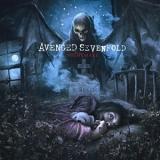
Das fünfte Studioalbum von Avenged Sevenfold, "Nightmare", stieg 2010 auf Platz 1 der Billboard 200 Charts und auf Platz 5 der UK OCC Charts ein. Nach dem unerwarteten Tod des Schlagzeugers Jimmy "The Rev" Sullivan ist das Album seinem Andenken gewidmet und spiegelt in seinem Themen Tod und Verzweiflung wider. Mike Portnoy von Dream Theater sprang am Schlagzeug ein, um die Aufnahmen fertigzustellen. Metal Hammer bewertete das Album mit acht von zehn Punkten. Billboard bewertete es mit vier von fünf Punkten und Kerrang! gab dem Album vier von fünf Ks. Das Album gewann die Golden God Awards für den besten Schlagzeuger, den besten Gitarristen und das Album des Jahres. Es wurde für die Kerrang! Awards als bestes Album und beste Single (Nightmare) nominiert und vom Revolver Magazine für Buried Alive zum Song des Jahres 2011 gekürt. "Like their previous outings, the group incorporates a New Wave of British Heavy Metal influence throughout Nightmare while paying tribute to `80s hair metal with guitar god appeal; but playing retroactive music doesn't seem to concern them, as long as they play it more skillfully than their forefathers. The group's influences may be worn on their sleeves, (check out the chugging Metallica "One" breakdown in "Buried Alive," or the Queensrÿche-style power-ballad "Victim"), but there is no denying that they have some of the best chops in the metal world. M. Shadows continually amazes with his vocal acrobatics, the opening riff of "Natural Born Killer" ramps up to an inhuman speed. "Save Me" ends the album as one of their most epic songs to date, in a proper 21 gun salute, as thunderous blasts and guitar divebombs interweave into a heartfeltoutro. It's a fitting tribute for their fallen 28-year-old comrade, and excellent proof of the band's ability." - Für Fans von Metallica, Slipknot, Bullet For My Valentine, NWOBHM, Heavy Hair Metal, Metal
- Stahlwerk Ruhr + Blocco Schengen
- Planlosneu - Derpolier
- The Eschaton - Plague Pits
- Autoscooter Abfahrt - Kühle Matroasen
- She's Gone - Veinspine
- Die Feuerwehr Kommt Nicht - Age O.p.f
- Mondlandschaft - Bêtes Sauvages
- Stromschlag - Der Fotograf
- Keine Gnade - Pleasue Victim
- Immergleich, Immer Stumm - Ruhr
- El Baile De Las Goticas Feas - The Berlangas
- Plastik Fantastik - Weltklang Feat. Akkumuller
- I Wanna Shit - Nuke Kanata
Schmitz is a cool guy. He dreams of meeting the ruler of the universe. One day, his dream comes true: he meets the electro goddess Irma. The compilation is a kind of audiobook in 13 acts, danceable and cool, fast and loud, an homage to all space cats. The LP comes with a booklet introducing the bands and telling the story.
- 1: Onward To The Cemetery
- 2: Into The Nightmare
- 3: Vengeful One
- 4: Chains Of Black Wrath
- 5: Turbo Evil
- 6: Devil's Bastard
- 7: Seven Gates
- 8: Land Of No Return
Following up their 2016 release Satan’s Heavy Metal, Aggressive Perfector’s debut full length, Havoc At The Midnight Hour, finds the English trio in resolutely evil form as they take a major step forward on their path of destruction. Embracing a wealth of haunted sounds and textures, this sepulchral slab of metal conjures an atmosphere rich in the romantic repugnance of horror’s past masters which it uses the setting for a 37 minute nightmare of nocturnal menace, occult fascination and bloody vengeance. Summoning the ghosts of Metal past – Tank, Slayer, Venom and Mercyful Fate all playing a part- Havoc… fixates on the nuclear fury of an apocalyptic future, from which it culls new ways to pervert the course of heavy metal in the present. Follow Aggressive Perfector into the nightmare when Havoc At The Midnight hour is released on November 1st.