
non in magazzino
Ordina ora e ordineremo l'articolo per te presso il nostro fornitore.
6,68 €
Last In: 13 months ago
Ordina ora e ordineremo l'articolo per te presso il nostro fornitore.

Ordina ora e ordineremo l'articolo per te presso il nostro fornitore.

Erstmals auf Vinyl! Das 2009er Album 'Controlling Crowds (IV)'.
Ordina ora e ordineremo l'articolo per te presso il nostro fornitore.

CLEAR VINYL[25,17 €]
Ben Lukas Boysens neues Album, Alta Ripa, bedeutet eine seismische Verschiebung in seiner künstlerischen Reise. Es greift die grundlegenden Impulse seiner Jugend auf, die inmitten der ruhigen Schönheit des ländlichen Deutschlands geprägt wurden - eine bukolische Kulisse, in der seine kreative Palette aufblühte. Doch erst sein Umzug nach Berlin in den frühen 2000er Jahren elektrisierte seinen Sound und ließ ihn mit der pulsierenden Energie der Stadt und den vielfältigen kulturellen Einflüssen verschmelzen. Alta Ripa fängt diese transformative Erfahrung ein, indem es die introspektiven Melodien seiner ländlichen Anfänge mit den kühnen, experimentellen Klängen der pulsierenden elektronischen Musikszene Berlins vermischt. Dieses Album ist ein Zeugnis von Boysens Entwicklung und zeigt, wie geografische Verschiebungen den künstlerischen Ausdruck tiefgreifend prägen können.
Ordina ora e ordineremo l'articolo per te presso il nostro fornitore.

180g double vinyl, coke bottle green. One of Sweden's currently most celebrated musicians, Daniel Ögren, releases his album "Pine" on February 12th. Thanks to his solid musical background, he has established himself as one of the country's most influential and versatile creators, both as an artist, multi-instrumentalist and producer for some of Sweden's biggest names. He is one of the members of the two-time Swedish Grammy-award-winning band Dina Ögon, who have made a significant mark in the past few years. Recently, Ögren also released the four-track EP "Daniel Ögren med vänner tolkar Allan Edwall" consisting of interpretations of cultural icon Allan Edwall's musical treasure. Additionally, Ögren produced Broder John's new album "Följ inte mig". Beyond his fundamental role in Dina Ögon, Daniel has also collaborated musically with well-known artists such as Sven Wunder, Eva Dahlgren, Amason, Daniel Johnston, Anna von Hausswolff, Fatouma Diawara, The Greys and Anna Järvinen. As a member of Dina Ögon, Daniel has shaped one of the most celebrated and innovative bands in modern Swedish music.
dovrebbe essere pubblicato su 12.02.2025
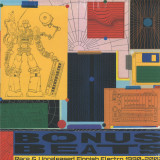
Cold Blow proudly presents Bonus Beats: Rare & Unreleased Finnish Electro 1990–2002, a landmark compilation capturing Finland's underground electro scene from the late 1990s and early 2000s. This double-LP features 9 rare and 3 previously unreleased tracks from pioneering Finnish artists, showcasing a distinctly Nordic approach to the genre. With contributions from notable names such as Jori Hulkkonen, Mr. Velcro Fastener, Mono Junk, and the late Mika Vainio, this release highlights the experimental and DIY ethos that defined Finland's electronic music scene during this period.
Carefully curated by Erkko Lehtinen, a key figure in Finland's electro scene as a DJ and promoter, the compilation explores a broad sonic palette, spanning early techno influences, robotic allure, and dark, bass-heavy tracks. Standout contributions include Decepticons and Dr. Robotnik's unreleased dark electro cuts, with the latter veering into minimal wave territory. Feng Shui feat. Monsieur delivers a striking collaboration that fuses a trance-like lead with raw, industrial beats, uniting members of Huoratron, Nu Science, Polytron, and Op:l Bastards. Keeping alive the legacy of Perttu Häkkinen (aka Randy Barracuda), this release wouldn't be complete without Imatran Voima's bass-driven anthem from their debut EP. Also featured are Spektor's retro synth experiments, Tero's Commodore 64-based creations, Brothomstates' (later a Warp signee) futuristic soundscapes, and a rare cover of Kraftwerk's The Model by the anonymous duo Markus & Kristian. Erkko's extensive liner notes provide additional insight into this culturally and musically significant era. Available in double-LP, this collection is a must-have for electronic music aficionados and vinyl collectors.
j 10: Feng Shui - Hao Hao (I`m Back) feat. Monsieur
Ordina ora e ordineremo l'articolo per te presso il nostro fornitore.
Thme is the alias of Paris-based musician Théo Martin. He has released numerous albums on labels such as Seil Records, Vaagner, and Lontano Series, along recent collaborations with artists Agyt and Lamasz.
Anti Atlas is Théo’s first solo work in two years, and his first release on vinyl and cd. The use of magnetic tape remains central to his creative process, enabling him to infuse the sound with a sense of fragility and vulnerability, despite its inherent unpredictability. Feedback loops, emerging from the interactions between tape recorders, served as the guiding principle throughout the entire recording. Longing, heartfelt aspirations, and the quiet hope that keeps us reaching for what lies ahead.
Ordina ora e ordineremo l'articolo per te presso il nostro fornitore.

Far Out Recordings proudly presents Argentinian guitarist Agustín Pereyra Lucena’s 1980 album La Rana. Recorded in Oslo, La Rana features Agustín’s stunning takes on compositions by Ivan Lins, Antonio Carlos Jobim and Agustín’s friend and musical hero Baden Powell. In addition to these, and a number of Agustín’s own compositions including the fifteen-minute masterpiece “Encuentro De Sombras”, the album’s title track is an idiosyncratic version of Joao Donato’s “A Rã” (Eng: The Frog/ Esp: La Rana) from his 1973 album Quem É Quem.
Forming the rest of the quartet are two fellow Argentinians who were also Agustin’s bandmates from the group Candeias: bassist and multi-instrumentalist Guillermo Reuter and flautist Ruben Izarrualde; with Norweigan drummer Finn Sletten on drums and percussion.
Throughout La Rana we hear not only Agustín’s fabled guitar playing, which ascended him to share stages with the likes of Vinicius de Moraes, Dorival Cayymi, Toquinho, Maria Bethania, Chico Buarque and Quarteto Em Cy, but also his talent as a vocalist. He also provided the heartening illustration for the cover art, which perfectly fits the cordial, inviting tone of the music. Inspired in equal measure by South American rhythms and Norweigan glaciers, mountains and waterfalls, La Rana is filled with the warmth, humility and sincerity of a man seizing a joyful moment in life through music.
Ordina ora e ordineremo l'articolo per te presso il nostro fornitore.

Celebrate the 5th anniversary of Avengers: Endgame, featuring a powerful score by Alan Silvestri on purple vinyl.
Ordina ora e ordineremo l'articolo per te presso il nostro fornitore.

Ordina ora e ordineremo l'articolo per te presso il nostro fornitore.

For the first 47 release of 2025, Grenoble-based artist Pause makes his debut on Tommy Four Seven’s imprint. Known for crafting deep, pulsating techno, 47044 sees Pause deliver more heavy yet sophisticated slabs of bass, slinking between rugged, airy grooves and elegant sound design. The 5-tracker also sees Pause explore territories beyond his trademark steady-paced, hypnotic sound via the off-kilter closer, culminating in a polyrhythmic wormhole. 47044 is out February 14th, available as vinyl and download
Ordina ora e ordineremo l'articolo per te presso il nostro fornitore.

Ordina ora e ordineremo l'articolo per te presso il nostro fornitore.
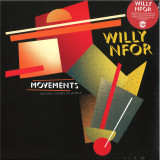
This compilation is more than a selection of songs from Willy Nfor’s solo career in Nigeria—it’s the story of a man’s determination to live his dreams. Known as Willy Ngeh Nfor, he was a founding member of the Mighty Flames. One morning, Willy and his bandmates packed their instruments, grabbed a few clothes, and headed from Cameroon to Nigeria. Crossing the border on foot, they made their way to Onitsha.
“We left Cameroon with no contacts in Nigeria—it was an adventure. We’d heard about the FESTAC Arts Festival and felt we had to be part of it. Our first band in Nigeria was Pentagon Funk Band, sponsored by the 5th Brigade in Port Harcourt. Later, we moved to Onitsha and signed with Right Time Stores, recording Sweet Love (RTLPS 011) as The Mighty Flames. The sessions were at Decca Studios in Lagos, with a 16-track analog system. It was intense—no room for mistakes. We rehearsed endlessly before recording each take.” (Vincent Ekedi, Drummer, Mighty Flames)
Willy’s journey was shaped by his resilience and talent. Losing his mother early and facing family struggles, music became his escape. Inspired by funk and jazz-rock greats like Bootsy Collins, Jaco Pastorius, and Stanley Clarke, he honed his skills on bass and composition, playing with local bands alongside musicians like Vincent Ekedi. Together, they refined their grooves, dreaming of brighter futures.
After his time in Nigeria, Willy moved to Paris, becoming a session bassist for legends such as Manu Dibango, Mory Kanté, Tony Allen, Akendengue, Ray Lema, Jean-Luc Ponty, and Kanté Manfila. Touring extensively, he lived the “Star Life” (Star Life, Cornerstone Records, Feel So Fine, 1981), playing funk grooves with giants in grand venues, fulfilling his dream of the spotlight.
Ordina ora e ordineremo l'articolo per te presso il nostro fornitore.

Ordina ora e ordineremo l'articolo per te presso il nostro fornitore.

Ordina ora e ordineremo l'articolo per te presso il nostro fornitore.

Vol 2[28,99 €]
Volume 1 of this expertly curated project of 90s Italian House - put together by Don Carlos.
If Paradise was half as nice… by Fabio De Luca.
Googling “paradise house”, the first results to pop up are an endless list of European b&b’s with whitewashed lime façades, all of them promising “…an unmatched travel experience a few steps from the sea”. Next, a little further down, are the institutional websites of a few select semi-luxury retirement homes (no photos shown, but lots of stock images of smiling nurses with reassuring looks). To find the “paradise house” we’re after, we have to scroll even further down. Much further down.
It feels like yesterday, and at the same time it seems like a million years ago. The Eighties had just ended, and it was still unclear what to expect from the Nineties. Mobile phones that were not the size of a briefcase and did not cost as much as a car? A frightening economic crisis? The guitar-rock revival?! Certainly, the best place to observe that moment of transition was the dancefloor. Truly epochal transformations were happening there. From America, within a short distance one from the other, two revolutionary new musical styles had arrived: the first one sounded a bit like an “on a budget” version of the best Seventies disco-music – Philly sound made with a set of piano-bar keyboards! – the other was even more sparse, futuristic and extraterrestrial. It was a music with a quite distinct “physical” component, which at the same time, to be fully grasped, seemed to call for the knotty theories of certain French post-modern philosophers: Gilles Deleuze, Félix Guattari, Paul Virilio... Both those genres – we would learn shortly after – were born in the black communities of Chicago and Detroit, although listening to those vinyl 12” (often wrapped in generic white covers, and with little indication in the label) you could not easily guess whether behind them there was a black boy from somewhere in the Usa, or a girl from Berlin, or a pale kid from a Cornish coastal town.
Quickly, similar sounds began to show up from all corners of Europe. A thousand variations of the same intuition: leaner, less lean, happier, slightly less intoxicated, more broken, slower, faster, much faster... Boom! From the dancefloors – the London ones at least, whose chronicles we eagerly read every month in the pages of The Face and i-D – came tales of a new generation of clubbers who had completely stopped “dressing up” to go dancing; of hot tempered hooligans bursting into tears and hugging everyone under the strobe lights as the notes of Strings of Life rose up through the fumes of dry ice (certain “smiling” pills were also involved, sure). At this point, however, we must move on to Switzerland.
In Switzerland, in the quiet and diligent town of Lugano, between the 1980s and 1990s there was a club called “Morandi”. Its hot night was on Wednesdays, when the audience also came from Milan, Como, Varese and Zurich. Legend goes that, one night, none less than Prince and Sheila E were spotted hiding among the sofas, on a day-off of the Italian dates of the Nude Tour… The Wednesday resident and superstar was an Italian dj with an exotic name: Don Carlos. The soundtrack he devised was a mixture of Chicago, Detroit, the most progressive R&B and certain forgotten classics of old disco music: practically, what the Paradise Garage in New York might have sounded like had it not closed in 1987. In between, Don Carlos also managed to squeeze in some tracks he had worked on in his studio on Lago Maggiore. One in particular: a track that was rather slow compared to the BPM in fashion at the time, but which was a perfect bridge between house and R&B. The title was Alone: Don Carlos would explain years later that it had to be intended both in the English meaning of “by itself” and like the Italian word meaning “halo”. That wasn’t the only double entendre about the song, anyway. Its own very deep nature was, indeed, double. On the one hand, Alone was built around an angelic keyboard pattern and a romantic piano riff that took you straight to heaven; on the other, it showcased enough electronic squelches (plus a sax part that sounded like it had been dissolved by acid rain) to pigeonhole the tune into the “junk modernity” section, aka the hallmark of all the most innovative sounds of the time: music that sounded like it was hand-crafted from the scraps of glittering overground pop.
No one knows who was the first to call it “paradise house”, nor when it happened. Alternative definitions on the same topic one happened to hear included “ambient house”, “dream house”, “Mediterranean progressive”… but of course none were as good (and alluring) as “paradise house”. What is certain is that such inclination for sounds that were in equal measure angelic and neurotic, romantic and unaffective, quickly became the trademark of the second generation of Italian house. Music that seemed shyly equidistant from all the rhythmic and electronic revolutions that had happened up to that moment (“Music perfectly adept at going nowhere slowly” as noted by English journalist Craig McLean in a legendary field report for Blah Blah Blah magazine). Music that to a inattentive ear might have sounded as anonymous as a snapshot of a random group of passers-by at 10AM in the centre of any major city, but perfectly described the (slow) awakening in the real world after the universal love binge of the so-called Second Summer of Love.
For a brief but unforgettable season, in Italy “paradise house” was the official soundtrack of interminable weekends spent inside the car, darting from one club to another, cutting the peninsula from North to centre, from East to West coast in pursuit of the latest after-hours disco, trading kilometres per hour with beats per minute: practically, a new New Year’s Eve every Friday and Saturday night. This too was no small transformation, as well as a shock for an adult Italy that was encountering for the first time – thanks to its sons and daughters – the wild side of industrial modernity. The clubbers of the so-called “fuoriorario” scene were the balls gone mad in the pinball machine most feared by newspapers, magazines and TV pundits. What they did each and every weekend, apart from going crazy to the sound of the current white labels, was linking distant geographical points and non-places (thank you Marc Augé!) – old dance halls, farmhouses and business centres – transformed for one night into house music heaven. As Marco D’Eramo wrote in his 1995 essay on Chicago, Il maiale e il grattacielo: “Four-wheeled capitalism distorts our age-old image of the city, it allows the suburbs to be connected to each other, whereas before they were connected only by the centre (…) It makes possible a metropolitan area without a metropolis, without a city centre, without downtown. The periphery is no longer a periphery of any centre, but is self-centred”.
“Paradise house” perfectly understood all of this and turned it into a sort of cyber-blues that didn’t even need words, and unexpectedly brought back a drop of melancholic (post?)-humanity within a world that by then – as we would wholly realise in the decades to come – was fully inhuman and heartless. A world where we were all alone, and surrounded by a sinister yellowish halo, like a neon at the end of its life cycle. But, for one night at least, happy.
Ordina ora e ordineremo l'articolo per te presso il nostro fornitore.

The second album by Wini, Mops, and DJ Pete, the group FOREVAYANG from Germany and Poland. Before we kill the child within us, let’s dance one more time.
26 tracks released on 3 vinyl records in a GATEFOLD sleeve.
Uncompromising lyrics paired with unique humor, set to exceptional arrangements, guarantee a hip-hop journey like you've never experienced before. On the albums guests around the world such as, Michal Urbaniak, Ola Duong, Ceci Loel, D.White, Cool P & more
dovrebbe essere pubblicato su 10.02.2025

Released via RCA Records - "Jupiter" is the fourth studio album from critically acclaimed London singer-songwriter Nao. The highly anticipated project features the new singles “Wildflowers” and “Elevate, and delves into profound emotional and spiritual themes, marking a new chapter in her artistry. Ltd Red LP Vinyl & standard CD formats. Extensive promo & marketing activity across all media outlets.
dovrebbe essere pubblicato su 10.02.2025

Als ELECTRIC CALLBOY in diesem Jahr ihr neues Album TEKKNO veröffentlichten, war nicht klar, welche Auswirkungen das Album haben würde.Ausverkaufte Konzerte, Abriss der größten europäischen Festivals und endlich Platz 1 in den offiziellen deutschen Charts. Die Band aus Castrop-Rauxel is begeistert eine unglaubliche Bandbreite an Menschen.Die TEKKNO Tour 2023 findet nun in Arenen statt und Electric Callboy sind bereit für den nächsten großen Schritt.Um dies gebührend zu feiern, wird es eine limitierte 'TEKKNO (Tour Edition)' geben, die neben dem regulären Album, 5 Live-Bonus Tracks enthält, die während der ausverkauften Europatour 2022 aufgenommen wurden. Erhältlich als Ltd. 180g. transp. light blue-lilac marbled Vinyl
dovrebbe essere pubblicato su 10.02.2025

Remastered vinyl copy in a Vinyl Fanatiks housebag with a black paper inner. Pressed on 180g Black Vinyl. The original red vinyl pressing sold out back in 2021. Cut by Beau at Ten Eight Seven. Limited run of 150.
Ordina ora e ordineremo l'articolo per te presso il nostro fornitore.
