% discount from 3x %
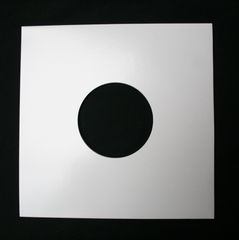
10" Cover in white, does not fit a inner sleeve
% Rabatt ab 3x %
10" Leerhüllen in weiß, Stecktasche, nur passend ohne Innenhülle
% discount from 3x %
10" Cover in white, does not fit a inner sleeve
% Rabatt ab 3x %
10" Leerhüllen in weiß, Stecktasche, nur passend ohne Innenhülle
% discount from 3x %
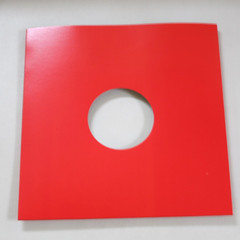
one red empty cover / sleeve for vinyl in innersleeves!
Perfect to protect your records from dust and dirt!
* Cover - with 3mm spine
* red unicoloured
* hole on both sides
% Rabatt ab 3x %
Eine rote Kastentasche für Platten in Papier-Innenhüllen!
Perfekt um deine Platten vor Staub und Schmutz zu schützen!
*Plattencover - mit 3 mm Rücken
*rot unifarben
*Doppelloch

% discount from 25x !!!
White - Cover !!
* LP Hülle - mit 3mm Rücken
* ohne Loch /without Hole
* 280gr / m²
% discount from 3x !!!
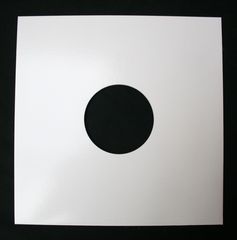
unicoloured empty cover / sleeve for vinyls without an inner sleeve !!! Awesome for for white labels, because frazzled paper covers can be very annoying in the case !!
*Cover - UK Style thin without spine
* white unicoloured
* hole on both sides
* 280gr/m2 paper
unifarbene leercover / sleeves für platten ohne extra papier innenhülle !!! sehr geil für white labels, da die zerfetzten papiercover supernervig im case sind !!
* Maxihülle - UK Style dünn ohne Rücken
* weiss unifarben
* Doppelloch
* 280gr / m²
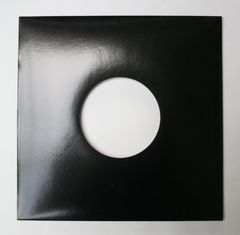
% discount from 3x %
10" Cover in black with hole, fits no inner sleeve
% Rabatt ab 3x %
10" Leerhüllen / Stecktasche in schwarz mit Loch
passend für Platten ohne Innenhülle

discount from 3x !
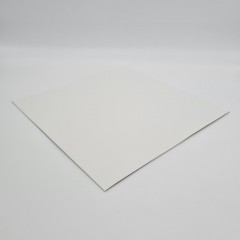
inside out, no border ! disco sleeve, fit a vinyl only, no inner sleeve
size: 30,7cm + 31cm
% discount from 25x !!!
Cover with 3mm Border for vinyl + inner sleeve
% discount from 3x, 5x, 10x, 25x, 50x, 100x !!!
strongest cover ever !!

% discount from 10x !!!
1 unicoloured empty cover / sleeve for vinyls with an inner sleeve !!! Awesome for for white labels, because frazzled paper covers can be very annoying in the case !!
* Cover-with 3mm spine
* white unicoloured
* hole on both sides
* 280gr/m2 paper
1 unifarbenes leercover / sleeve für platten in papier innenhüllen !!! sehr geil für white labels, da die zerfetzten papiercover supernervig im case sind !!
* LP Hülle - mit 3mm Rücken
* weiss unifarben
* Doppelloch
* 280gr / m²

inside out, no border ! disco sleeve, fit a vinyl only, no inner sleeve
size: 30,7cm + 31cm

% discount from 25x !!!
unicoloured empty cover / sleeve for vinyls without an inner sleeve !!! Awesome for for white labels, because frazzled paper covers can be very annoying in the case !!
* Cover - UK Style thin without spine
* INSIDE OUT
* black unicoloured
* hole on both sides
* 280gr/m2 paper
unifarbenes leercover / sleeves für platten ohne extra papier innenhülle !!!
sehr geil für white labels, da die zerfetzten papiercover supernervig im case sind !!
* Maxihülle - UK Style dünn ohne Rücken
* INSIDE OUT
* schwarz unifarben
* Doppelloch
* 280gr / m²
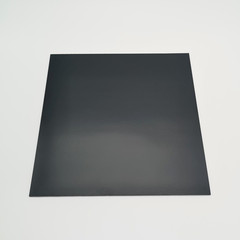
discount from 25x !!!
1 unifarbenes leercover für platten in papier innenhüllen !
sehr geil für white labels, da die zerfetzten papiercover supernervig im case sind !!
* LP Hülle - mit 3mm Rücken
* schwarz unifarben
* ohne Loch
* 280gr / m²

% discount from 3x %
Grey - Insideout Cover
* LP Cover - 3mm spine
* hole on both sides
* 280gr / m2
% Rabatt ab 3x %
Graues - Insideout - Cover
* LP Hülle - mit 3mm Rücken
* Doppelloch
* 280gr / m²

% discount from 3x, 5x, 10x, 25x, 50x, 100x !!!
strongest cover ever !!
Now Also As Disco Bag !!

SUPER DISCOUNT NOW !!!
10x / 25x / 50x / 100x !!!
1 unicoloured empty cover / sleeve for vinyls with an inner sleeve !!! Awesome for for white labels, because frazzled paper covers can be very annoying in the case !!
* Cover - with 3mm spine
* black unicoloured
* hole on both sides
* 280gr/m2 paper
1 unifarbenes leercover / sleeve für platten in papier innenhüllen !!! sehr geil für white labels, da die zerfetzten papiercover supernervig im case sind !!
* LP Hülle - mit 3mm Rücken
* schwarz unifarben
* Doppelloch
* 280gr / m²
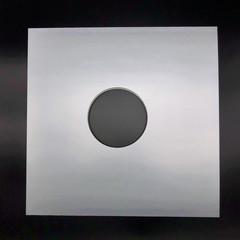
High Quality Cover with 3mm Border for vinyl + inner sleeve
Color: SILVER LTD !
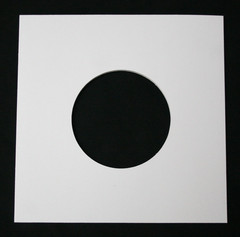
% discount from 10x %
* for 7" records
* white unicoloured
* hole on both sides
% Rabatt ab 10x %
* für 7" Platten
* weiss unifarben
* Doppelloch

% discount from 3x, 5x, 10x, 25x, 50x, 100x !!!
Special Color GOLD !

% discount from 3x, 5x, 10x, .... %
!!! SUPER DISCOUNT on 50x or 100x !!!
WHITE - Insideout Cover
* LP Cover - 3mm spine
* hole on both sides
* 280gr / m2
% Rabatt ab 3x %
Weises - Insideout - Cover
* LP Hülle - mit 3mm Rücken
* Doppelloch
* 280gr / m²
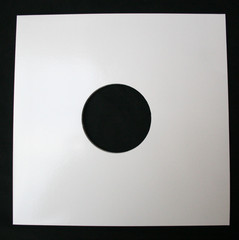
% discount from 10x !!!
1 unicoloured empty cover / sleeve for vinyls with an inner sleeve !!! Awesome for for white labels, because frazzled paper covers can be very annoying in the case !!
* Cover-with 3mm spine
* white unicoloured
* hole on both sides
* 280gr/m2 paper
1 unifarbenes leercover / sleeve für platten in papier innenhüllen !!! sehr geil für white labels, da die zerfetzten papiercover supernervig im case sind !!
* LP Hülle - mit 3mm Rücken
* weiss unifarben
* Doppelloch
* 280gr / m²
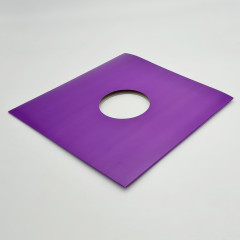
discount from 3x, 5x, 10x, ....!
Cover with 3mm Border for vinyl + inner sleeve

discount from 3x, 5x, 10x, ....!
Cover with 3mm Border for vinyl + inner sleeve
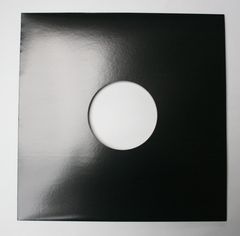
% discount from 25x !!!
unicoloured empty cover / sleeve for vinyls without an inner sleeve !!! Awesome for for white labels, because frazzled paper covers can be very annoying in the case !!
*Cover - UK Style thin without spine
* black unicoloured
* hole on both sides
* 280gr/m2 paper
unifarbene leercover / sleeves für platten ohne extra papier innenhülle !!! sehr geil für white labels, da die zerfetzten papiercover supernervig im case sind !!
* Maxihülle - UK Style dünn ohne Rücken
* schwarz unifarben
* Doppelloch
* 280gr / m²

% discount from 25x !!!
unicoloured empty cover / sleeve for vinyls with an inner sleeve !!! Awesome for for white labels, because frazzled paper covers can be very annoying in the case !!
* Cover - 3mm Spine
* black unicoloured
* hole on both sides
* 280gr/m2 paper
unifarbenes leercover / sleeves für platten in papier innenhüllen !!! sehr geil für white labels, da die zerfetzten papiercover supernervig im case sind !!
* LP Hülle - mit 3mm Rücken
* schwarz unifarben
* Doppelloch
* 280gr / m²
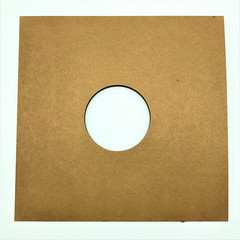
% discount from 3x, 5x, 10x, 25x, 50x, 100x !!!
strongest cover ever !!
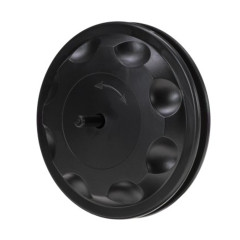
EN: suitable for our record washer Disco-Antistat art. no. 1300001
incl. single adapter
without sealing ring!
DE: Etiketten-Dichtschale passend zu unserem Schallplattenwaschgerät Art.-Nr. 1300001

EN: Label cover bowl for Disco-Antistat Ultrasonic
Label cover with magnetic coupling for ultrasonic record cleaner "Disco-Antistat Ultrasonic 2.0"
Diameter 105 mm
DE: Etikettenabdeckung mit Magnetankopplung für die Ultraschall Plattenwaschmaschine Disco-Antistat Ultrasonic 2.0 (1360008)
inkl.Gummidichtung und Adapter zum Umstecken für 7" Singles.
Durchmesser 105 mm

Ever since the late 1950s bossa-nova revolution, Brazil’s influence on French music has been undeniable. Pierre Barouh, Georges Moustaki and a vast array of lesser known artists, all made the Musica Popular Brasileira (MPB) an axis of promotion at the service of a cool and metaphysical, modern and mixed Brazilian lifestyle. Some were seduced by the poetic languors of the bossa, some were looking for fun, and others just loved the American hybridization of jazz-bossa, jazz-samba.
What is bossa nova? One of its creators, Joao Gilberto said: "Its style, cadence, everything is samba. At the very start, we didn't call it bossa nova, we sang a little samba made up of a single note - Samba de uma nota so .... The discussion around the origins of bossa nova is therefore useless”. It is nevertheless useful to remember that these magnificent Brazilian songs, which the guitarist describes as samba, were shifted and balanced around improbable chords. "I like things that lean, the in-betweens that limp with grace," said Pierre Barrouh, quoting Jean Cocteau.
With emotion, arrangements for violin and supple guitar licks, bossa nova rapidly changed. A transformation that can be heard in the Tchic, tchic, French Bossa Nova 1963-1974 compilation, the result of a cultural reappropriation, which traveled through the United States and supplemented itself in France.
A musical revolution that has remained significant, bossa nova was born in Rio. From 1956 to 1961, Brazil lived through its golden years. In five years, the country had invented its modernist style. Elected president in 1956, Juscelino Kubitschek de Oliveira, an elegant man with a broad forehead, brandished a promising slogan: "Fifty years of progress in five years". He quickly got to work. Not worried about increasing debt, he launched the project for a new federal capital, Brasilia, designed by the communist architect Oscar Niemeyer. Volkswagen opened state-of-the-art factories and created the “fusquinha”, the Beetle. In Rio, the Vespa made its first appearance. The Arpoador Surf Club crew run into the “girl” from Ipanema, Helô Pinheiro - the tanned garota ("chick"), between a flower and mermaid, who at 17 walked by the Veloso bar, where the fiery author and composer, Tom Jobim and Vinicius de Moraes, were getting drunk on whiskey. From then on, bossa symbolized cool.
In 1958, Joao Gilberto recorded Chega de Saudade, which the directors of Philips denied, calling it "music for fagots". The marketing director, who believed in it, secretly pressed 3000 78-inch vinyls and distributed them at schools around Rio, creating a tidal wave.
American jazzmen then took over. In particular, trumpeter Dizzy Gillespie and guitarist Charlie Byrd. In November 1962, the Brazilian Ministry of Foreign Affairs funded a "Bossa-Nova" concert at Carnegie Hall in New York, inviting the genre’s pioneers. Unprepared, the show soon turned to disaster. But the troupe was invited to the White House by Jackie Kennedy. The first lady loved "the new beat" and in particular Maria Ninguem, a song by Carlos Lyra, later covered by Brigitte Bardot.
In Brazil, the 1964 military coup quickly ended this euphoria. The destructive atmosphere that ensued pushed many Brazilian musicians to leave, if not to exile. Thus, Tom Jobim, Sergio Mendes and Joao Gilberto arrived to the United States. In New York, Joao Gilberto met saxophonist Stan Getz. At the time, he was married to the Bahianese Astrud Weinert Gilberto, who had a German father. She had never sung before, but she knew how to speak English. Getz therefore asked her to replace her husband on The Girl From Ipanema. The Getz/Gilberto record with Tom Jobim on piano, was released in March 1964. Phil Ramone, the "pope of pop" was in charge of sound.
Bossa nova arrived in Paris through the classic “guitar-voice” channel (Pierre Barouh, Baden Powell, Moustaki…) But France loved jazz and Paris had already welcomed its American contributors. All these good people were to pass through Saint-Germain-des-Prés. The cabaret l'Escale became the Mecca of Latin American sound where one could find Pierre Barrouh and his friends, such as the Camara Trio, samba-jazz aces, whose only record was published by the Saravah label. With a band strangely called Les Masques (a band that included Nicole Croisille and Pierre Vassiliu, among others), the Camara Trio recorded an interesting Brazilian Sound, including the track Il faut tenir which is present on this tasty compilation of rarities.
Other enlightened musicians can also be found on the compilation, such as Jean-Pierre Sabar (songwriter for Hardy, Auffray, Leforestier ...) and the French pop rock organist Balthazar. In 1975, Sabar recorded Aurinkoinen Musiikkimatka on a Finnish label, which featured the crazy Vai, Vai, included on this record. We are now following the footsteps of Brazilian electronic musicians such as Sergio Mendes, Eumir Deodato or Marcos Valle who created funk and disco sounds on their keyboards and synthesizers. A style that influenced Véronique Sanson when she wrote Jusqu’à la Tombée de la nuit in 1969 for Isabelle de Funès, the niece of Louis and a great friend of Michel Berger - Sanson did end up singing this track on her 1992 Sans Regret record.
The pinnacle of exoticism and travel, Sylvia Fels’ Corto Maltese includes bongos, sea mist and ocean sounds. The title was taken from Jacky Chalard’s concept album written in 1974, Je suis vivant, mais j’ai peur (I am alive, but I am scared), based on Gilbert Deflez’s science fiction novel.
However, bossa nova extended the scope of popularity. "In the 1970s, I was a fan of Sergio Mendes, Getz / Gilberto. I fell in love with this music that I knew because I had been an orchestral singer, " explained Isabelle Aubret, who in 1971 delivered a composite record of covers by the very funky Jorge Ben, Orfeu Negro, Tom Jobim, Vinicius de Morais and Jean Ferrat. "I recorded this album for Meys Records in Paris, far from Brazil, with wonderful musicians, François Raubert, Roland Vincent, Alain Goraguer...". The latter wrote the arrangements for Casa Forte, a very percussive title borrowed from Edu Lobo, one of the initiators of the bossa who spent time in California. "Jazz and bossa came together and produced very rhythmic music. I love singing, it allows me to dream, to have fun, to feel a high on stage, and these songs brought me joy, made me swing, my singing felt like a dance.”
The world tours of French singers and their desire for the tropics, often brought them to Rio with its hills, forests, caipirinhas and tanned bodies. There are surprises though, like this Iemenja (Iemenja is the goddess of the sea in the Afro-Brazilian candomblé religion). Not unlike the composer and musician Jean-Pierre Lang, based in Sao Paulo, Claire Chevalier taught Brazil to Brazil. In 1970, the singer and painter published a 45-inch vinyl, Mon mari et mes amants (My husband and my lovers), under the improbable pseudonym of Clarinha (little Claire). She was then living in Rio, with her husband, Joël Leibovitz, who founded a band called Azimuth, and who owned a record label specialized in "sambas enredos" songs for samba school parades.
For its B side, she asked Pierre Perret to come up with lyrics for a song composed by Carlos Imperial: "Oh goddess of the sea, o goddess Iemenja, I bring a white rose to adorn your long hair ..." . "Perret came to see us, and we had fun, remembers Joël Leibovitz. We wrote Lemenja for fun, we recorded it at the Havaí studio, behind the Central do Brasil the central station. Erlon Chaves, the arranger who worked with Elis Regina, joined us" adding his share of Afro-Brazilian percussions and funky brass to the mix.
There is a common misunderstanding in Franco-Brazilian history: that bossa, admittedly hedonistic, is perceived as funny, even though the poets who wrote the texts are often philosophizing on the human condition. Its French interpreters pull it towards a carnival inspired universe, far removed from its fundamental essence. Thus, Jean Constantin covered the famous Samba da minha terra, an ode to the art of samba written by the classic Bahian composer Dorival Caymmi, renaming it with the enticing title of Pas tant de tchi tchi pompon: "On your pier there is no tchi tchi / when you arch your back, you know everything is alright ”(lyrics by Gérard Calvi). This expedited bossa aims for the absurd, but retains a certain elegance.
Indeed, Jean Constantin was not an idiot, the rather large man had a huge mustache and liked fantasy, (Les pantoufles à papa, Le pacha, inspired by cha-cha-cha-cha, salsa and jazz) but he was also the lyricist of Mon manège à moi interpreted by Edith Piaf, the composer of Mon Truc en plume by Zizi Jeanmaire and the soundtrack of François Truffaut’s 400 Blows. Le Poulpe, published in 1970, from which this bossa is extract, was arranged by Jean-Claude Vannier, an accomplice of Serge Gainsbourg’s Melody Nelson. In short: "There is enough of samba / By looking at the parasol / Because my poor cabeza / Is going to die in the sun".
Even the American actress Marpessa Down, who was at the heart of the bossa nova revolution with her role as Euridyce in Marcel Camus’ film Orfeu Negro, winner of the 1959 Cannes Palme d'or, fed the clichée with Je voudrais parler au petit cuica - "Tell me how you manage to always make people want to dance / It's true, I must admit that I cannot resist your magic" - in consequence, once can hear the cuica, a little drum inherited from the Bantu.
But bossa nova had many angles. Societal, of course, pushing actresses who were symbols of women's liberation like Brigitte Bardot, Jeanne Moreau, or Sophia Loren to engage in the exercise of accelerated bossa. In February of 1963, Sophia Loren made a record in French in Rome, Je ne t'aime plus, featuring the song De jour en jour, a bossa written by two Italians, Armando Trovajoli and Tino Fornai, which was released a little later by Barclay. Bossa accompanied the 1960s, a decade of moral liberation. Ann Sorel, who interpreted La Poupée des favellas, caused a sensation with L’amour à plusieurs, a provocative song written by Frédéric Bottom and Jean-Claude Vannier. As for the actress Andrea Parisy, she displayed her bourgeois cheekiness in Marcel Carné's Les Tricheurs before interpreting Les mains qui font du bien. And Magalie Noël, the friend of Boris Vian, who sung Johnny fais-moi mal, was hired to sing Une énorme Samba, composed by Alain Goraguer (arranger to Gainsbourg, Bobby Lapointe and Jean Ferrat) with lyrics by Frédéric Botton.
But in the end, of what wood is bossa nova made of? The answer is given by Christianne Legrand, daughter of Raymond the conductor, and sister to Michel the composer: "With me, with jà" - jà means "immediately" in Portuguese. In 1972, the singer, an expert in vocal jazz and a member of the Double Six, published Le Brésil de Christianne Legrand. Two songs included on the Tchic Tchic compilation that demonstrate how bossa, jazz, funk, rock, etc. work like a swiss army knife: the music is used to denounce broken systems, or miracles, HLM et ciné roman, Cent mille poissons dans ton filet, two songs from the O Cafona soundtrack, a successful telenovela broadcast, at the time in black and white, on TV Globo. The first was adapted in French by the fighter and friend of the Legrand tribe, Agnès Varda. The second is content with a play on words, jostling them into a summer fun.
Véronique Mortaigne
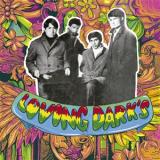
Los Amantes Oscuros" brings together for the first time on vinyl the recordings made between 1968 and 1969 by pioneers of Bolivian garage rock, Loving Darks, originally released on their three EPs. A selection packed with proto-punk covers of hits by the Stones, Cream, Tony Hatch, and more-often surpassing the originals in attitude and power. Their original records are highly sought after and are virtually impossible to find in any condition_ If we had to choose the Latin American country where the rawest and wildest garage and beat records of the '60s were recorded, Bolivia would be one of the clearest contenders. For some strange reason-surely related to the country's extreme conditions, its high altitude, and the influence of huayno-Bolivian recordings are truly unique and fascinating. A multitude of bands sprang up under the influence of groups-mainly British-that dominated the international charts. From the ashes of two of Bolivia's most important seminal bands, Los Black Byrds and The Turtles, two new groups fundamental to the history of Bolivian rock would be born: the mythical Climax and the legendary Loving Darks. "Los Amantes Oscuros" brings together for the first time on vinyl the recordings this band made between 1968 and 1969, originally released across three EPs on the local Lyra label. Their repertoire is packed with covers such as 'El Adivino,' a sped-up reinterpretation of 'Fortune Teller,' or even 'Algo de títere,' a reworking of 'Jumpin' Jack Flash.' They also adapt the classic 'Call Me' by Tony Hatch and 'Toad' by Cream, from whom they borrow the cover of one of their most iconic albums for the artwork of their EP "Complicado." In fact, 'Complicado'-a proto-punk version of the Rolling Stones' 'Complicated' and their signature track-is a perfect example of how a Bolivian band could outdo the British giants in attitude and power. Their importance lies in having paved the way for new sounds, styles, and aesthetics within a still-emerging scene. This compilation is a joint release with the Peruvian label Rey Record and includes an insert with notes on the band's history. First time vinyl reissue.
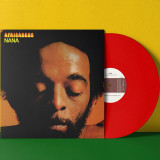
Spiritual, intimate and revolutionary, yet firmly rooted in Brazil's folklore. Africadeus was the breakthrough album of the mighty Naná Vasconcelos, in which he discovered the berimbau to the world and took the instrument to a universal level, abstracting it from its original context of capoeira. Having played in the shadows for other artists such as Milton Nascimento, Gato Barbieri or Som Imaginario, Naná is here finally in the spotlight.
Recorded in 1973 in France for Pierre Barouh's Saravah label, this is the album that definitely imprinted Naná's name in the international scene, on his track to becoming one of the best percussionists of all times.
Immensely proud to offer a quality reissue of both his early 70s albums for the French label Saravah.
Africadeus comes in its original gatefold cover, and is available in standard black vinyl and a limited edition of 200 copies on red transparent vinyl.

“Onomatopeikoa II” follows on from Irazoki's 2017 Gitarra Onomatopeikoa release, and that album's sense of untethered, questing curiosity is not only carried over but expanded upon even further here. Combining a fully committed approach to the guitar with an almost egoless lightness of touch, this album builds upon the already impressively scopious range of Gitarra Onomatopeikoa to dizzying effect.
Irazoki makes full use of an impressively broad palette. Yet nothing feels forced, nothing is for show – there’s just a sense of open-hearted generosity.
In lesser hands such a whirlwind tour of style and form might risk failing to get its hooks in deep enough, yet not only does Irazoki have the imaginative scope to tackle these varying approaches to the instrument, he has the technical chops to pull it off. Each composition seems to have an openness of intent that is utterly disarming; all cards are on the table and nothing is held back, resulting in a creative tour de force that builds, piece by piece, to a unifying cohesiveness that makes the whole far greater than the sum of its parts.
Featuring contributions from long-time OTO favourites Rhodri Davies and Raphael Roginski,
“Onomatopeikoa II” is nevertheless unmistakably a work of singular craft and vision.
FFO: Jeff Parker, Loren Connors, Keiji Haino
Limited edition vinyl of 250 copies
presented by Hegoa with a cover designed by Pablo Mirón.

Cassette[14,08 €]
Distant Clouds Grey Vinyl. Das siebte Album von Teen Suicide ist das erste richtige Album der Band seit ,honeybee table at the butterfly feast", das durch Songs wie ,you were my star" wieder Aufmerksamkeit bekam, der auf TikTok richtig abging. Teen Suicide wurde 2010 als Nebenprojekt von Sam Ray gegründet und hat sich nach und nach weiterentwickelt, während es ein leidenschaftliches Projekt blieb. Seit 2017 gehört Kitty Ray zur Band, und 2022 wurde die Band mit dem Beitritt des Schlagzeugers Niko Wood offiziell zu einem Vollzeitprojekt. Gemeinsam begann das Trio mit dem Schreiben und Aufnehmen ihres kommenden Albums ,Nude descending staircase headless". Das Album stellt eine Reihe von Premieren für die Band dar: ihre erste Platte, die in einem professionellen Studio aufgenommen wurde, ihre erste Veröffentlichung, die als Vollzeitband geschrieben und aufgenommen wurde, und ihre erste seit 2012, auf der durchgehend ein festes Schlagzeuger zu hören ist. Es markiert auch den Beginn eines vollständig gemeinsamen Schreibprozesses zwischen Sam und Kitty Ray, die 2016 geheiratet haben und von Grund auf an der gesamten Platte mitgearbeitet haben, wobei sie sich sowohl das Songwriting als auch den Gesang aufteilten. Von Sam Ray als ,bisheriger Höhepunkt der Karriere" der Band beschrieben, erkundet Nude descending staircase headless das endlose Streben nach Erfüllung durch Kreativität und verknüpft Motive von Tod und Wiedergeburt mit Themen wie der Freude trotz großer Verluste. Das Album sieht das Selbst nicht als isoliertes Objekt, sondern als einen einzelnen Strang in einem größeren, miteinander verbundenen Netz. Zu den herausragenden Tracks gehören ,Idiot", das sich an direktem, wörtlichem Storytelling orientiert, und ,Spiders", bei dem Kitty Ray den Gesang übernimmt und eine düstere feministische Unterströmung in die übergeordnete Erzählung des Albums einbringt. Musikalisch lässt sich die Band von Künstlern wie Nirvana, Radiohead, Shellac und Helmet inspirieren und greift die Intensität und Experimentierfreudigkeit des Heavy Rock der späten 80er und 90er Jahre auf. Ihre jüngsten Tourneen mit DELTA SLEEP unterstreichen einmal mehr, dass Teen Suicide zunehmend Einflüsse aus Math Rock und Metal in ihren sich weiterentwickelnden Sound einfließen lässt.

Distant Clouds Grey Vinyl. Das siebte Album von Teen Suicide ist das erste richtige Album der Band seit ,honeybee table at the butterfly feast", das durch Songs wie ,you were my star" wieder Aufmerksamkeit bekam, der auf TikTok richtig abging. Teen Suicide wurde 2010 als Nebenprojekt von Sam Ray gegründet und hat sich nach und nach weiterentwickelt, während es ein leidenschaftliches Projekt blieb. Seit 2017 gehört Kitty Ray zur Band, und 2022 wurde die Band mit dem Beitritt des Schlagzeugers Niko Wood offiziell zu einem Vollzeitprojekt. Gemeinsam begann das Trio mit dem Schreiben und Aufnehmen ihres kommenden Albums ,Nude descending staircase headless". Das Album stellt eine Reihe von Premieren für die Band dar: ihre erste Platte, die in einem professionellen Studio aufgenommen wurde, ihre erste Veröffentlichung, die als Vollzeitband geschrieben und aufgenommen wurde, und ihre erste seit 2012, auf der durchgehend ein festes Schlagzeuger zu hören ist. Es markiert auch den Beginn eines vollständig gemeinsamen Schreibprozesses zwischen Sam und Kitty Ray, die 2016 geheiratet haben und von Grund auf an der gesamten Platte mitgearbeitet haben, wobei sie sich sowohl das Songwriting als auch den Gesang aufteilten. Von Sam Ray als ,bisheriger Höhepunkt der Karriere" der Band beschrieben, erkundet Nude descending staircase headless das endlose Streben nach Erfüllung durch Kreativität und verknüpft Motive von Tod und Wiedergeburt mit Themen wie der Freude trotz großer Verluste. Das Album sieht das Selbst nicht als isoliertes Objekt, sondern als einen einzelnen Strang in einem größeren, miteinander verbundenen Netz. Zu den herausragenden Tracks gehören ,Idiot", das sich an direktem, wörtlichem Storytelling orientiert, und ,Spiders", bei dem Kitty Ray den Gesang übernimmt und eine düstere feministische Unterströmung in die übergeordnete Erzählung des Albums einbringt. Musikalisch lässt sich die Band von Künstlern wie Nirvana, Radiohead, Shellac und Helmet inspirieren und greift die Intensität und Experimentierfreudigkeit des Heavy Rock der späten 80er und 90er Jahre auf. Ihre jüngsten Tourneen mit DELTA SLEEP unterstreichen einmal mehr, dass Teen Suicide zunehmend Einflüsse aus Math Rock und Metal in ihren sich weiterentwickelnden Sound einfließen lässt.

KITCHEN. LABEL is proud to present AGATE, the latest album by Japanese artist MEITEI, marking a deepening of the world he first shaped through his Kofū trilogy released between 2020 - 2023.
Named after the mineral agate, a stone formed through slow accumulation, pressure, and time, the album reflects MEITEI’s patient approach to sound. AGATE brings together extended and newly rearranged works from across the Kofū cycle alongside new compositions and passages, refining material developed through years of performance and sustained practice.
The album presents seven tracks:
HAŌ (Previously unreleased track)
SHIN-OIRAN (Remodeled from Oiran I, Kofū 2020)
SHIN-SADAYAKKO (Remodeled from Sadayakko, Kofū 2020)
SHIN-WAROSOKU (Remodeled from Wa-rōsoku, Kofū III 2023)
KYŪGEKI (Remodeled from Shinobi and Akira Kurosawa, Kofū II 2021)
SHIN-OIRAN II (Remodeled from Oiran II, Kofū 2020)
SHIN-EDOGAWARANPO (Remodeled from Edogawa Ranpo, Kofū III 2023)
Across these works, MEITEI expands the musical vocabulary first introduced in Kofū, a sound he once described as “lost Japanese mood.” While Kofū drew from fragments of folklore, theatre, ghost stories, and forgotten urban memory, it was never an act of historical reconstruction. Rather, it reflected a sensibility of the past observed from the present. With AGATE, this worldview is clarified as Shinpu, a process of discovery in which historical awareness becomes a foundation for contemporary creation rather than a constraint.
During five years of Kofū tours across Japan, Europe, and Asia, MEITEI performed this material in a wide range of spaces, from underground live houses and listening rooms to culturally significant sites. These environments influenced pacing, dynamics, and structure, shaping how the material evolved over time. AGATE is therefore not only a studio album, but the result of material refined through repeated performance.
If the Kofū albums were windows into forgotten eras, AGATE explores what lies beneath, sediment and strata formed through time and pressure. MEITEI’s approach to sound mirrors the nature of agate itself. Grains become texture. Texture becomes narrative. Voices drift through decaying layers of sound, while ancient instruments are used in non-traditional ways, forming distinctive percussive rhythms and melodies that appear and vanish without fixed resolution.
The album’s visual materials were developed under MEITEI’s direction through physical art-making processes. The cover artwork originates from a letterpress print created by Kamisoe, a Karakami atelier in Nishijin, Kyoto, using Kyo-karakami paper. The original artwork, produced through traditional woodblock techniques on handmade washi, was subsequently reproduced on print for the album edition. Kamisoe continues to reinterpret this historical Kyoto craft with a contemporary sensibility.
The title calligraphy was created by Bio Xie, whom MEITEI personally invited to participate in the project. During his performances abroad, MEITEI encountered in Taiwan a lingering atmosphere reminiscent of “Shitsunihon” — a sense of old Japanese memory that quietly endures beyond time. He was deeply drawn to Bio Xie’s distinctive use of Chinese characters, which resonated with this experience, and asked him to contribute to the visual expression of AGATE.
In parallel, MEITEI continues to reinterpret Japanese sensibility through his concept of “Shitsunihon,” presenting it as a contemporary musical language. The refined Kyoto motifs envisioned by Kamisoe and the distinctive calligraphic expression by Bio Xie intersect with MEITEI’s singular artistic direction, weaving together a newly articulated worldview.
The accompanying visual imagery, including the liner photographs, was created by photographer Hiroshi Okamoto, who was also responsible for the visual direction of MEITEI’s previous work, “Sen'nyū.” It draws from MEITEI’s lived experiences of winter seas, solitary cliffs, and breaking waves. These scenes symbolize the inner conflicts of the ten years he spent living in Hiroshima, and his confrontation with solitude and the sounds he creates.
AGATE will be released on 17 April 2025 via KITCHEN. LABEL on 180g vinyl, CD, and digital formats. The album is mastered by Kelly Hibbert, known for his work with Flying Lotus, Madlib, and J Dilla.
With AGATE, MEITEI returns to the material of Kofū with greater focus and discipline, continuing an ongoing process of working forward with inherited material.
“III” is an intimate, cinematic and dream-like body of work — written, produced and mixed by Morita Vargas, and recorded in Buenos Aires between 2014 and 2025. The album was mastered by Rafael Anton Irisarri at Black Knoll Studio (NY), adding depth and clarity to its carefully built sonic landscape.
The visual world of the record is an essential part of the release. The cover artwork was crafted by Juliana Guglielmi, Ariadna Aylen Barrios, and Noelia Garreffa, whose combined vision creates a unified visual narrative that reflects the album’s emotional depth and atmospheric essence. The LP layout and full manufacturing realization were carefully executed by Ilja Tulit, translating the complex design ideas into their final tangible form of a vinyl release.
“III” marks a special release for Hidden Harmony Recordings. Morita Vargas was among the first artists released when the label began in 2020–2021, and her work played an important role in shaping the spirit and direction of Hidden Harmony.
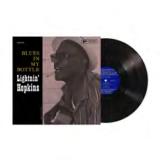
Das Solo-Akustikalbum von Lightnin’ Hopkins aus dem Jahr 1961 zeigt den legendären Musiker in Höchstform. Mit Hopkins’ Gitarrenspiel und Gesang rückt Blues in My Bottle seine Blues-Meisterschaft ins
Rampenlicht. Das Album enthält Hopkins’ Interpretationen von Originalen, traditionellen Standards und
Coverversionen. Diese Ausgabe wurde bei QRP auf 180-Gramm-Vinyl gepresst und wurde von Matthew
Lutthans bei The Mastering Lab von den Originalbändern remastert (AAA).
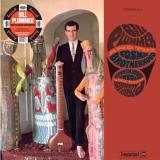
Welcome to the mind-expanding 1968 jazz recording of Bill Plummer and The Cosmic Brotherhood—where Eastern and psychedelic influences meld together to produce one of the trippiest jazz albums on Impulse Records. This LP is a much-sought-after sonic travelogue, with the pop-psych spoken-word sitar freakout of “Journey To The East” to Bill Plummer’s swinging, rapid fire/cool jazz compositions, to his covers that go straight to the heart of any 60’s genre-crossing jazz fans. Featuring an incredible who's who of the high-caliber talent bubbling over in the Los Angeles music scene at the time: Carol Kaye (legendary bass player of The Wrecking Crew), Maurice Miller (drummer in The Jazz Corps), Dennis Budimir (guitarist with Chico Hamilton Quintet, Ravi Shankar & Frank Zappa), Mike Lang (Piano with Flamin’ Groovies & Hal Blaine), Tom Scott (Saxophone with Gabor Szabo & Thelonious Monk), Ray Neopolitan (Bass for The Doors & Leonard Cohen), Milt Holland (Percussionist with The Wrecking Crew &
Captain Beefheart), Bill Goodwin (Drums for Mose Allison & Tom Waits).
Housed in a beautiful gatefold sleeve with iconic liner notes by Frank Kofsky, who comes out swinging hard in favor of the album, while shaking the dust off any jazz snobs left in the '60s who still were not ready to embrace the future of jazz. Produced by Bob Thiele who produced everyone from John
Coltrane, Art Blakey to Charles Mingus, this sonic rarity is yet another impressive vinyl reissue from the folks at Jackpot Records.

Studio One Sound is the classic Studio One collection from Soul Jazz Records. Described as ‘The University of Reggae’ by Chris Blackwell, Studio One, and founder Clement ‘Sir Coxsone’ Dodd are by far the most-important names in the history of reggae music. Originally released in 2012 this album has been out of print for many years, making it one of the most-collectible of Soul Jazz Records’ Studio One Series. This is the first ever colour vinyl edition of this classic album.
The album features some of the most in-demand and collectible Studio One tracks from over its fifty-year history and includes incredible legendary reggae artists such as The Heptones, Ken Boothe, The Skatalites, Johnny Osbourne and Wailing Souls. All these artists (and hundreds more) launched their careers at Studio One under the guidance of Clement 'Sir Coxsone' Dodd. The Studio One Sound collection features everything from classic ska and rocksteady to the deepest roots, heaviest dub and dancehall roots. Sleevenotes are by Rob Chapman, author of the celebrated books about Studio One Records, 'Never Grow Old' and 'Downbeat the Ruler'. The exact reproduction of the original artwork features the classic image of Dennis Brown on the cover. This album is newly fully remastered for vinyl by Jason Goz at Transition. Exclusive one-off pressing on heavyweight double transparent green vinyl.