Lance Ferguson's Raregroove Spectrum is a collection of newly recorded versions of classic funk, soul, jazz and latin vinyl rarities, which features some of Melbourne's finest musicians across the album, including past and present members of The Bamboos, The Putbacks and Hiatus Kaiyote.
This 2 track single provides just a hint of what delights the full Raregroove Spectrum album contains - Lance explains that much of the inspiration for the re-works comes from his experience as a DJ; "Some of these versions can almost be looked at as DJ re-edits, sometimes we're extending what may be a really short track into something longer, or teasing out the elements in a song that really make it work on a dance-floor. It's essentially what someone does with a club re-edit, except we went the extra step and re-recorded the whole thing with a live band".
First up is a reinterpretation of a super obscure deep funk acetate 45 released by Keb Darge, Egg Roll - the follow on track is Lance's take on The Soul Vibrations The Dump.
The forthcoming album reaches further - and includes James Mason's 'Sweet Power, Your Embrace' as a sun-drenched Samba, or Anderson Paak's sure shot tune 'Am I Wrong' given an 1980's style Boogie/Jazz Funk makeover to the epic, widescreen Jazz-Funk of Pleasure's 'Joyous' - Rare Groove Spectrum provides new perspectives on the obscure to the well-loved, from old-school to new sounds - this is rare grooves re-grooved... beautifully.
Search:vinyl styl
Purple Vinyl
Etruria Beat Celebrates The 50th Release On The Label With A Special Pack Of Remixes Of Its First Release, Which Was Released Back In 2010! After 8 Years We Have Given A New Life To 7 O'clock' The First Track From Luca Agnelli On His Own Label. We Have Chosen Four Different Artists To Give Different Shades Of Techno To This Release! One Of The Fathers Of Techno, Dj Rush, The Industrial-laced Techno Of Lithuanian Under Black Helmet, The Warm, Pumping Sounds Of Swedish Artist Mikael Jonasson's And Lastly Luca Agnelli Himself With His Distinct, Powerful Style. No More Words Needed...
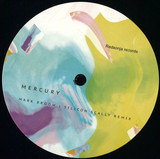
Redsonja Records presents: Reference number 17, 'Mercury', a 3 track EP, on Digital and Vinyl signed by two internationally renowned English artists, highly acclaimed on the global electronic scene. We are talking about none other than Mark Broom and Silicon Scally (Carl Finlow).
Mark Broom delivers the goods with 2 original tracks exclusively for Redsonja Records.
'Mercury' is techno in its purest form, a beautiful groove delineated by an accompanying string meandering synthetically along the track from start to finish, at times broken up by Broom's generous use of delay and reverberating claps, making the track compact and ready for the dance floor. Whereas a darker and more complex techno sound, alive with trademark Broom percussion, identifying with the current techno club scene can be heard spilling out of his second track '77S3'
Carl Finlow also presents us with a little gem of a track, surprising us once again, this time with an electro remix of 'Mercury' in true Silicon Scally style. The resources he puts to use define him as a serious producer, successfully maintaining significance and groove whilst distorting the soundscape by overlaying the sinister rhythm with captivating fettles and shapes of sound, the end result being literally extraordinary.
This EP makes for a must have in any techno sympathiser's collection, as RS17 is an all round excellent and authentic production, made with lots of care and attention.
For the first Sprechen foray into vinyl we are pleased to have been able to coerce Justin Unabomber out of his self imposed studio retirement & 'borrow' him briefly from being a Manchester restauranteur so that we can drop 4 previously un-released cuts, tailor-made for the very dance floor of the legendary Electric Chair!
No 10 minute, Ableton stretched, kick-hat-snare kinda 'edits' here...just 4 powerhouse pumpers designed for maximum fist pumping/camo netting pulling, basement boogyism for late night jackers & early morning style crackers.
4 serious units that many will have lost their shit to on the dance floors of The Roadhouse (RIP) & The Music Box (RIP again!) as well as that annual gathering of misfits & dandies, The End Of Year Riot.
Exclusive to a limited run on vinyl with screen printed sleeves & hand stamped centres.
* The long running KFA series 'True Skool' returns to vinyl for the first time in years, with 4 amazing tunes. The True Skool EPs have always pushed the boundaries, and this one is no exception. True Skool resident Radiophonic Oddity comes in hard with a furiously edited breakbeat and hip hop collision, while Doughbiy switiches from his usual style to bring some proper jungle flavor. Label newcomers Innercore and Evolutionize flex their muscles with two heave breakbeat workouts, once again demonstrating that KFA is most comfortable meandering about where others fear to tread.
CLub / Dj Support
Billy Bunter, The Fat Controller, Glowkid, Slipmatt, Dj Jedi, Dj Luna-c, Dj Brisk, Clayfighter, Jimni Cricket, Bustin, Sc@r, Doughboy, Saiyan, Dave Skywalker, Ponder And Many Others
"It's Maths classes. A red-haired boy sits in the back, rhythmically tapping his fingers on a table like a madman. Although other students' eyesight is focused on the formula being written on the black-board, the boy could not care less. Out of a corner of his eye he notices as the sequence of numbers slowly begins to melt off the blackboard, glittering with colours, and finally spills all over the floor like a fractal leakage from some other dimension. Students from the first rows, scared, put their legs up - and then you start to hear the rhythm. The sounds, once set free, feedback from the walls and find their way to all chinks and cracks, circle all around to finally reach the teacher's ear. The lady cannot stop the upcoming fury, grabs Krzysztof Ostrowski (number 28) by his ear and circumventing the leakage she leads him out of the classroom. It's not the first nor the second time such thing happens. Years later, the boy finally sits by the machine; subtle light comes through the window slightly ajar, the curtain dances with the wind. Krzysztof, bent, is programming the rhythm."
It's warm and bright Autumn of 2018 and Krzysztof emerges again, this time on vinyl released by Jacek Sienkiewicz's label Recognition. The experimental style of "Primary Fluctuation" might come as a surprise to many of Jacek's followers, but there are surely some common features for the two art-ists - from attention to detail to a kind of serious melancholy present in their music. Ostrowski's rec-ord is a journey through futuristic polyrhythm, with enough space for menacing basses or unorthodox samples, reminding the aesthetics of fusion of broken techno and bass music championed recently by the labels like Timedance or Livity Sound. Four tracks (five in digital version) make up a cohesive, intriguing and surprising record, announcing series of special releases prepared by Recognition for the forthcoming months. ,
- A1: Mahy - Antilles Méchant Bateau
- A2: Guy Conquete - Ban Moin Clé A Titine
- A3: Dolor - A Dardonnel
- A4: Joseph Lacides - Yo Ka Biguiné Joseph
- A5: Tino Saint-Val Mam\'Zelle Cancan
- A6: Dolor - Ki Vino
- A7: Dolor - Socié Cabrite
- B1: Gaby Siarras - Moana
- B2: Joseph Lacides - Citation Créole
- B3: Casimir Letang - Ménage Chalviré
- B4: Manuela Pioche - Pas Ban Moin Coup
- B5: Gerard Valton - Bel Mè A Présent
- B6: Beaujour - Ti Té Ya
- B7: Josianne Saint-Louis - Jeines Gaçons
- B8: Dolor - Vini Sauvé Moin
Fifteen track completion of deep biguines and Gwo Ka from the '60s French West Indies. The vinyl edition included a 4 page booklet + download code.
Biguine is a rhythmic style of music that originated in Guadeloupe and Martinique in the 19th century, which fuses 19th-century French ballroom
dance steps with African rhythms. Gwo Ka is found among all ethnic and religious groups of Guadeloupean society.
It combines responsorial singing in Guadeloupean Creole, rhythms played on the Ka drums and dancing. Gwo Ka is the musical and cultural product of the
region's African ancestry, forcibly brought to the Caribbean through slavery. Gwo Ka exists only in Guadeloupe, which is a very different island from much of
the Caribbean, in that it remains a 'department' of its original colonial master, France. Here the currency is the Euro and the baker sells croissants and café
au lait. This constant 'European-ising' of the island means that Gwo Ka plays a fundamental and important role in the defining of Guadeloupean identity.
'Antilles' Méchant Bateau', a low-tempo number with a bolero feel, indeed a pure case of the blues, and a terrific saxophone solo. What else would you
expect to set the tone for this selection, in which beguine regains its original colours, in the darkness of the Gwo Ka drums. This 45 by André Mahy, released
under the Aux Ondes sublabel, was recorded in the 1960s at Célini's, one of Guadeloupe's two main houses. Through its drum rolls and harrowing chant, it
recalled how, long before the mid-1960s, the Antilles' history was written in an ocean of teardrops - namely the Black Atlantic.
(12" Lp Vinyl / 33 Rpm / Incl. Download) Music Mania And Indica Dubs Is Proud To Present The Next Release In Their Mania Dub Series. Following Multiple Classic Re-issues, We Now Bring You A Long Awaited Freshly Produced Dubplate Album On A 12' By Uk Dub Innovators, Alpha & Omega: Dubplate Selection Vol. 3.
Blackfilm is an anonymous Hungarian artist who introduced himself with his self-titled debut in 2008, sold out in a few months and later reissued on both CD and vinyl format via Denovali in 2010. His debut has garnered widespread attention - "Evolving from downtempo electronic music to orchestral paroxysms and, insanely, passing from down-pitched nothingness to frozen urban landscapes, it becomes inevitable to resist." / "Dark and brooding, Blackfilm envelopes you like a thick fog creeping off a cooling swampland." (Headphone Commute) - and is still a classic.
Since then, he has relocated to London and released the collaboration master-piece - Along the Corridors' with Italy's heavy dub producer Eraldo Bernocchi in 2010. After eight years of silence Denovali now proudly presents his second solo album - Zero One Seven', in line with a re-issue of - Along the Corridors' on vinyl for the first time.
On - Zero One Seven', Blackfilm merges tracks spanning across drum and bass, dub and electronic. The sounds on the album are built from the ideas on the original Blackfilm - S/T' and - Along the Corridors' and progress to a sound built on new ground mixing modern production techniques and influences while at times referencing the Blackfilm sound we know from his previous releases.
The album maintains a consistent focus on atmospherics, beats and heavy bass ranging from darker dub and drum and bass influences to vocal tracks and complex ambient soundscapes. Production wise, the familiar Blackfilm style incorporating the use of synthetic sounds mixed with samples enables the album to create an intriguing, shifting atmosphere as the album progresses. A dystopian journey through haunting vocals, hypnotic drum patterns and complex sound design.
- A1: Subterranean Homesick Blues (Tristezas Del Blues Nostálgico Y Subterráneo)
- A2: 45.000$ (Guapapasea)
- A3: Sabes Quién Te Quiere
- B1: Un Limón En La Cabeza
- B2: Te Estás Equivocando
- B3: How Come You Do Me Like You Do Me (Big Bang Romeo)
- C1: Rainbow Country
- C2: Psychocalimba
- C3: Niña Del Guadiana
- D1: Did Ya Black Up Today
- D2: Dime Que Te Quéa
- D3: Dizzie
- D4: Monk Among Us
Guapapasea! is the first album by Gecko Turner, a unique creator from southern Spain. Born and bred in Extremadura, near Portugal, Gecko has an original and tasteful Latin personality, and during the 90s he was responsible for some locally quite successful bands like Perroflauta, and The Reverendoes.
Acclaimed by Spanish critics as the best debut album upon its original release in 2003, Guapapasea! is a musical journey blurring the boundaries in Latin music. It's a nice blend of different styles - from soul and Brazilian-flavoured songs like the free and easy (and all-time underground hit) "Un Limón en La Cabeza"; Afrobeat-driven tracks like "45.000$ (Guapa Pasea)"; and the flamenco-reggae of his rendition of Bob Marley's "Rainbow Country", to the infectious Latin rhythms of "Did You Black Up Today"; Monk tribute "Monka Mongas"; the original adaptation of Bob Dylan's "Subterranean Homesick Blues"; and the radio-friendly, straightforward reggae track "Te Estás Equivocando".
Guapapasea! features contributions by some of the greatest musicians active at the time on the Spanish Afro-Cuban jazz scene, such as Rubem Dantas (Paco de Lucía's percussionist and regular member of Chick Corea's band), Rodney Dássiff, and Brazilian trumpeter Irapoam Freire. The album was licensed to Quango in the US.
It's been 15 years since its original release, and to celebrate this, Lovemonk's reissuing the album on double 12" vinyl for the first time, alongside Gecko's second album, Chandalismo Ilustrado, and the CD compilation Soniquete: The Sensational Sound Of Gecko Turner. The CD version features bonus remixes by Quantic, Mexican Institute Of Sound and Watch TV.
* 300 unit limited edition stamped 10' vinyl only sampler for the forthcoming Smith & Mighty compilation 'Ashley Road Sessions 88-94', a collaborative release from Tectonic Recordings and Punch Drunk Records.
* In a classic Bristol live roots style, Love is The Key features vocalist Dan Ratchet at Ashley Road Studios, home to the legendary Smith & Mighty.
* The forthcoming compilation 'Ashley Road Sessions 88-94', due out in November 2018, celebrates 30 years of Smith & Mighty by collecting an album of previously unreleased material from the influential golden era of their original studio in Bristol.
MANOID returns to Hafendisko this October with his debut long player 'Truth', comprising six original tracks on vinyl from the Polish producer and live act. Rising producer MANOID has been steadily developing his unique approach to electronic music for the past few years, releasing his first tracks in 2014 and co-producing material for fellow Polish artist Pola Rise, whilst taking his live act across the globe to The Netherlands, South Korea,Iceland and more. Here though, we see him marking a milestone in his career with his debut album for hafendisko, the Hamburg-based sublabel of hfn music. Across the Truth LP MANOID delivers an amalgamation of styles ranging from jazz-tinged electronica through to modern classical and techno- due to MANOID's origin often referred to as 'Forest Techno'. One half of Darkness Falls and Trentemøller collaborator Josephine Philip also delivers vocals on 'Take Me', adding yet another musical twist to the package, whilst further ideas came to fruition through field recordings such as 'When' which is based upon recordings from a textile museum in the city of Lodz, and 'For Roses' which was initially made as a lullaby for MANOID's niece but he felt was a little too dark so later developed it into this enchantingly eerie composition for the album. MANOID's debut album radiantly displays charm, maturity and musicality throughout and joins the thread of his musical influences and experiences perfectly.
Those of you who have followed Lucky Brown's tireless efforts since joining the Tramp family in 2007 can hear without a doubt the progress he and his various ensembles have made in almost every musical aspect. His songwriting skills amazed us right from the start of our relationship. What deserves much more respect is that during the past years he has proved to be probably one of the most authentic and steady but at the same time most innovative creative minds on the contemporary funk scene. Sure, many of today's funk bands are able to deliver a two-and-a-half minute funk killer, what distinguishes Lucky Brown, however, is his ability to create compositions which also employ the idiom as a means to deliver an artistic message, a hard-to describe feeling, or a conscious concept, just like James Brown and Fela Kuti mastered in the 1970s. Furthermore, Lucky has developed his own trademark production and sound whose depth and honesty form a basis from which his work will ever remain timeless.
But that's nothing new as you can hear on both of his first two albums for Tamp ("Lucky Brown's Space Dream, 2011 and "Mystery Road", 2015) On "Mesquite Suite" he is forging new paths by soaking up musical styles from all over the world to infuse with his own totally unique way of producing. Perfect examples are the Mulatu Astatke-ish tracks "Pauraque" and "Mother Corn Stalk" with its distinctive New Orleans Swamp-Jazz flavor. Fans of the Menahan Street Band or El Michels Affair may see in "Taterbug" and "Estrellas De La Tierra" their favourite tracks. But it's the entirety which makes this album standout.
It has been Lucky Brown's aim to paint for the world a picture of the vernacular jazz that America's neighborhoods once crafted as their own homegrown cultural heritage. Lucky Brown's music is a rejection of the elitism, classism, and status of the music industrial complex and is an antitoxin to it's resultant homogeneity. He wants with his heart and his art to transmit an everyday people's sound, made by everyday people, dedicated to the upliftment of all people.
Tobias Kirmayer, August 2018
key-selling points:
- limited to 500 hand-numbered copies
- incl. full album download code
- double vinyl LP with deluxe gatefold cover
If you check the credits of The Rolling Stones' Goats Head Soup LP from 1973 you'll find a certain "Pascal" listed on the percussion section. That is none other than Los Angeles based artist Nicolas Pascal Raicevik (1933-1994), aka 107-34-8933, aka Head, aka Nik Pascal, aka Nik Raicevic. Besides his hitting the bongoes on the Stones album, Nik was a great artist on his own, both as a painter and as a musician. As a musician, he was a pioneer in the use of synthesizers, preceeding the Berlin school by some years when his Head LP was released on on Buddah in 1970. Buddah probably saw in Head the opportunity to cash in some money from the remains of the psychedelic scene - the three tracks on the LP are named after drugs used in the late sixties. The sounds, however, are accomplished works that show Raicevic as one of the most interesting pioneers in the use of synths. The album probably didn't do too well, since Buddah didn't renew the contract with Raicevic, who instead took his own way releasing his works on his very own Narco Records and Tapes label. Between 1968 and 1975 Narco would issue 4 LPs credited either to Nik Raicevic (Beyond The End... Eternity) or Nik Pascal (The Sixth Ear, Magnetic Web and Zero Gravity) plus one credited to 107-34-8933 (Numbers, which is in fact the same LP as Buddah's Head, albeit with different cover art). Copies of these LPs came with an ironic sticker over the shrinkwrap that read "Do not listen to this LP if you are stoned".
1972 saw the release of The Sixth Ear (Narco NR666), this time credited to Nik Pascal. A more complex work than Beyond The End..., it adds consistent rhythmic patterns to the mix with the addition of bongoes and also explores some interesting chord progressions.
Besides his musical explorations, Nik was also an interesting painter. His paintings are auctioned from time to time, and are consciousness expanding works influenced by abstract cubism and surrealism, some kind of Salvador Dalí on drugs exploring the outter and inner space. All the artwork on the sleeves of his LPs is done by himself. Spacey landscapes and psychedelic colours that fit perfectly to the music they contain.
"Nik Raicevic's music is at the intersection of radical psycho-electronic weirdness and kraut kosmische music (in particular the scifi-hypno-minimal modules of Conrad Schnitzler in Grun, Rot and Blau). It presents mega epic & tripped out electronic improvisations.
"This is an absolute must for collectors and fans of visceral, neurotic soundscapes." (progarchives)
"As far as late-60s / early-70s American Bedroom' Electronic Music goes, these LPS have to be among the first transmissions from this sector, made all the more attractive when coupled with Raicevic's alien topographIes - the covers are high-color portrayals of Venusian lanes, knotted growths, & future-past architecture in a style you might equate with Vintage' sci-fi pulp-novel covers - & copious Downer' sentiment. This music is imbued with a sort of lonely, anti-social sensibility that's about as far as you can get from the Academic' Early Electronic vector. I will say that if the Steve Birchall, Cellutron & the Invisible, and/or Pythagoron™ seed your garden, this will likely do the same." (twoheadeddog)
Never reissued before on vinyl format, the Wah Wah reissue features original sleeve artwork made of paintings and drawings by Nik himself and reproduction of the famous ironic "Do not listen if you are stoned" sticker. Limited edition, 500 copies only.
If you check the credits of The Rolling Stones' Goats Head Soup LP from 1973 you'll find a certain "Pascal" listed on the percussion section. That is none other than Los Angeles based artist Nicolas Pascal Raicevik (1933-1994), aka 107-34-8933, aka Head, aka Nik Pascal, aka Nik Raicevic. Besides his hitting the bongoes on the Stones album, Nik was a great artist on his own, both as a painter and as a musician. As a musician, he was a pioneer in the use of synthesizers, preceeding the Berlin school by some years when his Head LP was released on on Buddah in 1970. Buddah probably saw in Head the opportunity to cash in some money from the remains of the psychedelic scene - the three tracks on the LP are named after drugs used in the late sixties. The sounds, however, are accomplished works that show Raicevic as one of the most interesting pioneers in the use of synths. The album probably didn't do too well, since Buddah didn't renew the contract with Raicevic, who instead took his own way releasing his works on his very own Narco Records and Tapes label. Between 1968 and 1975 Narco would issue 4 LPs credited either to Nik Raicevic (Beyond The End... Eternity) or Nik Pascal (The Sixth Ear, Magnetic Web and Zero Gravity) plus one credited to 107-34-8933 (Numbers, which is in fact the same LP as Buddah's Head, albeit with different cover art). Copies of these LPs came with an ironic sticker over the shrinkwrap that read "Do not listen to this LP if you are stoned".
Magnetic Web was released in 1973. It appeared under the Nik Pascal monicker and showed a clear evolution in sound, favoured by the addition of an Arp 2600 and some rhythm boxes. It also included percussions and cymbals. The Two Headed Dog site thinks "this is his masterpiece in all of its acid-laced glory."
Besides his musical explorations, Nik was also an interesting painter. His paintings are auctioned from time to time, and are consciousness expanding works influenced by abstract cubism and surrealism, some kind of Salvador Dalí on drugs exploring the outter and inner space. All the artwork on the sleeves of his LPs is done by himself. Spacey landscapes and psychedelic colours that fit perfectly to the music they contain.
"Nik Raicevic's music is at the intersection of radical psycho-electronic weirdness and kraut kosmische music (in particular the scifi-hypno-minimal modules of Conrad Schnitzler in Grun, Rot and Blau). It presents mega epic & tripped out electronic improvisations.
"This is an absolute must for collectors and fans of visceral, neurotic soundscapes."
"As far as late-60s / early-70s American Bedroom' Electronic Music goes, these LPS have to be among the first transmissions from this sector, made all the more attractive when coupled with Raicevic's alien topographIes - the covers are high-color portrayals of Venusian lanes, knotted growths, & future-past architecture in a style you might equate with Vintage' sci-fi pulp-novel covers - & copious Downer' sentiment. This music is imbued with a sort of lonely, anti-social sensibility that's about as far as you can get from the Academic' Early Electronic vector. I will say that if the Steve Birchall, Cellutron & the Invisible, and/or Pythagoron™ seed your garden, this will likely do the same."
Never reissued before on vinyl format, the Wah Wah reissue features original sleeve artwork made of paintings and drawings by Nik himself, and reproduction of the famous ironic "Do not listen if you are stoned" sticker. Limited edition, 500 copies only.
If you check the credits of The Rolling Stones' Goats Head Soup LP from 1973 you'll find a certain "Pascal" listed on the percussion section. That is none other than Los Angeles based artist Nicolas Pascal Raicevik (1933-1994), aka 107-34-8933, aka Head, aka Nik Pascal, aka Nik Raicevic. Besides his hitting the bongoes on the Stones album, Nik was a great artist on his own, both as a painter and as a musician. As a musician, he was a pioneer in the use of synthesizers, preceeding the Berlin school by some years when his Head LP was released on on Buddah in 1970. Buddah probably saw in Head the opportunity to cash in some money from the remains of the psychedelic scene - the three tracks on the LP are named after drugs used in the late sixties. The sounds, however, are accomplished works that show Raicevic as one of the most interesting pioneers in the use of synths. The album probably didn't do too well, since Buddah didn't renew the contract with Raicevic, who instead took his own way releasing his works on his very own Narco Records and Tapes label. Between 1968 and 1975 Narco would issue 4 LPs credited either to Nik Raicevic (Beyond The End... Eternity) or Nik Pascal (The Sixth Ear, Magnetic Web and Zero Gravity) plus one credited to 107-34-8933 (Numbers, which is in fact the same LP as Buddah's Head, albeit with different cover art). Copies of these LPs came with an ironic sticker over the shrinkwrap that read "Do not listen to this LP if you are stoned".
Nik's last album, Zero Gravity (Narco NR123) came under the Nik Pascal name and had a fantastic side long piece on the title track which reminisces of the works of Cluster. B side features four tracks that also bear some Conrad Schnitzler reminiscences. This was to be Nik's last LP before he would sell all his synths to ex car racer and future electronic/ambient music star Steve Roach.
Besides his musical explorations, Nik was also an interesting painter. His paintings are auctioned from time to time, and are consciousness expanding works influenced by abstract cubism and surrealism, some kind of Salvador Dalí on drugs exploring the outter and inner space. All the artwork on the sleeves of his LPs is done by himself. Spacey landscapes and psychedelic colours that fit perfectly to the music they contain.
"Nik Raicevic's music is at the intersection of radical psycho-electronic weirdness and kraut kosmische music (in particular the scifi-hypno-minimal modules of Conrad Schnitzler in Grun, Rot and Blau). It presents mega epic & tripped out electronic improvisations.
"This is an absolute must for collectors and fans of visceral, neurotic soundscapes."
"As far as late-60s / early-70s American Bedroom' Electronic Music goes, these LPS have to be among the first transmissions from this sector, made all the more attractive when coupled with Raicevic's alien topographIes - the covers are high-color portrayals of Venusian lanes, knotted growths, & future-past architecture in a style you might equate with Vintage' sci-fi pulp-novel covers - & copious Downer' sentiment. This music is imbued with a sort of lonely, anti-social sensibility that's about as far as you can get from the Academic' Early Electronic vector. I will say that if the Steve Birchall, Cellutron & the Invisible, and/or Pythagoron™ seed your garden, this will likely do the same."
Never reissued before on vinyl format, the Wah Wah reissue features original sleeve artwork made of paintings and drawings by Nik himself, and reproduction of the famous ironic "Do not listen if you are stoned" sticker. Limited edition, 500 copies only.
Having previously featured on Comb and Razor's popular compilation 'Brand New Wayo', Caribou's 'The Longest Mixtape: 1000 Songs For You' (twice) and remixed by numerous DJs including Kornél Kovács. It has long been over due that Nigerian synth-funk legend Dizzy K gets the reissue he deserves, teaming up with London based record label Sticky Buttons for a very special double LP compilation.
Dizzy K Falola is one of Nigeria's most adored disco funk artists form the early 80's. His career was propelled by EMI Nigeria who brought him to notoriety with his first album 'Excuse Me Baby', released in 1982. Excuse Me Baby became an instant success in Nigeria and within 3 months he was back in the studio recording his second album and touring with international superstars such as The Whispers. The success of his work came both from the creative collaboration of musicians and their progressive style of synth-funk and disco influenced heavily by western artists. The team included Nkono Teles, Felix Liberty and Dizzy K's mentor and manager Tony Okoroji amongst others who together formed the disco funk that infected the homes, streets and clubs of Lagos. Noted in 'Hip Hop Africa: New African Music in a Globalizing World', Dizzy K's song titled Saturday Night Raps which features on Excuse Me Baby is thought to have been on of the earliest examples of commercial African Rap music. It was examples like this that showed Dizzy K was bringing something new to the Nigerian boogie scene.
With careful restoration by Colin Young at See Why Audio, (who's expertise and talents have graced some of the most iconic reissues of recent years, including "Who Is William Onyeabor" and Charanjit Singh's "Synthesizing: Ten Raga's to a Disco Beat") and vinyl mastering conducted by The Carvery, cutting the masters on a Neumann VMS70 mastering lathe originally used in Nashville's CBS studio to cut Motown classics. This is an uncompromising vinyl package covering Dizzy K's first 3 albums from '82-'84. Compiled for the dance floor and offering Sticky Buttons take on the bright boogie goodness of Dizzy. With personal liner notes from the artist and fresh artwork by the team this is a record that cuts to the point.
This is already our seventh Deep Love compilation and we dare to say our most complete yet in sound and flow. The ten pieces on this sampler blend in perfectly with that laid back 'late' summer mood. We are very pleased to welcome yet again some new acts to Dirt Crew with the likes of 'Jaxx Madicine', 'Ouer', 'Times are Ruff' and 'S3A'. We cross many borders not only in genres but also country wise. From the heavy Disco sampled jam by French producer 'S3A' to the Jazz and Funk laden epos of the Italian 3 piece 'Jaxx Madicine' over to the Dutch deep house boys 'Times Are Ruff' who are well known from their, same named, label and finally to the Berlin duo 'Ouer' who also run an own label and released with our good friends at 'Heist Recordings', delivering an ecstatic electronic floating tune here.
This is all completed by some excellence from long time Dirt Crew artists. '25 Places' have been with us for many years now and their two Ep's have gotten so much love from the deeper deep house community. Here they drop an epic almost IDM techno like tune that closes this great album in the best possible way. Our Icelandic stall wart 'Felix Leifur' drops a heavy hitter named 'Buster'. After his recent 'Bobby Donny' Ep earlier this year we are thrilled to have him back on Dirt Crew! 'Harry Wolfman' and 'Ponty Mython' need no introduction really, they are adding Electro/ Disco/ Electronica fuelled cuts that form a great middle part to this mix of tunes. Harry going in very smooth and relaxed, something else than his usual House workout which we really loved to present to you. 'Ponty Mython' drops an irresistible 'good times' indie acid track in his unique 'free' style.
Last, we must of course not forget 'Dan Only' and key wizzard 'Lorenz Rhode'! With another beautifully smooth cut 'Dan Only' follows up on his latest debut Ep with us. Again a smart cross over in Techno and House with a distinct relaxed groove and atmosphere to it. Lorenz is back 'On Top' here after his super successful first offering to the Deep Love series last year and his 'And I Said' EP which stormed many charts. In the middle of touring and working with Detroit Swindle on their 'High Life' album we are super happy that he found the time to make another gem with that raw n funky live feel to it... We couldn't have started this compilation off with a better joint than 'Marakuja'.
Enough words for now ... just put these vinyl on your decks or stream/play it on the go and don't forget to drop them at a sweaty club night. Deep Love is here to stay!
Roffa Sound is kicking off in style with a heavy soundsystem stepper which is guaranteed to shake up the dance. After enjoying the hypnotising melodies heard in the intro, producer Mystic Pulse introduces hard hitting drums and heavy bass whilst Black Omolo furiously sings about the daily pressure and tribulation put on by Babylon. For this very first release Roffa Sound has recorded a video clip as well, which we strongly recommend to check out on youtube. For those wanting less vocal but more echo should check out the version, which will be exclusively available on vinyl.
- A1: Emad Youssef - Al Bareedo Ana (The One I Love)
- A2: Abdel El Aziz Al Mubarak - Ma Kunta Aarif Yarait (I Wish I Had Known)
- B1: Kamal Tarbas - Min Ozzalna Seebak Seeb (Forget Those That Divide Us)
- B2: Madjzoub Ounsa - Arraid Arraid Ya Ahal (Love, Love Family)
- B3: Khojali Osman - Malo Law Safeetna Inta (What If You Resolve What's Between Us)
- C1: Zaidan Ibrahim - Ma Hammak Azabna (You Don't Care About My Suffering) (Live)
- C2: Saied Khalifa - Igd Allooli (The Pearl Necklace)
- C3: Taj Makki - Ma Aarfeen Nagool Shino! (We Don't Know What To Say!)
- D1: Hanan Bulu Bulu - Alamy Wa Shagiya (My Pain And Suffering) (Live)
- D2: Abdelmoniem Ekhaldi - Droob A Shoag (Paths To Love)
- D3: Samira Dunia - Galbi La Tahwa Tani (My Heart, Don't Fall In Love Again)
- E1: Mohammed Wardi - Al Sourah (The Photo)
- E2: Abdullah Abdelkader - Al Zaman Zamanak (It's Your Time)
- F1: Mustafa Modawi & Ibrahim El Hassan - Al Wilaid Al Daif (The Youth Who Came As A Guest)
- F2: Ibrahim El Kashif - Elhabeeb Wain (Where Is My Sweetheart)
- F3: Mohammed Wardi - Al Mursal (The Messenger)
In Sudan, the political and cultural are inseparable. In 1989, a coup brought a hardline religious government to power. Music was violently condemned. Many musicians and artists were persecuted, tortured, forced to flee into exile — and even murdered, ending one of the most beloved music eras in all of Africa and largely denying Sudan's gifted instrumentalists, singers, and poets, from strutting their creative heritage on the global stage.
What came before in a special era that protected and promoted the arts was one of the richest music scenes anywhere in the world. Although Sudanese styles are endlessly diverse, this compilation celebrates the golden sound of the capital, Khartoum. Each chapter of the cosmopolitan city's tumultuous musical story is covered through 16 tracks: from the hypnotic violin and accordion-driven orchestral music of the 1970s that captured the ears and hearts of Africa and the Arabic-speaking world, to the synthesizer and drum machine music of the 1980s, and the music produced in exile in the 1990s. The deep kicks of tum tum and Nubian rhythms keep the sound infectious.
Sudan of old had music everywhere: roving sound systems and ubiquitous bands and orchestras kept Khartoum's sharply dressed youth on their feet. Live music was integral to cultural life, producing a catalog of concert recordings. In small arenas and large outdoor venues, musical royalty of the day built Khartoum's reputation as ground zero for innovation and technique that inspired a continent.
Musicians in Ethiopia and Somalia frequently point to Sudan's biggest golden era stars as idols. Mention Mohammed Wardi — a legendary Sudanese singer and activist akin to Fela Kuti in stature and impact in his music and politics — and they often look to the heavens. A popular story is of one man from Mali who walked for three months across the Sahel to Sudan because the father of the woman he wanted to marry would only allow it if he got him a signed cassette from Wardi himself. Saied Khalifa is said to be the one of the few singers to make Ethiopian emperor Haile Selassie smile.
Such is the stature of Sudanese singers and the reputation of Sudanese music, particularly in the "Sudanic Belt," a cultural zone that stretches from Djibouti all the way west to Mauritania, covering much of the Sahara and the Sahel, lands where Sudanese artists are household names and Sudanese poems are regularly used as lyrics until today to produce the latest hits. Sudanese cassettes often sold more in Cameroon and Nigeria than at home.
But years of anti-music sentiment have made recordings in Sudan difficult to source. Ostinato's team traveled to Ethiopia, Somalia, Djibouti, and Egypt in search of the timeless cultural artifacts that hold the story of one of Africa's most mesmerizing cultures. That these cassette tape and vinyl recordings were mainly found in Sudan's neighbors is a testament to Sudanese music's widespread appeal.
With our Sudanese partner and co-compiler Tamador Sheikh Eldin Gibreel, a once famous poet and actress in '70s Khartoum, Ostinato's fifth album, following our Grammy-nominated "Sweet As Broken Dates," revives the enchanting harmonies, haunting melodies, and relentless rhythms of Sudan's brightest years, fully restored, remastered and packaged luxuriously in a triple LP gatefold and double CD bookcase to match the regal repute of Sudanese music.
A 20,000-word liner note booklet gives voice to the singers silenced by an oppressive regime.
Take a sail down the Blue and White Nile as they pass through Khartoum, carrying with them an ancient history and a never-ending stream of poems and songs. It takes two Niles to sing a melody.


