Buscar:visage

Estilos
Todo
Heriot - Devoured by the Mouth of Hell 106 Metal Century Media Records LP

Seit der Veröffentlichung ihrer 2020 erschienenen Single "Cleansed Existence" werden die Industrial-Metalcore-Hellraisers HERIOT aus Bristol von Künstlern, Journalisten und Fans gleichermaßen als die nächste Hoffnung für extreme Musik gehandelt. "Devoured by the Mouth of Hell" verdoppelt nicht nur die erdrückende Klaustrophobie von HERIOTs früherem Material - es enthält auch Ideen, die sie zuvor nicht angerührt haben. Die Opener "Foul Void" und "Harm Sequence" beweisen das mit einem schwindelerregenden Doppelschlag, wobei der erste Song ein Kraftwerk des Grooves mit melodischen Anklängen ist, während der zweite ein Metalcore-Amoklauf mit Vollgas ist. In anderen Stücken wie "Opaline" und "Visage" werden die Ambient-Töne, die HERIOT zuvor nur angedeutet hatten, zu kompletten Songs verarbeitet. Die Band klingt immer noch so roh und direkt wie eh und je, doch es gibt eine Verfeinerung, die nur von ihrem schieren Drang kommen kann, etwas zu erschaffen, das dem ganzen Hype um sie herum würdig ist. Die internationale Aufmerksamkeit inspirierte HERIOT dazu, sich so intensiv wie möglich auf ihre Instrumente und ihr Handwerk zu konzentrieren, und "Devoured by the Mouth of Hell" wurde in monatelanger Schreib- und Aufnahmearbeit akribisch verfeinert. Allein das Komponieren und das Aufnehmen der Demo-Versionen nahmen fast ein Jahr in Anspruch - als die Band dann Anfang 2024 ins Studio ging, holte sie sich Hilfe vom Who's Who des modernen Metals: Sylosis-Leader und Ex-Architects-Gitarrist Josh Middleton produzierte, während Justin Hill von den Prog-Metal-Koryphäen Sikth das Schlagzeug bearbeitete und Grammy-Preisträger Will Putney (der bei den Metal/Hardcore-Schwergewichten End, Fit For An Autopsy und Better Lovers spielt) das Album abmischte. HERIOT haben ein dichtes, beklemmendes und doch abwechslungsreiches Meisterwerk geschaffen. Ihr Momentum wird sich fortsetzen, wenn die Metal-Massen ihre neuen Ideen gehört haben, und es wird nicht mehr lange dauern, bis die Band von den hellsten "Rising Stars" des Metals zu ganz normalen 'Stars' aufsteigt. "Devoured by the Mouth of Hell" ist erhältlich als: Standard CD Jewelcase, 180g LP und Digitales Album.

Reservar27.09.2024

debe ser publicado en 27.09.2024

21,56

Ültimo hace: 2026 Años
Various - CBRK002 (2x12")

Various

CBRK002 (2x12")

2x12inchCBRK002
circuit|breaker
13.09.2024

For our second release, circuit|breaker quips back the stacked offering of CBRK001 with another dynamic double LP, exhibiting some of the best local and international talent that’s cropped up on our radar over recent years.


The label is as driven as ever to build a bridge between our community and the wider electronic
music domain, giving artists a platform to preach the sound that speaks to them, and this release is but another stepping stone towards greatness, for us and for them.


CBRK002 opens up with a rolling, gritty number that could only be Fergus Sweetland, as metallic voices beckon forth on ‘Untitled (ARP 1.02)’. Hasvat Informant, whose thunderous reputation precedes him, then storms the barn with the explosive ‘Abispa Ephippium’. The B-side shifts gears to Goa’s Dotdat and his frantically groovy track ‘Holo’, followed by a gorgeous minimal number by Berlin-based Pino Peña – Mia’s Pocket; one that’s sure to get summer dancefloors pumping.


The C-side of the record contains two heaving tracks, the C1 from the prominent force of Cloudy Ku with ‘A Room of One’s Own’, and the C2 from the dark visage that is disgrays with
‘Turmstraße’. The final side of the record has Amsterdam legend Juan Sanchez open the filter with a warm, jacking submission in ‘Indulge’, while the Berliner Marsch takes us home with a
devious timbre that will have bodies glued to the floor on ‘Into You’.

No en stock

Haga su pedido ahora y le encargaremos el artículo en nuestro proveedor.

31,51

Ültimo hace: 13 Meses
TECHNIQUES BERLIN - THE LANGUAGE OF MACHINES (1985-1991) LP 2x12"

Formed by high school buddies Andreas Gregor and David Rout, Techniques Berlin started in 1984 experimenting with synthesizers, drum machines and guitars. In the early stages, the band was heavily influenced by UK new romantic acts The Human League, Visage, Yazoo, OMD and Depeche Mode, as well as rising Canadian synth-pop bands Rational Youth, Men Without Hats and Trans-X. It took them a few years to master their electronic toys and create a unique blend of addictive electro-pop melodies and beautifully crafted alternative beats.

In the late 80s, Techniques Berlin played live on a regular basis and their 3 self-released tapes received frequent local airplay in Canada. Despite their moderate success, the band failed to secure a record deal. Eventually both members had developed a strong interest in the burgeoning electro-industrial scene. Dave and Andreas founded !Bang Elektronika and were working with Digital Poodle as live drummers. Both of these projects were soon picked up by record labels. Techniques Berlin played their last show in November of 1991 at the University of Toronto, debuting the last track they had recorded, fittingly called ‘Time Fades to Nothing’. Or so they thought…

The proliferation of Internet radio and streaming music platforms introduced the band to a new generation of fans, enabling Techniques Berlin to stage a remarkable comeback. Within the next years they released the compilation “Suburban Playgrounds and Concrete Beaches” (Fabrika Records), recorded a new album “Breathing” (Nadanna) in 2018 and offered a series of shows in Toronto, Montreal, Mexico City and Leipzig.

“The Language of Machines” compiles a selection of original recordings between 1985 and 1991, including some favourite tunes like ‘Dancing to the Fall of the Berlin Wall’, ‘Metropolis’, ‘Watching You’ and a few unreleased tracks/versions. Limited edition of 500 copies on double vinyl with gatefold sleeve.

a 1 I Desire Dave Vocal Version


j 10 And You LinnDrum Version


o 15 My Suburban Playground [Extended Remix]

No en stock

Haga su pedido ahora y le encargaremos el artículo en nuestro proveedor.

27,31

Ültimo hace: 6 Meses
Iner, Oiuna, Johannes Albert, Crowd Control - DOBRO 010

Iner and his wife Oiuna on vocals made a joint mini-album on DOBRO. Vadim invited legendary producers from France and Germany, Johannes Albert and Crowd Control, to make remixes!
The release turned out to be powerful! There are beautiful tracks and super bangers here!

No en stock

Haga su pedido ahora y le encargaremos el artículo en nuestro proveedor.

11,98

Ültimo hace: 20 Meses
Dj Tsygan - The Sound Of Tsy

Dj Tsygan, an Integral Member of the Skylax Crew, Has Been Making Waves With His Latest Release, "Purple Dreams." He Ventures Into Uncharted Territory This Time, Infusing Elements From New Beat and Ebm, in Homage to the Late '80s Icons, Including Boytronic, Daf, and Visage. the Ep Opens With a Remarkable Track, the Exquisite "Putain," Which Effortlessly Transports Us Back to the Poetic Vibes Reminiscent of Belgian Legend Arno, All the While Seamlessly Intertwining the Aforementioned Influences. Following This, We Are Treated to a Starkly Different Yet Harmonious Piece, the House Anthem "Jestem Twoje," Evoking Memories of the Early '90s at Its Finest, Akin to the Iconic Latour Era (Sharon Stone, Anyone?). Concluding the First Side Is the Enchanting "Grey," a Barely Disguised Tribute to Visage's "Slow Is the New Fast." Flipping to Side B, We Are Greeted With the Aptly Named, Sultry, and Seductive "People Are Still Having Sex." It Instantaneously Conjures Images of Confetti (The Sound of C) but Without the Cheesy Undertones, Delivering a True, Vintage Banger. the Journey Concludes With the Deeply Personal and Profoundly Italian "Never Lost." This 12-Inch Record Is Nothing Short of Breathtaking, a Musical Odyssey That Resonates With Both the Nostalgic and the Contemporary, Promising an Unforgettable Auditory Experience....

No en stock

Haga su pedido ahora y le encargaremos el artículo en nuestro proveedor.

11,98

Ültimo hace: 14 Meses
Various - Arthur Baker Presents Dance Masters - John Luongo 2x12"
 
16

• Following on from the highly successful first two editions of
Dance Masters featuring the classics mixes from maestros
Shep Pettibone and Arthur Baker, the spotlight turns to
another remix legend, John Luongo.

• Boston born, John is one of the truly legendary DJ's and
remixers of the Disco era. John got his break at Epic by
overdubbing percussion from salt shakers and spoons onto a
promo and then passing them back the tape. This resulted in
him being flown to New York, and put in a studio (of his
choice) to mix and produce Melba Moore`s “You Stepped
Into My Life”. From this point everything he touched was a
hit. He went onto remix Disco classics by Jackie Moore –
“This Time Baby”, Dan Hartman “Vertigo / Relight My Fire”
and Patti Labelle “Music Is My Way Of Life”.

• However, John was not afraid of remixing artists that didn’t
fit into the disco genre and this attitude is borne out by the
tracklisting of this compilation, on which Gladys Knight and
The Pips rub shoulders with Fine Young Cannibals and
Billy Idol, and Baltimora appears alongside Banararama
and Serge Ponsar.

• “…if you played this whole thing, just put it on and didn’t
tell anyone it was me, they’d say ‘boy, what a great group of
songs this is!’” - John Luongo

• This cut down 16 track essential edition in pressed on 140g
black vinyl and features foreword by Arthur Baker and an indepth essay written by Alexis Petridis (Rock and Pop
reviewer for The Guardian).

• All tracks remastered by Nick Robbins at Sound
Mastering

No en stock

Haga su pedido ahora y le encargaremos el artículo en nuestro proveedor.

19,54

Ültimo hace: 17 Meses
Various - Atlas / 3 LP 3x12"

Various

Atlas / 3 LP 3x12"

3x12inchONEF058
1985 Music
24.10.2023

For us at 1985 Music, our Various Artists series are extremely important. It not only provides a great platform to celebrate music from a wide range of artists, but it also enables us to push the parameters of underground music. We are very excited to share the third and final part of our Atlas series which includes both new and familiar faces.

No en stock

Haga su pedido ahora y le encargaremos el artículo en nuestro proveedor.

36,56

Ültimo hace: 2 Años
Noir Desir - En Public LP 3x12"

Noir Desir

En Public LP 3x12"

3x12inch5396012
Blue Wrasse
06.10.2023

'Noir Désir En Public, traces the group's final triumphant tour in 2001 and 2002 which followed the release of the album “Des Visages Des Figures”. When it was released in 2005, this live performance, now legendary, went straight to number 1 in the best-selling albums. Offered for the first time on vinyl, the sound has been remastered in 24 bits / 96 KHZ from vintage analog tapes under the supervision of the group. The live version of the iconic title Aux dark heroes at the Paléo festival is available for the first time .Reviews and Ads –
R2,Mojo and London Macadam

Reservar06.10.2023

debe ser publicado en 06.10.2023

55,42

Ültimo hace: 2026 Años
Sustance - Perceived Connections 2x12"

An explorative sonic landscape with the beautifully eclectic sounds of drum and bass at its core, Sustance’s debut album is every bit as thought-out, polished, and innovative as we’ve come to expect from one of drum and bass’ brightest prospects.

Having grown up listening to seminal Shogun albums like Spectrasoul's 'Delay No More' and Icicle's 'Under The Ice', ‘Perceived Connections’ acts as a full circle moment for the producer, who now finds himself following in the footsteps of the artists who profoundly influenced his approach to creating music.

Written between London and Berlin across a twelve-month period, 'Perceived Connections' encapsulates both of the alluring sides of Sustance's sound. In the same fashion that the album's writing process pivoted between two capital cities, Sustance's debut album presents both deep and expressive tracks such as 'I Want You' and 'Sweet Relief', as well as showcasing heavy, sound system-destroying tunes like 'Undercurrent' and 'Ten Ton’.

“The album title comes from the Zen idea that everyone perceives the world through their own perspective. Two people can listen to a record side by side and have totally different experiences. I really liked that idea as music is inherently so subjective. Sustance

Accompanying Sustance on this LP voyage is a plethora of D&B’s hottest talent, with Pola & Bryson, Visages, Flowdan, Strategy, Duskee, T-Man, Catching Cairo & Zara Kershaw all sprinkling their own flavours across the album.

Traversing an array of sounds, styles, and genres throughout, 'Perceived Connections' is nothing short of an exceptional extended body of work from a producer whose razor-tight approach to music has seen him emerge with one of the crispest and most captivating sonic palettes in drum and bass music.

No en stock

Haga su pedido ahora y le encargaremos el artículo en nuestro proveedor.

20,97

Ültimo hace: 9 Meses
Syz - Mindforms

Syz

Mindforms

12inchCTRLFRK007
Control Freak Recordings
26.04.2023

Since his last outing on Control Freak with the sold-out Bunzunkunzun EP, Syz has built a reputation as one of the UKs most distinctive club producers, weaving playful, percussive techno with soundsystem-driven bass music. Releases via Shanti Celeste’s Peach Discs and more recently on Banoffee Pies have cemented his position as a rising star of the UK scene.

Much of this acclaim started with 2020’s Mindforms - a self-released mini-LP which saw the young producer step away from the dancefloor to explore an expansive sonic world, ‘balancing the tranquility of the ecological world with the immediacy of the digital one. Tropical botany meets ethereal cyberspace through a fusion of styles, influenced by UK techno, hip hop, ambient, acid, and sound-system-driven bass music’.

The original release was accompanied by a highly limited run of just 10 dubplates. Deeming this 6-tracker too good not to receive a proper pressing, Control Freak are proud to present the first ever complete vinyl run for Mindforms, housed in full-colour centre-cut sleeves featuring an adaptation of the original artwork by Jamie Fallon (Ghost Cell), reworked by London-based designer Blixa Aguerreberry.

Alongside the record, Syz & Control Freak have curated Clubforms, a collection of remixes available digitally from some of our favourite producers, each bringing the original release firmly onto the dancefloor with their own production flourishes.

No en stock

Haga su pedido ahora y le encargaremos el artículo en nuestro proveedor.

12,82

Ültimo hace: 2 Años
Aboriginal Voices - Instant Music

For a quarter of an hour, Zürich was the navel of the world. Let's look back: at New York's CBGB's, pre-punks were shredding away, Malcolm McLaren, as a man with a fine-tuned taste for the hip, imported the sound to London, where his sweetheart Vivienne Westwood dressed the test-tube band The Sex Pistols. A few pop magazines later (we are in an analog world!) punk bands sprouted everywhere, like shiny pimples on poorly fed teenagers. Contrary to legend, even back then, it was often those with a musical background who were the most successful. One such example, Henrich "Wüste" Zwahlen, who had learned the violin, attended a jazz school and went into prog-rock before joining the Nasal Boys, one of the first punk bands in Zürich. The scene included the female band Kleenex (cover: Fischli of art heroes Fischli/Weiss), whose minimalism was praised by the London music press, while the world's most important rock theorist, Greil Marcus, wrote an ode highlighting Zürich's role as the birthplace of Dadaism. A fertile ground for the militant youth movement that exploded in 1980 and stirred up the city of banks, protestantism and boredom with raw wit and expressive violence. Gathering at concerts of local bands and fueled by endogenous and artificial substances - they paid homage to exuberance and self-indulgence.
The mantra of "everything-is-possible" was driven forward on the musical front by progress in terms of means of production: analog electronic instruments were no longer reserved for hippie nerds, who sat in front of large plug-in boards like autistic-psychedelic switchboard operators connecting cables for their sound carpets. Now snazzy stage personnel elicited fast-paced sounds from handy devices often made in Japan. Kraftwerk was fashionable, the Zurich duo Yello experimented with new synthetic sounds, and the groundbreaking album "Alles Ist Gut" by the Düsseldorf based duo D.A.F. (Deutsch Amerikanische Freundschaft) was released, which chanted its program of provocation times danceability with lines such as "Tanz den Jesus Christus, tanz the Mussolini, tanz the Adolf Hitler." In England meanwhile, electronically backed New Romantic bands were replacing New Wave. The Human League, Heaven 17, Duran Duran, OMD, Depeche Mode or Visage stormed the charts.
In Zürich's underground, the duo Aboriginal Voices caused a stir at that time. A couple, good-looking, styled, looking cool into the cold neon light, with a danceable beat and sequenced electro sounds, to which Micheline gave a very unique touch when she sang in French and English. Micheline had a classical piano education, had left home early, worked as a lighting technician in a strip joint and at Booster, the hottest boutique in town (one of the relicts that still exists). Voilà: a musician who was as stylish as she was tough. She was already playing with Wüste in the band "Doobie Doos", a band where everyone played an instrument they didn't master. In 1980 the Aboriginal Voices were formed, initially with vocalist Magda Vogel (of later UnknownmiX fame), who was trained as a classical singer.

Frustrated by organizational friction and constant hassles with band lineups, Wüste and Misch decided to do everything as a twosome: self-mixed, self-styled, self-produced. With the top-of-the-line Linn drum machine clocking the beat, Wüste's guitar and Micheline on the Yamaha synthesizer created a unique sound of danceable electronic music. Whereby the Aboriginal Voices acted as a kind of proto-influencer, receiving the latest equipment to try out, especially since they made it a point not to work with tapes, but to design everything for live shows. They had an interface built for the legendary Roland MC-4B, who sequenced the modular Roland System 100M but where one output controlled a light show synchronized with the sound. A pioneering act that fit well into the DIY spirit of punk, with its self-distributed tapes and fuck-you attitude towards the cretins of the music industry. Consequently only two cassettes and an EP were released. There was something futuristic about the sound, the vestiary style and the electronics, while the attitude remained rebellious. Of course something so deeped in the Zeitgeist wasn't meant to last. Wüste moved to New York, Micheline stayed in Zurich, both still active in the music scene to this day.

Sven Regener, head of the band Element of Crime and one of Germany's most successful pop writer said a few years ago when asked if he knew of any Swiss music: "Of course! In 1983, a Swiss band called Aboriginal Voices played with us at a festival in Zurich. Great, avant-garde electro-pop. That was my first encounter."

If you ever saw them live, you never forgot them, and so over the years you belonged to a teeny-tiny circle of insiders, happy to be joined after all these years by new aficionados who appreciate the sound of that quarter-hour, when Zurich was ravishing, creative and exciting.

- Thomas Haemmerli

No en stock

Haga su pedido ahora y le encargaremos el artículo en nuestro proveedor.

21,47

Ültimo hace: 3 Años
Charli Brix - The Art Of Change

Orange Vinyl

Following the success of her 2020 EP ‘Kintsugi’ Charli Brix returns to Flexout with her debut album, The Art Of Change. Three years in the making and collaborations with the likes of DRS, Lenzman, Visages, Gardna, QZB, En:vy & EMZ this has been a project carefully crafted to showcase the full extent of Charli’s voice and song writing capabilities.

No en stock

Haga su pedido ahora y le encargaremos el artículo en nuestro proveedor.

15,59

Ültimo hace: 6 Meses
Joe Lewandowski - Here I am

Joe Lewandowski is back on skylax records after the 2020 release of his supercharged "Egosexual" EP. This time, the young French prodigy is tackling another of his influences : the New Wave ! And for this new release, he is accompanied on the vocal by the wonderful voice of STOLT on the brilliant “Here I Am” which invokes on the dancefloor the ghosts of Human League, Visage as well as the grandiloquence of the Associates or even David Bowie (yes sir !). In A2 “Casual” invites us for an extremely powerful and trippy black techno road trip that will turn more than one dancefloor. On the B-side, we find at the controls a long-time friend of the skylax team, the brilliant Lauer with 2 Dantesque remixes of “Here I Am”, vocal and instrumental, which are one of the best thing in music we heard for the last 10 years at least, remembering the legendary french club “le pulp”, Blackstrobe (from the first era) and early electrolash with little touches of EBM and Italo-disco. A twilight MASTERPIECE.

No en stock

Haga su pedido ahora y le encargaremos el artículo en nuestro proveedor.

10,50

Ültimo hace: 2 Años
Nicolas Masseyeff - Endless LP 2x12"

"Have you ever had this endless feeling of unconditional love for someone or music, between virtuality and reality, which seems to be eternal for your own heart... " — Nicolas Masseyeff French DJ and producer Nicolas Masseyeff shares his first album in almost a decade on Marc Romboy’s label Systematic. The release brims with lush tones, electronica-flecked rhythms and rich soundscapes, suitable for a club-based audience and home listening. Celebrated visual artist Yann Masseyeff—Nicolas’s brother—is responsible for the artwork of the release.
Raised on the French Riviera, Nicolas Masseyeff started out as a local record dealer before purchasing his own shop, Limelight, establishing it as the most respected vinyl haunt in the South of France. Pursuing music production full-time since the late noughties allowed Nicolas to follow his true path, shaping him into the multi-genre artist he is today. Having released on Herzblut Recordings, Systematic, KD Music, Mobilee and several other esteemed imprints, Nicolas has worked relentlessly to craft a sound that transcends house, electronica, downtempo and afro house. Collaborations with Kittin, Oxia and Parallelle wind throughout his back catalogue, as well as remixes for Frankyeffe, Pig&Dan, Nikola Gala, Hot Since 82 and many more besides.
Endless offers an insight into Nicolas’ spiralling world, detailing the artist’s lithe production skills and consideration when collaborating with other talents, like the interdisciplinary singer Kittin. The collection sums up where Nicolas is at now in his career—a storied producer who continues to evolve, sharing an aesthetic rich in melody while retaining a dance-driven flavour. It’s the kind of sound that comes with years of practice, patience and perseverance.

No en stock

Haga su pedido ahora y le encargaremos el artículo en nuestro proveedor.

18,45

Ültimo hace: 21 Meses
Lee Tracy & Isaac Manning - Is it What You Want

As the sun sets on a quaint East Nashville house, a young man bares a piece of his soul. Facing the camera, sporting a silky suit jacket/shirt/slacks/fingerless gloves ensemble that announces "singer" before he's even opened his mouth, Lee Tracy Johnson settles onto his stage, the front yard. He sways to the dirge-like drum machine pulse of a synth-soaked slow jam, extends his arms as if gaining his balance, and croons in affecting, fragile earnest, "I need your love… oh baby…"

Dogs in the yard next door begin barking. A mysterious cardboard robot figure, beamed in from galaxies unknown and affixed to a tree, is less vocal. Lee doesn't acknowledge either's presence. He's busy feeling it, arms and hands gesticulating. His voice rises in falsetto over the now-quiet dogs, over the ambient noise from the street that seeps into the handheld camcorder's microphone, over the recording of his own voice played back from a boombox off-camera. After six minutes the single, continuous shot ends. In this intimate creative universe there are no re-takes. There are many more music videos to shoot, and as Lee later puts it, "The first time you do it is actually the best. Because you can never get that again. You expressing yourself from within."

"I Need Your Love" dates from a lost heyday. From some time in the '80s or early '90s, when Lee Tracy (as he was known in performance) and his music partner/producer/manager Isaac Manning committed hours upon hours of their sonic and visual ideas to tape. Embracing drum machines and synthesizers – electronics that made their personal futurism palpable – they recorded exclusively at home, live in a room into a simple cassette deck. Soul, funk, electro and new wave informed their songs, yet Lee and Isaac eschewed the confinement of conventional categories and genres, preferring to let experimentation guide them.

"Anytime somebody put out a new record they had the same instruments or the same sound," explains Isaac. "So I basically wanted to find something that's really gonna stand out away from all of the rest of 'em." Their ethos meant that every idea they came up with was at least worth trying: echoed out half-rapped exhortations over frantic techno-style beats, gospel synth soul, modal electro-funk, oddball pop reinterpretations, emo AOR balladry, nods to Prince and the Fat Boys, or arrangements that might collapse mid-song into a mess of arcade game-ish blips before rallying to reach the finish line. All of it conjoined by consistent tape hiss, and most vitally, Lee's chameleonic voice, which managed to wildly shape shift and still evoke something sincere – whether toggling between falsetto and tenor exalting Jesus's return, or punctuating a melismatic romantic adlib with a succinct, "We all know how it feels to be alone."

"People think we went to a studio," says Isaac derisively. "We never went to no studio. We didn't have the money to go to no studio! We did this stuff at home. I shot videos in my front yard with whatever we could to get things together." Sometimes Isaac would just put on an instrumental record, be it "Planet Rock" or "Don't Cry For Me Argentina" (from Evita), press "record," and let Lee improvise over it, yielding peculiar love songs, would-be patriotic anthems, or Elvis Presley or Marilyn Monroe tributes. Technical limitations and a lack of professional polish never dissuaded them. They believed they were onto something.

"That struggle," Isaac says, "made that sound sound good to me."

In the parlance of modern music criticism Lee and Isaac's dizzying DIY efforts would inevitably be described as "outsider." But "outsider" carries the burden of untold additional layers of meaning if you're Black and from the South, creating on a budget, and trying to get someone, anyone within the country music capital of the world to take your vision seriously. "What category should we put it in?" Isaac asks rhetorically. "I don't know. All I know is feeling. I ain't gonna name it nothing. It's music. If it grabs your soul and touch your heart that's what it basically is supposed to do."

=

Born in 1963, the baby boy of nine siblings, Lee Tracy spent his earliest years living amidst the shotgun houses on Nashville's south side. "We was poor, man!" he says, recalling the outhouse his family used for a bathroom and the blocks of ice they kept in the kitchen to chill perishables. "But I actually don't think I really realized I was in poverty until I got grown and started thinking about it." Lee's mom worked at the Holiday Inn; his dad did whatever he had to do, from selling fruit from a horse drawn cart to bootlegging. "We didn't have much," Lee continues, "but my mother and my father got us the things we needed, the clothes on our back." By the end of the decade with the city's urban renewal programs razing entire neighborhoods to accommodate construction of the Interstate, the family moved to Edgehill Projects. Lee remembers music and art as a constant source of inspiration for he and his brothers and sisters – especially after seeing the Jackson 5 perform on Ed Sullivan. "As a small child I just knew that was what I wanted to do."

His older brother Don began musically mentoring him, introducing Lee to a variety of instruments and sounds. "He would never play one particular type of music, like R&B," says Lee. "I was surrounded by jazz, hard rock and roll, easy listening, gospel, reggae, country music; I mean I was a sponge absorbing all of that." Lee taught himself to play drums by beating on cardboard boxes, gaining a rep around the way for his timekeeping, and his singing voice. Emulating his favorites, Earth Wind & Fire and Cameo, he formed groups with other kids with era-evocative band names like Concept and TNT Connection, and emerged as the leader of disciplined rehearsals. "I made them practice," says Lee. "We practiced and practiced and practiced. Because I wanted that perfection." By high school the most accomplished of these bands would take top prize in a prominent local talent show. It was a big moment for Lee, and he felt ready to take things to the next level. But his band-mates had other ideas.

"I don't know what happened," he says, still miffed at the memory. "It must have blew they mind after we won and people started showing notice, because it's like everybody quit! I was like, where the hell did everybody go?" Lee had always made a point of interrogating prospective musicians about their intentions before joining his groups: were they really serious or just looking for a way to pick up girls? Now he understood even more the importance of finding a collaborator just as committed to the music as he was.

=

Isaac Manning had spent much of his life immersed in music and the arts – singing in the church choir with his family on Nashville's north side, writing, painting, dancing, and working various gigs within the entertainment industry. After serving in the armed forces, in the early '70s he ran The Teenage Place, a music and performance venue that catered to the local youth. But he was forced out of town when word of one of his recreational routines created a stir beyond the safe haven of his bohemian circles.

"I was growing marijuana," Isaac explains. "It wasn't no business, I was smoking it myself… I would put marijuana in scrambled eggs, cornbread and stuff." His weed use originated as a form of self-medication to combat severe tooth pain. But when he began sharing it with some of the other young people he hung out with, some of who just so happened to be the kids of Nashville politicians, the cops came calling. "When I got busted," he remembers, "they were talking about how they were gonna get rid of me because they didn't want me saying nothing about they children because of the politics and stuff. So I got my family, took two raggedy cars, and left Nashville and went to Vegas."

Out in the desert, Isaac happened to meet Chubby Checker of "The Twist" fame while the singer was gigging at The Flamingo. Impressed by Isaac's zeal, Checker invited him to go on the road with him as his tour manager/roadie/valet. The experience gave Isaac a window into a part of the entertainment world he'd never encountered – a glimpse of what a true pop act's audience looked like. "Chubby Checker, none of his shows were played for Black folks," he remembers. "All his gigs were done at high-class white people areas." Returning home after a few years with Chubby, Isaac was properly motivated to make it in Music City. He began writing songs and scouting around Nashville for local talent anywhere he could find it with an expressed goal: "Find someone who can deliver your songs the way you want 'em delivered and make people feel what you want them to feel."

One day while walking through Edgehill Projects Isaac heard someone playing the drums in a way that made him stop and take notice. "The music was so tight, just the drums made me feel like, oh I'm-a find this person," he recalls. "So I circled through the projects until I found who it was.

"That's how I met him – Lee Tracy. When I found him and he started singing and stuff, I said, ohhh, this is somebody different."

=

Theirs was a true complementary partnership: young Lee possessed the raw talent, the older Isaac the belief. "He's really the only one besides my brother and my family that really seen the potential in me," says Lee. "He made me see that I could do it."

Isaac long being a night owl, his house also made for a fertile collaborative environment – a space where there always seemed to be a new piece of his visual art on display: paintings, illustrations, and dolls and figures (including an enigmatic cardboard robot). Lee and Issac would hang out together and talk, listen to music, conjure ideas, and smoke the herb Isaac had resumed growing in his yard. "It got to where I could trust him, he could trust me," Isaac says of their bond. They also worked together for hours on drawings, spreading larges rolls of paper on the walls and sketching faces with abstract patterns and imagery: alien-like beings, tri-horned horse heads, inverted Janus-like characters where one visage blurred into the other.

Soon it became apparent that they didn't need other collaborators; self-sufficiency was the natural way forward. At Isaac's behest Lee, already fed up with dealing with band musicians, began playing around with a poly-sonic Yamaha keyboard at the local music store. "It had everything on it – trumpet, bass, drums, organ," remembers Lee. "And that's when I started recording my own stuff."

The technology afforded Lee the flexibility and independence he craved, setting him on a path other bedroom musicians and producers around the world were simultaneously following through the '80s into the early '90s. Saving up money from day jobs, he eventually supplemented the Yamaha Isaac had gotten him with Roland and Casio drum machines and a Moog. Lee was living in an apartment in Hillside at that point caring for his dad, who'd been partially paralyzed since early in life. In the evenings up in his second floor room, the music put him in a zone where he could tune out everything and lose himself in his ideas.

"Oh I loved it," he recalls. "I would really experiment with the instruments and use a lot of different sound effects. I was looking for something nobody else had. I wanted something totally different. And once I found the sound I was looking for, I would just smoke me a good joint and just let it go, hit the record button." More potent a creative stimulant than even Isaac's weed was the holistic flow and spontaneity of recording. Between sessions at Isaac's place and Lee's apartment, their volume of output quickly ballooned.

"We was always recording," says Lee. "That's why we have so much music. Even when I went to Isaac's and we start creating, I get home, my mind is racing, I gotta start creating, creating, creating. I remember there were times when I took a 90-minute tape from front to back and just filled it up."

"We never practiced," says Isaac. "See, that was just so odd about the whole thing. I could relate to him, and tell him about the songs I had ideas for and everything and stuff. And then he would bring it back or whatever, and we'd get together and put it down." Once the taskmaster hell bent on rehearsing, Lee had flipped a full 180. Perfection was no longer an aspiration, but the enemy of inspiration.

"I seen where practicing and practicing got me," says Lee. "A lot of musicians you get to playing and they gotta stop, they have to analyze the music. But while you analyzing you losing a lot of the greatness of what you creating. Stop analyzing what you play, just play! And it'll all take shape."

=

"I hope you understood the beginning of the record because this was invented from a dream I had today… (You tell me, I'll tell you, we'll figure it out together)" – Lee Tracy and Isaac Manning, "Hope You Understand"

Lee lets loose a maniacal cackle when he acknowledges that the material that he and Isaac recorded was by anyone's estimation pretty out there. It's the same laugh that commences "Hope You Understand" – a chaotic transmission that encapsulates the duality at the heart of their music: a stated desire to reach people and a compulsion to go as leftfield as they saw fit.

"We just did it," says Lee. "We cut the music on and cut loose. I don't sit around and write. I do it by listening, get a feeling, play the music, and the lyrics and stuff just come out of me."

The approach proved adaptable to interpreting other artists' material. While recording a cover of Whitney Houston's pop ballad "Saving All My Love For You," Lee played Whitney's version in his headphones as he laid down his own vocals – partially following the lyrics, partially using them as a departure point. The end result is barely recognizable compared with the original, Lee and Isaac having switched up the time signature and reinvented the melody along the way towards morphing a slick mainstream radio standard into something that sounds solely their own.

"I really used that song to get me started," says Lee. "Then I said, well I need something else, something is missing. Something just came over me. That's when I came up with 'Is It What You Want.'"

The song would become the centerpiece of Lee and Isaac's repertoire. Pushed along by a percolating metronomic Rhythm King style beat somewhere between a military march and a samba, "Is It What You Want" finds Lee pleading the sincerity of his commitment to a potential love interest embellished by vocal tics and hiccups subtlely reminiscent of his childhood hero MJ. Absent chord changes, only synth riffs gliding in and out like apparitions, the song achieves a lingering lo-fi power that leaves you feeling like it's still playing, somewhere, even after the fade out.

"I don't know, it's like a real spiritual song," Lee reflects. "But it's not just spiritual. To me the more I listen to it it's like about everything that you do in your everyday life, period. Is it what you want? Do you want a car or you don't want a car? Do you want Jesus or do you want the Devil? It's basically asking you the question. Can't nobody answer the question but you yourself."

In 1989 Lee won a lawsuit stemming from injuries sustained from a fight he'd gotten into. He took part of the settlement money and with Isaac pressed up "Saving All My Love For You" b/w "Is It What You Want" as a 45 single. Isaac christened the label One Chance Records. "Because that's all we wanted," he says with a laugh, "one chance."

Isaac sent the record out to radio stations and major labels, hoping for it to make enough noise to get picked up nationally. But the response he and Lee were hoping for never materialized. According to Isaac the closest the single got to getting played on the radio is when a disk jock from a local station made a highly unusual announcement on air: "The dude said on the radio, 107.5 – 'We are not gonna play 'Is It What You Want.' We cracked up! Wow, that's deep.

"It was a whole racist thing that was going on," he reflects. "So we just looked over and kept on going. That was it. That was about the way it goes… If you were Black and you were living in Nashville and stuff, that's the way you got treated." Isaac already knew as much from all the times he'd brought he and Lee's tapes (even their cache of country music tunes) over to Music Row to try to drum up interest to no avail.

"Isaac, he really worked his ass off," says Lee. "He probably been to every record place down on Music Row." Nashville's famed recording and music business corridor wasn't but a few blocks from where Lee grew up. Close enough, he remembers, for him to ride his bike along its back alleys and stumble upon the occasional random treasure, like a discarded box of harmonicas. Getting in through the front door, however, still felt a world away.

"I just don't think at the time our music fell into a category for them," he concedes. "It was before its time."

=

Lee stopped making music some time in the latter part of the '90s, around the time his mom passed away and life became increasingly tough to manage. "When my mother died I had a nervous breakdown," he says, "So I shut down for a long time. I was in such a sadness frame of mind. That's why nobody seen me. I had just disappeared off the map." He fell out of touch with Isaac, and in an indication of just how bad things had gotten for him, lost track of all the recordings they'd made together. Music became a distant memory.

Fortunately, Isaac kept the faith. In a self-published collection of his poetry – paeans to some of his favorite entertainment and public figures entitled Friends and Dick Clark – he'd written that he believed "music has a life of its own." But his prescience and presence of mind were truly manifested in the fact that he kept an archive of he and Lee's work. As perfectly imperfect as "Is It What You Want" now sounds in a post-Personal Space world, Lee and Isaac's lone official release was in fact just a taste. The bulk of the Is It What You Want album is culled from the pair's essentially unheard home recordings – complete songs, half-realized experiments, Isaac's blue monologues and pronouncements et al – compiled, mixed and programmed in the loose and impulsive creative spirit of their regular get-togethers from decades ago. The rest of us, it seems, may have finally caught up to them.

On the prospect of at long last reaching a wider audience, Isaac says simply, "I been trying for a long time, it feels good." Ever the survivor, he adds, "The only way I know how to make it to the top is to keep climbing. If one leg break on the ladder, hey, you gotta fix it and keep on going… That's where I be at. I'll kill death to make it out there."

For Lee it all feels akin to a personal resurrection: "It's like I was in a tomb and the tomb was opened and I'm back… Man, it feels so great. I feel like I'm gonna jump out of my skin." Success at this stage of his life, he realizes, probably means something different than what it did back when he was singing and dancing in Isaac's front yard. "What I really mean by 'making it,'" he explains isn't just the music being heard but, "the story being told."

Occasionally Lee will pull up "Is It What You Want" on YouTube on his phone, put on his headphones, and listen. He remembers the first time he heard his recorded voice. How surreal it was, how he thought to himself, "Is that really me?" What would he say to that younger version of himself now?

"I would probably tell myself, hang in there, don't give up. Keep striving for the goal. And everything will work out."

Despite what's printed on the record label, sometimes you do get more than one chance.

No en stock

Haga su pedido ahora y le encargaremos el artículo en nuestro proveedor.

11,72

Ültimo hace: 3 Años
Mr. K - Edits by Mr. K- Pleasure Boys / Emotional Disguise 7"

The early ’80s were a fertile time for electronic music, as the explosion of relatively affordable synthesizers and drum machines gave creative musicians a new way to express themselves. For Danny Krivit, DJing at the Roxy and soaking in the sonics of the Paradise Garage, it meant an exciting collision of the worlds of dance music and hip hop. For our latest release, Mr. K has pulled out two of his sureshots from that era and given them a tune-up for today’s sound systems.

“Pleasure Boys” by Visage was released in 1982 and epitomized the new wave crossover sound that would be co-opted and expanded on under the Freestyle banner. While the track was conceived with the vocal taking the lead, that vocal was never heard at the Roxy, Krivit’s focus being the thunderous synth bass break that he’d extend to epic proportions using twin copies of the single. It’s this routine that he’s recreated on our featured edit, a bare bones riff that still sounds enormous on a club system.

For the flip, Krivit goes a little deeper with his edit of “Emotional Disguise” by Peter Godwin. Another cut originally released in 1982, Krivit again ditches the overwrought new wave vocal in favor of the atmospheric synth stylings of the instrumental, which he accurately describes as a standout, “played at the Garage and at the Roxy for the hip hop crowd.”

Energetic, atmospheric, and with huge sonic impact, these edits are appearing on 7-inch for the first time.

No en stock

Haga su pedido ahora y le encargaremos el artículo en nuestro proveedor.

11,72

Ültimo hace: 13 Meses
Lee Tracy & Isaac Manning - Is it What You Want LP

As the sun sets on a quaint East Nashville house, a young man bares a piece of his soul. Facing the camera, sporting a silky suit jacket/shirt/slacks/fingerless gloves ensemble that announces "singer" before he's even opened his mouth, Lee Tracy Johnson settles onto his stage, the front yard. He sways to the dirge-like drum machine pulse of a synth-soaked slow jam, extends his arms as if gaining his balance, and croons in affecting, fragile earnest, "I need your love… oh baby…"

Dogs in the yard next door begin barking. A mysterious cardboard robot figure, beamed in from galaxies unknown and affixed to a tree, is less vocal. Lee doesn't acknowledge either's presence. He's busy feeling it, arms and hands gesticulating. His voice rises in falsetto over the now-quiet dogs, over the ambient noise from the street that seeps into the handheld camcorder's microphone, over the recording of his own voice played back from a boombox off-camera. After six minutes the single, continuous shot ends. In this intimate creative universe there are no re-takes. There are many more music videos to shoot, and as Lee later puts it, "The first time you do it is actually the best. Because you can never get that again. You expressing yourself from within."

"I Need Your Love" dates from a lost heyday. From some time in the '80s or early '90s, when Lee Tracy (as he was known in performance) and his music partner/producer/manager Isaac Manning committed hours upon hours of their sonic and visual ideas to tape. Embracing drum machines and synthesizers – electronics that made their personal futurism palpable – they recorded exclusively at home, live in a room into a simple cassette deck. Soul, funk, electro and new wave informed their songs, yet Lee and Isaac eschewed the confinement of conventional categories and genres, preferring to let experimentation guide them.

"Anytime somebody put out a new record they had the same instruments or the same sound," explains Isaac. "So I basically wanted to find something that's really gonna stand out away from all of the rest of 'em." Their ethos meant that every idea they came up with was at least worth trying: echoed out half-rapped exhortations over frantic techno-style beats, gospel synth soul, modal electro-funk, oddball pop reinterpretations, emo AOR balladry, nods to Prince and the Fat Boys, or arrangements that might collapse mid-song into a mess of arcade game-ish blips before rallying to reach the finish line. All of it conjoined by consistent tape hiss, and most vitally, Lee's chameleonic voice, which managed to wildly shape shift and still evoke something sincere – whether toggling between falsetto and tenor exalting Jesus's return, or punctuating a melismatic romantic adlib with a succinct, "We all know how it feels to be alone."

"People think we went to a studio," says Isaac derisively. "We never went to no studio. We didn't have the money to go to no studio! We did this stuff at home. I shot videos in my front yard with whatever we could to get things together." Sometimes Isaac would just put on an instrumental record, be it "Planet Rock" or "Don't Cry For Me Argentina" (from Evita), press "record," and let Lee improvise over it, yielding peculiar love songs, would-be patriotic anthems, or Elvis Presley or Marilyn Monroe tributes. Technical limitations and a lack of professional polish never dissuaded them. They believed they were onto something.

"That struggle," Isaac says, "made that sound sound good to me."

In the parlance of modern music criticism Lee and Isaac's dizzying DIY efforts would inevitably be described as "outsider." But "outsider" carries the burden of untold additional layers of meaning if you're Black and from the South, creating on a budget, and trying to get someone, anyone within the country music capital of the world to take your vision seriously. "What category should we put it in?" Isaac asks rhetorically. "I don't know. All I know is feeling. I ain't gonna name it nothing. It's music. If it grabs your soul and touch your heart that's what it basically is supposed to do."

=

Born in 1963, the baby boy of nine siblings, Lee Tracy spent his earliest years living amidst the shotgun houses on Nashville's south side. "We was poor, man!" he says, recalling the outhouse his family used for a bathroom and the blocks of ice they kept in the kitchen to chill perishables. "But I actually don't think I really realized I was in poverty until I got grown and started thinking about it." Lee's mom worked at the Holiday Inn; his dad did whatever he had to do, from selling fruit from a horse drawn cart to bootlegging. "We didn't have much," Lee continues, "but my mother and my father got us the things we needed, the clothes on our back." By the end of the decade with the city's urban renewal programs razing entire neighborhoods to accommodate construction of the Interstate, the family moved to Edgehill Projects. Lee remembers music and art as a constant source of inspiration for he and his brothers and sisters – especially after seeing the Jackson 5 perform on Ed Sullivan. "As a small child I just knew that was what I wanted to do."

His older brother Don began musically mentoring him, introducing Lee to a variety of instruments and sounds. "He would never play one particular type of music, like R&B," says Lee. "I was surrounded by jazz, hard rock and roll, easy listening, gospel, reggae, country music; I mean I was a sponge absorbing all of that." Lee taught himself to play drums by beating on cardboard boxes, gaining a rep around the way for his timekeeping, and his singing voice. Emulating his favorites, Earth Wind & Fire and Cameo, he formed groups with other kids with era-evocative band names like Concept and TNT Connection, and emerged as the leader of disciplined rehearsals. "I made them practice," says Lee. "We practiced and practiced and practiced. Because I wanted that perfection." By high school the most accomplished of these bands would take top prize in a prominent local talent show. It was a big moment for Lee, and he felt ready to take things to the next level. But his band-mates had other ideas.

"I don't know what happened," he says, still miffed at the memory. "It must have blew they mind after we won and people started showing notice, because it's like everybody quit! I was like, where the hell did everybody go?" Lee had always made a point of interrogating prospective musicians about their intentions before joining his groups: were they really serious or just looking for a way to pick up girls? Now he understood even more the importance of finding a collaborator just as committed to the music as he was.

=

Isaac Manning had spent much of his life immersed in music and the arts – singing in the church choir with his family on Nashville's north side, writing, painting, dancing, and working various gigs within the entertainment industry. After serving in the armed forces, in the early '70s he ran The Teenage Place, a music and performance venue that catered to the local youth. But he was forced out of town when word of one of his recreational routines created a stir beyond the safe haven of his bohemian circles.

"I was growing marijuana," Isaac explains. "It wasn't no business, I was smoking it myself… I would put marijuana in scrambled eggs, cornbread and stuff." His weed use originated as a form of self-medication to combat severe tooth pain. But when he began sharing it with some of the other young people he hung out with, some of who just so happened to be the kids of Nashville politicians, the cops came calling. "When I got busted," he remembers, "they were talking about how they were gonna get rid of me because they didn't want me saying nothing about they children because of the politics and stuff. So I got my family, took two raggedy cars, and left Nashville and went to Vegas."

Out in the desert, Isaac happened to meet Chubby Checker of "The Twist" fame while the singer was gigging at The Flamingo. Impressed by Isaac's zeal, Checker invited him to go on the road with him as his tour manager/roadie/valet. The experience gave Isaac a window into a part of the entertainment world he'd never encountered – a glimpse of what a true pop act's audience looked like. "Chubby Checker, none of his shows were played for Black folks," he remembers. "All his gigs were done at high-class white people areas." Returning home after a few years with Chubby, Isaac was properly motivated to make it in Music City. He began writing songs and scouting around Nashville for local talent anywhere he could find it with an expressed goal: "Find someone who can deliver your songs the way you want 'em delivered and make people feel what you want them to feel."

One day while walking through Edgehill Projects Isaac heard someone playing the drums in a way that made him stop and take notice. "The music was so tight, just the drums made me feel like, oh I'm-a find this person," he recalls. "So I circled through the projects until I found who it was.

"That's how I met him – Lee Tracy. When I found him and he started singing and stuff, I said, ohhh, this is somebody different."

=

Theirs was a true complementary partnership: young Lee possessed the raw talent, the older Isaac the belief. "He's really the only one besides my brother and my family that really seen the potential in me," says Lee. "He made me see that I could do it."

Isaac long being a night owl, his house also made for a fertile collaborative environment – a space where there always seemed to be a new piece of his visual art on display: paintings, illustrations, and dolls and figures (including an enigmatic cardboard robot). Lee and Issac would hang out together and talk, listen to music, conjure ideas, and smoke the herb Isaac had resumed growing in his yard. "It got to where I could trust him, he could trust me," Isaac says of their bond. They also worked together for hours on drawings, spreading larges rolls of paper on the walls and sketching faces with abstract patterns and imagery: alien-like beings, tri-horned horse heads, inverted Janus-like characters where one visage blurred into the other.

Soon it became apparent that they didn't need other collaborators; self-sufficiency was the natural way forward. At Isaac's behest Lee, already fed up with dealing with band musicians, began playing around with a poly-sonic Yamaha keyboard at the local music store. "It had everything on it – trumpet, bass, drums, organ," remembers Lee. "And that's when I started recording my own stuff."

The technology afforded Lee the flexibility and independence he craved, setting him on a path other bedroom musicians and producers around the world were simultaneously following through the '80s into the early '90s. Saving up money from day jobs, he eventually supplemented the Yamaha Isaac had gotten him with Roland and Casio drum machines and a Moog. Lee was living in an apartment in Hillside at that point caring for his dad, who'd been partially paralyzed since early in life. In the evenings up in his second floor room, the music put him in a zone where he could tune out everything and lose himself in his ideas.

"Oh I loved it," he recalls. "I would really experiment with the instruments and use a lot of different sound effects. I was looking for something nobody else had. I wanted something totally different. And once I found the sound I was looking for, I would just smoke me a good joint and just let it go, hit the record button." More potent a creative stimulant than even Isaac's weed was the holistic flow and spontaneity of recording. Between sessions at Isaac's place and Lee's apartment, their volume of output quickly ballooned.

"We was always recording," says Lee. "That's why we have so much music. Even when I went to Isaac's and we start creating, I get home, my mind is racing, I gotta start creating, creating, creating. I remember there were times when I took a 90-minute tape from front to back and just filled it up."

"We never practiced," says Isaac. "See, that was just so odd about the whole thing. I could relate to him, and tell him about the songs I had ideas for and everything and stuff. And then he would bring it back or whatever, and we'd get together and put it down." Once the taskmaster hell bent on rehearsing, Lee had flipped a full 180. Perfection was no longer an aspiration, but the enemy of inspiration.

"I seen where practicing and practicing got me," says Lee. "A lot of musicians you get to playing and they gotta stop, they have to analyze the music. But while you analyzing you losing a lot of the greatness of what you creating. Stop analyzing what you play, just play! And it'll all take shape."

=

"I hope you understood the beginning of the record because this was invented from a dream I had today… (You tell me, I'll tell you, we'll figure it out together)" – Lee Tracy and Isaac Manning, "Hope You Understand"

Lee lets loose a maniacal cackle when he acknowledges that the material that he and Isaac recorded was by anyone's estimation pretty out there. It's the same laugh that commences "Hope You Understand" – a chaotic transmission that encapsulates the duality at the heart of their music: a stated desire to reach people and a compulsion to go as leftfield as they saw fit.

"We just did it," says Lee. "We cut the music on and cut loose. I don't sit around and write. I do it by listening, get a feeling, play the music, and the lyrics and stuff just come out of me."

The approach proved adaptable to interpreting other artists' material. While recording a cover of Whitney Houston's pop ballad "Saving All My Love For You," Lee played Whitney's version in his headphones as he laid down his own vocals – partially following the lyrics, partially using them as a departure point. The end result is barely recognizable compared with the original, Lee and Isaac having switched up the time signature and reinvented the melody along the way towards morphing a slick mainstream radio standard into something that sounds solely their own.

"I really used that song to get me started," says Lee. "Then I said, well I need something else, something is missing. Something just came over me. That's when I came up with 'Is It What You Want.'"

The song would become the centerpiece of Lee and Isaac's repertoire. Pushed along by a percolating metronomic Rhythm King style beat somewhere between a military march and a samba, "Is It What You Want" finds Lee pleading the sincerity of his commitment to a potential love interest embellished by vocal tics and hiccups subtlely reminiscent of his childhood hero MJ. Absent chord changes, only synth riffs gliding in and out like apparitions, the song achieves a lingering lo-fi power that leaves you feeling like it's still playing, somewhere, even after the fade out.

"I don't know, it's like a real spiritual song," Lee reflects. "But it's not just spiritual. To me the more I listen to it it's like about everything that you do in your everyday life, period. Is it what you want? Do you want a car or you don't want a car? Do you want Jesus or do you want the Devil? It's basically asking you the question. Can't nobody answer the question but you yourself."

In 1989 Lee won a lawsuit stemming from injuries sustained from a fight he'd gotten into. He took part of the settlement money and with Isaac pressed up "Saving All My Love For You" b/w "Is It What You Want" as a 45 single. Isaac christened the label One Chance Records. "Because that's all we wanted," he says with a laugh, "one chance."

Isaac sent the record out to radio stations and major labels, hoping for it to make enough noise to get picked up nationally. But the response he and Lee were hoping for never materialized. According to Isaac the closest the single got to getting played on the radio is when a disk jock from a local station made a highly unusual announcement on air: "The dude said on the radio, 107.5 – 'We are not gonna play 'Is It What You Want.' We cracked up! Wow, that's deep.

"It was a whole racist thing that was going on," he reflects. "So we just looked over and kept on going. That was it. That was about the way it goes… If you were Black and you were living in Nashville and stuff, that's the way you got treated." Isaac already knew as much from all the times he'd brought he and Lee's tapes (even their cache of country music tunes) over to Music Row to try to drum up interest to no avail.

"Isaac, he really worked his ass off," says Lee. "He probably been to every record place down on Music Row." Nashville's famed recording and music business corridor wasn't but a few blocks from where Lee grew up. Close enough, he remembers, for him to ride his bike along its back alleys and stumble upon the occasional random treasure, like a discarded box of harmonicas. Getting in through the front door, however, still felt a world away.

"I just don't think at the time our music fell into a category for them," he concedes. "It was before its time."

=

Lee stopped making music some time in the latter part of the '90s, around the time his mom passed away and life became increasingly tough to manage. "When my mother died I had a nervous breakdown," he says, "So I shut down for a long time. I was in such a sadness frame of mind. That's why nobody seen me. I had just disappeared off the map." He fell out of touch with Isaac, and in an indication of just how bad things had gotten for him, lost track of all the recordings they'd made together. Music became a distant memory.

Fortunately, Isaac kept the faith. In a self-published collection of his poetry – paeans to some of his favorite entertainment and public figures entitled Friends and Dick Clark – he'd written that he believed "music has a life of its own." But his prescience and presence of mind were truly manifested in the fact that he kept an archive of he and Lee's work. As perfectly imperfect as "Is It What You Want" now sounds in a post-Personal Space world, Lee and Isaac's lone official release was in fact just a taste. The bulk of the Is It What You Want album is culled from the pair's essentially unheard home recordings – complete songs, half-realized experiments, Isaac's blue monologues and pronouncements et al – compiled, mixed and programmed in the loose and impulsive creative spirit of their regular get-togethers from decades ago. The rest of us, it seems, may have finally caught up to them.

On the prospect of at long last reaching a wider audience, Isaac says simply, "I been trying for a long time, it feels good." Ever the survivor, he adds, "The only way I know how to make it to the top is to keep climbing. If one leg break on the ladder, hey, you gotta fix it and keep on going… That's where I be at. I'll kill death to make it out there."

For Lee it all feels akin to a personal resurrection: "It's like I was in a tomb and the tomb was opened and I'm back… Man, it feels so great. I feel like I'm gonna jump out of my skin." Success at this stage of his life, he realizes, probably means something different than what it did back when he was singing and dancing in Isaac's front yard. "What I really mean by 'making it,'" he explains isn't just the music being heard but, "the story being told."

Occasionally Lee will pull up "Is It What You Want" on YouTube on his phone, put on his headphones, and listen. He remembers the first time he heard his recorded voice. How surreal it was, how he thought to himself, "Is that really me?" What would he say to that younger version of himself now?

"I would probably tell myself, hang in there, don't give up. Keep striving for the goal. And everything will work out."

Despite what's printed on the record label, sometimes you do get more than one chance.

No en stock

Haga su pedido ahora y le encargaremos el artículo en nuestro proveedor.

23,49

Ültimo hace: 3 Años
Zero T & Steo - Stop / Start

Zero T&Steo

Stop / Start

12inchINT071
INTEGRAL
23.09.2022

Zero T returns to the imprint with his Irish soul brother Steo for their much anticipated joint EP on wax.

In collaboration with Myth, the lead track ‘Go’ will be opening sets for days with its long and soulfully energetic intro that crescendos into full dancefloor epicness.

Title track ‘Stop/Start’ draws in on classic jungle-inspired drum and bass edits, beautifully executed with timeless appeal.

Much-hyped French foursome Visages also feature with their techno-inspired rework of the duos much loved ‘Can’t Hide’ – an impressive first outing on the imprint with their signature hypnotizing grit and edge.

Mark your calendars now with August X as the official release of Zero T & Steo’s Stop/Start vinyl EP.

No en stock

Haga su pedido ahora y le encargaremos el artículo en nuestro proveedor.

10,04

Ültimo hace: 3 Años
Pascal Comelade - Le Non-Sens Du Rythme
Reservar09.09.2022

debe ser publicado en 09.09.2022

24,16

Ültimo hace: 2026 Años
Steps - Platinum Collection 2x12"
Reservar19.08.2022

debe ser publicado en 19.08.2022

31,30

Ültimo hace: 2026 Años
Riya & Collette Warren - Two Sides of Everything 2x12"

Well-loved vocal starlets of the drum and bass scene, Riya and Collette Warren have teamed up to create the stunning vocalist lead LP, ‘Two Sides of Everything’. Both originally hailing from Birmingham the women have been friends for more decade, making this a powerfully personal project. This groundbreaking album is the first time two female vocalists have teamed up in the world of 170, and the release enlists some of the scenes best-known producers from all corners of DNB’s eclectic spectrum.

With tracks from seasoned veterans such as Technimatic and Mercury Prize Award Winner Roni Size and leaders of the new school like Whiney and Monrroe and the pair have ensured all musical areas of the scene are represented. Making sure to include some more female talent, the album also includes Kyrist, and vocal support from Sofi Mari and the legendary Tali who was a huge formative influence on this duo growing up. Separately both artists have carved out significant notches within drum and bass, with their vocals on tracks being heard on timeless classics such as the forever beautiful ‘Kismet’ by Hybrid Minds and the haunting ‘One Exception’ with DJ Marky and Tyler Daley.

No en stock

Haga su pedido ahora y le encargaremos el artículo en nuestro proveedor.

26,68

Ültimo hace: 3 Años
TOM HOLKENBORG AKA JUNKIE XL - ARMY OF THE DEAD (O.S.T.)

- The Complete Film Score by Tom Holkenborg aka Junkie XL - 180 Gram Neon Pink Vinyl (Disc 1) and Neon Yellow Vinyl (Disc 2) - New Artwork and Design by Oliver Barret - Exclusive Liner Notes by Director Zack Snyder - Deluxe "Zeus Zombie" Tear Away Front Cover with Triple Gatefold Jacket // Tom Holkenborg is a Dutch composer, multi-instrumentalist, DJ, producer, and audio engineer. He has worked with Hans Zimmer and his company Remote Control Productions on Man of Steel and Batman v Superman: Dawn of Justice, as well as composing the scores for Zack Snyder's Justice League, Mad Max: Fury Road, Deadpool, Tomb Raider, Terminator: Dark Fate, Sonic the Hedgehog, and Godzilla vs. Kong. Waxwork Records is thrilled to present the score music to ARMY OF THE DEAD as a deluxe double LP album featuring never-before-seen interactive packaging with new artwork and design by Oliver Barrett. Listeners must tear open the screaming visage of Zeus, the film's zombie leader, to reveal a locked vault door. The packaging then expands into a neon pink and yellow soaked triple gatefold which unlocks the vault to reveal a horde of Las Vegas zombies inside. As the listener continues opening the album packaging, and all zombies are killed, you'll be greeted by Valentine, the film's beloved (and first-ever?) zombie tiger! The score has been pressed to 180-gram neon pink and yellow vinyl and the album features exclusive liner notes by director Zack Snyder.

Reservar21.01.2022

debe ser publicado en 21.01.2022

58,78

Ültimo hace: 2026 Años
J. Campbell - The Cormorant

J. Campbell

The Cormorant

12inchVAK47-LP
VAKNAR
11.06.2021

Following ‘Heirloomʼ, which came out on E. Sagglia and Death Kneelʼs now defunct Summer Isle label in 2018, ‘The Cormorantʼ is the latest album by Australian native Jason Campbell.

After taking exactly a year to complete, Campbell perceives the work on ‘The Cormorantʼ as “a document of small-town Australia, concerned with the natural environment and the rugged coastline that I call home.”

The sounds of his native Australian domain, located by the coastlines of New South Wales, are meticulously explored and dissected throughout the entire album, where ocean swells or conversations at the local food court are layered onto sequences of violin tremolos, detuned cymbals and delayed piano chords.

Throughout the albums run time, ‘The Cormorantʼ encompasses a destructive sonic realm of its own, and yet the pieces also manages to stands out individually; from the highly emotive opening ‘Emerge Againʼ, which features an accelerative volley of machine clatter and pitch shifted choruses, slowly merging into a bed of candid breaths and piano chords, to the deeply emotive, corrosive title track ‘The Cormorantʼ and the albums pre-culminating reprieve ‘A Fallen Eucalyptʼ, each piece showcases a unique, riveting sonic investigation of J. Campbellʼs coastal home.

In the end, ‘The Cormorantʼ is the culmination of a sincere, introspective and deeply invigorating journey, resulting in an album that is not merely about the examination of oneʼs topography, but about passion, existence and self- discovery.

Reservar11.06.2021

debe ser publicado en 11.06.2021

17,10

Ültimo hace: 2026 Años
Noir Desir - Debranche

Noir Desir

Debranche

2x12inch838483
Blue Wrasse
21.05.2021

Unplugged, this is the acoustic album of Noir Désir, the long awaited Unplugged from one of the greatest rock groups. This double album is composed of a recording made in Milan for the Italian radio during the tour Des visages des figures in 2002, the group revisits 7 titles acoustically (Si rien ne bouge, Le vent nous portera, L’homme pressé , Des visages des figures , Les écorchés, À l'envers à l'endroit , Song for JLP). The second disc comes from the TV show “Much Electric” recorded in Buenos Aires in 1997 during the 666 667 Club tour where the group performed 4 titles specially arranged for the occasion (Un jour en France, Fin de siècle, Back To You, Song for JLP). Acoustic brings an unprecedented vision to the songs, the melodies are highlighted, leaving behind for a moment the urgency of the electric versions, to explore the more serene and brighter sides of these compositions. Reviews in London Macadam, France in London, R2, Mojo and L’Echo Ads London Macadam, France in London, and L’Echo

Reservar21.05.2021

debe ser publicado en 21.05.2021

30,21

Ültimo hace: 2026 Años
Deux Control - Sex Miami

“Sex Miami”. Let those words melt into your soul like creamy, creamy pink ice cream in on your tongue. This album by Deux Control is a smooth genre crossover paradise of 808s, Yamaha keyboards and deep mesmerizing vocals side by side with more hardcore synth elements found in bands like DAF or Nitzer Ebb.

Deux control’s sound is a mix your favourite soundtracks of electronic music with a large portion of body synth. It is sexy, cool, and a bit frightening. The music on “Sex Miami” is familiar and goes out to all listeners of all ages but especially to those in the French/Italian disco fandom out there. This is the kind of music an eighties international business traveller would listen when kicking back and clubbing after landing a fat new contract.

Deux control is the act that got bumped from the Miami Vice soundtrack last minute because being a bit to edgy for mainstream USA. They are the group that Gorigio Moroder tried to copy when he wanted to update his sound. Deux Control are the new rulers of psychedelic electric body-disco!

No en stock

Haga su pedido ahora y le encargaremos el artículo en nuestro proveedor.

23,49

Ültimo hace: 4 Años
Catastrophe - Gong!

Catastrophe

Gong!

12inchTRILPFR059
Tricatel
15.09.2020

Catastrophe’s second studio album, GONG! will be released on September 11, 2020 by Tricatel. After Dernier Soleil (EP 2016), La nuit est encore jeune (Album 2018) and Fizzy (vinyl compilation 2020), Catastrophe returns with an album / musical comedy about forests, smartphones and the passing of time. Directed by David Sztanke (aka Tahiti Boy), this ambitious and teeming album propels us into a forty-minute marriage between Kendrick Lamar and Jacques Demy. Catastrophe locked the six of them in the same room, and made music inspired by everything they love: from Orelsan to Gilberto Gil via Brigitte Fontaine or Arcade Fire.

No en stock

Haga su pedido ahora y le encargaremos el artículo en nuestro proveedor.

21,98

Ültimo hace: 5 Años
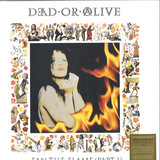
DEAD OR ALIVE - FAN THE FLAME (PART 1)

Dead Or Alive have sold more than 30 million albums and 25 million singles worldwide and gave Stock Aitken Waterman their first #1
single. Their first three albums, which the band wrote, all reached the UK Top 30, with ‘Youthquake’ reaching the Top 10. In the 1980s, they charted seven unique singles in the UK Top 40, with two further re-entries this century, with a remix and original version of ‘You Spin Me Round (Like A Record)’. Respected US magazine Billboard, ranked them in their all-time Top 100 most successful ‘dance artists’ chart.
‘Fan The Flame (Part 1)’ is their fifth studio album and was only released in Japan in 1990, where it reached #27, until a re-worked
version was included within the ‘Sophisticated Boom Box MMXVI’ box set in 2016. ‘Fan The Flame (Part 1)’ contains the singles ‘Your Sweetness (Is Your Weakness)’ (Japan #3), ‘Unhappy Birthday’ (Japan #14) and ‘Gone 2 Long’ (Japan #18). Renowned and in-demand singer, Tracy Ackerman performed all backing vocal duties, with Londonbeat and the London Community Gospel Choir appearing on ‘Total Stranger’ and ‘Unhappy Birthday’, respectively. Also featured is Billy Currie, better known for his work with Ultravox, Visage and Gary Numan. This special 30th Anniversary Edition of ‘Fan The Flame (Part 1)’, is the first time that the album has been commercially released on
vinyl in its original configuration, with original playing durations and will be pressed on 180g heavyweight white colour vinyl.

No en stock

Haga su pedido ahora y le encargaremos el artículo en nuestro proveedor.

19,71

Ültimo hace: 5 Años
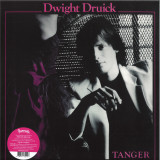
DWIGHT DRUICK - Tanger

Dwight Druick

Tanger

12inchFVR158LP
Favorite
30.09.2019

Dwight Druick’s born in Montreal to a professional gambler and an ex-Radio City Rockette. One of five children, he grew up in a family buoyed by music and beleaguered by the vagaries of miscalculated risk. After attaining a McGill University bachelor’s degree in Art
History, Dwight fully embraced both music and risk by traveling to London, where he signed a contract with Pye Records and Joe Cocker’s management company. The ensuing record,
Druick & Lorange was released to critical acclaim and relative success. After returning to Canada, Dwight recorded two albums with Phil Vyvial: Midnight and Minuit. Recorded with the Muscle Shoals Rhythm Section in Alabama, the duo’s work achieved airplay success in Quebec and across Canada. Dwight subsequently released his first French language solo album, Tanger, released in 1980 by the Canadian label, Bobinason.
Today quite hard to find in its original version, Tanger is first of all an incredibly solid album, clearly underrated and deserving more credit. Mostly known by collectors and DJs for the
stunning cover of Toto’s classic hit, “Georgy Porgy”, which was produced and arranged with the help of George Thurston (Boule Noire), it includes many other tasty titles, with amongst
them another fine rendition of “Open Your Eyes” by The Doobie Brothers. In fact, with its brilliant mix of Modern-Soul, Disco and AOR styles, the whole album is already considered
by many connoisseurs as a classic, and clearly a must have for anyone enjoying this musical blend. Never reissued on vinyl until now, there was not much more needed at Favorite Recordings
to make it happened. Officially licensed to Dwight Druick, who was unfortunately not able to provide the original tapes, Tanger has been perfectly restored and remastered by Frank Merritt, at The Carvery, London. CD and digital edition will also come with “Georgy Porgy (Version Disco)” as a bonus track.

No en stock

Haga su pedido ahora y le encargaremos el artículo en nuestro proveedor.

15,92

Ültimo hace: 20 Meses
Voiltion Immanent / Zombies Under Stress / Mark Forshaw - Few Tricks For Nervous Dealmakers Ep

REPRESSED !!
Contort Yourself has once again gathered the best and boldest from past and present for its fourth EP. To begin with we have the grimacing visage of Volition Immanent, an intense live act made up of Parrish Smith and Mark Van de Maat (Knekelhuis). Behind rawkish distortion, splintered beats and acrid bars screams a boiled anger; a track spitting on the divides of punk and electronics. Nastiness is taken up a notch as noise ne'er-do-wells Zombies Under Stress take over. Static is bent and doubled across thick chords and collapsed clap in the 1986 "Maan Zal Zijn" before the raw and raging battery of "In Onze Tijd." L.I.E.S. regular Svengalisghost grapples with "Maan Zal Zijn, channelling the original's rage into a mechanical monster. The 12" is bookended with bite as Mark Forshaw (Tabernacle/Berceuse Heroique) closes with the tortured and torrential thump of "Submission." A callous, caustic and fervently cruel EP.

No en stock

Haga su pedido ahora y le encargaremos el artículo en nuestro proveedor.

10,04

Ültimo hace: 6 Años
Artículos por página
N/ABPM
Vinyl