Swedish producer Robert Leiner’s landmark 1994 album ‘Visions Of The Past’ finally gets a vinyl LP reissue on Apollo, the ‘ambient division’ of R&S Records. Long regarded as one of the pivotal ambient/electronic long players, the album has stood the test of time and serves as a reminder on how potent the early ambient techno releases were.
Leiner was a central figure in the early European techno and ambient landscape, carving out a distinctive sound that bridged atmospheric depth and rhythmic intensity. Known for his releases as The Source Experience and contributions to the R&S/Apollo catalogue, as a producer and engineer, Leiner’s work resonated across the underground, earning him a reputation for visionary, emotionally charged productions that stood apart from his contemporaries.
'Visions Of The Past’ captures this duality perfectly with expansive ambient passages that drift into hypnotic techno, while layers of intricate sound design and pulsating low end create a timeless and immersive listening experience. Tracks unfold with patience and precision, like the 12-minute-long marine epic ‘Aqua Viva’, balancing introspection with kinetic dance energy, and the new age ambience of ‘Dream Or Reality’ and ‘Northern Dark’ embodying the forward-thinking ethos that defined Apollo’s golden era.
Three decades on, this long out of print album finally returns on vinyl format, freshly remastered and restored, reaffirming its status as an essential document of electronic music’s evolution and Robert Leiner’s enduring influence.
‘Visions Of The Past’ by Robert Leiner is available on Apollo Records from 7th November 2025.
Поиск:vision of 1994
Все
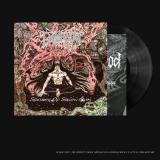
The crown jewel of Finnish Death Metal, reissued in a band-approved new 30th anniversary edition. Features a new vinyl master from the original source by Noise for Fiction, plus a booklet with a lengthy feature by Hippo Taatila and some visual memorabilia. As an added vinyl bonus there's a large poster by the original cover artist Rob Smits creating a new vision of the album cover for the new millennium. Together with bands like Demilich, Abhorrence, Disgrace, Xysma and Sentenced, Demigod from the wastelands of Loimaa, southern Finland, put Finland on the map in the global death metal scene in the late 80's and early 90's. Having risen to underground fame with their demo Unholy Domain, Slumber of Sullen Eyes was a hugely expected debut album. When it was finally released in 1992 after a complicated creation process at Tico-Tico Studios in northern Finland, it was received with open arms and drooling excitement by the then very active underground death metal scene. That scene was, however, short lived,and by 1994 pretty much every band had switched from death metal to something else entirely. What was left after the bands had left the building was a number of classic albums that constitute the legacy of Finnish Death Metal. Among them, Slumber of Sullen Eyes is one of the most original and ferocious. There was nobody like Demigod.
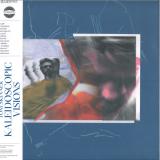
Drummer-composer Tom Skinner announces Kaleidoscopic Visions, his second solo album, out 26th September 2025 via Brownswood Recordings and International Anthem
Kaleidoscopic Visions unfolds across two distinct sonic landscapes. Side A presents entirely instrumental compositions performed by Skinner's live Bishara band—bassist Tom Herbert, cellist Kareem Dayes, and Robert Stillman and Chelsea Carmichael on various woodwinds and reeds—with electric guitar on two tracks courtesy of Portishead's Adrian Utley. A drummer-composer bringing his wealth of experience to bear on the role of bandleader, Skinner composed primarily on guitar, embracing the freedom that came with writing on his secondary instrument.
These compositions include "Auster," dedicated to late novelist Paul Auster, and "Margaret Anne," which honours Skinner's mother Anne Shasby, a former classical concert pianist prodigy who abandoned her own promising career in the face of systemic misogyny, only to impart on her son what Skinner calls "the gift of music."
Skinner’s musical world opens further on Side B, where a collection of poised vocal collaborations stretch out from jazz and improvisation towards a more dream-like, soulful sound. The centerpiece is "The Maxim," a ten-minute collaboration with Grammy Award-winning Meshell Ndegeocello, a dubby, spacious meditation on life and death, delivered with a free-spirited grace. For Skinner, working with Ndegeocello—whom he first saw at Glastonbury as a teenager in 1994—represents a full-circle moment, indicative of the indirect paths and inspirational detours that have shaped his life.
The album goes on to feature South Carolina-based singer Contour (Khari Lucas) who appears on the low-lit soul ballad ‘Logue’, and closes with ‘See How They Run’, featuring London keyboardist-vocalist Yaffra (Jonathan Geyevu). It is the album’s most overtly lyrical track, an articulate exposition of jazz-inflected spoken word that speaks not only to the genre-fluid nature of the music but the breadth of Skinner’s palette.
This should come as no surprise. On Kaleidoscopic Visions, one of London’s most vital musical figures gives us a sparkling glimpse of the multi-coloured lens through which his unique sound is now refracting.
- A1: No Future
- A2: Twisted
- A3: Til I Beg For Mercy
- A4: Wake Up
- A5: Scene One
- B1: From Nothing To Nothing
- B2: Some Time
- B3: Your Product
- B4: Watch You Bleed
- B5: No Answers No Solutions
- C1: Lies
- C2: I Am The Labyrinth
- C3: Force Majeure
- C4: Flesh
- C5: Denial (Excerpt)
- D1: Pretender ('94 Mix)
- D2: Life Before Death ('94 Mix)
- D3: I Am The Labyrinth (A_Maze Mix)
- D4: From Nothing To Nothing (Edit)
- D5: No Answers, No Solutions (No Time)
Advanced Art was formed in Tampere, Finland, in 1985 by Jana, Pete, and Vince. Too young to be part of the first wave of Finnish groups inspired by German synth pioneers and New Romantics, they instead forged their own path and soon became pioneers themselves. For the next ten years, Advanced Art defined and dominated Finland’s small but growing electronic underground. They inspired a new generation of Finns to experiment with synthesizers, built an international cult following, and were deeply involved in the local scene—running clubs, organizing events, and performing at some of the very first warehouse parties in the country.
Although the line-up shifted over time, the group’s creative drive consistently came from the partnership between Jana, who supplied the voice and words, and Vince, who shaped the music with his machines. Together they defined the band’s distinctive blend of sharp electronics and lyrical vision.
After several cassette demos and two 7-inch singles, Advanced Art signed to Poko Rekords in 1991. The EPs Scar and Time raised their profile both at home and abroad, especially thanks to valuable exposure on MTV Europe’s 120 Minutes. Known for their perfectionism, they finally released their debut album Product in January 1993. On Product the line-up was Jana (lyrics, vocals), Vince (music, production), and Factor (percussion, studio work). Having moved through phases of synth pop, EBM, and industrial, the album showcased Vince’s vision of a unified sound and style more clearly than ever before.
Force followed in 1994, conceived as a multi-part concept album (Update / Live / Retro). Recorded with live percussionist PW joining Jana and Vince, it expanded on the groundwork of Product with new beats, ideas, and a sharper, more defined identity.
By 1995, exactly ten years after their founding, Jana and Vince decided to bring Advanced Art to a close on the band’s birthday, 13 October. Their run had been precise: one decade of creative output, ending with a legacy that laid foundations for Finland’s electronic scene.
Now, conveniently coinciding with the band’s 40th anniversary, Advanced Art present Forced Product. This double-LP set, fully remastered, features Product in its entirety, alongside the Update and Retro sections of Force, plus additional EP tracks and remixes recorded between 1991 and 1994 at “Audible Art” – less a studio than a concept, existing wherever machines and people met.
Limited to 450 copies, Forced Product comes in a gatefold sleeve with poster and sticker, offering a definitive document of Finland’s pioneering electronic cult heroes — a band that helped invent their country’s scene and left a lasting influence far beyond it.
Drummer-composer Tom Skinner announces Kaleidoscopic Visions, his second solo album, out 26th September 2025 via Brownswood Recordings and International Anthem
Kaleidoscopic Visions unfolds across two distinct sonic landscapes. Side A presents entirely instrumental compositions performed by Skinner's live Bishara band—bassist Tom Herbert, cellist Kareem Dayes, and Robert Stillman and Chelsea Carmichael on various woodwinds and reeds—with electric guitar on two tracks courtesy of Portishead's Adrian Utley. A drummer-composer bringing his wealth of experience to bear on the role of bandleader, Skinner composed primarily on guitar, embracing the freedom that came with writing on his secondary instrument.
These compositions include "Auster," dedicated to late novelist Paul Auster, and "Margaret Anne," which honours Skinner's mother Anne Shasby, a former classical concert pianist prodigy who abandoned her own promising career in the face of systemic misogyny, only to impart on her son what Skinner calls "the gift of music."
Skinner’s musical world opens further on Side B, where a collection of poised vocal collaborations stretch out from jazz and improvisation towards a more dream-like, soulful sound. The centerpiece is "The Maxim," a ten-minute collaboration with Grammy Award-winning Meshell Ndegeocello, a dubby, spacious meditation on life and death, delivered with a free-spirited grace. For Skinner, working with Ndegeocello—whom he first saw at Glastonbury as a teenager in 1994—represents a full-circle moment, indicative of the indirect paths and inspirational detours that have shaped his life.
The album goes on to feature South Carolina-based singer Contour (Khari Lucas) who appears on the low-lit soul ballad ‘Logue’, and closes with ‘See How They Run’, featuring London keyboardist-vocalist Yaffra (Jonathan Geyevu). It is the album’s most overtly lyrical track, an articulate exposition of jazz-inflected spoken word that speaks not only to the genre-fluid nature of the music but the breadth of Skinner’s palette.
This should come as no surprise. On Kaleidoscopic Visions, one of London’s most vital musical figures gives us a sparkling glimpse of the multi-coloured lens through which his unique sound is now refracting.
Efficient Space honours trailblazing Australian imprint Volition Records with Volition Cuts Vol. 1. Evolving from Andrew Penhallow’s time at GAP Records, which smuggled Cabaret Voltaire, The Fall and the Factory catalogue into the region, Volition shifted focus to homegrown talent over imported sounds. Echoing its precursor’s blend of indie friction and electronic curiosity, the label wired itself into the pulse of club and rave culture, linking city scenes and amplifying them for the mainstream. With retina-scorching design, uncompromising packaging and top-tier remixes, Volition consistently bent the major label machine to its will.
No Volition retrospective would be complete without Sisters Underground’s intergenerational anthem ‘In the Neighbourhood’. Otara teenagers Brenda Makamoeafi and Hassanah Iroegbu brought their Pasifika perspective to Proud (An Urban-Pacific Streetsoul Compilation), a commercial success that platformed NZ rap and R&B with a clarity that outshone its overseas counterparts. The quiet architect of Volition’s sound, producer prodigy Robert Racic flipped the classic as a hip-house dub before his untimely passing in 1996.
Its A-side companion comes from Brisbane synth-pop unit Boxcar, who signed to Volition after frontman Dave Smith handed a cassette to Tom Ellard of Severed Heads during a school newspaper interview. That unlikely handoff led to their 1990 debut Vertigo. Here, their ritual-laced, body-jacking industrial is retooled by Miami freestyle maverick Tony Garcia.
Further cherry-picking from the VOLT vaults, Sexing The Cherry unleash a bleep-addled meltdown from Brisbane’s Edwin Morrow and Cherryn Lomas. ‘This Is A Dream’ was recorded exclusively for High (A Dance Compilation), the first all-Australian V/A to top the ARIA charts, propelling the local movement into national consciousness.
Closing the sampler, Sydney’s Single Gun Theory joined Volition as they moved from post-punk abstraction and electronic collage toward downtempo, sample-based mysticism. Their 1994 ambient-pop reverie ‘Fall’ is reimagined by Stuart Crichton and Apollo 440’s Norman Fisher-Jones as full-throttle Goa trance, a final surge that channels the label’s relentless push into new terrain.
Volition Cuts Vol. 1 is dedicated to the loving memory of Volition’s visionary founder Andrew Penhallow, and key contributors Robert Racic and Edwin Morrow.1
- A1: Cousin - Manta
- A2: Vision Of 1994 - Warm Night
- A3: Vision Of 1994 - November
- A4: Vision Of 1994 - Ravers Insomnia
- A5: Nice Girl - Unacknowledged Star Nose
- A6: Molez - ÜVeges Tekintetek
- A7: Cosinevi - Lambda
- A8: Gyu - Very Joyful
- B1: Dubtribe Sound System - Sunshine's Theme (Sunshine's Remix)
- B2: Vtl One - Oil Thing
- B3: 99Hp - Sola
- B4: Angus Mills - Herbert St
- B5: Vtl One - Language Machine
Embarking on a 50 minutes journey through the ethereal, TRANSCEND by Moonglade Sound is a meticulously curated double-sided compilation, mixed and compiled by Kirill Matveev, that unveils a realm of sonic exploration.
Featuring a diverse lineup of artists—such as Cousin, Dub Tribe Sound System, Vision of 1994, Nice Girl, Molez, CosineVi, Gyu, VTL One, 99HP, and Angus Mills—the album highlights the allure of the rare and the extraordinary.
Each track radiates a subtle, enigmatic charm, intricately blending avant-garde nuances with deeply resonant soundscapes. The selections are masterfully restrained, yet rich in emotional depth, offering serene moments of reflection alongside vibrant, soul-stirring beats. TRANSCEND delivers an immersive listening experience, bridging the tangible and the transcendent.
This release transcends the boundaries of a traditional compilation; it stands as a musical gem, crafted for discerning collectors who value the exceptional. A true treasure for those looking to elevate their record collection, it serves as a timeless homage to the art of sound.
- A1: Green Baize “Switch Back”
- A2: Night Communication “Let’s Face The Music”
- B1: Mental Detector ”Get Up”
- B2: More Heavy Soul "Load In Total Darkness”
- B3: Ivan Iacobucci "Melt The Sun”
- C1: Sima “Give You Myself (Ricky Montanari Ethos Mama Remix)”
- C2: Ricky Montanari & Davide Ruberto “London (Original Mix)”
- D1: Workin’ Happily ”Make My Move (Tira Dub)”
- D2: Sound Set ”So In Love With You (Club Mix)
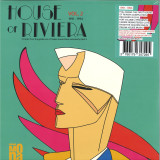
Following up on the success of House Of Riviera released in 2019, Mona Musique releases House Of Riviera Volume 2 curated by label head Nick V, a compilation that pays homage to forgotten gems of the classic Italian House scene, circa 1991-1994. 9 tracks from the artists and record labels that were central to this seminal era of House music, including two never released cuts from Ricky Montanari, Davide Ruberto and Ivan Iacobucci.
In the early 1990s, Italy hosted one of the most prolific scenes in the burgeoning world of House music. Whilst the majority of Europe was only just beginning to digest the arrival of this new musical genre born in the US, Italian clubs, DJs and labels were hot on the heels of their counterparts in the already established scenes of New York and London. The clubs of the Adriatic coast, also known as the Italian Riviera, were full every weekend, hosting the major US and UK Djs of the time, but also seasoned resident DJs that had been honing their trade since the early 80s. By the early 90s, Italian House music was regularly exported around the world with labels such as UMM, MBG, Flying, Palmares, DFC, Oversky, Zippy, D:Vision, Irma - and its sublabels Antima and Calypso, releasing tracks inspired by the original New York House and Garage sound, but with a very different, unique and emotional take. This was the specific aesthetic that was to become the House sound of the Riviera, the soundtrack to the golden era of Italian House music.
With all releases between 1992 and 1994, House Of Riviera Vol. 2 unites a selection of 9 tracks that encapsulates the atmosphere, the energy and creativity that reigned during that era. Including 2 previously unreleased tracks from Ricky Montanari and Davide Ruberto, and Ivan Iacobucci, both in the vaults since 1992, the compilation spans the different shades of the genre : from classic deep vocal house by Ricky Montanari and Sound Set, to the more dubbier late night dance floor cuts by Workin’ Happily and Night Communication, with Mental Detector and More Heavy Soul bringing some well chosen disco samples to their contributions, without forgetting the characteristic deep Italian dream house style by Green Baize. Artists featured are iconic producers and DJs from the day : Ricky Montanari & Davide Ruberto, Alex Neri & Marco Baroni, Ivan Iacobucci, Workin’ Happily and More Heavy Soul.
- Ripples
- Driving To Austin
- Rewind
- Waiting For Sleep
- Fancy Free
- Water Montage
- Wake / The City / Sleep
- On Glass Ii
- In Motion
- Fancy Finish
- A Late Start
- Leaving Again
- Dazzling Showroom / Future City
- Winter Wave
- Swarm
- On Glass I
- Dap
- Ice Planet (Alt)
- Song From A Bedroom In Podunk Indiana
- Exiting
- Hi And Lo
- Sea Level
- Sequencer Sway
- Moonplay
- Aquarium
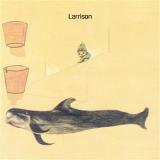
Connecters Vol. 1: Original Recordings, 1992-1999 ist die erste Veröffentlichung von Larrison, dem Pseudonym des bildenden Künstlers und Musikers Larrison Seidle aus dem Mittleren Westen. Larrison komponierte, programmierte und nahm alles komplett auf einem Casio CZ-5000 auf, während der guten alten Zeit der selbstgemachten Experimente und Entdeckungen in den frühen 90ern. Er lebte in einer Traumwelt, die er selbst erfunden hatte, mit Soundtracks aus Space-Age-Pop-Vignetten, gespickt mit hypnotischen, überschwänglichen, vielschichtigen Synthesizer-Melodien. Mit 26 Tracks, die alle neu restauriert und aus den Originalquellen gemastert wurden, erfindet sich Connecters Vol. 1 Song für Song neu, überwindet die Zeit und trotzt der vorbestimmten Vergessenheit dieser brillanten, diskreten Musik, die vor drei Jahrzehnten entstanden ist. Larrison Seidle wuchs in den 70er und 80er Jahren in Greenwood, Indiana, einem Arbeitervorort von Indianapolis, auf. Er stammte nicht aus einer Musikerfamilie, aber aus einem Haushalt, in dem Musikalität gefördert wurde. Sein Vater kaufte eine elektrische Orgel, in der Hoffnung, dass Larrison und sein älterer Bruder das Instrument lernen würden. ,Am Ende saß mein Vater einige Abende an der Orgel, improvisierte und spielte immer wieder dieses eine Lied, von dem ich mich noch an die ersten Takte erinnern kann", erinnert sich Larrison. Möglicherweise war es in diesem Moment, in dem es zwar keine formale Ausbildung gab, aber viel Ermutigung und Entdeckungsfreude, dass der Künstler seine ersten musikalischen Experimente machte. Diese Erlaubnis, sich auszuprobieren, sollte seine kreative Arbeit in den folgenden Jahren deutlich prägen. Während in Larrisons Elternhaus klassische Rockplatten leicht zugänglich waren, lieh sich sein Vater 35-mm-Dokumentarfilme aus der Bibliothek aus, um sie im Wohnzimmer zu zeigen, die alle mit skurrilen Instrumentalstücken unterlegt waren. Als Teenager nahm er John Carpenters und Alan Howarths Endthema aus ,Die Klapperschlange" mit einem kleinen Kassettenrekorder neben dem Fernsehlautsprecher auf und liebte Tangerine Dreams Beiträge zu Ridley Scotts düsterer Fantasy ,Legend". Seine Faszination für diese weitgehend textlosen, synthesizerbasierten Kompositionen führte zu einem eigenwilligen Verständnis davon, wie Musik nicht nur das ergänzt, was wir vor uns sehen, sondern auch das, was wir in den Tiefen unseres Bewusstseins erleben. 1985, als er dreizehn Jahre alt war, überzeugte Larrison seinen Vater, ihm ein Casio CZ-5000-Keyboard zu kaufen. Wie zuvor die Orgel war auch dieses Instrument eine Neuheit im Haushalt der Seidles. Erst nach seinem Highschool-Abschluss 1991 und dem Beginn seines Studiums an der Herron School of Art in Indianapolis entdeckte er den in das Casio integrierten Sequenzer und begann, seine Kompositionen auf Band aufzunehmen. ,Das CZ-5000 und sein 8-Spur-Sequenzer sind die einzigen Musikinstrumente, die ich benutzt habe. Es hat eine fast unbegrenzte Funktion zur Erzeugung neuer Klänge", erklärte Seidle. Während seiner Zeit an der Herron School of Art freundete sich Larrison mit seinem Kommilitonen und Klangkünstler Michael Northam an, den er bei einem Konzert auf dem Campus kennengelernt hatte. Nachdem Northam Larrison für die Musik von Severed Heads, Throbbing Gristle und Roger Doyle begeistert und damit seine Zuneigung und sein Vertrauen gewonnen hatte, überredete er ihn, nach Austin, Texas, zu ziehen, das in den frühen 90er Jahren für seine lebendige Kunst- und Musikszene bekannt war. Die beiden wohnten zunächst bei Northams Freund Daniel Plunkett, dem Herausgeber und Verleger von ND, einem einflussreichen Magazin, das sich von 1982 bis 1999 mit DIY-Musik und Tape-Trading beschäftigte. In seiner Blütezeit hatte ND Tausende von Lesern, und Plunkett verschickte die Ausgaben weltweit. In den letzten Monaten des Jahres 1993 und Anfang 1994 schrieb und nahm Larrison mit begrenzten Mitteln und grenzenloser Intuition eine Reihe von Songs mit seinem CZ-5000 in einer kleinen Wohnung nördlich der Innenstadt von Austin auf, bastelte eine farbenfrohe, illustrierte Beilage, in der einige Songtitel durch Linien oder Pfeile dargestellt waren, und gab sie an Plunkett weiter, damit er sie für ND rezensieren konnte. Diese einzelne Kassette mit dem Titel Connecters sic war eine von 1200, die im Laufe des Bestehens der Publikation bei ND eingereicht wurden und die Jed Bindeman, Mitbegründer von Freedom To Spend, 2020 erworben und fast wie durch ein Wunder entdeckt hat. ,Ich hatte große Schwierigkeiten, mir die Kassetten in dieser Sammlung anzuhören", gibt Bindeman zu. ,Aber dann legte ich Larrisons Connecters ein und dachte sofort: ,Wow! Was höre ich da?' Die Kassette war von Anfang bis Ende einfach fantastisch." Mit Musik von genau dieser Kassette und anderen Aufnahmen aus Larrisons Experimenten in den 90er Jahren ist Connecters eine Übersicht über Instrumentalmusik, die sowohl durch vielfältige konzeptionelle Strategien als auch durch spielerische Neugierde geprägt ist. Seidle arbeitete unter Bedingungen, die viele Musiker als Einschränkung empfinden würden, und entwickelte technisch innovative Ansätze, um die Klänge und integrierten Effekte des CZ-5000 zu modifizieren. Das Gerät ermöglichte es ihm, die Wellenform, die Hüllkurve und die Tonart von Klängen mithilfe der Phasenverzerrungssynthese zu verändern und so im Grunde genommen Instrumente zu schaffen, während er Songs komponierte. Die Tracks zeichnen sich durch eine durchdachte impressionistische Vielfalt aus, die mal lo-fi, mal symphonisch klingt. Inmitten der Zerlegung und Verstärkung der Fähigkeiten des CZ-5000 gibt es auch einen geschmackvollen Rückgriff auf eine kindliche Interaktion und Erfahrung von Klang. Vielleicht ist es diese Erfahrungsqualität, die es so schwierig macht, Larrisons Projekt einfach als Ambient oder Elektronik zu verstehen. Sein Wille, die ihm zur Verfügung stehenden Werkzeuge zu transformieren, hebt die daraus resultierenden Kompositionen auf eine persönliche Ebene und verleiht der Musik einen bezaubernden Sinn für Mystik. Connecters ist ein Beweis für eine künstlerische Vision, die sich nicht durch Grenzen einschränken lässt und keine Angst vor Informalität hat. Diese Aufnahmen, die dreißig Jahre nach ihrer Dokumentation auf magische Weise an die Oberfläche kommen, zeigen, wie personalisierte Produktionsmittel die Zeit ausdehnen und verkürzen können. Larrison lädt die Zuhörer ein, sich auf die Wunder der auditiven Vorstellungskraft einzulassen - eine Brücke zwischen visueller Erinnerung, emotionaler Resonanz und der grenzenlosen Möglichkeit, mit den uns zur Verfügung stehenden Mitteln Musik zu machen. Larrison's Connecters Vol. 1: Original Recordings, 1992-1999 wird am 3. April 2026 von Freedom To Spend als Vinyl- und Digitalausgabe veröffentlicht.
- A1: Night Whisper (Trance - 1992)
- A2: Eliana (Totem - 1985)
- A3: Nomad (Trance - 1992)
- B1: Stefania’s Song (Still Chillin’ - 2005)
- B2: Seducing Hades (Luna - 1994)
- C1: Zone Unknown (Zone Unknown - 1997)
- C2: Silver Desert Cafe (Tongues - 1995)
- C3: Totem (Totem - 1985)
- D1: Dancing Path Chaos (Initiation - 1988)
- D2: Labyrinth (Luna - 1994)
- D3: Shavasana (Still Chillin’ - 2005)
Ground-breaking percussive ambient recordings from Gabrielle Roth & The Mirrors, inducing altered states of consciousness through ecstatic dance. "Selected Works from 1985 to 2005" finally available on Time Capsule
Despite featuring an extraordinary cast of musicians (with credits including Pharoah Sanders, Miles Davis, Sun Ra, Santana and Milton
Nascimento) and selling hundreds of thousands of albums, the music of Gabrielle Roth & The Mirrors remains largely unheard beyond their sphere. Conceived as live, improvised soundtracks to Roth’s transcendental dance workshops, musical acclaim was never on the agenda.Instead, for a passionate dancer and spiritual polyglot like Gabrielle Roth, movement was a means through which to channel a wide spectrum of teaching, from experimental psychology to psychedelic counter-culture. It was from this heady mix that she devised a movement meditation known as 5Rhtyhms, which came to define her life’s work.
As “guide and catalyst”, Roth would dance to inspire the percussion-led instrumentals that would in turn fuel her 5Rhythms workshops, stimulating a secular form of ecstatic dance with roots in Native American shamanic traditions, Afro-Brazilian Candomblé and Yoruba drumming. Using anything from a Sioux pony drum to East African kihembe and Japanese Kabuki drums, Gabrielle’s lawyer-turned-drummer husband Robert Ansell set the foundational rhythms for The Mirrors’ recordings, each of which would then feature a rotating cast of friends and professional musicians.
“The secret of everything we’ve done is that we never told anybody what to play,” Robert shares. “Instead of our albums being a musical vision of one person like me or Gabrielle, they were the musical vision of a whole bunch of people.”At times the recordings have a Middle Eastern flair, at others, West African and spiritual jazz modes come to the fore. Hints of kosmische musik, proto-house and electronic ambience are laced like LSD through the organic rhythmic structures. This was kaleidoscopic ambient music to stir the body and free the mind.
In practice, the task of synthesising these different elements fell to Scott Ansell, Robert’s son and a recording engineer whose credits now include Nile Rogers, Duran Duran, Grace Jones. With meticulous attention to detail he captured and translated the dynamic energy of each drum onto record. Their sessions became legendary, and with access to the best studios in the NYC, The Mirrors sparkled.
Despite being initially overlooked by the burgeoning ‘80s New Age market, which preferred pipes and gongs to The Mirrors’ heavy-grooving drums, Robert Ansell set up Raven Recording to self-release the music, creating a vast sonic archive of sixteen albums over almost forty years. The breadth of Raven’s catalogue is such that curator Pol Valls had to cut an initial selection of sixty-six tracks down to the eleven featured here. What crystallises is a stunning, mind-altering collection which spans, in Pol’s words, “a variety of genres, styles, and vibes within their catalogue, whether it is emotional, esoteric, spiritual, melancholic, hypnotic, dark, or at times a combination of these elements together.”Music for immersive and intimate environments, Gabrielle Roth & The Mirrors were born from the dance. In the hands of the right DJ, at the right time, in the right place, they might just return there.
- 1: Sign Of A Storm
- 2: Pouring
- 3: By Silent Wings
- 4: The Rising Of The Flames
- 5: The Gallant Crow
- 6: The Everdarkgreen
- 7: The Rising Of The Flames (Bonus Track)
- 8: Chorale (Bonus Track)
Black Vinyl[32,35 €]
Skepticism's celebrated debut album's 30th anniversary edition with bonus material out in November Stormcrowfleet, Skepticism's monumental 1995 debut, remains a landmark of funeral doom — an album that defined both a sound and a legacy. This 30th anniversary edition of the classic was newly mixed from the original tape reels by Anssi Kippo in 2018 at Astia Studio under supervision of the band and is now freshly cut for vinyl. "Stormcrowfleet was originally released on CD. Instead of taking the easiest route we wanted to make the vinyl version the best it can be. We bought the multi-track tapes at the end of the recording sessions back in the day and have stored them for possible later use. This use became the Stromcrowfleet reissue - not just a vinyl edition but a complete remix of the album from the original recordings." "In the remix sessions nothing was added or changed in the original recordings. The mix was done at Astia-studio with high quality analog equipment. In fact most of the equipment used did exist in 1995. What did not exist back in then was more than two decades of audio engineering tradition dedicated to processing extreme metal. In this process that tradition manifested in the form of Anssi Kippo - multiple award winning producer who handled the mixing in co-operation with the band members. In short the target was not to do a different mix but one with the original vision for the album with better equipment and engineering." comments the band. The 30th anniversary edition of Stormcrowfleet features two bonus tracks from the 1994 demo cassette AEOTHE KAEAR cut directly from the original studio master tape, released on vinyl now for the first time ever. Also including a special anniversary edition booklet illustrating the making of the album. A milestone of doom metal history, expanded and reintroduced for a new generation.
- 1: Sign Of A Storm
- 2: Pouring
- 3: By Silent Wings
- 4: The Rising Of The Flames
- 5: The Gallant Crow
- 6: The Everdarkgreen
- 7: The Rising Of The Flames (Bonus Track)
- 8: Chorale (Bonus Track)
Amber/Black Smoke Vinyl[36,35 €]
Skepticism's celebrated debut album's 30th anniversary edition with bonus material out in November Stormcrowfleet, Skepticism's monumental 1995 debut, remains a landmark of funeral doom — an album that defined both a sound and a legacy. This 30th anniversary edition of the classic was newly mixed from the original tape reels by Anssi Kippo in 2018 at Astia Studio under supervision of the band and is now freshly cut for vinyl. "Stormcrowfleet was originally released on CD. Instead of taking the easiest route we wanted to make the vinyl version the best it can be. We bought the multi-track tapes at the end of the recording sessions back in the day and have stored them for possible later use. This use became the Stromcrowfleet reissue - not just a vinyl edition but a complete remix of the album from the original recordings." "In the remix sessions nothing was added or changed in the original recordings. The mix was done at Astia-studio with high quality analog equipment. In fact most of the equipment used did exist in 1995. What did not exist back in then was more than two decades of audio engineering tradition dedicated to processing extreme metal. In this process that tradition manifested in the form of Anssi Kippo - multiple award winning producer who handled the mixing in co-operation with the band members. In short the target was not to do a different mix but one with the original vision for the album with better equipment and engineering." comments the band. The 30th anniversary edition of Stormcrowfleet features two bonus tracks from the 1994 demo cassette AEOTHE KAEAR cut directly from the original studio master tape, released on vinyl now for the first time ever. Also including a special anniversary edition booklet illustrating the making of the album. A milestone of doom metal history, expanded and reintroduced for a new generation.
- 1: Filii Septemtrionium/Diabolic Unity
- 2: Saeculum Obscurum/Kingdom Of Darkness
- 3: Animae Tortae
- 4: Finis Redemptionis/Crawl Back To Your Cross
- 5: Obliteration (Outro)
- 6: Midwintertears
- 7: Eye To Eye At Armageddon
- 8: Abysmal Scorn
- 9: Other Truth
- 10: Dance Of The Dead - Intro
- 11: In Sin
- 12: Shadowlord
- 1: The Prophecy
- 2: Universe Of Black Divine
- 3: My Soft Vision In Blood
- 4: My Soft Vision In Blood
- 5: Diabolic Unity
- 6: Universe Of Black Divine
- 7: In Sin
- 8: Eye To Eye At Armageddon
- Inzovu Y'imirindi
- Imbabazi Twese
- Tabara Ryangombe
- Inyange Ibarusha Kwera
- Urujeje Rw'imisozi 1000
- Ibango Ry'ibanga
In den späten 1980er Jahren veröffentlichten der Sänger Bizimungu Dieudonne, seine Frau Agnes Umbibizi und eine Begleitband aus Familienmitgliedern und Freunden in Eigenregie eine visionäre Kassette mit stotternden E-Gitarren, hüpfenden Basslinien und Call-and-Response-Gesang. Ihre Kombination aus 80er-Jahre-Studio-Zauberei und traditionellen ruandischen Lobgesängen führte zu hypnotischen, ausgedehnten Jams, die zu dieser Zeit in Ostafrika einzigartig waren. Die Texte priesen die Schönheit der Landschaft und die Heldentaten der alten Götter. In klagenden Akustikstücken, die zwischen den elektrischen Knallern eingestreut waren, riefen Bizimungu und Agnes zur Einheit in der gespaltenen Nation auf. Ihre Botschaft war eine unheimliche Vorahnung des bevorstehenden Völkermords in Ruanda, der tragischerweise allen Mitgliedern der Gruppe das Leben kostete. Bizimungu und Agnes wurden 1994 von Hutu-Milizen getötet. Ihre Musik, die in der gesamten Region beliebt war, geriet in den folgenden Jahrzehnten weitgehend in Vergessenheit. Wir hörten dieses Album zum ersten Mal 2018 durch den Musikwissenschaftler Matthew Lavoie und verbrachten Jahre damit, nach überlebenden Mitgliedern der Band zu suchen. Letztes Jahr fand der Co-Produzent und Moderator von Voice of America, Jackson Mvunganyi, Bizimungu und Agnes' Tochter Noella in Kigali. Zum Zeitpunkt des Todes ihrer Eltern war sie erst acht Jahre alt und hatte es sich zur Aufgabe gemacht, das Werk ihrer Eltern einer neuen Generation in Ruanda näherzubringen. Obwohl ihre Familie bei dem Völkermord fast alles verloren hatte, blieb Noella auf wundersame Weise eine CD mit den Originalaufnahmen von Inzovu Y'imirindi erhalten. Es ist überwältigend, diese Musik endlich in ihrer ganzen Fülle und Unmittelbarkeit zu hören, wunderschön remastered in den Osiris Studios und auf höchstem Qualitätsniveau auf Vinyl gepresst bei David Rawlings' Paramount Press. Nun kann die wichtige Musik und Botschaft von Bizimungu und Agnes mit der Welt geteilt werden.
"Released in 1994, “Dellamorte Dellamore” (known internationally as Cemetery Man) is one of the most fascinating and unconventional films of 1990s Italian cinema. Directed by Michele Soavi and based on the novel by Tiziano Sclavi (the creator of Dylan Dog), the film blends horror, dark comedy, and surreal poetry into a story suspended between life and death, love and madness.
The protagonist is Rupert Everett, as Francesco Dellamorte, the caretaker of a cemetery where the dead return to life. Beside him, a mysterious woman (played by Anna Falchi) embodies the obsessive nature of love and the cyclical pattern of desire and loss. Soavi crafts a visionary, melancholic, and ironic film in which death becomes a metaphor for existence itself.
Giving voice to this suspended universe is Manuel De Sica, who composed one of his most evocative and underrated scores. The soundtrack for Dellamorte Dellamore is an alluring blend of gothic romanticism, mystery, and lyrical melancholy, perfectly attuned to the film’s tone."
- Omnibus
- One In The Same
- Had Enough
- With Might Of Worms
- Miracle Fighting Red Baron
- Franken
- 1994:
- Test Virgin Opposites
- Fighter Pilot Eats A Lemon
- Demolition
- She Knows
- Mugwump
- Audio_77
After a two-year hiatus from recording, the OC based band reconvened in 2023, returning to where it all started: drummer Lucas Ovalle"s garage. It was in this familiar environment that Ovalle, guitarist lead singer Josiah, guitarist Corbin Jacques,and bassist Seth Thomson learned how to be friends again and shared all the anxieties and revelations they"d endured on hiatus through crafting songs. The 13 songs that make up Big Smile are the band"s emotional champions that track the tumultuous period between the start of their break and the peace they found on their way back to each other. In the studio with fellow California legends Rob Schnapf (The Vines, Beck) and Matt Schuessler (Kurt Vile, Cat Power), GREER grew up again, taking more ownership over their sound and learning to speak producer-ese. Big Smile is the sound of a band exorcising their demons, learning to trust themselves, and asserting themselves with newfound earnestness and maturity. It"s the sound of a band that"s fallen in love with rocking out again. It"s the sound of friends rediscovering each other and the magic that they can create together when they embrace each other"s vulnerable side. With Big Smile, GREER has arrived as a serious, and seriously fun, alt rock band with diversity of sound and unity of vision.
The third offering from Marco Passarani's Studiomaster label heralds a significant return: M.Chrome. Absent since 1994 when it debuted on Alan Oldham's Generator, this alias is resurrected to explore new sonic frontiers. While its roots subtly echo a certain legendary Detroit imprint, "Flare Rider" stands as a testament to evolution. This isn't just an EP; it's a series of compelling sonic narratives, guiding listeners through techno and house territories. Expect subtle acid inflections, deep cosmic voyages, and a powerful, melancholic harmonic core that defines its distinct planetary landscapes. Best experienced as the sun begins to rise and the vision of distant planets starts to fade!
The Crippled Flower was a post-punk band from Düsseldorf - and they arrived late. However, unlike many young, unsuspecting, hairsprayed hopefuls from that time, in 1985 they could sense that the end of their era was approaching. They knew too much to want to take the world by storm. They were four individualists searching their own way. Each of the band members only found their calling after the time that they had spent together – but that's exactly what makes The Crippled Flower still seem really interesting today, this static energy that does not discharge, but is simply there.
Searching dreamers should sound like that and that's what they were. Singer Phil Elston, for example, had brought his love of Kraftwerk from England to Düsseldorf. Even his bandmates found this strange, but they were also entangled in their own longings. This is because the times were still so crazy and these searchers were "on fire". A fire that glows in the band's recordings.
Listening to the songs today, The Crippled Flower sound like they are hugely at the height of their game; think of Wire, Felt, Scritti Politti or Minimal Compact. The variety of musical themes, as well as different soundscapes, which the band created can only be listened to in amazement. Often, it is only Phil Elston's Sprechgesang that confirms that this is really the same band. However, it was back in 1985 when, importantly, the catalyst that brought the musicians together - the short lived eclectic record store "Heartbeat" in Düsseldorf Bilk - occured. It was there where post-industrial and pop, melodic minimal music and sound attacks awaited those who wanted to discover music by artists and bands they did not yet know.
Cassette releases. All recorded on 4-Track. The Crippled Flower succeeded in this medium. Firstly, with a cassette just entited The Crippled Flower, working from project-like studio recorded sketches. Four more tracks from the short-lived band appeared in 1986 on "A Heartbeat Rendezvous“. A demo tape submitted to Les Disques du Crépuscule, however, did not lead to a worldwide career and so, unfortunately, it was soon over.
Stefan Krausen moved on to the follow-up project Deux Baleines Blanches with Stefan Schneider, which, in 1994, gave rise to the band Kreidler. Krausen was already drumming with the I-Burnettes on AtaTak and much later he studied painting in Munich. Nina Ahlers moved from Düsseldorf to Paris to study art, because in the 80s it was still the case that Paris was the destination of choice for those really wanting to become an artist – and that's what she did. Her work is characterized by a non-academic minimalism focusing on everyday objects. Stefan Schneider remained connected to music. Only Phil Elston, who helped sabotage fox hunts in England and wrote these observant lyrics about environmental destruction and time travel, seems to have escaped the social-media world. Whether he found Kraftwerk-fulfilment in Düsseldorf or moved on disillusioned remains a mystery to us. And somehow this also fits in with that peculiar, special band. - Oliver Tepel, Köln 2025 (Translation by Philipp Elston)
- Placelessness I
- Placelessness Ii
Following nearly 20 years of working together as a trio, and numerous cross-collaborations in different configuration between them, Ideologic Organ presents Placelessness, the debut full-length by Chris Abrahams, Oren Ambarchi, and Robbie Avenaim, comprising two long-form works at juncture of ambient music, minimalism, rigorous experimentalism and improvisation, and machine music. Having carved distinct pathways across a diverse number of musical idioms for decades, Chris Abrahams, Oren Ambarchi, and Robbie Avenaim are each, respectively, among the most noteworthy and groundbreaking figures to have emerged from Australia's thriving experimental music scene. Ambarchi and Avenaim first encountered Abrahams when seeing the Necks - the project that has served as the primary vehicle for his singular approach to the piano since its founding in 1987 - together during the late 1980s, not long after having met in Sydney's underground music community. The pair's collaborations date back more than 35 years, criss-crossing Ambarchi's pioneering solo and ensemble work for guitar and Avenaim's visionary efforts for SARPS (Semi Automated Robotic Percussion System), robotic and kinetic extensions to his drum kit. In 2004, fate brought the three together in a trio performance at the What Is Music? Festival, the annual touring showcase of experimental music founded and run by Ambarchi and Avenaim between 1994-2012. For the nearly two decades since, Abrahams, Ambarchi, and Avenaim have intermittently reformed in exclusively live contexts, in Australia and abroad, cultivating and refining the fertile ground first tilled in that early meeting. Placelessness is the first album to present this remarkable trio's efforts in recorded form. Placelessness is the joining of three highly individualised streams, working in perfect harmony; the point at which friendship, mutual respect, and decades of creative exploration produce a singular spectrum of sound. Featuring Abrahams on piano, Ambarchi on guitar, and Avenaim on drums, the album's two sides draw on each artist's enduring dedication to long-form composition. Its two pieces, Placelessness I and Placelessness II, initially began as a single, 40 minute work, before being divided and reworked into distinct, complimentary gestures for the corresponding sides of the LP. Beginning with restrained clusters of reverberant piano tones, Placelessness I progresses at an almost glacial pace, with Abrahams' interventions increasing met by sparse responses, darting within vast ambiences, on guitar and percussion by Ambarchi and Avenaim. Remarkably conversational within its convergences of tonal, rhythmic, and textural abstraction, over the work's duration a progressive sense of tension unfurls and contracts, refusing release, as each of the ensemble's members contribute to an increasingly tangled sense of density at its resolve.While an entirely autonomous work, Placelessness II rapidly realises a distillation of the energy hinted at across the length of its predecessor. Following a luring passage of harmonious calm, Abrahams' launches into shimmering lines of repeating arpeggios, complimented at each escalation of tempo by Avenaim's machine gun fire percussion work and Ambarchi's masterful delivery of tonality and texture, as the trio collectively generate dense sheets of pointillistic ambience within which individual identity is almost lost, before slowly unspooling into unexpected abstractions and dissonances that deftly intervene with the work's inner logic and calm. What could easily be termed a maximalist take on Minimalism, Placelessness is a masterstroke of contemporary, real time composition, that blurs the boundaries between ambient music, experimentalism, free improvisation, and machine music. Drawing on Chris Abrahams, Oren Ambarchi, and Robbie Avenaim's decades of respective solo and collaborative practice, and the culmination of nearly twenty years of working together as a trio, it's two durational pieces - Placelessness I and Placelessness II - take form with a startling sense of effortlessness and grace, neither shying away from explicit beauty or rigorously tension within their forms