There are records that follow the rules, and others that rewrite them in real time. With O R G A S M A N I A, Byron The Aquarius returns to Skylax with a deeper, freer and more unpredictable statement — where jazz instinct meets raw machine funk, and structure dissolves into pure feeling. Rooted in the lineage of Detroit yet never confined by it, Byron operates in that rare zone where house music becomes expression rather than format. His sound doesn’t chase functionality — it breathes, it stretches, it resists. The EP opens with Back 2 Zion (Tomorrow), a spiritual and meditative journey built on loose drums and luminous chords, carrying a sense of elevation — early morning music where the dancefloor begins to think again. Enter the Co$mos (Fool) pushes further into abstraction, with drifting synths and broken rhythms unfolding in a non-linear structure, navigating between Sun Ra’s cosmic language and Detroit futurism. On the flip, Mr. Captain Crunchhh brings a raw, playful energy — crunchy textures, off-grid swing and an almost improvised groove, alive and unpredictable, a leftfield tool designed to disrupt expectations. Finally, O R G A S M A N I A stands as the centerpiece — hypnotic, sensual and immersive, locking into a deep repetitive groove while evolving in subtle layers, a late-night body experience guided by a sharp musical mind. Across four tracks, Byron The Aquarius confirms his unique position between jazz musician, house producer and sonic storyteller, with a trajectory spanning Sound Signature, Axis, Eglo, Apron and Shall Not Fade, continuing to resonate from Detroit to Berlin and beyond. Artwork by H5 — the iconic studio behind Daft Punk, Air and Vitalic — reinforces Skylax’s timeless and art-driven identity. This is not fast music, this is not algorithm music — this is music for those who still listen. Strictly for the heads. Vinyl only. No repress. Skylax Records.
Search:vita
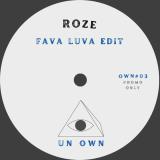
UnOwn is back with a third outing of magical edits and this time the enigmatic Fava Luva is cooking up the heat. First up is an edit of 'Roze', a disco gem that gets pulled apart and rebuilt in slow, sensuous fashion. The drums are loose, the funk is real and the vocal is full of tease that will warm up any setting in any season. On the flip, 'Fishy' is just as much of an elastic and playful sound, this time with a sleazier vocal and some mad, cosmically inclined synth expressiveness and plenty of Parliament-style vocal oddness. A pure heater from this ever-more-vital label.
2026 Repress
Throughout 2025, Tresor Records will reactivate Detroit house and techno originator Blake Baxter's vast Tresor catalogue digitally in chronological order, starting with 1992’s Dream Sequence, closely followed by his 1995 album, Endless Reflection. To inaugurate and celebrate this retrospective of one the genre’s true founders, an artist whose connections to Tresor go back to the very beginning, the label announces a special 12” release, Dream Sequence X, featuring remastered tracks from the early days and highlighting the harder side of his output.
Initially inspired by post-punk and funk, Baxter started making music as early as 1985. By 1991 he had already released several seminal records on classic labels like Underground Resistance, KMS, and Incognito, as well as providing multiple tracks to the groundbreaking UK compilation Techno! The New Dance Sound of Detroit, which was many European listeners’ introduction to the genre, solidifying the term techno, and launching the international careers of many of the contributors.
1992 saw Baxter make the first trip to play Tresor, on the first UR Europe tour ever, thereby pioneering the now legendary Berlin-Detroit Connection. This visit led to a long and fruitful partnership with the club’s new-fledged label beginning with Mills', Banks' & Hood’s X-101 and Baxter’s Dream Sequence, from which the first four tracks on the new 12” come.
Whilst he would become more renowned for his signature seductive vocals and a smoother music style closer to house music, these early tracks are heavier, classic 90s techno, revealing the influence of industrial, post-punk and pop of the time. Indeed the collection is something of a time capsule: jacking 909 drums, intense, ravey synth stabs, samples from classic soul breakbeat and the Speak & Spell voice synthesizer; classic sounds and styles of the era all make appearances on the record. All tracks have been remastered by Manmade Mastering breathing a new vitality and sharpness for the modern dancefloor.
In a world where longevity is difficult and superlatives are too easily deployed, it is still difficult to overstate the long-lasting influence that Blake Baxter has had on modern music. His visionary output can be heard across modern electronic and pop to this day and with this series of remasters, there has never been a better time for the world to hear it at source.
2026 Repress
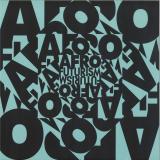
Following our acclaimed Chez Damier release, Skylax proudly welcomes back the brilliant Byron The Aquarius. A true craftsman from Alabama, Byron blends the spirit of Detroit's deep house with live jazz energy, echoing legends like Theo Parrish and Moodymann. This new EP, Afrofuturism, is a statement of intent: four deeply musical tracks rooted in soulful rhythm and cosmic funk. From the spiritual groove of the title track to the introspective dub of Sunday’s Ain’t The Same, this is Byron in top form — keys blazing, grooves flowing. With past releases on Sound Signature, Axis, Eglo, Apron, and Shall Not Fade, Byron’s music continues to light up the underground from Detroit to Berlin. Artwork by H5 – the legendary studio behind visuals for Daft Punk, Air, and Vitalic. Whether you’re a house head or jazz lover, Afrofuturism is a timeless piece for real dancers and dreamers. Strictly for the heads. Vinyl only. No repress. Skylax Records.
Métron Records announces Mycorrhizal Music, the forthcoming album from composer and multi instrumentalist Ess Whiteley. Currently a PhD candidate in Composition at the University of California-San Diego, Whiteley’s practice spans recordings, installations, performances, and scores, a body of work as diverse as the fungal webs that inspire it.
Across seven tracks, Whiteley explores interconnected sound worlds shaped by mycelium networks, rhizomatic structures, and other unseen systems that sustain life. Rooted in experimental electronics, minimalism, ambient and IDM, the record imagines sound as ephemeral connective tissue capable of reshaping how a listener might experience time, memory, and futurity.
At the core of Whiteley’s work is an excavation of what lies beneath perception, the felt but unspoken currents of emotionality and subtle experiences that dwell in the unconscious.
Mycorrhizal Music channels these hidden threads into a speculative ecosystem of kinship and exchange, where joy, play, and spirituality interlace like branching hyphae beneath the soil. Mycorrhizal Music has been conceived as kinetic ambient music, designed to move with the listener while walking, riding trains, driving, cooking, where everyday rhythms align with shifting sonic textures, reminding them of hidden, interconnected, mycelial webs of spiritual vitality beneath the surfaces of daily activity.
Guided by a vision of speculative ecology and interspecies resonance, it thrives in contrasts: tracks like Rhizomatic Harpists and Whispered Messages in Tapestried Fields of Fluid Motion pulse with fluid momentum, while Kaleidoscopic Patterns of Emptiness Dancing drifts into fragile stillness.
With artwork by Kenta Senekt and mastering by Brandon Hocura, Mycorrhizal Music extends Métron Records’ ethos of cultivating subtle, interconnected sound worlds.
Drummer-composer Tom Skinner announces Kaleidoscopic Visions, his second solo album, out 26th September 2025 via Brownswood Recordings and International Anthem
Kaleidoscopic Visions unfolds across two distinct sonic landscapes. Side A presents entirely instrumental compositions performed by Skinner's live Bishara band—bassist Tom Herbert, cellist Kareem Dayes, and Robert Stillman and Chelsea Carmichael on various woodwinds and reeds—with electric guitar on two tracks courtesy of Portishead's Adrian Utley. A drummer-composer bringing his wealth of experience to bear on the role of bandleader, Skinner composed primarily on guitar, embracing the freedom that came with writing on his secondary instrument.
These compositions include "Auster," dedicated to late novelist Paul Auster, and "Margaret Anne," which honours Skinner's mother Anne Shasby, a former classical concert pianist prodigy who abandoned her own promising career in the face of systemic misogyny, only to impart on her son what Skinner calls "the gift of music."
Skinner’s musical world opens further on Side B, where a collection of poised vocal collaborations stretch out from jazz and improvisation towards a more dream-like, soulful sound. The centerpiece is "The Maxim," a ten-minute collaboration with Grammy Award-winning Meshell Ndegeocello, a dubby, spacious meditation on life and death, delivered with a free-spirited grace. For Skinner, working with Ndegeocello—whom he first saw at Glastonbury as a teenager in 1994—represents a full-circle moment, indicative of the indirect paths and inspirational detours that have shaped his life.
The album goes on to feature South Carolina-based singer Contour (Khari Lucas) who appears on the low-lit soul ballad ‘Logue’, and closes with ‘See How They Run’, featuring London keyboardist-vocalist Yaffra (Jonathan Geyevu). It is the album’s most overtly lyrical track, an articulate exposition of jazz-inflected spoken word that speaks not only to the genre-fluid nature of the music but the breadth of Skinner’s palette.
This should come as no surprise. On Kaleidoscopic Visions, one of London’s most vital musical figures gives us a sparkling glimpse of the multi-coloured lens through which his unique sound is now refracting.
- B2: Grazia Vitale – Poi (1975)
- D4: Daniel Sentacruz Ensemble – Vivo Solo Con Te (1982)
- A1: Cinzia Peloso – Sciogli Le Catene (1980)
- A2: Linda’s Night – Cucciolona (19??)
- A3: Daniela Guerci – Non Ti Resisto Più (1979)
- A4: La Comune Idea – Cuore Di Serpente (1981)
- B1: Tony Ferri – Stella D’oriente (1979)
- B3: Sara Bongiovanni – Casablanca (1985)
- B4: Solimar – Veliero (1980)
- B5: Coscarella & Polimeno - Station To Station 2025 (2025)
- C1: Cap – Alla Porta Del Tempo (1982)
- C2: Francisca – Non Dico No (1983)
- C3: Hyper Drive Band – Hyper Mix (1985)
- C4: Linnel Jones – We’ll Cry Out (1986)
- D1: Jairo – Night Woman (1985)
- D2: Ilaria Berlato – Vincerò (1985)
- D3: Alex P.i. – Free Love (1985)
- D5: Miro – Tu Non Lo Sai (1984)
Everyone knows the story of American disco.
But few are aware that, between the late 1960s and the late 1980s, Italy wrote a parallel one — spontaneous, surprising, and incredibly creative.
It is a story that spans two distinct seasons: the Italian disco of the 1970s — melodic, handmade, sometimes naïve yet always original — and the emerging Italo Disco of the 1980s, electronic, futuristic, and lightheartedly projected toward the future.
Two different languages, yet both driven by the same desire for freedom and modernity. Discoteca Sound — Italian Discoteca Underground 1975–1986 brings together 18 rare tracks — including two previously unreleased — that tell this story of transition: from the orchestral and sentimental disco of Italian dance halls to the synthetic and visionary sound of the first drum machines.
A journey through private archives, local labels, regional studios, and forgotten voices — the sonic map of a country that has always danced, but to its own rhythm. From Mediterranean disco to the first Italo Disco, from the dim lights of provincial dance halls to the early home synthesizers, each track opens a window onto an Italy that dreamed of the dance floor as a universal language of connection during the brief season of revolutionary utopias.
This compilation celebrates ten years of work by Disco Segreta — a decade dedicated to the research, recovery, and appreciation of Italian disco and electronic culture. An act of justice owed to all those artists who had their moment yet were never remembered by history — bringing back to light an essential, still too little known part of our musical heritage.
Because dancing today remains, more than ever, a living act of memory.
Limited edition 2LP, features 2 previously unreleased tracks and a new 2025 version of Coscarella & Polimeno – Station to Station.
f Grazia Vitale – Poi (1975) Previously Unreleased
q Daniel Sentacruz Ensemble – Vivo Solo Con Te (1982) Previously Unreleased
f Grazia Vitale – Poi (1975) Previously Unreleased
q Daniel Sentacruz Ensemble – Vivo Solo Con Te (1982) Previously Unreleased
f B2. Grazia Vitale – Poi (1975) Previously Unreleased
q D4. Daniel Sentacruz Ensemble – Vivo Solo Con Te (1982) [Previously Unreleased]
[f] B2. Grazia Vitale – Poi (1975) [Previously Unreleased]
[q] D4. Daniel Sentacruz Ensemble – Vivo Solo Con Te (1982) [Previously Unreleased]
[f] B2. Grazia Vitale – Poi (1975) [Previously Unreleased]
[q] D4. Daniel Sentacruz Ensemble – Vivo Solo Con Te (1982) [Previously Unreleased]
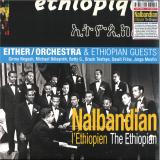
The Éthiopiques series returns! Essential archive recordings from an extremely fruitful period in Ethiopian music.
Before “Swinging Addis” took over the world, there was Moussié Nerses Nalbandian — the Armenian-born composer who shaped modern Ethiopian music. Mentor, arranger, and pioneer, he laid the foundations of Ethio-jazz.
This Éthiopiques volume revives his forgotten legacy, recorded live by Either/ Orchestra First issue ever with new exclusive photos and in depth liner 8-page insert.
“Ethiopian jazzmen are the best musicians that we have seen so far in Africa.
They really are promising handlers of jazz instruments.”
Wilbur De Paris
(1959, after a concert in Addis Ababa)
አዲስ፡ዘመን። *Addis zèmèn* **A new era.**
The time is the mid-1950s and early 1960s, just before "Swinging Addis" bloomed – or rather boomed – onto the scene. Brass instruments are still dominant, but the advent of the electric guitar, and the very first electronic organs, are just around the corner. Rock’n'Roll, R’n’B, Soul and the Twist have not yet barged their way in. Addis Ababa is steeped in the big band atmosphere of the post-war era, with Glenn Miller's *In the* *Mood* as its world-wide theme song, neck and neck with the Latin craze that was in vogue at the same period. Life has become enjoyable once again, with the return of peace after the terrible Italian Fascist invasion of Ethiopia (1935-1941). The redeployment of modern music is part and parcel of the postwar reconstruction. *Addis zèmèn* – a new era – is the watchword of the postwar period, just as it was all across war-torn Europe.
The generation who were the young parents of baby boomers** were the first to enjoy this musical renaissance, before the baby boomers themselves took over and forever super-charged the soundtrack of the final days of imperial reign. Music is Ethiopia's most popular art form, and very often serves as the best barometer for the upsurge of energy that is critical for reconstruction. Whether it be jazz in Saint-Germain-des-Prés or the *zazous* who revolutionised both jazz and French *chanson* after the *Libération*, be it Madrid's post-Franco Movida, or Dada, the Surrealists and *les années folles* that followed World War I, the periods just after mourning and hardship always give rise to brighter and more tuneful tomorrows. Addis Ababa, as the country's capital, and the epicentre of change, was no exception to this vital rule.
**Two generations of Nalbandian musicians**
Nersès Nalbandian belonged to a family of Armenian exiles, who had moved to Ethiopia in the mid-1920s. The uncle Kevork arrived along with the fabled "*Arba Lidjotch*", the** "*40 Kids*", young Armenian orphans and musicians that the Ras Tafari had recruited when he visited Jerusalem in 1924, intending to turn their brass band into the official imperial band. If Kevork Nalbandian was the one who first opened the way of modernism, pushing innovation so far as to invent musical theatre, it was his nephew Nersès who would go on to become, from the 1940s and until his death in 1977, a pivotal figure of modern Ethiopian music and of the heights it. Going all the way back to the 1950s. Nothing less. And it is Nersès who is largely to thank for the brassy colours that so greatly contributed to the international renown of Ethiopian groove. While the younger generations today venture timidly into the genealogy of their country's modern music, often losing their way amidst a distinctly xenophobic historiographical complacency, many survivors of the imperial period are still around to bear witness and pay tribute to the essential role that "Moussié Nersès" played in the rise of Abyssinia's musical modernity.
Given the year of his birth (15 March 1915), no one knows for sure if Nersès Nalbandian was born in Aintab, today Gaziantep (Turkiye/former Ottoman Empire) or on the other side of the border in Alep, Syria... What is certain is that his family, like the entire Armenian community, was amongst the victims of the genocide perpetrated by the Turks. Alep, the place of safety – today in ruins.
Before Nersès then, there was uncle Kevork (1887-1963). For a quarter of a century, he was a whirlwind of activity in music teaching and theatrical innovation. *Guèbrè Mariam le Gondaré* (የጎንደሬ ገብረ ማርያም አጥቶ ማግኘት, 1926 EC=1934) is his most famous creation. This play included "ten Ethiopian songs" — a totally innovative approach. According to his autobiographical notes, preserved by the Nalbandian family, Kevork indicates that he composed some 50 such pieces over the course of his career. This shows just how much he understood, very early on, the critical importance of song as Ethiopia's crowning artistic form. Indeed, for Ethiopian listeners, the most important thing is the lyrics, with all their multifarious mischief, far more than a strong melody, sophisticated arrangements or even an exceptional voice. (This is also why Ethiopians by and large, and beginning with the artists and producers themselves, believed for a long time — and wrongly — that their music could not possibly be exported, and could never win over audiences abroad, who did not speak the country's languages).
Last but not least, one of Kevork's major contributions remains composing Ethiopia's first national anthem – with lyrics by Yoftahé Negussié.
Nersès Nalbandian moved to Ethiopia at the end of the 1930s, at the behest of his ground-breaking uncle. Proficient in many instruments (pretty much everything but the drums), conductor, choir director, composer, arranger, adapter, creator, piano tuner, purveyor of rented pianos,... he was above all an energetic and influential teacher. From 1946 onwards, thanks to Kevork's connexion, Nersès was appointed musical director of the Addis Ababa Municipality Band. In just a few years, Nersès transformed it into the first truly modern ensemble, thanks to the quality of his teaching, his choice of repertoire, and the sophistication of his arrangements. It was this group that would go on to become the orchestra of the Haile Selassie Theatre shortly after its inauguration in 1955, which was a major celebration of the Emperor's jubilee, marking the 25th anniversary of his on-again-off-again reign.
At some point or other in his long career, Nersès Nalbandian had a hand in the creation of just about every institutional band (Municipality Band, Police Orchestra, Imperial Bodyguard Band, Army Band, Yared Music School…), but it was with the Haile Selassie Theatre – today the National Theatre – that his abilities were most on display, up until his death in 1977. To this must be added the development of choral singing in Ethiopia, hitherto unknown, and a sort of secret garden dedicated to the memory of Armenian sacred music, and brought together in two thick, unpublished volumes. Shortly before his death (November 13, 1977), he was appointed to lead the impressive Ethiopian delegation at Festac in Lagos, Nigeria (January-February 1977).
His status as a stateless foreigner regularly excluded him from the most senior positions, in spite of the respect he commanded (and commands to this day) from the musicians of his era. Naturally gifted and largely self-taught, Nerses was tirelessly curious about new musical developments, drawing inspiration from the very first imported records, and especially from listening intensely to the musical programmes broadcast over short-wave radio – BBC *First*. A prolific composer and arranger, he was constantly mindful of formalising and integrating Ethiopian parameters (specific “musical modes”, pentatonic scale, and the dominance of ternary rhythms) into his “modernisation” of the musical culture, rather than trying to over-westernise it. It even seems very probable that *Moussié* Nerses made a decisive contribution to the development of tighter music-teaching methods, in order to revitalise musical education during this period of prodigious cultural ferment. Flying in the face of all the historiographical and musicological evidence, it is taken as sacrosanct dogma that the four musical modes or chords officially recognised today, the *qǝñǝt* or *qiñit* (ቅኝት), are every bit as millennial as Ethiopia itself. It would appear however that some streamlining of these chords actually took place in around 1960. It was only from this time onward that music teaching was structured around these four fundamental musical modes and chords: *Ambassel*, *Bati*, *Tezeta* and *Antchi Hoyé*. A historical and musical “details” that is, apparently, difficult to swallow, especially if that should honour a *foreigner*. Modern Ethiopian music has Nersès to thank for many of its standards and, to this day, it is not unusual for the National Radio to broadcast thunderous oldies that bear unmistakable traces of his outrageously groovy touch.
- A1: Cookin’ Gumbo Feat. Juli Giuliani & Dj Swet
- A2: Krewe
- A3: The Struggle
- A4: Do It! (Skit)
- A5: Lagniappe
- A6: Lifetime Stories
- A7: Quimbombó Feat. Tumbakin
- B1: Boss Says No! Feat. Samuel Marthe
- B2: Praia De Moreré
- B3: Old School, No? (Skit)
- B4: Dave’s Groove Feat. Escandaloso Expósito
- B5: Vitamina Feat. Cecé
- B6: Thank You 02 37
Rooted in the New Orleans tradition and the essence of hip hop, Hip Horns Brass Collective unleashes its powerful sound in KREWE, their debut album. KREWE takes the brass band genre beyond its boundaries, diving into the underground with danceable rhythms like boombap and bounce, full of influences such as afrobeat, gospel and funk. The lyrics, filled with references to hip hop culture, flow in an explosive mix of English, Spanish, and Catalan, sharing their love for the tradition of rap and African American music. KREWE is a manifesto of the positive side of hip hop, a tribute to the unstoppable strength of the collective that a brass band represents in contrast to the solitude of the individual, and a homage to the legacy of hip hop and the vibrant tradition of New Orleans
South London producer Nima announces his debut album. A project five years in the making that pays homage to the formative dance floors of UK bass music. Drawing from the spirit of nights like FWD>> and DMZ in London, and many from Bristol, the record sits at the crossroads of hip hop, dubstep, grime and cinematic sound design.
Of Iranian heritage, Nima grew up on a steady diet of 90s Hip Hop and Grime before discovering 140 culture through pioneers like Skream and Benga. His sound developed further in Bristol during one of the city’s most vital periods for bass music, later refined at London’s Roundhouse studios. His productions blend filmic atmosphere with the physicality of sound system music, heavy hip-hop drum structures, rolling 140 basslines, and emotive grime-inspired melodies.
Across the album’s tracks, Nima explores the evolution of UK sound system culture through his own lens. From the weightless grime-inspired “Imperial Dreams” and cinematic, jungle-inflected “Big Up”, to the stripped-back melodic grime of “Ruff Sqwad” and the deep, meditative bass of “One People.”
Referencing everything from Plastician’s Beg to Differ to Mala’s Boiler Room set, Fugees skits, and samples from films like Imperial Dreams and Belly, the record is a reflection of the cultural layers that have shaped Nima’s musical identity.
Nima’s debut is a personal statement to the foundations of UK bass music. Cinematic, weighty, and built for the dance floor.
The 12-track record is the first album on SHDW's influential label and explores the past, present, and future of techno.
Planet X label head and 20-year scene veteran Exos, hailing from Iceland, draws on his native country's influences in his work, which explores the interplay between light and dark, warmth and cold. His high-octane sounds over the last 20 years have appeared on vital imprints like Tresor, X/OZ, and, of course, Mutual Rytm, with his releases for
the label having been extremely well received, garnering support from the scene's key DJs. Whether dubby or hard, his techno is always authentic and channels the purity of the 90s style. This new album follows Exos's inaugural X-Release, the Infrared 10", the Icebreaker 12" from last year, and his track on the latest Federation of Rytm IV compilation. It's a real journey through all facets of his sound, including a trip back to his dub techno roots, ambient
explorations, and emotional vocal pieces with lifelong memories fused into sounds that reflect the artist's decades spent in Iceland.
'Sweet Dreams' opens with an atmospheric intro in the form of a 28-year-old collaboration with his father. This full-bodied analogue ambient piece is rich with the mysterious tones of the Nord Modular and was recorded during their shared studio days at D17 in Reykjavik. The title track is a hypnotic, linear groove with icy synth modulations and glistening melodies. 'Hinn Vioforli' then brings dub warmth while 'State of Mind' recalls the spirit of the legendary Reykjavik club 'Thomsen', a cornerstone of Iceland's late 90s underground scene. 'Glaour Og Reifur' and
'Fogur Er Hlioin'pay homage to the echoes of ancient Viking heritage, 'North of January' conveys the cold of Exos's homeland, and 'Hvarvetna' brings textured percussion and darker undertones before '101 After Dark' slows to a bass-heavy broken beat exploration of texture and post-dubstep pressure.
After the heady and atmospheric sound of 'The Dolphin Oracle', another key collaboration comes with 'Freefall', an emotional breakbeat piece featuring vocalist Amelia Rodriguez,' who also lends her voice to 'Shock', a magnificent track that channels Exos's modern techno energy. The album closes with a haunting paradox, 'Paradise Lost,' questioning whether our sweet dreams are truly moments of bliss or simply reflections of what we've already left behind. The three bonus digital cuts offer sleek minimalism, punchy deep techno, and suspenseful ambient.
- A1: Polkamatic (Remastered)
- A2: My Friend Dario (Dima Prefers Newbeat Mix) (Remastered)
- A3: You Are My Sun (Remastered)
- A4: Poney Part 1 (Remastered)
- B1: My Friend Dario (Remastered)
- B2: Wooo (Remastered)
- B3: La Rock 01 (Remastered)
- B4: The Past (Remastered)
- C1: No Fun (Remastered)
- C2: Poney Part 2 (Remastered)
- C3: Repair Machines (Remastered)
- C4: Newman (Remastered)
- D1: Trahison (Remastered)
- D2: U And I (Remastered)
- D3: Valletta Fanfares (Remastered)
- D4: One Billion Dollar Studio (Remastered)
- A1: Fanfare (Live 2025)
- B1: Anatoles (Remastered)
Sparkled Vinyl[28,15 €]
Box Set: 2LP (sparkle) + 7" (transparent) + CD + Vinyl Slipmat + Booklet + 6 Coasters + Keychain + Stickers
Originally released in 2005, OK Cowboy, Vitalic’s first album, is celebrating its twentieth anniversary with a reissue in several formats (box set, double vinyl, CD, digital), enriched with rare tracks and previously unreleased versions.
OK Cowboy is a landmark album in electronic music, a pivotal record between eras.
It perfectly captures that period while also anticipating the raw, abrasive new sounds of French Touch 2.0 (the movement led by Justice and the artists of the Ed Banger label). Twenty years later, the impact and power of this major album still mark it as a defining release of the mid-2000s, retaining its full sonic relevance today.
Box set contents: double LP, 7-inch single, CD, vinyl slipmat, booklet, 6 coasters, keychain, sticker
A pioneer of the NYC underground returns to Psionic. After a highly sought after release in the label’s early years, Reade Truth delivers once again with the Life In Review EP. With decades of experience shaping the sonic landscape, his signature blend of analog vintage textures and modern flair shines across four diverse cuts. From hazy minimal electro and dusty broken beats to hypnotic, mind-bending energy—this is Reade Truth in full force. A vital new weapon in the Psionic arsenal from a legend, one of the true originals.
Repress!
Bristol native Wilfy D makes his debut release on the new Vitamin D imprint. Since working behind the counter at Idle Hands record shop at seventeen he has since been behind releases on Idle Hands, Peach Discs, Apron, Dr Banana and a remix on Conch. VITD001 is 3 tracks of no-nonsense UK Garage with a heavy R&B influence and 90’s flavours. An undeniably playable release that's tried and tested on the dancefloor.
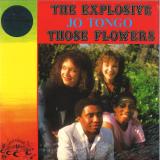
Following the acclaimed reissue of Sa Discossa earlier this year, Jo Tongo's third solo album Those Flowers returns to the spotlight.
Originally released just a year and a half after Sa Discossa, this 1982 gem came out on the small Context label and, in Tongo's own words, the two records are "like twins." Recorded with many of the same musicians, Those Flowers continues the vibrant fusion of disco-funk and reggae - this time dedicating one side to each, leaning slightly more into his Western influences.
But there's more than groove beneath the surface. Tracks like "People Need Peace" and "We Human Beings" channel his enduring themes of resistance, identity, and freedom. The synthesizer at the beginning of the song mimics the ominous drone of warplanes, and lyrics speak directly to global struggles - reminders that his music is both deeply personal and powerfully political. "I paid for these ideals in my career," Tongo reflects, alluding to the personal costs of his outspoken stance against colonialism and injustice.
Still, Those Flowers carries joy at its heart. Songs like "Ain't No Man Like A Real Friend" celebrate trust and loyalty, while the title track offers a tender ode to love and kindness - "picking flowers from the soul," as Tongo puts it. These songs reveal the inner world of a man who has always viewed music as a mirror of life.
This reissue marks the second installment in the African Edge series from The Outer Edge label. Fully restored and remastered, Those Flowers is now set to bloom again - another vital chapter in the legacy of Jo Tongo.
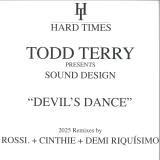
Three decades on from its original 1995 release, Todd Terry’s 'Devil’s Dance' still burns with the kind of manic, floor-filling energy that defined the early years of Hard Times. Now, Todd and the label return to the track, inviting a trio of today’s most vital club architects to rework one of Todd's most incendiary productions for a new generation of dancers.
Following a year that saw Chris Stussy and Dan Shake breathe new life into 'Bounce to the Beat,' Hard Times closes out 2025 with 'Devil’s Dance (Remixes),’ a collection that bridges old-school grit and new-school heat. Rossi., Demi Riquísimo, and Cinthie each bring their own distinct combustion to Todd’s iconic organ riffs and bulbous bassline, reframing the track through London, Berlin, and Balearic prisms.
Rossi. leans into the city that raised him: “It’s been a real pleasure to remix such an iconic inspiration for me as an artist. Todd is a legend and part of the reason why we have the culture of music we have today. I wanted to bring my remix back to my London roots - a UKG skippy, warpy approach that still carries those iconic chord riffs.”
A transcontinental meeting of minds, methods, and Volvos. What started as a remix request became a studio session and, eventually, a four-track affair of acid-tinged house, Italo accents, trance echoes, and techno pulse.
In Love Again captures the shared DNA of Loods and Gerd Janson, bright, melodic, and built for the beach club (Massimo Vitali's cover makes it official). Four flavours of the same spirit, each mix a nod to a time when 12-inches told a whole story.
For best results: play loud, add sea breeze.
Photo titled Blooemendaal Night 3", 2001 by Massimo Vitali
FJAAK return with FJAAK014, a four-track EP packed with their signature analogue energy, funk-driven grooves and unmistakable Detroit-inspired synth work. This release is raw, percussive and unapologetically dancefloor-focused: Across four tracks, FJAAK once again prove why they remain one of the most vital voices in electronic music. The EP kicks off with 'Soulfriction', a cut built on a groove where power house meets jungle. It's a pure body-mover, all pulse and propulsion, with layered percussion that nods to classic warehouse sets while pushing things forward in true FJAAK fashion. On 'Run To Me', the duo bring soulful vocals in, weaving them into a driving rhythm that fuses housey breakbeats and thick analogue grooves. The result is a warm, kinetic blend of Detroit flair and modern funk sensibility, tailor-made for peak-time dancefloors. The B-side starts with 'Keep The Balance', a track that strips things down a touch. More introspective, but still locked into a deep, funky flow. It's mellow without losing movement, full of crisp drums and glowing chord progressions that let the groove breathe. Closing the EP is 'What's My Name?', a true FJAAK-style banger: Punchy kicks, sharp vocal cuts and a commanding low-end give it that warehouse edge. It's a punchy blend of groove and raw-energy, making it the perfect club weapon. The Berlin duo has been sculpting their sound identity with hardware-heavy, genre-blurring releases that span techno, breakbeat, house and jungle. With FJAAK014, they further refine their groove-forward vision, blending soulful vocal textures, infectious breakbeat energy and timeless Detroit-style synth work, making this EP another bold statement from a duo that remains on the frontlines of electronic music evolution.
- A1: Polkamatic (Remastered)
- A2: My Friend Dario (Dima Prefers Newbeat Mix) (Remastered)
- A3: You Are My Sun (Remastered)
- A4: Poney Part 1 (Remastered)
- B1: My Friend Dario (Remastered)
- B2: Wooo (Remastered)
- B3: La Rock 01 (Remastered)
- B4: The Past (Remastered)
- C1: No Fun (Remastered)
- C2: Poney Part 2 (Remastered)
- C3: Repair Machines (Remastered)
- C4: Newman (Remastered)
- D1: Trahison (Remastered)
- D2: U And I (Remastered)
- D3: Valletta Fanfares (Remastered)
- D4: One Billion Dollar Studio (Remastered)
Boxset[128,99 €]
Originally released in 2005, OK Cowboy, Vitalic’s first album, is celebrating its twentieth anniversary with a reissue in several formats (box set, double vinyl, CD, digital), enriched with rare tracks and previously unreleased versions. OK Cowboy is a landmark album in electronic music, a pivotal record between eras. It perfectly captures that period while also anticipating the raw, abrasive new sounds of French Touch 2.0 (the movement led by Justice and the artists of the Ed Banger label). Twenty years later, the impact and power of this major album still mark it as a defining release of the mid-2000s, retaining its full sonic relevance today.
- A1: Robot Rock (Soulwax Remix)
- A2: Human After All (Sebastian Remix)
- A3: Technologic (Peaches No Logic Remix)
- A4: Brainwasher (Erol Alkan's Horrorhouse Dub
- B1: Prime Time Of Your Life (Para One Remix)
- B2: Human After All ("Guy-Man After All" Justice Remix)
- B3: Technologic (Digitalism Remix)
- B4: Human After All (Emperor Machine Version)
- C1: Technologic (Vitalic Remix)
- C2: Robot Rock (Daft Punk Maximum Overdrive Mix)
- C3: Technologic (Liquid Twins Remix)
- C4: Technologic (Basement Jaxx Kontrol Mixx)
- D1: Human After All (The Juan Maclean Remix)
- D2: Human After All (Alter Ego Remix)
- D3: Technologic (Knight Club Remix)
In celebration of the 20th anniversary of Daft Punk’s chart-topping third album Human After All, a Limited Edition 2LP gatefold version of the companion album Human After All Remixes is set for release on November 28, 2025. This marks the very first vinyl edition of the complete collection.
Human After All, the third album from Daft Punk, was originally released in March 2005. It was produced in just six weeks, a major departure from the timeline for their previous release, Discovery, which took over two years to produce. A year after the release of Human After All, a collection of Human After All remixes tracks was released on CD exclusively in Japan, including reworkings by Justice, Soulwax, and SebastiAn, among others. In June 2014, an expanded CD version was released (also exclusive to Japan) featuring additional remixes from artists such as Basement Jaxx and The Juan Maclean. The album was made available to stream internationally in August 2014.
Human After All Remixes will now be available for the first time on vinyl in limited quantities.