The sounds of Brazil in the late 60's were thriving with creative growth in thought and world minded values. The age of fusion was alive and well and a lost hidden gem from this era comes in the sole Pedro Santos 1968 LP Krishnanda. Tracks include "Ritual Negro", "Água Viva", "Um Só", "Sem Sombra", "Savana", "Advertência", "Quem Sou Eu", "Flor de Lótus", "Dentro da Selva", "Desengano da Vista", "Dual", "Aranbindu".
Suche:viva
This LP walks among beat outbursts, orchestral tracks and some references to the rock sound of the time. "Psichedelica" contains the first version of Umiliani's most famous composition: "Mah-Nà Mah-Nà", a track that will be a mixed blessing of his artistic life, here appearing as an outtake from the "Svezia Inferno e Paradiso" OST, under the title "Viva la sauna svedese".
- A1: Wolf's Theme
- A2: Harappā
- A3: Body And Soul
- B1: Doxie
- B2: Chattanooga Choo-Choo
- B3: I Can't Get Started
- B4: Viva Giappone
During his time with the Yosuke Yamashita Trio, Nakamura poured his entire being into every note, weaving flashes of inspiration and raw impulses into powerful blows in the early 1970s. With this work, he undergoes yet another transformation. As Nakamura himself described: “Sharing space with everyone, feeling as if we’re flying freely like birds that’s the ideal.” Here, layers of sound and moments of silence expand the sonic space, and within it, Nakamura’s saxophone runs vibrantly and unrestrained.
Highlights include the exhilarating “Wolf’s Theme”, inspired by Kazumasa Hirai’s Wolf Guy series; the nostalgic melodies and relaxed groove of “Harappa”; elegant, richly textured interpretations of standards like “Body & Soul” and “I Can’t Get Started”; and the dynamic, liberating energy of “Viva Giappone”. In every track, Nakamura’s ideal is vividly realized. Featuring contributions from Toshiyuki Daitoku, Aki Takase, and Ryojiro Furusawa.
Conceived in Paris and brought to life in Roma during a spring day flooded with good wine and even better food, CACIO & PEPE is the perfect melange between the NJ rapper of Colombian descent and the Parisian bon vivant, al-ways doing what they do best: enjoying the fine pleasures of life!
"Lost in the spinning sound" is the 12th studio album by The Dining Rooms (Stefano Ghittoni and Cesare Malfatti) who, over the years, have delved into an original style that balances cinematic atmospheres with funk, dub and ambient music. Here they have invited just one vocal guest, Chiara Castello from I'm Not a Blonde, for a collaboration that delivers a slow, nocturnal, orchestral, very minimalist album, oscillating between folk and blues, with deeply meaningful lyrics that explore the intricate nature of interpersonal relationships. The album cover, an illustration by Sara Vivan, conveys the idea of metamorphosis and invites us to dive into the sounds that surround and protect us. This is also the main message of the album: losing ourselves in order to protect ourselves a little. Drifting along and finding new, safer and more peaceful shores.
Originally released in 1994.
The legendary album from South Africa’s House and Kwaito master Doctor House being reissued for the first time with a full remaster from the original DAT tapes. Nelson Phetole Mohale released a series of albums as Doctor House. Cutting his teeth in the 80s as a session player for a host of big names like Volcano, Senyaka and Obed Ngobeni, he moved on to programming for acts like La Viva and Jivaro, also contributing to Carlos Djedje and others. Still barely out of his teens he became one of South Africa’s first rappers as part of PT House, co-written and produced by Danny Bridgens. Their debut album Big World was released in 1991 and followed by Big City Taste a year later.
New Bon Vivant 7 with full power from Sakro, Michael james & Andrade
Great house cuts - highly recommended!
- A1: Les Masques - Il Faut Tenir (1969)
- A2: Isabelle Aubret - Casa Forte (1971)
- A3: Christianne Legrand - Hlm Et Ciné Roman (1972)
- A4: Jean Constantin - Pas Tant D'chichi Ponpon (1972)
- A5: Billy Nencioli & Baden Powell - Si Rien Ne Va (1969)
- B1-: Marpessa Dawn - Le Petit Cuica (1963)
- B2: Jean-Pierre Sabar - Vai Vai (1974)
- B3: Sophia Loren - De Jour En Jour (1963)
- B4: Isabelle - Jusqu’à La Tombée Du Jour (1969)
- B5: Sylvia Fels - Corto Maltesse (1974)
- C1: Frank Gérard - Comme Une Samba (1972)
- C2: Ann Sorel - La Poupée Des Favellas (1971)
- C3: Charles Level - Un Enfant Café Au Lait (1971)
- C4: Andrea Parisy - Les Mains Qui Font Du Bien (1970)
- C5: Audrey Arno - Quand Jean-Paul Rentrera (1969)
- C6: Aldo Frank - T’as Vu Ce Printemps (1970)
- D1: Christianne Legrand - Cent Mille Poissons Dans Ton Filet (1972)
- D2: Clarinha - Lemenja (1970)
- D3: Hit Parade Des Enfants - Aquarela (1976)
- D4: Jean-Pierre Lang - Tendresse (1965)
- D5: Magalie Noël - Une Énorme Samba (1970)
- D6: Françoise Legrand - La Lune
Ever since the late 1950s bossa-nova revolution, Brazil’s influence on French music has been undeniable. Pierre Barouh, Georges Moustaki and a vast array of lesser known artists, all made the Musica Popular Brasileira (MPB) an axis of promotion at the service of a cool and metaphysical, modern and mixed Brazilian lifestyle. Some were seduced by the poetic languors of the bossa, some were looking for fun, and others just loved the American hybridization of jazz-bossa, jazz-samba.
What is bossa nova? One of its creators, Joao Gilberto said: "Its style, cadence, everything is samba. At the very start, we didn't call it bossa nova, we sang a little samba made up of a single note - Samba de uma nota so .... The discussion around the origins of bossa nova is therefore useless”. It is nevertheless useful to remember that these magnificent Brazilian songs, which the guitarist describes as samba, were shifted and balanced around improbable chords. "I like things that lean, the in-betweens that limp with grace," said Pierre Barrouh, quoting Jean Cocteau.
With emotion, arrangements for violin and supple guitar licks, bossa nova rapidly changed. A transformation that can be heard in the Tchic, tchic, French Bossa Nova 1963-1974 compilation, the result of a cultural reappropriation, which traveled through the United States and supplemented itself in France.
A musical revolution that has remained significant, bossa nova was born in Rio. From 1956 to 1961, Brazil lived through its golden years. In five years, the country had invented its modernist style. Elected president in 1956, Juscelino Kubitschek de Oliveira, an elegant man with a broad forehead, brandished a promising slogan: "Fifty years of progress in five years". He quickly got to work. Not worried about increasing debt, he launched the project for a new federal capital, Brasilia, designed by the communist architect Oscar Niemeyer. Volkswagen opened state-of-the-art factories and created the “fusquinha”, the Beetle. In Rio, the Vespa made its first appearance. The Arpoador Surf Club crew run into the “girl” from Ipanema, Helô Pinheiro - the tanned garota ("chick"), between a flower and mermaid, who at 17 walked by the Veloso bar, where the fiery author and composer, Tom Jobim and Vinicius de Moraes, were getting drunk on whiskey. From then on, bossa symbolized cool.
In 1958, Joao Gilberto recorded Chega de Saudade, which the directors of Philips denied, calling it "music for fagots". The marketing director, who believed in it, secretly pressed 3000 78-inch vinyls and distributed them at schools around Rio, creating a tidal wave.
American jazzmen then took over. In particular, trumpeter Dizzy Gillespie and guitarist Charlie Byrd. In November 1962, the Brazilian Ministry of Foreign Affairs funded a "Bossa-Nova" concert at Carnegie Hall in New York, inviting the genre’s pioneers. Unprepared, the show soon turned to disaster. But the troupe was invited to the White House by Jackie Kennedy. The first lady loved "the new beat" and in particular Maria Ninguem, a song by Carlos Lyra, later covered by Brigitte Bardot.
In Brazil, the 1964 military coup quickly ended this euphoria. The destructive atmosphere that ensued pushed many Brazilian musicians to leave, if not to exile. Thus, Tom Jobim, Sergio Mendes and Joao Gilberto arrived to the United States. In New York, Joao Gilberto met saxophonist Stan Getz. At the time, he was married to the Bahianese Astrud Weinert Gilberto, who had a German father. She had never sung before, but she knew how to speak English. Getz therefore asked her to replace her husband on The Girl From Ipanema. The Getz/Gilberto record with Tom Jobim on piano, was released in March 1964. Phil Ramone, the "pope of pop" was in charge of sound.
Bossa nova arrived in Paris through the classic “guitar-voice” channel (Pierre Barouh, Baden Powell, Moustaki…) But France loved jazz and Paris had already welcomed its American contributors. All these good people were to pass through Saint-Germain-des-Prés. The cabaret l'Escale became the Mecca of Latin American sound where one could find Pierre Barrouh and his friends, such as the Camara Trio, samba-jazz aces, whose only record was published by the Saravah label. With a band strangely called Les Masques (a band that included Nicole Croisille and Pierre Vassiliu, among others), the Camara Trio recorded an interesting Brazilian Sound, including the track Il faut tenir which is present on this tasty compilation of rarities.
Other enlightened musicians can also be found on the compilation, such as Jean-Pierre Sabar (songwriter for Hardy, Auffray, Leforestier ...) and the French pop rock organist Balthazar. In 1975, Sabar recorded Aurinkoinen Musiikkimatka on a Finnish label, which featured the crazy Vai, Vai, included on this record. We are now following the footsteps of Brazilian electronic musicians such as Sergio Mendes, Eumir Deodato or Marcos Valle who created funk and disco sounds on their keyboards and synthesizers. A style that influenced Véronique Sanson when she wrote Jusqu’à la Tombée de la nuit in 1969 for Isabelle de Funès, the niece of Louis and a great friend of Michel Berger - Sanson did end up singing this track on her 1992 Sans Regret record.
The pinnacle of exoticism and travel, Sylvia Fels’ Corto Maltese includes bongos, sea mist and ocean sounds. The title was taken from Jacky Chalard’s concept album written in 1974, Je suis vivant, mais j’ai peur (I am alive, but I am scared), based on Gilbert Deflez’s science fiction novel.
However, bossa nova extended the scope of popularity. "In the 1970s, I was a fan of Sergio Mendes, Getz / Gilberto. I fell in love with this music that I knew because I had been an orchestral singer, " explained Isabelle Aubret, who in 1971 delivered a composite record of covers by the very funky Jorge Ben, Orfeu Negro, Tom Jobim, Vinicius de Morais and Jean Ferrat. "I recorded this album for Meys Records in Paris, far from Brazil, with wonderful musicians, François Raubert, Roland Vincent, Alain Goraguer...". The latter wrote the arrangements for Casa Forte, a very percussive title borrowed from Edu Lobo, one of the initiators of the bossa who spent time in California. "Jazz and bossa came together and produced very rhythmic music. I love singing, it allows me to dream, to have fun, to feel a high on stage, and these songs brought me joy, made me swing, my singing felt like a dance.”
The world tours of French singers and their desire for the tropics, often brought them to Rio with its hills, forests, caipirinhas and tanned bodies. There are surprises though, like this Iemenja (Iemenja is the goddess of the sea in the Afro-Brazilian candomblé religion). Not unlike the composer and musician Jean-Pierre Lang, based in Sao Paulo, Claire Chevalier taught Brazil to Brazil. In 1970, the singer and painter published a 45-inch vinyl, Mon mari et mes amants (My husband and my lovers), under the improbable pseudonym of Clarinha (little Claire). She was then living in Rio, with her husband, Joël Leibovitz, who founded a band called Azimuth, and who owned a record label specialized in "sambas enredos" songs for samba school parades.
For its B side, she asked Pierre Perret to come up with lyrics for a song composed by Carlos Imperial: "Oh goddess of the sea, o goddess Iemenja, I bring a white rose to adorn your long hair ..." . "Perret came to see us, and we had fun, remembers Joël Leibovitz. We wrote Lemenja for fun, we recorded it at the Havaí studio, behind the Central do Brasil the central station. Erlon Chaves, the arranger who worked with Elis Regina, joined us" adding his share of Afro-Brazilian percussions and funky brass to the mix.
There is a common misunderstanding in Franco-Brazilian history: that bossa, admittedly hedonistic, is perceived as funny, even though the poets who wrote the texts are often philosophizing on the human condition. Its French interpreters pull it towards a carnival inspired universe, far removed from its fundamental essence. Thus, Jean Constantin covered the famous Samba da minha terra, an ode to the art of samba written by the classic Bahian composer Dorival Caymmi, renaming it with the enticing title of Pas tant de tchi tchi pompon: "On your pier there is no tchi tchi / when you arch your back, you know everything is alright ”(lyrics by Gérard Calvi). This expedited bossa aims for the absurd, but retains a certain elegance.
Indeed, Jean Constantin was not an idiot, the rather large man had a huge mustache and liked fantasy, (Les pantoufles à papa, Le pacha, inspired by cha-cha-cha-cha, salsa and jazz) but he was also the lyricist of Mon manège à moi interpreted by Edith Piaf, the composer of Mon Truc en plume by Zizi Jeanmaire and the soundtrack of François Truffaut’s 400 Blows. Le Poulpe, published in 1970, from which this bossa is extract, was arranged by Jean-Claude Vannier, an accomplice of Serge Gainsbourg’s Melody Nelson. In short: "There is enough of samba / By looking at the parasol / Because my poor cabeza / Is going to die in the sun".
Even the American actress Marpessa Down, who was at the heart of the bossa nova revolution with her role as Euridyce in Marcel Camus’ film Orfeu Negro, winner of the 1959 Cannes Palme d'or, fed the clichée with Je voudrais parler au petit cuica - "Tell me how you manage to always make people want to dance / It's true, I must admit that I cannot resist your magic" - in consequence, once can hear the cuica, a little drum inherited from the Bantu.
But bossa nova had many angles. Societal, of course, pushing actresses who were symbols of women's liberation like Brigitte Bardot, Jeanne Moreau, or Sophia Loren to engage in the exercise of accelerated bossa. In February of 1963, Sophia Loren made a record in French in Rome, Je ne t'aime plus, featuring the song De jour en jour, a bossa written by two Italians, Armando Trovajoli and Tino Fornai, which was released a little later by Barclay. Bossa accompanied the 1960s, a decade of moral liberation. Ann Sorel, who interpreted La Poupée des favellas, caused a sensation with L’amour à plusieurs, a provocative song written by Frédéric Bottom and Jean-Claude Vannier. As for the actress Andrea Parisy, she displayed her bourgeois cheekiness in Marcel Carné's Les Tricheurs before interpreting Les mains qui font du bien. And Magalie Noël, the friend of Boris Vian, who sung Johnny fais-moi mal, was hired to sing Une énorme Samba, composed by Alain Goraguer (arranger to Gainsbourg, Bobby Lapointe and Jean Ferrat) with lyrics by Frédéric Botton.
But in the end, of what wood is bossa nova made of? The answer is given by Christianne Legrand, daughter of Raymond the conductor, and sister to Michel the composer: "With me, with jà" - jà means "immediately" in Portuguese. In 1972, the singer, an expert in vocal jazz and a member of the Double Six, published Le Brésil de Christianne Legrand. Two songs included on the Tchic Tchic compilation that demonstrate how bossa, jazz, funk, rock, etc. work like a swiss army knife: the music is used to denounce broken systems, or miracles, HLM et ciné roman, Cent mille poissons dans ton filet, two songs from the O Cafona soundtrack, a successful telenovela broadcast, at the time in black and white, on TV Globo. The first was adapted in French by the fighter and friend of the Legrand tribe, Agnès Varda. The second is content with a play on words, jostling them into a summer fun.

Véronique Mortaigne
Schatterau’s third album, »Wir gingen durch leere Stunden« (We went through empty hours), sees the German duo blossoms with beauty and sophistication through a broad creative language.
This opus, presented in the form of vivid auditory tableaux vivants, explores the topography of memory as a landscape in constant motion – full of loops, feedbacks, and mirage-like distortions. Sounds climbing like vines over old walls, concealing details only to reveal new ones. Some pieces feel like fragments of a dream whose origin has vanished, others like displaced echoes of a day long gone.
Memories create paths that only become visible in retrospect – detours that somehow always lead back to oneself. Each track draws the listener into a different recollection, as if opening an old door. Inside, time behaves strangely: it jumps, stretches, and repeats.
»Wir gingen durch leere Stunden« ultimately presents Schatterau at their most experimental, complex and measured extremes, channelling ambiguous human emotional resonance ranging from melancholy to pure ecstasy.
Frankie Knuckles Pres. Director's Cut Featuring Jamie Principle
Your Love
LTD Edition Clear Vinyl Version
Arguably one of the most memorable house music moments, born out of the black LGBT scene in Chicago at the legendary Warehouse and known as one of Frankie Knuckles earliest productions; ‘Your Love’ is a stone cold classic. A record that is up there with the greats, instantly recognisable and a song that only get better with time.
Written by Jamie Principle and originally released in 1986, ‘Your Love’ has become a seminal recording over the past 34 years. Originally an underground club anthem, famously borrowed on the crossover hit ‘You’ve Got The Love’ (The Source feat. Candi Staton), and most recently re-produced by as part of the Director’s Cut project which aimed to update a number of classic cuts for the modern dancefloor, this is a record that endures the test of time. Working alongside The Frankie Knuckles Foundation and Eric Kupper, SoSure Music now releases two new remixes for 2020 from Darrius Syrossian and Alan Dixon.
First up, House music aficionado and legendary Sankey’s resident Darius Syrossian offers his unique blend of beats to the remix package. With releases on the likes of Get Physical, Viva Music and Hot Creations, Darius’ production is heavily influenced by some of the greats – think of the finest spinners from Detroit, New York and Chicago – and is well placed to approach this huge task. Darius introduces a rolling house beat and some old skool breakbeats into his mix, keeping the energy high throughout; bringing a feeling of a euphoria and hitting the peak time moment.
Charting a rapid rise through the ranks in a relatively short time Alan Dixon is already building a name for himself in House and Nu Disco scene and has recently released on labels including Glitterbox, Permanent Vacation, Running Back and True Romance. Alan’s remix aims directly at the centre of the disco dancefloor. A strong beat dominates a unique energy through the mix along with a slightly nostalgic vibe. With a beautiful floaty interlude and a raw emotion this remix updates a classic with respect while also giving a fresh new twist.
Very excited to present this new project on Macadam Mambo, actually it’s not properly new…
Dr Strange was one of the alias of Erick ‘ADN’ Ckrystall’ circa mid-90’s till early 2000’s, when he was producing a sort of Leftfield-Trippy-Goa music, including a lot of Ambient stuff mostly released on CD on a series called Animorph. Everything had a very cinematographic touch like it was made for some documentaries about amphibians and snakes that would evoluate in the deepness of the jungle or on some exotic island...
The music was so magical, that the envie to do a mini-retrospective of the CD series came instantly, specially because none of those golden gems had never been printed on vinyl, It was also a good way to put into the light the Dr. Strange side of ADN’ Ckrystall which was kept in the shadow since many years and that deserves much more attention as the regain of interest for the goa scene has been rising in the last few years.
For the afficionados of proto/early Goa music and trippy ambient in the vibe of the Orb or labels like em:t or Barooni…
Steve Moore reprises his beloved Lovelock guise by presenting his unique riff on the library breaks genre. Business And Pleasure contains grimy groove and sleazy, funk-laden lounge music.
This vinyl release is hyper-limited, with just 500 pressed for the world.
The LP is ushered in by the spacey synth-funk of the sleazy, woozy title track. This is that serious slo-mo cosmic-balearic head-nod shit. Laidback bass, heavy funk with dreamy synth and electric guitars. An outstanding opener. Up next, the dynamic, swaggering "Last Call" is a sophisticated, elegant stroll - sweeping, mellow strings, a smooth bassline and gorgeous percussion with urgent keys and swelling synths.
"Slinky Strut" is another spaced-out, sleazy funk groove with jazz rock by way of a heavy, heavy guitar riff, mellotron and bass breakdowns which build to brass crescendos. Gigantic. "First Class" closes out the side, and, like classic Hawkshaw / Bennett noir, it's got that mysterious and murky stretched out sleuth / detective soul with a great bassline and percussive elements, with swelling strings, ace synths and smooth Rhodes piano melodies entering the mix halfway through. Dramatic guitars and groovy percussion add extra intrigue. It's 7 minutes of funk!
Side B opens with the stretched-out psychedelic funk and jazz groove of "Stank 49". It takes its sweet time to unfurl, creating enormous - almost sensual - anticipation for the ensuing beauty but, as it does, we're left beguiled and straight-up hypnotised. Heaven-sent synth flourishes and a laidback bassline over smooth drums cement its simple, vivacious grace. "Dangerous Man" is that creeping crime funk we all love; heavy bass and fuzzy guitar riffs, mellow strings and sumptuous piano/synths. It's irresistible, it's ominous and it's pretty gargantuan. It's basically like an El-P hip-hop instrumental. We need to get some rappers over this stuff, stat!
"Stinkbug" is a dazzling and funky groove-fuelled jazz-rock workout with fizzing synth riffs joined by full percussion and drum breaks, building with strings to a strong swagger. Vigour! To close out this remarkable set, the breezy "Win Or Lose" is laidback soul-inflected funk, utilising urgent, skipping drums and galloping basslines. Just stunning.
This collection was written and recorded in Spring and Summer of ’24. Everything was tracked at Steve's home studio in Albany, NY except the drums and percussion, which were recorded by Jeff Gretz at his space in NYC. The whole collection is basically a rhythm section feature, so Steve's Rickenbacker 4003 and Fender Jazz Bass play very prominently. The bass guitar serves as lead instrument in a lot of these tracks. Also, lots of Rhodes and stringers (Solina, Logan etc) and guitar (Strat and Les Paul). He even dusted off my sax for this one, which he doesn’t do as often as he’d like!
This type of groove-oriented library music has been a steady part of Steve's diet since the late 90’s. In heavy rotation while writing this collection were the following classics: “Time Signals” by Klaus Weiss, “Tilsley Orchestral No. 10” by Reg Tilsley, and “Heavy Truckin’” by Simon Haseley. “Voyage” by Brian Bennett was also a big one.
Lovelock started as a dedicated Italo-disco project, but over the years Steve expanded it to include anything directly informed by the commercial/pop side of the music of his childhood (70s/80s). Writing and recording this album was, like a lot of Steve's music these days, basically a test to see whether or not he could do it.
The song titles, like the music, are meant to be evocative yet vague. But there is a bit of a travel theme. Steve imagined this record being the soundtrack to a sleazy salesman’s business trip. The kind of guy who, when asked if he’s traveling for business or pleasure, responds “both.” Beyond the traveling salesman comparison, the title directly relates to the creation of this album. This was something he wanted to do just for his own enjoyment. Yet, like our sleazy salesman, he still found a way to get paid.
The album’s cover was designed by Chris Stevenson, with no little direction from Steve. He knew that he wanted to go with something photography-based for this cover so, in true DIY/cheapskate spirit, Steve started by looking through his own photos. He found the cover image on his phone, taken through an almost empty bottle of beer, and it clicked. The whole album has a very boozy vibe (especially with titles like “Last Call”) so this shot seemed appropriate. We, hic, agree.
Mastering for this vinyl edition was overseen by Be With regular Simon Francis, and it was cut by the esteemed Cicely Balston at Abbey Road Studios to be pressed in the Netherlands by Record Industry.
- A1: Savage - Magic Carillon (Also Playable Mono Remix) Zyx55910-1
- A2: Italove - At The Disco (Also Playable Mono Remix) Zyx55910-1
- A3: Carino Cat - Passion Of Love (Extended Version) Zyx55910-1
- A4: Excitations And Fred Ventura - State Of Confusion (Italoconnection Remix) Zyx55910-1
- B1: Italoconnection - Metropoli Zyx55910-1
- B2: Francesca E Luigi - Watch Me Dance Tonight (Zyx Remix) Zyx55910-1
- B3: Stockholm Nightlife Feat Nathalie Hanberg - Stay One Day (Cliff Wedge Special Zyx Remix 2018) Zyx55910-1
- B4: Mike Kremlin - The Years (Go By) (Flemming Dalum Remix) Zyx55910-1
- A1: Savage - Italodisco (Flemming Dalum Remix) Zyx55917-1
- A2: Bunny X - Words Feat Fred Ventura (Original 12“ Version) Zyx55917-1
- A3: Moderno - Waves Of Light (Night Mix) Zyx55917-1
- A4: D White - One Wish (Zyx Extended Version) Zyx55917-1
- B1: P Lion - Happy Children (Flemming Dalum Remix) Zyx55917-1
- B2: Tam Harrow - Your Love Is So Nice (1St Extended Mix) Zyx55917-1
- B3: Brian Ice - On The Moon (Vocal Version) Zyx55917-1
- B4: Mode One - Man On The Moon (Extended Mix) Zyx55917-1
- A1: Flexx - Forever Starts Today (Also Playable Mono Remix) Zyx55929-1
- A2: Savage - Lonely Night (Flemming Dalum Remix) Zyx55929-1
- A3: D White - Don‘t Be Shy (Ryan Benson Remix) Zyx55929-1
- A4: Ken Laszlo - Forever Young (Flashback Remix) Zyx55929-1
- B1: Victor Ark Feat Matt Doll - Dark Affair Zyx55929-1
- B2: Also Playable Mono - Love Is In Your Heart (Extended Mix) Zyx55929-1
- B3: Alex Valentini - See You Again (Extended Mix) Zyx55929-1
- B4: Plastic Mode - Me Amor (Flemming Dalumn Remix) Zyx55929-1
- A3: Simon Bennett – I Wanna Tokyo'u (Flemming Dalum Remix) Zyx55934-1
- A4: George Aaron – Midnight Love (Extended Version) Zyx55934-1
- B1: Tom Hooker & Tam Harrow – You And I (Extended Version) Zyx55934-1
- B2: Flemming Dalum – Don't Take Your Time (Special Zyx Remix) Zyx55934-1
- B3: Some Bizarre – Don't Be Afraid (Also Playable Mono Remix) Zyx55934-1
- B4: Wish Key – Orient Express (Flemming Dalum Remix) Zyx55934-1
- A1: Flexx - Break You Down (Vocal Version) Zyx55955-1
- A2: Tom Hooker & Tam Harrow - Love Me Tonight (Extended Version) Zyx55955-1
- A3: Linda Jo - Keep Trying (Flemming Dalum Remix) Zyx55955-1
- A4: Fred Ventura & Dj Tintin - Come On (Flemming Dalum Remix) Zyx55955-1
- B1: Joe Yellow - Flash In The Night (Extended Version) Zyx55955-1
- B2: Flemming Dalum - Walking In The Neon (Special Zyx Remix) Zyx55955-1
- B3: Agf - Loved By You (Flemming Dalum Remix Edit) Zyx55955-1
- B4: Italove - Viva La Victoria (Royal Flashback Remix) Zyx55955-1
- A1: Den Harrow – Always (Flemming Dalum Remix) Zyx55934-1
- A2: The Sweeps – Voices (Extenden Version) Zyx55934-1
ZYX Italo Disco New Generation – Limited 5LP Box
Ein echtes Sammlerstück für alle Italo Disco Fans!
Diese streng limitierte 5 LP Box vereint gleich fünf Alben aus der erfolgreichen „ZYX Italo Disco New Generation Vinyl Serie“ – erstmals als exklusives Box-Set erhältlich. Auf insgesamt 5 hochwertigen Vinyl erwartet dich eine einmalige Zusammenstellung von Klassikern und modernen Hymnen im typischen Italo-Disco-Sound, der weltweit Fans begeistert. Tauche ein in die Welt des Italo Disco – mit dieser Box sicherst du dir ein Stück Musikgeschichte zum unschlagbaren Preis!
Lontra is the new project from Brazilian born, Colombian based producer, and musician, Guille Katorzi. The inspiration and influences for this particular project were drawn from diverse sources, including disco, house, Nigerian boogie & afrobeat.
The instrumentals were and produced in Bogotá with Guille laying down the guitar & bass parts which the songs were built upon. After sending the demos to vocalist Sir Jean (Voilaaa/Sir Jean & NMB Afrobeat Experience), with an invitation to collaborate, he was thrilled to receive a warm response to the songs from Sir Jean and so travelled to France in 2023 to record vocals in the singers' home town of Lyon. Returning to Bogotá, a selection of top brass musicians contributed their blazing horns to the project.
Opening up the EP, "Money, Money" serves up a lively disco beat with percussive Afrobeat highlights, funky guitar licks & Afrobeat inspired horn parts, backed by an irresistibly groovy bassline, setting the scene for Sir Jean's lyrical warning "money cannot buy your soul".
Dropping some of the Afrobeat accents and staying closer to the centre line, "Life Is Movement" is a dancefloor focused track where Katorzi's guitar hook pairs with a restless bassline over which Sir Jean's vocal delivery shines. The flipside begins with a sensuous overture on "Mysterious". A loose Afro-beat & guitar syncopation provides an inviting space for the horn section's refrains and solos. The arrangement allows plenty of room for the listener to become intoxicated by the groove, before Sir Jean opens his heart with the emotive ode to someone we learn of only as..."Mysterious".
Closing out proceedings is a more driving club track. The Lyon & The Hunter... where Sir Jean sings a warning wrapped in metaphors while Lontra throws down a club focused punch that deftly dances between funk, house and afro flavours while the scorching horns set the lot aflame.
The culmination of different inspirations and intonations imbues the project with a vivacity and richness in colour that reflects the multi-cultural assembly of players. Canopy is delighted to welcome the talent of Lontra to the family and are happy to say that this is the first in a number of exciting projects that this artist is serving up
- A1: Paul Older - Che Disco Vuoi (Extended Version)
- A2: Riva Starr - Allora Amore (Extended Mix)
- A3: Valentino Vivace - Statua Greca
- B1: Hey Cabrera! - Tutto Matto (Extended Version)
- B2: Sam Ruffillo & Fimiani Feat Gianni D'uomo - Non Era Facile (Extended Version)
- B3: Kymono - Lasciati Andare (Extended Version)
- C1: Dov'e Liana - La Notte Infinita (Extended Version)
- C2: Mille Punti - Matto (Extended Version)
- C3: Bruno Belissimo - Donna Piu
- D1: Fimiani - Proibito (Extended Version)
- D2: Alessandro Rotter - La Sera, La Discoteca, La Spiaggia
- D3: Alberto Melloni – Credimi
Toy Tonics ITALOMANIA Vol. 3 is a compilation dedicated to NEW ITALIAN DISCO. (Not Italo Disco.) 14 young contemporary Italian producers made new organic disco, indie dance, pop house tracks with Italian vocals. Everything on this compilation has been produced in 2024. Fresh dance music by Italian artists Paul Older, Riva Starr, Valentino Vivace, Sam Ruffillo & Fimiani, Kymono, Mille Punti, Mind Enterprises, Bruno Belissimo and legendary cosmic disco pioneer Daniele Baldelli + french italo hitmakers Dov'e Liana. The ITALOMANIA compilation was initiated by Toy Tonics boss Kapote. Italo-German producer, DJ, keyboarder and head of Toy Tonics and Gomma records. ITALOAMNIA is a MANIFESTO to show the status of Italian Disco of today. Kapote invited the most relevant Italian producers to make new tracks with Italian vocals and show different styles of modern Italian disco with Italian vocals.
Italian Disco is not Italo Disco. The last years the trashy pop music of the 1980’s called Italo Disco (with English lyrics) had a big revival. But this compilation is about something else: It’s about this Italian Disco. Because the popularity of good Italian pop music is rising all over the world. And Toy Tonics want to show a new way to combine Italianity with dance culture. Its funny that also in France, Swiss and Germany there are new artists singing in Italian. Let’s not forget: The culture of party, dancing, show bizness and pop music would be unimaginable without the heritage and creativity that Italians contributed Italy is not just the country of good food, beaches and high fashion, but it’s also the original country of dance music. Since the ancient roman times the Italians have been the kings of entertainment. And if it comes to music; The DISCO wave of the 1970ies and the Pop music of the 1980ies has been co-created by Italians (and Italoamericans in New York).
After the nostalgic disco album Lido Sirena and the spiritual housy Aqua Viva, Francesco Fisotti came back with his adriatic sound, this time inspired by the broken-beat scene from the 2000s accompanied by the young talented Italian singer Lauryyn, the musical genius Stefano De Santis and remixes by Steal Tapes and XL Regular. The sound from Apulia never been so bruk, blue and eclectic.
Introducing Tarde Loco, a truly exciting new artist who's got that preternatural touch - something that some people never get to, but you know it when you hear it.
Starting with some wacked out form of Speed Garage, but effortlessly moving through shades of Nu Jazz, House and more, it's a genre-defying stunner of a record from an artist who's surely got a bright future if this is anything to go by.
- A1: Wayne Smith - Under Mi Sleng Teng
- A2: Big Youth - Cool Breeze
- A3: Sister Nancy - Bam Bam
- A4: The Freddie Munnings Orchestra - Coconut Woman
- A5: Bobby Ellis - Step Softly
- B1: Althea And Donna - Uptown Top Ranking
- B2: Jah Lloyd - Lama
- B3: Culture - Stop The Fussing And Fighting
- B4: Lee Perry And The Upsetters - Jungle Lion
- B5: Johnny And The Attractions - Let's Get Together
- C1: Augustus Pablo - Viva Tirado
- C2: Archie And Lyn - Rat In The Centre
- C3: Jackie Paris - Make Me Smile
- C4: Bobby Ellis - Shank I Sheck
- C5: Winston Wright And The Upsetters - Jam #1
- D1: The Ethiopians - The Whip
- D2: Chaka Demus & Pliers - The Boom
- D3: Glen Adams - Can't Hide Love
- D4: Johnny Clarke - Rebel Soldering
- D5: Dee Sharp - Let's Dub It Up
Special new 25th anniversary edition of this most popular and highly-acclaimed of all Soul Jazz Records' Dynamite! series - 300% Dynamite is jam-packed with reggae tunes that crossed-over to become dancefloor hits and are 100% guaranteed to rock any party!
Out of print for the last 15 years, this new edition is being released in a one-off limited-edition heavyweight special-edition yellow coloured vinyl pressing + download code exclusively for Record Store Day 2024. This album is fully remastered, relicensed and with new tracks exclusively for RSD 24. Wayne Smith's booming anthem "Sleng Teng", Althea & Donna's worldwide hit 'Uptown Top Ranking', Sister Nancy's classic "Bam Bam", Augustus Pablo, Lee Perry - it's all here as 300% Dynamite joins the dots between reggae, jazz, funk, dub and soul.
My debut EP on Rupture LDN, ‘Shades of Rave Vol 1’ was created with my love of raving at its core. I love arriving early doors when the anticipation of the night ahead is at its peak, feeling like we’re on the edge of something new and thrilling. I love dancing when we’re deep in session, everyone has come undone and the power hours are in full effect - the energy is frenzied and wild. I love the golden hours towards the end of the night when the crowd has thinned and we’re exhausted but energised, physically empty but spiritually full.
This EP touches on 4x4 jungle techno, jungle, deep d&b and there’s also a spoken word/ poem track dedicated to our ‘all night long’ Ferry to the Underworld sessions at Corsica Studios.
Inspired by the many moods and energies of the dance floor, I wanted to express the different shades of rave I continue to love and cherish all these years on since going to my first rave at 14.
Viva la rave!!
- A1: Thomas Mapfumo & The Acid Band - Chiiko Chinotinetsa
- A2: New Tutenkhamen - Amai A Kwatu
- A3: Gypsy Caravan - Soweto Mujibha
- A4: Echoes Limited - Soul Scene
- A5: Oliver & The Black Spirits - Anoshereketa
- A6: The Storm - Nyaya Dzinonetsa
- B1: Blacks Unlimited - Hangaiwa
- B2: The Green Arrows - The Towering Inferno
- B3: New Tutenkhamen - Joburg Bound
- B4: Mawonera Superstars - Nyamutamba Naziwere
- B5: Echoes Ltd - Engelina
- B6: Witch - Funky Reggae
- C1: Baked Beans - Introduction
- C2: Blacks Unlimited - Yarira
- C3: The Phaze - Baby Please
- C4: Gypsy Caravan - Chistiuiti
- C5: Melody & Bybit - Kwakaenda Imbwa
- C6: The Green Arrows - No Delay
- C7: New Tutenkhamen - Kumalila Ngwenya
- D1: Harare Mambos - Shanga Yangu
- D2: Shaft Form - Give It
- D3: Sweg Unity - Musikana
- D4: Double Shuffle - Taj Mahal
- D5: Dagger Rock Band - Viva Zimbabwe
- D6: Itc Blues Limited - Porter
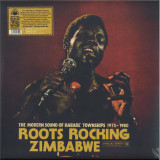
Analog Africa doesn't do anything other than special releases really, but this one tracing the label's origins back to Zimbabwe over 20 years ago is a real standout. A carefully curated collection of 25 tracks with a fine booklet proving plenty of extra context, it captures the birth of the country's modern music scene and brims with the creative sound explosion of the 70s and 80s. Before genres were fully defined, artists blended rock, rumba, soul and traditional rhythms in bold, experimental ways that still stand up and get diggers and dancers excited in 2025. Included are never-before-released tracks from Thomas Mapfumo, Oliver Mtukudzi and more and they all add up to rich and dynamic snapshot of Zimbabwe's peerless musical evolution during what was a transformative era.
After a three-year hiatus, Yuko is back with a fresh release. The new offering features a vibrant mix, including two tracks from co-founder Emi Omar, one of which is a collaboration with Luje from Club Pizza. To complete the lineup, the label introduces two exciting new French talents: Chud and Vivant.
Earquake 1991[22,48 €]
Earquake 1992[22,48 €]
Earquake 1993[22,48 €]
Earquake 1994[22,48 €]
Earquake 1996[22,48 €]
Earquake 1997[22,48 €]
Earquake 1998[22,48 €]
Earquake 1999[22,48 €]
It is the year 1995 and it’s summer, the second extremely hot summer after 1994, and the asphalt on Gladbacher Straße in Cologne is glowing. Ravers in much too wide and much too colorful clothes doze off in the glaring midday heat. These are the last days of the legendary Delirium record store, a socio-cultural biotope that would later become KOMPAKT. In June 1995, the store moved deeper into the Belgian Quarter, to Brabanter Straße 42 near Friesenplatz.
Wolfgang Voigt liked to wear too-big sunglasses even back then, just as he already had the master plan for the next few years, the new store, the renaming to KOMPAKT, and the upcoming takeover of the musical world order by minimal techno in his head. On less sunny days, the musician Wolfgang Voigt was tinkering with his very own label Profan, a new sound, new pseudonyms and masquerades. His alter ego Mike Ink had grown tired, another self, one of many, was now pushing forward to become the next torch in the storm.
By early 1995, the first Grungerman EP, "Hout," had been released on Profan. A nucleus of ambient loops that already announced the sonic aesthetics of GAS, stoic rhythmic structures that would shape the coming decade of minimal house and techno, and an all-encompassing gloom and heaviness that didn't want to fit at all with the gaudy reality of the nineties between Loveparade, Mayday and VIVA House TV. This probably most hedonistic decade of the 20th century had celebrated, besides techno, above all a rough guitar music called Grunge, coined and immortalized by a depressive, hyperactive and narcoleptic young man with matted blond hair who had taken his own life a year before. In no other track has Wolfgang Voigt packed these inner and outer contradictions of his art as well as of the mid-nineties more ingeniously than in "In Tyrannis". From wall to wall there are four steps.
"Klang" by Wolfgang Voigt originally comes from the first and only GAS EP on Profan, "Modern", from the spring of 1995 and is one of the most beautiful exhibits of Voigt's sound of those years, which relentlessly runs its course somewhere between glistening sunrises on Ecstasy and bad drugs in the dark Liquid Sky Cologne. With "Hocker DJ 1" and "Hocker DJ 2" there are two more musical references to this myth-enshrouded place in Kyffhäuserstraße, where for a few years the entire, so-called Sound Of Cologne had literally settled down.
Wir schreiben das Jahr 1995. Es ist Sommer, der zweite extrem heiße Sommer nach 1994, und der Asphalt auf der Gladbacher Straße in Köln glüht. Raver in viel zu weiten und viel zu bunten Klamotten dösen ihren Rausch aus in der grellen Mittagshitze. Es sind die letzten Tage des legendären Delirium Plattenladens, eines soziokulturellen Biotops, aus dem später die Firma Kompakt hervorgehen sollte. Im Juni 1995 erfolgte der Umzug tiefer hinein ins Belgische Viertel, in die Brabanter Straße 42 in der Nähe des Friesenplatz.
Wolfgang Voigt trug schon damals gerne zu große Sonnenbrillen, so wie er bereits den Masterplan für die nächsten Jahre, den neuen Laden, die Umbenennung in KOMPAKT sowie die anstehende Übernahme der musikalischen Weltordnung durch Minimal Techno im Kopf hatte. An weniger sonnigen Tagen tüftelte der Musiker Wolfgang Voigt an seinem ureigenen Label Profan, an einem neuen Sound, neuen Pseudonymen und Maskeraden. Sein Alter Ego Mike Ink war müde geworden, ein anderes Ich, eines von vielen, drängte nun nach vorne, um die nächste Fackel im Sturm zu werden.
Anfang 1995 war die erste Grungerman EP “Hout” auf Profan erschienen. Ein Nukleus aus ambienten Loops, die bereits die klangliche Ästhetik von GAS ankündigten, stoischen rhythmischen Strukturen, die das kommende Jahrzehnt Minimal House und Techno prägen sollten, sowie einer allumfassenden Düsternis und Schwere, die so gar nicht zur knallbunten Realität der Neunziger Jahre zwischen Loveparade, Mayday und VIVA House TV passen wollte. Dieses wohl hedonistischste Jahrzehnt des 20. Jahrhunderts hatte neben Techno vor allem eine raue Gitarrenmusik namens Grunge gefeiert, geprägt und unsterblich gemacht von einem depressiven, hyperaktiven und an Narkolepsie leidenden jungen Mann mit verfilzten blonden Haaren, der sich ein Jahr zuvor das Leben genommen hatte. In keinem anderen Track hat Wolfgang Voigt diese inneren und äußeren Widersprüche seiner Kunst wie auch dieser Zeit Mitte der Neunziger genialistischer verpackt als in “In Tyrannis”. Von Wand zu Wand sind es vier Schritte.
“Klang” von Wolfgang Voigt stammt ursprünglich von der ersten und einzigen GAS EP auf Profan, “Modern”, aus dem Frühling 1995 und ist eines der schönsten Exponate des Voigtschen Sounds dieser Jahre; ein Track, der irgendwo zwischen gleisenden Sonnenaufgängen auf Ecstasy und schlechten Drogen im dunklen Liquid Sky Cologne unerbittlich seine Bahnen zieht. Mit “Hocker DJ 1” und “Hocker DJ 2” finden sich zwei weitere musikalische Referenzen an diesen mythenumrankten Ort in der Kyffhäuserstraße, an dem sich für einige Jahre der gesamte sogenannte Sound Of Cologne im wahrsten Sinne des Wortes niedergelassen hatte.
Anadol and Marie Klock have teamed up for a joint album, La Grande Accumulation. They met two years ago at a festival in England crowded with violent seagulls and outsider musicians. Klock being prone to barking on stage and Anadol not laughing at jokes she doesn’t find funny, they straight away had the intuition that they would meet again. And so they did, a few months later, at Anadol’s studio in Istanbul.
Today, the two Pingipung artists present the fruit of this musical friendship. La Grande Accumulation was born out of the peculiar atmosphere of the studio neighbourhood in Büyükada, an island where thousands of cats run free and humans randomly destroy things during apocalyptic times when parts of Turkey had just been turned into dust by terrible earthquakes. The French lyrics are inspired by hours of conversations, the music is consequently drenched in absurdity, overflowing with a strong urge to live and enjoy. According to the LP sticker, this album has been certified “Best handshake of 2024”, and stickers never lie.
La Grande Accumulation brings together Marie Klock's mysterious metaphors and Anadol's intriguing radiophonic psych-pop. Stretching forms beyond common sense to see how long they can resist is probably their favourite game. The result are six highly imaginative tracks that challenge the sub-3-minutes standards of Spotify pop.
Gözen Atila aka Anadol is well known to the Pingipung audience, with three solo LPs on the label. Her music follows a kind of collage logic, she interweaves countless styles, combining field and studio recordings with obscure quotation marks here and there. "I hope no one will come and explain this music to me, because it's the most beautiful music there is", says Kristoffer Cornils about her solo album Felicita.
Marie Klock is a French writer and musician who produces songs oscillating between synthpop and neo-folk, full of anarchic humour and existential dread. Her recent solo LP on Pingipung was a captivating tribute to the recently deceased poet Damien Schultz entitled Damien est vivant.
Marie Klock delivers her lyrics in song or spoken word, stream-of-consciousness musings on strange human adventures, and her rich keyboard melodies culminate in a nonchalant dialogue with the bass trombone (La Reine des Bordels). In the opulent opening piece (La Grande Accumulation), a woman is cursed to take home everything she kicks in the street; a bit later, we stumble upon a ghoul hiding in the gutter (Sirop amer), Mona Lisa loses her teeth (Sonate au Jambon) and a warthog struggles to climb the stairs of a silver tower (Sabots triviaux).
La Grande Accumulation was mixed and mastered by Jonas Romann at Chaos Compressor Club in Hamburg and cut to vinyl by Kassian Troyer at D&M in Berlin. It's an audiophile LP that invites to focus on every detail in this heap of musical ideas.
DJ Support: Danny Howard, Annie Mac, Mistajam, Pete Tong, Charlie Hedges, Kraak & Smaak, Maxinne, Todd Terry, Alex Preston, Full Intention, GW Harrison, DJ Rae, Rudimental, Alaia & Gallo, Illyus & Barrientos, Johan S, David Penn, Sam Divine, Riva Starr, Claptone, Nice7, Dario D’Attis, Mousse T, S-Man, Huxley, KC Lights, Friend Within, Dombresky, Gorgon City, Chris Lake, Format:B, Pirupa, TCTS, Alan Fitzpatrick, Low Steppa, Mat.Joe, Raumakustik, Eskuche
Kicking things off on our next 4-track vinyl sampler series is Toolroom's very own Martin Ikin who returns to the label with ‘Make U Sweat’! He was the Best-selling Tech House artist on Beatport in 2020 and 2021 and has over 1m monthly listeners across streaming platforms. Recent studio collabs have included Noizu and Joshwa and tours have seen him travel far and wide to the US, Brazil, Bali, Ibiza, Italy, Croatia and of course, his hometown of London. This new record is the follow up to 'Oscill8' that dropped in March 2023 and sits in a similar lane, in that it's pure, unadulterated club weaponry! Next up is Italian house legend Flashmob with the frenetic, high-energy club vibe of new cut ‘My Body’. Flashmob's sound, production and go-for-broke DJ sets have changed with the game, embracing the vitality of new house music rather than hankering after sentimental sunsets. His ethic and aesthetic move relentlessly forward, using the old and new to craft unique sonic alchemy from big festivals like Tomorrowland to the intimacy of small clubs on the international circuit. ‘My Body’ is typical of Flashmob's current sound, combining solid drums and some insane synths and fx, alongside an earworm vocal sample that results in yet another memorable club cut from an established master. Canadian Tech House maestro Nathan Barato debuts on Toolroom kicking off the B-side to the vinyl alongside studio partner, Matheo Velez with 'Weapon'. A record that has already caught the attention of the underground elite with Michael Bibi premiering the track at his first appearance back at DC-10 in Ibiza last Summer. Both artists are enjoying great success across key labels such as Viva, Circus, Snatch and RAWthentic. This is an addictive, bumpy club track
that packs a huge punch on the dance floor and actually features Nathan's very own 'Move me… Rock me' vocals! Rounding things off is UK DJ/producer duo, Jenn Getz & Alfie who are residents at Dubai's #1 nightlife destination, Soho Garden, where they warm up for legends such as Sonny Fodera, MK, Claptone, Solardo & Fisher on a weekly basis. In their relatively short 3 year career they have already released on Solotoko, Abode and Toolroom Trax and now debut on Toolroom with 'Vibration'. Both girls are incredibly passionate about house music and are also big advocates for a life centered around well-being and meditation, and the idea of this record was to combine their 2 passions in life, so they proceeded to co-write these original lyrics to accompany the track, which in itself is very inspiring! This is a super cool club record that will excite fans and DJ's alike, welcome to the Toolroom Family, Jenn Getz & Alfie!
Countless radio plays on Radio 1 from Danny Howard, Sarah Storie, Pete Tong Other notable radio plays – Kiss FM, Toolroom Radio, Sirius XM, Data Transmission Radio, Radio 1 Dance Anthems, Radio 1 Party Anthems, Rinse FM, Select Radio, Tomorrowland Radio
Moxy Editions Vol 7 is packed with 4 absolute gems from House, Disco, to Minimal & a Deep Bassy wobbler.
First up is Sosa with the track ‘bring it back’ which has been supported by such a long list of DJs we wouldn’t be able to list them all in here, this is a peak time bass heavy bomb track that is guaranteed to do the business
Jordan Peak’s Disco Nights is as the names suggests is a peak time dancefloor smasher with a thumping & on a disco vibe.
For those more into the nu skool minimal vibes the Adam Lance track is for you. Tried & tested by Darius Syrossian it has been stealing the show every time. As Darius says you know something is massive when you get hounded with track id requests for a track!
Finally it’s ’Tear The Club Up’ this is a classic from the Viva Warriors / Tribal Sessions days that was never released on Digital, & will never be released on Digital, this was made by Darius solely for his BBC RADIO 1 Essential Mix recorded live from Sankeys Ibiza in 2013, and was an anthem for a few summers, but never released, here it is Vinyl Only this one time, if you want a copy here is your chance
Dr. Mateo, Blixx and LaRoxx continue to surprise and to release new hit singles. 6 years after the first LP, we finally managed to compile material for the second album. Chasing Ghosts, as this is its title, is also the title of the penultimate single that became a huge hit on streaming platforms. The album also includes such gems as VIVA LA VICTORIA, AT THE DISCO and STOCKHOLM IS CALLING.
For release number 5 on vinyl-only label and blog, Bare Bones Wax enlist a couple of new artists to their roster. Valencia based Camiel Daamen offers up two original tracks, while Berlin based Johannes Ortlieb offers up a remix of both compositions. Over his active 24 years, Camiel has released on various labels such as In-house , Viva and Origins alongside many others. Last year also saw the start of his own Freeborn Records which included the release of his own Beatport top 10 smash “Ready For Love”. Johannes has releases on mainstays such as Al Bradley’s 3AM label and Fluid.
Up first on the A1 is the title track “Quintaesencia”, Camiel blends deep beats with swing fuelled hats and Garage licks alongside an uplifting vocal to create a dancefloor monster. On the A2 Johannes takes a modern Deep House feel interlacing the subbase and vocals with cracking affect. Over on the flip “Make Music” opts for a more techy feel with driving beats and a spoken vocal giving a nice pumping feel. Johannes second remix of “Make Music” finishes off the EP taking the track in a tougher Deep House direction that could have come straight from New York.
- A1: Tina Turner - The Best (Extended Mighty Mix)
- A2: John Waite - Missing You (Extended Version)
- A3: Billy Idol - Eyes Without A Face (Full-Length Version)
- B1: Greg Kihn Band - Jeopardy (Dance Mix)
- B2: Huey Lewis & The News - I Want A New Drug (Extended Version)
- B3: Rick Springfield - Human Touch (Extended Mix)
- C1: Fine Young Cannibals - Suspicious Minds (Suspicious Mix)
- C2: Zz Top - Viva Las Vegas (Remix)
- C3: Cher - Skin Deep (Extended Dance Mix)
- D1: Bananarama - Shy Boy (Don’t It Make You Feel Good) (U.s. Extended Version)
- D2: Baltimora - Tarzan Boy (Extended Dance Version)
- D3: Falco - Junge Roemer (Specially Remixed 12” Version)
- E1: Peter Schilling - Major Tom (Coming Home) (Special Extended Version)
- E2: Camouflage - The Great Commandment (U.s. 12” Mix)
- E3: Wang Chung - Don’t Let Go (Extended Remix)
- F1: Visage - Fade To Grey (U.s. 12” Version)
- F2: Soft Cell - Insecure…Me? (U.s. Extended Version)
- F3: Bill Nelson - Acceleration (Long Version)
- G1: Abc - The Look Of Love (Part 3 - Dance Version)
- G2: Cabaret Voltaire - Crackdown (12” Version)
- G3: Blancmange - Blind Vision (Extended Version)
- H1: Level 42 - The Chinese Way (New York Remix)
- H2: I-Level - Give Me (U.s. Remix)
- H3: The Quick - Zulu (12” Mix)
- J2: Fantasy - You’re Too Late (12” Extended Mix)
- J3: North End - Kind Of Life (Kind Of Love) (12” Vocal)
- K1: Ms. Sharon Ridley - Changin’ (Full-Length Version)
- K2: Melba Moore - You Stepped Into My Life (John Luongo Remix)
- K3: Patti Labelle - Music Is My Way Of Life (John Luongo Remix)
- L1: Jackie Moore - This Time Baby Special (Special 12 Version)
- L2: Marilyn Mccoo & Billy Davis Jr. - Shine On Silver Moon (12” Mix)
- L3: Dan Hartman Featuring Loleatta Holloway - Relight My Fire (The Historical 1979 Remix)
- I1: Gladys Knight & The Pips - Save The Overtime (For Me) (12” Mix)
- I2: Kc & The Sunshine Band - Give It Up (12” Version)
- I3: A Taste Of Honey - Boogie Oogie Oogie (New Boogie Mix)
- J1: Serge Ponsar - Out In The Night (12” Version)
• Following on from the highly successful first two editions
of Dance Masters featuring the classics mixes from
maestros Shep Pettibone and Arthur Baker the spotlight
turns to another remix legend, John Luongo.
• Boston born, John is one of the truly legendary DJ's and
remixers of the Disco era. John got his break at Epic by
overdubbing percussion from salt shakers and spoons
onto a promo and then passing them back the tape. This
resulted in him being flown to New York, and put in a
studio (of his choice) to mix and produce Melba Moore`s
“You Stepped Into My Life”. From this point everything he
touched was a hit. He went onto remix Disco classics by
Jackie Moore – “This Time Baby”, Dan Hartman “Vertigo
/ Relight My Fire” and Patti Labelle “Music Is My Way Of
Life”.
• John, however was not afraid of remixing artists that
didn’t fit into the disco genre and this attitude is borne out
by the tracklisting of this compilation on which Gladys
Knight and The Pips rub shoulders with ZZ Top and Billy
Idol, and Baltimora appears alongside Bill Nelson and ILevel.
• “…if you played this whole thing, just put it on and
didn’t tell anyone it was me, they’d say ‘boy, what a great
group of songs this is!’” - John Luongo
• The collection is housed in a beautiful lift-off-lid box, with
a 16 page booklet featuring foreword by Arthur Baker, an
in-depth essay written by Alexis Petridis (Rock and Pop
reviewer for The Guardian) and complete with rare photos
from John’s personal collection plus a limited signed insert.
• All tracks remastered by Nick Robbins at Sound
Mastering.
• A 43-track 4CD edition is also available, along with a 2LP
vinyl edition featuring 16 highlights.
The Spanish-Dominican label led by the Spanish Sergio Parrado and the Dominican Jee Bear presents its Lmtd series, where art, design and music go hand in hand. A collectible series where each reference is a piece of a mural by the Argentine designer Lucien Le Grub, this being the first of four.
This first reference is the work of Chilean Alejandro Vivanco (Cadenza, Melisma) who joins forces with fellow Chilean Dorian Chavez (8bit, Viva Music) to bring us this incredible “Dabtrack”.
The original cut (A1) is to go back in time, return to the essence of the mid-2000s where artists like Luciano or Ricardo Villalobos put the Andean country in the eyes of the world with their organic micro house. “Dabtrack” is about this, but with a renewed sound, where the organic and the digital embrace to create an intense track, with fat basses that will make the sound system rumble. Special synths that catch you to create a magnificent sound collage.
The A2 is for the master master and lord of the deep sound. We are talking about the Romanian Mihai Popoviciu, who brilliantly reinterprets the track and takes it to his own terrain, but without neglecting the essence of the original and giving it his particular groove that works so well late at night. The groove, together with the set of synths, which elaborates it magnificently, makes his remix of Dabtrack” an indispensable work in the DJ's suitcases.
Now it's time to close this incredible album. For this we have reserved the entire B-side for one of the Chilean artists who has left the most mark in the last two decades on the international electronic scene: Pier Bucci. He takes us on a 12-minute journey through his signature style where anything can happen. Little more to say, we invite you to discover it for yourself. Because it is a work of art.
'After a first album as a duo released on Okraina Records: "Le Corps Défendant", Delphine Dora and Mocke invite us to join them again in listening to a new album. We slip into it as if in a dream, the music carries us away with its floating images.
Heard before on a handful of disturbingly beautiful solo albums and in collaborations such as Midget!, Arlt, Chevalrex, Mohamed Lamouri, Mocke (Dominique Dépret's nom de plume) is a subtle and inventive guitarist, who draws melancholic arpeggios, with a beautiful languor, that walk the line between tensions and tears. Delphine Dora has been heard with Roxane Métayer, Sophie Cooper, Andrew Chalk, Jackie McDowell, Helena Espvall, Valentina Magaletti ... meeting in a moment of improvisation, a solitary sincopated voice blooming between the black and white keys of her piano, tuning betwist these keys, or at other times in the gap of the right note. Here improvisation feeds on melody, or is it the other way round?
Recorded in an old church in the village of Mauzun in the Puy-de-Dôme, by Cyril Harrison, "L'invisible est multiforme" is an invitation to join them, to let these abstract songs erase our obsessive thoughts of the day, to open ourselves to the vibrant poetry of the air and the evening, to finally forget ourselves. Each note played by these four intertwined hands is like a slight break in the fabric of time, sliding one over the other, reminding us of mortality and its beauty. Ritornellas flow out of mechanical clocks, fragile, taking care not to hurt the silence. Both seek to dig and open up new paths to enrich their duet, to open up imaginary landscapes. Sometimes the guitar cuts through the fabric of an organ, fractures the song, just as the rain erases a landscape, redrawing it. But very quickly, both of them continue to follow this new path, improvising what will serve as a framework, a perspective, a language. There is a kind of praise for slowness in this "invisible", a desire to hold back the song, not to let it slip away, to let the listener's ear enter its course, to share the last note, its illumination. Each of these thirteen short sound pieces merge into a common colour, a vibration close to the different tonalities, which inter-penetrate, like a cubist painting. Words cannot take away the mystery of this record, words can only fail to describe the music, you must hear it.'
- Michel Henritzi
With one foot planted in jazz and the other in the township groove of Mbaqanga, saxophonist Sello Mmutung was a powerful crossover figure in the history of popular music in South Africa. Using the stage name Bra Sello, meaning “brother” and used as a term of affection and respect in the jazz community, he came up in the era of shellac 78s as an exponent of the 1960s sax jive sound that brought the swinging rhythm of kwela into the domain of South African jazz. Despite the injection of American rhythm and blues into South African pop in the late-1960s, Bra Sello’s first releases on vinyl on the CBS label saw him backed by the group Abafana Bentuthuko and holding down an unapologetic township sound.
Joining the independent Soweto label under producer Cambridge Matiwane in the mid-1970s, Bra Sello recorded two records in the hit-making bump jive style popularised by serious jazz musician Dollar Brand on the one hand and prolific studio group the Movers, operating in funk and soul territory, on the other. Blending modern American and traditional African elements into joyful hip-swinging rhythms, Butterfly (1975) and The Battle of Disco (1977) reflect the vivacity of urban life in South Africa and document an era when dance music was performed by bands as extended jams laced with jaw-dropping solos. With music trends shifting dramatically in the late-1970s, the title of The Battle of Disco was an ironic call to arms in response to the territory that group musicians were beginning to cede to synthesisers and DJs.
For enthusiasts of African music from the 1970s, a full appreciation of the continent’s output is incomplete without South Africa’s pop-jazz sound providing a regional counterpoint to the funk experimentation of West Africa. Reissued for the very first time, Bra Sello returns in 2023 with limited replica editions from Afrodelic using master tape sources from the As-Shams/The Sun collection. Afrodelic’s unique edition of Butterfly features a previously unreleased track on Side B.
With one foot planted in jazz and the other in the township groove of Mbaqanga, saxophonist Sello Mmutung was a powerful crossover figure in the history of popular music in South Africa. Using the stage name Bra Sello, meaning “brother” and used as a term of affection and respect in the jazz community, he came up in the era of shellac 78s as an exponent of the 1960s sax jive sound that brought the swinging rhythm of kwela into the domain of South African jazz. Despite the injection of American rhythm and blues into South African pop in the late-1960s, Bra Sello’s first releases on vinyl on the CBS label saw him backed by the group Abafana Bentuthuko and holding down an unapologetic township sound.
Joining the independent Soweto label under producer Cambridge Matiwane in the mid-1970s, Bra Sello recorded two records in the hit-making bump jive style popularised by serious jazz musician Dollar Brand on the one hand and prolific studio group the Movers, operating in funk and soul territory, on the other. Blending modern American and traditional African elements into joyful hip-swinging rhythms, Butterfly (1975) and The Battle of Disco (1977) reflect the vivacity of urban life in South Africa and document an era when dance music was performed by bands as extended jams laced with jaw-dropping solos. With music trends shifting dramatically in the late-1970s, the title of The Battle of Disco was an ironic call to arms in response to the territory that group musicians were beginning to cede to synthesisers and DJs.
For enthusiasts of African music from the 1970s, a full appreciation of the continent’s output is incomplete without South Africa’s pop-jazz sound providing a regional counterpoint to the funk experimentation of West Africa. Reissued for the very first time, Bra Sello returns in 2023 with limited replica editions from Afrodelic using master tape sources from the As-Shams/The Sun collection. Afrodelic’s unique edition of Butterfly features a previously unreleased track on Side B.
Futuristic electronics by Niels Luinenburg (Delta Funktionen) under his new guise Immediate Proximity - in collab with Diana Napirelly. Ambient, Bass, Electro and Techno are the main identifiers for their output. Deep and emotive is the mood, but at the same time the music is playful and has a robust and confident character. This distinct direction, which was laid-out on the pair's debut LP '2334', has now led to the start of their own label: IMPROX - on which they'll release a series of EPs. On IMPROX, the duo experiments vivaciously with color, rhythm, space and tempo. Hi-tech, yet tribalistic rhythms are interlaced with elusive sci-fi themes. Big stage anthems are comfortably combined with cinematic ambient excursions. And through self engineered audio-gen modules, backed by a stark focus on sound design, the IMPROX series marks a powerful upgrade to Luinenburg's production capabilities.
Official AFRODELIC reissue of the ultra-rare Tunde Mabadu’s debut album. Originally released in 1978 on Blackspot label (DECCA’s West Africa division), Bisu, which includes the supergroovy ‘Red Jeans’, differs from the later 1980 ‘Viva Disco’ album by a much more pure African style.
A beautiful and soulful production in which Tunde’s deep voice and sax move on the excellent horns arrangements, percussions, the wahwah rhythm guitar and weird keyboards and synths (at times psychedelic as in the ‘Blue Bird’ 9 minutes).
As wrote on the original liner notes of the era “His music will mesmerize you from the first track. A dedicated Musician especially to his African Roots with so much to offer Musically”.
Repressed for the first time. Limited Edition.