Musical maverick Mark de Clive-Lowe returns to his roots with a new electro-acoustic record ‘Dreamweavers', displaying his talent as a pianist and composer in partnership with creative collaborators bass player Andrea Lombardini and drummer Tommaso Cappellato.
De Clive-Lowe’s stylistic signature is usually found in his role as conductor, producer and manipulator of sounds behind his highly customized, mind-boggling setup of intertwining synths, drum machines and live-remixing technology. With all but a grand piano and a few keyboards stripped away from him, and the production in Lombardini and Cappellato’s hands, ‘Dreamweavers’ is the first non-self-produced MdCL album in 25 years.
quête:vol
Dreamweavers II sees Mark de Clive-Lowe reunited with Italian rhythm masters Andrea Lombardini and Tommaso Cappellato for the next chapter in their electro-acoustic trio journey.
Recorded at Sotto il Mare Recording Studios in Verona, Italy in summer 2024, the album builds on the cosmic, hypnotic language established on Dreamweavers (2020) while pushing deeper into groove-driven terrain, dancefloor jazz and textural improvisation. Across eight tracks, the trio explore the elastic space between jazz tradition, beat culture, and club-influenced momentum – without samples or looping – relying purely on live interaction, feel and shared intuition.Opening with the Azymuth-inspired “Terra de Luz,” the album immediately signals its global outlook. “Kaze no Michi” follows with late-night Tokyo energy – dancefloor jazz that feels equally at home in jazz clubs or after-hours rooms. Two intentional reinterpretations bridge jazz and beat culture: J Dilla’s “Raise It Up” (from Slum Village – Fantastic Vol. 2) is reimagined with its original groove and bass line as the launch pad, while “The Bass That Don’t Stop” becomes a lush house-jazz tribute to the late Phil Asher, originally co-created by Asher and de Clive-Lowe in 2002 under the moniker musiclovelife.Bassist Andrea Lombardini’s “Pam” brings the album inward – introspective, spacious, and deeply melodic; while “Lucid Dreams” draws on the trio’s shared love of jungle, drum’n’bass and the exploratory spirit of greats like Chick Corea, amplifying the journey with forward motion and harmonic curiosity.Dreamweavers II is a concisely intentional sound narrative: a trio record rooted in jazz lineage, shaped by beat culture and guided by a collective curiosity for texture, rhythm, and movement.
This vinyl only series will feature various artists who have helped shaped the musical landscape where WIP lives.From party guests, to label contributors and also foundation community members, both local and international, have been invited to share music from the heart. Deep music.
Vol.1 features John Beltran, Trinidadian Deep, Mikekon & Middle James
2026 Repress.
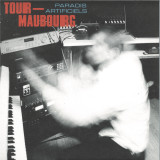
There is with Tour-Maubourg an eternal desire to translate the feeling of love into music. Sometimes cheerful, sometimes melancholy, always exhilarating, the producer, native of Brussels and expatriate in Paris, has continued for 3 years to attract the praise of his peers and the support of a growing audience. The man who was described by Trax Magazine upon the release of his 1st EP as ‘‘one of the most promising producers of the French house scene’’ has revealed himself in this hyperactive new scene to become one of its best standards.
After several EPs released in France on Pont Neuf, FHUO (ie. Folamour’s label), as well as Happiness Therapy or in England and Germany on FINA and Salin, Tour-Maubourg unveils his first album, Paradis Artificiels. The Parisian producer refers to Charles Baudelaire’s poem, to which he links his melancholy music, who wrote:
‘‘common sense tells us that the things of the earth exist very little, and that the true reality is only in the dreams’’.
If the producer’s first EPs were mainly focused on club music, Paradis Artificiels oscillates between the atmospheres that made the success of these previous releases and those of a studio album. Composed of both house songs and downtempo sound researches, always flirting with the jazz sounds that have made the fame of the producer, this first album invites us on a journey in the lineage of St Germain, Massive Attack or Nicolas Jaar.
In spring 2025, Abul Mogard and Rafael Anton Irisarri created the source material for their second album, Where Light Pauses in the Silence of the Sun, during a three-day residency at Morphine Raum in Berlin. Functioning as both recording studio and performance venue, the space has no stage, with the audience gathered around the performers. Working within an open framework, the duo reshaped the music each evening while recording the performances live to multitrack. Rotary speakers, modular synthesizers and bowed guitar formed the core of their sonic language, captured through a 1970s mixing console and microphones placed around the room.
Back in Mogard’s studio in Rome, the material was further crafted as motifs were stretched, fragments isolated, and tempos dissolved. Irisarri recorded additional guitar textures and treatments in New York, while passages recorded by Martina Bertoni and Andrea Burelli in Berlin reinforced the harmonic centres and brought breath, refinement and a new sensibility to their compositions. The process continued as Mogard’s layering and subtraction reassembled everyone’s parts into the final arrangement.
The album opens with “In the Eastern Wild,” building from a sparse outline into a monumental formation of low-frequency weight, its internal motion shaped by the rotating Leslie speaker. “Over the Domes” widens into a broader acoustic field, where sustained modular tones meet waves of softly plucked guitar. The music then turns inward with “A Blue Descent,” centred on Bertoni’s cello, whose growling timbre introduces a melancholic depth.
At the album’s centre, “In a Quiet Radiance” unfolds around a slow guitar ostinato, its luminous stillness opening into a more expansive and reflective state. Across its ten-minute span, Burelli’s violin lines and Bertoni’s lower cello phrases gradually surface, weaving through the harmonic field. Mogard brings Burelli’s processed voice to the fore, its emotive, operatic presence becoming one of the record’s pivotal moments. “Of Blessed Ages” suspends the sonic flow, shifting between parallel major and minor chords as lingering, slowly decaying melodies shape the music’s internal drift. The closing “Among Shadows” settles into a darker resonance as layered textures recede.
Mogard and Irisarri’s shared language balances restraint and maximalism. UK magazine Crack describes the music as “a tidal wave held in suspension,” while Dutch newspaper de Volkskrant writes, “What a colossal sound, and how this music strikes at the emotions.” Reflecting on the residency sessions, Irisarri recalls: “At moments I genuinely couldn’t tell if a sound was coming from me or from Abul. It stopped feeling like two people making decisions and began to feel like we were inside a system moving on its own."
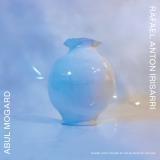
Marja de Sanctis’ cover artwork revisits the vessel sculpture from the duo’s first album, Impossibly Distant, Impossibly Close. There it appeared as raw, unfired clay. Here it has been fired in the kiln and finished with a glaze. Light gathers on its polished surface and spills into the surrounding space. As she explains, “I wanted to convey the idea of continuity within the duo, and the vessel became a kind of container for that idea. However, their music felt different this time, and with the collaboration of Martina and Andrea, I felt it should have a sleeker, softer, more glamorous look, very distant from the first raw appearance.” The transformation of the vessel from raw clay to fired form suggests a passage from immediacy toward permanence, mirroring the music’s gradual expansion.
In spring 2025, Abul Mogard and Rafael Anton Irisarri created the source material for their second album, Where Light Pauses in the Silence of the Sun, during a three-day residency at Morphine Raum in Berlin. Functioning as both recording studio and performance venue, the space has no stage, with the audience gathered around the performers. Working within an open framework, the duo reshaped the music each evening while recording the performances live to multitrack. Rotary speakers, modular synthesizers and bowed guitar formed the core of their sonic language, captured through a 1970s mixing console and microphones placed around the room.
Back in Mogard’s studio in Rome, the material was further crafted as motifs were stretched, fragments isolated, and tempos dissolved. Irisarri recorded additional guitar textures and treatments in New York, while passages recorded by Martina Bertoni and Andrea Burelli in Berlin reinforced the harmonic centres and brought breath, refinement and a new sensibility to their compositions. The process continued as Mogard’s layering and subtraction reassembled everyone’s parts into the final arrangement.
The album opens with “In the Eastern Wild,” building from a sparse outline into a monumental formation of low-frequency weight, its internal motion shaped by the rotating Leslie speaker. “Over the Domes” widens into a broader acoustic field, where sustained modular tones meet waves of softly plucked guitar. The music then turns inward with “A Blue Descent,” centred on Bertoni’s cello, whose growling timbre introduces a melancholic depth.
At the album’s centre, “In a Quiet Radiance” unfolds around a slow guitar ostinato, its luminous stillness opening into a more expansive and reflective state. Across its ten-minute span, Burelli’s violin lines and Bertoni’s lower cello phrases gradually surface, weaving through the harmonic field. Mogard brings Burelli’s processed voice to the fore, its emotive, operatic presence becoming one of the record’s pivotal moments. “Of Blessed Ages” suspends the sonic flow, shifting between parallel major and minor chords as lingering, slowly decaying melodies shape the music’s internal drift. The closing “Among Shadows” settles into a darker resonance as layered textures recede.
Mogard and Irisarri’s shared language balances restraint and maximalism. UK magazine Crack describes the music as “a tidal wave held in suspension,” while Dutch newspaper de Volkskrant writes, “What a colossal sound, and how this music strikes at the emotions.” Reflecting on the residency sessions, Irisarri recalls: “At moments I genuinely couldn’t tell if a sound was coming from me or from Abul. It stopped feeling like two people making decisions and began to feel like we were inside a system moving on its own."
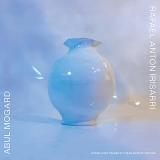
Marja de Sanctis’ cover artwork revisits the vessel sculpture from the duo’s first album, Impossibly Distant, Impossibly Close. There it appeared as raw, unfired clay. Here it has been fired in the kiln and finished with a glaze. Light gathers on its polished surface and spills into the surrounding space. As she explains, “I wanted to convey the idea of continuity within the duo, and the vessel became a kind of container for that idea. However, their music felt different this time, and with the collaboration of Martina and Andrea, I felt it should have a sleeker, softer, more glamorous look, very distant from the first raw appearance.” The transformation of the vessel from raw clay to fired form suggests a passage from immediacy toward permanence, mirroring the music’s gradual expansion.
In spring 2025, Abul Mogard and Rafael Anton Irisarri created the source material for their second album, Where Light Pauses in the Silence of the Sun, during a three-day residency at Morphine Raum in Berlin. Functioning as both recording studio and performance venue, the space has no stage, with the audience gathered around the performers. Working within an open framework, the duo reshaped the music each evening while recording the performances live to multitrack. Rotary speakers, modular synthesizers and bowed guitar formed the core of their sonic language, captured through a 1970s mixing console and microphones placed around the room.
Back in Mogard’s studio in Rome, the material was further crafted as motifs were stretched, fragments isolated, and tempos dissolved. Irisarri recorded additional guitar textures and treatments in New York, while passages recorded by Martina Bertoni and Andrea Burelli in Berlin reinforced the harmonic centres and brought breath, refinement and a new sensibility to their compositions. The process continued as Mogard’s layering and subtraction reassembled everyone’s parts into the final arrangement.
The album opens with “In the Eastern Wild,” building from a sparse outline into a monumental formation of low-frequency weight, its internal motion shaped by the rotating Leslie speaker. “Over the Domes” widens into a broader acoustic field, where sustained modular tones meet waves of softly plucked guitar. The music then turns inward with “A Blue Descent,” centred on Bertoni’s cello, whose growling timbre introduces a melancholic depth.
At the album’s centre, “In a Quiet Radiance” unfolds around a slow guitar ostinato, its luminous stillness opening into a more expansive and reflective state. Across its ten-minute span, Burelli’s violin lines and Bertoni’s lower cello phrases gradually surface, weaving through the harmonic field. Mogard brings Burelli’s processed voice to the fore, its emotive, operatic presence becoming one of the record’s pivotal moments. “Of Blessed Ages” suspends the sonic flow, shifting between parallel major and minor chords as lingering, slowly decaying melodies shape the music’s internal drift. The closing “Among Shadows” settles into a darker resonance as layered textures recede.
Mogard and Irisarri’s shared language balances restraint and maximalism. UK magazine Crack describes the music as “a tidal wave held in suspension,” while Dutch newspaper de Volkskrant writes, “What a colossal sound, and how this music strikes at the emotions.” Reflecting on the residency sessions, Irisarri recalls: “At moments I genuinely couldn’t tell if a sound was coming from me or from Abul. It stopped feeling like two people making decisions and began to feel like we were inside a system moving on its own."
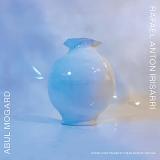
Marja de Sanctis’ cover artwork revisits the vessel sculpture from the duo’s first album, Impossibly Distant, Impossibly Close. There it appeared as raw, unfired clay. Here it has been fired in the kiln and finished with a glaze. Light gathers on its polished surface and spills into the surrounding space. As she explains, “I wanted to convey the idea of continuity within the duo, and the vessel became a kind of container for that idea. However, their music felt different this time, and with the collaboration of Martina and Andrea, I felt it should have a sleeker, softer, more glamorous look, very distant from the first raw appearance.” The transformation of the vessel from raw clay to fired form suggests a passage from immediacy toward permanence, mirroring the music’s gradual expansion.
THE LAZARUS PLOT
SOMETHING GOOD HAS GOT TO COME OUT OF ALL OF THESE GOOS
Talk-Mo-Band mit Frontfrau aus der verfluchten Szene von Elgin, Illinois. ,Something Good Has Got To Come From All These Goodbyes" versammelt die gesamten Aufnahmen von The Lazarus Plot - ihr Debüt-Doppel-7"-Single von 1998, die EP ,The End", eine Split-Veröffentlichung mit Long Live Nothing, eine vereinzelte Compilation sowie zwei bisher unveröffentlichte Songs - zusammen mit einem 24-seitigen Booklet mit Texten und Fotos, gestaltet von Laura Laurent. Ein geheimes Teenager-Tagebuch voller Trauer und Sehnsucht, vertont mit Musik, die vom Louisville und Chicago der Vor-Internet-Zeit inspiriert ist. Keine Reue.
- 1: Adagio
- 2: Allegro Moderato
- 3: Largo
- 4: Andante
- 5: Act I
- 6: Act Ii
- 7: Hiding
- 8: Neighbors
- 9: God
- 10: Memorial Day
,Shade Zero" ist das Debütalbum der Flötistin und Komponistin Taiga Ultan, das sich mit dem Verhältnis zwischen Freiheit und Regeln beim Musizieren auseinandersetzt. Anstatt Strukturen abzulehnen, schuf Ultan strenge, selbst auferlegte Systeme und missbrauchte und zerlegte diese dann bewusst. Das Werk basiert auf der Idee, dass Regeln niemals vollständig verschwinden; selbst in freien Spielformen entstehen sie oft stillschweigend und werden durch Gewohnheit gefestigt. Indem er Regeln explizit machte und gegen sie arbeitete, versuchte Ultan, über vertraute Klangwelten und überlieferte Annahmen über Freiheit hinauszugehen. Das Album entfaltet sich in drei miteinander verbundenen Sätzen, beginnend mit virtuosem, tonalem Flötenspiel, das in der klassischen Disziplin verwurzelt ist, sich zu erweiterten Flötentechniken ausdehnt und mit Poesie und persönlicher Reflexion endet. Aufgenommen, abgemischt und produziert von Randall Dunn, präsentiert ,Shade Zero" ein voll ausgearbeitetes künstlerisches Statement einer aufstrebenden Künstlerin mit umfassender klassischer Ausbildung, die heute im ländlichen Maine lebt und arbeitet und damit eine entscheidende Wende hin zu einer selbstdefinierten, prozessorientierten musikalischen Praxis markiert.
- 1: Unified Field
- 2: Feeling Nothing
- 3: Praise Jesus! Hail Reagan!
- 4: Superbus
- 5: Cybertruck A Mouthful Of
- 6: Increasingly-Dangerous Substances
- 7: Line Go Up Line Go Down
- 8: Ostrich Toss
- 9: I Am A Beached Whale
- 10: Pissing With The Flashlight On
- 11: Also Unified Field
Chad R. Matheny veröffentlicht seit 1998 exzentrische, textlich dichte Underground-Popmusik, oft unter dem Namen Emperor X. Nach seinem Studium der Physik, Philosophie und Musikkomposition legte Matheny eine Pause von der akademischen Arbeit ein und verbrachte einen Großteil der letzten zwei Jahrzehnte damit, die Welt mit Bussen und Hochgeschwindigkeitszügen zu durchqueren, um an Orten Musik zu machen, die von einem kleinen, aber vollbesetzten Konzertsaal in Portugal über eine leere Messehalle im Norden des Libanon bis hin zu buchstäblich unterirdischen Metal-Bars in der ganzen Ukraine reichten. Er tourt oft allein mit Gitarre und Synthesizer, teilt sich aber manchmal die Bühne mit Weggefährten wie Ratboys, The Hotelier, The World is a Beautiful Place and I Am No Longer Afraid to Die, Foxing, AJJ, The Front Bottoms und Xiu Xiu. Er produzierte das neue Brian-Sella-Album ,Well I Mean", war Co-Produzent des Sub-Pop-Albums ,Bits" der Jangle-Punk-Legenden Oxford Collapse zusammen mit Eric Topalski von Don Caballero und Storm & Stress und komponierte Videoundermusik für gemeinnützige Organisationen wie Planned Parenthood und SEIU. In den Jahren 2011 und 2012 wurde Mathenys Ambient-Werk ,Keeling Curve" in einer Multimedia-Installation des Fotografen Joel Sternfeld verwendet, die im Rahmen einer Retrospektive im Museum Folkwang zu sehen war.
- 1: Drums Only
- 2: Song For The Messenger
- 3: The Coward Forgets His Nightmare
- 4: Profane Break
- 5: Jbl In The Fireplace
- 6: Tyler Richard
- 7: Outside Your Life
- 8: Dust In The Wind
- 9: Silver Cup
- 10: Opening In The Gate
- 11: Spirit Showing
- 12: Drunk Stupid In The Structure
- 13: Boss
- 14: Beaten With Sticks
Pink Vinyl[23,49 €]
Zuerst das Wichtigste: Ja, Your Day Will Come an, das zweite Album von Chanel Beads trägt denselben Namen wie sein Debüt aus dem Jahr 2024. Aber es handelt sich um ein völlig neues Werk, nicht um einen zweiten Teil oder eine Neuauflage. Der Titel des neuen Albums ist derselbe wie der des Vorgängers - eine perfekte Zusammenfassung der Zweideutigkeit von Chanel Beads: zu gleichen Teilen ein augenzwinkernder Scherz und eine zutiefst ernste Aussage. Während sich die Songs entwickelten, entdeckte Lavers, dass der Satz eine tiefere Nuance hatte und eine Spannung zwischen Gewissheit und Zweifel hervorrief, die seine Psyche beschäftigte. Wird dein Tag kommen? Wie wird er sein? Wie kannst du dir sicher sein? Während er das Album schrieb, hatten Lavers' Gedanken mehr Raum, um in seinem Kopf herumzuschwirren und sich zu verdrehen, und er fühlte sich oft abgestumpft von einer Welt, die sich absurd grausam anfühlen kann. Die zweite Inkarnation von Your Day Will Come dokumentiert eine klangliche Verschiebung und Weiterentwicklung des Chanel-Beads-Sounds. Dieses Mal ist alles stärker geschichtet, mit mehr eigenständigen Parts und Mitwirkenden. Es entstand in seinem kleinen, spärlich eingerichteten Studio in Brooklyn, wo die Lautsprecher so nah an seinem Gesicht standen, dass er bei jedem Schlag der Bassdrum die Luftwelle spüren konnte. Geiger Zachary Paul tritt präsenter in Erscheinung, während Lavers weiterhin mit der semiotischen Bedeutung von Plug-ins spielt. Auch die ätherische Stimme von Maya McGrory ist erneut auf dem Album zu hören; sie schrieb zudem am majestätischen ,Silver Cup" mit. Die 14 Songs sind ausgearbeiteter und strukturierter - Ergebnis eines kollaborativeren Ansatzes, der Spontaneität und Unvollkommenheit bewusst zulässt. Er folgt der Devise "Wenn es funktioniert, lass es so", nimmt einfach mit dem Mikrofon auf, das gerade zur Hand ist, und baut den Song auf dieser Aufnahme auf. Aus lockeren Treffen ergaben sich Beiträge von Freund*innen wie Tchad Cousins (Urika's Bedroom), Mari Maurice (More Eaze), Anastasia Coope und Bella Litsa. "Dust in the Wind" entstand gemeinsam mit Isaac Eiger von Strange Ranger und Threshold und markiert die erste Co-Autorenschaft außerhalb des Kerntrios aus Lavers, McGrory und Paul. Lavers' fragmentierte Texte sind voller offener Fragen. Er war besonders von der Koexistenz von Nihilismus und Liebe eingenommen und sagte: "Es fühlt sich an, als müsste das eine das andere auslöschen, aber das tut es nicht." Emotionale Sublimierung steht im Mittelpunkt von Chanel Beads, als könne man etwas so fest umklammern, dass es transzendent wird. Your Day Will Come nutzt Traumlogik, um sich mit Liminalität und prekären Erinnerungen auseinanderzusetzen. Es ist geprägt von den Schatten bestimmter Verluste, aber auch davon, wie man sich selbst heimsuchen kann, indem man in alte Gewohnheiten zurückfällt.
- A1: Cantoma - Way To The Sun (Calm’s Mellow Mellow Acid Dub)
- A2: Aura Safari - Sur Mon Balconnet (Calm’s Mellow Mellow Acid Remix)
- B1: Dream Baby Dream - Banana Trance (Calm’s Mellow Mellow Acid Remix)
- B2: Michele Mininni - Vertigo (Calm Remix)
- C1: Meitei Mahi - Dounika Kounika (Calm's Mellow Mellow Acid Remix)
- C2: Gallo - Abysso (Calm’s Beatless Dub)
- D1: Seahawks - Blue Surround (Calm's Mellow Mellow Acid Remix)
- D2: Yuichiro Kato - Kiss Of Life (Calm Remix)
To honour the enduring appeal of a great musical rework, Hell Yeah is launching The Art of Remix. This essential new series collects the best remixes from a range of label favourites. First up is Japanese downtempo master Calm with exclusive, never-before-on-vinyl versions of originals by Cantoma, Aura Safari, DJ Sofa’s Dream Baby Dream, Seahawks, Gallo, Yuichiro Kato and more. The release comes with rich liner notes by the authoritative Dr Rob from Ban Ban Ton Ton, and a second volume from Is It Balearic's Coyote will follow soon.
Remixes have always been at the heart of Hell Yeah's output as a way of reworking classic sounds into different contexts, allowing artists to explore outside their usual remit and also to introduce new talents. Clam has long perfected the art with his famously laidback takes on all sorts of Balearic, house, dub and acid under the Mellow Mellow Acid subtitle. He's remixed many a Japanese legend but also a wealth of artists from across the world, and eight of those reimagined gems balance euphoria with solitude on this first volume.
First, his take on Cantoma's 'Way To The Sun' infuses drones and chimes with bubbly acid. 'Sur Mon Balconett' shimmers with Spanish guitar and sultry sax, ghosts of yesterday still shuffling. 'Banana Trance' jolts with breakbeats while taking a Balearic leap into hedonism. Mininn’s 'Vertigo' drifts dubwise, from monastic chants to operatic bursts. Maho’s 'Bakuhatsu' growls dark and sleazy as acid and riffs collide, 'Abysso' floats with strings and sirens in symphony, 'Blue Surround' lulls before exploding with jazz fire and Kato’s 'Kiss of Life' closes with a cosmic, romantic serenade. Calm's The Art of Remix sets a high standard for a series which will soon turn to Coyote and Scandi-house great Bjorn Torske.
Following her debut album, I’ll Look for You in Others (Past Inside the Present), earlier this year, Patricia Wolf joins Spain’s Balmat label with See-Through, her second album. See Through finds the Portland, Oregon musician and field recordist continuing to develop her signature style of ambient, balancing radiant soundscaping with a carefully expressive sensibility. But the new album is also marked by an important difference. Where I’ll Look for You in Others was largely written in response to the death of a loved one, See-Through represents a kind of rebirth.
“After a long period of grief, I had been hoping to find my way to a place of lightness, peace, playfulness, curiosity, and sensuality again,” Wolf says. “What I was surprised and pleased to find is that for the most part, I had.”
She wrote and recorded many of the album’s songs quickly, in preparation for an August 2021 broadcast on the online radio platform 9128 Live. Excited for the opportunity to play live after more than a year of the pandemic, Wolf decided to write all new material for the event, working with a lean setup of Octatrack, Roland Synth Plus 10, Make Noise 0-Coast, and Novation Summit. (In fact, Wolf was the first sound designer invited to create patches for the Summit.) She also picked up an acoustic guitar that her brother had loaned her. “I decided to take the surrealist approach of ‘pure psychic automatism’ to see what poured out of me,” she recalls. “Woodland Encounter,” “Under a Glass Bell,” “The Grotto,” “The Mechanical Age,” “The Flaneur,” and “Psychic Sweeping” are all products of those sessions; the through line holding them together is their exploratory spirit and clarity
of vision.
Other songs, like “A Conversation With My Innocence,” “Recalibration,” and “Psychic Sweeping,” wrestle with the traumas of the preceding year. Though they may linger on the heaviness of loss, Wolf says, “What I discovered is that a stronger archetype had grown inside me to steer my emotions and thoughts to a better place.” Likewise, “Wistfulness” and “Upward Swimming Fish”—her first experiments with VST synthesizers—balance the bittersweet embrace of melancholy with the freedom to choose happiness.
“Pacific Coast Highway,” the album’s lone song with drums, might at first seem like an outlier. But it also signals Wolf’s interest in finding a fusion between the introspection of ambient and the togetherness of beat-oriented music. “Experiencing loss and isolation is what drove me into gentler territories of sound,” she says, “but I want to start making more beat-oriented music. After an extended period of loss and isolation, I’m ready to experience more joyous and social things.”
Listeners with keen ears might recognize the album’s closing song, “Springtime in Croatia”: A different mix of the song originally appeared on the 2021 digital compilation secondnature & friends Vol. II, from the Seattle label secondnature. This marks its first appearance on vinyl, however, and its spiritual home is undoubtedly here, at the close of See-Through. As the bookending answer to the opening “Woodland Encounter”—another song in which field recordings play a crucial role—it closes the circle of an album that is itself keyed to the steadily turning cycles of life.
After bringing the heat on Volume 17, Croatian super-producer Umbo returns to Soul Flip with another hot one. Clyde Stubblefield gets in on the action for Otis Redding's “Hard to Handle” - making it funky from start to finish. 104 BPM
And it's label owner Del Gazeebo bringing up the rear again with a lush lift of the Judy Clay & William Bell classic, “Private Number” - adding new drums, fresh orchestration, and a few BPM into the bargain. 110 BPM
Straight outta Gothenburg, DJ Blendah & The Printz blur the lines between remixes, edits and reworks, and “Get Funky in the Heart” is no exception. Taking the finest elements from Teddy Pendergrass, Dee-lite & Q-Tip, and adding fresh live bass and beats, this is a tried and (road)tested floor-filler! 122 BPM
On the flip, Studio 45 gaffer Del Gazeebo has relented to years of public demand to finally release “Know How to Shake?” to the public - a staple of his party sets over the years that has never since a vinyl release until now. Not only that, he's completely rebuilt it, with more sonic twists, turns and "party tricks" than ever before. It's the Young MC/Jacksons blend you never thought you needed, but essential all the same. 118 BPM
Mikro Records returns from its interstellar travels with a new discovery, a release long waiting to be found. This time the team brings back a standout EP from talented Mexican producer Louie Fresco, delivering four impeccable minimal techhouse bangers. Each track is packed with energy, precision and that unmistakable Fresco touch, driving grooves, sick production and a sound built for late nights and peak time moments. A confident, powerful second chapter for Mikro Records, now landing in a limited vinyl edition. Volume II incoming.
With this new remix EP, The Lovers explore different shades of disco and house through a carefully balanced and personal approach.
The opening track sets the tone with a playful and hypnotic groove, built around arpeggiated patterns and a steady modern rhythm. A female spoken vocal, instantly recognizable from Italian television culture of the 1980s, takes center stage, while a smooth saxophone line adds a sensual, cinematic layer.
The second cut moves into deeper emotional territory. Beginning with a restrained atmosphere, the track slowly builds tension through a rebuilt bassline and a solid house pulse, eventually opening into a more expansive and powerful moment on the floor.
A warmer disco-driven piece follows, focused on groove and feeling. The original spirit is preserved, while a heavier low end gives the track new confidence and presence within a contemporary club setting.
The EP closes with an elegant house reinterpretation inspired by French pop sensibility. A melancholic melodic theme and subtle references to tango shape the final moments, blending emotion and rhythm with a refined sense of flow.
A concise collection of remixes for selectors drawn to groove, memory and understated elegance.