
pré-commande15.05.2024
il devrait être publié sur 15.05.2024
14,50 €
il devrait être publié sur 15.05.2024

Making his debut on Depth.Request, Duellist delivers Intensive Living - a fierce three-track statement inspired by the restless energy and chaos of modern city life. Reinforced by remixes from industrial heavyweights Orphx, Statiqbloom, and label co-founder G.xist, the EP captures the tension between control and collapse - where rhythm becomes ritual and distortion takes on a human pulse.
'Burn Your Way Out' opens with offbeat crunch and abrasive energy, setting a volatile tone. The title track 'Intensive Living' moves with rhythmic swagger and pounding drums, its momentum unwavering. 'Ritual Component' closes the originals with throbbing low-end pressure and hypnotic drive - the sound of machinery breathing.
On remix duty, Statiqbloom transforms 'Intensive Living' into a desolate, melodic descent, Orphx expand its framework into a widescreen rework charged with cinematic tension, and G.xist pushes 'Burn Your Way Out' into industrial hypnosis, fusing intensity and groove in equal measure.
Intensive Living stands as a hard-edged introduction to Duellist's world - precise, forceful, and fully alive in its urban grit.
Disponible en stock et prêt pour l'expédition

Group is a project with its own sound and a gradually expanding style, and Seedman perfectly reflects these attributes. With 160925_1145, the first cut on side A, the ritualism he has previously exhibited on other albums such as Esoteric Free Afrika, or more recently with Broken Faces, is somewhat apparent, due to the slow cadence, steady rhythm and tribal arguments. 160205_1066 is created from another perspective, however, it is not what it seems because from the first bars there is a syncopated and constant rhythmic pattern that places you in an industrial scenario, and gradually a simple two-tone melody appears that completely changes its initial musical context. 170218_1475 moves between an industrial and dark ambient concept, as it mixes gloomy atmospheres with deep breaks.
The sonic properties of 160131_0683, the cut that opens the B-side, connect with an unexplored environment, with a new, recently discovered and inhospitable scenario, since among other things we can appreciate sounds of machines, radio signals, filtered and choppy voices, combined with disturbing acoustic phenomena. 170213_1455 is a track that describes quite concisely the creative sense of Group, and for this we must take into account that it could be catalogued as a techno production, with groove and aimed at the dancefloor, however, he manages to minimise all these factors by giving it a volatile and atmospheric aspect. 170105_1398 closes the B-side of the vinyl, returning once again to the tribalism and ritualism that characterises many of Group’s productions, given that on this occasion his rhythm is not diluted, it has much more presence and manages to generate a hypnotic state.
In addition to these six tracks that make up the entire vinyl tracklist, Seedman also presents a couple of bonus tracks in digital format. And the first of them, The beast11, already arouses curiosity because its title is not due to a sequence of numbers, as is usual in this project. Musically, it once again shows Group’s ability to adapt any environment to a sonic degradation very much in keeping with his style. 150407_0166, the last track on the album, is an ode to chaos, a hodgepodge of frequencies devoid of rhythm that appropriately serves as an outro.
Disponible en stock et prêt pour l'expédition

Are you ready for an intergalactic journey through the sounds of Planet ‘E’?
Once again, we find that each side of the record has its unique flavor, guiding our curiosity through an out-of-this-world experience. The ‘Sweet’ side begins with Magic Ambience. First made in 2003, here, the ethereal pads, melancholic melodies, and the broken beats evolve into a bass-driven house groove drenched in sucrose. A tasty start to the narrative that leaves you wanting more.
The A2, Weather Morphing, a track initiated in 2004 takes you straight into and beyond the atmosphere of Planet ‘E’ on a trip through the glowing and strobing planet rings. This track captures the volatile weather of our fantasies, with syrupy yet psychedelic electro-breaks complemented by cosmic arpeggios and epic chords. On the ‘Sour’ side, Kick It Then Drop It, originally recorded in 1999 is both a hymn of Planet ‘E’ and a full-power kicker that will leave you in the right place to party. Hardcore, old-school breakbeat meets funky acid lines for a high rave energy combo that promises some screwface on any dancefloor. Empire State Beat (Phat Beat Mix) is the final destination of this EP. Made in 2004, chock-full of energy, this nostalgic composition takes off as a night-time, bassline driver that will keep the floor going at full power. Don’t miss your chance to embark on another cosmic journey with us.
Disponible en stock et prêt pour l'expédition
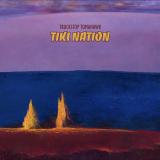
Tiki Nation finds Truckstop Tomahawk charting new territory at the outer edges of modern exotica. Created by Robert Kress—one half of Kava Kon—the album treats tiki not as nostalgia, but as a living, evolving sound world. These tracks roam freely through imagined geographies: remote islands, half-remembered myths, roadside rituals, and sun-bleached dream states where vintage exotica collides with forward-leaning composition.
Rather than simply revisiting mid-century tropes, Tiki Nation recontextualizes them—layering cinematic arrangements, unexpected textures, and playful titles that hint at folklore, travel, and quiet surrealism. The result is music that feels exploratory and unbound, equally suited for deep listening, late-night reverie, or drifting into unfamiliar landscapes with a drink in hand.
The album’s visual centerpiece deepens this atmosphere. The cover art, Pele’s Release, was painted by Catherine Robbins, a self-taught artist and longtime Hawaiʻi Island resident who created the oil painting in her rainforest studio just miles below Kīlauea’s erupting summit. That proximity to raw, elemental power mirrors the album itself—beautiful, mysterious, and quietly volatile.
Tiki Nation stands as a bold statement of intent: exotica untethered from the past, alive in the present, and pointed firmly toward uncharted horizons.
il devrait être publié sur 24.07.2026

For years, L.A.’s David Jasso and the UK’s Mike Vest walked separate but parallel routes through psychedelic noise rock—two genre outsiders pulling the music toward raw instinct, intensity, and sonic extremity. Their paths kept echoing each other, from their own projects and collaborations—most notably through their work with key artists in the Japanese psych underground—both speaking the same volatile language of improvisation and avant-garde abrasion. A collision wasn’t just likely—it was inevitable.
This ethos and commitment to raw, volume-overdosed psych rock led to this new collaboration. Rather than deliver the expected heavy psych freakout, they opted for something more direct and confrontational.
The result is Non Violence and the album “Lifted Curse,” a six-track blast of noise rock focused not on mysticism and psych tropes, but on psychological depth. The album rips through raw male emotion: fraternity, loss, carnal impulses, mental states. Jasso’s lyrics read like an unfiltered journal mid-burnout; Vest’s swirling, savant-garde guitars create tension with Jasso’s own guitars; and Sned’s rocksteady grooves form a fistfight of harmony and dissonance.
Together, this new power trio carves out a new sonic language—heaviness rooted not in posturing, but in realness and weight: fragility, weakness, and the human efforts forged to break out from it. Non Violence is noise rock with an unironic violent aim in the physical dimension—a new conversation in a familiar space, where vulnerability hits harder than distortion and conviction outweighs myth.
David Jasso — Guitars, Bass & Vocals
Mike Vest — Guitars, Bass & Mix
Dave Sneddon — Drums
il devrait être publié sur 20.02.2026
London-via-Accra artist BLACK FONDU shares his seven-track debut EP ‘BLACKFONDUISM’, following the underground momentum of singles ‘im not sleeping’ and the Steve Lamacq BBC 6 Music-premiered ‘holla back girl’. Available on vinyl, and with a self-directed video for ‘#music’, the project marks the first full expression of a voice emerging as one of the UK’s most uncompromising new forces.
‘BLACKFONDUISM’ captures that evolution in its rawest form. The EP came together quickly through instinct and freestyling, recorded between his room in London and a short period in Paris. Each track reflects a world he understood only after living through it. ‘IN D4 CLUB’ channels the exhilaration of acceleration, ‘BOYS’ explores the foundation provided by maternal love, ‘im not sleeping’ confronts denial after more than twenty revisions, ‘C00N V2’ marks a moment of creative rebirth, and ‘BLACK1E’ navigates the tension between self-perception and the world’s gaze. Closing track ‘#music’ distills the entire project into one statement.
Working alone has brought challenges, but he has learned to trust the emotional volatility that fuels the work. “I care so much and would die for this, but I cannot let it kill me. I have to trust myself the same way I trust myself when I make music.”
At 21, BLACK FONDU has carved out a sound that collides hyperpop, noise, rap, punk energy and abstract grime into something instinctive and volatile. Influenced by everything from Rachmaninoff to MF DOOM to Xiu Xiu, he writes, produces and performs every element, including the fractured visuals that accompany his tracks. Praise from BBC 6 Music, Pitchfork, NME, The Quietus, Pigeons & Planes, METAL and Line of Best Fit has positioned him as one of the most intriguing new voices in the UK underground, with explosive live shows across London, the UK and Europe.
With BLACKFONDUISM, he introduces a universe that refuses to sit still. “I wanted this EP to act as an introduction to my worlds. It felt important to put this out so I can do anything after.” He hopes listeners feel alive when they hear it, and jokes that he wants the record to “evolve music, even just a little.”
BLACK FONDU’s sound remains a paradox, abrasive and fragile, chaotic and meticulous, always guided by instinct. Or, as he puts it, “A bit fucked. But alive.”
il devrait être publié sur 09.02.2026

Predatory Void returns with their third record, an EP titled `Atoned in Metamorphosis`, a concentrated statement of intent that compresses the band's restless energy into four precise movements. The music negotiates extremes: patient, reverb-saturated passages give way to sudden, metallic eruptions; subterranean basslines provide narrative weight beneath volatile guitar textures, vocals growl, wail and lament as drums alternate between measured architecture and volcanic release. The result is an austere, immersive sound that is both incandescent and violently sharp. Conceptually the EP takes on the ugly shadow of the unconscious and cathartically wrestles the demon onto canvas. Calling on elements from sludge, doom and black metal, as well as the unrelenting energies of hardcore and contrasting slower, haunted atmospheres, Predatory Void's signature sound is as volatile and piercing as ever. Concise, tight compositions that hook you in melody and then rage in filthy agony. The music can be confrontational, but it is never gratuitous_force is deployed to clarify rather than to overwhelm as emotional depth is at all times the compass. The production aesthetic prioritises fidelity to performance: takes are preserved for their immediacy, dynamics remain uncompromised, and the mix privileges contrast so that quiet moments carry as much dramaturgical weight as full-band climaxes. `Atoned in Metamorphosis` consolidates Predatory Void's forward motion and stakes a claim for a sound that prizes architectural heft and textural nuance in equal measure. Listeners should expect an immediate physical response in what is undeniably an ardent expression, and enjoy the reward of cumulative detail, for the EP dares you to listen closely: to feel transitions as processes, and to accept tension as a pathway to release. Predatory Void invites engagement, not escape, and demands to be met on its own terms, boldly. RIYL Hexis * CELESTE * Wallowing * LLNN * Downfall of Gaia * Witching
il devrait être publié sur 06.02.2026
LTD RED VINYL[24,33 €]
Predatory Void returns with their third record, an EP titled `Atoned in Metamorphosis`, a concentrated statement of intent that compresses the band's restless energy into four precise movements. The music negotiates extremes: patient, reverb-saturated passages give way to sudden, metallic eruptions; subterranean basslines provide narrative weight beneath volatile guitar textures, vocals growl, wail and lament as drums alternate between measured architecture and volcanic release. The result is an austere, immersive sound that is both incandescent and violently sharp. Conceptually the EP takes on the ugly shadow of the unconscious and cathartically wrestles the demon onto canvas. Calling on elements from sludge, doom and black metal, as well as the unrelenting energies of hardcore and contrasting slower, haunted atmospheres, Predatory Void's signature sound is as volatile and piercing as ever. Concise, tight compositions that hook you in melody and then rage in filthy agony. The music can be confrontational, but it is never gratuitous_force is deployed to clarify rather than to overwhelm as emotional depth is at all times the compass. The production aesthetic prioritises fidelity to performance: takes are preserved for their immediacy, dynamics remain uncompromised, and the mix privileges contrast so that quiet moments carry as much dramaturgical weight as full-band climaxes. `Atoned in Metamorphosis` consolidates Predatory Void's forward motion and stakes a claim for a sound that prizes architectural heft and textural nuance in equal measure. Listeners should expect an immediate physical response in what is undeniably an ardent expression, and enjoy the reward of cumulative detail, for the EP dares you to listen closely: to feel transitions as processes, and to accept tension as a pathway to release. Predatory Void invites engagement, not escape, and demands to be met on its own terms, boldly. RIYL Hexis * CELESTE * Wallowing * LLNN * Downfall of Gaia * Witching
il devrait être publié sur 06.02.2026

Over the last ten years, Chris Imler's perhaps not quite as rapid but equally unstoppable rise has coincided with the world's free fall. “The Internet will break my heart” marks the steepest artistic stage to date. We see a man whose entire oeuvre is a late work, at the dizzying heights of his game. “So, the Internet, that's a really hot topic”, I can already hear blasé hisses here and there in the boxes. But the truth is that the topic is annoyingly topical. Because only now is the world wide web unfolding its full disappointing potential. All pipe dreams of an emancipatory power of the digital multitude (remember Negri/Hardt, haha) are as completely extinguished as the Arab Spring was swallowed up by the pre - nuclear winter. While they are capped from above in authoritarian states, social media in the so - called free world are primarily used by lumpen capital to undermine humanistic standards and by the remnants of the left for self - destructive polarization. But the cute animal videos! They too have their dark side, which Imler brings up in the title song: “The animals in the real world are under pressure”. - Jens Friebe
il devrait être publié sur 28.02.2025

"The beauty of The Devil Makes Three is the way they take an old-time musical genre and, by putting their own imprint on it, turn it into something that lives and breathes anew, passing the torch to a new generation, just as stateside rock fans learned about the likes of pioneers Little Richard, Chuck Berry, Jerry Lee Lewis and Buddy Holly from the first wave of British Invasion bands. With their latest album, Spirits, the band continues this tradition by incorporating their signature punk, folk and bluegrass sound along with country and singer-songwriter leanings. “That’s what we set out to do. We wanted to use these musical forms to talk about current issues,” explains Pete Bernhard. “Folk music should be about what’s happening now, just as it was when Woody Guthrie and Bob Dylan did it.” The song titles alone describe the band’s return to a stripped-down, drum-less sound and songs that reflect the ongoing struggle to survive amid the uncertainties of the current volatile climate: “Dark Gets the Best of You,” “Divide and Conquer,” “Ghost are Weak,” “Hard Times,” “I Love Doing Drugs,” “Poison Well” and “The Devil Wins.” The tracks were recorded at Dreamland, part of a converted church compound outside Woodstock in upstate New York which offered some haunted moments of its own, with plenty of spooky thunderstorms and lightning. “There’s definitely a theme of ghosts and death running through this album,” acknowledged Bernhard, who lost his mother, brother and closest childhood friend while making the record. “It also has a good amount of political material, a reflection on how divided people are these days, just trying to find common ground. Not being able to perform our music live led to some deep reflections.”"
il devrait être publié sur 28.02.2025

Unequal cycles in search of synchronous experiences: On his new album »Pounding«, Frank Bretschneider tells of distance, convergence and congruence in a continuous, ever-changing flow of events. What is often regarded as an unquestionable dogma in club music (for which Bretschneider has provided significant impetus since the 1990s) – the groove – appears precarious, unstable, and in motion. Pulse and accent are volatile encounters and have to be found again and again for short, delightful moments. Music becomes a constant process of negotiation.
In search of new sound spaces, Bretschneider has recently worked a lot with modular synthesizers, both solo (for example on »abtasten_halten«, 2020) and in collaborations, including the project Beispiel together with Jan Jelinek. »Pounding« was created using similar means – conceived in 2020 for the Pochen Biennale in Chemnitz, subsequently developed further and recorded in March and April 2023 on a sample-based modular system. And in fact, Bretschneider is once again exemplarily scanning his own sound material, such as dub effects that listen to themselves disintegrate; but also the human voice, or more precisely: the stuttering of fragments of speech, far in the distance but omnipresent, like a mysterious narration. Aesthetically, the eleven pieces form part of a series of works with a focus on percussion. Bretschneider has already perfected this approach with albums like »Rhythm« (2007) and has been shifting the perspective ever since, for ever new results.
Shifting is the basic principle of »Pounding«. Bretschneider combines elements that are in different aggregate states, changing their relationship to each other and thus ensuring the complex overall movement. He lets one to two-bar loops run against each other and through small manipulations, develops a network of rhythms that creates a hypnotic state in the counterplay of repetition and mutation, between clearly recognizable meter and disorientation. There are comparable approaches in aleatoric music. Bretschneider combines them with sounds and patterns that are reminiscent of step sequencer logic and at the same time go far beyond it. The result is relational techno. Never obvious, always restless and exciting.
Commandez maintenant et nous commanderons l'article pour vous chez notre fournisseur.

Originally released on tape by SicSic in 2014, Aprilnacht commemorates a decade of music from Brannten Schnüre and marked the spring in a tetralogy of albums about the four seasons when it came out. Back then the Würzburg-based project consisted solely of Christian Schoppik, who later welcomed Katie Rich to take over the vocals. He used to perform as Agnes Beil, but dropped the name when, while making this album realized his music was becoming "much gentler and more fragile". Aprilnacht already captured the particular musical ideas that Schoppik would thoroughly keep exploring, delving deeper and deeper into the use and manipulation of samplers from sources so diverging as to wander between the five continents to post-war German family television and cult cinema. Heir of the ritualistic intensity of Coil, of the intricate sampler assemblies of Ghédalia Tazartès', and of the dusty, dismal old ballads from around the world, Brannten Schnüre manages to make these paths cross in a territory that is as inherent as it is uncanny; sieged by the past and intimate as a hearth. An organic approach to folk, ambient, and sound collage, where ethereal yet thoroughly textured pieces coalesce in enthralling, delicate, and innermost musical rituals.
The album cover paintings reveal the temper: dreary old towns where shadows come to dim the slow passage of crepuscular colors, a soft area of reanimation where wind and light come close and foresee the night of spring. Aprilnacht was inspired by the stories of German philosopher and writer Friedrich Alfred Schmid Noerr, whose work exhaustively examines the conflict between paganism and Christianity, safeguarding myth in a way that Schoppik describes as boldly modern, humorous and unpredictable in its variations of the Germanic folklore motifs. "I wanted to do the same with the music," he states, and the music here could as well be suitable for a night when household deities welcome wandering will-o'-the-wisps, water nymphs, and gyrovagues to discuss Perchta's leadership of The Wild Hunt, but this album is not a folk tale, it's not an elegy to worlds already gone, hidden in years; it's an intersection of routes that open mysteriously before our ears like a congregation of vapors. Aprilnacht is a gathering of voices; "There are too many children, and none of them keeps quiet," reads the last verse of «Requiem für eine Ringelnatter.»
Sensuality drips over the music to celebrate both the voluptuousness and tragic quality of nature; "It's raining on me, urine from your flowers," Schoppik sings in «Urin deiner Blüten» and later on, faced with a snake's erotic features, as if he wanted to be embraced by it: "Your quick, sharp tongue and your warm venom; that's what the pond is missing." Orality is where this profusion of contents thrives. When the voices get closer and condense, the words reveal the saliva employed to pronounce them; we feel the mouth and the tongue, but when breath envelops them in sorrow and softens their edges, they sound distant, diffused in the atmosphere, letting go of the body that held them. These two vocal facets oscillate permanently and interact naturally with the fertile assembly of samplers and instruments that develop throughout the album, which condense and disperse impersonating each other, interweaving to search for a specific syntax. Tangled whisperings of enigmatic phrases, timid voices that stick out to check the scene but hide away quickly, shivering trance chants and monastic ambiances, distant screams and clamors in between chaos and warfare swirl until bursting into subtle songs where even Mother Mary comes forth softly. Soothed by foggy atmospheres and crackling punctuations, these voices shape a vulnerable crowd, an occasion of fragility. Along this swarm of songs thrown into thin air, accordions sound like heavy-breathing lungs; clarinets sigh like curtains shaking; violin solos wander around like bees; Gjallarhorns cries distend like fleeing cattle; glockenspiels evoke remote music boxes and inherited toys; backward emanations emerge like slender waves retreating. On the banks of stretching loops and ember textures is where the songs slowly nest, collecting the words to find their tone.
A poem by Jorge Teillier says, "To talk with the dead you have to choose words that they recognize as easily as their hands recognized the fur of their dogs in the dark. To talk with the dead you have to know how to wait: they are fearful like the first steps of a child. But if we are patient one day they will answer us with a flame that suddenly revives in the fireplace." This may be Brannten Schnüre's main purpose: To find the voice to speak to those of whom we were a vision. Not in mourning, but acknowledging the obscure and volatile nature of spring's regenerative force, searching for the treasure of balance, as evidenced in the lyrics of «Requiem für ein Schwalbennest,» "Its nest was destroyed so many times before it was finished, and despite that, the shallow builds as if it is infatuated." The same idea is here in the words of Schmid Noerr, who made poetry an act of resistance to the horror of Nazism; "Since having seen the ability of a brilliant spirit to die, with a calm mouth that everyone saw, health is true again and we affirm it, even if rivers of blood flow." And as we call for the dusk's kindness, waiting to return home and eat with our kin by the stove, our ears become used to the games of the night. We feel like we're rowing on wetlands, while the "moon musick" keeps us vigilant against the slightest movement of water or sweet moan because eeriness here is imperative for survival. Do not succumb to the insipid howl of death, for nothing may last but mutability. You see, the rock has moved a little during the night; the rest is just wind fleeing from the void.
Commandez maintenant et nous commanderons l'article pour vous chez notre fournisseur.

One of the greatest, heaviest, and most sought-after guitar records from 1970s West Africa, available on vinyl for the first time in over a decade!!!
Bamako, Mali, 1973: Rail Band, the official orchestra of the Malian state railway, drops their self-titled LP. It’s a relentlessly soulful and hypnotic blend of American funk, jazz horns, and Afro-Cuban music, reflected through centuries-old Mandé tradition and blasted at top volume by some of the continent’s greatest artists.
Led by legendary trumpet and saxman Tidiani Koné and held aloft by the intricate web of Djelimady Tounkara’s rumbling, reverb-soaked guitar, Rail Band’s sprawling compositions embody West African storytelling traditions while exulting in the technology and modernity of a newly independent Mali. Vocalists Salif Keita and Mory Kanté, two heroes of African music who would achieve global fame as soloists, are endlessly emotive, oscillating between silky ballads and funk screams. The band’s sound is filled out by layers of percussion, rolling guitars, and melodic horns filtered through the Caribbean.
Starting in 1970, Rail Band played five nights a week, from 2 pm til the early hours, at the Buffet Hotel de la Gare. Their audience was an international array of businessmen, young partiers, and people of the Bamako night. The band was incredibly versatile, switching genres, rhythms, and styles to meet their crowd. It was a volatile mix, one that would fall apart soon after these recordings were made, with Salif Keita’s departure to start the rival Les Ambassadeurs. Though Rail Band continued in many distinguished forms, the eight songs on this album reveal one of the greatest bands to ever exist, at the height of their creative powers.
On “Duga”, a composition dating back to the 13th century and passed on through oral tradition by the jelis (griots), the Rail Band replace balafon with the interplay of Cheick Tidiane’s speaker-rattling bass and Alfred Coulibaly’s tasteful organ. “Marabayasa,” with its iconic sax intro and Mory Kanté channeling James Brown, is a deep-cut favorite of DJs around the world. Part of a long and regal lineage of Malian guitar orchestras initially tasked with translating the region’s traditional music to modern instrumentation, Rail Band morphed and reenvisioned those traditions with a style and energy that has never been matched.
il devrait être publié sur 05.04.2024

Jakarta Records is proud to present “Les Grandes Vacances” courtesy of Beirut’s Cosmic Analog Ensemble, aka multi-instrumental phenom Charif Megarbane. The LP is an expansive musical odyssey, one that paints a melodic tapestry woven from an eclectic panorama of sonic tools. Funky beats, dreamy melodies + cinematic flair combine to create an experience that transcends time. From vibrant funky energy to introspective moods and library-inspired tunes, “Les Grandes Vacances” captures the essence of past and present, inviting you to indulge in the perfect balance of “groove-stalgia.” Out January 19, 2024.
Cosmic Analog Ensemble (1.6k Spotify Monthly Listeners – SML), the prolific one-man band helmed by Charif Megarbane (61.5k SML), the staggeringly prolific producer, instrumentalist, and all-around musical mastermind, returns to his “Ensemble” with LP “Les Grandes Vacances.” Megarbane's artistry has garnered widespread recognition, with notable placements in Spotify Editorial Playlists like "Global Groove" (679k) and "Folk Fabrique" (162k), along with coverage from esteemed platforms / publications such as BBC Radio, Bandcamp, The Vinyl Factory, Time Magazine, and Esquire, among others. Building on the success of his debut solo release “Marzipan” in 2023 via Habibi Funk, “Les Grandes Vacances” is a sonic journey that captures the full scope of Megarbane’s sonic habitus. As a composer and producer, Megarbane touts hugely versatile, sometimes volatile musicianship — his 100+ catalogue of projects (including legendary groups like the Cosmic Analog Ensemble, Free Association Syndicate, Monumental Detail, etc.) features a huge domain of sonic direction. Now, Jakarta Records presents a new expansion in the Megarbane sonic universe.
In the enchanting sonic world of “Les Grandes Vacances,” Cosmic Analog Ensemble expertly combines diverse musical elements to craft an immersive experience. From vibrant funky energy to introspective moments and library-inspired compositions, the album's sonic palette is rich and varied. The meticulously designed artwork by Simone Cihlar (known for collabs with Anderson Paak., Tom Misch, Ivan Ave, Tapioca and others) complements the album's thematic depth, enhancing the visual and auditory journey for listeners.
First single is the thrilling sonic escapade, “La Ligne Claire,” set to release on November 10th in conjunction with LP pre-order. The track immerses listeners in vintage spy movie ambiance, featuring groovy drums, warm keys, thematic guitars, and strings that create an unforgettable car chase scene. As part of the rollout schedule, this single offers a glimpse into the album's captivating fusion of nostalgia and innovation, promising a musical adventure that lingers and resonates in your ears. Second single, the lush and groovy “Le Dictionnaire des Sentiments,” follows in the sonic footsteps of Serge Gainsbourg (complete with beautifully poignant French lyricism), out December 8th to round out the year. The track jerks the listener towards a more meditative state and expanding, cinematic sound.
Kicking of 2024 will be the absolute funkified single 3 “Maritime Jazz,” out January 5th. The track transports you to a groovy marina where the movement of the sea and boats sways you along a Madlib / Yesterdays New Quintet-esque groove.
Reflecting on his creative process, Megarbane cites a stream of consciousness approach to the Cosmic Analog Ensemble: “It’s a very spontaneous, playful, and diary-like approach and workflow…I trust my instinct because instinct is based on experience.”
il devrait être publié sur 19.01.2024

FULL OF HELL return with their highly anticipated new album, Garden Of Burning Apparitions. The new album, a genre-bending blitzkrieg of hardcore, grind and death metal, sees the band expand upon the very elements that have propelled FULL OF HELL to the forefront of extreme music over the last decade. Produced by Seth Manchester at Machines With Magnets in Pawtucket, Rhode Island, Garden of Burning Apparitions also sees FULL OF HELL adding new dimensions to their warp-speed hellscape. Guitarist Spencer Hazard and bassist Sam DiGristine's monstrous riffs now have an added noise-rock influence, while drummer Dave Bland commands the rhythm section at blazing speeds. Lyrically, Garden of Burning Apparitions sees vocalist Dylan Walker exploring (anti)religion, life's impermanence and the fear that comes with knowing death is inescapable. "Industrial Messiah Complex” grinds organized religion to a pulp in under 90 seconds, while Walker contemplates the commodification of spirituality seen in America’s vast network of garish mega-churches and how these practices are at odds with true spirituality. Meanwhile, “Reeking Tunnels” rides a strident noise rock riff down into the sewer. It’s a metaphor for the physical and mental space we become trapped in when we live in a perpetual state of fear and hate. Elsewhere, justifiable ochlophobia propels the guttural death metal blast of “Eroding Shell.” Lyrically, the song seeks to capture our fear of the violent, ignorant mob—a scene glimpsed far too often in this volatile era. In the end, FULL OF HELL’s boundary smashing has paid off again. “I think it’s good that we tried not to pigeonhole ourselves early on,” Walker reflects. “Because now, 10 years in, we have the opportunity to make whatever record we want, within reason, and people will follow along.”
il devrait être publié sur 08.12.2023

She Spread Sorrow is the work of Italian industrialist Alice Kundalini. In her sparse and grimly atmospheric applications of noise, tone, and electronic sequencing, She Spread Sorrow expresses a volatile emotional core that speaks to abuse and repression with an unblinking candidness.
Orchid Seeds was originally published as part of the instantly out of print On Corrosion - a 10 cassette anthology from 2019 that was housed in a handcrafted wooden box and featuring full albums from Kleistwahr, Neutral, Pinkcourtesyphone, Alice Kemp, She Spread Sorrow, G*Park, Relay For Death, Francisco Meirino, Fossil Aerosol Mining Project, and Himukalt. The collection also stood as the 50th release for The Helen Scarsdale Agency, an imprint founded in 2003 and dedicated to post-industrial research, recombinant noise, surrealist demolition, existential vacancy and then some.
Kundalini’s signature whispered vocals once again beckons her audience closer on Orchid Seeds. Kundalini states that the album, “is about 5 different women of my family. Each track is about one of them with their difficult story and strengths. My family is totally destroyed now, no relation between anyone, but in the past there was a strong tradition of women with interesting personalities.” This sibilant allegorical history comes into focus amidst a claustrophobic and cinematic pall of dark ambient blight and death industrial torpor.
il devrait être publié sur 29.09.2023

Habibi Funk is excited to share “Marzipan” - our first full length contemporary release courtesy of Beirut’s multi-instrumental phenom Charif Megarbane, also known as the man behind prolific Cosmic Analog Ensemble. The LP is a journey into Charif’s styling, one he terms “Lebrary”: a vision of Lebanon + Mediterranean expressed through the kaleidoscopic sonics of library music. Drawing from artists that encapsulates the HF sound, such as Ziad Rahbani, Ahmed Malek and Issam Hajali, Charif translates these influences into an LP that is equally at home in ’23. We always wondered why Charif’s music stayed under the radar for so long, that all changes with “Marzipan”.
Charif Megarbane, the staggeringly prolific producer, instrumentalist, and all-around musical mastermind returns with full LP “Marzipan.” Following his previous release of EP “Tayara Warak” in 2022, “Marzipan” is a sonic journey that seeks to capture the full scope of Megarbane’s habitus. As a composer and producer, Megarbane touts hugely versatile, sometimes volatile musicianship — his 100+ catalogue of projects (including legendary groups like the Cosmic Analog Ensemble, Free Association Syndicate, Monumental Detail, etc.) features a huge domain of sonic direction. This collection was previously developed in Megarbane’s own Hisstology label which hosts a wealth of collaborative efforts. Now, Habibi Funk represents Megarbane under his own name. Megarbane finds a sonic through-line in his surrounding soundscapes as he draws on the chaotic energy of the crowded Beirut metropolis (“Souk El Ahad”), the warm atmosphere of the Lebanese countryside (“Chez Mounir”), or the lushness of a Mediterranean beach resort (“Portemilio”). Reflecting the aural composition of his direct surroundings into kaleidoscopic instrumentation provides a unique insight into how one musical phenomenon transposes sight into sound. Habibi Funk is thrilled to share “Marzipan” and finally throttle this under-theradar phenomenon into the solo spotlight. Despite the magnitude of his catalog, Megarbane’s LP sounds as fresh—as resolutely inspired—as a debut record. “Marzipan” continues down the winding path he trod on EP “Tayyara Warak” (released Decmber, 2022) which features solid footing in the hectic city sounds Megarbane hears as home. Despite his obvious musical acumen, Megarbane’s greatest talent seems to be his open ears. In many ways, “Marzipan” is a cartographic feat — it travels and traces a journey across many dimensions (both sonic and physical). Megarbane’s instrumental catalogue is vast: toy glockenspiel, harpsichord, pedal steel, a classic Wurlitzer, et al are used liberally on the record. The resultant sound is as sprawling as the musician’s instrumental dexterity. “Marzipan’s” closing track “Bala 3anouan” can be translated loosely to “without address” — a fitting final word. Despite the entire record being a sincere testament to Megarbane’s environmental approach to music-making, the record is not bound to any particular coordinates, or any particular sound for that matter. The vastness of his influences — beloved artists like Ahmed Malek and Issam Hajali (both Habibi Funk veterans); West African funk deep cuts; European cinematic scores; et al — result in a record of somewhat unparalleled expansiveness. Floating melodies and frantic rhythmic interludes both find natural homes across “Marzipan.” The record is tinged with psychedelic elements—fuzz-drenched guitar, sliding microtonal interludes, hypnotic rhythmic breakdowns. Reflecting on his creative process, Megarbane cites a stream of consciousness approach: “It’s a very spontaneous, playful, and diary-like approach and workflow…I trust my instinct because instinct is based on experience.” Lead single “Souk El Ahad” opens the roll-out with a raucous energy, out June 12. Megarbane abstracts busy city sounds into a psychedelic framework, casting technicolor hues on everyday experience. Following is second single “Pas de Dialogue” out June 23. The track jerks the listener towards a more meditative state with lulling harpsichord and expanding, cinematic sound. “Marzipan” will be available physically and digitally everywhere on July 14, 2023. Be sure to listen for focus track “Chez Mounir” that captures the warmth of community in a joyful, laidback groove.
Uncover greater insight into the world of Charif Megarbane in the booklet accompanying the LP
Commandez maintenant et nous commanderons l'article pour vous chez notre fournisseur.

In a blizzard of delirious sonics and twis’ up samples extracted from the annals of dancehall and ragga, Seekersinternational return to Sneaker Social Club to double down on the manifesto they laid out with the original RaggaPreservationSociety EP way back in 2016.
As ever, the SKRS magic lies in their ability to convey a deep affection and serious dedication for the source material while simultaneously getting shamelessly weird with it, taking the mutant tendencies of dancehall’s wildest instrumentals and injecting some added cosmic sauce into the mix. On this new record, they’re also embracing the volatile potential of junglist breaks - always intrinsically linked to Jamaican music at the point of inception, especially in the rough and ready daze of ragga jungle.
‘No Parasites (Lickshot)’ is a fierce mission statement, raining down mayhem without ever slipping into familiar modes - the emphasis is on the ragga, the jungle is there as a piquant flavour in the stew, but as ever the SKRS sound remains entirely out on its own. In contrast, ‘CaughtUp (HeartBreaks)’ almost edges closer to hardcore structures, but something keeps slipping in to run the interference, hovering just beyond perception for that all important woozy feeling.
‘2GoldChain (DriveUCrazy)’ is cut up enough to be another interstellar voyage, but here SKRS keep the music back in the mix and let a tapestry of chat lead out front as though capturing a casual street level chaos - bewildering and familiar in equal measure. ‘OriginaloftheOriginal’ completes the set with an earth-shattering script flip once more, coming on like square wave grime and half-speed breakbeat set to emotional stun. If it takes a minute to make sense, that’s because you’re hearing something entirely new.
Commandez maintenant et nous commanderons l'article pour vous chez notre fournisseur.

Milly make songs that simmer and spark. The Los Angeles-based band, led by songwriter Brendan Dyer, finds power in the slow burn: their music carries the tension of a lake’s surface moments before a storm hits, or a cracking pane of glass moments before it shatters. Their debut album, Eternal Ring, is kinetic, physical, and often a little bit volatile — a mixture of emo music and 90s-indebted indie that tastes as if it’s been fermenting for years, feeding on itself until it becomes something new entirely. A profound first full-length statement from Dyer and his closest collaborator, bass player Yarden Erez, it’s a record that takes the anxiety of modern-day America and filters it through a prismatic, powerfully individualistic lens, resulting in something intense, bracing, and deeply modern
il devrait être publié sur 16.12.2022

New York trio Sunflower Bean announce their second record Twentytwo in Blue. The album will be released on March 23rd when all members of the band - Julia Cumming, Jacob Faber and Nick Kivlen - will be 22 years old. The album comes almost two years and two months after the release of their critically acclaimed 2016 debut album Human Ceremony.
Co-produced by Unknown Mortal Orchestra's Jacob Portrait (who also mixed the record) and HC-producer Matt Molnar of Friends, Twentytwo in Blue shows Sunflower Bean stay true to their guitar band core and classic rock-inspired roots, while exploring new sonic textures with more direct and progressive themes. Unlike their debut, which was essentially a compilation of songs Sunflower Bean wrote while still in their teens, Twentytwo in Blue was made in the year between December 2016 and December 2017 and showcases how far the band has come since playing together in their high school days.
To celebrate the album announce, Sunflower Bean share a new single and follow up to I Was A Fool' entitled Crisis Fest.' 2017—we know/ Reality's one big sick show/ Every day's a crisis fest,' vocalist and bassist Cumming sings. This last year was extremely alarming, traumatic, and politically volatile,' explains the band about the track. While writing this album, we often reflected back on the people we met while on tour. We felt a strong kinship with the audiences that came to see us all over the country, and we wanted to write a song for them - something to capture the anxieties of an uncertain future. 'Crisis Fest' is less about politics and more about the power of us, the young people in this country.'
Sunflower Bean find a sublime maturity and progression to their sound and songwriting on Twentytwo in Blue. If there was a ragged beauty in the gauzy, groovy wall of sound of Human Ceremony, there's a new directness to these songs, a product of the band's growth and the insanity of the times we're in. Sunflower Bean have gained a newly confident voice that they bring to the second album, one that doesn't shy away from addressing the other events of those two years—political changes and cultural shifts that have left America and the world stupefied. This has been such an unbelievable time,' says Kivlen. I can't imagine any artist of our ilk making a record and not have it be seen through the lens of the political climate of 2016 and 2017. So I think there's a few songs on the record that are definitely heavily influenced by this sort of—whatever you want to say what the Trump administration has been.' A shit show,' offers a helpful Faber.
Ultimately, this record is much more than a political statement or piece of commentary on today's political climate. I think one word that always comes to mind when I think about this record is lovable,' says Cumming. We want the songs to be something that someone can get attached to, and have be a part of them. Because that's what I look for in songs myself, and that's the kind of experience we want to give to others.'
il devrait être publié sur 28.01.2022

"We all know what teenagers are like. Bratty little gobshites. Moody shits. Forever toeing the line between cocky arrogance and whiny self-doubt, and to hell with anyone who gets caught in the crossfire. And this old fucker should know; he was really good at all of the above (still keeping on top of the ‘gobshite’ part, you’ll notice). For some reason, the entirety of rock’n’roll is predicated on music made for and about these states of mind - well, I guess if you mix ‘em all together, they can make for one helluva sense of reckless abandon. So it shouldn’t come as a surprise that Melbourne quartet Mr Teenage sound exactly like their name suggests: chaotic, raw, emotionally volatile… and of course they bind all this together with their own brand of heroically melodic garage rock. Produced by Billy Gardener (of Ausmuteants, Smarts, Cereal Killer and god knows how many other vital Aus-punx), this debut EP snarls, spits and swaggers with all the glorious self-belief of a drunken 4am stumble to the petrol station to buy a pack of skins. And the songs are fucking great too. Title track ‘Automatic Love’ expertly showcases the combined sounds of their cited influences (Thin Lizzy, Dictators, Martha Reeves, etc), with frontman Nic Imfeld’s voice at times edging close to the sandpaper soul of their countryman Shogun (ex-Royal Headache). Meanwhile ‘Waste Of Time’ sees him blending their garage licks with Joey Ramone bubblegum, just as ‘The Loser’ fashions a delightfully adolescent chorus of ‘the loser says what?’ from an airy melody that either The Shangri-Las or Del Shannon would be proud of. They wrap things up with another slab of pure punk/pub rock genius called ‘Kids’ that’ll get the hairs on the back of your neck standing on end, as you fight the urge to crank-call your former school teachers and blame the kid who used to take your lunch money. Of course, singing about ‘kids these days’ marks Mr Teenage out as being older than their name suggests, and sure enough their name comes from an old wrestler rather than identifying with an age bracket they’ve outgrown. But with tunes like this… honestly, who gives a fuck what they’re called? This record is perfect." Will Fitzpatrick.
il devrait être publié sur 24.01.2022

Over the last twenty years Comeback Kid have been hailed as one of the major counterparts when it has come to shaping and pioneering both the Canadian and international modern punk and hardcore sound and scene alike.
After having released their first demo in 2002, before quickly drawing the attention of Facedown Records for the release of their debut, Turn It Around, the last twenty-one years have seen the band produce some of the most acclaimed records within the genre. Signing to Victory Records (Thursday, Refused) for 2005’s career defining records, Wake The Dead and Broadcasting, the five piece have undoubtedly over the years been able to balance a DIY ethos and dependability, with that of a humanitarian ethos, and genre defining musicianship which has broken down the boundaries of hardcore, and transcended the genre onto a global stage. With a back catalogue that would produce some of the most seismic and influential anthems to transverse across both punk and hardcore, 2017’s signing to Nuclear Blast Records (Hatebreed, Madball, Slayer) saw the release of powerhouse heavy hitter, Outsider.
Arguably noted as a record and turning point in both sound and the band’s career, this release would be a definitive moment in pioneering a new path of which an entire generation of new artists within the genre would follow, thus solidifying Comeback Kid next to the likes of NOFX, Terror, and Converge as both major headliners, and forefathers to set the course for what it means to be one of the most adverse punk bands of the 21st century. “We’re a hardcore band, but we don’t feel like we belong to any particular sect of that,” states Neufeld alongside band members, Jeremy Hiebert (guitar), Stu Ross (guitar), Chase Brenneman (bass), and Loren Legare (drums). “We don’t want to be limited in any sense and prefer to work on our own terms.”
Now one of the most volatile leaders within the global heavy music community and continuing to break down boundaries and champion new territories, Comeback Kid’s seventh studio album, Heavy Steps is solidifying the band’s revolutionary status.
Returning to their roots, literally, by recording in Winnipeg and co-producing with John Paul Peters (Cancer Bats, Propagandhi) as well as collaboration with prominent mixer Will Putney (Knocked Loose, Every Time I Die, Four Year Strong), Heavy Steps is no longer a prerequisite to realizing Comeback Kid’s influence on modern punk, but a delivery of pure anthemic chaos, sheer speed and force. It is a statement of intent. “It’s about hitting the ground running, not knowing when or where the ground could break from underneath you.” summarizes Neufeld. “It's heavy steps on thin ice. Heavy steps on hollow ground.”
il devrait être publié sur 21.01.2022

FULL OF HELL return with their highly anticipated new album, Garden Of Burning Apparitions. The new album, a genre-bending blitzkrieg of hardcore, grind and death metal, sees the band expand upon the very elements that have propelled them to the forefront of extreme music over the last decade. Produced by Seth Manchester, Garden of Burning Apparitions also sees FULL OF HELL adding new dimensions to their warp-speed hellscape. Guitarist Spencer Hazard and bassist Sam DiGristine's monstrous riffs now have an added noise-rock influence, while drummer Dave Bland commands the rhythm section at blazing speeds.
Lyrically, Garden of Burning Apparitions sees vocalist Dylan Walker exploring (anti)religion, life's impermanence and the fear that comes with knowing death is inescapable. "Industrial Messiah Complex” grinds organized religion to a pulp in under 90 seconds, while Walker contemplates the commodification of spirituality seen in America’s vast network of garish mega-churches and how these practices are at odds with true spirituality. Meanwhile, “Reeking Tunnels” rides a strident noise rock riff down into the sewer. It’s a metaphor for the physical and mental space we become trapped in when we live in a perpetual state of fear and hate. Elsewhere, justifiable ochlophobia propels the guttural death metal blast of “Eroding Shell.” Lyrically, the song seeks to capture our fear of the violent, ignorant mob—a scene glimpsed far too often in this volatile era.
In the end, FULL OF HELL’s boundary smashing has paid off again. “I think it’s good that we tried not to pigeonhole ourselves early on,” Walker reflects. “Because now, 10 years in, we have the opportunity to make whatever record we want, within reason, and people will follow along.”
il devrait être publié sur 01.10.2021

Ionisation is the first LP by Italian poet Adriano Spatola. Born in Yugoslavia in 1941, by the age of 23 he became a major force in the Italian avant-garde. “Towards Total Poetry,” Spatola’s critical study on the state of modern poetry, spells out his position: “to become a total medium, to escape all limitations to include theater, photography, music, painting, typography, cinematographic techniques, and every other aspect of culture, in a utopian ambition to return to origins.” Graphic poetry (cut-up zeroglyphs), volatile and beautiful prose (particularly his books The Porthole and Majakovskiiiiiiij), and of course sound poetry, represented here for the first time. Spatola was the editor of many underground publications: Baobab (a legendary audio-cassette magazine), Tam Tam, and Edition Geiger. Each of his pursuits spread the margins of the format, all done with a relentless, piercing curatorial eye.
Spatola has dark, drunken wit in spades. In his sound poems, an even more saturated persona is conjured. A desperate humor sneers through this LP, a humor that has surrendered to the severe joke of life long ago - lashing out on syllables and ingrown word games. Particularly, his classic “Aviation/Aviateur” (akin to his “Seduction/Seducteur,” & “Violacion/Violateur” etc.). Read by lesser performers, these pieces would falter and float by in the trough, though Spatola’s bull-like confidence tears through. “Poker Foundation” features the poet hysterically singing “the play of the words” over a classical radio piece, mocking and squawking against the string swells. Steve Lacy plays scissors, knife, and saxophone on “Hommage à Eric Satie,” a piece originally recorded for the luxurious Cramps LP boxset Futura. Collaborators Gian Paolo Roffi and Paul Vangelisti are also featured across the collection.
The LP concludes with the titular work “Ionisation,” recorded just days before his premature death in 1988. Feeling his sinking health, his belly in the quicksand, he prefaces the piece, “a funeral march for my body.” He proceeds to scrape and pound the microphone on his chest, face, and clothing. This thick pumping of Adriano’s torso rapping across the speakers abruptly stops after two minutes. A piercing moment.
I was born the day after Adriano died, which has some poetic meaning to me, naturally. I am indebted to him, his sickly sweet manner. The opportunity to publish these largely unknown sound works is an honor which brings a warmth to my torso. Much appreciation goes to Giovanni Fontana (poet and dear friend of Adriano), who helped produce this edition with me. “Every single word has been a tempest of gestures.“
Sean McCann, January 2020
Commandez maintenant et nous commanderons l'article pour vous chez notre fournisseur.

Initially a duo formed in Berlin, FITH have since multiplied and expanded to become a revolving collective of musicians and poets spread out across a Paris/Manchester/Berlin axis. The project, currently comprised of members Dice Miller, Enir Da, Rachel Margetts, ChrIs Lmx, & Arnaud Mathé gesture towards notions of the literary salon, expanded cinema happenings, and the ancient traditions of Greek oratory and religious sermons. Driven by the spell of the spoken word, minimal percussive refrains, oneiric textures & deep melodic synths, FITH channel cinematic imagery, enigmatic narratives & spiritual frenzy.
Their self-titled debut 12' album was released via their collectively run imprint Wanda Portal in November 2016, a 'quietly alluring debut of post punk tempered avant-pop songs' (Boomkat) that laid out the project's foreboding mystique and intoxicating dream sequences with a lurking, devastating sense of purpose and (mis)direction. Other outings have included myriad solo collections of poetry, a two-track release of lurid dissonance and elegiac elevation (Signs / Cornerstone, December 2016) and an extraordinary reinterpretation of the soundtrack for cult film & iconic document of modern alienation Wanda (1971, dir. By Barbara Loden)
With Swamp, their sequel to this activity and their first appearance on Outer Reaches, FITH become a refined force, on a record where all their compelling pluralities and attributes are honed and augmented; everything dilated to delirium. The atmosphere here is one of veiled dread and psychic disturbance, a haunting and macabre psychedelia strewn with echo and dub FX, fragmentary fever dream poetics, elemental drum patterns and volatile synthetic interference. Although the collective conserve the raw crux of their earlier material their execution is, in this special instance, heightened by an intent to broaden and prolong their unique strain of intensity.
Emphatically sinister openers like Forest and Pound present sidereal sequences before building to barrelling, corrosively processed percussion, paroxysmal free jazz and a baleful, concrète-inflected score of electronics, while Swamp introduces phasing currents and a vocal evocative of a chorale from some forgotten giallo film. Elsewhere l'au delà (the beyond) presents a stunning, sombre passage to another state entirely, like some desolate new inflection on Coil's Going Up, before Bialystok shifts into a finale of transportive and meditative evaporation. Together these tracks make for an incredibly immersive and congruous conception; an utterly complete and mesmerising document.
In Swamp's various dimensions perhaps there's comparisons to be drawn with the ritualistic krautrock of Conny Plank and Holger Czukay's Les Vampyrettes, with the hallucinatory, tribal rhythm cycles of Shackleton & Anika's Behind The Glass collaboration, with the primeval drone of Jeremie Sauvage, Mathieu Tilly and Yann Gourdon's France project, with the echoic, disquieting chamber intimacies of Tuxedomoon's Pink Narcissus material and with Lucrecia Dalt's eerie free verse abstractions. But really, we've not heard anything like this before.
Discussing their own inspirations and touchstones the collective cites Franz Kafka, Dario Argento, Lucrecia Martel's La Ciénaga (The Swamp - the film the record is named after) and Yiddish ghost theatre as figures, works and artforms that were prominently drawn upon during the making of Swamp. Yet whilst their imprints could be traced by some, they resemble more of a covert presence within a nuanced whole rather than obvious aspects which moor this record to any familiar setting.
Instead, the acutely unsettling yet poignant spoken word of Miller and the mercurial nocturnes and visitations produced by Margetts, Lmx, Mathé and Da make for a record of strange, novel and striking energies. In revealing the remarkable location and period in which Swamp was recorded Margetts and Miller give a vivid indication as to how these energies are so potently invoked:
'The record was mostly recorded in a caretaker's wing of a 17th century castle in Normandy. It was early March 2018, and our first encounter with the Spring. We had no idea how everything would unfold. There was a lot of tension. Some of us felt compelled to get out the attic room where we had set up our makeshift recording studio and just walk and walk down the vast flat meadows and explore the relics of the wartime barracks, others wanted to keep recording. The outside was serene and inviting, and even though we had been cooped up indoors recording for long stretches of time, we could see from the corner of our eyes, the branches of the trees quivering; an impersonal energy blew through us and then things just happened.'
Commandez maintenant et nous commanderons l'article pour vous chez notre fournisseur.
