“One foot out the door, another in the otherworld…”
So begins Hannah Lew’s debut, self-titled solo record, soaked in imperious, wide-eyed pop songwriting and a girl-group/post punk aesthetic that belies the artist’s history in the U.S. underground. A towering, hook-laden album, it’s infused with an optimism and surrealism that conversely deals with the times we find ourselves in.
Recorded at home in Richmond, CA and in The Best House studio with Maryam Qudus in Oakland CA, with the assistance of a crack team of West Coast musicians, this album sees Hannah Lew stepping out from behind the legacy of her two groups Grass Widow and Cold Beat. While musically bearing similarities with her previous work, “Hannah Lew” is a bold leap into direct pop territory, making ample use of a vocal style that teases out the inherent melancholy in her melodies. Mastered by Sarah Register, each song is a perfectly honed nugget that frequently pulls the heart in two directions at once.
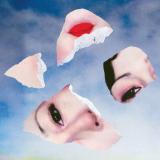
Themes of change, breaking up, shattering old ways of being are shot through the record. For the front cover, a photograph of the artist’s face was printed, ripped up and re-assembled, resembling the creative process embarked upon by Lew for her first “solo” material. The album feels instinctual, almost dream-like in its assemblage of sweeping synths and pulsating, propulsive drum machine beat patterns with Lew’s vocal performances sensitive and caressing over the top. Increasingly relying on the subconscious and dreams to guide her creative process, Hannah Lew frequently abandons literal interpretations or linear narratives, the songs seeming to exist in a swooning, effortless flow-state while remaining emotionally hard hitting.
On an album where every song could be a single, there are kaleidoscopic shades and varying emotional tones in abundance. First single Another Twilight is carried along a pumping, Italo-disco-style 4/4 beat and mono-synth bass line, the low end pulling at the heart and body. Lew’s vocal melody teases the track before swan-diving into a gorgeous chorus as she sings “it’s all over baby and I don’t mind… in decline, I take my time…” The album is suffused with moments like this. On slow builder Damaged Melody, an arpeggiated synth elongates the verse before a cascading synth showers down melodic glitter. The stunning Replica uses dual swirling synth patterns before a driving, synthpop chorus for the ages carries Hannah Lew’s vocal into the stereo field, sailing in on a high register singed with the embers of a break up.
In a departure from previous groups, her solo songs are guided by dreams and free association inspired by Dada and the Surrealist movement and sculpted afterwards. As such, the songs reveal themselves on repeated listens, revealing traces of heartbreak inspired by both personal and global elements - Hannah Lew regards the album “a wartime album.” On Move In Silence, Lew intones “there’s a war outside, just out of view,” revealing the dichotomy at play throughout. With the songs evolving naturally and in a flow state, the pressures and sadnesses of the modern age bleed through, mixed in with Lew’s inherent love, sensitivity and fractured-but-intact optimism. On the swooning, sublime Sunday layers of Numanoid synths open up for the commanding vocal performance pontificating on grief, love, pain as she “feels the ache on Sunday…” As the chorus builds and Lew’s call-and-response vocal adds to the emotional tension, it almost feels like too much to take.
Elsewhere, there are echoes of Hannah Lew’s previous work. On Time Wasted a bass guitar comes in with a heavy, punk attack before the synths and vocal harmonies reminiscent of later Cold Beat elevate everything. The glassy, sweetly resigned closer The Clock sounds like so classic it could be cover, a sweetened Jesus & Mary Chain tune perhaps, before it erupts into volcanic chorus that could only come from Hannah Lew in 2026.
Поиск:volc music
Все
- 1: Nuvole I
- 2: Nuvole Ii
- 3: Nuvole Iii
- 4: Nuvole Iv
- 5: Nuvole Ix
- 6: Nuvole V
- 7: Nuvole Vi
- 8: Nuvole Vii
- 9: Nuvole Viii
- 10: Nuvole X
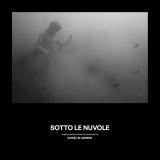
In Gianfranco Rosi’s portrait of Naples, Sotto le Nuvole, the ground shakes periodically. Between Mount Vesuvius and the Tyrrhenian Sea, the fumaroles of the Phlegraean Fields hiss volcanic gas and steam. Below the sleeping volcano, modern day Naples emerges in black and white and fills with voices, with lives. From the traces of history and the concerns of the present, Rosi documents a city immersed in its continuous past, with Daniel Blumberg’s minimal soundscape hovering in a sonic space between liquid and air.
Tasked with creating a soundscape that would suspend space within Rosi’s film, Blumberg called upon the extended technique of saxophonists Seymour Wright and John Butcher to create a gossamer fabric of traces and sounds abstracted from their instruments. Having transitioned from theoretical physics to the saxophone, John Butcher has always deeply considered space in the context of his playing. His concerns are with flow, density and how the saxophone is situated in the living world. Zeroing in on the core sonic properties of the mechanical and acoustic components of the saxophone, Seymour Wright has integrated its every breath, reed vibration, keypad clatter and hissed microtone of his alto into his own, unique improvisational language. In his work with these two seminal players, Blumberg makes his most concentrated soundtrack to date - reinforcing the film's sense of overlapping time and space, and pushing at the limits of experimentation.
Initially recorded in Daniel’s flat in London, Butcher and Wright centre themselves around long, consistent tones, so soft that it seems breath is being gently pulled from the saxophone's bell by an invisible hand. Blumberg himself adds haunting bass harmonica, and recordings of Wright’s launeddas - a traditional and ancient triple pipe polyphonic reed instrument from Sardinia, Italy. Blumberg then travelled to the volcanic region of Baia, next to Pompeii. Once a flourishing classical Roman city loved by Nero, Baia slowly sank under hydrothermal pressure, leaving the city in a kind of geological purgatory. Using specialised geophones and hydrophones, Blumberg took those initial recordings and amplified them underwater, sending them calling out across the ruins of Baia’s mosaics, Nymphaeum statues and villas.
“It was important to me that the music was whispered in the same landscape that Gianfranco has worked for the past three years, so that you can hear the volcanic air gulping, the lapping of the waves, the steam and bubbles popping against John and Seymour’s saxophone breaths – an echo from a suspended time.”
What emerges is deeply melancholic, tender, subtle and right at the edges of audio technology. Submerged in an aquarian mausoleum, the mysterious vibrations of the saxophone and its bell become an echo of an echo, wading from the future into the past. ‘Sotto le Nuvole’ is less a soundtrack than a process of aeration - a sonic puncture in the material of the film which allows its central message to breathe, and a remarkable experiment at the limits of the saxophone’s possibility.
- 01: Dancelwerk - Back To Eighties
- 02: Dancelwerk - Breikaut
- 03: Cmos34 - Cem3340
- 04: Cmos34 - Lm13700
- 05: Jorganes - Spirits
- 06: Jorganes - Beds
- 07: Sunday German Flowers - Don’t You Know I’m The Devil (He Said)
- 08: Sunday German Flowers - Amor Sin Gluten
- 09: Nico Hernández - Rdk-Lz 1
- 10: Nico Hernández - Rdk-Lz 2
- 11: Nico Hernández - Rdk-Lz 3
Yearly compilation series RADAR KEROXEN return with its sixth volume of theme-driven releases, continuing to chart the fractured sonic terrain of the Canary Islands’ undergrowth.
After digging through indie, psychedelia, shoegaze, and site-specific drone, Vol. 6 dives headfirst into the after-hours circuitry of the islas afortunadas, assembling a hand-picked selection of underground club mutations from five long-standing operators within the local electronic ecosystem.
If Vol. 5 was shaped by the cavernous resonance of Santa Cruz’s obsolete gasoline tank, Vol. 6 is fuelled by late-night club aesthetics and mid-90s hardware obsession. Opening the record, Dancelwerk — one of the archipelago’s early modular practitioners — delivers tightly wound structures nodding to Warp-era golden agefuturism and southern Tenerife’s rave boom. Cmos34 follow with their first-ever published material, injecting instability into the system through improvised techno rituals built on friction and feedback.
Jorganes drags the narrative deeper into hypnotic territory, stripping club music down to its skeletal pulse and channeling disciplined repetition and late-90s minimalism into austere, trance-inducing momentum. From Gran Canaria, Sunday German Flowers bends the mood toward cinematic dub: heavy low-end pressure, spoken word, and nocturnal atmospheres stitched into slow-burning club noir.
Closing the circle, Nico Hernández pulls the compilation back to volcanic ground with ambient compositions shaped by Lanzarote’s raw geological landscape — basalt echoes, tectonic silence, and island isolation rendered in sound.
As always, the release is housed in a post-tropical collage artwork by Pura Márquez.
Master by Daniel García
Artwork by Pura Marquéz
- 1: Urn Burial
- 2: The Redness In The West
- 3: The Third Migration
- 4: They Came Like Swallows
- 5: The Living Theater
- 6: The Oceans Are Crying
- 7: Insight
Black Vinyl[30,67 €]
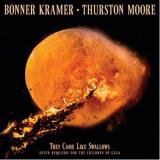
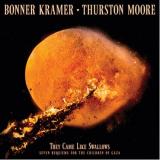
They Came Like Swallows is the first album-length collaboration between Thurston Moore and Kramer (now officially Bonner Kramer), two giants of alternative/ experimental music. The accomplishments and influence of these two artists in the world of independent music cannot be overstated and the result of their artistic union is a startlingly cohesive statement that burns through landscapes of primitive outsider rock, avant-garde composition, progressive ambient and further locales boldly and beautifully unnamable. “Kramer and I reconnected in Miami, Florida, a few years back, many many years after each of us had departed NYC on separate life adventures. It was only a matter of time before Kramer and I started making plans to record together and with his irrepressible due diligence he quickly set up a mobile recording contraption in the pad I was decamped in, the Florida sunshine flowing through the palm leaves, lithe lizards skittering across the windowsills, and we just went for it.
Kramer had the idea to cover a Joy Division tune, a left turn from the improvisations we had been tracking, though wholly in keeping with both our sensibilities of light and dark unifying in transcendent songwriting, both of us devotees of 'the song' as well as 'the freedom.’ What transpired is They Came Like Swallows, a session we immediately felt should exist as a prayer to the war-torn souls of the families of Palestine continually decimated by the brutality of genocide. We agreed beyond words to offer our music as a sonic activism and as a beneficent energy. This album is our duo exchange for human dignity, it is our soul music for any semblance of a peaceful planet.” ~ Thurston Moore “For the first time in our nearly 45 years of friendship, we had identical time windows open to make a record together,” recounts Kramer. After all this time not a moment is wasted as the duo immediately taps into the heightened core of improvisational tension across these seven offerings. Volcanic opener “Urn Burial” notches a similar historic union (John Cale and Terry Riley) to meet the circumstances of the moment, with swirling mists of organ and pounding toms over guitar that thickens the atmosphere with jagged, grimy dissonance.
Solemn strings open the second track, “The Redness In The West,” with Kramer’s cello and viola in dueling bow beneath the high tension drive and sustain of Thurston’s electric guitar, tapping out a Morse code of tension that mounts endlessly into a fog of inevitable war by the end. Moore and Kramer’s sense of experimentalism is in free and full grandeur throughout They Came Like Swallows, though the duo keep a strong and constant sideways eye on melody, composition and architecture, to the ends that any strict lines between song and improvisation are blurred beyond qualification.
As if to punctuate this point, Swallows closes with a nightwork cover of Joy Division’s “Insight,” a doleful coda that breathes out with a solemn inner grace under Thurston’s instantly stylistically recognizable guitar melodies as they weave into he and Kramer’s unison voices. As the lone vocal piece and only traditional ‘song’ form on the album, “Insight” is unique to this set and as a closing statement draws connective lines back to the kind of dynamic, electrified melodicism that wove deep, melancholy patterns into the untamed fire of Sonic Youth’s Sister and Daydream Nation. In the album’s final moments, the two voices repeat the lyric “I’m not afraid anymore” as mantra, underscoring the heavy, unsettled themes and methods that preceded it. Kramer describes the creative process of They Came Like Swallows: “I had composed and recorded a few pieces at my home studio over the course of a couple weeks. Thurston was spending the winter in South Florida, so I flew down and spent a few days recording his guitar parts in his home there. Watching him spontaneously compose his parts was pretty astonishing, to say the least. Once we'd finished working on those pieces, we began improvising and following wherever the music pointed us, and another few pieces were born. We got straight to it, without anything driving us other than the joy of finally working together.
My personal goal was to remain present and catch as many surprises as I could from Thurston's guitar work, and there were plenty during those few days. We had a fucking blast.” Thurston’s contributions here will be readily familiar to any acolytes of his other works, the through-line between his inspired playing, cradled in Kramer’s meticulous, solid arrangements. “If I had to make this record again, I'd do it all exactly the same way,” Kramer says. “It’s like jazz, you don't think about it. You just do it. It was miraculous, and you don't fuck with a miracle.”
They Came Like Swallows is the first album-length collaboration between Thurston Moore and Kramer (now officially Bonner Kramer), two giants of alternative/ experimental music. The accomplishments and influence of these two artists in the world of independent music cannot be overstated and the result of their artistic union is a startlingly cohesive statement that burns through landscapes of primitive outsider rock, avant-garde composition, progressive ambient and further locales boldly and beautifully unnamable. “Kramer and I reconnected in Miami, Florida, a few years back, many many years after each of us had departed NYC on separate life adventures. It was only a matter of time before Kramer and I started making plans to record together and with his irrepressible due diligence he quickly set up a mobile recording contraption in the pad I was decamped in, the Florida sunshine flowing through the palm leaves, lithe lizards skittering across the windowsills, and we just went for it.
Kramer had the idea to cover a Joy Division tune, a left turn from the improvisations we had been tracking, though wholly in keeping with both our sensibilities of light and dark unifying in transcendent songwriting, both of us devotees of 'the song' as well as 'the freedom.’ What transpired is They Came Like Swallows, a session we immediately felt should exist as a prayer to the war-torn souls of the families of Palestine continually decimated by the brutality of genocide. We agreed beyond words to offer our music as a sonic activism and as a beneficent energy. This album is our duo exchange for human dignity, it is our soul music for any semblance of a peaceful planet.” ~ Thurston Moore “For the first time in our nearly 45 years of friendship, we had identical time windows open to make a record together,” recounts Kramer. After all this time not a moment is wasted as the duo immediately taps into the heightened core of improvisational tension across these seven offerings. Volcanic opener “Urn Burial” notches a similar historic union (John Cale and Terry Riley) to meet the circumstances of the moment, with swirling mists of organ and pounding toms over guitar that thickens the atmosphere with jagged, grimy dissonance.
Solemn strings open the second track, “The Redness In The West,” with Kramer’s cello and viola in dueling bow beneath the high tension drive and sustain of Thurston’s electric guitar, tapping out a Morse code of tension that mounts endlessly into a fog of inevitable war by the end. Moore and Kramer’s sense of experimentalism is in free and full grandeur throughout They Came Like Swallows, though the duo keep a strong and constant sideways eye on melody, composition and architecture, to the ends that any strict lines between song and improvisation are blurred beyond qualification.
As if to punctuate this point, Swallows closes with a nightwork cover of Joy Division’s “Insight,” a doleful coda that breathes out with a solemn inner grace under Thurston’s instantly stylistically recognizable guitar melodies as they weave into he and Kramer’s unison voices. As the lone vocal piece and only traditional ‘song’ form on the album, “Insight” is unique to this set and as a closing statement draws connective lines back to the kind of dynamic, electrified melodicism that wove deep, melancholy patterns into the untamed fire of Sonic Youth’s Sister and Daydream Nation. In the album’s final moments, the two voices repeat the lyric “I’m not afraid anymore” as mantra, underscoring the heavy, unsettled themes and methods that preceded it. Kramer describes the creative process of They Came Like Swallows: “I had composed and recorded a few pieces at my home studio over the course of a couple weeks. Thurston was spending the winter in South Florida, so I flew down and spent a few days recording his guitar parts in his home there. Watching him spontaneously compose his parts was pretty astonishing, to say the least. Once we'd finished working on those pieces, we began improvising and following wherever the music pointed us, and another few pieces were born. We got straight to it, without anything driving us other than the joy of finally working together.
My personal goal was to remain present and catch as many surprises as I could from Thurston's guitar work, and there were plenty during those few days. We had a fucking blast.” Thurston’s contributions here will be readily familiar to any acolytes of his other works, the through-line between his inspired playing, cradled in Kramer’s meticulous, solid arrangements. “If I had to make this record again, I'd do it all exactly the same way,” Kramer says. “It’s like jazz, you don't think about it. You just do it. It was miraculous, and you don't fuck with a miracle.”
- 01: Arp Amp Chasm
- 02: Drift Vector
- 03: Modloop 138 Fragment
- 04: Foldsp4
- 05: Osc Hop (Slow Collapse)
- 06: Tweak 3 Driftmass
- 07: Blurform Dust
- 08: Wogglebug Remembered
- 09: Trippy135 Phase 0
- 10: Nachtgrain
- 11: Chronoroute Fank
- 12: Freeqwarp 2025 Redux
- 13 30: 3 Template Refract
- 14: Dln - Soft Ruin
- 15: Cr78 Mesh
- 16: Volca Signal 06
- 17: Ctrssalms (Cold Render)
- 18: Oceans Past And Present
- 19: Jt33Unstable Core
- 20: Modern Birds (Origin Edit)
Contemplating the role of the album format in an attention-deficient society, Speedy J presents Walkman -- a constantly shifting, 90-minute soundtrack to a journey of your choice. Jochem Paap's first solo album in over 20 years is a freewheeling, 20-track testament to his decades-deep studio skill and sonic versatility, running from skewed rhythmic rabbit holes to exploratory tonal abandon. For Paap, the traditional idea of the album had become obscured by listening habits and the non-stop information barrage of our digital lives. Having moved on from his breakthrough years releasing LPs and touring off the back of them, he was more inspired to develop his many-sided STOOR project and feed into a bigger artistic body of work than the temporary shelf-life of a single release. As is natural for any artist, his perspective shifted over time and he found himself drawn back to the idea of an album, realising he connected best with longer releases while he was on a walk, out for a run or generally in transit one way or another. With an endearing call back to the humble Walkman, he selected an hour and a half of material created during studio sessions at the beginning of 2025, perfectly sized to fit on two 45-minute sides of a cassette tape. As has long been the case for his studio practice, there were no fixed intentions when sitting down in the STOOR lab to start making noise -- just a wealth of experience and an expansive set of tools to start exploring with. From hours of jams Paap pulled together standout moments and moulded them into a mixtape-like narrative ranging from two-minute beat nuggets to full-tilt techno workouts and immersive ambient drops. Every sound is intentional, but the overall delivery is instinctive and curious, showing multiple new dimensions to Paap's sound and offering unpredictability at every turn. 'Arp Amp Chasm' opens the album up in a thick blanket of humming, harmonic waves with an electric emotional charge, while 'Ctrssalms17 (Cold Render)' journeys through evocative blooms of melancholic, gritty pads and rugged, half-submerged tech funk. 'Modern Birds (Origin Edit)' reaches skywards with grand sweeps of dynamic, brilliantly rendered synthesis. From the dexterous drum science of 'Drift Vector' to 'Osc Hop (Slow Collapse)'s lurching, beatless swamp of synths, on Walkman even the briefest snapshots leave an impression that lasts beyond the quick-scan cycle of the modern music experience. With his return to the album format, Paap's message is clear --put your headphones on, get outside and lose yourself in the sound of an artist constantly committed to moving forwards.
Aybee, Dego, Fred P, Gerald Mitchell, Ian O’Brien, K15, Kirk Degiorgio, Linkwood, Patrice Scott, [arti
The First Circle
Neroli reaches release number 50 during its 20th anniversary and celebrates with a special project, an album of songs by some of the label artists and friends. The title reference goes back to 20 years ago when label’s honcho Volcov decided to give the label the name of Brian Eno’s Neroli album, an hour long ambient opus inspired by the oil derived by the flowers of the Seville orange. So after 20 years and 50 releases the label goes full circle and offers an album of delicate and heartwarming melodies and atmospheric songs. The talent of original UK dons Kirk Degiorgio, Dego and Ian o’Brien is enrolled once again to guarantee sophistication and depth. Patrice Scott and Fred P, who had recently released eps on Neroli, are joined here by fellow spacecadet Aybee…all delivering warm futuristic pieces! K15 and Linkwood debut on the label, opening and closing the album with class. And there is even a lost composition by Volcov himself with Detroit’s Gerald Mitchell and Pirahnahead as part of some 2010 sessions that might resurface soon…THE FIRST CIRCLE is complete!
Design by Al White. Manufactured and Distributed by Mother Tongue, Verona.
- A1: Claude Young - Collage
- A2: Molinaro - Sabtal
- A3: Other Lands - Energy (Replenished)
- B1: Zopelar - Estrela
- B2: Jordan Gcz - I Said What I Said
- B3: Edb - Dream Rivers
- C1: Volcov - The Pavilion
- C2: Joe Claussel - A Gentle Gesture
- D1: Lars Bartkuhn - Born Again
- D2: Meftah - 7
- D3: Stephen Lopkin - Pigment (Part1)
- D4: Nu Era Lost Seven
Five years after the release of 'The First Circle' Neroli celebrates its 25th anniversary with a new volume.
'The Second Circle' picks up from where its predecessor left and expands its aestethic into more musical territories.
The album moves from still ambience and majestic uplifting strings to quirky electronics, it explores expansive fusion landscapes till landing into Detroit beatless territories accompanying the listener to multiple musical places and to embrace this unique spiritual journey. Featuring original unreleased compositions by: Nu Era, Lar Bartkuhn, Molinaro, Claude Young jr, Joe Claussell, EDB, Jordan GCZ, Other Lands, Stephen Lopkin, Meftah, Zopelar and Volcov.
Party thrower in the land of French volcanoes, BAZⱯR takes a wax turn with the release of their very first EP!
Bringing together artists and friends from across the globe, this record reflects the crew’s journey and showcases the full spectrum of their musical vision.
From peak-time tension to trippy after-hours vibes, and sunny open-air delights, this debut vinyl is crafted to find its place both on the shelf and at the heart of every dancefloor moment.
A testimony to years of shared experiences and late-night adventures, it embodies the spirit of community that fuels BAZⱯR. With this release, the crew opens a new chapter ; one that resonates far beyond the night.
Soundsystem music built on soundsystems
Yellow, the vibrant color of our holiday house on La Palma provided the first spark of inspiration for this album. Some months later, a volcanic eruption turned the house and the entire village into an alien-like Malpaís landscape. The album is a tribute to La Palma - Isla Bonita.
Yellow sets the mood of the album, like hitting the sweet spot on the mixer, not too hot and not too clean but in between. Tracks running hot like lava through an analogue mixer, morphing into new sonic landscapes.
The album has been developed and performed live over 5 Dub&Dal gatherings. What better way to build soundsystem music than on actual soundsystems? The result is a live-recorded, continuous piece of music that captures the energy and vibe of a crowd dancing in front of a massive DIY stack.
Eruption follows on a similar trajectory as the previously released Lemma(s). It takes the listener on a trippy, percussive journey through different musical styles and tempos, expressed and informed by polyrhythms and collaborations with live musicians. Collaborators from around the world and from diverse musical backgrounds have brought their own artistry, shaping the album into what it is today.
- A1: Land Of Confusion
- A2: No Son Of Mine
- A3: Driving The Last Spike
- B1: A | Dance On A Volcano
- B1: B | The Lamb Lies Down On Broadway
- B1: C | The Musical Box (Closing Section)
- B1: D | Firth Of Fifth
- B1: E | I Know What I Like (In Your Wardrobe)
- C1: Throwing It All Away
- C2: Fading Lights
- D1: Jesus He Knows Me
- D2: Home By The Sea
- E1: Hold On My Heart
- E2: Domino Principle
- E3: Domino
- E4: Drum Duet
- F1: I Can't Dance
- F2: Tonight, Tonight, Tonight
- F3: Invisible Touch
- F4: Turn It On Again
This 15-track album features the original score composed by Nicolas Godin (of AIR) for Fire of Love, the Oscar-nominated documentary directed by Sara Dosa in 2022 (available for streaming on Disney+), as well as original music inspired by the film.
Fire of Love tells the extraordinary love story of fearless French volcanologists Katia and Maurice Krafft, who died as spectacularly as they lived, capturing some of the most breathtaking footage ever recorded of their greatest passion: volcanoes.
The duo Spill Gold blends drums, synths and vocals into a sonic journey that invites listeners to explore realms of energy exchange. Nina de Jong on drums and Rosa Ronsdorf on vocals and synths joined forces in a collaboration that transcends genres. The music of Spill Gold serves as a woven tapestry of (unheard) voices, inviting you to lean in. The result is a fusion of psychedelic echoes, danceable rhythms, and intricate percussive layers. Their newest album is a result of a need for hope that longs for an anti-anthropocentric and non-patriarchal world. The duo's compositions navigate through cyclical patterns, echoing snakes biting their own skin, volcano's starting to errupt, witches fingers that crumble towers and birds of steel and feather. They invite you into a world where the concept of 'the first' or 'the best' fades away and to join them on their musical journey with no clear beginning or end.
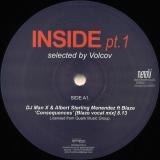
Neroli's own Volcov selects some favourites that never been available on vinyl before and shares them re-mastered and ready for all the music lovers. Music ranges from Larry Heard collaborator's Lee Pearson jr to Blaze collaboration with the late Dj Man X, passing through a Manoo deep and hypnotic late nite jam.
Unspecified Enemies, the project led by Louis Digital (Numbers, Counterattack, Arcola) present their debut album Romance in the Age of Adaptive Feedback.
Written and produced by Louis Digital, the album incorporates fragments of music data generated by long-time collaborator CiM (Ann Aimee, Delsin). Describing the title track, Louis Digital states:
“It’s the microelectronic sound of a city playing strange light games with itself, evoking bitcrushed desires and floating images, an urban phantasy stored on the broken circuits of an Ensoniq ASR-10.”
The origins of Romance in the Age of Adaptive Feedback trace back to 2006, when Louis Digital launched Diamond Sea, a series of events at London’s ICA that introduced the Unspecified Enemies project and a label called City of Quartz. The vision was to merge the hi-tech electronic textures of contemporary R&B with the sampling and sequencing techniques of pioneers like Anthony Shakir and Soundhack. However, the music was lost in time, and City of Quartz never released a single record.
Yet, the story took an unexpected turn. At one of these events, Spencer from Numbers received a CD containing early recordings. Years later, Numbers encouraged Louis Digital to reconstruct the lost music for an album. The result is a work resurrected from the past and reimagined for the future—retrieved in fragments from a broken Iomega Jazz SCSI Drive.
Expanding on the album’s themes, Louis Digital reflects:
“By the late ’90s the cinematic image of Los Angeles and the sound of Detroit techno had crystallised a new style of living in time and space. In 1997 Mike Davis — the political activist, urbanist, writer and historian of Los Angeles — suggested that it all had “something to do with a microelectronic aesthetic of very transient and decaying states”. It was a romantic vision — one where the city’s glass surfaces reflected a musical desire for futurity not yet dominated by data-driven corporate life. These were strange days to live through. This album evokes the embers of this fibre-optic moment, when urban revolution in an age of digital reification still felt possible.”
The album features full sleeve artwork and a poster designed by Ben Drury. In support of the release, an NTS show titled Romance and Reification will explore the cinematic and electronic music influences behind the album.
Bread & Souls is a new project dreamt up by Italian entrepreneur and music lover Franco Fusari. Franco invited Mark de Clive-Lowe on board to direct and produce an album of collaborations with some of our favorite artists including the likes of Bembé Segué, Vanessa Freeman, Paul Randolph, Rich Medina, Tommaso Cappellato and more...
Presenting Chapter 4! Working On It (here’s the original - you heard the remix on Chapter 3), a mid tempo bossa-inspired track features the wordsmithery of Philadelphia’s Rich Medina speaking on the idiosyncrasies and journey of life, joined by Bembe Segue. Together features Vanessa Freeman on vocals - previously heard in remix form on Chapter 2 - a timelessly uplifting soulful house excursion. Domu returns to the project with a second remix of Little Did I Know - this time flipping it for the broken beat dancefloor in classic Domu style, and we wrap up with Neroli’s Volcov remixing Anybody Out There for the 4/4 lovers.
Two producers Adria & Torrent are gathered together from their musical hub in sunny city Barcelona to present us the new release. The tale of friendship and the pursuit of them nonstandard sounds have resulted in this body of work under the name “Cicatrices De La Noche”. To translate it in English, it means scars of the night. On A side we can witness theirs solo works and their unique approach to sound design. While on the B side the maestros have gathered together in a collaborative volcano of production.
- A1: Srirajah Sound System - Si Phan Don Lovers Rock
- A2: Perikas - Laberinto
- A3: Mac Thornhill - No Way To Control It
- A4: King B. - Love Is Crazy
- B1: L'innovateur Djoe Ahmed Et Le Zoukabyle - Amek Amek
- B2: Champagn’ - Bel Ti Négress
- B3: Androo - Lyriso
- B4: Hidrogenesse - La Carta Era Muy Larga (Dub)
- C1: Kajou - Tet Chajé
- C2: Conjunto Baluartes - Nira Gongo
- C3: Landshark - Tie Me Up - The Nas T Version Instrumental
- C4: Pellegrin El Kady - Selva De Carnaval
- D1: Lee Jackson - Call On Me
- D2: Lta - What Comes To Ya?
- D3: Urban Volcano - Ame No Uta (Rain Song)
Cream[27,31 €]
To celebrate 10 years of one of London’s most loved underground club nights, Tangent, Mr Bongo are thrilled to launch this new compilation series. Crafted by its two residents, John Gómez and Nick the Record, it aims to transmit a taste of Tangent’s spirit. A party rooted in inclusivity and open-mindedness, whose name captures the spontaneous switches in musical direction that are a defining element of their nights. For the compilation, the pair have cherry-picked a selection of their prized, rare and dancefloor-ready tracks from around the globe, that have soundtracked the past decade of parties.
Friends for close to 20 years, music lovers, record obsessives and internationally renowned DJs in their own right, John and Nick have two lifetimes worth of musical knowledge to draw from. John a long-standing NTS Radio resident and compiler for Music From Memory. Nick one of the UK’s go-to record dealers, resident DJ since the ‘90s at one of Japan’s pioneering parties, Life Force, and co-captain / co-edit-expert of Record Mission with Dan Tyler (Idjut Boys).
In 2014, the pair decided to bring some of Life Force’s grassroots principles to the UK, whilst channelling underground clubbing institution Plastic People’s meticulous attitude to sound. Tangent grew from being a small gathering of friends, to an established fixture in London’s nightlife, whilst always maintaining a strict no guest DJ policy. “As London’s clubs have become increasingly reliant on international guests, we wanted to emphasize the importance of a club night growing through its residents”, John and Nick reflect. With 10 years of the duo at the helm, an intimate connection between DJ and dancefloor has been built, allowing for freedom of expression on both sides of the decks.
Tangent reaches around the globe and across different eras to make connections that stimulate emotional reverberations in the unfamiliar. Where the blissfully Balearic ‘Laberinto’ by Miguel Perikás, goes hand-in-hand with the Cameroonian hip-house of King B.’s ‘Love is Crazy’. The thundering ‘Amek Amek’ by L'Innovateur Djoe Ahmed et le Zoukabyle, rubs shoulders with the soulful Caribbean-influenced touch of Champagn’s ‘Bel Ti Négress’. And Pellegrin El Kady’s afro-cosmic ‘Seiva de Carnaval’, crosses paths with Kajou’s Kompa disco anthem ‘Tet Chajé’.
Tangent’s longevity is in part down to it having always embraced contemporary sounds. The sub-rattling bass of Srirajah Sound System’s stunning Molam dub stepper ‘Si Phan Don Lovers Rock’ and the slow, woozy mantra of leftfield dancehall explorer Androo’s ‘Lyriso’, are two shining examples.
This compilation represents an ongoing dialogue between past and present, transporting listeners to the heart of a pure musical experience, where open minds and open hearts are eager to follow the tangent.
repressed !
Jasper Byrne Aka Sonic (sonic & Silver / Accidental Heroes) Spent The Late 90s & 00s Dropping Releases On Pretty Much Every Legendary D&b Label Going (reinforced, Metalheadz, Renegade Hardware, Formation, Virus, Soul:r And His Own Space Recordings), Before Mysteriously Disap-pearing To The Far East & Re-emerging Years Later As A Hit Indy Computer Games Developer (lone Survivor) & Soundtrack Artist (hotline Miami).
After A Chance Encounter With Dead Man's Chest At A Gig In La (where Jasper Had Been Working On A Game And Wholeheartedly Soaking Up The Local Low End Theory Music Scene), It Quickly Emerged The Two Had Shared Similar Musical Stories, Straying From Previous D&b Careers And Into The Musical Wilderness, Only To Drift Back Toward The Tempo With A New Found 'outsider' Approach And Eerily Familiar Conclusions..
After Teasing Us With 2018's 110174 Mixtape (ltd Edition Cassette Only Release) And His Appear- Ances On Blunted Breaks Vol.1, 2019 Sees Sonic Mark His Return To The World Of Dance Music Proper With This Two Part, Heavyweight Ep For Western Lore.
Blending Techno, Footwork, La Bass, Hardcore, Synthwave And D&b Under A Loose Jungle Tekno Framework, 110174 Sees Sonic Crafting Beats, Breaks & Bass With An Artisanal Deftness Rarely Seen.
‘Self Oscillation’ is made up of 5 club-ready psychedelic workouts swaying with natural momentum, from
Ecuadorian superstar Nicola Cruz, who makes his 2nd appearance on London’s Rhythm Section INTL.
The internationally renowned producer, Nicola Cruz, has been instrumental in pioneering the sound of Andean music over the last decade. Born and raised in Ecuador, Nicola has found his own unique way to tap into Latin America’s illustrious musical past to create something utterly contemporary. His previous projects have had the 4 elements running through as major themes: Fire and lava erupted during his sophomore album, Siku, with an Ecuadorian volcano doubling up as a recording space. And now, with his second Rhythm Section release, we are met with sounds of flowing water that Nicola describes as “aqueous explorations”. On this EP, ‘Self Oscillation’, Nicola Cruz fuses experimental production techniques with underwater, bass-heavy constructions. Moods change like the tides; from euphoric highs with acid riffs and latin drum patterns, the music quickly dives to moody submarine basslines and dark, frenetic rhythms.
‘Self Oscillation’ sees Nicola’s production move to new heights as he expertly bridges the gap between natural and mechanical sounds. With the help of iconic 80s and 90s synths and the retro colours of a Roland Space Echo, his newest work is a hybrid of electronic dance music and a synaesthetic image of nature. In the spirit of his previous EP on Rhythm Section INTL, ‘Self Oscillation’ showcases the synergy - or rather ongoing battle between the organic and inorganic, the analog and digital, civilisation confronted and confounded by nature. It’s within this dichotomy that Cruz revels, and manages to say so much, without words.