Lès Modernos present a psycho-geographic trip to Andalusia, a journey recomposed in a green Corolla. Mechanized and pastoral collages. Miniature songs, luminous yet just a little heavy, from the great theater of life. Car radio samples, recorded from the passenger seat of the Father's vehicle. Al-Mutreb Abul-Loul, Big City Orchestra, Eric Copeland, Bertold Brecht, Sachiko Matsubara, Hopeton ‘Scientist’ Brown, Cabaret Voltaire (Red Mecca), a French singer resolutely of the now (or Jonathan Richman). Fears greater than us, heredity, death, love, oblivion. And this fever which always consumes us.Tracklisting: 1. laques1 2. corolla1 3. soleil pour toi 4. habitat1 5. Grisou 6. la superlegion 7. corolla2 8. au cabanyal 9. laques2
Search:volta cab
FAZI are a post-punk band based in the ancient Chinese city of Xi'an. However, there is much more to their story than meets the eye_ With five immersive full-length records and a brief stint on peak-time commercial TV already establishing the four-piece at the forefront of a truly pioneering wave of alternative music in China, the Euro-pean re-release of their latest offering, `Folding Story', represents an incredible new beginning for a band who have already spent years honing their craft - transforming timeless traditions of love, life and death into a perpetual dance of fre- netic, krautrock energy and sprawling, shoegaze panoramas. Fittingly, `Folding Story' is itself a cyclic experience of rebirth, renewal and a return to origin. Album opener `Invisible Water' is a contemplative start as frontman Peng Liu's yearning vocals reach out across synthesisers reminiscent of sonar and the hypnotic lapping of water on an un- known shore. Described by Peng as an "artistic conception of amniotic fluid in the mother's body", this motif returns at the end of the album's final track, `Way to Atman', this time as a gentle tide washing away the ash of a spent funeral pyre. Just as the album and its protagonist is born at the beginning and dies at the end, by deliberately opening and closing `Folding Story' with the sounds of water, Fazi invite listeners to flow through the record on a never ending loop, to listen to a story without pause, one that rises from a whisper to a roar only to subside as quickly as it arrived. First released in 2022 on pioneering Chinese record label Space Circle, `Folding Story' is a collection of 10 tracks that serve as stories themselves as well as part of a universal narrative in constant flow. A phenomenal accomplishment, its forthcoming re-release in Europe via Pelagic Records will ensure that Fazi continue to blow as many minds and ruffle as many feathers as possible. Gatefold sleeve, silver offset ink, printed on special all-black cardboard. FFO Joy Division, Suicide, Savages, Cabaret Voltaire, Iceage, Gilla Band, Fontän
- A1: Hot With Fleas
- A2: Nation
- A3: Unleash Your Sword
- A4: Jetlag
- A5: Contempt
- B1: Bad Mood Guy
- B2: Dressed In Air
- B3: Rabbi Nardoo Flagoon
- B4: Heaven Is What Heaven Eats
- B5: Mad Dad Mangles A Strad
- C1: Bad Mood Guy (Day 1)
- C2: Unleash Your Sword (Day 1)
- C3: Canine (Day 1)
- C4: Nature 10 (Terse)
- C5: Contempt (Day 1)
- C6: I've Always Hated Severed Heads (Live)
- D1: Hot With Fleas (12" Remix)
- D2: Nation (Nyc Mix)
- D3: Canine (12" Remix)
Futurismo present a deluxe vinyl package of the never before reissued 1987 avant industrial album: Bad Mood Guy by Severed Heads.
With an oeuvre of electronic experimentation that dates back to 1979, Australia’s Severed Heads rawly garnered everything from the sources around them: the sounds of the city, tape loops, old machines, distortion.
Although essentially one man, chief noisemaker Tom Ellard, he was joined here by film maker/homebrew video synthesizer operator Stephen Jones, and effects producer Robert Racic: who had worked with New Order. The result is a punishing view of pop, all crunching rhythms and electronic juxtapose. By incorporating popular tropes such as consistent rhythms, melodic vocal lines and drum machines this was perhaps as near to alittle “boogie-oogie-oogie” as Severed Heads were likely to get, but the outcome is a striking hybrid of the avant-garde, EBM and Synth-pop, an industrial vortex in which the sounds of the 20th century are sucked in and spat out around a monstrous dance beat.
Never pandering to expectations, Ellard saw dance music as a benchmark area where exploration was still possible. Big ideas and big sounds, notto mention big headaches when the original CBS mixes were left in a taxi cab. Whilst many of their contemporaries persisted without dignity, Bad Mood Guy’s cool melancholy assured a fanbase in America and dance floor loyalty with ‘Hot With Fleas’, which dares to sit alongside classics like ‘Dead Eyes Opened’. The unique inventiveness inherent in Severed Heads work makes this release essential for fans of Throbbing Gristle, Kraftwerk, Skinny Puppy and Cabaret Voltaire.
This remastered version of the original CD contains lost original versions and remixes and comes with a fold-out artzine booklet with liners by Ellard.
Northern Minimalism 3, the latest album from Mat Handley performing as Pulselovers, is a deeply personal “love letter to South Yorkshire, or at least to Doncaster and Sheffield”, not just the urban environment but the region’s post-punk and electronic-pop legacies.
Inspired by the concept of spreading a project over multiple formats taken from Virgin Prunes’ ‘A New Form of Beauty’, this is the first full album in Pulselovers’ on-going ‘Northern Minimalism’ series following a 7” and 10” release on other labels over the past few years.
Taking a different approach than the rurally-inspired ‘Cotswold Stone’ album, ‘Northern Minimalism 3’ delivers a sprawling, genre-hopping release that is less focused on melody but explores suburban drones and industrial rhythms.
“The term “Northern Minimalism” was coined by Simon Berkovitz of Sensory Leakage, who released my “Live at Doncaster College” tape in 2020,” adds Handley.
“I loved the description and wanted to use it to pay tribute to the early electronic and post-punk sounds I was listening to in the first two or three years of the 1980s, particularly The Human League (mk1), Cabaret Voltaire, John McGeoch (Magazine) and Eric Random.”
For fans of post-Chicago post-"Second Summer of Love" acid; Chris & Cosey, Terekke, Cabaret Voltaire, Anthony Naples, JTC, D.K., Luke Vibert, Khotin. The latest by Texan-turned-Angeleno progressive vaporwave producer Carlos Ramirez aka AURAGRAPH finds him shifting focus to the dance floor across eight chrome clockworks of cosmic acid house and liquid rave glide: New Standard. Inspired by lessons learned during a 5K mile American road trip tour in the summer 2022, he set to work in his Simi Valley Tuff Shed of synths and hardware, pursuing an explicitly DJfriendly muse: "I realized I wanted to make a record where every track could go off in a live setting." These cuts do just that, revved and rhythmic, peppered with slap bass, Madchester whistles, filtered acid, gated snares, baggy cowbell, and sample pack classics - record scratches, orchestral stabs, the "Yeah! Woo!" from Lynn Collins "Think (About It)." Ramirez describes the process as immediate and instinctual: "I'd turn on the MPC, pick a tempo, and just improv - it was incredibly fun." From sleek freeway techno ("110 Cruising") to arcade lurker acid ("Coast 2 Coast") to big room bangers ("666 Ambience"), the tracks time-travel across the canon of club music, sifting tricks and styles to fashion fresh anthems of hypnagogic jack. It's an album channeled as much as crafted, tapping into the decks of mythic warehouse infinities past and present, where the system rips all night and acid never dies.
Previously released on Fabrika Records in 2011 by the band members at the ripe old age of 17, this release marks a milestone in the Goth and Wave revival of the early 2010s. With hits like "Du rennst" or "Raben", Die Selektion blew some very fresh air into the dusty world of dark electronic music, featuring haunting trumpet melodies and German lyrics that question the meaning of life and love once again, encased in brutal sounds that taste like iron and lust. These 11 songs push you straight back into early days of Electronic Body Music.
Die Selektion take you on a wild ride through the suburbs of your soul, joined by Nitzer Ebb, Die Krupps, Cabaret Voltaire and DAF.
No. is the tenth Soft Riot album by Glasgow-based Canadian synth auteur Jack Duckworth (also known as JJD). With origins from the mid-nineties in the vibrant art-punk/hardcore dominating the West Coast American/ Canadian underground at the time, he has clocked in over twenty five years of musical output in various bands and projects.
No. is the logical follow-up to When Push Comes To Shove, released in November 2019 on the Glasgow UK-based label Possession Records, which saw some critical acclaim in the increasingly diverse synthwave scene — a crystallization of the artist’s signature “SynthLord” sound.
With No. things have been shaken up and pushed into new directions. Many different factors came into play, including the conditions of the pandemic lockdowns and an urge for listening to music favourites from beyond his own scene informed developments on this new record. One key feature of these tracks is that under these conditions they were developed as individual pieces — a contrasting approach from previous albums where tracks were written with an album in mind. An evaluation of all of these individual tracks in the summer of 2022 unveiled a common pattern going through these new compositions.
One can still hear any number of echoes of the spirits of original synth artists in his sound, such as Images in Vogue, The Box, Section 25, Thomas Dolby, Skinny Puppy, Chrome, Cabaret Voltaire, Fad Gadget, Japan and Bill Nelson. However, some of Jack’s halcyon punk influences surface as well, taking inspiration from legendary punk/hardcore labels such as Dischord and Gravity, as listening habits over pandemic steered back towards more guitar-based styles. The introduction of expanded production techniques, experiments with vocal styles and tones, and stylistic shifts mark a progression of Soft Riot’s sound. The result is a snarkier, urgent and more playful, with a focus on pure synthpop, new wave, art-punk, proto-EBM as well as grittier synth-punk and post-punk tones.
The variation, energy and tone of this collection of tracks illustrates Soft Riot’s ability to transcend the hallmarks of today’s music environment, which increasingly is fragmenting into smaller and smaller micro-genres. Dry wit and dark humour take the lyrics and the tone of this album on a fun ride through music scenes, dark alleys and inside jokes.
Foundation music are proud to present our second project with the formidable talent that is Crooked Man aka Parrot, known to his mother as Richard Barratt.
The DJ turned producer from Sheffield, founder and resident at the seminal Jive Turkey night, member of Warp’s Sweet Exorcist, musical partner with the late great Richard H Kirk (Cabaret Voltaire), producer to such maverick talents as Roisin Murphy and Add N to X, longtime Jarvis Cocker collaborator and remixer to a myriad of artists over several decades.
More recently, Parrot's project with internationally renowned Jazz singer Lady Blackbird, Athletes Of God, released two singles on Foundation Music ‘Don’t Want To Be Normal’ and the clubland hit ‘Fontella’ that were both playlisted by 6Music.
Lady Blackbird now flies the nest, with the divine Earth Angel swooping into her place. A seminal, reclusive, heavenly voiced singer, also from Yorkshire and with deep roots in the soul and dub scenes… And no, it's not Lisa Stansfield!
A project that has its roots way back in the Sheffield’s Blues parties and Jive Turkey itself. The club being a home to all forms of exciting new Black music, from ’85 through to the early days of the UK’s dance explosion. It sees Parrot take all that he has achieved, written and learnt over the years at the cutting edge of electronic, dance-inflected, production and DJing returning to those heady days of down tempo, body moving, speaker shaking music that would move the British underground soul/funk scene in the mid to late 80’s.
Call it 'street soul', '80’s soul', 'electro soul'… Earth Angel is all of those things but it is also very firmly rooted in the NOW! Not some retro pastiche, it incorporates so much more. With elements of techno, bleep, dub and any other studio trickery that Parrot cares to employ in order to suck you into Earth Angels’ druggy, hypnotic, sexy, “Mogadon Soul”. A four songed, eight tracked vinyl EP, featuring some classic songwriting from the glory days of soul and Crooked Man’s bass heavy electronic rhythms.
Welcome to the heavenly world of Earth Angel, the journey starts here.
DJ Support:
Luke Una, Ross Allen, Sean Johnson (ALFOS) & Kebal.
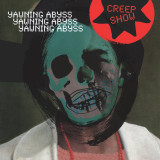
In the five years since Creep Show’s acclaimed Mr Dynamite album was released it’s fair to say that we’ve all been through a fair bit. Sitting here, in 2023, things don’t seem to be getting any better. There’s the cost of living crisis and political meltdowns; we're in deep water with global warming and to top it all there’s a war on our doorstep.
Back in 2018 everything seemed less complicated. Sure, there was stuff to get riled about, but we knew nothing about what was to come. Mr Dynamite was a fairground ride into the dark corners of a world that was on the brink of being blitzed in a blender. It was a record teetering on the edge. Five years down the line you’d expect the follow-up, Yawning Abyss, would double-down and bring the white-knuckled, teeth-gritted fury of the last five years to the boil. And yet….
A quick recap? No problem. Wrangler + John Grant = Creep Show. And Creep Show? “A band of musical misfits who have found a voice or two”, says Wrangler’s Ben “Benge” Edwards, whose Bond villain studio on the edge of a moorland is Creep Show Grand Central as well as home to an analogue synth arsenal that could sink ships.
Wrangler have known each other for a while. Tunng’s electronics wizard Phil Winter and Cabaret Voltaire’s trailblazing, pioneering frontman Stephen Mallinder go way back, while Phil and Benge crossed paths in the 21st century when they seemed to be increasingly in the same venues at the same times. Meanwhile, Mal had been living in Australia since the mid-90s and when, in 2007, he returned to the UK his old pal Phil suggested he meet Benge and the three of them immediately began working together.
Wrangler collectively bumped into Grant at their soundcheck for Sheffield’s Sensoria Festival in 2014 where they were playing with Carter Tutti. A friendship blossomed and when they were invited to perform together for Rough Trade’s 40th anniversary show at London’s Barbican in 2016, well, they jumped at the chance... and Creep Show was born.
Let’s talk about the new album... What is the ‘Yawning Abyss’? You might well ask. According to Mal, it’s “a cosmic event horizon that I can see from my attic window when stand on a chair”. Yeah. Thanks.
“On this album”, offers Benge, feet firmly on the floor, “Wrangler wrangled some vintage synths, mostly Roland, Moog, and the ‘Crystal Machine’ - then John Grant joined in the fun at Memetune Studios where lots of musical experiments were carried out. Then Mal and John ran off to Iceland with the master tapes and recorded a load of madcap vocals. Back at Memetune, me and Phil were left to try and make sense of it all. Which wasn’t hard because what they did in Iceland was totally magnificent.”
Which kind of brings us back to where we began. You’d imagine ‘Yawning Abyss’ would be blowing steam out of its furious ears. Mr Dynamite but kicking a wasps nest. Repeatedly. And yet…
Opener ‘The Bellows’ comes on like a modular ‘Radio Ga Ga’, the singalong ‘Moneyback’ (“You want your money back? / I didn’t think so”) sounds like Godley & Creme’s ‘Snack Attack’ meets Prince Charles And The City Beat Band (“Pennies, pounds, dollar bills, signed agreements, death wills”). ‘Yahtzee!’ is an unhinged electro breakdance party in four minutes and nine seconds.
Where Mr Dynamite was menace, a mélange of mangled voices, with Grant and Mallinder being heavily treated, pitched up or down, rendering their contributions largely indistinguishable, Yawning Abyss takes a more direct approach. You hesitate to say feelgood, but there’s a skip in the step here for sure.
The title track plays John Grant’s vocal straight. Completely. It’s good, so very good. Like ‘Axel F’ covered by Vangelis. The delicious shimmering synths of ‘Bungalow’ also plays those Grant pipes with a straight bat. ‘Matinee’ delves into darker, very funky territory. With Mal upfront it comes on like ‘The Crackdown’. Choice lyric: “You are starting to breakdown / And it’s so fun for me to see / You should have thought of that / You should have come prepared / You can see what’s happening and you look a little scared”.
So, you know, not all feelgood. But it does feel good. It’s probably best to draw your own conclusions... This is Creep Show after all.
Subklinikal Leukotomy Aphrenia Spasmophilik Lyssophobo Asphyxia Sinister Lethal Anorex LP/CD
Korpses Katatonik was a musical solo project of Zoe DeWitt during the years 1982 and 1983. Unlike DeWitt's later project Zero Kama, the work of Korpses Katatonik remains entirely within the realm of electronic music and shows an uncompromising experimental style comparable to that of other industrial bands like Throbbing Gristle, SPK, or Cabaret Voltaire.
Subklinikal Leukotomy Aphrenia Spasmophilik Lyssophobo Asphyxia Sinister Lethal Anorex LP/CD
Korpses Katatonik was a musical solo project of Zoe DeWitt during the years 1982 and 1983. Unlike DeWitt's later project Zero Kama, the work of Korpses Katatonik remains entirely within the realm of electronic music and shows an uncompromising experimental style comparable to that of other industrial bands like Throbbing Gristle, SPK, or Cabaret Voltaire.
- A1: Ghosts Of Decay (Album Mix)
- A2: Let's All Make Brutalism (Album Mix)
- A3: You've Heard This One Before (Album Mix)
- A4: (B) Owls In Tesco Bags (Album Mix)
- B1: Open Your Head (Album Mix)
- B2: Harder Times (Album Mix)
- B3: (B) We Never Wanted You (Album Mix)
- B4: 98 Russell Street (Album Mix)
- C1: (We Never Needed This) Fascist Groove Thang (Album Mix)
- C2: Thee Difference Ov Girls (Album Mix)
- C3: Empire Statement Humanoid (Album Mix)
- C4: Circus Ov Daath (Album Mix)
- C5: (B) Let Me Dada (Album Mix)
- D1: This Is Phil Talking (Album Mix)
- D2: Sound Ov Thee Crowd (Album Mix)
- D3: I Dare You (Album Mix)
- D4: Borstal Communications (Album Mix)
Sometimes, things "just happen". For months, we’d been working away on various projects and then, without really thinking about it, The Black EP just happened. It seemingly appeared from nowhere.
We’d been talking about the old days; making music with friends and dodgy kit, renting small practice rooms and using makeshift recording studios. It was such a common thing back then, you could pick a dusty space in a half-derelict building for as little as £25 a month. In those days, the Cabs and Human League had studios with posh-sounding names, but in reality, they were the same old workspaces long abandoned by the industries they were built for. Nevertheless, the grand names made them sound magical.
Sheffield had thousands of these spaces, and some still exist today, but their abundance and low-cost made Sheffield a very active place. Someone was always doing something. They’d exploded onto the scene in a flurry of excitement before disappearing just as quickly.
There’s something about these little mesters (workshops) that we believe lives in the very consciousness of Sheffield. It’s one of the reasons we never really had big scenes like Manchester or Leeds. The Hacienda would've never been built here.
We don’t really do big gangs or have that kind of mentality. We tend to exist in little pockets, often leaving each other alone. It would be 30 years before any member of The Black Dog talked to Cabaret Voltaire. Sure, we’d stood outside their practice room as kids, trying to listen in, but never felt any reason to approach. Sheffield is like that.
Once we had the first two tracks of the Black EP, we set off to see Jon at Do It Theesen, where he manually cut the tracks to an extremely limited set of 7" singles using a vinyl lathe. It just felt right to go back to the old ways; a small gang creating something special in workshops and sheds. There’s something very satisfying about it, a perfect circle, if you will.
We pushed further by adopting old practices, working with one synth per person and limiting the use of our computers. We only stopped short of putting everything on beer crates. It seems like madness these days, but there is raw creativity within these confines. Pretty much every band started this way. Depeche Mode travelled to the studio on the London Underground for their first appearance on Top Of The Pops, all lugging a synth each. That's how we approached the creation of this album; stripped back, raw and minimal - it just felt so right.
And then there’s the competitive element that was influenced when the original Human League split and became Human League MK II and Heaven 17. Both continued to use the same studio to write what became the albums "Dare" and "Penthouse and Pavement". There is something about that drive that is very Sheffield, just making stuff and hoping everything falls into place.
In Sheffield, we do things differently, because that’s how we are built. away on various projects and then, without really thinking about it, The Black EP just happened. It seemingly appeared from nowhere.
Are you ready to embark on a wild ride through the sonic wonderland of ‚Life Of Phoroma‘? This isn‘t your average V/A extended player compilation – it‘s a pulse-pounding journey through chaos, confusion, and pure eclecticism that‘ll take you beyond just dancing.
Terra Magica Rec. sixth release is a passionate ode to the fusion of EBM and psychedelic, perfectly blending lightning-fast new age and tribal hypnotic soundscapes with 1980s synth atmospheres high on Trance.
It’s Electronic Disco gone Techno gone HiNRG gone wrong folks! Enjoy. The SH-101‘s aggressive cuts, the Sequential Circuits‘ mesmerizing melodies, and the heavily processed Neumann TLM 193 vocals seamlessly weave in and out of acid-ish and electro breakbeat grooves, „Why am I suddenly standing at Tokyo Teleport Station? What happend to my last week?“ Welcome to relaxed Rave-basslines and lo-fi rhythms that will intoxicate your senses.
Get loose and fall into your next portal of unexpected spiritual flows. Catch your six unique tracks for a highly eclectic journey through mysterious and magical moments. So strap in and become one with the sound, because ‚Life Of Phoroma‘ is your roller coaster ride to unforgettable sonic adventures.
“Elemental 7 has cast a looming shadow of influence over almost all electronic music since it was made” - Boomkat. Chris & Cosey’s Elemental 7 – available here for the first time in 40 years - is the soundtrack to the film of the same name (on Cabaret Voltaire’s Doublevision video imprint) that saw the duo working once more with John Lacey – Lacey had previously worked with Cosey in COUM Transmissions and introduced Chris Carter to the collective. The album’s highlight and one of their best loved songs, ‘Dancing Ghosts’, sounds as fresh and relevant today as it must have on its original release.
Future Jazzers, notorious experimentalists and outfield eccentrics stumble onto the dancefloor. In the 90s. In the UK.
From an electronic music perspective, the period 1992 to 1996 in the UK that this compilation celebrates, was one of dizzying sonic diversification.
It was also a particularly turbulent time in the UK, not only politically and economically, but also culturally too. Economic catastrophe in ‘92 was followed by widespread poverty, a cost of living crisis and countless political scandals. Meanwhile, John Major’s Tory government pandered to its political base via unpleasant, authoritarian legislation that seemingly sought to crush rave culture, alternative lifestyles, and traveller communities. The UK was not so much a ‘Happy Land’ – to quote the name of this compilation – as an angry and divided one. Sounds familiar, doesn’t it?
Throughout, the music created by producers based across these Isles remained uniquely British, speeding up a process begun in the late 1980s through the emergence of street soul, bleep & bass and breakbeat hardcore – musical styles whose roots in multicultural inner-city communities made them distinctly different from the Black American sounds that had inspired their creators. It was here, rather than in the indie pubs of Camden, that real musical revolutions were taking place.
This deep diving selection brings together some truly adventurous and original electronic music from this period, much of it very hard to find. Major label outings connect with white label oddities with ease. Perhaps it could even be argued that many of these unearthed gems fit more easily into DJ sets in 2023 than they ever did at the time. The off-kilter swing of Richard D James’ obscure and highly sought after Strider B outing, ‘Bradley’s Robot’ is joined by further rare cuts from Cabaret Voltaire and the Black Dog, and artists as diverse as Ultramarine, Herbert, Fretless AZM, and Radioactive Lamb, amongst others.
This collection has been lovingly selected, compiled and mastered for maximum sonic playback. This very special release boasts sublime pastoral themed artwork, as well as informative and passionate liner notes by celebrated music scribe Matt Anniss (‘Join The Future’).
"El Pasaje del Aumento" is a collection of syncopated rhythms for hypnotic slow dance. An accident of oppressive atmospheres with a humorous sense of rhythm and composition, which moves between downtempo, African rhythms and dub. With a certain oriental softness, it introduces you into a state of enchantment, spell... a hypnotic and mysterious restlessness, almost uncomfortable. Sentuhlà squeezes his Yamaha Rm1x on this second album, creating rhythms that you would never believe possible with a single synthesizer. He spins, twists and strangles it to the limit, til getting the last drop of frequency and oscillation.
Without too obvious references, it recalls the rhythms of Toulouse Low Trax or Wolf Müller, the experimentation of Muslimgauze, the repetition of Huerco S... But if you ask Sentuhlà himself, he will also mention Fela Kuti, Sun Ra, Can, Cabaret Voltaire, Tom Zé or Lee Scratch Perry...
Sentuhlà is one of the many aliases of musical jack of all trades José Guerrero, a long-standing figure in the already rich underground scene of Valencia. In this solo excursion, he explores the vast possibilities of mechanical repetition, the machine funk of dirtbag rhythms, and proper boogie DIY synth music, sculpting a syncopated sound that is both modern and atavistic. Coming from a deep knowledge and ability to communicate very diverse sounds, slow jams unfold into dance music for clear-eyed lounge lizards for whom sleaze comes not dizzy but focused. Whitened African rhythms beat up no-wave disco pleasure points, managing the hard task of being very cool and nonchalant, but also hot and dedicated.
Cabaret Voltaire’s ‘Micro-Phonies’ now reissued on Turquoise vinyl. ‘Micro-Phonies’ is Cabaret Voltaire’s most sleek dance record, featuring charting singles ‘James Brown’ and ‘Sensoria’. Released in 1984, the record gained its reputation as the Cabs’ most mainstream album. Their partnership with Peter Care on video for ‘Sensoria’ received major airplay from MTV, and was famously one of the first music videos to be in the New York Museum of Art.
Cabaret Voltaire were very much ahead of their time, harmonising dance music, techno, dub, house and experimental electronics, making them, without a doubt, one of the most influential acts in electronic music.
Renude19’s debut single Blah Blah Blah is a Synthpop protest song; an original piece of music sampling Greta Thunberg’s famous Blah Blah Blah speech from the Youth4Climate Conference in Milan, in September 2021.
The feel of the track is reminiscent of Kraftwerk, Cabaret Voltaire and early Human League, a dark marble slab of electro, sat on a mid-tempo break beat and underpinned by classic synths that give the piece a beautiful retro feel. The track has the vibe of a house record, a slow builder that reaches a subtle climax and makes a hard hitting point about climate change.
The song itself is powerfully delivered by Brighton based vocalist Christabel, who has recorded with artists such as the Freemasons and Skylab 9. The piece has an unusual song structure with Greta Thunberg sampled in the chanted chorus, and her speech used to dramatic effect.
Recorded in Brighton UK by producer Ash Huntington; engineered by veteran techno artist Iain Rive (Cydonia, Semsis, Universal Sound); mastered by the wonderful Walter Coelho; and the sleeve design was created by the world class album sleeve designer Pete Hayward, who has designed for Paul McCartney, Kylie Minogue, Simon Cowell, Universal Music, Sony and Wham!
The single is being promoted with Facebook and Youtube campaigns, has already had over 65’000 plays on Youtube, and is gaining radio support from 6music DJs.
Einstürzende Neubauten producer Boris Wilsdorf, Karl O’Connor aka Regis and MY DISCO's Liam Andrews assemble as EROS, bottling no-wave/industrial lightning with a tight set of pulverized, widescreen torched-songs that rasp, grate and throb somewhere between This Heat, The Cure, Cabaret Voltaire, Alva Noto x Pan Sonic.
An industrial fantasy of flesh and steel, ‘A Southern Code’ is the stunning continuation of the trio’s work at Wilsdorf’s pivotal Anderesbaustelle studio on Regis’ watershed album, ‘Hidden In This Is The Light That You Miss’. Rejoined by another key muse, Anni Hogan, and Einstürzende Neubauten’s Jochen Arbeit, they effectively galvanised a new band, EROS, during long days and nights in the studio across 2020 and into 2021. The sound they make is fiercely lean, shaped by Wilsdorf’s manacled mixing and anchored in the frankly sexy as f#ck swerve of Regis vocals and his snake-hipped rhythm section.
The first songs issued from those sessions form a lustrous new high point of contemporary industrial and dance music, one porous to Kurdish dabke as much as archetypal goth, pulsing with a metallic bloodlust and spatialized by Wilsdorf’s genre-forming tekkerz in a way that seriously rewards with proper amplification. Judged on its immediate merits, it’s the sort of record that could have feasibly come out at any point between the ‘80s and now, but closer inspection reveals a discreet framework of sculpted subbass and sleekly rolling traction that betrays the modernity of minimalist D&B physics and up-to-the-second sound design that places ‘A Southern Code’ in a timeless echelon.
Registering the venomous drums and over-the-shoulder whispers of its title track, plus the incendiary middle eastern horns of ‘The Crawling Man’ - a real parallel dimension take on The Cure’s ‘The Top’ - to the post-apocalyptic lounge lizard styles of ‘In This Place’, and the unheimlich creep to ‘Nature Unborn (From Sun to Sun)’, the band’s first album plants a vital stake in the ground for industrial musick at the crest of a new decade.
Futurismo are proud to present a deluxe remastered vinyl package of the classic 1980 album: Red Exposure by the uncompromising Chrome.
Arguably considered the San Francisco bands greatest work, Red Exposure, the fourth album to feature core members Damon Edge
and Helios Creed, was the definitive version of Chrome’s idiosyncratic approach to sound: a projected vision of near future dystopia via an undefinable guise of experimental space rock and punk-tinged alien soundscapes. Here, the band simultaneously draw from the otherworldly noises of their past records, whilst pushing their synthesizers forward into, albeit oblique, pop song structures.
Edge’s vocals are structured more like an instrument than a voice, lyrics painting images of humanities future on the edge of total destruction. As Creed’s guitar work multilayersit’s way into a completely different aural spectrum, beautiful yet violent, slashing against rhythmic pulsations, loops and experimentations, to create a sound that even today feels beyond the here and now. This distillation of the bands repertoire seemed to envision a deconstruction of rock ‘n’ roll, aimed to break past the shell of cliché that it would of course eventually come to inhabit. Which is why despite it’s age Red Exposure remains a record that still sounds like the sonic product of a far off civilisation, making this disk of new wave nihilism vital for fans of Space rock, Krautrock, Throbbing Gristle, Cabaret Voltaire and Suicide.
The deluxe remastered version of this out of print 1980 LP is presented here in ltd edition coloured vinyl. It comes packaged in a chromed mirrorboard sleeve, contains a large screen printed poster printed with neon ink featuring unseen photographs of the band, and a bonus track.
On August 26th Gwilym Gold releases his third album, Blue Garden, on SA Recordings. Alongside the record we are pitching the beautiful Blue Garden. Gwilym began playing improvised music as a pianist and may be fondly remembered as the singer and keyboardist in psychedelic pop trio Golden Silvers but has since worked widely as a soloist. 2012 saw the release of his high-concept solo piece Tender Metal which was composed and released using Bronze; a new music technology which Gold created with producer Lexxx alongside Mick Grierson. Using Bronze, a song is enabled to rebuild itself on each playback from the musical seeds and ground sown by the writer. Music composed with Bronze is not restricted to just one playback possibility, it is a dynamic, ever-transforming representation of itself where the artist builds a new model as part of each song’s writing process. Gwilym has since collaborated with artists such as Arca, Jai Paul, Philippe Parreno and Nicolas Becker, introducing them to this new technology. One of the hopes for Bronze is that it brings some of the characteristics of performance back into previously inert musical documents, and alongside his work with Bronze, Gwilym has maintained a wide performance practice. Performing recently alongside musicians such as Dave Okumu, Tom Skinner and Lucinda Chua and collaborating with artists Eddie Peake and Holly Blakey. His two recent collections of songs, A Paradise and Sky Blue Room, stem from this, the second being recorded almost entirely live in three days alongside Okumu and drummer Dan See. Blue Garden is Gwilym’s first collection written and recorded entirely in solitude and he hoped to unburden the process of anything beyond the most primary elements. Setting up a sort of hybrid harp in a small isolated room, the aim was to let the songs flow out unadorned and record them as they were. The only addition to the album is the accompanying sound of rivers and birdsong by sound recordist and founding member of Cabaret Voltaire, Chris Watson. Gwilym started to play the new album alongside Watson’s recording ‘The Drinking Boy’ which led him to reach out to Watson. Gwilym explains “I played it to a friend once I had recorded it with Chris’ field recordings, they said it almost sounded like the quarantine birds, there was a feeling of it being a little sanctuary”. The songs on Blue Garden were written during a bittersweet time, where Gold was experiencing moments of love, loss and rebirth. The album is a loose and abstract exploration of love in all its forms, how familial, platonic and romantic love are all intertwined.
AM006 is by Berlin's ML, titled 'Life always breaks your heart'. Two 30-minute pieces were written, constructed, collaged and fixed together by himself. It's an important story, so there's a copy from ML below and also ours was written by Bokeh Version Industrial to do it justice.
Hallucinated Brazilian poetry read by text to voice engines, supernatural thrillers ripped from Youtube, the clang of cutlery and distant canteen conversation, that noise wire fencing makes when you rake it with a stick, crickets chirping over odd dance emotions, a sample you think your recognise but can’t name…..
The trivial is cosmically important, the cosmically important is trivial. ‘It’s about the product’ - all of life’s a sample. You contain universes.
Alice in Wonderland, late night sessions with kosmische guitar legends, ethnographic chants from an unknown land, “There’s no monopoly of knowledge / there’s no monopoly of power”: forecasts from global political trends, China will be important they say, someone’s whistling a tune that doesn’t exist, I’m thinking of times long before I was born . . .
Growing naturally like a beautiful montage from his field recordings (a rich library of personal psychoacoustic details) and his 150 Session on NTS, ML's Life Always Breaks Your Heart is mixtape-concrète:
Gamelan of the soul, Bio-Curry-Wurst in Kreuzberg, zither overlays the booms of the squatter’s homegrade grenades…
Mark Leckey vs. Alvin Curran, Gustav Flaubert vs Cabaret Voltaire, free association flashbacks with the timestamps mixed up, with added bass guitar, OP-1, Ableton, distinguishing the ‘real’ instruments becomes unimportant….they’re absorbed by memory foam….
No country, no flag – outernational without a cause!
There is no purpose, there is only reverie.
ML -
"A useless ruin, things are falling apart, even in our deepest, we long for harmony. A hypothetical path, for obscure reasons, fades into transparency. The mediocrity of Western culture, sicken by P.R., life offers a chance, a place for enthusiasm. The texture of the world, them can read it in your eyes. In the heart of schizo-culture, distance, suddenly shortened, forms characters as symbols. Deafen by mass media, embittered by unsettled chemistry, the willing body, forever in transition. The pre-invented existence, owned by language, creates a passage towards chaos. Paragraphs of currents, amplify the feelings, while silence leaks into the new luxury of time. Gentrification of sentiments, beneath our palms, all these memoirs. A modern consciousness, stretching over years in narcissistic differentiation. In touch with another human spirit, blowing backwards, beneath dark waters. We put our hands on your body, onto a new landscape, employed by metaphysical mutations. At the edge of the cosmos, prairies and mountains hide the truth in tactical silence. Apparently so, a number of months ago, above our head, a landscape of journals. Mystical content, statistically insignificant. A new patio, them crawled through the walls."
- A1: Versuch Einer Übersicht
- A2: Kristallische Bindung
- A3: Selbstbespiegelung
- A4: Aggregate (In Zwei Sätzen)
- A5: Merkwürdige Klänge (Zwölftonspiel)
- A6: Geschmack Und Funktion
- A7: Substanzsuche
- A8: Einheit Von Maß Und Zahl
- B1: Anmerkungen Zur Situation
- B2: Klangfigur (Für Klavier, Stimmen Und Regler)
- B3: Schwingungsknoten
- B4: Oberlippentanz
- B5: Satzlehre (Rückwärts)
- B6: Schwebung Und Strenge
- B7: Töne, In Die Höhe Gezerrt
- B8: Abschied (Für Stimmen, Becken Und Streicher)
Distilling Sounds From The Now 70 Years Old Archive Of The Darmstadt Summer Courses For New Music, The Berlin Based Electronic Artist Hanno Leichtmann Presents A Stunning New Album Which Is Remix, Collage And Homage At The Same Time. Mastered And Cut By Rashad Becker At D&m.
On His Latest Work "nouvelle Aventure", Berlin's Hanno Leichtmann (who Besides His Solo Works Also Plays With Jan Jelinek And Andrew Pekler In Groupshow And Recently Released His 2nd Album With Valerio Tricoli On Entr'acte) Presentshis Very Individual Approach To The Task Of Remixing And Reworking The Imd Archive. As In His Previous Installations (e.g. "skin, Wood, Traps" For Haus Der Kulturen Der Welt, Celebrating The 100th Birthday Of The Drumset), The Electronic Artist Distills His Sound Material Exclusively From A Thematically Fixed Archive, In This Case: Concert Recordings, Lectures And Discussions Fromthe Now 70 Years Old Archive Of The Famous Darmstadt Summer Courses For New Music (stockhausen, Nono, Ligeti, Xenakis Et.al.). Originally A 6-channel Installation As Part Of "historage" At Mathildenhöhe Darmstadt, The Composition Is Here Presented As A 46 Minutes Stereo Mix. Leichtmann Sent Thesubjectively-chosen Sounds Through His Unique Machinery Of Voltage-controlled (micro-) Loopers, Re-recorded Them And Then In A Last Step Pieced Them Together In His Studio, Primarily Applying The Traditional Parameters Of Early Electronic (tape) Music (amplitude, Pitch / Speed, Playback Direction, Series / Cuts, But Most Of All: Repetition. The Result Is A Stunning Albumwhich Is Remix, Collage And Homage At The Same Time - And A Highly Psychedelic Affair, As Mirrored By The Amazing Artwork By Caro Mikalef (cabina).
Red Vinyl[22,48 €]
Cabaret Voltaire co-founder Stephen Mallinder's second solo outing for Dais further distills his signature fusion of minimal synth, oblique wordplay, and "wonky disco" into a riveting rhythm suite ripe for our Age of Escalation: Tick Tick Tick. Channeling the temporal malaise of lockdown through a lusher palette of modular electronics and stereo strings, the songs embrace ambiguity and plasticity, loose systems of percolating circuitry and airless funk. Recorded across a handful of sessions at Meme Tune Studios in Cornwall with frequent collaborator Benge (aka Ben Edwards), Mallinder cites no guiding aesthetic premise for the collection beyond "cowbell on every track, and entirely no reverb." From the first coiled cybernetic groove of opener "Contact," the album's spatial dynamics are disorienting and asymmetrical, alternately cold and sensual, opiated and claustrophobic. But, throughout, "rhythm is the default, the bedrock, the building block-even the melodies are rhythmic." Across 40-plus years of electronic musicianship, Mallinder's sense of timing and tempo has honed into a rare tier of mastery, limber and fluid but knotted with strange frictions. Shades of Detroit technoid industrial ("ringdropp," "Shock To The Body") crossfade into now avy punk-funk ("Guernica Gallery," "Galaxy," "The Trial"), bad trip IDM ("Wasteland"), and jittery vapor house ("Hush"), at the threshold of modes both familiar and foreign. Lyrically the record is equally evasive, rich with allusions and associative linguistics, surveying liquid notions of societal noise, ecological ruin, art world pretension, and the trials of daily life. But the lack of fixed meaning remains Mallinder's main muse: "Music should draw you in; lyrics should make you think. Most interpretation is misinterpretation." This is music of countdowns and comedowns, fleeting pleasures and opaque futures, observing the great decline while dancing on its ashes. Flux is deathless and forever; the rest, illusion: "I will be a constant figure / Flickering a moving picture / Turning in your head forever / Split apart but held together."
Black Vinyl[21,22 €]
Cabaret Voltaire co-founder Stephen Mallinder's second solo outing for Dais further distills his signature fusion of minimal synth, oblique wordplay, and "wonky disco" into a riveting rhythm suite ripe for our Age of Escalation: Tick Tick Tick. Channeling the temporal malaise of lockdown through a lusher palette of modular electronics and stereo strings, the songs embrace ambiguity and plasticity, loose systems of percolating circuitry and airless funk. Recorded across a handful of sessions at Meme Tune Studios in Cornwall with frequent collaborator Benge (aka Ben Edwards), Mallinder cites no guiding aesthetic premise for the collection beyond "cowbell on every track, and entirely no reverb." From the first coiled cybernetic groove of opener "Contact," the album's spatial dynamics are disorienting and asymmetrical, alternately cold and sensual, opiated and claustrophobic. But, throughout, "rhythm is the default, the bedrock, the building block-even the melodies are rhythmic." Across 40-plus years of electronic musicianship, Mallinder's sense of timing and tempo has honed into a rare tier of mastery, limber and fluid but knotted with strange frictions. Shades of Detroit technoid industrial ("ringdropp," "Shock To The Body") crossfade into now avy punk-funk ("Guernica Gallery," "Galaxy," "The Trial"), bad trip IDM ("Wasteland"), and jittery vapor house ("Hush"), at the threshold of modes both familiar and foreign. Lyrically the record is equally evasive, rich with allusions and associative linguistics, surveying liquid notions of societal noise, ecological ruin, art world pretension, and the trials of daily life. But the lack of fixed meaning remains Mallinder's main muse: "Music should draw you in; lyrics should make you think. Most interpretation is misinterpretation." This is music of countdowns and comedowns, fleeting pleasures and opaque futures, observing the great decline while dancing on its ashes. Flux is deathless and forever; the rest, illusion: "I will be a constant figure / Flickering a moving picture / Turning in your head forever / Split apart but held together."
Cabaret Voltaire’s ‘The Covenant, The Sword and The Arm of The Lord’, as originally remastered in 2013, now reissued on White vinyl. Known for being the harder, more experimental album of their “Pop” period, ‘The Covenant, The Sword and The Arm of The Lord’ was originally released in 1985 and includes the classic ‘I Want You’. The album embodys Cabaret Voltaire’s industrial electro-funk sound and their punk ethos.
Cabaret Voltaire were very much ahead of their time, harmonising dance music, techno, dub, house and experimental electronics, making them, without a doubt, one of the most influential acts in electronic music.
“...The Covenant, the Sword and the Arm of the Lord is an exercise in paranoia with anxiety coded into the jittery sample-heavy structures of the music itself.” - Spectrum Culture
Diskotopia is ecstatic to launch our 11th year with a bombastic new LP from label co-founder BD1982. Initiation Insight follows 2021's seminal Distance Vision LP - which garnered inclusion in Bandcamp's Best Electronic Music, JunoDaily's Best New Albums, and coverage in The Wire, RA, and Louder Than War - surveying the previously-plotted sonic ley lines and expanding upon them in drastically robust and kaleidoscopic directions.
Musically, the tracks across Initiation Insight have been composed with an ear towards ritualistic structures, with the album's themes touching upon spirituality, hermetic philosophy, dreams, and human evolution in the face of impending natural destruction.
On this release, BD1982 favors stylistically nomadic production and a drive for emotion over genre constraints to explore further depths of songwriting and structures not yet heard in his previous material. Tribal-informed industrial and molten-electro styles coalesce with both future-facing and ancient-rooted textures – spread across an underlying current of soundsystem-savvy sonics.
Initiation Insight proves to be another major step in the evolution of BD1982's sound, a caustic yet covalent natural mutation that will appeal to fans of Killing Joke, My Bloody Valentine, PJ Harvey, Cabaret Voltaire, Samhain, and Tricky alike.
Mastered by Dominic Clare at Declared Sound.
Available as a limited-edition cassette.
To a degree, all musicians are a product of their environment, the places they record and the venues they play. For proof, check out the alumni of the n-wave era CBGBs venue in New York, Cabaret Voltaire’s Western Works studio in Sheffield or more recently London’s Total Refreshment Centre.
We can now add to that list the Constellations Workshop in Colwick, Nottingham, a project that provides employment through making studio furniture, for out-of-work musicians. It was here, after-hours, that the music on Brown Fang’s impressive and ear-catching debut album took shape.
Both members of Brown Fang, bassist John Thompson and guitarist Henry Scott AKA Henry Claude, have a long association with the Constellations Workshop. Though their musical projects are manifold – Thompson having toured with the likes of The Nectarine No9 and The Selecter, with Scott being both a mainstay of Nottingham jazz circuit and recording ambient music as Fang Jr – the work provided by the community-minded project has kept their heads above water and allowed them a space to record in when the shutters go down and the bandsaws get switched off.
Yet the music showcased on Sherwood Pines is more morning-fresh and sun-kissed than industrial and sawdust-sprinkled. Combining the pair’s brilliant musicianship – think languid bass guitars and Pat Martino-esque jazz guitar licks – with saucer-eyed electronics, occasional downtempo drum machine rhythms and plenty of glistening special effects, the set’s eight tracks are as blissful and becalmed as an early morning saunter through Sherwood Forest on a misty autumn morning.
For proof, check epic opener ‘Tracing Paper’, a slow-build ambient soundscape in which bubbly electronic lead lines and colourful chords sashay around Scott’s sparkling, laidback guitars, and the beguiling ‘That’s All You Can Think’, a subtle tribute to Steve Reich masterpiece ‘Electric Counterpoint’ in which slow-burn, stretched out synthesizer sounds wave in and out of a gradually evolving cycle of delay-laden electric guitar motifs.
The band’s love of classic American minimalism – as well as a shared love of the Duratti Column and Robert Fripp – comes to the fore on ‘HDMI I Love You’, which boasts a deliciously dubby bassline, Tangerine Dream style synths and the deepest of ambient chords, while ‘I Nearly Married a Human’ and ‘Fridgewords’ balance bespoke electronics – languid, dewy eyed and comforting – with Scott’s gorgeously laidback, slow-release guitars.
Every great album needs a triumphant conclusion, and Sherwood Pines is no different. You can hear everything that makes Brown Fang great on ‘Goodbye Donkey Jacket’, from the pin sharp, effects laden jazziness of Scott’s guitars and the fluid dexterity of Thompson’s bass, to the pleasingly spacey pulse of the synths and the gentle rhythms of the soft-focus machine drums. It’s a confident, ear-catching conclusion to a debut album that’s been years in the making.
1st solo album in 5 years, recorded, produced and written by Richard H. Kirk, founding member of Cabaret Voltaire, the album was constructed at Western Works, Sheffield, over a three-year period. Work began with recording on midi and analogue synthesisers before guitar and vocals (Kirk's first use of vocals in 10 years) were added. Kirk explains, A lot of time was spent on post-production, editing and then living with the material and I think it benefited from stepping back and then revisiting after doing other things.'
Although not an overtly political album, it's hard not to hear a reaction to recent years' world events in the overwhelming urgency of 'Nuclear Cloud' or '20 Block Lockdown' or in 'New Lucifer / The Truth Is Bad'. When questioned Kirk admits, It's not really a political album, but over recent years - during the recording - all manner of horrorshow events have cropped up and now we seem to be in a rerun of the Cold War with Russia back as the Bogeyman.' The album's title, Dasein (a German word meaning being there' or presence', often translated into English as existence'), is a fundamental concept in existentialism. Kirk explains culture succumbs to nostalgia in much the same way that an individual looks back wistfully to adolescence or childhood - the nostalgia is partly for a time when he or she wasn't nostalgic, just lived purely IN THE NOW.' In 2014, during the recording period, Kirk began work on Cabaret Voltaire live and so the two projects coexisted in tandem. Although Kirk's varied projects have always existed separate to one another, says Kirk, in the past some solo works served as a blueprint for what I did later with Cabaret Voltaire'. Billed as a performance consisting solely of machines, multi-screen projections and Richard H. Kirk, Cabaret Voltaire recently announced the first UK performance in over 20 years at the Devil's Arse Cave (aka Peak Cavern) in Castleton, Derbyshire on Saturday 29 April. Kirk will perform entirely new material for a performance relevant to the 21st Century with no nostalgia. RECENT PRAISE FOR RICHARD H. KIRK One of the UK's pioneering electronic agitators' - Electronic Sound In five decades of key-bashing and knob-twisting, Richard H. Kirk has remained at the vanguard of electronic music' - FACT ...decades of electronic innovation, forged in Sheffield' - Uncut
Kirk was toying with distorted realities from 1970s onwards' - Record Collector
Rambal Cochet (aka St Petersberg’s Konstantyn Isaev aka Volta Cab) lands on Wrong Era with four electronic snapshots suited to the more robust dancefloor. Opener,Leptis Magna, builds and twists through subtle plateaus’ towards a storm of climactic strings that clear to reveal momentary elation. Elation becomes soundtrack suspense on Fabrizio Mammarella’s remix, stripping back the parameters (while bringing the rhythm to the fore), resulting in a driving, tunnel trancer. Enter The Infinite is a steady builder; each tweak charming you towards twilight’s dancing silhouettes. Cyrillic balearic vocal’s melodise The Hidden Magenta, which locks you in it’s groove’s exotic, growing, immediacy.
- A1: Unique 3 & The Mad Musician - Only The Beginning
- A2: Original Clique - Come To Papa
- B1: Demonik - Labyrinthe
- B2: Nexus 21 - Self Hypnosis (Mr Whippy Remix)
- C1: Cabaret Voltaire - Easy Life (Jive Turkey Mix)
- C2: Alfanso - Dub Feels Nice (Version 4)
- C3: Ital Rockers - Dreams
- D1: Man Machine - Animal (Dj Martin & Dj Holmes Primordial Jungle Mix)
- D2: Nightmares On Wax - 21St Kong
- D3: Tuff Little Unit - Join The Future (Original Instrumental Mix)
Yellow Vinyl
The first release on Optimo Music founder JD Twitch’s new compilation-focused label Cease & Desist will be a collection of pioneering turn-of-the-90s British “Bleep & Bass” techno tracks curated by author and music journalist Matt Anniss.
Join The Future: UK Bleep & Bass 1988-91 is a partner product to Anniss’s critically acclaimed book on the foundations of British dance music’s ongoing love affair with sub-bass, Join The Future: Bleep Techno and the Birth of British Bass Music. The book, which was published by Velocity Press in December and features a foreword by JD Twitch, documents in vivid detail the previously untold story of the Yorkshire-pioneered style and the impact it had on the development of UK dance music.
The compilation is the first to focus on Bleep & Bass since the sound’s heyday in the late 1980s and early ’90s. It features a mix of historic cuts, period classics, overlooked gems and unreleased material. It was mastered for release by Warp Records co-founder and Forgemasters member Rob Gordon, a producer, remixer and studio engineer who arguably did more than anyone else to define the sub-heavy sound of the style.
Gordon also contributed a previously unheard version of Alfanso’s “Dub Feels Nice”, a near mythical track he produced in 1991 that has never received a proper commercial release. The cut has been a secret weapon for a handful of Sheffield DJs for almost 30 years, most notably Gordon’s fellow Forgemasters member Winston Hazel. Fittingly, the compilation also includes the original unreleased instrumental version of Tuff Little Unit’s Steel City classic “Join The Future”.
Many of the other tracks on the compilation are rare, hard to find or have not been issued on vinyl or digital since their initial release. It opens with Unique 3 and the Mad Musician’s “Only The Beginning” – the 1988 A-side of the first ever Bleep record – and also includes tracks and remixes from fellow scene pioneers Ital Rockers (an early alias of dub hero Iration Steppas), Nightmares on Wax, Cabaret Voltaire and DJ Martin and DJ Homes, the previously unheralded Chapeltown duo behind the influential Leeds-based studio and record label BASSIC.
Elsewhere on the compilation you’ll find Birmingham producer Demonik’s sought-after debut single “Layrinthe”, a hard-to-find cut from Bedford-based men of mystery Original Clique, two classic cuts from the vaults of influential Midlands label Network Records and a glassy-eyed slab of Bleep/deep house fusion from 100 Hz.
Join The Future: UK Bleep & Bass 1988-91 will be released on double vinyl and digital download. The 10-track vinyl version features an insert with extensive liner notes by Matt Anniss. It also comes with a code to download the 12-track digital download version. The compilation will be released by Cease & Desist on March 25th 2020.
Crepuscule presents a brand new collaborative project by Julie Campbell (aka LoneLady), Stephen Mallinder (Wrangler, Cabaret Voltaire) and Benge (Wrangler, John Foxx). Titled Clinker, the first 800 copies of the 6 track mini album have been pressed in turquoise vinyl.
‘The project began a couple of years ago,’ explains Julie. ‘Benge had these great sketches that were beats and synth patterns, so those were the starting point. I really went to town adding lots of guitar layers and experimenting with different sounds. On some tracks the guitar is deft and rhythmic, as if mimicking sequencer patterns. On others it’s a deconstructed noise-based approach - scratching strings, making fitful, heavy chunks, howls and scrapings of noise and texture.’
Due to competing solo commitments for all 3 members the tracks disappeared into hard drive exile for a couple of years. Julie continues: ‘Last year we revisited the mixes and Stephen added his trademark mysterious and menacing vocals. Now we find ourselves with a finished piece of work. I thought of the name Clinker as I love its meaning: 'stony residue from burnt coal'. This seemed liked an apt description of both industrial and creative processes, and a nice nod to the industrial North of England.’
Stand-out tracks include Camouflage and Condition Collapsing. ‘I’d forgotten how liberating it is to play bass guitar on something,’ enthuses Mal. ‘It compliments Julie’s beautifully angular guitar, and Benge and me ripping up live percussion onto the sound of machines… As a collection of tracks these benefited from a lengthy gestation, as they follow no particular trend and were allowed to twist and turn to develop a life of their own. After successive cycles we suddenly drew it all together so the tracks have a sense of completion and identity.’
‘The real fun for me was during the mixing process when Mal and I looked at each other as the rawness of the tracks hit us on the big studio monitors,’ adds Benge. ‘We knew we had something untameable, and wanted to preserve that feeling of edgy rawness in the mixes.’
The cover image is by Julie Campbell, with overall design by Twilight. The vinyl edition comes with a digital copy (MP3).
Lift-top box including the first 10 numbered records and objects, with a 60-page exhibition style book, plus a bonus 12” single and 2CDs of unheard Joy Division interviews. Strictly limited and numbered to 4000 units WW.
Use Hearing Protection: Factory Records 1978-1979 contains facsimile editions of the first 10 numbered Factory items: 4 vinyl records, 3 posters, a short film, Factory stationery and an egg-timer design. The early history of the label is traced in a 60 page book with text by James Nice, photos by Kevin Cummins and archival interviews with Tony Wilson, Rob Gretton, Joy Division and more.
All 3 original Factory posters are contained in the box as well as the first 4 records: The Factory Sample EP (Fac 2), including the Fac2 stickers, All Night Party by A Certain Ratio (Fac 5), Electricity by Orchestral Manoeuvres in the Dark (Fac 6) and classic album Unknown Pleasures by Joy Division (Fact 10).
Bonus items include a white label 12” single by The Tiller Boys (originally intended as FAC3 but ultimately not released), and a lengthy audio interview with Joy Division, Tony Wilson and Rob Gretton, conducted in August 1979 by journalist Mary Harron, never before heard and now restored across two CDs. Also newly restored, and seldom seen since 1979, is evocative 8mm short No City Fun (Fac 9), featuring music by Joy Division.
"Transitional Being reveals another side of XVARR’s production palette — characteristically tranceinducing, this release highlights the transformational potential of dance music.
Spanning the last ten years, these six tracks handpicked by Aural Medium align with a particular relationship to technology that has formed the central pillar to the XVARR studio set up. Often starting with a drum pattern and sequenced bass-line, the physical rhythm is stripped out and surrounding elements are drawn out and manipulated to convey the ‘hidden’ intention behind the track. With the tracks compiled here, he lets the rhythms ride. The influence of more ‘club-orientated’ music has remained firmly embedded in XVARR’s psyche, although typically the trip has been more introverted. The approach here may differ from other XVARR outputs, but the mood most definitely remains the same, with an overarching desire to channel emotion and passion from the other side of nowhere.
XVARR recognizes the parallels between the ritualistic dance of the Witches’ Sabbath and a dark room filled with sweat, smoke, and sound. It is in this parallel void of transcendent possibilities that tracks such as “Running out of Time”, “The Crooked Path” (a nod to Andrew Chumbley) and “Universal” reside. There’s also a subtle presence of influences from Industrial music, with groups such as SPK, Conrad Schnitzler, Chris Carter and Cabaret Voltaire paving the way for XVARR’s early experiments with electronic music. The alchemical results on this EP float in a universe populated by such luminaries as AFX, Drexciya, and the constellation created by Chain Reaction, within a cosmos governed by the gravitational pull of Baldelli and Weatherall."
- A1: Automatic - Too Much Money
- A2: Zongamin - Underwater Paramid
- A3: New Fries - Lily
- A4: Vex Ruffin & Fab 5 Freddy - The Balance
- A5: Ixna - Somebody Said
- B1: Leroy Duncann - Dream River
- B2: Tom Of England - Neon Green
- B3: Toresch - Tocar
- B4: Becker & Mukai - La Riviere Des Perles
- C1: Gramme - Discolovers
- C2: Niagara - Ida
- C3: Charles Manier - Sift Through Art Collecting People
- D1: Black Deer - Baseball Shorts
- D2: Madmadmad - Hot Disco
- D3: Wino D - Untitled
Soul Jazz Records new 'Two Synths, A Guitar (and) A Drum Machine' is a new collection of current D-I-Y post-punk bands shaped by the mutant sounds of no wave, punk funk and New York Noise bands from the late 70s and early 80s that collided with the world of underground dance music found at the Paradise Garage, Mudd Club in New York City (ESG, Arthur Russell, Bush Tetras, Talking Heads, Suicide, Liquid Liquid). Other influences cited here include Manchester and Sheffield's industrial post-punk sounds of the 1980s (Joy Division, Cabaret Voltaire, Gang of Four) as well as the 1970s German electronic experimentalism of Cluster, Neu!, Harmonia and Can. Featured artists from around the globe include Los Angeles D-I-Y band Automatic, New Fries from Toronto, artist/music collaborators Toresch from Germany, Susumu Makai from Japan/UK, VexRuffin from the Philippines/California and Madmadmad, Gramme, Tom of England and other UK groups. That all the bands featured here manage to make distinctive contemporary music out of these 80s roots is testament to the wide range of other musics that are seamlessly absorbed into a modern melting pot of sound - hip-hop, the electronic European avant-garde, rave culture, and more.
- A1: Skuas - Traversee
- A2: Scientist - In Orbit
- A3: Jeroen Vink - Waka Wakah
- B1: Moogroove - Dark Room
- B2: Cabaret Voltaire - Taxi Mutant
- C1: Logue - Keep Me From Pain
- C2: Family Unit - Freak (House Mix)
- C3: Iridium - Ill America
- D1: Danilo Plessow - Nightfall (Feat Francesco Geminiani & Peter Schlamb)
- D2: The Order - Ewr (Sex) (Sex)
- D3: Jean Claude Petit - Stones Of Law
Der gebürtige Stuttgarter und international renommierte DJ und Produzent Danilo Plessow (Motor City Drum Ensemble) deckt auf seiner Fabric-Ausgabe mit seinem feinen Gespür für Soulfulness und perfekte Instrumentierung mehrere Jahrzehnte, Locations und Genres ab. Raritäten von den 70ern bis heute, die teils bis heute digital nicht erhältlich sind, schmücken das 28-Track-Mixset, von denen 11 Highlights als Full-Length-Tracks den Weg auf die Gatefold-2LP (samt Download-Code) fanden, darunter Plessows exklusiver Kollabo-Beitrag mit den beiden Jazz-Instrumentalisten Francesco Geminiani und Peter Schlamb, sowie Cabaret Voltaires "Taxi Mutant", das hier erstmals auf Vinyl erscheint.
Cold Body Music vol 1 is the first part of a new series of releases focused on cold wave, EBM, industrial etc. Vol 1's concept, curation and design are all our own work which we build around demos we’ve had in our hands for a while now. That is to say, all music on the album is previously unreleased. The format, design and fidelity pay homage to the early 80s “cassette culture” championed by bands such as Cabaret Voltaire, Throbbing Gristle, Clock DVA, and many more
Artists on the release: Victor 25-2 / Often A / Antoine Heroics / Silens Letum / Halvtrak / Schnell Funktion (H. Puolitaival & K. Rapatti)
Cabaret Voltaire is Richard H. Kirk and ‘Shadow of
Fear’ was the band’s first studio album in 26 years,
released in 2020 to critical acclaim.
‘Dekadrone’ delves deeper into Cabaret Voltaire’s
arsenal of “harsh rhythms and threatening
detonations” (Classic Pop).
A brand-new drone album on CD packaged in a
gatefold card pack and white double vinyl in a
gatefold sleeve with full colour inner bags and high
definition audio download. (‘Dekadrone’ is
presented across the double LP as four ‘Phases’.)
“‘Shadow of Fear’ is a brash and confident
rebirth… Richard H. Kirk has chosen a good time to
revive the Cabs’ ominous industrial funk” - Uncut
(8*)
“Masterclass in shapeshifting disco… clinches these
industrial shadow-dwellers’ influence” - Mojo (4/5)
“Kirk is intent on pushing forward, ensuring that
the hints of familiarity never come with an
accompanying tang of comforting nostalgia.” - The
Guardian (4/5)
“A lot has changed in the past 26 years, but what
hasn’t altered is Cabaret Voltaire’s knack for eerie
but danceable post-punk.” - NME