oma totem returns to Hivern Discs with the second EP in the exercicis ritmics series, volum 2. the EP features five tracks plus two digital bonus tracks, offering an extended deep dive into percussion, exploring accelerated and even more intricate rhythms. available as a limited edition with an outer sleeve printed at l'Anacronica, as well as a standard edition including an inner sleeve and inlay. artwork by juns castella mastered by dubplates mastering distributed via clone
quête:volum
oma totem returns to Hivern Discs with the second EP in the exercicis ritmics series, volum 2. the EP features five tracks plus two digital bonus tracks, offering an extended deep dive into percussion, exploring accelerated and even more intricate rhythms. available as a limited edition with an outer sleeve printed at l'Anacronica, as well as a standard edition including an inner sleeve and inlay. artwork by juns castella mastered by dubplates mastering distributed via clone
The recordings on Volume II were captured in Copenhagen, Denmark on January 18, 2020. Guided as much by human instinct as by musical intention, the ensemble moved through the evening with a shared sensitivity…listening, responding, and trusting the moment as it unfolded. Though Morten McCoy admits to having felt quite ill that evening, nothing in the music suggests restraint. Instead, what remains is a vivid, playful exchange, where McCoy and Johannes Wamberg carry both Part I and Part II as a flowing conversation, speaking through sound rather than words.
Part I begins abruptly, almost throwing the listener back in time to the exact moment the improvisation was born. Jonathan Bremer steps to the forefront, providing a solid, melodic bassline as Kristoffer and Eliel, perfectly in sync, lay down a steady foundation for whichever voice chooses to rise above the rhythm.
This is also one of the few I Am An Instrument recordings to feature two guitarists. Johannes Wamberg leads the way, shaping the harmonic direction, while Steven Jess Borth II adds subtle rhythmic textures through muted palm work, deepening the groove without ever stepping into the foreground.
Part II unfolds with Morten McCoy on his Moog One, delivering a beautiful, expansive solo. Using a carefully chosen patch, the sound pulses through the rhythm, moving with the groove rather than above it, riding the beat like a wave through the ocean.
Shaped by trust, presence, and collective improvisation, Volume II captures a group deeply attuned to one another, allowing intuition and momentum to guide the unfolding form.
——
Volume III was recorded in Copenhagen on March 5, 2020. Little did anyone know that only days later, the world would be placed on pause for years. Captured just before that moment of global stillness, this session carries a heightened sense of presence, a final gathering before silence reshaped everything. Recorded in a space more commonly associated with a club atmosphere, the music draws on a different kind of energy and immediacy. With Eliel Lazo unable to attend, the group invited Victor Dybbroe of Girls In Airports to join on percussion, subtly reshaping the ensemble while preserving its core spirit. Part I opens with Steven Jess Borth II calling out on tenor saxophone, answered by Morten McCoy on Wurlitzer electric piano. The piece gradually unfolds into a meditative groove, patient and expansive, carrying the listener through an eight-minute journey of layered rhythm and restraint.
Part II begins with Jonathan Bremer on stand up bass, slowly joined by the rest of the ensemble as each voice enters with intention. Midway through, an unexpected vocal melody from Borth emerges, drenched in reverb and delay, later reappearing as a melodic line on the tenor saxophone.
Part III is led by Morten McCoy on Wurlitzer electric piano. His signature melodic language sets the direction, guiding the ensemble while leaving ample space for the music to breathe and evolve through collective improvisation. Reprise returns to the closing moments of Part II, its title reflecting its origin. The familiar groove reappears, transformed into a distinctly Jamaican-influenced rhythm, over which Borth delivers a final tenor saxophone solo, bringing the conversation to rest.
Any questions about any of these products feel free to get in touch and we'll help you out!
[a] a1. Part I [Vol.2]
[b] a2. Part II [Vol.2]
[c] a3. Part I [Vol.3]
[d] b1. Part II [Vol.3]
[e] b2. Part III [Vol.3]
[f] b3. Reprise [Vol.3]
- A1: Los Nickelos - Emilie Cha Cha
- A2: Lembe Carlos - Koko
- A3: Yeye National - Eldorado
- A4: Los Nickelos - Endende
- A5: Ebuka Ebuka - Poso Na Yo Egilite
- A6: Afro Negro - Si Me Quierre
- B1: Ba Bolingo - Mi Mambito
- B2: Ebuka Ebuka - Merengue Soucouss
- B3: Afro Negro - Princessia Nono
- B4: Los Nickelos - Guarache Fredo
- B5: Ebuka Ebuka - Mpenzi Niambiye
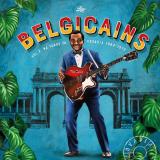
Following the sold-out first volume, the Belgian label Covadia presents a second chapter of Les Belgicains, focusing on the European rumba created by Congolese students in Belgium during the 1960s.
Volume 2 includes 11 rare tracks originally issued on 45 rpm singles or never released before. Highlights include the dancefloor favourite “Guaracha Fredo” by LOS NICKELOS and previously unreleased recordings by the orchestra EBUKA EBUKA, like the swinging “Merengue Soucouss” and the emotional “Mpenzi Niambiye”. The songs unmistakably express a longing for recognition and for a rightful place for a new nation.
PURE GARAGE RETURNS WITH A CAREFULLY CURATED SELECTION OF COLLECTIBLE CLASSICS.
Pure Garage, the best-selling UKG compilation of all time, returns with a fresh stack of high value collectible classics on DJ friendly vinyl.
With a host of gold & platinum selling compilation albums under it’s belt, plus countless sold out events across the UK, Pure Garage is known and trusted by both hard-nosed purists & the casual listener.
This latest foray coincides with an incredible resurgence in interest for the UK Garage sound, bringing together 8 high collectible infectiously funky cuts, spread across a DJ Friendly 2 slices of vinyl.
Pure Garage Collectible Classics Volume 1 opens with Buggin Me by garage pioneer Zed Bias alongside Al Brown, a groovy bassline, funky beats and a great vocal hook combine perfectly to showcase the mighty Zed Bias at his funky best.
Set It Off, by Chris Mack / Flavour, is a truly collectible record. Originally only available on vinyl as a limited white label press, copies of Set It Off have been trading hands on sites such as Discogs for as much as £130… It’s worth buying this compilation purely to get hold of this track on vinyl!
Another track that is going for big money on reseller sites is Romantic 2001 by DJ Deller. With this minimal 2 step riddim having sold for up to £120. This is definitely one for the collectors.
Funkaholics aka Jeremy Sylvester rounds off the first piece of vinyl on this album with the bass heavy Down 2 Da Ground.
Vinyl 2 kicks off with the sing-a-long classic from 1998, Anthill Mobs’s track Don’t Leave Me, followed hotly by the speed garage sounds of Body Grooving by M.F. Project.
Finally, Deep Impact drops My Fantasy followed up with a regular name of the Pure Garage live event line ups, Scott Garcia drops his soulful club classic Music Takes You, rounding out an impressive batch of tracks representing everything exciting about the UK Garage genre.
PURE GARAGE COLLECTIBLE CLASSICS VOL 1 will be released on double vinyl 16th December 2022!
- A1: Flagboy Giz - And Did
- A2: Troy Sawyer And The Elementz - Rock Your Soul Feat. Rockin' Dopsie Jr
- A3: Water Seed - Too Hot
- A4: Santero - Cafecito, Cumbia Y Marihuana Feat. Boogát & Los Ahijados De La Changa
- A5: Et Deaux - Black Dynamite Feat. Rodo & Houses At Night
- A6: Alfred Banks - Blessings Feat. Hasizzle
- A7: Connie Price & The Keystones - Uptown Rulers Feat. Apani B. Fly Mc & Bo Dollis Jr
- A8: A Lovely Triangle - I’m
- A9: Lisbon Girls - La Cicatriz
- A10: Loucey - Doe A Dear
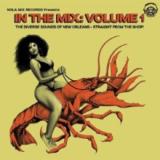
“In The Mix: Volume 1” is the first vinyl compilation of artists that have performed in one of New Orleans most beloved record shops - NOLA Mix Records. Though these aren't live recordings, they capture the spirit and soul of both the shop and the Crescent City itself. You’ll hear everything from Jazz and Funk to Hip-Hop, House, and Latin — all infused with the unmistakable energy of New Orleans.
The artists included on this 10-track compilation are: Flagboy Giz, Troy Sawyer and The Elementz, Water Seed, Santero, ET Deaux, Alfred Banks, Connie Price & The Keystones, A Lovely Triangle, Lisbon Girls, Loucey, Bo Dollis Jr., Hasizzle and more…
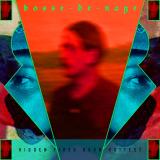
There's a tendency in metal to mistake aggression for honesty, volume for depth. To confuse the performance of darkness with its actual weight. Hidden Fires Burn Hottest, the new album from San Francisco-based post-black metal band Bosse-de-Nage, sidesteps this entirely. It’s the group’s most fully realized work yet, precisely because it refuses to be pinned down.
Bosse-de-Nage have been working with The Flenser for over fifteen years. They were one of the first bands the label ever partnered with and have the longest active relationship in the label's history. But unlike most bands who build momentum through constant touring and visibility, Bosse-de-Nage has largely existed apart from the music world's usual machinery. They've evolved on their own terms, in relative isolation, allowing the work to develop without outside pressure or influence. What began rooted in black metal anonymity has mutated into something that actively defies categorization. The aggression is still there, but it's no longer the point. Hidden Fires Burn Hottest finds the band treating emotions like physical objects, feelings with spatial properties. “No Such Place"" describes a space that can't exist but does anyway, somewhere between thought and location. ""Immortality Project"" examines infinite possibility not as promise but as problem, endless options collapsing under their own weight. These songs don't use metaphor to describe emotion. They make emotion into something you could theoretically touch.
Tracked by Jack Shirley (Deafheaven, Oathbreaker) at Atomic Garden East and mixed and mastered by Richard Chowenhill of Agriculture, Hidden Fires Burn Hottest was years in development, with some tracks beginning in 2018.
The long writing process offered time that most records don't get. Time to live with ideas, revise endlessly, to let structures settle. For the first time, lyricist Bryan Manning wrote everything in advance, creating a surplus to pull from rather than working under deadline pressure. The difference shows.
Coming off Further Still, an album built on constraint and economy, Bosse-de-Nage sought the opposite: sprawl, strangeness, fewer rules. Space for ideas to develop without rushing them. Dynamics that move through quiet as much as noise. Presence earned through atmosphere instead of volume. The record even includes ""Mementos,"" which might be considered the first love song the band has ever written.
Nothing here coheres into a theme. These are pieces pulled from low moments and private feelings made public through sound. The band has never been interested in positivity, in music that resolves cleanly or offers comfort. But bleakness doesn't mean humorlessness. There's something darkly funny running through much of it, even when it shouldn't be.
Hidden Fires Burn Hottest doesn't explain itself. It just insists: what you feel is as real as what you can see."
- 01: Nhá Zefa &Amp; Nhô Pai - We&Apos;Ll Never Forget
- 02: Leôncio &Amp; Leonel - Envious Affair
- 03: Grupo Sertanejo Do Lenço Preto - Oh I Cry
- 04: Mandi &Amp; Sorocabinha - Bad Weather
- 05: Jeca Mineiro &Amp; Bambuí - River Of Revenge
- 06: Zé Mané &Amp; Zé Pagão - White Rose
- 07: Zico Dias &Amp; Ferrinho - I Went For A Walk In The City
- 08: Mariano &Amp; Caçula - Shaved Moustache
- 09: Tonico &Amp; Tinoco - Example Of Faith
- 10: Sulino &Amp; Marrueiro - Return Of The Cowboy
- 11: Moreno &Amp; Moreninho - City Of Roses
- 12: Valdomiro &Amp; Valdemar - Old Saying
- 13: Serrinha &Amp; Caboclinho - The Crimes And Death Of Dioguinho
- 14: Raul Torres &Amp; Serrinha - Friday The 13Th
- 15: Canário &Amp; Passarinho - Goodbye
- 16: Mandi &Amp; Sorocabinha - I Dreamt I Had Died
Death Is Not The End present the first volume in a survey of a form of Brazilian country music known as música caipira ("hillbilly music") - a stripped-back forerunner to música sertaneja, the Brazilian equivalent to US country & western which in it's contemporary form has come to dominate the domestic music industry in recent decades. This collection covers some of the earliest recordings made by the pioneering folklorist Cornélio Pires at the end of the 1920s, through to records from the 30s, 40s & 50s and the beginning of the 60s.
Somewhat rooted in Portuguese troubadour folk traditions, música caipira is typically performed by a duo singing in parallel thirds and sixths, drawing upon a Portuguese-Brazilian style known as moda de viola - with the viola being the viola caipira, a Brazilian-style ten-string guitar that is the core instrument of the music. Born out of the "outback"-style region in north-eastern Brazil, these songs tell stories of pain, love, loss & betrayal - often backed by homemade guitars using invented tunings. Away from the polished pop country & western-stylings of the sertaneja, these recordings could be viewed as the Brazilian equivalent to the roots music of the American dustbowl or Appalachia.
VOL 1[18,28 €]
Emotional Response presents Volume 2 of the LNS-ID series. Atmospheric, infectious, at times nostalgic, warm yet ghosty, the tension of Laura Sparrow’s music is her exploration in electronic music.
An introduction to DJing and music production has been a natural progression, applying skills in new and fresh formats. Built on the heritage of Chicago and Detroit house, alongside old IDM and electro, her first productions might have been raw, but the creativity was lit.
While her recent productions have explored club orientated, loud cut records, in collaborations with DJ Sotofett, that represent the sound found in her residency on the Globus floor at the Tresor club, LNS’s interest in the solo productions of the LNS-ID recordings and more organic-style explored in the recent Misiats EP burns bright.
LNS-ID 1 and LNS ID 2 are her latest offering. Two sets of four tracks based on the acid tradition in the more restless corners of 90s and early 00s Braindance. Acid lines drive the melodies, while drums move between sliced break fragments and the familiar sounds of the Roland TR-606 and TR-808.
Pads drift in with a warm glow or at times, quiet ghostly tension. The results are music that leans towards atmosphere and memory, something almost nostalgic that was built for those of us who still chase the more expressive edges of acid.
Easygoing Acid Express, Alive Acid, Blue Acid and Gentle Acid. Get the message. We call it Acid.
- 01: The London Jazz Quartet - Autumn In Cuba
- 02: Shake Keane Quintet - Fidel
- 03: Eddie Thompson - Body &Amp; Soul
- 04: Jimmy Deuchar Quartet - Dancing In The Dark
- 05: Tubby Hayes - Blues For Those Who Thus Desire
- 06: Ronnie Scott&Apos;S Quintet - Nemo
- 07: Wilton Gaynair - Rhythm
- 08: Stan Tracey Trio - Free
- 09: Jimmy Deuchar–Victor Feldman Quintet - Wail
- 10: The Pat Smythe Trio &Amp; Shake Keane - Old Devil Moon
- 11: Dizzy Reece Quintet - Sweet &Amp; Lovely
- 12: The Tony Kinsey Quartet &Amp; Joe Harriott - Fascinating Rhythm
The second volume in a survey of the modern jazz & hard-bop scenes that emerged in the new cultural melting pot of post war London, with recordings from the end of the 1940s through to the early 1960s.
Featuring representations from players whose roots lay in the East-End's jewish community alongside a wealth of talent of Caribbean and African descent playing and recording in post war London during this period.
Made in partnership with the Barbican to coincide with the exhibition Postwar Modern: New Art in Britain 1945-1965.
Delsin is pleased to announce an extensive compilation series combing through the catalogue of landmark Dutch techno label Djax-Up-Beats. The series, curated by Rush Hour co-founder Christiaan Macdonald, launches with a look at the label's legacy in the development of acid music through the 90s. In total, this first entry in the Djax-Up-Beats 1990-2005 series comprises 20 tracks, presented as a main triple-vinyl album plus two additional 12" EPs. This second additional EP brings two fourteen (!) minutes long journies by Acid Junkies feat. The Doctor and by Purple Plejade, an early outing by Thomas P. Heckmann and Holger Wick. Crucially, every track featured on the series has been carefully mastered by Johanz Westerman, bringing the best out of tracks that often had very little post-production treatment before they were originally pressed to wax. With five more, equally extensive, volumes to come in this series, Djax-Up-Beats 1990-2005 is a thorough exploration of a true totem of techno culture - a renegade label that operated on its own terms and carried surprises and slammers in equal measure.
- A1: Original
- B1: Monk-One Remix
Nickodemus is a globally respected DJ and producer who has been touring nonstop since the mid-1990s, consistently drawing capacity crowds at clubs and festivals worldwide. As a producer, he has released five acclaimed albums (Soul & Science, A Long Engagement, Endangered Species, Sun People and Moon People) and curated eleven volumes of the influential Turntables on the Hudson compilation series. His work bridges hip-hop, house, jazz, and global sounds, highlighted by collaborations and cultural milestones including the Jungle Brothers' genre-defining legacy and the enduring house-rap classic "I'll House You" with Todd Terry. Nickodemus' hit "Mi Swing Es Tropical" (with Quantic & the Candela All-Stars) has surpassed 50 million streams and featured prominently in the film Chef. He has received extensive international press (Billboard, Rolling Stone, The FADER, Paste) and widespread radio support from tastemakers such as Gilles Peterson, BBC 6 Music, KCRW, and KEXP.
b B1: Monk-One Remix [feat. Monk-One]
[b] B1: Monk-One Remix [feat. Monk-One]
Volume 2 of 3 vinyls containing all the extended mixes on Claude VonStroke’s 5th original artist album, “Wrong Number.” Whilst the first vinyl was all deep cuts, this second record is full of bumpy, quirky, club tools with unique properties. “Two Line Groove” features vocals “in the round” from both of his children, Jasper and Ella, and can be imagined working well on the DC10 terrace this summer. “A Little Drizzle” is a classic wonky VonStroke bassline with vocal chops all getting twisted like Matthew Herbert meets Akufen. Lastly, “Busted Ass Deejays” is a little bit of shade going out to $100+ tickets to see generic Deejays playing Beatport top 10s. Just poking a little bit of fun, we love you all!
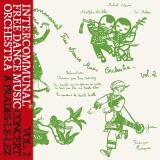
Concert at Prades-le-Lez marks the origins of the Intercommunal Free Dance Music Orchestra. In 1974, François Tusques and his companions (Michel Marre, Jo Maka, Adolf Winkler and Guem), in the spirit of Don Cherry or Chris McGregor, playfully dismantle all borders and all styles of creative music.
On this second volume, the Intercommunal builds unprecedented soundscapes around a song of revolt, a dance tune, or a burst of dissonance. The journey is unforgettable, no question about it. On repeat listening, it even becomes… lunar!
“The music that we make is primarily meant to be listened to live,” warned a leaflet from the Intercommunal Free Dance Music Orchestra. This is precisely why the (restored!) reissue of the two volumes of Concert at Prades-le-Lez, recorded on January 25 and 26, 1974 by François Tusques and his comrades, is such an important event.
In 1971, after recording a series of albums that would leave a lasting mark on French jazz (Free Jazz, of course, with Michel Portal, François Jeanneau, Bernard Vitet, Beb Guérin and Charles Saudrais, but also Le Nouveau Jazz with Barney Wilen, or the solo Piano Dazibao), François Tusques founded the Intercommunal—a grouping whose very name called for the fraternization of the various communities making up the country: Our music will help, we hope, to resolve the contradictions that exist between workers be longing to different communities, by breaking down various forms of national chauvinism, and more particularly the chauvinism of certain French people toward the cultures of Third World countries… Long live the friendship between the peoples of the whole world!
Among the great records made by the Intercommunal Free Dance Music Orchestra, the two volumes of Concert at Prades-le-Lez come first, before L’Inter Communal, Vol. 4, Le Musichien, and Après la marée noire (four titles already reissued by Souffle Continu). François Tusques and his companions (Michel Marre and Jo Maka on saxophones, Adolf Winkler on trombone, and Guem on percussion) performed on January 25 and 26, 1974 at the Moulin de Prades-le-Lez, a few kilometers from Montpellier. It was thus in the southern region of Occitanie that the first echoes of this musical vision of a borderless brotherhood were recorded.
“We’re not among the Colonels,” the Intercommunal reassures us right away, performing a stride piano tune carried by African winds that the audience cannot resist for long. The energy is already striking and it never lets up throughout these two recordings, from start to finish: jazz, blues, traditional music, minimalism, even funk… The musicians of the Intercommunal have heard a lot of great music and now delight in reinventing it by mixing it all together.
“We want the song form to take its place as a weapon in the struggle against capitalist exploitation and all those who oppress us morally and materially,” declared an Intercommunal leaflet, quoting Jean-Baptiste Clément, author of the lyrics to “Le Temps des cerises.” The struggle was therefore serious—but it did not prevent François Tusques and his group from waging it in a festive spirit: each piece on Concert at Prades-le- Lez sends out a call for love and fraternity. Fifty years later, the message remains as relevant as ever—and once again, it is François Tusques who makes it heard.
- On N'est Pas Chez Les Colonels
- Intercommunal Blues
- Mazir
- Kan-Ha-Diskan - We Shall Over Come
- African Rythm-N-Logy
2[23,95 €]
Concert at Prades-le-Lez marks the origins of the Intercommunal Free Dance Music Orchestra. In 1974, François Tusques and his companions (Michel Marre, Jo Maka, Adolf Winkler and Guem), in the spirit of Don Cherry or Chris McGregor, playfully dismantle all borders and all styles of creative music.
On this first volume, the Intercommunal takes its audience from New Orleans to Brittany and on to North Africa. The journey was bold, without a doubt—and its memory remains unforgettable.
“The music that we make is primarily meant to be listened to live,” warned a leaflet from the Intercommunal Free Dance Music Orchestra. This is precisely why the (restored!) reissue of the two volumes of Concert at Prades-le-Lez, recorded on January 25 and 26, 1974 by François Tusques and his comrades, is such an important event.
In 1971, after recording a series of albums that would leave a lasting mark on French jazz (Free Jazz, of course, with Michel Portal, François Jeanneau, Bernard Vitet, Beb Guérin and Charles Saudrais, but also Le Nouveau Jazz with Barney Wilen, or the solo Piano Dazibao), François Tusques founded the Intercommunal—a grouping whose very name called for the fraternization of the various communities making up the country: Our music will help, we hope, to resolve the contradictions that exist between workers be longing to different communities, by breaking down various forms of national chauvinism, and more particularly the chauvinism of certain French people toward the cultures of Third World countries… Long live the friendship between the peoples of the whole world!
Among the great records made by the Intercommunal Free Dance Music Orchestra, the two volumes of Concert at Prades-le-Lez come first, before L’Inter Communal, Vol. 4, Le Musichien, and Après la marée noire (four titles already reissued by Souffle Continu). François Tusques and his companions (Michel Marre and Jo Maka on saxophones, Adolf Winkler on trombone, and Guem on percussion) performed on January 25 and 26, 1974 at the Moulin de Prades-le-Lez, a few kilometers from Montpellier. It was thus in the southern region of Occitanie that the first echoes of this musical vision of a borderless brotherhood were recorded.
“We’re not among the Colonels,” the Intercommunal reassures us right away, performing a stride piano tune carried by African winds that the audience cannot resist for long. The energy is already striking and it never lets up throughout these two recordings, from start to finish: jazz, blues, traditional music, minimalism, even funk… The musicians of the Intercommunal have heard a lot of great music and now delight in reinventing it by mixing it all together.
“We want the song form to take its place as a weapon in the struggle against capitalist exploitation and all those who oppress us morally and materially,” declared an Intercommunal leaflet, quoting Jean-Baptiste Clément, author of the lyrics to “Le Temps des cerises.” The struggle was therefore serious—but it did not prevent François Tusques and his group from waging it in a festive spirit: each piece on Concert at Prades-le- Lez sends out a call for love and fraternity. Fifty years later, the message remains as relevant as ever—and once again, it is François Tusques who makes it heard.
- Checkerlads - Baby Send For Me
- Checkerlads - You Just Can't Hide
- White Knights - Love That's True
- White Knights - Promise Her Love
- Tomorrow's Keepsake - High And Mighty
- Plague - Face Of Time
- Plague - High Flyin' Bird
- Lexington Avenue - Bird Collector
- Lexington Avenue - Sound The Alarm
- Nrg - Take Me Back Home
- Solid Reputation - Brown Eyed Girl
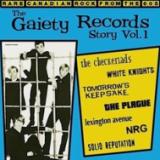
Formed by Don Grashey and Lloyd Palmer in Winnipeg, Manitoba, Gaiety Records was an outlet for many relatively obscure but excellent Canadian garage and rock bands during its existence. They released their own singles as well as sub-licensing material to other labels, such as RCA (49th Parallel), Columbia (Jarvis Street Revue and Souls of Inspyration), Decca, Epic, Musicor, and others. Features the Checkerlads , White Knights , Tomorrow's Keepsake, Lexington Avenue, NRG , Solid Reputation, and the Plague , including their face melter, 'Face of Time' and the essential psych classic 'High Flyin' Bird'.
- Checkerlads - The Dreamer
- Checkerlads - Behind Ev'ry Man
- White Knights - There She Goes
- White Knights - Run Run Baby
- Tomorrow's Keepsake - Eat Your Hot Dog Boy
- Plague - Love And Obey
- Plague - We Were Meant To Be
- Lexington Avenue - Wendy Taylor
- Lexington Avenue - Flowing Kind Of Feeling
- Lexington Avenue - Good To Me
- Nrg - It All Comes Back To Me
- Solid Reputation - Things
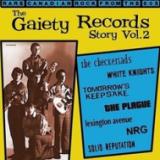
Highlights include more terrific songs from the Plague and Lexington Avenue, bands whose members would be better known when they created the Jarvis Street Revue. Twelve tough tracks by the Checkerlads, White Knights, Tomorrow's Keepsake, NRG, and Solid Reputation . The Gaiety roster was rich in talent (the 49th Parallel, Jarvis Street Review, and Souls of Inspyration, not to mention the Checkerlads, White Knights, Dewline, Tomorrow's Keepsake, NRG, Merriday Park, and Portland Street South) -- but it was not rich in resources, which is why these singles are as relatively unknown as they are even today