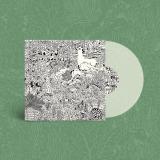
We’re proud to present Further Reflexions, the new EP from our young striker Roto, featuring a closing B2 collaboration with Nulek.
Across three forward-thinking solo cuts, Roto explores a trance-driven language infused with techno energy and hypnotic textures. The EP moves through tension, transformation, and emotional intensity, balancing dancefloor functionality with introspective atmospheres.
“Evolution and change are part of life. Evolution comes naturally; change is an unavoidable force. You either allow it to reshape you, or resist until you succumb to it. This is the philosophy behind this EP.” — Roto
The release closes with a collaboration that has already become a signature within the label’s identity. Nulek and Roto unite once again to deliver a dark, stomping B2 cut where the electron analog power meets the raw pulse of bass guitar. Together they shape a dense and immersive sonic landscape and a warning whispered from within: avoid the devil.
out of Stock
Last delivered 59 days ago available to reorder, subject to availability
"aethermead", das neue und 20. Studioalbum von Of Montreal, lässt die Sounds der frühen Jahre wieder aufleben, während es gleichzeitig die künstlerischen Grenzen ihres unverkennbaren Indie-Pop/Rock-Stils erweitert. Frontmann & Songwriter Kevin Barnes, bekannt für seinen einzigartig-produktiven Output und großartigen Kollaborationen mit Künstlern wie Solange, Janelle Monáe und Jon Brion, nahm die LP mit Toningenieur Drew Vandenberg (Faye Webster, Toro y Moi) in seinem neuen Heimatort Brooklyn auf. Die Grundspuren wurden live mit Barnes’ langjähriger Live-Band auf einer 16-Spur-Bandmaschine eingespielt. Das Ergebnis schimmert mit Indie-Pop-Elementen ihres 2004er Albums "Satanic Panic In The Attic" sowie der rohen, energiegeladenen Live-Atmosphäre von "Lousy With Sylvianbriar" (2013). Wunderschön-melodische Akkordfolgen wechseln sich mit Rock'n'Roll-Krachern ab, auf eingängige Hymnen folgen surreal-experimentelle Klangwelten. Mit einer neuen Tour am Horizont (erstmal durch Nordamerika) feiern Of Montreal weiterhin ihr Vermächtnis und gehen gleichzeitig mutig in die Zukunft.
out of Stock
Last delivered 59 days ago available to reorder, subject to availability
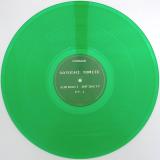
RAWAX proudly welcomes Satoshi Tomiie to the artist family!
We are delighted to announce a trilogy by the legendary producer on DUBWAX
called "Subtract Infinity Part 1 - 3! Highly recommeded!
Swiss techno icon Deetron shows his class with a new four-track EP on Mutual Rytm's sub-label, X.
Deetron is one of the most respected producers of his time. From sleek house to deep techno, he brings impeccable sound designs and melodic elegance to his work while remaining true to his authentic signature sound. He always delivers, whether landing via labels like Ilian Tape under his Soulmate guise or via the likes of Axis and Music Man, and that quality is on show once again as he brings the class on this new EP via the sub-label of SHDW's Mutual Rytm.
First up, 'Translate Rhythms' layers jazzy, de-tuned melodies into a quick and slick deep techno groove. It's a colourful and playful sound with a serious impact. 'Cause' is a more heads-down and moody sound with walls of drums and bass rolling beneath raw percussive loops and tight vocal stabs that ramp up the energy levels. The fantastic 'Move' brings grainy pads, inescapable bass weight and bulky drum loops to make for an immovable wedge of serious concrete techno funk. Last is the digital bonus cut 'Orbit', which heads off to the stars with a deepspace
vibe, swirling pads and minimal drums that tap out a rumbling groove.
out of Stock
Last delivered 7 days ago available to reorder, subject to availability
Aftersome refers to that suspended moment of wonder, when you realize you’ve been led here by a chain of unexpected events and small decisions — so improbable they almost feel preordained. Between chance and destiny, it is a fragile state where emotion and reflection intertwine.
This album by You Man embodies precisely that idea: each track is a step along this path, a resonance born of accidents and coincidences, ultimately shaping a coherent trajectory despite its improbability.
The work moves between techno, house and post-wave, infused with science-fiction and fantastical influences, constantly blurring the line between reality and imagination.
The experience is enriched by remarkable collaborations: Marc Almond (Soft Cell), Local Suicide, Jérôme Voisin, each bringing their own brilliance to this odyssey.
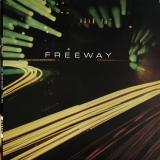
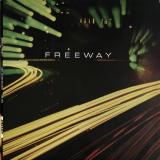
A serious private-press rarity gets its long-overdue reissue here for the first time ever. Formed in California in 1979, Freeway blended soulful grooves, jazz melodies and powerful horns into something that stood apart from the era's contemporary Christian scene. The cut just one self-released album in 1981 for New Born Records before disbanding. Originals now regularly fetch upwards of £400 on the resale market and this 45th Anniversary Edition marks a reissue that is going to fly off the shelves, complete with newly written liner notes and rare photographs telling the band's story. From funky jazz to boogie-inspired grooves, this is a previously hidden treasure now getting the light it deserves.
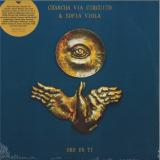
Sofía Viola and Chancha Vía Circuito unite on Oro en Ti, a deeply spiritual collaboration shaped by their shared roots in the southern suburbs of Buenos Aires. Blending Latin American folk traditions with hypnotic percussion, ambient textures, and Eastern influences, the album explores themes of nature, faith, humanity, and inner connection through a warm, meditative lens. Chancha Vía Circuito brings significant international profile to the project, built through years of globally acclaimed DJ sets, nearly 200 million cumulative streams across DSPs, and strong physical sales over the past decade. His work has been championed by outlets including Resident Advisor, Pitchfork, Billboard, The Guardian, NPR, and The Fader.
Since emerging from the Buenos Aires underground,Sofía Viola has built a strong reputation across Latin America and Europe through her singular songwriting and live performances, earning selections to major international showcase festivals including IMESUR, Circulart, FIMPRO, BIME Pro, and MAPAS. Oro en Ti captures the chemistry between both artists through devotional songwriting and richly textured production, offering an emotionally resonant and transportive listening experience that feels both timeless and deeply connected to the present moment.
out of Stock
Last delivered 60 days ago available to reorder, subject to availability
Keyboardist/composer Doug Carn was the
biggest star on the legendary Black Jazz Records
label, with four releases to his credit (all reissued
by us at Real Gone Music), and remains a
touchstone for spiritual jazz fans and musicians
alike. But very, very few folks have heard his
debut record, cut for the venerable Savoy label
back in 1969. In fact, it’s so rare that we couldn’t
even find a copy to use for artwork, so, with
Doug’s help, we enlisted his daughter Eroniffa
Ibrahim to create illustrations for our reissue
based on the original cover photos. But you know
what we did find? That’s right…the original master
tapes! So, not only is this the first LP reissue for
The Doug Carn Trio, but it’s an all-analog edition to
boot, pressed at Gotta Groove Records with their
proprietary GrooveCoated stampers to minimize
high-frequency loss with each successive pressing.
And, we’ve added an insert with liner notes by Aaron
Cohen based on an exclusive interview with the man
himself. As for the music, it’s a tight organ trio set
that starts cooking right from the get-go with a groovin’ cover of Gus Cannon’s “Walk
Right In,” which became a folk hit for The Rooftop Singers. Carn’s fluid, forward-thinking
playing anticipates Larry Young’s future keyboard forays, and originals like “Butter from
the Duck” and “Yna Yna’s Delight” presage the compositional prowess he flashed on the
Black Jazz releases (note: that’s Don Hales on guitar, not Gary Starling as credited on the
original record). The opening salvo from a scintillating career, finally available again!
out of Stock
Last delivered 60 days ago available to reorder, subject to availability
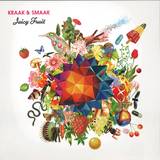
Juicy Fruit is as succulent as the name suggests - a feast of flavour served up by Dutch masters Kraak & Smaak. Their fifth studio album is one that sees them sonically revisiting the roots of their first releases, producing an organic and warm electronic disco and funk album packed with hot property collaborators including Mayer Hawthorne, Eric Biddines of Golden Rules, Parcels, Gallowstreet and Cleopold to name a few.
Effortlessly flitting between outright dancefloor boogie and meditative mellow moments it's a record that captivates the listener from start to finish, blending the timeless appeal of disco and electro with the best in indie dance and electronica.
Severed Heads reattach themselves to Dark Entries for an expanded reissue of their 1991 opus Cuisine (With Piscatorial). As originary Aussie industrial legends – although founder Tom Ellard would balk at being branded as such – Severed Heads shaped the continental subcultural sound with their kitchen electronics, chaotic tape loops, and infectious nursery-rhyme-esque melodies. Cuisine (With Piscatorial) was the long-running project’s ninth album, and is a commentary on the state of music. Ellard explains: “The whole food joke is really about what music's about and how disposable it is; people have records like they have cups of coffee.” The album also presents a turn away from the dancefloor formalism of the era, which Ellard dismissed as already sufficiently explored. Cuisine brings us punchy pop kernels of the prime Heads variety, all clocking in around three minutes. Cuts like “Pilot in Hell” and “Ugly Twenties” rank among the band’s best through their deadly skewering of synth pop tropes. But the album also offers us a Piscatorial section, where Ellard felt free to “go fishing for ideas.” Here we get a taste of the project’s demented cut-up sensibilities, like on the “Quest for Oom Pa Pa” suite, where vintage jazz records are collaged into an angular nightmare. This double-LP reissue is the first time that Cuisine (With Piscatorial) will appear on vinyl, with a previously unreleased early version of “Seven of Oceans.” Also included is a 6-page booklet with liner notes, lyrics, and press clippings.
Special gatefold LP + 12-page booklet attached to the sleeve with extensive liner notes and previously unpublished archival photographs documenting Salleh’s career. Fully licensed from the Johari Salleh.
Habibi Funk’s new sister label Audible Beauty Records second release: A landmark collection retelling the untold story of Malaysian jazz featuring 9 songs from the legendary composer, arranger and trumpet player Johari Salleh. Salleh played a crucial role in shaping the sound of modern Malaysian music across radio, television, film and live performance and has composed dozens of popular songs in his decades long career. His personal musical passion always was jazz, reflected in this deep selection of jazz works that were previously unavailable unless you had one of the few dozen copies pressed locally in the 1970s. The album doesn’t only highlight his musical statue as a composer but also as a outstanding trumpet soloists bringing together jazz, spiritual undertones and Malaysian folkloric themes balancing slower pacing deep, modal grooves with more upbeat jazz funk leanings. For fans of Salah Ragab, Ahmed Malek, Mulatu Astatke, Dollar Brand and co.
out of Stock
Last delivered 52 days ago available to reorder, subject to availability
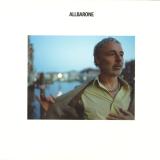
Sheffield uber-legends Parrot and Jarvis Cocker take the title track off Baxter Dury's hugely acclaimed album Allbarone and take it on a nighttime walk through the industrial heartlands of the city, adding a mercury heavy bassline and a pair of sliced up vocals that bubble up together into something resembling liquid acid. This remix is now available on a highly limited edition 7 (the original version sits on the other side).
out of Stock
Last delivered 8 days ago available to reorder, subject to availability
Freeway was a California outfit that first formed in 1979 and set about fusing jazz, soul and outreach-driven purpose into a sound that sat outside the norms of the contemporary Christian scene at the time. Their sole album, this self-title gem, was cut in 1981 for New Born Records has since become an underground rarity, often changing hands for upwards of £400. Now, 45 years on, Vinyl Kitchen brings Freeway back to vinyl for the first time ever, complete with new liner notes and rare photos. It's a glorious, life-affirming work of bright jazz sounds, celebratory energy, boogie grooves, funky horns and prog licks. Perfect for listening and dancing alike.
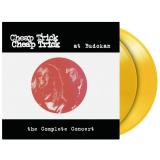
Cheap Trick - At Budokan: The Complete Concert is the the full version of the famous best-selling live album by the American rock band Cheap Trick. The louder, roaring versions of classics like "I Want You to Want Me" and "Surrender" connected to a wide audience in the late 1970s.
The recording became the band's best-selling album and captures the performance exactly as it was experienced on stage. Their raw-powered riffage and three-chord songs, combined with the posterboy looks of singer Robin Zander and the outrageous guitars played by Rick Nielsen made an impression all over the world. After this recording in Japan, and releasing an abridged 1-LP version of At Budokan, Cheap Trick became instant rock stars.
In 1998, the full Budokan show was finally released on CD, followed by a double vinyl release on Music On Vinyl in 2016. Both Cheap Trick fans and rock lovers in general will need this document of the band's most celebrated concert.
Cheap Trick At Budokan: The Complete Concert is available now as a limited edition of 3000 individually numbered copies on yellow vinyl and in packaged a gatefold sleeve.
Minneapolis' Real Numbers return with a new full length album, the gorgeously pop-tastic “Was It Always This Way.” Ten expectant, exuberant songs mixing hope and despair, the future and the past, all set to the sounds of late-80s/early-90s UK indiepop. While definitely picking up where their 2021 EP "Brighter Then" left off, the emphasis this time is on multi-layered guitars intended to complement the wistful and melancholy tracks with glittering awe.
“Was It Always This Way” refines Real Numbers' already-stunning songs, polishing the tunes into a swooningly perfect album that recalls 90s antecedents like Field Mice and St Christopher, as well as fellow pop practitioners like Ducks Ltd, Chime School and The Umbrellas. Album highlights like "Darling" and "Never Never Again" show that Real Numbers stand tall with their influences, paying close attention to the past while taking their art straight into the future with assurance and flair.
The Womack Sisters – Kucha, Zeimani und BG Womack – sangen schon, bevor sie laufen konnten. Ihr gleichnamiges Debütalbum „The Womack Sisters“ aus dem Jahr 2026 ist der musikalische Höhepunkt der langen und kurvenreichen Reise der drei Schwestern auf der Suche nach sich selbst. In einer Sammlung von Stücken voller intensiver Soul-Power, die an eine Zeit erinnert, als Popmusik noch Substanz, Atmosphäre und Sinn hatte, kommt jede ihrer unverwechselbaren Stimmen im Rampenlicht zur Geltung.
Die Schwestern wuchsen auf der Straße auf. Ihre Schulen waren Bühnen und Studios auf der ganzen Welt, wo sie hinter ihren Eltern, Zekkariyas & Zeriiya (ehemals Womack & Womack), zusammen mit ihren vier Geschwistern sangen. Nirgendwo waren sie lange zu Hause. Egal, wo sie lebten – London, Thailand, Amsterdam, Kenia, Paris, Sydney, Zürich, Wien, Tansania, New York, Miami, West Virginia, die Bahamas – sie waren immer von Musik und Familie umgeben.
Als Enkelinnen des legendären Sam Cooke und Nichten von Bobby Womack stammen die Schwestern aus einer Soul-Dynastie, die tief in ihrem musikalischen Wesen verwurzelt ist. Das Album „The Womack Sisters“, das am 14. August bei Daptone Records erscheint, blickt nach vorne, indem es zurückblickt: Es ist eine Hommage an die Tradition ihrer Familie und schafft gleichzeitig einen Sound, der ganz und gar ihr eigener ist.
Purple Vinyl, limited to 200 copies. A Life Less Plagued, originally released in 2001, is a seminal release in modern hardcore by the California straight-edge band Carry On. Recorded at Godcity Studios by Converge's Kurt Ballou and clocking in at just under 20 minutes across 12 tracks, the album delivers unrelenting intensity, frantic tempos, and cathartic vocals. The album not only became a blueprint for the 2000s "West Coast Hardcore" movement, but was also the first proper full-length album put out by Bridge Nine Records. Carry On didn't live on much longer after their full-length album debut, but it became a definitive release for the label (and California hardcore) as each member went on to form the next wave of West Coast hardcore bands (such as Terror, Piece By Piece, Betrayed, Internal Affairs, and many more). Long out of print by the album's 10th anniversary, its legacy was further set in stone with a 2011 re-issue. Now Carry On is back playing a handful of shows over the 2026 summer and we've got another re-issue on deck. This is a record frequently cited by hardcore veterans and modern musicians as the absolute mold for 2000s American hardcore, so be sure to grab it if you don't have one in your collection yet.
Great Television unfolds as a loose, emotionally driven narrative about navigating love, identity, and self-destruction against a backdrop of memory, movement, and Southern imagery. It begins with “Sunset Promenade,” where a deep, possibly lifelong bond offers comfort amid internal turmoil, establishing a desire for connection strong enough to withstand a restless mind. This sense of identity expands in “Girls of Atomic City,” where independence and womanhood are celebrated, though tinged with performance and uncertainty.
As the story progresses, songs like “Okeechobee Mud” introduce instability and intensity, portraying relationships that are passionate but corrosive, where love becomes inseparable from pain. “Thiokol Tripwire” honors the lives lost in the 1971 Thiokol Chemical Explosion and those affected in the south Georgia community of Woodbine. “Razorwire Wall” reinforces this devotion to chaotic love, suggesting loyalty even in destructive circumstances. A turning point arrives with “The Easy Kind,” where Cook reflects on attempts at self-repair, acknowledging her contradictions and rejecting simplicity in favor of a more fractured self-understanding. This awareness deepens in “Caldonia and The Love Convoy” and “In Your Veins,” where freedom blurs into recklessness and love takes on addictive qualities, revealing her complicity in cycles of harm. “19th Nervous Breakdown” provides crucial context, tracing her instability back to a turbulent upbringing marked by neglect and emotional disorder. “Feverfew,” leaves the narrative unresolved, as she recognizes her repeated attraction to destructive paths yet continues to follow them. In contrast, the closing track “Lightly” offers a rare glimpse of pure, protective sisterly love. Altogether, the album portrays a cyclical journey of longing, damage, and partial self-awareness, where clarity emerges but transformation remains uncertain.
Regulator Watts returns with kWh (kilowatt-hours), the band's first new music in nearly 30 years. Produced by Kurt Ballou (Converge), this 5-song EP is a masterclass in post-hardcore dynamics, contrasting crushing grooves with moody, mysterious atmospherics and the haunting tone that remains guitarist Alex Dunham's trademark. This is essential listening for fans of the DC scene and those who find catharsis in the cycles of tension and release perfected by this peerless power trio.
Awake Children Under the Moon unfolds as a single cinematic arc, drifting through screamo, post-black metal, ambient, and shoegaze with a sense of nocturnal unease. Dedicated to anyone who learned how to endure the night before learning how to sleep, the EP captures moments spent awake beneath a distant moon. Built around a hazy blackgaze core, “water lily” seals unspoken emotions and inner conflict inside a quiet science-fiction narrative. The song introduces another lifeform encountered by a lone protagonist living on Mercury – a meeting suspended between hope and isolation. Whether the story resolves in tenderness or tragedy is left to the listener's interpretation.
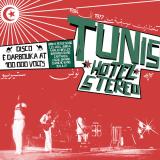
In the years after independence, Tunisia made an unlikely bet: tourism. Beach resorts rose along the coast, each one trying to outshine the next, and each one needing a band to entertain their guests. A whole generation of musicians grew up on those hotel stages - sharing bills with James Brown, Claude François and the Mingus Dynasty - and what came out of it was a small revolution. Funk played on Tunisian instruments. Disco with an oud in it. Reggae carried back from the island of Kerkennah. A "Third Language" the press didn't quite know what to do with.
Tunis Hotel Stereo gathers nine of those records. Most of them were pressed in tiny quantities, sold to tourists as souvenirs, censored before reaching the radio, or quietly slipped onto a 45 between two hotel sets. Some of these artists filled the Carthage amphitheatre. Some topped the Maghreb hit-parades. Most have been waiting, for forty years, for someone to play their music again.
This compilation is the result of years of work - collating memories, hunting down records, sitting with the artists who made them, and with the people who once danced to them. It is the third release on Shakshouka Records, and the first compilation of Tunisian music ever curated by Tunisians, in Tunisia.
SIDE A
The mysterious Les 4 Dés, who turned the national anthem into psychedelic pop on Ya Tounes - and then nearly vanished. Peace Band, hard rockers turned hotel professionals, recording as Omnya at Hammamet's legendary Topkapi club. Ridha Zalila, the eternal shape-shifter, in a rare instrumental of Tiou Tiou Tiou. And Sadok Gharbi's Noujoum - pulled from his sabotaged, near-lost masterpiece Souar.
SIDE B
Carthago, the impossible big band that married the elite of Tunisian jazz-rock with the stars of tourist entertainment, with the original Dhikrayet. Khaled Mellef, one of the great UFOs of his generation, with Wait Till the Morning Dew, recorded in the Netherlands. Marhaba Band's Baba Bahri, originally pressed only for hotel guests and now a cult artefact. Corniche Band's Dance, cut in Milan during a technical stop on a cruise ship. And Jomaa Bouzrara, the "Bob Marley of the Maghreb," with Now That, drawn from his landmark 1983 debut Sunset.
These weren't rebels without a cause. They were musicians who understood that modernity and heritage are not opposites - that a Tunisian could play funk and still be deeply, irreducibly Tunisian. They drew from every direction at once, and built something that belonged to none of those worlds entirely, and to all of them at the same time.
This compilation is one small act of remembering. The music does the rest.
Stanley Brinks is renowned for his unique anti-folk style: both playful and suggestive, insightful and entertaining. Brinks was born in Paris, France, in 1973. He studied a bit of biology and worked as a nurse for a while. Half Swedish, half Moroccan, strongly inclined to travel the world, he soon began spending most of his life on the road and developed a strong relationship with New York.
By the late 90s he’d become a full time singer-songwriter – André Herman Düne – as part of three piece indie-rock band, Herman Düne alongside his brother, David-Ivar. Several albums and Peel sessions later and after a decade of touring Europe, mostly with American songwriters such as Jeffrey Lewis, Calvin Johnson and early Arcade Fire he settled in Berlin. The early carnival music of Trinidad became a passion, and in the early 21st century he became the unquestioned master of European calypso, changing his name to Stanley Brinks.
Under this moniker he has recorded well in excess of 100 albums, collaborated with the New York Antifolk scene on numerous occasions, recorded and toured with traditional Norwegian musicians, and played a lot with The Wave Pictures.
Freschard grew up in a farm in French Burgundy. Aged 18 she moved to Paris, where she baked pies and cakes in a cafe. There, a local musician and regular customer called Stanley Brinks wrote a few songs for her to sing. Homeless in Paris, she saved up just enough money to get herself a ticket to New York. There she found an old electric guitar and started writing her own songs. In 2004 she moved to Berlin, where she recorded her first LP, "Alien Duck". Her second album, "Click Click", recorded in 2006, features electric guitar by Stanley Brinks. On her third album, she plays the drums herself. On her fourth “Shh...” she also plays the flute, and she breaks out the washboard on her fifth “Boom Biddy Boom”. Press for Stanley Brinks and Freschard.
“an absolute joy.” Q.
“...a set that’s as wistful and charming as it is playful and self-concious.” Uncut.
“quietly charming” Pitchfork.
Sweeping Promises wurden der weltweiten Punk-Underground-Szene durch ihr Debütalbum "Hunger for a Way Out" bekannt, das sich während des Pandemie-Lockdowns zu einem der größten Überraschungserfolge der Musikszene entwickelte. 2023 legten sie mit ,Good Living is Coming for You" nach, einer satirischen, hyperkritischen Abrechnung mit dem Kapitalismus, die es auf die ,Album des Jahres"-Listen von Pitchfork, NPR, Paste und der BBC schaffte, um nur einige zu nennen. Bassistin/Sängerin Lira Mondal und Gitarrist Caufield Schnug beschlossen, ihren Ansatz auf ihrer dritten LP ein paar Grad weiterzuschrauben. Das große Thema von "You Say I Romanticize" wird bereits im Titel angedeutet. Ausgehend von einer Textzeile aus dem Album-Closer ,Write Lightly" - einer Erzählung darüber, wie die Bedeutung des Selbstausdrucks beim Schreiben durch ,professionelle" Bedenken zunichte gemacht wird - sind viele der Charaktere, die Sängerin/Bassist Mondal hier ausarbeitet, Ausgestoßene, von der Gesellschaft an den Rand gedrängt und zu Fanatikern für eine Fülle spezifischer Anliegen geworden. Das viszerale Songwriting auf You Say I Romanticize wird von einem ebenso viszeralen musikalischen Ansatz begleitet. Sweeping Promises holten den Live-Schlagzeuger Spenser Gralla in die Aufnahmesessions, um den Songs eine ähnliche Dringlichkeit wie bei ihren Live-Auftritten zu verleihen. Die Raserei der Ausführung zeigt sich auch in Mondals Gesangsdarbietungen. Neben der Liebe von Sweeping Promises zu ihrer künstlerischen Gemeinschaft existiert auch eine Schattenseite - entstanden aus Sonderlingen, die ihren ,Ausgestoßenen"-Status in lebendige Kunst und Punkrock-Musik umwandeln. "You Say I Romanticize" greift das Ethos auf, das Mondal und Schnug entwickelt haben, und erforscht die obsessiven, fanatischen Aspekte des Ausgestoßenseins und der Isolation durch die Mainstream-Gesellschaft.
Melaina Kol, das Pseudonym des in Nashville lebenden Musikers Logan Hornyak, ist ein Projekt, das sich ständig wandelt. Es ist heute nicht mehr wiederzuerkennen im Vergleich zu dem, was es beispielsweise 2018 war, als er das Lo-Fi-Twee-Pop-Album ,Bird Kill Worm" veröffentlichte, und es hat sich auch von den Folktronica-Songs auf dem 2021 erschienenen Album ,AMOSAT" weiterentwickelt. Hornyak mag es nicht, sich auf eine Sache festzulegen; jedes Album soll anders sein als das vorherige. ,Ich greife gerne Motive oder Ideen auf, so wie ein Thema, und ich ändere gerne jedes Mal die Art und Weise, wie ich aufnehme", sagt er. Für sein neues Album ,Okay that's a great idea because if I do that then" hat Hornyak beschlossen, fast ganz auf Gitarre und Elektronik zu verzichten. Stattdessen brachte er sich selbst Cello und Harfe bei und kehrte zu seinem Klavierunterricht aus Kindertagen zurück. Er wollte seine langjährige Liebe zur klassischen Musik mit seinem Interesse an Ambient- und House-Musik verschmelzen, mit der Idee, ein Album zu schaffen, das den Ansatz der elektronischen Musik mit organischen Klängen verbindet. Klassische Instrumente werden zerhackt, geloopt und um einen rhythmischen Puls herum geschichtet. Der Effekt kann verwirrend und aus dem Gleichgewicht bringend sein, ist aber gleichzeitig entwaffnend schön. Hornyak nahm das Album zwischen seinem Zuhause in Tennessee und einem nahegelegenen Studio auf. Es war das erste Mal, dass er für Melaina-Kol-Songs ein richtiges Studio nutzen konnte, und er wollte, dass der Sound hochauflösend ist. Bei all seiner rastlosen kreativen Energie repräsentiert ,Okay that's a great idea because if I do that then " Hornyak in einer ruhigeren Lebensphase. ,Es ist viel ruhiger als die letzten beiden Alben. Ich habe all diese Alben in meinen frühen 20ern gemacht, als ich manische Phasen durchlebte und mit Drogen und so anfing", sagt er. ,Aber ich würde sagen, dieses Album ist sozusagen das andere Ende davon - das Herauskommen aus dieser Phase, würde ich sagen. In meinem Leben fühle ich mich viel friedlicher, und ich habe das Gefühl, dass das Album das widerspiegelt."
Es sind fünf hektische, chaotische, zermürbende, völlig durcheinander gewirbelte Jahre. Es sind all die mühsamen Missverständnisse einer fünfjährigen Beziehung, verzerrt und zu einer absurden schwarzen Comedy-Miniserie auf Vinyl gedehnt. Es ist der Klang all unserer Streitgespräche, die gleichzeitig erklingen. Es sind mehrere aufeinanderfolgende Sprachnachrichten, die nicht angehört, sondern stattdessen als Transkript gelesen wurden. Es sind fünfzehn Songs des ikonoklastischen Rappers Mike Eagle und des innovativen Produzenten Kenny Segal. Es ist das weltweit erste halb skurrile Trennungsalbum. Es ist "DOOMED!", es ist auch LA. Vielleicht nicht in erster Linie, aber Los Angeles ist tief in der Gegenwart und der Geschichte dieses Albums verwurzelt. Die Geschichte jeder Großstadt ist auch eine Geschichte von Zugezogenen. DJ Premier in New York, Tupac in Kalifornien. Wenn man es aufbaut, werden sie kommen. Mike und Kenny kamen beide als junge, aufstrebende Künstler nach LA, angezogen von der Szene rund um die bahnbrechende Rap-Crew Project Blowed. Sie sind seit fast zwanzig Jahren befreundet - und arbeiten gelegentlich zusammen. Trotzdem ist "DOOMED!" das erste Mal, dass die beiden ein komplettes Werk gemeinsam geschaffen haben. Aber alles geschieht zu seiner Zeit, und das Schicksal hat sie genau in dem Moment zusammengeführt, der es dem Duo ermöglichte, etwas Außergewöhnliches zu schaffen. Mike, der gerade eine Reihe von Alben mit mehreren Produzenten hinter sich hatte und das Ende einer turbulenten Beziehung verarbeitete, brauchte eine kreative Katharsis. Kenny hingegen hatte sich nach einer Reihe von hochgelobten Kollaborationen - nicht nur mit Rappern wie billy woods und K-the-I??? - sondern auch mit dem Jazz-Trio Human Error Club und dem bluesigen Indie-Rocker Benjamin Booker - auf seine nächste Herausforderung festgelegt. "In den letzten Jahren machte Kenny sehr deutlich, dass er nicht einfach weiterhin ein oder zwei Beats für meine Projekte beisteuern wollte; er wollte etwas aufbauen", erklärt Open Mike Eagle. "Ich konnte ihn davon überzeugen, mir ein paar Beats für Neighborhood Gods Unlimited zu überlassen, mit der Maßgabe, dass wir uns als Nächstes auf unser gemeinsames Projekt konzentrieren würden. Dann zerbrach meine Beziehung, gerade als wir mit der Arbeit begannen, und ich dachte mir: Perfekt, dazu habe ich eine Menge zu sagen."
There is an ecstatic melancholy in Dent May’s music. The bedroom pop auteur’s songs are both bittersweet and exuberant, breaking your heart while you can’t help but sing along.
Over six albums, May has built a wildly diverse discography spanning 17 years. He has typically worked alone, assembling perfect pop gems on his laptop, playing nearly every instrument himself. But when he began preparations for his new album, May’s tried and true process suddenly felt stale.
The Big One brings together both the scrappy DIY ethos of Elephant 6 Collective and early The Magnetic Fields with May’s lifelong affinity for the great ’70s singer-songwriters like Harry Nilsson and Ram-era Paul McCartney. The songs balance a clear-eyed view of the world with a cautious optimism, looking at the everyday experiences of disappointment and heartbreak with a sense of possibility for the good that may still come. Things might seem bleak, May tells us, but that doesn’t mean we can’t be thankful for our brief time here on Planet Earth.
The title track is the beating heart of the record. Over a steady drumbeat, piano, and accordion, a melancholy May sings, “The big one’s coming, the big one’s on its way,” promising disaster. But May won’t wallow in the misery: “Thank the Lord for all my friends/We can make it ’til the end/No we can’t stop now/Who knows? Tomorrow it all could turn around.” For May, hope comes in the form of others.
It’s with this joyful melancholy Dent May draws in the world. Everything might be ending, the planet could be careening off into chaos, but tonight there’s a party down the block and you’re invited. Be sure and bring your friends.
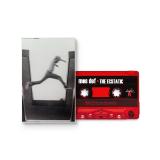
Originally released in June 2009, The Ecstatic stands as a defining artistic statement from Mos Def (now known as yasiin bey) — a richly textured return to form that reaffirmed his status as one of hip-hop’s most adventurous and intellectually engaged voices. Arriving a decade after his celebrated debut Black on Both Sides, the album was widely regarded as his strongest work in years, earning near-universal praise for its lyrical breadth, eclectic production, and thematic ambition.
Musically, The Ecstatic weaves a global sonic tapestry shaped by an array of forward-thinking producers including Madlib, J Dilla, Oh No, Preservation, Mr. Flash, Chad Hugo (of The Neptunes), and Georgia Anne Muldrow. The resulting soundscape is both rooted in hip-hop tradition and unbound by genre, integrating elements of jazz, soul, Middle-Eastern inflection, and experimental sample work. Tracks like “Supermagic” and “Twilite Speedball” establish a vibrant, restless energy that mirrors the album’s expansive creative scope.
Lyrically, yasiin bey traverses personal, political, and philosophical terrain with characteristic incisiveness, confronting social inequality, Western imperialism, and questions of cultural identity with poetic urgency. Embracing risk and complexity rather than nostalgia, The Ecstatic remains a mature, deeply felt body of work whose ambition, depth, and enduring resonance have solidified its place as a standout entry in Mos Def’s catalog and in modern hip-hop history.
2026 LP Pressung auf weißem Vinyl. Ursprünglich 1968 aufgenommen und für eine Veröffentlichung bei Sire Records vorgesehen, blieb Microminiature Love von Michael Yonkers, der Ikone des Outsider-Folk und Psych-Rock, unveröffentlicht, bis es 2002 von De Stijl Records wiederentdeckt und als limitierte, ausschließlich auf Vinyl erhältliche Auflage herausgebracht wurde. Damals hat die San-Francisco-Institution Aquarius Records es besser beschrieben, als wir es je könnten: ,Ein obskurer Visionär der späten Sechziger, der seiner Zeit weit voraus war, bekommt mit dieser LP-Neuauflage endlich die Anerkennung, die er verdient. Yonkers' Sachen waren anders als alles, was man damals (oder eigentlich auch heute noch) gehört hatte: abgedrehter Garage-Psych mit wahnsinnig genialen Texten und verrückter, von Acid durchdrungener Gitarre. Yonkers, eine legendäre Figur aus der Gegend um Minneapolis, baute seine eigenen Effektpedale, sägte seine Fender Telecaster auf die Breite eines Bretts herunter und spielte wie niemand sonst je zuvor. Mir fehlen die Worte, um das zu beschreiben. Es ist irgendwie eine Mischung aus reduzierten Black Sabbath, The Troggs, Pere Ubu und The Cramps??" Sub Pop veröffentlichte das Album anschließend auf CD und brachte 2011 eine limitierte Vinyl-Auflage heraus, die seit vielen Jahren vergriffen ist. Leider verstarb Michael Yonkers 2026 während der Planung dieser Neuauflage. Er war ein unglaublicher, wahrhaft einzigartiger Künstler und einer der liebenswertesten Menschen.
Crossing borders between traditions, sonic territories, and instruments, musicians Tomáš Niesner and Aldana Duoraan created their first collaborative album Plot. The sound of khomus meets guitar melodies simplified into pentatonic scales, intertwining in a dialogue that remains playful while moving between meditative passages and bewitching, hypnotic moments. Solid yet ever-changing, these melodies explore a delicate relationship between the present interactions, their past, and possible futures. “I feel that the essence of our collaboration is not to close the songs off, but to leave them open so that they can develop and be interpreted a little differently each time, depending on the circumstances,” Niesner explains when describing the duo’s artistic approach. The recording therefore captures only the most essential moments and ideas, which continue to unfold in new directions during live performances.
Each segment of Plot, word meaning “fence” in Czech, while also referring in English to a narrative structure or hidden plan, represents a different constellation shaped by the pairing of specific khomuses and guitar tuning. The track titles, such as The Key of Radiance or The Key of Humbling, are inspired by the ancient Chinese text I Ching (usually translated as Book of Changes). Like the classical cosmological text itself, the compositions meditate on similar fundamental principles. The ideas explored in the chapters of the I Ching are thus loosely translated into musical language. Themes of Radiance, Attending, or Nearing thus loom over the reflective realm of Aldana and Tomáš.
The two musicians first met in 2021 through a collaboration organized by Konektiv, an event series that aims to create new connections between genres and musicians with diverse backgrounds. Aldana Duoraan is a Prague-based artist born in the Sakha Republic, whose experiments with the khomus (also known as the jaw harp) draw on the traditional music of her homeland. Tomáš Niesner, a sound artist and guitarist based in Brno, navigates the realms of American primitive guitar while incorporating influences ranging from folk to drone. Because the duo rarely finds themselves in the same city, an important moment in the development of Plot was a showcase at Cafe OTO, organized by mappa. The album, capturing the fleeting energy of this encounter and several others, has now been released on the Slovak experimental label, which helped bring the collaboration to life.
Michaela Turcerová’s compositions unfold in slow motion. The saxophonist and composer’s glacial music zeroes in on the granularities of each note as it rings, soaking in every subtle shift in texture and pitch.
Šumum exemplifies this patient approach to writing music, branching out from themes of loss and togetherness into an intricate tapestry of introspective sound. These four pieces invite deep collaboration between performers, who together shape the music through the shared process of listening and interpreting Turcerová’s relatively open scores. And while these works often grow from long, stretched-out tones, they also foreground forward direction: no note stays in one place, no melody is without action. Instead, Šumum chronicles how the tiniest shifts can lead to major transformation.
Šumum builds from Turcerová’s longheld interests in place and minimalism. Many of the composer’s works explore perception: how a room can shape the music we hear, and how repetition alters a melody. Like the music of Éliane Radigue, Šumum embraces the rainbow of colors that appear when close listening with the wave-like flow of looped melodic and rhythmic patterns. All the album’s pieces observe the subtle changes that happen as music grows.
Group communication yields the constant evolution that defines Šumum. The album feels like a conversation, with each instrumentalist swapping phrases or trading places when the moment feels right. “Straty” builds from a series of strongly accented drones that appear as quickly as they fade away; underneath them is a perpetual rhythm that drives the color of each long held note, from melancholy into radiance and back again. With “Vlny,” pitch eventually disappears, leaving a delicate rhythm, and with “Masy,” a matrix of brassy tones link together and eventually burst. No matter where the music goes, one thing remains true: Šumum invites close listening, and in the process, reveals the beauty of continual motion.
Bei HIGHSIGH - dem Trio aus Ro(b)//ert Lundberg (JOBS), John Dieterich (Deerhoof) und Matt Mehlan (Skeletons) - geht es genauso sehr um den Entstehungsprozess wie um das Endergebnis. Auch wenn der Bandname neu ist, wächst HIGHSIGH aus jahrelanger Freundschaft und Zusammenarbeit des Trios in anderen Konstellationen heraus - dem Zusammentreffen von Deerhoof und Skeletons in der Supergroup Congotronics International, Ro, der bei den Tour- und Aufnahmebands von Skeletons am Bass spielte, John und Matt, die beide auf verschiedenen JOBS-Alben mitwirkten und diese als Toningenieure begleiteten, sowie vielen gemeinsamen Kaffeepausen, Mahlzeiten und Wanderungen. Ihr Debütalbum ,Once Bend" präsentiert sich sowohl als entwaffnend vertraut als auch als seltsam undurchsichtiges Patchwork aus mutiertem Pop und abstrakten polyrhythmischen Klanglandschaften. In einer collageartigen Weise entstanden, brachte jedes Mitglied täuschend reichhaltige musikalische Fragmente ein, die aus anderen Projekten beiseitegelegt worden waren - fast wie kleine Fragezeichen, die die anderen Mitglieder entschlüsseln und interpretieren sollten. Diese Fragmente wurden frei und ohne konkretes Ziel unter den Mitgliedern ausgetauscht; jeder spielte damit herum und bastelte an dem, was er bekommen hatte, fügte Phrasen, Klänge und Texturen hinzu. Die musikalischen Schichten, die dabei entstanden, waren durchweg unerwartet und mitreißend. HIGHSIGH hatte nicht mit einem festen Schema begonnen, doch innerhalb jedes Songs entwickelte sich ein zusammenhängendes Patchwork - geschichtete Gitarren und gestrichener Bass stehen neben träge treibenden Synth-Klängen und knackigen, treibenden Akustik-Drums. Die Band erweiterte ihren Austauschkreis und schickte Tracks an Tim Barnes, Ben LaMar Gay, Max Jaffe, Lia Kohl, Booker Stardrum und Jon Starks, um Schlagzeug-, Cello- und Kornett-Parts einzufügen. Diese rohen Klangteppiche fanden ihre endgültige Struktur und Ordnung durch Texte, von denen einige von der Band selbst geschrieben wurden, andere von Macie Stewart (Finom) und Paige Alice Naylor. ,Textlich interessieren mich einfache Momente der Erkenntnis", sagt Matt Mehlan. ,Wie ist die Umgebung, wie ist das Gefühl?" Dieses Thema zieht sich durch das gesamte Album und verbindet die unterschiedlichen Stimmen, die mitgewirkt haben. Auf ,Once Bend" präsentiert HIGHSIGH ihre selbstgemachten musikalischen Patchwork-Decken - zusammengenäht aus Saiten, Schaltkreisen und Servern auf ganz Turtle Island.
Auf der sechsten LP von Radiator Hospital, ,Distorting Time", spielt Sam Cook-Parrott nicht mit Nostalgie - er geht ihr aktiv aus dem Weg. Im Laufe von fünfzehn Jahren hat er RH von einem Solo-Projekt, das er in seinem Schlafzimmer aufnahm, zu einem vollwertigen Rock-'n'-Roll-Quartett ausgebaut, wobei er am Rande des Mainstream-Erfolgs blieb und sich gleichzeitig einen Ruf als echter Außenseiter der DIY-Szene erarbeitete. Die Veröffentlichung von ,Can't Make Any Promises" im Jahr 2023 brachte Sam an eine Art Scheideweg - doch er war entschlossen, keine Zeit mit Rückblicken zu verschwenden, sondern stattdessen nur auf das zu blicken, was vor ihm lag. Aus heiterem Himmel wurde Radiator Hospital Ende 2025 eine Tour angeboten, was Sam dazu veranlasste, seinen Ansatz zu überdenken und das Gewebe seiner bisherigen Arbeit in eine völlig neue Form zu verwandeln. ,Ich beschloss, etwas Neues live zu probieren, was ich noch nie zuvor gemacht hatte: Ich nahm meine Begleitmusik auf einem 4-Spur-Kassettenrekorder auf und sang dann einfach dazu", erklärt Cook-Parrott. ,Distorting Time" - seine erste Veröffentlichung bei Lame-O Records - besteht aus 13 Songs, die bei Sam zu Hause auf einem 4-Spur-Kassettenrekorder aufgenommen wurden, mit zusätzlichen Elementen, die im Uniform Recording Studio von Jeff Zeigler in Philadelphia eingefangen wurden. Die Songs wirken gleichzeitig sanft vertraut und doch auffallend eigenständig; sie nutzen die Grenzen des 4-Spur-Setups aus und lassen sich gleichzeitig von Bands wie Young Marble Giants und Tall Dwarfs inspirieren. Thematisch beschäftigen sich die Songs mit dem seltsamen Gefühl des Vergehens der Zeit, insbesondere aus der Perspektive eines Künstlers und seines Schaffens.
After the wild Afro-jazz fusion of Trancedance (reissued as BT118) and the meditative solo Christer Bothén Donso n’goni (BT133), legendary Swedish multi-instrumentalist Christer Bothén returns to Black Truffle as part of a dream quartet completed by the three members of Ghosted: Oren Ambarchi (guitar), Johan Berthling (bass) and Andreas Werliin (drums). Recorded at a rustic studio built by Werliin and Hans Fredriksson in the sylvan surrounds of Hamburgsund, Sweden across a few days in September 2023, Serpentine offers up four generous slices of hypnotic repetition and shimmering resonance, cut through with wild bursts of Bothén’s bass clarinet.
The depth and ease of the quartet’s rapport is evident from the first moments of the opening title-track. Berthling’s resonant upright bass locks into a head-nodding ostinato that makes sensitive use of a prominent end-of-phrase rest, opening spaces through which Werliin’s continually shifting statements of the pulse shine through. Having worked together in various groups for many years, Berthling and Werliin are masters at playing subtle games of difference and repetition, creating a driving rhythmic flow animated by perpetually changing details: here, you can never step in the same groove twice. Weaving through it all is Ambarchi’s now-signature Leslie-cabinet guitar tone, sounding out long chords at times strikingly close to a Hammond, while also creating intricate cross-rhythms through the play of his tremolo modulations against the bass and drums. When Bothén enters five minutes in, the growl of his bass clarinet at first works deep in the collective brew, carving off brief staccato phrases and twisting them into fragmented melodies. As he moves into the instrument’s higher registers, Bothén’s playing becomes wilder, twinning with Ambarchi’s guitar in shimmering arcs like a 21st century update of the Garbarek-Rypdal pairing immortalised on Sart.
Each of the four pieces explore different possibilities of a shared language. On ‘Antigorite’, another hypnotic bass riff emerges gradually from an atmospheric haze, eventually developing into a frenetic rhythmic workout propelled by Werliin’s cowbell. Berthling sits out for ‘Lizardite’, while Bothén moves from bass clarinet to the Donso n’goni, the sacred Wassoulou hunter’s harp he has studied for half a century; the resulting performance streamlines the approach heard on other tracks into pure modal propulsion, sparkling with harp-like arpeggios from Ambarchi’s guitar. On the closing ‘Chrysotile’, the bottom drops out, leaving a swampy, churning mass of wavering organ-like chords, roaming bass runs, and distant toms, over which Bothén floats bass clarinet figures by turns bluesy and abstract, the whole thing landing somewhere between classic ECM and the most blasted freeform moments of early Amon Düül II. Bearing a delicate calligraphic abstraction by Bothén on its cover and beautiful documentation of the recording sessions on its inner sleeve, Serpentine is a powerful reminder of the magic that can happen when inventive musicians just get together and play.
ZOMBI 3 - THE SOUNDTRACK Classic Edition & Special Edition - Available Now on We Release Whatever The Fuck We Want ! WRWTFWW Records is delighted to unleash the complete uncut soundtrack for Lucio Fulci & Bruno Mattei's cult zombie-ploitation gem Zombi 3 (aka Zombie Flesh Eaters 2 aka Sanguelia 2, 1988) available on 2 different collector's edition vinyls for the first time ever. The Classic Edition comes in red is dead colored vinyl with a red Japanese Sanguelia 2 VHS obi and has a helicopter pictured on the back cover. The Special Edition has the same songs as the Classic Edition PLUS bonus skits/interludes with DJ Blue Heart talking (taken from the movie) on the b-side and comes in green inferno colored vinyl with a green Japanese Sanguelia 2 VHS obi and DJ Blue Heart pictured on the back cover. Both versions are housed in heavy old style Stoughton casebound tip-on jackets - pick your poison - get infected! This future deluxe edition OOP classic is packed with menacing synths, ghoulish melodies, and contaminated anthems remastered directly from the rare original reels of maestro Stefano Mainetti which were found at an abandoned top secret research facility.
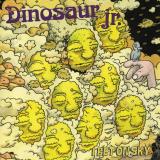
I Bet on Sky is the third Dinosaur Jr. album since the original trio – J Mascis, Lou Barlow and Murph – reformed in 2005. And, crazily, it marks the band’s 10th studio album since their debut on Homestead Records in 1985. Back in the ‘80s, if anyone has suggested that these guys would be performing and recording at such a high level 27 years later, they would have been laughed out of the tree fort.
The trio has taken everything they’ve learned from the various projects they tackled over the years, and poured it directly into their current mix. J’s guitar approaches some of its most unhinged playing here, but there’s a sense of instrumental control that matches the sweet murk of his vocals (not that he always remembers to exercise control on stage, but that’s another milieu). This is head-bobbing riff-romance at the apex. Lou’s basswork shows a lot more melodicism now as well, although his two songs on I Bet on Sky retain the jagged rhythmic edge that has so often marked his work. And Murph…well, he still pounds the drums as hard and as strong as a pro wrestler, with deceptively simple structures that manage to interweave themselves perfectly with his bandmates’ melodic explosions.
After submerging myself in I Bet on Sky, it’s clear that the album is a true and worthy addition to the Dinosaur Jr. discography. It hews close enough to rock formalism to please the squares. Yet it is brilliantly imprinted with the trio’s magical equation, which is a gift to the rest of us. For a combo that began as anomalous fusion of hardcore punk and pop influences, Dinosaur Jr. have proven themselves to be unlikely masters of the long game.
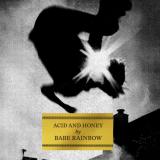
From the heart of the Australian psych scene... rainbow rockers BABE RAINBOW return with their 7th studio album ‘ACID AND HONEY’ recorded on an op shop acoustic on a houseboat in Amsterdam and finished at zen master Mullarky’s Malibu ranch. Exciting country-pop beat production backs wailing Babe rainbow vocals on solid skanking hip-hop hard rocking finger funky sounds. The first single ‘POLYMUCALSACCHARIDE’ is just something Perry Farrell says and it means "drool, like you're dribbling cos the truth is once you hit the road you don’t remember the good shows, they’re just like every other show."
Kacper Krupa is one of the most distinctive saxophonists of the younger generation, a key collaborator of Skalpel and Łona x Konieczny x Krupa (whose album Taxi was certified Gold in Poland), and leader of Siema Ziemia, with whom he has performed at prestigious European festivals and concert venues such as the London Jazz Festival, Jazz Jamboree, Le Périscope, and Bimhuis.
SEKWA marks another important step in Kacper Krupa’s artistic journey. The album was created at the intersection of jazz, improvised music, contemporary chamber music, electronics, and ambient, forming a diverse yet coherent whole.
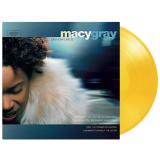
Macy Gray's debut album On How Life Is was released in 1999 and definitely could be called one of the most impressive R&B/Soul debuts. By selling seven million records worldwide it reached a wide audience and received airplay beyond the genre-specific stations. The single "I Try" became a massive hit and reached the number one spot in Australia, Ireland, and New Zealand.
The album was, besides a commercial success, also very popular among critics. It was mostly praised for its distinctive and outstanding style, which felt like a breath of fresh air in the genre. The song "I Try", eventually won the Grammy Award for Best Female Pop Vocal Performance in 2001.
On How Life Is is available as a limited edition of 3000 individually numbered copies on yellow vinyl and includes an insert.
Aus dem Keller eines mittlerweile stillgelegten Verstecks einer Motorradgang in Dayton, Ohio, kommt STONE COAL WHITE! Ultra-primitiver und ultra-roher Funk mit klassischen Ohio-Funky-Soul-Elementen. Die A-Seite - ,Hell Below", ein Cover des Curtis-Mayfield-Klassikers - ähnelt eher der ,East Of Underground"-Version, mit einem rasanten Tempo und treibender Wah-Gitarre. Einordnung: Unhinged Funk. Die B-Seite, ,Free", die zuvor 1971 als 45er auf dem Privatlabel Ewing erhältlich war, ist buchstäblich unvorstellbar selten. Dank unserer Freunde bei der Numero Group ist dieser zweiseitige Knaller nun zu einem günstigen Preis erhältlich _ solange der Vorrat reicht.