Поиск:wa

Стили
Все
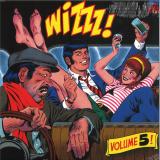
Various - Wizzz! French Psychorama Volume 5 (67-75)

The journey through French-speaking pop archives continues with this fifth volume, packed with fuzz, gimmicks, and dissent. Far from the charts, the selected tracks display a great creative freedom, often backed by corrosive humor. Welcome to the surprising, kaleidoscopic, and colorful world of the late sixties and early seventies, Wizzz!
Born in Montauban, Robert Pico stumbled into music by chance when he met René Vaneste, then artistic director at Pathé-Marconi. René brought him to Paris to record his first 45 RPM EP in 1964. A year later, Pierre Perret introduced him to Vogue, where he recorded his second album with Claude Nougaro’s orchestra. Sylvie Vartan then introduced him to RCA, where he recorded four singles, including the astonishing "Chien Fidèle," a track backed by a hair-rising fuzz guitar. Alongside his solo career, he also composed for other artists like Alain Delon (the song was recorded but remains unreleased), Magali Noël, Bourvil, and Georges Guétary. In the Paris of the sixties, he mingled with Mireille Darc, Elsa Martinelli, Marie Laforêt, France Gall, Françoise Hardy, Petula Clark, Régine, Dani, Serge Gainsbourg, Joe Dassin, Franck Fernandel, Charles Level, and Roland Vincent. Despite his efforts and winning a Grand Prix Sacem for his final record, Robert Pico didn’t achieve the expected success in show business and decided to leave Paris and return to the Southwest, where he devoted himself to writing. He is the author of 23 books (including Delon et Compagnie, Jean-Marc Savary Editions 2025, a memoir about his youth and his many encounters). Today, he is relieved to never have become a celebrity and devotes himself to his work with passion.
In 1969, the Franco-Italian movie Erotissimo was released, directed by Gérard Pirès (who later directed Taxi in 1998, written and produced by Luc Besson). This pop comedy features Annie Girardot, Jean Yanne, Francis Blanche, Serge Gainsbourg, Nicole Croisille, Jacques Martin, and Patrick Topaloff. The soundtrack was written by Michel Polnareff and William Sheller, with lyrics by Jean-Lou Dabadie. "La Femme Faux-cils," performed by Annie Girardot. It recounts the feelings of a rich CEO's wife who seeks to develop her sex appeal under the influence of advertisement and magazines. Groovy, sparkling and light, this track, with ITS lush arrangements humorously critiques consumer society and feminine beauty standards.
“Je suis l’Etat” (1967) is the flagship track of the first EP by singer-songwriter Spauv Georges, aka Georges Larriaga, better known as Jim Larriaga (1941-2022). Born into a family of bakers, the young man was initially planning to become a hairdresser when he discovered English-speaking music through Elvis Presley and the Beatles. After this revelation, he decided he would become a songwriter and gave himself five years to succeed. He recorded his first two EP’s independently for RCA under the pseudonym Spauv Georges; meaning “that poor George”, a nickname given to him by the mother of her friend Jean-Pierre Prévotat (future drummer of the Players, Triangle, or Johnny Hallyday). Portraying a depressed and eccentric young man, Spauv Georges created corrosive and amusing songs that didn’t reach a wide audience, despite a TV appearance with Jean-Christophe Averty.
Supported by his loyal friend and fellow songwriter Jean-Max Rivière, Georges Larriaga met the future singer Carlos in the early '70s, then Sylvie Vartan’s assistant. He wrote songs for Carlos, including the popular "La vie est belle," "Y’a des indiens partout," and "La cantine", which went onto become a huge hit in 1972. He also composed for Claude François (“Anne-Marie”, 1971), Charlotte Julian (“Fleur de province”, 1972), helped launch child singer Roméo (who sold 4 million records), and later wrote the hit "Pas besoin d’éducation sexuelle" (1975) for the young Julie Bataille. In 1971, Jim recorded an album for Disc'Az: “L’univers étrange et fou de Jim Larriaga”, which featured pop gems like “La maison de mon père”.
The story of the song "Zoé" began when Pierre Dorsay, artistic director at Vogue Records, asked Swiss singer and musician Pierre Alain to write a song for a new female singer. The inspiration came when he realized that Zoé (the artist's name) was also the name of France's first atomic battery, created in 1948, which consisted of uranium oxide immersed in heavy water! The lyrics reflect a bubbling energy that must be handled with caution, while the instrumentation echoes this atomic theme, notably with the use of a theremin.
Zoé’s career lasted only as long as a single 45 RPM, but it seems Christine Fontane was the vocalist behind this pseudonym, who is known for several EPs, a good "popcorn" album in 1964, and a handful of children’s singles in the '70s. Regardless, the photograph on the cover is of a different girl entirely.
Later, Pierre Alain continued his career, writing songs for himself, Marie Laforêt, Danièle Licari, Alice Dona, Arlette Zola (3rd place in Eurovision 1982), and achieving multiple gold and platinum records in Canada. Also an inventor with several patents, president of the Romande Academy, and head of the French Alliance in Geneva, he now composes atonal music, books, and poetry. Moreover, he is also the host of "Les Mardis de Pierre Alain" at "Le P'tit Music'Hohl" in Geneva.
Filled with oriental choruses and fuzz guitar, "Fou" is from Jacques Da Sylva's only EP released by Vogue in 1967. Despite the quality of this recording, all traces of this singer disappear after this first effort.
Valentin is a baroque pop singer born in Belgium. He is the songwriter and composer of most of the tracks on his three singles released in the late 60s in Canada. A legend says that he reincarnated himself as Jacky Valentin during the 1970s for a rock'n'roll revival career in Belgium, but his older brother sadly debunked this story. Valentin's first two singles were arranged by Claude Rogen, a Parisian session pianist who had come to Canada to promote the song “Mister A Gogo”, a cover of David Bowie’s “Laughing Gnome”, adapted by singer Delphine, his wife at the time. Far from his usual network, Claude Rogen arranged music for Polydor, including the arrangements for “Je suis un vagabond” in 1969, a jerk tune with string arrangements and a furious optimism.
Jacques Malia wrote, composed, and recorded his only 45 EP for Festival in 1966. “Histoire de gitan” is an incredible beat track with bohemian scat that tells the story of a gypsy musician who came to Paris to make it in the Music-Hall, to no avail. The hero of the song and its author probably shared a similar fate, as Jacques Malia faded into anonymity after this remarkable attempt.
Bernard Jamet recorded two EPs for Barclay in the late sixties and co-wrote several songs with Christine Pilzer, Pascal Danel, and prolific songwriters Michel Delancray and Mya Simile. The track “Raison Légale” (1968), his masterpiece, immerses the listener in a courtroom right when a murderer is being judged, with jerk rhythm and free arrangements. A unique, paranoid, judicial, and psychedelic oddity.
Jean-Pierre Lebrot-Millers started his career in show business in 1967 as a singer and songwriter for the Philips label. After three singles, he wrote several songs of a new kind with his friend Pierre Halioche, in the midst of the sexual liberation movement and the democratization of drugs. With provocative lyrics, “Les filles du hasard” and “Barbara au Chapeau Rose” were released on a Philips singles in 1968. The character of Barbara was inspired by a queen of Parisian nightlife during the psychedelic years: model Charlotte Martin, who dated Eric Clapton from 1965 to 1968, then Jimmy Page from 1970 to 1983. Jean-Claude Petit’s arrangements, with a table-filled intro, soul brass, and Hendrixian guitar, emphasize the flamboyance of a hedonistic and sexy character, whose dog is named Junkie because “Junkie est un nom exquis”! The track was recorded live in three takes with a full orchestra.
Upon its release, the record was censored by Europe 1 and RTL due to its references to drug use. Jean-Pierre Lebrot was then banned from the airwaves and later dismissed by his record label. He changed his artist name to Jean-Pierre Millers, while his companion Pierre Halioche became D. Dolby for a new dreamy composition, “Chilla”, which Jean-Pierre produced himself with arrangements by Jean Musy. Once again, the song was immediately censored everywhere. After this setback, he decided to stop singing and started taking on odd jobs to support his Swedish wife and their son until the day he met Jean-Pierre Martin, then production manager at Decca, who had worked with Manu Dibango. Martin offered Jean-Pierre Lebrot-Millers, then employed at Rank Xerox, the position of artistic director at Decca. He accepted and became, a year later, promotion director (radio, press, TV). He worked on Julio Iglesias’s first album for Decca, which became a massive hit and allowed him to meet Claude Carrère. The latter asked him to write new songs and find their performers, much like a “talent scout.” It’s through him that Jean-Pierre discovered Julie Pietri and Corinne Hermès. He composed “Ma Pompadour” for Ringo, Sheila’s husband, and took the microphone again for the syncope hit “Rendez-Vous” in 1982.
That same year, Jean-Pierre Lebrot-Millers tried to release a track for which he had heavily gone into debt: “Si la vie est un cadeau”. Having recorded it in London, he presented it to numerous professionals, all of whom refused to get involved. The same thing happened with Antenne 2 and the Sacem when he proposed the song as France’s entry for Eurovision. He then met Haïm Saban, who was producing cartoon soundtracks and had just launched the Goldorak theme song. Saban, having listened to the song, declared it had the potential to become a hit. He sent Jean-Pierre and Corinne Hermès to meet the CEO of the Luxembourg radio and television network. The latter received them, asked to hear a verse and chorus a cappella in his office, and immediately hired them to represent Luxembourg at Eurovision 1983. They reworked the arrangements and recorded a new version with Haïm Saban as co-producer. The song ended up winning Eurovision 1983, a great comeback for our hero. He continued producing and hung out with the band Nacash in Belgium when a couple came to introduce their daughter for an impromptu audition in a hotel room. The girl sang “Les démons de minuit” while dancing to a radio cassette. Impressed, he had her take singing lessons for a year and composed a song for her (for which he had the melody and title, but no lyrics). This required him to go on the hunt for a lyricist, who ended up being Guy Carlier. They recorded the song, which was initially a ballad, at Bernard Estardy’s CBE studio, and gave the singer a new name: Melody. They showed the song around their industry network without success. Later, Estardy called Jean-Pierre to suggest changing the rhythm and making it pop-rock. Orlando, Dalida’s brother, liked the result and decided to co-produce the track. “Y’a pas que les grands qui rêvent » became a classic hit. The song has since been covered by Juliette Armanet (as a ballad, like the original) and Valentina.

Born into an aristocratic Breton family, Hervé Mettais-Cartier worked as a DJ at Queen Kiss, a nightclub in Poitiers, where he formed the band Les Concentrés with Michel (an actor) and Christian (a radio technician). Together, they created a repertoire of whimsical songs (“Ma bique est morte”, “J’suis un salaud”, “Fils de dégénéré”...) that they performed on stage dressed in white (in homage to “concentrated milk”). They performed at Bliboquet and Olympia in 1968 for the 10th edition of the “Relais de la chanson Française” organized by L’Humanité-Dimanche and Nous les Garçons et les Filles, sponsored by Pepsi Cola. Winners in the author-composer category, alongside Danish singer Dorte, their visibility allowed them to record a 45, and appear on television in Jean-Christophe Averty’s show. The A-side of the disc features Bruno le ravageur, a casatchok dedicated to Bruno Caquatrix, the director of Olympia, nicknamed in the song “Coq Atroce” or “croque-actrices”. The B-side is dedicated to “Fils de dégénéré”, a quirky tribute to Hervé's aristocratic roots, mixing absurdity with sophisticated vocal harmonies.
After Les Concentrés, Hervé Mettais-Cartier formed the duo La Paire et sa Bêtise with his friend Olivier Robert. They performed in Parisian cabarets and toured with Pierre Vassiliu. In the late 1970s, Hervé began a solo career. He recorded two albums for the Motors label in 1978 and 1979, which did not achieve their anticipated success due to lack of promotion. In 1980, he met Bernadette, with whom he started a family and created a “Chansons à voir” (songs to see) show that he performed until his death at the end of 2024.

Publicité comes from the final EP by the Missiles (Ducretet Thomson, 1966), a disc that also includes “La (nouvelle) guerre de cent ans”, featured on Volume 4 of our Wizzz! series. Please refer to the booklet for the story of the band.

“He’s 1.82 meters tall, 28 years old, weighs 135 kg, is black and Belgian”: this is the description of singer Hegesippe on the back of his sole single (Decca, 1967). He appears on the album cover wearing a Greek toga, like a hippie gag – we are at the end of the year 1967. In “Le crédo d’Hegesippe”, this former bodyguard of Antoine and the Charlots plays the delightful card of the thick brute converted to Flower-Power and non-violence, with arrangements by Jean-Daniel Mercier, aka Paul Mille.
“Ethéro-disco” was released on a promotional record for clients of the Maréchal company (Liège, Belgium) for the New Year 1979. Over a funky rhythm, celebrity impersonations (Brigitte Bardot, Jacques Dutronc, Fernandel…) deliver an enigmatic text about pharmaceutical products like ether, bismuth, and aspartate. The track was composed by Dan Sarravah (responsible for Joanna's “Hold-up inusité” featured on Wizzz! Volume 3) and Tony Talado, who was also a singer (one 45 in 1967), songwriter (with over a dozen credits between 1964 and 1985 in various styles from surf music to disco), author (Devenez Végétarien, Dricot Editions, 1985), ad designer, and psychologist.

Décollez-les is on the A-side of Mamlouk's only single, a pseudonym for Marsel Hurten, who is known for his work on several EPs in the late sixties, as well as composing music for Hervé Vilard’s “Capri, c’est fini”, Claude Channes' “La Haine”, Annie Philippe’s “On m’a toujours dit”, and Nancy Holloway’s “Panne de Cœur”.
This strange song, with Afrobeat horns and absurd dialogues between a chef and his kitchen staff, is the result of a collaboration between Marsel Hurten and one of his neighbors, a photographer from Pavillon-sous-Bois (93), where the musician settled after returning from the Algerian War. A music video was shot to promote the record.
Marsel Hurten was born in Tourcoing (59) into a musical family. At a young age, he joined the brass band founded by his grandfather, playing the piston before studying trumpet at the conservatory, as well as teaching himself how to play the guitar. As an orchestra musician, he toured in France, Belgium, Germany, and England. He released a series of solo 45’s between 1965 and 1968 for the DMF and Az labels before stopping recording to focus on working for other artists (Gilles Olivier, Noëlle Cordier…).
“L’amour nu” (Vogue, 1971) is the work of the short-lived Belgian band Mozaïque. The track, written by singer Jacques Albin, closely resembles another of his compositions, “Carré Blanc”, which he recorded in 1969 for Disc’AZ.
Represented by the Lumi Son micro-label based in Marignane (Côte d'Azur), Jean-Marc Garrigues released two 45 RPMs in the late sixties, defending the French jerk sound. The song “Je dis Non” is a short, joyful ode to youth, pop music, and rebellion.
Songwriter and performer Jacques Penuel released three singles. The first one, “Astronef 328” (Fontana, 1969), features a dizzying series of chords punctuated by sound effects, a sci-fi story, and arrangements by Jean-Claude Vannier.

We would like to sincerely thank Pierre Alain, Moon Blaha, Marsel Hurten, Bastien Larriaga, Jean-Pierre Lebrot-Millers, Bernadette Mettais-Cartier, Robert Pico, Olivier Robert, Claude Rogen, Micky Segura.

нет на складе

Закажите сейчас, и мы закажем товар для вас у нашего поставщика.

23,11

Последний логин: 4 мес. назад
Flavien Berger - Plouf! (Leviathan)

Here, Flavien departs from his usual creative process to embrace collaboration—because plouf! (Léviathan) is also the story of a dive, his first collective adventure with musicians he had always dreamed of working with: Michelle Blades (guitar), Kiala Ogawa (keys), Akemi Fujimori (bass), Cédric Laban (drums), and Thibaud Merle (winds).


Reworking these songs is a way of revisiting forgotten musical landscapes, shedding new light on them with a different perspective. It’s about transforming a solitary electronic record into a collective piece by exploring new textures and instrumental approaches.


With this album, Flavien Berger uses his early tracks as raw material—as if the 2015 Léviathan were now a kind of demo from which to extract the essence and create something entirely new. The project, like the music that drives it, is rooted in the idea of reinvention.


The result is a fresh sonic exploration where Léviathan’s tracks take on new forms—some staying true to their original versions, others completely reimagined, blending past and present.

нет на складе

Закажите сейчас, и мы закажем товар для вас у нашего поставщика.

23,95

Последний логин: 4 мес. назад
Nacho Marco - Colors in dub vol. 1

Nacho Marco

Colors in dub vol. 1

12inchPHONOGRAMME71
PHONOGRAMME
30.01.2026

Nacho Marco drops Colors in Dub Vol.1—deep house soaked in warm analog dub. From the hypnotic “Midnight Blue” and its Satoshi Tomiie remix to the raw pulse of “Bumblebee Yellow” and “Electric Green,” this wax rides late-night frequencies straight from Valencia to Paris.

DJ Feedbacks :


Francois Kevorkian (Wave) : Love the Satoshi mix
Eddie Fowlkes (Detroit Wax, Rekids, Classic Music Company) : thanks
Travis Kirschbaum (Warehouse Preservation Society) : Loving this. Especially Midnight Blue!
Sascha Dive : Midnight Blue for me!!
Brothers' Vibe (Luv4Wax) : Super ep, great works!!
Radio Slave (Rekids) : Another superb ep from Phonogramme and Satoshi's mix is great.
Giles Smith : "midnight blue" is nice
Alexkid (Rawax / FUSE / NG Trax) : Totally my vibe. <3
Aleqs Notal : Yes !!
Italojohnson (Italojohnson) : Track 1 for me!
Ben Sims : Now downloading... will check asap!
Okain (Talman / Infuse / Pleasure Zone) : Electric Green is dope!
Satoshi Tomiie (Abstract Architecture) : Receiving great feedback from the dance floor!
Steffi (Dolly) : lovely release!!
Laurent Garnier : Cool tracks
DJ Bone (FURTHER) : Electric Green and Satoshi Tomiie remix work for me.
Harri (Sub Club) : lovely stuff, will play and support
Rob Pearson (Evasive Records / Sine 102.6fm) : lovely - right up my street, cheers ;-)
Felix Dickinson (Futureboogie, Rush Hour, Cynic) : Solid E.P. current fave Electric Green
Jorkes (Freeride Millenium) : lovely, thanks so much. xo
Kassian (Phonica White / Heist Recordings) : wicked
Jaye Ward (Dalston Super Store / Netil Radio) : massive quality as ever!! super deep and pulsing gear, electric green is ace! thx
Tim Sweeney (Beats In Space) : Sounds great
Chloe Caillet (Smile Records) : love this!
Stevie Cox (Sub Club) : really lush, thank you !
Raresh (ar:pi:ar) : thanks
Ame (Innervisions) : thanks
Geir Aspenes (G-Ha (Sunkissed)) : Thank u
Saoirse (Body Movements) : Super nice dubby vibes
Amotik : Very nice :)
Kai Alce (Real Soon) : Satoshi remix is hot!
Domenic Cappello (Subclub) : nice dubby house
Cee ElAssaad (ENSOULED) : Just the way I like it! dubby and groovy.
Mike Shannon (Cynosure) : Excellent work here from Valencia's finest!

нет на складе

Закажите сейчас, и мы закажем товар для вас у нашего поставщика.

14,71

Последний логин: 44 дн. назад
Slxm Sol - Simple Love EP

Slxm Sol

Simple Love EP

12inchSQR019
Soul Quest
30.01.2026

Soul Quest are back with a 4-track EP from Slxm Sol that’s Soul Quest to it’s core.

The label’s co-founder has built a reputation for his authentic soul fuelled deep house and the Simple Love EP reinforces that. A classic Kai Alce NDATL dub to boot!

нет на складе

Закажите сейчас, и мы закажем товар для вас у нашего поставщика.

15,34

Последний логин: 4 мес. назад
SAM SALMON - Down For Life LP
  • 1: If I Needed You Now
  • 2: No One Likes Losing
  • 3: A Cowboy's Work
  • 4: Greasy
  • 5: 600 Degrees
  • 6: Kissing Goodbye
  • 7: Waste Your Time
  • 8: Worried
  • 9: Real Evil
  • 10: Thirsty
  • 11: Sam Salmon Anthem
также имеющийся в продаже

Black Vinyl[20,38 €]


Сделать предзаказ30.01.2026

он должен быть опубликован на 30.01.2026

22,90
SNIFFING GLUE - HORSEHEAD

SNIFFING GLUE

HORSEHEAD

12inchKIDNAP169
Kidnap Music
30.01.2026
  • Horsehead
  • Romance
  • Request Denied
  • Isolate
  • Cocaine For The
  • Universe

Du glaubst, du brauchst keine neue Sniffing Glue Platte mehr? _doch, diese Platte brauchst du!!! HORSEHEAD. Fünf Songs, fünf Hits. Abrisskante und Kälte. Mehr gibt es nicht zu sagen_ SNIFFING GLUE started in 2006 to waste you and your friends with early 80ies styled hardcorepunk. Aufgenommen am 28. & 29. Juni 2024 bei Denny / Werner-Wiese-Studios HORSEHEAD kommt als 12" EP mit Download Link, Textblatt und ist auf 300 Stück limitiert.

Сделать предзаказ30.01.2026

он должен быть опубликован на 30.01.2026

20,13
Michael Jackson - Number Ones LP 2x12"
нет на складе

Закажите сейчас, и мы закажем товар для вас у нашего поставщика.

25,42

Последний логин: 20 дн. назад
Michael Jackson - Number Ones LP 2x12"
нет на складе

Закажите сейчас, и мы закажем товар для вас у нашего поставщика.

27,69

Последний логин: 63 дн. назад
Hallas - Panorama LP

Hallas

Panorama LP

12inchLPAVNT001
Aventyr Records
30.01.2026

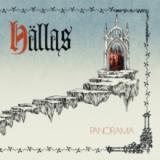
Adventure Rock pioneers Hällas deliver their most ambitious album yet with "Panorama”, released on 2026-01-30. The album both consolidates and expands the image of what the band is, but also what rock can be. This time different perspectives in a scenario are explored regarding whether humanity is capable of understanding a viewpoint other than their own. It reflects our time but is, in typical Hällas fashion, staged in a fictional, distant world.

Hällas' cult following in modern prog and hard rock will find "Panorama" familiar in a way: an imaginative hybrid of progressive 70s rock and heavy metal with echoes of both folk and psychedelia, along with conceptual content. In another sense, you have not quite heard a record like this from Hällas before. The self-confidence has never been as evident. Influences from different directions collide, and sometimes clash, contributing to the feeling that the expected instead culiminates in wonder at what it is you’re hearing.

Сделать предзаказ30.01.2026

он должен быть опубликован на 30.01.2026

24,79
The Ruts - Shine On Me LP

The Ruts

Shine On Me LP

12inchDEMREC1287
Demon Records
30.01.2026
  • 1: In A Rut
  • 2: H Eyes
  • 3: Babylon's Burning
  • 4: Society
  • 5: Something That I Said
  • 6: Give Youth A Chance
  • 7: Jah War
  • 8: I Ain't Sofisticated
  • 9: Staring At The Rude Boys
  • 10: Love In Vain
  • 11: West One (Shine On Me)
  • 12: The Crack
Сделать предзаказ30.01.2026

он должен быть опубликован на 30.01.2026

27,52
Various Artists - Death Stranding
  • 1: Don't Be So Serious
  • 2: Bones (Feat. Jófriður)
  • 3: Easy Way Out
  • 4: Poznan
  • 5: Asylums For The Feeling (Feat. Leila Adu)
  • 6: Once In A Long, Long While
  • 7: St. Eriksplan
  • 1: Death Stranding
  • 2: Please Don't Stop Chapter 1
  • 3: Because We Have To
  • 4: Waiting (10 Years)
  • 5: Almost Nothing (Feat. Okay Kaya)
  • 6: Tonight, Tonight, Tonight
  • 7: Nobody Else
  • 1: The Machine
  • 2: Anything You Need
  • 3: Give Up
  • 4: Patience
  • 5: Path
  • 6: Not Around
  • 7: I'm Leaving
  • 8: I'll Keep Coming
Сделать предзаказ30.01.2026

он должен быть опубликован на 30.01.2026

68,49
Anar Band with E.M. de Melo e Castro - Dou Dou Doudo: Ao Vivo Na Cooperativa Árvore

Audio taken from a live performance by Anar Band (Jorge Lima Barreto and Rui Reininho) with E.M. de Melo e Castro in November of 1978 at Cooperativa Árvore, Porto. The performance was filmed. A segment was included in »Obrigatório Não Ver«, a weekly programme presented by Ana Hatherly on Public Television’s Second Channel. It was not possible to determine the exact date of the event, and no documentation seems to be available in the relevant archives.

»Encontro que Tenho« and »Profissões«: these titles are specific to this release. Having failed to locate the respective poems after a thorough search in E.M. de Melo e Castro’s body of work, it was deduced both texts were created for the occasion.

Even without a full contextualisation, the sound transmits the spirit of cultural agitation proper to these sessions. When this show happened, Anar Band were Jorge Lima Barreto (ARP Odyssey synthesizer) and Rui Reininho (Ibanez double-neck guitar), with the addition of E.M. de Melo e Castro, whom we shall call a poet but whose creative intervention was far reaching. Besides poetry, also continued his efforts in linking up diverse artistic areas (painting, drawing, collage, performance, video) and his official training in textile engineering. He was one of the artists featured in Henri Chopin's »OU Revue« in 1966, establishing his natural connection to the European concrete/visual/sound-poetry avant-garde. Melo e Castro was also proficient in the agitation of minds and political awareness. A good example in »Profissões«, where initially separate professionals (an intellectual, a fisherman, a soldier, a factory worker) are gradually mixed in a show of interdependency. Symbolically, through his words one listens to a transformation of society, although the same conclusion arises twice: surplus always finds its way to the hands of the capitalists.

That was the state of affairs many were looking to change, an economic and social malaise that the 1974 Revolution in Portugal fully uncovered, when dissident voices could finally be heard in public. Each in his own way, all three participants in this recording were non-believers in the structure of society such as it was presented. Through his books and press writings, mainly concerned with Jazz, Jorge Lima Barreto pushed his way into Portuguese artistic and critical circles since the late 1960s. Consciously and unwittingly, he collected enemies and pointed them by name, people he labelled as reactionary, people who delayed progress, social and cultural mixes, the avant-garde; they even delayed the chaos from which new forms and attitudes arise.

Rui Reininho, a non-conformist by heart, experienced incomprehension from an early age. His anarchic ways, a tendency to baffle others, were revealed through the choice of clothes and accessories, public behaviour, and »real life« performances. Just as Lima Barreto, and even together with him, he enjoyed provoking the extremes: Maoists on one side, right-wing conservatives on the other. He translated leftist books and joined Anar Band precisely on the day a duck or swan or goose (one of them) was thrown on stage in Porto, 1976.

This record documents a concrete action, a snapshot of the agitation, something we have no problem calling punk activism, something which allowed two people with little to no musical training to play and record music. By then, Anar Band had managed to release their only LP in 1977. It’s this performance, however, that reveals the naked rawness of the music: improvisation, mutual listening, and choice of intervention between both musicians and Melo e Castro, clearly sensing when the synth has to change tone, the voice has to make pauses, the guitar punctuates both and finds the space to… scream. The sound was captured by the film crew, adding to the rawness: the instruments are palpable, the voice often too close to the mic. Everything was preserved. First time on disc.

Сделать предзаказ30.01.2026

он должен быть опубликован на 30.01.2026

23,95
Bert Jansch - Bert at the BBC (4x12")

Bert At the BBC is a comprehensive collection of Jansch’s appearances at the BBC, featuring over eight hours of rare and unreleased recordings, including live-on-air spots, studio sessions and full concerts straight from the BBC vaults, delving further into this legendary performer’s canon. Bert Jansch was the very essence of folk music, providing inspiration for everyone from Paul Simon and Neil Young to Led Zeppelin and countless folk revivalists. This unparalleled limited-edition compendium is available as a 4xLP and 8xCD set, housed in a coffee-table book set with a lavish 40-page book tracing the recordings from Bert’s earliest moments at the BBC. It includes interviews and insights from Lauren Laverne, Jools Holland, Johnny Marr, Jacqui McShee, Bob Harris, Bernard Butler, Mark Radcliffe and many more. Twenty broadcasters, producers and collaborators contribute at length to the booklet, with great affection for this gentle, maverick genius. Bert’s BBC legacy remains the most significant and exciting untapped reservoir of his music. The undeniable advantage of recordings made for broadcast is that they were, by their nature, created for public consumption and, barring live-on-air appearances – which might go well or go badly, but were going out either way – were explicitly signed-off by the artist as representations of his art that were good enough to be heard. The set is compiled by Colin Harper, author of Dazzling Stranger: Bert Jansch and the British folk and blues revival (Bloomsbury, 2000), who contributes detailed liner notes to the package. The release is mastered by IFTA award-winning engineer Cormac O’Kane. The vinyl release features 48 tracks on LP and is accompanied by a download card with over six hours of extras spanning 1966–2009, including BBC4’s St Luke’s concert (2003), and a complete Queen’s Hall, Edinburgh concert (2004) for BBC Radio Scotland. It is also available as a special 8xCD set containing all 147 tracks and encased within a coffee-table book. Bert Jansch At The BBC is an epic and enduring trail, 45 years in the making. “He was that rarity, a musician who really did deserve to be regarded as a legend.” The Guardian // “As a guitar player there was no one like him. He was jazz and blues and folk but there was a whole world in there that was just him, esoteric”

Сделать предзаказ30.01.2026

он должен быть опубликован на 30.01.2026

64,08
GRUPO UM - NINETEEN SEVENTY SEVEN

Grupo um celebrate 50 years with release of lost dictatorship-era album nineteen seventy seven!

First time release - vinyl comes with printed innersleeves

Brazilian avant-jazz vanguardists Grupo Um celebrate their 50th anniversary, sharing a second previously lost 1970s album from the vaults. Nineteen Seventy Seven (titled after the year it was recorded) is another rip-roaring instrumental fusion treasure from the band which spawned from within Hermeto Pascoal’s famed mid-1970s São Paulo collective.

Like their debut album Starting Point, Grupo Um’s Nineteen Seventy Seven was recorded when Brazil's military dictatorship was at its most repressive. “There were no open doors to those who dreamt to be protagonists in creative instrumental music”, remembers drummer Zé Eduardo Nazario, “even popular composers and singers had to submit their songs to censors and many records were banned and confiscated from the stores.”

Just like Hermeto Pascoal's Viajando Com O Som (1977) and Grupo Um's previous album Starting Point (1975), both of which remained unreleased until the 21st century, Zé Eduardo asserts that the 1977 album was flatly 'without any chance to be released at that time."

Recorded at Rogério Duprat’s Vice-Versa Studios in São Paulo, the group were under both time and space restraints, “we chose the small Studio B,” Lelo Nazario recalls, “which had a Tascam (TE AC) 12x8 console and a 4-channel AMPEX AG 440 machine. Therefore, we had to record without overdubs, everything straight to tape.”

Expanding from a trio to a quintet, original Grupo Um members Lelo Nazario (keys), Zé Eduardo Nazario (drums), and Zeca Assumpção (bass) were joined by saxophonist Roberto Sion and percussionist Carlinhos Gonçalves. Carlinhos, Zé and Zeca had already played together in the group Mandala, while brothers Lelo and Zé had just finished a stint backing Hermeto Pascoal during his years in São Paulo.

Lelo was deeply immersed in modular synthesizer experimentation during this period, working extensively with the ARP2600 and EMS Synthi AKS. These electroacoustic explorations formed the sonic foundation for "Mobile/Stabile," one of his first compositions to merge modular synthesis with Brazilian music, a fusion that would ripple throughout the Brazilian jazz scene. The piece premiered at the first São Paulo International Jazz Festival in 1978, performed by Grupo Um with guest trumpeter Márcio Montarroyos. In a shocking moment, festival organizers interrupted the show mid-performance, sparking fierce backlash from both audience members and journalists who denounced the incident as artistic censorship during Brazil's era of political and cultural repression. The version on Nineteen Seventy Seven is the first recording of the composition.

Nineteen Seventy Seven combines Afro-Brazilian rhythm, modular synthesis and a plethora of whistles, percussion and effects pedals. Album opener “Absurdo Mudo” - so titled for the absurd difficulty it poses to the musicians performing it - starts out in a cloud of mysterious dissonance, before the haze breaks for a glorious keyboard and saxophone interplay atop an uptempo samba groove. “Cortejo dos Reis Negros (Version 2)” (Procession of the Black Kings), based on the maracatu rhythm, inverts the traditional jazz song structure by beginning with improvisations, which are followed by the theme and a final coda. “The studio also had two Parasound electronic reverb units,” Lelo notes, “and the timbre is very audible on the soprano sax and percussion.”

Grupo Um’s daring music represents a manifesto of resistance during the dictatorship years, but it’s one which remains just as relevant today. As Lelo puts it: “For me, the aesthetic issue has always been about combining contemporary avant-garde languages with Brazilian music, independent of categories and commercial interests. The result of this fusion takes music to a new level.”

Recording credits (1977)
Recorded at Vice-Versa B Studio, São Paulo, November 9, 1977
Produced by Lelo Nazario and Zé Eduardo Nazario
Engineered by Ricardo “Franja” Carvalheira


Lelo Nazario – Wurlitzer electric piano, acoustic piano, signal generator, percussion

Zé Eduardo Nazario – drums, percussion

Zeca Assumpção – electric bass

Carlinhos Gonçalves – percussion

Roberto Sion – soprano sax, clarinet

Release credits (2025)
Produced by UTOPIA Studio, São Paulo
Project Coordination in Brazil by Irati Antonio (Utopia Studio)
Tape Restoration and Digital Mastering by Lelo Nazario at Utopia Studio, July 2025
Liner Notes by Lelo Nazario and Zé Eduardo Nazario
Photography by Jorge Las Heras, Lelo Nazario, and artists' personal archives
Photo Restoration by Lelo Nazario
Artwork and Design by Alessandro Renaldin

Сделать предзаказ30.01.2026

он должен быть опубликован на 30.01.2026

23,11
CAST - Yeah Yeah Yeah (TAPE)
  • A1: Poison Vine*
  • A2: Don’t Look Away
  • A3: Calling Out Your Name
  • A4: Free Love
  • A5: Say Something New
  • B1: The Way It’s Gotta Be (Oh Yeah)
  • B2: Devil And The Deep
  • B3: Weight Of The World
  • B4: Teardrops
  • B5: Birds Heading South
также имеющийся в продаже

Black Vinyl[22,90 €]

Clear Vinyl[24,79 €]

Cornetto Vinyl[26,01 €]

Picture Disc[28,99 €]


“Yeah Yeah Yeah just arrived out of the blue. I just took a chance. I had some ideas for a new album I’d been working on, but we weren’t planning on recording until the year after. It all happened very fast. There was a window of opportunity- youth was free, the studio was free, and the band were free- and I thought, let providence prevail. No one had heard the songs apart from myself and Alan McGee, but we both thought that we had something. You could feel it, even though none of the songs were really finished, and so we decided to roll with it and go and record them. I think with Yeah Yeah Yeah it was more than just trying to capture a vibe- it was about trying to record something majestic, which is how youth describes the record. There are gospels and strings on tracks like Free Love and don’t look away, which have kind of turned into these massive anthems. It has P.P. Arnold as a featured vocalist on a couple of tracks- the first, the single poison vine, which has a groove and a blistering chorus. She’s also on another song that’s a psychedelic funk track: the way it’s gotta be (oh yeah). Songs like Teardrops or Birds Heading South- we’ve tried to capture that classic, slightly
Wistful theme- whereas the weight of the world just rocks out. There’s also a little acoustic track to break it all up called the devil and the deep, which is a favourite of mine. We recorded the album over in Spain at space mountain, Youth’s studio, way up in the mountains, just as the almond trees were in blossom- which I took as a good omen for the session”.

Сделать предзаказ30.01.2026

он должен быть опубликован на 30.01.2026

14,92
CAST - Yeah Yeah Yeah LP
  • A1: Poison Vine*
  • A2: Don’t Look Away
  • A3: Calling Out Your Name
  • A4: Free Love
  • A5: Say Something New
  • B1: The Way It’s Gotta Be (Oh Yeah)
  • B2: Devil And The Deep
  • B3: Weight Of The World
  • B4: Teardrops
  • B5: Birds Heading South
также имеющийся в продаже

Black Vinyl[22,90 €]

Clear Vinyl[24,79 €]

Cornetto Vinyl[26,01 €]

Tape[14,92 €]


“Yeah Yeah Yeah just arrived out of the blue. I just took a chance. I had some ideas for a new album I’d been working on, but we weren’t planning on recording until the year after. It all happened very fast. There was a window of opportunity- youth was free, the studio was free, and the band were free- and I thought, let providence prevail. No one had heard the songs apart from myself and Alan McGee, but we both thought that we had something. You could feel it, even though none of the songs were really finished, and so we decided to roll with it and go and record them. I think with Yeah Yeah Yeah it was more than just trying to capture a vibe- it was about trying to record something majestic, which is how youth describes the record. There are gospels and strings on tracks like Free Love and don’t look away, which have kind of turned into these massive anthems. It has P.P. Arnold as a featured vocalist on a couple of tracks- the first, the single poison vine, which has a groove and a blistering chorus. She’s also on another song that’s a psychedelic funk track: the way it’s gotta be (oh yeah). Songs like Teardrops or Birds Heading South- we’ve tried to capture that classic, slightly
Wistful theme- whereas the weight of the world just rocks out. There’s also a little acoustic track to break it all up called the devil and the deep, which is a favourite of mine. We recorded the album over in Spain at space mountain, Youth’s studio, way up in the mountains, just as the almond trees were in blossom- which I took as a good omen for the session”.

Сделать предзаказ30.01.2026

он должен быть опубликован на 30.01.2026

28,99
Barry Walker Jr. - Paleo Sol LP

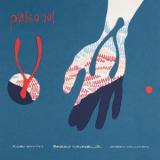
Barry Walker Jr. is a pedal steel player and guitarist whose roots in Americana, Country and Folk traditions influence his melding of minimalism, ambient and spiritual music. The Portland-based instrumentalist is also a member of the Rose City Band, known for his gorgeous phrasing and deft interplay with guitarist Ripley Johnson. On Paleo Sol, Walker demonstrates his singular voice as a pedal steel player and composer. Evoking the American western ranges and basins, the album embodies a longer, geologic view of time that patiently marvels at the ripples of change throughout lifetimes and ages. Walker is joined on Paleo Sol by drummer Rob Smith (Rhytion, Pigeons) and bassist and Mouth Painter bandmate Jason Willmon (Fruited Planes). Paleo Sol"s tranquil landscapes glide, built on warm finger-picked guitar figures and pedal steel swells coupled with deft percussion and bass touches by Smith and Willmon respectively. The trio plays with exceptional fluidity either completing each others phrasing or working together to build momentum. Smith notes: "The drums are not keeping time as much as evidencing its elasticity, mixing into the other instruments, changing phase states." Every gesture on the album is rich with intention, moving with grace and playing with timbre and time.

Сделать предзаказ30.01.2026

он должен быть опубликован на 30.01.2026

26,68
NOOTHGRUSH - KASHYYK LP
  • 1: Gage
  • 2: Sith
  • 3: Dianoga
  • 4: Imperial March / Alderaan
  • 5: Jundland Wastes
  • 6: Bric-A-Brac
  • 7: Gage (1996 Demo Version)

Kashyyyk was originally released in late 1995. Each copy was recorded onto a blank cassette, almost never new. We'd find boxes of tapes at flea markets and dub the demo over one side of them. Never knew what was on the other side. The collage on the cover evolved over time. Early copies had a sparse cover and later copies had a cover collages like this one. The text also changed over time. Edits were made, the thanks list grew, and the address changed. The text on this rereleases is the same as the last copies made in the '90s, with only tiny changes. Three of these songs were recorded in August of 1995 and originally released as the 8D8 demo. We made an unknown number of copies before we recorded again with Matt on guitar. We added our three new songs to the old and named the demo demo after Chewbacca's home planet. The other collages were put together specifically for this 30th anniversary release. Bonus track: Gage recorded January 19, 1996. This is the original version with Matt on vocals. Gary re-recorded the vocals before it was released on Cry Now Cry Later vol. 4.”—Noothgrush

Сделать предзаказ30.01.2026

он должен быть опубликован на 30.01.2026

28,78
Whitelands - Sunlight Echoes LP

Whitelands' second album Sunlight Echoes builds on their elemental debut - that won them fans from Slowdive to David Jonsson - with a more expansive sound that takes them out of the shoegaze shadows to somewhere bigger, better and brighter. Produced by long-time collaborator Ian Flynn and mixed by double Grammy Award-winner Eduardo De La Paz (New Order, The Horrors, The Charlatans, The KVB, Drug Store Romeos), there are soaring string arrangements (by Iskra Strings) and Lush guest vocals from labelmate Emma Anderson. "We're coming back with a lot more maturity and realness," says singer and guitarist Etienne Quartey-Papafio of their step up. "It shows in how much more emotional our music has become." With maturity comes a newfound confidence, so not only are there stunning melodies everywhere, but Etienne's vocals are front and centre throughout. "It's been really cool to watch Etienne push through boundaries," adds bassist Vanessa Govinden. "I like the direction we've taken on this album. We're taking a risk. It's half and half." She's right - the first half of the album has an almost Britpop breeziness, that belies the serious subject matter that inspired the songs, while the second half gets heavier, in all senses, with added grit and gravitas."This album is one of enduring," says Etienne of the overarching theme. "We had family that were dying, I was broke, there was a shortage of my ADHD medication_ I was suffering, but not just me, everyone around me was too." "The last two years have been challenging," concludes Vanessa. "The universe really fucked with us. That's why there are themes of loss, disconnection, fragmentation and yearning, but on the other side there is also unity and hope." Sunlight Echoes is a poetic, melodic statement of intent from this formidable band. Whitelands have fought back and triumphed in the face of adversity.

Сделать предзаказ30.01.2026

он должен быть опубликован на 30.01.2026

25,17
Продуктов на странице:
N/ABPM
Vinyl