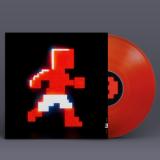
Featuring Nicholas Semrad (Empire of the Sun), Stu Brooks (Nine Inch Nails, Danny Elfman), Tim Lefebvre (David Bowie) and vocalist Gretchen Parlato, this new hardhitting, synth-fueled album distills Guiliana's vision into eight cinematic compositions that fuse retro production with futuristic playing. Transmitted through an original 8-bit visual universe created by artist and long-term collaborator Steve Wall, BEAT MUSIC 2.0 draws inspiration from early gaming culture and electronic music, looking both to the past and the future for answers. Guiliana's compositional voice is on full display alongside the energetic and precise grooves that define his singular approach. In an age increasingly shaped by automation, BEAT MUSIC 2.0 keeps its focus on human connection and collaboration.
Tucked in the heart of Koreatown, Los Angeles, lies The Libra Hotel—the titular architecture of Nick Malkin's new album and site of his musical and psychogeographic exploration. Unlike most musical "site-specific" studies, Malkin remains wholly ambivalent to the documentarian approach, instead sharpening an auteur-like focus on the site as a conceptual and highly expressive backdrop. The Libra is musically explored as a space that houses a noir fragmentation of identity—the exhausted trope of a complicated protagonist walking through rain-soaked street corners and fumy neon lights—where an inner monologue is rendered in both miniature and at a cosmic scale. Casting aside stifling tropes around field recording, ambient, and improvised music, Malkin's work finds its own unique fidelity and emotional core through the assembly and reassembly of memory. Nearly every sound on the album—from frayed saxophones, lambent pianos, and dissected jazz drum kits—are multiplied, shattered, and reconstituted into shapes that adorn The Libra in a motion-blurred fog. The narrative of the Hotel suddenly appears as if out of the mist, with intersecting characters interacting within its walls by happenstance. Adminst the languid set pieces, wraith-like sonic grains gravitate around wide subbass beams that give structural form to The Libra, a narrative tension like when a scene is shot from hundreds of different perspectives: an image both luminous and veiled.
Much like Frank Sinatra's own spatial residency immortalized on "Live at The Sands," "At The Libra Hotel" showcases an exuberant view of entertainment, hospitality, and a form of masculinity, one that can quickly detourn into darkness. Knowing this, Malkin extracts a melancholic core out of The Libra locale. The flickering shadows of American decadence are shown in their ephemeral honesty, lines that trace how even in everyday life virtue is tested, sanity is tested, even reality is tested within the confines of desire, within the night. The album is draped in fleeting textures, carefully arranged with a trance-like microtonality, the faint inflections and articulations of a jazz band cascading into dissipated stillness. Voicemails about changed locations and covert eavesdropping on guests' whispered conversations provide an atmosphere of missed connection and voyeurism—a purloined letter of desire receding into a vanishing point. Like the music itself, The Hotel, a chapel perilous at the intersection of desolation row, the center of it all, yet simultaneously at the edge of town, becomes a structure between libidinous virtuality and actuality—our inevitable half-light.
Ultimately, the pensive atmosphere of "At The Libra Hotel," powerfully asserts a plea for the kinds of intimacy only possible in transient spaces. Here, memory cascades into a force that feels like something supernatural, perhaps even religious, yet always subject to the infidelity of our imagination. Here, the album opens into its primary psychodrama, the transient nature of subjectivity itself and how this becomes fractured in the tumult between our commitments and desires. Within this nocturnal space, to quote Louise Bourgeois, "you pile up associations the way you pile up bricks. Memory itself is a form of architecture."
For her new and most radical album »Electroacoustic Works for Halldorophone«, Martina Bertoni used the electronic instrument at EMS Stockholm to create four pieces that are massive in scale and incredibly intimate, sonically restrained and emotionally overwhelming—almost ambient and always demanding your full attention.
Martina Bertoni returns to Karlrecords with »Electroacoustic Works for Halldorophone,« her most radical album yet. The foundation for the four electroacoustic pieces was laid during a residency at Stockholm’s legendary Elektronmusikstudion (EMS) that the Berlin-based cellist and composer used to explore the curious instrument, originally designed by Halldór Úlfarsson in 2008, as an algorithmic system in order to examine tunings and the mathematical relationships between Aiming to analyse and understand their interaction beyond the composer’s control, Bertoni sought to engage more deeply with the concepts of time, tuning, and, most importantly, control. Accordingly, her four »Electroacoustic Works for Halldorophone« seem both massive in scale and incredibly intimate, sonically restrained and emotionally overwhelming— almost ambient and always demanding your full attention.
While the halldorophone—famously used by Hildur Guðnadóttir for her »Joker« score—roughly resembles a cello and can be played like one, it is an electronic instrument. The vibration of its strings is being picked up, amplified, and then routed through a speaker. This creates a feedback loop that becomes increasingly complex depending on how much gain is added to individual strings. Úlfarsson gave Bertoni a carte blanche for how to handle the instrument, but she stresses that she relied on »minimal interventions—some string strumming and plucking« that set the interactions of different sounds and frequencies into motion. »I decided to not approach it like a cellist would,« she explains. »Instead I used it as a kind of generative organ by turning it into a feedback machine, with tuned feedback triggering more feedback depending on the tuning, which was based on tetraphonic scales that I could apply on the four main strings as well as the sympathetic group of strings.«
Bertoni recorded the material in the EMS studio, later composing and arranging the four complex pieces in her home in Berlin, after which they were mixed and mastered by Ciaran O’Shea. While this can be considered a compositional abstraction process, traces of her concrete work as a performer are firmly ingrained in the music. »The halldorophone doesn’t have a line output, just a double set of speakers, which is why I recorded all sounds with two microphones in the EMS studio,« she explains. »That’s why there’s plenty of breathing sounds here and there—label owner Thomas Herbst and I jokingly refer to the album as my ›chamber music record‹.« And indeed, there is a striking sense of intimacy to these four pieces throughout which individual sounds, harmonic frequencies, and even subtle rhythmic figures seem to move both on their own accord but also according to a underlying vision that steers their interplay.
Indeed, »Electroacoustic Works for Halldorophone« is an album built on and marked by contrasts. The soothing polylogue of single sounds in the higher register on opener »Omen in G« is counterpointed by massive bass drones, while the second piece, »Nominal in D,« plays a cunning game of repetition and difference by combining thick textures with all kinds of rhythmic elements. »Fades in C«—the longest of the four pieces, clocking in at 17 minutes—unlocks the emotional potentials of the sonic qualities of the halldorophone, sounding at once serene and anthemic, and »Organon in D« closes the album by underscoring how Bertoni’s unconventional approach allows her to seamlessly transform simple, quiet tones into complex, towering walls of sound.
Der Soundtrack zum Oscar-prämierten Animationsfilm „Wallace und Gromit - Auf der Jagd nach dem
Riesenkaninchen“ feiert nun sein Vinyl-Debüt auf Picture Disc. In dem zweiten Spielfilm von Aardman
nach „Chicken Run“ begeben sich Wallace und Gromit auf ein urkomisches Abenteuer, bei dem sie gegen
ein riesiges „Wer-Kaninchen“ kämpfen, das die Ernte ihrer Stadt vernichtet. Die Filmmusik wurde von
Julian Nott komponiert, der auch bereits die Musik für die vorherigen Teile der Reihe geschrieben hat, und
von Hans Zimmer produziert.
Die Vorzeige-Band des irischen Städtchens Dundalk, The Mary Wallopers, veröffentlicht ihr drittes Album, produziert von James Skelly (The Coral). "Paddywhackery" folgt auf den hochgelobten Vorgänger "Irish Rock'n'Roll" (2023) und präsentiert eine Band voller musikalischer Geschlossenheit und Kraft, die derzeit in der Musikszene ihresgleichen sucht. Aufgenommen in einer intensiven, zweiwöchigen Phase in Liverpool gemeinsam mit Produzent James Skelly und Tontechniker Chris Taylor, lässt "Paddywhackery" die großartige, wilde Natur von The Mary Wallopers voll zur Geltung kommen. Die Songs strömen mit einer solchen Verve und Wucht aus den Lautsprechern, dass man als Hörer nicht umhin kommt, immer und immer wieder auf Play zu drücken.
Raise The Ark - The new album from Alpha Steppa, marking ten years of Steppas Records. This vocal-dub album defies convention and introduces the listener to a new world of soundsystem music. Raise The Ark evolves and expands the distinct avant-guard dub style of Alpha Steppa, exploring the realms of Hip Hop, Trap, Trad, Folk and Bass Music. True to the Steppas Records ethos, the music carries a deep and crucial message, covering current and timeless topics; from the climate crisis, sociopolitical issues, to roots, culture and spirituality. Working closely with known artists from the Steppas imprint and as we have come to expect, introducing us to new and emerging talent from across the globe. Raise The Ark features include; Pupa Jim of Stand High Patrol (France), Sista Awa (Italy/Senegal), Cian Finn (Ireland), Ras Tinny (Suriname), Nai-Jah (Nigeria), Tenor Youthman (Russia), Eva Keyes (Ireland) and Block Mameli (Italy/Ghana). The collection features 12 evocative and provocative vocal tracks and 10 thundering instrumental / dub mixes. Raise The Ark is a truly eclectic, profound and exciting album not to be missed.
In partnership with onetreeplanted.org we will plant a tree in Ethiopia for every record sold.
“One of the most prolific and inventive dub producers around” Wire
“A serious player in the soundsystem world” Mixmag
“Obliteratingly heavy bass” Q Mag
“Album of The Month” MIXMAG (March 2013 & October 2014)
out of Stock
Last delivered 6 years ago available to reorder, subject to availability
Savage first-wave screamo from San Diego’s white belt progenitors. Collected for the first time on this 39-minute LP are Antioch Arrow’s complete Gravity recordings, including In Love With Jetts LP (+ a pair of previously unissued outtakes), The Lady Is A Cat 12”, Candle split, and two live Che Cafe tracks captured at the quintet’s spazzy peak. 23 tracks remastered from corroded DATs and annotated by Tony Rettman, plus lyrics, photos, and flyers, all housed in a stunning gatefold jacket for maximum McClard ragebaiting.
”A roar of nothing”—HeartattaCk
Savage first-wave screamo from San Diego’s white belt progenitors. Collected for the first time on this 39-minute LP are Antioch Arrow’s complete Gravity recordings, including In Love With Jetts LP (+ a pair of previously unissued outtakes), The Lady Is A Cat 12”, Candle split, and two live Che Cafe tracks captured at the quintet’s spazzy peak. 23 tracks remastered from corroded DATs and annotated by Tony Rettman, plus lyrics, photos, and flyers, all housed in a stunning gatefold jacket for maximum McClard ragebaiting.
”A roar of nothing”—HeartattaCk
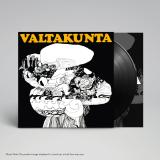
Eero Koivistoinen's debut album reissued in July Eero Koivistoinen is a wide-ranging composer and a talented musician – one of the all-time greats of the Finnish jazz. In 1965 Koivistoinen founded a trio that played avant-garde and fusion jazz together with Pekka Sarmanto and Edward Vesala. In 1967–68 he was a member of Blues Section – a group that is regarded as the first progressive rock band in Finland. Valtakunta (“Kingdom”) was originally released in 1968 and is Eero Koivistoinen’s first jazz LP. The songs of the album are based on the lyrics written by Finnish poets Pentti Saarikoski, Tuomas Anhava, Hannu Mäkelä and Jarkko Laine. The vocalists are Eero Raittinen, Seija Simola, Vesa-Matti Loiri and Koivistoinen himself. He also plays the tenor saxophone, piano and vibraphone, and is joined by a vast selection of legendary Finnish musicians, including Seppo "Baron" Paakkunainen, Pekka Sarmanto, Ronnie Österberg, Hasse Walli, Juhani Aaltonen, Antero Jakoila, Kaj Backlund, Esa Pethman, and Reino Laine among many others. All compositions are by Koivistoinen. The album reflects well the forthcoming compositional repertoire of Koivistoinen with its wide style spectrum. Valtakunta was reissued on vinyl in 2016 via Svart and the pressing quickly found a new home on the turntables of record collectors worldwide. After ten years, it's time to bring back this quintessential piece of Finnish psychedelia, avant-garde, free jazz, and progressive rock on wax and CD again.
Whirr and Luster have been orbiting each other for years, bound by a shared language of glide guitar, buried vocals, and volume as emotion. A through line that’s only deepened by Nick Bassett’s hand in producing and mixing the majority of Luster’s previously recorded output. The Whirr & Luster Split pairs one of American shoegaze's most storied bands with one of its most vital new voices across four new songs. Out on 12" EP, CD EP, and digital via Freewhirl Records. Splits are sacred territory for Whirr. More than a decade after the band helped define the modern heavy-shoegaze landscape, the Bay Area five-piece returns with its first new material in years. “Spiral Again” opens the record in classic Whirr fashion: an avalanche of guitar wrapped around a lyric about losing yourself in someone else’s gravity — spiraling, intertwining, coming down together. “Wish I Could Give You The World” follows, one of the most openly romantic songs the band has ever recorded, all wildfire imagery and dizzy devotion, desire rendered at full volume. Produced by Whirr and Zac Montez, both tracks find the band in signature form: enormous yet tender. On the flip side, Los Angeles' Luster continue their run as the standouts of the new shoegaze generation. Formed with the intent of pushing the genre forward rather than reenacting it, Luster fold electronic pulse and '90s texture into walls of glider guitar, and the two contributions here find the band in peak form. "Against the World" is a love song as a locked door — it's you and me, us against the world — claustrophobic and comforting in the same breath. "Forever" closes the record in a haze of doomed-romance repetition, a mantra of do you feel it now dissolving into the knowledge that nothing lasts. Also produced with Zac Montez, the songs make the case plainly: Luster aren't students of the form. They're peers. Taken together, the four songs read like a conversation. About distance, obsession, and the ache of never being able to give someone enough — carried across two coasts and two generations of a genre that refuses to fade. Loud, longing, and gone too soon: the Whirr & Luster Split, out September 18th. Whirr and Luster celebrate the release and cement the collaboration with two shows — the only U.S. Whirr performances of 2026, with no shows planned beyond them. Each night features a unique set built from rarities and live debuts, alongside exclusive vinyl variants and merchandise available only in that room, on that night: 9/18 — Los Angeles, CA @ The Wiltern 9/20 — New York, NY @ Brooklyn Paramount Two nights, two coasts, and no telling if there’s a next time — for the songs, the pairing, or the band itself.
Born and raised in Oklahoma City, Jason Scott & The High Heat return with their boldest statement yet on Play Boy, a gritty, swagger-filled collection that pushes the band's signature blend of heartland rock, Americana soul, and country grit into new territory Following the breakout success of American Grin and viral momentum surrounding "Too Good Too Bad," Play Boy captures the chaos, charm, and late-night recklessness that have made the band one of the most exciting rising acts in roots-driven country music. Fueled by razor-sharp songwriting, lived-in storytelling, and the electrifying chemistry that's earned them stages alongside acts like Morgan Wallen, Wyatt Flores, and 49 Winchester, Play Boy leans into the band's wild side without losing the honesty and substance at the core of their music. Equal parts dive-bar confession, desert highway soundtrack, and modern outlaw anthem, the album reflects a band fully embracing who they are: loud, fearless, and impossible to box in.
Remastered limited edition double vinyl with double-sided screenprinted poster-cover (sleeve folds out to be one huge poster). A real collectors item!
When Off Off came out around June 1984, one couldn’t speak of an independent music scene in Portugal. Warm Records’ vague existence didn’t have any impact and Dansa do Som’s inaugural release appeared only in December. 10 years after the revolution, after two IMF interventions, a lot of political instability (not to say turmoil, in the first couple of years) and the natural excesses of a sudden burst of freedom, the Portuguese consumer had more choices but a generally poor standard of living. There was no entrepreneurial culture and serious second thoughts about investing private money in risky ventures.
After many complaints about the whole music scene (institutions, critics and record label executives, popular and classical music alike), something that would continue well beyond the end of the decade, Telectu decided to finance, record, produce, release and sell an album with complete independence from outside structures. Their karmic reward was profit. According to Vítor Rua, Off Off was the only album fully payed by the duo and the only one that really payed off. Not an easy accomplishment for a double LP housed in a large (also double-sided) screenprint with complicated cuts and folds. The artwork was conceived by António Palolo, a friend and multidisciplinary artist. It was based on a collage of heavily saturated and xeroxed polaroids framed in shocking pink and green. Palolo was considered the third member of Telectu, regularly producing slides, video and other visual support for their shows. The inspiration for the type of cover came from GRM’s Gramme series.
Off Off is divided in four distinct sides, each one corresponding to a “theme” or “function” related to Telectu’s manifold artistic interests and interactions. The titles are also gateways to influences and a small portion of Portuguese cultural life:
- Side 1 / “Diagonale” is dedicated to Egídio Álvaro, art critic and gallery director (he opened Diagonale in Paris). Performance art was arguably his main artistic concern over the years, so the music on this side is suggested for use by one or more performers in live or playback situations. The three tracks segue into each other, linked by a synth arpeggio much in the same way as Telectu’s previous “Belzebu” álbum (1983);
- Side 2 / “Anarké” is dedicated to the composer Filipe Pires, one of Jorge Lima Barreto’s recurring invocations when asked about worthwhile contemporary music in Portugal. It is subtitled “concert music”, proposing «a new form of listening». Three tracks also, and these are separated by “clap interludes”, which basically consisted in the following: JLB and VR each had a pair of headphones on, and they clapped their hands according to the rhythm of the music each one was listening. Both musicians were interacting with a different Steve Reich piece: Vítor with “Music for Mallet Instruments”, Jorge with “Six Pianos”. The result is disjointed clapping, an awkwardly deliberate celebration of their own music. Telectu applauded themselves.
- Side 3 / “Cornucópia” is subtitled “music for theatre” and dedicated to Luís Miguel Cintra and Luís Lima Barreto (JLB’s brother), both connected to the Cornucópia theatre company. The side consists of several short pieces previously used as interludes in the Cornucópia staging of “Mariana Espera Casamento” (1983). Field recordings, mood pieces, ambience and a numeric poem (“Soneto Soma 14x”, by E.M. de Melo e Castro) read by João Perry, a quite well-known stage actor. His voice is treated with a flanger effect;
- Side 4 / “Palolo” is “video music”. It’s a one-take mix recorded from cassette sources (Telectu studio experiences) and done live while watching António Palolo’s Om film (1978) projected on the living room wall. It’s a deep, immersive, quasi-mystical 20-minute piece perfectly suiting the meditative, abstract, fluid images created by Palolo by mixing paint and water inside a bathtub. One imagines the Cosmos, hardly suspecting the technique. The film is 90 minutes long, so the music on the LP is of course edited.
The six titles on sides 1 and 2 evoke demons, all of them with conflicting symbolism, since it varies from culture to culture, religion to religion. No explanation is given and Vítor Rua has no idea where this imagery comes from. During virtually the whole stretch of the 1980s, Jorge was the one in charge of titles and concepts, and Vítor didn’t bother too much even reading the liner notes :) In any case, when you synchronize the listening experience with the imagery, a powerful impression emerges, a feeling of being in the presence of these entities while placing yourself inside the sonic narrative.
Off Off is undoubtedly a seminal album in the history of electronic music, as much Heldon as Fripp & Eno, jazz and American minimalism, cosmic out-thereness, mantric miniatures. Telectu at the height of their powers, still very early on, delivering an album-manifesto advocating intermedia art and the fierce independence of Portuguese musicians «from the scum of capitalist music industry monopolies. It’s a path to follow, albeit one that requires enduring hardships and retaliation from music industry gangsters.» Despite a few journalists deemed «capable of being free», the media are «enslaved by the dominant and fascist imbecility of the speculators of light music.» Off Off is addressed to those journalists «and to an audience angry at the cultural misery imposed upon us ..., certain that this music will open new horizons of musical pleasure in the conception of Portuguese avant-garde music, and in the open consciousness of us all. OFF OFF repeats Freedom.»
Those two words are a direct lift from Alberto Arbasino’s 1968 book Off Off, the basis of which is a critical analysis of Theodor Adorno’s and Dwight MacDonald’s ideas concerning the stratification of culture in different levels (high, mid and low) and the pervasiveness of mass culture in the form of a culture industry. In very simplistic terms, and that is precisely the point that inspired Jorge, Arbasino argued that it was possible and desirable to effect a revolution from below, cultivating alternative circuits completely cut-off from what he termed the in-in reality. Telectu’s record was a deliberate demonstration that it could be done, displaying Freedom in the face of all the gatekeepers and other human obstacles.
Since emerging from Italy's underground over a decade ago, Ninos Du Brasil (Nicolò Fortuni and contemporary artist Nico Vascellari) have developed a potent sound that blends live batucada percussion, electronics, punk energy, and visceral vocals sung in an imagined language. Along the way, they've built a reputation for incredibly intense and unpredictable live performances.
This fifth full-length follows Antro Pop, released on Codalunga / Hospital Productions in 2021 in the middle of covid lockdowns with a canceled world tour leaving the world in wait. Out of that imposed hiatus Orden Micelial began to take shape.
The trademark Ninos elements remain intact: frenetic drumming, ritualistic chants, and relentless percussive intensity, while exploring new sonic territory. Most notably on "Innaya Som," the duo embrace a full-blown guitar-driven rock assault, revealing the hardcore roots that have always underwritten their music.
Recorded and produced by longtime collaborator Rocco Rampino, the album achieves a veritable wall of sound—dense and overwhelming, yet retaining remarkable clarity and separation throughout.
Part carnival rave, part punk freak-out, Orden Micelial finds Ninos Du Brasil expanding their mythology without losing any of the wild energy that has made them one of contemporary underground music's most distinctive acts.
out of Stock
Last delivered 15 days ago available to reorder, subject to availability
Portugal's Dextro returns for second EP of stylish deep techno on Mutual Rytm with ‘Planets And Stars’. Dextro’s tunes have long been a staple of Mutual Rytm label head SHDW's sets, with the esteemed veteran previously landing on the label with his ‘Covil Dos Abutres’ EP last year. His return with ‘Planets And Stars’ features a selection of his most requested IDs from recent times, with the Portuguese DJ/producers featuring as a longstanding favourite within the European underground since the 90s through his stripped-back, economical sound that is rooted in masterful design and intuitive grooves. He is a true studio craftsman, whether going deep or more destructive, and that range is on show here as he makes a splash for his sophomore outing. SHDW notes, “‘Planets And Stars’ feels like his most refined and focused work to date. It also further strengthens our relationship, rooted in a shared vision and values around music and how it should be presented.” The EP kicks off with the heavyweight ‘1000 Places’, a track that will rattle walls as eerie synth whispers and sonar blips snake through the mix. ‘Industria Acéfala’ is just as hypnotic with a deep blend of rolling bass and rooted kicks, while unsettling tension comes in the one-note synth loops and scratchy texture. ‘Planets and Stars’ provides an intergalactic trip with cosmic dust, conscious spoken words and an infinite horizon that has you gazing off into the distance. The all-consuming ‘Perpendicular’ is shadowy with impish motifs darting about the mix as watery droplets fall into cavernous kicks. ‘Winter Letter’ is the final 12”cut and is perfectly deep, linear techno with gorgeous ambient details that turn your thoughts inwards. Three digital bonuses expand the trip: ‘Torresmos com Pão’ is unsettling and sparse, ‘Historia da Vida’ ramps up the tension with oversized hi-hats and rising synth turbulence and finally ‘Ghost Particles’ has shimmering bell sounds evoking a spooky moon-lit church in the dead of night.
out of Stock
Last delivered 8 days ago available to reorder, subject to availability
Frazer Ray lands on Time Is Now with Masha EP. Four tracks of killer, stripped back FWD facing proto/future garage effortlessly pushing the sound into a new direction.
FACTS:
1. Frazer Ray knows how to make a dance. IYKYK…. Recently he’s been shelling Live UKG cooked right in front of you on a custom modular rig. Mad energy. 100% party business.
2. Frazer Ray knows a thing or two about making UK soundsystem music. The artist FKA Soundbwoy Killah is now a decade deep in his discography. And first as ‘Soundbwoy Killah’ and now as ‘Frazer Ray’ he is 2 for 2 with aliases that never miss.
3. New Frazer Ray is always something to get excited about. For 10+ years he’s kept it super tight. Quality over quantity. Always holding dubplates. When releases have landed they drop on only the best labels; including both Rinse and Rinse’s new INGRAM imprint, Ninja Tune’s Technicolour imprint, Sneaker Social Club, Interplanetary Criminal’s Locked On and IPC & Main Phase’s ATW Records. (side note - his Soundbowy Killah - ‘Halcyon Daze’ LP on Sneaker is IMO an all time classic - do not sleep on that one). Aaaannd… if the dubplates got too heavy he’s also occasionally dropped weight on his own U-Phorix label.
Also…..what has always struck me about Frazer’s music is that it’s simultaneously integral in the hardcode continuum while also pushing it forward. It’s always complete. Fully formed. You never bristle. There’s no failed experiments. Just a firm nod to the future for anyone looking.
OK… Run the tracks.
Masha’s vocal licks tell it straight, this one is “Fire”. Proper club business to test the stacks. The drums roll steady in front of a wall of sub bass. A killer mix of post dubstep era goodness, techno sound design and the shuffle & swing of proto dubstep.
Settle Down There’s something 90’s tek step about this one. Dark and moody with a wall of bass. It bristles with texture and atmosphere before – a moment of reprieve in this absolute weapon – Frazer opens up into a dubwise oasis before skittering back into the darkness.
Syren Song is exactly what it says on the tin, alluring Dancehall vocals chatter and roll. Who knew auto-tune and Garage paired so well… Frazer did that’s who.
No Reasons Left is an ethereal closer for the end of the night / start of the morning after. Gliding warm & introspective dubwise breaks with a Reese bassline that hangs in the space between garage and hardcore.
Frazer says…
“This EP feels like I've finally nailed integrating my modular setup (and VCV rack for all you nerds out there) into my productions. I wanted to create deeper production while still ensuring the tracks translate well in the club.”
If this is only the beginning then strap in.
out of Stock
Last delivered 31 days ago available to reorder, subject to availability
“I like to work with a variety of instruments and set ups,” says Mark Van Hoen, sometimes known as Locust or Autocreation but here working under his own name on the excellent Plan For A Miracle, his first physical release of solo music since 2018’s Invisible Threads. ”Sometimes it’s literally in my studio, with all the hardware electronics available. Sometimes the laptop, using software instruments. Some of the tracks on this record were recorded in the desert (Joshua Tree) using a 4-track tape machine and small modular synthesiser set up. Each track was recorded in different location using different instruments, which accounts for the distinction between each piece. It’s also about my own reaction to my environment, and what’s going on in my life at the time.”
The Croydon-born Van Hoen started musical life in the early 1990s, signing for R&S records in 1993 but developing his own, myriad and distinctive style across a range of releases on Touch, Editions Mego and other labels, using a battery of instruments, including analogue synthesizers and taking a number of different approaches to recording, rather than ploughing a single sonic furrow. He has worked on a number of collaborations, including with Nick Holton and Neil Halstead of Slowdive, under the moniker of Black Hearted Brother - their Stars Are Our Home was released in 2013. “I have known Neil Halstead since 1992,” says Van Hoen. “He shared a house with me for a couple of years, and the music I was making and listening to along with clubs I was attending had an influence particularly on Pygmalion, the final Slowdive album on Creation.”
Each track on Plan For A Miracle does indeed sound like a world unto itself, a mini-environment, a weather condition, an ecosystem created for the moment. It’s a collection of tracks recorded over the past few years, released on Bandcamp - despite his apparent absence, Van Hoen works constantly. Opener “Climates”, in its exquisite limpidity, feels like a homage to Brian Eno, one of his most formative influences in his teen years, commencing with Music For Films, which he bought in 1979. “This Is For Them”, feels like a ghostlike throwback to early drum & bass or electronica, reminiscent of his own, earliest outings. “There have been a number of requests from labels to make some more music like my very early releases on R&S,” says Van Hoen. “This is part of ‘letting go’ and realising that there’s nothing less creative about going back to those styles again.”
“Pencil Of Spheres” is something else again, a magnificent, imaginary glass structure, shimmering, refracting, without visible means of suspension, a thing of impossible beauty. “Electric Lights” evokes an abandoned fairground, its lights still pulsating, its music lingering. “The Underpass”, meanwhile, insofar as it reminds of anything at all, is faintly reminiscent of Cluster or Neu’s! West German ambience, the urban mundane rendered magical, the sodium lights, the whitewashed walls. The reverberant, faintly oriental chimes of “Insight” transport us yet again, burgeoning and intensifying.
The landscapes, the skyscapes rendered on Plan For A Miracle feel unpopulated as a rule - but when he does introduce vocal elements, Van Hoen has a history of doing so to spectacular effect - think of “Real Love” from 1998’s Playing With Time, the seductive intonation of its title recurring throughout like a series of massive holograms, echoing, stuttering, breaking up, surging. Here, there are just the faintest of vocals, barely distinct, disquieting. “There’s been a bit of a game changer in recent times,” explains Van Hoen. “AI software that enables you to extract vocals and instrument parts from virtually any recording. That means sampling individual parts from existing sources is no longer limited to the original mix exposing certain parts soloed. The vocal parts I use are from multiple sources and often pitch shifted altered rhythmically and melodically.“ There’s further vocal chatter on “I Really Do”, proceeding at a faster pace as if giving chase, or being pursued - distant, enigmatic. “The Music”, meanwhile, its beat tolling, lost in its own fog of static, features a curious intonation, like the ghost of a lost Walker Brother.
Sadly, the album’s title is in reference to a personal tragedy on Van Hoen’s part - the loss of his wife. Titles such as “I Won’t Give Up”, which faintly reminds of another Eno masterpiece, Another Green World, in its nautical hurly-bury, or the pastoral strains of “Mrs Who”, heavily clouded with sadness, seem to allude to this. “In fact the record was recorded entirely before she passed away,” says Van Hoen, “most of it before she even became very ill. The title was given to the album when it started to look like she wasn’t going to make it beyond a few months. It was something Osho said - “plan for a miracle” - so it was a statement of hope. Unfortunately it was not to be.” Although the album is non-thematic, non-specific in its atmospheres, sound paintings, elegant structures it most certainly stands as a magnificent monument to Osho’s memory.
-David Stubbs.
out of Stock
Last delivered 31 days ago available to reorder, subject to availability
There is a pivotal scene in “August in the Water” (dir. Sōgo Ishii, 1995) where the surface of a pool turns into a stone wall. The water that gave the protagonist's life its meaning becomes a threat. As you fall through this stone wall, you appear in a set of underwater coral-reef corridors, and one of the most beautiful musical themes begins to play: Aquatic Ambience, composed by David Wise for Donkey Kong Country (1994). It's a theme that represents the weightless vibe of your new deep-sea life, where you go about your mundane errands, collecting bananas while driving on a swordfish, or, as HerzMayhem put it: "Poor monkey... always swimming, never going anywhere..."
Synthetic Water Music is the second of three compilations, following Synthetic Bird Music and timed to mappa's 10th anniversary. As with the birds, it gathers friends of the label, artists who have released with mappa or played our shows. Most of the music is new, made to measure for this compilation, much of it from Central and Eastern European hands. Birds and water mix well, so please feel invited to play them together, creating your own environments.
Where the birds were in one flock, water is dispersed across four chapters. You live your life as a droppity drop: vapour in the heavens, condensing in clouds, falling into a swamp, trickling into the deepest sea.
Tlālōcān (Cassette 1, Side A)
A place of eternal spring, of aquatic energy that nourishes everything and allows all things to bloom. Bubbly and splishy-sploshy, it is full of dripping sounds and moist caverns (“Emerald Pool” by Pauline Anna Strom), a landscape filled with living fountains (“Oh, to be a Fountain” by Eva Sajanová) and winding streams that flow through the area, forming part of its organic architecture. It is also a paradise reserved for those whose deaths were water-related, where the aquatic and terrestrial beings live in symbiosis and perspectives shift rapidly, from observing a single droplet (Shakali, Lau Nau) to dew (Feronia Wennborg & Lucy Duncombe) and on to flowing currents (Visible Cloaks) that gradually transform into river music (Ursula K. Le Guin & Todd Barton).
Nephelora (Cassette 1, Side B)
A celestial anti-gravity sound world made of evaporation, steam and the formation of clouds, as if looking at “The Sky At The Bottom of the Well” (by Natalia Beylis) or at “The Cloud That Never Rains” (by Henrique Vaz).
If a cloud never rains,
it is not a cloud at all, but a veil that parches the earth with its gaze.
It generates only its own shadow —
a looming mass of suspended longing,
a sky that hoards but never yields,
a reservoir that swallows every river and returns nothing but echoes.
The water in this world is often invisible but sometimes all the more present, as Bint Mbareh describes it: “Recently been obsessed with invisible waters because I come from a place where you have to imagine the water is there even though you cannot see a river, a sea, usually no rain, so water is in the air, the voice and the imaginal realm, drought is imagined to be negotiable.”
Žaboglach Zha-bo-glahch (Cassette 2, Side A)
A fusion of Scottish lochs and Slovak ponds: a misty, foul-smelling, swampy realm, the kind of place that swallowed Artax from The NeverEnding Story. Stagnant waters full of decay become a blooming habitat for sirens (“thereby losing the weightless delight of being swept along with it” by Adam Badí Donoval) and beings straddling the line between fauna and flora, inventing their own communication systems (“Water-lily phase” by Action Pyramid).
R'lyeh (Cassette 2, Side B)
A brooding sunken city at the bottom of the ocean. It’s a journey to get there. Let this chapter guide you, from the shore down to the depths, to the gates of an unexplored world that is inherently dark, unfathomable, and beyond the limits of human perception: starting with seasickness ("Seasick" by Nikolaienko), passing through a classic Poe-esque maelstrom ("Flurry at the Whirl-pull" by Atte Elias Kantonen), a gateway into the darkness and emptiness of the ocean floor, and finally traversing the city itself (“last waves of 2025” by Jules Reidy).
But what is pulling you to a place like this that only a few explore and even fewer leave? Maybe “the darkness that water can contain, the expanse of things we don't know and that can trigger fear instincts even as we try to rationalise them and think we are in control of the rest of nature” (“supercritical fluids” by Diane Barbé).
Dive in and surface wherever you like. Always swimming, never going anywhere. Just don’t forget to take water breaks.
P.S. Birds, then water, can you guess what comes next? Synthetic Soil Music, an elegy for insects and worms? Synthetic Glaciers, or maybe Pollinators? Which sounds would you miss the most if they disappeared? Or what if the third one never comes at all, and somebody, or something, makes Synthetic mappa Music instead. Don't you worry, with the right training data, it can all be replicated, better than the real thing.
Silver Vinyl
Simon Popp is back on Squama with his fourth album Trio.
At its heart, Trio is a work about collaboration, playfulness and unification. It is music as a means of coming together, a sonic equivalent to the Japanese philosophy of Kintsugi, in which broken ceramics are repaired with a visible golden lacquer. Rather than hiding the breaks, Kintsugi embraces them, making them part of the story, a form of delicate transformation. Popp and his collaborators Flurin Mück and Sebastian Wolfgruber take a similar approach: three distinct drummers, three different temperaments, three personal styles. Fused together into a single expressive instrument.
The album is a celebration of timbre, texture, and touch, its sound palette drawn from across continents and traditions. Human beings at all points of time, across all cultures and continents have used music to celebrate, mourn, worship and bond. Along with our voices, creating rhythm with our bodies. Clapping, stomping, hitting with sticks. A celebration of rhythm as both a shared human memory and an audible expression of close bonds.
Trio is a reflection of the beauty of imperfection and the timeless pull of rhythm as a shared human force. The cracks are not hidden. They are filled with gold.
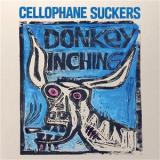
Donkey Inching', the Cellophane Suckers' ninth studio album, is set for release in September 2026. Unwavering and stubborn as a donkey, the Cellophane Suckers follow their very own path at their very own pace. The band, decried as "lead-swallowing" high-speed rock 'n' rollers, stoically let chords linger and celebrate feedback, reducing rather than harmonising, then picking up the speed when you least expect it and slowing down shortly afterwards to roll on in a Dadaist fashion the drums become a machine, the guitars increasingly embodying yin and yang. With "Execution Day", they pay tribute to Spencer P Jones, whom one might well cite as a musical influence, and Neil Young is also honoured, whose Wall of Sound goes down well with the Suckers. The fact that a text by Charles Bukowski is also "set to music" may be down to their love for red wine "Donkey Inching"... creeps stoically and stubbornly, like a donkey, into your ears. In July 2026, the Cellophane Suckers will once again be touring Brittany, and in September they'll be hosting a release party at the Sonic Ballroom in Cologne. Further concert weekends are planned for autumn/winter 2026...
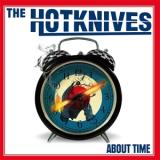
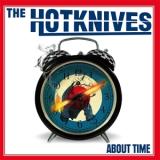
Vor 16 Jahren erstveröffentlicht, seit über 10 Jahren ausverkauft und nun endlich wieder auf Vinyl erhältlich: das "aktuelle" Album der unverwechselbaren Hotknives mit einer Tüte voller zuckersüßer Ska und Reggae-Bonbons, die süchtig machen. Ja, es wäre auch mal wieder "About Time" für ein neues Album, aber die 1982 formierte Brightoner Ska-Legende hat in fast 45 Jahren nur vier Studioalben veröffentlicht. Manchmal ist weniger mehr und jedes ihrer Werke besitzt zurecht weltweit Kultstatus bei Ska-Fans. Der 'Melody Maker' wählte das Quartett nicht umsonst unter die 5 wichtigsten britischen Ska-Bands überhaupt! Für "About Time" hat sich die Band nach Jahrzehnten wieder Verstärkung geholt und den typischen, Hammond-Orgellastigen "Happy Hotknives"-Sound mit druckvollen Bläsern auf ein neues Level gebracht. Der Opener "Harsh Reality" ist seitdem auch live das Startsignal für schweisstreibende Parties, zusammen mit sechs anderen Songs des Albums fester Bestandteil der Setlist und unterstreicht die Bedeutung des Albums bei Band und Fans der "Holsten Boys". Die 13 Songs sind dabei perfekt aufeinander abgestimmt und bieten eine enorme Vielfalt mit vielen musikalischen Einflüssen. Temporeiche Tanzflächenkracher im "typical british vibe" mit ihren Roots aus der zweiten Ska-Welle ("Bloody Beautiful", "Doing Alright"), jamaikanischer Rocksteady oder poppige Reggae-Nummern wie "Communication" (feat Dr. Ring Ding). Allen gemein ist jedoch die hochmelodisch, bittersüße und manchmal auch melancholische Ohrwurmgarantie, aufwendig und fett produziert von King Glover (Bad Manners, The Wailers). "The Hotknves" . "About Time" erscheint als 180g Collector's Edition in klassisch schwarzem oder farbigem Swirl Vinyl.
Vor 16 Jahren erstveröffentlicht, seit über 10 Jahren ausverkauft und nun endlich wieder auf Vinyl erhältlich: das "aktuelle" Album der unverwechselbaren Hotknives mit einer Tüte voller zuckersüßer Ska und Reggae-Bonbons, die süchtig machen. Ja, es wäre auch mal wieder "About Time" für ein neues Album, aber die 1982 formierte Brightoner Ska-Legende hat in fast 45 Jahren nur vier Studioalben veröffentlicht. Manchmal ist weniger mehr und jedes ihrer Werke besitzt zurecht weltweit Kultstatus bei Ska-Fans. Der 'Melody Maker' wählte das Quartett nicht umsonst unter die 5 wichtigsten britischen Ska-Bands überhaupt! Für "About Time" hat sich die Band nach Jahrzehnten wieder Verstärkung geholt und den typischen, Hammond-Orgellastigen "Happy Hotknives"-Sound mit druckvollen Bläsern auf ein neues Level gebracht. Der Opener "Harsh Reality" ist seitdem auch live das Startsignal für schweisstreibende Parties, zusammen mit sechs anderen Songs des Albums fester Bestandteil der Setlist und unterstreicht die Bedeutung des Albums bei Band und Fans der "Holsten Boys". Die 13 Songs sind dabei perfekt aufeinander abgestimmt und bieten eine enorme Vielfalt mit vielen musikalischen Einflüssen. Temporeiche Tanzflächenkracher im "typical british vibe" mit ihren Roots aus der zweiten Ska-Welle ("Bloody Beautiful", "Doing Alright"), jamaikanischer Rocksteady oder poppige Reggae-Nummern wie "Communication" (feat Dr. Ring Ding). Allen gemein ist jedoch die hochmelodisch, bittersüße und manchmal auch melancholische Ohrwurmgarantie, aufwendig und fett produziert von King Glover (Bad Manners, The Wailers). "The Hotknves" . "About Time" erscheint als 180g Collector's Edition in klassisch schwarzem oder farbigem Swirl Vinyl.
Petrozavodsk is a heavy drone trio based in Porto and Barcelona. They add dub, experimental and improvisational elements to a crushing, drone metal sound.
“Forest Fire” is the band’s vinyl debut, and is a more concentrated, expansive, and heavy offering following their debut tape “Winter War”.
Side A kicks off with “Forest I”, a collaboration with electronic artist Container AKA Ren Schofield (US/UK). The noise/rave veteran remixes the band’s guitars into a hot bubbling swampy mess that feels very alive, propulsive, punishing, yet fun – Container fans would know.
“Forest II” is all dubbed-out drone-rock, with blackened guitar, monotonous low thrusts, and a snare that is coming from an extremely far distance – everything echoing and shaking, dubwise almost-noise effects from the drum kit eroding in wide stereo.
Side B is one longform piece “Fire” with slow-motion guitar washes, and a bass that sounds like a high rise falling down. It nods to the genre’s touchstones (Boris’ “Amplifier Worship”, Sunn O)))) while carving its own path. A downtuned wall of heavy sound.
Recorded in Catalunya and Portugal, all amps turned up high. Mixed and mastered by Moa Pillar in London, with additional mixing on “Forest II” by the band’s guitarist Anton Vasin.
Guitar: Anton Vasin
Bass: Matvei Podgornov
Drums: Ivan Zoloto
Deaf Star is a shoegaze / noise-pop / electronic project founded in San Francisco and now based in Barcelona, Spain. Rooted in melancholy-driven personal songwriting, the project drags those intimate impulses through blown-out textures, crude production, bass-heavy electronics, and walls of distortion, arriving at a sound that feels both fragile and annihilating.
Drawing from the jet-engine narcotic haze of Astrobrite, damaged intimacy of Sebadoh, nocturnal drift of Bowery Electric, dubwise productions of Andy Stott and The Bug, Deaf Star occupies a space where beauty is constantly on the verge of collapse, where “the nightmares were rehearsals”.
The album was mastered by Simon Scott (Slowdive) and features a collaboration with Dania.
All music by Ivan Zoloto, except 4 (with Dania Shihab). Voice message on 8 by Danielle Lefczik. Recorded and mixed in San Francisco, Belmont, and Barcelona. Mastered by Simon Scott. Photography by Nina Rathbone.
Just featured on BBC6 Music in the CRAIG CHARLES FUNK & SOUL as part of the ODDBALL CREATIVES “Trunk of Funk Mix “ on Saturday 1st August - and already gaining great DJ feedback from the likes of Greg Caz, Laurent Garnier, Chris Bangs, Rocky, Chico Malo, Starla Recordings and many more ….
Another new collaboration on the Echo Labs label - the subsidiary of Echo Chamber Recordings set up to release tracks and remixes from other artists.
This one is a very special hook-up with Daniel Walls & Joseph Malik in Edinburgh with their new project under their “Oddball Creatives” production monicker. It was truly an honour that they reached out to Echo Chamber Recordings to bring this out on a vinyl 45 , fitting in perfectly with the foundation sounds of the label - combining classic timeless funk, jazz , Latin and soul with 21st Century production techniques
They have recruited the vocal talents of Philadelphia’s Kameela Waheed and the instrumental skills of Scottish jazz legend Colin Steele , to bring us the sound of the summer with a huge soul-jazz-funk cut. It combines elements of a classic early 70s groove with a subtle, up-to-date style, built around Joseph’s vocals and Kameela’s spoken rap.
On the flip you get the purely instrumental take - meaning you could extend the hypnotic groove even longer with two copies !
As ever, on Echo Labs there will be just 300 vinyl copies pressed for worldwide distribution
out of Stock
Last delivered 38 days ago available to reorder, subject to availability
Jennifer Herremas Black Bananas melden sich mit "Bad Bunch" zurück - dem ersten Album der Band seit "Electric Brick Wall" aus dem Jahr 2014 und Herremas erster Veröffentlichung seit "White Stuff" von Royal Trux (2019). Das Album erscheint bei Fire Records und markiert die lang erwartete Rückkehr von Herremas ikonischem Gesang an der Seite ihrer langjährigen Mitstreiter Brian McKinley und Kurt Midness. Von Royal Trux über RTX bis hin zu Black Bananas - Jennifer Herremas Schaffen hat sich nie wirklich in separate Phasen unterteilt, sondern sich stets weiterentwickelt. Wie Pitchfork feststellte, sind Black Bananas "RTX aus einem Paralleluniversum", das Einflüsse aus Synth-Pop, Hip-Hop, French-Touch-House und Dancehall in ihren ganz eigenen, einzigartigen Sound einfließen lässt. Ursprünglich vor über 20 Jahren unter dem Namen RTX gegründet, haben sich Herrema, McKinley und Midness zu einem dynamisch verbundenen, schrägen Kollektiv entwickelt. Auf "Bad Bunch" präsentiert das Trio einen spacigen, jazzigen Rock-Groove, geprägt von Improvisation und neuen Aufnahmetechniken, die im Laufe des letzten Jahrzehnts entwickelt wurden. Das Album entstand vor mehr als zehn Jahren und nahm über verschiedene, zeitlich nicht zusammenhängende Phasen hinweg Gestalt an, unterbrochen durch die Royal-Trux-Reunion und die Turbulenzen der Pandemie. Das Ergebnis ist ein Album, das die innovativen Tendenzen von Black Bananas noch weiter vorantreibt und dabei unverkennbar ihr eigener Stil bleibt.
Jennifer Herremas Black Bananas melden sich mit "Bad Bunch" zurück - dem ersten Album der Band seit "Electric Brick Wall" aus dem Jahr 2014 und Herremas erster Veröffentlichung seit "White Stuff" von Royal Trux (2019). Das Album erscheint bei Fire Records und markiert die lang erwartete Rückkehr von Herremas ikonischem Gesang an der Seite ihrer langjährigen Mitstreiter Brian McKinley und Kurt Midness. Von Royal Trux über RTX bis hin zu Black Bananas - Jennifer Herremas Schaffen hat sich nie wirklich in separate Phasen unterteilt, sondern sich stets weiterentwickelt. Wie Pitchfork feststellte, sind Black Bananas "RTX aus einem Paralleluniversum", das Einflüsse aus Synth-Pop, Hip-Hop, French-Touch-House und Dancehall in ihren ganz eigenen, einzigartigen Sound einfließen lässt. Ursprünglich vor über 20 Jahren unter dem Namen RTX gegründet, haben sich Herrema, McKinley und Midness zu einem dynamisch verbundenen, schrägen Kollektiv entwickelt. Auf "Bad Bunch" präsentiert das Trio einen spacigen, jazzigen Rock-Groove, geprägt von Improvisation und neuen Aufnahmetechniken, die im Laufe des letzten Jahrzehnts entwickelt wurden. Das Album entstand vor mehr als zehn Jahren und nahm über verschiedene, zeitlich nicht zusammenhängende Phasen hinweg Gestalt an, unterbrochen durch die Royal-Trux-Reunion und die Turbulenzen der Pandemie. Das Ergebnis ist ein Album, das die innovativen Tendenzen von Black Bananas noch weiter vorantreibt und dabei unverkennbar ihr eigener Stil bleibt.
While the sterile “professionalism” of some heavy bands can be like a clinical drone strike, Texas-based Judiciary feels personal. Like close combat with a knife. And it’s all in their chemistry. Judiciary is an amalgamation of four guys raised in the intersection of metal and hardcore—all devoted to pushing their craft further. Across two esteemed LPs, the band has proven their worth as a crucial entity in the crowded heavy music scene by evolving their sound further and further with each release. And now with the band’s latest Stalagmite Angels, due on September 4th via the venerable Closed Casket Activities, Judiciary can further showcase their status as a crucial, one-of-a-kind part of the evolution of hardcore in 2026. Life changes can bring about chaos and seismic shifts, but if Stalagmite Angels is any indication, then it’s all for the better. In the wake of the release of Judiciary’s second LP Flesh + Blood, the band called upon Juan Vazquez to pick up guitar duties, thereby changing the internal framework of the band for good, and unknowingly for the better. It’s this pivot in personnel that resulted in the band’s latest EP. “The goal with this EP was a hard reset, but we also wanted to chill the f— out a bit, have fun, and do something that felt true to the four of us,” recalls drummer Austin Looney. “We wanted time to reconfigure things and let the music come naturally–temper this new mindset that we've adopted post-Flesh + Blood.” Judiciary’s greatest strength lies in their musical singularity. Though Stalagmite Angels represents the collision of influences from across well-worn territories like metallic hardcore, death metal, black metal, d-beat and more, it’s the Lubbock-born band’s approach that makes it distinctly their own. Stalagmite Angels is a wholly new document that resembles a horde of bands ranging from Hatebreed to Carcass to Slayer to Iron Age, yet never aping any single band nor even revealing any single influence. It’s all familiar but none of it is specific. “90s hardcore and hardcore in general is always gonna be our natural inclination, but it manifests with different elements not only from song to song but within each song,” says vocalist Jake Collinson emphatically, who learned guitar specifically to help with writing new material. “Whether that’s Dying Breed or Cannibal Corpse or Crowbar or Machine Head or any number of other influences that any one of us may have, it all manifests in our work, and through our individual and collective lenses. With this EP, we transformed those ideas into the Judiciary approach.” Stalagmite Angels is an EP about anger at the world, belief in yourself, and how harnessing both in the pursuit of growth is necessary to achieve. But furthermore, it’s a concept record that envisions a subterranean world in both a literal and metaphorical sense—where hidden beauty lurks in the shadows (and in the eye of the beholder) and where triumph manifests in the ability to rise from the depths and into the world above.
This is a concept record that reflects on events that have had a calculable effect on a generation:
‘’By 83 and 84, it felt that nuclear war was going to happen. Not could happen but was going to.’’
Stephen Brotherstone
"What would you do in the event of a Nuclear war?"
I remember having discussions about what we would do when we heard the four minute warning siren. We would raid the sweet shop. I was 8 or 9 years old. The absurdity of this vivid memory encapsulates the concept of the record. It would take at least four minutes to get to the shop!
The record starts with an early memory of circling a church on a Raleigh Budgie (the smaller lesser known iconic Chopper bicycle) in 1981 and ends with staring up at a clear sky on Oldham Lows in 1990.
The record identifies and plays with the effects of an underlying fear of oblivion on a generation of children, but also society as a whole: The pieces take in media and government propaganda. Machinery (nuclear submarines) and buildings (nuclear bunkers) but also everyday activities of the civilian population, activities such as shopping, clubbing and staring at the sky. Thematically, the record is made up of personal memories mixed with historical events.
Instruments are mainly from 1980s. DX7 and 808 feature predominantly. The pieces feature numerous melodic motifs that develop and intertwine underlying ideas of espionage and layers of secret messaging. It also mirrors the ways in which governments and civilians interact. Decisions being made in the name of defence whilst people go about their daily lives. I am exploring the everyday experiences of the masses whilst major political decisions are taking place. For example, shopping on a Saturday afternoon versus heated Cold War tensions in 1983.
Although taking place conceptually in the years 1979-1991, this record mirrors current events. History repeating. It also mirrors the helplessness or maybe some oblivious everyday normality state that we adopt as a community whilst major political decisions are being made.
The idea that life goes on oblivious to larger scale politics, or on the other hand, the idea that we are all very aware but in a state of unreal normality. Adam Curtis goes into great detail about such things in his film 'Hyper Normalisation'.
For close to a decade, B’licious has been best known as the voice ofThe Heliocentrics, the London psych jazz and funk collective whose collaborators include Madlib, Mulatu Astatke, DJ Shadow, Gaslamp Killer and Lloyd Miller, with stages taking her to Glastonbury, Roskilde and Worldwide festivals alongside artists including Marshall Allen and Bilal. Her appearance on Strut Records’‘Nuclear War’, a tribute to Sun Ra also featuring Marshall Allen, Knoel Scott and Bilal, is the latest marker of a body of work built over years on some of the most respected stages in UK jazz and soul. Following her 2022 solo EPSurrender, ‘Apple’ is the lead single from her debut full-length album,Serpent Dreams.
‘Apple’ was co-produced byDan Smith of The Noisettesand engineered bySie Medway-Smith, whose credits include Björk, Depeche Mode, Gang of Four and Massive Attack. On the flip side,SLICKnBOBBY— known for chest-rattling basslines and immersive, dubbed-out rhythms — deliver a live reworking that shows off their skills perfectly, drawing on a background that includes performing alongside Wally Badarou and frequent collaborations with Liam Bailey and Greentea Peng.
It is virtually impossible to describe with mere words how emotionally powerful this work of art is. Just listen. Listen, listen, listen...
A blissed-out 80-minute epic, Hatchback's Phaser For The Ocean, Chorus For The Moon is his magnum opus, a sprawling masterwork that encompasses ambient, new age and environmental music to wondrous effect. Moving, hypnotic and deeply meditative, it's FFO Mike Brooks, Deuter, Klaus Weiss, Innovative Communication, Harmonia, Cluster, Ashra's New Age of Earth, Stomu Yamashta, Haruka Nakamura, Yoshimura, Hosono, the works.
A record truly deserving of the deluxe Be With treatment, the vinyl was specially cut at Abbey Road Studios whilst the original stunning artwork has been pleasingly expanded. Now, an eye-catching holographic-foil layer moon is set against the original tones, wrapped up in a sumptuous double-gatefold jacket.
Soaked in Californian consciousness and limited to a run of just 500 copies for the world, this release is a treasured balm like no other for these troubled times.
Hatchback is the atmospheric, melodious ambient alias of California-based artist Samuel Milton Grawe. Sam creates music that sings of the Cosmos, full of deep resonant tones, glistening arpeggios, lush pads and harmonic motifs.
"When I first was getting into the creative side of music making in my teens, I was heavily influenced by concept albums like Quadrophenia and The Lamb Lies Down on Broadway, as well as epic pieces that took up an entire side of a record: Pink Floyd’s Echoes, Yes’ Close To The Edge, Klaus Schulze’s Nowhere Now Here, Miles Davis' Shhh/Peaceful and He Loved Him Madly. In the extreme, these ideas coalesced in double albums where each side of each record is occupied by a single title - Yes’ Tales From Topographic Oceans and Tangerine Dream’s Zeit being primary examples. When I returned to making music after moving back to Northern California in 2020, the first piece I recorded landed around the 20-minute mark, and the idea of creating three other long pieces to realize a full album felt like a natural - if indulgent - goal. From there, each new piece followed sequentially. Four songs. My fourth album." - Sam Grawe
Phaser For The Ocean Chorus For The Moon is a pure expression, informed by a lifetime of deep listening unbound by algorithms or AI. These are songs for the sunrise and the sunset - and every colour in between.
out of Stock
Last delivered 13 days ago available to reorder, subject to availability
»Ampersand Curve« initiates a brilliant new phase of work by North Manchester’s most elusive artist, best known as Michael J. Blood. His string of ruffkut club bangers, as well as jams with Rat Heart & Samizdat over the past seven years, have made his records a true cult property, and now find him signed to one of the UK’s most foundational techno imprints – more of which later this year.
But under the Sees aegis, he swims in very different waters, following his instincts to use the studio-as-instrument to produce his most impressive, deep-minded work, made from – and for – the heart. Where MJB was all about off-the-cuff club jams cooked for immediacy, his new stylistic switch reveals myriad worlds of influence swirling under the hood, where interrelated spheres of spiritual jazz, dub, ambient, and concrète more clearly light up his rich inner world.
As the story goes, MJB was burgled a few years back and lost most of his studio just as the project was hitting its stride. It prompted a personal review of his practice, re-learning new kit, allowing him to bend the rules. Adopting a sort of first-thought, best-thought approach to composition, the new methodology fuelled a renewed imagination in flux, or what he identifies as Sees: a personalised way of conveying complex emotions. That undoing of musical and mental conditioning opens the walls of his music to vast new horizons. Opener »Ithaca« fathoms sonorous midnight jazz with 10 mins of a plangent, searching sax solo in HD widescreen, like some alternate version to the Blade Runner Love Theme, while a resonant vocoder soliloquy, »Unseem«, reaches into space harmonised between Alvin Lucier and Ron Trent, and »Sheer« chases the devil out of labyrinthine dub dimensions.
The floating dream architecture of »Caprices« caps the LP’s underlying narrative and painterly qualities with a romantic conclusion of blushing pads and shivered, metallic echoes of the subtropical that suggest a coming-to-terms with worries, refreshed and good to go again.
out of Stock
Last delivered 43 days ago available to reorder, subject to availability
For any other artist, an album like Asher White’s Love Aggregates might come out of a conscious push to treat no idea as off-limits, to make something bold and new. Jubilant art-funk about cocaine addiction—absolutely. Swooning orchestral pop about Jerry Garcia—why not? Rippling electronic noise, jazzy brushed drums, an elderly motorcyclist with dementia, a profoundly emotional bass solo—put them all in one song. There are threadbare folk tunes, glammed-up power-pop bangers, “Sir Duke” horn charts, Morton Feldman string arrangements, layers of guitar feedback like violins made of liquid chrome. Yes, for another artist, Love Aggregates might be the most adventurous album in their catalog. For Asher White, it’s what passes for settling down.
White is 25 years old and has been making records—writing, recording, producing, and playing almost everything herself—for over a decade. She’d released two dozen of them on Bandcamp before catching the indie-rock industry’s attention with 2024’s Home Constellation Study and last year’s 8 Tips for Full Catastrophe Living. The latter album’s dizzy eclecticism and formidable craft landed her on Rolling Stone’s Future 25 list with the likes of xaviersobased and Oklou, along with a slew of other accolades. That came as something of a surprise to White, who didn’t craft the chaotic 8 Tips with a breakthrough in mind. Love Aggregates feels like a chance, for one of the most thrilling musical talents of her generation, at a more deliberate introduction.
She wrote and recorded her new album while her previous one was gathering
momentum, tinkering in the DIY recording studio where she always works, acutely conscious now that people would be listening to whatever she came up with. At around the same time, her years-long romantic relationship ended in a flurry of betrayal and addiction, her first experience of devastating heartbreak. Even so, Love Aggregates is not a bitter album about wallowing or seething, but instead making use of those impulses as raw materials in work that transcends the specificity of its origins, fashioning them into something surprising and new.
American experimental composer Stephen O’Malley releases Avaeken, two sides of immense, immersive, self-annihilating music via Dais Records.
The record preserves site-specific work: O’Malley installed Avaeken as part of Wish You Were Here, the exhibition by renowned American artist Banks Violette, underscoring the tension between presence and absence, life and loss.
O’Malley and Violette have developed a distinct language of sound, space, and sculpture over the past two decades, reverberating through the walls of world-class institutions from The Guggenheim and Centre Pompidou to prominent galleries such as Maureen Paley in London, Gladstone Gallery in NYC, and Antwerp’s TICK TACK, the brutalist space where Wish You Were Here unfolded in early 2026.
Emerging now as an LP, Avaeken presents power and phenomena: low-frequency vibrations, deep oscillations, and phase cancellations that translate as innately effective in any environment. Violette’s visual expression — the impossibility of locating yourself within the loss of a friend and the broader decay of culture — now fills the LP sleeve and feels inextricable from O’Malley’s sound, both still without resolution.
“Natural harmonic tone coloured by the valves of the amplification is the one desired characteristic,” reads the initial notes.
“At first I asked, why would I write for another guitar player?” he says. “I realized how amazing it is to be a listener on the other side of the music; together we were able to try all these precisions with intonation, harmonics, specific microtonal ideas.”
The quartet performed Avaeken several times before O’Malley joined them for a recording session at Muziekcentrum De Bijloke, a 13th-century former hospital with modern acoustics in Ghent.
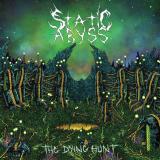
Emerging in the early 2020’s - Static Abyss is a monstrous hybrid of twisted, doom-laden brutal death, comprising of longstanding members of the US metal scene. The band consists primarily of the duo of Deathgrave’s Greg Wilkinson (Guitars/bass) & Chris Reifert (vocals), both also members of legendary American masters of sickness, Autopsy, with Chris also notably starting his career with genre pioneers, Death. The band’s debut, ‘Labyrinth Of Veins’ was released in 2022, & their second album ‘Aborted From Reality’ followed in quick succession, surfacing in 2023.
Returning now for Static Abyss’ third studio album, & with the addition of Chad Gailey of fellow death merchants Necrot behind the drumkit for this release, ‘The Dying Hunt’ plummets the listener again into the festering, psychedelic swamps of lunacy, with the spiralling melodies texturing the relentless savage riffs for an effective nightmare inducing trip through the sonic abyss. Continuously & relentlessly flitting between brutal passages & hypnotic otherworldly craziness, ‘The Dying Hunt’ reflects the ailing world & the unravelling of the psyche of its inhabitants in this darkly dystopian landscape, for a masterful descent into sick Death Metal combined with Crust & Doom elements.
‘The Dying Hunt’ was recorded at Earhammer Studios in Oakland, CA, with engineering, mixing & mastering overseen by Greg Wilkinson himself. Cover art comes courtesy of Jon Santos.
This edition of ‘The Dying Hunt’ is presented on limited yellow marble vinyl, including printed inner sleeve with lyrics.
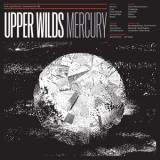
Stargazing Brooklyn noise-rock cosmonauts Upper Wilds - the power-trio led by Parts & Labor co-founder Dan Friel - return with another set of lean anthems filtered through a flamethrower. Their speediest, most explosive album yet, Mercury, is a meditation on death, with Friel expounding on his brush with skin cancer, climate change, funerals, Henry Kissinger, and a world seemingly on fire. Buoyed by recent tours with acts like Pelican, Uniform, Psychic Graveyard and Savak, the trio"s increased speed is met with a precision that gives every hairpin turn more wallop. Upper Wilds" space-rock adventures through their recent albums Mars, Venus, & Jupiter came replete with stories of the heavens and humanity alike. On this fourth installment, the closest planet to the sun, things take a darker turn. The small, barren planet Mercury was named after the gods" speedy messenger and guide to the underworld, and the album syphons Upper Wilds" fuzz-pop aesthetics into concise, scorched anthems about the brevity and fragility of life with the ferocity of a band playing on the edge of extinction.
Son Volt’s latest album, Sound Signal Serenades, will be released as a Record Store Day exclusive. Featuring twelve originals, Son Volt return to the elemental strengths that have long defined their sound—restless guitars, melodic clarity, and songs rooted in the lived experience of American landscapes. Anchored by Jay Farrar’s steady, unvarnished voice, the record balances reflection and resolve, drawing lines between personal memory and the wider currents of history, change, and endurance. The songs move fluidly between stripped-down intimacy and full-band drive, blending folk-rock, country, and electric grit with the confidence of a band that knows exactly who they are. There’s a sense of forward motion throughout the album—never nostalgic for its own sake, but deeply aware of where it’s been. Lyrically, Farrar explores themes of connection, resilience, and place, finding meaning in both the ordinary and the unsettled. This album stands as another chapter in Son Volt’s enduring catalog: honest, grounded, and quietly powerful, reaffirming their role as one of America’s most consistent and thoughtful rock bands.
Emerging in the early 2020’s - Static Abyss is a monstrous hybrid of twisted, doom-laden brutal death, comprising of longstanding members of the US metal scene. The band consists primarily of the duo of Deathgrave’s Greg Wilkinson (Guitars/bass) & Chris Reifert (vocals), both also members of legendary American masters of sickness, Autopsy, with Chris also notably starting his career with genre pioneers, Death. The band’s debut, ‘Labyrinth Of Veins’ was released in 2022, & their second album ‘Aborted From Reality’ followed in quick succession, surfacing in 2023.
Returning now for Static Abyss’ third studio album, & with the addition of Chad Gailey of fellow death merchants Necrot behind the drumkit for this release, ‘The Dying Hunt’ plummets the listener again into the festering, psychedelic swamps of lunacy, with the spiralling melodies texturing the relentless savage riffs for an effective nightmare inducing trip through the sonic abyss. Continuously & relentlessly flitting between brutal passages & hypnotic otherworldly craziness, ‘The Dying Hunt’ reflects the ailing world & the unravelling of the psyche of its inhabitants in this darkly dystopian landscape, for a masterful descent into sick Death Metal combined with Crust & Doom elements.
‘The Dying Hunt’ was recorded at Earhammer Studios in Oakland, CA, with engineering, mixing & mastering overseen by Greg Wilkinson himself. Cover art comes courtesy of Jon Santos.
This edition of ‘The Dying Hunt’ is presented on limited yellow marble vinyl, including printed inner sleeve with lyrics.
Der Titel des siebten Studioalbums der kalifornischen Punkrocker bezieht sich auf Mike Ness" doppelte musikalische Heimat. Der Songwriter und Sänger von Social Distortion huldigt auf "Hard Times And Nursery Rhymes" sowohl dem düsteren Amerika eines Hank Williams wie auch dem bluesigen Herumstolzieren der Rolling Stones etwa während der "Exile-On-Mainstreet"-Ära. Altbekannte Einflüsse, die hier jedoch in den Vordergrund treten: "Hard Times And Nursery Rhymes" ist das rockigste und gleichzeitig beseelteste Album der Gruppe, die weltweit über vier Millionen Alben verkaufte. Dennoch finden Fans den typischen Punkrock-Roar in jedem Stück wieder: vom Opener "California (Hustle and Flow)" bis zum düster-rockenden Hank-Williams-Cover "Alone and Forsaken". Aber auch Springsteen- und Tom-Petty-Fans dürften diesen Sound mögen. "Hard Times And Nursery Rhymes" ist das erste Album der Band nach "Sex, Love And Rock "n" Roll" aus dem Jahr 2004. Für Fans von Gaslight Anthem, Rancid, Bad Religion, Tom Petty, Bruce Springsteen und Tiger Army. Die 2LP hat zwei Bonus-Tracks.
out of Stock
Last delivered 51 days ago available to reorder, subject to availability