Named after the fictional character created by James Thurber-- popularized by Ben Stiller in 2013's The Secret Life Of Walter Mitty--Hayes has always channeled his thoughts and emotions through that character, rather than write about himself directly. "I really related to the character of Walter Mitty," says Hayes. "He's known for daydreaming too much and being lost in his head, which has been accurate to the Walter in my songs.
But really it's all just a cover up because back in those days we were still on family computers and I didn't want anybody to see songs by Dustin Hayes on iTunes." The band released a number of EPs and albums before going on something of a hiatus in 2015. But the creative itch was something Hayes couldn't stop scratching, and in 2016 he reformed the band as Walter Etc., the idea being to allow members to come and go as they please, weaving in and out
of records as life and schedules allowed.
Now, though, Walter Etc. have returned with When The Band Breaks Up Again, a new album made by the original three members with a very telling title. "The three of us got into music together via Green Day and more '90s pop-punk and skate punk stuff," explains Hayes.
Suche:walter etc
- 1
- A1: Why Don’t You Do Right - Cleo Jons & Dick Reynolds Orchestra
- A2: Fiche Le Camp Jack - Richard Anthony & Les Angels, Dir. Christian Chevallier
- A3: I Pawned Everything - Walter Spriggs & Jesse Stone Orchestra
- A4: Don’t Play No Mambo - The Charioteers & Sid Bass Orchestra
- A5: Mr. Sandman - Chris Powell & The Blue Flames
- A6: Teen Age Rock - Pete Rugolo & His Orchestra
- A7: The Rhinoceros - Osie Johnson & His Orchestra
- B1: Lady Be Good - Knud Jörgensen & The Metronome Singers
- B2: Walk Softly Children - Elizabeth Lands, Orchestra Cond. By Dave Martin
- B3: Timber’s Gotta Roll - The Deep River Boys Feat. Harry Douglass
- B4: Blues In The Closet - The Tritones
- B5: The Baggage Room Blues - Tom Kennedy
- B6: Write Me Baby - The Metrotones
- B7: Rat Race - Little Norman (Norman Kaye)
Auf dem komplett unübersichtlichen Markt der Vinyl-Wiederveröffentlichungen rarer Aufnahmen aus dem im weitesten Sinne Rock & Roll/Rhythm & Blues/Popcorn-Umfeld hat sich die Serie DOWN AT THE UGLY MEN’S LOUNGE mit einer komplett eigenständigen konzeptionellen Farbe etabliert. Das authentische 10“-Format und die Covergestaltung mit obskuren und anonymen Musikerfotos der ersten fünfzig Jahre des 20. Jahrhunderts sind gleichermaßen unverkennbar wie unwiderstehlich.
Das stilistische Spektrum der neuen Auswahl rarer und rarster Trouvaillen aus dem legendären Archiv von Prof. Bop bleibt dem Ursprungskonzept treu: Zwischen Boogie und Mambo, zwischen Blues und Bop, zwischen Exotica und Egozentrik...weniger amateurhaft gespielter Teenager-Rockabilly, eher Rock & Roll etc. von musikalisch versierten und Jazz-geschulten Vollprofis. Allesamt Aufnahmen der goldenen Epoche 1950 – 1962.
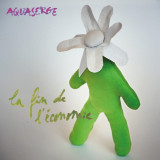
It’s burning, everything is catching fire, and Aquaserge are singing and dancing on the embers of a world contemplated in a rear-view mirror. A world which is hyper-connected, yet forgets its primary emotions.
This seventh album by the band is an ecological poem, where present and past collide. A resolutely rock-sounding album, laced with electronics, experimental pop songs and audio archives. Along the way, the listeners will encounter traces of Oulipo (the famous experimental French literary movement founded in the ’60st), Dada and free jazz. They will cross paths with the ghosts of Ennio Morricone, Walter Benjamin and Marguerite Duras, with the shadows of Kim Gordon and Brigitte Fontaine. And other audacious and exciting melanges, in the pure tradition of Aquaserge.
The album was arranged and produced by Benjamin Glibert, the band’s guitarist and main composer.
The recording took place in a house located in the french countryside (where Aquaserge’s mobile studio was installed). The mix was done at Studio St Guidon in Brussels, the album was mastered by the legendary Dominique Blanc-Francard at the Labomatic studio in Paris.
The members of the band’s current line-up all took part in the recording: Audrey Ginestet (vocals, bass, guitar, etc.), Benjamin Glibert (vocals, guitar, keyboards, etc.), Olivier Kelchtermans (saxophones, keyboards, vocals, etc.), Manon Glibert (clarinets, vocals, etc.) and Julien Chamla (drums, vocals, etc.).
EXPANSION continues its series of 10' CLASSICS back to back with the coolest CONTEMPORARY takes of one awesome track. First off is the 70s masterpiece by the NORMAN CONNORS, as originally recorded by CARLOS GARNETT - a jazz funk, timeless 'rare groove' and '100 mile an hour dance' classic previously only a single as an edit and LP track but glorified here complete with a stunning vocal performance by JEAN CARNE.
The new version is by 'Queen Of The Broken Beat' BEMBE SEQGUE (pronounced 'segue-way'), a singer, composer, DJ and poet influenced by DOUG & JEAN CARNE who has worked with I.G. CULTURE, LIKWID BISKIT and DEGO from 4 HERO. She was an intrinsic part of the vibe that created the West London Broken Beat scene working extensively with KAIDII Tatham (Agent K) Orin Walters * Daz `IQ - Bugz In The Attic, MARK de-CLIVE LOWE etc as well as appearing on Seiji and G-force's album released on Re-inforced.
Bembe's 'live ' take on the classic released to acknowledge a rare live appearance in London by Norman Connors at the Royal Festival Hall. LIMITED EDITION RELEASE
From Chile now Rotterdam comes that extraordinary One Lady Rock'n'Roll Orchestra giving you the most obscure Covers of the Cramps, Motörhead or the Drifters, Recorded in Peru and the NL Ladies & Gentlemen welcome to violence, der künstlerischen Gewalt der emotionalen Kraft, Sinnlichkeit und grenzenloser Stärke... Willkommen in der Welt von Bang Bang Band Girl, der allmächtigen ein Damen-Band, die dieses fabelhafte Album komponiert und gassenhauer neu um-komponiert, spielt, singt und produziert. In Chile geboren, dann auf der ganzen Welt gelebt und jetzt im niederländischen Rotterdam heimisch, ist das Album ein echtes Sonic-Meisterwerk, das wie eine Jukebox die grandiosen Hits unseres Bang Bang Band Girl spielt. Eine wild abgespacte Wand aus Fuzz gitarren, Theremin, Reverberation-Feedback und einer warmen, gefährlichen und doch süßen Stimme bringt Ihnen die Hits von The Troggs (Wild Thing) Wanda Jackson (Funnel Of (trash) Love) Hasil Adkins (No More Hot Dogs) Nancy Sinatra (bang bang) Motorhead (the Watcher) The Drifters (Up On the Roof) Dave Diddle Day (Blue Moon Baby) The Heartbreakers (All By My Self) Elvis Presley (Heartbreak Hotel) the Cramps (Call Of The Wighat) alles selbst aufgenommen und gespielt in Rotterdam oder Lima, Peru, ausgenommen Walter Daniels (daddy long legs, Oblivians, john schooley etc) spielt Saxophon in Blue Moon Baby und Veronik spielt das Theremin in Heartbreak Hotel, wir können nur aufstehen mit den Füssen stampfen und laut applaudieren und eine weitere Münze in die Jukebox werfen, nur um in den Tiefen der Nacht zu tanzen. (Frank Zwiler) Vinyl-LP mit DLC, Poster-Booklet-Inlay und Gratistrip ins All, CD in Karton-Digisleeve inklusive 12seitigem Insert, kein Kunststoff bis auf die CD
- A1: La Danza Delle Foglie (The Dance Of Leaves)
- A2: Flauti (Flautes)
- A3: Osso D’aquila Per La Danza Degli Spettri (Eagle Bone For The Ghost Dance)
- A4: Rombi Volanti (Flying Rhombs)
- A5: Il Corno, La Tartaruga, L’arco E La Selce (The Horn, The Tortoise, The Bow & The Flintstone)
- A6: Le Pietre Sonore Della Caverna (Sonorous Stones In The Cave)
- B1: Le Pietre Del Fiume (River Stones)
- B2: I Semi Vegetali Voci Della Jungla (Vegetable Seeds: Jungle Voices)
- B3: Lo Spirito Della Palude (The Spirit Of The Marshed)
- B4: Il Linguaggio Del Mare (Sea Language)
- B5: Reperti Amazzonici (Amazonian Finds)
Art Of Primitive Sound is a sensational journey to the origin of Music. In his crucial research chapter on the Paleolithic, Walter Maioli between 1986 and 1991 investigates the soundscape of different geographical, climatic and botanical environments, in which the mystery of the ancient human-nature relationship resides. What emerges is an expanded and unprecedented Paleorganology, with a range of acoustic and natural instruments from all over the World. Rubbing of fossils, animal artefacts, plant elements of all sorts, everything becomes sound and each object opens up forms of imaginary communication, psychic effect and unexplored languages. Whistles, flutes, leaf and shell rattles, rhombuses, horns, bone pipes, slate slabs, bamboo arches, stones, vertebrae, seeds, stalagtites etc...how great can be the Natural Orchestra inherent in the spirit of forests, rivers, caves, seas, swamps or Amazon jungles? Thanks to an interdisciplinary partnership (Anthropology, Archaeology, Botany, Ethnomusicology) of collaborating friends, Maioli directs an Opera of universal character inspired by the archaic essence of sound and infrasonic dimension.
HIGHLIGHTS An emblematic figure of the Brazilian avant-garde and a key part of the cultural climate that made the rise of tropicália possible, Walter Smetak was a Swiss musician and inventor of instruments who developed his career in Brazil. "Smetak" (1974), his debut album, was produced by Caetano Veloso and Roberto Santana, and had the support of Gilberto Gil. It sums up a personal universe that combines Afro-Brazilian ritual traditions, theosophy, microtonal studies, collective improvisation and the use of unconventional musical instruments. Liner notes by Caetano Veloso. DESCRIPTION Walter Smetak was a Swiss cellist, composer, inventor of musical instruments, sculptor and writer who developed his career in Salvador, Brazil, and became an emblematic figure of the Bahian avant-garde and a key part of the cultural climate that made the rise of tropicália possible. Since 1969, he has carried out various workshops of experimental music at University of Bahia. His music was materialized in two albums: "Smetak" (1974) and "Interregno" (1980). "Smetak" was produced by Caetano Veloso and Roberto Santana, with the support of Gilberto Gil. There he unfolded a radical sound universe, based on the investigation of Afro-Brazilian ritualistic traditions, microtonality studies and collective improvisational open processes, always under the influence of theosophy, which he discovered in Brazil, and which allowed him to generate a symbolism represented in the construction of his own unconventional instruments, many of them of a sculptural nature, made with unusual materials such as PVC pipes, pumpkins and polystyrene foam, which he called plásticas sonoras. Around 150 instruments were created by Smetak, many of them in a surrealist style. They have been exhibited on various occasions in museums and galleries. His music was often based on graphic scores, many of them of great beauty. In addition to Smetak, Caetano Veloso and Roberto Santana, musicians such as Gereba, Tuzé Abreu, Djalma Correa, Capenga, among others, participated in the recording of this album. The author of one of the most important studies on Smetak, Marco Scarassatti, has written on the work of the Swiss-Brazilian artist: "His original and metaphysical work goes beyond any mysticism created around his figure. He investigated the relationship between sound and light, space and form, microtonality, collective improvisation, as a sound alchemist, a multimedia and unplugged prophet-visionary. While transforming matter, Smetak transformed himself and many of those around him." This reissue reproduces the much sought after original 1974 edition, published by Phillips. It includes the catalog of instruments used, adds a brochure with new photos and presents the remastered audio. The liner notes were written by Caetano Veloso. This project is part of Incidencias Sonoras: COINCIDENCIA experimental music & sound art platform, by the Swiss Arts Council Pro Helvetia.
- 1