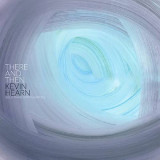
Three locations. Three pianos. Three hours on each. I was told where and when the piano would be ready. I would go, play, and leave. Very little was said. All pieces were improvised. There were no demos, run throughs, re-dos, or edits. At times I was responding to the natural reverb of the spaces, as well as the effects and sound treatments that Mark was adding in tandem with the performances.
What you hear is what happened there and then, at the end of the challenging year that was 2020. Kevin Hearn is best known as a multi-instrumentalist from Barenaked Ladies, the multi-platinum selling band he's played with for almost two decades. One of the most respected Toronto musicians of the past 25 years, Hearn's solo albums take the listener on a journey of boundless creativity often
driven by adventure and experimentation. 'There and Then' is played at 45RPM, and is intended to be enjoyed on the warmth of vinyl, but will also be released digitally.
"It's fun for me to make music that doesn't have to fit a certain criteria, whether it be regarding the style or sound, or who is playing it. When I make my own records, I can follow my heart and curiosity." - Kevin Hearn
The followup to 2019's 'Calm and Cents', which was Juno-nominated for Best instrumental Album of the Year.
Buscar:war church
With 'Why Don't You Go Home' Fingier produces a monster Rhythm & Blues tune that will take you straight to the King and Federal R&B sound, and for the B side, 'Cocktail De Medianoche' is the perfect mix of Boogaloo and Northern Soul. Percussion, flute and horns will make this a Fingier favourite for lovers of Latin grooves and Uptempo Soul.
Diane Ward is singer from USA, who grew up singing Gospel in her local church. Music was always a big part of her life, and she has always had a deep interest in Rhythm & Blues and Jazz. She lived in Argentina for a couple of years, and one night Kevin saw her perform and instantly her voice blew his mind. In his words:
“She’s a proper R&B singer, she reminded me to Ruth Brown, MaryAnn Fisher or Lula Reed. She has that potent and obscure soundthat took me to those lately 50s early 60s Popcorn tracks”
With two monster tracks, calling this a ‘Double Sider’ wouldn’t be enough, both with that '60s sound we've come to expect from Fingier Records.
Gordon Koang is a fountain of warmth and joy, immediately accepting any stranger who strays into his presence. With a beaming smile that is unfettered by blindness, a condition he has lived with since birth, Gordon welcomes any and all around him, encouraging them to sit for a while and chat, maybe even to share a song.
Originating from the Nile Valley in what is now South Sudan, Koang was born blind and began playing music from an early age, busking on the streets of Juba and producing his own self-released CD-R’s and cassettes, before becoming a crowd favourite and recording a series of singles and music videos celebrating South Sudan’s cultural wealth. His music went viral, spreading throughout the country, and Koang was invited to perform at everything from weddings and political rallies to church meetings and parties alike. His reputation quickly grew as the poet and homegrown hero of the Nuer people, sometimes called the ‘Michael Jackson of South Sudan’.
In 2013, while Koang was performing to expatriate Nuer communities in Australia, renewed conflict broke out at home. He made a difficult and heartbreaking decision to not return to Sudan, applying to the Australian government for humanitarian protection. After six long years of waiting, living in a foreign country far away from his family, he now proudly calls himself an ‘Australian’, and eagerly awaits the day he will rejoin his wife and children in safety.
Unity is, remarkably, Gordon’s eleventh full-length album, and his first since coming to Australia. It is his only recorded output in a painstakingly long six years of living as an asylum seeker, mostly recorded in the last winter months of 2019, when Gordon began performing with local musicians through the Music in Exile label. The album was completed just weeks before Gordon was awarded his permanent residency. He could have had no way of knowing, and yet there is no frustration in the songs, not a shred of impatience or anger - only Gordon’s unending positivity, his love of all people and of the world he has never seen.
As funny as it may sound, Anaïs Mitchell has spent the past 15 years in some kind of hell. OK, not actual hell, but the multi-faceted world of Hadestown, a musical project she began in Vermont in 2006 that has grown into a Tony®- and Grammy®-award-winning Broadway phenomenon with touring editions now delighting audiences as far away as South Korea.
“I experienced so much joy working on Hadestown, but it just kept ramping up and up and requiring more and more attention,” Mitchell admits. “I had to become so single-minded and really put blinders on to my other creative life.” As it did for many artists, the COVID-19 pandemic unexpectedly offered Mitchell a blank slate to reconnect with her own music. The result is a new self-titled album made with close collaborators from Bon Iver, The National and her own band Bonny Light Horseman, Mitchell’s first collection of all-new material under her own name since 2012’s Young Man in America.
“I was nine months pregnant when the pandemic reached New York, so we made an 11th hour decision to leave and have the baby in Vermont,” Mitchell recalls. “We left the city and had the baby a week later, and then like everyone, we were in the midst of this unprecedented stillness. It felt like I could see behind me: oh, there’s New York City. There’s Hadestown. There’s my life with just one kid. A certain kind of stress and expectations. In Vermont, we moved onto my family farm and lived in my grandparents’ old house, with a new baby. I’d look at pictures on my phone from a few months earlier and wonder, whose life was that? This record, and the songs that are on it, came out of that time. I got into a flow again that I hadn’t felt in a really long time.”
Dubbed by NPR as “one of the greatest songwriters of her generation,” Mitchell is a master of the worlds of narrative folksong, poetry and balladry. Those talents are evident from the first moments of the new album, as Mitchell narrates what she calls “an unbearably romantic” trip over the Brooklyn Bridge colored by Bon Iver member Michael Lewis’ heartstring-tugging saxophone accompaniment. “Having left New York, I was able to write a love letter to it in a way I never could when I was living there,” she says. “It was like, fuck it. This is how I feel. There is nothing more beautiful than riding over one of the New York bridges at night next to someone who inspires you.”
Produced by Mitchell’s Bonny Light Horseman bandmate Josh Kaufman, the album proceeds to chronicle Mitchell’s reconnection with the Vermont roots that have been so formative in her life and music. “Bright Star” finds her making peace with the idea of being at peace in the familiar setting of her grandparents’ house, while “Revenant” was inspired by paging through a box of journals and letters belonging to herself and her grandmother — “a very pandemic activity,” she says. “That house is literally my happy place. I can picture myself as a kid, in this house, laying on the carpet with a sunbeam coming through the sliding glass door. There’s something about it that is really connected in my mind to my childhood and a very free, imaginative, creative time. “Revenant” has a lot to do with that house and reconnecting with my childhood self.”
Mitchell concedes that she tends “to be someone who thinks it has to be hard in order for it to be good or beautiful,” but that feeling has changed, partly thanks to her deep connection with musicians she’s met through the 37d03d collective established by The National’s Aaron and Bryce Dessner and Bon Iver’s Justin Vernon. During the pandemic, some of those artists participated in a “song a day” writing group — an idea Mitchell says is usually “totally opposite of how I roll. But it really helped me to gain access to some kind of trust and intuition and flow. I began a bunch of these songs while doing that.”
“It unlocked something that allowed me to finish a bunch of songs I’d been sitting on, and feeling a bit paralyzed about how to finish them,” she continues. “Because no one was touring, it’s not like I was playing them for anyone before we were in the studio. In other times, I’ve trotted things out in advance. Here, it was like, here’s all these brand new songs. Let’s discover what they can be. That was really exciting.”
That discovery process took flight at Dreamland Recording Studios outside Woodstock, N.Y., which Mitchell describes as “this weird, janky, beautiful church - it’s my favorite studio in the world.” Kaufman, Lewis and Big Red Machine drummer JT Bates formed a core band around Mitchell, while Aaron Dessner and Thomas Bartlett joined the sessions mid-week on guitar and piano, respectively.
After the appropriate COVID tests came back negative, “it was a pretty extraordinary feeling to hug, kiss and share the same space playing together,” Mitchell says. “We went into that world for a week and didn’t leave the studio for any reason. I felt very safe with all those guys. It was warm and joyful.”
Mitchell says this environment brought out unexpected details in the material, which was recorded almost entirely live together in the room. “Sometimes we tried separating things out, like vocals, but we always ended up back in the room together,” she says. Indeed, after spending the better part of a day recording overdubbed versions of “Little Big Girl” that nobody loved, the musicians gave up and tracked it again live. “We got so frustrated that we went in and I was like, I’m just going to sing this as hard as I fucking can. It felt like that’s what the song wanted to be,” Mitchell says. “It felt like all those songs wanted to be recorded as live as possible.” The exception to the rule was Nico Muhly's arrangements for strings and flute, which were added from New York City afterward.
Mitchell will debut the new material during various headline tours in the U.S. and Europe in 2022, at which she’ll be accompanied by players from the album. On stage, she can’t wait to further hone the sights, sounds and scenes that bring the songs to such vivid life. “I’ve spent a lot of time trying to write in the voice of other characters, especially with Hadestown. It’s fun for me, but these songs are not that,” she says. “Weirdly, they’re all me. The narrator is me. That’s why it felt right to self-title the album. It felt like after so many years of working on telling other stories, now here are some of mine.”
As funny as it may sound, Anaïs Mitchell has spent the past 15 years in some kind of hell. OK, not actual hell, but the multi-faceted world of Hadestown, a musical project she began in Vermont in 2006 that has grown into a Tony®- and Grammy®-award-winning Broadway phenomenon with touring editions now delighting audiences as far away as South Korea.
“I experienced so much joy working on Hadestown, but it just kept ramping up and up and requiring more and more attention,” Mitchell admits. “I had to become so single-minded and really put blinders on to my other creative life.” As it did for many artists, the COVID-19 pandemic unexpectedly offered Mitchell a blank slate to reconnect with her own music. The result is a new self-titled album made with close collaborators from Bon Iver, The National and her own band Bonny Light Horseman, Mitchell’s first collection of all-new material under her own name since 2012’s Young Man in America.
“I was nine months pregnant when the pandemic reached New York, so we made an 11th hour decision to leave and have the baby in Vermont,” Mitchell recalls. “We left the city and had the baby a week later, and then like everyone, we were in the midst of this unprecedented stillness. It felt like I could see behind me: oh, there’s New York City. There’s Hadestown. There’s my life with just one kid. A certain kind of stress and expectations. In Vermont, we moved onto my family farm and lived in my grandparents’ old house, with a new baby. I’d look at pictures on my phone from a few months earlier and wonder, whose life was that? This record, and the songs that are on it, came out of that time. I got into a flow again that I hadn’t felt in a really long time.”
Dubbed by NPR as “one of the greatest songwriters of her generation,” Mitchell is a master of the worlds of narrative folksong, poetry and balladry. Those talents are evident from the first moments of the new album, as Mitchell narrates what she calls “an unbearably romantic” trip over the Brooklyn Bridge colored by Bon Iver member Michael Lewis’ heartstring-tugging saxophone accompaniment. “Having left New York, I was able to write a love letter to it in a way I never could when I was living there,” she says. “It was like, fuck it. This is how I feel. There is nothing more beautiful than riding over one of the New York bridges at night next to someone who inspires you.”
Produced by Mitchell’s Bonny Light Horseman bandmate Josh Kaufman, the album proceeds to chronicle Mitchell’s reconnection with the Vermont roots that have been so formative in her life and music. “Bright Star” finds her making peace with the idea of being at peace in the familiar setting of her grandparents’ house, while “Revenant” was inspired by paging through a box of journals and letters belonging to herself and her grandmother — “a very pandemic activity,” she says. “That house is literally my happy place. I can picture myself as a kid, in this house, laying on the carpet with a sunbeam coming through the sliding glass door. There’s something about it that is really connected in my mind to my childhood and a very free, imaginative, creative time. “Revenant” has a lot to do with that house and reconnecting with my childhood self.”
Mitchell concedes that she tends “to be someone who thinks it has to be hard in order for it to be good or beautiful,” but that feeling has changed, partly thanks to her deep connection with musicians she’s met through the 37d03d collective established by The National’s Aaron and Bryce Dessner and Bon Iver’s Justin Vernon. During the pandemic, some of those artists participated in a “song a day” writing group — an idea Mitchell says is usually “totally opposite of how I roll. But it really helped me to gain access to some kind of trust and intuition and flow. I began a bunch of these songs while doing that.”
“It unlocked something that allowed me to finish a bunch of songs I’d been sitting on, and feeling a bit paralyzed about how to finish them,” she continues. “Because no one was touring, it’s not like I was playing them for anyone before we were in the studio. In other times, I’ve trotted things out in advance. Here, it was like, here’s all these brand new songs. Let’s discover what they can be. That was really exciting.”
That discovery process took flight at Dreamland Recording Studios outside Woodstock, N.Y., which Mitchell describes as “this weird, janky, beautiful church - it’s my favorite studio in the world.” Kaufman, Lewis and Big Red Machine drummer JT Bates formed a core band around Mitchell, while Aaron Dessner and Thomas Bartlett joined the sessions mid-week on guitar and piano, respectively.
After the appropriate COVID tests came back negative, “it was a pretty extraordinary feeling to hug, kiss and share the same space playing together,” Mitchell says. “We went into that world for a week and didn’t leave the studio for any reason. I felt very safe with all those guys. It was warm and joyful.”
Mitchell says this environment brought out unexpected details in the material, which was recorded almost entirely live together in the room. “Sometimes we tried separating things out, like vocals, but we always ended up back in the room together,” she says. Indeed, after spending the better part of a day recording overdubbed versions of “Little Big Girl” that nobody loved, the musicians gave up and tracked it again live. “We got so frustrated that we went in and I was like, I’m just going to sing this as hard as I fucking can. It felt like that’s what the song wanted to be,” Mitchell says. “It felt like all those songs wanted to be recorded as live as possible.” The exception to the rule was Nico Muhly's arrangements for strings and flute, which were added from New York City afterward.
Mitchell will debut the new material during various headline tours in the U.S. and Europe in 2022, at which she’ll be accompanied by players from the album. On stage, she can’t wait to further hone the sights, sounds and scenes that bring the songs to such vivid life. “I’ve spent a lot of time trying to write in the voice of other characters, especially with Hadestown. It’s fun for me, but these songs are not that,” she says. “Weirdly, they’re all me. The narrator is me. That’s why it felt right to self-title the album. It felt like after so many years of working on telling other stories, now here are some of mine.”
Emerging like and ornate relic, Austin-based power trio Grivo combine
slow, methodical hooks and warm tube amplifers to artfully re-establish
the line between heavy guitars and downtempo pop
Grivo's tones and effects are utilised as active compositional elements, crafting
and pacing their infectious riffs to allow the saturated guitars and bruising lowend to fully bloom. Within the tidal sound waves and bleak timbre, Grivo forges a
distinctive personal connection that challenges the modern defnitions of doom
metal and shoegaze.Shipping on or around 28th January 2022.
A LOST RECORDING OF UNTAMED APPALACHIAN MUSIC.
160 gram black vinyl LP in gold & black color reverse-board jacket. Co-release with Jalopy Records.
In 1972, the renowned and singular folk musician Roscoe Holcomb left his home in rural Daisy, Kentucky and embarked on a west coast tour with Mike Seeger in 1972, which included a performance at The Old Church in Portland, Oregon - a beautiful Carpenter Gothic church built in 1882. Decades later, two particular reels were discovered deep within a pile of 1/4” tape in a shadowy corner of the KBOO Community Radio archives in Portland. Incredibly, those tapes contained the sole surviving evidence of a strikingly intimate and raw performance by Roscoe Holcomb, whose cascading and haunting banjo, guitar and voice echoed and saturated the room and hushed audience.
In contrast to Roscoe’s rarely documented (and at times restrained) live performances at folk festivals and television programs, Roscoe seems to have felt more familiar and spiritually moved in the old church that night. Heard here are standout versions of Appalachian folk-blues classics such as Single Girl, John Henry, East Virginia Blues, Swanno Mountain and more. Once cited as Bob Dylan’s favorite singer, Roscoe Holcomb appears at the peak of his powers here, showcasing his immense vocal talents on an extended acapella version of “The Village Churchyard”. The recording itself is warm and mysterious, sounding like the room itself is alive with the spirit, while the rumbles of trucks and hints of city sounds peek through the walls from the outside streets.
- A1: She (Bbc Live Session)
- A2: When I Come Around (Bbc Live Session)
- A3: Basket Case (Bbc Live Session)
- A4 20: 00 Light Years Away (Bbc Live Session)
- B1: Geek Stink Breath (Bbc Live Session)
- B2: Brain Stew/Jaded (Bbc Live Session)
- B3: Walking Contradiction (Bbc Live Session)
- B4: Stuck With Me (Bbc Live Session)
- C1: Hitchin' A Ride (Bbc Live Session)
- C2: Nice Guys Finish Last (Bbc Live Session)
- C3: Prosthetic Head (Bbc Live Session)
- C4: Redundant (Bbc Live Session)
- D1: Castaway (Bbc Live Session)
- D2: Church On Sunday (Bbc Live Session)
- D3: Minority (Bbc Live Session)
- D4: Waiting (Bbc Live Session)
Between 1994 to 2001, Green Day would visit the BBC’s Maida Vale Studios in London four times and record live sessions for Radio 1’s “Evening Show” and its DJ Steve Lamacq.
On December 10th, Warner Records will release Green Day ‘BBC Sessions’, a 16-track collection of these recordings which documents those sessions, all of which are being released for the first time.
This compilation includes many of the band’s hits including “When I Come Around”, “Basket Case”, “Brain Stew/Jaded” and “Minority”.
- A1: Joyride
- A2: Hotblooded
- A3: Fading Like A Flower (Every Time You Leave)
- A4: Knockin’ On Every Door
- A5: Spending My Time
- A6: Watercolours In The Rain
- B1: The Big L
- B2: (Do You Get) Excited?
- B3: Small Talk
- B4: Physical Fascination
- B5: Things Will Never Be The Same
- B6: Perfect Day
- C1: Soul Deep
- C2: I Remember You
- C3: Church Of Your Heart
- C4: The Sweet Hello, The Sad Goodbye
- C5: Fading Like A Flower (Us Single Version, Humberto Gatica Mix)*
- D1: Joyride (Us Single Version, Brain Malouf Mix)
- D2: Soul Deep (Tom Lord-Alge Mix)
- D3: Church Of Your Heart (Us Adult Contemporary Mix)*
- D4: Hotblooded (Live Sydney Dec 1991)
- D5: Fading Like A Flower (Every Time You Leave) (Live Sydney Dec 1991)
- E1: Joyride (T&A Demo – May 23, 1990)
- E2: Hotblooded (T&A Demo – Jan 23, 1990)*
- E5: Spending My Time (T&A Demo – May 24, 1990)
- E6: I Remember You (T&A Demo – Apr 1, 1990)
- E7: Watercolours In The Rain (T&A Demo – Jan 24, 1990)
- F1: The Big L. (T&A Demo – Apr 1, 1990)
- F2: (Do You Get) Excited? (T&A Demo – Aug 19, 1989)
- F3: Small Talk (T&A Demo – Aug 30, 1990)*
- F4: Church Of Your Heart (T&A Demo – Jan 8, 1990) *
- F5: Physical Fascination (T&A Demo – Jan 3, 1990)*
- F6: Things Will Never Be The Same (T&A Demo – Jun 17, 1989)
- F7: Perfect Day (T&A Demo – Aug 23, 1990)
- G1: Sweet Thing (T&A Demo – Oct 28, 1990)*
- G2: Seduce Me (T&A Demo – Aug 22, 1990)
- G3: Run Run Run (T&A Demo – Jan 10, 1990)*
- G4: Things Will Never Be The Same (T&A Demo – Sep 17, 1989)*
- G5: Love Spins (T&A Demo – Jan 3, 1990)
- G6: Come Back (Before You Leave) (T&A Demo – Apr 8, 1990)
- G7: The Sweet Hello, The Sad Goodbye (T&A Demo – Mar 16, 1990)*
- H1: Hotblooded (T&A Demo – Dec 13, 1990)
- H2: Things Will Never Be The Same (T&A Demo – Dec 13, 1990)
- H3: Another Place, Another Time (T&A Demo – Jan 11, 1990)*
- H4: I Remember You (T&A Demo – Mar 15, 1990)*
- H5: Queen Of Rain (T&A Demo – Jan 2, 1990
- H6: The Big L. (T&A Demo – Mar 29, 1990)
- H7: Joyrider (T&A Demo – May 22, 1990)
- E3: Fading Like A Flower (T&A Demo – Aug 31, 1990)
- E4: Knockin’ On Every Door (T&A Demo – Aug 15, 1989)
Swedish group Roxette celebrates the 30th Anniversary of their third album “Joyride”, following the band’s spectacular global breakthrough with “Look Sharp!” in 1989. The 30th Anniversary of ”Joyride” will be celebrated with the release of a 4-album vinyl and a 3-CD box, containing the original release as well as previously unreleased or hard-to-get material, that paints a fuller picture of a unique time in pop history. A richly illustrated 32 page booklet tells the story.
Joyride” was the album that was supposed to cement Roxette’s new-found status as a global hit-makers. Which indeed it did. On May 1, the title track zoomed all the way up to #1 position on the Billboard Hot 100 chart – setting a record no Scandinavian group or artist has yet been able to break, helping to make “Joyride” a 11+ million seller.
Twelve of the songs are previously unreleased, among them the first recording of ”Hotblooded”, which originally was meant to be the album’s opening track until ”Joyride” knocked it down a notch, giving the album and the upcoming “Join the Joyride” World Tour its name. The “Joyride” box set also offers a chance to hear two previously unreleased demos of songs originally released by Per’s former group Gyllene Tider, who in 1984 tried to break the international market with the album “Heartland Café”.
Red Vinyl
nown for her delicate compositions, soaked in dream-like surrealism, Icelandic musician Sóley has attracted a huge following since launching her solo career back in 2010. Her 2012 single ‘Pretty Face’ went on to generate an enormous amount of buzz, and quickly became a viral sensation. Now, with three solo LPs under her belt, Sóley is preparing to debut a completely new sound via the release of her new concept album, Mother Melancholia, on October 22nd.
Described by the artist as "Nosferatu meets Thelma and Louise in a vampire church under the watchful eye of David Lynch", Mother Melancholia is the soundtrack to the end of the world as we know it. As a self-confessed news addict, Sóley became obsessed with the idea that the world is ending. Having surrounded herself with real-life stories of global warming and patriarchal politics she couldn’t shake the feeling that she was going to die. This feeling was so all encompassing that it sparked the idea for a new project. Could there be a soundtrack for the last days of humans on earth? How would that sound?
“I read books about possible dystopian worlds and started writing poems about irrational and in love characters who live in gray and cold imaginary loneliness. In each other’s burning arms. Walking in circles with no way out” she explains. “After all, the album reflects our life here and now. Our life and reality is a kind of dystopian world.”
Whilst writing the album, which serves as a tongue-in-cheek eulogy to our planet, Sóley began reading about ecofeminism, a branch of feminism which uses the concept of gender to analyse the relationship between humans and the natural world. Ecofeminism emphasizes that both women and nature must be respected but also separated. Since the beginning of time, the natural world has been synonymous with female identity, phrases like Mother Nature are commonplace. “The patriarchy views women as volatile and hysterical. Earth and women are either our saviours or our destroyers,” explains Sóley. “It’s so easy to abuse the earth, like the patriarchy has abused women since the dawn of time, then ask for forgiveness afterwards and promise they´ll never do it again”.
The new album sees Sóley move away from the indie-pop of her previous releases. She began by experimenting with writing songs on the accordion, allowing her a new sense of freedom in her writing. The process allowed her to broaden her horizons even further and experiment with a whole range of new and exciting sounds. “I bought myself a theremin as I was really excited about the unpitched sound and there is no perfect pitch during the end of days,” she laughs. “I also bought a mellotron, my first moog and a cello and taught myself how to play each of them. All of these new instruments are particularly suitable for the kinds of aesthetic inconveniences which I have learned to embrace.”
Album opener ‘Sunrise Skulls’, one of the most cinematic moments on the album, was inspired by the Me Too and SlutWalk movements and tells the story of a group of women who rise up and fight the patriarchy. ‘Blows Up’, a track that would be at home on any horror soundtrack, is a sarcastic love letter from the Earth to humans. Standout track ‘Desert’ is an incredibly moving song dedicated to the next generation. “It’s about the guilt you feel, as a mother, for having children and leaving them on the frontline. My daughter, for example, will take over this inevitable war” explains Sóley.
In true soundtrack style, the album flows through the end of the world in chronological order, closing with the Earth’s final moments. ‘Sundown’ is a dark piano ballad detailing human kind’s final day on Earth. “And everyday, I dig my own grave, and as I dive in you´ll hold my hand” she sings, over twinkling piano and swirling synths. We then hear the world end on ‘XXX’, a dark and swirling soundscape that swells before fading to silence. On ‘Elegía’ the silence then turns to the sound of the ocean, as we hear the Earth, like a woman finally free from a violent relationship, healing on her own.
Mother Melancholia is the mark of an artist confidently striding into more experimental territory. With a lengthy and successful career behind her, Sóley felt compelled to try something new and express the real her. The music might be shrouded in darkness but it’s a move that fills her with joy and freedom. “I hope that people not only enjoy the new sound, but also that Mother Melancholia might raise some questions in people, particularly women,” she says. “I’m under no illusions that this album will change the world but I hope that people can connect with the idea”.
Emerging from the ashes of the band Church Of
Void, there is a new force rising up to pursue a
path in the name of doom. Fimir are set to release
their blistering debut album, ‘Tomb Of God’.
Fimir were founded in 2019 by former Church Of
Void members G. Funeral, Magus Corvus, H.
Warlock, A.D. and Septic Apes’ drummer H.
Wizzard. From a mere spark in the dark and a
distant echo of forgotten riffs haunting in emptiness
from a collapsed doomstar of their former band,
Fimir got rid of their ghosts and started to work on
their first album right away, until the world went into
lockdown.
The five-piece collective, hailing from the frozen
wastelands of Finland, used their time and
creativity wisely, and managed to put the final
touches on their upcoming debut, featuring six
heavy cosmic tracks unleashing an enthralling
blend of razor sharp riffage, haunting occult vibes,
ambient atmospheres and classic doom metal.
For fans of Black Sabbath, Tiamat, Type O
Negative, Pentagram, Church Of Void, Reverend
Bizarre, Candlemass.
LP on cyan coloured vinyl.
Night Divine is a series of hymns covered by Brian Fallon. This is a project he's been wanting to create for a long time, inspired by his time singing in the church choir as a child: “These are some of the very first sounds I remember hearing as a child. My mother used to sing these hymns everywhere she went. I felt it was time for me to join in.” He finally got the opportunity to make the intimate record during lockdown, with background vocals by his mother. The lead singer of beloved heartland-punk band The Gaslight Anthem, Brian Fallon stepped away from that sound and into a more soulful singer/songwriter territory on his third solo album, Local Honey. Produced by Grammy-award winning producer Peter Katis (The National, Frightened Rabbit, Death Cab for Cutie), the album debuted at #1 Americana/Folk Album Sales, #2 Current Rock Albums, #3 Americana/Folk Albums, and #9 LP Vinyl Sales. It was largely praised as one of his best works, with Rolling Stone saying “Local Honey is as warm and comforting as its title, full of hooks and narratives that draw you in” (Best Country & Americana Albums of 2020) and Kerrang saying “No matter what side of the genre he sets his mind to, Brian always delivers the goods” (Best Albums of 2020).
Horace Tapscott's Pan-Afrikan Peoples Arkestra (P.A.P.A.) was one of the most transformative, forward-thinking and straight-up heavy big bands to have played jazz in the 1960s and 1970s. If P.A.P.A. doesn't have the interstellar rep of that other famous Arkestra, and if the name Tapscott doesn't ring bells like Monk or Tyner, there's a reason why: in an industry dominated by record labels, a band that doesn't record doesn't count. And the Pan-Afrikan Peoples Arkestra didn't record for nearly twenty years. But recording success was never their concern -- they weren't about that. First formed as the Underground Musicians Association in the early 1960s, Tapscott always wanted his group to be a community project.
From their base in Watts, UGMA got down at the grassroots. The group was renamed the Pan-Afrikan Peoples Arkestra in 1971, and soon after they established a monthly residency at the Immanuel United Church of Christ which ran for over a decade, while still playing all over LA and beyond. But they never released a note of music. It was the intervention of fan Tom Albach that finally got them on wax. Determined that their work should be documented, Albach founded Nimbus Records specifically to release the music of Tapscott, the Arkestra, and the individuals that comprised it. The first recording sessions in early 1978 yielded enough material for two albums, and the first release was Flight 17. The album commences with the magnificent title track. It is effectively in three parts. It begins with unaccompanied pianos. Then the ensemble embark on a dense, circular and mechanical movement, a platform for horns and pianos to swoop and dive. We return to Earth with a beautiful solitary flute. The second track, the piano-centric, ‘Breeze’ is different to ‘Flight 17’ in intensity and also brevity but it is quietly as daring as the title track. It concludes with a moving lush wash from the full Arkestra, which sound almost like strings only more substantial. These first two tracks take full advantage of the texture of the unusual mix of the various instruments. Next though, it’s a significant change with ‘Horacio’, which is an exuberant Latin infused jingle. It’s unlike anything else on the album. I like to think it was named after the conductor’s Cuban alter-ego! ‘Clarisse’ gracefully switches between slow blues and bop and is bookended with a grand vaguely East Asian theme. The busy bass line introduces ‘Maui’. As with the previous track, it moves between a number of contrasting melody lines and rhythms but there’s still space for a tuneful sax solo.
This is a must-have album. I think the first two tracks on their own make this release essential. Kevin Ward/UK Vibe/Boomkat
FULL OF HELL return with their highly anticipated new album, Garden Of Burning Apparitions. The new album, a genre-bending blitzkrieg of hardcore, grind and death metal, sees the band expand upon the very elements that have propelled them to the forefront of extreme music over the last decade. Produced by Seth Manchester, Garden of Burning Apparitions also sees FULL OF HELL adding new dimensions to their warp-speed hellscape. Guitarist Spencer Hazard and bassist Sam DiGristine's monstrous riffs now have an added noise-rock influence, while drummer Dave Bland commands the rhythm section at blazing speeds.
Lyrically, Garden of Burning Apparitions sees vocalist Dylan Walker exploring (anti)religion, life's impermanence and the fear that comes with knowing death is inescapable. "Industrial Messiah Complex” grinds organized religion to a pulp in under 90 seconds, while Walker contemplates the commodification of spirituality seen in America’s vast network of garish mega-churches and how these practices are at odds with true spirituality. Meanwhile, “Reeking Tunnels” rides a strident noise rock riff down into the sewer. It’s a metaphor for the physical and mental space we become trapped in when we live in a perpetual state of fear and hate. Elsewhere, justifiable ochlophobia propels the guttural death metal blast of “Eroding Shell.” Lyrically, the song seeks to capture our fear of the violent, ignorant mob—a scene glimpsed far too often in this volatile era.
In the end, FULL OF HELL’s boundary smashing has paid off again. “I think it’s good that we tried not to pigeonhole ourselves early on,” Walker reflects. “Because now, 10 years in, we have the opportunity to make whatever record we want, within reason, and people will follow along.”
UK multi-instrumentalist and story-teller Mara Simpson's new album In This Place will be released on September 24th, 2021. A heady blend of alt-folk, analogue synth and classical composition, In This Place is a tale of quiet rebellion, and taking back control. Fittingly, the new album marks the start of another new journey for Mara. In This Place will be the first record to be released on Downfield Records, a non-profit imprint set up by Simpson, placing artists at it’s centre. “I want to try and promote transparency and equality, assist other artists to get public funding and to ‘pay’ forward the time and resources I’ve benefited from,” she says. The label’s mission is to see musicians paid fairly and release records through a creative and joyous process.
Whilst the struggles of 2020 will go down in history, for Mara it was 2019 that was the tough one. A year spent consumed by worry, whilst in and out of hospital with her one year old daughter, had left Mara feeling like she was playing a constant game of catch up with a world that wouldn’t slow down. With songs ready to be recorded for her new album, she headed into the studio. “I stepped into the studio not needing my hand held, just my voice heard” explains Mara, who quickly came to the realisation that she was working in a toxic environment. Enough was enough
It was whilst waiting for a train that she had the sudden realisation that the album she was recording would never see the light of day. Struck by an overwhelming feeling of failure, Mara began to ruminate on the time and money she had wasted but then something clicked. “Perhaps it’s something about train stations, the coming and the goings, that allows a stagnating frame of mind the grace and space to clear” she says. “The funny thing is, upon realising failure, the despair I’d been feeling was now replaced with something else...Relief”.
Feeling re-energised, Mara called her dream producer Ellie Mason, of Voka Gentle, and together the pair began working on a new record. “I’ve been more hands-on with this album than I’ve ever been, taking a much more active role in production. Throughout the whole process Ellie has heard my voice, and been open to any possibility” explains Mara. “We’ve stumbled across golden moments, recording four part harmonies in Brighton’s oldest church, using every drum there is in Brighton Electric, layering New Zealand bird song with tape delayed piano, all thanks to her nurture, playfulness and kindness” she continues.
Album opener ‘Serena’, named after the apartment building in Brighton where Mara’s daughter was born, is based on the experience of becoming a mother and the responsibility of making important healthcare decisions. “How will I know how to love you” she sings over undulating synths and sparse piano chords. Title-track ‘In This Place’ is about the confrontation between mother and new-born child. The ‘sizing-up’ of one another as they embark on a new journey together. “When I left home to travel around the world and was so worried about breaking my Mum’s heart,” says Mara. “I just remember her saying that your children are never yours to keep. This is a song about the rawest of loves, and the fact that however much we love someone, they are never ours, and the beauty in that.”
In addition to the experience of motherhood, the songs on In This Place take inspiration from a wide range of places, including Mara’s ‘second home’ New Zealand. ‘Christchurch’, written in response to the Christchurch Mosque shootings in 2019, layers New Zealand birdsong on top of swirling piano and moving choral vocals. ‘Fault Lines’ was inspired by The Waitangi treaty. Signed in 1840 in New Zealand by the British Crown and Maori chiefs. The British understood that the Maori were signing over land that the British could now govern and effectively ‘own’, however to the Maori people it is impossible to own land, in the same way that you can’t ‘own’ air. “We live and die, the land remains and we are just it’s keepers for the very short time we are here. This song is about us not owning this earth - how can we? We are only the guardians of it while we are here” says Mara.
Backed by a band of accomplished musicians (Jools Owen (Bears Den) on drums, James Smith (Anaïs Mitchell) on banjo, Alexandra Hamilton-Ayres on clarinet and strings by Poppy Ackroyd) on In This Place, Mara sounds the most confident she’s ever sounded. With her new material, Mara Simpson hopes to promote a gentle, yet radical shift toward kindness and it’s this warmth that can be both heard and felt across her new record.
Motoko & Myers is the collaborative project of Bay Area-based duo Wonja Fairbrother and Daniel Letson. “Colocate” follows their 2018 debut release on the Open Hands Real Flames imprint, further developing their distinctive style which combines melodic, pop song structures with live improvisation and odd or no-meter approaches to rhythm and timing. It is a collection of bright, addictive listening, full of tracks that manage to feel at once hooky and aleatory, naive and rigorously arranged.
Recorded and assembled sporadically over a period of several years, the album’s idiosyncratic palette was achieved through much technical and methodological eccentricity: “4-handed” collaborative keyboard playing; 12-bit sampling and archaic presets; field recordings of cicadas in Louisville, Kentucky and church bells in Freiburg im Breisgau. The album’s nine tracks exude a homespun quality that is rare to find in contemporary electronic music – hazy, warm, and disarmingly organic.
Boy Golden has a purpose: enjoy each day and make good music. Founder and minister of The Church of Better Daze, he wants to help people seeking to improve on yesterday’s themes. His songs, like hymns, are hopeful, fresh and upbeat. KD & Lunch Meat is fluorescent and fun, like its namesake, and easily ingested. Something to Work Towards searches for the meaning in life, while Smoke on the Breeze and Any Way It Works are warm, tender and linger like perfume. Church of Better Daze is the inspirational, musical manifesto. The harmonies are the collective idea of working together, the mellow melodies keep our hopes alive and the lyrics are golden rules to live by: Follow your heart / Make good art / Call your momma / Work real hard. Redefining jam band and stoner cultures by turning dead heads into lively brains, Boy Golden wants to unite us all in a hazy dream under one roof. “We’re all the same at the Church of Better Daze,” he sings. Find unity in the congregation of these 11 tracks, which redefine the precedent for collaboration, common goals and cannabis. If you’re open to learn, and can speak your truth, you can blaze and still get paid in Boy Golden’s Church of Better Daze.
For RE:WARM 006 we present a collection of music from one of San Francisco’s best kept secrets, Dr Robert Blackman. “The Unimaginable DreamWorks” is a collection of five tracks from three musical masterpieces he put out between 1983-1985 on his own ‘Riverwinds’ imprint. A practising chiropractor by day with his own holistic health centre in San Francisco, these songs became his love, passion and focus. Together with Michael Pluznick, a very accomplished percussionist they painstakingly put together an ensemble of musicians to bring the tracks to life. The melting pot for this body of work was Hyde Street Studios which still today is based in deepest San Francisco and has seen names such as Neil Young, Earth Wind & Fire and John Waters to name a few grace its studio space. Singers and musicians alike came together from all over the world to bring Robert’s vision to reality. This included an Australian didgeridoo player, an electric violin and piano player from Paraguay as well as singers and a choir from the surrounding local churches. Together through Dr Robert Blackman’s eyes they created a fabulous sound of twisted disco punk funk like no other that still sounds relevant today as it did back in the eighties. The energy and the stories are clear to hear throughout the five tracks which make up “The Unimaginable DreamWorks” of Dr. Robert Blackman 1983-1985. Artwork was key to the releases and the “Peace Is Alive” painting incorporated on the label of the release appeared in TIME magazine in 1984 when Dr Robert Blackman was treating combat vets, suffering from PTSD and this was the name of the job fair for veterans he set up. To promote the album at the time Dr Robert Blackman flew up over San Francisco in a single engine prop airplane loaded with 50,000 leaflets
Im Jahr 2008 war Portugal. The Man seit etwas mehr als zwei Jahren eine Band und ritt auf einer kreativen Welle, wie man sie nur selten sieht. In den ersten zwei Jahren ihres Bestehens hat die Band drei Alben, eine EP und ein paar Singles veröffentlicht und dabei knapp 500 Shows gespielt. Die junge Band aus Alaska fuhr von Stadt zu Stadt, kaufte säckeweise Reis und gönnte sich nur selten etwas von ihrem Taco Bell-Feed The Beat-Geld. PTM waren engagiert. Sie beendeten die Tour im Dezember 2008 und anstatt eine dringend benötigte Pause einzulegen, trafen sie die Entscheidung, den Höhepunkt dessen aufzunehmen, was ihre Live-Performance geworden war. Sie fanden ein seltenes Juwel von einem Studio in den Vororten von Portland, und versammelten sich dort mit ihrem Live-Equipment und einer Handvoll Freunde mit Handkameras. Der langjährige Mitarbeiter und Filmemacher Graham (Baclagon) Agcaolli und der Tontechniker/Mixer Jacob Portrait (der später zu Unknown Mortal Orchestra stoßen sollte) halfen bei der Dokumentation. Sie spielten ihr komplettes Set einmal durch - ohne Nachvertonungen oder Overdubs - nur die Band in ihrer natürlichen Form. Ein paar Wochen später gingen sie ins Studio, um ihr nächstes Album, "The Satanic Satanist", aufzunehmen, und "Oregon City Sessions" wurde in ein Regal gestellt. Dort lag es über ein Jahrzehnt lang. Nur wenige sahen den ganzen Film. Die Band, ihr Manager oder Tour-Manager boten gelegentlich an, zu den Leuten nach Hause zu gehen und ihn für sie zu zeigen. Manchmal zeigte die Band auf dem Parkplatz eine Handvoll Songs für die lokalen Fans. Sie knüpften Freundschaften, aber wann immer sie gefragt wurden, war die Antwort: "Ja, wir werden das irgendwann veröffentlichen." Jetzt ist die Band seit über einem Jahr nicht mehr unterwegs, die mit Abstand längste Pause seit ihrer Gründung, und die Zeit scheint einfach reif. Hier ist "Oregon City Sessions", ausgegraben aus den Archiven. Unberührt, unverändert von dem Tag, an dem es fertiggestellt wurde. Es ist eine Zeitkapsel einer Band, die ihren Weg findet. Ein Schnappschuss von jungen, rohen Talenten, bevor sie Preise gewannen, bevor sie Millionen von Platten verkauften, bevor sie Headliner von Festivals waren. Nur ein paar Kids aus Alaska, die die Welt bereisen und Musik machen wollten.
- 1: Prelude
- 2: Main Title
- 3: Alice In The Basement
- 4: Psychologist's Office
- 5: Dom And Alice In The Basement
- 6: Rent Check Opera
- 7: Alice In The Warehouse
- 8: Alice And Angela
- 9: Karen Locked Up
- 10: The Casket Heats Up
- 11: Dom At The Warehouse
- 12: Karen On Her Bike
- 13: Romance / Mrs. Tredoni I
- 14: Mrs. Tredoni 2
- 15: At The Warehouse / Chase
- 16: Processinal
- 17: The Pathologist
- 18: At The Church
- 19: Not Again
- 20: Mrs. Tredoni Fixes A Fish
- 21: Rolling Dom
- 22: Driving In The Rain
- 23: Alice And Roaches
- 24: Roaches
- 25: Main Theme 2
- 26: Rolling Dom A
- 27: Prelude 2
- Available for the First Time on Vinyl - Deluxe Old Style Tip-On Gatefold Packaging with 180 Gram - "Yellow Raincoat with Blood Red Splatter" Colored Vinyl - Insert with Liner Notes and Original 1976 Recording Session photography // Waxwork Records is thrilled to present the debut release of ALICE, SWEET ALICE Original Motion Picture Soundtrack by Stephen Lawrence. Alice, Sweet Alice is a 1976 American Slasher-Horror film directed by Alfred Sole and starring Brooke Shields in her film debut. Set in 1961 New Jersey, the film focuses on a troubled adolescent girl who becomes the suspect in the brutal murder of her younger sister at her first communion, as well as in a series of unsolved stabbings that follow. In the years since its release, Alice, Sweet Alice has gained a cult following and is considered a contemporary classic of the slasher sub-genre in critical circles. It has also been the focus of scholarship in the areas of horror film studies, particularly regarding its depictions of Roman Catholicism, child emotional neglect, and the disintegration of the American nuclear family. The film's chilling score was composed by Stephen Lawrence. Lawrence is an American composer that has scored more than 300 songs and musical cues for Sesame Street, resulting in three Emmy Awards for Outstanding Achievement in Music Direction and Composition. The music of Alice, Sweet Alice features heavy usage of dissonant strings, repetitive keys, church organ, and motifs that segue from eerily mischievous and playful to dread-inducing and utterly haunting. Available for the very first time in any format, the complete soundtrack to Alice, Sweet Alice comes available on 180 gram "Yellow Rain Coat with Blood Red Splatter", deluxe packaging with new artwork by Steven Reeves, old-style tip-on gatefold jackets, a heavyweight insert, exclusive composer liner notes, and original recording session photography.


