From an offshoot of Salifornian funk/soul collective Banda Maje, here comes a new 7" single penned by the rapper, producer and band's co-founder Tonico 70. "Vic'l / Fantasie" is a tasty prelude to Tonico 70's forthcoming album "Antonico", due out this November on Four Flies Records.
Like the rest of the album, the two tracks on the single have been co-written and co-produced by Peppe Maiellano, Banda Maje's other founder, and offer a more intimate portrait of the artist. Tonico has put his 'tough-music-smuggler' persona aside to let his soulful side shine through.
"Vic'l", on side A, is a very autobiographical song. The flow of words you hear, almost a stream of consciousness, took place late one night in the privacy of home and was recorded on the spot. Tonico 70 evaluates his personal history, speaking about the people who are or were there for him. The sound is smooth and sweet, rife with contrapuntal notes and harmonies (those played on the Fender Rhodes and the flute especially stand out) and clearly reminiscent of 70s soul.
In the funky, uptempo "Fantasie", on the flip side, Tonico 70 lets his Salifornian flow roam free totalk about the strong bonds that bring us together and make us feel good.
Both tracks evoke images and stories while enveloping you in a warm embrace. Not unlike Banda Maje's music, they have a strong cinematic quality that Tonico 70's rap adds to nicely. We can't wait to listen to what's coming next!
quête:war of words
Red Vinyl[24,58 €]
Sounding simultaneously from the past, the present, and the future, the debut album 'MLDE' by Marxist Love Disco Ensemble seeks to eradicate both the trite from disco and the sobriety from political music. Half poetic, half tongue-in-cheek, this stunning compact eight-track album is influenced by Eastern European and Mediterranean 70s disco records. In the words of band member Paolo, ''it was written in response to hearing 'I love America' by Patrick Juvet. The song prompted the question: why does disco, a genre originally created by oppressed minorities, eventually become synonymous with American capitalist excess?" MLDE seeks to break this connection.
Merging disco, post-disco 80s pop, and boogie into the fold, 'MLDE' was recorded using only analogue instruments, giving it warmth and space. Recorded on cassette, ¼ and ½ inch tape, this gives moments of lo-fi abstraction between the beats of an aggressive, tight drum kit. Instruments used for this recording range from saxophone, trumpet, harpsichord, guitar, and rare analogue synthesisers. The bass sound is shaped by early 80s boogie records, whilst the influence of artists such as Hamlet Minassian can be heard in some of MLDE's more driving-disco outings, such as 'Hues of Red'. In the tradition of Soviet vocal group records, which the band has studied, some songs are sung by a vocal quartet in homage to this tradition.
Tracks such as '1905' and 'Brumaire' have a greater pop aesthetic, with Paolo's vocal style on these more pop-driven songs evoking early 80s bands such as Orange Juice and Chas Jankel.
The format and message of pop and disco are commonly viewed just to entertain and move bodies around a dancefloor; however, lyrically, the subjects range from dialectical and historical materialism, class struggle, Marxist theory and praxis, as well as the concept of Marxist disco music.
Adding the icing to the cake, mastering don Joker aka Liam McLean dusted the album with his magic, giving the songs space where the room is needed, as well as the kick and punch demanded by the modern dancefloor.
Yes, this is a press release, and they are always full of hype, but we were blown away when we heard this album, and we hope it enriches you too.
• Brings together themes from popular soundtracks and TV series
• Ramin Djawadi Game of Thrones, Max Richter The Leftovers, Downton Abbey main theme, Lalo Shiffrin Mission Impossible, Henri Mancini The Pink Panther, and many more
1. Ramin Djawadi
Game of Thrones Medley (Main Theme/The Night King/Light of the Seven)
arr. Matthieu Gonet; orch. Matthieu Gonet & Ronan Maillard
2. Lalo Schifrin
Mission: Impossible
arr. & orch. Matthieu Gonet
3. Justin Hurwitz
La La Land Medley (Mia and Sebastian theme/ Another Day of Sun)
arr. Matthieu Gonet
4. Trad. Scottish, late 19th century
The Skye Boat song (Outlander)
arr. Julie Berthollet, Camille Berthollet
5. Trad. Italian, late 19th century
Bella Ciao (La casa de papel)
arr. & orch. Matthieu Gonet
6. Boots Randolph & James Rich
Yakety Sax, (The Benny Hill Show)
arr. & orch. Matthieu Gonet
7. Max Richter
The Leftovers Suite
arr. Julie Berthollet, Camille Berthollet
8. John Barry
The Persuaders! (Amicalement vôtre)
arr. Matthieu Gonet; orch. Matthieu Gonet & Ronan Maillard
Side B:
1. Ludovico Einaudi
Fly (Intouchables)
arr. Julie Berthollet, Camille Berthollet
2. Julie Berthollet
Flashback
words and music by Julie Berthollet, arr. Camille Berthollet
3. John Lunn
Downton Abbey Main Theme
arr. & orch. Matthieu Gonet
4. Henri Mancini
The Pink Panther
arr. & orch. Matthieu Gonet
5. Lorne Balfe, Rupert Gregson-Williams and Hans Zimmer
The Crown Main Title
arr. Matthieu Gonet; orch. Matthieu Gonet & Ronan Maillard
6. David Arnold & Michael Price
The Game is on (Sherlock)
arr. Matthieu Gonet; orch. Matthieu Gonet & Ronan Maillard
7. Loik Dury & Christophe Mink
Dix pour Cent
arr. Matthieu Gonet; orch. Matthieu Gonet & Ronan Maillard
8. Mathieu Lamboley
Arsène (from the Netflix original series Lupin)
9. Kyle Dixon & Michael Stein
Stranger Things Main Theme
arr. Matthieu Gonet; orch. Matthieu Gonet & Ronan Maillard
10. Danny Elfman
The Simpsons Main Title
arr. Matthieu Gonet
11. Camille et Julie Berthollet
Générique
music by Julie Berthollet, arr. Camille Berthollet
From a shared love of electronica, aquatic techno funk and tribal rhythms comes this collaboration.
Raw electronics and warm analogue sounds flow and almost breath with life as synths spray atmosphere over washed out stabs which swing from one note to the next.
Layered effects sit alongside glitches and heavily distorted breaks perfectly suited for the rumbling subwoofers of soundsytems.
Written by Mat Carter & Keith Tenniswood at The Cube
Of all the celebrated home recording artists that haunt the pages of
Bandcamp and the basements of the DIY touring circuit, few have had an
output as eclectic, enigmatic, and consistent as The Cradle's Paco
Cathcart
In a departure from The Cradle's more lo- fi works, "Radio Wars" bounces from
track to track with a polished exuberance as Cathcart delivers some of their
catchiest music to date. Pumping with auto- tuned nursery rhyme hooks and
densely-programmed drum machine beats, the album boasts a sonic palette that
owes as much to the production of DJ Rashad and the erratic vocal approach of
Playboi Carti as it does to Cathcart's more familiar Dub and Gamelan influences.
It's a musical world that draws you in quickly and leaves you deeply immersed
throughout its 22 - track running time.
As with previous releases, Cathcart's lyrics celebrate and reflect on the profundity
of day-to-day city life experiences. The words are delivered through deceptively
simple refrains that often mask challenging subject matter. Radio Wars was
written and recorded in NYC in the lead up to and during the COVID-19 pandemic,
a time which included the run up to the electoral defeat of a fascist president,
historic protests against police abuse across the country, as well as the early
months of the pandemic, when NYC was at the center of the outbreak. Social and
political dissonance, alluded to in the album's title, was at a high, and that air of
contradiction can be heard throughout, bleeding into moments that feel intimate
and reflective. Coupled with bold production choices and feverish energy
throughout, "Radio Wars," is a Cradle album of and for the times.
Tracks: Lights Off / Tell Me What You Want / Ha Ha Ha! / Black River Side / My
Right Side / American Spirit / I Went in and You Came Out / Radio Wars / Let’s
Clean Up / City Life / Numb Time / I Love that Music / It’s Not Related / What’s in
Between / I Love the World I’m In
Black Vinyl[25,42 €]
Sounding simultaneously from the past, the present, and the future, the debut album 'MLDE' by Marxist Love Disco Ensemble seeks to eradicate both the trite from disco and the sobriety from political music. Half poetic, half tongue-in-cheek, this stunning compact eight-track album is influenced by Eastern European and Mediterranean 70s disco records. In the words of band member Paolo, ''it was written in response to hearing 'I love America' by Patrick Juvet. The song prompted the question: why does disco, a genre originally created by oppressed minorities, eventually become synonymous with American capitalist excess?" MLDE seeks to break this connection.
Merging disco, post-disco 80s pop, and boogie into the fold, 'MLDE' was recorded using only analogue instruments, giving it warmth and space. Recorded on cassette, ¼ and ½ inch tape, this gives moments of lo-fi abstraction between the beats of an aggressive, tight drum kit. Instruments used for this recording range from saxophone, trumpet, harpsichord, guitar, and rare analogue synthesisers. The bass sound is shaped by early 80s boogie records, whilst the influence of artists such as Hamlet Minassian can be heard in some of MLDE's more driving-disco outings, such as 'Hues of Red'. In the tradition of Soviet vocal group records, which the band has studied, some songs are sung by a vocal quartet in homage to this tradition.
Tracks such as '1905' and 'Brumaire' have a greater pop aesthetic, with Paolo's vocal style on these more pop-driven songs evoking early 80s bands such as Orange Juice and Chas Jankel.
The format and message of pop and disco are commonly viewed just to entertain and move bodies around a dancefloor; however, lyrically, the subjects range from dialectical and historical materialism, class struggle, Marxist theory and praxis, as well as the concept of Marxist disco music.
Adding the icing to the cake, mastering don Joker aka Liam McLean dusted the album with his magic, giving the songs space where the room is needed, as well as the kick and punch demanded by the modern dancefloor.
Yes, this is a press release, and they are always full of hype, but we were blown away when we heard this album, and we hope it enriches you too.
Vessels promise an escape from responsibilities towards the landscape, they facilitate our avoidance of conscientiously feeling our attachment to the mainland. The visual nothingness of deep water and clean horizons fools the brain and delivers a treacherous feeling of independence.
We ignore the truths expressed by landscapes, so we mould them into urban projects for our strange desires. We clean up the irrationalities by which nature constructs itself. Then we look up to the skies, where the abstractions we have to draw in our minds should reside and inspire us.
We peer into the various shades of blue above the waters, the emptiness guarantees possibilities of our abstractions becoming realities. The apathetic stare into neat, straight horizons transforms our ancestral landscape into dirt and danger, when looking back to it.
To be on a ship under quarantine, is an upside down experience, for the promised escape has turned into a forced paralysis. The Lima flag (? - ? ?, in morse code), presented on the outer sleeve of this record, indirectly demands of all passengers to stay aboard and contemplate their escape from the land they now desire to return to.
These four piano pieces could be considered as a classical sonata (allegroadagio-scherzo-rondo). In a recital they are accompanied by four video pieces by artist Karl Van Welden. We picked the videos out of his extensive archive, choosing images intuitively while listening to the piano music. The theme of ships relating to quarantine thus came unannounced but of course, we were in the middle of the pandemic at the time.
Solastalgia was already waiting as a title for the new album before march 2020. I first came across the word in Underland, a book by Robert Macfarlane (2019). He defines the word as "The unhappiness of people whose landscapes are being transformed about them by forces beyond their control". These forces and this unhappiness are, I believe, what constitutes the modern human. Solastalgia, about the music We haven't found them yet, the words to talk to each other about the worrying signs of climate change. Feeling worried when walking on autumn leaves in the beginning of August should be completely normal. But how do we communicate about it? We don't want to be just the next hysterical doomer.
With this music I try to focus on the climate pain itself, gently inviting the listener to investigate their latent feelings of unease and growing concerns about the environment. As in real life, we circumvent the real issues because they are just too big, there are no words, no expressions yet.
This album tries, in four different attempts, to carve out a path towards communicating about a deeper pain that eventually will connect us all. My general method is to start with a comforting melody, full of fake nostalgia, which, after changing gear to autodestruct mode, morphs into a painful question mark.
The first part sets off with an idyllic melody, accompanied by repeated notes, as a far, muted echo of an alarm. The melody starts to explain itself painfully into a dissonant whirlwind in the high register, sounding not unlike Ravel's Gaspard de la Nuit bravura. In the second piece a warm Beatles like melody (And I love her) gets confronted with the weird hippie mantra of a later Lennon song War is over, if you want it. Sentences get reduced to syllables and result in lonely notes that crash and shiver under the burden of too much meaning. Like Shostakovich's latest work, the Sonata for viola and piano.
The descending melody of Bach's Erbarme dich, Mein Gott is echoed in the upper and lower voicings of the third piece, juxtaposed to a typical, threatening Ennio Morricone Western dotted rhythm accompaniment. This rhythm eventually evolves into citing the 1972 Captain Beefheart early ecological warning song Blabber and Smoke (there's a big pane/pain in your window, it's gonna hang you all,... dangle you all). Towards the middle of the piece, the music explodes and the three layers get dispersed all over the keyboard in a virtuosic maelstrom towards another painful question mark. The bitter answer is going back to business with a barely noticeable citation of the first notes of the RZA's Liquid Swords album.
The final piece is some kind of mantra, the same 7/4 pulse all throughout the piece. The dampers of all A's and B's on the keyboard are released by the middle pedal, thus sustaining an ever present resonance. Melodic cells alternate in shifting quantifications with small, bell like percussive cluster playing. While composing this piece an image crept up: walking out of the church on Sunday morning, tolling bells enthusiastically moderating the churchgoers' small talk in the local dialect. Apparently I have tried to evoke this kind of conversation, but injecting it with fictitious alarming conversation topics, the contemporary.
Frederik Croene (August '22)
"Kontakt Audio and Infinite Fog Productions proudly present the 25-th anniversary reissue of the one of most unique albums on avantgarde/neoclassic music – Ihor Tsymbrovsky – Come, Angel.
Recorded in 1995 in Ukraine and released in 1996 just as a small run on cassette on Polish label Koka Records, the album without any promotion little by little became legendary and madly wanted by many fans all around the world. And from the first seconds, you can hear why it is so. Pretty hard to explain what songs play Ihor, moreover that would be senseless. “Come, Angel” is one of those albums which are so unique that takes you in a vacuum of verbal forms in an attempt to describe the record. In a few words, this is definitely very intimate and deeply emotional music with an absolutely incredible voice. The first associations could forward you to Antony Hegarty from Antony And The Johnsons, Marc Almond, Arthur Russell, Baby Dee, Bjork. Experienced listener familiar with these great artist knows that all of them are inimitable and Ihor Tsymbrovsky is totally inimitable as well.
In 2016 well-known German label Offen Music published 3 tracks from the album “Come, Angel” which brought a lot of attention to Ihor’s music. This time we’re excited to announce the first full album reissue on CD, Double vinyl, and tapes. Beside the full version of the album, you’ll find an exclusive bonus song from the cult compilation “Music The World Does Not See” – Nefryt Records 2000.
~
“For me, music is a certain way of cultural survival. Here I do not set myself theoretical problems or experiments.
The connotations of life are important: rhythms, melodies, their connection with language, poetry, real life, virtual or imaginary space. It is very important to me how the recitation of work sounds, how consonant and vowel sounds dissolve in singing, how they combine musically. I understand sound space as a field of my interpretations, preferences, priorities, and I do not use direct imitation. If I hear a melody or a musical phrase, and it is fixed in my memory, later I extract it in my own interpretation, as already formed by this field. In art, the goal is in the work itself, not outside it. For me, the expression “To be is to create a new reality” is another winged reality.” – Ihor Tsymbrovsky
~~
“Tsymbrovsky – an architect, musician, a poet, an artist; one of the most underestimated musicians in Ukraine’s artistic world. Many critics pulled their hair out trying to get to the bottom of Tsymbrovsky’s music. It has been inspired by jazz, minimal, modern, ethnic, and meditation music. Tsymbrovsky is not a virtuoso, however, he creates whole worlds with his astonishing falsetto. Although Cymbrovsky’s music is simple it is made of many elements. Filled with magic and unusual sensitivity and warmth it can be therapeutic for the listener. This is that kind of music, which can be listened to many times – in a different way each time.” – Koka Records.
~~~
“Igor Tsymbrovsky’s only album “Come Angel” (1995) still remains perhaps the most bizarre phenomenon in Ukrainian music since independence. The story of its author is a vivid example of cultural amnesia. In the pre-Internet era, Tsymbrovsky was a prominent figure in the Ukrainian underground, performed on the “Red Route”, went on tour in Germany. However, he left a minimum of evidence of his activity and became a silent legend for a few. We talked to Igor to find out where he came from and where he was going.
The album “Come Angel” is eight compositions performed with a falsetto to the accompaniment of a piano. (Tsymbrovsky’s falsetto is a legacy of the Lviv Dudaryk choir, where he sang as a child.) It would seem that it could be easier. But, despite such ascetic tools, Tsymbrovsky managed to create a phenomenon unique to Ukrainian culture. Some people compare him to Benjamin Clementine and Anthony Hegarty, but no comparison will be exhaustive. The lyrics of the songs attract special attention: two of them were written by Tsymbrovsky himself, the others demonstrate his remarkable literary knowledge. Here and Guillaume Apollinaire, and Mikhaijl Semenko, and even less obvious poets, such as Mykola Vorobyov or Jozsef Attila.
The young performer’s first performance took place in 1987 in the club of the Forestry Institute. It is quite symbolic that this room used to be a Jesuit church because such a chamber environment suits his songs about angels much better than the noise of big festivals. However, there were also many festivals in Tsymbrovsky’s career: in 1989, Chorna Rada and Chervona Ruta, in 1991, Kharkiv’s Nova Scena and Ukrainian Nights in Gdansk, Alternativa in Lviv. Ihor calls his first performances musical performances and notes that they sounded completely different. Unfortunately, we will never know exactly how.” – Amnesia
~~~~
“The magicians at Dusseldorf’s Offen Music pluck a madly beguiling pearl of late-night songcraft by Ukraine’s Ihor Tsymbrovsky to follow their vital releases by Toresch and Rex Ilusivii. Come Angel was first recorded in Lviv, Ukraine, in 1995, and issued on cassette by Poland’s Koka Records in 1996. There appears to be no prior mention of the release or artist on the internet and quite how it came into of Offen Music possession is not disclosed, and that only ratchets the record’s enigma to astonishing degrees once you’ve heard the music. In a quivering, high register, androgynous trill, Ihor Tsymbrovsky beckons heavenly beings in the remarkable A-side Come, Angel against a swirling backdrop of phasing, subtly delayed organ. It was recorded in one take (this is the 2nd version), and, if we’re not mistaken, you can hear the keys being pressed rhythmically in the background, which seems to be the song’s only tangible connection to this mortal world as Ihor vaults octaves high and close-in-the-mix with the sort of alien, dreamlike vocal that requires pinching oneself to make sure you’re awake. Spellbinding is definitely the word. On the other side he (we’re assured it is a ‘he’ in the promo text) sets two poems by Mykola Vorobyov and Mykhal Semenko, respectively, to emphatic piano keys, this time more shy of FX save for some delay, placing that willowing, avian vocal at a dreamy arms reach in Roses for the Poet, and with a sort of liturgical dark jazz feel, sorta like Lewis repenting his sins as a castrato monk, in the spare atmosphere in By the Sea. This is gold-seal business, we tell ya. Clock the clips and clear some swooning room.” – Boomkat
credits:
Music By – Ihor Tsymbrovsky
Lyrics By: Ihor Tsymbrovsky (tracks: C2, D1)
Atilla Joszef (tracks: B1)
Mychajl Semenko (tracks: B2, C1,C3, D2)
Mykoła Worobjow (tracks: A1,A2)
Engineer – Edward Hryhorjew
Remastering – Ihor Tsymbrovsky"
"What took you so long?" might be a valid question concerning the ten year gap between Zanshin's new album "In Any Case By Any Chance" and his first album "Rain Are In Clouds".
Of course it is a question that the Viennese musician has asked himself quite startled in his usual self-critical manner, just to realize at a closer look that it has not been a lack of creativity or laziness at least. He used the Zanshin moniker on four EP releases and several remixes, plus a game soundtrack. Not to forget all his output as one half of producer duo Ogris Debris (the album "Constant Spring" from 2016 and roughly two dozen singles and remixes) and the many, partly award-winning audiovisual installations and performances with Leonhard Lass as DEPART (depart.at). Furthermore he has also built two sound installations in 2021, "I Gong" at Elevate Festival and "Cymatic Sands" at Ars Electronica. In addition, Zanshin performs with the Max-Brand-Synthesizer from time to time as part of the compositions by Elisabeth Schimana, and together with label mate Dorian Concept he has also composed and performed the piece "Half Chance/Music for Moogtonium" for this unique instrument, built by Bob Moog himself.
Not spared by certain global developments of recent years, but rather invigorated by exploring his own resilience, Zanshin had a talk with Affine Records Operator Jamal in the beginning of 2021, speaking of future ideas and releases. And what was initially a single release spawned into a whole album in seemingly no time. An old skit ("Polar Polychrome") on the Roland MC-505 groove-box that had never really been forgotten, but was rather waiting patiently somewhere in the back of his mind, suddenly proved to be the initial spark for the album.
The term "Zanshin", roughly translated as un-focussed attention, is in fact more than just a pseudonym but rather a directive in the artists life. Zanshin really likes to go in several directions at once, kind of according to Wittgenstein's claim that "The world is everything that is the case.", to find out where his love for music might lead him this time. He also somehow went back to his roots with this album. Not necessarily in the sense of certain musical influences or genres, because then the album would be even more eclectic than it already is. More like a focus on the core values in the fabrication process of the music itself, the freedom to rather follow the structures and sounds than to shape them in a completely predetermined way. Somebody once called it, "to weave what the music demands."
In this regard, Zanshin often feels more like a sculptor and tries not toadhereto strongly to the rules of specific sub-genres of electronic music. Searching for sounds and designing them is one of the energies that fuels his interest the most, thus at the beginning of a lot of tracks there are small skits and ideas that have the freedom to grow in whatever direction.
Hence this album has no elaborate story to tell, there is no extensive "narrative" or big time "storytelling" at work. "In Any Case By Any Chance" is not a novel but rather a collection of short stories (which are certainly dense and have complex plots nonetheless). The result is a long-player where playful electronica, skillful songwriting, extrovert dance music and symphonic film music enter into a symbiotic relationship. Returning to another Wittgenstein quote, "Whereof one cannot speak, thereof one must be silent", the emotional impact of music is the main focus and the results can be quite solemn at times, but around the corner always lurks the next bone-breaking rhythm pattern and gnarly sound design.
The infamous saying, "writing about music is like dancing about architecture", is another brick in the wall of sound in Zanshin's approach to music. He rarely roots himself in traditions or uses them too overtly, he really likes to agglomerate sounds, to challenge the listeners. It seems like he tries to avoid classification on purpose, because he knows that everyone has their own perception anyway. The only thing that this music demands implicitly is a willingness to listen attentively.
Very dense, at times really heavy and massive, then again airy and playful. "Music for clubs that don't exist.", might be another fitting caption to describe this album, which lasts for a little more than an hour.
The opener "Heatseeker" rushes to a sudden head start with its steel pan extravaganza, tropical vibes meet a bass line drenched in electro funk, and electrified synth stabs support the declaration of love in the lyrics. Kind of Jamie XX meets Electro meets Diva House. The monster that is "Bronteroc Brawl" is up next, a serious test for the speakers and a wild ride with metallic, growling sounds. The aggressive sound design reminds of suspense ridden shark chases, vicious dogs and cunning dinosaurs, in any case a track for people who love a proper bass stomper.
A new approach for the "indie discotheque" brings the emotional roller-coaster "In Gloom" with snappy drums and hypnotic synth motives á la Alessandro Cortini, creating an epic atmosphere together with the multi-layered vocals. A psycho-acoustic treat is position 4, the crisp instrumental "Polar Polychrome", you could even go as far as calling this a Zanshin signature track. Like mentioned before, the roots of this track go back to 2002 and you can hear the unmistakable influence of beat wizards like Photek, a piercing bass line is supported by poly-rhythmic drums, while dense pads try to escape the claustrophobic lockdown mood of winter 2020/21.
Another round of intense pathos waits for the listeners in the ensuing track "In Search Of". Moderat say "Hello", a melancholy piano melody is rushed to a climax by a wild bass arpeggio and forceful drums, the desire for a perfect sunrise at the next after-hour to the max. Initially just an appendix to the preceding track, "Time After Thought" swiftly developed from a mere improvisation to an ambient epic with a croaking alien piano, as if Keith Jarrett were on his way to Alpha Centauri.
Up next is the first single "Because Why", a breakbeat driven, synth-heavy track with winged vocals and a popular film quote. The title refers to the movie "Alphaville" by Jean-Luc Godard, a dystopian science fiction film noir, in which an omniscient computer system named Alpha 60 is ruling society and humans can only say "because" but never "why". As if the gears of a galactic mechanism were spinning into motion sounds "Identity Slices". A raspy chord structure finds its counterbalance in a kind of stumbling, wonky beat, and Zanshin would never deny the huge influence that Autechre's sounds and structures always have had on his music. Micro- and macrocosm meet on the same level and this friction is also a metaphor for questions of identity and self-awareness, without using voices or lyrics.
Off we go into the IDM bubble bath of "Enzyme Enigma", the bass drum is stomping and a fizzy acid-line is twisting in all directions behind rolling dub-techno chords. "Corrosion Creak" is a kind of acoustic degradation process, the rave dogs are finally let loose and everything happens at once, funky synths shred, string sounds wail and then there is this bass that sounds like smashing a rusty metal plate in the junk yard with a vengeance.
Towards the end everything slows down a bit, the beat in "Whatever Words" is Warp school cerebral hop at its best and therefore loads of glittery, creaky sounds swarm out until the synapses are overloaded, cumulating in a mighty bass ending. Last but never least, "Rebus Redux" guides us into the limitless night sky, with long indulgent pads dotted by an aimlessly wandering piano, while a compact net of tamed resonances and meandering sub frequencies unfolds in the background, enticing navel-gazing imagination.
Note price increase and cat number change from last time around. In the late 1960s, the American trumpet player and free jazz pioneer Don Cherry (1936-1995) and the Swedish visual artist and designer Moki Cherry (1943-2009) began a collaboration that imagined an alternative space for creative music, most succinctly expressed in Moki's aphorism "the stage is home and home is a stage." By 1972, they had given name to a concept that united Don's music, Moki's art, and their family life in rural Tagårp, Sweden into one holistic entity: Organic Music Theatre. Captured here is the historic first Organic Music Theatre performance from the 1972 Festival de jazz de Chateauvallon in the South of France, mastered from tapes recorded during its original live broadcast on public TV. A life-affirming, multicultural patchwork of borrowed tunes suffused with the hallowed aura of Don's extensive global travels, the performance documents the moment he publicly jettisoned his identity as a jazz musician, and represents the start of his communal "mystical" period, later crystallized in recordings such as Organic Music Society, Relativity Suite, Brown Rice, and the soundtrack for Alejandro Jodorowsky's The Holy Mountain. The musicians in Don Cherry's New Researches, hailing from Brazil, Sweden, France, and the US, converged on Chateauvallon from all over Europe. The five-person band Don and Moki Cherry, Christer Bothén, Gérard "Doudou" Gouirand, and Naná Vasconcelos performed in an outdoor amphitheater and were joined onstage by a dozen adults and children, including Swedish friends who tagged along for the trip and Det Lilla Circus (The Little Circus), a Danish puppet troupe based in Christiania, Copenhagen. The platform was lined with Moki's carpets and her handmade, brightly colored tapestries, depicting Indian scales and bearing the words Organic Music Theatre, dressed the stage. As the musicians played, members of Det Lilla, led by Annie Hedvard, danced, sang, and mounted an improvised puppet show on poles high up in the air. The music in the Chateauvallon concert aspired to a universal language that would bring people together through song. In a fairly unprecedented move, Don abandoned his signature pocket trumpet for the piano and harmonium, thereby liberating his voice as an instrument for shamanic guidance. The show opens with him beckoning the audience to clap their hands and sing the Indian theta "Dha Dhin Na, Dha Tin Na," and the set cycles through uplifting and sacred tunes of Malian, South African, Brazilian, and Native American provenance including pieces that would later appear on Don's albums Organic Music Society and Home Boy (Sister Out) all punctuated by outbursts of possessed glossolalia from the puppeteers. "Relativity Suite, Part 1" notably spotlights Bothén on donso ngoni, a Malian hunter's guitar, prior to Vasconcelos taking an extended solo on berimbau. A vortex of wah-like microtonal rattling, Vasconcelos's masterful demonstration of this single-stringed Brazilian instrument is a harbinger of his work to come as a member, with Don, of the acclaimed group Codona. The sounds of children playing on the ensemble's achingly tender rendition of Jim Pepper's oft-covered beacon of spiritual optimism, "Witchi Tai To," lends the proceedings an especially intimate, domestic glow. Given the context of the star-studded international jazz festival, the concert's laid back, communal vibe feels like an attempt by the Cherrys to show Don's jazz audience that he was moving on. At the same time, however, Don was extending a warmhearted invitation for them to come along for the ride. With liner notes by Magnus Nygren. Track list: 1. Intro: Dha Dhin Na, Dha Tin Na 2. Butterfly Friend 3. Elixir 4. Amazwe 5. Interlude with Puppets 6. Ganesh 7. Elixir Reprise / Witchi Tai To 8. Resa 9. Relativity Suite, Part 1 10. Berimbau Solo 11. Interlude / North Brazilian Ceremonial Hymn 12. Elixir Reprise / Ganesh 13. Ntsikana's Bell / Traditional Melody
When Rey Sapienz was eight years old, the Democratic Republic of Congo was plunged into the Second Congo War. The conflict last five years and was the bloodiest since World War II, leaving an indelible mark on East Africa and creating mass displacement and loss of life. But Sapienz endured, cutting his teeth as a young rapper at twelve, first performing to celebrate Congo's independence day. When he finished school, he headed to nearby Kampala to hone his craft and collaborate with local producers. But civil war broke out back home and he was forced to extend his stay in Uganda. Since then, Sapienz has established himself as a force to be reckoned with, co-founding the Hakuna Kulala label, teaching his Ableton Live skills to Kampala's young producers and releasing two acclaimed EPs. For his debut album, Sapienz embarks on an ambitious project that travels beyond the avant beatscapes of his early material. Alongside traditional percussionist, vocalist and dancer Papalas Palata and rapper Fresh Doggis, he has formed The Congo Techno Ensemble, utilizing their skills and experience to offer a statement that speaks to the past, present and future of the DRC. On "Eza Makambo", the trio channel rich musical traditions and historic tension, evolving electronic and traditional forms into boundless sci-fi mutations. The track breaks open the stories all three artists accumulated in the DRC, augmenting radioactive techno-dancehall beats with radical, open-hearted words and rhymes. "Eza Makambo" is a heady cocktail of stylistic futurism and harsh reality that could be compared with Zizou Bikaye's seminal "Noir et Blanc or Danis Mpunga & Paul K.'s genre-breaking electronic experiments. But marked by the DRC's recent scars, it's a critical work that stands painfully alone.
Oli Stewart is Casbah 73. American-born, Madrid-based DJ, producer, vinyl collector and selector extraordinaire with several decades of experience under his belt.
Classic soul, funk and disco at its finest, with releases on mainstay outlets such as Glitterbox and Lovemonk, we're extremely proud to have him in the Boogie Angst record bins.
Casbah 73's Boogie Angst debut is a two-sided live band funk workout reminiscent of early 70's acts and labels such as 24 Carat Black, Black Heat and Strata East, but also connects to the current sounds of Black Jazz Chronicles, Sault and Nu Genea.
Let's Invade the Amazon is a highly grooved piece of live musical wizardry, with vocal performances to match. Beautifully extended and ongoing, the steady backbone interplay with funky electric pianos, with the occasional synth riff popping up for a breath of fresh air. And in the words of Casbah himself: "Quite possibly - no, definitely, the only soul-disco track ever to be inspired by Michael Mann's book "The New Climate War", The Clash, Sun Ra... and Dr Seuss".
On the B-side we find Pale Splash of Blue; some top shelf live Moog-, Rhodes- and Hammond featuring jazz funk. Punchy organs stab away alongside Casbah 73's signature electric piano sprinkles, bouncing around his unique rhythmic groove. All resulting in a driving pace and attractive up-tempo moment; more than worthy of that evening beach club get-together.
Casbah 73's sound is a clear amalgamation of his broad range of influences, and the two songs on this release are a definite showcase of his love for funk, soul and disco.
With some excellent remixes on their way, keep an eye out for the upcoming limited edition vinyl release.
'Casbah 73 – Let's Invade the Amazon' is out on all digital portals on May 20, 2022, via Boogie Angst
- 1: I'm Waiting For The Man - May 965 Demo
- 2: Men Of Good Fortune - May 1965 Demo
- 3: Heroin - May 1965 Demo
- 4: Too Late - May 1965 Demo
- 5: Buttercup Song - May 196 Demo
- 6: Walk Alone - May 195 Demo
- 7: Buzz Buzz Buzz - May 1965 Demo
- 8: Pale Blue Eyes - May 1965 Demo
- 9: S Tockpile - May 165 Demo
- 10: Wrap Your Troubles In Dreams - May 1965 Demo
- 11: I'm Waiting For The Man - May 1965 Alternate Version
- 12: Gee Whiz - 1958 Rehearsal
- 13: Baby, Let Me Follow You Down - 1963/64 Home Recording
- 14: Michael, Row The Boat Ashore - 1963/64 Home Recording
- 15: Don't Think Twice, It's All Right (Partial) - 1963/64 Home Recording
- 16: W & X, Y, Z Blues - 1963/64 Home Recording
- 17: Lou's 12-Bar Instrumental - 1963/64 Home Recording
DELUXE EDITION
Das Herzstück der ersten Lou Reed Archive Series Veröffentlichung von Light In The Attic ist die Deluxe 45-RPM Doppel-LP Edition von "Words & Music, May 1965". Diese auf 7.500 Exemplare weltweit limitierte Sammlung wurde von dem mehrfach mit dem GRAMMY ausgezeichneten Künstler Masaki Koike entworfen und verfügt über einen stilisierten, gestanzten Klappumschlag, der von Stoughton Printing Co. hergestellt wurde, mit fortlaufender Foliennummerierung. Darin enthalten sind zwei 45-RPM 12"-LPs, gepresst auf 180-Gramm-Vinyl in HQ-Audiophil-Qualität bei Record Technology Inc. (RTI), mit der einzigen Vinyl-Veröffentlichung von "I'm Waiting for the Man - May 1965 Alternate Version". Eine Bonus 7" Single, die in einer eigenen, gestanzten Bilderhülle untergebracht ist und bei Third Man Record Pressing hergestellt wurde, enthält die einzige Vinyl-Veröffentlichung von sechs bisher unveröffentlichten Bonustracks, die einen nie zuvor gesehenen Einblick in Reeds prägende Jahre bieten, darunter frühe Demos, eine Coverversion von Bob Dylans "Don't Think Twice, It's All Right" und ein Doo-Wop-Ständchen, das 1958 aufgenommen wurde, als der legendäre Singer-Songwriter gerade 16 Jahre alt war. Ein begleitendes, gestanztes, 28-seitiges Buch mit Texten, Archivfotos und Linernotes enthält eine Archivreproduktion eines selten Briefes, den Reed um 1964 an seinen College-Professor und Dichter Delmore Schwartz schrieb. Das Set enthält eine CD mit dem kompletten Audiomaterial des Pakets in einer gestanzten Hülle. "Ein Tonband mit ihren frühesten Demos, aufgenommen am 11. Mai 1965 und bis heute unter Verschluss gehalten, zeigt Spuren von Dingen, die selten mit The Velvet Underground in Verbindung gebracht werden: Blues und Folk, erdig und traditionell, unsicher und zögerlich - und doch von diesem rostigen, ätzenden Lou Reed-Geist durchdrungen. Es ist eine Offenbarung." - Will Hodgkinson, MOJO. Light in the Attic Records ist stolz darauf, in Zusammenarbeit mit Laurie Anderson den ersten Titel ihrer fortlaufenden Lou Reed Archive Series vorzustellen: "Words & Music, Mai 1965". Das Album, das anlässlich des 80. Geburtstages des verstorbenen Künstlers erscheint, bietet einen außergewöhnlichen, ungeschminkten und ergreifenden Einblick in einen der wahrlich größten amerikanischen Poeten und Songwriter. Diese bisher unveröffentlichte Sammlung von Songs, die der junge Lou Reed mit Hilfe seines späteren Bandkollegen John Cale aufnahm und sich selbst als "Urheberrecht des armen Mannes" mit der Post zuschickte, wurde fast 50 Jahre lang ungeöffnet in einem Originalumschlag aufbewahrt. Der Inhalt verkörpert einige der wichtigsten und bahnbrechendsten Beiträge zur amerikanischen Popmusik im 20. Jahrhundert. Die fest in der Folk-Tradition verwurzelten Songs belegen Lous nachhaltigen Einfluss auf die Entwicklung der modernen amerikanischen Musik deutlich - vom Punk bis zum Art-Rock und allem, was dazwischen liegt. Diese Aufnahmen sind eine wahre Zeitkapsel und halten nicht nur die ersten Funken dessen fest, was die Keimzelle der unglaublich einflussreichen Velvet Underground werden sollte; sie machen Reed auch zu einem echten Beobachter mit einem angeborenen Talent, die Welt um ihn herum zu synthetisieren und in reine Klangpoesie zu verwandeln. Mit Beiträgen von Reeds zukünftigem Bandkollegen John Cale präsentiert "Words & Music, May 1965" die frühesten bekannten Aufnahmen so historischer Songs wie "Heroin", "I'm Waiting for the Man" und "Pale Blue Eyes", die Reed später mit Velvet Underground aufnehmen und unauslöschlich prägen sollte, in ihrer Gesamtheit. Außerdem sind mehrere bisher unveröffentlichte Kompositionen enthalten, die zusätzliche Einblicke in Reeds kreativen Prozess und seine frühen Einflüsse geben. Das Album wurde von Laurie Anderson, Don Fleming, Jason Stern, Hal Willner und Matt Sullivan produziert und enthält neu gemasterte Tonaufnahmen vom Originalband durch den GRAMMY-nominierten Toningenieur John Baldwin. Abgerundet wird das Paket durch neue Linernotes des renommierten Journalisten und Autors Greil Marcus sowie ausführliche Archivnotizen von Don Fleming und Jason Stern, die das Lou Reed Archiv betreuen, während die Veröffentlichung von dem mehrfach GRAMMY-prämierten Künstler Masaki Koike gestaltet wurde.
- A1: Ministry Of Echology - Dudeldub (Genn Bo Version)
- A2: Ministry Of Echology - Rock Fort Rock (Ijo Dub)
- A3: Ministry Of Echology - Nyahbinghi (96Wrld Version)
- B1: Ministry Of Echology - Irie Motion (Genys Version)
- B2: Ministry Of Echology - Rock Fort Rock (Grad_U Dub)
- B3: Ministry Of Echology - Meditation (Giriu Dvasios Version)
- B4: Ministry Of Echology - Moving Forward (Kaseta Version)
- C1: Kaseta - Black
- C2: Kaseta - Blue
- C3: Kaseta - 123
- C4: Kaseta - Dunes
- C5: Kaseta - Over
- C6: Kaseta - Old Warrior
- C7: Kaseta - Live
- D1: Genn Bo Direktorius Meets Direktorius - Vienetai Nuliai
- D2: Genn Bo Direktorius Meets Direktorius - Badas
- D3: Genn Bo - Calm Down
- D4: Genn Bo - I Live As I Want
- D5: Genn Bo - Maybe .. (Words Are Not Needed)
- D6: Genn Bo - There Are No Miracles
- D7: Genn Bo - This Is The Last Time
Dubartis compilation is a double LP of previously digitally released tunes.
First LP is dedicated to Lithuanian dub reggae band Ministry of Echology remixed by local artists and producers. Deep spaced-out dub and cinematic electronics.
Second LP - boom bap and experimental beats collection from KASETA and Genn Bo. All about sampling, looping, slicing, cutting, blending old dusty records.
- A1: Black Summer
- A2: Here Ever After
- A3: Aquatic Mouth Dance
- A4: Not The One
- B1: Poster Child
- B2: The Great Apes
- B3: It's Only Natural
- B4: She's A Lover
- C1: These Are The Ways
- C2: Whatchu Thinkin
- C3: Bastards Of Light
- C4: White Braids & Pillow Chair
- C5: One Way Traffic
- D1: Veronica
- D2: Let 'Em Cry
- D3: The Heavy Wing
- D4: Tangelo
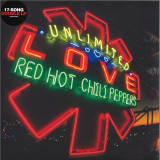
Red Hot Chili Peppers will unveil their new album and twelfth full-length offering, Unlimited Love Warner Records, on April 1, 2022. It notably marks their first recording with guitarist John Frusciante since 2006 and first with producer and longtime collaborator Rick Rubin since 2011. To herald Unlimited Love, the Los Angeles band just shared the first single and music video “Black Summer.”
“Our only goal is to get lost in the music. We (John, Anthony, Chad and Flea) spent thousands of hours, collectively and individually, honing our craft and showing up for one another, to make the best album we could. Our antennae attuned to the divine cosmos, we were just so damn grateful for the opportunity to be in a room together, and, once again, try to get better. Days, weeks and months spent listening to each other, composing, jamming freely, and arranging the fruit of those jams with great care and purpose. The sounds, rhythms, vibrations, words and melodies had us enrapt.
We yearn to shine a light in the world, to uplift, connect, and bring people together. Each of the songs on our new album UNLIMITED LOVE, is a facet of us, reflecting our view of the universe. This is our life’s mission. We work, focus, and prepare, so that when the biggest wave comes, we are ready to ride it. The ocean has gifted us a mighty wave and this record is the ride that is the sum of our lives. Thank you for listening, we hope you enjoy it.
ROCK OUT MOTHERFUCKERS!” - Anthony Kiedis, Flea, Chad Smith, John Frusciante
On lead track “Black Summer,” ethereal guitar underlines introspective lyrics as the rhythm unlocks a hypnotic drum groove highlighted by evocative bass. It quietly inhales only to exhale with a massive refrain, “It’s been a long time since I made a new friend, waiting on another black summer to end,” before a guitar solo echoes to the heavens and back.
Unlimited Love resumes a three-decade partnership with Rick Rubin Johnny Cash, Adele. Their creative collaboration spans legendary albums, including the diamond-selling Blood Sugar Sex Magik 1991, Californication 1999, By The Way 2002, and Stadium Arcadium 2006.
The interplay between the band borders on intergalactic once again—yet elevated to another stratosphere altogether. Unlimited Love represents the united spirit of four individual souls still fearlessly exploring the future of their eternal friendship and musical congregation.
This summer, Red Hot Chili Peppers will launch their first tour in support of Unlimited Love. They’ve invited a dynamic cohort of guests along for the ride at select dates, including Anderson.Paak & The Free Nationals and Thundercat and will be playing stadium dates in the UK in June 2022.
We all make mistakes. We all have regrets. We all look back on the loves and losses life brings and lament on how things might have been different. In these deeply personal moments of reflection our emotions can run wild as we contemplate our choices and come to terms with what’s next. Hindsight is a powerful and complex thing, and a phenomenon whose intricacies are explored in captivating fashion on The Greatest Mistake Of My Life, the second album from Cardiff’s Holding Absence.
Building on the excellent foundations laid down by the band’s eponymous debut record, released in 2019, and following standalone singles ‘Gravity’ and ‘Birdcage’, the four-piece have returned with a group of songs that, in the view of vocalist Lucas Woodland, are the truest representation of Holding Absence to date.
Inspired by a song of the same name that was recorded in the 1930s by actor and singer Dame Gracie Fields, The Greatest Mistake Of My Life is rooted in a time long before Holding Absence even existed. Lucas’ great uncle covered the song during the 1950s – something the frontman repeats on this album – and after finding this out from his grandmother, the singer decided the poignancy of its words were worthy of titling Holding Absence’s next record.
Holding Absence – the band completed by bassist James Joseph and drummer Ashley Green – carry the The Greatest Mistake Of My Life’s contemplative and thoughtful spirit throughout their second album. Whereas their debut was a concept record about the subject of love, The Greatest Mistake Of My Life’s inspirations are more complex, as Holding Absence stare down love in the face of death, all the while musing on the vast array of emotions we as humans experience throughout our lives.
Lead single ‘Beyond Belief’ is a soaring epic about the risk of loving someone forever, when their definition of ‘Forever’ might be different to yours, and a song that, Lucas says, argues how “love is something worth taking a risk on.” Holding Absence’s unique approach to romance is also present on atmospheric tracks like ‘Curse Me With Your Kiss’ and ‘Afterlife’, but for every display of affection, The Greatest Mistake Of My Life counters with despondency. ‘Die Alone (In Your Lover’s Arms)’ tells of the loneliness two people feel within a relationship long-turned sour, while ‘In Circles’ speaks to the monotony of everyday life and the crushing of dreams.
The Greatest Mistake Of My Life soundtracks the journey of our lives via all of its despair, elation, joy and pain, but never once tells the listener how they should be feeling.
Shedding their skins and emerging into a bright new phase for their band, with The Greatest Mistake Of My Life, Holding Absence are embracing change whilst holding onto the things that make them special. Aesthetic, for instance, remains important to Lucas and his bandmates, but as seen in the video for ‘Beyond Belief’, no longer do they exist in a world of purely black and white colour. Ushering in a colourful new era for Holding Absence, Lucas speaks of a desire “to bring warmth to people’s lives.”
Armed with a stellar new album and an unflinching belief in their craft, this new incarnation of Holding Absence promises to excite and impress like never before. An enthralling collection of songs and stories that tell of love, life, death and everything in between, The Greatest Mistake Of My Life is a thrilling record, and one its creators were born to make.
As Holding Absence have proved, the greatest mistakes can sometimes open the door to even greater triumphs.
- 1: Connais Tu L'animal Qui Inventa Le Calcul Integral?
- 2: Evariste Aux Fans
- 3: Les Pommes De Lune
- 4: La Chasse Au Boson Intermédiaire
- 5: Dans La Lune
- 6: La Faute À Nanterre
- 7: Ma Mie
- 8: Wo I Nee
- 9: Si J'ai Les Cheveux Longs C'est Pour Pas M'enrhumer, Atchoum!
- 10: La Révolution
- 11: Je Ne Pense Qu'a Ça
- 12: Je Chante Pour Vous Faire Marcher
- 13: Je Ne Suis Pas Simple
- 14: Si Les Étoiles Pouvaient Parler
Évariste is one of the rare specimens of artist-cum-scientists. Among his kind stand others like Pierre Schaeffer, a Polytechnique graduate (an engineer but also the father of musique concrète) and the eccentric Boby Lapointe (graduate of the École centrale and inventor of the Bibi-binaire system, patented in 1968). Évariste's songwriting, joyful and full of energy (albeit extremely critical), shrouds an original tragedy: born in 1943 among résistants, Joël Sternheimer (aka Évariste) grew up without a father, lost to Auschwitz. Although he makes little reference to Jewish culture in his music, his origins leave their mark: in 1974, he sings a Hebrew song on television. In 1966, the young Joël sports Princeton's colourful paraphernalia - that's because he's freshly returning from the US, where he was sent to pursue his research on "particle mass and the interpretation of observed regularities, such as the effects of a wave" (will understand who may). When he gets there the country's in the midst of the Vietnam War. With McNamara keen to find an alternative to the nuclear weapon and calling upon the country's biggest brains to undertake the task, there's a "fund shift" within the university - a diplomatic way to give notice to whoever may not be disposed to follow the government's scheme. Joël, who's under the supervision of a rebellious physician, is dismissed. He regardless keeps following the prestigious seminaries of the Institute for Advanced Study, chaired by Oppenheimer, inventor of the atomic bomb. Likely inspired by the hippie movement and music, Joël buys a guitar and starts playing in Washington Square - after all, Bob Dylan himself started there. He blithely skips Oppenheimer and receives a warm (though surprised) welcome from a crowd thoroughly unfamiliar with French. When the ageing physicist questions him about his decreasing attendance, Joël explains how drawn he is to music, and how he thinks it could help him in self-financing his research. Évariste recalls seeing the sickened man, his face torn by remorse, lighten up to his words and say: "What's keeping you - go for it! If I was still young that's exactly what I'd do." The student takes these words as a testimony from his professor - and it's enough to convince him . And so he takes the leap during the Christmas vacations he spends in Paris. A journalist friend he often sees around the Sorbonne introduces him to the artistic director of Disques AZ. The latter passes the tapes on to the label's boss, Lucien Morisse, also program manager on Europe N°1. Morisse is blown away - and signs him onto the label right away. Michel Colombier, arranger for Serge Gainsbourg and co-author of "Psyché Rock", with Pierre Henry, contributes some of his original ideas to the 7 inch "E=mc2": Évariste's preoccupation with the percussion sound on the track "Le calcul intégral" is that it goes "poom poom" and not "tock tock" - Colombier is aware of the issue and records Évariste's guitar like a percussion in an isolated booth. The organist Eddy Louis, who is to participate, in 1969, to the success of Claude Nougaro's "Paris mai", also appears on the record. It's 1966 and the Antoine phenomenon (signed on Vogue) storms through France. The two singers share similarities: Antoine is an engineer of the École centrale, gifted with a great originality in his song-writing. A godsend for the two labels who turn this resemblance into a commercial strategy, setting them out as rivals. To this day though, Évariste still denies what was little more than slushy tabloïd gossip. Success comes around swiftly and in 1967 Évariste launches into a second 7 inch, "Wo I nee", again arranged by Michel Colombier. Quantum mechanics fans finally get their anthem with "La Chasse Au Boson Intermédiaire" (or the "Intermediary Boson Pursuit"). To sum up what's a boson, say he's a close pal of the meson, photon and other gluons. A few months later, it's May 68 and everything's turned upside down. Évariste writes a series of songs inspired by the events, which he immediately submits to Lucien Morisse. When the man behind "Salut les copains", once married to Dalida, hears the song "La révolution" - a father and son dialogue - he can't take any more: AZ simply cannot release this. But there and then Lucien Morisse makes a gesture which will remain engraved in French music's history: sorry to be unable to officially stand by the singer, he encourages him to self-produce the record, but with his tacit support. He calls the pressing factory and asks they apply the same rate for Évariste as they would for AZ. The singer and his musicians use the same studio as for the previous record, all of them playing for free awaiting a return on investment. Évariste keeps singing at the Sorbonne with "Jussieu's gang" and "the young Renaud" he nicknames "le p'tit gavroche" (or "street urchin"). Renaud volunteers to type the lyrics of the song "La révolution" so that the chorus can be sung and recorded. A boy in the group is related to Wolinski and introduces them. The two get along so well that Wolinski ends up drawing the cover for the record "La révolution", for free. The self-released 7 inch "La révolution / La faute à Nanterre" is sold under the table and door-to-door for half the price of a standard record, on and around the boulevard Saint-Michel; and it runs out fast. In the end, there will be 6 releases of the record, and 25000 copies sold. When the theatre director Claude Confortès decides to adapt Wolinski's drawing series titled "Je ne veux pas mourir idiot" ("I don't want to die a fool"), he asks Évariste to write the original soundtrack. His friend, now cartoonist for Hara-Kiri Hebdo, often promotes him in accordance with a principle dear to him by virtue of which he gives a special place to his friends. Dominique Grange (writer of the song "Nous sommes les nouveaux partisans") soon joins the team. After 150 performances, Évariste leaves his place to Dominique Maurin (brother of Patrick Dewaere). Évariste composes the songs for Claude Confortès' next play, "Je ne pense qu'à ça" ("That's all I think about"), co-wrote with Wolinski in 1969. The comedians of the play record the songs on a 7 inch, with a cover signed, again, by Wolinski. In 1971, French television produces the documentary "Évariste et les 7 dimensions", but doesn't air it. Indeed, the scientific sub-comity of the programming comity (sic) censors the show. The given justification is that "Évariste dangerously mixed science with science-fiction, numerology and other non-scientific disciplines". The underlying motive might have been a will to censor the singer-mathematician's political discourse. In the documentary and among other things, Évariste discusses hierarchy, alienation and revolution. Half a century later the documentary remains invisible, though some excerpts resurfaced in 1992 in the cult show "L'oeil du cyclone", on Canal +. Though flourishing, Évariste's career is nearing its end. 1970 is the beginning of a decade in the course of which he is to make a decisive discovery in the musical and scientific domains. Following this breakthrough, he moves away from self-produced music and gaucho magazines to focus on science. He keeps Oppenheimer's encouraging words in mind, now freely pursuing his research thanks to the sales of his records. Joël realises that when decoding protein sequences, one finds musical sequences recognisable to humans. He names them "proteodies". If, when listening to a proteody, one responds by being so sensitive as to finding it beautiful, then it reveals a deficiency of the related protein - and this peculiar music may be the cure. We could trace back the music history in light of proteins lacking in a given artist, or within a public's majority. You always thought these hysterical groupies who'd throw their underwear with passion and faint in the pit had miraculously appeared because they had never heard anything as wonderful as the Beatles? Make no mistake! For Évariste, it all boils down to an intro's protein content. Indeed, the beginning of their first hit "Love Me Do" corresponds to dopamine, the neurotransmitter linked to compulsive buying. An intro like this could only unleash the fervour of groupies, victims of fashion and biology. Évariste's success is such that the income from his sales gives him the autonomy to which he had aspired when confiding to Oppenheimer. It made it possible for him to pursue his research without any institutional constraints. He now devotes himself to his proteodies, sat in the offices of the European University for Research, just around the corner from the Sorbonne he knew so well. Évariste is no more. Joël regained control of this strange and comical beast.
Nightlands is the solo project of The War on Drugs’ bassist and multi-instrumentalist Dave Hartley. Amid massive global paradigm shifts Dave Hartley (aka Nightlands) became a father twice over and left his native Philadelphia for Asheville, where the pace of daily life is slower and it's easier to maintain a zoomed-out perspective on modern life. From the newfound refuge of a studio he built using the bones of a barn attached to his hundred-something-year-old house in the mountains, Hartley has tailored a collection of well-crafted pop rock, pointedly titled Moonshine. Guided by some of the harmonic sensibilities that have helped make The War on Drugs a force in modern music, Moonshine combines immaculate-yet-dense vocal stacks and billowy clouds of effected keyboards with classic songcraft, revealing previously unseen acreage in the unfurling dreamscape that is Nightlands. The surrealistic album art by Austin-based illustrator Jaime Zuverza depicts an archway opening to the stars over the surface of an idyllic sea flanked by both moon and sun. Similarly, Moonshine reveals portals within portals leading to ever deeper places in Hartley's vocal-centered labyrinth. Throughout the album, there are plenty of buoyant high moods where the pitter-patter of drum machine and humming digital organ hints at Hartley's low-key tropicalia streak, but the lyrics anchor the dreaminess in real-world sorrow and resignation. Nowhere are these sentiments more apparent than on the title track, a nearly acapella recitation of "America the Beautiful" that poignantly hovers over a mirage of soft keyboards before dovetailing into Hartley's own words about the hypocrisy of the American dream. "This was never intended to be an overtly political record" he admits. "I have so many friends who are able to process the frustration of current events gracefully or with wisdom or in a nuanced way, but I often find myself just consumed with anger about it all. I decided to just let that come out, and it manifested itself lyrically." Moonshine's wide-eyed, utopian instrumental backdrops provide sharp contrast to Hartley's lyrics, which sting even harder within the sweetness. Even in light of the album's vocal emphasis, Hartley's history as a bassist brilliantly beams through Moonshine, giving effortless and sprightly movement to songs like "Down Here," which also features an extended section of saxophone lent by his Western Vinyl labelmate, Joseph Shabason. In addition to Shabason, the album hosts a short list of remote collaborators including four of Hartley's bandmates from The War on Drugs, Robbie Bennet, Anthony Lamarca, Eliza Hardy Jones, and Charlie Hall, as well as exotica virtuoso Frank Locrasto (Cass McCombs, Fruit Bats), and producer Adam McDaniel (Avey Tare, Angel Olsen). Hartley was forced to keep the guest list small out of the necessity of pandemic isolation, coupled with his move to a smaller city, all of which challenged him to do most of the album's heavy lifting right down to the mixing duties, resulting in the most independent effort of his career. By that measure, Moonshine is also the clearest image yet of Dave Hartley as a person and creator.
He might be vocalist in bands such as Brighton-based progressive act Diagonal and psychedelic outfit Baron, but when it comes to his solo work Alex Crispin has typically worked in more wordless fields. Last year the songwriter, vocalist and producer released a triptych of ambient albums, consisting of two older albums in 'Idle Worship' and 'Open Submission', as well as new meditative work in 'Resubmergency'. On his new self-titled album, however, Crispin re-emerges from the cavernous soundscapes to – for the first time – put his vocal and song writing stamp on a record under his own name. “I personally find it easier to create more guarded, moody music, but I was at a point where I wanted to embrace a more universal, intimate and open side to what I might say” Crispin says. “Over time I’d got over certain blocks or preoccupations and so wanted to create something accessible and open hearted, which became a big driver for this record.” Pointedly self-titled to reflect the newfound confidence in his song writing away from the collective of a band, the album’s nine tracks are a warm embrace amidst troubled times. Musically there’s nods to everything from tropicalia and Brazilian MPB, to 80’s dusk pop balladeers The Blue Nile and Paul Simon’s explorations into African music. Lyrically aware of the snowballing turbulence that surrounds us, Crispin in reaction tries to see hope and looks around at the relationships and connections in his life that provide him strength. He opens 'Invisible (To Us)' with the words “Before the world did end, there was just one moment when, everybody thought there might be time, to look around again, to laugh to cry to sing.” Elsewhere, 'Listen & Learn' strikes at the heart of other underlying themes of the record, of the rarity of people opening up, taking on new ideas and allowing change. It’s accompanied with a rich, maximal sound palette of flute and sax that play around each other as Crispin’s vocal chips in with gentle encouragement. “One of the main markers on the album that I was aware of from the start, was to let myself express joy and positivity in the music” he says. “I have come to greatly prize the power of accessibility and universality over artistic 'coolness or trend', much in the same way that so often for me, the greatest pieces of art humans make nowadays are things like Pixar movies, with their combination of undeniable human talent and craft, alongside genuinely moving and accessible themes.” Indeed, there is a cinematic feel to much of Crispin’s own music, something brought over from his ambient creations – although his self-titled album possesses a panorama all of its own. Something like 'When I Reach The Ocean' has a hazy, pastoral feel to it like something out of the Canterbury Folk scene; there’s space between the notes though, which in turn pushes the track out to a greater expanse than the comparatively soft-edged and modest sound palette used to create it. Similarly, the likes of 'Effert' revel in the space afforded to them - in the case of the aforementioned in particular, Crispin lets his voice take a back seat and creates an open wash of sound that he allows the guitar to probe and explore within. “In making any music I am definitely conscious of trying to put in only what is effective” Crispin says. “It is so easy to clutter tracks without realising it, just having the ability to add stuff can just become addictive as it’s so easy to do with recording setups now.” The album started coming together at the end of 2020, with Crispin getting most of the songs to a concrete state, before starting recording in May 2021 with Diagonal bandmates Luke Foster (drums) and Daniel Pomlett (Bass), who put down rhythm tracks. Jazz saxophonist Rob Milne then added parts which would become the glue that held the whole organic aesthetic of the album together. There’s no doubt that lockdown played a part in proceedings, with a kind of forced focus resulting in a need for joyful expression. However, Crispin and his partner also suffered a bereavement which led to her travelling for large periods of time. “It was a very intense and difficult time and I think some of the intensity of emotion of that situation coupled with being alone must have inevitably contributed to the work itself” he says. It's perhaps why when even in moments of sheer happiness, such as the 'Sabu’s' breezily euphoric opener, Crispin ponders: “No-one really cares beyond this moment, and even when it's here, it's never here”. It’s the first of several bittersweet moments on the record that give the album its weight. On this new LP, Crispin recognises that sadness doesn’t mean throwing out hope, and that even in moments of joy there’s still a path ahead of you to take.