Born of a thousand nights lost in a surrender to stillness and contemplation, In The Air is Anna St. Louis’ second full length album and her most considered work yet. St. Louis’ debut If Only There Was a River seemed to emerge fully formed out of the recesses of her mind; a gritty, mesmerizing affair, filled with jagged edges and ghostly apparitions. The type of record that announces a new voice; one haunted by what has come before.
But this time, St. Louis is no longer concerned with what could have been and sets her sights to exploring what could be. It’s an outlook on the world that was formed when her immediate one was small. The intervening years since her last album found St. Louis in a small one-bedroom cabin in the middle of the woods of upstate New York with a new love and time to think of what she wanted to express with her music. For weeks on end, the only trips she took were to and from her job as the front desk clerk at a nearby hotel. The previous years she had spent on tour and performing constantly in the venues of Los Angeles felt like they had occurred in another lifetime.
“It really compelled me to surrender to the unknown,” she says. And in this surrender, she found liberation. St. Louis is more self-assured, open-hearted and ready to say what she wants. St. Louis describes the writing period as one of a slow harvest; a fertile time but one that required a newfound patience. Instead of documenting her first thoughts, she spent more time with each song, going deeper with the themes and ideas she wanted to express.
This slower approach also guided the sonic textures of the album. Working with producer Jarvis Taveniere (Purple Mountains, Woods) in two extended recording sessions in Los Angeles in 2021, St. Louis used the studio in a previously unexplored way, opening up her songs to more experimentation featuring brighter tones and a more orchestral sound to accompany her new perspective. To that end, she was aided by a cast of friends and collaborators including Jess Williamson, Kacey Johansing, Oliver Hill (Kevin Morby, Vagabon) on strings, Alex Fischel (Spoon) on piano, Josh Adams on drums (Bedouine, Tim Heidecker) and Keven Lareau (Cut Worms, Hand Habits).
In the Air has the sound of a joyous consideration of the present moment; a quiet morning revealing a new snowfall outside, steam coming from the kettle, just before it whistles, St. Louis with her guitar, staring out the window, with a few free hours before work. She’s reflecting on the scene in front of her, imagining the times yet to come. You can hear it; she’s a long way from the noisy bars of Los Angeles, the rigors of the road. As she intones in “Rest”: “You spend your whole life believing in the chase. And then you realize that being somewhere doesn’t matter like it used to.” She doesn’t need a river to carry her anymore ... She’s in the air.
Five years after the release of their last studio album, legendary UK musical institution, Soft Machine, return with a brand new CD/LP,
Other Doors. Boasting new material and two numbers drawn from their extensive historical repertoire, Other Doors finds the band on their usual fiery form.
Featuring John Etheridge (guitars), Theo Travis, (saxes, flutes, Fender Rhodes piano, electronics), Fred Thelonious Baker (Fretless bass),
John Marshall (drums), Other Doors also features two guest appearances from long-serving bassist Roy Babbington, who retired from the band in 2021.
Other Doors was recorded at Temple Music Studios, a facility owned by the late Jon Hiseman during July and August 2022.
It’s a location of which the band is particularly fond, explains John Etheridge. “Working at Jon Hiseman’s studio was special,
especially with Ru Lemer who is a brilliant engineer. He’s fantastically quick and that’s very good as we record mainly live in the studio. It’s come out really well and I think it sounds great.”
On Other Doors they’ve revisited the very first album, originally released in 1968, to include Kevin Ayers ‘Joy Of A Toy. Fred Baker, makes his studio debut with Soft Machine.
A well-known figure on the Canterbury Scene not only is he the perfect choice for the group but he’s also is a long-term fan of the repertoire.
“The way I look at it is that this is all great music which we’re continuing to preserve and keep alive as we play it but also we’re adding to it all the time,” he explains.
The idea for revisiting the number was Theo Travis’ he says and has been part of the band’s live setlist for a while.
The album also contains Penny Hitch, a track originally heard on 1973’s Soft Machine Seven.
If the album ushers in a new member in the shape of Fred Baker, it also acts as a fond farewell to drummer John Marshall, who joined Soft Machine midway through the recording of 1972’s Fifth.
At the age of 81 Marshall has decided to retire making Other Doors his final studio album with the group. “I’ve known John since 1975 when I first joined Soft Machine and of course,
we’ve worked through the years together intermittently ever since. His drumming always meant a lot to me,” says Etheridge.
“We worked over three days in the studio and John played great. It sounds terrific.”
Indeed, Marshall is on whip-cracking form throughout the album bringing his trademark musicality and decisive presence.
With Other Doors, he brings his distinguished career to a rousing conclusion.
Intense, celebratory, and consistently impressive. Other Doors is the sound of a group determined to press forwards with an
integrity and sense of purpose that’s quintessentially and definitively Soft Machine.
Whitelands follow their acclaimed single ‘Setting Sun’ – which saw the London-based band added to the BBC Radio 6 Music playlist – with their first ever vinyl release, an EP of reworkings, which is released as a limited edition orange vinyl 10” on June 23.Simply titled Remixes, the EP features two reworkings of ‘Setting Sun’ by dreampop legends A.R. Kane – the short Initiation Dub and the epic Hero Remix, which comes in three parts, titled Departure, Initiation and Return and takes the song to some unexpected and exciting new places.“Whitelands came up in conversation three times in a week,” explains A.R. Kane’s Rudy Tambala of how he got to know the band and came to remix them. “Two times is coincidence, three times is a conspiracy, so I reached out to them on social media, and we started chatting. They’re cool, like baby Kanes. ‘Setting Sun’ was close to my heart, reminding me of ‘Fools Gold’ meets Slowdive versus Frank Ocean. Anyway, I heard several approaches in my head, so I thought, ‘Fuck it, let’s do ’em all’. “I knew I wanted to take a prog approach: Marvin Gaye’s What’s Going On, Pink Floyd’s The Dark Side Of The Moon, Sasha’s Involver2, Coltrane’s A Love Supreme, Frank Ocean’s Blond, etc. Even my own sixty nine. It’s that seamless drift from one part into the next, stretching the idea until it ruptures, creating space for a new way of perceiving; this has the first inklings of hive mind, telepathy, in a musical form; you dissolve into it as it dissolves into you. A fundamental dreampop construction and aim, whereby subject and object become one. Ahem. “As the extended mix took shape it suggested to me the three components of The Hero’s Journey, hence the titles. The three-minute pop song was determined by the technical limitations of the 7” vinyl single. Digital has obliterated that. The perfect dreampop song has no time limit. ‘Setting Sun’ A.R. Kane Hero Remix is timely.” Alongside Rudy’s reworkings is an equally dazzling drum’n’bass take on last year’s single ‘How It Feels’ by the band’s guitarist Michael in his howdogirlssleep guise.
Salt Peter, by Ruby (AKA Lesley Rankine), was originally released in 1995 to critical acclaim under the trip-hop and electronica tags,
quickly becoming the soundtrack to many a student, clubber and vinyl junkie’s life.
Roll on 25 years to find Rankine & her brother, Scott Firth (bassist with PIL) in Covid lockdown together following the death of their mother. What else would they do but make some music?
So, while noodling around with some ideas one night, Rankine remade one of her old Salt Peter songs and was so pleased with the result she decided to do the whole album.
Rather than simply remixing or remastering the original album she decided to rebuild it from the ground up with completely new production, arrangements and vocals.
With Scott’s additional production, engineering and mixing, Salt Peter 25 is a completely different album from the original, but still with Rankine’s distinctive vocals
and her ear for the quirky and the dark. With densely textured sounds and uncompromising arrangements, Salt Peter has matured into an exciting new and unique animal.
Salt Peter 25 is a deeply personal album, created during a very difficult time and so the cover, fittingly, features a striking photo of Lesley and Scotts’ mother,
as well as other family photos, again echoing the aesthetics of the original album.
Now released on delicious orange double vinyl with a beautiful gatefold sleeve, featuring additional art by Toronto based designer, Henry Faber.
The fourth release in Fu Manchu's 30th Anniversary vinyl reissue series, No One Rides For Free, is a new vinyl specific remaster of the band's debut album. These songs are the only recordings of the band's line-up of Scott Hill (vocals/guitar), Mark Abshire (bass), Eddie Glass (guitar) and Ruben Romano (drums). The 8 song collection was recorded on April 16 and 17, 1993 at Sandbox Studios in LA, produced by the band along with Brant Bjork. This reissue was remastered by Carl Saff for optimum fidelity. This limited edition 2,000 unit LP run is pressed on red vinyl with white splatter and the newly designed gatefold package includes never before seen photos of the band and flyers from the shows of the era. The limited edition 1,000 unit CD run also features the updated art and a digital specific remaster.
Cable Ties are a fierce, tense rock’n’roll trio. They take the three-minute punk burner and stretch it past breaking point to deliver smouldering feminist anthems. Post-punk and garage rock hammered together by a relentless rhythmic pulse. Jenny McKechnie channels her struggles into songs that resonate deeply, giving voice to feelings often buried in modern life. Shauna Boyle and Nick Brown are a rhythm section anchored in Stooges primitivism, relentlessly hammering out a bedrock for McKechnie’s guitar pyrotechnics and vocal wallop. Three friends summoning a rhythmic tide to deliver anthems that turn latent anxieties into a rallying cry.
The band has been committed to an inclusive feminist and political outlook since its inception in 2015, exploring issues of gendered violence, colonialism, and sexual assault. The band members have been involved in benefit shows, organized DIY festivals, and volunteer with Girls Rock!, a not-for-profit organization that aims to empower female, trans, and gender non-binary youth in music.
Cable Ties are dedicated to their local community and independent networks, and to playing diverse and inclusive shows. They have toured Australia a number of times and have developed into a lean and efficient touring band who deliver powerful and meaningful shows. Their debut self-titled album, released in 2017 on Poison City Records, was a Triple J feature album and album of the week on 3RRR, with strong support nationally from community radio. They have also self released three 7” singles which have all sold out. The debut album is on its third vinyl pressing.
The band toured UK/Europe in 2017 supporting Jen Cloher, and played Punk’d Festival in Berlin. They returned to the UK in May 2019 to play The Great Escape and shows with Tropical Fuck Storm and Amyl & the Sniffers. In Australia they played Bigsound 2018 and festivals such as the national Laneway Festival tour in 2018, Boogie Festival 2018, The Plot 2017, and Meredith Music Festival in 2016. Cable Ties have supported artists such as Joan Jett, The Kills, Camp Cope, and Cash Savage. They won Best Hard Rock Act at the 2017 National Live Music Awards and were nominated in five categories. They won the Corner Music Award in 2017, have been nominated for eight Age Music Victoria awards, and were longlisted for The Australian Music Prize 2017.
Bound to Be is Power POP veering from muscular rock songs to languid pop confessionals, from stunning atmospherics to raw intimacy. Corvair is a husband/wife duo from Portland, Oregon. Threading together 70’s pop, 80’s synth rock and 90’s indie rock, with influences from Berlin-era Bowie to Blondie, Lee and Nancy to the Breeders, Corvair’s evocative power pop is timeless and resonant. The duo’s second album, Bound to Be, veers from muscular rock songs to languid pop confessionals, from stunning atmospherics to raw intimacy, held together by sharp lyrics and potent imagery. Naubert and Larimer have previously recorded or performed on more than twenty albums. Larimer’s musical mainstay was the garage pop band Eux Autres, broadly hailed as a “veritable cult classic” band and radio-debuted by the late John Peel. Naubert is a longtime fixture of the Northwest rock community, having played in vital bands such as Tube Top, Pop Sickle, The Service Providers, and the critically-lauded Ruston Mire, since 1995. Bound to Be is the duo’s second album and will be released in June 2023 on Paper Walls and the cult indie pop label Where It’s At is Where You Are records out of London, UK. It features Larimer and Naubert on vocals and instruments, along with Northwest powerhouse drummer Mike Musburger (Fastbacks, The Posies).
Triple LP box-set on coloured 180g vinyl. Includes 62x62cm poster. Artwork and remaster exclusive to Fuzz Club Bootlegs. This King Gizzard And The Lizard Wizard’s ‘Live In Sydney' bootleg album was recorded when the prolific Australian group descended on The Enmore Theatre in Sydney, Australia on April 22nd 2021.
Comprised entirely of King Gizzard’s microtonal material, the resulting 16-track triple LP draws heavily from their recent ‘K.G.’ and ‘L.W.’ records as well as 2017’s ‘Flying Microtonal Banana’. This bootleg is remastered exclusively for Fuzz Club and arrives as a triple LP box set with new and exclusive artwork by Elzo Durt. Each box-set also includes a 62cm x 62cm poster.
Triple LP box-set on coloured 180g vinyl. Includes 62x62cm poster. Artwork and remaster exclusive to Fuzz Club Bootlegs. This King Gizzard And The Lizard Wizard’s ‘Live In Milwaukee’ bootleg album was recorded when the prolific Australian group descended on the Riverside Theatre in Milwaukee, WI, USA on August 23rd.
The resulting 19-track triple LP sees King Gizz storm through tracks from ‘Nonagon Infinity’, ‘Murder of the Universe’, ‘Fishing for Fishies’, ‘Gumboot Soup’ and ‘Chunky Shrapnel’. This bootleg is remastered exclusively for Fuzz Club and arrives as a triple LP box set with new and exclusive artwork by Elzo Durt. Each box-set also includes a 62cm x 62cm poster
This King Gizzard And The Lizard Wizard ‘Live In Austin’ bootleg album is comprised of two performances recorded at the 2014 and 2016 LEVITATION festivals in Austin, Texas. Capturing a historic moment for King Gizz, the 2014 set was the band’s first-ever North American show and includes raw early versions of fan favourites from the ‘I’m In Your Mind Fuzz’, ‘Oddments’ and ‘Float Along - Fill Your Lungs’ LPs.
The 2016 show on discs 2 and 3 captures their return to Austin two years later hot off the heels of the release of ‘Nonagon Infinity’, and also sees them storm through Gizz bangers from ‘Paper Mache Dream Balloon’, ‘Quarters’ and ‘12 Bar Bruise’. This bootleg is remastered exclusively for Fuzz Club and arrives as a triple LP box set with new and exclusive artwork by Elzo Durt. Each box-set also includes a 62cm x 62cm poster
One of Japan’s most riveting artists follows that KAKUHAN mindmelt from last year (our number 5 album, 2022) with an engrossing suite of wild field recordings and polymetric percussion featuring a whole raft of additional players weaving drums, wind and brass instruments, cello and electronics into a bewildering Acousmatic matrix. Highly recommended listening if you’re into Marginal Consort, Beatrice Dillon, Will Guthrie, Mark Fell, François Bayle.
Having made his mark on these pages over the last few years with appearances as part of Japan’s cult entities Goat and YPY, Koshiro Hino’s turn last year as KAKUHAN took things to a whole other level with an album that felt like some alchemical mix of elements borrowed from Autechre, Photek, Arthur Russell and Mica Levi - a complete stylistic futureshock that worked as well in the club as it did fuelling extended flights of the imagination.
For 2023, Hino takes us into a completely different headspace, assembling a cast of 11 players - the mighty Joe Talia and KAKUHAN’s other half Yuki Nakagawa among them - for a suite of untamed field recordings, clanging percussion, brass and synthesis that are about as far removed from the diaristic ambient de jour as you could possibly imagine. Instead, the ensemble conjure vibrant sound ecologies teeming with detail, mirroring the natural world and communal traditions to form shapeshifting, organismic soundworlds.
‘Geist II’ was written for 20 speakers, referencing François Bayle’s acousmatic music and David Tudor’s electro-acoustic environments. It paints a richly detailed scene of a nocturnal rainforest, replete with avian hoots and a skin-crawling patina of insectoid chatter that moves around the soundfield, stealthily growing in density with a more “musical” presence of super low end drone and drums converging form the peripheries to a ritualistic climax. In the second part, focus shifts to remarkably pure percussion-like tropical rain, invaded by swarms of scuttling and winged invertebrates that give way to a water music-like polymetric slosh, resolving to ringing tones and more mellifluous gestures that hark back to GRM’s most poetic, romantic urges.
It's a deeply psychedelic experience that harmonises tiny electronic fluctuations with bird calls and scraped, resonant drones that phase in-and-out of the mix. It's sound you can practically chew, and another crucial despatch from the contemporary Japanese avant-garde.
Hailing from Macclesfield, Cheshire, and growing up in Cheadle Hulme, John Mayall had already made a name for himself on the Manchester blues scene before relocating to London in 1963 at the urging of Alexis Korner.
Following the breakup of The Bluesbreakers in 1968, Mayall took a three week break in LA, and it proved an eye-opener for him. As a result, Blues From Laurel Canyon was a concept album of sorts, a view of a Brit Abroad at a time when it wasn't de rigueur to travel. 2401 especially is an incredible confection – acknowledging Cream, foreseeing Led Zeppelin; Mick Taylor's slide guitar would soon be heard in the Rolling Stones. Fly Tomorrow is a nine- minute blues- rock tour de force.This re-issue faithfully replicates the original 1968 Decca Records UK stereo release with gatefold sleeve and is pressed onto high quality 180g vinyl.
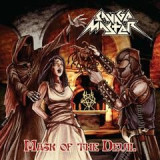
With absolute electricity at every turn as well as the rough 'n' ready charisma of frontwoman Stacey Savage, Savage Master strutted and surged with a power and poise redolent of early '80s US metal. Uniquely, the hooded Louisville quintet put a concertedly occult spin on everything, making them stand out amongst all those trying to reignite a 'Metal Massacre'. Swift and succinct were the eight songs
across the half- hour 'Mask of the Devil'; for however much "star power" was already here early on, Savage Master knew that heavy metal ultimately lived or died on the strength of songs - and they were just beginning to realize their massive potential.
The album was recorded completely live in Studio Two at the legendary Abbey Road Studios and features live versions of songs from Yearbook and Lifeline, as well as brand new track Headspace and an irresistible cover of the Rolling Stones' classic You Can't Always Get What You Want.
Revised and remastered edition of Joe Henderson's 1987 album 'An Evening With Joe Henderson' with two bonus tracks from the same.
"Saxophonist Joe Henderson has been described as one of the great chord change players of jazz history, and this aspect of his playing, that had its roots in bebop and Sonny Rollins' approach to improvisation, is very apparent in the repertoire of songs he chose to play that night, each piece with interesting chord changes beginning with Thelonious ' Monk's Ask Me Now'. Although Henderson's style grew out of Rollins' sense of phrasing, rhythmically Henderson was a lot looser and built on Rollins's style to create his own approach to improvisation."
It is also one of only five sessions led by Little as a band leader before his premature death at the age of 23 in 1961. The fact that this is only Little's third outing as a leader is further testament to the talents of this young artist. Arguably, the seven original compositions here might be more widely known today had his life not been so tragically cut short.
Little is mostly known for this association with Max Roach, who he began playing with as early as 1955. But it was not until 1958 that he officially joined Roach's outfit and began recording with him. Little made 8 albums with Roach between 1958 and 1961. And it is Roach's
ground breaking We Insist! album that is the precursor to the Out Front sessions, as this is where Little's talents fully caught the attention of Candid Records' A&R and producer Nat Hentoff.
A fresh chapter takes soft, sure shape for Cape Town-based singer songwriter Wren Hinds on his new album. Released through Bella Union, ‘Don’t Die In The Bundu’ follows Bella Union’s vinyl releases of Wren’s first three Bandcamp LPs. A gleaming set of gently dappled and poetic songs about fatherhood and fortitude, the album roots its restrained strength in an innate understanding of what matters most to us.
Wren’s own life began on the southeast coast of Kwazulu-Natal, South Africa. His father was a musician, his mother a landscape painter. While his dad inspired Wren to record whenever and wherever he could, his mother’s artform coloured his approach to songwriting: “painting with sound” is Wren’s description, a methodology illustrated by his use of light, shade and space to communicate powerful impressions and feelings.
Lewis Taylor's legendary magnum opus: The Lost Album. "Now you're talking. That's my favourite LT album. Unlike all of the others, there isn't anything about it that embarrasses me." Straight from the genius's mouth. What can we say about this? Well, it's the most requested record ever at Be With Towers. The Lost Album was the intended follow-up to his first album but Island rejected it for fear of "confusing" the marketplace and its conception of Lewis as a soul artist. Their loss. It's a breezy sunset masterpiece.
The genesis of this incredible record needs unpicking a bit. Lewis stopped promoting the first album after a year and went home to record a completely different record that was the most un-R&B album you could probably ever hear: "I pushed in such an extreme direction the other way with what eventually became The Lost Album. It was a knee-jerk reaction to a perceived ‘trapped in R&B’ feeling I was going through at the time. Some people around me were in favour of it and others weren’t. In the end I think I lost confidence in it and did Lewis II instead." We did at least get Lewis II, which is a remarkable album, and he kept Island happy...for a bit. Not long after, Lewis was dropped. And what was to become The Lost Album could've been...er...lost. Forever.
Thankfully, however, Lewis and longtime partner Sabina Smyth revisited those scrapped demo tracks in 2003. They decided to re-arrange, re-record and then self-release them. So it was that the brand new version of The Lost Album finally dropped in late 2004. It's sheer perfection, and we don't say that lightly. The Lost Album was a fully 50/50 collaboration between Lewis and Smyth. As well as production, Sabina did a lot more writing on it, from the melody to "Listen Here" to the chord sequence for "Let's Hope Nobody Finds Us." Thankfully, Sabina is credited this time around.
No, it's not straight up "soul music" in the vein of his previous work. Yet, in its perfectly formed suite of one dozen songs, The Lost Album is dripping in soul. It's so warm, so effervescent and so alive with possibilities. It features deep, fresh imprints on well-loved, accessible sounds. It's a proper 70s style double album. Just one listen and the musical influences on The Lost Album are fairly self-explanatory, as Lewis recently told us, but it's always nice to hear that, in case we were in any doubt, he was definitely channeling Love, Yes, Brian Wilson, CSN, Laura Nyro and, of course, Todd Rundgren. The influences don't end there: "I’m particularly fond of my bass playing on that album, there’s a lot of Chris Squire going on which is cool."
Deep orchestral opener "Lost" is a sublime, harp-laced, string drenched gem, a cinematic, melancholic Axelrod-esque mini-epic that simply beguiles. Written by Smyth, it evokes Donny Hathaway's celestial "I Love The Lord, He Heard My Cry" from Extensions Of A Man. The only problem is the brief 90 seconds running time. It segues into the classic Brian Wilson-meets-power-pop-rock splendour of "Listen Here" which, with its outstanding extended harp-licked beatless intro, sounds like the younger cousin to Boston's "More Than A Feeling". We then drift into the ringing guitars of classic 70s rock anthem "Hide Your Heart Away". It's Lewis's personal favourite, "especially the multi-tracked guitar solo – I was listening to Boston at the time, which was fun." A-ha!
A new version of the heart-stopping, shoulda-been-a-massive-pop-hit "Send Me An Angel" opens Side B before the arrival of, in Lewis's completely correct words, "the clear standout, "Leader of the Band"; the perfect distillation of everything that album was trying to achieve." Soaring, piano-led Rundgren-esque power pop that makes the hairs on the back of your next stand on end. Truly, otherworldly. This is pure pop for now (and then) people. The simple jangly brilliance meets experimental prog-rock of "Yeah" sounds like simultaneously like prime CSNY and late 90s Radiohead (if they'd had a slightly more accessible bent and could write better tunes).
Oh, you wish The Beach Boys had continued writing amazing songs beyond Holland? Well, allow us to point you in the direction of the downlifting stunner "Please Help Me If You Can" and the warm textures and brilliant atmospherics of goosebump-inducer "Let’s Hope Nobody Finds Us". Words can't really describe the sheer beauty of these songs. So we'll stop trying. Just listen. Listen, listen, listen. Closing out this remarkable side of music, the accidentally Balearic "New Morning" should be blasting out at every sunrise set in Ibiza, this summer and forevermore.
The final side opens with the vaguely Beatlesey "Say I Love You". It's just classic, soaring pop-rock songwriting and should strictly be canonical. It's that good. The sassy, Stonesy swagger of "See My Way" injects enough rock'n'roll attitude to compensate for the rest of record's peace-loving, AOR sun-dappled vibe whilst album closer, "One More Mystery", emerging out of the rubble of the previous track, comes on initially like a Baroque-Pop George Harrison before piling crunching drums and screeching guitar solos atop the dreamy harmonies til close.
When asked what it means to have these records available on vinyl for the first time, Lewis is in no doubt: "It’s great and it’s really nice to be able to offer fans a different listening experience. There’s a whole other dimension with vinyl that taps into that whole nostalgia thing, well for me anyway. Something about the physical aspect of pulling it out of the sleeve and putting it on, it does tend to make you feel like you’re more engaged."
Lewis was adamant that he wanted all new artwork for The Lost Album vinyl sleeve and his brief was just the sort of classic tropical-beach-at-sunset you’d want to see on the front of a record that sounds like this. On the finished sleeve, the beach at sunset is just where we start out, before heading up through the painterly clouds and heading out into the stars. And yes, the lettering is a definite subtle nod to all those in-between-period Beach Boys bootlegs we all love. Simon Francis's sensitive mastering combines with Cicely Balston's precise cut for Alchemy at AIR Studios so the album sounds appropriately outstanding. The immaculate Record Industry double LP pressing will ensure this previously lost masterpiece stays forever found.
out of Stock
Last delivered 3 years ago available to reorder, subject to availability
A wild and funky collection of Afro grooves that was ahead of its time in 1977 and has become a collector’s item in recent years, especially due to the growing international interest in Colombian picó sound system culture. Fruko and his studio bands Wganda Kenya and Kammpala Grupo treat us to a diverse set of African and Caribbean styles, laced with crazy synths, psychedelic guitar and infectious pan-African polyrhythms. By the time Discos Fuentes released the album “Wganda Kenya Kammpala Grupo” in 1977, Wganda Kenya’s discography was expanding with many 45 singles and appearances in various artists collections. The group’s 1975 debut record “África 5.000” was a full length LP in the U.S. and a various artists compilation in Colombia, which was followed by the self-titled long player the following year. However, Kammpala Grupo, which shared the album’s title and was credited to three songs on the record, had never appeared before, yet was basically the same studio group as Wganda Kenya. Most likely the creation of this short-lived studio band was just a ploy by the label to make it seem like there were more groups playing the type of exotic afro tracks favored by the picotero DJs of Colombia’s Caribbean coast (especially in Barranquilla and Cartagena). 1974 Discos Fuentes’ management had sent musician, band leader and producer Julio Ernesto “Fruko” Estrada to the coast on an A&R mission to discover what people were dancing to in the verbenas (communal open air neighborhood parties) run by the owners of picó sound systems (decorated mobile DJ rigs). Always game for an adventure, Fruko was tasked with bringing some popular examples of these esoteric, hard-to-find African, French and Dutch Antillean records back to Medellín to serve as inspiration (or to outright copy) so that the label could enter into the growing regional market and spread its popularity to the interior of Colombia and other Latin American countries via its own studio creation, Wganda Kenya. Fuentes was always returning to exploit the rich African-rooted culture of the coast as it had with the cumbia and other regional genres before, so in a way it was not surprising that they were attuned to this particular niche phenomenon from a marginalized sector of the population. The most popular genres with the champeta dancers in the 70’s and 80’s were styles like Congolese rumba, highlife, afrobeat, juju, mbaqanga and soukous as well as the music of Haiti, Guadeloupe, Martinique, Curaçao and Dominica, all of which were fiercely guarded by the DJs who had managed to acquire them often through extreme means of travel, barter and intense digging. The record kicks off with the joyful ‘El Gallo Africano’ which features exquisite interplay between Sepúlveda’s highlife style guitar and an authentic-sounding African style saxophone, perhaps played by Carlos Piña. In reality it was ‘Go Call Police Chief’ by prolific Nigerian highlife guitarist Chief Oliver Sunday Akanite, aka Oliver De Coque. Next up is Kammpala Grupo’s ‘La Yuca Rayá’ (‘Grated Yuca’), written by Isaac Villanueva in a style he termed son haitiano which sounds much more like Zimbabwe Shona mbira music. Wganda Kenya’s ‘Caimito’ (star apple, a type of tropical fruit), on the other hand, is actually a cover of a relatively well-known Haitian merengue song. Kammpala Grupo then takes us from the French Antilles to the multi-cultural discotheques of Paris, where a cover version of Black Soul’s Afro-boogie anthem ‘Black Soul Music’ is retooled and renamed ‘King Kong’, perhaps in a nod to the 1976 remake of the monster flick of the same name. Side two introduces us to the infectious merengue rebita of Angola via ‘La riphyta’ with “Paparí”, aka Mariano Sepúlveda, doing the vocals and faithfully replicating the Angolan guitar style. ‘La Trompeta Loca’ (‘The Crazy Trumpet’), probably the nuttiest track on the album, is an ingenious cover of ‘Ye Gbawa Oo Baba (Tribute To Nigeria)’ by Joe Mensah of Ghana. As with all their covers of African tunes, this rendition tightens up the original with some pop sheen, more consistent drumming and higher production values, remaking it into a powerful slow-burning dance floor filler. This is followed by one of the most powerfully original songs to come out of the entire Wganda Kenya project, Mike Char’s reggae anthem ‘El Nativo’ with Joe Arroyo on vocals. The record ends on a more authentically Caribbean sounding note with the instrumental ‘El testamento’, a cheerful islands banger with bright brass, syncopated calypso beats and chunky cuatro guitar (or ukulele). The original was in the mento genre and titled ‘Sweet meat’, written and recorded by Jamaican trumpeter Bobby Ellis. First time reissue. 180g vinyl.
Before there was Saturday Night Fever there was underground disco. DJs across America went out and found the music to play; dancers went out and found the clubs. At this point, in the early seventies, the disco was the venue and not a genre of music.
By the time Nik Cohn’s short story Tribal Rites of the New Saturday Night was published by New York magazine in June 1976, disco was the biggest genre of music on the charts and was about to get bigger still, becoming an all-enveloping cultural phenomenon. Cohn sold the film rights to Robert Stigwood, and his classic club yarn became Saturday Night Fever.
“Tribal Rites Of The New Saturday Night” is the soundtrack to Cohn’s story, where disco began; a 1975 score for the underground clubs of Brooklyn and Queens that played R&B, soul and Latin beats to people who lived for the weekend.
Bob Stanley has put this collection together, sourcing what was actually played in Brooklyn discos in 1974 and 1975. Only a few specific records were mentioned in Cohn’s feature, but two of them – Ben E King’s ‘Supernatural Thing Part 1’ and Harold Melvin’s ‘Wake Up Everybody’ - were cosmically great and both are included here, alongside underground favourites like Moment Of Truth’s Four Tops-like ‘Helplessly’ and Gloria Scott’s Barry White-produced modern soul classic ‘Just As Long As We’re Together’. Ivano Fossati’s incredible ‘Night Of The Wolf’ has fans in northern soul, disco and prog circles.
Without Cohn’s original story, it’s quite possible that disco would have remained an underground phenomenon – “Tribal Rites Of The New Saturday Night” paints a scene in full flower. Saturday Night Fever would eventually, if unintentionally, wreck the underground nature of this scene, and clubs like Studio 54 would destroy the democracy of the party, but for two or three years the scene was largely undocumented and magical. This album is the sound of disco before it was captured.
Brian Jonestown Massacre, Velvet Underground, TOY. “Upon the highways of Freedom, where Evil is like a Ferrari… “ Unbeknownst to its members, Index For Working Musik was born on an evening in late 2019 amidst the discovery of a collection of faded b&w photocopies that had been marinating on the floor of a urine-alley in the Gothic Quarter of Barcelona. An assortment of sacred and profane imagery were crumpled amongst an essay on early Christian hermits, entitled Men Possessed by God, the meaning of which was enticingly vague. Received together, they planted the seeds for a new endeavour. Though Max Oscarnold and Nathalia Bruno were already engaged in a creative ping-pong of sorts, the results to this point had only totaled a 30 min long ½ inch tape containing one track and four interludes. They needed a page and they needed ink, and they needed a place and it needed energy. Suddenly by chance or divine intervention, their experimental venture had been given form and direction. Back home in London’s cursed smog, they moved themselves and their 8-track studio into a basement in E8, where the project’s gravitational pull gained strength, quickly developing into an unexpected collective with the incorporation of drummer Bobby Voltaire, double bass player E. Smith and guitarist J. Loftus. As the world shifted around them and the Plague Years followed, it became increasingly clear that they were not going to leave that small basement room. The scarcity of light or outer world presence was less a limitation, instead the main tool at hand, allowing the recording to stretch for boundaryless days in architectural isolation, and forcing them to make straight forward free guitar music, adopting a ‘first thought, best thought’ approach. 35 minutes of repeat phrased guitars, slow-clipped drums and dulcet vocals where the recurring landscape is the desert. Reel-to reel-loops of Afghan music compete with the found sound overlays of voices recorded at the queue of the pharmacy and drum machines borrowed from Spanish heroes, channelling both far-off climes and snippets from a closer reality. It’s a strange psychic brew, built of imagined mysticism and domestic realities, of fever dreams and days that stretched into weeks of months. What was sparked by that discovery in the Gothic Quarter was actually a realisation that what they were looking for was with them all the while, buried as it was in piles of voice memos and recorded guitar feedback. Men Possessed By God they may be not: it was self-possession that was to guide their way in the end. “Life, despite all its destructive changes, remains indestructibly powerful and joyful
American Football (LP3) is the third album from the scene giants - American Football. American Football’s original triumph, on their 1999 self-titled debut, was to reunite two shy siblings: emo and post-rock. It was a pioneering album where lyrical clarity was obscured and complicated by the stealth musical textures surrounding it. Like Slint’s Spiderland, or Codeine’s The White Birch, even Talk Talk’s Laughing Stock, American Football asked far more questions than it cared to answer. But there wasn’t a band around anymore to explain it, anyway. The three young men who made the album – Mike Kinsella, Steve Holmes, and Steve Lamos – split up pretty much on its release. Fifteen years later, American Football reunited (now as a four-piece, with the addition of Nate Kinsella). They played far larger shows than in their original incarnation and recorded their long-anticipated second album, 2016’s American Football (LP2). The release was widely praised, but the band members still felt like their best work was yet to come. ‘I feel like the second album was us figuring it out,’ says Nate. ‘For me, it wasn’t quite done. I knew there was still more.’ Enter American Football (LP3). ‘We put a lot of time and a lot of energy into it,’ says Mike. ‘We were all thoughtful about what we wanted to put out there. Last time, it was figuring out how to use all of our different arms. This time, we were like – Ok we have these arms, let’s use them.’ The band used the same producer, Jason Cupp, and recorded the album at the same studio (Arc Studios in Omaha, Nebraska) as its predecessor – yet they approached it in a markedly different way. There was a determination to let the songs breathe, to trust in ideas finding their own pace. The final result is a definite, and deliberate, stretching of the band.
New York City's loudest band A Place to Bury Strangers have had their intense live performance captured and immortalized directly to 12” wax. The post-punk legends are the 9th & latest entry in the Live at Levitation archival vinyl series. “Levitation 2021 was our second show as a new band and I felt so psyched to bring the new band members to such an epic festival. It was like a homecoming for me. Bob Mustachio was doing lights and playing with Ringo Deathstarr, Kikagaku Moyo & the Black Angels all on the same bill had me so rev’d up and excited. I knew it had to be an epic show. I remember right when we started I was flailing around so much like a freak on speed that I almost flung my guitar off the stage. By the time we got out into the crowd I thought I was gonna pass out. I remember we rented this PA speaker from Rock N Roll Rentals and for some reason they trusted us with this top of the line like $5000 12” monitor that we rolled around in the crowd while I was screaming at the top of my lungs. I love Levitation and Austin Psych Fest. They are always a UFO of a good time.” - Oliver Ackermann (APTBS)
Originally released in October 1993, “The Crossing” was Paul
Young’s fifth and final album for Columbia Records. Produced
mainly by Don Was and featuring top musicians such as Billy
Preston, The Memphis Horns, Jeff Porcaro and Pino Palladino,
the album is regarded by fans and critics as one of Paul
Young’s very best solo works. When interviewed for this 30th
Anniversary release, Paul Young said: “If you were to ask me
the albums I most enjoyed making they would be the first
and the last for Columbia Records; No Parlez and The
Crossing. On The Crossing, it was the caliber of the musicians
that I worked with and I was working with my musical heroes,
some of which I’d admired since I was a teenager. The
sessions were so relaxed and all the people in the studio
were such lovely people to work with, I will remember it
forever.” 7A Records is reissuing The Crossing on 180g coloured vinyl and CD. The recordings have been remastered and
the packaging will include rare photos, extensive liner notes, an exclusive Paul Young interview and lyrics to all of the
songs. The vinyl version comes in a gatefold sleeve and pressed on 180g Turquoise Viny
Greet Death is a three piece post-rock band from Flint, Michigan. They initially made waves with their infectious debut album "Dixieland" (Flesh and Bone, 2017). The album was well received, with Pitchfork giving it a "7.7" rating and stating "...This is a remarkably tuneful, forthright pop-rock band that just so happens to play six-minute songs at bradycardic tempos". "New Hell" is the latest album from Greet Death. It was recorded by Nick Diener (The Swellers) at Oneder Studios. Additional recording was done by Jake Morse. It was all mastered by Jay Maas at Getaway Recording, and artwork for the release was created by illustrator Liam Rush. The album as a whole is a creative intermingling of lush melodic atmosphere with melancholic lyrical content. Within that haze their personal subject matter is cleverly cloaked amid beautiful vocal deliveries and dreamy guitar work. This is the case in songs "Circles of Hell", "Do You Feel Nothing", "Let It Die", and "You're Gonna Hate What You've Done". This not-so-subtle vitriol continues to spread through self reflection in unforgettable songs like "Entertainment", "Strange Days", as well as the tone-soaked "Strain". While "Crush" plays as a complex outpouring disguised as a hook-laden pop number. All of this leads to "New Hell", a nearly ten minute epic of towering proportions. Lovingly constructed before ominously swaying in the wind and collapsing under its own emotional weight.
Debut Album Nottingham post-punks Do Nothing blend jerky, spidery rhythms with surreal, half-spoken vocals that recall the Fall 's Mark E. Smith . Do Nothing was formed in 2017 by four long-time school friends: frontman Chris Bailey, guitarist Kasper Sandstrøm, drummer Andy Harrison, and bassist Charlie Howarth. All had played in various acts around the city; the band got their start at the popular Maze Club. Bailey, whose father was a singer in an a cappella folk group, grew up listening to the sounds of Simon & Garfunkel , and his own biggest influence was Tom Waits . Initially attempting to copy big names like LCD Soundsystem (as heard on their first 7" single, "Gangs," released in 2019), they eventually became more confident about doing their own thing, and Bailey gave his stream-of-consciousness lyrics and outsider stage persona free rein. Associated with, but wary of, the then-popular post-punk revival, they made clear it was their intention to follow their own path. Their debut EP, Zero Dollar Bill, was released in 2020; another, Glueland, arrived the following year, with an album in the works.
Marc Richter aka Black To Comm released his debut record 20 years ago. In 2023 he is still busy releasing music under various disguises and is currently signed to the Thrill Jockey label. To celebrate this anniversary his own Cellule 75 label is re-releasing some classic out-of-print vinyl albums that originally came out on the defunct Type and De Stijl labels. The LP will feature a full-colour printed inner sleeve exclusive to this edition.
In 2009 the Type Recordings label run by John Twells had just released seminal records by Grouper, Jóhann Jóhannsson and Yellow Swans when they signed Richter and put out his breakthrough Alphabet 1968 album. The LP sold out within two weeks, receiving a glowing full-page review in The Wire Magazine by the late Mark Fisher (later reprinted in his book Ghosts Of My Life), was selected for Boomkat's Top 10 releases of the year (alongside debut albums by Leyland Kirby, Demdike Stare and Oneohtrix Point Never) and was greeted with universal praise in the underground blog network as well as established magazines such as The New Yorker and Pitchfork.
The music itself played with the notion of nostalgia without being nostalgic itself. It's the sound of half-remembered dreams, a surreal distorted vision of the past, an aural polaroid of long forgotten musics, a ghostly voice from a non-existent era.
From the original Type one-sheet:
"The mission statement for Alphabet 1968 was to write an album of "songs" for want of a better word. Short tracks which represented genre points, the milestones which stuck in Richter's mind when he thought back to his favorite records. What we arrive at is a breathtaking 10-track album which, over the course of 45 minutes, explores world music, techno, noise, avant-garde, ambient music and even exotica. Each track is linked with a loose thread of radio static or environmental sound, dragging you through the album, as if tuning in to a stray broadcast or a particularly adventurous mix. Richter has pieced the album together from hours of recordings made at his studio with home made gamelan, small instruments and loops gathered from a collection of ancient vinyl and 78 records. The scope of the album is admirable, but ignoring this, it is simply a shockingly arresting collection of experimental oddities, with references ranging from Moondog to Basic Channel by way of Bernard Herrmann. It's not hard to fall in love with Alphabet 1968, far harder would be to place exactly where the record should fit into your collection."
Mark Fisher in The Wire:
"But what if we were to take Richter's provocation seriously - what would a song without a singer be like? What would it be like, that is to say, if objects themselves could sing? It’s a question that connects fairy tales with cybernetics, and listening to Alphabet 1968, I’m reminded of a filmic space in which magic and mechanism meet: JF Sebastian’s apartment in Blade Runner. The tracks on the LP are crafted with the same minute attention to detail that the genetic designer and toymaker brought to his miniature automata, with their bizarre mixture of the clockwork and the computerised, the antique and the ultramodern, the playful and the sinister. Richter’s musical pieces have been built from similarly heterogeneous materials - record crackle, shortwave radio, glockenspiels, all manner of samples, mostly of acoustic instruments. ….. JF Sebastian's apartment was itself an update of older spaces in which science and sorcery co-existed: the workshops of ETA Hoffmann's inventor-magicians, or of Pinocchio's creator, Geppetto. I think, too, of Auguste Villiers de l'Isle-Adam's astonishing 1886 tale The Future Eve in which Edison, using the expertise he has recently acquired from inventing the phonograph, sets himself the task of constructing an artificial woman. But if there are songs here, they are sung by the gramophone and other recording and playback machines. Richter so successfully effaces himself as author that it is as if he has snuck into a room and recorded the objects as they played (to) themselves. Rather than simply automating his music, as in the case of Pierre Bastien and his mechanical machines, Richter makes us feel that he has merely recorded the unlife of objects. ….. Indeed, the impression of things winding down is persistent on Alphabet 1968. Entropy has not been excluded from Richter's enchanted soundworld. It feels as if the magic is always about to wear off, that the enchanted objects will slip back into the inanimate again at any moment."
Reissued on vinyl for the very first time. Originally released in 1983, this reggae lovers album was recorded by Scientist, produced by Bunny Lee, with the best of Jamaican musicians like Sly & Robbie, Jackie Mittoo, Winston Wright, Earl Chinna Smith ans more...
Edwards was born in Jamaica in 1938 where he was raised with fourteen siblings. Strongly influenced by Nat King Cole, he began performing at the age of 14. He came to the attention of Chris Blackwell in 1959. Edwards had four number one singles in Jamaica between 1960 and 1961, all self-written ballads with Latin-influenced music.
When Blackwell set up Island Records in London in 1962, Edwards travelled with him. Edwards worked as a singer and songwriter for Island, recording as a solo artist and also duets with Millie Small, as well as performing duties such as delivering records. He wrote both "Keep On Running" and "Somebody Help Me", that became number one singles in the United Kingdom for The Spencer Davis Group. He continued to work as a recording artist himself, with regular album releases through to the mid-1980s. Much of his later work was produced by Bunny Lee, and he also worked with The Aggrovators.
The Junkyard 2 came into fruition when it was released in May of last year, as an intimate collection of what she considered her best material. Scott has been taking piano lessons since she was eight years old growing up in California, and that instrumental talent is one of the most striking elements on the record. The songs reckoned with touchy subjects -- emotional labor, insecurity, healthcare -- with razor-sharp wit and care. Even if it was recorded poorly, the brilliance of the writing and performance still resonated. After that, she realized she had to do better, and so she unveiled Public Void in September. She ditched the piano, played with software, and gave her music a texture that was bolder, weirder, and catchier. Together, the two projects and Scott’s other singles have combined to amass 87.8 million on-demand U.S. streams, according to MRC data. The landscape of TikTok is cluttered, and hits are ephemeral, but Scott’s strike a unique chord and her image is constantly growing. When asked if she considers that music will be her full time job, she pauses, reluctant to think too far ahead. “I think, for the near future, yes,” she ultimately answers. “I’m definitely not leaving college for it. But the next couple of years are locked in.” As of April 2022, “Rät” is now a gold single. The album has streamed over 350M times in under 2 years.
The Junkyard 2 came into fruition when it was released in May of last year, as an intimate collection of what she considered her best material. Scott has been taking piano lessons since she was eight years old growing up in California, and that instrumental talent is one of the most striking elements on the record. The songs reckoned with touchy subjects -- emotional labor, insecurity, healthcare -- with razor-sharp wit and care. Even if it was recorded poorly, the brilliance of the writing and performance still resonated. After that, she realized she had to do better, and so she unveiled Public Void in September. She ditched the piano, played with software, and gave her music a texture that was bolder, weirder, and catchier. Together, the two projects and Scott’s other singles have combined to amass 150 million on-demand U.S. streams, according to MRC data. The landscape of TikTok is cluttered, and hits are ephemeral, but Scott’s strike a unique chord and her image is constantly growing. When asked if she considers that music will be her full time job, she pauses, reluctant to think too far ahead. “I think, for the near future, yes,” she ultimately answers. “I’m definitely not leaving college for it. But the next couple of years are locked in.”
"Ob man sie nun Darkwave, Synth-Pop, Post-Punk, EBM oder anders nennen sollte, was Body of Light machen, ist Tanzmusik. Und was die Tanzmusik angeht, so trifft sie jede Genusszone genau ins Schwarze." - Treble Bitter Reflection, das vierte Album der Wüstenbrüder Alex und Andrew Jarson alias Body Of Light, verfeinert ihren schwelenden, stürmischen Synth-Pop zu einer transformativen Suite von Hymnen, Träumereien und Abrechnungen. Nach dem Neo-EBM-Klassiker "Time To Kill" (2019) suchten sie nach Inspirationen aus versteckten Momenten in ihren eigenen Arkanen - Kassetten aus der Kindheit, Heimvideos, verworfene Demos - und stellten sich die Frage: "Wie können wir das wachsen lassen?" Gesampelte Schnipsel von Stimmen, Geräuschen, Synthesizern und Feldaufnahmen flackern in der Peripherie der 11 Tracks von Bitter Reflection auf und murmeln wie halb vergessene Nostalgien oder verdrängte Erinnerungen. Zusammen mit Josh Eustis von Telefon Tel Aviv, haben Body Of Light in Los Angeles eine erweiterte Palette von Live-Instrumenten - Klavier, Bass, Saxophon, Akustikgitarre - zusätzlich zu alten Akai-Samplern, Moogs und archaischer Hardware in Bitter Reflection integriert, was dem Album eine eklektische, unvorhersehbare Sound-Palette verleiht. Dies ist Musik zwischen den Zwillingsflammen von Wahrheit und Sehnsucht, Romantik und Realität, Katharsis und Kontrolle, geboren aus einem Band, das durch Jahre, Träume und Blut besiegelt wurde. Bitter Reflection führt durch eine Galerie der anhaltenden Faszinationen von Body Of Light: Depeche-eske Deklarationen des Schreckens und des Exzesses, grüblerische Dancefloor-Epiphanien, liebeskranke Spiegel-Balladen mit orchestralen Stabs von Art Of Noise und sanfte Thomas-Dolby-Melancholien der Stadtsilhouette.
"Ob man sie nun Darkwave, Synth-Pop, Post-Punk, EBM oder anders nennen sollte, was Body of Light machen, ist Tanzmusik. Und was die Tanzmusik angeht, so trifft sie jede Genusszone genau ins Schwarze." - Treble Bitter Reflection, das vierte Album der Wüstenbrüder Alex und Andrew Jarson alias Body Of Light, verfeinert ihren schwelenden, stürmischen Synth-Pop zu einer transformativen Suite von Hymnen, Träumereien und Abrechnungen. Nach dem Neo-EBM-Klassiker "Time To Kill" (2019) suchten sie nach Inspirationen aus versteckten Momenten in ihren eigenen Arkanen - Kassetten aus der Kindheit, Heimvideos, verworfene Demos - und stellten sich die Frage: "Wie können wir das wachsen lassen?" Gesampelte Schnipsel von Stimmen, Geräuschen, Synthesizern und Feldaufnahmen flackern in der Peripherie der 11 Tracks von Bitter Reflection auf und murmeln wie halb vergessene Nostalgien oder verdrängte Erinnerungen. Zusammen mit Josh Eustis von Telefon Tel Aviv, haben Body Of Light in Los Angeles eine erweiterte Palette von Live-Instrumenten - Klavier, Bass, Saxophon, Akustikgitarre - zusätzlich zu alten Akai-Samplern, Moogs und archaischer Hardware in Bitter Reflection integriert, was dem Album eine eklektische, unvorhersehbare Sound-Palette verleiht. Dies ist Musik zwischen den Zwillingsflammen von Wahrheit und Sehnsucht, Romantik und Realität, Katharsis und Kontrolle, geboren aus einem Band, das durch Jahre, Träume und Blut besiegelt wurde. Bitter Reflection führt durch eine Galerie der anhaltenden Faszinationen von Body Of Light: Depeche-eske Deklarationen des Schreckens und des Exzesses, grüblerische Dancefloor-Epiphanien, liebeskranke Spiegel-Balladen mit orchestralen Stabs von Art Of Noise und sanfte Thomas-Dolby-Melancholien der Stadtsilhouette.
Lewis II was the follow up to Lewis Taylor's epochal, self-titled debut album. It was initially released in 2000 and this double LP release, its first ever vinyl edition, has been heavily anticipated for nearly a quarter of a century. It's often years before most listeners catch up with an album's breathtaking vision and devastating execution, and so it has proved with Lewis II; it stands up exceptionally well today.
After Island rejected Lewis Taylor's second release (later released as The Lost Album), he returned to the studio to record Lewis II. Less esoteric than Lewis Taylor, Lewis II is a more polished, sophisticated funk and mature uptempo soul than the dark psych-soul of his debut. The production, whilst slicker, is a bit tougher, with more crisp, R&B-flavoured grooves and head-nod beats and more bass pumping up his voice. The vocal intensity present on album number one doesn't abate. Indeed, as Lewis himself noted, "my voice is better on Lewis II and the vocals are high in the mix."
The moody funk of "Party" sounds like a mad blend of Riot-era Sly Stone and Brian Wilson. It rides a stuttering drum machine groove with acapella harmony vocals arriving halfway through to stay for the duration. "My Aching Heart", with its clean, slick, late 90s R&B drums, could surely have been a single. Perhaps Lewis's idiosyncratic melodies would've been too challenging for the charts. Lewis *had hoped* "You Make Me Wanna" would be a single but the dank, organ-drenched groove, coupled with the growling eroticism of Lewis's vocals would've, again, made this beyond the pale for most mainstream music fans. Somewhat incongruous acidic synths and bleeps give way to a laconic summertime groove on breezy highlight "The Way You Done Me", all funky acoustic guitars and stunning, good-time vocals. Sumptuous ballad "Satisfied", a real fan favourite, marries unusual instrumentation with classic soul-ballad structure and closes with a monster guitar solo which almost out-Princes Prince in its gritty melodicism, set against sweeping strings of real majesty. Prog-Funk-Rock!
The dubbed-out, spaced-out "Never Gonna Be My Woman" is the closest the album comes to classic D’Angeloesque neo-soul, with echoes of the esoteric funk featured across Maxwell's contemporaneous Embrya. But what follows is on some next level business. As Lewis's biggest fan, Geoffrey Scull, noted, "the "I'm On The Floor" / "Lewis II" / "Into You" song cycle stacks up against any other consecutive 15 minutes of recorded music, ever!" And who are we to argue with that? These could've been hits for Justin Timberlake during his fascinating Timbaland-collaborating days, such is the sonic and textural pop experimentation at play here. The extraordinary title track sounds like an outtake from Marvin Gaye’s Trouble Man and spends its last third as a searingly dark piano-led psychedelic-guitar-crunching soul instrumental. Just astounding. And then. AND THEN! The way it segues into, er, "Into You" is just straight up genius. Goosebumps galore on this one, no words can describe its celestial brilliance. Just kick back and be beguiled by the "Let me come on over again" refrain that ornately adorns its sensational coda. Phew.
The swoonsome, lovelorn ballad "Blue Eyes", apparently written in the spirit of Marvin’s "Vulnerable", is a lush, slow swinger with some gorgeous noir touches. To close, Lewis completely retools Jeff Buckley’s beloved, beautiful "Everybody Here Wants You" and, while talking some liberties, even manages to surpass the original. Yes, really! With soaring, fiery vocals set against icy piano and psychedelic guitars, Lewis recasts Buckley's effort as dramatic, ethereal soul.
When it came to translating the original CD booklet into a 12 inch LP sleeve, thanks to some suggestions from Cally Callomon (head of Island’s art department, who designed all the sleeves for Lewis’s two Island albums and their singles) and his trusting us with his “Lewis Taylor” folder full of various negatives, test prints and whatever else he was able to salvage from the old Island art department, we’ve gotten pretty close to what the original LP sleeve would’ve looked like if it existed. Simon Francis’s vinyl mastering, presents the eleven tracks over a double LP so, as ever, the record sounds outstandingly good. The records have been cut by Cicely Balston at Air Studios and pressed at Record Industry.
out of Stock
Last delivered 3 years ago available to reorder, subject to availability
First Ever Vinyl Reissue (released in collaboration with the Numero Group)
180g BLACK vinyl limited to 500 copies (w/obi strip). Non-Returnable.
Little is known about the mythical band ‘Heart-Soul & Inspiration’ and their band leader, L.A. drummer and producer Vince Howard…The crooning Howard got his start in 1957 on Herb Newman’s Era label where he released a bunch of excellent Doo Wop, Funk & Soul singles. Over the ensuing decade Howard slowly began piecing together his “Orchestra” consisting of bassist Jimmy Soul, guitarist Ron Carr, and pianist John True.
Howard’s Heart-Soul & Inspiration Orchestra cut their self-titled (and only) album in 1974 for John Spriggs’ Los Angeles-based Viscojon concern under the watchful eye of R&B godfather Johnny Otis.
The result was the birth of an astonishing piece of art filled with playful sexy moans, climaxing grooves and soulful hooks. One of the many highlights on the album (and clocking in at an epic eleven minutes), Vince Howard’s “I’m Gonna Love You More” is a tantric reimagining of Barry White’s 1973 sexually charged classic. Where White was content delivering a subtle and syrupy innuendo, Howard transformed the break-heavy track into a meandering funk workout.
Sadly, after their Barry White/Isaac Hayes facsimile LP failed to gain traction, the group released their final recordings—“Funk on Down” b/w “Fallen Angel”—for Viscojon in 1975 which became a hit among prominent DJ’s in the nightclub circuit. This ushered in the end for Howard’s Heart-Soul & Inspiration project.
Heart-Soul & Inspiration was a true example of a bright light burning out way too quickly. Thankfully we are left with the unique (and very rare) document that is their self-titled album. Almost impossible to get ahold of…a well-deserved reissue has been long overdue. This is an album that deserves a prominent place in every serious Funk & Soul enthusiast’s record collection!
"Warren 'Sonny' Sharrock died of a heart attack at the age of 53 in 1994. At the time of his death, many writers noted that he had recently landed a contract with a major label (RCA) and was perhaps 'destined for big things.' In my opinion, these writers missed the point. Although Mr. Sharrock may not have been successful financially (as though that might be a primary motivating goal for any true artist), he was uncommonly successful aesthetically. Certainly, there are a few dubious moments to be found inside his oeuvre, but Mr. Sharrock produced several of the most mind-shredding avant-garde albums ever recorded. Premier among them is Black Woman.
"Originally released on the Vortex label in 1969, Black Woman may be the universe's first true statement of guitar skronk majesty. It also represents Mr. Sharrock's first date as a leader and stands as the sole documentation of a band that well-understood the essentials of energy. Besides Sharrock's explosive guitar, the band features the omni-directional percussion mastery of Milford Graves (then in the midst of recording Love Cry with Albert Ayler), the gorgeous post-tongue vocalizing of Sonny's then-wife Linda Sharrock, the sinuous bass presence of Norris Jones (later known as Sirone) and some the most explicitly abstract piano work ever recorded by Dave Burrell. That Black Woman was produced by flautist Herbie Mann, a guy not well-known for his affinity to fire music, makes it even more intriguing." – Byron Coley
Whenever Bill Evans sat down at the Piano to play, the world sat up, listened and
was carried away by the thoughtful and melodic sounds he achieved at the Keyboard,
with a style that was seductive and instantly recognisable. In 1955 he began playing
gigs at the Village Vanguard Jazz Club in New York where he met Thelonious Monk
and Miles Davis. Davis was among the first to appreciate the special qualities of the
young Pianist when the Trumpeter recruited him to play on Kind Of Blue, the 1959
album hailed as a milestone in Jazz history. This aptly named 'Platinum' collection
showcases the best of his recordings from the late 1950s and early 1960s; Autumn
Leaves, Blue In Green and Someday My Prince Will Come. Bill's unique combination
of Classical and Jazz influences is displayed on such songs as Waltz For Debby and
the sublime Peace Piece.
From Alehouse to Playhouse Bjarte Eike and his barnstorming Barokksolistene capture the vital spark of Restoration London’s entertainment scene with a captivating new recording for Rubicon Classics! The Playhouse Sessions will be released on 23 September 2022 to coincide with Barokksolistene’s concert double-bill at London’s Southbank Centre.
‘A smattering of Purcell, dances from Playford’s Dancing Master, shanties, reels and ballads succumb to a nine-piece ensemble drawing on Baroque, jazz and folk styles for a no holds barred hooley of riotous improvisatory give and take,’ (BBC Music Magazine review of The Alehouse Sessions, August 2019)
London’s musicians, pushed in the 1650s, to the margins of society by order of Oliver Cromwell, found room for new forms of entertainment in city-centre taverns and alehouses. They remained there long after the restoration of the monarchy, performing sets of dances, theatre songs and bawdy ballads to audiences glad to be free from Puritan constraints on pleasure.
Norwegian violinist Bjarte Eike and his Barokksolistene have restored the spirit and substance of those long-forgotten performances with their Alehouse Sessions, hailed by The Times as ‘irresistible’ and ‘fabulously unrestrained’ by The Guardian. Five years ago the Norwegian violinist and his band scored a best-selling album with The Alehouse Sessions on Rubicon Classics. They return to the label with another compelling collection of music and words of the kind on offer more than three centuries ago at Henry Purcell’s favourite Westminster watering holes. The Playhouse Sessions, set for release on Rubicon Classics on 23 September 2022, reflects the uplifting energy and engaging emotional contrasts of Barokksolistene’s Alehouse performances.
“The album contains a sort of inner narrative that runs through the recording,” says Bjarte Eike. “It has become like a play in its own right, with each track being a small tale within a larger story.” The recording’s tracklist includes Eike’s beguiling arrangements of music from Purcell’s semi-opera The Fairy Queen and his own original compositions on words from the play on which it is based, Shakespeare’s A Midsummer Night’s Dream; popular songs and ballads such as ‘The Irish Washerwoman’, ‘I often for my Jenny strove’ and ‘The Three Ravens’; tunes from Purcell’s welcome odes and stage shows, Come ye sons of art and Dido and Aeneas among them; the ‘Willow Song’ from Shakespeare’s Othello; Eike’s own voice in Puck’s monologue from Act 5 of A Midsummer Night’s Dream; and John Dowland’s sublime air ‘Can she excuse my wrongs’.
London’s theatres were closed at the start of the English Civil War in 1642 and remained shut until the Restoration. Alehouses offered redundant musicians, actors and dancers a place to scrape a precarious living and soon became their creative refuge. “Although a few surviving theatres reopened in 1660 with the return of Charles II, there was little money around to rebuild those that had been demolished,” observes Bjarte Eike. “And a generation of musicians had already found an audience in places like the Black Horse in Aldersgate Street. So popular were their alehouse sessions that Cromwell tried to abolish them! But they outlived him and became part of Restoration musical life.” The form of a Barokksolistene Alehouse, he adds, is like a creative room. “Within its framework I can frequently refurbish the show with new contents. The Playhouse project is likewise an extension of the ever-evolving Alehouse Sessions. Together they tell the story of music and theatre in London during Cromwell’s time and after the Restoration. Of course there’s an historical context to what we do. But there’s also the practical context – which is even more important to me – of connecting with a contemporary twenty-first century audience. An Alehouse / Playhouse performance is not something for the museum; it's about music made in the present moment, just as it was in the London alehouses of Purcell’s day -- with their playhouses annexed to the rear of the beer-drinking saloons. The encounter of musicians onstage and the audience in the hall is the real magic of it. We have to fuse the audience into the action of our performance!”
The Playhouse Sessions will be launched on Friday 23 September with a late-night concert at the Purcell Room and a post-concert Alehouse Session in the foyer of the Queen Elizabeth Hall. Soprano Mary Bevan is set to join Eike and his Alehouse Boys for the first half of their Southbank Centre double-bill, offering unique interpretations of songs from Purcell shows and other hits from the late seventeenth-century London stage. “The Southbank Centre is a direct descendant of concerts given in the 1650s in the alehouses of London,” notes Eike. “These alehouses after all staged some of the world’s first public concerts. Later, after the Restoration, it became common for promoters to advertise alehouse concerts in the press and offer subscription tickets. Purcell and his fellow musicians were thus just as at home performing there as they were in the chambers of the royal court or in London’s new theatres.”
Bjarte Eike launched his Alehouse Sessions in company with like-minded musicians 15 years ago. The ensemble comprises a core of regular performers, all of whom have committed to memory a huge setlist of up to four hours of music. Typically they meet a day or so before a concert tour to share a meal and make music together; then next day, re-grouping thirty minutes before the show, they discover Eike’s select-menu for the evening. “That ensures that every show is fresh,” he notes. “I make sure we never repeat the same programme twice. It’s therefore essential to work with people who share my outlook and dare to adventure. We’re into a high-risk sport, with lots of traps and places where the unexpected appears - for good or for ill. And so the audience knows we’re vulnerable. But our skill is seen in how we re-act on the hoof to the unpredictable. That’s authenticity and honesty - and above all it’s a performance that’s genuine.”
Armed with a classical training and a background in folk music and improvisation, Bjarte Eike was drawn naturally to Early Music in all its stylistic variety. “I never really felt at home with only one genre,” he recalls. “Early Music allowed me to study profound, complicated compositions, but performing it has also opened up the chance of rebellion and uproar! Early music offers wide, multi-faceted areas of musical exploration for me. You find, for instance, links to different types of music wherever you look in seventeenth-century English repertoire. And I am fascinated by all these connections. They offer a foundation for the Alehouse Sessions and for all Barokksolistene performance more generally. Every member of the group plays, sings, dances and improvises without limitation. We’re all interested in the many different fields of being a stage performer and pushing hard at the ‘normal’ boundaries of what it means to be a classical musician.”
The apartheid boycott In the 80s, the world – rightly - stepped up its boycott against South Africa’s apartheid government. But this had unexpected and sometimes adverse consequences for South Africa’s music professionals and consumers. Musicians still needed to work live shows both at home and abroad, and to make and sell records. The youth still aspired to clubbing and partying at the weekend after hard, poorly paid jobs under the thumb of an oppressive government. Music was their sanctuary: specifically, African- American inspired soul, jazz, boogie, disco and funk. Unique diversity Producing musical excellence was nothing new for South Africa, even in the 80s: both traditional and jazz music of various genres had been performed, showcased and recorded for decades with the assistance of some of the most skilled and ingenious sound-engineers and producers in the world, the jazz players rivalling their American peers in many cases. But what makes Mzansi 80s popular music unique is that it had to – and for the most part, did- appeal to a multi-ethnic, multilingual population almost like no other in the world, for its geographical size. There may have been many tribal and political differences between Zulu, Sotho, Xhosa, Tsonga and others day-to-day, but when it came to the weekend, those differences often melted away for a while on the dancefloor. Paul Ndlovu had kwaZulu fans as well as Shangaan followers; Black Moses and the Soul Brothers had followers and fans with everyone..and so on. And everyone- detractors and lovers alike- were content to settle on the monicker ‘Bubblegum’ as a general description. Mzansi took disco- and slowed it down a bit.. ..exactly as 90s and early 2000s South African DJs and mixers took House- and slowed it down a bit to develop Kwaito, Gqom and – later – Amapiano. The Roland TR-707 sampler came along in 1985- at just the right time for the flowering of Mzansi disco and boogie. And in the artful hands of arrangers, engineers and producers such as Peter “Hitman’ Moticoe, whose work figures on several of the tracks here, it became something unique to South Africa. 'Yebo! Rare Mzansi Party Beats from Apartheid's Dying Years' compiled by John Armstrong is out BBE Music on x3 vinyl set in a gatefold sleeve, CD, and across digital platforms for download and streaming.
Svitlana Nianio has been active in the Ukrainian and Polish underground music scenes since the early '90's both as a solo artist and a prominent member of the now disbanded avant-rock outfit Cukor Bila Smert (Sugar White Death). Her music draws on aspects of modern composition and traditional Slavic music, with songs and experiments from that early period culiminating in the 1999 album Kytytsi (Koka Records, Poland). Prior to that in 1995, Nianio recorded Lisova Kolekciya (Forest Collection) live in a simple home studio setting with Olexander Yurchenko and Konstantin Nazarenko.
Less indebted to folk tradition than Kytytsi, Lisova Kolekciya was performed using Casio keyboards, electronics, and voice, positioning itself more inline with Terry Riley's Shri Camel in its otherworldly reinterpretation of the ancient through modern means. Retaining aspects of traditionl music in its use of spare instrumentation and haunting vocal melodies, this largely unknown album pushes at the edges of what folk music might be, resulting in music previously described as being "deeply rooted in primeval myths, creating a world of magic realism, in which the temporal dimension and the other world constantly move and permeate."
Issued here officially for the first time after an extremely limited private cassette edition handed out to friends in 1996 - where the recording was twinned with the album Znayesh Yak Rozkazhi (Know How Tell Me) - Lisova Kolekciya comes packaged in a full colour offset printed sleeve featuring artwork by Svitlana Nianio and is limited to 300 copies. 100 copies are housed in a special edition sleeve handmade by Faraway Press and are only available to order direct from the label.
out of Stock
Last delivered 13 months ago available to reorder, subject to availability