
Поиск:wat
Стили
Все

- A1: Orinoco Flow
- A2: Caribbean Blue
- A3: Book Of Days
- A4: Anywhere Is
- B1: Only If…
- B2: The Celts
- B3: Cursum Perficio
- B4: I Want Tomorrow
- C1: China Roses
- C2: Storms In Africa
- C3: Pax Deorum
- D1: The Longships
- D2: Ebudae
- D3: On My Way Home
- D4: Boadicea
- E1: Watermark
- E2: Portrait (Out Of The Blue)
- E3: Miss Clare Remembers
- E4: Shepherd Moons
- F1: March Of The Celts
- F2: Lothlórien
- F3: From Where I Am
- F4: Afer Ventus
- G1: Oriel Window
- G4: Willows On The Water
- H1: Morning Glory
- H2: No Holly For Miss Quinn
- H3: The Memory Of Trees
- I1: Evening Falls
- I2: Paint The Sky With Stars
- I3: Angeles
- I4: Athair Ar Neamh
- J1: La Soñadora
- J2: Aldebaran
- J3: Deireadh An Tuath
- J4: Eclipse
- J5: Exile
- K1: On Your Shore
- K2: Evacuee
- K3: Marble Halls
- K4: Hope Has A Place
- L1: The Sun In The Stream
- L2: Na Laetha Geal M'óige
- L3: Smaoinim
- G2: River
- G3: Tea-House Moon
46
Originally released as a limited edition three-CD set in 1997, Enya’s ‘A Box of Dreams’ has become a must-have collector’s item among fans. 25 years later, ‘A Box of Dreams’ will receive a long-awaited reissue when it is released on vinyl for the very first time, within a beautifully designed six-disc eco-friendly box set which has been manufactured using 100% recycled board and vinyl. The set compiles highlights from the first half of Enya’s storied career, spanning selections from her self-titled debut album (later reissued and expanded as ‘The Celts’) through to the single ‘Only If…’ which had just been released and featured on her first ‘best of’ ‘Paint The Sky With Stars’.

2
Vladislav Delay presents the third EP in his "Hide Behind The Silence" series with five 10" releases coming throughout 2023. Intuitive and raw music, momentary and reflective, released on Ripatti's own label "Rajaton".
--
Stillness is a myth. Consider concepts such as ”still water”, or ”still air” for that matter. Go to a restaurant, ask them for a glass of still water, hold it against the light and see where we’re at. Even though the water itself has been captured and imprisoned in the glass, it never stops breathing. It’s filled with tiny particles, dancing. Everything can be explained on a molecular level, but since we’re not scientists – and even if you happen to be – it’s the natural world of perception that moves me.
Still air is very similar. A hot summer’s day with zero wind feels completely still. It’s the closest I have felt to complete stillness. Or for a more urban adaptation, imagine the same vibe inside a normal apartment. In those moments, revelations and mind- blowing experiences can be had with experiments in stillness.
Try this: Just sit down for a minute on a sunny day, making sure there’s enough natural light. Do absolutely nothing. Try not to breathe for a bit. (If you need a mental anchor, you can play Cage’s 4’33” in your head but nothing else.) Watch the tiny dots of dust dancing :..’ ̈.:; ́ ́*°.,’:,. ̈ ̈ ̈ ̈:,.’
The movement is crazy, but the feeling of stillness comes from witnessing how subtle it is. In (perceived) complete stillness, every act of microscopic mobility seems to speak volumes. Yet, it feels both reassuring and oddly threatening that the stillness is never complete. What if we would need absolute stillness? Or is it just enough that we can perceive something as such? Extremes attract, so for both water and air, extraordinary movement is equally fascinating. That is also a luxury item of sorts. For us to enjoy a very ”loud” body of water or air, we need to be safe, in enough control of the situation. So when you are, it’s worthwhile to pay attention and take it all in.
A rapid flowing free with extreme strength and just barely in control. Look at that water go! No still water on this one, only ”sparkling”. A windy day when birds seem surprised how hard it is to fly, but in the end they make it. Trees bend but don’t break. The wind shows you its movement but doesn’t hurt you. It feels friendly, like a big clumsy dog that doesn’t quite understand its size.
It’s beautiful to be a guest of the elements, but not at the mercy of them. A new kind of dialogue forms.

8
Pointillist club rhythms and dense, porous dub clouds encircle the Wrecked Lightship as Laurie Osborne and Adam Winchester set sail for phantom islands once more. The nocturnal boatswains chart a course guided by pronounced percussive impulses, using physicality to navigate the looming atmospheric pressure that has become their signature style.
Opening tracks ‘Arial’ and ‘Third Law’ speak to the roots of Osborne and Winchester’s respective work as Appleblim and Wedge, dealing in dancefloor abstractions where techno, electro and dubstep once stood, but there’s much more at play than simple genre tags could ever express. ‘Third Law’s electro-static interference calls back to Winchester’s work in Dot Product, while the twitchy urgency and gnarly bass echoes Osborne’s ALSO project with Second Storey.
Wrecked Lightship is an anchorless concern, free to drift into experimental waters if the currents surge that way, and so ‘Kill Mirror’ and ‘Hydrotower’ head away from forthright structures to play around with sound design and full-frequency manipulation. It’s too kinetic and jagged to be considered ambient, even if it willfully shirks the dancefloor. But for every starboard swerve there’s a prevailing wind, and the likes of finely-tuned club weapon ‘Take It Back’ whip ahead with laser-eyed focus.
Nailing their split interests between immediacy and the avant-garde to the mast, Wrecked Lightship deepen the reach of their project on their second album. Whatever shape a specific track might take, Oceans & Seas serves as a paean to the art of sonic manipulation and spatial processing.
Written and produced by Adam Winchester and Laurence Osborne
Artwork by Chloe Grove
Layout by Takashi Makabe
Text by Oliver Warwick
Mastered and cut by Simon at The Exchange

9
Dire Straits' arresting self-titled debut arrived in the midst of punk's reign but couldn't have been further removed from the era's slash-and-burn style. Recorded in West London in February 1978, the band's tasteful, jazz-inflected set embraces folk, blues, and pub rock while also tracing a direct line back to the beat-oriented sound of early rock n' roll. Country and roots accents further distinguish the British quartet's stripped-down music from any 1970s peers, as does the transparent production, which has remained revered among audiophiles the world over – and which has never been better than on this meticulous pressing.
Mastered from the original master tapes and pressed at RTI, Mobile Fidelity's 180g 45RPM 2LP version of Dire Straits features natural tonalities, superb balances, you-are-there imaging, deep-black backgrounds, and pristine clarity. Even if you've heard this album hundreds of times before, you've never experienced it with such lifelike sonics and premium richness. This numbered-edition collector's set immerses you within the smoky, laidback atmospherics of every song. This is how all vinyl should sound.
Crucial to every arrangement, Mark Knopfler's winding guitar lines emerge with supreme transparency and multi-hued textural detail. His intricate playing comes across as if it's being transmitted via his 60s-era Fender Vibrolux amplifier placed right before you. The cleanliness, dimensions, and live feel are that good. His bandmates, too, benefit from the extra groove space afforded by this 45RPM edition. Rhythms skate and swirl; percussive effects resonate with crispness and attack; the leading edges of notes naturally decay.
Dire Straits' strong, well-edited batch of original material further enhances the overall enjoyment and makes the record one whose pleasures go far beyond the organic sonics. Just as Knopfler's narratives pour forth with poetic and surrealist texts, the musical settings – an intoxicating combination of easygoing shuffles, back-hall boogies, and pop-honed ballads – mirror the old-fashioned soulfulness inherent in the classic recordings of the late 50s and early 60s. The lyrics are equally captivating.
Drawing from his time as a youth in Newcastle, Leeds, and London, Knopfler invests tunes with an autobiographical slant and emotional connectivity that become obvious the moment he opens his mouth to sing. "Down to the Waterline," "Wild West End," and "Lions" all feature colloquial touches that add to their reach. By extension, "In the Gallery" functions as a tribute to Leeds sculptor Harry Phillips (father of future Knoplfer collaborator, Steve Phillips) while the record's breakout smash, "Sultans of Swing," pays homage to struggling bar bands.
Through it all, Dire Straits performs with a subtle cool and clever poise that no band ever matched. Just how good is the chemistry? Bob Dylan heard the quartet and invited Knopfler and drummer Pick Withers to play on Slow Train Coming. But even Dylan himself didn't hear Dire Straits sound this magnetic back in its original heyday. Now, everyone can.

Miles in the Sky reflects the intriguing curiosities and rainbow possibilities suggested by the album cover. Miles Davis' fifth and final album with his classic second quintet is kaleidoscopic in sound, forward-looking in structure, and contextually grounded in approach. As the legendary leader's first venture into what would become fusion, it's historical for containing the premier appearances of electric piano, bass, and guitar on a Davis effort.
The album's wide-open soundscapes soar. As do the fluid contributions of Davis' mates. Tony Williams' percussion, central to every composition here, transpires before your eyes. Herbie Hancock's piano hovers and fades with sublime purity. And George Benson, who sits on "Paraphernalia," blows the equivalent of smoke rings with his bluesy guitar, which here takes on brilliant tonality and definition. The acoustic material that occupies the second half of the record is equally transparent and full-bodied.
Granted enhanced production and a greater field of audible information, Miles in the Sky can finally be perceived as belonging to the same upper echelon as Davis' ubiquitously acclaimed Nefertiti and Filles de Kilimanjaro – the albums that precede and follow, respectively, this watershed title. Commonly branded a "transitional" work, Miles in the Sky showcases Davis already at ease with electric instruments and eager to venture into uncharted territories. Doubling as organized jams and bridges between jazz and rock, both the rhythmically challenging "Stuff" and frisky "Paraphernalia" glancing toward the future while keeping solid footing in the past.
Similarly, so do "Country Son" and "Black Comedy." In his original review for jazz authority Down-Beat, Larry Kart observes: "Davis takes material from his earlier days and darkens its emotional tone. His opening phrase on 'Country Son' recalls a fragment from his 'Summertime' solo on the Porgy and Bess album, but here it is delivered with a vehemence that rejects the poignancy of the earlier performance. Even on 'Black Comedy,' his most straight-ahead solo here, the orderly pattern of the past is displaced and fragmented."
Flavoured with humuor, bossa nova, country, and even ballroom phrases, the compositions on Miles in the Sky explode with creativity, purpose, and color.

10
‘Where is Agartha? What is the specific region in which it lies? Along what road, through what civilizations, must one walk in order to reach it?.’ Saint-Yves d’Alveydre in 1886
Agartha, the debut full-length album by Japanese producer Wata Igarashi, is a mysterious, divine thing. Named for the mythical secret kingdom, understood as a complex maze of underground tunnels, perhaps designed by Martians who colonised the Earth tens of thousands of years ago, it’s a similarly mystical, perhaps even cosmic trip – but this time, exploring an inner, deeply personal cosmos. Beautifully detailed and bustling with rich incident, it takes Igarashi’s music to new places, which still retaining his unique sonic imprimatur; in this respect, it’s perfectly at home with Kompakt, a label that’s always encouraged artists to make the visionary music they need to create, to take risks and make sideways steps into uncharted territory.
An eloquent producer and DJ, Igarashi has been releasing techno for eleven years now, appearing on such imprints as The Bunker NY, Delsin, Midgar, and Time To Express; he has also self-released his productions via his WIP net label. Throughout, Igarashi has consistently explored his unique approach to techno and electronic music, one that’s eloquent and poised, even when it shifts into more psychedelic terrain; he’s a master at balancing the sensual and the functional, and he has an unerring ear for the right texture, the right tone, at the right time. He brings all of this into Agartha, his most thorough-going expression of self to date.
For Agartha, Igarashi had a strong concept he wanted to explore. Visualising specific scenes from an imaginary film based on the titular secret kingdom, he created soundtracks for those scenes, spending time during the pandemic in his studio, working away carefully at the ten tracks here. Given his background in creating music for television and advertisements, Igarashi is well-placed to explore the marriage of the sonic and the visual in such intimate ways, but freed from commercial concerns, he let his imagination run riot. He also drew on a rich palette of musical influences – techno is in there, of course, but you can also hear the smoky, improvised jazz of the likes of Miles Davis (to whom the album’s title is an indirect nod), and the minimalism and systems music of Steve Reich.
The latter is particularly pronounced on the gorgeous, beatless drift of “Floating Against Time”, where an arpeggiated sequence lingers, lovingly, around your ears for nine blissful minutes, coasting across swooning drones and waves of ambient noise. “Ceremony Of The Dead”, originally composed as part of a Sony 360 Reality Audio spatial sound concert, is a deep pass into systems composition, with various patterns overlaid and interlocking, before a wordless vocal rises from the depths, a gorgeous counterpoint to the swarming textures that gather across the track. On the other hand, tracks like “Burning” and “Subterranean Life” nudge toward Fourth World territory, painting deluxe dreamscapes of uncertain provenance; the title cut is an abstract drift-world, Igarashi painting an alien tableau dotted by shape-shifting creatures.
Agartha’s conceptual framework means that everything on the album sits perfectly together; listening to it in one sitting is a dizzying, lush experience. Its imaginings of inner landscapes recall, in some respects, the nautical, aqueous mythologies of the Drexciyan universe, though from different perspectives. But the result is Igarashi’s own creation, a deluxe, enchanting trip through the visionary Agartha of this unique producer’s cinematic mind’s-eye.
Wo liegt Agartha? In welcher spezifischen Region liegt es? Auf welchem Weg, durch welche Zivilisationen muss man gehen, um dorthin zu gelangen?'
Saint-Yves d'Alveydre im Jahr 1886
Agartha, das Debütalbum des japanischen Produzenten Wata Igarashi, ist ein geheimnisvolles, göttliches Ding. Benannt nach dem mythischen, geheimen Königreich, das als ein komplexes Labyrinth unterirdischer Tunnel verstanden wird, die vielleicht von Marsmenschen angelegt wurden, die vor Zehntausenden von Jahren die Erde kolonisierten, ist es eine ähnlich mystische, vielleicht sogar kosmische Reise - aber dieses Mal erforscht es einen inneren, zutiefst persönlichen Kosmos. Wunderschön detailliert und voller reichhaltiger Begebenheiten, führt es Igarashis Musik an neue Orte, die dennoch seine einzigartige klangliche Handschrift bewahren. In dieser Hinsicht hat es bei Kompakt ein perfektes Zuhause gefunden - einem Label, das Künstler immer ermutigt hat, jene visionäre Musik zu machen, Risiken einzugehen und seitwärts Schritte in unbekanntes Terrain zu tun.
Der eloquente Produzent und DJ Igarashi veröffentlicht seit elf Jahren Techno auf Labels wie The Bunker NY, Delsin, Figure und Time To Express; außerdem hat er einige Produktionen über sein Label WIP net selbst veröffentlicht. Dabei hat Igarashi stets seinen einzigartigen Ansatz für Techno und elektronische Musik verfolgt, der kontrolliert und ausgeglichen ist, selbst wenn er sich in psychedelisches Terrain begibt; er ist ein Meister der Balance zwischen dem Sinnlichen und dem Funktionalen und hat ein untrügliches Gespür für die richtige Textur, den richtigen Ton zur richtigen Zeit. All das bringt er in Agartha ein, dem bisher umfangreichsten Ausdruck seiner selbst.
Für Agartha hatte Igarashi ein starkes Konzept, das er erforschen wollte. Er stellte sich bestimmte Szenen eines imaginären Films vor, der auf dem titelgebenden geheimen Königreich basiert, und schuf Soundtracks für diese Szenen. Während der Pandemie verbrachte er Zeit in seinem Studio und arbeitete sorgfältig an den zehn Tracks. Mit seinem Hintergrund als Komponist von Fernseh- und Werbemusik ist Igarashi prädestiniert dafür, die Verbindung von Klang und Bild auf solch intime Weise zu erforschen, aber frei von kommerziellem Dünkel ließ er seiner Fantasie freien Lauf. Er schöpfte auch aus einer reichen Palette musikalischer Einflüsse - Techno ist natürlich dabei, aber man hört auch den rauchigen, improvisierten Jazz von Miles Davis (an den der Titel des Albums eine indirekte Anspielung ist) und den Minimalismus und die Systemmusik von Steve Reich.
Letzteres ist besonders ausgeprägt in dem wunderschönen, beatlosen "Floating Against Time", wo eine arpeggierte Sequenz neun Minuten lang liebevoll um die Ohren fliegt und über schwelende Drones und Wellen von Umgebungsgeräuschen gleitet. "Ceremony Of The Dead", ursprünglich als Teil eines Sony 360 Reality Audio-Raumklangkonzerts komponiert, ist ein tiefes Eintauchen in eine Systemkomposition, bei der sich verschiedene Muster überlagern und ineinander greifen, bevor sich ein wortloser Gesang aus der Tiefe erhebt, ein wunderschöner Kontrapunkt zu den wimmelnden Texturen, die sich über den Track legen. Andererseits bewegen sich Tracks wie "Burning" und "Subterranean Life" in Richtung der Vierten Welt und malen luxuriöse Traumlandschaften ungewisser Herkunft; der Titeltrack ist eine abstrakte Scheinwelt, in der Igarashi ein außerirdisches Tableau malt, das von formwandelnden Kreaturen übersät ist.
Der konzeptionelle Rahmen von Agartha ermöglicht, dass alles auf dem Album perfekt zusammenpasst; es in einem Zug durchzuhören ist eine schwindelerregende, opulente Erfahrung. Wata's Vorstellungen von inneren Landschaften erinnern in gewisser Hinsicht an die nautischen, wässrigen Mythologien des drexciyanischen Universums, wenn auch aus einer anderen Perspektiven betrachtet. Aber das Ergebnis ist Igarashis ureigene Schöpfung, ein luxuriöser, bezaubernder Trip durch das visionäre Agartha dieses einzigartigen Produzenten mit seinem cineastischen Blick.

Das Leben ist im Moment furchtbar düster und dennoch ist es nicht ganz unlustig. Das ist genau das Gefühl, das Water From Your Eyes auf ihrem ersten Album für Matador beseelt. Auf dem Nachfolger ihres Debüts "Structure" tanzen Albernheit und Fatalismus im Gleichschritt. Rachel Brown und Nate Amos verwenden herzklopfende Rhythmen und zum Teil absurde Texte, um ihre Geschichten von persönlichem und gesellschaftlichem Unbehagen zu erzählen. Das Duo begann 2016 in Chicago gemeinsam Musik zu machen und beschloss, eine "Sad Dance Band" zu gründen. Schnell veröffentlichten sie eine EP. In den folgenden Jahren entwickelte sich die Musik von Water From Your Eyes in Richtung schräger und weniger konventioneller Klänge, die ruhige industrielle Polyrhythmen, Ambient-Drone-Musik und zeitgenössische Kompositionen verschmelzen ließen. Amos und Brown trennten sich, zogen aber beide nach New York und begannen mit der Arbeit an "Structure". Dieses Album brachte die Pop-Momente und die experimentellen Impulse des Duos in Einklang, bestand aus hauchdünnen Popsongs, die sowohl von ihrem Gespür für klassische Hooks als auch von ihrem Sinn für Humor zeugten. Obwohl beide Trost in der Band fanden, beschreiben sie das Jahr 2021 als eines der schlimmsten Jahre ihres Lebens - Brown musste sich mit dem Unbehagen auseinandersetzte, den beide empfanden, als sie sahen, wie Kapitalismus und Establishment-Politik wieder auf Hochtouren liefen, als die Pandemie in ihre letzten Monate eintrat, und Amos mit Browns Unterstützung seine Drogenprobleme bewältigte. Das Ergebnis ist, dass "Everyone"s Crushed" von ungelösten Spannungen durchzogen ist. Die neun Tracks weigern sich beharrlich, ein eindeutiges Ende zu finden oder sich an traditionelle Strukturen zu halten. Viele Songs wurden unter Verwendung von Serialismus und Mikrotonalismus geschrieben und erinnern zuweilen an die futuristisch-poppigen Bewegungen des japanischen Komponisten Haruomi Hosono und den Brutalismus von Glenn Branca.

12
LTM presents a limited edition clear vinyl edition of Sorry For Laughing, the legendary first album by cult Scottish guitar group Josef K, recorded for Postcard Records but destined to become the great ‘lost album’ of the post-punk era.
This remastered edition of Sorry For Laughing replicates the original Robert Sharp artwork (a solarised portrait of the band atop Calton Hill, printed in silver pantone), with detailed sleeve notes on the inner bag, and the added bonus of a 12 track CD, The TV Art Demos, featuring all tracks from the band’s very first recording sessions in 1979.
Recorded at Castle Sound Studios (Edinburgh) in November 1980, Sorry For Laughing should have been issued as Postcard 81-1, but was shelved after the band and label boss Alan Horne decided the 12-song set sounded too polished. Perhaps two dozen white-label copies in unmade sleeves exist, and have sold for as much as £1,000 amongst collectors. Josef K issued their second stab at a debut album, The Only Fun In Town, in July 1981 – only to split after completing a promotional tour.
This remastered edition of Sorry For Laughing replicates the original Robert Sharp artwork (a solarised portrait of the band atop Calton Hill, printed in silver pantone), with detailed sleeve notes on the inner bag, and the added bonus of a 12 track CD, The TV Art Demos, featuring all tracks from the band’s very first recording sessions in 1979.
‘They were The Sound of Young Scotland, together with Orange Juice, whose guitars were also radiant and brittle, whose rhythms were also scrubbed and blunt, whose vocals were also proud and serious, but who sounded like another group entirely’ (Paul Morley); ‘In retrospect, their aborted attempt at a debut album feels much superior to what was finally released. The early versions of the songs sound superbly coiled and keen, the sublime poise of Endless Soul their truly timeless blaze of glory’ (Simon Reynolds)
Bonus CD (The TV Art Demos) 1. Chance Meeting (take #1) 2. Terry’s Show Lies 3. No Glory 4. Final Request 5. Art of Things 6. Romance (take #1) 7. Torn Mentor 8. Night Ritual 9. Heads Watch 10.

In einer Ära, die darauf ausgelegt ist, das Individuum niederzuschlagen und zu schwächen, ist "Black Flame Eternal" ein Album, das Stärke, Ermächtigung und totalen Widerstand repräsentiert. Angesichts des zunehmenden Drucks, sich im modernen gesellschaftlichen Tribalismus zu engagieren, beschwört Cloak mit Album Nummer drei eine spirituelle Rebellion, die jenseits von Gut und Böse existiert. Während Cloak gegen gesellschaftliche Konventionen wüten, umarmt das Quartett aus Atlanta die rebellischen und altbewährten Traditionen des Heavy Metal.
Ob sie nun den chaotischen Geist der schwedischen Black-Metal-Vertreter Watain und Dissection beschwören, den tiefen, dunklen und sinnlichen Groove von Danzig heraufbeschwören oder die rohe Geschwindigkeit und raue Energie von Motörhead heraufbeschwören - der Einfluss der Gründerväter des Metal ist tief in der DNA von Cloak verankert. Der Charme von Cloak liegt jedoch nicht nur in der Romantik der Vergangenheit, sondern vielmehr in der Art und Weise, wie jedes dieser Genres die persönliche Identität von Cloak geprägt hat. Und mit "Black Flame Eternal" baut Cloak seinen eigenen, einzigartigen und etablierten Sound weiter aus.
FFV: Watain, Dissection, Behemoth, Rotting Christ

In einer Ära, die darauf ausgelegt ist, das Individuum niederzuschlagen und zu schwächen, ist "Black Flame Eternal" ein Album, das Stärke, Ermächtigung und totalen Widerstand repräsentiert. Angesichts des zunehmenden Drucks, sich im modernen gesellschaftlichen Tribalismus zu engagieren, beschwört Cloak mit Album Nummer drei eine spirituelle Rebellion, die jenseits von Gut und Böse existiert. Während Cloak gegen gesellschaftliche Konventionen wüten, umarmt das Quartett aus Atlanta die rebellischen und altbewährten Traditionen des Heavy Metal.
Ob sie nun den chaotischen Geist der schwedischen Black-Metal-Vertreter Watain und Dissection beschwören, den tiefen, dunklen und sinnlichen Groove von Danzig heraufbeschwören oder die rohe Geschwindigkeit und raue Energie von Motörhead heraufbeschwören - der Einfluss der Gründerväter des Metal ist tief in der DNA von Cloak verankert. Der Charme von Cloak liegt jedoch nicht nur in der Romantik der Vergangenheit, sondern vielmehr in der Art und Weise, wie jedes dieser Genres die persönliche Identität von Cloak geprägt hat. Und mit "Black Flame Eternal" baut Cloak seinen eigenen, einzigartigen und etablierten Sound weiter aus.
FFV: Watain, Dissection, Behemoth, Rotting Christ

Pinky Perzelle, aka Sonny Rooney's debut 'No Games' featuring Eda Eren, is a true labour of love and an ode to his total passion and dedication to multi instrumental record creation without compromise. Almost every instrument was recorded and played by Perzelle at his home studio. Featuring the utterly unique, impassioned and reassuring vocals of British-Turkish artist, Eda Eren, and additional drums from world renowned Malcolm Catto (The Heliocentrics). The lead track is a timeless, heartfelt, funk-ladened portal into a world reminiscent of a cinematic movie scene or an undiscovered gem from another era all-together. The hypnotic 'Remix' from Velvet Season & The Hearts Of Gold aka Gerry Rooney & Joel Martin, introduces subtle electronica and dubbed out instrumentation. A true lesson in after hours, left-field Balearica. Pinky's own 'Electronic Mix' references early house music and broken-beat electronic drums. Showing yet another side of Perzelle's approach to music making.
DJ Feedback
Gilles Peterson:
"Great stuff! Loving the Turkish twist on No Games. Whoooop!"
Dj Harvey:
"Definitely a jam I’ll play in Ibiza for my summer season!"
Francios K:
"I have the Original Mix and love it!"
Tim Sweeney (Beats in space):
"Great job with this. Definitely supporting! Added to BIS playlist."
Colleen Cosmo Murphy (WWFM):
"Now here’s a great new song. A debut song from Pinky Perzelle aka Sonny Rooney. Also a great remix from Velvet Season & The Hearts Of Gold!"
Charlie Bones (Do You):
"Dangerously sexy."
Apiento (Test Pressing):
"A killer song put together with an overall vision from someone that knows where they want to be. An artist to watch. Respect."
Nancy Noise:
"I haven’t stopped listening to it! I mean it! Well done!"
Laurent Garnier:
"Playlisting Original Mix on PBB Radio. Thanks a lot!"
Luke Howard (Horse Meat Disco):
"Bravo, great job. Keep up the good work. Always happy to hear real music with new melodies and ideas!"
Leo Mas:
"Pinky’s Electronic Mix’ is great! Great job, bravo!"
Ashley Beedle:
"I’ll be putting this in August’s show. Sounds wicked."
Jonny Rock:
"This is great! Intense emotion dancefloor bomb! Big up the Perzelle."
Mehmet Aslan:
"Nice ones, I like! Added to Spotify ‘Track ID’s’ playlist."
CC Disco:
"Sick release! Was not what I was expecting. Even better!"
Patrizio Cavaliere (Mixmag Asia):
"A sublime statement of intent."


Baby Rose makes healing music for the aimless and heartbroken. The Grammy-nominated singer/songwriter and producer's uniquely rich voice naturally lends itself to her powerful, smoke-filled ballads lamenting lost loves and broken futures. "I make music to help myself get through things," she says. The piercing honesty and vulnerability she brings to her lyrics in turn helps others process their feelings and find a place of healing. For Rose, it's a journey that's still ongoing. "If I'm going to leave anything behind, it's going to be getting people back to themselves," she says. "As I get back to myself, it's a constant reset: Remember who you are, remember who you want to be." You can hear the impact of this approach in Baby Rose's upcoming second album, Through and Through. Take the hypnotic "Fight Club." Over the track's simmering baseline and crashing cymbals, she declares, "I don't need no one else to show me the way." She describes the song as a "breaking of the shell. It encourages me to just go for it and not care about what anyone else thinks." Therein lies Baby Rose's strength: a determination to live, love, and create on her own terms. "I'm not just a singer with a unique voice," she says. "I'm somebody that has something to say." In the years since releasing her last album, To Myself, Rose has been painstakingly piecing together its sequel. Started almost immediately after its release, her new body of work finds her in a state of musical and personal transition. It's a subtle merging of new sounds_stirring rock, upbeat r&b, psychedelic funk, pop, and soulful ballads_, all mastered through analog tape to make the music feel warmer and all-encompassing. It's also a journey inward as she battles past fear and self-doubt to finally discover_and love_who she is, where she is. Finishing an album with such peace and firm resolution is a first for Rose, but she makes it clear: She's nowhere near done writing her story. "I think as long as I'm being raw and trying to push past my comfort zone, it will feel rewarding," she says. "I don't want to be the type that doesn't take risks because I'm afraid. I have to trust that as long as the music is honest and innovative, it'll be timeless."
12
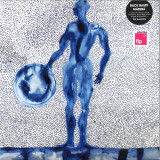
African Singer-songwriter Blick Bassy is back with a fifth album, again sung in the Baasa language of Cameroon. Madíbá brings together twelve songs in the form of fables, dedicated to the theme of water, in which his high and angelic voice dominates, carried by delicate guitar, synthesizer melodies, and sober brass arrangements. The cuts are diaphanous and nevertheless modernist songs, which testify to a contemporary and poetic Africanity at the crossroads of soul, folk, and electro.
Blick Bassy’s albums have a humanist and universal dimension. His fifth and new solo album, titled Madíbá, which means water in the Douala language of Cameroon, comes in the form of songs close to the fable, in which Bassy explores "a theme shared by all” of water, the source of life.
The fables of the album, all born in the imagination of Blick, explore in a more concrete way different themes related to water, its rarity, its necessity, its energy or its vital power. The twelve songs all bring together a series of figures, animals, or various characters, embodied in turn by Blick Bassy. "I have fun stepping into the shoes of a bird, a cat conversing with an elephant, a flower worrying about its declining beauty, a monkey looking for a spring or a storyteller with his grandchildren. In these texts, water can even take on a human appearance.”
Beyond the tale, the texts of the album also refer to our climate crisis, or to the problems of access to water, a way for the artist to approach serious subjects through a poetic form which avoids didactic or moralizing speeches.

10
Sound Like: Watain, Marduk, Gorgoroth, Misþyrming, Vreid, Immortal, …And Oceans

8
»Picture a Frame,« the debut album by the Belgian composer Elisabeth Klinck, was born out of strict isolation and is nonetheless a result of a collaborative process that saw her working closely with artist Oscar Claus. Enriching her compositions for violin with electronic soundscapes and field recordings from their surroundings, the two entered an artistic dialogue that took place inside its own idiosyncratic space outside of conventional time. It is an intimate record in which Klinck’s expressive playing that incorporates unconventional techniques forms the basis of something much bigger: an invitation to inhabit a specific space at a specific time together with the two of them.
For an entire week in the spring of 2021, Klinck and Claus stayed at an abandoned monastery surrounded by beautiful gardens, but with no power or running water. The intention was to record some of Klinck’s musical ideas on violin, experiment with electronics and acoustic spaces and to get to know each other on a musical level. This proved to be an inspiring and deeply moving process—and the starting point for more. In the winter of that year, the duo set out to the Spanish Pyrenees to build a DIY studio in a small village on a mountain top and record the eight pieces that form »Picture a Frame.« The idea of losing track of time and space is a theme that found its way in these recordings. The two spent their days and nights reading, walking, talking, cooking and taking care of the animals living there but also experimenting with sound, improvising together and making field recordings.
This deep focus on being present in the moment, listening to the world around them and each other resulted in a holistic experience that was translated into music and sound. Klinck and Claus understand this album as a collage, an attempt to evoke the implicit, an essay that suggests a time and space, and a gentle collision between two people that deeply resonate with one another. It’s impossible to argue with that, and even harder not to be drawn into it.

- 1: Friends
- 2: Wild Dogs (Running In A Slow Dream)
- 3: Rebels
- 4: One Hit Love
- 5: Warm Blood
- 6: Queen Of New York City
- 7: Where The Light Goes
- 8: Hang On Every Word
- 9: Don't Get Me Wrong
- 10: I Know Better
- 11: No Other Love (Feat. Amanda Shires)
- 12: Selling Faith
Mit "Where The Light Goes" erscheint am 26. Mai 2023 das erste neue Album seit über einem Jahrzehnt.
Die mehrfach mit Platin ausgezeichneten US-Pop-Rocker Matchbox Twenty meldeten sich zuletzt mit ihrer neuen Single "Wild Dogs (Running In A Slow Dream)" zurück und veröffentlichen damit ihre erste neue Musik seit über einem Jahrzehnt.
Der Song erscheint zeitgleich mit der Ankündigung des kommenden fünften Studioalbums "Where The Light Goes" , das am 26. Mai 2023 über Atlantic Records erscheinen wird.
Produziert von Gregg Wattenberg mit Paul Doucette und Kyle Cook, bietet die kommende Platte authentische, relevante und glaubwürdige Songs voller Energie.
2023 klingt die Band auf ihrem kommenden Album "Where The Light Goes" erfrischt wie eh und je und profitiert dabei auch von den jeweiligen Solo-Reisen der Musiker. Rob Thomas hat sich als einer der
angesehensten Künstler der letzten Jahre erwiesen. Er veröffentlichte fünf Soloalben und erhielt drei GRAMMY Awards, 11 BMI Awards, den allerersten Songwriters Hall of Fame Hal David Starlight Award, zwei Billboard "Songwriter of the Year"-Auszeichnungen und eine Top-5-Platzierung in den Billboard Top 20 Hot 100 Songwriters (2000-2011).


Lime green (yellowish?) vinyl LP Finnish noise rock duo NYOS deliver a clairvoyant Celebration of the present, written at a time when that present was shimmering just like the feathers of the cover art courtesy of animal photographer Zac Herr. Combining the danceable grooves of Battles with Sonic Youth - infused noise bursts and the yearning electric melodies of And So I Watch You From Afar, Celebration is a defiantly joyful, loud, and festive affair. A promising cure for the drudgery of the times we live in. Recorded by Brooke in his own Tonehaven Recording Studio, Celebration is the latest testament to the undeniable synergy these musicians have built over the past seven years. With the material largely written before the advent of corona, Celebration is a reflection of life before lockdown, filled to the brim with infectious grooves and glaring melodies. "We tried for something upbeat this time to contrast the times," explains Tom Brooke about the recording process, which in turn did take place during pandemic life. "We always love it when people can move to our music, so a big focus for the record was to embrace the dance vibe and go for it." This collection of eight colourful, jarring tracks is rife with small nods to dance music throughout the world. Take a song like "Light" with its complex syncopated drum pattern that recalls the Amen Break so typical for drum and bass music, but listen closely and the song reveals an off-beat skank that flips over into experimental reggae territory. Similarly, a track like "Tucano" recalls the experimental IDM of Bristol-based producer Vessel, while "Gold Vulcan" offsets a gnarly gyrating guitar riff with Latin- American and oriental melodies. The attention to detail on Celebration is phenomenal. The album contains some of the band's most layered compositions to date, but it is also the first NYOS record to feature improvised live recordings, the aptly named "First Take" as well as the celestial "Cloudberry". These musical sketches show two musicians at the apex of their connectedness. Every time that one of them appears to be taking a somewhat questionable turn, you'll find yourself carefully and respectfully readjusting your own interpretation of the song's intention - and what NYOS are all about.
