In spring 2025, Abul Mogard and Rafael Anton Irisarri created the source material for their second album, Where Light Pauses in the Silence of the Sun, during a three-day residency at Morphine Raum in Berlin. Functioning as both recording studio and performance venue, the space has no stage, with the audience gathered around the performers. Working within an open framework, the duo reshaped the music each evening while recording the performances live to multitrack. Rotary speakers, modular synthesizers and bowed guitar formed the core of their sonic language, captured through a 1970s mixing console and microphones placed around the room.
Back in Mogard’s studio in Rome, the material was further crafted as motifs were stretched, fragments isolated, and tempos dissolved. Irisarri recorded additional guitar textures and treatments in New York, while passages recorded by Martina Bertoni and Andrea Burelli in Berlin reinforced the harmonic centres and brought breath, refinement and a new sensibility to their compositions. The process continued as Mogard’s layering and subtraction reassembled everyone’s parts into the final arrangement.
The album opens with “In the Eastern Wild,” building from a sparse outline into a monumental formation of low-frequency weight, its internal motion shaped by the rotating Leslie speaker. “Over the Domes” widens into a broader acoustic field, where sustained modular tones meet waves of softly plucked guitar. The music then turns inward with “A Blue Descent,” centred on Bertoni’s cello, whose growling timbre introduces a melancholic depth.
At the album’s centre, “In a Quiet Radiance” unfolds around a slow guitar ostinato, its luminous stillness opening into a more expansive and reflective state. Across its ten-minute span, Burelli’s violin lines and Bertoni’s lower cello phrases gradually surface, weaving through the harmonic field. Mogard brings Burelli’s processed voice to the fore, its emotive, operatic presence becoming one of the record’s pivotal moments. “Of Blessed Ages” suspends the sonic flow, shifting between parallel major and minor chords as lingering, slowly decaying melodies shape the music’s internal drift. The closing “Among Shadows” settles into a darker resonance as layered textures recede.
Mogard and Irisarri’s shared language balances restraint and maximalism. UK magazine Crack describes the music as “a tidal wave held in suspension,” while Dutch newspaper de Volkskrant writes, “What a colossal sound, and how this music strikes at the emotions.” Reflecting on the residency sessions, Irisarri recalls: “At moments I genuinely couldn’t tell if a sound was coming from me or from Abul. It stopped feeling like two people making decisions and began to feel like we were inside a system moving on its own."
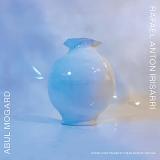
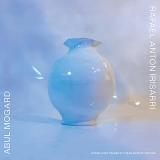
Marja de Sanctis’ cover artwork revisits the vessel sculpture from the duo’s first album, Impossibly Distant, Impossibly Close. There it appeared as raw, unfired clay. Here it has been fired in the kiln and finished with a glaze. Light gathers on its polished surface and spills into the surrounding space. As she explains, “I wanted to convey the idea of continuity within the duo, and the vessel became a kind of container for that idea. However, their music felt different this time, and with the collaboration of Martina and Andrea, I felt it should have a sleeker, softer, more glamorous look, very distant from the first raw appearance.” The transformation of the vessel from raw clay to fired form suggests a passage from immediacy toward permanence, mirroring the music’s gradual expansion.
Поиск:wave form
Все
In spring 2025, Abul Mogard and Rafael Anton Irisarri created the source material for their second album, Where Light Pauses in the Silence of the Sun, during a three-day residency at Morphine Raum in Berlin. Functioning as both recording studio and performance venue, the space has no stage, with the audience gathered around the performers. Working within an open framework, the duo reshaped the music each evening while recording the performances live to multitrack. Rotary speakers, modular synthesizers and bowed guitar formed the core of their sonic language, captured through a 1970s mixing console and microphones placed around the room.
Back in Mogard’s studio in Rome, the material was further crafted as motifs were stretched, fragments isolated, and tempos dissolved. Irisarri recorded additional guitar textures and treatments in New York, while passages recorded by Martina Bertoni and Andrea Burelli in Berlin reinforced the harmonic centres and brought breath, refinement and a new sensibility to their compositions. The process continued as Mogard’s layering and subtraction reassembled everyone’s parts into the final arrangement.
The album opens with “In the Eastern Wild,” building from a sparse outline into a monumental formation of low-frequency weight, its internal motion shaped by the rotating Leslie speaker. “Over the Domes” widens into a broader acoustic field, where sustained modular tones meet waves of softly plucked guitar. The music then turns inward with “A Blue Descent,” centred on Bertoni’s cello, whose growling timbre introduces a melancholic depth.
At the album’s centre, “In a Quiet Radiance” unfolds around a slow guitar ostinato, its luminous stillness opening into a more expansive and reflective state. Across its ten-minute span, Burelli’s violin lines and Bertoni’s lower cello phrases gradually surface, weaving through the harmonic field. Mogard brings Burelli’s processed voice to the fore, its emotive, operatic presence becoming one of the record’s pivotal moments. “Of Blessed Ages” suspends the sonic flow, shifting between parallel major and minor chords as lingering, slowly decaying melodies shape the music’s internal drift. The closing “Among Shadows” settles into a darker resonance as layered textures recede.
Mogard and Irisarri’s shared language balances restraint and maximalism. UK magazine Crack describes the music as “a tidal wave held in suspension,” while Dutch newspaper de Volkskrant writes, “What a colossal sound, and how this music strikes at the emotions.” Reflecting on the residency sessions, Irisarri recalls: “At moments I genuinely couldn’t tell if a sound was coming from me or from Abul. It stopped feeling like two people making decisions and began to feel like we were inside a system moving on its own."
Marja de Sanctis’ cover artwork revisits the vessel sculpture from the duo’s first album, Impossibly Distant, Impossibly Close. There it appeared as raw, unfired clay. Here it has been fired in the kiln and finished with a glaze. Light gathers on its polished surface and spills into the surrounding space. As she explains, “I wanted to convey the idea of continuity within the duo, and the vessel became a kind of container for that idea. However, their music felt different this time, and with the collaboration of Martina and Andrea, I felt it should have a sleeker, softer, more glamorous look, very distant from the first raw appearance.” The transformation of the vessel from raw clay to fired form suggests a passage from immediacy toward permanence, mirroring the music’s gradual expansion.
Indiana Jones never dug this deep.
Church – the brainchild of Joe Washington – were a band both lucky and cursed to come up in the seventies. Lucky, because they rode a wave of community activism, uplifting messages and a moment when music truly mattered. Cursed, because those same times meant their tight, heartfelt output went overlooked.
Mid-sixties to circa 1980 soul and funk were extraordinarily rich. The era’s big releases have aged like fine wine, yet countless hidden gems remain buried. Church’s only single was one of them. Their hypnotic 1976 release “How Long” b/w “Da Da Song” arrived the same year as Stevie Wonder’s Songs in the Key of Life, Marvin Gaye’s I Want You, Diana Ross’s Diana, and at a time when Black mainstream music was shifting toward disco. Church, however, sounded like Sly & The Family Stone in an alternate timeline — gritty, focused, stripped of additives.
“Da Da Song” is pure grits and gravy: furious, tight drums and lyrics that sound like both a plea to DJs to play their record and an insistence to keep the party alive, noticed or not. It cooks from start to finish in just two and a half minutes.
“How Long” is its own universe. Where “Da Da Song” is skeletal, “How Long” blends key strands of Black music in under three minutes: touches of spiritual jazz with a Gary Bartz-like sax, gospel-blues undertones, and echoes of the era’s flower-power-tinged Black creativity — The Undisputed Truth, The Family Stone, even the poetic freedom of Nikki Giovanni. The lyrics are a timeless plea for love.
Church formed in the Bay Area in the early seventies, shaped by the movement, culture and activism of the time. Joseph Washington, based in San Jose, never chased a music career — for him, music was a way to bring people together. Before Church, he led a backing band called Wash, then added gospel singer Linda Williams (née Stephens) and New York–born Joel Como on xylophone to complete the group.
They rehearsed in Joe’s garage, spread through word of mouth and played every gig they could: Black colleges, opening slots for The Whispers, neighbourhood house parties. Some members studied at Nairobi Junior College in East Palo Alto, then a hotbed of Black community activism, with revolution in the air and messages woven naturally into the music.
This single is a message from that era, resurfacing at last — ready to be sampled just as another Joe Washington track, “Look Me in the Eyes”, was on Drake and J. Cole’s “First Person Shooter”. These rare, spirited tunes are begging for new life through samplers, again and again.
Phase alternations arise where overlapping waves diverge in phase, revealing the hidden
geometry of sound. A phenomenon that Peryl deliberately allows to happen — thus placing
the physical and technical aspects of music at the center of attention. His new album
builds on a fundamental idea of electronic music — but reimagined.
The person Peryl and his needs steps into the background during production —
functioning merely as a channel that intuitively receives and transmits what long-studied
machines, in dialogue with the subconscious, collectively bring to the surface.
The result is a collection of nine tracks, like emanations of precisely crafted analog
synthesis. No sound returns the same way twice. This fragility fuels the urgency — a
creative necessity to listen, to commit, to allow form to arrive before it dissolves again.
Rhythm is no longer on the grid, but a series of small shifts, offsets, and delays. Loops fall
slightly out of sync. Deviation creates friction, and friction creates energy. Through the
layered interplay of phase-driven effects — chorus, phaser, flanger — the sounds begin to
breathe in alternate rhythms. Hollows emerge. Swells fold into one another.
Challenging these swells is an essential part of Phase Alternations. Effects come alive in
subtle shifts, industrial textures whisper melodies, folding and unfolding in rhythms that
emerge through their own logic.
Peryl presents the result of an experiment: the sound itself chooses its form.
It's pretty wild to think this is in fact Carli’s debut solo album, considering the Swedish producer’s long and illustrious career, defined by eclectic hits ranging from underground grime scorchers to straight-up Eurovision goodness, not to mention him being a cornerstone of acclaimed outfits like Off The Meds, Savage Skulls, and Marcus Price & Carli.
On Sea Of Love, the Stockholm-born former breakdancer takes listeners on a journey through a vast ocean of musical influences, effortlessly blending rave nostalgia, bass-heavy experimentation, and contemporary club sounds. Carli skilfully navigates from raw UK hardcore bonkerisms to the crisp rhythmic pulses of modern-day dancehall, always upholding a vibe that's at once futuristic and reverent of club music’s storied past.
Filled with intricate production techniques and an irresistible sense of joy, Sea Of Love showcases Carli’s unique ability to merge styles without losing coherence or authenticity. This is club music crafted by someone who’s not only seen it all from the booth, but also been on the dancefloor himself, resulting in tracks that feel deeply personal yet universally appealing.
With Sea Of Love, Carli firmly establishes himself as a visionary solo artist, proving that after decades of shaping the sound of Stockholm’s underground, his best is still ahead.
Next up on Bruno Schmidt’s Assemblies Of God; The eagerly anticipated follow up to one of the most impactful leftfield records of 2023, Bauzer Vep’s The Gurner. Alexander Folonari brings us Gut Und Günstig under his brand new Sabber Mund Alias. Previously appearing under Shampoo Douglas and La Decima Vittima on Quest’s La Nota Del Diablo imprint, Sabber Mund takes a very different form. This music could be described as “Post-everything”, combining elements of dance music, with a punk-meets-folklore education.. Everything from straight Bach-informed dancefloor killers, to medieval lullabies. Across the board, custom no-wave themes from the get go. Hot tip!
The Éthiopiques series returns! Essential archive recordings from an extremely fruitful period in Ethiopian music.
Before “Swinging Addis” took over the world, there was Moussié Nerses Nalbandian — the Armenian-born composer who shaped modern Ethiopian music. Mentor, arranger, and pioneer, he laid the foundations of Ethio-jazz.
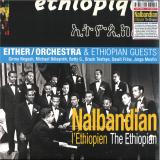
This Éthiopiques volume revives his forgotten legacy, recorded live by Either/ Orchestra First issue ever with new exclusive photos and in depth liner 8-page insert.
“Ethiopian jazzmen are the best musicians that we have seen so far in Africa.
They really are promising handlers of jazz instruments.”
Wilbur De Paris
(1959, after a concert in Addis Ababa)
አዲስ፡ዘመን። *Addis zèmèn* **A new era.**
The time is the mid-1950s and early 1960s, just before "Swinging Addis" bloomed – or rather boomed – onto the scene. Brass instruments are still dominant, but the advent of the electric guitar, and the very first electronic organs, are just around the corner. Rock’n'Roll, R’n’B, Soul and the Twist have not yet barged their way in. Addis Ababa is steeped in the big band atmosphere of the post-war era, with Glenn Miller's *In the* *Mood* as its world-wide theme song, neck and neck with the Latin craze that was in vogue at the same period. Life has become enjoyable once again, with the return of peace after the terrible Italian Fascist invasion of Ethiopia (1935-1941). The redeployment of modern music is part and parcel of the postwar reconstruction. *Addis zèmèn* – a new era – is the watchword of the postwar period, just as it was all across war-torn Europe.
The generation who were the young parents of baby boomers** were the first to enjoy this musical renaissance, before the baby boomers themselves took over and forever super-charged the soundtrack of the final days of imperial reign. Music is Ethiopia's most popular art form, and very often serves as the best barometer for the upsurge of energy that is critical for reconstruction. Whether it be jazz in Saint-Germain-des-Prés or the *zazous* who revolutionised both jazz and French *chanson* after the *Libération*, be it Madrid's post-Franco Movida, or Dada, the Surrealists and *les années folles* that followed World War I, the periods just after mourning and hardship always give rise to brighter and more tuneful tomorrows. Addis Ababa, as the country's capital, and the epicentre of change, was no exception to this vital rule.
**Two generations of Nalbandian musicians**
Nersès Nalbandian belonged to a family of Armenian exiles, who had moved to Ethiopia in the mid-1920s. The uncle Kevork arrived along with the fabled "*Arba Lidjotch*", the** "*40 Kids*", young Armenian orphans and musicians that the Ras Tafari had recruited when he visited Jerusalem in 1924, intending to turn their brass band into the official imperial band. If Kevork Nalbandian was the one who first opened the way of modernism, pushing innovation so far as to invent musical theatre, it was his nephew Nersès who would go on to become, from the 1940s and until his death in 1977, a pivotal figure of modern Ethiopian music and of the heights it. Going all the way back to the 1950s. Nothing less. And it is Nersès who is largely to thank for the brassy colours that so greatly contributed to the international renown of Ethiopian groove. While the younger generations today venture timidly into the genealogy of their country's modern music, often losing their way amidst a distinctly xenophobic historiographical complacency, many survivors of the imperial period are still around to bear witness and pay tribute to the essential role that "Moussié Nersès" played in the rise of Abyssinia's musical modernity.
Given the year of his birth (15 March 1915), no one knows for sure if Nersès Nalbandian was born in Aintab, today Gaziantep (Turkiye/former Ottoman Empire) or on the other side of the border in Alep, Syria... What is certain is that his family, like the entire Armenian community, was amongst the victims of the genocide perpetrated by the Turks. Alep, the place of safety – today in ruins.
Before Nersès then, there was uncle Kevork (1887-1963). For a quarter of a century, he was a whirlwind of activity in music teaching and theatrical innovation. *Guèbrè Mariam le Gondaré* (የጎንደሬ ገብረ ማርያም አጥቶ ማግኘት, 1926 EC=1934) is his most famous creation. This play included "ten Ethiopian songs" — a totally innovative approach. According to his autobiographical notes, preserved by the Nalbandian family, Kevork indicates that he composed some 50 such pieces over the course of his career. This shows just how much he understood, very early on, the critical importance of song as Ethiopia's crowning artistic form. Indeed, for Ethiopian listeners, the most important thing is the lyrics, with all their multifarious mischief, far more than a strong melody, sophisticated arrangements or even an exceptional voice. (This is also why Ethiopians by and large, and beginning with the artists and producers themselves, believed for a long time — and wrongly — that their music could not possibly be exported, and could never win over audiences abroad, who did not speak the country's languages).
Last but not least, one of Kevork's major contributions remains composing Ethiopia's first national anthem – with lyrics by Yoftahé Negussié.
Nersès Nalbandian moved to Ethiopia at the end of the 1930s, at the behest of his ground-breaking uncle. Proficient in many instruments (pretty much everything but the drums), conductor, choir director, composer, arranger, adapter, creator, piano tuner, purveyor of rented pianos,... he was above all an energetic and influential teacher. From 1946 onwards, thanks to Kevork's connexion, Nersès was appointed musical director of the Addis Ababa Municipality Band. In just a few years, Nersès transformed it into the first truly modern ensemble, thanks to the quality of his teaching, his choice of repertoire, and the sophistication of his arrangements. It was this group that would go on to become the orchestra of the Haile Selassie Theatre shortly after its inauguration in 1955, which was a major celebration of the Emperor's jubilee, marking the 25th anniversary of his on-again-off-again reign.
At some point or other in his long career, Nersès Nalbandian had a hand in the creation of just about every institutional band (Municipality Band, Police Orchestra, Imperial Bodyguard Band, Army Band, Yared Music School…), but it was with the Haile Selassie Theatre – today the National Theatre – that his abilities were most on display, up until his death in 1977. To this must be added the development of choral singing in Ethiopia, hitherto unknown, and a sort of secret garden dedicated to the memory of Armenian sacred music, and brought together in two thick, unpublished volumes. Shortly before his death (November 13, 1977), he was appointed to lead the impressive Ethiopian delegation at Festac in Lagos, Nigeria (January-February 1977).
His status as a stateless foreigner regularly excluded him from the most senior positions, in spite of the respect he commanded (and commands to this day) from the musicians of his era. Naturally gifted and largely self-taught, Nerses was tirelessly curious about new musical developments, drawing inspiration from the very first imported records, and especially from listening intensely to the musical programmes broadcast over short-wave radio – BBC *First*. A prolific composer and arranger, he was constantly mindful of formalising and integrating Ethiopian parameters (specific “musical modes”, pentatonic scale, and the dominance of ternary rhythms) into his “modernisation” of the musical culture, rather than trying to over-westernise it. It even seems very probable that *Moussié* Nerses made a decisive contribution to the development of tighter music-teaching methods, in order to revitalise musical education during this period of prodigious cultural ferment. Flying in the face of all the historiographical and musicological evidence, it is taken as sacrosanct dogma that the four musical modes or chords officially recognised today, the *qǝñǝt* or *qiñit* (ቅኝት), are every bit as millennial as Ethiopia itself. It would appear however that some streamlining of these chords actually took place in around 1960. It was only from this time onward that music teaching was structured around these four fundamental musical modes and chords: *Ambassel*, *Bati*, *Tezeta* and *Antchi Hoyé*. A historical and musical “details” that is, apparently, difficult to swallow, especially if that should honour a *foreigner*. Modern Ethiopian music has Nersès to thank for many of its standards and, to this day, it is not unusual for the National Radio to broadcast thunderous oldies that bear unmistakable traces of his outrageously groovy touch.
Repress due to the high demand! Unbelievable deep and driving techno sound of the first hour. this 4 tracker from R.M.K. shows where techno should be. in the here and now, without exaggeration, without bling bling and without polarization. R.M.K. utilises his knowledge and past experiences, which include regularly playing at Berghain and Tresor in Berlin, as well as fabric in London, to develop his individual sound. During his more than 20 year career in music, he has formed friendships and worked in partnership with other respected artists such as Trevino (Marcus Intalex), Jamie Anderson, Robert Owens, Goldie and Nastia. Although the focus is always on the very heart of the most raucous of raves, R.M.K never shies away from groove and funk. This is conveyed in a Live Show that utilises classic hardware from the golden age of UK Rave.
The third chapter of Vesuvius Soul Records connects distant corners of the underground — from Canada to the UK, passing through Barcelona and Naples — building a sonic bridge between different energies and creative visions.
Void Fill, a supergroup formed by members of Gad Whip, Everything Is Geometry, and King Pong Dub System, deliver two tracks that merge new wave and post-punk tension with synth-pop sensibility, each paired with its instrumental version. Their sound blends analog drive and emotional depth, echoing the label’s exploratory spirit.
On remix duty, the A-side features Lvca, one of the most influential names in today’s European underground scene. The B-side comes from Computer Rage, the Neapolitan duo behind VSR002.
Default Mode by Raleigh & Takenaga continues the newly established X series – Harmony’s platform for new voices and limitless exploration. Hailing from Prague, the duo embodies the next wave of adventurous sound design and musical talent from the imprint’s home town.
Incentive Program opens the EP’s A side with a drifting, trance-tinged flow wrapped in sweeping pitch movements and fractured vocals. The track sets a shadowy, almost sinister atmosphere, pulling all witnesses into its slow-burn gravity. It’s a steady build, tipping the floor over the edge. Stiff Envelope pulls you into its depths as it continues to build tension with resonating synth hits that quiver over a powerful trance foundation. With a few moments of silence that let its unsettling atmosphere settle across the stereo field before swinging back in at full force, this one is tailor-made for big systems.
B side’s Ground Floor carries on with metallic swells and shimmers that ring underneath the surface as the tension built on the A side bursts, settling into a grounding four-on-the-floor moment and leaving just enough time to breathe before Raleigh stirs up a concoction of devious vocals, snappy percussion, and a seductive bassline that lifts the mood tastefully. Takenaga wraps up the record with Head Count, a razor-sharp blend of crisp percussive cuts and stuttered crumbles that are seeking the perfect pitch all the way, climbing up and down. Heads are counted on a lively groove that radiates playful momentum and commands the dance floor to get in formation, keeping a tight rhythmic focus. Infused with the pulse of UK club culture, this track delivers a fresh and forward-thinking sound perfect for adventurous turntables.
From out of the dark, sparks of feedback birdsong signal a return to the singular sonic environments of Rafael Toral"s sound-world. A year after Spectral Evolution, his acclaimed album of electric guitar conceptions, comes the companion work Traveling Light. Sharpening his focus around a set of jazz standards, his move from abstract form to solid song elicits glints from beyond time and space, crafting a unique listening lens for deep listeners. In the early years of his practice, Toral used the guitar as a generator to create discreet texture and droning tones. Later, he abandoned the guitar entirely, focusing on self-made electronics to render his music with a post-free jazz perspective. For the music of Spectral Evolution and Traveling Light, Toral has combined his methodologies: radically expanding the space within their harmonies with his self-made machines, while engaging directly with his instrument and the chords of the material. In addition to Toral"s proxy orchestra of guitars, sine wave, feedback and bass guitar, Traveling Light features the sounds of clarinetist José Bruno Parrinha, tenor saxophonist Rodrigo Amado, flügelhorn player Yaw Tembe, flautist Clara Saleiro, who each guest on one song. In every contour of Traveling Light"s path - arrangement, improvisation and production - the spring of the old pours through the new in an unstoppable flow. The result is a listening experience of these standards that remains "in the tradition", even as the elongated harmonies seem to alter time such that, as Toral notes, "the chords become events on their own."
- A1: Caus'ette - Pilotes
- A2: Frank M. Dux - Aurora Borealis
- A3: Narco Marco - Gorbatschovv
- A4: Ost-Berliner Nachtrag - Mäntel & Dinger
- A5: B. M. Cinelli - Beijing Genomics Institute
- B1: Neu Verboten & Nyn - Worlds End 3 (Feat. Loa Mauna)
- B2: Poppy Wonnacott - Pretence
- B3: Michele Ottini - Crepa Su Ghiaccio
- B4: Source Of Radiating Noise - Silizium
- B5: Michele Ottini - Tesoro
Tóxico and Subject To Restrictions Discs present a retrospective on Switzerland’s hidden analogue gear scene from 2017 and 2018. A vibrant yet undocumented chapter in the country’s music history. The 10 tracks, originally released exclusively on cassette and heard only by a small circle of listeners, are now compiled for the first time on vinyl as “Tóxico Tapes”. The collection captures the scene’s raw, hands-on energy through off-kilter rhythms, low-key EBM, ominous wave and free-form synth excursions.
Founded and curated by the former DJ and producer Narco Marco, the Tóxico label became a hub for Switzerland’s analogue gear enthusiasts. Between 2016 and 2020, it released a series of 10 tapes – albums and compilations – that now stand as a blueprint of the DIY, machine-driven underground of the time. Narco Marco is a key figure in Swiss electronic music. As a long-time clerk at “Oldiesshop” record store in Bern, he has championed eclectic sounds across decades. His in-depth knowledge of 1980s music, combined with his work as a musician, avid record collector, and founder of the “Hot Jam” label, influenced an entire generation of musicians and DJs in Switzerland at the time.
Subject To Restrictions Discs joins forces with Narco Marco to present a selected set of 10 songs as a tribute to Tóxico and this creative era. The material draws primarily from the Autumn Tape and Winter Tape compilations, which spotlighted artists from Zurich and Bern – two cities at the heart of this analogue revival.
Welcome to the first release on Acid Lamour
A sub label for Lamour Records started in 2018 with a focus on techno and acid dedicated DJs. Releases are limited to 303 vinyls, no re-press.
Anders Ilar and John H are no newcomers to the electronic music scene.
Born in 1973, Anders Ilar began his explorations of electronic music in the mid 80s. Growing up in the small town of Ludvika in Sweden, Ilar spent all of his spare time playing with synthesizers, drum machines, keyboards and sequencers, learning the ins and outs of analogue and digital sound and music creation. Inspired by the early industrial and EBM wave he formed several bands with friends, started playing live shows
at smaller local parties, and released several demo tapes in very limited quantities. In the 90's he gradually shifted his creative influences towards ambient techno and acid and also started to DJ. He started using computer software to produce his music around 1999 and his first vinyl EP was released in 2001 on the german label Plong!, soon to be followed by
many more releases on labels such as Shitkatapult, Audio.nl and Echocord.
Developing his own flavor of deep minimal dub techno and ambient he gained critical acclaim with his album Nightwidth (2006) for Narita Records in the USA. Followed by highly appraised album Sworn on the german label Level Records in 2008. Ilar has also made remixes for celebrated artists such as Apparat, Mikkel Metal and Ripperton and has
appeared on numerous compilations and DJ-mixes. He's performed live on stage through-out most European countries and Japan, as well as doing a small tour with Notch Festival in China in 2008.
Up to 2018 Anders Ilar has produced 13 albums and 25 vinyl EP's and performed in over 15 countries.
Born in 1984 and based in Gothenburg. John H has been DJing, as well as producing tracks, since the late 90s, with Anders as his mentor and teacher, giving John early musical influences spanning across a wide range of genres, from Swedish techno to IDM, Cologne acid craziness and
the sound of Chicago house tracks. The musical output of his DJ-sets usually varies between techno, house, acid, electro and everything in between, depending on the time and location. John has performed on several locations all around Sweden, but also done appreciated gigs in other European countries at clubs like Tresor and Culture Box, and his music has been featured in sets by DJs such as Sven Väth, Adam Beyer,
Joris Voorn, Dense & Pika, Cari Lekebusch, Alan Fitzpatrick, Karotte,
Gregor Tresher, The Hacker and many more.
Coming For Your Tongue EP is Anders and John's 4th collab release, after
acclaimed releases on Flight Recorder and New York Haunted, recorded
during a jam session at John's studio in Bergsjön outside of Gothenburg,
Sweden, using a small setup of analogue synths and drum machines such as
the Roland TR-606, TR-808, a Devil Fish modified TB-303, Minimoog Voyager
and the Arturia Microbrute. After recording Anders spiced things up by
cutting and puzzling loops as well as adding extra effects and drums.
Limited edition of 303, no repress. Vinyl exklusive for 3 months
Making his long-awaited return to Spatial, JLM Productions serves up another sizzling andvaried concoction of atmospheric breakbeat goodness.
A1 - Unraveling
Opening with a blissful, playful melody which fades in and out of effects and padwork,Unravelling shows off an insanely crisp 2-step break at its core - definitely suited for thedancefloor with a buoyant bassline rumbling beneath the waves. The track leaps furtherinto life with JLM adding some additional drums to elevate the breaks further still, all withserene, harmonious melodies dancing around in the mix.
A2 - Forced Perspective
A purposeful melody opens Forced Perspective as JLM Productions unleashes a stellarblend of atmospheric bliss with a unique epic urgency. Sci-fi synthwork surrounds anenergetic selection of drums edited with trademark clarity as layers upon layers of synthintertwine dynamic patterns with ease. This is a great example of JLM's expansive suite ofinfluences combining to create a deliciously detailed and unique whole.
AA1 - Surface Scan
Light cymbals commence a DJ-friendly intro to the second track, Surface Scan. Bothrousing and deep, smooth padwork leads into a drop which brings with it long, whooshingmelodic synths and crunchy stacked breakbeats. As the atmosphere develops, JLM addsin a bunch of effects and subtle, sumptuous sci-fi synthwork, strings and more to completeanother masterpiece from a true pillar of "old school brand new" methodology.
AA2 - Mixed Motive
Straight into a serving of subdued breaks perfect for the intro, JLM rounds off this stunningEP with Mixed Motive. This is a track which explores the atmospheric drum & basslandscape in style. Our creatively-edited breaks soon evolve into a crescendo of joyousdrum patterns with an old 720-style stabby melody punctuating the mix while deep &melodic basslines jostle below, adding dense texture to a stunning piece of music.
Words by Chris Hayes (Spatial / Red Mist)
- A1: Military Cut
- A2: Mc Battle
- A3: Basketball Throwdown
- A4: Fantastic Freaks At The Dixie
- A5: Subway Theme
- A6: Cold Crush Bros At The Dixie
- B1: Double Trouble At The Amphitheater
- B2: South Bronx Subway Rap
- B3: Street Rap
- B4: Busy Bee At The Amphitheater
- B5: Fantastic Freaks At The Amphitheater
- B6: Gangbusters
- B7: Rammellzee & Shockdell At The Amphitheater
- B8: Down By Law
- C1: B Boy Beat
- C2: Yawning Beat
- C3: Crime Cut
- C4: Gangbusters
- C5: Cuckoo Clocking
- C6: Meetings
- C7: Military Cut
- C8: Razor Cut
- C9: Subway Theme
- C10: Busy Bees
- C13: Jungle Beat
- D1: Wildstyle Scratch Tool
- D2: Baby Beat
- D3: Jungle Beat
- E1: Fantastic Freaks Live At The Dixie
- C11: Down By Law
- C12: Baby Beat
GATEFOLD VINYL 2LP - TRANSPARENT BLUE + ORANGE, A2 Colour Poster, 5x Film Set Photos, Flexi Disc, Sticker Sheet
Blurring the lines between fiction and documentary, the seminal film Wild Style, directed by Charlie Ahearn and developed alongside Fred Braithwaite aka Fab Five Freddy, offered an iconic snapshot of the emerging New York hip hop scene in the early ‘80s. Considered one of the first hip hop films, it documents the styles, culture, attitudes, and most importantly, the music of this evolving era. The accompanying soundtrack remains one of the most influential in hip hop history, featuring a who’s who of artists who stood out during the movement’s nascent block party days.
“Making hip hop’s first and most beloved feature film, Wild Style, with Charlie Ahearn and creating the original music is one of my proudest accomplishments.” - Fab 5 Freddy
In celebration of Arrow Films restoring the original Wild Style film in 4K, Mr Bongo is proud to present this special-edition reissue package. The release comes as a double LP pressed on transparent blue and orange vinyl, offering a freshly curated tracklist that brings together the finest songs from previous editions, the full sought-after instrumental album, and Kenny Dope’s top edits. Also included are an A2 colour poster, five film set photos, a flexi disc containing Fantastic Freaks Live at the Dixie, and a Wild Style sticker sheet.
Originally released on Animal Records, founded by Chris Stein of Blondie fame, the soundtrack focuses on the hip hop scene as it evolved from the streets to the recording studio. Co-produced by Stein and Braithwaite, it features the Double Trouble pairing of Rodney Cee and KK Rockwell, The Chief Rocker himself Busy Bee, and the mighty line-ups of both The Cold Crush Brothers and The Fantastic Freaks, to name but a few. The music offers a transportive glimpse into the streets of the South Bronx, capturing the free-form, roaming nature of the film - it’s rough around the edges, but utterly absorbing.
Behind those foundational voices of hip hop’s first wave was a selection of backing beats that have underpinned and influenced the genre ever since. Easily mistaken for lifted breakbeats from old records, the songs on the Wild Style soundtrack are all unique creations. Overseen by Braithwaite and Stein, with Stein also on guitar and effects, they were intended as a homage to those early breakbeats. Drummer Lenny “Ferrari” Ferraro, who played for Aretha Franklin before emerging on the punk scene, and bassist David Harper laid down many of the iconic grooves, two somewhat forgotten participants in shaping a legendary sound.
Over time, the Wild Style soundtrack, with its Charlie Chase and Grand Wizard Theodore scratches, recurring sounds and motifs, and indelible lyrics, has become a hip hop touchstone: endlessly sampled and referenced, the bedrock of so much music to follow. It perfectly encapsulated the essence of the film, the scene, and hip hop’s emergence from the Bronx to the attention of the wider world. It was, and remains, the blueprint.
On a "Balearic-Jazz trip", the phenomenally hyped Thought Leadership returns with another X ideas: the deck this time chooses the Ace of Swords. In the acclaim garnered by III of Pentacles, there were many whispers of “Balearic” from those in the know. As soon as you drop the needle on XI you will be basking in turbo Balearica.
Originally out on cassette only, we present the first ever vinyl issue. It's a hideously limited pressing of 300 for the world, so don't sleep on this.
The sonic palate has been augmented by the addition of synth and bass; there are more guitar layers, more pedals and more organic drums this time – a much fuller production. Still DIY, and still recorded straight to multitrack, just ever so slightly grander in scale; think a rough-hewn, long-lost Claremont 56 cut and you’ll have some idea of how XI opens this future classic LP.
The touchstones so key to the vision of Pentacles (Cocteau Twins, Dif Juz, Durutti Column) are all still present and correct; XII could be a piece from Extractions, XIII is pure Garlands-era Guthrie and, now with the shuffling jazz drums, XV makes TL even more LC – but more disparate influences are found this time out too. ECM guitar legends John Abercrombie and Pat Metheny in the more considered melodic phrasing and harmonic structure of the ideas and a nod to the cosmic Balearic spirit in the overall vibe, means more is offered to the listener across Swords.
XVI and XVII are the biggest indicators to Thought Leaderships’ new found love of The Real Book and their grasp of jazz chords. The former sounds like if Mike Hedges had produced on a heavily sedated ECM date in the early 80s, whilst the latter is Bright Size Life condensed into a most post-punk shard of Strat conversation. The syrupy Phase 90 on the lead parts lends much weight to the guitar melodies, a beautiful tonal counterpoint to the Vox-ish chimes of the plangent chords we’ve all come to love.
The flip again treats us to three extended, improvised jams. XVIII owes as much to Canterbury as it does to Krautrock, another modal voyage through the stars. Light the incense and drift away, guided by delayed cymbals and weaving ribbons of guitar. XIX has almost a New-Wave/Sophisti-Pop energy to it in tone, if not in structure and execution. Something almost Tears for Fears-esque in the chiming chorus guitars. An interesting outlier that has already received a lot of love from those that have heard it. XX is the starkest idea, and the only piece this time with no drums. What we do get, however, is a free exploration over a two chord-vamp. It’s Harvest Time meets Planet Caravan and a fitting end to this Balearic jazz trip.
Be With is honoured to present the first ever vinyl release of Ace Of Swords, carefully remastered by Be With's engineer Simon Francis to ensure it sounds better than ever after its initial tape release. Cicely Balston's expert skills have made sure nothing is lost in the cut at Abbey Road Studios whilst the records have been pressed to the highest possible standard at Record Industry, in Holland. The original tape cover artwork, so crucial to Thought Leadership's striking visual aesthetic, has been rejigged for vinyl issue here at Be With.
The last one flew. You have been warned.
E23 Records is an independent label from Amersfoort that releases music moving between electro, wave, EBM, and acid—sounds that feel familiar, but not quite at ease. Each release is built with care, made to be both an object to collect and a small joke at the universe’s expense. Patterns appear where they want to, chance plays its role, and sometimes the numbers line up in ways that feel more than coincidental. Tune in, and see what reveals itself.
E23 Records launches its catalog with three dark electro transmissions from Amersfoort residents Son of 8-Bits, Mavanov, and Law Of Fives. Opening with Son of 8-Bits’ “Deliverance”, the record sets an ominous tone: heavy bass pressure and sharp machine rhythms push forward with a cold, driving pulse built for late hours. Mavanov’s “Dark Romanticism” drifts into sparse, hypnotic territory, where cold mechanics meet faint traces of emotion. Law of Fives’ “Primer” closes the trip with an urgent workout that turns rhythm into a labyrinth—metallic strikes, pulsing bass, and restless sequences coiling together, building toward moments where chaos threatens to take over but never quite does.
Together, the three cuts form a statement of intent: E001 is moody, uncompromising electro with just enough strangeness to keep the floor on edge. A first chapter that hints at many more signals to come.
DJ Support: Axel Boman, Coyote, Rune Lindbaek, Dr Rob (Ban Ban Ton Ton), Lefto, Johan Blende, Feel Fly, Marco Gallerani and many more
Secret Soul Society, aka South Wales's Cal Gibson, continues his red-hot streak of form with four original jams for Hell Yeah that effortlessly weave decades of influences into intimate, unusual sounds that go from Balearic daydreams to after-hours soul burners.
Gibson was one-half of Nottingham's deep house and downtempo outfit Neon Heights back in the 2000s, a collective that label head Marco has long admired. He has landed here before with the superb Keep The Mystique in 2023, a 15-track collection of brand new curveball cuts built from lovingly sourced samples. Since then, he has continued to collide jazz, funk, Afro, beats, dub, soul and reggae on Paper Wave and Magic Wand.
'To Be Happy' opens with gentle, sun-soaked grooves, swirling keys and dreamy pads that evoke a hazy Mediterranean sunset. Nostalgic soul samples tug at the heart while the track’s laid-back vibe is perfect for golden-hour moments. 'Orange Surprise' is a magical slice of downtempo bliss with hints of romantic vocals. It's built on soft broken rhythms and drifts between ambient soul and laid-back electronica, perfect for introspective moments or late-night winding down.
'Keep On Trying' flips the script with more texture. The synths are crystalline, the pads are sugary, and the meandering bassline unfolds in wonky fashion while soft male vocals bring a steamy edge. Last but not least, 'What You Do To Me' is funky and slow motion disco with 80s synths and reverb that drowns you in good vibes.
This EP is Secret Soul Society at his most expressive and emotive.
- A1: No Future
- A2: Twisted
- A3: Til I Beg For Mercy
- A4: Wake Up
- A5: Scene One
- B1: From Nothing To Nothing
- B2: Some Time
- B3: Your Product
- B4: Watch You Bleed
- B5: No Answers No Solutions
- C1: Lies
- C2: I Am The Labyrinth
- C3: Force Majeure
- C4: Flesh
- C5: Denial (Excerpt)
- D1: Pretender ('94 Mix)
- D2: Life Before Death ('94 Mix)
- D3: I Am The Labyrinth (A_Maze Mix)
- D4: From Nothing To Nothing (Edit)
- D5: No Answers, No Solutions (No Time)
Advanced Art was formed in Tampere, Finland, in 1985 by Jana, Pete, and Vince. Too young to be part of the first wave of Finnish groups inspired by German synth pioneers and New Romantics, they instead forged their own path and soon became pioneers themselves. For the next ten years, Advanced Art defined and dominated Finland’s small but growing electronic underground. They inspired a new generation of Finns to experiment with synthesizers, built an international cult following, and were deeply involved in the local scene—running clubs, organizing events, and performing at some of the very first warehouse parties in the country.
Although the line-up shifted over time, the group’s creative drive consistently came from the partnership between Jana, who supplied the voice and words, and Vince, who shaped the music with his machines. Together they defined the band’s distinctive blend of sharp electronics and lyrical vision.
After several cassette demos and two 7-inch singles, Advanced Art signed to Poko Rekords in 1991. The EPs Scar and Time raised their profile both at home and abroad, especially thanks to valuable exposure on MTV Europe’s 120 Minutes. Known for their perfectionism, they finally released their debut album Product in January 1993. On Product the line-up was Jana (lyrics, vocals), Vince (music, production), and Factor (percussion, studio work). Having moved through phases of synth pop, EBM, and industrial, the album showcased Vince’s vision of a unified sound and style more clearly than ever before.
Force followed in 1994, conceived as a multi-part concept album (Update / Live / Retro). Recorded with live percussionist PW joining Jana and Vince, it expanded on the groundwork of Product with new beats, ideas, and a sharper, more defined identity.
By 1995, exactly ten years after their founding, Jana and Vince decided to bring Advanced Art to a close on the band’s birthday, 13 October. Their run had been precise: one decade of creative output, ending with a legacy that laid foundations for Finland’s electronic scene.
Now, conveniently coinciding with the band’s 40th anniversary, Advanced Art present Forced Product. This double-LP set, fully remastered, features Product in its entirety, alongside the Update and Retro sections of Force, plus additional EP tracks and remixes recorded between 1991 and 1994 at “Audible Art” – less a studio than a concept, existing wherever machines and people met.
Limited to 450 copies, Forced Product comes in a gatefold sleeve with poster and sticker, offering a definitive document of Finland’s pioneering electronic cult heroes — a band that helped invent their country’s scene and left a lasting influence far beyond it.
'in a fugue state' finds pedal-steel guitar maestro Joe Harvey-Whyte collaborating with tape loop sound scientist Paul Cousins on a warped ambient excursion into the subconscious. Originally written and recorded in one night, the eight tracks of hypnotic electro-acoustic music explore the concept of memory and time.
The duo study how we remember and misremember things; forming an imperfect reorganisation of time, events and emotional states. This album exists at a cross- section where loss, confusion, trauma and dissociation meet moments of joy, healing, acceptance and groundlessness