Ben Sun returns to Delusions for his 4th release on the label including three more tracks which show the Australian via London on his best form yet. Full Moon kicks off the Tides EP at full throttle with a muscular conga-led disco house roller. Slurping 909 hats and the most twisted of synth solos courtesy of regular collaborator Fantastic Man (and his beloved Juno 60) provide the icing on this simple bass-cake which never fails to energize the dancefloor in the most special of ways.
Star Ritual drops next, going heavy on the percussion once again for a minimal stripped back drum tool which packs a mighty punch. Dubbed out vocal hits punctuate the beautifully loose groove with subtle hints of afrobeat implied by the bassline making for a warm summer track dripping with tropical vibes.
Finally we have Glass Waves bringing the EP to a glorious close, all chiming synths, bouncing moog bass and waves of chords layering on top of a heavy drum track. Ben repping an early 90's blissed out Nu Groove mood on this one and managing to sound as fresh as ever in the process.
Search:wave form
TS08 is the 3rd EP of the TONE SERIES project and in line with the previous two releases TS09 and TS10. However, its two tracks HAWAIAN JAM and 24 BAR PER DAY present rather refreshing grooves, right on time for the summer.
HAWAIAN JAM makes you feel like in a Jeep, driving around the Hill of Mauï while looking at the best waves. And whereas HAWAIAN JAM follows the rythm of cutting edge and caraibian slide guitars with a touch of reggae, 24 BAR PER DAY unveals jumping drums and druggie pumping sounds surrounded by bitchy voice cuts.
With regard to the artwork, as shown on the cover, each track has its own colour. There is neither a A nor a B-side. The same applies to the record vinyl itself. Each track stands on it own. As a result, HAWAIAN JAM and 24 BAR PER DAY distinguish themselves from each other through their vibes and colours, although they remain in the same spirit.
TONE SERIES was born from the collaboration between Villa's former bouncer (one of the most underground clubs of Berlin) - Wolfram, French music producer, live performer and DJ - David K, and LumièresLaNuit's co-founder and An der Grenze's
founder - Edouard. In summary, TONE SERIES brings together the idea of interdependence between music and design: what colour follows on from music and, in return, which musicality
comes out of colours.
Lunapark is the trio of Burkhard Ballein, Klaus "Schlips" Gebauer, Reinhard "Zoppen" Benisch from Wuppertal, Germany. Formed in 1981 when the boys were dissatisfied with their surrounding musical environment. They packed their instruments and a cassette recorder and set off to create their own brand of Neue Deutsche Welle (NDW "New German Wave'). Their influences included The Beatles, Colloseum, Roxy Music, Frank Zappa as well as Sex Pistols, Ian Dury & The Blockheads, Blondie and The Cure. Gefangene Vögel' ('Prisoner Birds') is their debut album released by Intakt Records, Stuttgart in 1982. Utilizing a simple set up of guitar, bass, drums, drum-computer, Korg MS-10 and Korg MS-20 they recorded 10 tracks that make up the album. Songs bridge the Belgian-type industrial and cold sounds with NDW quirkiness. In the vein of Sad Lovers and Giants, and Schleimer K they blend post-punk and new wave music with electronic influences. All songs are sung in German with monotone vocals and epitomized the urban Zeitgeist of the Cold War. All songs have been remastered for vinyl by George Horn at Fantasy Studios in Berkeley. The vinyl comes housed in a replica of the original jacket design, which features a drawing of birds on a grid. There are 4 different color versions of the screen printed jacket: blue, yellow, magenta and turquoise. Each LP includes a copy of the double sided 11x11 insert that was included with the original pressing with lyrics and photos.
The sixth release on Deep'a & Biri's Black Crow label welcomes another new name into the fold: Nico Campanella has been quietly building a stellar reputations for himself over the past few years, working under a variety of aliases to explore a sound that much like Deep'a & Biri draws deeply from techno's Detroit heritage as well as the propulsive dub techno of Basic Channel. With releases for several high quality under-the-radar European techno labels, including Construct Re-form, CLFT, Monnom Black and his own label Subosc, Campanelli's Kaelan and 2030 projects in particular have won him some ardent admirers & plenty of tips as a talent to keep an eye on. It's as 2030 that he joins Black Crow, for the Timeworm EP, which is completed by remixes from FXHE's Luke Hess and the label's Tel Aviv-based founders. The EP's original track are a pair of lushly-produced classic Detroit-influenced excursions, redolent of the cascading ambient textures and string melodies found within the work of the city's first wave pioneers. A1 cut 'In aeternum' could easily be mistaken for a lost early 90s classic in the best possible sense, while the title track also draws on a similarly timeless quality. With the original track ensuring the EP package will win other home listeners, it's the remixers who shape them for the dancefloor. Luke Hess's 'In aeturnum' remix is powerful dancefloor workout that retains a softer edge, recalling the producer's recent collaboration with OB Ignitt. On the B side, Deep'a & Biri offer two of their own interpretations of the title track, pulling the track across the dub techno galaxy with their trademark dexterity. Completing a truly exceptional package is beautiful hand drawn artwork by Israeli artist Avraham Guy Barchil.
Those disco specialists at To Rack & Ruin are back in business, kicking off their 2016 campaign with an absolute scorcher from Moscovite producer Phil Gerus. After making waves with a string of releases for the likes of Futureboogie and Sonar Kollektiv, Gerus arrives at the Mancunian edit institution in fine form, ready to take over the world with a quartet of fully loaded floor movers for all you dancing fools.
Going hard and heavy from the off, Phil introduces himself with the tumbling toms and zero gravity sequences of 'Delicious Wishes', a neon tinged reshape of an Angelic original. Working the loops and FX like a pro, the Russian sprinkles space dust all over this camp cosmic classic, packing a whole host of extra oomph in the warp drive! "Bossy Lady" Phil turns his attention to Italo, setting pulses racing and feet stomping with the space age sound of . Playing free and easy with the pitch control, the Moscow magician conjures up a space disco body mover complete with tripped out vocals, chunky guitar and nebulous synth lines. Sticking with the moods and grooves of the Mediterranean,
Over on the flip we have "Stop! Let's Slow Down" powering into the peak time in a shimmer of sequins as it supercharges a boogie vintage for the modern DJ. The finest floor shaking boogie reheat since Tiger & Woods last hit a hole in one, this is gonna raise the temperature at any party worth its salt. Phil takes us home with a spaced out version of an all time Italo classic. Reworking the percussion and looping up that low slung baseline, our host supercharges the groove for modern club deployment, rounding off another essential release from your favourite edit imprint.
Pressed on Black Vinyl with hand stamped logo & info
Warehouse Find!
Having unleashed the beast that is his debut LP Columbusing, thatmanmonkz grants a couple more heavyweight producers permission to get busy with the sonic manglers for remixes of Turn It Out and Boogie Down. First up, one of the vocalist contributors to the LP Dave Aju (known for his releases on Circus Company) takes on his own track Turn It Out, transforming the original from a backyard BBQ summer jam into some kind of mutant electro P-funk meets broken- beat fusion. A filtered bass line and bare bones 808 kicks are what this track is all about forming the perfect rhythmic union with the vocal.
Flip over for a remix of Boogie Down from talented new UK producer Laurence Guy. Laurence has been making waves the last year since dropping his Kojak EP on Church and subsequently getting played at seemingly every single Move D gig for the following six months! A slew of brilliant releases came hot on the heels on labels such as Cin Cin, Rose and Outplay. For his Boogie Down remix Laurence has opted for a sweet and laid-back affair which compliments Erik Rico's paired down vocals perfectly, conjuring up feelings of warm, balmy nights, dancing under the stars.In addition to the remixes we've included two more originals from the LP - Turn It Out and the dance-floor pleasing For Bae.
Born in Canada, Fatima Camara was raised in a large Portuguese family where traditional song and dance were as integral to her family gatherings as food, laughter, and wine. Before We Sleep, her debut album, is as a collage of the diverse musical inuences that have dened each chapter of her storied life: bass guitar lines wrought with the new wave sound that marked her formative adolescence, drums that echo the electronic music she migrated to during her early adulthood in Toronto's dance music scene, and an overriding melancholy that signals the conicted feelings she has when considering the thin layer of dust that has collected upon her chair at the family dinner table since she made her move to Berlin.
Apart from music, Fatima appreciates happy accidents, blended horizons, and unlit corners.
Minimal Wave present an album of long lost tracks by Dutch electronic music pioneer Das Ding, entitled 'Missing Tapes'.
Danny Bosten formed Das Ding as a solo project in the early 1980s and released his music and friends' music via his own cassette label called Tear Apart Tapes. At the time, he was studying graphic design at art school, and in turn he ended up designing the artwork, cassette-sleeves and illustrations for the label himself. Meanwhile, he recorded his own music as Das Ding. Powerful dark electro, he made several addictive and danceable tracks which later become Minimal Wave hits. Danny made all his music in his bedroom which essentially turned into a small recording studio. He went on to release many of his own tapes and also played some live gigs.
Old tapes were uncovered around 2010, and Minimal Wave released a remastered version of 'H.S.T.A.' and select other tracks. A wave of renewed interest followed the record's release and soon people were in touch to propose live shows. Twenty years later, and after some deliberation, Das Ding was reincarnated under its old moniker but now with a revised line-up and a working set-up that reflected inevitable technological change.
Recently, Danny came across further tape archives from those early days. And from the batch, we selected our favorites to present to you in vinyl release form. 'Missing Tapes' is a limited edition LP pressed on 180 gram creamy yellow vinyl, and housed in a heavy weight printed glossy black and white sleeve featuring one of Danny's original illustrations from 1982.
- A1: Less Of Me
- B14: The Closet
- A2: My Eyes
- A3: Popularity Is So Boring
- A4: Orphans
- A5: Eliminate By Night
- A6: Freud In Flop
- A7: Burning Rubber
- A8: I Woke Up Dreaming
- A9: Crown Of Thorns
- A10: Baby Doll
- A11: Race Mixing
- A12: Don't Talk About Love
- A13: No Morality
- B1: Instrumental
- B2: Baby Doll
- B3: Freud In Flop
- B4: Race Mixing
- B5: Crown Of Thorns
- B6: Red Alert
- B7: The Closet
- B8: Instrumental
- B9: Freud In Flop
- B10: Burning Rubber
- B11: Red Alert
- B12: Orphans
- B13: Eliminate By Night
Teenage Jesus and the Jerks began to formulate their visionary brand of aural catharsis sometime during the first half of 1977, amidst the sordid ruins of a then fully down-and-out Lower Manhattan. The mastermind behind this juggernaut of sonic libertinage was a barely pubescent but world-weary runaway who called herself Lydia Lunch. Influenced strongly by the Marquis de Sade and Henry Miller, Lunch shrewdly decided to graft the existential horror of her own writing onto harsh, atonal music after being exposed to the room-clearing live output of other contemporary rock-music deconstructionists like Suicide and Mars. With an agenda of conjuring nightmarish intensity in lieu of technical instrumental ability, Teenage Jesus instantly made the supposedly nihilistic' and raw' current wave of so-called Punk acts sound like slick, good-timey pop music by comparison. Teenage Jesus and the Jerks were The Texas Chainsaw Massacre, lisa, She Wolf of the SS, and Salò, or the 120 Days of Sodom, transliterated into a blatant mockery of the increasingly tired, basic rock-band format. Posthumously, there have been numerous reissues of the primary Teenage Jesus corpus, namely the first side of the Lydia Lunch double compilation album Hysterie (CD Presents, 1986), a very incomplete anthology titled Everything (Atavistic, 1995) and Shut Up and Bleed (Cherry Red/Atavistic, 2008), which also featured Beirut Slump tracks. These less-than-fastidious documents contained reverb-laden transcriptions of the studio cuts directly from vinyl copies, as well as random live tracks of mediocre fidelity. This particular collection about to be released on Other-People is meticulously edited and mastered from rare bootlegs taped during the initial 1977-1979 period of classic band, and only one title (Crown of Thorns from January 17,1979) has been legitimately released to date, albeit in a completely different sound quality.
San Fransisco meets NYC for the third release on Fifth Interval.
Rose Bay from Federsen sets the tone for the record: drenched in tape hiss, the warm pads and delays create a richly textured environment for deeper club sets or for 2am sessions on headphones.
Dub Techno luminary Brendon Moller offers up two versions of the title track to complete the EP - one in his own name and the second under his Ecologist guise. Fans of the label will no doubt be well aware of Moller's formidable discography, which includes 10 albums under a variety of aliases, exploring the outer reaches of dub music.
Coaxing two captivating versions from his studio in upstate New York, Moller focusses on the chord stabs from the original for the Echologist Dub, pushing the stabs and percussion through the desk, twisting the tails through tape delay and creating new vistas through crafty use of panning and bona fide dub production techniques.
Closing with the outstanding Tidal Dub, Moller dons his Beat Pharmacy cap and pushes the mammoth bassline to near speaker-crushing levels to create a deeply hypnotic groove that is accentuated by waves of ferric pads and fractured percussion.
- 1: Oblique Axis
- 2: Lets Go
- 3: Wholly Unaware
- 4: Champagne Walk
- 5: Rave Splurge Noise Fm
- 6: Improvisation #1
- 7: In The Air Today
- 8: Gas Attack
- 9: Interlude
- 10: Drive (Minimal)
- 11: Heavy Handed Sunset
- 12: Underwater Electronic Struggle
- 13: Confirmation Of Our Worst Fears
- 14: Hardwax Flashback
- 15: Broken Mantra
- 16: Extended Industry Knowledge (For Oscar)
- 17: Noise Rave
Repress!
As Sure As Night Follows Day is Russell Haswell's landmark second album for London's Diagonal Records. Consolidating a quarter-century at the coal face of extreme computer music, techno and death metal in 19 tracks and 49 minutes, it's Haswell's most coherent yet varied burst of activity to date — zigzagging from improvised n0!se outbursts and asphyxiated R&B to a brace of thundering acid bullets that positively froth for the 'floor.
The album was extracted over a fast-working period in late 2014, and is best perceived as a sort
of fractured regression to his formative influences: you can hear the picnoleptic recollections of
grindcore shows in the Black Country, the refracted shades of mega-raves at Coventry's Eclipse,
the conflating toxic texture-memories of early Japanese noise, and the incandescent stomp of
Mills and Hood in that early 90s phase.
Fortunately for the ravers, this album includes some of Haswell's most direct dance floor attacks to
date. 'Hardwax Flashback', for instance, finds him in pure tekno panik mode — a four-to-the-floor
wrecking ball groove that someone, somewhere, may even be able to mix. 'Gas Attack' distils his
penchant for all things Belgium into a vicious strain of New Beat lactic acid. Haswell then doffs his
cap to Detroit electro legends Drecxiya on 'Underwater Electronic
Struggle' — a story goes that he once thrashed a jet-ski all over the Mediterranean while listening
to 'Wave Jumper' in his 'phones — before he does the salty freestyle electro flex 'ting on 'Industry
Knowledge (For Oscar)' while reminding his trusty apprentice, Powell, that he still has a lot to
learn. In between these 'floor-flexers, we find more freakish disturbances and intrusive drum-box
improvisations: the modular mind-floss of 'Rave Splurge Noise' or 'Noise Rave', for instance, or the
self-explanatory 'Improvisation #1'. 'In The Air
Today' investigates warehouse-ready electro-acoustic percussion, while the chaotic clusters
of 'Interlude' swarm and invade your senses with psychoacoustic incision. This is Diagonal and
Russell at their most f**ked up and fizzy, and an important reminder of the artist's stream-of-
consciousness genius — and the pressing need for more chaos and unpredictability in electronic
music today.
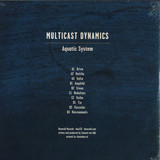
"Aquatic System"" is the second installment of the series, written and composed in two remote geographical places - namely at waters in Finland and Fuerteventura. Inspired by the complexity of water, its movement, various forms, inhabitants and hidden energy, the album was assembled mainly using synthesizers and processed field recordings of the ponds, streams, lakes and oceans of the different locations. With a vibrant story and conceptualization the focus lies in taking the listener on a observing, thoughtful and reflective journey through the aquatic system of our waters. Aquatic System opens with an impression of a frozen surface imagining icy and calm underwater movements underneath. Soon a slow process of melting begins and while the water starts to move in tiny streams of sound, small lifeforms evolve, curiously sending out small pulses in their flowing and constantly moving habitat. The aquatic nature awakens. Zooming out to larger waters high frequencies arise and colliding forms become audible. Larger marine life forms can be faintly heard when entering a much wilder environment, sensing sound-swirls of wind, foaming water tops and impressive large waves crashing on dark rocks. Finally ending at the shore, where the great ocean appears on the horizon, the environment is surrounded with moisture. From the calm reflective landscape derives an inward moment, recalling the organic and atmospheric quality of the sound journey. ""Aquatic System"" has been developed into an audiovisual performance together with visual artist Emilia Kwiatkowska and was performed several times in Spain and Finland, before the music has been finalized for the tracks.
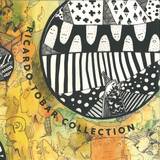
Let's focus on Ricardo Tobar: Born in Chile and now residing in France, Tobar picked the "creative border crossing" as the common thread for his album "Collection". Musical experimentation and crossing musical borders - Tobar refers here directly to the style and sound of the great new-wave-bands of the 80s and 90s. With the help and influence of their new electronic instruments (that often met classic rock guitars) the post-punk-electronic-movement turned almost everything upside down. No matter if the result was moody and mysterious or romantic and hedonistic, all sounded new and different back then and paved the musical path for a whole generation - the reverberations of that episode are noticeable until today.
Tobar plays with the musical approach of the post-punk-era, he mixes, merges and experiments fearless with styles and moods. He creates a wide range of "own styles" and even dives into abstract sound fields - listening electronic in best form! Ricardo Tobar breathes the air of his own musical universe and is not refering to the typical styles of this genre - you won't find any Detroit, Berlin or Sheffield reference here. Although produced in France, Tobar's album doesn't have anything of the sweet and lovely french listening touch. It also won't beam you into the north of England and the grey and cold Sheffield winter like so many other electronic albums try to do.
"Collection" contains full compositions, sound collages, experimental sounds and even proper beat based tunes. Tobar rather creates than produces and is presenting a bigger picture with his collection. Many electronic music artists are trying to do this however Tobar delivers a collection with an impressive range and it seems he did all this in an almost nonchalant way. He plays and combines his instruments and sounds at the same time very sensitive and harmonic but also brave and dissonant without risking to be inaudible at any point. He creates atmospheres by using electronic sounds and layers. Listening to the sound of "collection" almost appears like reading an acoustic book. This album is full of interesting sounds and ideas and is far from being boring or even too demanding.
Fantasma, the latest project of South African innovator and creatve pioneer Spoek Mathambo, is
a fve-man collectve which weaves together electronica, hip-hop, traditonal Zulu maskandi music,
shangaan electro, South African house, psych-rock and punk to form a unique, original and fresh
hybrid.
The godfather of 'Bacardi House', producer DJ Spoko joins with former Machineri guitarist André
Geld- enhuys, drummer Michael Buchanan and maskandi mult-instrumentst Bhekisenzo Cele to
complete the line up.
Fused by Spoek Mathambo's futurist vision, Fantasma pulls inspiraton from all corners of South Africa:
the sounds and spirits of townships and cites as well as the rural countryside. It is diverse not only in
its membership but also in its forward-looking music.
Working on opposite sides of the landmass we call Canada, Vancouver/Montreal duo Potatohead People (producers Nick Wisdom & AstroLogical) have been making waves for quite some time with their signature jazzy boom-bap meets boogie inside the bassbin vibes. Called a "formidable tandem" by OkayPlayer, their sounds have been championed early on by the likes of Kaytranada, Soulection, Nightmares on Wax, Pomo, Exmag, Big Boi, and Phife Dawg. After a few early releases on Vancouver based netlabel Jellyfish Recordings, Brooklyn's Bastard Jazz reissued their 2012 landmark Kosmichemusik EP and pressed a 7" released on Valentine's Day 2013. The association landed their song "Back To My Sh*t" (featuring Frank Nitty of Frank'n'Dank) on a Powerade produced LeBron James documentary and Nick and Astro began working on a debut LP for Bastard Jazz, presented here.
Big Luxury draws from influences disparate as classic jazz, prog rock, disco 90's hop, DJ Shadow-Era downtempo beats, alongside modern influences like the Brainfeeder crew and new electronic sounds coming out of Nick Wisdom's adopted hometown of Montreal. What's resulted is a finely honed, extra buttery album that effortly glides between tempos, but never loses the mood. The album also features a whole host of guest vocalists - J Dilla's younger brother Illa J, legendary Canadian MC Moka Only, New Zealand's Sorceress, and Amalia all provide contributions to the sounds within. Big Luxury is a velvety ride through vibes and a magnificent debut for these talented young Canadians.
Schlammpeitziger's album yields even more fruit. Six weeks after the release of his longplayer "What's Fruit" Pingipung releases this 12inch EP with remixes. The motley set of six electronic musicians and bands dice Schlammpeitziger's countless melodies into a delicious fruit salad! Candie Hank (Patric Catani) deals with the title track "What's Fruit" and beams the mantra-like vocals of the original unerringly to the dancefloor. Andreas Dorau, the infamous hero of German New Wave music form the 80s, is a year long companion of Schlammpeitziger. He sings about autumn leaves, on top of the instrumental hit "Balcony Sofaune", which is transformed into a disco piece by Dorau's producer sdfkt. (Golden Pudel Club, Hamburg). Springintgut dedicates himself to the complex melodic layers of "Pipe Claphorse", waves a giddy tambourine and tops it off with a three voiced cello chorus. The B side is opened by Mouse On Mars who turn "Balcony Sofaune" into an ever growing and collapsing bass monster, while focusing on the bold brass theme of the original. Thomas Mahmoud Zahl slows it down with a head- nodder. He thwarts the melancholy of "Schneid ein Stück aus der Zeit" with a stoically bouncing beat, which dubs and grooves like it wants to go on forever. Dub-Master hey (one half of Pingipung's Hey-Ø- Hansen) sends the same track through his studio, offers new harmonies with his quiet acoustic guitar and sugars it all with a galactic vocoder.
Producer CRISTIAN VOGEL, born in Chile and in raised in Bristol, England, represents an inner turmoil within the history of electronic music and techno. Like only a few other artists such as Aphex Twin, he personifies the second wave of techno during which authorship, previously pronounced dead, returned in full force. The former punk, who had completed studies in composition (20th century classical music in Sussex) conveyed a powerful force in his music, which now finds its place very naturally as electronic music; back then, it did more than just shake up the concepts of techno. Complex and intricate rhythms (Süddeutsche Zeitung) dig deep chasms in dark (listening) spaces.
In 1996, together with JAMIE LIDELL as SUPER_COLLIDER, he made a final attempt to breathe life into electronic music, which was still primarily seen as dance/rave/club music, and produced clustered break funk music that was so relevant to its time that many considered it more a music of the future: science fiction for the dance floor. Although the project was not a failure, it did not succeed even halfway in meeting the expectations of an artist who was rather perplexed by the lack of interest he perceived in others in music as art and research. Vogel believes that music has a will to unfold, like a jungle from the undergrowth of industrial cities where music is thought of as an attack and a defense.
Seemingly out of disappointment in the predictably declining hedonism of the scene, he moved to Barcelona and bound his explosive ideas to more accessible formats, founded labels, created networks (No Future, Sleep Debt) and, at the same time, revisited his early days by working more and more on formats such as music for ballet and similar concepts. He also sought freedom precisely in what was referred to as functional electronic music through conceptual and serious endeavors in the artistic sense.
Vogel went under for a time and lived in Vienna before arriving in Berlin nearly two years ago, where he made his first new and daring attempt to assimilate everything that electronic music represented to him on one album: 'The Inertials' on SHITKATAPULT. Shortly after that, his mystical, floating ambient work 'Eselsbrücke' was released, which already spoke the language of the new city.
He now presents a new album on SHITKATAPULT entitled 'POLYPHONIC BEINGS' - a true masterpiece in the inimitable Vogel style, as his fans will no doubt claim. 'POLYPHONIC BEINGS' begins, after two minutes of an irritating noise wave, with a surprisingly classic dub track and grows darker and more abstract from track to track, minute by minute. An eerie and unbelievable sound, with all as it should be: every reverb tail, every movement of the fader, every composed note takes the listener piece by piece into Vogel's own cosmos.
He foregoes interwoven elements for swaying towers of rhythm, powerful sound passages, spaces, roads, mirrors and pathways, leading to a stream of ideas that never wants to end. He aptly quotes Karl-Heinz Stockhausen in the liner notes: These are the "atomic layers of ourselves." And so it is. We are what we hear. This is the definitive CRISTIAN VOGEL.
Darshan Jesrani's new project Funn City continues to break open the notion of modern vs. retro and challenges the listener to categorize what is found inside. Extending the experiment in modern disco without re-treading already explored ground, Funn City offers a playful and rebellious approach to the recombination of old and new. Funn City sticks lightly to the fusion of live and electronic instruments, and heavily to its varied influences from rock and r&b to house and techno, yet casts them in a delirious, neon-lit sheen. 'All-Night People,' the project's first offering, is a relentlessly-upbeat, vivid, saturated trip of a maxi-single inspired by that liminal area of late-70s dance music which existed between shitty, bluesy rock, new wave and disco. Otherworldly, gurgling synths surf atop truncated, slashing guitar and thick, pattering congas. Taut synth sequences spar with sinewy lead lines and trashy vocals, bound together by a precise, modern sensibility, enticing you to waste your time inside a glorious, pinball machine dream. The dub on Side B works most of the same features but empties out the arrangement and infuses the mix with a bubbling, techno-inspired sequence and phaser-licked synth to create a new, more streamlined groove for the track-oriented dancefloor and style of play. Startree is proud to present this first release as a mission-statement in musical form and an indicator of things to come.
somewhere between New Order, Arthur Baker, and Giorgio Moroder with the benefit of modern ears, Argentine export and Berlin movershaker Nico Purman continues to shape his ever evolving vision of sound with his new label Art of Memory and its debut release AOM001. Carrying the momentum of his recent EP's such as Visions on Vakant (VA036) and Fade Away on Crosstown Rebels (CRM086), Nico drops perhaps his most expansive and melodic work yet drawing on influences from decades past to produce something both new and honest to former eras. With nods to New Wave, Techno, and a dusting of Space Odissey, AOM001's 3 tracks (+1 digital exclusive) bring both the lush musical synth textures of Purman's electronic forefathers with modern low end motivation of deep bass and tight rhythmic production. The resulting tracks that comprise AOM001 express pensive, moving, deep ideas of an electronic yesterday with an unrestricted vision of tomorrow written and shaped by the minds of talent like Nico Purman's.