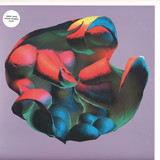
Shasta Cults is the musical project of Canadian electronics technician Richard Smith. For almost two decades, Smith was the official Buchla & Associates go-to repair person for studios, collectors, and musicians around the world, having worked with artists like Aphex Twin, Suzanne Ciani, Mort Subotnick and institutions like NYU, The Library of Congress and Mills College in Oakland, Ca.
Recording demonstrations of the rare equipment that found its way on to his workbench is how Smith describes the origins of Shasta Cults. Although sounds have been trickling out for decades via Soundcloud and other outlets, it wasn’t until 2017 that Smith recorded his first album using one of these rare instruments – the Buchla 700. Configurations, released this past September by Important Records, features eight tracks of heavily-modulated, wave-shaped explorations drenched in effects, and was the catalyst for his latest releases.
Recorded over the span of 3 months in the fall of 2018, this album was programmed solely on the only fully-functional Buchla Touché. Developed in the early 1980s with hardware by Don Buchla and software programmed by musician David Rosenboom, the Touché features waveforms generated internally by twenty-four digital oscillators using frequency modulation and sophisticated digital and analog signal processing for timbre and output assignment, all of this controlled via a six-octave black and white keyboard, unusual for a Buchla instrument.
This LP is a continuation on themes first heard on Configurations, with more consideration given to the generation and capturing of the pieces. This album is less dark than previous releases, showcasing the incredible fidelity of the hardware used and Smiths evolution as an audio engineer. Put on some headphones, find a comfortable chair, and let this LP transport you to the mystifying southern cascades of Siskiyou County.
Cerca:waveform
For over half a century, Takehisa Kosugi was one of the most unique and enduring figures in the Japanese underground. As an art student in Tokyo in the early 1960s, he joined the Fluxus-styled performance unit Hi Re Centre and then founded the improvisational ensemble Group Ongaku, but his most legendary project was The Taj-Mahal Travelers – a multicellular organism that included Kosugi, Ryo Koike, Yukio Tsuchiya, Seiji Nagai, Michihiro Kimura, Tokio Hasegawa and sound engineer Kinji Hayashi.
With a penchant for long psychedelic jams (some lasting 12 hours or more) The Taj-Mahal Travelers lived up to their name. Touring in a Volkswagen van across Europe and Asia in the early '70s, they eventually reached the actual Taj Mahal in India. Upon their return to Japan, they held a concert to raise more touring funds and released their very first recordings. Their debut album, July 15, 1972, would extend the band's matter-of-fact titling: all the tracks were named precisely for the times they began and ended.
With a grab bag of instrumentation (electric violin, double bass, santoor, vibraphone, harmonica, radio oscillators, sheet iron, etc.), The Taj-Mahal Travelers weave together mesmerizing waves of sonic texture. Featuring longtone concepts that Kosugi discovered while working with sound generators in New York in the mid-'60s, July 15, 1972 remains just as much a collective tone poem as psych workout. These leader-less sounds coalesce into a unified whole that feels both subconscious and sublime, as if the waveforms bypass the listener's ears and land directly inside one's synapses.
Robotron successfully autonomized and has now breached the mainframe. This is its second offering for the ESP Institute. Side A’s Exodus picks up where the last 12” left off, the spoils of cybernetic war as scavenged by the now-defunct Xinner and translated by Robotron into machine dance music for a post-apocalyptic future. With only a select few analog machines with which to communicate, it manages to produce the most bombastic beat we’ve heard this side of the acid winter—a mighty compressor permeates all spare gaps in the waveform, as communicative bleeps and note-bending mechanics work in concert to assemble a highly dynamic composition— emboldening us with courage for a new age. On the flip side, Kamchatkan renders a sparse image of a only remaining organic life, found in the furthest Eastern reaches of the Asian continent, the Kamchatka peninsula. Here, Robotron experienced a metamorphosis, a collapse of its structured programming in which it became self-aware and transitioned from its quantitative agenda to a qualitative enlightenment. This breath of new life invigorated Robotron’s musical approach as heard in the aforementioned title, revealing an uncanny ability for humanistic percussion and lyrical Acid melodies. These two programs will conduct synchronized dances for the masses.
- A1: D-Day - Sweet Sultan
- A2: Roots - Time 2
- A3: Vangelis Katsoulis - Whispers Of Heavenly Wilderness
- B1: Mauro Sabbione & Maria Cinzia Bauci - Boungainvillea
- B2: Human Software - Soft Sequence
- B3: Raphael Toine - Bizness À Bangkok
- C1: International Noise Orchestra - Gimme More Lovin ( Instrumental Muezzin Mix )
- C2: Meo - Alturas
- C3: Manuel Wandji - Pourquoi Pas !
- D1: Astral Dance - Transcendant Waveform
- D2: Individual Sensitivity - Greece Ambientale
- D3: Büdi Und Gumbls - Hmm - Tanz Der Körperlinge
Magic Carpet" is the first Compilation of the German Label "Harmonie Exotic". Jose Manuel selected 12 experimental ambient tracks from the 1982 to the 1994. They are combined by the same feature, namely the magic and mysterious character. Even though all the (remastered) tracks released in different countries, such as Japan, Italy, and France, they are all combined in being rare and obscure songs. In most of them it is possible to verify the oneiric melodies mixed with the different drum machines, typical of that year.
For this reason, they show how the magic has been developed over the chosen years, as they were all enveloped from the same carpet. Starting from this idea the Compilation's title plays an important role in anticipating the dreamlike listening experience.
2023 Repress
A heaven-made match is now complete with Gerry Read's debut EP for Pampa Records. The British producer's distinctively twisted, lo-fi sound, combined with Pampa's deep-vein instinct for quality quirks, ushers in a new phase for two of house music's most celebrated names. The opening bars of 'It'll All Be Over' are immediately evocative, hinting at the patchwork style to come. Twangy banjo strings and a foot-stomp beat seem to herald a folksy arrangement, but that isn't to be. Soft floaty pads rise up to form an unlikely partnership, softening sharp edges and adding sophisticated melodic expression. Once a compressed vocal sample is introduced, the entire structure reveals itself and begins to spin and loop in the style of iconic French house productions. Propelled further along by the endearing drama of flooded bass drum kicks, falsetto voices and xylophone pings, 'It'll All Be Over' is immediately memorable and expertly architectured. Read's second cut, 'Satyricon,' is woven in the spirit of micro-house. Sharp waveform cuts, timely pauses, loops of noodling keys and hints of percussion shakers combine for a low-slung psychedelic effect. With the sunniness of a vintage folk-pop sample and sultry snatches of Spanish dialogue added atop a deep mid-tempo shuffle, Read secures his place alongside the Bradocks and Leclairs who came before him. On the flipside, Pampa's figurehead takes an expert turn at the controls of 'It'll All Be Over (DJ Koze remix).' The original's jagged edges are buffed out, and shined up into a gleaming disco house anthem. With its artfully timed strumming breakdowns and cowbell accents, it is an appetising teaser of the forthcoming summer.
Adel Akram presents the 'Time and Place' EP due 10th of August on his own
'When Are We Now ' imprint, a newly launched platform for music and sonic
arts. With a background in shaping landscapes and creating permacultural
environments, Adel became a multidimensional and interdisciplinary artist
creating visuals whilst exploring waveforms and rooms. As well as providing
visuals for Herrensauna and AnnaMelina's and Varg's Flora project at atonal
Festival last year, his music appears in the upcoming movie M/M by Drew
Lint.
Now, as former founder of the Bremen based label ZCKR Records, Adel contin-
ues the idea of a label as an archive to document his surrounding and the
process of examination with different media, arts and questions about our
current position in time.
The first release excerpts entries from his personal audio log, recorded
during the last two years and reveals his keen but dreamy and vibrant access
to sound.
Orlando Voorn Comes Through With A Hi-tech Soul Future Classic. Original Mix Is A Prince-in-detroit Tinged Electro Floor Filler. Two Remixes From Gary Gritness, One A Full-on Assault Of West Coast Electro Funk And A Djax-inspired Cut Of Speaker-busting Bonus Beats. Hidden Away On B2 Is An Otherworldly, Dub Techno Masterpiece, Reworked By Cv313.
Since composer Sean McBride unveiled his first utterance as Martial Canterel almost 2 decades ago, he has produced a body of work both substantial and alluring within the field of live analogue electronic music. Effortlessly fusing a variety of styles and influences, Martial Canterel is one of the premiere outfits utilizing analogue electronics and modular synthesizers. In particular FM synthesis is employed to produce clustered polyphonies and organic atmospheres - a staple of his signature style.Three years have passed since Martial Canterel's last full length album Gyors, Lassù was released on Dais Records. During this down time, McBride found himself in a state of flux, ebbing back and forth between material displacement and musical aestheticism. His expert pedigree in electronic sound and arrangement bridges the gap created by an undecidability between life at home and abroad - his new album, Lost At Sea, is an attempt for the artist to locate common ground, mutating fable with reality, exteriority and interiority.
The album's introductory track, Giving Up, has all of the hallmarks that Martial Canterel has utilized in the past...melodic chorus, upbeat rhythm and classic sequential dynamism. Where the song diverges is in its core theme of nature: nature's return to a period of restoration after the failures and recklessness of humankind. Although this first glance refamiliarizes one with the tight, upbeat appeal typically found within the genre, Lost at Sea quickly takes a more serious and sobering tone.The slower pace of songs like Scampia and Puszta yearn for McBride's complex love affair with far flung destinations. Re-evaluating the political strife and social unrest in these historical locations, McBride delves deeper into political and geological reference points creating symbolic representations using mechanized percussion, white noise and various sine waves.The conceptual nature of Lost at Sea reaches even deeper depths within the waveforms of Astralize, a track based upon academic Donna Haraway's pre-civilized theories of human neglect after the 'azstralization'.
Somewhere between extraterrestrial techno and intergalactic disco lies Oli Silva. A waveform of multi-dimensional energy filled with analog heart and electric soul.
His first outing finds him land his spaceship directly on Craig Richards' The Nothing Special, with the genre bending Unlikely Punctuality EP.