Long out-of-print release available digitally for the first time. Extensive notes by a local writer in English and French. Previously unpublished family photos. Urbanized traditional music at a dance-floor-friendly tempo. The very definition of an "Awesome Tape From Africa". Roger Bekono made a deep mark in the contemporary history of Cameroonian music through the four-on-the-floor, ribald intensity of bikutsi. The Ewondo-language dance-pop style that forms an undulating tapestry of interlocking triplet rhythmic interplay came to international prominence in the European "world music" scene as the 90s began. But the relentless sound of bikutsi developed in Yaoundé at the hands of Bekono and many others, as it developed from a village-based singing style performed mostly by women into a cosmopolitan music force that rivaled the popularity of established musics like Congolese rhumba, merengue and makossa. With his unique—some say suave—voice, Bekono contributed much over a period of more than 10 years as part of the evolution of this traditional rhythm-turned-urban dance movement. Bekono worked with legendary producer Mystic Jim, who had built a prolific home studio along with a crack team of musicians. They joined as part of the production of his self-titled album, which became known locally as "Jolie Poupée," the name of the album's lead single and most popular song. For "Jolie Poupée" Mystic Jim programmed the kick or bass drum, adding effects to have a heavier bass. Overall the album represented a new level of finesse and professionalism for his second release. In the middle of 1989, Jolie Poupée was released by the label Inter Diffusion System and aggressively hit the radio, discos and national television. The music video for the title track was on loop on TV. It felt like everyone was talking about it, even artists in adjacent music scenes like makossa. The album came out on vinyl and cassette and remains Bekono's best-selling recording to this day. With Jolie Poupée Bekono finally made an impact outside Cameroon as the record captured listeners in some Central African countries like Equatorial Guinea, Gabon, Republic of Congo and Sao Tome & Principe. In these countries, we find the Fang or Mfan people (also known as Ekang), Bantu-speaking ethnic groups that are also found in Cameroon. This umbrella language group includes the language in which bikutsi is mainly sung. Most of Bekono's songs are in French, Ewondo (of which Beti is a dialect) and Pidgin. The four songs on Jolie Poupée are all considered bikutsi classics. On September 15, 2016, Bekono died of a long illness at the age of 62. In the wake of his passing the media published a wave of tributes, thanking him for what he did for Cameroonian music. He was an admired musician, songwriter and guitarist, and some of his old colleagues and some of the new generation of performers showered Bekono with vibrant tributes via social media, many of which noting something to the effect of: "The artist dies but his works remain."
Cerca:we are what we made
red vinyl edition[29,37 €]
green vinyl edition[33,99 €]
silver vinyl edition[29,37 €]
blue vinyl edition[29,37 €]
In Times New Roman... is raw, at times brutal and not recommended for the faint of heart. And yet, it’s perhaps the most beautiful and definitely the most rewarding album in their epic discography. Founder Joshua Homme's most acerbic lyrics to date are buoyed by the instantly identifiable QOTSA sonic signature, expanded and embellished with new and unprecedented twists in virtually every song. With In Times New Roman… we see that sometimes one needs to look beneath scars and scabs to see beauty, and sometimes the scabs and scars are the beauty.
black vinyl edition[31,72 €]
green vinyl edition[33,99 €]
silver vinyl edition[29,37 €]
blue vinyl edition[29,37 €]
In Times New Roman... is raw, at times brutal and not recommended for the faint of heart. And yet, it’s perhaps the most beautiful and definitely the most rewarding album in their epic discography. Founder Joshua Homme's most acerbic lyrics to date are buoyed by the instantly identifiable QOTSA sonic signature, expanded and embellished with new and unprecedented twists in virtually every song. With In Times New Roman… we see that sometimes one needs to look beneath scars and scabs to see beauty, and sometimes the scabs and scars are the beauty.
black vinyl edition[31,72 €]
red vinyl edition[29,37 €]
silver vinyl edition[29,37 €]
blue vinyl edition[29,37 €]
In Times New Roman... is raw, at times brutal and not recommended for the faint of heart. And yet, it’s perhaps the most beautiful and definitely the most rewarding album in their epic discography. Founder Joshua Homme's most acerbic lyrics to date are buoyed by the instantly identifiable QOTSA sonic signature, expanded and embellished with new and unprecedented twists in virtually every song. With In Times New Roman… we see that sometimes one needs to look beneath scars and scabs to see beauty, and sometimes the scabs and scars are the beauty.
black vinyl edition[31,72 €]
red vinyl edition[29,37 €]
green vinyl edition[33,99 €]
blue vinyl edition[29,37 €]
In Times New Roman... is raw, at times brutal and not recommended for the faint of heart. And yet, it’s perhaps the most beautiful and definitely the most rewarding album in their epic discography. Founder Joshua Homme's most acerbic lyrics to date are buoyed by the instantly identifiable QOTSA sonic signature, expanded and embellished with new and unprecedented twists in virtually every song. With In Times New Roman… we see that sometimes one needs to look beneath scars and scabs to see beauty, and sometimes the scabs and scars are the beauty.
black vinyl edition[31,72 €]
red vinyl edition[29,37 €]
green vinyl edition[33,99 €]
silver vinyl edition[29,37 €]
In Times New Roman... is raw, at times brutal and not recommended for the faint of heart. And yet, it’s perhaps the most beautiful and definitely the most rewarding album in their epic discography. Founder Joshua Homme's most acerbic lyrics to date are buoyed by the instantly identifiable QOTSA sonic signature, expanded and embellished with new and unprecedented twists in virtually every song. With In Times New Roman… we see that sometimes one needs to look beneath scars and scabs to see beauty, and sometimes the scabs and scars are the beauty.
Please take the five stars not as a statement that this is the best record of 2013, but as a delighted endorsement of a genre classic. With his fifth record (3 with Harpoons, and 2 solo) Ezra Furman has made an album of classicist rock'n'roll that never feels like an exercise, but a living, breathing piece of self-expression. The foundations are obvious, but the simple touches that adorn them are what elevates Day of the Dog. Been So Strange, for example, is the Velvet Underground's chugging R&B reincarnated, but with the delicious addition of a horn section. It leaves you wondering why Lou Reed never thought to do the same, so well does it work. Slacker/Adria is nervy, jittery powerpop until two minutes in, when the bottom drops out of the song and it turns into a doomy riff over which Furman appears to be telling us his nightmares: "I see white crosses burning across a dark landscape." He's seen his critics coming, too: the liner notes contain an index so you can check off the references. Clever, funny, sharp and tuneful – a great rock'n'roll record.” Michael Hann (The Guardian).
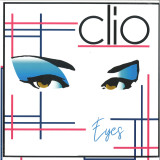
The decade of the 80s is revived through recordings like "Eyes" that allow you to travel through the music and trigger those old emotions of innocence, joy and adventure. It's possible you don't understand a word of what they're singing in the chorus, but the song is very catchy! Maybe not even Maria Chiara Perugini knows what she sings about, but she makes you hang on to every word of her like a nursery rhyme of synths, beach and bubblegum. "Eyes" is so amazing, so mesmerizing and more and more people are discovering this italo-disco masterpiece that usually satisfies and makes fun of you at the same time. If you try playing it at 75% speed gives a hypnotic vapor wave vibe! And even more, the song would have fit well in the dance club scenes from Scarface. Beyond the words - difficult to find a text that makes sense, sometimes out of context, unundestandable even for a French listener - the piece is so surprisingly likeable for the unique tone of Clio's voice, a strange cross between teenager and adult, and the part where she spoke another language, with some really cool synthesizers, are people's favorite parts. 0:31 "Je suis bien heureuse" , 0:47 "La nuit a ses merveilles", 0:57 "Il y a de quoi y perdre la tete, pour toi, sha, pour toi", 1:36 "Je n'ai plus de bulles", 1:52 "Je vous prie applaudissement". "Eyes" by Clio contains all the emotions that a dance-pop song should contain plus the essential element of mystery, a kind of magic that takes place between the chorus and the bass line, a shot in the dark drizzly night of the Italo-Disco. made by Roberto Ferrante, a guarantee for the perfect productions of the 80s, when he was only 20 years old.
Eric Emm and Jesse Cohen of Tanlines are indie-rock lifers turned reasonable, happy middle-aged fathers of two, figuring out their place in a chaotic culture and industry that can no longer command their full attention. They are emblematic of a particular time and place that doesn't really exist anymore, yet here they are existing, and thriving, in 2023. The Big Mess came together when Emm and his family moved from Brooklyn to rural Connecticut, while Cohen launched a marketing career and a successful podcast and stayed in the city. Emm continued writing songs_hundreds of them _ through all the weirdness of the past few years, but he wasn't exactly sure who he was writing them for. "I spent years figuring out in my mind, `What is my musical life going to look like?'" he says. "I just kept writing." Cohen gave Emm his blessing to continue Tanlines, even if his own contributions would be limited due to his own non-musical obligations. "I'm like, `Whatever you can do to keep this thing going, do it,'" Cohen says. And with that, Tanlines was reborn. By January 2022 Emm felt he had a body of work that made sense as a Tanlines album. Cohen spent ten days with Emm at his Connecticut studio, along with unofficial third Tanline Patrick Ford (!!!). This was tied together with a sleek final mix from Peter Katis (The National, Interpol) at his famed Tarquin Studios, resulting in a clear vision of what Emm's musical life was going to look like: The Big Mess. The first sounds on The Big Mess are the title track's coiled guitars and thumping drums, building into the kind of outsize, choral rock anthem artists like Tanlines were almost a reaction to. It is warm and nostalgic, and Cohen likens a lot of the prevailing mood to "a sepia filter on a digital photo." He continues, "we were pretty intentional about making this the first song on the album, underlining the way that this is a new phase of the band." Cohen says. The moody, scintillating "Burns Effect" serves as one of the biggest pushes forward for the Tanlines sound, and for Emm as a lyricist. He says that the song is "deep and dark and dangerous, but in a fun way. It's one of the more personal tracks on the album where this ungrounded part of my personality surfaces, but with an over-the-top machismo, almost an ironic character." Other tracks like "New Reality" and closer "The Age of Innocence" are also demonstrably guitar-forward in ways that wouldn't seem obvious for Tanlines (despite Emm's pedigree in austere avant-garde math-rock outfits Storm & Stress and Don Caballero), but Emm is less sure The Big Mess is a total departure. "I'm trying to make these absolutely simple things," he says. "I think of these songs as Rothko paintings: They're big and they're bold and they're seemingly straightforward, but they have a lot of depth and they engage with you and make you feel something."
As the siren’s song echoes out of systems worldwide, perhaps we are (re)turning to the liquid age of dance; with natural ephemera such as moss, sentiments for ecology such as swamps, and mercurial aspects of water all absorbing the aesthetic forefront. A return to nature, a deep dive under the lily pads. Here Marijn with her debut EP guides our plunge, a trip previously taken via her podcasts on Kulture Lab, where you can also find her previously released music.
Whispers from the ethereal plane drift around the headspace, a rumble in the distance of sound traversing the water, voices to guide and to keep you from floating too far from the line. Audio hallucinations are aplenty when submerged, a serenity of space, yet distant growls assure that peace is not always 2 be found. The melancholia within the daydream, the pang of loss caught in reflections, internal and from the water, with the lily pads floating above as a guiding entity, an anchor, something to hold. Under the lily pads we rumble.
On the flip everyone’s fav casual breaks n rave hooligan Luca Lozano asks the recurring thought within dance music, a question we quest, yet rarely want the answer. Abstraction via squeaks and tweaks, you better bop your bleepin’ head to this 1.
‘Leave A Message’ leaves the tranquil waters disturbed and rippling to the outer edges, providing jumps for the lily pads to ride on the incoming tide, with the ebb and flow making way for a storm surge. Aka big beats are the best, a notion the directly honest final track ‘Made (Drums)’ follows, bringing a twisted jack attack logic to a deranged assembly of samples, a manic orchestra of tumbling drums who have conspired to freak out, albeit with cute bubbles underneath to revel in the allure of sonic mania.
A pivotal record for contemporary times; bright, free, adamant, optimistic. Brain Worms is RVG's fullest, most pristine album yet. All throughout Brain Worms, it's apparent that this is a band in very fine form. Album opener 'Common Ground' sets the tone for what's to come; a shiny, thrilling, punch of an album, with all the beloved RVG hallmarks. Vager's voice is unfiltered and commanding as ever when delivering her clever, not-quite-ironic lyrics. Here, though, those lyrics feel so much less resigned to yearning, and so much more defiant and joyous. 'Tambourine' is the only Covid song Vager wrote when "trying not to write Covid songs", and it's a painfully honest portrait of grieving mid-isolation. 'Brain Worms' tells the all-too-familiar story of a person falling down the internet rabbit hole and finding comfort in conspiracies. 'Nothing Really Changes' is a keys-heavy new wave-ish thing, while closer 'Tropic of Cancer' sparkles with Vager's self-assured new manifesto: I know what I'm like, and I know how I get. If you think I'm strange, you ain't seen nothin' yet. Bloxham, Nolte, and Wallace are flawlessly adept in bringing Vager's songwriting to life. Recorded in London at Snap Studios with James Trevascus (Nick Cave & Warren Ellis, PJ Harvey), all ten tracks surge with lush sounds and clear intentions and the magic of an acoustic guitar once owned by Kate Bush, given to her by Tears for Fears (who, legend has it, wrote 'Everybody Wants to Rule the World' on it). Between the four bandmates lead singer and guitarist Vager, guitarist Reuben Bloxham, drummer Marc Nolte and bassist Isabele Wallace this is the most confident they've ever felt in RVG. They've moved past their influences, pushed themselves, and tried new things. And they have made a record they can, by all accounts, call their best. "Brain Worms feels like the antithesis to what a post-pandemic record could easily be. For a band who were already writing music about being reclusive "we were depressed and not going outside on our first two albums" the enforced isolation and time to think gave Vager space to write about anything she wanted. And, it turned out, she was ready to write about acceptance. "If we could only make one more album, it would be this one," says Vager. "Easily one of the most vital bands on the Aussie scene today" Rolling Stone "A calling card for outsiders... dynamic and vital post-punk" The Guardian
- 1: Secretly Bad 03:08
- 2: I Like To Pretend 0:53
- 3: Rude Body 02:57
- 4: If I Ask Her 02:18
- 5: Stripey Horsey 03
- 6: Lean 03:2
- 7: I Have A Lot To Say 03:09
- 8: Born To Care 03:00
- 9: Done With The Day 03:30
- 10: Lighter Better 03:12
- 11: Wakey Wakey 01:57
PURPLE VINYL[22,65 €]
In a world of endless, bottomless content, to find something that stands out from the crowd is a rare thing. But it’s something that 7ebra manage without breaking a sweat. Based in Malmö, twin sisters Inez and Ella Johansson deal in sparkling indie-rock that’s pretty without being soft, sweet without losing its edge and catchy without being cheap. With Inez on guitar and vocals and Ella on keys, organ and Mellotron, their minimal set-up makes a virtue of simplicity – with a sliver of guitar fuzz, and organ lines snaking around stark, striking vocals, augmented by shivering harmonies, they don’t need a lot to make music that’s colourful, kaleidoscopic, and effortlessly original.
7ebra debuted in 2022 with the double-single “I Have A Lot To Say”/ “If I Ask Her”, two helpings of psych-tinged, street-smart rock and roll, and the music scene around them wasn’t slow to notice. They opened for the Future Islands and the Dandy Warhols, were picked out by Apple Music’s Matt Wilkinson as a Hidden Gem of 2022 and were booked for prestigious showcases SXSW and Eurosonic. With a packed schedule of shows across Europe and the UK already planned for 2023, their world looks set to get a lot bigger – something that their debut album Bird Hour makes certain. The record is a warm, elegant introduction to the sound 7ebra have crafted. The songs are full of personality and character, but also retain a little bit of enigma, a sense of keeping something secret to themselves. To unwrap that elusiveness is a daunting task, but one the listener can’t resist leaping into.
Ella and Inez’s parents played in bands as they were growing up, so picking up music was a natural thing for them. The origins of 7ebra start with Inez whiling away the hours playing guitar in her bedroom. “I learned by playing covers by myself in my room”, she says. “Ella didn’t do that as much, but we sometimes played and sang together, country songs”. Eventually she would start writing her own. Ella wasn’t involved originally (“we did play together a few times”, she says, “and it just went to shit laughs. We fought a lot”), and Inez was originally reluctant: “I was a bit unsure whether I wanted to be in a band with my sister. Because you get clumped together all the time, when you’re twins”. But Ella was keen to join, and eventually persuaded Inez to let her join for a show. It went – so well that producer Tore Johansson (The Cardigans, Franz Ferdinand), saw it and asked if they’d like to record with him. That changed things, says Ella: “It made us think there might be something in this music”. As a duo, 7ebra were in flight. “In the end, it’s kind of a nice thing too being sisters in a band”, Inez says. “It doesn’t bother me anymore. It just made sense to play together”.
On the album that they eventually came up with, the talent that caught Johansson’s eye is immediately obvious. Opener “Secretly Bad” has a way of walking along your nerves, an eerie echo of a hymn in Inez’s vocal backed by a swirl of woozy blend of guitars and organ. That’s followed up by “I Like To Pretend”, an easily charming song that has a sleepy brightness about it, like morning sunlight breaking through a window. They take a couple of different genres for a whirl on Bird Hour – they’re tense and snappy on “If I Ask Her”, breezy and cocky on “Lighter Better”, and there’s even a couple of droplets of blues and folk in the mix, in the raw intensity of the emotions in the slower songs, the vulnerability and aching of songs like “Lean” and “Stripey Horsey”. The record has a way of sweeping you along in its mood and tones, fuelled in part by the band’s use of repetition, sometimes fast and fevered, sometimes crawling and hypnotic. The duo’s musical input blends perfectly, with Inez’s guitar and vocals forming the core, and Ella drawing in the detail with keys, organ, and harmonies, to really bring out the vivid nature of the songs. Indie rock that’s melodic and sweet, but with enough shadow mixed in to make it really compelling.
On Bird Hour, what strikes you first about 7ebra’s sound is how fully formed it is, how much they’ve carved out their own sonic territory, perfected by trial and error in the studio with Johansson. “Tore wanted us to try everything possible”, says Ella. “We had moments where things weren’t working. But that was necessary in order to find the good stuff”. 7ebra’s signature might be found in the deft way they deal with emotion – unafraid of being open, but a little too clever to make things too clear cut: “You can’t take yourself that seriously. It’s too emotional to take it seriously, to start hating yourself. But at the same time, it is quite serious”, says Ella. Another trademark is the simplicity – a 7ebra song has just enough to make it work, and nothing more. “I think it was important for me that our voices were at the centre of the songs”, says Inez, “that all the little melodies have their place, and don’t get overwhelmed. With lyrics, I sometimes come up with something, and just feel ‘there’s no need to add more to this’. Sometimes a line works by itself. You don’t have to add a bunch of lyrics”. Finally, the album’s themes are ones that will resonate with most people that have set foot on this planet. “I guess it’s about trying to understand yourself, in relation to others. Just life. ‘Why am I not good at this, why is this thing happening to me, why is this thing so hard, why am I so stupid?’”, laughs Ella.
7ebra haven’t been around for very long – but a handful of songs and their fizzing live shows have stirred up the biggest buzz in Scandinavian music in quite a while. Their debut album justifies it all. It showcases the magic they’re capable of conjuring up, and hints at even more to come in the future. But from where they are right now, they’ve made something very special. Bird Hour takes all that promise and turns it into something concrete, in the form of one of the year’s best rock debuts.
In a world of endless, bottomless content, to find something that stands out from the crowd is a rare thing. But it’s something that 7ebra manage without breaking a sweat. Based in Malmö, twin sisters Inez and Ella Johansson deal in sparkling indie-rock that’s pretty without being soft, sweet without losing its edge and catchy without being cheap. With Inez on guitar and vocals and Ella on keys, organ and Mellotron, their minimal set-up makes a virtue of simplicity – with a sliver of guitar fuzz, and organ lines snaking around stark, striking vocals, augmented by shivering harmonies, they don’t need a lot to make music that’s colourful, kaleidoscopic, and effortlessly original.
7ebra debuted in 2022 with the double-single “I Have A Lot To Say”/ “If I Ask Her”, two helpings of psych-tinged, street-smart rock and roll, and the music scene around them wasn’t slow to notice. They opened for the Future Islands and the Dandy Warhols, were picked out by Apple Music’s Matt Wilkinson as a Hidden Gem of 2022 and were booked for prestigious showcases SXSW and Eurosonic. With a packed schedule of shows across Europe and the UK already planned for 2023, their world looks set to get a lot bigger – something that their debut album Bird Hour makes certain. The record is a warm, elegant introduction to the sound 7ebra have crafted. The songs are full of personality and character, but also retain a little bit of enigma, a sense of keeping something secret to themselves. To unwrap that elusiveness is a daunting task, but one the listener can’t resist leaping into.
Ella and Inez’s parents played in bands as they were growing up, so picking up music was a natural thing for them. The origins of 7ebra start with Inez whiling away the hours playing guitar in her bedroom. “I learned by playing covers by myself in my room”, she says. “Ella didn’t do that as much, but we sometimes played and sang together, country songs”. Eventually she would start writing her own. Ella wasn’t involved originally (“we did play together a few times”, she says, “and it just went to shit laughs. We fought a lot”), and Inez was originally reluctant: “I was a bit unsure whether I wanted to be in a band with my sister. Because you get clumped together all the time, when you’re twins”. But Ella was keen to join, and eventually persuaded Inez to let her join for a show. It went – so well that producer Tore Johansson (The Cardigans, Franz Ferdinand), saw it and asked if they’d like to record with him. That changed things, says Ella: “It made us think there might be something in this music”. As a duo, 7ebra were in flight. “In the end, it’s kind of a nice thing too being sisters in a band”, Inez says. “It doesn’t bother me anymore. It just made sense to play together”.
On the album that they eventually came up with, the talent that caught Johansson’s eye is immediately obvious. Opener “Secretly Bad” has a way of walking along your nerves, an eerie echo of a hymn in Inez’s vocal backed by a swirl of woozy blend of guitars and organ. That’s followed up by “I Like To Pretend”, an easily charming song that has a sleepy brightness about it, like morning sunlight breaking through a window. They take a couple of different genres for a whirl on Bird Hour – they’re tense and snappy on “If I Ask Her”, breezy and cocky on “Lighter Better”, and there’s even a couple of droplets of blues and folk in the mix, in the raw intensity of the emotions in the slower songs, the vulnerability and aching of songs like “Lean” and “Stripey Horsey”. The record has a way of sweeping you along in its mood and tones, fuelled in part by the band’s use of repetition, sometimes fast and fevered, sometimes crawling and hypnotic. The duo’s musical input blends perfectly, with Inez’s guitar and vocals forming the core, and Ella drawing in the detail with keys, organ, and harmonies, to really bring out the vivid nature of the songs. Indie rock that’s melodic and sweet, but with enough shadow mixed in to make it really compelling.
On Bird Hour, what strikes you first about 7ebra’s sound is how fully formed it is, how much they’ve carved out their own sonic territory, perfected by trial and error in the studio with Johansson. “Tore wanted us to try everything possible”, says Ella. “We had moments where things weren’t working. But that was necessary in order to find the good stuff”. 7ebra’s signature might be found in the deft way they deal with emotion – unafraid of being open, but a little too clever to make things too clear cut: “You can’t take yourself that seriously. It’s too emotional to take it seriously, to start hating yourself. But at the same time, it is quite serious”, says Ella. Another trademark is the simplicity – a 7ebra song has just enough to make it work, and nothing more. “I think it was important for me that our voices were at the centre of the songs”, says Inez, “that all the little melodies have their place, and don’t get overwhelmed. With lyrics, I sometimes come up with something, and just feel ‘there’s no need to add more to this’. Sometimes a line works by itself. You don’t have to add a bunch of lyrics”. Finally, the album’s themes are ones that will resonate with most people that have set foot on this planet. “I guess it’s about trying to understand yourself, in relation to others. Just life. ‘Why am I not good at this, why is this thing happening to me, why is this thing so hard, why am I so stupid?’”, laughs Ella.
7ebra haven’t been around for very long – but a handful of songs and their fizzing live shows have stirred up the biggest buzz in Scandinavian music in quite a while. Their debut album justifies it all. It showcases the magic they’re capable of conjuring up, and hints at even more to come in the future. But from where they are right now, they’ve made something very special. Bird Hour takes all that promise and turns it into something concrete, in the form of one of the year’s best rock debuts.
Sasu Ripatti presents the third volume in his "Dancefloor Classics" series with five 10" releases coming throughout 2023. Music for imaginary dancefloors, released on Ripatti's own label "Rajaton".
--
”Look up, into the light” she said, while the camera shutter clicked. ”Like this? Does it look holy?” His neck felt stiff. Her reply: ”Yes, just like that. What do you mean holy? Like religious? ”No, more like trying to look very far, somewhere beyond what we can see.” ”Okay, stand still, I’m going to come close to you now. The light hits your face great.” click, click, click.
He noticed her fingernails. They were not polished. Natural. Even somewhat rugged, as if something wore out the fingers slightly. What had these hands held besides the camera? What made the edges of her fingernails drift off?
He thought it’s weird to look straight into the camera. The photographer had closed her left eye, the one not looking into the lens. Then it opened, she looked up, perusing the surroundings, then she closed her eye again, then looked up, closed, looking up, very quickly. It all seemed very professional. Maybe she calculated the light, making sure it’s close to perfect. ”What will these photos look like?” – the thought popped into his head briefly. It was liberating to think it wouldn’t matter.
”What’s that song playing?” he asked. ”Wait a sec, Ol’ Dirty Bastard?” she replied. ”Oh yeah, right. But the sample?” ”Hey, could you look up again, like that. No, lower.”
New directions: ”Look out from the window, turn left.” ”My left or yours?” ”Yours, I always try to think from the direction of my model.” How professional! This is a good shoot, so natural. Should I worry about how the photos look like? No, I don’t want to. His thoughts bounced around. What would the story be like? It’s a big newspaper, everyone will read it. Maybe someone drinks coffee and eats a stroopwafel while they do it. Will they place the waffle on top of the mug for a brief while, so that it gets hot and the syrup melts a little? Then it feels wet, and you can bend the cookie.
She broke his train of thought off midway through: ”Now turn right, but look left, and slightly up, but don’t turn your face right.” ”Umm, like this? Sounds like a set of pilates instructions.” she laughed ”You do pilates?” ”Yeah, it’s hard sometimes. Have you tried?” ”No”, she said. ”I’m not good for sports that are done in groups.” ”Yeah, but in pilates you can just be inside your mind, drowning in your private thoughts.”
”What are you thinking in pilates?” she asked, taking more photos. ”Well, mostly just which way is right. And which left.” click, click.
--
* 300 COPIES FOR UK/EU* With a friendship stretching back nearly 20 years, it strangely ended up being a couple of childhood photographs that finally brought Ben Chasny and Rick Tomlinson together as collaborators. Both have rich musical backgrounds: Chasny being a member of the psych-rock outfit Comets on Fire but probably best known for his solo project, Six Organs of Admittance, while Tomlinson has released numerous records as Voice of the Seven Woods/Thunders and under his own name. “A mutual acquaintance, Jamie Tugwell, took me to go see Rick play live around 2005,” remembers Chasny. “Jamie kept saying how Rick was sort of an ornery fellow and that I would like him a lot. He was right. I loved his guitar playing right away, which seemed so far from what a lot of players were doing. We had drinks and hit it off. We remained friends over the years.” Chasny became a regular visitor to Tomlinson when on tour in the UK and one particular stay unearthed something serendipitous that would kickstart the making of a joint album. “I was staying at Rick’s house after a show and I looked over and saw a photo of him in a Halloween costume as a box of matches,” Chasny recalls. “It cracked me up because I have a similar photo of me as a robot and I tried to explain to him how it matched his photo.” About 6 months later Chasny found it and sent it to Tomlinson to show him the uncanny likeness of their childhood outfits. “Pretty soon after that we realized we needed to do a duo record and have those photos be on the cover,” says Chasny. “The entire record comes from the photos on the cover.” Tomlinson adds: “It was a pretty odd coincidence. Even down to us both standing on flags with a conifer behind us. We obviously had no option but to use these for the sleeve.” Recorded at Tomlinson’s house in Todmorden over three days one June, initially the pair didn’t quite know where they wanted to go with their musical direction. Tomlinson kept pulling out super rare records from his vast collection for inspiration and they sat and listened to the solo piano recordings of Popol Vuh’s Florian Fricke but they knew they needed to land on something that was intrinsically them. “We knew we wanted to do a record together but we weren’t sure what direction to take,” says Chasny. “When we first sat down to work out some ideas it was pretty much just us getting down to finally having a guitar showdown where each of us tried to outdo each other with flashy moves and ridiculous riffs and playing. After we got that out of our system, we were able to settle down and concentrate on a mood for the record to focus on.” The result is 6 instrumental tracks that capture beautifully fluid and interlocking guitars played with deft grace and skill but also a subtle looseness. On the 9 minute-plus ‘Wait For Low Tide’, the sparse and spacious back and forth playing becomes utterly hypnotic, neatly capturing the kind of natural and intuitive playing that can only come from music made between friends who understand the crucialness of leaving space for one another. While acoustic guitars are the primary means of expression on the record - from the soothing and gentle ‘i’ to the intricate playing of ‘Waking of Insects’ - the pair delve into ambient drone tape loop territory on the humming 16 minute ‘Paths of Ocean Currents and Wind Belts’, which further adds to the deeply textural, spacious and immersive feel of the album. All the tracks were recorded in one take, with the titles all stemming from translations from the Chinese book, The Dream Pool Essays, and then mixed in London at Jimmy Robertson's SNAFU studio, with additional mixing and mastering from Andrew Liles. The laid back, breezy and spontaneous approach to making this record is one that was reflective of the pair’s friendship and camaraderie, with their relationship ultimately driving the tone and feel of the finished album. “We hiked around the countryside, climbed into church bell towers, drank delicious beer in the middle of sunny afternoons, and had fantastic dinners,” says Chasny of the three-day recording period. “I think all of that wound up in the music. I really had the best time in the world.
Mo H. Zareei (mHz) returns to Imprec/Cassauna with Proof Of Identity, an album of pulsating, pattern-based electronic pieces that evolve in ways reminiscent of Steve Reich's early work or Philip Glass' Music In 12 Parts. With Proof Of Identity, Zareei confronts issues surrounding identity and authorship in composition specifically when created by non-Western musicians. He simultaneously tackles orientalism and the normative take on identity politics.
Artist's Statement:
More than a decade ago, I made a piece of beat-based electronic music and titled it "Middle Eastern IDM" for a course assignment. After listening to it in class, my professor asked what was Middle Eastern about it. It was only a year after I had left Iran to study in the US, and I didn't know that I could say "I am. I made the piece". So I went back and superimposed a sample of Egyptian protest chants on top of the piece, to make it "sufficiently Middle Eastern".
What prejudiced conservatism and performative liberalism share is gatekeeping practices that box one in a preconceived state of otherness. While the former overtly regards that otherness as inferior, the latter exoticises it through patronising paternalism. To me, it is especially troubling when exclusionary practices are driven by some form of overzealous "diversity and inclusion" agenda. If you don't fit the diversity box they've made for you, too bad. It's your fault for being "insufficiently diverse". "Poor thing, you've been colonised!", they tell you, as they claim ownership over a collection of frequencies and rhythms. When you look at who gets to decide if something's indigenous enough, you see how decolonisation itself has been colonised.
When you listen to this piece, I'm very happy for you to keep in mind that it was made by someone from Iran. But I might need to clarify that this piece has nothing to do with sufism and the whirling dervishes, the interweaving patterns of the Persian carpet, the poetry of Rumi, or Islamic architecture. And if you hear those moments of "non-western" sonorities, that is because I have constructed this piece from samples of a piece of Iranian traditional music – an overplayed piece that was all over TV and radio while I was growing up Iran, one that I never found particularly inspiring or interesting. Here, I have tried to make it more interesting by completely taking it apart and reconstructing it through my personal compositional techniques, aesthetic preferences, and a wide range of musical influences. So in short, while this piece might not sound like your archetypical Iranian music, I assure you that it is Iranian enough.
Eric Emm and Jesse Cohen of Tanlines are indie-rock lifers turned reasonable, happy middle-aged fathers of two, figuring out their place in a chaotic culture and industry that can no longer command their full attention. They are emblematic of a particular time and place that doesn't really exist anymore, yet here they are existing, and thriving, in 2023. The Big Mess came together when Emm and his family moved from Brooklyn to rural Connecticut, while Cohen launched a marketing career and a successful podcast and stayed in the city. Emm continued writing songs_hundreds of them _ through all the weirdness of the past few years, but he wasn't exactly sure who he was writing them for. "I spent years figuring out in my mind, `What is my musical life going to look like?'" he says. "I just kept writing." Cohen gave Emm his blessing to continue Tanlines, even if his own contributions would be limited due to his own non-musical obligations. "I'm like, `Whatever you can do to keep this thing going, do it,'" Cohen says. And with that, Tanlines was reborn. By January 2022 Emm felt he had a body of work that made sense as a Tanlines album. Cohen spent ten days with Emm at his Connecticut studio, along with unofficial third Tanline Patrick Ford (!!!). This was tied together with a sleek final mix from Peter Katis (The National, Interpol) at his famed Tarquin Studios, resulting in a clear vision of what Emm's musical life was going to look like: The Big Mess. The first sounds on The Big Mess are the title track's coiled guitars and thumping drums, building into the kind of outsize, choral rock anthem artists like Tanlines were almost a reaction to. It is warm and nostalgic, and Cohen likens a lot of the prevailing mood to "a sepia filter on a digital photo." He continues, "we were pretty intentional about making this the first song on the album, underlining the way that this is a new phase of the band." Cohen says. The moody, scintillating "Burns Effect" serves as one of the biggest pushes forward for the Tanlines sound, and for Emm as a lyricist. He says that the song is "deep and dark and dangerous, but in a fun way. It's one of the more personal tracks on the album where this ungrounded part of my personality surfaces, but with an over-the-top machismo, almost an ironic character." Other tracks like "New Reality" and closer "The Age of Innocence" are also demonstrably guitar-forward in ways that wouldn't seem obvious for Tanlines (despite Emm's pedigree in austere avant-garde math-rock outfits Storm & Stress and Don Caballero), but Emm is less sure The Big Mess is a total departure. "I'm trying to make these absolutely simple things," he says. "I think of these songs as Rothko paintings: They're big and they're bold and they're seemingly straightforward, but they have a lot of depth and they engage with you and make you feel something."
Fresh out of high school, Hannah Jadagu released her debut EP, What Is Going On?, a collection of intimate bedroom pop tracks recorded entirely on an iPhone 7, which was, at the time, Jadagu's most accessible mode of production. An off-the-cuff approach to music making and instinctive ability to write unforgettable hooks belied the intensity of Jadagu's subject matter. What Is Going On? confronted some of the nation's most urgent struggles through Jadagu's compassionate perspective. What Is Going On? built on the small online fanbase Jadagu had developed by releasing music on SoundCloud for years as she realized her growing passion for songwriting. Now, Jadagu is releasing Aperture, her first LP and most ambitious work to date. Written in the years between graduating from high school in Mesquite, TX and her sophomore year of college in New York, Aperture finds Jadagu in a state of transition. "Where I grew up, everyone is Christian; even if you don't go to church, you're still practicing in some form," Jadagu says, laughing. "Moving out of my small hometown has made me reflect on how embedded Christianity is in the culture down there, and though I've been questioning my relationship to the church since high school, it's definitely a theme on this album, but so is family." As a kid, Jadagu followed her older sister - a major source of inspiration - to a local children's chorus, where she received choral training. "I hated it," Jadagu admits. "But it taught me how to harmonize, how to discover my tone, how to recognize and write melody." The aching single "Admit It" is dedicated to Jadagu's sister, whose love and impeccable taste have been a constant since Jadagu was a kid. The siblings were raised on mom's Young Money mixtapes and the Black Eyed Peas (to whom Hannah credits her love of vocoder) but it was in the sanctity of her sister's car that Jadagu discovered the indie artists who inspire her work. With Aperture, Jadagu faced the challenge of finding a co-producer capable of complementing her work without dominating it. Enter Max Robert Baby, a French songwriter and producer who captured Jadagu's attention with his take on Aperture's lead single "Say It Now." The duo worked remotely, sending stems to one another via email, before meeting in-person for the first time at Greasy Studios on the outskirts of Paris. "When I recorded my EP, it was all MIDI, but in the studio Max and I worked with a ton of analog instruments," Jadagu says. "Every track on this album, except for 'Admit It,' was written first on guitar. But the blanket of synths throughout helps me move between sensibilities. There's rock Hannah, there's hip-hop Hannah, and so on. I didn't want any of the songs to sound too alike." An aperture is defined as an opening, a hole, a gap. On a camera, it's the mechanism that light passes through, allowing a photographer to immortalize a moment in time. For Jadagu, the word perfectly encapsulates the mood of her debut album. In the years it took her to complete, she faced moments of darkness, sure, but the process of making it was ultimately a cathartic experience, one she now shares with you. Let the light in.
Tape
Fresh out of high school, Hannah Jadagu released her debut EP, What Is Going On?, a collection of intimate bedroom pop tracks recorded entirely on an iPhone 7, which was, at the time, Jadagu's most accessible mode of production. An off-the-cuff approach to music making and instinctive ability to write unforgettable hooks belied the intensity of Jadagu's subject matter. What Is Going On? confronted some of the nation's most urgent struggles through Jadagu's compassionate perspective. What Is Going On? built on the small online fanbase Jadagu had developed by releasing music on SoundCloud for years as she realized her growing passion for songwriting. Now, Jadagu is releasing Aperture, her first LP and most ambitious work to date. Written in the years between graduating from high school in Mesquite, TX and her sophomore year of college in New York, Aperture finds Jadagu in a state of transition. "Where I grew up, everyone is Christian; even if you don't go to church, you're still practicing in some form," Jadagu says, laughing. "Moving out of my small hometown has made me reflect on how embedded Christianity is in the culture down there, and though I've been questioning my relationship to the church since high school, it's definitely a theme on this album, but so is family." As a kid, Jadagu followed her older sister - a major source of inspiration - to a local children's chorus, where she received choral training. "I hated it," Jadagu admits. "But it taught me how to harmonize, how to discover my tone, how to recognize and write melody." The aching single "Admit It" is dedicated to Jadagu's sister, whose love and impeccable taste have been a constant since Jadagu was a kid. The siblings were raised on mom's Young Money mixtapes and the Black Eyed Peas (to whom Hannah credits her love of vocoder) but it was in the sanctity of her sister's car that Jadagu discovered the indie artists who inspire her work. With Aperture, Jadagu faced the challenge of finding a co-producer capable of complementing her work without dominating it. Enter Max Robert Baby, a French songwriter and producer who captured Jadagu's attention with his take on Aperture's lead single "Say It Now." The duo worked remotely, sending stems to one another via email, before meeting in-person for the first time at Greasy Studios on the outskirts of Paris. "When I recorded my EP, it was all MIDI, but in the studio Max and I worked with a ton of analog instruments," Jadagu says. "Every track on this album, except for 'Admit It,' was written first on guitar. But the blanket of synths throughout helps me move between sensibilities. There's rock Hannah, there's hip-hop Hannah, and so on. I didn't want any of the songs to sound too alike." An aperture is defined as an opening, a hole, a gap. On a camera, it's the mechanism that light passes through, allowing a photographer to immortalize a moment in time. For Jadagu, the word perfectly encapsulates the mood of her debut album. In the years it took her to complete, she faced moments of darkness, sure, but the process of making it was ultimately a cathartic experience, one she now shares with you. Let the light in.
buen clima is the solo project of producer, composer and DJ Felipe Castro (Santiago, 1993). Under that alias, he makes a sometimes clean, sometimes dirty mix of techno, house and electro, among other styles, with a soft spot for high BPMs, big, glossy pad sounds and interlocking rhythms. With a background in classical music and free improvisation, his productions and live performances often bring into them unexpected moments of noise, unusual influences and, above all, humour.
« This EP is comprised of five tracks written between 2020 and 2022, and it's got quite a bit of contrast among them, as well as some common threads. Some are gritty and noisy, some are a bit more amiable. However, they all show signs of recurring obsessions with certain rhythms, certain synth sounds, and share a sense of fun and humour. Each is an exploration of different production and synthesis techniques.
Big Butibit Chess Master Pro v.3.5 is on the lighter side, with some big warm pads and jazzy drum sound. It's kind of a sunny ghettotech cut, if that makes any sense. The synth part has a spontaneous feel, it was recorded pretty much in one take.
>:) Is a heavier club track, made to go a little evil, a little mischievous. It's full of squelchy sounds and has a drum part that sounds like a never ending Street Fighter combo, or a bunch of beer bottles being opened one after the other.
Forma/Contenido is also on the darker side, with a droning, oppressive mass of sound that accumulates and evolves all throughout the track. It's very much inspired by the piece "I am sitting in a room" by Alvin Lucier, and is, in fact, a sort of live version of the same premise, a long feedback loop of the voice and the beat recorded and played in the studio.
Arturito is how we call R2D2 in Latin America (or at least in Chile), and it's also my father's name. We both love the original Star Wars and this is a little tribute to that. I had a lot of fun making this track, using only Ableton's Operator synth to make 90% of the sounds. It's a bouncy, evolving electro cut with a lot of quirky bleeps and bloops.
Pequeña midi is definitely the heart of the EP, a slower track made for my cat, who's sitting in my lap as I'm writing this. The rhythms and the sounds are a musical representation of how I imagine her life is like, and of her little games, running around the house. In terms of style I feel like this is what it would sound like if Yellow Magic Orchestra did a slowed down footwork track (play it at 160 BPM if you don't believe me!). »