Growing up in the Californian sprawl and the vast suburbs of Phoenix, Arizona, Caleb Dailey largely dismissed the country and western music that surrounded him. Instead, he was drawn to independent rock, experimental zones, and other genre-defying forms, which led him to create skewed rock music with Bear State and establish the “minimal art label” Moone Records with his brother Micah Dailey in 2013. But in the early half of the 2010s, Dailey began to hear things differently. Drawn into the left-of-center works of artists like Gram Parsons and Blaze Foley, a more idiosyncratic take on country, folk, and roots music began to swirl in his imagination.
Wandering into the form’s cowboy chords and lonesome scenes, Dailey found himself wondering what his own country album might sound like. The result is his debut solo album, a collection of covers called Warm Evenings, Pale Mornings; Beside You Then. Produced by John Dieterich of Deerhoof, Keiko Beers, and Dailey himself, it’s a melancholy charmer, rooted in traditional ideas but free roaming in its scope. Laced with synths, pedal steel, acoustic guitars, and commanded by Dailey’s full and woozy voice, it owes as much to the busted waltzes of Lambchop and the homespun lo-fi folk of Little Wings (whose Kyle Field appears on the album via a spoken intermission) as it does to the songwriters and performers who provide its source material, which include Parsons, Foley, Elvis Presley associate Chips Moman, steel guitarist Buddy Emmons, and others.
“The subversive nature of country music isn’t as much at the surface as some other genres,” Dailey says. “But the deeper down the ‘country hole’ I went, the more I wanted to be part of it. It is truly a strange world.”
The hands of Dailey and his collaborators, which includes a wide roster of DIY experimentalists like James Fella of art punks Soft Shoulder, Jay Hufman (Gene Tripp), Lonna Kelley of Giant Sand, Japanese DIY hero’s Koji Shibuya and Tori Kudo, Nicholas Krgovich, Markus Acher of The Notwist, and more, that strangeness is accentuated. Dailey doesn't aspire to retro Nashville fetishism or sanctioned notions of “realness” so much as a genuine outsider authenticity. Take his version of Gordon Lightfoot’s “If You Could Read My Mind” for example: a highlight of the record, it pairs familiar genre signifiers like pedal steel and guitar strums with warbled synths. Then there’s his read of “Dreaming My Dreams,” originally made famous by Waylon Jennings (who also did time in the Arizona desert), which morphs from a mournful ballad into a wash of far-off sonic noise.
The attention here is on the songcraft itself, with Dailey inhabiting these songs and turning them inside out to reveal unexpected tenderness and playfulness.
Recorded at home with an acoustic guitar and 4-track, Dailey began open correspondences with his collaborators, who fleshed out ideas and added touches, often working with skeletal frames before Dieterich and Dailey shaped it into a cohesive whole. “John is the reason this album exists,” Dailey says. “He sculpted all these parts together in such an otherworldly way. He is truly a magician.” Deeply allergic to insincerity, Dailey avoids any trace of irony. He’s created a cohesive gem out of disparate parts, uniting Americana songcraft with experimental disassemblage. From this bric-à-brac, he’s made something touching and beautifully strange.
Suche:we call it 80 s
The start of the new "Live At Fabrik Hamburg" series on Jazzline in
cooperation with the legendary venue and NDR Kultur - is this previously
unreleased concert from jazz greats Freddie Hubbard and McCoy Tyner
from 1986
It will be released as a double CD in a three-part digipak and as a triple LP in a
triple gatefold cover that includes detailed Liner notes by Michael Laages. In the
Altonaer Fabrik in 1986, the master trumpeter Freddie Hubbard was a guest in the
trio of one of the most important pianists of contemporary jazz: McCoy Tyner,
whose extremely powerful attack always added percussive power of the most
energetic kind to his virtuoso playing.
McCoy Tyner died in March 2020, the recording from 1986 (he was 58 years old
at the time) show him at the height of the unmistakable jazz expression that
defined him. His piano and the enormous radiance of the Hubbard trumpet (born
in the same year as Tyner in 1938, but died in 2008) are the outstanding
protagonists. But the recording also features bassist Avery Sharpe, born in 1954
and with excellent acoustic and electrical credentials, as well as Louis Hayes, still
today the most indestructible of all modern drummers at well over 80 years of
age. Together they refine the nine titles of this two- hour concert on this truly
remarkable evening of music!
- A1: Steady Eddie Steady
- A2: Killing Time
- A3: Citinite
- A4: Wastelife
- A5: Silver Blades
- B1: Silver Blades A Deeper Cut
- B2: Sodium Pentathol Negative
- B3: (The) Innocent (The)
- B4: Red, Green & Gold
- B5: Fiction Factory
- C1: Do It In The Dark
- C2: Steady Eddie Steady
- C3: Emotional Blackmail
- C4: Bad Move
- C5: Let Go
- D1: Don't Take Drugs, I Don't Tell Lies
- D2: We're The Fashion
- D3: Small People
- D4: Bike Boys
- D5: The Naff All Tango
- D6: Killing Time
During 1978 to 1980, Fashion released one album and a handful of indie club hit singles mixing Punk & Reggae vibes. They toured the US extensively supporting The Police in 1979. Limited Edition of 800 copies 2LP set with printed inner bags. All tracks completely remastered. Contains every studio recording of the first lineup of Fashion including US singles. Includes unreleased tracks. Liner notes from lead singer & Guitarist Luke Sky. Fashion went through several line-up overhauls during its initial existence between 1978 and 1984. John Mulligan (synthesiser, bass) and Dik Davis' (drums) were constants, but the band's frontman changed with each of the band's three albums. Post-punk years: Fàshiön Music Fashion was formed originally as Fàshiön Music, in Birmingham, England, in 1978, and consisted of John Mulligan (bass, synthesizer), Dik Davis (drums), and Al James (vocals, guitar). James became known as Luke Sky, or simply Luke or Lûke (short for "Luke Skyscraper" - a reference to the Star Wars character Luke Skywalker and the fact that James was tall and thin), while John Mulligan was known simply as Mulligan and Dik Davis simply as Dïk (or "Dik Mamba" on their debut single). In 1978, they also founded their own Fàshiön Music label; from this point forward, the band was generally (though not completely consistently) identified as Fashion, as distinct from the name of their self-owned label. Fashion released their first two singles ("Steady Eddie Steady" and "Citinite") as independent issues on the UK in November 1978 and June 1979 respectively. The group was quickly picked up by I.R.S., who put out a third single in the US in September 1979, "The Innocent". Their sound was varied, playing punk, post-punk and indie repertoire, although Mulligan at that time also had a synthesizer which later characterized the future synthpop years of the band. Still signed to I.R.S., in 1979 they recorded and released their first album, Product Perfect. All three members were credited as having written the songs collectively. Between 1978 and 1980, Fashion played shows with performers such as Toyah Willcox, UB40, Hazel O'Connor, & Billy Idol, who later became well known. A then-recently formed Duran Duran opened their shows; they toured the UK with U2, both the UK and US with The Police, and opened for The B-52's on their first British tour. In March 1980, no longer associated with I.R.S., Fashion released their "Silver Blades" single, again on their own Fàshiön Music label. Later in 1980 they also released one more song, "Let Go", on a Birmingham bands compilation called Bouncing in the Red (EMI). In June 1980, after a last gig in London with U2, Luke James left the band, and later moved to the United States.
- A1: Tender Leaf - Countryside Beauty
- A2: Aura - Yesterday's Love
- A3: Aina* - Your Light
- A4: Lemuria - Get That Happy Feeling
- B1: Roy & Roe - Just Don't Come Back
- B2: Hawaii - Lady Of My Heart
- B3: Hal Bradbury - Call Me
- B4: Mike Lundy - Love One Another
- C1: Nova - I Feel Like Getting Down
- C2: Nohelani Cypriano - O'kailua
- C3: Brother Noland - Kawaihae
- C4: Marvin Franklin With Kimo And The Guys - Kona Winds
- D1: Greenwood - Sparkle
- D2: Chucky Boy Chock & Mike Kaawa With Brown Co - Papa'a Tita
- D3: Steve & Teresa - Kaho'olawe Song
- D4: Rockwell Fukino - Coast To Coast
‘Aloha Got Soul’ encompasses a vibrant era of contemporary music made in Hawai’i during the 1970s to the mid-1980s as jazz, rock, funk, disco and R&B co-existed alongside Hawaiian folk music. Hawai’i’s identity had undergone huge change: statehood into America in ‘59 and the Vietnam War were the backdrop as Hawai’i’s youth found inspiration in a new wave of international music led initially by The Beatles and Stones and, later, by US R&B bands like Earth Wind & Fire and Tower Of Power. Garage bands flourished during the ‘60s and, by the ‘70s, live music was at its peak. Waikiki was filled with clubs: The Point After, Infinity’s, Hawaiian Hut, Spats and more.
For the ‘70s generation of artists, some came through the talent contest ‘Home Grown’ and its accompanying compilation LP. In 1978, Hawaiian was made the official state language and a huge movement arose to revive hula and traditional music. Steve & Teresa’s ‘Kaho’olawe Song’ longs for an island long gone: the US military had used Kaho’olawe as a bombing range since Pearl Harbor. Nohelani Cypriano sang about the once sleepy town of Kailua, now a popular tourist destination: “Kailua needs no high-rise with her blue skies, not for our eyes. Can you realize?” Leading Hawaiian artists like Aura, Mike Lundy and keyboardist Kirk Thompson’s Lemuria took time in high quality facilities like Broad Recording Studio to make albums. Others grabbed studio time when they could: Tender Leaf’s Murray Compoc worked for the city bus by day and recorded an album during night sessions. Other albums were spontaneous. In 1983, Steve Maii & Teresa Bright recorded an acoustic set in just 3 hours after being invited to a studio following a gig.
For the artists of the ‘70s, the climate for music changed rapidly during the mid-‘80s as DJ culture grew and live venues shut down. Hawai’i’s R&B era shone brightly and relatively briefly but, despite brilliant musicians, regular gigs and LP releases, most of the music barely made it to the mainland. Thanks largely to Aloha Got Soul’s Roger Bong, a new interest in this fertile era of Hawaiian music has grown, culminating in this compilation of overlooked gems. ‘Aloha Got Soul’ is compiled and annotated by Bong and features rare photos and original artwork.
Live radio broadcast recording of their 1991concert from the legendary Quartier Latin Club during The Berlin Independence Days.
This 300 limited edition vinyl only release with double sided A3 poster captures BOB at the peak of their powers.
Includes tracks from their Indie top 10 album ‘Leave The Straight Life Behind’ , Singles, and the previously unreleased ‘You Can Stop That For A Start’.
When BOB hit the stage at the legendary Quartier Latin club during the Berlin Independence Days on October 21 1991, they were talking loud and saying something.
BOB had been touring relentlessly for five years. All over the UK and Europe. Headlining their own shows and supporting some of the biggest names in indie rock, but this gig was something else. It couldn’t have happened in any other place, or, at any other time.
In Berlin, the wall had come down two years previous.Things were changing. There was a freedom of movement, unknown for many decades. You could grasp the spirit of creativity.
In London, the underground indie scene of the mid to late 80’s was being replaced by the corporate music marketing machine they called Britpop.
On this recording we capture a milestone moment of this time.
A decade ago, the static signal of “Terminal” booting-up sounded and Galactic Melt launched into the atmosphere for the first time; Seth Haley’s Com Truise project arrived in full. A graphic designer based in New Jersey at the time, Haley found a sound on his synthesizers that sparked an immediate nostalgia response, tapping into classic sci-fi and proto-electro in a way that felt early ‘80s in scope, but also remarkably weird — stutter-step proggy and intoxicatingly psychedelic. Unknowingly he had stepped into a genre prism; suppose we know it now as synth-wave though the tag never landed squarely. To Haley, this was a space to explore and a story to tell, which he’d do across a saga of releases that would resonate with a legion of fans and send the producer touring the world in perpetual orbit. His full-length debut on Ghostly International, Galactic Melt delivered on the promise of Haley’s Cyanide Sisters EP as well as high-profile remixes for Twin Shadow, Neon Indian, and Daft Punk. Bold, imaginative, and unapologetically cosmic, the set occupies a beloved coordinate in the Com Truise catalog, considered the gateway for many. To celebrate its 10th
anniversary, Haley and Ghostly have repressed the long-sold out 2xLP and added five unreleased tracks to the expanded digital edition, giving this classic its due treatment as it passes the milestone.
From the keyed-up, skyscraping machine love of “VHS Sex” and “Cathode Girls” to pulsing cuts like “Air Cal” and “Ether Drift,” the music on Galactic Melt is mathy, forlorn, funky, and mighty in technical ambition. That they’re all noticeably cinematic is, of course, by design. Haley envisioned Galactic Melt as a “sort of film score...from the mind,” chronicling the life and death of Com Truise, the world’s first synthetic/robotic astronaut, from his creation and time on earth to his subsequent mission to a newly discovered galaxy called Wave 1 (released in 2014).
Tropicantesimo is a music ritual extended over time and a celebration of sound and dance. It all started 10 years ago at the Fanfulla club in Rome. Nothing more than a party that over the years has transformed into a collective listening experience out of time and space. Meanwhile the collective animated by DJ Hugo Sanchez, Lola Kola, Rocco Bartucci, Gabor and Egeeno moved to a new club called Pescheria, and opened up to spontaneous live jams and collaborations with musicians and DJs from various backgrounds. Rhythms are incessant while the BPM is slow and hypnotic. Vocals flow between songs, messages and pure sound, while music is an organism which produces energy. The fruit of all this lives through extensive production work based on recordings collected over the years.
"Tropicantesimo Session 2" is the second of a series of three EPs presented as anticipations of the Tropicantesimo Gitania album release.
Like the first EP, this new chapter contains three songs recorded and mixed at Pescheria, the Tropicantesimo laboratory. "Perfidia" is a jazz and easy listening "classic" from the 1940s, re-sung on a recent techno dub track produced by Donato Dozzy and slowed down to become a new, sexy and enchanting tune. Egeeno's fluidity gives new soul to the piece and projects it right into the future. This is one of those pieces born during live sessions, even though the recorded version reflects the truth of the moment in which it was recorded. An Instant classic! ‘Oro Rosso’ comes from a summer session in which we decided to work on a song by a raw garage band called Gli Offesi. This is a song about submission, sexism, racism and eventually revenge, even though Lola Kola's singing opens up further interpreta ve scenarios. As for most of Pescheria sessions, guests can be very unpredictable, and here we have Maria Violenza the Punk queen. 'Bolla Napoli' is a journey through timeless sounds and feelings. From Neapolitan storytellers to the sublime world of Erik Satie with Lola Kola and Egeeno joining in a jam inspired by two classic songs "Maruzzella" and "Anema e core" both combined with the unpredictable sound texture of the backing track.
Billy Bruner is not only Tulsa's OG soul man, but he also wrote the best 80s soul tribute to his home city, T-U-L-S-A, not just a great nod but an earworm of the highest order. Flipped (as we love to do) with an unreleased ballad called 'I Want To Hold You' found in the archive. It came from a rough tape so we have done our best to bring it back to life, we pulled it off pretty, so don't sleep on the B-Side kids.
From Richmond, Virginia arrives Tempter, a soundtrack for end times hurtling along to the speed of global rage and impending doom. Merging the very best parts of crossover metal and hardcore from the 80s Japan, Sweden and UK, Tempter bring a new voice to a legendary sound. It comes perhaps as no surprise then that the group comprises of veterans of the hardcore scene from bands such as Candy, Division of Mind, Nosebleed, Ekulu and more. Instant bulldozers Sacricide and Pestilence, with their punchy riffs and wild solos bookend the S/T EP, whilst Uniformed Madness and Night Terror run along with at times almost apocalyptic walls of acidic noise. The production provides a dense atmospheric swamp of rage, mixed by Fucked Up’s Jonah Falco, providing a fitting soundtrack for Valentina Lopez’s huge vocal that sounds like 1000s of witches chanting. La Lluvia, with its use of samples and layers of synths, dances around spoken word sections that read out a poem of the same name by Roberto Bolaño, one of Chile’s greatest literary writers. Bolaño’s work fits perfectly with a biting satirical punk mood that Lopez exudes with every breath. He often questioned the privilege of making art whilst the junta would torture people in basements. Hardcore, punk and metal often likes to think of itself as a political act more than music, whether in its DIY ethic or protest lyrics. However, perhaps we find it too easy to fall into its angry embrace and eat each other alive whilst the world outside continues to fall. This music makes hell on earth that little bit more bearable, however ultimately Bolaño, and Lopez, call on counterculture music to have meaning and political action.
Crossing over to Adelaide, odd wave minor players The Frenzied Bricks completely bypassed the history books with indifference. This madcap union of school friends Chris Merchant and David McCarthy cut void-entering motorik and weirdo monologues in bedrooms and suburban rehearsal studios. Rumoured to be an individual, they never bothered to disprove the gossip with live perfor-mance. They did however submit aspiring demos to community radio station 5MMM, where they were fortuitously stored for four decades.
The 7” marks the non-band’s debut release, combining two should-be classics from the vault. ‘(Can I) Bridge The Gap’ apathetically tunnels with Neu! Order energy, dual bass and McCarthy’s laconic vocal delivery, while their only instrumental ‘Entropy’ calls in guitarist and unofficial Brick Dave Warren to send the TR-808 into the stratosphere. Unknown until now, this is down under synth-wave at it’s fin-est.
The Frenzied Bricks is pressed in an edition of 300 hand stamped white labels, wrapped in white ink printed coloured card.
How can one explain the lasting popularity of the bass clarinet in musical circles from Vienna to Brussels? Perhaps because its frequency range articulates an alternative to conventions of popular music, where "bass" is reserved primarily for rhythmic impulses and the very foundation of the music. Viennese bass clarinetist Susanna Gartmayer's playing can by no means be reduced to just this, rather, it scutinizes the entire sound universe: she can do rhythm and drone, not to mention melody and noise, often all at once. Who would be a more fitting collaborator than Stefan Schneider, with his minimalist rhythms and subtle cosmic exploration?
Together, Schneider and Gartmayer form the project So Sner, which owes its existence to a concert in 2015 at the Approximation Festival in Düsseldorf. Gartmayer's bass clarinet polyphonies so impressed Schneider that he quickly suggested a collaboration. That same year, they began recording the album "Reime" in Kraftwerk's former Kling Klang studio, which in 2015 became workspace and concert venue simply called Elektro Müller. The second part was recorded in the summer of 2020 in Düsseldorf-Kaiserswerth at Stammhaus church, whose interior wood paneling facilitated organic acoustics.
Susanna Gartmayer has been active as a musician and composer in various realms between experimental rock music, improvisation and multimedia sound performance since the early 2000s, releasing the album "Smaller Sad" with Christof Kurzmann and "Black Burst Sound Generator" with Brigitta Bödenauer in 2020. In addition to his solo project Mapstation, Düsseldorf-based musician and producer Stefan Schneider has been pursuing new avenues of experimental music in the here and now for over 20 years, in numerous collaborations with Sofia Jernberg, Krautrock pioneer Hans-Joachim Roedelius, or visual artist Katharina Grosse among others.
So Sner's sound is equally oriented towards experiment and tradition, whose roots can be traced back to the UK of the early 80s: an era in which soul and synth, jazz and industrial, avant-garde and polyrhythm were blended with the help of intellectualism and punk attitude in such a way that manifold sketches of possible music emerged which are only being colorized today. Like So Sner - from the very first stomp to the very last drop.
Olaf Karnik, Cologne, October 2021
MOMENTS LIKE THESE, THE NEW ALBUM FROM SUBWAY SECT, PRODUCED BY MICK JONES AND FEATURING THE 1981 SUBWAY SECT LINE-UP, VIC GODARD WITH SEAN MCLUSKY, CHRIS BOSTOCK, JOHNNY BRITTON, & DC COLLARD and guest appearances by MICK JONES, PETE WILLIAMS, TERRY EDWARDS and SIMON RIVERS. Sukhdev Sandhu runs a publishing imprint Texte und Töne in New York.
The LP, the imprint's first, is also the first-ever Subway Sect record to come out in the States. (Perhaps unsurprisingly: they did have a song called U.S. Cunts!) It's been produced by Mick Jones of The Clash. (A White Riot '77 reunion of sorts.) ‘There’s a certain element of unspoiltness about the whole thing and that’s what really appealed to me about it.’
Mick Jones MOJO ‘This is Vic reflecting on a lifetime in the music business. It sounds like a record that he had to make and is perfect for now. When I was a kid, I used to make up my fantasy punk band with members from different bands and they almost always
contained Vic Godard and Mick Jones. The songs are as good as it
gets and with Mick Jones producing and playing piano, what more do
you need?’ Jim Reid, Jesus and Mary Chain ‘The Subway Sect story is one of the strangest, and therefore one of the best. Vic Godard indicated ways that pop should go. He dropped hints, left clues. It is all there.’ Kevin Pearce ‘Vic's always walked his own path. He's a model of independence.
No wonder that he's recorded for some of the best UK independents
(Rough Trade, el, Postcard). Years ago, when I was writing a book
about nocturnal London, he took me on a postal round with him, all
the while telling me funny stories about some of the prog rock
aristos whose mail he delivered, and enthusing about the latest hip
hop and bhangra he was listening to.
Asked by Time Out to write an essay about my favourite Londoner, I wrote it about Vic. Now, in summer 2021, I'm very happy to help release Moments Like These. It's about thinking back and thinking forward, about walking your own path. It's got soul, swagger and swing. Vic Godard: always onward!’ Sukhdev Sandhu ‘It was an accident really as Sukhdev wanted to put What's the Matter Boy out until I told him I'd just recorded a new LP. I'd been in discussions with loads of record labels but they all wanted to get my back catalogue digital rights and weren't into the idea of putting out a new LP. I thought it was on course to be my 2nd lost album until the phone calls with Sukhdev.’ Vic
- A1: Wake Up The Red King
- A2: Intelligent Life
- A3: Fantasy Ball
- A4: Tally Ho!
- A5: Painting By Numbers
- A6: Cold Statements
- A7: It's Our World Too
- A8: How The Other Half Die
- B1: Food For Thought
- B2: T'll Never Happen Here
- B3: Another New Testament
- B4: So Why Fight?
- B5: Poll Tax
- B6: Token Slogans
- B7: Crisis? What Crisis?
Karma Sutra were an anarcho pacifist band from Luton, Bedfordshire who formed in the early 80’s after the demise of the legendary the Phallic Symbols. Karma Sutra only had one release at the time - an album self released in 1987 called Daydreams of a Production Line Worker which came towards the end of their lifetime. Sealed Records now release the earlier years of demos and compilation tracks on a 15 track round up. Be Cruel with Your Past and all Who Seek to Keep you There includes their first and primitive demo The New Economy Roast from 1983. It’s very basic and has a Bullshit Detector Compilation quality to it. A few years later came the second demo Shoppers Paradise which is the best material Karma Sutra recorded. Six tracks of well produced classic 80’s Anarcho punk with a driving sound. It’s passionate, tuneful and politically aware. How this wasn’t released at the time on vinyl, is a travesty. Also included is two tracks from the Mortarhate Compilations Who? What? Why? When? Where? and We Don't Want Your Fucking Law!. Finally the last three tracks were from the final line up of the band and were recorded with Spon from UK Decay adding more post punk elements to the sound. The LP comes with a 40 page booklet of Lyrics, handouts, fanzine interviews and statements. FFO: OMEGA TRIBE, CRASS, EXIT STANCE, ALTERNATIVE
English jazz-funk band Level 42 released their tenth studio album Forever Now in 1994. While Forever Now marked the return of original drummer Phil Gould, it was the last album before the band’s breakup. Featuring the popular singles “Forever Now”, “All Over You”, and “Love In a Peaceful World”, the album was a commercial success. It reached #8 on the UK album charts. Music critics were also generally favourable, calling it the band’s “best album since the mid-80s heyday of World Machine and Running in the Family”.
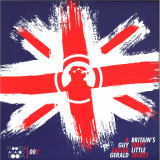
For a number of years now, A Guy Called Gerald has largely made music only for himself. But this special EP is borne from Gerald’s unique and long-lasting friendship with Analog Room founders Mehdi Ansari, Siamak Amidi and Salar Ansari. They first met in 2013 when Siamak booked Gerald to play his Analog Room party in Dubai – a leading underground light in the UAE’s then emergent scene. Away from the glossy VIP hotels and expensive bottle service parties
typically associated with Dubai, Analog Room only deals with quality bookings of the caliber of Move D, Roman Flügel, Moritz Von Oswald and the likes. Gerald immediately fell in love with the party. Its strict music-first, no-nonsense policy appealed to him and he’s returned many times over the years.
By then, of course, A Guy Called Gerald’s musical legacy was already assured. The Manchester icon is best known for his 1988 hit single Voodoo Ray – the touchstone of his hometown’s dawning acid house scene. As well as being an early member of 808 State, Gerald embraced breakbeat and jungle, ran his own Juice Box Records label and worked with the likes of Columbia, Perlon, K7! and many other vital labels. His skills on everything from synths to keys, samplers to
drum machines stood him apart then – and still do today.
“This release is based on a real friendship,” Gerald explains. “I feel part of the Analog Room family. Back in the early days, that’s how it was. These days, it’s like, ‘Oh, you’re famous, let’s do something.’ I’m not interested in that. I’m not interested in being a celebrity or living that life. I’m the same as I was 30 years ago, all I care about is the music. With Mehdi, we have spent hours jamming in private in Dubai, we have partied together. We’ve vibed together for so long and he’s shown me new parts of the world I should be making and playing music in, away from the trendy scenes in other places. So this is an exclusive just for him.
I’m not looking at doing anything else with anyone, and the music is just about celebrating individuality rather than trying to fit in anywhere.”
When Iranian-born Mehdi decided to start Moozikeh Analog Room – which translates from Farsi as “the music of the Analog Room” – Gerald was one of the first artists he asked to release on the label. It might have taken some time for Britain’s Dirty Little Secret to materialize, but boy it’s been worth the wait.
Says Mehdi, “The magic comes through proper relationships and friendships.
That’s why Analog Room worked. It was a great room, an amazing sound system, with amazing artists doing their thing. Bookings were so on-point because we had agents around the world, on the dancefloors, spying up artists who were killing it,
and Gerald was one of them. He was a perfect fit from the first gig and our friendship grew from there. He’s always been very kind to me. We have this common language of music without any bullshit, and that is where this EP comes from.”
The EP is a mixture of different things. Some of it is unreleased material from the vaults revisited, some of it is brand new. It opens up with the devastating Old Skool – a writhing, physical track with naughty bass. The drums hark back to Gerald’s early days of making jungle but reimagined through a modern perspective. As the synths spray about the mix and the percussion bounces atop the jostling drums, muttered vocals draw you in deeper. Sugoi is an experimental
track that fuses ambient synth design with the spacious and eerie atmospheres of jungle. Nimble drums get you on your toes as the spangled synths twist and turn in all directions. It is a thrillingly original, impossible to define track.
Flash Fight is built on a captivating rhythm that sits in the area where house, techno and jungle intersect. It is warm and cavernous, physical yet elegant as it bounces on rubbery kicks and lithe synths roam in and out of earshot. Perfect for those sweaty, cozy back rooms, it’s another masterclass from Gerald. Closing out the EP is False Religion, a deep-rooted house track with elastic drums and
haunting, wispy pads. As a subtle acid bassline rises and falls way down below,
Gerald’s own mystic whispers leave listeners hypnotized.
Following on from Analog Room co-founder Salar Ansari’s debut release on the label, this EP is a statement of intent. More releases will follow from some of Analog Room’s most frequent international guests, but only when the time is right. Moozikeh Analog Room is a label of love, one that is focused on putting out the best possible music at all times rather than chasing hype.
A timely reminder of why A Guy Called Gerald is one of the world’s most enduring electronic artists.
The Artists Formerly Known As The Connection Machine (Utrecht, Netherlands) go raw and mean on this one! If the underground The Hague-style from the 90s is your thing, this 12" is your cup of tea. 4 hectic 808/303 trax, all mixed in a dirty way, with loadsa fx on the 303.
The Connection Machine/Cray Emoticon is the multi-talented duo of Natasja Hagemeier and Jeroen Brandjes, who debuted on U-TRAX in 1993 with their instant classic and much sought after 'The Dreamtec Album' (catalogue no: 3 UTR UMM 1). They went on to create another epic release called 'The Black Hole EP' on U-TRAX (catalogue no: 5 UTR UMM 2), but not after they presented 'Bitflower', a true work of art on Planet E from Detroit. Later they released the CD album 'Painless' on Down Low Music and in more recent years two 12"s (shared with The Lost Trax) and an album on Tabernacle Records from the UK.
The title track is originally meant as a replacement for the original game music of level 9 of the 2nd episode (E2L9) of the computer game Doom. The artists thought the original score wasn't doing right to the intensity of the game and made their own apocalyptic soundtrack. 'Gnawing The Heart' already proved its usefulness on many a dancefloor, whilst 'Choice Chip' will satisfy the ultimate speed freaks amongst you. If you're not into drugs or mushrooms, 'I Wish My Zapper Was A Gun' can deliver you the same effects: it's a psychedelic space-acid trip, built around a sample of the sitcom 'Neighbours'.
You can't get wrong with this vintage and merciless dance floor material from the mid-nineties.
Original release date: October 1995.
Originally released in 2005 on Cooper's Hipshot Cd-r label, and reissued here for the first time on vinyl, Spirit Songs deserves to be regarded as a true rediscovered gem, remixed and remastered by Mike Copper himself!
Spirit Songs comes as a highly organic form of Ambient-Folk-Blues with Cooper reordering material to create an immersive listening experience. A stream of cut-up lyrics inspired by Thomas Pynchon's writing slide across multiple electronic layers and masterfully fingerpicked acoustic guitars combining into a moving tide. This is deeply inspired music from a unique artist: Mike Cooper the so called "icon of post-everything music” a true sound explorer constantly pushing the boundaries of genres and styles, Folk, Blues, Free Improv, Exotica, Ambient, Electronica...
"Spirit Songs.. a glorious marriage of all three of Cooper's previous musical strategies; creating a stunning hybrid. The album contains 10 songs performed on finger-picked acoustic and electric lap steel guitar,
often looped and treated in real time, with Cooper singing lyrics in a quietly meandering, semi-improvisatory manner that recalls a more polished Jandek. The style of songwriting is immediately recognizable as blues, but an intuitive, idiosyncratic form of folk-blues, with Cooper narrating laments over matters personal and global, gentle universalisms that double as political messages. All of this occurs over a loose rhythmic framework provided by various noisy loops, with cracks, scratches and pops, echoes and distortions skipping out from every refrain. It's a gentle cacophony with subtle undercurrents of beauty and sadness, effortlessly nostalgic but still very rooted in the now. I think that Mike Cooper can genuinely call this style his own; I've never heard anything remotely like it, and it works beautifully, highlighting both song and singer, as well as the happy accidents resulting from the intersection of structure and chaos."- Pitchfork Review.
Between the 60s and 80s, Albert Verrecchia played a major role in Italian pop music and on the European disco and Afro-cosmic scene, both under his own name and under the monikers Albert Weyman and Albert Prince. He was the keyboardist of legendary Italian-French r'n'b band I Pyranas, served as a session Hammondist for singer and TV star Raffaella Carrà, and produced the disco trio Belle Epoque as well as the debut album of singer-songwriter Alan Sorrenti. Among his many incarnations, in the early and mid-70s he also composed a few soundtracks for Italian genre cinema, including for movies such as the poliziottesco Roma drogata, la polizia non può intervenire (Hallucinating Trip, 1975, Lucio Marcaccini) and the erotic drama Tecnica di un amore (1972, Brunello Rondi).
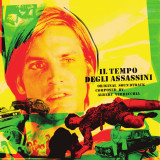
The score he wrote in 1975 for Il tempo degli assassini (Season of Assassins, a film about a gang of criminal youths who terrorize the city of Rome in the already violent 70s) is certainly his most accomplished work in the genre. Conceived for a small ensemble, it was written almost entirely on the spot in the recording studio. Verrecchia himself played the Moog, and his dynamic and percussive approach to the instrument resulted in a style midway between funk and proto-disco. A modern rhythmic style - or Ritmico Moderno, which is the title chosen by CAM for the LP containing the soundtrack and released two years later as part of a promotional library music series only distributed to film professionals and radio and TV programmers (CML series, cat. no. 131). One is led to wonder whether it was thanks to that LP that, in 1977, three pieces from the soundtrack found their way into another film about youth gangs, the Spanish Perros callejeros (Street Warriors), written and directed by Jose Antonio de la Loma. On a side but important note, there's the added bonus of popular 70s and 80s entertainer Sammy Barbot singing on Gang Leader alongside female vocal group Baba Yaga. What a pity that Verrecchia's career as a film composer ended here!
- 1: Blackness Of The Night (Feat. Azita)
- 2: Od'd In Denver (Feat. Matt Sweeney)
- 3: I've Made Up My Mind (Feat. Alasdair Roberts)
- 4: Red-Tailed Hawk (Feat. Matt Kinsey)
- 5: Wish You Were Gay (Feat. Sean O'hagan)
- 6: Our Anniversary (Feat. Dead Rider)
- 7: Rooftop Garden (Feat. George Xylouris)
- 8: Deacon Blues (Feat. Bill Mackay)
- 9: I Love You (Feat. David Pajo)
- 10: Sea Song (Feat. Mick Turner)
- 11: I've Been The One (Feat. Meg Baird)
- 12: Miracles (Feat. Ty Segall)
- 13: I Want To Go To The Beach (Feat. Cooper Crain)
- 14: Night Rider's Lament (Feat. Cory Hanson)
- 15: Arise, Therefore (Feat. Six Organs Of Admittance)
- 16: Night Of Santiago (Feat. David Grubbs)
- 17: The Wild Kindness (Feat. Cassie Berman)
- 18: Lost In Love (Feat. Emmett Kelly)
- 19: She Is My Everything (Feat. Sir Richard Bishop)
Cassette[19,96 €]
The Blind Date Party hosted by Bill Callahan and Bonnie ‘Prince’ Billy
and featuring AZITA, Matt Sweeney, Alasdair Roberts, Matt Kinsey,
Sean O’Hagan, Bill MacKay, George Xylouris, Dead Rider, David Pajo,
Mick Turner, Meg Baird, Ty Segall, Emmett Kelly, Cory Hanson, Six
Organs of Admittance, David Grubbs, Cassie Berman, Cooper Crain and
Sir Richard Bishop happened online in the autumn and winter of 2020 -
2021 but the party planning dated back to the spring of 2020.
Stuck at home, with no gigs in the foreseeable future, Bill, Bonnie and
Drag City needed an outreach program to keep themselves busy, not to
mention sane. In the absence of any company or anything on the
calendar, playing songs they loved was an idea; playing with people they
loved, the desire. And making it fun - so pairing someone with someone
else having no say in the matter, the essence of the blind date, was the
plan. Favourite songs were chosen; players from around the Drag City
galaxy were messaged. Pretty soon, songs were flying back and forth -
music in the air.
By autumn, the songs started to appear online: Bill and Bonnie singing a
song by someone they loved and admired; each song cut by another
artist they loved and admired, then sent to Bill and Bonnie to provide the
finishing touches. The spotlight pointed in every direction each week:
toward the singers and writers who’d originally played the songs (Yusuf
Islam, Hank Williams Jr., Dave Rich, The Other Years, Billie Eilish,
Steely Dan, Lou Reed, Bill Callahan, Jerry Jeff Walker, Robert Wyatt,
Lowell George, Johnnie Frierson, Air Supply, Will Oldham, Leonard
Cohen, David Berman, Iggy Pop and John Prine), toward their featured
collaborators, the artists whose artwork adorned each digital single and
videos made by still more collaborators.
Like the best parties, it turned out to be everything and more than they’d
even hoped for. So many more people were involved in the process that
would on the page here. Suffice to say, making records over the years
has required a broad sense of community and an always-surprising mix
of independence and unity, inspiration and utility. Some of the best
memories are those where as many of our folks as possible were
together in one place at one time. The Blind Date Party was one of
these, maybe the most improbable one yet. It’s for everyone who’s here
and it’s in the name of everyone who’s gone but will never go and will
always live with us here. This album will too.
- 1: Blackness Of The Night (Feat. Azita)
- 2: Od'd In Denver (Feat. Matt Sweeney)
- 3: I've Made Up My Mind (Feat. Alasdair Roberts)
- 4: Red-Tailed Hawk (Feat. Matt Kinsey)
- 5: Wish You Were Gay (Feat. Sean O'hagan)
- 6: Our Anniversary (Feat. Dead Rider)
- 7: Rooftop Garden (Feat. George Xylouris)
- 8: Deacon Blues (Feat. Bill Mackay)
- 9: I Love You (Feat. David Pajo)
- 10: Sea Song (Feat. Mick Turner)
- 11: I've Been The One (Feat. Meg Baird)
- 12: Miracles (Feat. Ty Segall)
- 13: I Want To Go To The Beach (Feat. Cooper Crain)
- 14: Night Rider's Lament (Feat. Cory Hanson)
- 15: Arise, Therefore (Feat. Six Organs Of Admittance)
- 16: Night Of Santiago (Feat. David Grubbs)
- 17: The Wild Kindness (Feat. Cassie Berman)
- 18: Lost In Love (Feat. Emmett Kelly)
- 19: She Is My Everything (Feat. Sir Richard Bishop)
Vinyl[42,98 €]
The Blind Date Party hosted by Bill Callahan and Bonnie ‘Prince’ Billy
and featuring AZITA, Matt Sweeney, Alasdair Roberts, Matt Kinsey,
Sean O’Hagan, Bill MacKay, George Xylouris, Dead Rider, David Pajo,
Mick Turner, Meg Baird, Ty Segall, Emmett Kelly, Cory Hanson, Six
Organs of Admittance, David Grubbs, Cassie Berman, Cooper Crain and
Sir Richard Bishop happened online in the autumn and winter of 2020 -
2021 but the party planning dated back to the spring of 2020.
Stuck at home, with no gigs in the foreseeable future, Bill, Bonnie and
Drag City needed an outreach program to keep themselves busy, not to
mention sane. In the absence of any company or anything on the
calendar, playing songs they loved was an idea; playing with people they
loved, the desire. And making it fun - so pairing someone with someone
else having no say in the matter, the essence of the blind date, was the
plan. Favourite songs were chosen; players from around the Drag City
galaxy were messaged. Pretty soon, songs were flying back and forth -
music in the air.
By autumn, the songs started to appear online: Bill and Bonnie singing a
song by someone they loved and admired; each song cut by another
artist they loved and admired, then sent to Bill and Bonnie to provide the
finishing touches. The spotlight pointed in every direction each week:
toward the singers and writers who’d originally played the songs (Yusuf
Islam, Hank Williams Jr., Dave Rich, The Other Years, Billie Eilish,
Steely Dan, Lou Reed, Bill Callahan, Jerry Jeff Walker, Robert Wyatt,
Lowell George, Johnnie Frierson, Air Supply, Will Oldham, Leonard
Cohen, David Berman, Iggy Pop and John Prine), toward their featured
collaborators, the artists whose artwork adorned each digital single and
videos made by still more collaborators.
Like the best parties, it turned out to be everything and more than they’d
even hoped for. So many more people were involved in the process that
would on the page here. Suffice to say, making records over the years
has required a broad sense of community and an always-surprising mix
of independence and unity, inspiration and utility. Some of the best
memories are those where as many of our folks as possible were
together in one place at one time. The Blind Date Party was one of
these, maybe the most improbable one yet. It’s for everyone who’s here
and it’s in the name of everyone who’s gone but will never go and will
always live with us here. This album will too.