“This is another new one off the greatest album ever made. It’s called ‘My Kingdom.’” Rock and roll arrogance has never hemmed so close to the truth as this Ian McCulloch introduction to “My Kingdom” during the 1983 A Crystal Day concert special. Not only were Echo & the Bunnymen aware of the instant classic status of their latest LP, but the grand, majestic and fluid nature of Ocean Rain made it clear that the band had indeed set out to make “the greatest album ever made.” Ironically, despite all of their work and focus, this masterpiece sounds like it was simply handed down from the gods. Following the more rock-oriented material on their first albums, the songs on Ocean Rain were a departure. The aim was to make something “conceptual with lush orchestration, but with a twist.” With their success using strings on tracks like “The Back of Love” and “Never Stop” providing confidence, the band employed a 35-piece orchestra for Ocean Rain. Guitarist Will Sergeant would later describe the finished recording as “windswept; dark and stormy.” The Scott Walker / Love inspired string arrangements, unusual instrumentation, inventive recording techniques and McCulloch’s abstract and bewildering mysticism all added to the unique and timeless quality of the album. A statement of purpose by one of the elite bands from the ’80s underground, Ocean Rain includes several of the Echo & the Bunnymen’s most adored recordings and some of the best songs from the era. “The Killing Moon,” “Silver,” “Seven Seas,” “Crystal Days” and the aforementioned “My Kingdom” continue to mesmerize a new generation of post-punk romantics, and the band’s influence can be heard in the grandiose spectacle of groups such as Arcade Fire and British Sea Power.
quête:we call it 80 s
- A1: Miguel A Ruiz - Transparent
- A2: Camino Al Desvan - La Contorsion De Pollo
- A3: Mecanica Popular - Impresionistas 2
- A4: Finis Africae - Hybla
- A5: Orfeon Gagarin - Ultima Instancia
- B1: Victor Nubla - 2000 Lenguas
- B2: Javier Segura - Malaguenas 2
- B3: Jabir - Vuelo Por Las Alturas De Xauen
- B4: Miguel A Ruiz - Trivandrum
- B5: Mecanica Popular - Impresionistas 1
- C1: Finis Africae - Hombres Lluvia
- C2: Esplendor Geometrico - Sheikh
- C3: Victor Nubla - Chandernagor
- C4: Luis Delgado - El Llanto De Nouronihar
- C5: Camino Al Desvan - Adjudicado A La Danza
- D1: Mataparda - Me Llena La Cachimba
- D2: Suso Saiz - Horizonte Paseo
- D3: Camino Al Desvan - Fock Intimida A Gordi
- D4: Mataparda - La Papa Suave
- D5: Eli Gras - Flu
Following “La Contra Ola” (BJR015), Bongo Joe presents 'La Ola Interior', a compilation exploring the ambient side of the Spanish electronic music produced in the 80’s, bringing together 19 little-known and innovative pieces from the golden age of Spanish electronic music !
It gathers musicians from various horizons and of many generations, who shared the desire to create an immersive soundscape and to combine electronic music with non-Western musical traditions. As a general rule, the Anglo-Saxon tropism did relate the spanish peninsula’s ambient music to the Balearic Sound, that is to say to the relaxing music played in Ibiza’s nightclubs. But this music takes place in the productive territory of experimental musics, and particularly in its two main breeding grounds: the tape recording underground and the independent musicians-producers scene.
Inseparable from the processes of self-publishing, distribution and exchange of music that were then taking place in Spain in an artisanal way, the vast underground movement of cassettes was divided between an "ethno-trance" combining industrial beats and oriental sounds on the one hand (Esplendor Geométrico, Miguel A. Ruiz / Orfeón Gagarin) and unclassifiable low-fi tinkerers on the other hand (Camino al desván, Eli Gras, Mataparda, Victor Nubla). Hyperactive, this scene is radical and strongly dominated by the hardest musical styles, but the ambient, influenced by the German Kosmische Musik and "krautrock", also develops here.
The second vein of Spanish ambient comes from some of the independent labels of the peninsula (DRO, GASA, El Cometa de Madrid, EGK) whose activity will mark the return of some of the most adventurous musicians-producers of the 70s. Some were influenced by American minimalism (Luis Delgado / Mecánica Popular, Suso Saiz, Javier Segura), others by Fourth-World Music conceived by Jon Hassell and Brian Eno (Finis Africae, Jabir). Having passed through folk, ancient, traditional or contemporary music, and being familiar with improvisation and studio techniques, these artists come from a mutant hippie culture, capable of phagocyting many musical styles from electronic ambient to ethnic improvisation and modal jazz.
These two scenes and generations that make up LA OLA INTERIOR intersect around a common interest in non-Western musical traditions. Their exploration may be that of the tribal origins of electronic rhythms or the Arab heritage of Spain. Above all, it is a dreamy exoticism, an immobile journey as the sounds, rhythms or instruments of these traditions are scrutinized by Western practices (avant-garde music, electronic technology). The result is a hybrid music, filtered and reinvented, neither Western nor extra-Western, with a pronounced taste for the fusion of opposites, which we have called "Acid Exoticism" because of its permanent search for trance or contemplation. Atmospheric, contemplative and serial, these musics still plunge us today into a sensorial journey, at the same time interior and distant, organic and technological, between exotic reminiscences and interior visions.
English jazz-funk band Level 42 released their tenth studio album Forever Now in 1994. While Forever Now marked the return of original drummer Phil Gould, it was the last album before the band’s breakup. Featuring the popular singles “Forever Now”, “All Over You”, and “Love In a Peaceful World”, the album was a commercial success. It reached #8 in the UK album charts. Music critics were also generally favourable, with Allmusic calling it the band’s “best album since the mid-80s heyday of World Machine and Running in the Family”.
Limited Coke Bottle Green vinyl, 250 copies only for the UK. Any future pressing will be on black vinyl. Massage feature Alex Naidus from Pains At Being Pure At Heart. Recorded by Lewis Pesacov (Fool’s Gold, Foreign Born, Peel’d). Massage was supposed to be low-stakes, no big deal "anti-ambition," as Andrew Romano, guitarist and vocalist, put it. The L.A.based jangle-pop group's first album, 2018's Oh Boy, was a sweet and simple weekend warrior's affair, or more specifically, an every-other-Monday one, as the band members gathered to bash out songs that offered messy but heartfelt tribute to their chosen heroes: The Feelies, the Go-Betweens, Twerps, Flying Nun. For Romano, not taking things too seriously is a dead-serious affair: “Nothing kills the kind of music we want to make faster than the sense that a band is trying too hard,” he says. The kind of music Massage makes sunny, bittersweet, tender is less a proper genre than a minor zip code nested within guitar pop. Take a little "There She Goes" by the La's, some "If You Need Someone" by the Field Mice; the honey-drizzled guitars from The Cure's "Friday I'm In Love," a Jesus & Mary Chain backbeat, and you're almost all the way there. Indie pop, jangle pop, power pop whatever you call it, pushing too hard scares the spirit right out of this sweet, diffident music, and Massage have a touch so light the songs seem to form spontaneously, like wry smiles. Still, on their sophomore effort, Still Life, they manage to take a quantum leap forward in songwriting, production, and depth, all somehow without seeming to try. These 12 deft songs are full of late-summer sunlight and deep shadows, pained grins and shared jokes, shy declarations of love and quietly nursed heartbreak. Still Life resurrects a brief, romantic moment in the late-'80s, right after post-punk and immediately before alt-rock, when it seemed like any scrappy indie band might stumble across a hit. When Andrew Romano and Alex Naidus first met in 2007, Naidus had just joined a band with his friends Kip Berman and Peggy Wang that was about to stumble into many of them. When Naidus finally left Pains for L.A. in 2013, two hit albums and a few world tours later, he started playing with Romano to recapture the no-stakes, suburban-garage joy of making music for its own sake. It was "friendship incarnate," Naidus remembers. The other members came from within the friend circle Gabrielle Ferrer (keyboard/vocals) is Romano's sister-in-law, Michael Felix (drums) is one of Naidus’ best friends, and David Rager (bass) is a childhood friend of Felix’s. When Felix moved to Mexico City in early 2020, Naidus’ wife, Natalie de Almeida, stepped in. The result is the finest batch of songs they've ever produced. From Naidus' velvet-lined JAMC tribute "Half A Feeling" to Ferrer's Let It Be-era Replacements-tinged lament "The Double" to Romano's "In Gray & Blue," these are gold-standard indie-pop gems from emerging masters of the form. Still Life glows with the sincerity and unfakeable warmth of the era they so lovingly channel. Like the best Gin Blossoms chorus you still remember, the songs on Still Life stir big, pure emotions, but beneath them, uneasy truths about adulthood linger, just below the surface. Maybe the exact mix of ringing guitars and two-part harmonies can chase those feelings away, or redeem them, for at least a minute or three. Massage won't stop trying.
Joshua is the follow-up album to Olympic. While the second album, typically, often shows what critics call “maturity”, here Simon has released instead an album of adolescence. The musician opened up his own memory box to contemplate his childhood souvenirs, and dust them off of all nostalgia. At that time, he would VHS-record movies from TV and tape record soundtracks directly from the TV speaker, so he could listen to them in his bedroom. This is when he “discovered the power of music, the way it makes you enter another world, far from reality. I wanted to pay tribute to the era I shaped myself in – the ’80s and ’90s”. Tangerine Dream, Kraftwerk and Soft Machine. Logically, these are the sonic signatures that seem to haunt the album. The timeless pioneers of synthetic music constitute the sound references, without any established chronological timeline, that blend with the atmosphere of typically “French Touch” movie soundtracks – long before the term was even coined. “I use a musical palette that acts as a flashback to my favourite teenage movies: the synth sounds of Close Encounters of the Third Kind; the synth pads in Jean-Jacques Cousteau’s fascinating documentaries about the sea world; the melodies in the manner of François De Roubaix; the themes that evoke the soundtracks of late-night TV sessions (those by Verneuil, those with Belmondo, Depardieu, etc.); and the sci-fi ambiences like in Blade Runner.” In short, an aesthetic was decided on by Simon very early on: French analog synths instead of North American symphonic orchestras.
The name Joshua has two meanings for French 79: one is linked to the idea of nostalgia, the other to adventure. On the one hand, the computer in the 1983 movie Wargames, and on the other, the boat of French sailor Bernard Moitessier.
The track titled Joshua synthesizes the spirit of the album – an odyssey, a neverending crossing of the world in search of oneself, a spontaneous escape into the future, under the benevolent eye of the past. This epic invites everyone of us to a specific place in our imagination, which is also the source of an indescribable pleasure for French 79: a gust of wind, a sailboat ride, a skateboarding trick, the smell of freshly fallen snow, or the dull roar of an impatient audience.
The same aesthetic preferences are found in the videos that illustrate Joshua’s first tracks: for Hold On, the skateboarder chose to recall the cult ’90s skate videos that he would watch on repeat as a teenager, while Hometown hints at Close Encounters of the Third Kind. Although he now calls Marseille home, Simon continuously draws with passion from the anachronic contemporaneity of his childhood in the Eastern French region.
“I need escape to be able to create. A two or three-day sailing trip gives me enough inspiration to lock myself in the studio for a week when I’m back on dry land.” His boat takes him far away from everything, far from the Old Port where she moors, the rest of the time Simon would escape by walking the streets of his city or climbing the Alpine mountains.
Not only does the new version French 79 reveal a few biographical pieces of Simon henner's history, but it also inaugurates the first vocal track for the musician. One feels a guilty pleasure when hearing him take the lead on the first track, The Remedy. The electronic fugue that opens the album sets the tone: Simon has found the cure for his inner turmoil and wants us to discover our own treatment too. Hold On is a sonic explosion that celebrates the feeling of freedom - what's more of a teenage dream than this feeling - and it eventually command one to feel the same way too. Echoing Olympic, the electronic argonaut invites his muse again, singer Sarah Rebecca. On By Your Side and Touch The Stars, the native of Ocean Springs, Mississippi, now based in Paris, hoisted the mainsail of dream pop. First, though a dialogue that surfaced their unfailing attachment to the bonds of friendship, then through the light hearted atmosphere that leaves us with no choice but to believe in our own dreams and do anything possible to fulfill them. The quest for peace in the midst of the daily din is heard in both Code Zero and the title track Joshua, two majestic journeys in search of hedonism, combined with introspection.
- A1: The Nips - Gabrielle
- A2: Dolly Mixture - New Look Baby
- A3: The Blades- Revelations Of Heartbreak
- A4: The Crooks - Modern Boys
- A5: Inspiral Carpets - Saturn 5
- A6: The Users - Kicks In Style
- A7: Untamed Youth - Untamed Youth
- B1: Les Elite - Get A Job
- B2: The Gents - The Faker
- B3: The Name - Fuck Art Let’s Dance
- B4: The Scene - Something That You Said
- B5: The Killermeters - Why Should It Happen To Me
- B6: The Accidents - Blood Spattered With Guitars
- C1: The Fixations - No Way Out
- C2: The Leepers - Paint A Day
- C3: The Variations - Fight Back
- C4: The Same - Movements
- C5: The Kick - Stuck On The Edge Of A Blade
- C6: Daggermen - Ivor The Engine Driver
- C7: New Hearts - Only A Fool
- D1: The Long Ryders - Looking For Lewis And Clark
- D2: Ocean Colour Scene - The Day We Caught The Train
- D3: Nine Below Zero - Pack Fair & Square
- D4: The Jolt - I Can’t Wait
- D7: The Moment - Sticks & Stones
- D5: The Inmates - Dirty Water
- D6: Scarlet Party - 101 Dam-Nations
In 1979 as a 15-year-old Eddie Piller was perfectly placed to be at the epicentre of the Mod revival. An inquisitive passion
for music, a family connection to Mod royalty The Small Faces, and an attitude that saw him travelling his home city, then
the country and then the world to take in the sounds that were emerging. In the years since, Piller has been a legendary
figure within the music industry setting up and continuing to own the ground-breaking Acid Jazz label, signing multiplatinum artists such as Jamiroquai and The Brand New Heavies collaborating on compilations with Martin Freeman and as
an award winning broadcaster even setting up his own Totally Wired Radio station. In The Mod Revival he looks back at the
movement that set him on his way.
• Mod is a sixties youth movement original built on sharp clothes, American soul music and nights on the town, that has never
really died. The originals added young British groups to their likes and then moved on, but their influence echoed on
through the 1970s in Northern Soul clubs, and in the sixties influenced bands of the pub rock era. When punk arrived, it was
supposed to sweep away the past, but instead the Sex Pistols were covering the Small Faces. The Clash brought in Mod DJ
Guy Stevens to produce London’s Calling, The Buzzcocks sounded closer to the Hollies than The Ramones and in The Jam’s
Paul Weller there was a musical and sartorial nod to the past of The Who, The Beatles and pop art arrows.
• Weller had spent the 1970s becoming obsessed by mod and saw punk as having a similar youthful energy to the era he had
missed by being born a decade too late. For others Weller’s style proved an inspiration, and as the Jam broke through in late
1978, they saw a wave of bands follow in their wake, and they themselves influenced others to form their own groups. But
there were other things. In bleak late 70s Britain the glorious optimism of the 1960s looked bright and shiny, and as it was
only a decade or so in the past, it was easy to pick up original records, clothes and books for pennies, and as you bought
these you met other like-minded souls who did the same. For those a little too young for punk, it was a community of gigs,
scooters, clothes, bands and records, and for many it developed on through.
• Eddie never stopped being a mod and has a unique perspective having now lived through four decades of being intimately
involved in the music that has emerged from the mod scene. In this part two double vinyl edition (Part 1 and its CD
equivalent reached #14 in the UK compilations charts) Ed guides us through some of his favourite music from the scene. He
guides us through a plethora of bands whose influences include The Who, The Kinks and the Jam, to sixties soul and R&B,
those with an eye on psychedelia. The records have a vitality and a certain stylish swagger to them, that marks them out as
mod. In the deluxe booklet, Piller has written a 5000 word note describing what it meant to him and has granted access to
his own scrapbooksfrom his many years of gig-going from which pages and memorabilia are reproduced.
• Eddie Piller’s Mod Revival is a personal appraisal from the founder of The Modcast, on what the mod explosion of the late
70s and 80s means to him…
- A1: Peach Of Immortality
- A2: Umbrella Spinner
- A3: Dialogue Between A Grandmaster Of The Knights Hospitaller & A Genoese Sea-Captain
- A4: Vulning
- A5: Lathe Of Heaven
- A6: Sirin
- A5: Nowhere Much Narrower
- A6: Charioteers
- A7: Milk Street
- B1: Magic Mountain
- B2: Ophir
- B3: Paradigm & Places
- B4: Threadneedle
- B5: Ferae
- B6: Forest Of Materials
Black Truffle is pleased to present Sylva Sylvarum, an epic new work from Ora Clementi, the collaborative project of crys cole and James Rushford. Primarily conceived and recorded over several months together in Melbourne, Sylva Sylvarum is a stunning step forward from the mumbled, creaking sound world of the duo’s debut, Cover You Will Softer Me (Penultimate Press, 2014). From the opening ‘Peach of Immortality’, which takes an unpredictable journey from layers of chiming bells, vocal harmonies and lush synth pads to a desolate landscape of half-animal, half-digital wooshes and cries, it is immediately clear that cole and Rushford are working here with an entirely unique sound palette. Throughout the record’s four sides, we hear a large array of carefully detailed synthesizer sounds (many of them recorded at the remarkable Melbourne Electronic Sound Studio), sparse drum machine hits, wind instruments and field recordings of animals, often with a twistedly late 80s/early 90s flavour that at various points calls up New Age references, Robert Ashley’s later operas or the thinned-out textures of early digital GRM.
Threaded through this distinctive array of sounds are the two musicians’ voices, sometimes singing, sometimes speaking through varying degrees of manipulation. A guiding thread through the pair’s collaboration, beginning with their initial experiments with lip-readings, the presence of these two voices – cole’s crisp and sibilant, Rushford’s rich and low – reinforces the sense that the music is immersed in itself, less performed by two people than occurring between them. On Sylva Sylvarum, these voices first come to the forefront on the third piece, ‘Dialogue Between a Grandmaster of the Knights Hospitaller and a Genoese Sea Captain’, where in unison they intone fragments of a description of an imaginary space taken from a 17th century utopian text. The two voices resurface periodically thereafter, most stunningly in the unexpected turn into cushiony dream pop on ‘Magic Mountain’. At other points, the subtle manipulation of pitch and intonation in the close-miked vocal performances filters the recitations through a fog of abstraction that climaxes with the almost incomprehensible alternating syllables of the side-long closer ‘Forest of Materials’. Like the album’s title, these textual elements are drawn from various literary descriptions of utopias, a theme that also informed the pair’s musical approach. Far from anything dryly illustrative, utopia figures into Sylva Sylvarum as an invitation to inhabit otherworldly spaces that, like the empirical details that proliferate in these literary utopias, are grounded in mundane reality but shot through with the eldritch. Admirably framed by the abstracted digital topographies of Sabrina Ratté’s artwork, the uncanny sweep of the album’s fifteen pieces is expansive enough to take in stretches of crackling austerity, warped microtonal keyboard etudes and moments of stunning beauty, the latter most strikingly when cole and Rushford are joined by Callum G’Froerer on trumpet and Joe O’Connor on trombone for a series of dream-like moments moving from growling overtones to poignant lyricism.
Presented in a deluxe gatefold sleeve with stunning artwork by Sabrina Ratté and pressed on mint green vinyl. Mixed and mastered by Joe Talia at Good Mixture, Berlin.
Reissue for John Joseph’s own all-star group 2017 debut album
At its purest, there is little that can match the visceral thrill and empowering spirit of hardcore. As front-man of New York City hardcore kings Cro-Mags, this is something John Joseph knows very well, and with Up In Arms, he and his Bloodclot compatriots deliver a furious collection that hits hard on every level. "In this band we're doing what each of us have always done: give it our all," he states plainly. "We work hard, and we have a lot to say. Look around the planet - people are fed up with the corrupt ruling class. They destroy the planet and kill millions for profit, and the formula for our response is simple: Anger + applied knowledge = results. Don't just bitch. Change it."
The results reflect the roots and passions of the individual members. Danzig/Murphy's Law guitarist Todd Youth was the first piece of the puzzle. "We've always talked about doing this record together, Todd had songs written and I had notebooks full of lyrics. In late September 2015, I went out to LA to do a triathlon and injured my calf muscle, so I couldn't race, and Todd said he could get some studio time. So, we went in and cut the demo. While there are things we may perceive as a negative in our lives, in fact the universe has a bigger plan, and that experience ultimately resulted in the record." Having been friends with Queens Of The Stone Age and Danzig powerhouse drummer Joey Castillo for three decades, the two musicians had long admired each other's work, and their collaboration has been a long time coming. Following Castillo's suggestion of bringing in Nick Oliveri (Queens Of The Stone Age/The Dwarves) to handle bass duties, the lineup was complete. The songs that comprise Up In Arms manifested after the quartet plugged in and let the music speak for them. "We didn't decide to try to play anything, these are the songs that happened when we started jamming, and I love this band because there are no egos involved. Our goal is to make the best music possible, period. I love it when those guys contribute with melodies, etc., and I've even helped with some of the arrangements. Because we all think alike, our lyrics deal with the issues of the day, and that makes for better songs."
Every track on Up In Arms lives up to the rallying cry of the album's title - the bursts of high energy hardcore act as the perfect accompaniment to Joseph setting his sights on injustice and the seemingly endless flaws of the contemporary world. The breakneck thrashing of "Slow Kill Genocide" is an anthem for everyone sickened by those responsible for "killing the planet and all its inhabitants through industry and war. They're fucking maniacs and must be stopped." The suitably titled "Manic" attacks with bared fangs, Joseph making it clear that you can only push someone so far before they will react with violence - a call to arms for the disenfranchised who want tomorrow's world to be better than today's. Tracked at NRG in Los Angeles, the raw, old-school production that leaps out from the speaker comes courtesy of producer Zeuss (Hatebreed, Revocation), and the record was mixed by Kyle McAulay at NRG. From the moment the opening title track explodes to life, it's clear that everyone involved is having a blast and playing from the heart, and that this is no frills / no bullshit music at its most passionate - every song evoking mental images of utter chaos in a heaving mosh pit.
For anyone approaching the album for the first time, Joseph has only this to say: "Turn the volume way the fuck up!" And with plans to tour everywhere, Bloodclot will be getting in a lot of faces in 2017 and beyond. "We are already writing material and the next album is in the works. But, for now, all we want is to hit the stage to support 'Up in Arms', and every single night leave every ounce of ourselves up there."
A deep dive into the one of most collectable jazz catalogues in the world, a selection of some of the rarest and most sought-after recordings from the 60s and 70s, a time when British jazz began to find its own identity. Drawn from the iconic labels of Decca, Deram, Argo, EMI Columbia/Lansdowne Series, Fontana, Mercury, & Philips. A figure in British modern jazz for over half a century, Don Rendell was both active protagonist and key witness to the main developments in the music from its rise out of tiny clubs and back rooms on up to the most prestigious national stages. From his earliest performances in London’s West End and his work of the 50s and 60s — most not ably with the Don Rendell-Ian Carr Quintet — to the lower profile work of the 70s and 80s, his quite assurance and consistent performance marked him out as a highly respected figure among his peers. He is one of a handful of British artists to feature on Blue Note Records and appeared on some of the most distinctive and characterful British jazz albums by the likes of Michael Garrick, Stan Tracey, Amancio D’Silva, and Neil Ardley. Even though Rendell eschewed much of the free and electric fusion styles that came to the fore in the late 60s, in the main sticking to an acoustic sound with melody and rhythm at its heart, he similarly bridled at any notion that he was merely a ‘bopper’, a description he positively hated. In many ways, Space Walk was as much a valedictory as transitionary album for Rendell. It was his last for Denis Preston, the fabled producer behind Lansdowne Studios, described by Neil Ardley as a ‘rare Diaghilev like figure’ who steered many of the key figures of the British jazz scene into the studio when nobody else would record them. It was also Rendell’s final project for EMI Columbia and his last as a leader for a major record label. After Space Walk, Rendell would record for smaller, independent labels like Spotlite. But as much as the album is a farewell to one chapter, it also marked the way forward to the next..
Tonnon produced the album with longtime collaborator, and The Beths’ guitarist and producer, Jonathan Pearce. Tonnon wrote the bulk of the songs during an extensive period of touring after the release of Successor - a period where Tonnon performed with Nadia Reid in Europe, The Veils in the USA, and The Chills, The Phoenix Foundation and Don McGlashan in New Zealand. The pair workshopped songs between tours, often recording new parts as the live versions developed.
Tonnon and Pearce recorded between 2017 and 2020, and in that time, Tonnon’s practise evolved heavily. He incorporated new technology into his set, including the Wellington-designed Synthstrom Deluge, which allowed him to adapt his set for new performance environments;Art Galleries, Museums, even New Zealand Fashion Week. He took that technology further when he collaborated with the Otago Museum on the immersive show for Planetariums, A Synthesized Universe, which travelled to Arts Festivals around New Zealand in 2019.
Creating a music video for ‘Old Images,’ which explored a lost passenger train network, Tonnon came to the idea for a new experience-based show called Rail Land. It took audiences on railways to reach distant community halls around Aotearoa. The show saw Tonnon combine historical research and spoken word narrative, with the immersive lighting and musical technology he developed for A Synthesized Universe. In March, Rail Land finished a three-night run at Auckland Arts Festival, cementing Tonnon’s move to the concept show.
Over time, Tonnon and Pearce’s production moved further from the traditional rhythm sections that powered songs like Successor’s ‘Water Underground.’ In their place came off kilter electronic rhythms, like the beat in ‘Two Free Hands,’ and textures that blur lines between organic and synthesized sound. Guitars are set against synthesizers, and drums against drum machines in ‘Entertainment’ and ‘Peacetime Orders,’ which Tonnon also used in his soundtrack for RNZ’s 80s spy-themed podcast The Service. In ‘Leave Love Out Of This,’ a ballad starts with a piano and a string quartet, but ends in a wall of electronic sound.
The constant has been Tonnon’s lyrics. Whether singing about evolution and the future of work in ‘Two Free Hands,’ the television industry in ‘Entertainment,’ or environmental disaster and regulatory failure in ‘Mataura Paper Mill,’ Tonnon has followed a distinct approach to subject matter, description and phrasing that have seen him longlisted for the APRA Silver Scroll three times.
Tonnon’s explorations of local government and civic infrastructure in his work - an unusual preoccupation for a songwriter, have taken new meaning in his adopted home of Whanganui, where last year, he was elected by councillors as Whanganui District Council’s representative for public transport.
After Tonnon moved to Whanganui, and Pearce toured almost constantly after the success of The Beths’ first album, the pair conducted their collaboration over distance, but with key sessions at Pearce’s Karangahape Road studio, including drums and bass with long time band members Stuart Harwood and David Flyger, a string quartet led by Charmian Keay and arranged by Matthew Bodman, and additional drums with The Beths’ Tristan Deck.
As Leave Love Out Of This is released, Tonnon and Pearce find themselves in very different places to where they started, working on Auckland’s Karangahape Road, close to the venues like Wine Cellar and Whammy Bar where they regularly performed. Back in New Zealand since Covid, Pearce has had to adjust to being in one of Aotearoa’s best-known bands, while Tonnon, when not working on conceptual shows, wrestles with how to restore civic infrastructure to a post industrial city in the regions.
Created over a life-altering period of, Leave Love Out Of This is the culmination of years of experimentation and development - with new technology, new sounds, and new ways of creating, and performing music.
If you don't yet know, Flexi is a record store and music label based in Italy and run by Simone and Lorenzo.
Over the years, Flexi have gained both the respect and recognition of the music scene, earned by almost forty years of experience in the world of music and with the support of many DJs, artists and fans
Finally Flexi Cuts returns with a brand new release pressed on a “raw transparent" vinyl called “Velvet Series” no 2 – six quality tracks from six superb artists for an electronic journey that makes you fly over “velvet”.
Selection of the works wasn't easy; the tracks were chosen tryin' to maintain a high quality level, such as the oldest (v. series part 1) which have been so appreciated out there.
The A side opening is by Bologna-based Brine, with “YR Body” that provides a Juno-ish bassline with a catchy vocal and a jazzy mood.
Then we have “Benerice" from Daughters and Sons (aka the master Luca Fronza) who throws us into a beautiful Detroit-inspired analog jam.
This side ends with our very own Sicily man Manuold with fresh Italo-House vibes absolutely made for the dance floor.
On the B side, welcome back the veterans Tengrams (formerly the Piatto brothers from N.O.I.A Records) with the outstanding "Rapid Eye Movement"… travelling across retro-future influences and 808 patterns… under a dystopian-sci-fi movie theme.
B2 track is by the Calma duo who plays with a few elements to build a neverending techno climax...did you recognise the sample?
The last track is a sort of relaxing downtempo sunset closure complete with bells, from the California producer Gloved Hands, a name that speaks for itself.
- A1: Africa Is My Root - Osayomore Joseph And The Creative Seven
- A2: Ta Gha Hunsimwen - Akaba Man The Nigie Rokets
- A3: Popular Side - Akaba Man And The African Pride
- B1: Iranm Iran - Victor Uwaifo And His Titibitis
- B2: Sakpaide No 2 - Victor Uwaifo And His Titibitis
- B3: Ta Ghi Rare - Akaba Man The Nigie Rokets
- C1: My Name Is Money - Osayomore Joseph
- C2: Ogbov Omwan - Akaba Man The Nigie Rokets
- C3: Aibalegbe - Victor Uwaifo And His Titibitis
- D1: Who Know Man - Osayomore Joseph And The Ulele Power Sound
- D2: Obviemama - Victor Uwaifo And His Titibitis
- D3: Ororo No De Fade - Osayomore Joseph And The Ulele Power Sound
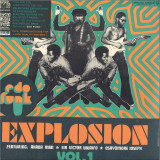
Analog Africa Presents Edo Funk Explosion Vol. 1, available on
2xLP/Gatefold LP with 20-page booklet / CD with 36-page booklet. It was
in Benin City, in the heart of Nigeria, that a new hybrid of intoxicating
highlife music known as Edo Funk was born.
It first emerged in the late 1970s when a group of musicians began to experiment with different ways of integrating elements from their native Edo culture
and fusing them with new sound effects coming from West Africa s night-clubs.
Unlike the rather polished 1980 s Nigerian disco productions coming out of the
international metropolis of Lagos Edo Funk was raw and reduced to its bare
minimum.
Someone was needed to channel this energy into a distinctive sound and Sir
Victor Uwaifo appeared like a mad professor with his Joromi studio. Uwaifo
took the skeletal structure of Edo music and relentless began fusing them with
synthesizers, electric guitars and 80 s effect racks which resulted in some of the
most outstanding Edo recordings ever made. An explosive spiced up brew with
an odd psychedelic note known as Edo Funk.
That’s the sound you’ll be discovering in the first volume of the Edo Funk Explosion series which focusses on the genre’s greatest originators; Osayomore
Joseph, Akaba Man, and Sir Victor Uwaifo: Osayomore Joseph was one of the
first musicians to bring the sound of the flute into the horn-dominated world
of highlife, and his skills as a performer made him a fixture on the Lagos scene.
When he returned to settle in Benin City in the mid 1970s - at the invitation of
the royal family - he devoted himself to the modernisation and electrification
of Edo music, using funk and Afro-beat as the building blocks for songs that
weren’t afraid to call out government corruption or confront the dark legacy of
Nigeria’s colonial past.
Akaba Man was the philosopher king of Edo funk. Less overtly political than Osayomore Joseph and less psychedelic than Victor Uwaifo, he found the perfect
medium for his message in the trance-like grooves of Edo funk. With pulsating
rhythms awash in cosmic synth-fields and lyrics that express a deep personal
vision, he found great success at the dawn of the 1980s as one of Benin City’s
most persuasive ambassadors of funky highlife.
Victor Uwaifo was already a star in Nigeria when he built the legendary Joromi
studios in his hometown of Benin City in 1978. Using his unique guitar style as
the mediating force between West-African highlife and the traditional rhythms
and melodies of Edo music, he had scored several hits in the early seventies,
but once he had his own sixteen-track facility he was able to pursue his obsession with the synesthetic possibilities of pure sound, adding squelchy synths,
swirling organs and studio effects to hypnotic basslines and raw grooves. Between his own records and his production for other musicians, he quickly established himself as the godfather of Edo funk.
What unites these diverse musicians is their ability to strip funk down to its
primal essence and use it as the foundation for their own excursions inward to
the heart of Edo culture and outward to the furthest limits of sonic alchemy.
The twelve tracks on Edo Funk Explosion Volume 1 pulse with raw inspiration,
mixing highlife horns, driving rhythms, day-glo keyboards and tripped-out guitars into a funk experience unlike any other.
For BRZ45087 we present a split release comprised of two tried-and-tested favourites from the Mr Bongo record bag.
Rio-born pianist and organist Lafayette’s career started in the mid-60s and saw him become a prominent member of the Brazilian musical movement entitled 'Jovem Guarda’. For his inclusion on this selection in the Brazil45 series we move things along a few years to 1982 and the Brazilian boogie gem 'Sol De Verão'. Taken from his album 'Edição Especial’ and originally released on Copacabana Records, 'Sol De Verão' was written by Jorginho Gomes from one of Brazil's greatest bands Os Novos Baianos. It's a superb slice of 80s boogie/funk brilliance with a super catchy ear-worm of a vocal - definitely one for the dancers!
For the flip, we include an absolute monster from the fantastic Marisa Rossi, who we featured previously on number 38 in the Brazil45 series. 'Quem Vem Lá’ is a heavy driving Samba Rock / MPB groove track with female and male call and response vocals. Originally released on a very rare and exclusive 7" also on Copacabana Records, but this time in 1971. Marisa would go on to work with the legendary Arthur Verocai in the 1980s.
Two very different slices and styles of Brazilian music, but both absolute gems.
- 1: Déesse Du Crime
- 2: Prisonnier De La Nuit
- 3: L'etranger
- 4: Exécution
- 5: Le Fléau De Dieu
- 6: Prière De Satan
- 7: Vampire
- 8: Caligula
- 9: Introduction
- 10: Déesse Du Crime - Demo Version
- 11: Caligula - Demo Version
- 12: L'etranger - Demo Version
- 13: Le Fleau De Dieu - Demo Version
- 14: Exécution - Demo Version
- 15: Déesse Du Crime - Demo Version 2
- 16: L'etranger - Demo Version 2
- 17: Le Fleau De Dieu - Demo Version 2
- 18: Caligula - Demo Version 2
The rare French metal cult album finally reissued and bundled together with ten tracks taken from demo tapes. With extensive liner notes by Olivier ‘Zoltar’ Badin. One of mid-80’s heavy-metal characteristics was how it didn’t bother mincing with words. KREATOR had an album called Pleasure To Kill, IRON MAIDEN were celebrating killers and a certain number of the beast, METALLICA introduction letter to the world was bluntly titled Kill’em All, DESTRUCTION was called, well, DESTRUCTION and were promising us an ‘infernal overkill’ or, worst, a ‘bestial invasion from hell’ etc. Plain, simple, direct, in one word: METAL. And in a way, you could use that one single word to describe ADX debut. From its title Exécution (that doesn’t require much translation does it?) to its striking artwork or, of course, its galloping music, it turned overnight the rest of the other wise vibrant French heavy metal scene into old farts stuck in the past.
Re-mastering by: Kevin Gray
The best of pianist Horace Tapscott's recordings for the tiny Nimbus label is this 1981 LP which features him in a sextet with trumpeter Reggie Bullen, altoist Gary Bias, tenor saxophonist Sabir Matteen, bassist Roberto Miranda and drummer Everett Brown, Jr. The group stretches out on a couple of Tapscott's originals plus a 19½-minute version of Linda Hill's "Dem Folks." Although the music could be called avant-garde, its use of rhythms and repetition keep the results from being forbidding and the performances have a momentum of their own.
Scott Yanow/AMG
A great group recording from pianist Horace Tapscott – recorded in LA in the early 80s, but done with all the righteousness and spirituality of his earlier albums! Tracks are long and exploratory, but also relatively lyrical too – stretching out with a style that's never too "outside", and which has Horace and the group really soaring to the heavens on the best moments! The group here is a sextet – with the great Gary Bias on alto and soprano saxophone, plus Sabir Matteen on tenor, Reggie Bullen on trumpet, Roberto Miguel Miranda on bass, and Everett Brown on drums and percussion – all working with a cohesiveness that reminds us of some of Tapscott's larger group recordings, but with a cleaner, leaner kind of feel. Titles include "Lately's Solo", "Dial B For Barbara", and "Dem Folks".
Everything has its right moment in space and time. And Rhode & Brown’s debut album “Everything in Motion” is no exception to this rule.
But first things first:
Hailing from Munich, Germany, Friedrich Trede and Stephan Braun are the DJ and producer duo Rhode & Brown. Growing up in two neighbouring villages near Munich both of them had been music enthusiasts since their early childhood. Friedrich played drums in punk bands at school and recorded rap songs in his bedroom, while Stephan, as childhood friend of Harold Faltermeyer's son, had the chance to experiment in the impressive studio of the legendary Donna Summer producer in his early teens.
By the late 2000s older friends started supplying them with DJ mixtapes and helped them sneak into clubs they weren’t allowed to visit, yet – cultivating their love for electronic music and club culture. And, of course, the Internet was their go-to source for finding the latest blog house tunes back then, too.
It wasn’t until October 2009 that their paths would cross for the very first (but almost last) time when introduced by a mutual friend: Back then Stephan was selling his old CDJ-player and Friedrich, who wanted to hone his DJ skills, ended up buying it: „When I got home and unpacked the player I realized that it was the wrong model. I thought Stephan was trying to rip me off - so I called him in a rage and demanded my money back.“ Friedrich laughs. To cut a long story short, the two met again the same evening, money and CD-players were exchanged, but luckily so was their passion for house and disco music. It was at that very moment that Rhode & Brown was born.
A lot has happened since the two played their first gigs together and made baby steps in music production. In the past 10 years they established themselves as one of the most reliable house producers around with rock solid releases on Toy Tonics, Shall Not Fade, Public Possession or their own Slam City Jams imprint. As well as becoming a household name in the DJ world, sharing the booth with the likes of Palms Trax, Dam Swindle, Jamie Tiller or Octo Octa - spreading their infectious "Dancing Deejays" vibes around the globe.
Following the great reception of last years „Aku Aku“ EP, June 2021 will see the release of Rhode & Brown’s debut album on Permanent Vacation. A record that showcases their open minded approach to making music and a passion for the nuances between genres - „We found inspiration for this album in all corners of our record collection. That means we are as much influenced by disco or 80s synth-pop as by house and techno of the last decades or the latest viral trap hit on Spotify“, the guys say.
On "Everything In Motion" you'll hear piano house / Italo disco hybrids alongside dreamy Balearic soundscapes and '90s-infused acid breakbeats flawlessly accompanying '80s synth pop anthems. Always infused with that signature Rhode & Brown magic. The album also finds them collaborating with some of the finest vocalists of the moment: Peaking Lights' own Indra Dunis is lending her voice to the title track for this special laid back California vibe, while Berlin's hottest export DJ City evokes a neon light romance affair on "Memory Palace", with a longing poem that makes you wander the rainy streets at night with your walkman on.
At a time when suddenly everything seems to be standing still, Rhode & Brown undeterred moving forward... true to their LP’s title.
If you mention the name of Metamorfosi in front of any fan of Italian progressive rock, you get a unique effect: awe, wonder, united to the memory of the masterpiece that firmly established them as fundamental exponents of the genre. We are obviously talking of "Inferno", published in January 1973 and inspired by the eponymous first poem of the Divine Comedy by Dante Alighieri.
But the musical maturity of "Inferno" had not come immediately, at least not in discographic terms, as it happened for example in the case of Alphataurus, Biglietto per l’Inferno and Campo di Marte, typical meteors of Italian prog that made their debut with a bang and then dissolved into thin air for decades. In fact, Metamorfosi debuted with a work that was indeed less complete, but not negligible.
“...e fu il sesto giorno” is born after two years of gestation, since the singer Jimmy Spitaleri joined the band I Frammenti in 1970. It is the period of maximum splendour for the music which at the time was called ‘avant-garde pop’ and that only later would be labeled as ‘progressive rock’, a music scene in which the Metamorfosi of the beginning just partially fit in as they were partly still anchored to old beat styles, and as they engaged in the exaltation of the Catholic faith at the textual level. The religious content of the album is substantially unequivocal from the cover, in which Jimmy Spitaleri is portrayed in a symbolic laying on of hands to the rest of the band, his disciples and fellow adventurers.
If it is true that the weakness of the Italian prog scene has always been found in the singing, Spitaleri is a notable exception, who does not show any shortcoming throughout the disc. In addition, some elements - the guitar solos, the interventions of flute and keyboards, a solid rhythmic base, a sometimes unpredictable song structure - anticipate what will come from there after a few months. "...e fu il sesto giorno" is, therefore, contrary to what is often said, a major premise, a flower waiting to bloom and show everyone its own beauty.
Fiddlehead wasn’t supposed to make a second record. But, if we’re being totally honest, they weren’t supposed to make their first record either. Formed in what singer Pat Flynn describes as “a deeply, deeply, laughably depressing part of my life,” Fiddlehead was born with modest intentions. Flynn and his then-roommate, guitarist Alex Dow, decided to work on some songs, and with Basement having just broken up, guitarist Alex Henery entered the fold. Drummer Shawn Costa and bassist Adam Gonsalves—who has since been replaced by Casey Nealon—linked up with them and, all together, they wrote what would become the Out Of The Bloom EP. Those five songs established what Fiddlehead would be, a band that merged elements of post-hardcore, post-punk, and classic ‘80s emo into something that felt distinctly theirs.
Between The Richness effectively picks up where Springtime & Blind left off, as Flynn dives headfirst into that same subject. But astute listeners will notice a major difference this time: Flynn is singing about himself. “These massive things happened in my life between the first record and this record. It just so happened that I ended up getting married, I had a child, and it was around the 10-year anniversary of my father’s passing. So what if I want to write another record about how I feel about the loss of my father? Will people be like, ‘Pick another topic, dude.’ So, the opening track is called ‘Grief Motif’ because it’s the idea that this is an eternal struggle that will never go away. Take it or leave it, but it will be part of this dude as long as he’s got a pen in the hand.”
Between The Richness explodes with an energy that usurps that of Springtime & Blind. The guitar riffs of Dow and Henery are their most anthemic and combustive yet, making songs like “The Years,” “Get My Mind Right,” and “Down University” not just serve as the backbone for Flynn’s personal ruminations, but empathetic, emotional musical stabs that hit the listener just as hard. Meanwhile, Costa and Nealon give the songs a propulsive heft, allowing a track like “Million Times” to dart into unexpected territories without ever feeling alien
Fiddlehead wasn’t supposed to make a second record. But, if we’re being totally honest, they weren’t supposed to make their first record either. Formed in what singer Pat Flynn describes as “a deeply, deeply, laughably depressing part of my life,” Fiddlehead was born with modest intentions. Flynn and his then-roommate, guitarist Alex Dow, decided to work on some songs, and with Basement having just broken up, guitarist Alex Henery entered the fold. Drummer Shawn Costa and bassist Adam Gonsalves—who has since been replaced by Casey Nealon—linked up with them and, all together, they wrote what would become the Out Of The Bloom EP. Those five songs established what Fiddlehead would be, a band that merged elements of post-hardcore, post-punk, and classic ‘80s emo into something that felt distinctly theirs.
Between The Richness effectively picks up where Springtime & Blind left off, as Flynn dives headfirst into that same subject. But astute listeners will notice a major difference this time: Flynn is singing about himself. “These massive things happened in my life between the first record and this record. It just so happened that I ended up getting married, I had a child, and it was around the 10-year anniversary of my father’s passing. So what if I want to write another record about how I feel about the loss of my father? Will people be like, ‘Pick another topic, dude.’ So, the opening track is called ‘Grief Motif’ because it’s the idea that this is an eternal struggle that will never go away. Take it or leave it, but it will be part of this dude as long as he’s got a pen in the hand.”
Between The Richness explodes with an energy that usurps that of Springtime & Blind. The guitar riffs of Dow and Henery are their most anthemic and combustive yet, making songs like “The Years,” “Get My Mind Right,” and “Down University” not just serve as the backbone for Flynn’s personal ruminations, but empathetic, emotional musical stabs that hit the listener just as hard. Meanwhile, Costa and Nealon give the songs a propulsive heft, allowing a track like “Million Times” to dart into unexpected territories without ever feeling alien
Originally released as a 12” single in 1982, ‘Every Brother Ain’t A Brother’ was the final record from Brooklyn multi-instrumentalist and producer Freddie Thompson’s Panaché band. Built around a fully cleared sampled bassline from ‘The Message’ by Grandmaster Flash & The Furious Five, ‘Every Brother Ain’t A Brother’ plays out like a summertime stroll through New York in the early 80s. The streets are full of excitement, but as the lyrics, written by vocalist Denise Williams (not to be confused with Deniece Williams of ‘Let’s Hear It For The Boy’ fame) make it clear, they’re dangerous as well.
Thirty-nine years later, Isle of Jura is proud to present the first official 12” reissue of ‘Every Brother Ain’t A Brother’. A cult classic from the disco-rap era, the reissue includes the original vocal and instrumental versions of ‘Every Brother Ain’t A Brother’ plus a Jura Soundsystem special version with additional live percussion.
Originally made up of Freddie, his wife, the singer Debra Thompson and keyboardist Douglas Glover, Panaché formed at the behest of a local disco DJ, Carl Nelson. In the wake of Chic’s early singles, Carl felt a French name would give Freddie a competitive edge. “He explained it to us that it was a French word for style and elegance. Panaché, a step above chic,” Freddie reflects.
Business minded, Freddie formed his own label, Roché Records and joined SIRMA - The Small Independent Music Manufacturers Association. “It was very hard for the independent manufacturers to get airplay and distribution at the time, so we all came together,” he remembers. Through SIRMA, Freddie met Joe and Sylvia Robinson from Sugar Hill Records, who several years later, let him sample ‘The Message’ for ‘Every Brother Ain’t A Brother’.
In 1979, Panaché scored some radioplay when they covered ‘Not On The Outside’ by ‘60s D.C R&B group The Moments. Emboldened, they brought onboard backing vocalists and recorded their only album. This Is Panache saw the band blurring the boundaries between soul, jazz-funk and disco and become a sought after collectible.
By 1982, Debra had stepped back, and one of Panaché’s backing singers was center stage, Denise Williams. “Denise was good with writing poetry,” says Freddie. "She had one called ‘Every Brother Ain’t A Brother’. It was about the unrest that was going on in the city at the time. I thought I could do something with that.”
After releasing ‘Every Brother Ain’t A Brother’ in 1982, Panaché quietly moved from center stage to behind the scenes. Over the last thirty-nine years, Freddie has continued to work in the music industry as a session musician and producer. “As soon as we stopped trying to become stars as Panaché, we became busy working in the industry,” Freddie laughs.