“The future of Rock music is in safe hands” (10/10 Powerplay Magazine)… It’s time to embrace the next chapter of one of rock’s hardest-working bands. H.E.A.T storms back into the spotlight with the explosive new album “Welcome To The Future” – and it hits with full force!
In recent years, the Swedes have been impossible to ignore. At the front is Kenny Leckremo, undoubtedly one of the best rock and metal voices of his generation, with a stage energy that has been sorely missed in the scene.
Those lucky enough to meet the band know their passion for the ‘80s runs deep. H.E.A.T masterfully channels the spirit of rock’s most fun era, a time where exuberance reigned the stage, crafting a distinctive sound that melds power metal with melodic hard rock.
With “Welcome To The Future”, H.E.A.T brings you a heavy and melodic album packed with anthems that beg to be belted out. It’s an invitation to all who crave the rush of true arena rock.
Buscar:we call it 80 s
The Ibex Band, with Giovanni Rico and Selam Woldemariam at the creative helm, provided the musical backbone for legends like Aster Aweke, Girma Beyene, Tilahun Gessesse, Mulatu Astatke, and Mahmoud Ahmed, including the iconic album Ere Mela Mela, shaping modern Ethiopian music as we know it today. This 1976 album (Ge’ez Year 1968) played a pivotal role in that legacy and has now resurfaced to set the record straight.
There’s a tendency to talk about the seventies as a golden age of Ethiopian music. There are good reasons for that, and just as good reasons against it. However, the notion of a golden past privileges the role of Western explorers and suggests that the pinnacle of Ethiopia’s musical culture is something only a foreigner can appreciate and unearth. It downplays the complexities of Ethiopia’s culture and history, creating an artificial divide between then and now. And it underestimates the constantly evolving sound that has followed.
The legendary musical outfit The Ibex Band, later metamorphosed into The Roha Band, has played a central role in defining the sound of many of the greatest stars on the music scene of Ethiopia from the mid-seventies onwards–but their golden output has never really waned. The story of the origins of the band that provided the musical backbone for greats such as Aster Aweke, Girma Beyene, Tilahun Gessesse, backing the solo career of group member Mahmoud Ahmed as well as backing Mulatu Astatke and many others has yet to be properly told.
Two misconceptions plague the image of Ethiopian music, one is that the music is pure because it is, by some notion, unexploited, the other is that it is all traditional. To begin with, a combination of political changes between the late sixties and the mid-nineties created an environment where only the most dedicated and skilled musicians struggled on and pursued a musical career against fierce odds. The whole Ibex Band, with Giovanni Rico and Selam “Selamino” Seyoum Woldermarian at the creative helm, are arguably the origo of the vibrant scene in the mid-seventies, and the said pair are foremost responsible for not only navigating the band through troubled times, but also modernizing the 6/8 chickchicka rhythm to a contemporary form. Giovanni laid the rhythmic foundation with heavy looped basslines that reinvented traditional melodies as dance music, and with Selamino’s innovative guitar work they influenced scores of musicians from Abegaz Kibrework Shiota to Henock Temesgen. Even Giovanni’s Fender bass and Selamino’s Gibson guitar inspired younger musicians in their choice of instruments. Not only in choice of instruments but also in sound–even as the digital revolution hit Ethiopian music, a lot of popular music still took its cue from the masters from Ibex and Roha.
Ibex emerged out of the ashes of the sixties group the Soul Echos band, adding Giovanni and Selamino to their ranks and taking their cues from a slew of influences, such as Motown and The Beatles, fused with traditional music. A tighter-knit unit than most bands at the time – Ibex has remained six to seven members throughout their whole career, compared to many bands that were as large as fifteen or sixteen men strong when Ibex set out. Their playing has been viciously focused, economical yet heavy. Just a year before the recording sessions of the album in your hands, Giovanni and Selamino made a contribution to the popular musical lexicon of Ethiopia that was simply defining the popular sound: their arrangement and recording of bandmate Mahmoud Ahmed’s solo effort and real commercial breakthrough tune and eponymous album, Ere Mela Mela, from 1975.
Selamino has never limited himself to being an adroit lead guitarist, but has always been a scholar of history, and as such he has probably contributed as much to modern Ethiopian music with his guitar playing and compositions as with a deepened understanding of modern or contemporary – Zemenawi – Ethiopian music. Selamino’s contributions serve as a metaphor for those of the whole band, at one and the same time creating and defining a new, danceable and updated sound anchored in Giovanni’s bass, whilst also elevating the broader scene through their support for others on the scene and on top of that, increasing the understanding of the music.
There is an understandable desire to romanticize the musical heyday Ibex and Roha were at the forefront of, because so much of the output is sorrowfully hard to come by. Ibex creativity was nothing short of ridiculously fierce compared to many of their Western contemporaries. Based on their sheer recorded output alone they could have usurped the title “hardest working in show business” from James Brown, recording more than 250 albums or 2500 songs in the seventies and eighties. Some only surface as cassettes today, others were never given full LP release, and some are simply impossible to find today. In the light of that, it’s nothing short of a miracle that the recording Stereo Instrumental Music from 1976 (Ge’ez Year 1968) has resurfaced. Unearthed in perfect condition on a chrome cassette, this is musical history comes alive–to set the future straight. Stereo Instrumental Music was recorded in collaboration with Karl-Gustav Lundgren, a Swedish national working for the Radio Voice of the Gospel. It took two sessions at the Ras Hotel ballroom in Addis Ababa. The Ibex Band was the first band in Ethiopia to employ a four-track recorder for their recording (the first available in the country, lent by Karl-Gustav). Later the same week, Giovanni and Selamino realized that, lengthwise, the recorded material fell short of what they wished for, so they recorded four more tracks in one more session on a single-track recorder. The Ras Hotel and Ghion Hotel, where the Ibex Band held musical residencies were to Ethiopia in general and Addis Ababa in particular what Motown was to the USA and Detroit a few years earlier – a hotbed of musical creativity and showmanship.
The most astonishing thing about Ethiopian music of the last half century is how tradition and modernity are intertwined. Because of this feature, it’s kind of hard to tell when there ever was or when we are in a “golden age”. So much of music from the past has been criminally neglected, but because of the hardships in the past, it would be an oversimplification to say that said past was a golden age. Probably, the golden age is what we are approaching, because for the first time both the past and future are accessible, and the monumental contributions from before can lay a firm foundation for a thriving music scene today. The Ibex Band stands firmly in the past, present and the future. That, if anything, is golden.
The detailed history of Stereo Instrumental Music is in many ways unique. To begin with, it couldn’t have been recorded earlier (there were no four-track recorders available) and it really couldn’t have been recorded afterwards either, at least not in the years directly following, because of the toll the musical scene took from the unfavorable political climate that followed when the nascent Derg regime and rival groups tried to assert themselves, the musical equipment lent from The Voice of Gospel Radio simply disappeared from Ethiopia when the radio station folded in 1977. Karl-Gustav Lundgren,
the Swedish foreign national who assisted during the recording, worked with the Ethiopian Evangelical Church Mekane Yesus at the time, recalls how they only had about fifteen minutes to get the microphones in place for the recording as to not alert neither the management at Ras Hotel nor the authorities and most importantly, to complete the recording before the curfew came into effect at midnight. In leaping to the opportunity to use previously unavailable equipment to push their sound forward and improvising to meet the logistical challenges, the Ibex Band displayed the very avant-gardism and adaptability that explains their longevity as a band through the years. The recording of Stereo Instrumental Music is from a given time in history, but it sounds as beyond time.
Much of the energy that burst out of the scene that Stereo Instrumental Music came out of dissipated or got sidetracked during the societal changes Ethiopia went through in the 1970s and 80s. Whilst leaders might have professed to be revolutionary, the work ethic of the Ibex Band can truly be described as that. They never called it quits, but adapted, toured extensively abroad in Africa, Europe, and the Middle East, and found ways to work even in the face of the curfew that curtailed a lot of musical life. They even played major arenas in the nineteen eighties, despite said curfew and restrictions. The whole extent of their legacy has never been told, but their music speaks louder than words, so therefore… tune in to the Ibex Band’s Stereo Instrumental Music.
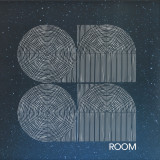
ANAN is a project born from the musical inspiration of DJs Roberto Agosta and Massimo Napoli (Galathea). The name ANAN comes simply from the repetition of the initials of their surnames. Room, their new album, refers to the space in Catania, Sicily, where the two artists create their music.
Room is a mature and intense album that draws inspiration from the two composers' favourite musical genres: jazz, 70s psychedelia, afrobeat, cumbia and soul. The ethereal sound of the album draws the listener into a melting pot of these musical styles that blend perfectly together, making the album versatile and innovative. Valuable arranger and performer Salvo Bruno ‘Dub’ masterfully colours and enriches the deep melodies of the recordings, as if it were a live session coordinated and directed by the two DJs on a super cinematic journey.
- Well In That Case
- Lust For Life
- Senegal Calling
- Red Neon, Go Or Give
- Charanga
- Get It
- N.y.c
- Stick Jam
- Absolutely Maybe
- Festival
- Paradiso
- A1: オリーブの笛 = Olive's Horn
- A2: 国際スパイ = International Spy
- A3: 新成人 = Neu Adult
- B1: 紙袋 = Paperbag / Orange Laptop
- B2: くっついたガム = Stuck On Gum
- B3: 揚げキノコ = Fried Mushroom
- C1: 何が好き? (キム) = What Do You Want? (Kim)
- C2: レモネード = Lemonade
- C3: 我らは王女 = We Are The Princesses
- D1: 元に戻して = Take Me Back
- D2: ヒットを狙って = Take It To The Hit
"Donald Duck, kill Minnie!" These words, ordered with urgency against a circular series of drum strikes and manipulated guitar/electronic textures, come over three fourths of the way through the album known as SYR 5 (aka "Olive's Horn"). While the words and sounds taken on their own may shock, their appearance within this collaborative effort between Kim Gordon (Sonic Youth, Body/Head, solo efforts), Ikue Mori (DNA, solo) and DJ Olive (We, solo) by this point in the album are not surprising. Taken on whole, SYR 5 sees its creators' respective histories forged in the 80s downtown noise scene, No Wave zone and Marclay-inspired club collide head on to create the audio equivalent of a slow-playing J.G. Ballard novel. Starting from the album's initial impressions where shimmering tones are interrupted by the sounds of winding clocks and bird calls before giving way to a cinematic sweeps of percussion, alien samples and blown out wasteland subs, the listener is constantly taken on a guided journey through a waking dream state where anything is possible. It is a world where dub samples, gurling beats and plaintive vocals (as only Gordon can deliver) fit together like the final locking puzzle pieces, the only elements needed to fully grasp a new reality. Re-appearing on vinyl for the first time in 25 years, these sounds have proven to be jaw-droppingly timeless. - Cory Rayborn, 2025
Mark Rae is a well respected artist and has woked with, and alonside many legends in the music industry. Originally finding success with Rae & Christian, Mark grew his record label Grand Central Records into one of the biggest indies of the late 90's. Now writing novels with soundtracks Mark is proving himslef to be a true renaissance man. Expect big things from this project. It is unique and filled with universal emotion.
£8000 booked spend on singles plugging to radio and book PR. Expect coverage on BBC Radio 6 and 4. Expect press coverage across major publications. Supported by Chris Hawkins. This release is backed with a vinyl that comes with a free novel, and a novel that comes with a free acoustic CD.
Every so often an album of such deceptive genius, of such aesthetic clarity, comes across our desk and transfixes us. Thought Leadership's III Of Pentacles is one such work of art. It's an instant classic and glides into the pantheon of timeless guitar-soul totems. Originally out on cassette only, we present the first ever vinyl issue. It's a hideously limited pressing of 300 for the world, so don't sleep on this.
Thought Leadership has already garnered big support from such tastemakers as Ruf Dug, Jason Boardman, Nathan Gregory Wilkins, J Walk, Evan Woodward, Justin Robertson and Heavenly's Jeff Barrett. The first time we heard III Of Pentacles, we nearly wept at the thought that something so beautiful, so bursting with real hope, could even exist in this brutal world. To quote the Quietus, "imagine if Stockport was situated somewhere along the Pacific Coast Highway rather than the M60, and you’ll have some idea of the coordinates to the post-industrial, sunburnt dream space opened up here."
So, who is Thought Leadership? What do we know about them? They reside in Stockport and are obsessed with ethereal guitar records. That’s about it. That and these X ideas shared with you, the listener.
Captured on a multitrack recorder in a terraced house in Stockport, this is as DIY as it gets. Glaringly obvious is a love for classic Factory and early 4AD. Perhaps it is the proximity to the River Mersey where the ideas arrived, and there being but three miles between where this and the Durutti Column’s classic “LC” was recorded, as the two operate across a familiar aural plain. Be it geographic or otherwise, limited by a true economy of means, namely guitar, pedals and drum machine, the fruit borne from these humble tools has been indelibly shaped by the perma-gloom that hangs low over the Manchester and Stockport environs.
Ushered in on 808 kicks, “I” opens the record as a beautiful Sketch for Stockport; a chiming maj7 chord dripping in chorus and delay sets us on our way. The Vini Reilly comparisons are unavoidable. “II” is all John McGeoch, with its trippy goth-psyche arpeggiated pattern cascading across the stereo image. Do those drums swing? But goths don’t swing?! They do here. We’re treated to a bit of crunch on the lead guitar part and some really lush reverb. We even step forth into shoegaze territory, albeit briefly, for the middle eight. “III”, a firm Be With favourite, continues the dreamy psyche leanings of the previous track, with an even bigger melody this time. We’re hearing The Teardrop Explodes on quaaludes here. A proto-dream pop cut soaked in melancholy. But watch out! The coda finds Johnny Marr has gotten into the ‘ludes and gatecrashed the final bars with some incredibly ignorant B minor pentatonic noodling.
“IV” ditches the drum machine for the first in a suite of three beatless electric guitar duets. The first of these semi-improvised rubato ideas is a striking departure from the earlier playful pieces, coming over emo and moody. Greyscale sulking for Stratocaster. Sign us up. “V” contains some really lyrical phrasing; a gorgeous conversation between two guitars. Real Stopfordian Primitive; meditative, crude, rain-soaked. We cycle through the same feels, then end on an alluring chord that breaks the pattern. Sometimes thoughts are like this. “VI” creeps in all plaintive, then a huge reverberating descending guitar line comes tumbling in like something off those classic Dif Juz 12”s. There’s some Maurice Deebank in there too, for sure, and the coda nods to early Meat Puppets.
“VII” rounds out the A Side, and succinctly presents a summary of all ideas explored thus far on our journey. The drum machine is back, this time with some wispy delay, before both guitars enter together playing interlocking lines. As we start, we end, with the delayed 808 guiding us out.
Opening Side B, “VIII” sees us embark on the other side of our journey as we slow down and space out. The drum machine is here, but the guitars are different now. Think Sensations Fix or Göttsching at his most peeled out. Drones, ambient drifts of broken chords and distorted lead lines all swirl round the mix. Side B is one for headphones for sure. “IX” is almost too exquisite for words. A New Age Mixolydian voyage through the cosmos. If you’re unmoved by the end you’ve probably got no pulse. We were left blunted ineffable by this one, such is the smudged elegance radiating from this idea. All hail the Thought Leader.
“X” is a full circle moment, and a fitting end. If you’ve not already elsewhere across the platter, you will be getting heavy Robin Guthrie vibes from this piece. Like the rest of Side B, this improvised jam sticks within a framework of related chords but the celestial energies channelled might invite us to wander “outside”, especially when the Tubescreamer is engaged.
RIYL Durutti Coulmn, Cocteau Twins, Dif Juz, Sensations Fix, Spike and adjacent guitar musicks – but, ultimately, this is just its own thing; such is the strength of ideas presented. "It’s good music to chill out to." (??)
Be With is honoured to present the first ever vinyl release of III Of Pentacles, carefully remastered by Be With's engineer Simon Francisco to ensure it sounds better than ever after its initial tape release. Cicely Balston's expert skills have made sure nothing is lost in the cut whilst the records have been pressed to the highest possible standard at Record Industry, in Holland. The original tape cover artwork, so crucial to Thought Leadership's striking visual aesthetic, has been rejigged for vinyl issue here at Be With. Its stark presentation befits the music contained within. They inform us that they shuffled their tarot deck to ask what the album should be called and the card you see on the cover popped out. The III Of Pentacles tarot card represents teamwork, shared vision and the ability to achieve goals through collaboration. We like to think Thought Leadership and Be With have nailed this one.
3x12" Color Vinyls[38,61 €]
It’s time to celebrate an amazing decade for pop music – as popular today as it was back then...and with so many fantastic hits to choose from we had to make this a 100 track selection across 5 CDS – including over 50 #1 singles… Time to immerse yourself in the decade that never stops… legwarmers on – it’s : ‘Also available on 5-LP boxset featuring 78 huge hits, including 40 #1s, over 10 sides of vinyl, pressed in 5 different colours, one for each LP – red, yellow, pink, green and blue. Then we have a 3LP set featuring 45 unforgettable hits, including 27 #1s across 3-LPs, pressed in a red, a blue and a green vinyl
dreamcastmoe is the recording project of singer, songwriter, producer, and DJ Davon Bryant, a lifelong resident of Washington, DC. His music moves freely between moods and modes, hypnotic, romantic, traversing electronic, R&B, funk, soul, and hip-hop... Resident Advisor dubs it "soulful, cross-genre dance music." This ability to adapt and finesse, to twist in different directions while staying true and coherent in vision, can be traced to his home city and its complex cultural history. "Most Black kids in DC don't ever get to this point," he says. "This is what I am making this music for, in the DC tradition of soul and empathy and love that is rooted in this city. My music is for real people dealing with shit every day." A versatile, modern artist and collaborator, dreamcastmoe has thrived in the underground since his first uploads to Soundcloud and Bandcamp in 2017 and subsequent releases with labels like People's Potential Unlimited, Trading Places, and In Real Life Music. Bryant's laid-back personality, emotional honesty, and infectious energy shine through his work and how he talks about it, as Crack Magazine notes in their 2021 Rising feature: "a steady combination of confidence, creativity, and calmness." He grew up playing drums in church; he's worked dead-end jobs, had ups and downs, even sold off all his gear one time, but never stopped reinvesting in himself. He is quick to praise his co-producers, rattle off influences _ the visual feel of NBA 2K, the comedic timing of Bernie Mac, the savvy legacy of Duke Ellington, for starters _ and credit resourceful DC breakouts like Ankhlejohn that showed him the roadmap. His voice, a steady instrument, seemingly connects it all, capable of slow falsetto flow, swaggering talk-rap, and outright croon. His storytelling style is choppy yet fluid, like a mixtape, which is how Bryant sees Sound Is Like Water, his debut on Ghostly's International's freeform label, Spectral Sound. The two-part project culminates as a full-length LP release in November 2022. The first side, released as Part I, opens on the blurred beats of "El Dorado," which dreamcastmoe dedicates to his journey. It's a head-nodder, an off-kilter earworm co-produced by Max D (Future Times, RVNG Intl, etc.), with Bryant harmonizing hooks with synth jabs and a pitched-down presence. "Complicated" is the slow jam, delivered smoothly from a Saturday night crossroads. dreamcastmoe is contemplative and committed... gliding and locking ad-libs into skittering rhythms courtesy of co-producer Zackary Dawson _ but also willing to let something go, "acknowledging that everything in life IS NOT easy." "RU Ready" takes off from the jump as a tribute, challenge, and promise to his partner and his city ("The times you sat with me when I needed you the most / Told me the things that I needed to see / Young black man, really trying to be what I can be / And I'm really from DC). In its potent two-plus minutes, the sonics (co-produced by ZDBT) press the message, all cymbal crashes, breakbeats, and serrated synth lines. "Cloudy Weather, Wear Boots" is a blitzing dance-punk track made in collaboration with Jordan GCZ on Bryant's first trip to Amsterdam. The album's flipside opens on "Much More," the first of two synth-and-beat ballads co-produced by ZDBT. Later on "Long Songz," he claims, "I'm not writing love songs no more," prioritizing the vibe with "all my day ones." He calls it "a cry for more normal moments. Everything doesn't have to be a fantasy love story, more time spent getting to the money, growing, and making a way." He saves two of his most propulsive cuts for the finale, co-produced by Sami, co-founder of DC dance label 1432 R. As their titles suggest, "Take A Moment" and "Make Ya Mind" operate as anthems for movement, with Bryant free-flowing commands above wildly-styled percussion. Per Bryant, the latter is both "wake & bake jam" and a "dance floor bomb." His parting line: "Action / You got to show me action / Reaction." The world of dreamcastmoe straddles virtual reality and the realness of DC, images both imagined and lived-in. Bryant has a knack for unexpected melodies but what makes his music so exciting is his capacity to defy the expectations of genre and image. A fluid ingenuity and vulnerability bottled by Sound Is Like Water, and this is just the beginning.
- A1: Montego Bay - Everything (Paradise Mix) 04 59
- A2: Atelier - Got To Live Together (Club Mix) 06 06
- A3: Golem - Music Sensations 04 56
- B1: The True Underground Sound Of Rome Feat. Stefano Di Carlo - Gladiators 05 26
- B2: Eagle Parade - I Believe 04 26
- C1: Dj Le Roi - Bocachica (Detroit Version) 05 28
- C2: Green Baize - Synthetic Rhythm 01 41
- C3: M.c.j. Feat. Sima - Sexitivity (Deep Mix) 05 30
- D1: Kwanzaa Posse Feat. Funk Master Sweat - Wicked Funk (Afro Ambient Mix) 06 31
- D2: Progetto Tribale - The Bird Of Paradise 06 29
- D3: Mbg - The Quite 06 59
Vol 1[28,99 €]
Googling “paradise house”, the first results to pop up are an endless list of European b&b’s with whitewashed lime façades, all of them promising “…an unmatched travel experience a few steps from the sea”. Next, a little further down, are the institutional websites of a few select semi-luxury retirement homes (no photos shown, but lots of stock images of smiling nurses with reassuring looks). To find the “paradise house” we’re after, we have to scroll even further down. Much further down.
It feels like yesterday, and at the same time it seems like a million years ago. The Eighties had just ended, and it was still unclear what to expect from the Nineties. Mobile phones that were not the size of a briefcase and did not cost as much as a car? A frightening economic crisis? The guitar-rock revival?! Certainly, the best place to observe that moment of transition was the dancefloor. Truly epochal transformations were happening there. From America, within a short distance one from the other, two revolutionary new musical styles had arrived: the first one sounded a bit like an “on a budget” version of the best Seventies disco-music – Philly sound made with a set of piano-bar keyboards! – the other was even more sparse, futuristic and extraterrestrial. It was a music with a quite distinct “physical” component, which at the same time, to be fully grasped, seemed to call for the knotty theories of certain French post-modern philosophers: Gilles Deleuze, Félix Guattari, Paul Virilio... Both those genres – we would learn shortly after – were born in the black communities of Chicago and Detroit, although listening to those vinyl 12” (often wrapped in generic white covers, and with little indication in the label) you could not easily guess whether behind them there was a black boy from somewhere in the Usa, or a girl from Berlin, or a pale kid from a Cornish coastal town.
Quickly, similar sounds began to show up from all corners of Europe. A thousand variations of the same intuition: leaner, less lean, happier, slightly less intoxicated, more broken, slower, faster, much faster... Boom! From the dancefloors – the London ones at least, whose chronicles we eagerly read every month in the pages of The Face and i-D – came tales of a new generation of clubbers who had completely stopped “dressing up” to go dancing; of hot tempered hooligans bursting into tears and hugging everyone under the strobe lights as the notes of Strings of Life rose up through the fumes of dry ice (certain “smiling” pills were also involved, sure). At this point, however, we must move on to Switzerland.
In Switzerland, in the quiet and diligent town of Lugano, between the 1980s and 1990s there was a club called “Morandi”. Its hot night was on Wednesdays, when the audience also came from Milan, Como, Varese and Zurich. Legend goes that, one night, none less than Prince and Sheila E were spotted hiding among the sofas, on a day-off of the Italian dates of the Nude Tour… The Wednesday resident and superstar was an Italian dj with an exotic name: Don Carlos. The soundtrack he devised was a mixture of Chicago, Detroit, the most progressive R&B and certain forgotten classics of old disco music: practically, what the Paradise Garage in New York might have sounded like had it not closed in 1987. In between, Don Carlos also managed to squeeze in some tracks he had worked on in his studio on Lago Maggiore. One in particular: a track that was rather slow compared to the BPM in fashion at the time, but which was a perfect bridge between house and R&B. The title was Alone: Don Carlos would explain years later that it had to be intended both in the English meaning of “by itself” and like the Italian word meaning “halo”. That wasn’t the only double entendre about the song, anyway. Its own very deep nature was, indeed, double. On the one hand, Alone was built around an angelic keyboard pattern and a romantic piano riff that took you straight to heaven; on the other, it showcased enough electronic squelches (plus a sax part that sounded like it had been dissolved by acid rain) to pigeonhole the tune into the “junk modernity” section, aka the hallmark of all the most innovative sounds of the time: music that sounded like it was hand-crafted from the scraps of glittering overground pop.
No one knows who was the first to call it “paradise house”, nor when it happened. Alternative definitions on the same topic one happened to hear included “ambient house”, “dream house”, “Mediterranean progressive”… but of course none were as good (and alluring) as “paradise house”. What is certain is that such inclination for sounds that were in equal measure angelic and neurotic, romantic and unaffective, quickly became the trademark of the second generation of Italian house. Music that seemed shyly equidistant from all the rhythmic and electronic revolutions that had happened up to that moment (“Music perfectly adept at going nowhere slowly” as noted by English journalist Craig McLean in a legendary field report for Blah Blah Blah magazine). Music that to a inattentive ear might have sounded as anonymous as a snapshot of a random group of passers-by at 10AM in the centre of any major city, but perfectly described the (slow) awakening in the real world after the universal love binge of the so-called Second Summer of Love.
For a brief but unforgettable season, in Italy “paradise house” was the official soundtrack of interminable weekends spent inside the car, darting from one club to another, cutting the peninsula from North to centre, from East to West coast in pursuit of the latest after-hours disco, trading kilometres per hour with beats per minute: practically, a new New Year’s Eve every Friday and Saturday night. This too was no small transformation, as well as a shock for an adult Italy that was encountering for the first time – thanks to its sons and daughters – the wild side of industrial modernity. The clubbers of the so-called “fuoriorario” scene were the balls gone mad in the pinball machine most feared by newspapers, magazines and TV pundits. What they did each and every weekend, apart from going crazy to the sound of the current white labels, was linking distant geographical points and non-places (thank you Marc Augé!) – old dance halls, farmhouses and business centres – transformed for one night into house music heaven. As Marco D’Eramo wrote in his 1995 essay on Chicago, Il maiale e il grattacielo: “Four-wheeled capitalism distorts our age-old image of the city, it allows the suburbs to be connected to each other, whereas before they were connected only by the centre (…) It makes possible a metropolitan area without a metropolis, without a city centre, without downtown. The periphery is no longer a periphery of any centre, but is self-centred”.
“Paradise house” perfectly understood all of this and turned it into a sort of cyber-blues that didn’t even need words, and unexpectedly brought back a drop of melancholic (post?)-humanity within a world that by then – as we would wholly realise in the decades to come – was fully inhuman and heartless. A world where we were all alone, and surrounded by a sinister yellowish halo, like a neon at the end of its life cycle. But, for one night at least, happy."
- A1: Caravan (Tizol, Ellington) 5:50
- A2: Wishes (F. Sotgiu) 3:05
- A3: Ballad For Aisha (Tyner) 5:11
- A4: Stranatole (F. Sotgiu) 2:50
- B1: Black Bats And Poles (Walrath) 4:14
- B2: 7Th Street (F. Sotgiu) 4:48
- B3: Wise One (Coltrane) 3:24
- A1: Afro Blue (Santamaria) 3:37
- A2: Duke Ellington’s Sound Of Love (Miingus) 4:48
- A3: Take Five (Desmond) 5:00
- A4: Lotus Blossom (Strayhorn) 1:06
- B1: Passing (F. Sotgiu, L. Bonafede) 7:09
- B2: Calm (F. Sotgiu) 4:35
- B3: My Foolish Heart (Washington, Young) 6:37
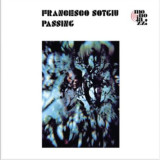
Francesco Sotgiu has forged a unique and very swinging project of songs. With a quintet consisting of Luigi Bonafede on piano, Emanuele Cisi and Riccardo Luppi on woodwinds, Salvatore Maiore on bass, Francesco on drums, and with special guest Paolo Fresu on trumpet to cap off this heartfelt collection. There is also a nice diversity of groups within this larger collection. A nice trio piece called “Calm” featuring Paolo Birro sitting in with Marco Micheli and Francesco. And one called “Lotus Blossom” where Francesco shows his considerable skills and soul on violin. But the bulk of the material is straight-ahead jazz and is totally swinging and soulful, proving that jazz has no borders and is a worldwide language to which Francesco has added to that tradition with this project and all the great voices he has included here. Bravo maestro.
This is the comment of Gil Goldstein, American accordion player who won 5 Grammys and collaborated with giants such as Gil Evans, Wayne Shorter, and Michel Petrucciani.
This record was recorded in the middle of the pandemic times, and most of the work for preparing this record took place via the telephone: the selection of the songs on paper, the exchange of ideas on arrangements, staff and instruments, a sort of “phone rehearsal” of the structure of the songs, with the choice of a solo; everything else, everything that will happen in the recording sessions, is the result of a controlled improvisation, a jam session masterfully captured in the studio through the use of well-positioned ribbon microphones.
This is why “Passing,” literally “passing” or “crossing”: because the musicians have gone through listening to these songs as teenagers, and find themselves today, as a mature meeting of old friends who create an informal game made of nostalgic fun, great personality, confrontation, and deep spirituality. In the classic “Caravan” by Ellington and Tizol or “Afro Blue” by Mongo Santamaria, Coltrane toning, the Latin accent of the rhythm section supports the interpretation of the theme and the interplay in the solos between the soprano and tenor saxophones by Cisi & Luppi, and the piano by Bonafede.
A certain elegance in the execution distinguishes pieces such as Duke Ellington’s “Sound of Love,” yet another tribute by Mingus to the Duke, with a calibrated solo on the double bass of Maiore and the flute by Luppi, the immortal “Take Five” by Paul Desmond, with the highlighted soprano by Cisi, “Wishes,” “7th Street,” and the eponymous “Passing,” all pieces composed by Sotgiu, characterized by the precise medium/fast drive of the drums and a certain “cinematic” taste of the main themes.
In songs such as “Black Bats and Poles,” composed by trumpeter Jack Walrath for the Mingus Orchestra, and in “Stranatole,” an original piece in which Sotgiu writes a theme of Monk’s influence and enjoys overturning the traditional “Anatole Jazz” structure, the quintet opts for an effective hard bop language, with exciting moments of dazzling virtuosity in Bonafede’s solo. While in Coltrane’s “Wise One” and McCoy Tyner’s “Ballad for Aisha,” we enter a modal, mystical, and ceremonial jazz, of a cosmic depth, which seems to hover in the sweet volume of the great hall of the recording studio. These are truly magnificent interpretations.
A special separate mention for two classics such as “My Foolish Heart” by Victor Young, performed in trio by Sotgiu, Maiore, and the unmistakable trumpet by Paolo Fresu, and the (unfortunately very short) “Lotus Blossom” by Billy Strayhorn and Duke Ellington, which in the piano-violin duo of Birro and Sotgiu, in a minute gives a suspended momentary magic, sums up the roots of African-American jazz music, and also referencing an old-fashioned Italian musical sensitivity, typical of Nino Rota’s music for Federico Fellini’s films.
Blue Vinyl[17,61 €]
We are thrilled to announce another underground gem on our label. This time, it's Collage's incredible 4-track EP "Mit den Puppen tanzen" (Dancing With The Puppets). Originally released in 1984 on the small FMusic label, the 12" EP is a true highlight in German Electro and NDW history, becoming a sought-after item among collectors. It features intense lyrics by singer Katrin A. Kunze, with music composed by Markus Kammann and Jürgen Grah.
Kammann and Grah, both originally from Solingen - a small city near Wuppertal - had previously collaborated on the new wave project Schwarze Bewegung with a different singer. Their self-titled LP was released in 1982 on Bacillus/Bellaphon. During this period, the electro sound pioneered by Kraftwerk evolved into electro-funk, sparked by the release of Afrika Bambaataa's groundbreaking track "Planet Rock", which achieved global acclaim. The iconic Roland TR-808 drum machine, masterfully employed by Arthur Baker's production team, revolutionized dance music with further hits like "Looking for the Perfect Beat" and collaborations with Planet Patrol. Markus Kammann cites these tracks, along with black music as a whole, as key influences on his work. In contrast, much of the electronic music emerging from Germany at the time rather leaned towards the styles of artists like Klaus Schulze and Tangerine Dream. Kammann's influences are evident in Collage's EP, which incorporates elements of early electronic hip-hop, such as the scratching sounds in the title track (created with tape rather than turntables) and short rap segments in "Niemals zurück".
By this time, Kammann and Grah had acquired their own Roland 808 as well as a JUNO-60 keyboard. Grah, originally a drummer, played keyboards and vibraphone, while Kammann, primarily a guitarist, also played bass. All the lyrics on the EP were written and performed by Kathrin A. Kunze, who hailed from Cuxhaven, a northern German city. She moved to Wuppertal around 1983 to study literature, and the group Collage was born.
Through Uwe Bauer, drummer of Fehlfarben, and their manager Horst Lüdge (of Profil), Collage connected with Werner Lambertz, a legendary sound technician from Düsseldorf. Lambertz's state-of-the-art studio featured custom-built sequencers capable of triggering the JUNO-60, as well as expensive equipment like a vocoder. Over the course of a week, the group completed all four tracks.
The EP's hard yet playful electro beats were complemented by Kunze's distinctive performance and introspective lyrics, which lent the songs a uniquely German and wavy touch. Her subtle songwriting conveyed a sense of paranoia and sorrow, as seen in lines like "Ich glaub mir selber nicht. Wer hält denn schon, was er verspricht?" ("I don't believe myself. Who stays true to their word, anyway?").
Unfortunately, the EP was never properly promoted and was distributed solely through the independent market via EFA. Despite this, Collage continued working on new material and pre-recorded an album that garnered label's attention. Polydor expressed interest but proposed using the compositions for a solo project with singer Inga Humpe (of Neonbabies), who was already signed to their roster. This would have required replacing Kunze as the vocalist, an idea the group firmly rejected. As a result, the album was never released. In 1987, Kammann, Grah, and Kunze launched another project called Cold End, which released another brilliant and highly sought-after 12" single, Metropolitan Jungle, originally issued on Tam Tam and recently re-released.
The first-ever reissue of "Mit den Puppen tanzen" is limited to only 400 copies - 200 on classic black vinyl and 200 on blue transparent vinyl. The cover art remains true to the original 12" release, designed by the aforementioned Uwe Bauer (aka Bimbo Art). This reissue is a must-have for DJs and collectors alike
Black Vinyl[16,77 €]
We are thrilled to announce another underground gem on our label. This time, it's Collage's incredible 4-track EP "Mit den Puppen tanzen" (Dancing With The Puppets). Originally released in 1984 on the small FMusic label, the 12" EP is a true highlight in German Electro and NDW history, becoming a sought-after item among collectors. It features intense lyrics by singer Katrin A. Kunze, with music composed by Markus Kammann and Jürgen Grah.
Kammann and Grah, both originally from Solingen - a small city near Wuppertal - had previously collaborated on the new wave project Schwarze Bewegung with a different singer. Their self-titled LP was released in 1982 on Bacillus/Bellaphon. During this period, the electro sound pioneered by Kraftwerk evolved into electro-funk, sparked by the release of Afrika Bambaataa's groundbreaking track "Planet Rock", which achieved global acclaim. The iconic Roland TR-808 drum machine, masterfully employed by Arthur Baker's production team, revolutionized dance music with further hits like "Looking for the Perfect Beat" and collaborations with Planet Patrol. Markus Kammann cites these tracks, along with black music as a whole, as key influences on his work. In contrast, much of the electronic music emerging from Germany at the time rather leaned towards the styles of artists like Klaus Schulze and Tangerine Dream. Kammann's influences are evident in Collage's EP, which incorporates elements of early electronic hip-hop, such as the scratching sounds in the title track (created with tape rather than turntables) and short rap segments in "Niemals zurück".
By this time, Kammann and Grah had acquired their own Roland 808 as well as a JUNO-60 keyboard. Grah, originally a drummer, played keyboards and vibraphone, while Kammann, primarily a guitarist, also played bass. All the lyrics on the EP were written and performed by Kathrin A. Kunze, who hailed from Cuxhaven, a northern German city. She moved to Wuppertal around 1983 to study literature, and the group Collage was born.
Through Uwe Bauer, drummer of Fehlfarben, and their manager Horst Lüdge (of Profil), Collage connected with Werner Lambertz, a legendary sound technician from Düsseldorf. Lambertz's state-of-the-art studio featured custom-built sequencers capable of triggering the JUNO-60, as well as expensive equipment like a vocoder. Over the course of a week, the group completed all four tracks.
The EP's hard yet playful electro beats were complemented by Kunze's distinctive performance and introspective lyrics, which lent the songs a uniquely German and wavy touch. Her subtle songwriting conveyed a sense of paranoia and sorrow, as seen in lines like "Ich glaub mir selber nicht. Wer hält denn schon, was er verspricht?" ("I don't believe myself. Who stays true to their word, anyway?").
Unfortunately, the EP was never properly promoted and was distributed solely through the independent market via EFA. Despite this, Collage continued working on new material and pre-recorded an album that garnered label's attention. Polydor expressed interest but proposed using the compositions for a solo project with singer Inga Humpe (of Neonbabies), who was already signed to their roster. This would have required replacing Kunze as the vocalist, an idea the group firmly rejected. As a result, the album was never released. In 1987, Kammann, Grah, and Kunze launched another project called Cold End, which released another brilliant and highly sought-after 12" single, Metropolitan Jungle, originally issued on Tam Tam and recently re-released.
The first-ever reissue of "Mit den Puppen tanzen" is limited to only 400 copies - 200 on classic black vinyl and 200 on blue transparent vinyl. The cover art remains true to the original 12" release, designed by the aforementioned Uwe Bauer (aka Bimbo Art). This reissue is a must-have for DJs and collectors alike
- A1: Where Is My Man (Vocal) / Eartha Kitt
- A2: I Need You (Extended 12” Mix) / Sylvester
- A3: Was That All It Was (12” Version) / Jean Carne
- A4: After The Rainbow (12” Version) / Joanne Daniëls
- B1: Searchin’ (I Gotta Find A Man) (12” Version) / Hazell Dean
- B2: Native Love (Step By Step) (12” Version) / Divine
- B3: He’s A Saint, He’s A Sinner (Extended Version) / Miquel Brown
- B4: Danger For Love (Full Length Version) / Deborah
- C1: Voyage Voyage (Pwl Britmix) / Desireless
- C2: Self Control (Extended Version) / Laura Branigan
- C3: Get Lost Tonight (12” Version) / Fancy
- C4: Brother Louie (Special Long Version) / Modern Talking
- D1: Stop… Bajon (Club Mix) / Tullio De Piscopo
- D2: Dolce Vita (Extended Version) / Ryan Paris
- D3: I’m So Hot For You (Dance Mix) / Bobby “O”
- D4: This Girl’s Back In Town (Extended Vocal Remix) / Raquel Welch
- E1: Paninaro (Italian Remix) / Pet Shop Boys
- E2: Sub-Culture (Remix) / New Order
- E3: Homosapien (Elongated Dancepartydubmix) / Pete Shelley
- F1: The Anvil (Dance Mix) / Visage
- F2: Fantasy (“Short” Album Version) / Hotline
- F3: The Dominatrix Sleeps Tonight (Dominant Mix) / Dominatrix
- F4: Duel (Bitter-Sweet) / Propaganda
- G1: Love On Top Of Love (Killer Kiss) (The Funky Dred Club Mix) / Grace Jones
- H3: Can’t Stop The Music (12” Version) / Village People
- G2: Pink Cadillac (Club Vocal) / Natalie Cole
- G3: Heat It Up (Acid House Remix) / Wee Papa Girl Rappers
- H1: Deep In Vogue (Banjie Realness) / Malcolm Mclaren And The Bootzilla Orchestra
- H2: Pistol In My Pocket (12” Version) / Lana Pellay
Box 1[96,01 €]
4LP set containing 29 original / extended / full-length / 12” versions of Queer club classics – 1980-1989
‘More Sin’ features Pet Shop Boys, Sylvester, Divine, New Order, Eartha Kitt, Grace Jones, Hazell Dean, Desireless and many more.
Highlights include the hard-to-find 12” version of ‘Can’t Stop The Music’ by Village People and the rarely compiled underground club anthems ‘Pistol In My Pocket’ by Lana Pellay and ‘After The Rainbow’ by Joanne Daniëls.
All tracks fully annotated and with a foreword by Ian Wade – author ‘1984: The Year Pop Went Queer’. Following the success of the first ‘Box Of Sin’ in 2023, Demon / Edsel and Disco Discharge are proud to announce the sequel – ‘More Sin: Box of Sin 2’ will be released on 31st January 2025.
Over 4 LPs, ‘More Sin’ presents 29 choice selections from the music you might have heard on Queer dancefloors between 1980 and 1989 – a decade of dance in all its devilish delights. Meticulously researched from the published gay club charts at the time, the LP set encompasses full-length versions of Diva, High Energy, Alternative, Pop, Europop and House classics. Not only were the ‘80s Queer clubs where you were most likely to hear the latest groundbreaking developments in dance music, there was a lot of diversity on offer – on a given night you might hear a legendary soul singer’s new opus right next to some post-punks from Manchester and the latest European pop chart topper.
‘More Sin’ aims to reflect this. On ‘More Sin’, the space-age soulful club sound of Jean Carne rubs up against the widescreen Europop beauty of Desireless and cutting-edge house music from London courtesy of Wee Papa Girl Rappers… and along the way come some of the most important and era-defining artists of the decade – from Sylvester to Siouxsie & The Banshees, from Pet Shop Boys to Divine, from Hazell Dean to Grace Jones. Producing and mixing these classics is like a roll-call of the era’s studio giants – Trevor Horn, Larry Levan, Clivillés & Cole, Ian Levine, John Luongo, Bobby “O”, Martin Rushent and Stock, Aitken & Waterman to name a few. It’s time to give in to sin again.
ED/MCL (pronounced Ed Michael) and IDN (Ibisazi Designers Nyabyo) have collaborated to create MOSH - both the title of the EP and its proposed genre. Mosh is music to mosh to, like dance is music to dance to. Jungle breaks are slowed down to the tempo of a metalcore breakdown. Super low 808s rumble below the beat. Sampled and recorded sounds are textured to evoke heavy metal guitars. And there are rhythmic shouted phrases, for shared chanting. This EP is being released on Interference Pattern because Tyler Pope saw ED/MCL playing on the street in Williamsburg.
IDN (Ibisazi Designers Nyabyo) is an artist collective based in Rwanda. Their vocals are shouted in a language of their own invention, yet they have crafted catchy vocal hooks designed for call and response. The vocals heard on MOSH were recorded with ED/MCL while they were visiting them in Kigali. The final track is a 10 minute long performance by IDN, from which ED/MCL remixed the preceding five mosh songs.
- Allads For Autumn Eyes
- First Snowfall
- Sherry's Song
- Gathering
- Secret She
- We Free
- Seasons
- A Gina Theme
- Him Sometimes
Gary Marks ‘ Gathering’ is exactly what you would call a miracle. Self-produced in 1974 and engineered at Vitra Sonic Recording Studios in New York, the album introduced the crispy talent of the guitarist/pianist and producer. A genuine blend of folksy harmonies and jazzy arrangements, the record could have been possibly the missing link between Tim Buckley ‘Starsailor’ and some early seventies Impulse ! session. Now it’s about time to get a hold of this masterpiece
”Gathering includes guitar legend John Scofield, the amazing jazz pianist Michael Cochrane, and one the of the top vibraphonists in the world, David Samuels. But at the time none of them were known to the general public. In fact, Gathering was the recording debut for all of us.” (from Gary Marks liner notes)
- A1: Progetto Tribale - The Sweep
- A2: Onirico - Echo Giomini
- A3: Open Spaces - Artist In Wonderland
- B1: Alex Neri – The Wizard (Hot Funky Version)
- B2: M C.j. Feat. Sima - To Yourself Be Free - Instrumental Mix Energy Prod
- B3: Mato Grosso - Titanic Expande
- C1: Dreamatic - I Can Feel It (Part 1)
- C2: Carol Bailey - Understand Me Free Your Mind (Dream Piano Remix)
- C3: The True Underground Sound Of Rome - Secret Doctrine
- D1: Don Carlos - Boy
- D2: Lazy Bird – Jazzy Doll (Odyssey Dub)
Vol 2[28,99 €]
Volume 1 of this expertly curated project of 90s Italian House - put together by Don Carlos.
If Paradise was half as nice… by Fabio De Luca.
Googling “paradise house”, the first results to pop up are an endless list of European b&b’s with whitewashed lime façades, all of them promising “…an unmatched travel experience a few steps from the sea”. Next, a little further down, are the institutional websites of a few select semi-luxury retirement homes (no photos shown, but lots of stock images of smiling nurses with reassuring looks). To find the “paradise house” we’re after, we have to scroll even further down. Much further down.
It feels like yesterday, and at the same time it seems like a million years ago. The Eighties had just ended, and it was still unclear what to expect from the Nineties. Mobile phones that were not the size of a briefcase and did not cost as much as a car? A frightening economic crisis? The guitar-rock revival?! Certainly, the best place to observe that moment of transition was the dancefloor. Truly epochal transformations were happening there. From America, within a short distance one from the other, two revolutionary new musical styles had arrived: the first one sounded a bit like an “on a budget” version of the best Seventies disco-music – Philly sound made with a set of piano-bar keyboards! – the other was even more sparse, futuristic and extraterrestrial. It was a music with a quite distinct “physical” component, which at the same time, to be fully grasped, seemed to call for the knotty theories of certain French post-modern philosophers: Gilles Deleuze, Félix Guattari, Paul Virilio... Both those genres – we would learn shortly after – were born in the black communities of Chicago and Detroit, although listening to those vinyl 12” (often wrapped in generic white covers, and with little indication in the label) you could not easily guess whether behind them there was a black boy from somewhere in the Usa, or a girl from Berlin, or a pale kid from a Cornish coastal town.
Quickly, similar sounds began to show up from all corners of Europe. A thousand variations of the same intuition: leaner, less lean, happier, slightly less intoxicated, more broken, slower, faster, much faster... Boom! From the dancefloors – the London ones at least, whose chronicles we eagerly read every month in the pages of The Face and i-D – came tales of a new generation of clubbers who had completely stopped “dressing up” to go dancing; of hot tempered hooligans bursting into tears and hugging everyone under the strobe lights as the notes of Strings of Life rose up through the fumes of dry ice (certain “smiling” pills were also involved, sure). At this point, however, we must move on to Switzerland.
In Switzerland, in the quiet and diligent town of Lugano, between the 1980s and 1990s there was a club called “Morandi”. Its hot night was on Wednesdays, when the audience also came from Milan, Como, Varese and Zurich. Legend goes that, one night, none less than Prince and Sheila E were spotted hiding among the sofas, on a day-off of the Italian dates of the Nude Tour… The Wednesday resident and superstar was an Italian dj with an exotic name: Don Carlos. The soundtrack he devised was a mixture of Chicago, Detroit, the most progressive R&B and certain forgotten classics of old disco music: practically, what the Paradise Garage in New York might have sounded like had it not closed in 1987. In between, Don Carlos also managed to squeeze in some tracks he had worked on in his studio on Lago Maggiore. One in particular: a track that was rather slow compared to the BPM in fashion at the time, but which was a perfect bridge between house and R&B. The title was Alone: Don Carlos would explain years later that it had to be intended both in the English meaning of “by itself” and like the Italian word meaning “halo”. That wasn’t the only double entendre about the song, anyway. Its own very deep nature was, indeed, double. On the one hand, Alone was built around an angelic keyboard pattern and a romantic piano riff that took you straight to heaven; on the other, it showcased enough electronic squelches (plus a sax part that sounded like it had been dissolved by acid rain) to pigeonhole the tune into the “junk modernity” section, aka the hallmark of all the most innovative sounds of the time: music that sounded like it was hand-crafted from the scraps of glittering overground pop.
No one knows who was the first to call it “paradise house”, nor when it happened. Alternative definitions on the same topic one happened to hear included “ambient house”, “dream house”, “Mediterranean progressive”… but of course none were as good (and alluring) as “paradise house”. What is certain is that such inclination for sounds that were in equal measure angelic and neurotic, romantic and unaffective, quickly became the trademark of the second generation of Italian house. Music that seemed shyly equidistant from all the rhythmic and electronic revolutions that had happened up to that moment (“Music perfectly adept at going nowhere slowly” as noted by English journalist Craig McLean in a legendary field report for Blah Blah Blah magazine). Music that to a inattentive ear might have sounded as anonymous as a snapshot of a random group of passers-by at 10AM in the centre of any major city, but perfectly described the (slow) awakening in the real world after the universal love binge of the so-called Second Summer of Love.
For a brief but unforgettable season, in Italy “paradise house” was the official soundtrack of interminable weekends spent inside the car, darting from one club to another, cutting the peninsula from North to centre, from East to West coast in pursuit of the latest after-hours disco, trading kilometres per hour with beats per minute: practically, a new New Year’s Eve every Friday and Saturday night. This too was no small transformation, as well as a shock for an adult Italy that was encountering for the first time – thanks to its sons and daughters – the wild side of industrial modernity. The clubbers of the so-called “fuoriorario” scene were the balls gone mad in the pinball machine most feared by newspapers, magazines and TV pundits. What they did each and every weekend, apart from going crazy to the sound of the current white labels, was linking distant geographical points and non-places (thank you Marc Augé!) – old dance halls, farmhouses and business centres – transformed for one night into house music heaven. As Marco D’Eramo wrote in his 1995 essay on Chicago, Il maiale e il grattacielo: “Four-wheeled capitalism distorts our age-old image of the city, it allows the suburbs to be connected to each other, whereas before they were connected only by the centre (…) It makes possible a metropolitan area without a metropolis, without a city centre, without downtown. The periphery is no longer a periphery of any centre, but is self-centred”.
“Paradise house” perfectly understood all of this and turned it into a sort of cyber-blues that didn’t even need words, and unexpectedly brought back a drop of melancholic (post?)-humanity within a world that by then – as we would wholly realise in the decades to come – was fully inhuman and heartless. A world where we were all alone, and surrounded by a sinister yellowish halo, like a neon at the end of its life cycle. But, for one night at least, happy.
- A1: Spirit Of Cyrus (Ft. Snoop Dogg)
- A2: The Force
- A3: Saturday Night Special (Ft. Rick Ross, Fat Joe)
- A4: Black Code Suite
- A5: Passion
- A6: Proclivitie (Ft. Saweetie)
- A7: Post Modern
- B1: 30 Decembers
- B2: Runnit Back
- B3: Huey In The Chair (Ft. Busta Rhymes)
- B4: Basquiat Energy
- B5: Praise Him (Ft. Nas)
- B6: Murdergram Deux (Ft. Eminem)
- B7: The Vow (Ft. Mad Squablz, J-S.a.n.d., Don Pablito)
Rock & Roll Hall of Fame inductee, two-time Grammy® Award-winning Hip-Hop icon, Kennedy Center Honoree, actor, author, NAACP Image Award winner, entrepreneur, philanthropist, and founder/CEO of Rock The Bells, LL COOL J continues his trailblazing career with upcoming album 'The FORCE'.
LL’s highly anticipated 14th studio album The FORCE (Frequencies of Real Creative Energy) set for release September 6th follows over a decade long hiatus. The record was executive produced by Hip-Hop innovator and Rock & Roll Hall of Fame inductee Q-Tip, of A Tribe Called Quest. With this album, LL will help celebrate the 40th anniversary of the creation of Def Jam Recordings. As LL was the label’s first release, there is no better way to represent the legacy of Def Jam Recordings on its 40th year
Rock & Roll Hall of Fame inductee, two-time Grammy® Award-winning Hip-Hop icon, Kennedy Center Honoree, actor, author, NAACP Image Award winner, entrepreneur, philanthropist, and founder and CEO of Rock The Bells, LL COOL J has created one of the most multifaceted careers and brands in entertainment and continues to display his wide range of talents with every project.
Four decades after he first burst onto the scene, LL COOL J continues his vibrant, trailblazing career. LL COOL J helped elevate the burgeoning rap and Hip-Hop scene of the 80’s, which developed into the musical and cultural phenomenon that is Hip-Hop as we know it today. Of LL’s many contributions to the culture, he also is credited with the creation of the acronym “G.O.A.T.” - short for “Greatest of All Time.”
First introduced to the world in 1984 as a Def Jam Recordings’ flagship artist, LL is the first rap artist to amass ten consecutive platinum-plus selling albums, including his critically-acclaimed debut album, RADIO, and the international, timeless anthem and album of the same name, MAMA SAID KNOCK YOU OUT. LL’s hit singles include “Going Back to Cali,” “Doin’ It,” “Around the Way Girl,” “Loungin’”, “Headsprung,” and Hip-Hop’s first rap ballad “I Need Love.”
Up next, this fall LL is back to make his latest artistic contribution and continue to elevate Hip-Hop culture after over a decade long hiatus with the release of his highly anticipated new album, The FORCE (Frequencies of Real Creative Energy), executive produced by Hip-Hop innovator and Rock & Roll Hall of Fame inductee Q-Tip, of A Tribe Called Quest. With this album, LL will help celebrate the 40th anniversary of the creation of Def Jam Recordings.
In December 2017, LL became the first rapper to earn the prestigious Kennedy Center Honor, which is America’s highest achievement for any performer. In addition, he received his star on the world-renowned Hollywood Walk of Fame on January 21, 2016.
In March 2018, LL launched his own SiriusXM timeless Hip-Hop channel entitled “LL COOL J's Rock The Bells Radio,” garnering millions of daily listeners. The channel features a wide range of innovative and timeless Hip-Hop content, music, interviews, and in-depth retrospectives curated, programmed, and presented by the award-winning artist himself. Since founding the radio station, Rock The Bells has developed into a global platform that has become the preeminent voice for timeless Hip-Hop. Rock The Bells focuses on content, commerce and experiences that honor the CULTURE and the core elements of Hip-Hop – MCs, DJs, Breakers, Graffiti Artists – and more. Rock The Bells hosted its inaugural eponymous music festival in Queens, New York in August 2022, which sold out back-to-back years in 2022 and 2023, where LL headlined both festivals.
LL COOL J was inducted into the Rock & Roll Hall of Fame on October 30, 2021, in Cleveland, Ohio for the 36th annual induction ceremony. Considered by most as the crowning achievement for one’s musical career, the ceremony was a celebration of LL’s lasting impact on Hip-Hop and the music industry.
In Summer 2023, LL COOL J, Rock The Bells, and Live Nation Urban kicked off his first arena tour in 30 years across North America called The F.O.R.C.E. Tour, inspired by the name of LL’s forthcoming album. Living up to the acronym for Frequencies of Real Creative Energy, the lineup for this tour was personally curated by LL COOL J. Building off their amazing performance together on the GRAMMY® Awards earlier that year celebrating the 50th Anniversary of Hip-Hop, all dates featured collaborative live performances with preeminent Award-winning Hip-Hop band The Roots, the legendary DJ Jazzy Jeff, and DJ Z-Trip.
LL hosted the GRAMMY® Awards for an unprecedented five years in a row from 2012-2016, for which he earned rave reviews. In addition, he hosted and produced the GRAMMY® Nominations Concert Live Special for seven years and has also been a presenter at the Emmy®, Golden Globe® and SAG Awards. Most recently, at the end of 2023, LL helped produce CBS’ live concert special A GRAMMY Salute To 50 Years Of Hip-Hop, which celebrated the 50th anniversary of Hip-Hop and was nominated for an NAACP Image Award.
LL has always been an avid philanthropist involved in numerous causes, including literacy for kids as well as music and arts programs in schools. Founded in 2005, LL’s charity “Jump & Ball” – which takes place every August in his hometown of Queens, New York – aims to give back to his local community by offering an athletic and team building program dedicated to bringing wholesome fun to young people.
Between being a musician, actor, philanthropist and entrepreneur, LL COOL J is the ultimate multi-hyphenate whose career continues to expand and where he remains one of the most beloved and innovative brands in entertainment. He currently resides in both New York and Los Angeles.
Studio, the influential project of Swedish musicians Dan Lissvik and Rasmus Hägg, presents their legendary 2006 debut in remastered form, in partnership with Ghostly International. Available in limited edition "Fog Machine Vinyl", CD, and cassette. "One of the finest pieces of electronic music you'll hear this year.” - The Guardian (2006). Included in year-end best-of write-ups by Pitchfork, FACT Magazine, and Rough Trade. Physical copies have long been out of print for West Coast, and the album has also been notably absent from most streaming services until now.
“Somehow, I knew I wanted to make a conceptual record that, although only imaginary at that point, could represent or define how our city sounded,” says Lissvik of Gothenburg's influence on West Coast. Some called Studio, the project of Swedish musicians Dan Lissvik and Rasmus Hägg, “the missing link between The Cure and Lindstrøm,” Pitchfork heard Durutti Column and Can, as the duo’s story became swept up in a loosely developing scene — adjacent first to the label Service (Jens Lekman, The Whitest Boy Alive) and later Sincerely Yours (The Tough Alliance, jj) — and a precursor to the 2010s boom at the axis of electronic and psychedelic music guided by indie greats like Caribou, Four Tet, and Darkside.
West Coast, their seminal 2006 debut, captured a faraway romanticism of Balearic brushed up against Krautrock, disco, dub, and afrobeat, with pop lyricism lifted from new wave, all made modern by two art school grads in Gothenburg. First pressed in a small vinyl-only run via their own Information label, the album has been notably absent from most streaming services, and the internet’s record of its initial impact is all but fossilized from a bygone blog era, while its sound is simply untraceable to any one moment in music.
Outside of three 7” releases, they’d keep the music to themselves for several more years. In 2005, Hägg remembers, “We got our degrees and were kicked out of our studio spaces so all these recordings were just piled up. A year later we dusted them off and started to deconstruct and assemble them in a more drawn-out fashion.” In the same breadth, they cite DJ Screw, J Dilla, and Joy Division, along with early ‘80s European live DJ sets from the likes of Beppe Loda, Dj Mozart, and Baldelli as reference points.
“The anything-goes mentality was very encouraging and was a big cornerstone to the Studio sound,” says Hägg. “But there’s so much more to the picture, we were not that young then and had lots of musical baggage in our suitcases, the new thing was that we finally let it all come through, not bound by any borders that was often the case with music identity in Sweden during the 90s.” In the afterglow of the record’s 2007 reception, Studio receded from view, clouded behind a mountain of remix requests (including one for Kylie Minogue that saw release) and label bureaucracy. “It’s easy to wish we would have done some proper recordings of our own instead,” Hägg reflects. But both artists, now well into respective careers beyond Studio, have come to peace with West Coast as their most enduring effort together. Lissvik adds, “It serves as a good reminder for me to keep to that decision and promise and to continue exploring and growing
- A1: Queen – Another One Bites The Dust
- A2: Blondie – Atomic
- A3: Adam & The Ants - Dog Eat Dog (Remastered)
- A4: Kate Bush – Babooshka
- A5: The Police - Don't Stand So Close To Me
- A6: Pretenders - Brass In Pocket
- A7: The Jam - Start! – (Single Version)
- A8: Elvis Costello & The Attractions - I Can't Stand Up For Falling Down
- A9: Madness - Baggy Trousers
- B1: Abba – Super Trouper
- B2: Sheila & B. Devotion - Spacer (Single Version)
- B3: Diana Ross - Upside Down
- B4: Lipps Inc. - Funkytown (Single Version)
- B5: Odyssey - Use It Up And Wear It Out
- B6: Liquid Gold – Dance Yourself Dizzy (7” Mix)
- B7: Kelly Marie - Feels Like I’m In Love
- C1: John Lennon - (Just Like) Starting Over
- C2: Billy Joel - It's Still Rock And Roll To Me
- C3: The Rolling Stones - Emotional Rescue
- C4: Paul Mccartney - Coming Up
- C5: Status Quo - What You're Proposing
- C6: Rainbow - All Night Long
- C7: Joan Armatrading - Me Myself I
- C8: The Mash - Suicide Is Painless
- D3: Joy Division - Love Will Tear Us Apart
- D4: Martha And The Muffins - Echo Beach
- D5: Spandau Ballet - To Cut A Long Story Short
- D6: The Special Aka – Too Much Too Young (Live Single Version)
- D7: Ub40 - Food For Thought
- D8: Dexys Midnight Runners - Geno
- E1: The Clash - London Calling
- E2: The Jam - Going Underground
- E3: Pretenders - Talk Of The Town
- E4: Ramones - Baby, I Love You
- E5: Siouxsie And The Banshees - Happy House (Remastered 2016)
- E6: Hazel O'connor - Eighth Day
- E7: Roxy Music - Over You
- E8: Joe Jackson - It's Different For Girls - Album Version
- F1: Abba - The Winner Takes It All
- F2: Olivia Newton-John - Magic
- F3: Blondie - The Tide Is High (Edit)
- F4: The Spinners - Medley Working My Way Back To You / Forgive Me, Girl
- F5: Kool & The Gang - Celebration (Single Version)
- F6: Randy Crawford - One Day I'll Fly Away
- F7: Billy Preston & Syreeta - With You I'm Born Again
- D1: Orchestral Manoeuvres In The Dark - Enola Gay
- D2: Gary Numan - I Die You Die
Defektes Cover[20,13 €]
46 tracks on a 3-LP collection – including: Adam & The Ants, Kate Bush, The Jam, Madness, Diana Ross, Lipps Inc, Paul McCartney, Orchestral Manoeuvres In The Dark,
Spandau Ballet, Ramones, Siouxsie And The Banshees, Odyssey, Kool & The Gang…