Arsenik Displays is a two part vinyl compilation and a collaboration between the label and artists across 7 countries.
The tracks are made by artists that have been long time supporters of our label and whom we admire for their work. Despite the range of artists, they still manage to deliver music associated to the label’s sound.
It’s a pure honor to accomplish this project together with Newa, Nihad Tule, Oisel, Savas Pascalidis, Albert Van Abbe, Pfirter, Dustin Zahn & Johanna Knutsson, and Sonia Sagan who shared her drawing for the A-side labels.
Buscar:we deliver
Aggelos Baltas is a veteran of the global electronic music scene, responsible for a handful of celebrated EBM 12”s as Dream Weapons, and a particularly heady and open-ended brand of krautrock as Fantastikoi Hxoi. His newest project, Anatolian Weapons, was conceived as a way to bring together these two seemingly mismatched concepts, with the polyrhythmic percussion and wailing tones of Greek folk music serving as their unlikely bonding agent. His output garners praise particularly around the Golden Pudel scene, such as Vladimir Ivkovic, and Phuong Dan. Lena Willikens, from the same circle, included Baltas’ track “Disillusioned” on her Dekmantel Selectors compilation in 2018.
But where much of what Baltas has released as Anatolian Weapons is instantly recognizable as dance music, To The Mother Of Gods—Baltas’ debut album for Beats In Space—is something else entirely. Created in tandem with Greek folk musician Seirios Savvaidis, it is a work of simultaneous collaboration and subtraction whose meticulous construction becomes more apparent with every listen. An album-length exploration of what happens when the principles of dance music are applied to pre-digital musical modalities. It is a record of psychedelic folk music that has more in common with Kikagaku Moyo, Minami Deutsch, and the Habibi Funk label than it does with anything else Baltas has produced under any alias. It’s difficult to imagine this music in any kind of club setting.
And yet, it’s very much the work of a DJ. Baltas initially heard Savvaidis’ music through a friend, and was absolutely amazed. “It was his very esoteric, pagan [music and] beautiful lyrics that grabbed me,” he writes. Seirios is a composer and performer of traditional Greek folk music with a growing discography of regional psych-rock gems. Baltas reached out to collaborate and the seeds of To The Mother Of Gods were sown.
Savvidis contributed stems of ten songs, which Baltas deconstructs and rearranges with appreciation of the ancestry of their lineage and of the deceptively ancient eerie, droning qualities inherent in the style. Occasionally augmenting Savvaidis’ recordings with his own, Baltas treats these elements as if raw materials for an architectural process.
To The Mother Of Gods showcases Baltas’ arrangement skills. He treats Savvaidis’ songs as landscapes, filling them with slanted, droning light and setting the singer’s vocals in dead center. His years behind the decks have given him an intuitive understanding of dynamics—drums crest and recede like tides, snippets of bassline repeat and swirl. He knows how to entrance, and when to push the music from the head to the body. Opener “Taratchi Katarratchi” (“Stormy Cataract”) is sung as a spell to ward off the fear of death, but Baltas’ orchestration demonstrates that dancing is an equally effective way of dispelling the darkness. The beat he assembles from Savvaidis’ playing recalls the late-night ecstasies of Primal Scream circa Screamadelica.
To The Mother Of Gods is a reminder that folk music and dance music are both powered by their audience as much as the musicians themselves. Savvaidis’ lyrics echo pagan Greek themes, touching on what Baltas calls “the magic of nature.” At times, as on “Kalesma” (“Invitation”), this can feel incantatory. Savvaidis chisels his vocal melodies into hard, clipped syllables, their cadence recalling Gregorian chant, and yet Baltas cloaks these details in washes of distortion. “Ston Stavraito” (“In Stavraithos”) is delivered with a lamentive tenderness that Baltas swells into a prideful stomp, immersing Savvaidis in marching drums and distant vocals that form a resilient protest-song. To The Mother Of Gods is a testament to the ongoing and innate truth that music can take us beyond ourselves. That repetition and drone can shepherd us to a liminal space beyond thought and rationality, where the wall between perception and reality does not exist. Call it spirit, if you want, and watch as it courses its way through modern-day dance music, mid-century psych, and the ancient sounds of the anatol.
Anatolian Weapons’ To The Mother Of Gods will be available from Beats In Space on June 14, 2019 in limited vinyl and unlimited digital forms.
Artist Highlights
• Aggelos Baltas is an Athenian music producer creating and Djing under the monikers of Anatolian Weapons, Fantastikoi Hxoi, and Dream Weapons.
• The Anatolian Weapons moniker is an outlet for Baltas to explore global music—from African to Anatolian and Middle Eastern, while also incorporating sounds from his home country of Greece.
Point G remix by ,the new Point G project for 2019 features a very Serious 12 inch for the summer with two legends and two fresh youngsters on the A side “ Celestial” is getting remixed by New york City Legends Satoshi Tomiie , the Japanese Born who moved to new york to join the DEF mix crew along with Franckie Knuckles and david Morales Delivers a Minimalistic Bomb , a deep rollercoaster Jamed With Modular synth and all type of goodies FXs. A2 is “Can you “ Jay Ka remix who took a complete different angle , here we get a Dope funk trip , the prefect tool for Nu disco Strong driven set B1- The Classic Point G tracks “ Balea “ gets remixed by I Cube , The Mysterious French legend gives a super fresh reinterpretation of that bliss summers classic putting the Balearic feel somewhere else. A Must Have B2- Take Me - Siler remix , we know silver thru his label Pop corn records , he delivers here a Futuristic house vibe that s gonna put the Floor on Fire Point G records gives us a Serious Release for The Summer not to be Missed .
Lars Dales & Maarten Smeets aka Detroit Swindle make their AUS debut with the 'Rhythm Girl Swing’ EP. We're extremely honoured to release the first EP away from their Heist imprint in over four years. The classy duo continue the sonic exploration heard on their superb 2018 LP ‘High Life’ and deliver 3 electronic cuts varying from warm and soulful to raw and pumping. We’ll see a lot more new music from Detroit Swindle in 2019 and we’re happy to present you their unique sound with this release.
XOA, led by London based producer and musician Nick Tyson, is setto
release debut album 'Way West' via Five Easy Pieces.
XOA means to look outwards; to draw inspiration from many
sources.'Way West' is alive withthis: steeped in the rich analogue sonics
of the past,the warmth of machines and influence fromthe sounds of
London's fervent musicscene.
Featuring a blend of contemporary electronic production and
liveinstrumentation, 70s Afrobeat inspired drums and cosmic melodies
are thrustintothe present day with strong cues from house and techno.
Three vocalists contribute across the album, with Tyson choosingto work
with singers he has apersonal admiration and friendship with. HollieCook,
known to many for her ethereal pop tingedreggae, delivers a
sumptuouscontribution on 'Heartland', adding a beautiful emotional
dimensionto the hornled track. Lulu Jones' vocals are treated more as a
sample for the garagetinged 'CallOn Me' and Ruby Wood, of Submotion
Orchestra, has worked with Tysonover a number ofprojects and their
shared love of 90s soul comes to the fore onthe laid back grooves and
sunkissed 'Only One Thing'.
- A1: Tidal Wave
- B1: Tidal Wave (Instrumental)
- A2: Tidal Wave (Boot Remix)
- A3: Tidal Wave (Nasa Remix)
- A4: Tidal Wave (R.e.d.a. Remix)
- A5: Tidal Wave (Lex Boogie Remix)
- B2: Tidal Wave (Boot Remix Instrumental)
- B3: Tidal Wave (Nasa Remix Instrumental)
- B4: Tidal Wave (R.e.d.a. Remix Instrumental)
- B5: Tidal Wave (Lex Boogie Remix Instrumental)
- B6: Fool\'S Gold (Feat. J Lawson)
Claiming Montreal as his new home town, Brussels-born Senz Beats has been building an impressive body of work with underground veterans from both coasts of the US (Dave Dub, Megabusive, Lex Boogie From the Bronx..) and beyond. Cappo, Nottingham's very own veteran MC, needs no introduction having already made waves at home and abroad with his impeccable string of solo albums as well as his work with the Nottingham super group VVV.
Here, Senz Beats and Cappo join forces to present a stark reminder of where humanity is headed if we continue to place our values in capitalist ideals. The raw, driving energy of the beat offers the perfect backdrop for Cappo to deliver his warning to those caught up in the materialistic rat-race: the tidal wave is close approaching.
4 experts in their field offer up remixes of this epic track. Boot Records very own Jazz-T (Jehst, Lee Scott, J-Zone...), ex-Def Jux engineer and artist Uncommon Nasa (Vast Aire, Aesop Rock, Mr. Lif...), Lex Boogie From The Bronx (Marq Spekt, Rass Kass, Vordul Mega...), and R.E.D.A. (Insight, Main Flow, M. Sayyid...) each give this track their own distinctive flavour to devastating effect.
Lastly, on the bonus track Fool's Gold, J Lawson echos Cappo's Tidal Wave warnings concerning lusting after riches at the expense of everything else, also produced by Senz Beats. One of the few remaining songs from over 2 years of collaboration roughly 10 years ago, this song has stood the test of time and is ready and eager to be presented to the world.
[a] 1. Tidal Wave [clip]
[f] 6. Tidal Wave (Instrumental) [clip]
A Sagittariun’s third album chronicles the journey back to Telepathic Heights; an expedition that encounters many obstacles along the way. The feuding parties of the two planets make for a journey of determination and self-discovery for our techno lone ranger that will ultimately deliver him to the sacred site on which Telepathic Heights stands. Conceived as a space western soundtrack to the cinematic interpretation of this tale, Return To Telepathic Heights delivers ten chapters that journal the ultimate mission to reach the imposing tower of Telepathic Heights, where dream telepathy has become the primary communicative tool amongst its peaceful and harmonious community who have opted out of the planetary war that continues to rage, seemingly with no armistice anytime soon. The score fittingly winds its way through the trials and tribulations of this journey, blending minimal and harmonic rhythms, industrial funk, dreamy synthwave and transcendental techno into the rich tapestry of music that documents the ‘Return To Telepathic Heights’. The album features original artwork by Johnny Bruck, fully licensed, and taken from the legendary German science fiction novel series, ‘Perry Rhodan’, which ran weekly from the early 1960s, and was the most successful sci-fi book series ever written.
Pelican, the instrumental quartet whose singular vision of heavy music eschews classification, have announced their first full length in six years, Nighttime Stories, is due June 7th via Southern Lord Recordings.
The eight-song set marks the band’s first release written front to back with guitarist Dallas Thomas, who took over guitar duties upon founding member Laurent Schroeder-Lebec’s departure in 2012. In the process of writing the album the quartet endured a slew of realisations, tragedies, and glimmers of optimism that guided the creative process to the most potent work of their nineteen-year career.
Though the new material veers towards the darker tone characteristic of Pelican’s early songwriting, it’s hard to imagine a previous incarnation of the band writing songs as meticulously crafted and detail-oriented as those within Nighttime Stories, where the compositions recall everything from the triumphant call-to-arms of classic Dischord, to the vicious troglodyte battery of the Melvins, to the dynamic interwoven melodies of bottom-heavy indie cult heroes Chavez.
Nighttime Stories was an album title initially proposed for Tusk, the hallucinatory art-grind band that included Pelican members Trevor Shelley de Brauw, Larry Herweg, and Schroeder-Lebec, in addition to vocalist Jody Minnoch. The writing of Nighttime Stories was instigated shortly after Minnoch’s unexpected death in 2014, and some of the dissonant viscera and dark psychedelic structures that were characteristic of Tusk’s sound began to unconsciously inform the album’s direction. In homage to their departed colleague, Pelican applied the previously discarded title and pulled many of the song titles from notes Minnoch had sent to inspire the direction of the unrealized album. As the writing of Nighttime Stories progressed Thomas also experienced a heavy loss with the passing of his father, to whom the album pays tribute on opening track “W.S.T.” (on which Dallas performed his guitar parts on his father’s Yamaha acoustic).
Pelican have always excelled at vacillating between the savage sounds of various niches of metal underground and the more delicate and nuanced sounds of Midwest’s cerebral indie community, proving that they can make either end of the spectrum more vibrant and compelling through the art of contrast. With Nighttime Stories, the pendulum has swung back to the angst and ire of their younger years while delivering it with the nuance and wisdom that’s come with nearly two decades of writing and performing. Pelican head out on a ten date US tour in June with more dates in the works for later in the year (see dates below).
Edit Select 54 features 4 new tracks from established label artists Alfredo Mazzilli, Wrong Assessment, Antonio Ruscito and Edit Select. With this ep we have a great selection of dj tools already road tested and rinsed by label boss Tony Scott himself, another quality VA from a label consistently delivering the goods.
Over the years, Claremont 56 has played host to some memorable collaborative
projects, most notably Bison, an unlikely super-group whose members included
Holgar Czukay, Ursula Kloss, Liquid Liquid’s Sal Principato, Ben Smith and label
boss Paul ‘Mudd’ Murphy. Now Murphy is at the helm of another collaborative
outft, Hillside, whose seductive debut single contains two deliciously pie eyed
instrumental workouts.
Hillside is very much a family affair, with Murphy joining forces with two old
friends: bassist/guitarist Alex Searle and percussionist Patrick Dawes. The trio
has a collaborative history that stretches right back to Murphy’s time in Akwaaba
in the mid nineties. For their debut outing, Hillside has also welcomed a very
special guest musician: award-winning jazz violinist and long-time Bert Jasch
collaborator Mike Piggott.
As opening gambits go, “Hidden Port” is an emphatic statement of intent. The
audio equivalent of sailing slowly around a cluster of sun-baked islands in
search of shelter from an approaching storm, the track sees Searle wrap bluesy,
Peter Green style guitar passages around a shuffing, Latin-tinged groove rich
in Dawes’ distinctive percussion patterns and Murphy’s languid electric piano
and synthesizer lines. As the track progresses, Piggott steps up to make his
mark, with his undulating electric violin lines complimenting Hillside’s impeccable
instrumentation while adding extra emotional weight to proceedings. It’s a
stunning beginning to the Hillside story.
Piggott also makes a big impression on accompanying cut “The King’s Tun”,
delivering fuid and energy-packed solos that weave in and out of a bright
and breezy instrumental track rich in jangling acoustic guitars, subtly spacey
electronics, freside-warm bass and more sparse-but-intricate percussion
courtesy of the effervescent Dawes. Searle’s eyes-closed, rock style guitar solos
cap another memorable excursion from Claremont 56’s latest in-house band.
U Know Me Records proudly presents a special album showcasing Polish drumming scene - each track was produced by a different drummer - these are their portraits.
official video promo: https://youtu.be/qxuTYjMRUMM
In the 21st century drummers imperceptibly switched from the background to the front line, despite popular music not exactly pandering to them. In the early days of rock culture this joke made the rounds "What's the last thing a drummer says in a band?" "Perhaps we could play one of my songs…?"
In popular music the drummer became the first to compete with machines. They were the first band members that consequently began disappearing, however, as contemporary electronic music took hold, they were also the first to return. First they were incorporated into compositions but gradually - took centre stage. Thanks partly to the ubiquitous culture of Hip Hop recognising the drummer's role as key in any recording, alongside the eclecticism of new music, which demanded fluid transitions between musical forms, a drummer's adaptive skills – as a trained multi instrumentalist – became truly impressive. This new generation of drummers seen on Polish stages today are exceptional even against the backdrop of today's unusually creative and well-educated music scene which rejects narrow minded or genre-centric views.
This album exhibits portraits from the cream of today's Polish drummers. Kovalevo Tone Bank by Michał Bryndal tags the 1980's, the era which began stealing drummers' bread. Incidentally, the heavy groove laid down by the artist references a hit by Wham!, the same hit in which the group decided to cut the drummer's part because he was late and replace him with a LinnDrumm machine. Hubert Zemler in The Life and Death of Ben Bekele and Łukasz Moskal in Father Sparrow show they've found themselves perfectly in close cooperation with electronic instruments.
Multifaceted improvisors - Qba Janicki (Kabina projekcyjna) and Jan Młynarski (Roj) - transform their drums kits into multifunctional devices capable of delivering wildly diverse palettes of sound. Rafał Dutkiewicz (Displaced) showcases drums as the lead instrument on a club track. Marcin Rak (Alpaka) does the same, but with the conventions of Funk and Hip Hop, whereas Krzysztof Dziedzic (Vagabonde) gravitates towards the edges of jazz. Each of them here is a leader and… plays one of their songs.
Bartek Chaciński
(translation: Sean Palmer)
"A manner or style, a frame of mind, thought or existence" (Mode).
"Intelligence quotient, the use of perception or awareness." (IQ).
Mode I/Q, the self-proclaimed unknown band, was a richly textured, bold project starting life in 1979 out the embers of punk and new wave resulting in a hypnotic convergence of love, the future, life and art.
Lucian and Nicolas, two creative spirits who viewed the world through their own prism, augmented by a moving cast of friends and acolytes, were together compelled to make great music. This was a concept from the heart, with transformativelive performances, channelling spaces into art "Mode" events orchestrated to bring about a full integration of site and sound.
Psychedelic, punk overtones. A funky electronic hybrid, mixing Kraftwerk with black music. Guitars delayed and twisted through echo boxes and micro synths. Casio and Commodores delivering the machine funk. CBGBs, Max's Kansas City and Danceteria - Mode I/Q played and much, much more.
Just 3 releases deep, 1984's mini LP Mind/Soul captures the band at their best. 6 songs to immerse, dance and shake the mind.
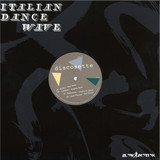
Summer is coming sooner this year, and you can tell from the heat of the two latest releases from Slow Motion: yes ladies and gents, Italian Dance Wave Compilations are back! The first of the two, “Italian Dance Wave Disco Sette”, is here to delight you: starting from a half Italo and half Asian influenced Altieri track, killing it with a dancefloor belter that will make you sweat the night away, raving sensations guaranteed. Lukebox (Fabrizio Mammarella and Umberto Saba from the duo Loudtone) will serve you a slightly more downtempo, modular, weirdo beast that will make your head bang without you even notice: banger. Back on your turntables, is also Robotalco who is providing some proto-house extravaganza and adding some charme to the dirty, chunky beats of the compilation. Last but not least, José Manuel, delivering a touch of biting deep house and electro tribal feels to close the gap, and make us scream “hell yes”.
No one sculpts volts & frequencies into a story quite like David Morley. For Futurepast’s third release, he has delivered a precise rendering of its vision to transcend temporal associations and perceptions. In the title track Boundary Travels, he ascends quickly into a weighty melodic line that oscillates like the natural intonations of an inner monologue, built upon a foundation of tightly knit hits and bleeps. The story of Limbo unfolds in the infinitesimal margin where intensity becomes softness, hesitation becomes resolution, and boundaries become intersections. Sounds drift past, above, and below in Crushing Pressure as if a city, or its memory, was suddenly suspended in a black hole. Boundary Travels might be the closest we can get to such a horizon.
- DVK
The latest ensemble outing comes courtesy of Fader, who runs his own Borneo imprint and has recently released on the newly established Bar Rotterdam label. The Dutchman delivers four different shades of powerful house music, all of them crafted within the walls of his Tenth Floor Studio somewhere between 2014 and 2018 !
The package kicks off with “Rubato Alle Tribù Del Sud”, a tribute (as well as a nudge) to the hedonistic Italian nineties but injected with a dose of edgy NY tribal house - an emotional yet uplifting ride that will get any dancefloor hooked. Up next comes “Dirty Detox”, a timeless affair consisting of a rolling Vermona Mono Lancet bass line, TR-909 drums, a touch of 303 and a mangled Casio CZ having a party while everyone’s asleep. “Echt Hè” is the classy deephouse track of the bunch. Its moody bass line and magical melodies are the result of a Boss DR 660 drum machine’s pairing with a few singing eurorack modules. The grittiest workout is aptly kept for the B2: “Suzan Caught On Tape” was the first piece of music production Fader ever finished in the city of Rotterdam. After running it through his old Mackie desk, throwing cheap reverb and delay effects on top, he bounced the whole thing straight to cassette tape. Finito, as they say.
Danish drummer Terkel Nørgaard presents his trio consisting of some of the key players in the Copenhagen scene and adding ECM-recording American star trumpeter Ralph Alessi on the lineup. Not merely a "feature", Alessi and the Danes form a coherent band unit capable of producing memorable and highly inspired contemporary jazz which links to the Nordic tradition of dynamic sound ranging from delicate minimalism to powerful avantgarde eruptions. The album Terkel Nørgaard "With Ralph Alessi" will be out via Helsinki's We Jazz Records on May 17.
On the new album, the Danish trio plus Alessi achieve something that can always be regarded a remarkable feat. They deliver a highly inspired set of music which links the album onto the ever-evolving lineage of jazz music, and at the same time introduce a new band capable of stunning the listener in the here and now. Terkel Nørgaard "With Ralph Alessi" will be released on vinyl (black / mint colored), CD and digital formats.
''For ECK003 we celebrate Data Room's debut release on Planet Earth.
This EP sees a future-thinking take on the beloved Junglist movement of the past 30 years.
Data Room delivers 3 tracks of different pace & style, centred around the aforementioned influence. Class, sophistication & bass weight can be expected from this 12".
Accompanying DR on the A-side is V Recordings' Jumpin Jack Frost, one of the original pioneers of jungle/drum & bass. Born & raised in London, growing up in the heyday of rare groove, acid house, hardcore & jungle, JJF brings a fast paced 4/4 driven breakbeat track that delivers the goods 20 beats per minute either side of it's original 158 tempo mark - taking the A2 spot to perfectly adrenalize this release.''
Still on their six-legged victory lap following the massive success of the Blessed EP, Tiga & The Martinez Brothers look to the outer limits of techno and beyond for the remixes. “Blessed was a baby born of friendship, and you don’t turn your baby over to some dude making ‘dark, atmospheric bangers’ on Ableton. You take that baby, you put on her bonnet and you entrust her to some of the most successful men in the world so you can take your wife salsa dancing for once,” says Tiga. Longtime Turbo target Ricardo Villalobos delivers his personal magic on the remix of “Cleopatra.” This is not the kind of everyday magic you’d find in a kind word from a stranger or the childlike wonder of a child. This is the good kind of magic. Louis Vuitton Creative Director/Off-White mastermind Virgil Abloh, one of Time Magazine’s 100 Most Influential People in the World, was a big fan of “Blessed,” and turns in a remix that is closer to “future jazz” than Tiga would have accepted from anyone else on that list, except for maybe Hugh Jackman. Abloh also designed the artwork for the release, which depicts the fall of man as seen through the eyes of a jean jacket. “I speak for everyone at Turbo when I say we are delighted and honoured to bring these two friends and creative forces into the fold,” says Tiga. “Some people well tell you that hatred and divisiveness are the answers to society’s ills, but I respectfully disagree. It’s friendship that’s gonna see us through. If I can convince two of today’s leading cultural figures to roll up their sleeves and figure out my remix pack, imagine what I could do if given control of a small country. I don’t see any other labels making these kinds of claims, and to me that says a lot.”
Make Mistakes head honcho Roy England teams up with pianist AC Jones to deliver The Shadow Gallery, a sprawling, hypnotic love letter to the dance floor. Music for the modern dance floor, with classic flare, and its heart on its sleeve.
From High On You, to Wayfaring at the end, The Shadow Gallery delivers a cohesive, focused musical journey. But, We Can Make It delivers best on the albums promise. Classic house grooves and bass propel the track forward, with AC’s piano weaving a melodic counterpoint to the relentless dance floor hustle.
While the front half of The Shadow Gallery begs for the afterhours sweatbox, the back half delivers peak hour party cuts for lovers. Anchored in the middle by the title track, The Shadow Gallery, a tune that would sit comfortably in any epic house journey. By crafting such a smooth progression through the collaboration, Shadow Gallery works just as well as sit down, and listen to some true pros bringing their skills together in a way that feels evokes the ghostly spirit of dance music’s past, while creating a modern sound for discerning ears.
Get some.
“We have no idea, now, of who or what the inhabitants of our future might be. In that sense, we have no future. Not in the sense that our grandparents had a future, or thought they did. Fully imagined cultural futures were the luxury of another day, one in which 'now' was of some greater duration. For us, of course, things can change so abruptly, so violently, so profoundly, that futures like our grandparents' have insufficient 'now' to stand on. We have no future because our present is too volatile. ... We have only risk management. The spinning of the given moment's scenarios. Pattern recognition”
― William Gibson, Pattern Recognition