WRWTFWW Records is beaucoup happy to announce the official reissue of Pierre Barouh's hard-to-describe-but-easy-to-enjoy French flair meets Japanese avant-garde lost treasure of experimental-electronic-chanson-pop with a new-wave-minimal-bossa touch, Le Pollen. Originally recorded July 1982 at Nippon Columbia Studio in Tokyo and composed, arranged, and played by a who's who of Japan's most groundbreaking musicians of the 80s, the album comes as a LP with bonus 7inch, housed in a heavy sleeve displaying two immaculate photos of Barouh and holding a printed lyrics insert.
A free-spirited world traveler with an incredible ear for music, Paris-born singer and activist Pierre Barouh introduced the sounds of Brazil (and more) to Europe and pushed the envelope with his pio-neering label Saravah, home of adventurous innovators Brigitte Fontaine, Areski, Jacques Higelin, Naná Vasconcelos, and Roland Bocquet's Catharsis among many others. His bohemian border-free vision of modern chanson, blending musical tradition from various parts of the globe with forward-looking artistry, resonated particularly well in Japan, where the scene spearheaded by Yellow Magic Orchestra fell in love with everything Barouh.
And so one day in 1981, Pierre Barouh received an invitation from a Japanese label to come record an album in Tokyo. Not one to turn down an escapade around the world, the French visionary jumped on a plane and landed in a studio surrounded with a dream line-up of musicians: Yukihiro Takahashi (who had named his solo debut Saravah! after Barouh's imprint) and Ryuichi Sakamoto of YMO, Yasuaki Shimizu and his Mariah bandmates Masanori Sasaji and Hideo Yamaki, members of the Moonriders, Motohiko Hamase, Mitsuru Sawamura of Interior, Kazuhiko Katoh and the list goes on. Also participating in the making of the album were longtime collaborator Francis Laï and the mys-terious and beautiful David Sylvian.
The result is Le Pollen, a sincere and affectionate mix of nouveau chanson, techno-pop, post-punk, jazz, bossa, ambient, and minimalism. And probably something else entirely. Honestly impossible to classify in a particular genre, Pierre Barouh's fascinating cosmopolitan music melting pot is, above all, a reassuring ode to humanity, where friendship, exchange, and collaborative creativity breeze freely. Making music together. It's all love.
Pierre Barouh sadly passed away in December 2016, leaving behind a monumental legacy of music and art for us to cherish, and a life philosophy that's well worth considering:
La vie, qu'elle soit longue ou brève
Moi, tous mes rêves
Je les prends toujours au sérieux
Quand l'utopie brise les chaînes
C'est l'oxygène,
De ceux qui sont restés curieux
Life, be it long or brief
Me, all my dreams
I always take them seriously
When utopia breaks the chains
It's the oxygen,
Of those who've remained curious
From the song "L'Autre Rive" on Le Pollen.
Search:we do it for love
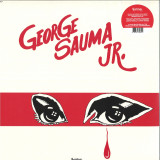
Favorite Recordings proudly presents an exclusive eponymous LP by Brazilian singer and composer George Sauma Jr., originally produced in 1985. Imagine a never-marketed release on which you’d hear not only the beautiful and genuine George’s songs but also the work from two figures of the Brazilian Music Golden Age: Arthur Verocai and Junior Mendes! A much-needed album for all Brazilian connoisseurs.
Back in the days, George Sauma Jr. was a young artist from Rio de Janeiro, learning on his side how to play chords and compose songs since he was 10. Still at the university, he’s influenced by Brazilian artists like Cassiano or Tim Maia, deeply fascinated by the arrangements and the “levada” (the groove) of all these new Brazilian songs. Simple and romantic music that resonated to his soul and creativity.
Around 1985, the story took an unexpected turn. George tells: “Dna Deyse Lucidy, the mother of Junior Mendes was a candidate for deputy and went to my father’s company to advertise. When I saw her, I shouted, “I’m a big fan of your son!” ” Of course, she could not praise more the work of her son. On her advises, George went to his studio on Rua Siqueria Campos at Copacabana. Junior loved the project and sent him to Arthur Verocai to improve the arrangements. Without money, the decision was taken to record everything at Junior Mendes’ studio on an 8-channel mixer. It was a small set-up but the emotions were there! George surely had other plans for some of his songs but without the budget, they ended up doing everything the best they could. And they did very fine with a top-notch team of musicians: Paulo Black on Drums, Arthur Verocai on Guitar, Ricardo Do Canto on Bass and Helvius Vilela on Keyboards.
Leaving the studio with the tapes, George tried to knock doors of international labels, but none did even dare to give him an answer. With less than 1000 copies pressed back in the days and without any distributor or label behind him, he went with proud to record stores, but received nothing than a strong reality check regarding the difficulties for a young Brazilian artist to achieve something on the saturated market of the 80s. Even for free, record stores didn’t want it. In the end, he ended up giving copies to friends and families, knowing deep inside that the songs were good! George tells: “I decided to leave, calm and conscious. I’ve still made three more albums, however on tapes, as it was more affordable. This time, just for my pleasure…”.
Thirty-five years after, it’s with great emotion that this first album by George Sauma Jr. is now made available as Vinyl LP with its original offset printed innersleeve & CD
Barbarossa, AKA British singer songwriter and producer
James Mathé, releases his new album ‘Love Here Listen’
via Memphis Industries.
For this latest batch of songs James Mathé collaborated
with producer du jour Ghost Culture (Daniel Avery, Kelly
Lee Owens, Falle Nioke) at his studio in Margate, Kent in
the South East of England. The pair worked with a
limited range of vintage synths - a Mono Poly, Korg MS-
20 a Roland SH-101 and a Juno 108 borrowed from the
local skate store Palm Bay Skates - with the recordings
bounced down to Mathé’s Fostex R8 reel to reel to give
it that undeniable warmth.
Mathé says of the recording process: “It was probably
the most stress-free record to date and so much fun just
messing around with synth arps. It’s easy with James as
we really understand each other and I trust him totally.
He lives five minutes’ walk along the seafront from me.
We even jumped in the sea a couple times after lunch.”
‘Love Here Listen’ is Mathé’s sixth album since his debut,
‘Sea Like Blood’, released on the Fence Collective back in
2006, since which time he’s joined the Jose Gonzales
live show, become a member of Junip, toured with
Poliça and This Is The Kit and morphed from acoustic
troubadoury to electronic song smithery all the while
seemingly searching for an elusive balance between
hopefulness and melancholy. On ‘Love Here Listen’,
thanks to a reconnecting with the visceral forces of nature, it feels like he’s found it.
Yellow vinyl LP.
Jesse James rides again! Rejoining the Soul Junction label to bring you his previously unreleased original version of the song “(The Girl In) Clinton Park”
The song is more widely known through the version recorded by the group Masterplan in 1974 as part of their trilogy of 45 releases on the West Coast Fos-Glo label, with this particular release being later picked up and released on The East Coast Delite label.
The story behind Jess’s solo version began 3 years earlier when following his first spell with the 20th Century label Jesse found himself without a label feeling a little disillusioned with major labels but undeterred in his own ability he decided to finance and record his own masters. Hence on 29th of April 1971, Jesse entered the Searra Sound Studio in Berkley C.A under the direction of producer and friend Willie Hoskins (Wilhos Productions, and the man who gave the world the Natural Four on Boola, Boola and ABC, prior to them joining Curtis Mayfield at Curtom). Jesse recorded a five song session, with one particular song being the Stanley Lippett composition “(The Girl In) Clinton Park”. Lippett who prior to becoming part of the Wilhos Productions team sang with the early 60’s group The Five Brooks before recording two very sought after Northern Soul 45’s “The Stran” and “Outta Sight Loving” for Dick Vance’s Out Of Site Label. Stanley later joined Marvin Holmes & The Uptights Band. It had been Marvin Holmes (he of Brown Door Records fame) who introduced Stanley to Willie Hoskins with Stanley subsequently joining Boola Boola Records and Wilhos Productions. Stanley repaid Marvin for this introduction by composing a song based on Marvin’s 3 year daughter, she being the actual girl from Clinton Park!
Returning to Jesse James, two other songs from this session, a cover version of Etta James “At Last” and “I Know I’ll Never Find Another” did gain a release at the time on the Zay label.
We’ve known about Jesse’s version of this song for many years now but the tape was nowhere to be found and even without hearing it, just knowing the song and that Jesse was a great singer I always promised him that one day I’d put it out. But if there is some good to come out of this pandemic then it was during Jesse’s lock down in Richmond and while browsing through his possessions he luckily found the missing tape, bingo we’re in business!
For this release we have coupled “(The Girl In) Clinton Park” with Jesse’s oh so soulful cover version of the Terry Callier/Larry Wade composition “ Just As Long As We’re In Love” (also recorded by Callier himself and The Mighty Dells), previously issued by Soul Junction on Jesse’s 2012 album “Let Me Show You” (SJLP 5005), enjoy.
Hawkwind have always been associated with music festivals, most notably the free festivals, where Dave Brock has said that, at
those events, the band is not shackled to appease an audience by giving them what they expect and have paid to see. With that obligation removed, the band can relax and experiment more than usual and gigs become even more fun. Their sessions, where they played for free, sometimes with the Pink Fairies, at Canvas City, outside the official site of the Isle Of White Festival in 1970, are a matter of legend and Nik Turner gained much attention when he painted his face silver and was much photographed as a result. During his set, Jimi Hendrix referred to him as 'the cat with the silver face'. However, when we think of Hawkwind and festivals, the word Stonehenge leaps to the fore.
The band always loved being there, enjoying the whole event as well as the freedom of how and when they played. This was not a time of business, but a time of fun. The most important one of these was Stonehenge 1984, which proved to be the last festival before the authorities moved in the following year to block the festival from being set up and Hawkwind ended up playing a few miles away instead. It was the sad end to an era. It had taken place twelve times and, had it been allowed one more time, it would have become a public event and the powers that be were determined to prevent that from happening. Happily, the 1984 festival was recorded and filmed and the Hawkwind Solstice Eve and Solstice Morning were both preserved...and we should be grateful for that.
The fact that Hawkwind were playing for free didn't mean it was a basic show. As well as the line-up of Dave Brock, Harvey Bainbridge, Huw Lloyd Langton (who played the evening session, but not the following morning), Nik Turner, Alan Davey and Danny Thompson, there were half a dozen dancers, a mime artist and fire spitting. A free event, it was the ideal time to introduce the new rhythm section to the band in the form of Danny Thompson on drums and Alan Davey on bass, with Harvey moved to keyboards. A move which was to have a long term affect in the way he made music, leading to his solo career, as well as years playing synths for Hawklords, in years to come, after his stint as the Hawkwind keyboards player came to an end.. Danny fitted the bill comfortably and drummed for the band until he left in 1988, to be replaced by Richard Chadwick. Danny went on to play for other bands including Bedouin and Pre Med. He also recorded a cassette album called Skinwalker. Alan made a good team alongside Dave Brock and it can be seen on the video just how pleased he was to be playing alongside Dave Brock, a man whom he had only met for the first time in November 1982, backstage at the Ipswich Gaumont. He went on to be the longest serving Hawkwind bass player, before moving on to pursue solo projects and form a nmber of bands. So in terms of the line-up, Stonehenge 1984 had a notable impact on the formation of the band for a number of years and, indeed, the destinies of Harvey, Danny and Alan. As if that were not enough to make the event special in the annals of Hawkwind, they played an interesting and varied main set in the evening, featuring a blend of old and new Hawkwind songs, along with numbers from Inner City Unit and
Bob Calvert's Lucky Leif And The Starfighters album. In keeping with the relaxed atmosphere, there was a considerably extended
version of Ghost Dance, lasting around ten minutes. The sunrise set was special too, with a long, laid-back, jam at dawn, in fitting with the occasion.
A lovely and relaxing start to the day and the kind of jam they couldn't really play to a paying audience. It's good to have the
memories of this significant festival gathered together in three formats.
Enjoy this special set, which commemorates a special event, not only in the history of Hawkwind, but of the saga of Stonehenge festivals.
The Pet Parade,” the title track to Fruit Bats’ newest album, might be a surprising opening track for longtime fans of Eric D. Johnson’s beloved indie folk-rock project. The six-and-a-half-minute tone poem smolders and drones over just two chords, inspired by the strange and silly community events that he saw growing up outside of Chicago, in La Grange, Illinois, in which people dressed up and showed off their pets. Decades later, The Pet Parade emerges in troubled times, living within what Johnson refers to as the beauty and absurdity of existence. While many of the songs on The Pet Parade were actually written before the pandemic, it’s impossible to disassociate the record from the times. As an example, producer Josh Kaufman (Bob Weir, The National, and Bonny Light Horseman, in which he plays with Johnson and Anaïs Mitchell) was brought in for his deep emotional touch and bandleading abilities. However, Johnson, Kaufman, and the other musicians on The Pet Parade drummers Joe Russo and Matt Barrick (The Walkmen, Fleet Foxes), singer-songwriter Johanna Samuels, pianist Thomas Bartlett (Nico Muhly, Sufjan Stevens), and fiddler Jim Becker (Califone, Iron & Wine) were forced to self-record their parts in bedrooms and home studios across America. Still, says Johnson, “The songs have enough intimacy that it doesn’t sound like it was made a million miles away.” Such tension and turmoil also impacted the lyrics of The Pet Parade. While “Cub Pilot” and “Here For Now, For You” began as more traditional love songs from a personal “I” to a specific “you” Johnson quickly realized that these songs needed to comfort broader audiences, changing the words to a more inclusive “we” and “us.” So too in “The Balcony,” a song ostensibly about a particular space in his grandmother’s apartment, but one that evolved into a metaphor on patience. At times upbeat and reassuring (“Eagles Below Us”) and at times quietly contemplative (“On the Avalon Stairs”), The Pet Parade marks a milestone for Johnson, who celebrates 20 years of Fruit Bats in 2021. In some ways still a cult band, in other ways a time-tested act, Fruit Bats has consistently earned enough small victories to carve out a career in a notoriously fickle scene. And Johnson himself who has played in The Shins, composed film scores, gone solo and returned back to the moniker that started it all, and most recently, earned two GRAMMY® nominations with Bonny Light Horseman doesn’t take this long route of life’s pet parade for granted. “I’m still really excited to make records,” he says. “Lucky and happy and maybe happier that things went slower for me. I’m savoring it a lot more.
The first EP from Nottingham’s like-minded music collective, Plates.
Originally established as a record shop and now a record cutting studio and music community, this EP showcases sounds close to its core and original supporters.
A1 is a track salvaged from a box of long-lost cassette tapes dating back to the mid-90s, bursting with raw and uplifting grooves, a soundtrack to moody city nights in Nottingham. Facehugger a long-time friend and supporter of Plates, alongside musical partner, Mark Warden aka DeviantRIP brings a tearing live analogue jam mashed together on a Roland 202, 808, 909 and JD800 - ave it!
A2 offers a completely different take on the typical ‘jungle’ style. Citizen Griot, an already prolific local beatmaker, better known for his hip-hop grooves and collaborations with local rappers, brings moody and enchanting jazz club vibes over subtle but constantly moving breakbeats.
B1 is the first ever ‘finished’ track from Plates founder, DJ Squid who has spent the last 10 years focusing on DJing and wasting precious time. This tune dedicates his love for early 90s jungle, and hardcore with the roots of soul, rare groove, weird library music and the simplicity of hand-picked samples, an MPC 2000XL and a dust-covered Mackie mixing desk.
B2 brings you back down to earth in a smoky spaced-out back room courtesy of long-time crate digger and local hero Mr Wilson. Head-nodding beats cushioned by a soothing bassline and hypnotic chords that surround you and carry you away to another dimension that is neither new or funky.
This record is dedicated in memory of Rita, Philpotts, Pete Woosh, Adam XTC and Harry McCormick.
The saga of composer Tim Story's 1982 debut is a case study in the shifting sands of the early progressive music industry. Recorded on a Tascam 4-track reel-to-reel in his basement bedroom in Whitehouse, Ohio using a ragtag array of equipment – salvaged vibraphone, pawn shop Les Paul, his mother's spinet piano, a PAiA synth kit assembled by his girlfriend's father, and a Yamaha CS-30 – Story optimistically dubbed six cassettes and sent them around the world. Following a polite rejection from Klaus Schulze, the French avant-garde label Atem (This Heat, Univers Zero, Art Zoyd) reached out with an offer to release Threads via their new instrumental electronic subdivision, Labyrinthes. After several letters confirming terms of the arrangement as well as multiple rounds of test pressings, correspondence suddenly ceased. Some months later the label folded, never having begun. Synchronistically, however, Schulze's copy ended up in the glovebox of an engineer associate, who happened to play it for a couple visiting journalists with contacts at a newish Norwegian imprint, Uniton Records (Popul Vuh, Harold Budd).
Impressed, they connected Story to the label head, but by then he'd already recorded a follow-up, the more neoclassical-leaning In Another Country, which became his inaugural release. Finally, 40 years later, Dais Records is rectifying history's error by properly issuing Threads on vinyl for the first time. It's a beautiful, beguiling work, exploratory but emotive, documenting, as Story puts it, “the path not taken... like the first chapter of a book that was set aside to begin another.” Despite only being in his early twenties at the time of its creation, Threads feels finessed and considered, weaving through a diverse spectrum of moods and minimalist melodies. From sunburst synthesizer devotionals (“Tethered By A Thread”) to shadowy cosmic drift (“Without Waves,” “Iso”) to fragile piano vignettes (“Burst,” “Scene And Artifact”), Story's compositional instincts skew subtle and sophisticated, carving gemstones of fluctuating radiance. He cites his discovery of tape loops as a central tool in the process, allowing him to generate recurring patterns of echoes and texture, decaying in volume and fidelity as desired: “A whole new and inspiring world opened up.” As both time capsule and discographical fountainhead, Threads vividly captures the threshold sensation of early 1980's electronic music: post-kosmische, prenew age, before ambient became codified, just as synthesizers began slipstreaming into the underground. It's an album of beginnings and forking paths, inner space voyaging towards limitless horizons, born of “youthful dedication to something one loves, in a world that feels uncertain.”
· First ever vinyl edition, originally set to be released in 1982 but due to original label's untimely demise, it was never issued until now.
· Collaborative releases with Hans-Joachim Roedelius and Dwight Ashley, with releases on notable labels Uniton, Windham Hill, and Hearts of Space.
· For fans of Harold Budd, Brian Eno, Roedelius, Nils Frahm, Klaus Schulze, Popol Vuh, Vangelis, Jean-Michel Jarre · The song "A Thousand Whispers" has been in regular rotation at Sirius XM.
· Tim Story is a Grammy nominated artist in 1988 for his "Legend of Sleepy Hollow" recording with Glenn Close.
I’ve known Alex Bleeker my entire life. Well, okay, maybe not since I was born, but there’s no doubt that I’ve shared a fair bit of memories with him over the years. We’ve acted in high school productions of Shakespeare together, gone on late-night diner runs, argued about which Weezer album is the band’s best, and swapped mutual appreciation for the music of Yo La Tengo on car rides careening around the snaky suburbia of our hometown. Just like his Real Estate bandmates Martin Courtney and Julian Lynch, we attended high school in the New Jersey enclave of Ridgewood, a place where sticky summer days yielded cool nights with a glow so nocturnal that you can practically hear the fireflies buzzing off of this sentence alone.
Indie rock—a type of music that can easily be made or listened to in someone’s garage—often dominates teenage suburban preoccupations, and both Alex and I were no exception. You can hear this legacy of listening on his new album Heaven on the Faultline, which departs from his last full-band outing as Alex Bleeker and the Freaks, 2015’s Country Agenda. Whereas that album had a more full-bodied explicitly folk-y feel, Heaven on the Faultline finds Bleeker getting back to his homespun roots over the course of its 13 songs, from the jangly guitar pop of New Jersey heroes the Feelies and YLT’s hushed, acoustic reveries to the open-hearted folk rock that marks so much of the Grateful Dead’s early catalog.
Written and recorded over the last several years, Heaven on the Faultline’s songs were initially recorded straight to GarageBand in Bleeker’s bedroom before receiving further studio refinement in co-producer Phil Hartunian’s Tropico Beauty space in Los Angeles. With contributions from Confusing Mix of Nations’ Josh Da Costa, Cameron Stallones of Sun Araw, singer-songwriter Kacey Johansing, and Parting Lines’ Tim Ramsey, Heaven on the Faultline achieves a warm and intimate feel that defines Bleeker’s mission for the album: “I wanted to capture the moment in which I fell in love with making music to begin with. This is music for myself—me getting back to music for music’s sake.”
The unsteady times we live in certainly creep into view on Heaven on the Faultline. The deceptively easygoing “D Plus” was written on the day of President Donald Trump’s inauguration with the cursed event in mind, while the anxiety of climate change hovers just above the lovely guitar loops of “Felty Feel.” “The album is very much about dealing with the anxiety of a sense of impending doom,” Bleeker states while discussing the album’s portentous vibes. “When is the hammer going to fall? How do we go forward in the face of such anxiety and experience the complexity of life?”
Tough questions with few answers, but try not to stress too much. It’s possible to experience such existential doubt while also enjoying the simple pleasures that life has to offer, and that ethos is square at the heart of Heaven on the Faultline. It defines who Alex Bleeker is, too, and is one of many reasons why I’m proud to have known this special person and artist for so long.
Larry Fitzmaurice
Standard Light Rose LP! 'Flock' is the record that Jane Weaver always wanted to make, the most genuine version of herself, complete with unpretentious Day-Glo pop sensibilities, wit, kindness, humour and glamour. A consciously positive vision for negative times, a brooding and ethereal creation. The album features an untested new fusion of seemingly unrelated compounds fused into an eco-friendly hum; pop music for post-new-normal times. Created from elements that should never date, its pop music reinvented. Still prevalent are the cosmic sounds, but 'Flock' is a natural rebellion to the recent releases which sees her decidedly move away from conceptual roots in favour of writing pop music. Produced on a complicated diet of bygone Lebanese torch songs, 1980's Russian Aerobics records and Australian Punk. Amongst this broadcast of glistening sounds is 'The Revolution Of Super Visions', an untelevised Mothership connection, with Prince floating by as he plays scratchy guitar; it also features a funky whack-a-mole bass line and synth worms. It underlines the discordant pop vibe that permeates 'Flock' and concludes on 'Solarised', a super-catchy, totally infectious apocalypse, a radio-friendly groove for last dance lovers clinging together in an effort to save themselves before the end of the night. The musician's exposure to an abundance of lost records served as a reminder that you still feel like an outsider in this world and that by overcoming fears you can achieve artistic freedom. Jane Weaver continues to metamorphise_ "A mind-expanding delight, devoid of retro posturing." The Guardian "Ominous and luminous, expansively spacious and sonically imploding, scientific, ephemeral and eternal" The Quietus
Corvair is what happens when you trap two Scorpio songwriters in a house together. Comprised of a Portland-based husband / wife duo of two seasoned musicians (Brian Naubert and Heather Larimer), Corvair’s debut album charts a starcrossed love story over three decades, five cities, and six continents. Spanning from atmospheric pop to jangly confessional, 70s AM to 90s FM, this work is laden with stunning turns of phrase and prodigious melodies, two voices leaping to meet in the ether. Corvair’s debut album was largely created during the COVID pandemic shut-down of Spring 2020. It includes work with drummer Eric Eagle (Jesse Sykes, Wayne Horvitz) and Engineer Martin Feveyear (Brandi Carlile, Mark Lanegan, Mudhoney), who also mixed the record. Larimer explains, “Being stuck in a house together with very little outside influence made us more emotionally raw, definitely weirder, and also more patient and intricate in developing the songs. And because we were in a bubble, cooking dinners from paranoidly-disinfected groceries and listening to old records, really disparate references from some of our favorite music ended up colliding in odd ways--an emotional Judas Priest bridge, an anthemic Pixies outro, a spacey keyboard sound from Steve Miller, Jeff Lynne's acoustic guitar tone, a Carpenters-style lush harmony. I think it's a wonderfully weird record, but also very in-your-face pop because what else are you going to do when the world feels like it's ending?" Separately, Naubert and Larimer have created or appeared on more than 20 records. Heather’s musical mainstay was the garage pop band Eux Autres, broadly hailed as a “veritable cult classic” band, radio-debuted by the legendary John Peel, and featured in many shows, movies and commercials. Brian is a longtime fixture of the Northwest rock community, having played in vital bands such as Tube Top, Pop Sickle, and the critically-lauded Ruston Mire, since 1993. More recently, Brian released his first solo record, Hoffabus and a record with the NW Supergroup, The Service Providers. Naubert and Larimer’s decades of separate music making have finally combined, culminating in this tour de force from two formidable songwriters. Corvair sounds like nothing you’ve ever heard and everything you’ve always loved.
Press quotes: “Smart, infectious, jangly pop.” Everett True // “An irresistible set of bouncy indie-pop tinged with surf music and ‘60s girl groups, contrasted with the band’s often-biting lyrics.” KEXP.org // “One of the more exciting independent releases of the year...a veritable cult classic.” Under The Radar // “Three chord garage pop that hangs on a raunchy guitar line and crisp production from Janet Weiss (Sleater-Kinney, Quasi).” MAGNET Magazine // Brian Naubert - vocals, guitars, bass, keyboards, percussion. Heather Larimer - vocals, keyboards, percussion.
Frontman of Nottingham punk band Kagoule, Cai Burns, returns as Blood Wizard. Arriving with no fixed direction, Blood Wizard is a project that sees Burns explore himself as a brand new entity, an artist beyond boundaries and preconceptions.
First single ‘Breaking Even’, showcases Burns’ impeccable songwriting skills and acts as the perfect introduction to this exciting project. With jangled, stop-and-go instrumentation, it is sheer artistic satire with an added charm.
Burns says about ‘Breaking Even’: “Breaking Even is a song about doing a lot for someone, changing yourself to fit their ideas of you but not getting the same in return. It's a satirical commentary on the effect that can have on a friendship or relationship”
Western Spaghetti, out 5th March 2021 via Moshi Moshi Records. Filled with crisp hooks, it is an album that has a predominant folk undertone that also expertedly navigates through various textures and dark melodies. There was not an album in
mind when Burns first started recording with Tom Towle at Random Recording Studio - just fragments of songs that all came together when the world paused in the spring and Burns realised that what he had been working on over the last few months could become a full record. The structure of the album follows suit, chopping and changing between harder-edged sounds and acoustic meanderings.
There is a forward honesty and a witty wryness to Blood Wizard. “Hooray to the big news, got my mouth around the spoiled fruit” he sighs on Fruit, a song about keeping happy for your friends’ achievements while your life feels static. Meanwhile, Total Depravity’s stand-out, bittersweet lyric “I’m never going to get that jacket back” pinpoints a singular moment amongst an anxious blur and a time he cannot return to. The infectious and fuzzy Carcrash draws on the weird ways love can be displayed, whilst in stark contrast, the subdued Somehow I Knew tells of the people you’ve never got to know.
“The rumors are true; Providence, Rhode Island is permeated with a mysterious energy”. So says Dave Litifreri, guitarist and vocalist of
Urdog. “Some of us focused this energy, learned to live with the ghosts and tell their story.” It’s a story chronicled on Long Shadows, the new Urdog retrospective on Rocket Recordings - the work of a mercurial band whose music may have been summoned from fog and ghosts, yet possesses considerable staying power beyond their brief time on the planet. “We were influenced by the horror of late-capitalism in general every day” says drummer and vocalist Erin Rosenthal, “This glued and glues us together, also love of bicycles, french fries and faerie folk. Big influences for me were Robert Wyatt, Incredible String Band, Dagmar Krause, but especially This Heat, Riot Grrrl and 90’s hardcore.” From such disparate inspiration came psychically heavy jams and wild improvisational voyages from this triumvirate which chart an instinctive and wild journey, drawing the interplanetary dots between early ‘70s freak-flag-waving transgressions and the folk-tinged frontiers of the early 21st century US underground. Mantric repetition, ceremonial ambience
and fuzz/wah tinged blowouts take equal prominence in this dreamlike realm. Drawing the interplanetary dots between the drone ’n’ klang of Amon Düül II and the cultish hallucinations of Sunburned Hand Of The Man, and replete with both an earthiness of approach and a powerful celestial intensity. “We used our intuitive connection to let three distinct voices be heard” reflects Dave. “There was no foundation; they supported each other. Once that is achieved, a vibe develops. Getting into the space of a song is something you can’t notate. We had the keys, but getting to the door was the trick. Some nights we got all the way through the roof to the stars.”
Father John Misty is the nom-de-plume of Josh Tillman, who
has been recording and releasing solo albums under his own
name since 2003 and who recently left Seattle’s Fleet Foxes
after playing drums with them from 2008-2011.
When discussing Father John Misty, Tillman paraphrases Philip
Roth: “‘It’s all of me and none of me, if you can’t see that, you
won’t get it.’”
‘Fear Fun’, Father John Misty’s album from 2012 and now
available again through Sub Pop, began gestating during what
Tillman describes as an “immobilizing period of depression” in
his former Seattle home, when he had lost interest in
songwriting and wound up finding his voice by writing a novel.
After breaking from Seattle and settling in a spider-infested
Laurel Canyon treehouse, Tillman spent months demoing
songs, eventually liberating himself from his creative impasse.
With the help of LA producer/songwriter/pal Jonathan Wilson, a
wealth of talented musicians kicking around LA and producer
Phil Ek (who everyone knows has worked with Built to Spill,
Modest Mouse, Band of Horses, Fleet Foxes), ‘Fear Fun’
blossomed into a fully-formed expression of Tillman’s
unrestrained vision.
‘Fear Fun’ consists of such disparate elements as Waylon
Jennings, Harry Nilsson, Arthur Russell, All Things Must Pass
and Physical Graffiti, often within the same song. Tillman’s
voice has never been better and often sounds like Roy Orbison
at his most joyous, while the music maintains a dark,
mysterious yet playful, almost Dionysian quality.
Lyrically, his absurdist fever dreams of pain and pleasure elicit,
in equal measures, the blunt descriptive power of Bukowski or
Brautigan, the hedonist-philosophy of Oscar Wilde and the
dried-out wit of Loudon Wainwright III.
6-panel digipack CD. Gatefold LP.
Father John Misty is the nom-de-plume of Josh Tillman, who
has been recording and releasing solo albums under his own
name since 2003 and who recently left Seattle’s Fleet Foxes
after playing drums with them from 2008-2011.
When discussing Father John Misty, Tillman paraphrases Philip
Roth: “‘It’s all of me and none of me, if you can’t see that, you
won’t get it.’”
‘Fear Fun’, Father John Misty’s album from 2012 and now
available again through Sub Pop, began gestating during what
Tillman describes as an “immobilizing period of depression” in
his former Seattle home, when he had lost interest in
songwriting and wound up finding his voice by writing a novel.
After breaking from Seattle and settling in a spider-infested
Laurel Canyon treehouse, Tillman spent months demoing
songs, eventually liberating himself from his creative impasse.
With the help of LA producer/songwriter/pal Jonathan Wilson, a
wealth of talented musicians kicking around LA and producer
Phil Ek (who everyone knows has worked with Built to Spill,
Modest Mouse, Band of Horses, Fleet Foxes), ‘Fear Fun’
blossomed into a fully-formed expression of Tillman’s
unrestrained vision.
‘Fear Fun’ consists of such disparate elements as Waylon
Jennings, Harry Nilsson, Arthur Russell, All Things Must Pass
and Physical Graffiti, often within the same song. Tillman’s
voice has never been better and often sounds like Roy Orbison
at his most joyous, while the music maintains a dark,
mysterious yet playful, almost Dionysian quality.
Lyrically, his absurdist fever dreams of pain and pleasure elicit,
in equal measures, the blunt descriptive power of Bukowski or
Brautigan, the hedonist-philosophy of Oscar Wilde and the
dried-out wit of Loudon Wainwright III.
6-panel digipack CD. Gatefold LP.
Originally released on Celluloid Lunch (Canada), really excited to do the Euro edition. Drawing influence from the looser end of the Ork records catalogue, the sensitive side of Ohio’s proto-punk scene and the grittiest and most sluggish tangent of 70’s power pop, Itchy Self’s debut 12” is an exploration of fully formed songs treated with spontaneous delivery. The group got together in early 2020 for 3 practices and a recording session and here are the results, laid out in their raw form. This is cross-generational racket n roll music that wears its heart on its loosey goosey sleeve. ‘B what you B’ is a life affirming testament to living against the grain that calls to mind the Modern Lovers’ aggressive positivity. Title track ‘Here’s the Rub’ is a barrage of abstract lyrics and skronky shred. ‘God Bless the Ego’ is an ode to the looseness and blurry eyed lucidity of indie rock’s forbearers such as Chilton, Kilgour, Pollard and Malkmus. ‘Reprobate’ is a Stones style ballad that channels the Saints and Johnny Thunders in equal measures. ‘Playing MTV’ is an audacious end remark to the record, that rips on classic Velvets strut and testifies it’s own ridiculous merit through boastful and catty lyrics. All in all, of course, it’s only Rock n Roll. This record is 1 part follow up to the Protruders “Poison Future” 12” on Feel It records (2019) and 1 part the first chapter of a new and exciting group formed in Canada’s capital of de-proffessionalized rock music. Recorded to 1/4 inch tape by Scott Munro (Preoccupations) and mastered by Mikey Young (Total Control), this record should provide a concise opening statement to anyone with the least bit of concern about Itchy Self. You’re gonna need an ocean of calamine lotion. Sorry State Records
- A1: Various Artists - I Remember All My Lovers
- A2: Aeox - Gruft
- A3: Rouage - Rush Hour
- A4: Aeox - Fragile
- B1: Aeox - Kesseltreiben
- B2: Aeox - Bekifft
- B3: Various Artists - Dreierlei Fickblick
- B4: Cnm - Deform (Rmx)
- C1: Aeox - Guitarmad
- C2: Aeox - Culture Houze
- C3: Rouage - Fierce
- C4: Aeox - Ficken
- D1: Rouage - Touch It (Stellwerk Rmx)
- D2: Aeox - Denksport
- D3: Rouage - Syrinx (In Öl)
First released by Cazzo Film in 2001, ebo hill’s Bonking Berlin Bastards has long achieved the status of an underground punk porn classic. Like the Cazzo productions of director Bruce LaBruce, hill’s vision was both ahead of its time and a playful distillation of 90s and early-2000s Berlin Zeitgeist: queer, industrial, hypersexual, exhibitionist and fueled by electronic music. The story is told in large part by the soundtrack, to be released for the first time on Ostgut Ton sublabel A-TON. The music follows a group of squatters, punks and drag queens as they fuck, party and stumble their way through an empty city at the turn of the millennium. Approaching these themes more through location than plot, the film’s narrative freedom is also a narrative of freedom; between chance encounters and sex in public, atop the maze of roofs in the city’s former East, bent over bridges and moaning in ecstasy at oncoming traffic, pants down in telephone booths, packed into sex clubs, in the shadows of abandoned factories and techno clubs lost in time. Composed by improvisational techno trio AeoX and noise / industrial producer Rouage aka CNM (respectively), the music spans a broad range of appropriately pounding industrial, weird techno, noise, ultra-stoned ambient, improvised dub and electro. It’s a sonic spectrum that connects Berlin’s queer hardcore techno and squatter party scenes from which AeoX and Rouage emerged, drawing a direct line between the likes of Berghain-forerunner OstGut (a primary meeting point for the film’s cast & crew) to the more industrial, breakcore and noise- oriented independent party collectives and locations who provided multiple settings for the film, including Grüne Hölle and Stellwerk.
*Artists:* CNM / Rouage (Kathinka): Born in 1975 and raised in East Berlin. Co-organization of subcultural events since 1998 in Berlin, Potsdam, Leipzig and Barcelona. Experimental music, collaborations, exhibitions and audiovisual shows since 2000.
AeoX: Active between 2001 and 2007. Originally a quartet, then a trio, the group eventually shrank to two permanent members: Alex.E and Hanno Hinkelbein. The latter founded Null Records, where AeoX released two album and numerous EPs. They also released on Mental.Ind.Records founded by former OstGut resident Cora S. Musically, the group experimented with combining improvisational hardware techno, breaks, traditional instruments (guitar, clarinet, piano) industrial and metal.
Ursprünglich 2001 von Cazzo Film veröffentlicht, hat Bonking Berlin Bastards von ebo hill längst den Status eines Underground-Punk-Pornoklassikers erreicht. Wie die Cazzo- Produktionen von Regisseur Bruce LaBruce, war auch hills Vision seiner Zeit voraus und ein spielerisches Destillat des 90er- und Anfang-2000er Berlin-Zeitgeists: queer, industriell, hypersexuell, exhibitionistisch, angetrieben von elektronischer Musik. Die Geschichte wird größtenteils über den Soundtrack erzählt, der auf Ostgut Tons Sublabel A-TON zum ersten Mal veröffentlicht wird. Die Musik folgt einer Gruppe von Hausbesetzern, Punks und Drags, die ficken, feiern und durch die leere Stadt um die Jahrtausendwende streifen. Bonking Berlin Bastards erzählt diese Themen mehr über die Drehorte als über die Handlung. Die erzählerische Freiheit des filmischen Narrativs ist gleichzeitig eine Erzählung von Freiheit: Von zufälligen Begegnungen bis hin zu Sex in der Öffentlichkeit, auf Dächern im früheren Osten Berlins, sich über die Brüstungen von Straßenbrücken beugen, trotz und wegen des Verkehrs stöhnen, mit heruntergelassenen Hosen in Telefonzellen, in überfüllten Sexclubs, im Schatten aufgegebener Fabriken, zeitverloren in Technoclubs. Der Soundtrack wurde sowohl vom Improvisationstechnotrio AeoX als auch von Noise-/Industrial-Producer Rouage aka CNM komponiert und spannt einen weiten Bogen von explizit pumpendem Industrial, schräg klingendem Techno, Noise, ultra-stoned Ambient, improvisiertem Dub und Electro. Das musikalische Spektrum verbindet Berlins queere Hardcore-, Techno- und Hausbesetzer-Party-Szenen, aus denen AeoX und Rouage selbst hervorgingen und zieht dabei eine direkte Linie zwischen dem Berghain- Vorgängerclub OstGut (ein wichtiger Treffpunkt für die Darsteller und Crew des Films) und den eher Industrial-, Breakcore- und Noise-orientierten Independent-Partykollektiven und -Locations wie Grüne Hölle und Stellwerk, welche mehrfach als Drehort und Kulisse des Films auftauchen.
CNM / Rouage (Kathinka): 1975 geboren nd aufgewachsen in Ost- Berlin. Co-Organisation subkultureller Events seit 1998 in Berlin, Potsdam, Leipzig und Barcelona. Experimentelle Musik, Kollaborationen, Ausstellungen und audiovisuelle Shows seit 2000.
AeoX: Aktiv zwischen 2001 und 2007. Ursprünglich ein Quartett, dann ein Trio, dann verkleinerte sich die Gruppe auf zwei permanente Mitglieder: Alex.E und Hanno Hinkelbein. Letzterer gründete Null Records, auf dem AeoX zwei Alben und zahlreiche EPs veröffentlichte. Ebenfalls Veröffentlichungen auf Mental.Ind.Records, welches von der ehemaligen OstGut resident Cora S. gegründet wurde. Musikalisch kombiniert die Gruppe improvisierten Hardware- Techno mit Breaks, traditionellen Instrumenten (Gitarre, Klarinette, Klavier), Industrial und Metal.
2x12" + DL Repress
NOTE: ALL FORMATS CONTAIN THE FULL VERSION OF "RAUSCH". THE ALBUM IS MEANT TO BE HEARD FROM BEGINNING TO END AS A WHOLE. IT HAS BEEN TRACK MARKED OR SEPARATED DUE TO FORMAT RESTRICTIONS
Rausch with no name / My beautiful shine / You are the sun / This is where I want to be / Rausch with no morning / This is where we burn / The Stars sparkle / In a sea of flames / Horns and fanfares / Fanfares of joy / Fanfares of fear / The wine we drink through the eyes / The moon pours down at night in waves / Careful with that axe Eugene / Personal Jesus / No beginning no end / Eighteenth of Oktember / The night falls / The king comes / The hunt starts / Freude schöner Götterfunken / The long march through the underwood / Trust me there's nothing / Once upon a time there was a bandit / Who loved a prince / That was long ago / Spring Summer Fall and Gas / There is a train heading to Nowhere / Drums and Trumpets / Future without mankind / Warm snow / Alles ist gut / The bells toll / You are not alone / The murmur in the forest / The murmur in the head / Light as mist / Heavy as lead / Music happens / To flow like gas / A clearing / Heavy baggage / Debut in the afterlife / Death has seven cats / World heritage Rausch / Finally infinite
Wolfgang Voigt 2018
Rausch ohne Namen / Mein schöner Schein / Du bist die Sonne / Hier will ich sein / Rausch ohne Morgen / Wir brennen hier / Die Sterne funkeln / Im Flammenmeer / Hörner und Fanfaren / Fanfaren der Freude / Fanfaren der Angst / Den Wein den man mit Augen trinkt / Gießt Nachts der Mond in Wogen nieder / Vorsicht mit der Axt Eugene / Personal Jesus / Kein Anfang Kein Ende / Achtzehnter Oktember / Die Nacht bricht an / Der König kommt / Die Jagd beginnt / Freude schöner Götterfunken / Der lange Marsch durchs Unterholz / Glaub mir da ist nichts / Es war einmal ein Räuber / Der liebte einen Prinzen / Das ist lange her / Frühling Sommer Herbst und Gas / Es fährt ein Zug nach Nirgendwo / Pauken und Trompeten / Zukunft ohne Menschen / Warmer Schnee / Alles ist gut / Die Glocken läuten / Du bist nicht allein / Das Rauschen im Wald / Das Rauschen im Kopf / Leicht wie Nebel / Schwer wie Blei / Musik ergibt sich / Strömt wie Gas / Eine Lichtung / Schweres Gepäck / Einstand im Jenseits / Der Tod hat sieben Katzen / Weltkulturerbe Rausch / Endlich Unendlich
Wolfgang Voigt 2018
Legendary pedal steel player Susan Alcorn presents her music as curated and arranged by cellist and composer Janel Leppin. This recording is from a live performance from her residency at Issue Project Room in July 2012. Leppin’s arrangements and curation emotes the brilliance, transparency and resonance of the pedal steel guitar. Through this ensemble, the mastery of Susan Alcorn's compositions shine.
Susan Alcorn has taken the pedal steel guitar far beyond its traditional role in country music. Having first paid her dues in Texas country & western bands, she began to expand the vocabulary of her instrument through her study of 20th century classical music, visionary jazz, and world musics. Struck by the music of Messiaen she began transcribing classical music from recordings and scores on her instrument. Soon, she began to combine the techniques of country-western pedal steel with her own extended techniques to form a personal style influenced by free jazz, avant-garde classical music, Indian ragas, Indigenous traditions, and various folk musics of the world. By the early 1990s her music began to show an influence of the holistic and feminist “deep listening” philosophies of Pauline Oliveros. As her records gained a cult following she moved to Baltimore, MD. She performs internationally and is a key figure in the free improv scene in the US.
Janel Leppin is a core member of the Washington, D.C. experimental, jazz, punk and improvisational scenes and is a celebrated visual artist as a weaver. DownBeat Magazine describes her as “An absolute virtuoso”, NPR Music says “instrumental intimacy swept up in arrangements that cluster around her voice, as delicate and as imposing as a sheet of falling ice.”. Janel leads and writes for her free jazz sextet, Ensemble Volcanic Ash “a rarity..ahhh-vant garde at it’s finest." -Capital Bop. Leppin and Alcorn also recorded the composition “Thick Tarragon” by Eyvind Kang from the album Visible Breath on Ideologic Organ. Leppin appears as a string arranger on many recordings on labels from Dischord Records to Sacred Bones.
This first ever re-release of William Stuckey's extremely rare southern soul LP. When Brian Sears told me William was still with us and living locally I was shocked that nobody had spoken to him up till now. Not only that but he still had the multitrack tapes at his house.
Unfortunately the tapes were in a bad way and needed some serious work. Our good friend Dan at Audio Archiving Services in Holywood went above and beyond to restore the tape in small sections (despite baking it was still oozing gunk onto the tape transport and heads) then joining the audio back together perfectly. I know not many people would have gone to this trouble and I'm grateful as this music had one last chance.
The mix down at AOTN studio is brighter and clearer than the o.g whilst being true to the original mix, William was over the moon with the result when he heard it and we are excited to bring it to Vinyl, CD and Digital
Special thanks to Brian, Dan and Linkwood for the work on this project. Securing special music for the future is what we do and we just caught this one in time.