"Kiso", "Asama", "Hakuba" and "Hida". He recalls the landscapes of his past and carefully weaves his feelings and emotions into the music. This work is one of the pinnacles that Akira Miyazawa has reached.
This work was released in 1970 as one of Victor's "Japanese Jazz" series. "We are Japanese, so I think we have to create something that only Japanese people can do." These are the words of Akira Miyazawa from this period. When Miyazawa tried to create a work that only Japanese people could do, it was inevitable that he would choose his own origins, the hometown where he was born and raised, as a motif. For Miyazawa, who was born in Matsumoto City, Nagano Prefecture and loved fishing, "Kiso", "Asama", "Hakuba" and "Hida" are truly landscapes of his past. Takeo Moriyama's raging drums, Yasuo Arakawa's rich bass, Masahiko Sato's overflowing piano, and Miyazawa's saxophone, which is like a mass of emotion. Nostalgia and admiration for the land where he was born and raised, as well as admiration and reverence for Mother Nature. Miyazawa looks to his roots and weaves his thoughts and images into his music with sincerity and care. This album, "Kiso" is the pinnacle that Miyazawa has reached.
Text by Yusuke Ogawa (UNIVERSOUNDS / DEEP JAZZ REALITY)
Поиск:we do it for love
Все
- B7: 14 Your Love (Feat. Jonah Hitchens)
- A1: Keeping Me Strong
- A2: Need You Back
- A3: Where's Your Soul At?
- A4: Walls Start Rockin
- A5: Make It Shine (Feat. Greg Blackman)
- A6: Love Saves The Day
- A7: You Sexy Thing (Skit)
- B1: Can I Dance With You?
- B2: Heart & Soul
- B3: Plain To See
- B4: Idolising People Like Madlib
- B5: It's Not Happening (Skit)
- B6: Everybody
black vinyl[26,68 €]
Here to dazzle you by the power of the disco ball, Lack of Afro is your friendly neighbourhood ‘Love Dealer’. Two years on from the funk & soul rebirth of ‘Square One’, powered by the ubiquitous ‘Loving Arms’ featuring Greg Blackman, Lack of Afro aka Adam Gibbons is now close to two decades deep in the game with soundtrack credits galore and online streams doing calculator-busting numbers. With extensive touring taking ‘Love Dealer’ up and down the country this Autumn, Gibbons’ ninth studio album is all for "the thrill of seeing people on a dancefloor, all collectively locked into a track that you've produced - there’s nothing like it!”.
‘Love Dealer’ is the authentic modern disco experience, packing a stacked sole’s worth of club beats full of stardusted sing-alongs, style-outs and French touch-style cool. Despite being “written during one of the longest winters in living memory”, ‘Love Dealer’, featuring some co-production from fellow South Coast dancefloor scholar Flevans (and influenced by producer du jour Barry Can’t Swim), exudes warmth and will make you sweat when its highs take effect.
Entering the scene with the radiance of ‘Make It Shine’ featuring Greg Blackman, washing over the airwaves of BBC 6 Music and Radio 2 and taking up a 10-week residency on the Jazz FM playlist, Gibbons and his crack line-up of discotheque players are your go-to team when you can’t wait for the weekend to begin, as subtle as they are straight down to business. ‘Love Dealer’ offers you nothing but the best in sparkling string symphonies, the hippest guitar licks, samples of those invited beyond the velvet rope and struts soaked in night fever.
Double A-side ‘Walls Start Rockin’ and ‘Heart & Soul’ guide the album’s glamour-and-groove, while ‘Love Saves The Day’ and ‘Plain to See’ dramatically take to the podium in a shimmer of pure peak 70s theatre. ‘Keeping Me Strong’ is the synergy of disco chic and the sound of a global advertising tie-in with Dyson, ahead of Gibbons taking a slightly Moroder/Cerrone-ish detour on ‘Idolising People Like Madlib’. “'Love Dealer' is aimed unequivocally at the dancefloor" says Adam. "As an artist, I wanted to push myself in a slightly new direction - more into the land of disco and a four to the floor sound. 'Love Dealer' is quintessentially an upbeat record, full of joy, optimism and hope for the future”. Seek your inner ‘Love Dealer’, kink your ‘fro and let your funk flag fly.
n B7. 14 Your Love (feat. Jonah Hitchens) BONUS TRACK
n B7. 14 Your Love (feat. Jonah Hitchens) [BONUS TRACK]
[n] B7. 14 Your Love (feat. Jonah Hitchens) [BONUS TRACK]
[n] B7. 14 Your Love (feat. Jonah Hitchens) [BONUS TRACK]
[n] B7. 14 Your Love (feat. Jonah Hitchens) [BONUS TRACK]
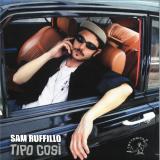
Italian producer, musician, DJ, and groove architect Sam Ruffillo drops his long-awaited debut album Tipo Così on Toy Tonics – a sun-drenched, genre-blurring statement that blends classic house with Mediterranean flair, romantic funk, and tongue-in-cheek Italo vibes. Over 11 expertly crafted tracks, Ruffillo delivers a dancefloor-ready, emotionally rich LP that connects deep musicality with irresistible rhythm and light-hearted elegance.
After three acclaimed EPs and collaborations with revered artists such as Barbara Boeing, Kapote, and Fimiani, Ruffillo has firmly cemented himself as a core artist on the Berlin-based label. Known for his unmistakable signature sound — a warm mix of vintage disco, 90s house, and Italian vocals — Sam’s music has garnered widespread DJ support from tastemakers like Gerd Janson, Palms Trax, Seth Troxler, and DJ Tennis, while becoming a staple on Italian airwaves. His infectious summer anthems like Danza Organica and Perfetta Così have soundtracked countless club nights and festivals, creating a loyal following that eagerly awaited this full-length debut.
Tipo Così is the natural culmination of a musical journey that’s both playful and profound — a travel diary written in grooves, synth stabs, and melodies that feel like postcards from a parallel Mediterranean universe. The album expands and deepens Ruffillo’s world into a fully immersive experience: lush emotional chords meet tight syncopated grooves, vintage synth textures collide with irresistibly catchy pop refrains, and the boundary between sincerity and playful irony is exquisitely blurred.
Entirely written, produced, and recorded in Italy, in his beloved hometown of Bologna, the album finds Ruffillo at the helm on keys, drum machines, and production, supported by a talented cast of musicians contributing live bass, guitar, and other organic elements — further enriching his trademark fusion of electronic grooves and natural instrumentation. There’s a tactile warmth in these tracks, a hands-on feel that adds soul and depth to every beat.
This album also marks Ruffillo’s heartfelt return to singing in Italian, with standout tracks like House Tipo Così, Mi Fa Volare, Ancora, and Dentro Di Me, where romantic naïveté meets pulsing club energy in a way that feels both timeless and refreshingly new. The vocal performances add an intimate, human touch to the music, reinforcing the personal stories woven into each song. There’s poetry in the casual, a bittersweet elegance in the way the lyrics float over groove-heavy production.
Having toured extensively across Europe, Australia, Indonesia, New Zealand, and Mexico — with sets at iconic venues like Panorama Bar and festivals such as Sónar Barcelona — Ruffillo has fine-tuned much of this album in front of live audiences. The real-world testing ground infused the record with a dynamic energy and immediacy that only comes from genuine crowd interaction. These songs weren’t just made in the studio — they were lived on dancefloors around the world.
Tipo Così is not just a collection of tracks. It’s a philosophy — playful, stylish and unmistakably personal. A modern club album bursting with heartfelt emotion and sophistication. Music for dancers with taste; for lovers of beauty, rhythm, and the little imperfections that make things feel real.
But what exactly is Tipo Così? More than just a phrase, it’s a way of being. It’s about embracing elegance without effort, mixing irony with sincerity, and letting nostalgia slip into the room without taking over the party. It’s Sam Ruffillo’s signature language: relaxed, confident, meticulous yet never rigid — where a chord progression can say as much as a lyric, and every beat carries intention.
The album’s visual identity complements this vision perfectly. The artwork and promotional materials lovingly reference Italian design from the ’80s and ’90s, combining bold graphic elements with playful pop culture nods. This aesthetic mirrors Ruffillo’s music — a fusion of vintage warmth and contemporary freshness, delivered with authenticity and charm.
Sam Ruffillo belongs to a new generation of European artists who are reshaping electronic music by blending past and present, analog and digital, groove and emotion — without nostalgia or pose. His artistic universe is coherent, vibrant, and alive; a rich tapestry of sound, images, and stories that coexist with lightness, precision, and a distinctive voice.
Reflecting on his artistic journey, Sam describes music as a vital, deeply human impulse — a tribal connection to rhythm and body that has driven him since he was a teenager. His creative process balances meticulous planning with room for spontaneity, usually sparked by clear melodic ideas that evolve naturally. Collaborations with close friends, especially vocalists like Ninfa, add warmth and authenticity, exemplified in tracks like “House Tipo Così.” For Sam, music is honest self-expression — crafted for listeners who crave memorable melodies and rhythms imbued with genuine feeling.
While technical perfection is tempting, Sam prioritizes emotion, knowing that what truly resonates is the soul behind the sounds. His long-standing partnership with Toy Tonics has been key in nurturing his vision, offering a blend of creative freedom and professional support. Looking ahead, Sam Ruffillo is excited to broaden his live performances, and release new projects that continue to blend electronic grooves with organic, heartfelt sounds — maintaining the delicate balance between playful irony and sincere emotion that defines Tipo Così.
Kurzversion:
Italian DJ, producer and musician Sam Ruffillo drops his debut album Tipo Così on Toy Tonics - a sunny blend of house, funk, Italo and pop, full of groove and emotion. Written and recorded in Bologna with live instruments and Italian vocals, it’s a playful, elegant journey shaped on dancefloors worldwide. A stylish, sincere club album where nostalgia, irony and rhythm meet in perfect harmony.
- Mi Fa Volare
Road-tested across continents and now finally released, “Mi Fa Volare” channels 90s uplifting euphoria with big breakbeats, lush chords, and Italian vocals built to stick. Somewhere between balearic bliss and piano house nostalgia, it’s a feel-good club weapon made for peak-time moments - already sung back by crowds after just one listen.
- Ancora
“Ancora” is a vibrant hi-NRG track inspired by 80s Italo disco, sung entirely in Italian. It blends driving rhythms with dreamy melodies, capturing the radiant spirit of the decade. This fresh yet nostalgic song delivers euphoric vibes and timeless energy, making it a perfect fit for both dancefloors and reflective listening moments worldwide.
- Dentro Di Me
“Dentro Di Me” channels ‘90s sensuality through a fast-paced, UK house-inspired lens. Entirely in Italian, it’s a bold and contemporary dance track where hypnotic vocals meet high-energy grooves. Blending nostalgic textures with forward-thinking production, the result is a seductive and euphoric trip - equal parts emotional and club-ready.
- Amigo
“Amigo” blends Latin groove, acoustic guitar-driven rhythm, and Mediterranean flair into a warm, magnetic, cross-cultural dance anthem. Sung in Spanish and Italian, it celebrates connection, inclusivity, and the joy of moving together - whether stranger or friend. With its unstoppable rhythm and vibrant energy, it’s a feel-good track with a unifying spirit.
- Ma Sei Fuori
“Ma Sei Fuori” is a tongue-in-cheek dancefloor bomb blending raw house energy with catchy vocal phrases and a nod to classic French touch. Driven by hypnotic vocal lines and a playful attitude, it doesn’t take itself too seriously - while still proving serious club impact. Built for late-night moments, it’s bold, bouncy, and impossible to ignore.
- Prudência
- Praga
"Prudência / Praga", or "Prudence / Plague", is a double single with these two songs that I composed and which were originally recorded by two of my heroes: Maria Bethânia and Alaíde Costa. Curiously, they are two sambas: although I come from the rock and roll scene in Sao Paulo, I wound up writing a samba as if it were the 50s. At the time of my first heartbreak, at the age of 17, I had the record Jamelao canta Lupicínio with the Orquestra Tabajara on my iPod, and I identified with those dramatic sorrows, almost a hundred years old. In a way, I felt that Lupicínio Rodrigues was bloody and direct, like Tarantino, and Nelson Cavaquinho, heavy metal like Black Sabbath. So, I feel it's a compact 45 of sambas but it's also very Rock n Roll to me. Raw and coming from hell. "Prudência" is that internal battle between the passionate side and the controlling side in the head of the former romantic bohemian. I wrote it for Bethânia to record on her album Noturno. Her version turned into a moving bolero. When I saw her singing it live and the audience singing along with her, I couldn't believe it. I cried, hidden in the audience. She said that when she showed the record to her brother, Caetano Veloso, he thought that "Prudência" was some old classic that she had dug up to bring back to light. Nothing could be a greater compliment than this mistake on Caetano's part. "Praga" also has to do with MPB heroes of mine that I never imagined I'd see up close or have any relationship with or any connection with. I was asked to write these lyrics in partnership with the main man Erasmo Carlos for Alaíde Costa's album! Surreal. Like many people, I got acquainted with Alaíde listening to "Clube da Esquina," her singing with Milton Nascimento. And the idea was to do a poisonous cabaret song samba. The curse of a woman who has dumped a drunk. I love it when Alaíde sings "BIBIDA" in her recording of the song_a total legend. I wanted to produce a kind of horror samba recording, because if it wasn't rock and roll, it wouldn't be much fun for me. I went over to Bielzinho's, and we recorded this chorus that explodes with the percussion and the choir of my friends Tulipa, Maria Beraldo, and Luiza Lian. This take of "Prudência" came from the unpretentiousness of recording two live sessions of the song with Fred Joseph with the cameras of the 70s' program "Ensaio" (MPB Especial) by the great Fernando Faro. The video take ended up being so unexpected and raw that it unseated the studio version, and that's what you hear on the single. The idea behind the video is a sort of this temporal mindfuck; like found lost tapes of the MPB Especial from the early the 70s. Same microphones, same cameras, that zoom_time travel. Between Mil Coisas Invisíveis, the end of the cycle with O Terno, and starting the new album process, I decided to take advantage of the respite to release this rock and roll 45 of sambas, without thinking too much or over-producing the thing. "Prudence? Don't talk to me about prudence!" ;) Tim Bernardes, 2025
- Skyfall (Reg+Fast)
- Sk Web Web Sk Feat Nofuturesk
- Disheveled
- Pleading
- Goin Pro
- Txts Red On Imessage (Reg+Fast)
- Crochet - I Swear Feat Tnotsobad
- Offwrld
- Playboy (Reg+Fast)
- Enough
- Is That Watchu See In Mysele (Reg+Slowed)
- Vip (Reg+Slowed)
- Otr Feat Tnotsobad
- Fantasize (Reg+Fast)
- Crazy Keepyaclose (Fast+Reg)
- Whattitdo
- 007: (Reg+Slowed)
- Yw Sa
- Phone
In syrupy slow pursuit of a strong 2023 debut, Yungwebster's somnolent sequel is bolstered by pitch-perfect production from Space Afrika and Nathan Melja, who vaporise the rapper's auto-tuned post-Future drawl with euphoric orchestral drones, brittle micro-trap beats and weightless pads.
Over a decade ago at this point, Future released 'Codeine Crazy', the decelerated finale of 'Monster', one of his best-loved mixtapes. The track neatly summarised themes the Atlanta rapper had been circling for years at that point, layering his slurred, lean-dizzy rhymes over producer TM88's rubbery, melancholy synths. "Take all my problems and drink out the bottle," he moaned robotically, using the track's minor key bounce to represent the crushing delirium that followed fame and its tasting menu of intoxicants. It's still Future's high water mark creatively, and its traces can be observed in a full spectrum of contemporary sounds, from 6LACK's downtrodden, self-aware R&B to Lil Uzi Vert's feverish trap. But it's Yungwebster who's taken the haze to its logical conclusion, reimagining the Magic City-sculpted bumps as hypnagogic Actavis- 'n Xanax-hued ambient music. You could argue it was bound to happen - the more you sip, the slower it gets - and plays as a cracked mirror to cloud rap's long-smoked hybrid of Southern psychedelia and post-OutKast eccentricity.
Webster's opiated POV is clearer than ever before on 'II'. Just peep the cracks in his voice on the Space Afrika-produced opener 'Skyfall' as he coughs and splutters over watery samples, booming subs and SA's patented collage of soundtrack-ready strings and sirens. Presented at regular speed and in chipmunked form, it sets the pace for an album that, like its predecessor, constantly fucks with the timeline, pitching the whole master into doubletime or slowing it down to a crawl to present a curved, inebriated narrative rather than a straight line. Even without the tempo switches, Webster singles out beats that accent his warbled rhymes that sound as if they'll fall apart at any moment. French DJ and producer Nathan Melja backs 'Disheveled' with Black Ark-styled oscillations and airlock'd echoes, filtering the bassline until it almost disappears entirely; with room to breathe, Webster's able to take the lead - you might not be able to pick out the words, not entirely at least, but you get the message.
In fact it's Webster's voice that's the revelation on 'II' - with a coherent mix from producer tnotsobad, the nuances and fluttering tonalities emerge more vividly than they have before. It makes the flip between the regular speed and fast on 'Txts Red on iMessage' a textural decision, the different pace shifting the warbled cadences so Webster's voice becomes far more important than the additional elements. And on the album's Space Afrika-produced eight-minute centerpiece 'Crochet / I Swear', Webster's mumbled bio-mechanical whines create a much-needed foil for the decelerated boom-clack and suspended save room ambience. We get to encounter a personality here, not just an aesthetic, so as the album moves into its twilit fourth side, the beatless, voice-led somniferousness of 'YA SA' and ululating 'Phone' come off like a descent into tranquillised sedation. Rap has rarely sounded so chimeric.
- Tokyo 1
- Osaka
- Nagoya
- Matsumoto (Beginning)
- Matsumoto (Ending)
- Hokkaido
- Tokyo 2
- Each Story
Cloudy White Vinyl[31,89 €]
Emily A. Sprague's Cloud Time traces an audio-spiritual journey through time and place, recorded across a long-awaited debut tour of Japan in the fall of 2024. Compiled from environmental improvisations captured in and for the moment, material at once welcoming, responsive, and inimitable, the album distills a voyage guided by psychic wayfaring, unbound presence, and activating performance for a reciprocal exchange with space, listener, and each fully engaged instant. The Japanese tour documented on Cloud Time held an almost mythic significance for Sprague, taking on properties of her own sonic white whale. After many near-departures and dropped plans to play in the country, "the empty spaces of cancelled trips and forgotten music turned into strange little misty spirits that I felt followed by," she says. "When I began preparing for the tour, I couldn't shake a sense that the invitation to Japan was more about opening myself up to this new place instead of bringing something into it tightly under my control. Improvisation has always been such a pillar in my music practice, and I really wanted to meet the country, spaces and people through that process." To amplify these intuitive whispers on-stage, Sprague reimagined her time-tested live rig, designed to be as free from error as possible, as a looser, more flexible set up that would allow her to interface with what was essentially a blank sonic canvas every night. Each performance became a collaboration between environment and instinct, Sprague processing the events, energies, and emotions informing the evening through her new sound ecosystem, and projecting an entirely present and unique version of herself to each open-eared and hearted crowd. "It was very much more than just an act of playing for me, but a total experience of time and place," she says. The seven long-form pieces that plot the course of Cloud Time, excerpted from over eight hours of recordings archived on the artist's on-stage recorder and generously shared on the album with no additional mixing and only minimal editing, invite listeners to become still in these deep-rooted moments of presence as the album moves from city to city, venue to venue. Cloud Time chronicles material recorded at each tour stop, Sprague selecting and sequencing the album around mood-based storytelling more so than linear chronology. "I tried to make the whole album flow in the way that any one of the complete live performances did," she explains, "while also keeping the spirit of the whole thing as a journey." The result is equal parts travelog, love letter, and impressionistic collage channeled from the potent ferment of a now encased in the glowing amber of memory. Intrinsically inspired by kankyo ongaku, an environmental music philosophy, known both in and widely outside of Japan that tunes into the similarly expansive ethos as Pauline Oliveros' deep listening practice and posits the listener as composer, Cloud Time is ambient music that seems to be listening right back, grounded in heartfelt synthesized frequencies that abundantly hold and heal. Pieces like "Nagoya," "Tokyo 1," and the ten minute "Matsumoto" in particular hum with the atomic resonance of gently tended landscapes, offering space for tuning way in and dropping far out from perspectives that stifle and bind. Cloud Time is an invitation to embrace each moment as both fleeting and eternal, floating by with nothing to grasp onto and absolutely everything to gain. The exercise in acceptance and letting go that Sprague practiced throughout the tour deeply impacted her understanding of self as both a guest and venerable performer. "The process of loving wherever I am, being present and focusing on a clear channel of communication for mind and emotion, rooted so deeply in respect for the space, those within it, and myself, ended up being profoundly healing," she says. "My vision and hope is that this album can be released as a gift back to anyone who either was or wasn't there. A cloud time of life passing by." Emily A. Sprague's Cloud Time will be released Friday, October 10th in vinyl, Japanese import CD (via Plancha), and digital editions.
- A1: West End Girls
- A2: Love Comes Quickly
- A3: Opportunities (Let's Make Lots Of Money)
- A4: Suburbia
- B1: It's A Sin
- B2: What Have I Done To Deserve This?
- B3: Rent
- B4: Always On My Mind
- B5: Heart
- C1: Domino Dancing
- C2: Left To My Own Devices
- C3: It's Alright
- C4: So Hard
- D1: Being Boring
- D2: Where The Streets Have No Name (I Can't Take My Eyes Off You)
- D3: Jealousy
- D4: Dj Culture
- D5: Was It Worth It?
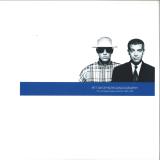
On May 30, 2025, Pet Shop Boys will reissue their 18-track greatest hits singles collection ‘Discography : The Singles Collection’ on limited blue vinyl, featuring updated 2023 remasters. ‘Discography’ was first released in 1991. The album charted No 3 in the UK album chart and includes ‘West End Girls’, ‘Always on My Mind’, ‘It’s a Sin’, ‘Domino Dancing’ and ‘Suburbia’.
Pet Shop Boys are an English synth-pop duo formed in London in 1981. Consisting of vocalist Neil Tennant and keyboardist Chris Lowe, they have sold more than 100 million records worldwide and were listed as the most successful duo in UK music history in the 1999 edition of The Guinness Book of Records. Pet Shop Boys have won three Brit Awards and have been nominated for 6 GRAMMY Awards. At the 2009 Brit Awards in London, they received an award for Outstanding Contribution to Music. In 2016, Billboard named Pet Shop Boys the number one dance duo or group since the chart's inception in 1976. In 2017, the duo received NME's Godlike Genius Award, and in 2024, they were awarded the Pop Pioneers award at the MTV Europe Music Awards.
- Cement
- Dive Into My Sun
- Numb Yourself
- Heaviside
- My Favorite Color
- Weave Me (Into Yr Sin)
- Stain
- Ten
- Yellow Love
- Ring Of Chain
- Nail In Your Hand
- Heaviside (Wisp Version)
- Cement (Demo)
- Dive Into My Sun (Demo)
- Numb Yourself (Demo)
- Heaviside (Demo)
- My Favorite Color (Demo)
- Yellow Love (Demo)
- Ring Of Chain (Demo)
Cloudy Gold Vinyl. This 10 Year Anniversary Edition features new, gatefold packaging with updated photos, lyrics and liner notes. Disc one incldues the originial album in full and the brand new second disc features rare b-side "Nail In Your Hand," a re-done version of "Heaviside" with artist Wisp performing vocals on the song, and seven never-before heard demo versions of songs from Citizen's second album. Ten years ago, Citizen released Everybody Is Going to Heaven _ a record that marked a bold turning point in their career. Following the breakout success of Youth, the band could have stayed the course. Instead, they doubled down on darker textures, heavier moods, and a fearless sense of experimentation. Released in 2015, Everybody Is Going to Heaven expanded Citizen's sound beyond their emo and post-hardcore roots, weaving in elements of grunge, and alternative rock. Tracks like "Cement" and "Stain" captured a raw, unsettled energy that explored mortality, depression, and identity with an honesty that still resonates today. It wasn't a record built for easy listens _ it was built to last. Now, a decade later, Everybody Is Going to Heaven stands as a defining moment in Citizen's evolution _ a record that challenged both the band and their audience, and helped shape the fearless, genre-blurring artists they've become. As they celebrate its 10th anniversary, Citizen remains a band deeply committed to growth, refusing to be tied to a single sound or era. Everybody Is Going to Heaven didn't just mark where they were; it lit the way for everything that came next.
Furthering the passionate exploration of cinema that has guided her two previous LPs - 2017’s ‘Fassbinder Wunderkammer’ and 2020’s ‘I Should Have Been a Gardener’ - the Milanese guitarist/composer, Alessandra Novaga, returns to Die Schachtel with ‘The Artistic Image Is Always a Miracle’, two sides off shimmering, tense compositions – culminating as one of her most creatively ambitious and conceptually rich outings to date – freely inspired by the life and work of the Russian director Andrej Tarkovsky and the music of Johann Sebastian Bach.
Classically trained at the Musik Akademie in Basel, Switzerland, over the last decade Alessandra Novaga has emerged as one of the leading figures within northern Italy’s thriving new, experimental, and improvised music scene, rendering striking solo efforts, in addition to collaborations with Loren Connors, Stefano Pilia, Elliott Sharp, Nicola Ratti, Paula Matthusen, Sandro Mussida, Kid Millions, Travis Just, Francesco Gagliardi, and others. Remarkably ambitious and forward thinking, her approach to the guitar embarks upon a relentless deconstruction and rethinking of her instrument’s unique properties through distinct applications of structure, resonance, space, and tone, creating in a deeply personal and emotive music, seeking narrative and meaning within the abstractions of sound.
In 2017, with the LP, ‘Fassbinder Wunderkammer’, issued by Setola Di Maiale, Novaga embarked upon the exploration of her love of film. Having begun with Rainer Werner Fassbinder, this was followed in 2020 by Die Schachtel’s release of ‘I Should Have Been a Gardener’, a deeply intimate mediation on the life and work of Derek Jarman. Rather than focusing on a fixed point of inspiration or a single film to work from, these pieces achieve a form of abstract portraiture, distilling elements drawn from these filmmaker’s life and work into ambient networks of texture and tonality. ‘The Artistic Image Is Always a Miracle”’ freely inspired by the Russian director Andrej Tarkovsky and the music of Johann Sebastian Bach, finds Novaga radically expanding her sonic palette within this approach.
The seeds of ‘The Artistic Image Is Always a Miracle’ can be traced to a conversation that Novaga had with Alan Licht (contained in the highly regarded Common Tones: Selected interviews with artists and musicians 1995–2020, Blank Forms, 2021), relating to the connections between music and cinema, which led her to consider Andrej Tarkovsky’s use of Bach's music within a symbiotic framework: how the music illuminates the imagism of the films, and the film illuminates new dimensions of the music. Slowly developing over the subsequent years, the resulting album comprises six individual works, some of which draw directly upon pieces of Bach’s music that Tarkovsky used in his films – specifically 'Erbarme dich, Mein Gott', 'Das alte Jahr vergangen ist', and 'Ich ruf zu dir, Herr Jesu Christ' - while others draw upon the sensibilities and moods evoked in the imagination by the director’s films.
As a point of departure and illumination into the process and spirit that underscored the creation of the album, Novaga points toward a passage in Tarkovsky’s "Sculpting in Time”:
“Art is born and takes hold wherever there is a timeless and insatiable longing for the spiritual, for the ideal: that longing which draws people to art. Modern art has taken a wrong turn in abandoning the search for the meaning of existence in order to affirm the value of the individual for its own sake. What purports to be art begins to look like an eccentric occupation for suspect characters who maintain that any personalized action is of intrinsic value simply as a display of self-will. But in artistic creation the personality does not assert itself, it serves another, higher and communal idea.”
‘The Artistic Image Is Always a Miracle’ can be understood as a realisation of the collectivism of which Tarkovsky speaks, in the service of something far beyond the expression of self. Encountering Novaga moving into fairly uncharted waters, three of the album’s pieces incorporate the human voice we encounter the voices of others: that of the poet Arsenij Tarkovsky, the director’s father; a singer from Bach’s ‘Erbarme dich, Mein Gott’, capturing a broadcast in an underground parking lot, and Novaga’s own, rendering the melody from Bach’s “Ich ruf zu dir, Herr Jesu Christ”. Roughly alternating between solo excursions on guitar and bristling electroacoustic pieces, over the course of the album’s two sides Novaga weaves one of her most abstract and ambitious bodies of recordings to date, shifting between the complex tonal mediations generated by the six strings of her instrument, and phycological densities activated by the expanded pallet of sonority made possible by the tactics and approaches of musique concrète.
An immersive, deeply engaging meeting of beauty and melancholy within a labyrinth of voices and ideas, ‘The Artistic Image Is Always a Miracle’ transfigures the life and work of Andrej Tarkovski – one of the greatest auteurs in the history of cinema – into a singular, experimental statement of collective truth. Belonging to recent, ambitious stream of contemporary new music releases on Die Schachtel that’s already included Novaga’s ‘I Should Have Been a Gardener’, Stefano Pilia’s ‘Spiralis Aurea’, Jim O'Rourke & Giovanni Di Domenico’ ‘Immanent In Nervous Activity’, Claudio Rocchetti’s ‘Labirinto Verticale’, and Damāvand’s ‘As Long As You Come To My Garden’, among others, ‘The Artistic Image Is Always a Miracle’ is available on as a limited edition of 300 dark turquoise vinyl LPs released on June 21, 2024. The LP, designed by Bruno Stucchi / dinamomilano, comes with an 8-pages insert illuminated by Alessandra’s text as well as the lovely and intense photographs of Matilde Piazzi.
Zelienople frontman Matt Christensen returns to Miasmah with Constant Green - a record of reverberant country inspired songs that puts the weight somewhere between Johnny Cash and Slowdive. Matt pours out his soul through flashes of life - small and large. His voice roaming over the guitars in a way which feels like a floating poetic deluge.
Appearing fresh from last years Zelienople album Hold You Up, Matt has made a very personal record that arrives as perfectly as it could be. It is full of beautiful sparse moments that capture the feeling of time standing still while simultaneously flashing in front of your eyes. As a child of the 70ies, growing up with country influenced AM rock on the radio, riding around in cars without seatbelts, Matt creates this nostalgic feeling of free riding through the city streets at dusk : a dream world where one can see green as a symbol for humanity and optimism. Not to say the album doesn't have it's share of darkness. Christensen always lingers deep in melancholy, driving his fears and anxieties out through music.
Visions of being able to move anywhere, picking his mother up from jail, family matters, change, the small things in life - all outtakes from what he sings about. Although it's hard to pick up on unless you really listen, as his ramblings can at one moment be fully clear while in the next drowned or muffled - becoming a mere meditative element to the music. Steady collaborators Brian Harding and Eric Eleazer from Zelienople accompanies on pedal steel and keys to further fill the sound into a warm dream, following in the footsteps of Matt ́s previous Miasmah album Honeymoons (2016). That said, while Honeymoons used drum machines and vast open spaces, Constant Green is another step closer towards the classic singer-songwriter folklore. Timeless gold from an artist that never stops creating.
- 1: Chinatown-The Skatalites
- 2: The Reburial-The Skatalites
- 3: South China Sea-Johnny Moore
- 4: Determination-Roland Alphonso
- 5: Love In The Afternoon-Don Drummond
- 6: Confucius-The Skatalites
- 7: Live Wire-The Skatalites
- 8: Ska-Boo-Da-Ba-The Skatalites
- 9: A Shot In The Dark-The Skatalites
- 10: El Pussycat-The Skatalites
- 11: Ska-Ra-Van-The Skatalites
- 12: Smiling-The Skatalites
- 13: Ringo Rides-The Skatalites
- 14: Vc 10-Roland Alphonso
Ska was the name given to the music that came out of Jamaica between 1961/66.Based on the American R&B and Doo Wop records that the Sound Systems in Kingston Town used to play.But the American records style started to mellow out while the Jamaicans preferred a more upbeat sound.So the Sound System boss's became record producers to cater for this demand.Sir 'Coxonne'Dodd and Duke Reid led the way putting the top musicians on the island in the studio to make music,its subtle twist that had an emphasis placed on the offbeat made the music unmistakably Jamaican.
W.I.R.L Records(West India Records Limited) was set up by the Jamaican politician Edward Seaga in the late 1950's.He had supervised the recording of an album of Ethnic Jamaican music and needed an outlet for its eventual release.In 1962 the year of Jamaican Independence ,Seaga became a member of Parliament, representing the Jamaican Labour Party and then decided to sell the label to Bryon Lee,the sale led to a name change from W.I.R.L to Dynamic Sounds.
We have compiled some of the best SCORCHING SKA SOUNDS that came out of W.I.R.L vaults...and it still sounds as fresh today as the day it was recorded...hope you enjoy the set
- Long Black Train
- Ugly Brown
- Son Of A Gun
- We All Make The Flowers Grow
- Run Boy Run
- It's An Actuality-Bonus Track
- I Guess It's Love-Bonus Track
- Fort Worth-Bonus Track
- Six Feet Of Chain
- The Railroad
- Look At That Woman
- Peculiar Guy
- Trouble Is A Lonesome Town
- Can't Let Her See Me Cry -Bonus Track
- I've Made Enough Mistakes Today -Bonus Track
- Hopeless
- Ambivalence
- Feel Something
- Good Liar
- Lone Wolf
- Heavy Metal
- If Time Does What It's Supposed To
- Flirting
- Why'd You Have To Bring Me Flowers
- Time Difference
- Fatal Optimist
ASH GREY COLORED Vinyl[23,49 €]
Two-time Grammy-nominated singer-songwriter Madi Diaz is known for her raw and unflinching explorations of love - and now she"s delivered her most powerful statement yet. Stripped down and emotionally direct, "Fatal Optimist" captures Madi at her most intimate and courageous. Together with producer Gabe Wax (known for his work with Soccer Mommy and Zach Bryan), she set out to pare the songs back to their essence, relying solely on her performance and songwriting. The result is a classic and timeless indie-folk album. "Fatal Optimist" follows her critically acclaimed 2023 album "Weird Faith".
- A1: Always Lost
- A2: We Will
- A3: Insular
- B1: Aretha
- B2: Woollen Women
- B3: Breaking
Belgian singer-songwriter Emma Hessels releases her debut EP 'Constant Distance' on October 24 via Unday Records. With a voice that lingers long after the song has ended and lyrics that feel like pages torn from a diary, Hessels has quickly carved out her place in the Belgian scene. She was named laureate of Sound Track in 2023, went on to play intimate yet arresting sets at Ancienne Belgique, Botanique, and the prestigious Cirque Royal, and appeared at Best Kept Secret this summer.
Milestones that signaled the arrival of a singular new voice in folk and soul.
'Constant Distance' gathers six songs bound by a recurring undercurrent: the presence of distance in its many forms - absence, longing, loneliness, the fear of loss, but also the desire for belonging. The songs weren't conceived around a single theme, but when brought together, a pattern revealed itself. Loss implies distance, longing implies distance, even love can. Yet the EP closes on 'Breaking', a gospel-tinged anthem of connection and alignment, written during a women's writer's retreat where community and music became inseparable.
Musically, 'Constant Distance' moves between folk and soul, carrying the feel of modern blues and occasionally leaning into gospel's call-and-response. The atmosphere is warm and nostalgic, drawing inspiration from Laura Marling, Damien Rice and Big Thief as much as from Aretha Franklin, Nina Simone and Richie Havens. Emma's voice remains the constant thread: soulful, unforced, quietly commanding. "I hope my songs can be like a warm blanket, something that keeps you company, that makes you feel a little less alone."
Though written solo on guitar, often during long train rides, the songs expanded into layered productions through collaboration with Aram Santy, Nard Houdmeyers and Fender Mackenson Rooms, with additional contributions such as Marthe van Droogenbroeck's evocative trumpet. Recorded over two intense days at Studio Beertje, the EP captures both intimacy and expansiveness. The result is music that carries the weight of Emma's fears and questions, but also the joy of collective creation.
With 'Constant Distance', Emma Hessels doesn't just deliver a debut - she opens a world where fragility and strength coexist, and where music becomes a way of closing the gap between people.
Sean Roman is a Toronto-based producer who has worked with Toronto Hustle before on an EP for Wolf Music. Here he serves up a club-ready crowd pleaser that shows his love for original UKG sounds. 'Did It For Love' on Selections rides on low-slung and well-swung drums with some nice tender vocals up top. The percussion is crisp and the groove drips with cool. Flip over this limited 12" and you will find a Toronto Hustle Late Night dub that pairs things back to some meaty drums and grittier textures, with the vocals more turned down and sparking synth motifs looping to bring some colour. Useful stuff.
Charlotte de Witte releases single ‘The Heads that Know’ feat. Comma Dee, out October 2nd on KNTXT. It’s the final LP single to keep excitement building before her self-titled debut album ‘Charlotte de Witte’ drops on November 7th.
The single release marks the start of her 2nd-5th October London city takeover. Following the insane success of her NYC takeover, she plays 5 shows in 4 days in London, including The Shard, fabric, The Cause, Magazine + one TBA. This mix of intimate cultural spaces and large uncompromising venues celebrates de Witte’s love of the city and its rave scene over her 10+ year career.
‘I'm very excited to launch this single in London’ Charlotte says. ‘The city has played a massive role in my growth as an artist and I’ve had many memorable shows there, from the smaller and more intimate venues like Village Underground to Tobacco Dock, Printworks and Drumsheds and many summer festivals. The London crowd is special. I'm looking forward to playing different sets in different settings in your wonderful city to celebrate the launch of the third single of my upcoming album. This will be one for the books.’
The new single, the third release from the LP, is already a set highlight for de Witte, going back to May’s pop-up secret set on the Williamsburg Bridge. It features Welsh producer/DJ Comma Dee, D&B, Hip Hop, Rap, & Grime exponent. Says Charlotte, ‘it’s a poetic dispatch from the shadows. It's for the ones who move with quiet power. This track is a tribute to the underground. It's for the ones who move with certainty. It's for the heads that know.’
‘The Heads that Know’ feat. Comma Dee: Fast, rattling techno spiced with spacey sine wave sounds and an acid dose in the breakdown, supports a hypnotic high synth theme and Comma Dee’s rhyming rap double quatrain through a crescendo/diminuendo swoop.
Jackie Mittoo’s ‘Reggae Magic’ is a new collection from the great Jackie Mittoo. The album features a mixture of classic tunes and rarities from the period 1967-74, when Mittoo was at the height of his musical powers. Mittoo’s solo career began after the end of The Skatalites in 1965. He began pushing new musical boundaries, creating a uniquely identifiable organ-led funky reggae sound that owed as much to Booker T and The MGs, Jimmy Smith, Stax and Motown as to the post-ska and emergent rocksteady island rhythms of Kingston, Jamaica. His solo work at the legendary Studio One spanned seven albums and hundreds of singles.
Aside from producer and founder Clement ‘Sir Coxsone’ Dodd, it’s hard to think of anyone more central to the sound and success of Studio One than Mittoo; keyboard player extraordinaire, songwriter, arranger, musician, truly the Keyboard King at Studio One. Jackie Mittoo had been the youngest founding member of The Skatalites (at age 16), probably the most important group in Jamaican music. After they split, he became leader of the three pivotal groups at Studio One – The Soul Brothers, The Soul Vendors and Sound Dimension. He also became musical director for Studio One, helping create countless hits for singers Ken Boothe, Bob Andy, The Wailers, John Holt, Delroy Wilson and more – unforgettable tunes like Alton Ellis’ ‘I’m Still in Love with You’, Marcia Griffiths’ ‘Feel Like Jumping’, The Heptones’ ‘Baby Why’ and others. Between 1965 and 1968, many of the tunes created at Studio One can be attributed to Mittoo – timeless instrumental tracks, recorded either under his own name or those of The Soul Brothers, Soul Vendors and Sound Dimension, that have become the basis for literally 1000s and 1000s of Jamaican songs over many decades, giving the music an unsurpassed longevity.
The endurance of his music was as a direct result of significant developments in Jamaican music in the 1970s, namely the creation of three important new styles: Dub, Deejay and Dancehall. In the early 1970s Mittoo’s instrumental tracks were used as the musical source for a series of classic Studio One dub albums. At the same time Deejays at Studio One, including Dillinger, Prince Jazzbo and Dennis Alcapone, began toasting over these same popular rhythms to create their own new songs. In the mid-70s, a new generation of Studio One singers and deejays, including Sugar Minott, Freddie McGregor, Johnny Osbourne, Michigan & Smiley and others, began once again creating new melodies over these original instrumentals, signalling the birth of a new Jamaican style that became known as ‘dancehall’.
As dancehall swept across the island, rival producers copied these now classic rhythms. These original Jackie Mittoo-driven tunes spread like a virus throughout Jamaican music; be they the instrumental cuts to tunes such as Alton Ellis’ ‘Mad Mad’ , ‘I’m Just A Guy’, Larry Marshall’s ‘Mean Girl’, Slim Smith’s ‘Rougher Yet’, and instrumentals such as Mittoo’s classic ‘Hot Milk’ or ‘One Step Beyond’, The Sound Dimension’s ‘Real Rock’, ‘Heavy Rock’, ‘Full Up’, ‘Drum Song’, ‘Rockfort Rock’ … and the list goes on. These tracks became a constant soundtrack to the island, emitting from the ever-present sound of speaker boxes strung up around dancehalls. This recycling travelled even farther afield; The Sound Dimension’s instrumental ‘Real Rock’, updated by Willie Williams on his classic ‘Armageddon Time’ was in turn covered by The Clash. Lily Allen sampled Mittoo’s debut solo single ‘Free Soul’ for number one hit ‘Smile’; Dawn Penn’s ‘You Don’t Love Me (No, No, No)’, accompanied by The Soul Vendors, was revived by Penn and producers Steely & Cleevie in 1994, since covered by Rihanna, Ghostface Killah, Stephen Marley, Damian Marley and Beyonce. And so it goes; an endless time-leaping, continent-hopping diasporic musical map of the world with all roads essentially leading back to one man – Jackie Mittoo.
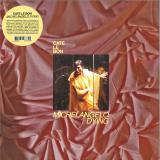
Cate Le Bons siebtes Album 'Michelangelo Dying', dessen Entstehung von purer Emotion geleitet wurde, hat das Album, das sie zu machen glaubte, verdrängt. Als Produkt eines alles verzehrenden Herzschmerzes überwanden ihre Gefühle ihren Widerwillen, ein Album über die Liebe zu schreiben, und wurden in diesem Prozess zu einer Art Exorzismus. Herausgekommen ist ein wunderbar schillernder Versuch, eine Wunde zu fotografieren, bevor sie sich schließt - und dabei auch in ihr zu stochern.
Musikalisch gibt es eine Fortsetzung und Erweiterung eines Sounds - eine Maschine mit Herz -, der auf ihren letzten beiden Platten 'Reward' (2019) und 'Pompeii' (2022) Gestalt angenommen hat, da Le Bon zunehmend selbst die Kontrolle über das Spielen und Produzieren übernommen hat. Wenn Gitarren und Saxophone durch Pedale gepresst und Perkussion und Stimmen durch Filter gejagt werden, entsteht ein schillernder, grüner und seidiger Sound, in dem die künstlerischen Eigenheiten von David Bowie, Nico, John McGeoch und Laurie Anderson aufblitzen und wieder verschwinden.
Was übrig bleibt, ist eine sich ständig verändernde, kontinuierliche Einheit, eine Art Songzyklus. Jede Iteration reflektiert die letzte und entwickelt sie weiter. „Jede ist eine Scherbe desselben zerbrochenen Spiegels“: Sie verschiebt sich, glitzert, verbirgt und enthüllt, je nachdem, wie sie im Licht gedreht wird. Letztendlich gibt es, so Cate, „keine Enthüllungen. Keine Schlussfolgerungen. Es gibt keinen Grund. Es gibt nur Wiederholungen und Chaos. Ich habe mir schließlich erlaubt, einen offenen Geist zu haben, um es ohne Widerstand zu erleben, ohne nach einer Offenbarung oder Ordnung zu suchen.“
'Michelangelo Dying' ist eine Übung in der Viszeralität des Lebens, der Liebe und der Menschlichkeit, sowohl für den Hörer als auch für die Künstlerin selbst, und es weiß, was es heißt Halt zu geben, gehalten zu werden aber auch sich ganz und gar allein zu fühlen. „Die Figuren sind austauschbar“, schließt Cate, „aber am Ende bin ich es, der sich selbst begegnet.“
- LP: (Vollfarbige Hülle, 140g schwarzes Vinyl, bedruckte Innenhülle und Download-Karte)
Like sneaking an extra scoop (or two) of ice cream for dessert, what do you do when you know something’s bad for you, but its vice-like nature makes it all the more irresistible? Vega Records explores this conundrum in its latest release, “Can’t Let You Go” by the late, great Loleatta Holloway.
“Can’t Let You Go” is one of the last unreleased recordings Loleatta completed before her passing in 2011. In the main mix, she addresses a relationship she knows she should end but can’t bring herself to leave because the lovin’ is just too good: “I keep coming back time and time again,” she ruminates with raw emotion. “We got to make things better or we got to do whatever to make it right… oh, let’s make it right, ‘cause I can’t let you go.”
For the unfamiliar, Loleatta Holloway, a.k.a. the “Queen of the Night,” is a bona fide disco and soul icon. The singer behind successful singles such as “Hit and Run” and “Love Sensation,” she is one of the most sampled artists from the disco era.
The posthumous single was written and produced by prolific artist Yvonne Turner, whose resume includes production and remix credits for music greats such as Whitney Houston, Willie Colon, and Jeffrey Osborne; as well as mixes for Lenny Kravitz, Lalah Hathaway, Mica Paris, and more. Providing subtle, smooth background vocals for the track, she allows Loleatta’s belting vocals to be the star of the percussive house groover; while Vega Records boss Louie Vega offers a “Roots” mix and emotion-charged “Soul House” mix. Louie Vega also invited his vocalist friends Tawatha Agee (of seminal R&B and soul group Mtume) and Cindy Mizelle (Louie Vega’s longtime collaborator) to add powerful hooks and new background arrangements, enhancing the track with some call and response to Loleatta's adlibs during the vamp. Gene Perez on Bass, Axel Tosca on Fender Rhodes, and Roberto Quintero on percussion. In all, the record is club-ready catharsis made for dancing all your troubles away.
“Loleatta Holloway was one of the most dynamic vocalists of our time,” says Yvonne Turner. “She was blessed with the gift of song and her energy was electric! Loleatta's passion and artistry is on full display as she masterfully interprets a lyric then delivers her signature adlibs, which never disappoint. To describe her in a few words, Loleatta Holloway was the truth... my friend... extraordinary!”
Adds Louie Vega, “Loleatta Holloway has had a huge impact in my life as a DJ, producer, and clubber. She touched me in many ways through my music-making and even style of DJing; to this day, I still play many of her songs and acapellas. This is just our little way of saying thank you so much for what you've done for so many lives with your beautiful voice, you've affected us all!!!”
The record’s cover artwork is a mural of Loleatta Holloway created by Richard Wilson, a London-based artist who takes inspiration from DJs and producers from the house music and disco scene. Last month, Louie traveled to Liverpool, England for the mural’s unveiling.