Zero Years Kid is the alter ego of Joachim Badenhorst, one of the most fascinating and adventurous Belgian jazz musicians from the last 2 decades. He plays with the international band Carate Urio Orchestra but also as musician with Naima Joris or Chantal Acda.
Zero Years Kid started of as a solo project, but has grown into a full and organic live band.
Badenhorst sees Zero Years Kid as a kindergarten to explore other ideas and interests besides of jazz. Together with Jan de Vroede, Lennart Heyndels and Erik Heestermans he brings a colorful amalgam of hip-hop, pop, dance and r&b with playful and poetic lyrics in his native language: Dutch. Next to his clarinet and sax he adds samples and electronica which results in a surprising fantasy world where it is wonderful to wander.
In 2019 debut album Ongerijmde Rijmen was released. Successor Geen Grenzen is ready and will be released on November 10th of this year on Klein. Geen Grenzen is an ode to breaking boundaries, to color outside the lines and to don’t get hung up on expectations.
The title track is a rework of No Limits by 2Unlimited. The song got translated, slowed-down and distorted to the universe of Zero Years Kid. The album is a poetic and humorous trip with a melancholic twist, and themes like the covid pandemic, intense arguments that are forgiven, writers-block, desire and love.
Suche:we love electro
‘Blind On A Galloping Horse’ serves as David Holmes’ first solo album since 2008’s ‘The Holy Pictures’. A 14-track interrogation of the last decade, time spent watching a decaying, fraying Britain visibly buckling in real time while tending to his own battles with mental health. Holmes’ soundtrack to this inquiry is at times claustrophobic, often euphoric, driven by the rattle and snap of analogue drum machines, wild oscillations of droning analogue synths and the voice of Raven Violet, which beguiles and commands in a way that could part oceans. On this album, there are songs of hope for an age of uncertainty; love songs to leap the barricades to and, on ‘Necessary Genius’, a comprehensive roll call of the great and good - those ‘dreamers, misfits, radicals, outcasts’ that we’ve lost and just a few who’ve managed to cling on in the churn of the 21st century. And there are elegiac electronics evocative of an endless Europe where pulsating, crackling rhythm tracks fuse with dreamlike textures and the underground pulse of psychedelic therapy to form something unique that feels nothing less than radical. CD in 4pp digisleeve with 8pp booklet. Double vinyl in 300gsm gatefold sleeve with reverse side print and 180gsm reverse side print inner sleeves.
Malian and French pair Siraba unveil their much-anticipated self-titled debut LP on Damian Lazarus’ Secret Teachings label, a 10-track odyssey fusing Mali’s rich musical traditions with cutting-edge electronic music.
Malian hunter Boubacar Samake and Damien Vandesande, one half of the French electronic band dOP, have won plenty of plaudits for the early singles taken from their debut album as duo Siraba. Those singles, spanning across the summer months, have found the pair bring the traditional sound of the Wassoulou - a river valley of West Africa - to the electronic world after 20 years of friendship. The music comes with an important underlying message of love and respect and results in spellbinding tracks that move heart, body and soul, finding a perfect home on Secret Teachings - a left-of-centre alternative label to Lazarus’ celebrated and often more club- focused Crosstown Rebels. With the arrival of the full album, the pair exhibit and showcase the emotional breadth and depth of their music, with detailed explorations of organic textures and native sounds merged with future-focused ideas and concepts.
The title track opens with an atmospheric mix of spoken words and spine-tingling chords that bring rich Afro flavours, while ‘Dounoiia’ is a languid groove made from hand drums and pixelated synth leads that cast a fine spell. The slow-blooming ‘Bani’ brings rich Malian blues and melancholic horns, while ‘Komafly’ is a rich mix of acoustic strings and broken beats that transports you to a hot and dusty landscape. A vital component of the sounds of the Wassoulou, the indigenous stringed instrument the Ngoni features again on the rousing ‘Nanse’ as spiritual vocals sung in Bambara rouse the soul.
‘Djandjo’ is another rich infusion of Malian culture with simmering electronics to make for something both ancient sounding yet futuristic, and the hypnotic ‘Ngana Fôlly’ with its rich bass is a song ‘dedicated to those who fight for the well-being of their families, for unity... a song for the people who also fight a great disease, between life and death’. The sublime ‘Toro’ is a wavy groove perfect for sundown - a deep and inviting sound rich in soulful vocals and dreamy melodies, while ‘Tolonawoulile’ is driven by the intense strumming of the Ngoni with busy hand claps and hurried drums and last of all ‘Fo Te Mokobana’ sinks into a heart-warming slow groove with sweeping strings and Malian percussion all overlaid with impassioned vocals.
A rich listening experience, Siraba’s debut album is an immersive journey and absorbing dive into the minds of two artists breaking new grounds while spotlighting native traditions and musical techniques spanning hundreds of years.
Spirit of Sundaze Ensemble (SOSE) is the latest evolution from London based DJ / producer, label and party series Secretsundaze. Sitting at the intersection of live music and electronic music innovation, leading contemporary musicians reimagine, record and perform a selection of tracks which have been foundational across Secretsundaze’s 20+ year history, embracing a myriad of influences from Balearic to synth pop to Brit funk.
EP 1 opens with their first single, a re-imagination of Photek’s seminal ‘Mine to Give’. Featuring Wayne Snow on vocals and garnering wide support from the likes of BBC 6 Music heads Gilles Peterson and Nabihah Iqbal, through to NTS and Worldwide FM tastemakers including Zakia, Moxie and Colleen ‘Cosmo’ Murphy, the tempo is slowed and explored in a more synthy 80s production style.
Next is their take on Joyce Sims’ (RIP) ‘Come into My Life’, moving the original Mantronix production into a more contemporary UK / Street Soul / Balearic territory.
The B-side sees them take on beloved Phil Asher (RIP) production, Nathan Haines’ stunning ‘Earth is the Place’, a classic Secretsundaze record if ever there was one. Featuring the vocals of Cherise, the SOSE version is a dance floor ready update which will appeal to all lovers of proper deep, soulful-leaning house music, one for the heads.
Closing the record is a flip of Wbeeza’s ‘Coast Spotting’. Featuring synths from the excellent Hinako Omori, this one goes in with an extended late night transcendental electronic / jazz rework with the original’s looped lead line modulating throughout the piece.
Leading musicians feature on the record including Myele Manzanza (Theo Parrish, Sound Signature), Lewis Moody (Zeitgeist Freedom Energy Exchange), Nikos Ziarkas (Theon Cross, Chelsea Carmichael), Oli Savill (Basement Jaxx), and Johnny Brierley (Fofoulah).
Following their debut sold out show at Southbank’s Centre Queen Elizabeth Hall, the Ensemble next take to the London stage at the iconic EartH Theatre, Dalston on September 21st for an EP launch party as well as a headline open-air concert at Las Dalias, Ibiza as part of Beat Hotel on September 30th.
All in all, an impressive debut showcasing the breadth and scope of this exciting new live project from Secretsundaze founder James Priestley, one to watch.
The last twelve months have been a whirlwind for Henry Counsell and Louis Curran, the men who make up Joy (Anonymous). Having established themselves during the Covid-19 era by playing impromptu meet-ups on London’s South Bank, they have graduated to bigger venues, travelled to far-flung locales and recorded their second album, Cult Classics, while maintaining the spontaneous energy and irrepressible joy that made their name. Their music revels in the euphoria of being alive and all the feelings, good or bad, that come with it. It invites us into a community, draws us close and promises the night of our lives.
Recorded over the course of a year, the blueprint for Cult Classics was laid down over a two-week span at Imogen Heap’s Round House in east London. Joy (Anonymous) invited friends old and new to visit - they’d record live instruments in jam sessions upstairs and then retreat to a second room to flip and loop and generally mess with the sounds, moulding them into sizzling dance tracks. “Loads of people were coming up to me like ‘I thought this was going to be a dance record?’” Louis says, remembering the quietly beautiful music they’d be recording. “I’d be like, don’t worry about that, just keep playing.” He’d send it back to people later and they’d be floored - “That was my bit and you’ve made it... jungle!”
It was an organic and creatively fulfilling approach, one that didn’t allow any of the music to get stale or stagnate. As they built the tracks from the sounds they’d collected, Joy (Anonymous) would weave the new songs into their famously improvised live sets, testing them, refining them, taking note of the audiences’ reactions. In a year punctuated by a lot of travel, they’d also incorporate the voices of people they met along the way - “Beazley’s Poem”, which opens the record, features the words of a man who was working security at a Fred Again show at New York’s Terminal Five. “He was basically doing the opposite of his job and being a hype man, climbing on the fence and ramping up the crowd - we ended up hanging out with him - like, who’s this legend?” Louis explains. “He just speaks really amazingly about his life, all these amazing thoughts and opinions - he started jumping on the mic when we were playing, preaching these amazing messages to the crowd, like that we all need to be nicer to each other. The first time we played the record in its entirety, he introduced us and that’s the recording we’ve used.”
Joy (Anonymous) remain dedicated to the spirit of spontaneity. They shut a street down with a surprise waterside party in New York. On a trip to Copenhagen they played an impromptu set in a cafe, which turned into a house party and a night-long good time. In Lithuania, they ended up playing in a decommissioned prison. It’s harder, perhaps, to keep that spirit alive now that they are operating more within the confines of the music industry but they will keep lugging their kit to wherever the party calls for as long as they can. “I think if we lose that, we’ve kind of lost what makes us us,” Henry says.
Bursting with multi-genre reference points and disparate influences, Cult Classics is very much a dance album. The samples we made ourselves or we took from music that is quite different to dance music, but we definitely wanted to shout out a lot of the dance influences that we love,” Henry says. They listened to a lot of Daft Punk and Basement Jaxx as well as The Prodigy (“more rage stuff”), taking songwriting tips from their dance forebears, but also recording bits that felt more like jazz and motown (see: A Place I Belong and the lovely album closer, You’re In Or You’re Out). Emir Taha’s gentle classical guitar runs like a thread throughout Cult Classics, washing into the undertones of the record, tying it all together.
The album follows the beat of a night out, from frenetic, sweaty movement to the gentler winding down as the dawn breaks. At times it is euphoric, celebratory and pure, whirling fun, at others it seeks the joy in the darker emotions that life throws our way. 404 is designed to encapsulate everything about the Joy (Anonymous) journey so far. Skittering beats and ghostly vocals give way to vibrating house chords: sirens blare as we approach a dubstep drop. It’s dramatic and wild, ratcheting up, seeming to settle then hitting you with an intense and frantic breakdown before the ghostly vocal returns to lull us back into the world. It has the feel of a hungry cat playing with a mouse, toying with it before letting it get away.
What sounds like someone playing the spoons on playful, housey How We End Up Here is actually Louis’ restless habit of clicking his rings on everything, one of a myriad of calling cards and easter eggs that day one fans will recognise. They rework Miley Cyrus and Swae Lee’s Party Up The Street into a French-electro-inspired future classic, adding a note of melancholy to a tune that you can imagine hearing blaring from every car on a summer drive. The lyrics on Cult Classic are generally reassuring, inspirational, originally drawn from Henry in stream-of-consciousness freestyles. You’re fine the way you are, they seem to say - the repeated “No need to try” of A Place I Belong, the assurance that “It’s in me all the time” on In Me All The Time. Even the summery but regretful Did You Wrong hints at the growth that is possible from less than ideal behaviour. For Joy (Anonymous), joy isn’t about just being “happy” all the time - it’s about relishing every element of your being.
The name ‘Joy (Anonymous)’ is taken from the work Henry did with Alcoholics Anonymous groups: it is a way to build a community around sharing joy. Their impromptu live sets are known as ‘meetings’; they encourage fans to share moments of joy to their website. They care deeply about the scene they’ve come up in and are determined not to leave it behind. Every show is another chance to reach out and connect with people who love to come together and revel in music as loud as it can go.
Support slots for Fred Again and The Streets, wild B2Bs with Fred and Skrillex, and a set at Four Tet’s Finsbury Park all-dayer this summer have given the duo the opportunity to live out childhood dreams and introduced their infectious live shows to new audiences at huge venues.
With an album as assured and joyful as Cult Classics on the horizon (and a killer collab with The Blessed Madonna coming up), they’re only going to reach higher heights. But the essence of Joy (Anonymous) remains on the South Bank. Between shows at Ally Pally in September, they dragged their camping chairs and gear back down to the banks of the Thames: and it just felt right.
‘Life And Death - The Five Chandeliers Of The Funereal Exorcisms’ pulls back the veil unto a nocturnal scene populated by shadows, embers burning coldly in the underworld. Marina Zispin is your guide, siren and protector both. Marina Zispin is the negative space between musicians Bianca Scout and Martyn Reid. Love And Death is the duo’s debut release, five chandeliers of melancholic, vibrant synth pop twinkling in the inky blackness. Both originally hailing from the North East of England and forming a musical partnership before lockdown, Bianca Scout and Martyn Reid initially worked remotely. Having relocated to South London and Newcastle respectively, Marina Zispin was born in earnest after the duo could begin writing and practising in the same space. Bianca Scout is a celebrated musician and dancer with a number of solo and collaborative works in her discographywhile Martyn Reid is a mainstay of the UK noise and power electronics scene, most recently with solo project Depletion. Marina Zispin largely eschews both Scout’s deconstructed approach to song and Reid’s focus on visceral, noise- based productions; the result is a new entity, the underground pop star that exists only in darkened dreams. Marina Zispin, then, is an avatar cajoled, nurtured and directed by Scout and Reid. Analogue electronics redolent of the early 80s Cold Wave and Synth Pop era form the base of the Zispin worldview, with Bianca Scout donning the Marina disguise, embodying the character over five songs of swooning drama, playful melodic interplays and tear-stained, doe-eyed sentiment. Flowers In The Sea opens with an austere 4/4 beat and hypnotic synth parts before Scout/Zispin floats in across the lagoon. Scout’s vocal tone is an instant winner, sweet like honey pouring down over the cold, robotic productions and stereo-panned synth work. We can almost see the petals drift into the horizon before being pulled under by the artist’s sadness. Ski Resort bursts out with a Jacno-inspired bassline and backing that could have been buried in a French disco in 1982 (think Stereo or Linear Movement) before Scout’s narrative details frivolousness and regret before a magical shift for the final coda into major key. Backworth Gold Club closes Side A, a mysterious rigid beat and minor chord synth arpeggios swimming in space, floating and obscure. On Side B, Hymn carries the tone on, church-like synths holding down the pattern for Zispin/Scout to float above in a flowing gown of reverb. The marriage of Reid’s cold musical backbone and Scout’s effortless vocal and co- production is in full flow here, the vocals at times rising to the rafters of this nocturnal place of worship, at other points they’re fuzzy samples cutting in and drifting out or sung with an extreme autotune, abstract and perfect in the moment. Surprise Party is the most straightforward pop bullet, Scout/Zispin’s vocal peering out more from the fog, perhaps revealing more than usual: vulnerability, maybe, the wandering muse of the artists behind the veil or just another layer of mystery behind the enigma? Marina Zispin’s Life & Death - The Five Chandeliers Of The Funereal Exorcisms ends as it began, scintillating in obscurity, leaving everything unanswered but open.
- A1: New Song
- A2: What Is Love? (Single Version)
- A3: Pearl In The Shell
- A4: Like To Get To Know You Well
- A5: Things Can Only Get Better
- A6: Look Mama
- B1: Celebrate It Together (Lifelike Radio Edit)
- B2: Angels & Lovers (Single Mix)
- B3: Revolution Of The Heart (Album Version)
- B4: The One To Love You (Howard Jones & Bt Lifelike Uk Radio Remix)
- B5: The Human Touch
- B6: I Don't Hate You
- C1: No One Is To Blame (Single Mix)
- C2: Hide & Seek (Single Version)
- C3: Tears To Tell
- C4: All I Want
- C5: A Little Bit Of Snow
- D1: Life In One Day
- D2: Everlasting Love
- D3: Prisoner
- D4: Lift Me Up
- D5: Igy (What A Beautiful World) (What A Beautiful World)
Anlässlich seines 40-jährigen Künstlerjubiläums wollte Howard eine wirklich einzigartige Werkschau zusammenstellen. "Celebrate It Together" ist die erste Anthologie, die sich mit seinem gesamten Katalog auseinandersetzt, von der Originalversion von "New Song" bis hin zu einem 2023-er Elephant Talk-Remix, der den Song in einen modernen Electronica-Kontext stellt.
Diese "Very Best Of 1983- 2023 - Celebrate It Together" enthält Songs aus seinem klassischen Katalog der Warner Music-Ära, sowie von seinem unabhängigen Dtox-Label.
New York-based label Kindergarten Records is thrilled to unveil Ayesha’s debut album, ‘Rhythm is Memory’ – 10 boundary-pushing tracks, a shape-shifting percussive journey with electric moments.
While intended for maximum dancefloor impact, Ayesha’s first LP is also conceptually thought-provoking and playful, exploring how bodies store and channel creative knowledge.
A self-taught producer, Ayesha relies on her instincts to make music: sensing what her body wants to feel and hear. To her, essential to building a groove is channeling what is already inside us –
memories – whether they are based on lived experience or coded in the body: culturally, ancestrally, or intergenerationally. The result is this Indian-American producer’s distinct rhythmic voice, with its
many configurations boldly expressed across her debut album.
Kindergarten first released Ayesha’s material in 2020 with her ‘Natural Phenomena’ EP, a four-track journey which she described as “an undulating love letter to nature and the dancefloor, a space
where her biophilia collides with her yearning for the dancefloor.” Subsequently, she continued to build upon her luminous, scintillating sound with a contribution to ‘Fluo II’ titled “Aspara Dub”, followed
by “Varanasi” and “Downpour” on ‘Ether’, a split release with Sha Ru in 2021. With each release, Ayesha's sound evolved, adding shades, layers, and perpetual rhythmic nuance to a mind palace of
dancefloor possibilities.
That is why her and Kindergarten are a perfect match -- driven by their mutual fascination with exploratory sonics and a shared commitment to the community that inspires them. Kindergarten
Records has shaped itself into a trailblazing label, uniting a diverse and innovative collective of local and international producers, while embodying a strong familial atmosphere.This debut LP represents
a significant step-up for both the artist and the imprint, as they strive harmoniously towards a shared goal: delivering a sonic experience full of colorful, otherworldly bass-fueled expansion.
‘Rhythm is Memory’ captures Ayesha’s signature love for driving techno and organic percussion, while at moments veering into newer electro territory while keeping it psychedelic, spacious, dubby, and
always playful. This feels intuitively right for a producer at a crossroads in her career. All tracks intricately weave together pulsing drum grooves, slinky synths, nuanced melodies, and delightfully
unexpected twists. No single genre can do justice to describing this project as Ayesha delicately nods to many, reveling in the spaces between.
Undoubtedly, across A and B sides, 'Rhythm is Memory' imparts the joy of sonic experimentation to listeners and dancers. Ayesha invites us into her creative process and its steady evolution – rooted in
many days and nights of exploration, reflection, and repetition. "The ritual practice of cultivating and tending a garden is what comes to mind if I were to visualize this record. Beautiful things can emerge
from care and consistent attention," says Ayesha. While she refers to her specific experience making 'Rhythm is Memory,' this powerful album culminates a decade of working in nightlife for Ayesha – a
project slated to leave an indelible mark on the underground. To mark this impressive milestone in their catalog, Kindergarten Records is proud to return to pressing vinyl after a hiatus since 2020,
recognizing the significance of putting out a physical release to behold such a moment in both the label's and the artist's trajectory.
First released over 30 years ago, this release was further instrumental in establishing a new genre of electronica within dance music. Mental Cube was the creation of Brian Dougans and Gary Cobain, “So This Is Love” the follow up to their 1990 debut “Chile Of The Bass Generation”. This is before their creation of The Future Sound Of London. They were ahead of their time and extremely progressive, and here three decades later they are making an impression. “So This Is Love” has been described as unique with ‘the most seductive 30 seconds of any house track ever. Timeless, emotional, sexy and deep. A masterclass in UK house, one of the best electronic tracks ever made’. “Q” has been described as sounding inspired by the 90s techno sound out of Germany and Belgium, a French issue of it on 12” selling in the current market for between £200 and £350.
Repress!
In the mid-1970s, a force of nature swept across the continental United States, cutting across all strata of race and class, rooting in our minds, our homes, our culture. It wasn’t The Exorcist, Goodbye Yellow Brick Road, or even bell-bottoms, but instead a book called The Secret Life of Plants. The work of occultist/former OSS agent Peter Tompkins and former CIA agent/dowsing enthusiast Christopher Bird, the books shot up the bestseller charts and spread like kudzu across the landscape, becoming a phenomenon. Seemingly overnight, the indoor plant business was in full bloom and photosynthetic eukaryotes of every genus were hanging off walls, lording over bookshelves, and basking on sunny window ledges. The science behind Secret Life was specious: plants can hear our prayers, they’re lie detectors, they’re telepathic, able to predict natural disasters and receive signals from distant galaxies. But that didn’t stop millions from buying and nurturing their new plants.
Perhaps the craziest claim of the book was that plants also dug music. And whether you purchased a snake plant, asparagus fern, peace lily, or what have you from Mother Earth on Melrose Avenue in Los Angeles (or bought a Simmons mattress from Sears), you also took home Plantasia, an album recorded especially for them. Subtitled “warm earth music for plants…and the people that love them,” it was full of bucolic, charming, stoner-friendly, decidedly unscientific tunes enacted on the new-fangled device called the Moog. Plants date back from the dawn of time, but apparently they loved the Moog, never mind that the synthesizer had been on the market for just a few years. Most of all, the plants loved the ditties made by composer Mort Garson.
Few characters in early electronic music can be both fearless pioneers and cheesy trend-chasers, but Garson embraced both extremes, and has been unheralded as a result. When one writer rhetorically asked: “How was Garson’s music so ubiquitous while the man remained so under the radar?” the answer was simple. Well before Brian Eno did it, Garson was making discreet music, both the man and his music as inconspicuous as a Chlorophytumcomosum. Julliard-educated and active as a session player in the post-war era, Garson wrote lounge hits, scored plush arrangements for Doris Day, and garlanded weeping countrypolitan strings around Glen Campbell’s “By the Time I Get to Phoenix.” He could render the Beatles and Simon & Garfunkel alike into easy listening and also dreamed up his own ditties. “An idear” as Garson himself would drawl it out. “I live with it, I walk it, I sing it.”
But as his daughter Day Darmet recalls: “When my dad found the synthesizer, he realized he didn’t want to do pop music anymore.” Garson encountered Robert Moog and his new device at the Audio Engineering Society’s West Coast convention in 1967 and immediately began tinkering with the device. With the Moog, those idears could be transformed. “He constantly had a song he was humming,” Darmet says. “At the table he was constantly tapping.” Which is to say that Mort pulled his melodies out of thin air, just like any household plant would.
The Plantae kingdom grew to its height by 1976, from DC Comics’ mossy superhero Swamp Thing to Stevie Wonder’s own herbal meditation, Journey Through the Secret Life of Plants. Nefarious manifestations of human-plant interaction also abounded, be it the grotesque pods in Invasion of the Body Snatchers or the pothead paranoia of the US Government spraying Mexican marijuana fields with the herbicide paraquat (which led to the rise in homegrown pot by the 1980s). And then there’s the warm, leafy embrace of Plantasia itself.
“My mom had a lot of plants,” Darmet says. “She didn’t believe in organized religion, she believed the earth was the best thing in the whole world. Whatever created us was incredible.” And she also knew when her husband had a good song, shouting from another room when she heard him humming a good idear. Novel as it might seem, Plantasia is simply full of good tunes.
Garson may have given the album away to new plant and bed owners, but a decade later a new generation could hear his music in another surreptitious way. Millions of kids bought The Legend of Zelda for their Nintendo Entertainment System back in 1986 and one distinct 8-bit tune bears more than a passing resemblance to album highlight “Concerto for Philodendron and Pothos.” Garson was never properly credited for it, but he nevertheless subliminally slipped into a new generations’ head, helping kids and plants alike grow.
Hearing Plantasia in the 21st century, it seems less an ode to our photosynthesizing friends by Garson and more an homage to his wife, the one with the green thumb that made everything flower around him. “My dad would be totally pleased to know that people are really interested in this music that had no popularity at the time,” Darmet says of Plantasia’snew renaissance. “He would be fascinated by the fact that people are finally understanding and appreciating this part of his musical career that he got no admiration for back then.” Garson seems to be everywhere again, even if he’s not really noticed, just like a houseplant.
NTsKi, Japan-based vocalist/songwriter/producer; pronounced n-t-s-k-i. Calla is her 2nd album, a unified statement of her musical vision at this point in her development, with all-new songs melding her breathy and intimate voice, singing in Japanese and English, with organic acoustic sounds and distinctive electronic colours. NTsKi possesses a charming melodic gift as well as a distinctive production style, giving Calla a cohesion and subtle momentum, with relaxed tempos, interesting arrangements and intriguing melodies fusing into a focused musical statement that is refreshing, charming and forward-looking, underpinned by a sense of wistfulness, nostalgia and melancholy.
As with her 2021 Orca release, co-released on EM Records and Orange Milk, NTsKi is joined by engineer Illicit Tsuboi and British musician/producer Dan Shutt. The songs here are lovely, concise gems, warmly glowing, gently sparkling, evocative and moving. LP comes with a Japanese and English lyric sheet. Vinyl edition disc is made of environmentally friendly new material BioVinylTM. and includes an insert & download card, shrink-wrapped and stickered.
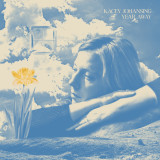
In March of 2020, after learning that a dear friend’s life was coming to an end, Johansing sat down and in one sitting wrote the song “Daffodils”. An elegiac tribute to someone facing death with grace and curiosity, the lyrics confront Johansing’s own mortality by observing the brief lifespan of a Hlower. Only a week later when the world came to an abrupt standstill, she soon found herself processing this recent loss while trying to make sense of a new global reality. Across the ensuing months, Johansing found herself increasingly untethered by a world of isolation and political upheaval.
Having been a frequent touring member of bands like Hand Habits and Fruit Bats, and often being called into the studio to lend her harmonies and multi-instrumental talents to records, Johansing’s phone no longer rang. Living in Los Angeles she feared her musical community was vanishing, as friends and collaborators continually announced they were leaving the city. It was in returning to her piano nightly that she found the greatest solace, feverishly writing the songs that would be collected on her next album. Resulting from this new sense of time and focus was a deepening of her songwriting. As Johansing recalls, “I felt like a metamorphosis happened during that time. There was a lot of personal growth and healing.”
Throughout Year Away Johansing traverses uncharted emotional landscapes brought upon by the changes occurring all around her. The forced self-reflection of the moment is aptly captured by “Old Friend”, featuring an aching melody and swooning production that recalls the best of Harry Nilsson. The epic piano and saxophone-driven “Smile with My Eyes” addresses the loss of community as friends became distant and political divides between family grew. On “Smile” Johansing pushes her vocals further than ever, expanding her range and using her peerless voice as the singular instrument it is. Facing the loss of a family home due to environmental destruction, “Shifting Sands” is marked by soaring Hlutes, Hield recordings and glassy synthesizers that nod to Japanese New Age.
“Daffodils”, the stunning album centerpiece, is built from a pastiche of looping samples, swirling Mellotron and dazzling vibraphone. “Keep your heart open wide, you never know your time / Keep your heart wild, true Hlower child”, Johansing sings as she says goodbye to an elder, while the band reaches a grief-stricken crescendo of woodwinds and chiming bells. On the title track, Johansing takes listeners on an eerily meditative journey of collective experiences. “I wanted to keep the progression simple and repetitive so that musically we could add new elements little by little, while the emotional tone of the lyrics becomes increasingly more strained and expressive”. The song grows to a fever pitch as Johansing sings higher than she thought possible; the tension of the repeating chords Hinally resolving into a hopeful coda as multiple soloists weave around each other.
Amidst heavier themes, Johansing still leaves room for her love of irresistible pop melodies and lush production. The driving “Last Drop” and mid-tempo “Valley Green” are two of her catchiest songs to date. On the former Johansing sings the anthemic chorus, “As if it were the last drop, and nothing ever lasts forever / As if it were the last stop, too far out to come back ever”, longing for a love that she’ll never take for granted, while also admitting that she doesn’t always know how good she has it. “Valley Green” features shimmering layers of 12- string guitars, stacked horns and an impeccable solo by co-producer and multi- instrumentalist Tim Ramsey (Vetiver, Fruit Bats), hinting at a love for bands like NRBQ.
Having been eager to capture the initial spark of songwriting, Johansing booked time at Highland Park’s 64 Sound Studio the week that it reopened. Over the course of three days, she and her band gathered basic tracks for 10 songs, before returning home to Hinish the record with Ramsey. Setting forth to make an album that paid homage to the music that kept them company during the months spent alone together, the duo pulled inspiration from a wide net including Burt Bacharach, John Carroll Kirby & Haruomi Hosono. Ramsey’s newfound love of early digital synthesizers dovetailed effortlessly with Johansing’s fondness for classic 70’s horn and string arrangements, creating a sound that is distinctly modern yet warm and familiar.
Once again Johansing called upon some of the Hinest players of Northeast Los Angeles’ vibrant music community to lend a hand with the record. The 70s R&B-folk of “Watch It Like a Show” features an electric guitar solo from Hand Habits’ Meg Duffy, while album closer “Endless Sound” boasts backing vocals from electronic musician Kaitlyn Aurelia Smith and swooping Indian-inspired violins from Amir Yaghmai (HAIM, The Voidz). The record shines brightly thanks to an ace mix from veteran producer Rob Schnapf (Beck, Elliott Smith, Cat Power), woodwinds from Logan Hone (John Carroll Kirby, Eddie Chacon), and a featured rhythm section of drummer Josh Adams (Jenny Lewis, Bedouine) and bassist Todd Dahlhoff (Feist, Devendra Banhart). Recorded across multiple studios including LA’s famed Sunset Sound, the album remains steadfastly buoyed by the adept engineering of Tyler Karmen (MGMT, Alvvays).
Though born of turbulent times, Year Away is ultimately interested in moving forward. The album ends with “Endless Sound,” where Johansing laments seismic global changes, (“The water is hotter, the mighty thaw / The current’s reversing, the last are lost”) but vows to keep going (“No storm can take me down / Endless light, endless sound”). It’s Year Away’s resilience that shines through despite the darkness. It’s a sound all her own and Johansing’s most cohesive set of songs yet.
Die unerschrockenen Australier VOYAGER legen mit ihrem brandneuen Album "Fearless in Love" ihren bisher epischsten Electro-Progressive-Pop-Metal vor. Das Album ist eine berauschende Mischung aus 80er Jahre Synthpop und modernem Progressive Metal und bietet ihr bisher mitreißendstes und hymnischstes Werk. Mit dem Eurovisions-Top-10-Titel "Promise" und dem Australia Decides-Favoriten "Dreamer", dem pulsierenden "Prince of Fire", dem beschwingten "Submarine" und vielem mehr ist "Fearless in Love" Prog-Metal auf höchstem Niveau und sprengt alle Erwartungen.
- A1: Q - From Within (Body Mix)
- A2: Integrity Ii - Living In A Fantasy
- A3: Strange Ways - Strange Ways
- B1: Thee J Johanz - Stompin N Rising
- B2: Exposure - Love Quest
- B3: Tons Of Tones - Oh Ah Oh Ah Oh
- C1: Interface - Temazepam
- C2: It’s Thinking - Hyperion
- C3: Eric Nouhan - Technobility
- D1: Secret Cinema - Sundance
- D2: Hole In One - Spiritual Ideas For Virtual Reality
Vol.3[25,17 €]
Through 35 hedonistic highlights stretched across three volumes, Music For The Radical Xenomaniac delivers the first ever deep dive into The Netherlands’ colourful house sound of the 90s and the under-celebrated producers and record labels whose music soundtracked a countrywide cultural movement.
Plenty of books and documentaries have celebrated the riotous raves, legendary clubs, high profile DJs and promoters who shaped The Netherlands’ hedonistic house scene throughout the 90s. Music For The Radical Xenomaniac dares to challenge these narratives by shining a light, for the first time, on those who created the scene’s kaleidoscopic, game-changing and globally influential soundtrack.
Leading the charge were a disparate group of key creators who not only forged links with their counterparts in Detroit, Chicago, New York, Belgium, Germany and the United Kingdom, but also became celebrated figures on the worldwide electronic underground (Eric Nouhan, Aad De Mooy, Orlando Voorn, Stefan Robbers and Steve Rachmad). Alongside key underground imprints (Stealth Records, Basic Energy, ESP, Prime and Outland Records included) and lesser-known producers, these pioneers gave flavour to a radical musical movement via open-mindedness, unheard-of creativity and a genuinely futuristic ethos. All of these artists and labels are represented throughout the series.
So, what defined this hedonistic house sound from The Netherlands? Stylistically, it was varied – as the series so emphatically proves – but was defined by a set of distinctive sonic characteristics: emotive musical motifs, high-frequency synth sounds, mellow basslines, pulsating rhythms and more than a touch of hallucinatory intent.
Volume 2 contains a wealth of notable tracks and slept-on gems. These include Q’s ‘From Within (Body Mix)’, a lesser-known cut from the trio better-known as Quazar (Gert van Veen, R.o.X.Y co-founder Eddy De Clercq and Eric Cycle), Eric Nouhan’s melodic masterpiece ‘Technobility’, which is appearing on vinyl for the first time since 1994, and a rare collaboration between regular production partners Maarten van der Vleuten and Mike Kivits (better known as Aardvarck), which was initially released on a special R&S Records’ offshoot set up by the label’s co-founder, Renaat Renaat Vandepapeliere (Integrity II’s ‘Living In Fantasy’).
Other highlights include Exposure’s ‘Love Quest’, a highly sought-after 1991 track by The Hague-based DJ/producer Maurits Paardekooper, and an ambient-infused Andrew Weatherall favourite originally released by Stealth Records in 1993, Hole In One’s ‘Spiritual Ideas For Virtual Reality’.
Packed full of forward-thinking 90s gems remastered for today’s dance floors by Alden Tyrell, Music For The Radical Xenomaniac Volume 1 is a life-affirming celebration of a distinctly Dutch musical movement, whose rich textures and melodies are still inspiring new generations of DJs and dancers today.
- 01: Subterraean Futari Botchi - Nanako Sato
- 02: Silhouette - You & The Explosion Band
- 03: I Wish You Love - Hatsumi Shibata
- 04: Kirameku Inner Space - Yuji Ohno & Galaxy
- 05: Speak Low - Ann Young & Yuji Ohno Trio
- 06: Lilac-Gai No Aki - Ken Tanaki
- 07: I Want To Be Happy - Mieko Hirota
- 08: The Soaring Seagull - Electric Keyboard Orchestra
- 09: Mouchido Kikasete - Hatusmi Shibata
Wewantsounds is delighted to announce the release of "TOUCH," a selection of sought-after tracks produced by Yuji Ohno, one of the most revered producers and arrangers on the Nippon music scene. His blend of Jazz, Space Funk and Disco have long been highly sought-after by DJs around the world and we've been given unique access to the Nippon Columbia vaults and to Mr. Ohno himself to come with a versatile selection from his 70s body of work, all bearing his uniquely recognisable sound. The set includes works with singers Nanako Sato, Hatsumi Shibata and Ken Tanaka alongside tracks from his cult anime soundtracks for "Lupin III" and "Captain Future." Approved by Yuji Ohno himself, "Touch" was remastered in Tokyo by Nippon Columbia and features liner notes by Nick Luscombe in conversation with the maestro and artwork by Optigram's Manuel Sepulveda.
Born in Atami in 1941, Yuji Ohno started learning the piano at a young age and formed his own band during his teenage years, getting into Jazz in the process. After high school, he entered the prestigious Keio University in Tokyo and played in the revered university big band alongside two other pianists, Masahiko Sato and Hirosama Suzuki, who would have an illustrious career in their own right. After University, Ohno became a professional musician and started playing with the new wave of Japanese Jazz musicians forming his own trio and recording with the likes of Hideo Shiraki, Terumasa Hino and Masahiko Togashi from 1967 onwards.
At the turn of the 60s, Ohno started to veer away from the Jazz scene as he realised, as told to Nick Luscombe that "the jazz music being played by the Japanese at the time was only chasing the cutting edge, and was ignoring the roots and origins of jazz." Ohno therefore shifted his efforts to film and TV and also to producing artists for various Japanese labels, becoming one of the most in-demand composers, arrangers and producers in Japan. This is when Ohno developed his unique sound across a wide variety of styles. More than anything else, he got renowned for his anime soundtracks, particularly with the Lupin III series - represented here by the superbly funky "Silhouette" - which made his fame in Japan
Whether it's jazz, funk, disco or Pop, the "Ohno Sound" is unmissable both in terms of melodies and arrangements, on a par with those of such legends as Quincy Jones and Michel Legrand. Ohno's melodies are sophisticated yet accessible and there's a great sense of space in his productions especially when it comes to slow-burning grooves as heard on "Kirameku Inner Space" from the cult anime soundtrack "Captain Future" or "The Soaring Seagull" from the sought-after 1975 album "Electro Keyboard Orchestra." This album was recorded with seven fellow musicians including Kentaro Haneda and Ohno's old friend, Masahiko Sato and using twenty Korg synths to create a unique blend of futuristic jazz funk. "The Soaring Seagull" could be the perfect embodiment of Ohno's signature sound when it comes to instrumentals. The producer was however equally at ease with producing lush disco extravaganzas such as "Subterranean Futari Botchi" by Nanako Sato or "I Wish You Love" by Hatsumi Shibata, a revamp of Charles Trenet classic, both colourful and glitzy.
Ohno's versatility is on display here with a couple of jazz vocal tracks, "Speak Low" by Ann Young accompanied by the Yuji Ohno Trio and Mieko Hirota's fast and furious "I Want to Be Happy" while he also excelled at crafting gorgeous mellow songs such as Ken Tanaka's "Lilac-gai No Aki" and Hatsumi Shibata's "Mouichido Kikasete" closing the selection on a perfect note. "Touch" is just a tiny selection from Yuji Ohno's immense body of work and it will hopefully open the ears of Japanese music lovers to one of the most important musician, producer and arrangers of his generation.
Orchestral Manoeuvres In The Dark (OMD) return with their 14th studio album Bauhaus Staircase, over six years after the triumph of their Top 4-charting record The Punishment of Luxury. The album was born from the impetus to kickstart new explorations during lockdown when as Andy McCluskey admits: “I rediscovered the creative power of total boredom.”
The album’s first offering as a single is the title track which serves as a nod both to Andy McCluskey’s love of the Bauhaus era & the power of protest art. “I am a huge lover of visual arts especially mid 20th century movements” Andy comments. “The song is a metaphor for strength and artist passion in the face of criticism and adversity. When times are hard there is a tendency for Governments to look at cutting funding for creativity just at the moment when the arts are most needed to nourish our souls. It seems appropriate that the song and its eponymous album were created during Covid Lockdown.”
Ranging further from the beautiful film noir ballad of ‘Veruschka’ and the dance stylings of ‘Anthropocene’ - a term for the current epoch in Earth’s evolution to the sinister ‘Evolution Of Species’ and the hectic ‘Kleptocracy’ - OMD’s greatest straight-up protest song - the new album is a broad electronic sonic masterpiece that lyrically tackles the topics of the future. The record closes on ‘Healing’ - a moment of reflective calm.
By rights OMD should be in semi-retirement performing classics like Enola Gay and Maid Of Orleans on the nostalgia festival circuit like so many peers. Instead they’ve created a landmark album worthy of their finest work. Bauhaus Staircase remains unmistakably the work of a duo who are still perfectly in sync 45 years after their first gig at legendary Liverpool club Eric’s.
“I’m very happy with what we’ve done on this record" McCluskey summarises. “I’m comfortable if this is OMD’s last statement.”
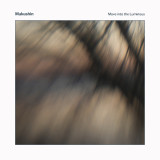
Move into the Luminous is the debut album by the trio Makushin.
Double bassist Jon Thorne (Lamb, Yorkston Thorne Khan), guitarist Peter Philipson (Jane Weaver, Fenella) and singer Nancy Elizabeth (Leaf Label, James Yorkston) lead this inspiring collective whose work explores the intersection between folk, jazz and ambient music.
The album also features contributions from Andrew Wasylyk, Raz Ullah, David A Jaycock and more.
Nancy Elizabeth is a singer and multi-instrumentalist who has released three chamber folk albums under her own name on the Leaf Label. She has also previously played with James Yorkston and recorded with the late ambient composer Susumu Yokota.
Jon Thorne is a double bassist best known as a member of the pioneering electronic band Lamb and, more recently, Yorkston Thorne Khan. He has worked with many other musicians, including Jon Hopkins, Robert Fripp and his mentor Danny Thompson, as well as releasing his own music.
Peter Philipson is a guitarist who has previously performed with Jane Weaver as her guitarist for a decade and has collaborated with her and Raz Ullah on two ambient albums under the artist name of Fenella. He has also released a number of instrumental guitar albums under his PJ Philipson guise.
Originally a solo project led by Toronto-based producer Josh Korody (known for his work with Tess Parks, Dilly Dally, Fucked Up, Weaves, Dirty Nil, Beliefs), Breeze has since evolved into a full band following their debut performance for KEXP Live At Home Sessions.
"Sour Grapes" is a new wave - britpop inspired album was recorded by Korody at his Candle Recording studio, at Hotel 2 Tango with Shae Brossard, and mastered by Mark Gardiner of RIDE. "Sour Grapes" marks an exciting direction for this anticipated full-length and full band follow up.
"a fun, referential mix that celebrates the idealized hedonism of his favorite records" - PITCHFORK
"a rising electro-psych artist makes a bold new impression" - CLASH
"a playful mix of shoegaze, Britpop, and disco" - NEW & NOTABLE / DAILY BANDCAMP
"frenetically fun album - energetic and eclectic" - SONG OF THE DAY / KEXP
"an intriguing ambience that meshes disco with post-punk" - STEREOGUM FOR FANS OF: Happy Mondays, Gang of Four, Wire, Gorillaz, Nation Of Language, Shame, Slowthai, Fontaines D.C.
Exarde’s just keep it spinnin’. This time our protagonist was originally born in Transylvania, so he knows something about the dancing vampires you often see at parties. This is confirmed by the fact that his release also contributed a lot to the gothic side of the dancefloor.
MAR.C is obsessed with dark sounds but specifically loves a guitar, acid and weirdly uplifting electro sounds. So, by his words this EP is exactly concentrated on frequencies between these two spectrums. On the remix duty’s we got P.O with his interpretation which gives an even more unique vibe as a groover for the closing scene.
“Pumping, vibrant, and packed with energy”: Iconic duo Dam Swindle deliver once again with their ‘Minor fools’ EP.
Last year, Dam Swindle celebrated their 10 year anniversary with the ‘Keep on Swindling’ series. The hard-hitters ‘All I want’, ‘Good woman’, and ‘You’ showed various sides of that much loved Swindle sound as well as some steps into a more leftfield electronic area. Now, they’re back on Heist with a 3-track club EP full of that recognizable upbeat energy.
‘That’s Right’ has Dam Swindle in full live mode, not unlike their timeless classic “Call of the Wild feat. Jungle by Night”. Live keys, bass, percussion, and horns (the latter by the Jungle by Night’s trumpet guru Bo Floor) give you the feeling like you’re on stage with a full band, hearing them give their all to record this heartwarming piece of music. Over the course of its 7 minutes, the duo takes you on an electrifying feel-good trip through the Swindle sonic universe.
On The EP title track ‘Minor fools’, Dam Swindle go into classic US house mode. Shuffling hats, a bouncy bass and male vocal chops lay the foundation for some crunchy jazz chords (think Underground Resistance with a Swindle touch). The track builds tension with haunting organs, looped vocals and smart modulation in the keys. Add to that the bouncy synth section at the heart of the track and you’ve got a jam that slaps hard in the best way imaginable.
The EP ends with the dreamy & contemplative ‘Soul’s lament’; A slow burner that builds and builds on a relentless rhythm of bells and skipping hi-hats. Slowly, a massive string section takes control of the track, after which, an acid line takes over that gives the track its driving electronic touch. It’s a welcome deep note to an EP that shows you exactly why Dam Swindle are such well respected and versatile producers.
Grab this record while you can and dance, dance, dance!