* taken from the digital version of bio-rhythm 3 and not included on the vinyl version of the album.
Network’s two groundbreaking bio-rhythm albums in 1990 were each accompanied by much loved 12” preview samplers of tracks from the iconic compilations.
For the third release - a mere 31 years after the first sets - Network have added a fresh twist. The sampler this time around contains 2 tracks from the bio-rhythm 3 vinyl release and 2 that will only be otherwise available on digital format.
It makes the sampler a must have for all electronica vinyl junkies.
Nexus 21 “Silicon”, a mainstay of the duo’s much acclaimed live sets, was recorded in 1991 but not released at the time. Memories are thin as it why such a gem was ignored but the most probable explanation is that the transformation of Nexus 21 into Altern 8 took attention away from the track. After being found in the tape vaults it has been remastered for the bio-rhythm 3 project.
It is joined on side A by the Octave One remix of 10th Planet “Strings Of Life” - which is not on the album vinyl. There is a proper labyrinthe story behind this remake of the Rhythim Is Rhythim classic of classics. Kool Kat, the predecessor to Network, arranged for Rhythim Is Rhythim to play live supporting Inner City at a London Town And Country Club concert in September 1989. The label recorded the show which featured Derrick May and his guest Carl Craig.
Fast forward to 1995 and the tapes were handed over to Ashley Beedle to reconstruct and remix for a release on Network under Ashley’s 10th Plane moniker, . On to 2003 and Network’s Neil Rushton was running the suSU label where an attempt to record a vocal of Strings Of Life with none other than Shara Nelson on vocals was made using the 10th Planet parts. That never came to completion, but at the time Neil was working with Octave One and they conjured up this recreation, which has only ever been previously released as a track on a suSU compilation. FIRST TIME ON VINYL ANYWHERE FOR THIS AMAZING VERSION OF “STRINGS OF LIFE”.
“Neurosilence” - Doggy is previously unreleased recording by Birmingham’s Peter Duggal. His bleep classic “Labyrinthine” would have been totally at home on Kool Kat/Network and in recent months both label and artist have both been shaking their heads as to how it didn’t happen. The release of the stark “Neuroslince” finally sees an 0121 alliance bond together.
The 4th track “In The Presence Of Beauty” is taken from the digital release of bio-rhythm 3 and is a truly beautiful “Reprise” take on the version on the vinyl album.
Cerca:we love electro
Manchester's jazz scene has produced some of the UK's brightest and most original jazz groups. Now with its eighth releaseMatthew Halsall's Manchester based Gondwana record label shines a light on another of Manchester's well kept musical secrets, the expansive, brilliant piano trio GoGo Penguin.
Featuring pianist Chris Illingworth, bassist Grant Russell and drummer Rob Turner (all still in their twenties), GoGo Penguin, draw on a heady brew of influences from Aphex Twin to Brian Eno, Debussy to Shostakovich and Massive Attack to EST. GoGo Penguin who have already developed a growing cult following in the North West as well as turning in storming performances at the Gateshead International and Manchester Jazz Festival's first came to Halsall's attention when he heard them at a friends night (Norvun Devolution) at the Roadhouse in Manchester. He was immediately drawn to their sublime collective empathy and the seamless fusion of jazz, classical and electronica influences in their music. 'I was blown away the first time I heard them, for me tracks like Last Words and HF are modern anthems and I knew immediately that I wanted to release their music". I am very proud to welcome them to the Gondwana label"
GoGo Penguin met whilst studying music at the RNCM in Manchester. After doing frequent gigs together with various other bands and musicians they started jamming together and started creating new music. They had no specific sound in mind, but just wanted to be free to create freely and honestly. The new band quickly became a vehicle to combine all the best bits from the music they where influenced by and loved. Individually Illingworth brings a lyrical and melodic style influenced heavily by classical piano music and electronica. Turner brings a driving modern style of drumming influenced by jazz, electronica, ambient, classical and dance music. Russell brings a gritty energetic double bass style influenced by the likes of Charles Mingus but also more modern electronic producers. The band's modus operandi is to have one of them bring an idea to rehearsal. Then there's a lot of experimentation, they try out as many different ways to play the piece as they can think of, until it begins to sound like something they all like.
It is their unique ability to synthesis and develop each others melodic and harmonic ideas while drawing on music from classical to electronica that makes GoGo Penguin's music so enthralling and their debut album such a powerful opening salvo from a powerful new voice in UK music.
Simona Zambolis first album on Mille Plateaux "Ethernity" is a piece of haunting music - vibrating, pulsing and cutting through the concrete and the chaos at the same time, when you listen close enough. The album is a journey through trans-reality, not only as a melancholic drama, but also as a travel to alien worlds, hence as a necessity of an electronic intervention. "Ethernithy" is radical fictioning in a non-expressive, non-melancholic and ultrablack sense. Profound music demands blackness, not silence. When we speak of communication or mediation, the reference is always that of the mystical tradition of the via negativa; mediation and communication always imply the dissolution of sender and receiver, leaving not only the message that is the gulf or abyss, but a perception out there, which senses should be able to recognize and even love.
After the success of critically acclaimed debut, SOS Music Volume 1 (praised by The Wire - ‘There isn’t a weak link’, RA, Gilles Peterson, Maryann Hobbs, Rough Trade, Love Injection, Mixmag, DJ mag, Basndcamp, Vinyl Factory etc.), the cutting edge Los Angeles electronic label are back with their sophomore release, another explosive compilation comprised of brand new female and female identifying talent.
The release, available on beautiful clear vinyl and digital features 7 of the most exciting emerging names in global dance music; Aura T-09, Closet Yi, Regular Fantasy + Yazzus to name a few. As dance floors open, SOS co-founders Maddy Maia and Tottie wanted to curate something positive, uplifting and reflective of sweaty summer dance floors, whilst retaining the edge that permeated their debut.
The release will be accompanied by an SOS tour North American + Europe at some of the most iconic global clubs - and expect mainly female, female identifying and non-binary artists on the bill.
Though only founded in 2020, SOS Music has been making waves in the independent dance community, and has helped to highlight the global underground dance scene growing rapidly in Los Angeles. The release made end of year lists including Bandcamp’s Best of Electronic and Rough Trade NY compilation of the year. SOS Music also hold a residency on Worldwide Fm, which continues to highlight ground breaking electronic talent with a female focus.
Sturdy electro thumpery from Konery TMI, served up in five portions across what will surely prove a highly delectable EP for fans of the genre. Opening track 'Nauhuri' and 'Automaa' are both full of grace and gorgeous, effortless glide, while 'Lumivyory' alters the mood somewhat to get down and dirty with some thoroughly filthy acid squelch filth. 'Polaaritahti' takes its cue from the more minimal 80s sounds of Egyptian Lover or Hashim, before we draw to a close with the more serene and soothing 'Mustikka'.
Sun Rafs disciple and multiface artist Jamal Moss is back to Modern Obscure Musicafter his debut on the label with the "The Anticipatory Organization" under The SunGod alias back in 2018.
J. Moss more known as Hieroglyphic Being is back to the Barcelona based recordlabel with a new aka, OUR SOULS ARE IN THE HANDS OF THE TRANSALOR. Threeyears after "s..kr.t.z.m", released on Warpfs sublabel Arcola, the chicago electronic-wizar signs "An Era of Spiritual Tenebraeh. The new EP is composed by two 18minutes long freejazz-psycodelic improvisations. A trip to the dark holes of the spaceeternity.
"Continue to see yourself shining your light, brighter and brighter with every breathout as you hear yourself silently say these words. May love heal our world. May we allchoose kindness and compassion" - Our Souls Are In The Hands Of The Translator
Recorded in a pool house surrounded by an evergreen oak tree forest just outside of Madrid; musician and composer Oliver Patrice Weder’s second artist album ‘The Pool Project’ combines textural and meditative sounds that touch on global influences from jazz, ambient and modern composition. In conjunction with the album, Spitfire Audio has released ‘The Pool Project’ sound library, inviting composers and producers to reimagine, recreate or completely pull apart Oliver’s sound world to facilitate their own vision. Capturing the unique acoustics of the pool house, the library is presented in Spitfire Audio's award-winning, easy-to-use plug-in and features a range of controls and effects. While ‘OPW’ was inspired by constant movement and travelling, ‘The Pool Project’ had quite a contrary motivation. Oliver explains “After making my debut album, it was clear for me that it was only the beginning of a long journey. I enjoy the process and idea of creating something deeply personal and connected to the situation I am in, a snapshot of time so to speak, so I had to start writing a second album sooner or later. I love change and find it very inspiring to creatively adapt to my surroundings and circumstances to see what comes out at the other end. I spent the lockdown time living in a countryside cottage just outside of Madrid, surrounded by holly oak trees. The combination of this and seeing my one year old daughter grow up, as well as expecting another baby boy, created a very unique and fruitful environment to draw inspiration from.” Confirmed press/radio: Future Music - Album review Electronic Sound - Album review Scala Radio -Ambient Track of the Week Scala Radio - Session Track/Interview Reviews: "Rich in beauty and emotion… one of the finest modern composers around" - 8/10, Future Music Mag "Sounds like a warm oasis of calm" - 8.5/10, Higher Plain Music Achievements: Recorded and toured across Europe with various bands including psychedelic rock band Time for T. Composed for the BBC. Lead composer at Spitfire Audio. In 2017, Oliver co-scored the feature film ‘The Haunted’ and made a vlog style series Inside the Score with Spitfire Audio, documenting the entire process — from meeting the director, to seeing the film shown at various international film festivals. Released OPW, a sample library and album, in 2019 with SA Recordings x Spitfire Audio. Interview with MusicTech.
In 1981, Brenda Ray / Naffi Sandwich released the sweetly yearning “D’ Ya Hear Me!” The song is now considered a post-punk classic, and here we have a warm digi-reggae version sung by Kyoto composer/producer/vocalist NTsKI (“Natsuki”), with backing tracks performed, recorded and mixed by Osaka-based producer/guitarist 7FO ( “nana f o” ). Also on this release are a karaoke version, plus two remixes, the first a dancehall-flavoured version by Bim One Production, a Tokyo electro-reggae production duo. The second mix is from Nagoya-based electronic producer CVN, who provides a harder version. This revisioning of a much-loved classic is available on 10" and CD.
- A1: Schweben 03 46 Min
- A2: First Visit (Skit) 00 10 Min
- A3: Fliegender Teppich 03 34 Min
- A4: Spuren 04 52 Min
- A5: The Father (Skit) 00 15 Min
- A6: Welk 03 51 Min
- A7: Zwischenzeit 01 35 Min
- A8: I Like This Picture (Skit) 00 06 Min
- A9: Repeater Rptr Theme 04 34 Min
- A10: Dead (Skit) 00 13 Min
- B1: Wanderlust 05 10 Min
- B2: Weichen 04 18 Min
- B3: Two Fathers (Skit) 00 11 Min
- B4: Interlude #1 (For Robert) 02 41 Min
- B5: Zugvögel (For Pascal) 04 50 Min
- B6: Tell Me Something (Skit) 00 11 Min
- B7: Karavanserai 05 18 Min
Simon Lovermann's debut album "Handwerke - Songs for my fathers" is focused around the piano, both as a harmonic and a percussive instrument. It is influenced by Jazz, Electronica, Hip Hop and Minimal Music. The beats are created with the piano and are enriched with body-percussion and beatbox to create an idiosyncratic atmosphere and distinctive sound.
The album deals with the personal story of the artist. Simon's biological father, Robert, was a Jazz musician and died before his birth. Simon was raised by his father Christian. This album is therefore a vividly emotional way for him to explore topics like death, fatherhood, family, identity and belonging.
"Handwerke" comes with a special artwork and cover design, featuring contributions by 16 artists printed on individual postcards and assembled in a 20-page booklet.
The release is a collaboration of Der Greif and Squama Recordings.
The original Soundtrack to Greek-German director Nikias Chrssos’ new feature, ‘A Pure Place’, scored by John Gürtler (Eigenlicht, COUNTER019), with his studio partner Jan Miserre, and featuring a track by chameleonic British artist Shackleton.
The script for A Pure Place had a dizzying effect on John Gürtler & Jan Miserre; their minds reeling with the possibilities.
From Persian sheep bells, Chinese sheng, prepared trombone, quarter-tone piano, a beaten-up cembalo, hand percussion, and a room full of synthesizers, embryonic compositions and experiments came to life early on in the project.
An electro-acoustic extravaganza, the soundtrack for A Pure Place takes a deep bow towards the many magnificent composers and scores from the late 60s and 70s where orchestral arrangements met with tape loops, psychedelia, and instruments from across the globe. Listening to that era of film music, anything seems possible.
The minimalist tones of ‘Ritual Bells’ set the dial to weird in the opening sequence of the movie, whilst ‘The Island’ makes use of ambient vocals recorded through an oil drum, gently introducing one of the score’s main themes with a distant quarter-tone cembalo.
Acclaimed British artist Shackleton’s eerie original version of ‘Fust’s Song’ (also included) was a tonal keystone for the entire soundtrack. Gürtler and Miserre translated his psychedelic electronic blueprint, layering acoustic instruments and bottom-heavy percussion in their ‘Paradox Paradise’ production style. The vocals, written by Chryssos, and sung by the cast on set, capture the sonics of the actual crypt-like space where cult leader Fust addresses with his following.
‘A Glimpse of the Other Side’ speaks of love and death in a 70s-indebted composition reflecting John and Jan’s shared love for melancholic and suspenseful chord progressions. Meanwhile, the sparkling synths of ‘Athens’ - the children discovering neon-lit civilisation after years confined on the island - transplant us to an entirely different era.
Greek artist Maroulita del Kol features heavily throughout - her choir of vocals on ‘Erotica’ were recorded late at night in the studio foyer, capturing its unique tiled reflections and concrete reverb.
On ‘Purification’ Maroulita’s voice guides us alongside a Moog bass drone, building to an ecstatic climax, whilst she also features in the film’s disco-centric ending credits on ‘Gatoula Mou Mikri’.
strumentalist Teddy Lasry's story is noteworthy not just in regards to the music he released, but in the ways approached the craft of composing and experimenting with sounds and sonics.
Always intrigued with the capabilities of instruments, their groove and their feel, it was very much his family’s influence that helped to fuel these life long affections. As a performer in a parisien cabaret, Teddy’s father Jacques would mingle with giants like Serge
Gainsbourg and Charlie Chaplin (impressed by his ability to improvise, Chaplin wanted him to become his accompanist, but the pianist politely refused). Jacques and his wife (Teddy’s mother Yvonne), would later become members of the innovative experimental group Les Structures Sonores, and surround their children’s lives with sounds. Electronic music was still in its infancy and Les Structures Sonores, with their resonators that produced long, mysterious tones, were deemed ‘cosmic’. It was the era of the launching of the first Russian Sputnik and every time a radio or television station wanted music for their science fiction programs, they turned to one of their compositions. Showing a natural ability with multi instrumentalism, Teddy was rewarded with a spot in the band, allowing him to really explore unconventional methods of composition.
Following a brief stint with Ariane Mnouchkine's avant-garde Théâtre du Soleil after graduating school, Teddy joined the pioneering prog band Magma, with whom he would record three groundbreaking records during the early 1970s (According to former member
Laurent Thibault, their album Mëkanïk Dëstruktïẁ Kömmandöh and its sound were strong influences on David Bowie during the recording
of Low and Iggy Pop’s The Idiot at Hérouville). Despite the successes with these projects, Teddy was constantly searching for new ways
of expressing himself through music, leading him into the beginnings of a solo career that would last the better part of three decades.
Teddy’s transition into his solo career came with contrasting fortunes, in that he was now becoming a music to image composer but with the unfortunate realisation that his eyesight was gradually worsening (due to being diagnosed with retinitis pigmentosa at an early age). Nonetheless, his solo career would begin in 1975, and for the rest of the decade his sound would become increasingly mired in electrified Funk-Fusion and its endless sonic possibilities. The resulting music would serve to highlight Teddy’s love affair with the possibilities found within tireless instrumentation, with the flute and particularly synthesisers becoming a mini-obession of his (he once spent a 7,000 Francs loan, which was meant to be spent on fixing his roof, on synths).
To this day Teddy continues to record and experiment with music, a passion which in many ways has never left his sid, even at the age of 75. His career was one that was fuelled by innate curiosity and an intrinsic desire to discover new methods of expressionism, be it through the realms of Jazz-Funk, ambient electronics, Swing music or indeed through the medium of instrumentation itself. On this compilation, we look to encapsulate the essence of his innovative sound, and from start to finish a sense of his ingenious approach to composing structure and mood is made abundantly clear. The funk-jazz fusion style that embodied the majority of his 70s work is on full display here, with the vibrant flute driven "Los Angeles", the Miles Davis inspired "Blue Theme", the progressive and driving
"Chamonix", and the deeply intricate "Krazy Kat", along with one of his finest 80s slow jams, "Funky Ghost". Two cuts off the ‘Back To
Amazonia’ album are also featured (Teddy’s last album including his Prophet T8, Yamaha DX7 and Oberheim drum machines). "Raising
Sun in Bali" and the title piece both emphasise an ever present passion for synthesisers. "Birds of Space", a standout track off the e=mc2 album, closes the comp, and is a fitting way to end this journey.
Pulled together in close collaboration with Teddy and his family, this collection of songs looks to introduce new listeners to his work and we are proud to present this limited and carefully remastered compilation on vinyl, including extensive liner notes.
Sharing his InBach album with the world in 2020 set events into motion that ultimately led to Arandel making second edition in the critically acclaimed, borderless project that unites rare instruments, musical reimanigation.
Arandel unites once again behind the musical phrases of the Leipzig composer specialists of ancient and modern instruments (Thomas Bloch), modern synthesizers and moogs, strings experts (Gaspar Claus), and the poetic spoken word of Myra Davies and Bridget St.John.
Textextext - (add your write up)
"There is a Bach for everyone" Arandel says, "and that discovery is what led me here, to InBach". Beneath the intricate history, the godlike adoration placed upon Bach, he was a playful musician, an eclectic one even. And so, a full year after the release of the first InBach record on InFiné, there is enough material to make a second one. "There is so much about Bach I didn't even know when making the first one - but after the release, people kept coming to me, telling me about certain pieces I should listen to or rework; songs that I had never even heard of."
The second InBach grew like a garden from the seeds of the first one - an eclectic journey through melodic fantasies, intricate sound design and a certain Pop silver lining. Some tracks were born out of Arandel's band performing on stage, experimenting with the songs live and composing them anew, like "Nos Contours", a new, French-lyrics version of Bodyline with Ornette, Arandel's stage partner.
InBach vol. 2 is a logical consequence then, of someone diving into a pool of music and history so large that it is being chronicled to this day. A substantial part of the instruments used on the lofty, eclectic album were recorded at the Musée de la Musique Paris: rare instruments like the *Erard square piano, ondioline, Zach's cello, Stroh violins*. They help shape the unique sound of Arandel's InBach project: sometimes _eerily familiar, always otherworldly and elusive.
In the vein of rare instruments, the first guest musician Arandel approached for InBach was Thomas Bloch, who lends his gift to four tracks over the two albums, playing the ondes Martenot, one of the first electronic musical instruments ever invented. Thomas has worked with many major artists in his career of ike of Radiohead, Gorillaz, Marianne Faithful, Tom Waits, Daft Punk.
The record travels *between styles, ideas and moods elegantly - it is a distinctly fun and personal album. Freeing himself from the weighty shackles of expectation surrounding the classical maestro, Arandel goes for the core of every Bach piece he tackles, making them his own. on "Octobre", based on Air On G-String, from Orchestral Suite No. 3 D-dur, BWV 1068, his nephew tells a dreamlike story of an ominous gang of children, literally blossoming in the mud. "Fabula" - featuring the French singer Scalde - based on the melancholic, Christian lament Meine Seele wartet auf den Herrn, becomes a grandiose, auto-tuned pop ballad on InBach vol. 2, featuring the virtuoso cello of fellow InFiné associate *Gaspar Claus*.
The use of spoken word is another new layer to InBach, and acts a lyrical thread carrying the listener through InBach vol.2: the closing track features Bridget St.John, John Peel-associated folk legend from the UK to offer to collaborate on a poem for this second volume, she replied to him with a line from André Gide : "You can't discover new land if you aren't willing to lose sight of every shore". A lovely way to sum up the InBach experience for both artist and listener.
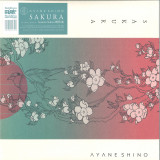
This is a love-filled tribute to the late japanese techno and ambient pioneer SUSUMU YOKOTA. In 2021, talented classical guitarist AYANE SHINO discovered his impressive works and recorded cover version of tracks from his acclaimed SAKURA album. Those new contemporary musical pieces will please his ever growing fanbase as well as listeners beyond the electronic music scene.
Tape
SectorSept’s ‘954’ is a boldly original record, one which announces the arrival of a singular musical mind. Its creator states that he crafted this EP by trying to make tracks that were ‘a representation of how I believe music would sound in some distant land in the future’. On ‘954’ this vision takes flight in the form of eight multifaceted, genre-defying electronic productions.
To unpack this record one must first understand the myriad influences which feed into SectorSept’s style. The producer grew up between the UK and Florida - indeed, the record’s title references the area code he had while in the USA. His formative years were spent soaking in the dancehall sounds he heard around him in his Jamaican household as well as techno, jazz, Miami bass and the city’s ‘Love 94 Smooth Jazz’ radio station.
All of this and more can be heard in the fabric of ‘954’. The drum programming alone reveals SectorSept to be someone with extremely wide-ranging musical tastes. Cuts such as ‘Get Ready For The Programme’ and ‘Be There’ are powered by deft beats that have Miami bass, Jersey Club, juke and more in their make-up. Drexciya-adjacent machine-funk creeps into the mix in ‘954’s mid-section, ‘Golden Third Eye’ touches on trap, and closing duo ‘Tropic Universe’ and ‘Prize’ bring dancehall dembows to the fore.
The productions of ‘954’ are simultaneously driving and chilled, coasting nicely yet still plumbed with enough bite to do damage on the dancefloor. It’s a feeling which is heightened by SectorSept’s gorgeous textural work. Several of the tracks here soften up collages of vocal clips with wistful, dreamy synths - see the way that club-caller snippets orbit Boards Of Canada-esque keys on ‘Get Ready For The Programme’ or how closing cut ‘Prize’ works both the classic Warp/Planet Mu sound and the pitched-down stylings of DJ Screw. It’s a rich and fully-formed artistic aesthetic, something which is all the more impressive when you consider that ‘954’ is SectorSept’s first official release.
That said, while the overall flavour of ‘954’ is SectorSept’s and SectorSept’s alone, one also finds links to Gobstopper’s previous output here. Those dancehall influences on ‘Tropic Universe’ and ‘Prize’ line the record up with Gobstopper drops like Otik’s ‘Thousand Year Stare’ while the emotive, soulful synth work that has long been a Gobstopper calling card is also in evidence here. Perhaps the thing about ‘954’ which makes it feel most at home on Mr. Mitch’s label is SectorSept’s imaginative futurism. SectorSept is a keen scholar of anime composers Kenji Kawai and Joe Hisaishi, and as such it is no surprise that there is a slightly fantastical quality to ‘954’. This is most boldly expressed on ‘Intuition Segment’, a magic-realist vignette which looks to Oneohtrix Point Never.
Blending ethereal textures with hybrid electronic grooves, SectorSept’s ‘954’ EP uses the sounds, influences and cultural experiences that have shaped its creator in order to build a vibrant vision of the future.
Truly adventurous and life enhancing music that invigorates your soul. TIP!
Press Release:
Gordan join traditional Serbian singing with abstraction, energy and minimalism. Their music is marked by radical reduction, seemingly endless ascension and a passion for experiments.
The Serbian singer Svetlana Spajić is an internationally recognized and acclaimed artist. She, like almost no other contemporary singer, is a master of all the complex local stylistic variations of singing from Balkan music. Guido Möbius plays bass and various electronic sound generators. Additionally he uses guitar amps, microphones and effects to provoke feedback which either harmonize or are juxtaposed with the song. It is a dialogue between sound and noise which is accentuated or fragmented by means of Andi Stecher’s expressive drumming. With a rich pool of ideas the percussionist drives the sound forward breathlessly and grounds it. Together the trio form a dynamic body of sound.
Gordan recorded their debut during the first wave of the Covid19 pandemic in Europe in March 2020. Due to the lockdown in Berlin at that time the city didn’t have many distractions to offer, so the trio just concentrated on work. The atmosphere of being isolated in a recording studio had a big impact on the musical results. All three band members came up with ideas for new pieces, which were immediately tested, worked out and recorded. On abstract instrumentals provided by Stecher and Möbius, Svetlana Spajic sometimes reacted with personal interpretations of serbian traditionals, and the other way around. Most of the time it was as if the music just happend to the band; playing together felt natural from the first moment on.
Some of the old serbian traditional songs that Spajic sang are extinct forms with a specific local melodic mode. The skillful improvisation of their lyrics and ornaments was of great importance and very estimated among village singers. The title song Down In The Meadow for instance originally is a love song from the village of Odevce in eastern Kosovo, Serbia. The singing manner is of a great intensity and sonority, with lots of specific local ornaments. It disappeared along with the village communities from the area. Oh, my Rose flowers is from the region of Kopaonik mountain (southwest Serbia) and the mode, scale is known as ”kopaonički glas” (Kopaonik mountain air). Svetlana adopted the style from the late singer Veličko Veličković from the village of Ostraće. It is an old mountain solo chant, rich in fast ornamentation movements and microtonal intervals. Don’t ask how I live is Svetlana’s homage to the new popular folk music movement from the 80ies known as Južni Vetar (Southern Wind) led by a musician and composer Mile Ilić, known as Mile Bas (“Mile the Bass”) which revolutionized popular music introducing tabooed oriental music and original arrangements.
All music by Spajic Stecher Möbius except ‘Don’t Ask How I Live’ by Miodrag M. Ilić, original title Što me pitaš
All lyrics are traditional, except ‘Don’t Ask How I Live’
Svetlana Spajic — vocals
Andi Stecher — drums & percussion
Guido Möbius — bass, feedback, electronics
Recorded by Alberto Lucendo at UFO sound studios Berlin in March 2020 mixed by Morphosis
Mastering by Neel at Enisslab, Rome
Artwork by Lorenzo Mason Studio
Prodigal son of the ESP Institute, Juan Ramos, rises from the cesspool of a world gone mad with 'Agua Del Cenote', his fifth release with the label. Whilst many artists are following their inner light to bring us some much needed joy amidst these rotten times, Juan (being the little shit that he is) follows an inner demon and delivers listeners and dancers a demented clusterfuck of sadistic chaos. The title track opens with what sounds like a butane torch and we metaphorically freebase into oblivion. Our perception of reality unravels, writhing in abrasive textures smeared across a low-slung, mid-tempo erotic thump. Everything feels blurry and distant, as if we’re swimming through an underground aquatic tunnel, in a panic, searching for an invisible band of spirits whose tune summons us into certain annihilation. Following this is a remix from a decorated lord of 20th Century electronics, Harald Grosskopf AKA The Synthesist. Harald wipes away grit and lethargy to reveal elements hidden deep within the mix as well as softens Juan’s sense of terror by building up to an optimistic layer of added synth. We’d love to offer some relief with the balance of the EP, however, the remaining two tracks paint complimentary hues in the same cerebral palette. 'Let It Go (Freaks Only)' veers closely to House in terms of tempo and gestalt, utilizing a vocal sample from Third Generation (Kerri Chandler) and a healthy dose of sub bass, but Juan hardly apologizes for his masochistic tendencies and certainly never relents into an uplifting mood. Closing the EP, Juan serves an antidote of sorts with 'Cuko', as if suggesting a way out of the swamp, but leaves it up to the listener’s intuition to not only see the carrot, but actually follow it into the light, thus completing the quest.
- A1: Mon Amour Tu Bois Trop - 3 27
- A2: Les Chants De Maldoror (Kraut Koto) - 4 37
- A3: À Rebours (Hang Bôté) - 3 33
- A4: Intérieur Négro - 3 13
- A5: Vowel - 2 33
- B1: Hard Billy - 3 41
- B2: La Mort De Pierre - 2 38
- B3: Le Cirque De Consolation - 3 40
- B4: Il Pleut Des Hommes - 3 43
- B5: Dandelion (Piano Solo) - 2 15
- B6: Missing Love - 3 22
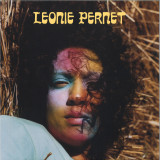
Léonie Pernet's second album Le Cirque de Consolation, to be released November 19th on InFiné & CryBaby, inhabits a world where borders dissolve and everyone makes their own unique and singular utopia. Hereby, the record questions the links between pop music, African cultures and electronic music, neo-classical music or the role of voice, whether human or synthetic. Sophomore albums can be a painful process for an artist - how refreshing it is to hear one so decidedly optimistic.
Textextext - (add your write up)
The sought after whirlwind of French Pop that exploded onto the scene with her debut "Crave", Leonie Pernet, returns with her second album, "Le Circque de Consolation", a sort of double negative of her first. While the yearning that sat at the center of "Crave"might not have been resolved, the young multi-instrumentalist and singer has found a new perspective - a more open and positive outlook on her own life and work. Perhaps telling, then, that the title was the first element of the album to exist: as it is and has always been a journey of personal (and collective) consolation first, a musical confrontation with the self.
"This record parallels my life's journey," confirms Léonie, "it reflects what has happened in my life since 'Crave' came out and how I feel today. There's still a lot of melancholy, but a lot more sunshine and light. In four years, I've become sober, which has saved me; I've worked a lot on my voice, which is a part of a desire to speak, to address my audience more directly, and also a more pronounced pop desire." In line with her new-found "openness", Leonie invites another musician into her creative process for the first time on "Le Cirque de Consolation": Jean Sylvain le Gouic, who lended his coproduction and perspective to her, while Leonie still plays almost all instruments herself with an astounding prowess.
Leonie's voice oozes with a new-found self-confidence and takes center stage amidst eclectic, distinctively fun and open-minded production. Sometimes she sings in English, mostly in French: "I worked a lot on my voice," confirms Léonie, "I didn't dare to sing before, neither live, nor on record, nor in the studio." Surrounding her astounding, intoxicating voice are forays into any direction imaginable: from harsh, experimental electronics to the more sombre, organic and quiet moments - and everywhere, there is the vision of Africa, (also Middle East) it's many sonic gifts and cultures.
Leonie has found a universal utopia that she craves for - a musical, cultural amalgamation that is decidedly non-western, political and poetic, rooted in self-discovery and the connection with other humans: African and oriental percussion, synthesizers, drum-machines; Léonie mixes genres and instruments with ease and precision. The French novelist and philosopher Édouard Glissant - whose work and writing had a big influence on Pernet - coined the term "Creolization ", the "bringing together of several cultures or at least several elements of distinct cultures, in one part of the world, resulting in new data, totally unpredictable in relation to the sum or the simple synthesis of these elements."
From "Hard Billy ", a techno-influenced rebellious anthem, to "Les Chants de Maldoror," a club and dance song propelled forward by feverish derboukas, to the deeply moving "A rebours" and its Afro-electronic rock. Léonie Pernet inhabits a world where borders dissolve and everyone makes their own unique and singular utopia. Hereby, the record questions the links between pop music, African cultures and electronic music (Intérieur Négro), neo-classical music (Le Cirque de consolation, Dandelion), or the place of the voice, whether human or synthetic as in the atmospheric "Vowel". Sophomore albums can be a painful process for an artist - how refreshing it is to hear one so decidedly optimistic.
Ten years after its release, the reissue of this fabulous Matt Elliott record seemed essential to us since it was eagerly expected! It is undoubtedly the most dramatic sequel to the songs trilogy being outstanding for its darkness, from which he has progressively turned away. The Songs Trilogy is over, A new chapter entitled 'The Broken Man' is about to open and is the most delicate of Elliott's albums to date. The angry noise has all but abated, making way for more fragile melodies and a more subtle approach to intensity to immerse the listener. Ideally listened to in total darkness to discover the hope hidden deep within the guitars, voice, choirs, bells, ethereal trumpets, the howl of the dog beneath the skin, in the sincerity of the music. Inspired by the ghosts of European folk music, the voice often resigned but always expressive. Always finding new ways of working, Elliott collaborated with Katia Labeque who interpreted an improvisation of his that became the backbone of one of the central epic pieces on this album 'If Anyone Ever Tells Me That it is Better to Have Loved and Lost Than to Have Never Loved At All I Will Stab Them in the Face'. 'Dust Flesh and Bones', another of the epic pieces on this album, is perhaps Elliott's most beautiful and moving work to date, simple in it's form but emotionally profound. 'The Pain that's Yet to Come' hints at a new almost psychedelic era to come. 'The Broken Man' is an album to be discovered gradually over many listens, and with each one a new depth is surrendered until one can appreciate the panorama in it's entirety. Each track is an invitation to explore one mans analysis of his own descent reflecting the frustrations and sadness that touch us all at some point. Mixed by Yann Tiersen this album is a bridge between the more acoustic work of 'Songs' and the more electronic, ethereal work of Third Eye Foundation. It is finely balanced in the centre of Matt's musical universe.
Since her debut onto the techno scene with the 2018 release of her EP 'Post-Traumatic Rave Syndrome' on Paula Temple's "Noise Manifesto" and a string of international festival and club appearances, Femanyst has gained a reputation for militant individuality. Akua Grant sets herself apart from the crowd with her aggressive & unrelenting industrial techno sets tinged with elements of Hardcore and Gabber. She has become known for her rebellious and innovative style in her adopted home of Berlin. Her self-assured approach to gripping and brawling techno tension sees her perform a fast paced and fervent flow on the dance floor. Femanyst continues to bring her unapologetically bold signature sound with her own techno imprint "Dark Carousel" as an extension to her much revered DJ sets of twisted and aggressive, high octane electronic music.
A2 Fluid - Post Industrial Transformation
Fluid is a queer DJ and producer based in Berlin. Supporting FLINTA* DJs, producers and party events are one of his priorities. His first release begun in January 2021 and he is still modelling his sound. His interest in electronic music goes from industrial techno to ebm to trance to hypnotic techno.
Post Industrial Transformation is a track which combines aggressive sounds and a lot of industrial elements. The transformation refers to Fluid's evolving own path. This evolution is similar to the tension that builds up all through the track. This track evokes change, modification, passage from one form to another.
B1 Hybral - Unheard Voices
Hybral is a Berlin-based non-binary DJ and producer drawn to eerie energetic industrial techno. They mix and produce haunting techno, EBM, and noisy-driven experimental sounds. Hybral's productions are made of dark atmospheric patterns linked with pushing percussions and basslines as well as heavily distorted kicks and harsh industrial noises. Mixing DJ sets the track selection is ranging from contemplative ambient to stern and fast techno - connecting vast influences from Hybral's personal experiences of spending days and nights on Berlin's dancefloors. They are founder of the queer label, podcast, and event series 'Subverted' which focuses on a distinct program aiming to lead dance music back to its roots of resistance and diversity.
B2 Marsch - Mrs. Jones
Marsch is a Berlin-based dj and producer from France, who initially began 8 years ago as a music curator and selector. She started to produce when she moved to Berlin, and has mostly been focusing on this for the past few years. She would define her music as a balance between melody, energy and texture, with a blend of minimalistic elements, rhythmic and percussions, and voices and futuristic synths.
DURCH BLN/TLV is a queer collective with a clear vision of solidarity and community building. DURCH operates in Tel Aviv and Berlin trying to bring queer people together, building a culture of inclusion, diversity and tolerance. In the tradition of original raves DURCH organizes solidarity events ranging from parties, to art and community events, with the strong belief that raves are a much needed place for people to come together, celebrate their diversity and learn to respect each other. Musically DURCH is eclectic inspired by hardcore, straight forward techno, ghetto and scouse house and 90s acid.
We proudly announce the release of our first vinyl record "dogged boldness". This is a long held dream by the entire crew. With Femanyst, Hybral, Marsch and Fluid we are happy to showcase four artists that are close and dear to DURCH BLN/TLV. The record is a compilation of four hard-hitting, inciting techno tracks. Rough, bold and aggravating, just the way we like it. We are proud that we are able to continuously work with queer artists and to be a platform to further queer artists visibility.
Disclaimer: The world needs more queer artist, more queer music, more queer techno, more queer perspectives, more queer love and more queer intimacy.
No place for any racist, sexist, trans- or homophobic shit.
Artwork by Rory Midhani
Mastering by Chlar
Far View’ is a compilation of tracks from Joel Vandroogenbroeck’s series of library
music releases for the Coloursound label, a uniquely trippy catalogue of music
vignettes long overdue for their day in the library music sun, remastered from the
original analogue reels.
The late Joel Vandroogenbroeck was among the rare breed of musicians who defy
all categorization, using music conventions to explore the far reaches of human and
cosmic consciousness. After passing through the jazz and rock worlds from the
1950s through the ‘70s, Joel found new outlets for his expansive vision in the ‘80s
with the Swiss library music label Coloursound. ‘Far View’ draws tracks from these
releases, which form a unique entry in the genre of library music. For the uninitiated,
this is just one way to begin a brilliant musical trip through Vandroogenbroeck’s
undersung career.
A musical prodigy from youth, Joel arrived at Brussels’ classical Music Conservatory
in the early ‘50s, but his studies were curtailed by the revelation of jazz. Soon, Joel
was touring in groups around Europe and beyond with luminaries like Eje Thelin,
Stan Getz, Bob Brookmeyer and Zoot Sims. As time passed, his musical
consciousness continued to expand: time spent in Africa sparked a deep exploration
of the music of the Middle East. The new rock sounds from England, like The Beatles
and Jimi Hendrix, were mind-blowing. And from Germany came the krautrockers,
with something completely else again.
Vibing on the eclectic energies of the day, Vandroogenbroeck formed Brainticket,
whose approach to composition fused jazz, rock and a mélange of global musical
traditions, combining a Western rhythm section and analogue synthesizers with an
astonishing array of acoustic instruments; ethnic flutes, sitar, harp, kalimba and all
manner of percussion. Steeped in diverse approaches of playing and listening,
Brainticket drew from prog rock and psych, traditional sounds and minimalist music,
all of which passed through their hands like the tributaries that formed the basis of
what would soon be known as New Age music.
In the late 1970s, Vandroogenbroeck began composing for sound libraries, with
recordings to be used as underlay music in films, radio and television. Gunter
Greffenius’ Coloursound Library was formed in 1979 with an inclusive vision of
music, including experimental, progressive rock, and some of the earliest examples
of ambient music - styles not well represented in other libraries. Coloursound gave
Joel the freedom to create music in any style or genre, and over the next decadeplus, he embarked on a musical journey that is unmatched anywhere in the world of
library music. Working under the pseudonyms VDB, his output on Coloursound is
some of his most sublime and otherworldly - ranging from dark electronics to
imagined music of the ancient past to ethereal ambient sounds of the future, which
makes sense, as Joel’s records were always ahead and in and out of their time.
Joel VandroogenbroeckJ passed away in in December 2019, while work was being
done assembling this collection. Curated by David Hollander, whose ‘Unusual
Sounds’ album and book of the same name delightfully explore the library music
world, ‘Far View’ draws from ten of Joel’s Coloursound albums with lovely cohesion.
Featuring brilliantly remastered sound, liner notes from David Hollander, album art
designed by Robert Beatty and reproductions of the Coloursound album jackets, ‘Far
View’ is an entry point to Joel Vandroogenbroek’s mind-bending body of work - sonic
soma to expand your consciousness and vibrate with the cosmos.