Straight from the heart of the 1991 UK rave scene — CUT001, later known as Rabbit City 001, captures the raw underground energy of the era. Originally a short-run white label promo, the record became an instant cult classic.
Produced by Blow alongside Colin Faver (Kiss FM legend RIP), the release was born out of London’s early rave network — record shops packed with weekend ravers, distributors playing new cuts down the phone, and pirate radio pushing the boundaries.
Cerca:wee down boy
- A1: Calvin Harris, Clementine Douglas – Blessings
- A2: Hugel, David Guetta / Kehlani, Daecolm – Think Of You
- A3: Lady Gaga – Abracadabra
- A4: Oimara – Wackelkontakt
- A5: Alex Warren – Ordinary
- A6: Tate Mcrae – Sports Car
- B1: Rosé & Bruno Mars – Apt
- B2: Jazeek – Akon
- B3: Kendrick Lamar With Sza – Luther
- B4: Lola Young – Messy
- B5: Sabrina Carpenter – Manchild
- B6: Myles Smith – Nice To Meet You
- C1: Zartmann – Tau Mich Auf
- C2: Nina Chuba – Wenn Das Liebe Ist
- C3: Maroon 5 Feat Lisa – Priceless
- C4: Kamrad Be – Mine
- C5: Miley Cyrus – End Of The World
- C6: Benee – Cinnamon
- D1: Abor & Tynna – Baller
- D2: Bac – Rosaroter Tee
- D3: Gigi Perez – Sailor Song
- D4: Leony – By Your Side
- D5: Benson Boone – Sorry, I M Here For Someone Else
- D6: The Weeknd Feat Playboi Carti – Timeless
- E1: Demi Lovato – Fast
- E2: Chrystal – The Days (Notion Remix)
- E3: Alle Farben, Majestic – From Disco To Disco
- E4: Lisa Feat Doja Cat & Raye – Born Again
- E5: Teddy Swims – Bad Dreams
- E6: Unheilig – Wunderschön
- F1: Shirin David Feat Ski Aggu – Atzen & Barbies
- F2: Katseye – Gabriela
- F3: Sabrina Carpenter – Tears
- F4: Disco Lines, Tinashe – No Broke Boys
- F5: Lady Gaga – The Dead Dance
- F6: Sarah Connor – Ficka
- G1: Kontra K X Ness – Geboren Um Zu Leben
- G2: Clockclock – Adore Ya
- G3: Glockenbach Feat Tom Walker – Home
- G4: Mgk – Cliché
- G5: Royel Otis – Moody
- G6: Aymen & Sira – 30 Mal Am Tag
- H1: Ed Sheeran – Azizam
- H2: Gracie Abrams – That S So True
- H3: Olivia Dean – Man I Need
- H4: Lewis Capaldi – Survive
- H5: Roy Bianco & Abbrunzati Boys – Bella Napoli
- H6: Noah Kraus & Wir Sind Helden – Nur Ein Wort
Was lief musikalisch in 2025? BRAVO The Hits gibt Aufschluss! 48 Tracks aus den Charts auf 2 CDs,
4 LPs und Download. Hier ein paar Beispiele: Ed Sheeran ”Azizam”, Oimara ”Wackelkontakt”, Jazeek
”Akon”, Alex Warren ”Ordinary”, Gracie Abrams ”That’s So True”. Aber auch brandneue Titel, wie Lady
Gaga ”The Dead Dance” und Sabrina Carpenter ”Tears” sind zu finden. 2026 kann also kommen!
After Dull Boy Johnny's previous release, a double EP with a tropical A-side and an erotic B-side, this time the three gentlemen are out on the dance floor. After all, the neighbours decided as much.
Unlike the recordings of their previous work that took place abroad, this time they stayed in a steamy attic room in Belgium, where guitarist and producer Jan built a studio. Unable to record at night because of neighbours who did not (yet) appreciate Dull Boy Johnny's music, they dove into Antwerp's nightlife.
The group's previous work took you on a cinematic journey where every musical nuance takes you to a specific setting. Be it an erotic seventies scene, a beach party in the Bahamas, or a blood-curdling chase in the Wild West, Dull Boy Johnny covers it all. Nard Houdmeyers, Rik De Bal and Jan found each other in a shared interest in film genres such as blaxploitation, neo-noir and spaghetti westerns. And therefore also the artists inherent to these genres such as Isaac Hayes, Curtis Mayfield and Ennio Morricone. Dull Boy Johnny's conceptual approach to music can be traced back to this passion for cinema.
For the new EP, however, they traded that cosy movie-watching for turbulent nightlife (the angry neighbours, you know). Besides, it was about time to get their inspiration in the flesh. Dull Boy Johnny immersed himself in the pulses, flashes and swell of downtown Antwerp. Thunder chasing crept under their skin and then into their guitars. In grandfatherly fashion, they then turned to composing, first with just bass, guitar and vocals. In that small lineup and with the sounds of the night still reverberating in their minds, the first pieces of the puzzle were laid out. After that, the sound was opened up and a solid rhythm boost was added. This defined the catchy, up-tempo nature of the upcoming EP that centres on themes of dancing, flirting and partying. Expect rousing riffs, catchy hooks and swinging rhythms. Details were meticulously laid out and bricked into the songs with delicate grouting. The fine polishing of the songs was done with patient finesse and a constant attitude to serve the song. With songs like Suspicion, She Can Groove and Dynamite, it is immediately clear that the gentlemen got their mustard from the club: action, party and spunk! All without losing their typical sensuality.
Despite the different working methods for the third EP, there are a lot of recurring elements that define Johnny's fresh sound. The essence? Catchy high vocals contrasted with a sensual baritone voice, carried by a groovy bass and rhythm section. Around it, the details that give the songs the right atmosphere swirl.
Dull Boy Johnny's music prefers to function as a soundtrack to your own imagination. As you listen, you are invited to wander through the various landscapes of their musical world, regularly giving a nod to the more lustful side of your brain. The songs have already been praised for their compelling melodies and irresistible energy.
With this release, Dull Boy Johnny proves their ability to create timeless music that both touches the soul and moves the body. So surrender to Dull Boy Johnny's punchy grooves and dance the night away. Long live the neighbours!
Megastar Bruno Mars has unveiled his new album 24K Magic (pronounced twenty-four karat magic), with lead single of the same title. Written and produced by Shampoo Press & Curl, with additional production by The Stereotypes.
The last time Mars dropped an album was December 2012 - four years ago, an eternity for a pop star. He's surfed the intervening years like a pro, with two Super Bowl halftime performances (headlining in 2014, and a cameo last February with Coldplay and Beyoncé), not to mention the biggest-selling song of the past few years, his collaboration with Mark Ronson, "Uptown Funk", spending 14 weeks at Number One - tying for the second-longest run in chart history - and winning the Grammy for Record of the Year. To date, it's sold more than 12 million copies, been streamed nearly 2 billion times and made several dragons want to retire.
This is Bruno Mars. Six Number One singles. Thirty combined weeks at the top of the chart (44 if you count "Uptown"). Two albums, 26 million in sales worldwide, four Grammys and counting.
Throughout 24K Magic , Bruno Mars re-creates the R&B he fell in love with as a child - the likes of Jimmy Jam, Terry Lewis, New Edition, Bobby Brown, Jodeci, Boyz II Men, Teddy Riley, and Babyface.
On and on, the beat goes on. Sound System culture plays a huge part in the history of House music, shaping Mysticisms, its founders and the music it brings into the spotlight. Continuing the dive into that history, in all its forms and permutations, Tranquil Elephantizer’s 1995 classic Zombie Dawn is reissued here in its original form.
A name that has been getting noticed on recent releases for the likes of legendary San Francisco collective Wicked Records and Manchester’s cult Red Laser label, the project has, in fact, been around for several decades.
Morphing out of the late 80s Acid House revolution, members Alexis Worrall, brothers Caspar and Darius Kedros and focal point, David Jenkins aka DJ Shakra came together in the South London melting pot of free parties and DIY anything is possible ethos.
Born of a collaboration between the short-lived Camberwell Butterflies project – featuring Alexis Worrall and DJ Shakra amongst others – and the Kedros’ bothers downtempo/trip hop forbears Slowly. With a shared label, on the ground-breaking Chill Out Records, and Thursday late-night encounters at London’s legendary Megatripolis club, they decided to pool studio resources and Tranquil Elephantizer was born.
Mixing lo-fi 808 heavy analog jams of the Butterflies, with the studio sophistication from the Slowly crew, sparked something new and Zombie Dawn was the first result. Local producer Crispin J Glover dropped by the studio, riding high with his Caucasian Boy project’s hypnotic Northern Lights (featuring DJ Shakra on Roland 303) – recently out on Strictly Rhythm – he offered to remix both Zombie Dawn and the Slowly album cut No Slo Dub for release on his own Matrix label and an underground hit on the London and West Coast 90s party scene was born.
Coming in the original “Saxmental Mix”, alongside Glover’s storming “Nu Dawn Club Mix” Zombie Dawn was a correlation of the past, present and future in one record. The history of British House can be heard in the bumpin’ nature of the beats, the sharp hats encompassed around dub overtones that give it added warmth. The slightly quirky, left field touches of the tracks, set against the then weekly overload of sharp US imports, brought the mix of influences from the Tonka and Sugarlump Sound Systems they had partied and been involved with, on to vinyl, adding touches of jazz keys and disco’s heritage for good measure.
A bedfellow for the emerging UK House sound coming on the likes of Luxury Service (Rob Mello / Zaki Dee), Other (A Man Called Adam / DJ D) and Nuphonic (Faze Action / Idjut Boys), that shaped and defined London clubs and far beyond. Some 30 years later, with a new album on the way, here is debut Tranquil Elephantizer’s release, remastered especially for this reissue, ready to bring that optimistic thinking back.
Tranquil the Mystery.
- A1: ) Think Fast, Make Conversation
- A2: ) Here Come The Rugby Boys
- A3: ) Limpet
- A4: ) Drinking On A Weeknight
- A5: ) Back On The Meds
- A6: ) The Day We Missed The Train
- B1: ) Oh Veronica, How Right You Are
- B2: ) Romantic Visions (Prepare For Disappointment)
- B3: ) Strictly Presbyterian
- B4: ) Everybody’s Moving To Australia
- B5: ) Say You’ll Never Leave Me
The Just Joans' new album Romantic Visions of Scotland finds the Glasgow band in characteristically melancholic form, pairing shambling indie pop with sharp observations on romantic pratfalls and everyday dis-appointments, all delivered with sardonic Scottish wit, fronted by siblings David and Katie Pope, whose wry lyrics and heartfelt vocals remain at the heart of the band’s distinctive sound.
Originally inspired by a grandiose exhibition title spotted on Glasgow buses in 2019 for a show at the Nation-al Museum of Scotland called Wild and Majestic: Romantic Visions of Scotland, the new album arrives six years later as a collection of semi-autobiographical snapshots from the Central Belt of Scotland. Whilst some of the details have been exaggerated for comic (or tragic) effect, the songs are based on personal experience of mundane failings, bitter regrets and missed opportunities that make up an unremarkable life.
Recurring themes of nostalgia for a bygone era and the fear of being left behind by lovers, friends and peers run throughout the album. Musically and lyrically, the band channels Village Green-era Kinks, with nods to The Television Personalities, The Smiths and Dolly Mixture.
In the past they have always recorded by themselves in a variety of bedrooms, living rooms – and the occasional toilet. For the first time they have abandoned their DIY recording practices to create what songwriter David Pope calls, “a corporate behemoth in an actual studio.” The album was recorded at Chem19 in Blan-tyre with Paul Savage, who is best known as a founding member of local legends The Delgados. He has also produced and recorded the likes of Teenage Fanclub, Arab Strap and Camera Obscura, and has captured a slightly more muscular version of the band while retaining their ramshackle charm.
The album artwork by vocalist and painter Katie Pope depicts Motherwell Train Station – an ordinary, boring place that speaks to the subject matter of the songs, but with a hint of potential escape. As David Pope ex-plains, “For me, the painting reminds me of the ending of Billy Liar in which Billy tries and fails to leave his hometown for the bright lights of London. Half the band also live in Motherwell, so it seemed appropriate.”
Funded by Creative Scotland, the recording allowed the band to bring in bass and cello arrangements, adding depth and a sheen of musical proficiency to their signature sound.
About The Just Joans - The Just Joans were formed in Glasgow in 2005 by songwriter David Pope. Early demos were collected together and released as a loose concept album, Last Tango in Motherwell, in 2006. Chris Elkin joined on guitar and was followed shortly after by David’s younger sister, Katie, on vocals and Fraser Ford on bass. Over the years they have released EPs and albums on WeePOP! and Fika Records and have gained a cult following as Scottish pop miserabilists.
The current line-up consists of Katie Pope (vocals), David Pope (vocals, guitar), Chris Elkin (lead guitar), Fraser Ford (bass), Arion Xenos (keyboards) and Jason Sweeney (drums).
Press Quotes:
“They fit snugly into the scratchy, low budget Scottish indie tradition of The Delgados and Arab Strap… There’s mischief in this miserabilism.” - Mojo 4*s
“Glasgow’s The Just Joans have documented the romantic pratfalls of a generation of indie kids with sardonic wit and a shambling musical style where Stephin Merrit lies down with The Vaselines.” - Uncut
“Funny and sad, it’s the kind of song that made Red House Painters, The Magnetic Fields and The Wedding Present’s early albums so easy to embrace; an unpretentious sharing of relatable gloom.” - Record Collector
- Mean Street
- Dirty Movies
- Sinners Swing!
- Hear About It Later
- Unchained
- Push Comes To Shove
- So This Is Love?
- Sunday Afternoon In The Park
- One Foot Out The Door
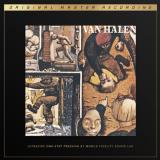
The song titles on Van Halen's aptly titled Fair Warning don't lie. The likes of "Unchained," "Mean Street," "Push Comes to Shove," "One Foot Out the Door," and more indicate the mood the band channels on its double-platinum 1981 record — the nastiest, darkest, and fiercest album of the group's storied career. For the fourth time in four years, Van Halen throws down the gauntlet to all challengers and emerges victorious.
Sourced from the original analog tapes, pressed on MoFi SuperVinyl at Fidelity Record Pressing, and strictly limited to 5,000 numbered copies, Mobile Fidelity's UltraDisc One-Step 180g 45RPM 2LP set plays with unfettered clarity, dynamics, and immediacy. Benefitting from superb groove definition, an ultra-low noise floor, and dead-quiet surfaces, this vinyl edition captures what went down in the studio with tremendous realism and involving presence.
Taking a more controlled approach in the studio and still completing everything in less than two weeks, Van Halen and producer Ted Templeman relied on studio amplifiers to direct the sound. Further diverging from the live-on-the-floor approach of its earlier albums, the ensemble also employed overdubs to great effect. The result: Dense, stacked architecture that underlines the hard-hitting tenor of the songs — and which comes alive like never before on this reference edition that looks as good as it sounds.
The premium packaging and gorgeous presentation befit the reissue's select status. Housed in a deluxe slipcase, it features special foil-stamped jackets and faithful-to-the-original graphics that illuminate the splendor of the recording. Aurally and visually, it is made for listeners who want to immerse themselves in everything involved with the album, including the iconic cover art adopted from William Kurelek's haunting painting, "The Maze."
Isolated frames from Kurelek's childhood-inspired work — including a man bashing his head into a brick wall, a guy pinning down an adversary as he delivers bare-fist blows to his face and others watch with apparent glee, a boy tied down on a conveyer belt and being sent through the equivalent of a meat saw — adorn the front and back covers. The sunnier visual disposition of Van Halen's prior efforts gives way to something sinister and tortured, traits reflective of the music within. The band members, too, are visually depicted not in glamorous shots but in a serious black-and-white portrait in which the quartet is clad in black leather jackets.
Tough, aggressive, stark: Fair Warning comes on like a series of bare-knuckled punches to the solar plexus and boasts lyrical narratives to match. Though not a concept record, the concise album revolves around themes of roughing it on the streets and struggling to survive amid dim prospects. Singer David Lee Roth reportedly penned many of the initial lyrics after traveling to Haiti and observing extreme poverty. The characters and situations populating Fair Warning reflect hardscrabble existence, last-chance desperation, and underlying danger.
Witness the crazies, poor folks, and hunters of “Mean Street”; the former prom queen turned pornographic actress on “Dirty Movies”; the menace and vice of “Sinners Swing!”; the streetwise hustle of “Unchained”; the isolation and alienation of “Push Comes to Shove”; the desire for escape on “One Foot Out the Door”: A carefree California beach party Fair Warning is not.
Having said he felt angry and frustrated during the sessions, guitarist Eddie Van Halen uses the forceful arrangements as a playground for his seemingly unlimited arsenal. Supported by a crack rhythm section and a hyped-up Roth, he performs with an almost impossible combination of punk-like intensity, technical finesse, lyrical fluidity, and unbridled emotion. The virtuoso was increasingly butting heads with Templeton and seeking a freedom in the studio he believed denied him.
No wonder he plays like a bat out of hell. Listen to the rapid-fire manner in which he slaps the high and low E strings on the 12th fret of his instrument on “Mean Street,” instilling the tune with funk flair and metal-spiked sharpness. For the pouty strut of “Dirty Movies,” Eddie Van Halen contributes slide guitar magic made possible after he sawed off the lower portion of a Gibson SG so he could reach further down the fretboard.
Related intensity, urgency, and daredevil momentum punctuate the surging “Sinner’s Swing!” A heavily flanged, delicately melodic introduction frames the attitudinal “Hear About It Later,” among the most creative arrangements of Van Halen’s career. And do riffs come any bigger or magnetic than those on the high-wire kick of “Unchained”? As for the out-of-left-field “Sunday in the Park,” an instrumental composed on an Electro-Harmonix micro-synthesizer: Who but Eddie Van Halen to supply creep factor in such an ingenious way?
Despite selling fewer quantities than Van Halen’s prior efforts, Fair Warning remains for many diehards the record that epitomizes all of the band’s immense strengths —Roth’s manic energy and tongue-wagging humor, Alex Van Halen’s rhythmic heartbeat-in-your-chest bombast, and Michael Anthony’s lucid bass lines included. Arriving when the New Wave of British Heavy Metal and new-wave movements were taking flight, it signaled a shot across the bow from a band determined to stay a step ahead and provide proof nobody could touch what it delivered.
More than four decades later, Fair Warning still sounds that alarm.
- 1: Santa Monica
- 2: Robert Redford
- 3: Tidal Wave
- 4: A Little Mark
- 5: Laugh At Death
- 6: Kids
- 7: Vampire Weekend
- 8: For The Roses
- 9: Sapphire Days
- 10: Some Boys
- 11: Barbara?S Ocean
Kurt Vile once sang that he had a freeway in mind, but Matt Kivel (Vile’s former Woodsist labelmate) literally has a freeway mind. Kivel grew up in Santa Monica, California, getting shuttled up and down the 10, the 101, PCH, and all the other freeways Angelenos lovingly affix definite articles to. He started out in music as part of the buzzy, Eagle Rock-based indie band Princeton, toured the country relentlessly, burned out, and then resurfaced with a series of bleak, hauntingly spare solo albums that garnered widespread critical acclaim.
Over the ensuing decade, Kivel collaborated closely with a growing set of brilliant, and varied musicians from across the globe, including Bonnie “Prince” Billy, Alasdair Roberts, Madi Diaz, Robin Pecknold of Fleet Foxes, Jana Horn, and Satomimagae. He moved to Austin, Texas then left for New York City for a spell and then returned to Austin where he settled down. In 2017, he started writing the songs for what would become his eighth solo album, Escape From L.A. Escape From L.A. is an autobiographical song cycle that chronicles the first thirty-three years of Kivel’s life in the City of Angels. The material was labored over, rewritten, rearranged, and rerecorded numerous times, between LA, New York, and Austin. Kivel self-effacingly refers to it as his “bootleg as hell Blood On The Tracks” with myriad alternate sequences, tempos and arrangements that will never see the light of day. It involved over twenty collaborators, a string section, pedal steel guitars, and a renewed lyrical and vocal clarity that allows the narrative vignettes to unspool in vivid detail. It’s a beautiful, grounded statement and one of Kivel’s best.
- A1: Tip Off Time
- A2: Dirty Decibels (Feat. Pharoahe Monch)
- A3: Top Prospects (Feat. Defari, Evidence)
- A4: Dick Starbuck
- A5: B-Boy Document '99 (Feat. Mos Def, Mad Skillz)
- A6: The Last Hit (Feat. Eminem)
- A7: Ay Yo
- B1: Hot Spittable
- B2: The Meaning
- B3: In-Outs (Feat. Cage)
- B4: Papers Please
- B5: Shaquan & Eon (Feat. Mad Skillz)
- B6: The Half
- B7: Newman Skit
- C1: Hands On Experience Pt. Ii (Feat. Bobbito Garcia, Kool Keith, What? What?)
- C2: Weed
- C3: Open Mic Night (Remix) (Feat. Thirstin Howl The 3Rd, Wordsworth)
- C4: Mind Soul And Body
- C5: Friendly Game Of Football
- C6: Cranial Lumps
- D1: E=Mc2 (Og Version) (Prod. By The Alchemist)
- D2: Hands On Experience Pt. 2 (Og Version) (Feat. Bobbito Garcia, Kool Keith, What? What?)
- D3: High & Mighty (Og Demo Debuted On Wkcr)
- D4: The Vibe That I Give Em (High & Mighty Demo)
- D5: Under Pressure (High & Mighty Demo)
Celebrating 25 years since its original release, The High & Mighty's seminal debut album, "Home Field Advantage", returns in a special anniversary edition vinyl reissue. Originally launched under the iconic Rawkus Records banner, this album became a defining moment in underground hip-hop, showcasing the sharp wit and raw talent of Mr. Eon and DJ Mighty Mi. Now, in collaboration with Eastern Conference Records, RRC Music Co. revives this classic with the care and respect it deserves.
"Home Field Advantage” stands as a testament to the golden era of hip-hop, featuring an all-star lineup of guests who helped cement its legendary status. The album includes unforgettable appearances by Mos Def, Pharoahe Monch, Evidence, Eminem, Defari, Cage, Kool Keith, among others, each bringing their unique flavor to the project and amplifying its impact.
This 25th-anniversary edition is more than just a reissue; it's a revitalization. As a special treat for collectors and die-hard fans, this edition includes six bonus tracks, adding further depth to an already rich collection of tracks. Remastered for vinyl by the renowned Davide "Bassi Maestro" Bassi and packaged in a gatefold jacket with restored original artwork curated by Mr. Krum, this release pays homage to the album's legacy while celebrating its enduring influence.
This 25th anniversary reissue is not just a trip down memory lane — it's a reminder of why this album continues to resonate in the hip-hop community today. Don't miss the chance to own this piece of music history, reborn for a new generation.
12LP
Anthology 1-3: track listing remains as per original releases.
4 x 3LP albums in triple gatefold sleeves and slipcase
The Anthology Collection 12LP set includes the three groundbreaking Anthology albums from the mid-1990s, remastered in 2025 by Giles Martin, plus a new compilation, Anthology 4. Containing 191 tracks, the collection’s studio outtakes, live performances, broadcasts and demos reveal the musical development of The Beatles from 1958 to the final single ‘Now And Then’ released in 2023.
Anthology 4 features 13 previously unreleased tracks and 17 songs selected from Super Deluxe versions of five classic albums. In addition to fascinating outtakes dating from 1963 to 1969, the album includes new 2025 mixes by Jeff Lynne of ‘Free As A Bird’ and ‘Real Love’.
Furthermore, Anthology 4 presents 26 tracks that have never previously been released on vinyl.
Pressed on 180g black vinyl, each 3LP album will be housed within a triple gatefold sleeve, featuring the original art, sleevenotes by Mark Lewisohn, and restored photos for Anthology 1-3; Anthology 4 has brand new sleevenotes written by Kevin Howlett alongside photos. The outer slipcase features the original Klaus Voorman triptych art, and a 3/4 O-Card image of the band with detailed track listing.
- A1: I Saw Her Standing There (Take 2)
- A2: Money (That’s What I Want) (Rm7 Undubbed)
- A3: This Boy (Takes 12 And 13)
- A4: Tell Me Why (Takes 4 And 5)
- A5: If I Fell (Take 11)
- A6: Matchbox (Take 1)
- A7: Every Little Thing (Takes 6 And 7)
- A8: I Need You (Take 1)
- B1: I’ve Just Seen A Face (Take 3)
- B2: In My Life (Take 1)
- B3: Nowhere Man (First Version – Take 2)
- B4: Got To Get You Into My Life (Second Version – Unnumbered Mix)
- B5: Love You To (Take 7)
- B6: Strawberry Fields Forever (Take 26)
- B7: She’s Leaving Home (Take 1 – Instrumental)
- C1: Baby, You’re A Rich Man (Takes 11 And 12)
- C2: All You Need Is Love (Rehearsal For Bbc Broadcast)
- C3: The Fool On The Hill (Take 5 – Instrumental)
- C4: I Am The Walrus (Take 19 – Strings, Brass, Clarinet Overdub)
- D1: Hey Bulldog (Take 4 – Instrumental)
- D2: Good Night (Take 10 With A Guitar Part From Take 5)
- D3: While My Guitar Gently Weeps (Third Version – Take 27)
- D4: (You're So Square) Baby I Don't Care (Studio Jam)
- D5: Helter Skelter (Second Version – Take 17)
- D8: Julia (Two Rehearsals)
- E1: Get Back (Take 8)
- E2: Octopus's Garden (Rehearsal)
- E3: Don't Let Me Down (First Rooftop Performance)
- E4: You Never Give Me Your Money (Take 36)
- E5: Here Comes The Sun (Take 9)
- E6: Something (Take 39 – Instrumental – Strings Only)
- F1: Free As A Bird (2025 Mix)
- F2: Real Love (2025 Mix)
- F3: Now And Then
- D6: I Will (Take 29)
- D7: Can You Take Me Back? (Take 1)
Anthology 4 - Triple LP. The new volume from The Beatles Anthology Collection.
Anthology 4, is newly curated by Giles Martin, including 13 previously unreleased demos, plus fascinating session and other rare recordings dating from 1963 to 1969. It also includes the band’s final single, ‘Now And Then’, released in 2023, and new mixes of The Beatles’ Anthology-associated hit singles: the GRAMMY-winning ‘Free As A Bird’ and ‘Real Love’, given new life by their original producer, Jeff Lynne, using de-mixed John Lennon vocals. Furthermore, Anthology 4 presents 26 tracks that have never previously been released on vinyl.
The track notes are written by Kevin Howlett with an introduction compiled from 1996 interviews recorded with The Beatles’ close friend and adviser Derek Taylor.
Pressed on 180g black vinyl, the triple LP is housed within poly-lined inner bags and a triple gatefold sleeve.
Los Angeles-based duo LUCKYANDLOVE are back with their third album, evoking a new sense of art school originality, following their critically acclaimed “Transitions” album. The duo defines 'Humaura' as the atmosphere that emanates from the feelings of the human spirit void of technological control.
Blending raw analog synth sounds with driving punctuated percussion and punchy analogue bass, LUCKYANDLOVE’s music is shaped by the embers of Siouxsie and The Banshees and Bauhaus, resonant spectres carry over from synth-laden galaxies, where the needle hits the vinyl groove and Doc Martens marched to basement dance floors.
LUCKYANDLOVE is the raw sonic experiment of Loren Luck and April Love, whose music transcends genres. Their live analogue synth beats, Moog instrumentation and beautiful, harmonic vocals trigger an immediate download of fuzzy sunset synthgaze, blue-black neon darkwave, and tigerprint electro punk.
“‘Humaura’ is an action-packed, cinematic, entertaining and soulful electro-dance record full of fresh air and wide-open roads where there is more freedom to party, to be in nature, and to be our wild selves,” says April Love.
Fusing together pulsating molten kicks, abrasive fuzz-laden analog synths and sensual vocals, the anti-tech angst anthem ‘I Am Human’ is a call to take back our lives, underlining the need to reconnect with being Human before it’s too late. ‘Lonely at Night’ is a "last call" bar track about the desperate, frantic desire for human connection, building from a haunting sense of isolation to a fast-paced, climactic reunion with a crush. Elsewhere, this album features enchanting lyrics rooted in emotions from melancholy and sorrowful glom to a state of blissful trance.
This album was recorded, mixed and mastered for digital release by Grammy award-winning engineer Be Hussey (Modern English, Twin Tribes, Boy Harsher) at Balboa Studio and Catwater for the digital music, and mastered for vinyl and lathe-cut by Grammy-nominated engineer Nicholas Townsend (Weezer, Grimes) at Townsend Mastering.
Their 'Lucky + Love' and 'Transitions' albums having earning them a global fan following, US and UK tours, multiple tracks featured in the indie hit film 'Tiger Within' (Ed Asner's final performance), and wide acclaim, noting their “soulful, synthesized sound" (LA Weekly), “spectral synths and dazed-dreamy feeling” (Big Takeover Magazine), not to mention their "uncompromising and inventive sonic experiment” (The Spill Magazine) and sound that “oscillates between the asphalt synth streets & interstellar outer realms” (Impose Magazine).
LUCKYANDLOVE’s visceral, dark electro-pop appeal continues to stretch through time and space. Praise for the album’s lead track ‘I am Human’ have poured in from over a dozen countries. ‘Humaura’ promises to cement the duo’s reputation as one of America’s most vivacious electronic / synthwave acts, positioning them firmly within the lineage of artists like Phantogram, Ladytron, The Soft Moon, Twin Tribes and ACTORS.
‘Humaura’ Press:
“...In contrast to its synth-laden darkwave and electropunk sound, the song presents lyrical themes of championing the human spirit and emotions over the technological void" ~ Regen Magazine
“Moog textures and distorted synth tones weaving together like electric currents. An industrial edge that carries a dreamy undercurrent, nodding to darkwave, punk rock and post-punk influences without sounding dated" ~ Myth of Rock
"Every second and note is a meld of lava-esque incitement and beguiling melodic fixation and a breath to unpredictability and stirring fuzz hued uniqueness… a thrilling encounter" ~ The Ringmaster Review
"Layers fall into place and give rise to soaring vocals. The beautiful timbre of her voice sits over the landscapes of sound and reveal poignant lines that hit home." ~ Sound Read Six
In the smoggy orange light of a new millennium, the young Deb Demure would take the bus, once a week, from his home in crumbling Hollywood to his grandmother's apartment, nestled in the pastel pristineness of Beverly Hills. During these visits, Deb couldn't help but notice the disconnect between the glow of his grandmother's temple, and the downtrodden, alienated figures that populated the seats of the mass transit that took him there. Week after week, he would observe these characters: fading B-movie starlets, leisure-suited alcoholics and forgotten civil servants. But one fateful commute home, as the twilight waned to the purple Los Angeles night, he realized these figures were not as lost as they appeared - there was a nobility in their failure, reflective of the dignity of the city's vanishing golden era. They were survivors, in need of a voice: a spokesperson for every color of hope and hopelessness, transcendent of gender and time; Drab Majesty became Deb's musical podium for this undertaking. Raised in a music-centric household, Deb would find the time to teach himself to play his father's right-handed guitar upside down and left-handed; an unorthodox fashion from where his earliest understanding of chords and harmony were conceived. Exploring the bins of discarded vinyl in his neighborhood thrift stores, his toolkit expanded with the subterranean sonic gems of the recent past. Influences range from the virtuosic arpeggiated guitar work of Felt's Maurice Deebank and the grittier pop progressions of Red Lorry Yellow Lorry's Chris Reed as well as Steve Severin from Siouxsie and The Banshees. He also studied the harmonic oscillations and utilization of the occult power of vibratory frequency present in New Age sounds of Greek artist, IASOS. In terms of orchestration, he consciously culls from the seaside maximalism of Martin Dupont and mechanized grooves of early Depeche Mode. Like a dualistic pendulum, his vocals swing from a preistly baritone to a choir boy's falsetto reflecting the sepulchral ambiance of church visits with his grandmother. Currently the drummer for Los Angeles lo-fi rock ensemble Marriages and having honed an unorthodox home recording style, Deb sources his sounds from a repository of "mid-fi" synthesizers and other lesser-quality instruments. Following the release of his debut cassette EP, "Unarian Dances", he also shared a split 12" with synth pop forefathers, Eleven Pond. During the Spring of 2015, Drab Majesty signed with Dais Records and released his first single, Unknown to the I, as a introduction for his first initial foray into the album format, romantically titled Careless. Written over the course of 2 years, "Careless" is a compendium of songs that have outlasted a malicious burglary of his studio, his struggles with substance addiction, and most recently, the death of his beloved grandmother.
- A1: Don't Try To Tell Me - Berna-Dean
- A2: This Mornin' - The Jesse Stone Singers
- A3: All Around The World - Vermettya Royster With James Brown's Band
- A4: What's On Your Mind - The Four Bars
- A5: Don't Look Now - Wilbur "Hi-Fi" White & King Kolax Band
- A6: Money Talks - Kenny Smith
- A7: Hey Little Girl Pt 1 - Roosevelt Lee
- B1: Goin' Away Baby (Round Like An Apple) - Smokey Wilson
- B2: Hey Hey Baby - T-Bone Walker
- B3: I'm A Good Woman - The Afterglows
- B4: You Make Me Mad - Johnny Madara
- B5: Money Talks (Tell Me What I Say) - The Citations
- B6: Tell Me Why - Richard Berry
- B7: Mary Don't You Weep - The Delights
New R&B discoveries continue to emerge and entertain the many followers of the New Breed musical cult; nobody finds more than the Kent connoisseurs.
Berna Dean’s two previously unheard recordings are by far her best. They were laid down at Cosimo Matassa’s New Orleans’ studios by GNP Crescendo but eschewed in favour of two relatively average sides. The great 50s R&B songwriter Jesse Stone provides a rocker for the much-admired Jimmy Breedlove and a super-catchy ‘This Morning’ for an unknown mixed vocal group that has a joyous gospel feel. Jesse also penned ‘Private Eye’, a classic early 60s story-song, for Buddy Wilkins which was issued on Al Sears’ Tri-Ess imprint.
The title track is used twice, on two very different Fraternity recordings. Kenny Smith’s version was issued in 1964 and has many followers, but the equally meritorious Coasters-inspired composition by the Citations is newly discovered. Win Menifee’s ‘I’m Runnin’ Around’ from the same Cincinnati label comes complete with a fascinating back-story.
There are three cover versions. Vermettya Royster’s ‘All Around The World’ is backed by James Brown’s 1961 band, while Roosevelt Lee's 1970 update of the 1947-originated ‘Hey Little Girl’ funks the tune up a la Godfather of Soul. The cover that will make the biggest noise is undoubtedly west coast band the Afterglows’ version of Barbara Lynn’s evergreen dancer ‘I’m A Good Woman’ – this is a future monster.
Golden Crest provides two fabulous male vocal group sides – the swinging ‘What’s On Your Mind’ by Eddie Daye’s Four Bars and the delightful harmonies of the appropriately-named, but unknown Delights ‘Mary Don’t You Weep’.
Blues still thrived into the 70s as Albert Washington’s mean and moody ‘Case Of The Blues’ proves. Smokey Wilson took the music into the late 70s with the storming ‘Goin’ Away Baby (Round Like An Apple)’, which benefits here from a 45-style edit. His Pioneer Club on 88th Street in South Central L A provides the atmospheric photo for this collection.
More early 60s movers come from Wilbur “Hi-Fi” White with ‘Don’t Look Now’, future hit songwriter Johnny Madara’s raucous ‘You Make Me Mad’ and Big Boy Groves ‘Bucket O’ Blood’ which brilliantly describes the kind of club these tracks would fit right into.
The LP version loses a few tracks, but so many collectors have strong preferences we’ve thrown the vinyl junkies a lifeline.
- A1: Bilie Eilish – Birds Of A Feather
- A2: Chappell Roan – Good Luck, Babe!
- A3: Djo – End Of Beginning
- A4: Hozier – Too Sweet
- A5: Linkin Park – The Emptiness Machine
- A6: The Weeknd – Dancing In The Flames
- B1: Sabrina Carpenter – Espresso
- B2: Post Malone Feat Morgan Wallen – I Had Some Help
- B3: Dasha – Austin
- B4: Mark Ambor – Belong Together
- B5: Coldplay – Feelslikeimfallinginlove
- B6: Myles Smith – Stargazing
C1 | Meduza, Onerepublic, Leony – Fire (Official Uefa Euro 2024 Song)
C2 | Ofenbach Feat Norma Jean Martine – Overdrive
C3 | Kygo, Ava Max – Whatever
C4 | Felix Jaehn & Leony – Waking Up
C5 | Jaxomy X Agatino Romero X Raffaella Carrà – Pedro
C6 | Artemas – I Like The Way You Kissed Me
D1 | Michael Marcagi – Scared To Start
D2 | Cyril – Stumblin' In
D3 | Ariana Grande – Yes, And?
D4 | Jack Harlow – Lovin On Me
D5 | Tate Mcrae – Greedy
D6 | Natasha Bedingfield – Unwritten
E3 | Benson Boone – Beautiful Things
E4 | Teddy Swims – Lose Control
E5 | Sabrina Carpenter – Taste
E6 | Noah Kahan – Stick Season
F1 | Justin Timberlake – Selfish
F2 | Shawn Mendes – Why Why Why
F3 | Ariana Grande – We Can't Be Friends (Wait For Your Love)
F4 | Purple Disco Machine & Benjamin Ingrosso Feat Nile Rodgers & Shenseea) – Honey Boy
F5 | Lost Frequencies, Tom Odell – Black Friday (Pretty Like The Sun)
F6 | Hugel, Topic, Arash Feat Daecolm – I Adore You
G1 | David Guetta & Onerepublic – I Don't Wanna Wait
G2 | Karol G – Si Antes Te Hubiera Conocido
G3 | Fourty & Bausa – Vempa (Frx202445570)
G4 | Sampagne, Badchieff, Cro – Tempo
G5 | Billie Eilish – Lunch
G6 | Kendrick Lamar – Not Like Us
H1 | Zartmann, Ski Aggu, Dauer – Wie Du Manchmal Fehlst
H2 | Soffie – Für Immer Frühling
H3 | Sdp, Sido, Esther Graf – Mama Hat Gesagt
H4 | Nina Chuba – Nina
H5 | Luciano X Jazeek – Starboy
H6 | Shirin David – Bauch Beine Po
E1 | Lady Gaga & Bruno Mars – Die With A Smile
E2 | Gracie Abrams – I Love You, I'm Sorry
Bevor sich das Jahr 2024 dem Ende neigt, erscheint mit der „BRAVO – The Hits 2024“ der alljährlich
beliebte Jahresrückblick voller Hits und Chartstürmer. Ganz nach dem Motto „End Of Beginning“ vereint das Album von Anfang bis Ende die erfolgreichsten Songs und musikalischen Highlights des Jahres 2024.
Wenn Chappell Roan „Good Luck, Babe!” wünscht, Sabrina Carpenter „Espresso“ trinkt, The Weeknd in
den Flammen tanzt und MEDUZA, OneRepublic und Leony on „Fire” sind, kann das nur eines bedeuten:
Die „BRAVO - The Hits 2024“ steht in den Startlöchern und versorgt uns mit den größten Hits und beliebtesten Singles. Mit dabei sind internationale Bands und Künstler*innen wie Billie Eilish, Linkin Park,
Hozier, Coldplay, Justin Timberlake, Ariana Grande sowie deutsche Newcomer und Stars wie Shirin David,
Zartmann oder Nina Chuba.
Das Besondere dieses Jahr: Die beliebte Hit-Compilation erscheint erstmals auch limitiert als 4LP. „BRAVO
– The Hits 2024“ ab 08.11. als 2CD & Download und pünktlich zum Nikolaus als 4LP erhältlich!
- Lower Demons
- Wasp Women
- The Arcade Claw King
- The Saucer Makers Boy
- Let Me See Your Hands
- Angel Washes
- Young Paunchy
- Hair Vampire
- The Gold Sells Out
AAA Gripper have seemingly dropped out of nowhere but the story goes back. The idea was conjured in the summer of 2023 at the first Wrong Speed Records festival in the town of Glastonbury. Inspired by a weekend of radical sounds and fine company a decision was made - 'let's try something'.
Recording hours and hours of bass and drums in deep Somerset then editing it down to a sharp and concise 32 minutes. From Can's Lost Tapes boxset to No Means No's 0+2=1 via a thousand song structure decisions. Wild guitar strafe and precise hyper vocal added. Nine tight tunes magically appeared. The band raised a glass of tea. The band was born. The 'something' had worked.
We Invented Work For The Common Good is a deep dive into the world of the working person. How we end up. Why we climb onto the conveyer belt and never get off. The front cover is one of many of the same photo taken every day, on the walk to work, the dark mills looming - KEEP THEM BUSY, THEY WON'T RISE UP.
Music is therapy. They think it's part of the bread and circuses. We know it's armour. We know it's weaponry.
Gigs being planned.
Scientist's name will be found on many dub releases in peoples record collections.His connection to King Tubby's studio is inseparable and many say when the dub end of Reggae music had fallen on quieter times it was Scientist with his often stripped back style and at other times, wild off the wall remixes that breathed life back into the dub cannon.
Scientist (born Overton Brownie,1960, Jamaica) was in many ways King Tubby's apprentice. Having helped his own father out repairing televisions and such like, he would help Tubby on winding transformer coils, that the amps of the day all needed. His interest in recording grew as he watched the many sessions taking place at Tubby's Dromilly Avenue Studio, learning the ropes as the musicians came and went. His first break happened when King Jammy (then Prince Jammy) was too tired to work on a session booked for producer Errol 'Don' Mais. Scientist engineered the session to every one’s bewilderment and great satisfaction.
His first hit would be a mix of Barrington Levy's 'Collie Weed' and his reputation built on the many versions he cut at Tubby's where he would become the engineer of choice. His pared down mixing style suited the new Dancehall reggae sound that came at the tail end of the 1970's and rolled into the 1980's. Such was his stature that albums were now sold with his name on their jacket, 'Scientist Vs Prince Jammy, 'Scientist meets The Space Invaders' to name but two.
His time at King Tubby's was followed as chief engineer working for the Hookim Brothers at the mighty Channel 1 Studio's and on many of top producer Henry 'Junjo' Lawes tracks, that were hit after hit at the time.
We have compiled some tuff tracks from the late 70's / early 80's just before everything went digital. Some great dub versions to some killer tracks that rocked the dancehalls around this golden time.The mighty Tristan Palmer whose killer cuts 'BadBoys','Stop Spreading Rumours','Eveready' and 'The Greatest Lover’ alongside Michael Palmer's debut release 'Mr Landlord' and Robert Trench's 'Mr Babylon'. The songs stand back-to-back with Tony Tuff's timeless 'Never Trouble Trouble' and the biblical Rod Taylor's 'The Lord is My Light'. Sammy Dread's 'Wah Dah Wah' and the always respectful Dennis Brown's 'Time and Place' all benefited a touch of magic from The Scientist and his laboratory of effects.
Hope you enjoy the set.....
- Special
- B.a.b.e
- Fantasy
- Not Hell, Not Heaven
- Tonight (I'm Afraid)
- Fleshed Out
- Let You Down
- Cellophane
- Suffer The Fool (How High Are You?)
- Haunted
- Are We All Angels
OLIVE GREEN VINYL[22,27 €]
Produziert von Will Yip (Turnstile, Title Fight, Mannequin Pussy, etc.), der auch schon an der 2023er "Psychic Dance Routine" EP der Hardcore-Band Scowl aus Santa Cruz mitgewirkt hat, findet man auf "Are We All Angels" die giftige und antagonistische Band, die ihre Aggression durch eine expansivere Version ihrer selbst leitet. Das Album wurde von Rich Costey (Fiona Apple, My Chemical Romance, Vampire Weekend, etc.) gemischt. "Are We All Angels" ist geprägt von Entfremdung, Trauer und Kontrollverlust, und setzt sich größtenteils mit ihrem neu gefundenen Platz in der Hardcore-Szene auseinander, einer Gemeinschaft, die die Band in den letzten Jahren sowohl umarmt als auch zu einer Art Blitzableiter gemacht hat. Auf "Are We All Angels" erkunden Scowl auf Schritt und Tritt ehrgeizige neue Richtungen und verbiegen Genre-Normen. Sängerin Kat Moss macht die am unmittelbarsten erkennbare Entwicklung, indem sie einen strukturierteren und manchmal zarten Ansatz wählt. Sie spielt mit Harmonien und melodischem Feingefühl, das selbst die eingefleischtesten Scowl-Fans überraschen dürfte. Moss nennt eine breite Palette von Einflüssen außerhalb des harten Rock - alles von Billie Eilish bis Radiohead, Car Seat Headrest bis Julien Baker. "Die meisten von uns waren wirklich keine geübten Musiker, als die Band begann", gibt sie zu. "Es war in dieser Hinsicht sehr Germs-esque, wie die erste Hardcore-Band eines Babys, was großartig ist. Jetzt wissen wir vielleicht immer noch nicht, was wir tun, aber wir haben eine bessere Vorstellung davon, was wir tun wollen." Instrumental gibt die Band Einflüsse von Negative Approach, Bad Brains, Hole, Mudhoney, Garbage, Ramones, Pixies, Sonic Youth, Rocket From The Crypt und anderen an. Bassist Bailey Lupo merkt an: "Das Songwriting für die neue Platte war das bisher kollaborativste in der Geschichte von Scowl. Jeder hat so viele Ideen eingebracht, und wir konnten sie alle in Ruhe analysieren und uns Zeit nehmen. Wir haben alle so unterschiedliche Geschmäcker, Einflüsse und Persönlichkeiten, und das kann man auf diesem Album wirklich in jeder Ecke hören." Selbst durch diesen eklektischen Ansatz verlieren Scowl nichts von ihrer Schärfe und schaffen es immer noch, die Wut und Frustration zu vermitteln, die dahinter steckt. Sie sind zutiefst dem Ethos des Punk und seinem Gemeinschaftssinn verpflichtet. "Hardcore und Punk haben uns geprägt, wie wir arbeiten, was wir als Band tun wollen und wie wir uns beteiligen", sagt Greene. "Im Kern sind wir eine Punk- und Hardcore-Band, unabhängig davon, wie sich der Song verändert." Das Album wird von dem bereits veröffentlichten "Special" eröffnet, einen Song mit großer, hymnischer Energie, der die rohe Intensität von Scowl beibehält. Scowl haben sich schnell als einer der dynamischsten und fleißigsten Acts in der Rockszene etabliert und ausgiebig in den USA und international mit Bands wie Limp Bizkit, Destroy Boys, The Bronx, Militarie Gun, Show Me The Body, Zulu, Touche Amore, A Day To Remember, Speed, Sunami und vielen anderen getourt, sowie Festivalauftritte beim Coachella, Reading & Leeds, No Values, Outbreak, Primavera und Sick New World, um nur einige zu nennen, absolviert. Die Band - Malachi Greene (Gitarre), Bailey Lupo (Bass), Cole Gilbert (Schlagzeug), Mikey Bifolco (Gitarre) und Kat Moss (Gesang) - gründete sich 2019 und feierte 2021 mit ihrem Debütalbum "How Flowers Grow" ihren Durchbruch. Seitdem sind sie unaufhaltsam auf dem Vormarsch.
- A1: Montego Bay - Everything (Paradise Mix) 04 59
- A2: Atelier - Got To Live Together (Club Mix) 06 06
- A3: Golem - Music Sensations 04 56
- B1: The True Underground Sound Of Rome Feat. Stefano Di Carlo - Gladiators 05 26
- B2: Eagle Parade - I Believe 04 26
- C1: Dj Le Roi - Bocachica (Detroit Version) 05 28
- C2: Green Baize - Synthetic Rhythm 01 41
- C3: M.c.j. Feat. Sima - Sexitivity (Deep Mix) 05 30
- D1: Kwanzaa Posse Feat. Funk Master Sweat - Wicked Funk (Afro Ambient Mix) 06 31
- D2: Progetto Tribale - The Bird Of Paradise 06 29
- D3: Mbg - The Quite 06 59
Vol 1[28,99 €]
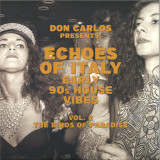
Googling “paradise house”, the first results to pop up are an endless list of European b&b’s with whitewashed lime façades, all of them promising “…an unmatched travel experience a few steps from the sea”. Next, a little further down, are the institutional websites of a few select semi-luxury retirement homes (no photos shown, but lots of stock images of smiling nurses with reassuring looks). To find the “paradise house” we’re after, we have to scroll even further down. Much further down.
It feels like yesterday, and at the same time it seems like a million years ago. The Eighties had just ended, and it was still unclear what to expect from the Nineties. Mobile phones that were not the size of a briefcase and did not cost as much as a car? A frightening economic crisis? The guitar-rock revival?! Certainly, the best place to observe that moment of transition was the dancefloor. Truly epochal transformations were happening there. From America, within a short distance one from the other, two revolutionary new musical styles had arrived: the first one sounded a bit like an “on a budget” version of the best Seventies disco-music – Philly sound made with a set of piano-bar keyboards! – the other was even more sparse, futuristic and extraterrestrial. It was a music with a quite distinct “physical” component, which at the same time, to be fully grasped, seemed to call for the knotty theories of certain French post-modern philosophers: Gilles Deleuze, Félix Guattari, Paul Virilio... Both those genres – we would learn shortly after – were born in the black communities of Chicago and Detroit, although listening to those vinyl 12” (often wrapped in generic white covers, and with little indication in the label) you could not easily guess whether behind them there was a black boy from somewhere in the Usa, or a girl from Berlin, or a pale kid from a Cornish coastal town.
Quickly, similar sounds began to show up from all corners of Europe. A thousand variations of the same intuition: leaner, less lean, happier, slightly less intoxicated, more broken, slower, faster, much faster... Boom! From the dancefloors – the London ones at least, whose chronicles we eagerly read every month in the pages of The Face and i-D – came tales of a new generation of clubbers who had completely stopped “dressing up” to go dancing; of hot tempered hooligans bursting into tears and hugging everyone under the strobe lights as the notes of Strings of Life rose up through the fumes of dry ice (certain “smiling” pills were also involved, sure). At this point, however, we must move on to Switzerland.
In Switzerland, in the quiet and diligent town of Lugano, between the 1980s and 1990s there was a club called “Morandi”. Its hot night was on Wednesdays, when the audience also came from Milan, Como, Varese and Zurich. Legend goes that, one night, none less than Prince and Sheila E were spotted hiding among the sofas, on a day-off of the Italian dates of the Nude Tour… The Wednesday resident and superstar was an Italian dj with an exotic name: Don Carlos. The soundtrack he devised was a mixture of Chicago, Detroit, the most progressive R&B and certain forgotten classics of old disco music: practically, what the Paradise Garage in New York might have sounded like had it not closed in 1987. In between, Don Carlos also managed to squeeze in some tracks he had worked on in his studio on Lago Maggiore. One in particular: a track that was rather slow compared to the BPM in fashion at the time, but which was a perfect bridge between house and R&B. The title was Alone: Don Carlos would explain years later that it had to be intended both in the English meaning of “by itself” and like the Italian word meaning “halo”. That wasn’t the only double entendre about the song, anyway. Its own very deep nature was, indeed, double. On the one hand, Alone was built around an angelic keyboard pattern and a romantic piano riff that took you straight to heaven; on the other, it showcased enough electronic squelches (plus a sax part that sounded like it had been dissolved by acid rain) to pigeonhole the tune into the “junk modernity” section, aka the hallmark of all the most innovative sounds of the time: music that sounded like it was hand-crafted from the scraps of glittering overground pop.
No one knows who was the first to call it “paradise house”, nor when it happened. Alternative definitions on the same topic one happened to hear included “ambient house”, “dream house”, “Mediterranean progressive”… but of course none were as good (and alluring) as “paradise house”. What is certain is that such inclination for sounds that were in equal measure angelic and neurotic, romantic and unaffective, quickly became the trademark of the second generation of Italian house. Music that seemed shyly equidistant from all the rhythmic and electronic revolutions that had happened up to that moment (“Music perfectly adept at going nowhere slowly” as noted by English journalist Craig McLean in a legendary field report for Blah Blah Blah magazine). Music that to a inattentive ear might have sounded as anonymous as a snapshot of a random group of passers-by at 10AM in the centre of any major city, but perfectly described the (slow) awakening in the real world after the universal love binge of the so-called Second Summer of Love.
For a brief but unforgettable season, in Italy “paradise house” was the official soundtrack of interminable weekends spent inside the car, darting from one club to another, cutting the peninsula from North to centre, from East to West coast in pursuit of the latest after-hours disco, trading kilometres per hour with beats per minute: practically, a new New Year’s Eve every Friday and Saturday night. This too was no small transformation, as well as a shock for an adult Italy that was encountering for the first time – thanks to its sons and daughters – the wild side of industrial modernity. The clubbers of the so-called “fuoriorario” scene were the balls gone mad in the pinball machine most feared by newspapers, magazines and TV pundits. What they did each and every weekend, apart from going crazy to the sound of the current white labels, was linking distant geographical points and non-places (thank you Marc Augé!) – old dance halls, farmhouses and business centres – transformed for one night into house music heaven. As Marco D’Eramo wrote in his 1995 essay on Chicago, Il maiale e il grattacielo: “Four-wheeled capitalism distorts our age-old image of the city, it allows the suburbs to be connected to each other, whereas before they were connected only by the centre (…) It makes possible a metropolitan area without a metropolis, without a city centre, without downtown. The periphery is no longer a periphery of any centre, but is self-centred”.
“Paradise house” perfectly understood all of this and turned it into a sort of cyber-blues that didn’t even need words, and unexpectedly brought back a drop of melancholic (post?)-humanity within a world that by then – as we would wholly realise in the decades to come – was fully inhuman and heartless. A world where we were all alone, and surrounded by a sinister yellowish halo, like a neon at the end of its life cycle. But, for one night at least, happy."
- A1: Progetto Tribale - The Sweep
- A2: Onirico - Echo Giomini
- A3: Open Spaces - Artist In Wonderland
- B1: Alex Neri – The Wizard (Hot Funky Version)
- B2: M C.j. Feat. Sima - To Yourself Be Free - Instrumental Mix Energy Prod
- B3: Mato Grosso - Titanic Expande
- C1: Dreamatic - I Can Feel It (Part 1)
- C2: Carol Bailey - Understand Me Free Your Mind (Dream Piano Remix)
- C3: The True Underground Sound Of Rome - Secret Doctrine
- D1: Don Carlos - Boy
- D2: Lazy Bird – Jazzy Doll (Odyssey Dub)
Vol 2[28,99 €]
Volume 1 of this expertly curated project of 90s Italian House - put together by Don Carlos.
If Paradise was half as nice… by Fabio De Luca.
Googling “paradise house”, the first results to pop up are an endless list of European b&b’s with whitewashed lime façades, all of them promising “…an unmatched travel experience a few steps from the sea”. Next, a little further down, are the institutional websites of a few select semi-luxury retirement homes (no photos shown, but lots of stock images of smiling nurses with reassuring looks). To find the “paradise house” we’re after, we have to scroll even further down. Much further down.
It feels like yesterday, and at the same time it seems like a million years ago. The Eighties had just ended, and it was still unclear what to expect from the Nineties. Mobile phones that were not the size of a briefcase and did not cost as much as a car? A frightening economic crisis? The guitar-rock revival?! Certainly, the best place to observe that moment of transition was the dancefloor. Truly epochal transformations were happening there. From America, within a short distance one from the other, two revolutionary new musical styles had arrived: the first one sounded a bit like an “on a budget” version of the best Seventies disco-music – Philly sound made with a set of piano-bar keyboards! – the other was even more sparse, futuristic and extraterrestrial. It was a music with a quite distinct “physical” component, which at the same time, to be fully grasped, seemed to call for the knotty theories of certain French post-modern philosophers: Gilles Deleuze, Félix Guattari, Paul Virilio... Both those genres – we would learn shortly after – were born in the black communities of Chicago and Detroit, although listening to those vinyl 12” (often wrapped in generic white covers, and with little indication in the label) you could not easily guess whether behind them there was a black boy from somewhere in the Usa, or a girl from Berlin, or a pale kid from a Cornish coastal town.
Quickly, similar sounds began to show up from all corners of Europe. A thousand variations of the same intuition: leaner, less lean, happier, slightly less intoxicated, more broken, slower, faster, much faster... Boom! From the dancefloors – the London ones at least, whose chronicles we eagerly read every month in the pages of The Face and i-D – came tales of a new generation of clubbers who had completely stopped “dressing up” to go dancing; of hot tempered hooligans bursting into tears and hugging everyone under the strobe lights as the notes of Strings of Life rose up through the fumes of dry ice (certain “smiling” pills were also involved, sure). At this point, however, we must move on to Switzerland.
In Switzerland, in the quiet and diligent town of Lugano, between the 1980s and 1990s there was a club called “Morandi”. Its hot night was on Wednesdays, when the audience also came from Milan, Como, Varese and Zurich. Legend goes that, one night, none less than Prince and Sheila E were spotted hiding among the sofas, on a day-off of the Italian dates of the Nude Tour… The Wednesday resident and superstar was an Italian dj with an exotic name: Don Carlos. The soundtrack he devised was a mixture of Chicago, Detroit, the most progressive R&B and certain forgotten classics of old disco music: practically, what the Paradise Garage in New York might have sounded like had it not closed in 1987. In between, Don Carlos also managed to squeeze in some tracks he had worked on in his studio on Lago Maggiore. One in particular: a track that was rather slow compared to the BPM in fashion at the time, but which was a perfect bridge between house and R&B. The title was Alone: Don Carlos would explain years later that it had to be intended both in the English meaning of “by itself” and like the Italian word meaning “halo”. That wasn’t the only double entendre about the song, anyway. Its own very deep nature was, indeed, double. On the one hand, Alone was built around an angelic keyboard pattern and a romantic piano riff that took you straight to heaven; on the other, it showcased enough electronic squelches (plus a sax part that sounded like it had been dissolved by acid rain) to pigeonhole the tune into the “junk modernity” section, aka the hallmark of all the most innovative sounds of the time: music that sounded like it was hand-crafted from the scraps of glittering overground pop.
No one knows who was the first to call it “paradise house”, nor when it happened. Alternative definitions on the same topic one happened to hear included “ambient house”, “dream house”, “Mediterranean progressive”… but of course none were as good (and alluring) as “paradise house”. What is certain is that such inclination for sounds that were in equal measure angelic and neurotic, romantic and unaffective, quickly became the trademark of the second generation of Italian house. Music that seemed shyly equidistant from all the rhythmic and electronic revolutions that had happened up to that moment (“Music perfectly adept at going nowhere slowly” as noted by English journalist Craig McLean in a legendary field report for Blah Blah Blah magazine). Music that to a inattentive ear might have sounded as anonymous as a snapshot of a random group of passers-by at 10AM in the centre of any major city, but perfectly described the (slow) awakening in the real world after the universal love binge of the so-called Second Summer of Love.
For a brief but unforgettable season, in Italy “paradise house” was the official soundtrack of interminable weekends spent inside the car, darting from one club to another, cutting the peninsula from North to centre, from East to West coast in pursuit of the latest after-hours disco, trading kilometres per hour with beats per minute: practically, a new New Year’s Eve every Friday and Saturday night. This too was no small transformation, as well as a shock for an adult Italy that was encountering for the first time – thanks to its sons and daughters – the wild side of industrial modernity. The clubbers of the so-called “fuoriorario” scene were the balls gone mad in the pinball machine most feared by newspapers, magazines and TV pundits. What they did each and every weekend, apart from going crazy to the sound of the current white labels, was linking distant geographical points and non-places (thank you Marc Augé!) – old dance halls, farmhouses and business centres – transformed for one night into house music heaven. As Marco D’Eramo wrote in his 1995 essay on Chicago, Il maiale e il grattacielo: “Four-wheeled capitalism distorts our age-old image of the city, it allows the suburbs to be connected to each other, whereas before they were connected only by the centre (…) It makes possible a metropolitan area without a metropolis, without a city centre, without downtown. The periphery is no longer a periphery of any centre, but is self-centred”.
“Paradise house” perfectly understood all of this and turned it into a sort of cyber-blues that didn’t even need words, and unexpectedly brought back a drop of melancholic (post?)-humanity within a world that by then – as we would wholly realise in the decades to come – was fully inhuman and heartless. A world where we were all alone, and surrounded by a sinister yellowish halo, like a neon at the end of its life cycle. But, for one night at least, happy.
"This is the time that we, who have benefitted from the Last Poets shouldbe able to say, 'it's the Last Poets. It's them we should be honouring, because we did not honour them for so many years_"
KRS One wasn't just addressing the hip hop fraternity when he uttered
those words by way of introducing the video for Invocation - a poem
written thirty years ago, around the time of the Last Poets' last significant comeback. He was speaking to everyone who's been affected by the word, sound and power issuing from the most revolutionary poetry ever witnessed, and that the Last Poets had introduced to the world outside of Harlem at the dawn of the seventies.
In 2018 the two remaining Last Poets, Abiodun Oyewole and Umar Bin
Hassan, embarked on another memorable return with an album -
Understand What Black Is - that earned favourable comparison with theirseminal works of the past, whilst showcasing their undimmed passion andlyrical brilliance in an entirely new setting - that of reggae music. Trackslike Rain Of Terror ("America is a terrorist") and How Many Bullets demonstrated that they'd lost none of their fire or anger, and their essential raison d'etre remained the same.
"The Last Poets' mission was to pull the people out of the rubble o f their lives," wrote their biographer Kim Green. "They knew, deep down that poetry could save the people - that if black people could see and hear themselves and their struggles through the spoken word, they would be moved to change."
Several years later and the follow-up is now with us. The project started when Tony Allen, the Nigerian master drummer whose unique polyrhythms had driven much of Fela Kuti's best work, dropped by Prince Fatty's Brighton studio and laid down a selection of drum patterns to die for. That was back in 2019, but then the pandemic struck. Once it had passed, the label booked a studio in Brooklyn, where the two Poets voiced four tracks apiece and breathed fresh energy, fire and outrage into some of the most enduring landmarks of their career. Abiodun, who was one of the original Last Poets who'd gathered in East Harlem's Mount Morris Park to celebrate Malcolm X's birthday in May 1968, chose four poems that first appeared on the group's 1970 debut album, called simply The Last Poets. He'd written When The Revolution Comes aged twenty, whilst living in Jamaica, Queens. "We were getting ready for a revolution," he told Green. "There wasn't any question about whether there was going to be one or not. The truth was many of us still saw ourselves as "niggers" and slaves. This was a mindset that had to change if there was ever to be Black Power." He and writer Amiri Baraka were deep in conversation one day when Baraka became distracted by a pretty girl walking by. "You're a gash man," Abiodun told him. The poem inspired by that incident, Gash Man, is revisited on the new album, and exposes the heartless nature of sexual acts shorn of intimacy or affection. "Instead of the vagina being the entrance to heaven," he says, "it too often becomes a gash, an injury, a wound_" Two Little Boys meanwhile, was inspired after seeing two young boys aged around 11 or 12 "stuffing chicken and cornbread down their tasteless mouths, trying to revive shrinking lungs and a wasted mind." They'd walked into Sylvia's soul food restaurant in Harlem, ordered big meals, then bolted them down and run out the door. No one chased after them, knowing that they probably hadn't eaten in days. Fifty years later and children are still going hungry in major cities across America and elsewhere. Abiodun's poem hasn't lost any relevance at all, and neither has New York, New York, The Big Apple. "Although this was written in 1968, New York hasn't changed a bit," he admits, except "today, people just mistake her sickness for fashion." Umar is originally from Akron, Ohio, but had arrived in Harlem in early 1969 after seeing Abiodun and the other Last Poets at a Black Arts Festival in Cleveland. That's where he first witnessed what Amiri Baraka once called "the rhythmic animation of word, poem, image as word- music" - a creative force that redefined the concept of performance poetry and stripped it bare until it became a howl of rage, hurt and anger, saved from destruction by mockery and love for humanity. When Umar's father, who was a musician, was jailed for armed robbery he took to the streets from an early age where he shined shoes and raised whatever money he could to help feed his eight brothers and sisters. By the time he saw the Last Poets he'd joined the Black United Front and was ready to join the struggle. Once in Harlem, Abiodun asked him what he'd learnt in the few weeks since he'd got there. "Niggers are scared of revolution," Umar replied. "Write it down" urged Abiodun. That poem still gives off searing heat more than fifty years later. In Umar's own words, "it became a prayer, a call to arms, a spiritual pond to bathe and cleanse in because niggers are not just vile and disgusting and shiftless. Niggers are human beings lost in someone else's system of values and morals." And there you have it. It's not just race or religion that hold us back, but an economic system that keeps millions in poverty and living in fear - a system born from political choice and that's now become so entrenched, so bloated on its own success that it's put mankind in mortal danger. It was many black people's acceptance of the status quo that inspired Just Because, which like Niggers Are Scared Of Revolution, was included on that seminal first album. Along with their revolutionary rhetoric, it was the Last Poets' use of the "n word" that proved so shocking, but it would be wrong to suggest that they reclaimed it, since it never belonged to black people in the first place. There's never any hiding place when it comes to the Last Poets. They use words like weapons, and that force all who listen to decide who they are and where they stand. Umar's two remaining tracks find him revisiting poems first unleashed on the Poets' second album This Is Madness! Abiodun had left for North Carolina by then where he became more deeply enmeshed in revolutionary activities and spent almost four years in jail for armed robbery after attempting to seize funds related to the Klu Klux Klan. Meanwhile, the 21 year old Umar was squatting in Brooklyn and had developed close ties with the Dar-ul Islam Movement. A longing for purity and time-honoured spiritual values underpins Related to What, whilst This Is Madness is a call for freedom "by any means necessary," and that paints a feverish landscape peopled by prominent black leaders but that quickly descends into chaos. "All my dreams have been turned into psychedelic nightmares," he wails, over a groove now powered by Tony Allen's ferocious drumming. Those sessions lasted just two days, and we can only imagine the atmosphere in that room as the hip hop godfathers exchanged the conga drums of Harlem for the explosive sounds of authentic Afrobeat. Once they'd finished, the recordings and momentum returned to Prince Fatty's studio, since relocated from Brighton to SE London. This was stage three of the project, and who better to fill out the rhythm tracks than two key musicians from Seun Anikulapo Kuti's band Egypt 80? Enter guitarist Akinola Adio Oyebola and bassist Kunle Justice, who upon hearing Allen's trademark grooves exclaimed, "oh, the Father_ we are home!" Such joy and enthusiasm resulted in the perfect fusion of Nigerian Afrobeat and revolutionary poetry, but the vision for the album wasn't yet complete. He wanted to create a new kind of soundscape - one that reunited the Poets with the progressive jazz movement they'd once shared with musicians like Sun Ra and Pharoah Sanders. It was at that point they recruited exciting jazz talents based in the UK like Joe Armon Jones from Mercury Prize winners Ezra Collective, also widely acclaimed producer/remixer and keyboard player Kaidi Tatham, who's been likened to Herbie Hancock, and British jazz legend Courtney Pine, whose genius on the saxophone and influence on the UK's now vibrant jazz scene is beyond question. The instrumental tracks on Africanism are in many ways as revelatory and exciting as the Last Poets' own. It's important to remember that the kaleidoscope of styles and influences we're presented with here aren't the result of sampling but were played "live" by musicians responding to sounds made by other musicians. That's where the magic comes from, aided by Prince Fatty's peerless mixing which allows us to hear everything with such clarity. Music fans today have grown accustomed to listening to all kinds of different genres. Their tastes have never been so broad or all- encompassing, and so the music on this new Last Poets' album is as groundbreaking as their lyrics, and perfectly suited to the era that we're now living in. John Masouri
Chinese American Bear ist ein C-Pop-Duo, derzeit in Seattle ansässig, das eklektischen zweisprachigen (Englisch/Chinesisch) Ohrenschmaus kreiert. Das Ehepaar Bryce Barsten und Anne Tong, macht Musik, die chinesischen Mando-Pop und westlichen Indie-Pop-Kanon vermischt. Sie schreiben Songs, die zwischen Englisch und Mandarin wechseln und einen Geist der interkulturellen Freude und Sehnsucht erfasst, die oft ergreifend ist und nie den Spaß verliert. Man hat sie als eine Mischung aus The Flaming Lips, Dusty Springfield und als wenn die Beach Boys ein Baby mit Care Bear hätten beschrieben. Das Album ist voll von Komik, Groove, Schrulligkeit und Niedlichkeit mit melodisch reicher Instrumentierung, ein bisschen Psychedelik, einer Dosis Funk und einer Menge Texte über das Füllen des Bauches mit Essen.
Forgetting You Is Like Breathing Water, the self-titled debut from the duo of trumpeter Will Evans and guitarist, synthesist, producer and multi-instrumentalist Theo Trump, arrives like a vault revelation. It feels like a decades-old yet newly unearthed masterwork of gorgeous ambient improvisation, the sort of thing scholars live to research and shepherd into deluxe reissue.
The patient, crystalline chords that swell and resonate like a series of confessions; the textured brass murmurs that suggest a ’60s or ’70s Fire Music master at their most poignant. Provocative found-sound experiments threading arcane religious recordings through dystopian soundscapes. Ear-shattering free-noise tumult. Where and when did this music come from? Who are these voices?
As it turns out, Forgetting You Is Like Breathing Water springs from an engrossing human story, though it isn’t necessarily the one you’d expect. This work of stunning maturity is in fact an entrance by two little-known explorers in their early 20s, who grew up together in Virginia, in the shadow of the Blue Ridge Mountains. It documents one of those perfect, sparkling moments in post-adolescence when big decisions and responsibilities are right around the corner, but for a spell, two young artists are able to create among the comforts and nostalgia of their shared past.
It also represents a reunion of sorts, as Evans and Trump connected as toddlers, became inseparable as boys, then pursued independent lives and creative paths as young adults. “Theo is my oldest friend,” Evans says, “and I feel like that’s what this band is — us meeting right in the middle of our interests.”
Now, having conjured this magic, they’ve detached once again: Evans, whose other works include the indie/avant-jazz unit Angelica X, is currently based in New York City. Trump recently moved to England, where he’d participated in his family’s theatre company, to go to school and further his solo ambient project. “This album didn’t start out as something super ambitious,” Evans explains. “It was more just an excuse to spend time together again and make music.”
***
In conversation, Evans and Trump are a delight, especially for cynics who might think that Gen-Z is only capable of doomscrolling. They come across as kindly young intellectuals who grew up using the internet as it was intended, for exposure to ideas and art across genres and generations. Trump points to indie-folk and the oracular post-rock of late Talk Talk, Bark Psychosis and Gastr del Sol. Pressed for his guitar heroes, he cites Bill Orcutt, Mary Halvorson and Marc Ribot, and mentions his devotion to alt-country. Heyday electro-industrial stuff like Skinny Puppy and Nine Inch Nails also meant a lot to him.
Evans is equally intrepid, though his background has a greater jazz focus. Ambrose Akinmusire, among today’s most thoughtfully commanding trumpeters, is a favorite. As for the soulful murmur he offers throughout Forgetting You, Pharoah Sanders’ wistful and lyrical contributions to Floating Points’ work is a touchstone.
The two grew up down the street from each other in the northern Piedmont town of Batesville, Virginia. Their families were friends, holidays were celebrated together and they became the most loyal of pals. As children they had a pretend band.
Then life unfolded, they attended different schools and their paths diverged. Evans discovered John Coltrane and became a jazz obsessive, as Trump found punk and hardcore and later began making ambient music. As a dedicated jazz trumpeter, Evans studied formally and widely; Trump was an autodidact, teaching himself guitar and absorbing synthesis and production techniques. The late teens and very early 20s brought moves away from home and back to home, as well as plenty of listening and learning. The Covid pandemic meant an opportunity to reconnect on long walks. Through it all, together and apart, they remained reverent of each other.
By early 2023, they found themselves living again among the Blue Ridge Mountains. In the evening, after giving trumpet lessons in Charlottesville, Evans would make the eerily beautiful trek “over the mountain” to Trump’s home in Staunton, Virginia. They’d talk and eat and begin to improvise, deep into the night. Evans played trumpet and sometimes drums. (Given the wee-hours recording schedule, the neighbors didn’t appreciate the latter.) Trump plugged a rickety, junk-store Telecaster-style guitar into a cheap solid-state amp and explored open tunings; he also layered on lap steel, electric bass, synths and electronics.
They locked in and relished each other’s gifts. In Trump, those include patience and intentionality and sonic decision-making; for Evans, a distinctive trumpet sound that both musicians think of as a singer’s voice. “Will’s playing is so thoughtful and well placed,” Trump says. “My goal from a producer’s mindset is that the trumpet will occupy the space that vocals would take.”
Often, they got lost in the best way. “The thing I look for most when I’m playing is that feeling of disappearing into what you’re doing,” Evans says. “Usually when that happens, the music is good.”
By the same token, they didn’t pursue free improvisation as an ethic, or as a pure process. Their goal was something closer to spontaneous composition. “We were trying to make good songs,” Evans says simply. Later, Trump did brilliant post-production work, expanding a modest setup into an enthralling soundworld. Under his judicious editorship, music that was wholly improvised sounds at times like a carefully composed new-music commission.
The results speak for themselves. “A Happy Death” summons up a swath of American desolation through the viewfinder of Wim Wenders. “Flesh of Lost Summers” and “Partings” are highlights from an essential ECM LP that never was. “A Collapse of Horses” infuses those seminal post-rock influences with the plod of doom metal or slowcore. The album’s final track, “The Mountains Are a Dream That Calls to Me,” was in fact the first thing the duo recorded, as an evocation of those twilit drives across the Blue Ridge Mountains. “Looking back at what we chose to name the songs,” Evans says, “and some of the sounds and how they make me feel, there is an air of impermanence and loss to this album.”
“I’m excited for everything that’s to come,” he adds, “but I recently thought, ‘Damn — that’s not going to happen again.’ It was a privilege for us to have that time together.”
"Women + Country is the second studio album by singer-songwriter Jakob Dylan, son of the legendary Bob Dylan and frontman of The Wallflowers. The album is released in 2010 and produced by T Bone Burnett. T Bone, who has known Dylan since he was a kid, suggested the two make an album together after the singer played him the song “Nothing But The Whole Wide World"". Dylan recorded the album in less than a week in Los Angeles, with T Bone’s crack backing band, which includes Marc Ribot (a frequent collaborator with Tom Waits) on guitar and David Mansfield on fiddle and mandolin.
Women + Country is available as a limited edition of 1500 individually numbered copies on ash grey coloured vinyl and includes an insert with lyrics
HIGHLIGHTS Originally released in 1980, this was Stiv Bators' first solo album. Now reissued with 2 bonus tracks, not available on the original version, a slightly different picture on the cover (the actual unfiltered photo as used on the 1980 issue) and a booklet with extensive liner notes and photos. Bators was the man who destroyed Rocket from the Tombs, from which he hijacked half the members to found one of the most influential American punk bands to have existed, The Dead Boys. Stiv had turned in his broken teeth for a more power pop oriented solo career. This is not an album recorded by a has-been former punk idealist; instead it's a true step forward into another unknown arena packing all the glare and attitude that remained from the last. The music is more similar to 60's power pop than the vicious punk rock that Bators became known for originally, while a member of The Dead Boys. New generations continue to discover it. It still holds up very well and sounds as fresh and vibrant as ever. DESCRIPTION On August 11th of 1980, Stiv Bators, David Quinton Steinberg, George Cabaniss and Frank Secich flew to Vancouver, in British Columbia, Canada. They were there to do the West Coast leg of the "URGH! A Music War" tour. On the bill of the tour were Pere Ubu, Magazine, the Members, and they were billed as Stiv Bators and the Dead Boys or just the Dead Boys. After the tour they were supposed to embark on a 6-week tour of Australia, New Zealand, and the Far East. During the beginning of the Urgh Tour the Australian Tour was abruptly canceled. Greg Shaw who owned Bomp Records decided that since the band were already going to be in California that they should do Stiv's solo album which they had planned to do after returning from Down Under. So, Bators and the rest of the group set up camp at the infamous Tropicana Motel in West Hollywood and Greg booked them into Perspective Studios in Sun Valley, CA. Before going into Perspective, they went into Andy Chappel's Stone Fox rehearsal studio in North Hollywood, CA for a few days to rehearse the songs and arrange them for the album. "We had 'Evil Boy' (Zero-Secich), David Quinton's 'Make Up Your Mind' and my song 'A Million Miles Away'. We also rearranged mine and Stiv's 'The Last Year' changing the key from D to F# and making it much easier to sing in a power pop vein. In addition, we had 'Swinging A Go-Go' another great contribution by George Cabaniss. Stiv and I had written two more for the album 'Ready Anytime' and the album closer 'I Wanna Forget You (Just the Way You Are)'. We also had a moody dark instrumental (written by Cabaniss-Quinton-Secich) that we were playing around with for some time. Stiv was supposed to write lyrics for it, but he never got around to it, so we left it as an instrumental. It had a great vibe and reminded me of the John Cassavetes 1956 film "Crime in The Streets" and was thus christened that. The last song we picked for the LP was 'I Had Too Much To Dream (Last Night)' which was the one cover we did that suited Stiv's voice perfectly. After a few days of rehearsing at Stone Fox, we went into Perspective Studio in Sun Valley, California. Greg hired Thom Wilson (who would later become a famous punk rock producer of Offspring, Iggy Pop, Dead Kennedys, T.S.O.L., Bad Religion and many others). Stiv co-produced with Thom and Andy Chappel and Thom did the engineering." Frank Secich recalls. In September, after the "Disconnected" mixing sessions, Stiv went to Baltimore to film "Polyester" with Movie Director John Waters and actors Tab Hunter and Divine. Stiv then went to the UK to record with the Wanderers doing their LP "Only Lovers Left Alive". He wanted to have both bands going simultaneously but logistically and practically they all knew that could never work. The "Disconnected" Band would do one last tour to support the album release of "Disconnected". The LP was released by Bomp Records on Monday December 08th, 1980. Later that night, John Lennon was murdered in New York City. So many of the principal characters involved in the creation of "Disconnected" have passed on. Stiv Bators (June 3rd, 1990), Greg Shaw (October 2nd, 2004), Thom Wilson (February 8th, 2015), and George Cabaniss (July 17th, 2020). But "Disconnected" lives on and on and has left quite a legacy for itself. There have been over 100 cover versions internationally of the songs from "Disconnected" and it has been in print and reissued in various forms in many countries around the world. New generations continue to discover it. It still holds up very well and sounds as fresh and vibrant as ever.
In one sense, it’s easy for artists—songwriters, specifically—to express their feelings in their work. After all, that’s what the lyrics are for! But it’s much harder to convey emotional energy in how you play, slash at the guitar, and the structure of the music itself. That’s precisely why Girl and Girl’s Sub Pop debut, Call A Doctor, feels like such a vital, electrifying shock to the senses. Not since the early work of Car Seat Headrest or Conor Oberst’s widescreen emotional brutality as Bright Eyes has indie rock managed to come across as this intimate and grandiose, as the Australian quartet led by Kai James lay a lifetime’s worth of woes—mental health, the human race’s planned obsolescence if you’ve been living on this cursed rock you know what we’re getting at—across a canvas of indie rock that feels both timeless and in-the-moment.
An audacious and aggressively tuneful blast of a record, Call A Doctor is an unforgettable first bow from Girl and Girl, whose origins lie in James and guitarist Jayden Williams jamming in his mother’s garage in the afternoon after school. One afternoon, James’ Aunty Liss headed down to their practice space after walking her dog and asked if she could sit in on drums. “It sounded really great,” James recalls. “We begged her to stay, and she said, ‘I’ll stay until you find another drummer.’ We wore her down, and she eventually became a permanent member.”
After bassist Fraser Bell joined to round things out, Girl and Girl hit the road and began to make a name for themselves beyond the Australian bush, eventually signing to Sub Pop off the strength of word of mouth. Call A Doctor came together quickly soon after, largely recorded in marathon sessions in a two-story industrial complex over the course of two weeks. “That added to the intensity of the album,” James says about the frenzied creative process overseen by producer Burke Reid. “I can hear the stress in the record, which is good because that’s what it’s about—being tense, tied up, and in your own head.”
Call A Doctor’s eleven songs—spanning sweeping guitar epics and wry acoustic shuffles to spiky punk maneuvers and the type of raw, adoringly unvarnished indie-pop associated with legendary PacNW label K Records—are literally plucked from James’ personal history, as he reworked older recordings with newer lyrics reflecting his past struggles as well as new anxieties that emerged prior to the album’s recording. “I’ve struggled with mental health for a lot of my life,” he explains, “and I went through a particularly difficult patch when we were making the album; the band had started to get some attention, and I felt an enormous amount of pressure to live up to it.”
Far from the sound of collapsing under pressure, Call A Doctor finds James and Co. stepping up with their entire collective chest. This is a record that’s so out-and-out alive that you nearly feel like you’re in the same room with Girl and Girl as you listen to it; lead single “Hello” practically bursts through the speakers, amplified by Aunty Liss’ unbelievable stickhandling duties. “‘Hello’ is all about romanticizing your own misery. Letting those deep, dark, dirty thoughts take over. Understanding that even if you could pull yourself out, you wouldn’t because the constant stress and worry is far too familiar and comfortable.”
“Mother” pogos on a spiky groove that’s reminiscent of the geographically close New Zealanders who make up the legendary Flying Nun label, while “Oh Boy” draws from the Shins’ own jangly sound, injected with James’ wonderfully nervy vocals. Then there’s Call A Doctor’s sorta-centerpiece “Maple Jean and the Anthropocene,” a five-minute epic offering a new perspective on climate change and the notion of what it means, in a personal sense, to suffer: “I live in the bushland, and I was driving home one night and hit and killed a wallaby with my car,” James recalls while discussing the song’s lyrical inspiration. “My first thought was, ‘What is the universe trying to tell me?’ No remorse, no guilt, just total self-centeredness. Which was like, Woah, you fucking psychopath! This wallaby wasn’t put on this earth to send you a message. That’s what the song is about, our egocentric species - thinking you’re the main character and that everything that happens is somehow about you.”
“This record is about an individual who’s too far in their head, trying to get out,” James continues while discussing Call A Doctor’s overall outlook—specifically the snapshot it offers of its creator. But even though this record deals with uneasy topics we all know well from within ourselves, it’s important to emphasize how teeming with life Girl and Girl’s music is. There’s a brazen, bold sense of humor to this stuff, an undeniable brightness to the darkness that makes it impossible not to be drawn in as a listener. Feeling down never sounded so goddamn good.
In one sense, it's easy for artists-songwriters, specifically-to express their feelings in their work. After all, that's what the lyrics are for! But it's much harder to convey emotional energy in how you play, slash at the guitar, and the structure of the music itself. That's precisely why Girl and Girl's Sub Pop debut, Call A Doctor, feels like such a vital, electrifying shock to the senses. Not since the early work of Car Seat Headrest or Conor Oberst's widescreen emotional brutality as Bright Eyes has indie rock managed to come across as this intimate and grandiose, as the Australian quartet led by Kai James lay a lifetime's worth of woes-mental health, the human race's planned obsolescence if you've been living on this cursed rock you know what we're getting at-across a canvas of indie rock that feels both timeless and in-the-moment. An audacious and aggressively tuneful blast of a record, Call A Doctor is an unforgettable first bow from Girl and Girl, whose origins lie in James and guitarist Jayden Williams jamming in his mother's garage in the afternoon after school. One afternoon, James' Aunty Liss headed down to their practice space after walking her dog and asked if she could sit in on drums. "It sounded really great," James recalls. "We begged her to stay, and she said, 'I'll stay until you find another drummer.' We wore her down, and she eventually became a permanent member." After bassist Fraser Bell joined to round things out, Girl and Girl hit the road and began to make a name for themselves beyond the Australian bush, eventually signing to Sub Pop off the strength of word of mouth. Call A Doctor came together quickly soon after, largely recorded in marathon sessions in a two-story industrial complex over the course of two weeks. "That added to the intensity of the album," James says about the frenzied creative process overseen by producer Burke Reid. "I can hear the stress in the record, which is good because that's what it's about-being tense, tied up, and in your own head." Call A Doctor's eleven songs-spanning sweeping guitar epics and wry acoustic shuffles to spiky punk maneuvers and the type of raw, adoringly unvarnished indie-pop associated with legendary PacNW label K Records-are literally plucked from James' personal history, as he reworked older recordings with newer lyrics reflecting his past struggles as well as new anxieties that emerged prior to the album's recording. "I've struggled with mental health for a lot of my life," he explains, "and I went through a particularly difficult patch when we were making the album; the band had started to get some attention, and I felt an enormous amount of pressure to live up to it." "This record is about an individual who's too far in their head, trying to get out," James continues while discussing Call A Doctor's overall outlook-specifically the snapshot it offers of its creator. But even though this record deals with uneasy topics we all know well from within ourselves, it's important to emphasize how teeming with life Girl and Girl's music is. There's a brazen, bold sense of humor to this stuff, an undeniable brightness to the darkness that makes it impossible not to be drawn in as a listener. Feeling down never sounded so goddamn good.
- A1: The Soul Stirrers - Wade In The Water (Chatter - Lp1)
- D4: Sam Cooke - Yield Not To Temptation (Chatter)
- D5: Sam Cooke - Yield Not To Temptation
- D6: Sam Cooke - Couldn't Hear Nobody Pray
- D7: Sam Cooke - Somewhere There's A God
- D8: Mel Carter - That's Heaven To Me
- E1: The Simms Twins - You Send Me (Demo)
- E2: The Simms Twins - Just For You
- E3: The Valentinos - Somewhere There's A Girl
- E4: Johnnie Taylor - You Were Made For Me
- E5: Johnnie Taylor - When A Boy Falls In Love
- E6: Johnnie Taylor - Soothe Me
- E7: The Valentinos - That's Where It's At (Chatter)
- E8: Lc Cooke - That's Where It's At
- E9: Johnnie Taylor - Everybody Wants To Fall In Love
- F1: Billy Preston - Keep On Loving You
- F2: The Simms Twins - I'll Always Be In Love With You
- F3: Johnnie Morisette - Baby We've Got Love (Chatter)
- F4: Johnnie Taylor - Baby We've Got Love
- F5: Johnnie Morisette - Baby, Lots Of Luck
- F6: Johnnie Morisette - Put Me Down Easy
- F7: Johnnie Morisette - Rome (Wasn't Built In A Day) (Wasn't Built In A Day)
- F8: Johnnie Taylor - Greazee (Part 1 & 2)
- G1: Johnnie Morisette - I Gopher You
- G2: The Simms Twins - I Gopher You (Chatter)
- G3: Lc Cooke - You're Always On My Mind
- G4: The Valentinos - I Need Lots Of Love
- A2: The Soul Stirrers - Wade In The Water
- G5: The Valentinos - Don't Throw Your Love On Me So Strong
- G6: The Valentinos - Black Night
- G7: The Valentinos - Damper
- G8: The Valentinos - You Can Run (But You Can't Hide) (But You Can't Hide)
- G9: Meet Me At The Twisting Place (Chatter)
- G10: Meet Me At The Twisting Place
- H1: Good Good Loving
- H2: The Wobble
- H3: Lookin' For A Love (Chatter)
- H4: Lookin' For A Love
- H5: I've Got A Love For You
- H6: I've Got A Girl (Chatter)
- H7: I've Got A Girl
- H8: Tired Of Living In The Country
- H9: It's All Over Now
- A3: The Soul Stirrers - I'm A Pilgrim
- A4: Rh Harris & His Gospel Paraders - Praying Ground
- A5: Rh Harris & His Gospel Paraders - Somebody (Chatter)
- A6: The Soul Stirrers - Somebody
- A7: Rh Harris & His Gospel Paraders - Sometimes
- A8: The Soul Stirrers - Amazing Grace
- B1: The Soul Stirrers - Pass Me Not (Lp2)
- B2: The Soul Stirrers - Oh Mary, Don't You Weep (Chatter)
- B3: The Soul Stirrers - Oh Mary, Don't You Weep
- B4: The Soul Stirrers - Since I Met The Savior
- B5: The Soul Stirrers - God Is Standing By
- B6: The Soul Stirrers - Lead Me To Calvary (Rehearsal)
- B7: The Soul Stirrers - Listen To The Angels Sing
- B8: The Soul Stirrers - Don't Leave Me Alone
- C1: The Soul Stirrers - Stand By Me Father
- C2: The Soul Stirrers - Jesus Be A Fence Around Me
- C3: Rh Harris & His Gospel Paraders - Lead Me Jesus
- C4: Rh Harris & His Gospel Paraders - Free At Last
- C5: The Soul Stirrers - Looking Back (Chatter)
- C6: The Soul Stirrers - Looking Back
- C7: The Womack Brothers - Born Again
- D1: The Womack Brothers - Wait On Jesus
- D2: The Womack Brothers - Time Brings About A Change
- D3: Sam Cooke - Must Jesus Bear The Cross Alone
Sam Cooke’s SAR Records Story 1959-1965 gathers significant recordings of SAR Records – the label Sam Cooke co-founded, produced the majority of records for and was instrumental in operating. Groundbreaking artists such as The Soul Stirrers, Johnnie Taylor, Billy Preston, and Bobby Womack’s group The Valentinos are all featured, in addition to Sam himself. “The whole SAR Records Story is infused with Sam Cooke’s rapturous sense of how sacred gospel and sexual soul flow together, unbroken,” stated Milo Miles on NPR’s Fresh Air upon the set’s initial release almost three decades ago. In an era where black-owned labels were a rarity, Los Angeles based SAR Records was founded at almost exactly the same time as Motown, its Detroit counterpart. SAR was established in 1959 by Sam Cooke, music publisher J.W. Alexander, and S. Roy Crain, Cooke’s road manager and founder of gospel group The Soul Stirrers. The acronymous name standing for Sam Alex Roy, SAR sought to keep gospel music alive while simultaneously crossing over to pop audiences in the secular world. LPs 1 and 2 of the set focus on the former, while LPs 3 and 4 encompass the latter. From choosing talent, to writing a great number of songs, to producing, SAR was entirely the fulfillment of Cooke’s vision on a musical/creative level. The superstar singer, who had already crossed over from the gospel world himself, tirelessly coached the vocalists during SAR recording sessions, emphasizing diction. His methods are heard throughout the collection, as he is heard speaking to artists between takes. “And by Sam being there with you and just giving you that special attention, you wanted to give it to him like it was supposed to be. I think that’s what made SAR, SAR. Because he was selling himself through different artists.” – Bobby Womack. VERY LIMITED 1-2 COPIES ONLY PER SHOP
- 01: Absolutely Cuckoo
- 02: I Don't Believe In The Sun
- 03: All My Little Words
- 04: A Chicken With Its Head Cut Off
- 05: Reno Dakota
- 06: I Don't Want To Get Over You
- 07: Come Back From San Francisco
- 08: The Luckiest Guy On The Lower East Side
- 09: Let's Pretend We're Bunny Rabbits
- 10: The Cactus Where Your Heart Should Be
- 11: I Think I Need A New Heart
- 12: The Book Of Love
- 01: Fido, Your Leash Is Too Long
- 02: How Fucking Romantic
- 03: The One You Really Love
- 04: Punk Love
- 05: Parades Go By
- 06: Boa Constrictor
- 07: A Pretty Girl Is Like
- 08: My Sentimental Melody
- 09: Nothing Matters When We're Dancing
- 10: Sweet-Lovin' Man
- 11: The Things We Did And Didn't Do
- 01: Roses
- 02: Love Is Like Jazz
- 03: When My Boy Walks Down The Street
- 04: Time Enough For Rocking When We're Old
- 05: Very Funny
- 06: Grand Canyon
- 07: No One Will Ever Love You
- 08: If You Don't Cry
- 09: You're My Only Home
- 10: (Crazy For You But) Not That Crazy
- 11: My Only Friend
- 12: Promises Of Eternity
- 01: World Love
- 02: Washington, D.c
- 03: Long-Forgotten Fairytale
- 04: Kiss Me Like You Mean It
- 05: Papa Was A Rodeo
- 06: Epitaph For My Heart
- 07: Asleep And Dreaming
- 08: The Sun Goes Down And The World Goes Dancing
- 09: The Way You Say Good-Night
- 10: Abigal, Belle Of Kilronan
- 11: I Shatter
- 01: Underwear
- 02: It's A Crime
- 03: Busby Berkeley Dreams
- 04: I'm Sorry I Love You
- 05: Acoustic Guitar
- 06: The Death Of Ferdinand De Saussure
- 07: Love In The Shadows
- 08: Bitter Tears
- 09: Wi' Nae Wee Bairn Ye'll Me Beget
- 10: Yeah! Oh, Yeah!
- 11: Experimental Music Love
- 01: Meaningless
- 02: Love Is Like A Bottle Of Gin
- 03: Queen Of The Savages
- 04: Blue You
- 05: I Can't Touch You Anymore
- 06: Two Kinds Of People
- 07: How To Say Goodbye
- 08: The Night You Can't Remember
- 09: For We Are The King Of The Boudoir
- 10: Strange Eyes
- 11: Xylophone Track
- 12: Zebra
Limited edition silver vinyl anniversary reissue of the Magnetic Fields' classic 1999 rumination on, of course, love. Funny, smart, dark, memorable, and a lifetime's worth of listening. Stephin Merritt solidifies his songwriting genius on his "most ambitious and fully realized work". (AMG) This vinyl reissue is remastered for vinyl and beautifully packaged in a 10" slipcase box with three double gatefold sleeves and a 24 page booklet!
Out on May 3rd, "Anniversary" is the new studio album from critically acclaimed artist Adeem the Artist. The album was produced by Butch Walker who has produced hits for artists including Weezer, Fall Out Boy, Pink, Katy Perry, Panic! At the Disco, Dashboard Confessional, Avril Lavigne and many others. This record is the continuation of a project that they began four years ago, directing their attention both inwards & outwards simultaneously and to exact correlating values so that they might be able to unbind the inner workings of themself while imagining new tools for stitching the fabric of society together again. It mostly just made some gay people like country music again.
The Morning Papers Have Given Us the Vapours was made with the black watch bandmates and producers/engineers Rob Campanella (Brian Jonestown Massacre, The Tyde, The Warlocks) and Andy Creighton (The World Record, Parson Red Heads). Ben Eshbach, formerly of The Sugarplastic, arranged the strings. Kesha Rose guests on lead vocals on the second single, Oh Do Shut Up. And the great Lindsay Murray once again lends her beautiful backing vox to a number of tracks.
the black watch songwriter/frontman John Andrew Fredrick wrote the ten songs on this, his Los Angeles-based band's latest album, entirely unselfconsciously, with no set goal in mind other than to revel in the joy of songwriting, and, eventually, the luxury of recording his music with his more-than-accomplished band. The Morning Papers Have Given Us the Vapours, produced separately and together by Rob Campanella and Andy Creighton evinces the black watch's often stunning ability to, as Andy Gill once observed in The Independent, "find chaos in the calm, melody in the miasma."
Fredrick, who has also published four comedic novels and a book on the early films of Wes Anderson, jovially describes himself as "a recovering Anglophile--one who'll never, one hopes, fully recover." From his home studio in the Angeleno Heights district of L.A., he waxes eloquent about how being branded, as it were, as a too-ardent lover of British music, film, and literature has left him as bemused as has the tag "prolific" that is often affixed to reviews of his work.
"I just don't think it's all that interesting to note that we've made so many records. Looked at one way, it's a sort of deflection from talking about the timbre if not the quality of the individual songs. Though I know it can be intimidating for fans who've just discovered us--a sort of 'My goodness, where do I start with this band that has put out LPs since 1988?' I get it. I do. I picture someone standing at our slot at a bin at a record store becoming overwhelmed at the prospect of picking the 'wrong' title. And then walking away and not picking up anything from us!" Fredrick laughs. "What can you do indeed?"
He started his career as a songwriter as a result of an American Football injury that left him bedridden in the home he grew up in in Santa Barbara, California. The year The Beatles immortal double-album came out at Christmastime he broke his leg so badly that he had to be home-schooled for an entire year. His parents, ex-teachers themselves, refused to let him watch telly for more than an hour a day. He propped a Silvertone acoustic on top of the massive cast that screamed all the way up to his thigh from his toes, and began to write little melodies and lyrics that, doubtless, did not in the least mask his love for the Fabs, The White Album in especial.
And he read and read and read--histories of the American Revolution and Civil War, mostly, and as many Dickens novels as his mum and dad could bring him. "That year," Fredrick observes, "surely made me who I am today. Proof that intensely unfortunate-seeming events can prove most fortunate. As a sport-mad kid, it made me absolutely mental that I was exiled from the activities I loved most and the school teams I played on. What a blessing undisguised that injury was! Not that I'd like to experience anything like it ever again, mind you."
Fredrick can even recall a few of the melodies he wrote as boy ("Utterly trite, of course, completely jejune"); and in a way, The Morning Papers Have Given Us the Vapours showcases a kind of get-back-to-where-you-once-belonged sensibility. "I didn't intend, this time, to make an album per se. I write both songs and fiction in order to find out what happens, to find out what I might want to say," he notes. "Rob often asks me what a particular song is about; and I often reply that I either don't know, or would prefer that others say. Same thing goes for when people ask me where they should start with our discography. I never know what to say. Our LP from 2011, Led Zeppelin Five (remastered in 2021 for its tenth anniversary), has been our best seller, I think--but that may be because some stoned Zepheads thought their gods had perhaps put out a record they'd missed!"
Despite being deadly serious about music-making, TBW's been known to either whimsically or perversely title their albums. Examples: Jiggery-Pokery (an allusion to John Lennon assessing George Martin's productions), After the Gold Room (a pun on the Neil Young classic plus a local eastside L.A. watering hole), Sugarplum Fairy, Sugarplum Fairy (echoing Lennon's famous count-off to A Day in the Life), Fromthing Somethat (a garbled spoonerism/lyric while doing a vocal), Brilliant Failures (the 2020 release that, along with Fromthing Somethat, was named Album of the Year by venerable indie rock magazine The Big Takeover), and the aforementioned LZ5.
For the new LP, the band recruited longtime friends and allies Ben Eshbach (the Emmy-Award-winning frontman of The Sugarplastic) and Lindsay Murray (Gretchens Wheel) to compose and arrange strings and sing heaps of lovely backing vocals, respectively.
And the result? A collection of songs that Fredrick, in his quite-but-not-quite self-deprecatory way, might call another set of brilliant failures. "Every song, every LP we do, is a failure of sorts--no matter how powerful or beautiful or pleasing-to-us it turns out," John concludes. "I have often said that my aim is to write songs as good as anything on The Beatles... and I will never achieve my goal. And thus I'll have to keep at it, keep trying. And chin-chin to that!"
And now your attention's been brought to a band (or you've heard of them or heard a track or two down the years) that has been pegged by The L.A. Weekly as "a national treasure" as well as "the most criminally-neglected indie pop group imaginable."
So here's to the prospect of that ostensible neglect becoming as much of a thing of the past as John Andrew Fredrick's year-long stint in bed.
- A1: B B. King - Three O'clock Blues
- A2: Pee Wee Crayton - Blues After Hours
- A3: Little Willie John - Need Your Love So Bad
- A4: Scrapper Blackwell - Kokomo Blues
- A5: Mose Allison - Young Man's Blues
- A6: T-Bone Walker - T-Bone Blues
- A7: Vera Hall - Trouble So Hard
- B1: Chuck Berry - Driftin' Blues
- B2: Bobby "Blue" Bland - It's My Life, Baby
- B3: Screamin' Jay Hawkins - I Put A Spell On You
- B4: Alexis Korner's Blues Incorporated - Hoochie Coochie Ma
- B5: Fat Domino - Blueberry Hill
- B6: Mississippi Fred Mcdowell - Good Morning Little Schoolg
- B7: Memphis Slim - Lonesome
- B8: Muddy Waters - Mannish Boy
- C1: John Lee Hooker - Boom Boom
- C2: Big Joe Williams - Baby Please Don't Go
- C3: Sleepy John Estes - Little Laura Blues
- C4: Memphis Minnie - If You See My Rooster (Please Run Him Home)
- C5: Freddy King - I'm Tore Down
- C6: Sister Rosetta Tharpe - My Journey To The Sky
- C7: Brownie Mcghee - Dealing With The Devil
- C8: Lightnin' Hopkins - Mojo Hand
- D1: Aretha Franklin - Today I Sing The Blues
- D2: Billie Holiday - God Bless The Child
- D3: Sonny Terry - Diggin' My Potatoes
- D4: Lonnie Johnson - Some Day Baby
- D5: Charles Brown - Black Night
- D6: ”Little” Esther Phillips & The Anita Kerr Singers - No Headstone On My Grave
- D7: Howlin' Wolf - Smokestack Lightnin
- E1: Bo Diddley - I'm A Man
- E2: Big Joe Turner - S K. Blues (Part I)
- E3: Slim Harpo - I'm A King Bee
- E4: Elmore James - Blues Before Sunrise
- E5: Lead Belly - Where Did You Sleep Last Night
- E6: C B. & The Ten Others With Axes - Rosie
- E7: Johnny Cash - Home Of The Blues
- F1-: Ray | Charles - Mr Charles' Blues
- F2: Bessie Smith - Nobody Knows You When You're Down And Out
- F3: Jimmy Reed - Big Boss Man
- F4: Robert Johnson - Sweet Home Chicago
- F5: Arthur "Big Boy" Crudup - That's All Right
- F6: Albert King - Don't Throw Your Love On Me So Strong
- F7: Big Mama Thornton - Nightmare
- F8: Elvis Presley - G I. Blues
Nia Archives is the star at the forefront of the latest era of jungle. Since her emergence in 2020, her collagist soundscapes have helped bring the sound to a new generation of clubgoers (though fair warning: don’t call her a “revivalist” – she’s the first to point out that the scene never went away). So when it comes to talk of the 24-year-old producer, DJ, singer and songwriter’s much-anticipated debut album, the odds are you’re thinking of a full-length record of weightless jungle tracks with basslines so intense they’ll leave your ears ringing.
But the reality of the Bradford-born, Leeds-raised artist’s first ever album – while very much replete with that exquisite jungle sound she does so well – is also doing something a little different. On the thrilling and freeing Silence Is Loud, Nia Archives is looking to make music for beyond the rave. As she explains: “I think music can be experienced in different ways, and there’s different kinds of music for different scenarios. Say you’re at a festival listening to music with thousands of other people, that can feel really uniting. But then you might listen to an album on your own in the bus, or in a taxi; and this project is definitely more a record to sit and listen to than a collection of club tracks.” Nia is intent that Silence Is Loud is taken in as a full body of work of something “more song-focussed, putting interesting sounds on jungle.” It means that this is a record which finds gloomy Britpop, warm Motown, soaring indie, a love for Kings of Leon’s Aha Shake Heartbreak, skittering IDM, Madchester, classic rock, old skool hardcore and more, woven and fused into her ragga and junglist tapestry, all layered with feeling, imbued with her songwriterly lyricism about loneliness, relationships, family, navigating her 20s, and the intense potential power of silence.
The vast sonic palette on Silence Is Loud comes down to Nia’s broad array of influences through her life. With her Jamaican heritage, Nia remembers hearing jungle as a child via her nana, as well as at Bradford Carnival, where she was drawn to the soundsystem culture, dancing carefree on the floats in the parade. The first album she ever bought was Rihanna’s debut, Music of the Sun, and she also went to Pentecostal church back then, and was obsessed with gospel. Aged 16, she moved to Manchester, where she didn’t really know anybody: and so, her solution to meeting people was going out. “Partying was a huge part of my life,” she says, “They used to do little freestyle cyphers at the house parties and I would join in – that’s kind of how I got into singing.” She had found music boring at school, but in meeting all these new people she became interested in making her own music as a hobby. “I was making boom-bap kind of stuff which I didn’t really like in the end,” she laughs, “My lyrics are quite deep, so on a hip-hop beat it all sounds really depressing. I wanted people to dance to my music.” And so she began experimenting with faster tempos alongside that melancholy songwriting, teaching herself how to make beats on Logic: “It’s all been a lot of trial and error, really.”
Nia went to study music in London, and was also interested in visual art, making collages and VHS: “Before the music, I was trying to make a visual archive of my life and the people around me,” she explains, “And then my music was like my diary, and a sonic archive, as well.” Hence, she paired the word “archives” with her middle name, Nia. To this day, in her spare time she’s working on pulling together a documentary on the global nature of the jungle scene.
Back on those first two EPs, Headz Gone West (2021) and Forbidden Feelingz (2022), she honed that junglist sound, painting it with new flecks of colour and vibrance. It was only after she started releasing work that she realised pursuing music could be a viable life path for her. The decision has been paying off ever since. Nia Archives placed third in the prestigious BBC Sound Poll for 2023, alongside garnering a nomination for the Brit Awards’ Rising Star prize, plus wins at the DJ Mag, NME, the MOBOs and Artist and Manager Awards. She has also toured the world – be it North America, Europe or Asia – and even opened a show in London as part of a little something called Beyoncé’s Renaissance World Tour. She’s renowned as a party-starter in her own right, too, with takeovers at Glastonbury, Warehouse Project and her own Bad Gyalz day event. She’s done official remixes for the likes of Jorja Smith, had a huge summer hit with her Yeah Yeah Yeahs rework ‘Off Wiv Ya Headz’, and worked with brands like Corteiz, Nike, Flannels, Burberry, FIFA and Apple. In just three years, it’s fair to say that Nia Archives has become a need-to-know name in dance music.
But Nia is not interested in being one fixed thing. Building on the terrain from her third EP, Sunrise Bang Ur Head Against Tha Wall, the universe of Silence Is Loud is not totally unfamiliar territory; but it’s still emblematic of a bolder scope than we’ve heard from the artist before. Working with Ethan P. Flynn (the songwriter and producer known for his work with FKA twigs and David Byrne), the resulting record is an impressive feat of deftly-sculpted textures; sometimes big and euphoric, like the wobbly, lusty bass of ‘Forbidden Feelingz’, or elsewhere notably gentle and quiet – see: the gorgeous, surprisingly drumless ‘Silence Is Loud (Reprise)’, a heartfelt number that sits somewhere in the school of Adele. “I really sharpened my songwriting skill on this project,” Nia says, “I was really intentional about what I was writing about, and I really loved co-producing with Ethan. His process is so different to anyone I’ve worked with before, and he’s got a kind of DIY set-up like me.” Flynn’s flat overlooks the Barbican, adding that unquantifiable futurist urban quality that the area holds to the music. The pair enjoyed the collaborative process so much that the album was done within three and a half months.
Perhaps this is why Silence Is Loud maintains an exuberant immediacy while still being sleek and spacious, interspersed with flourishes of metallic beats, lush melody and topped with her sugary but powerful vocal, floating over it all. There is an intimacy to the record, perhaps in part due to Nia writing most of her lyrics while sitting in bed in her flat in Bow (once a bedroom producer, always a bedroom producer). You can hear it on the refrain for lead single ‘Crowded Roomz’, which finds rippling guitar lines cutting taut through the beats as Nia refrains: “I feel so lonely crowded rooms.” The song is an examination of life on tour, constantly surrounded by people, but not necessarily those she can be herself around; more than that, the track is exemplary in the category of sad bangers.
Silence Is Loud often finds itself in that push and pull between melancholy and euphoria. There’s a celebration of her unconditional love for her younger brother (the title track), a rumination of an evening with an Irish boy she met by Temple Bar (‘Cards On The Table), or a letter to herself on the light and airy ‘Unfinished Business’, even coming to terms with a lover having a past they haven’t quite processed yet (“nobody comes with a clean slate”). The latter was recorded the week after a music festival, and accordingly captures Nia’s vocal in its not quite healed, husky state.
Nia’s work is always a snapshot of where she’s at when she’s making it. This might not be the debut album you were expecting, but that’s what makes Silence Is Loud so special. Nia Archives has learned the rules of her sound, and is unafraid to break them, pushing jungle and herself into new, unchartered territories that, in turn, go some way to map the history of the greats of British dance music. More than that, it plants her firmly in that lineage.
2024 Repress
Three emotional years in the making, Be With and Efficient Space finally present Steve Hiett’s Girls In The Grass. Pressed alongside the long awaited reissue of his one-shot masterpiece Down On The Road By The Beach, these ten balearic soul instrumentals are of equal necessity; unrivalled beauty rescued from the fashion photographer-guitarist’s Paris Tapes (1986-1997).
While recordings unintended for release should often be approached with caution, this is a rare case of unheard material being assembled as an indispensable and coherent piece. Girls In The Grass is something super special. The light and shadow that defines Hiett’s music is arguably more compelling here. It speaks to us in a language that feels profound, yet entirely comforting and familiar.

Girls In The Grass reintroduces Hiett’s languid electric blues boogie, crafted on Saturday afternoons with fellow art director Simon Kentish. Kentish would cook, pour some wine and then utilise his arsenal of technology. He’d dial up a chugging rhythm, together with some ambient pads or keyboard textures, and anchor the weightless gauze of Hiett’s six-stringed touch.
Hiett’s guitar sings with the same clean, crisp tone as Down On The Road, animated by a carefree weekend groove. Unlike his defining album which was boiled under pressure, these subsequent sessions have all the time in the world. The naïve melodies chart a missing link between Vini Reilly’s ventures into electronica and Booker T, sounding like sun-warped takes on wordless, fractured non-hits from his heroes The Beach Boys.
Remastered for public pleasure by Simon Francis, these private moments are adorned with Hiett’s singular photography and feature typically idiosyncratic liner notes from Mikey IQ Jones
Repressed clear yellow w/ red splatter vinyl! This is the 5th full length for London-based USA Nails full of post-punk noise rock that's as grating as it is catchy. USA Nails release their fifth album "Character Stop" on October 23rd 2020 through Hex Records. The new album from London-based USA Nails (and 2nd for Hex Records) is a post-punk, noise-rock platter that is as grating as it is catchy. The record was tracked live over 4 days at Bear Bites Horse in London with producer Wayne Adams. Though "Character Stop" still features the pummeling noise-punk that USA Nails have become renowned for, it's balanced with more sober, downbeat moments. On it they explore identity - like the online personas of aggressive twitter users, influencers and vloggers, as well as more introspective takes on mental health, giving up on dreams, the joy (and despair) of being a part-timer, and contemplating who they would be if they decided to hang up their guitars for good. Guitarist Gareth Thomas comments, "For me "Character Stop" is the best album USA Nails have ever made by miles. It's more varied than anything we've ever done before and I think it's stronger for it. I feel like it's more fully realized, and more complete as a collection of songs. Every time we get in a room together and write, the dynamic of our relationship as writers (and mates) develops a bit further, we get better at anticipating and complimenting each other. We've always tried to be efficient in our creativity, to do what feels natural and just let things flow. I'm obviously still really happy with all the music we've written up to this point, but on this record everything seemed to come together so sweetly. " Comes on clear green vinyl. USA Nails will tour Europe and the US in 2021, following a clutch of UK album launch shows in late 2020 - COVID permitting. In the last few years, USA Nails have toured with Sub-Pop lovelies Metz, completed numerous USA and European headline stints, and supported the likes of Mission Of Burma, John, Future Of The Left, Mclusky*, Cocaine Piss, Viagra Boys and Murder Capital. Ffo Pissed Jeans, Wire, Gang Of Four, Pinko, Blacklisters, Drive Like Jehu Press Quotes: 'Heavy, crushing, and aggressive post-hardcore' _The Needle Drop 'A mix of Drive Like Jehu headbangers, nods to psychedelia and a throttling of hardcore for good measure' _The Skinny
- A1: The Users - Sick Of You
- A2: Johnny Moped - Incendiary Device
- A3: The Astronauts - Everything Stops For Baby
- A4: Pretty Boy Floyd And The Gems - Rough, Tough, Pretty Too
- A5: 23 Skidoo - Last Words
- A6: The Notsensibles - I'm In Love With Margaret Thatcher
- B1: The Rings - I Wanna Be Free
- B2: The Now - Development Corporations
- B3: The Killjoys - Johnny Won't Get To Heaven
- B4: The Impossible Dreamers - Spin
- B5: The Lines - White Night
- B6: O' Levels - East Sheen
- C1: The Jermz - Power Cut
- C2: Roses Are Red - Can't Understand
- C3: Eric Random - 23 Skidoo
- C4: The Nerves - Tv Adverts
- C5: The Mekons - 32 Weeks
- C6: The Freeze - For Jps (With Love And Loathing)
- C7: The Scabs - Leave Me Alone
- D1: The Cravats - You're Driving Me
- D2: The Shapes - Wot's For Lunch Mum?
- D3: The Cigarettes - They're Back Again, Here They Come
- D4: Disturbed - I Don't Believe
- D5: Puncture - Mucky Pup
- D6: Josef K - Radio Drill Time
Soul Jazz Records’ new 10th anniversary edition of their long-out-of-print Punk 45: There Is No Such Thing As Society. This is a one-off limited-edition heavyweight specialedition cyan coloured vinyl pressing + download code. The album charts the rise of underground punk and post-punk in the UK from 1977-81. This album is fully remastered and relicensed and includes five new tracks from 23 Skidoo, Notsensibles, Pretty Boy Floyd, The Astronauts and The Impossible Dreamers.
The album is a collection of seminal, classic, obscure and rare punk and post-punk singles from the likes of The Mekons, Johnny Moped, The Killjoys, The Rings and many more which all chart the rise of independent music and Do It Yourself culture that exploded in the wake of punk and during the years of Britain under Margaret Thatcher. The album comes complete with text, biographies on each of the bands, exclusive photos and original record artwork and is newly available as a limited-edition super-loud, super-heavy double gatefold-sleeve vinyl edition complete with full sleeve-notes plus download.
Champagne Vinyl[28,53 €]
Boys Like Girls have enjoyed a meteoric rise after forming as teenagers in 2004. The b& was forged from the very beginning in the damp basements, garages, & VFW halls of the Massachusetts coastline over tattered lyric books, guitars, drums, & a collective dream. A half-billion Spotify streams later it‘s clear this was a fairy tale in its first act. Their self-titled debut album 2006 is nearing Multi-Platinum RIAA certification, while its chart-topping successor Love Drunk 2009 bowed at #1 on the Top Rock Albums Chart & Top 10 on the Billboard 200. A slew of successful singles abounded, including Platinum-certified hits “The Great Escape” & “Love Drunk,” as well as Gold-certified hits “Hero/Heroine” & “Thunder.” There was the Platinum-certified, BMI award-winning Hot 100 duet with Taylor Swift: “Two Is Better Than One.""""
By 2012 lead singer & songwriter Martin Johnson was beginning to feel the universe pulling him into a new arena, where he crafted hits for Swift, Ariana Grande, Pentatonix, & more. That led to a years-long hiatus for Boys Like Girls. But in 2016, the b& would return to the road for the 10th Anniversary tour of their debut record. While fans across America were ecstatic for the reunion they’d been waiting for, internally it felt more like a farewell. But it wasn't. In 2019, Boys Like Girls plotted another return to the road Down Under. Those plans were delayed due to the global events of 2020. After making good on their promise to return in 2022 & punctuating the tour by playing both weekends at the lauded Las Vegas When We Were Young Festival, Boys Like Girls meant more than ever not only to the band’s members, but to the fans as well.
Rock Sound Cover band / confirmed for Slam Dunk UK Festival 2024 / support from Kerrang! and NME "
Black Vinyl[28,53 €]
Boys Like Girls have enjoyed a meteoric rise after forming as teenagers in 2004. The b& was forged from the very beginning in the damp basements, garages, & VFW halls of the Massachusetts coastline over tattered lyric books, guitars, drums, & a collective dream. A half-billion Spotify streams later it‘s clear this was a fairy tale in its first act. Their self-titled debut album 2006 is nearing Multi-Platinum RIAA certification, while its chart-topping successor Love Drunk 2009 bowed at #1 on the Top Rock Albums Chart & Top 10 on the Billboard 200. A slew of successful singles abounded, including Platinum-certified hits “The Great Escape” & “Love Drunk,” as well as Gold-certified hits “Hero/Heroine” & “Thunder.” There was the Platinum-certified, BMI award-winning Hot 100 duet with Taylor Swift: “Two Is Better Than One.""""
By 2012 lead singer & songwriter Martin Johnson was beginning to feel the universe pulling him into a new arena, where he crafted hits for Swift, Ariana Grande, Pentatonix, & more. That led to a years-long hiatus for Boys Like Girls. But in 2016, the b& would return to the road for the 10th Anniversary tour of their debut record. While fans across America were ecstatic for the reunion they’d been waiting for, internally it felt more like a farewell. But it wasn't. In 2019, Boys Like Girls plotted another return to the road Down Under. Those plans were delayed due to the global events of 2020. After making good on their promise to return in 2022 & punctuating the tour by playing both weekends at the lauded Las Vegas When We Were Young Festival, Boys Like Girls meant more than ever not only to the band’s members, but to the fans as well.
Rock Sound Cover band / confirmed for Slam Dunk UK Festival 2024 / support from Kerrang! and NME "