When people think of Yacht Rock-those smooth, sun-drenched sounds that once drifted from Californian radio stations in the late '70s and early '80s-they rarely imagine it echoing through rehearsal rooms in Hamburg or Linz. Yet even far from the Pacific coastline, the appeal of shimmering chords, laid-back grooves, and polished production found fertile ground.
This compilation gathers rare and overlooked tracks from Germany and Austria. These artists embraced West Coast aesthetics with sincerity and subtle twists, resulting in music that feels both familiar and refreshingly new-smooth sounds for cloudy skies. So drop anchor, pour something cool, and enjoy this unexpected cruise through the lesser-charted waters of Euro Yacht Rock.
Our journey begins in Austria, where Reflection's Because (1981) set the tone with blue-eyed soul and analogue warmth-a sunlit blend of Doobie Brothers polish and local charm. Its creator, Dieter Heyduk, reappears with Austrian Sky, a heartfelt nod to his homeland that fuses mountain calm with oceanic longing.
From the North Sea island of Föhr, Ara Pacis dreamed of California on their 1979 self-release To the Westcoast. Inspired by Steely Dan and Lake, they turned German rock precision into breezy, melodic sophistication. Meanwhile, in Düsseldorf, Mainpoint fused funk and jazz-rock on Frisbee, their 1980 single bursting with rhythmic drive and optimism before the tide of the Neue Deutsche Welle swept such grooves aside.
Bremerhaven's Nuages offered the compilation's only instrumental gem, Strange Weekend (1985)-a gentle blend of jazz-funk and rock and largely lost to time. Its cool restraint captures the European interpretation of Californian ease.
Around the same period, British traveler Gavin James recorded River of Laughter in southern Germany, backed by the blues-rock band Black Cat Bone. His acoustic reflections on water and flow mirrored the soft, meditative pulse at Yacht Rock's core.
Berlin's Top Spin kept things playful with Bikin (1985), a funk-fusion snapshot of urban joy that showcased the city's finest session players. From the Ruhr area, the Jan Pack Band is up next. While not a typical Yacht Rock track, Cable Dance is driven by an effortless, groovy '80s vibe.
Peter Seiler's Goldfinger project reimagined Walkin' in the Sand as a relaxed reggae-tinged track, while Munich's Major Seven closed the voyage with Silverboat, a wistful soft rock ballad gliding between melancholy and light.
Across these hidden harbors of German and Austrian pop, the West Coast dream took on new forms-reflected in rivers, skies, and studio lights half a world away from L.A. Under and Above the Clouds celebrates that spirit: the enduring pull of smooth music, wherever it's made.
quête:weekend players
- 1
BART & THE BEDAZZLED: PEOPLE PERSON + CARBOARD MAN (7")
Bart & The Bedazzled return with a sensational AA-side 45 with the highlife-vibed-plaintive pop of 'People Person' and the layered 'Cardboard Man', featuring the gorgeous guest vocals of Earth Girl Helen Brown. "World dance pop meets '80s indie" LA's northeast side is home to a dizzying number of independent artists and bands. One of the scene's most distinctive sounds emanates from Bart & The Bedazzled, a collaborative group led by talented songwriter Bart Davenport. After debuting in 2018 with the Blue Motel album Bart reconnects with the stellar musicians that make up the Bedazzled for two exclusive new songs of, what he terms, "world dance pop meets 80s indie". Consisting of Los Angeles' highly respected players, the collective are undoubtedly a "musicians' band" playing for joy, performing for and with other artists that inhabit underground haunts such as Zebulon or Permanent Records Roadhouse. This is their sound!
With these new tracks The Bedazzled usher in a new phase, adding a small dose of drum machinery to the mix, resulting in an uplifting, danceable endeavour. On top of this, hand played congas and shakers blend with ultra clean guitars to form a rich context for Bart Davenport's patented, smooth vocal. Newcomer band member and producer Nic Hessler (Catwalk, Captured Tracks) fits these pieces together in seamless mixes.
People Person celebrates the collective human experience, while subtly acknowledging that people often are "the worst". It's an upbeat ode to a beautiful world that sadly may never be saved. Meanwhile, the semi-fictional Cardboard Man critiques a society desperate for truth and a way out of dark times only to find omnipresent, puppet-like heroes offering nothing real. Featuring guest singer Heidi Alexander aka Earth Girl Helen Brown her distinctive tone and phrasing add a much needed weirdo energy to a decidedly consonant pop track.
It comes as no surprise the group have gravitated towards world-dance-ish sounds. Andrés Renteria is an accomplished crate-digger and DJ, as is bassist Jessica Espeleta. She kicks off People Person with a dubby bass line, setting the stage for Wayne Faler's African highlife inspired guitars. It's still Bart & The Bedazzled, but this time they come with a sound somewhat reminiscent of '80s bands that also incorporated international flavors, such as the post Young Marble Giants project Weekend or French electro-obscuros Antena. Like those bands, Bart & The Bedazzled have a wide range of influences and the artistic intention to make something contemporary with them.
Above all, they're a group of friends who enjoy the creative process together. For them the journey is as important as the finished work.
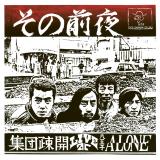
First time reissue of JP free jazz rarity, pre-Seikatsu Kōjyō Iinkai group.
The single album self-released by the quartet Shūdan Sokai in 1977 is one of the most vital documents of mid-seventies Japanese free jazz, documenting Tokyo’s free scene at the precise moment when it began to shift to a handful of tiny venues on the western fringes of the city. In Free Jazz in Japan, Teruto Soejima identifies the extant venue Aketa no Mise in Nishi-Ogikubo as the pioneer of this decamping from the centre: a cramped basement beneath a rice shop, seating just 20 people. Musician-run, operated on a shoestring, these spaces offered a vital site for community, creativity, and a small measure of financial independence — “even though it was in a basement, in spirit it was a loft.”
Among the most active of the new venues was Alone in Hachiōji, nearly an hour from Shinjuku, in a district shaped by universities, lower rents, and a thriving counterculture. Originally opened in 1973 as a jazu kissa, Alone was unusually spacious and equipped with a stage, grand piano, and drum kit. Around 1974, Junji Mori and Yasuhiro Sakakibara began working there, booking free jazz players on weekends and establishing the venue as a crucial hub. Mori recalls early appearances by figures including Kazutoki Umezu, Toshinori Kondo, and others who would define the scene.
In early 1976, Umezu and pianist Yoriyuki Harada — recently returned from New York’s loft jazz environment, where they had played with musicians such as David Murray and William Parker — formed Shūdan Sokai with Mori and drummer Takashi Kikuchi. The name, meaning “mass evacuation,” pointed to their self-chosen exile in Hachiōji. With Alone as their home base, the quartet developed a music characterized by an infectious sense of enjoyment and a willingness to integrate free jazz with elements of song structure. Harada switched between piano and bass; the group experimented with rap-like vocal pieces, jabbering nursery rhymes over bass rhythms.
They returned to Alone on December 24 to record Sono zen’ya (Eve), releasing it on their own Des Chonboo Records, partially funded by advertisements from local businesses printed on the rear cover. The closing “Ballad for Seshiru,” dedicated to Harada’s newborn son, unfolds over a delicate piano melody that moves into emphatic chords as intertwining alto lines rise and spiral.
Alone closed in September 1977, and Shūdan Sokai soon dissolved, later morphing into the expanded Seikatsu Kōjyō Iinkai Orchestra. What remains is a recording rooted in a specific place and moment: a fiercely independent scene sustained by small rooms, close listening, and collective commitment.
- B7: 14 Your Love (Feat. Jonah Hitchens)
- A1: Keeping Me Strong
- A2: Need You Back
- A3: Where's Your Soul At?
- A4: Walls Start Rockin
- A5: Make It Shine (Feat. Greg Blackman)
- A6: Love Saves The Day
- A7: You Sexy Thing (Skit)
- B1: Can I Dance With You?
- B2: Heart & Soul
- B3: Plain To See
- B4: Idolising People Like Madlib
- B5: It's Not Happening (Skit)
- B6: Everybody
pink vinyl[28,53 €]
Here to dazzle you by the power of the disco ball, Lack of Afro is your friendly neighbourhood ‘Love Dealer’. Two years on from the funk & soul rebirth of ‘Square One’, powered by the ubiquitous ‘Loving Arms’ featuring Greg Blackman, Lack of Afro aka Adam Gibbons is now close to two decades deep in the game with soundtrack credits galore and online streams doing calculator-busting numbers. With extensive touring taking ‘Love Dealer’ up and down the country this Autumn, Gibbons’ ninth studio album is all for "the thrill of seeing people on a dancefloor, all collectively locked into a track that you've produced - there’s nothing like it!”.
‘Love Dealer’ is the authentic modern disco experience, packing a stacked sole’s worth of club beats full of stardusted sing-alongs, style-outs and French touch-style cool. Despite being “written during one of the longest winters in living memory”, ‘Love Dealer’, featuring some co-production from fellow South Coast dancefloor scholar Flevans (and influenced by producer du jour Barry Can’t Swim), exudes warmth and will make you sweat when its highs take effect.
Entering the scene with the radiance of ‘Make It Shine’ featuring Greg Blackman, washing over the airwaves of BBC 6 Music and Radio 2 and taking up a 10-week residency on the Jazz FM playlist, Gibbons and his crack line-up of discotheque players are your go-to team when you can’t wait for the weekend to begin, as subtle as they are straight down to business. ‘Love Dealer’ offers you nothing but the best in sparkling string symphonies, the hippest guitar licks, samples of those invited beyond the velvet rope and struts soaked in night fever.
Double A-side ‘Walls Start Rockin’ and ‘Heart & Soul’ guide the album’s glamour-and-groove, while ‘Love Saves The Day’ and ‘Plain to See’ dramatically take to the podium in a shimmer of pure peak 70s theatre. ‘Keeping Me Strong’ is the synergy of disco chic and the sound of a global advertising tie-in with Dyson, ahead of Gibbons taking a slightly Moroder/Cerrone-ish detour on ‘Idolising People Like Madlib’. “'Love Dealer' is aimed unequivocally at the dancefloor" says Adam. "As an artist, I wanted to push myself in a slightly new direction - more into the land of disco and a four to the floor sound. 'Love Dealer' is quintessentially an upbeat record, full of joy, optimism and hope for the future”. Seek your inner ‘Love Dealer’, kink your ‘fro and let your funk flag fly.
n B7. 14 Your Love (feat. Jonah Hitchens) BONUS TRACK
[n] B7. 14 Your Love (feat. Jonah Hitchens) [BONUS TRACK]
[BONUS TRACK]
- B7: 14 Your Love (Feat. Jonah Hitchens)
- A1: Keeping Me Strong
- A2: Need You Back
- A3: Where's Your Soul At?
- A4: Walls Start Rockin
- A5: Make It Shine (Feat. Greg Blackman)
- A6: Love Saves The Day
- A7: You Sexy Thing (Skit)
- B1: Can I Dance With You?
- B2: Heart & Soul
- B3: Plain To See
- B4: Idolising People Like Madlib
- B5: It's Not Happening (Skit)
- B6: Everybody
black vinyl[26,68 €]
Here to dazzle you by the power of the disco ball, Lack of Afro is your friendly neighbourhood ‘Love Dealer’. Two years on from the funk & soul rebirth of ‘Square One’, powered by the ubiquitous ‘Loving Arms’ featuring Greg Blackman, Lack of Afro aka Adam Gibbons is now close to two decades deep in the game with soundtrack credits galore and online streams doing calculator-busting numbers. With extensive touring taking ‘Love Dealer’ up and down the country this Autumn, Gibbons’ ninth studio album is all for "the thrill of seeing people on a dancefloor, all collectively locked into a track that you've produced - there’s nothing like it!”.
‘Love Dealer’ is the authentic modern disco experience, packing a stacked sole’s worth of club beats full of stardusted sing-alongs, style-outs and French touch-style cool. Despite being “written during one of the longest winters in living memory”, ‘Love Dealer’, featuring some co-production from fellow South Coast dancefloor scholar Flevans (and influenced by producer du jour Barry Can’t Swim), exudes warmth and will make you sweat when its highs take effect.
Entering the scene with the radiance of ‘Make It Shine’ featuring Greg Blackman, washing over the airwaves of BBC 6 Music and Radio 2 and taking up a 10-week residency on the Jazz FM playlist, Gibbons and his crack line-up of discotheque players are your go-to team when you can’t wait for the weekend to begin, as subtle as they are straight down to business. ‘Love Dealer’ offers you nothing but the best in sparkling string symphonies, the hippest guitar licks, samples of those invited beyond the velvet rope and struts soaked in night fever.
Double A-side ‘Walls Start Rockin’ and ‘Heart & Soul’ guide the album’s glamour-and-groove, while ‘Love Saves The Day’ and ‘Plain to See’ dramatically take to the podium in a shimmer of pure peak 70s theatre. ‘Keeping Me Strong’ is the synergy of disco chic and the sound of a global advertising tie-in with Dyson, ahead of Gibbons taking a slightly Moroder/Cerrone-ish detour on ‘Idolising People Like Madlib’. “'Love Dealer' is aimed unequivocally at the dancefloor" says Adam. "As an artist, I wanted to push myself in a slightly new direction - more into the land of disco and a four to the floor sound. 'Love Dealer' is quintessentially an upbeat record, full of joy, optimism and hope for the future”. Seek your inner ‘Love Dealer’, kink your ‘fro and let your funk flag fly.
n B7. 14 Your Love (feat. Jonah Hitchens) BONUS TRACK
n B7. 14 Your Love (feat. Jonah Hitchens) [BONUS TRACK]
[n] B7. 14 Your Love (feat. Jonah Hitchens) [BONUS TRACK]
[n] B7. 14 Your Love (feat. Jonah Hitchens) [BONUS TRACK]
[n] B7. 14 Your Love (feat. Jonah Hitchens) [BONUS TRACK]
- A1: On Dead Waves - Blue Inside - Beg, Steal Or Borrow Remix
- A2: Groove Armada – Time & Space - Lucca's Pitch Down Stella Remix
- A3: Weekend Players – 21St Century – Stella Polaris Remix
- B1: The Sei – Let It All Go – Stella Polaris Remix
- B2: R Missing - Heavens Lower - Tom And His Computer Remix
- B3: Tina Dickow – Moon To Let - Sekuoia's Stella Polaris Remix
- C1: Tom Adams - Seven Birds - Bsb's Stella Polaris Remix
- C2: Mads Björn Feat Rick Astley – I Have Nothing To Say - Cemetary's Stella Polaris Remix
- C3: Grand National – Talk Amongst Yourselves - Leo Ryan's Stella Polaris Remix
- D1: Funkatarium - Jump - Black Hawks Of Panamá And Massey Chill Out Version
- D2: Beg, Steal Or Borrow – Do Androids Dream Of Modular Synths
- D3: Glitch Garden - Sprout
Stella Polaris is all about quality Scandinavian electronica, chill out, down tempo, leftfield indie music. This 18th edition of the Copenhagen chill-out festival brand comes with a double gate folded colored limited edition (300 copies) vinyl with a focus on inspiring female talent
It was winter. Six Parts Seven had returned to Ohio after touring out to Washington State, to record Casually Smashed to Pieces. There was down time between the recording and the actual release of that album in January 2007, and we were rehearsing, playing local shows, and collaborating, with most of us involved in other projects to keep the momentum going (Mike w/ Talons, Al w/ Beaten Awake), but the one we all came together over was recording an album with Joey Beltram, the songwriter behind Goodmorning Valentine, a local band we shared players with, a band we deeply admired. The music on Kissing Distance came together over two weekend days. There were a lot of people around; 6P7 and GMV players coming and going from the Saint Ledger House. There were handles of whiskey, there was weed, stacks of Marlboro Reds for the ones still dragging butts. We all went 'dancing' at Thursday's, in Akron, Ohio, on Saturday night. Not sure how we were productive the following day. Chalk that one up to relative youth. Over those two days, songs were cut without any prior rehearsal time. None of us remember how the idea came up. In hindsight, it seems inevitable. The first song on the album, "Mediation in D," had been written a couple of years before, and was the decided spark that set the fire blazing: for both bands, this song was the starting point, an invitation to take things further, to expand, combining players from both bands, our 'toolbox' had increased in size from a single hammer to a toolbox. Everything came easily at this point. "Drunk from the Bottle," is the first of the one-take/one mic songs: an SM58 used for both vocal and guitar, making it impossible to over-think anything: You got the version, or you did not, that simple. "Instrumental #2," is the last full/core band recording by Six Parts Seven. The first piece in our catalog written/arranged by Tim Gerak. This song would have been developed on our follow-up to Casually Smashed to Pieces. Alas, an album never came to be. The ache in this is real. It's there in the bass guitar, tuned high and open, played with a slide, and utilizing one of Jamie Stillman's pre- Earthquaker Devices fuzz pedals. "Lonely Daughter," is another one-take/one-mic song, notable for the lead-guitar, played by James Matthew Haas, who overdubbed his part, months later, standing alone on the deck at Joey's folks place, playing to the moonlight, making magic...
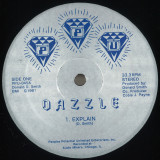
Dazzle rolled deep. Very deep. In the 1980s, it wasn't unusual for the Milwaukee-based group to show up at various Midwest night clubs in a caravan of 30-40 cars and vans. Their live following was hard won over a career that spanned 20+ years, many line up changes, and a handful of project names. Friends, family, and fans made the journey with them weekend after weekend, a testimony to both the musical prowess of the group and the tight-knit community that they emerged from.
Donald Smith, band leader, was there the whole time - joined by many of his siblings and friends - first as founder of the Ghetto Players, a early 70's nine-piece which also included siblings Michael, Ronald, and Charles. They played hard funk in the style of early Kool and the Gang, and although they sadly left no recordings, the strength of their live act managed to catch the eye of local Milwaukee R&B music entrepreneur Cobie Joe Payne. Cobie had made a couple of records locally in the early/mid 70s as a singer, including the impossibly weird and amazing rare afro-blues-funk 45 "Sweet Thing", but had never enjoyed national success. When the Ghetto Players disbanded in the early-mid 70s, Donald soon put together a new group, C on the Funk (the 'C' referring to lead vocalist and sibling Charles), under Payne's tutelage. Sister Lorrie Smith came in as the drummer, the line-up being fleshed out by brothers David and Melvin Johnson, and friend Robert Mitchell. After a few years as a strictly live attraction, they drove to Chicago and produced a single, "In the Disco" / "A Place" for Payne's small record label Sweet Thang Records in 1980. Lacking the financial backing needed to supply the local R&B disk jockey's "promotional fees" , this single sadly languished in obscurity, gathering dust inside the local tavern jukeboxes and manilla promo envelopes that comprised Payne's DIY distribution network.
C on the Funk were traveling the Mid West extensively at this point, and making some important friends on the road. Ike Wiley Jr. of the Dazz Band/Kinsman Dazz took particular interest and the band was re-christened Dazzle, partially as a tie-in with Dazz, partially to embrace the new sounds that would distinguish the 70s disco scene from what record collectors and DJs would now refer to as the "Boogie" era. There no doubt was a stigma attached to the word "Disco" as the eighties began, and as we see in this collection C On the Funk's "In the Disco" is remixed and transformed into the psychedelic synth instrumental of Dazzle's "Disco's Out", a title which embodies both the next-step approach Smith and company were pushing for, and humorously comments on the state of black dance music in the early 1980s. The Dazzle recording, done in Chicago in 1982, updated the sound and featured an expanded line up, most notably a second synth player (Charles Washington), and a percussionist/second lead vocalist (Greg McDonald). The added synth textures and deep percussive grooves give the Dazzle recordings an elegant late night vibe that resonate just as well in a good pair of headphones as they do on the dance floor. The trance inducing cough syrup-warble of "Explain" may best exemplify this here. Sadly, a pressing flaw in the 12" halted production and promotion, and the EP and the songs within were lost to the ages. The group, having done a much better line in the live music business, followed that path instead all the way to the early 90s. --bio provided by andy noble
i am fortunate to play with amazing musicians - always have had my ear to the 6 winds to assess players and their strengths and the music we would make...
electric or acoustic, 2 or 5 people, country, folk, blues, string players, grass,
rocking, quiet or loud - WHATEVER the category does not matter (as it is just a category) - there has always been a group of great musicians near to help me get there - and yes, i am lucky
on this recording MATT FLINNER (mando and banjo), SHAD COBB (fiddle)
and BRYN DAVIES (double bass) & ALL folks on vocals and me on dobro/piano/banjo and guitar -mostly ben bullington's 1933 D18- we had been playing anytime a festival wanted a fiddle/banjo/mando/double bass/acoustic guitar instrumentation sound from me- in one way, it can easily be called "bluegrass" -( not a big stretch )- i kinda think "string band " is as good or a better name (certainly less used)... so enter this DARRELL SCOTT STRING BAND
(a rose by any other name)
HERE'S HOW THIS RECORD CAME ABOUT- we had 2 consecutive weekend gigs (arkansas and colorado) and rather than sending us... more
The apartheid boycott In the 80s, the world – rightly - stepped up its boycott against South Africa’s apartheid government. But this had unexpected and sometimes adverse consequences for South Africa’s music professionals and consumers. Musicians still needed to work live shows both at home and abroad, and to make and sell records. The youth still aspired to clubbing and partying at the weekend after hard, poorly paid jobs under the thumb of an oppressive government. Music was their sanctuary: specifically, African- American inspired soul, jazz, boogie, disco and funk. Unique diversity Producing musical excellence was nothing new for South Africa, even in the 80s: both traditional and jazz music of various genres had been performed, showcased and recorded for decades with the assistance of some of the most skilled and ingenious sound-engineers and producers in the world, the jazz players rivalling their American peers in many cases. But what makes Mzansi 80s popular music unique is that it had to – and for the most part, did- appeal to a multi-ethnic, multilingual population almost like no other in the world, for its geographical size. There may have been many tribal and political differences between Zulu, Sotho, Xhosa, Tsonga and others day-to-day, but when it came to the weekend, those differences often melted away for a while on the dancefloor. Paul Ndlovu had kwaZulu fans as well as Shangaan followers; Black Moses and the Soul Brothers had followers and fans with everyone..and so on. And everyone- detractors and lovers alike- were content to settle on the monicker ‘Bubblegum’ as a general description. Mzansi took disco- and slowed it down a bit.. ..exactly as 90s and early 2000s South African DJs and mixers took House- and slowed it down a bit to develop Kwaito, Gqom and – later – Amapiano. The Roland TR-707 sampler came along in 1985- at just the right time for the flowering of Mzansi disco and boogie. And in the artful hands of arrangers, engineers and producers such as Peter “Hitman’ Moticoe, whose work figures on several of the tracks here, it became something unique to South Africa. 'Yebo! Rare Mzansi Party Beats from Apartheid's Dying Years' compiled by John Armstrong is out BBE Music on x3 vinyl set in a gatefold sleeve, CD, and across digital platforms for download and streaming.
Some of the greatest jazz musicians of all time have passed through Art Blakey's Jazz Messengers: Horace Silver, Hank Mobley, Kenny Dorham, Wayne Shorter and Donald Byrd, among many others. However brief their stay, working with the demanding and full-throttle drummer not only increased their visibility, but also their chops and interpretive capacity. Blakey's ability to drum up the best players in the game may have even eclipsed his superhuman ability to play drums.
Altoist Jackie McLean, trumpeter Bill Hardman, bassist Spanky deBrest, and pianist Sam Dockery deliver whole-bop goodness on five propulsive, fiery tracks. True to its title, this LP bops hard, with a ferocious swing, boundless energy and telepathic communication between players - especially Blakey and Hardman. Considering the rhythmic demands of Blakey's locomotive playing style, this was an incredible achievement.
Impex Records has cut this gorgeous 180-gram LP with the original analogue mono master tapes and without computer processing of any kind. You hear all the vivacious interplay that occurred on that weekend in 1957 when Blakey and crew forged a bold new vision of muscular, funky jazz. This is music that still resonates over 50 years later. Not to be missed!
Black Vinyl[25,00 €]
Morgan Geist and Kelley Polar present their debut album as Au Suisse which features contributions from Dan Snaith (a.k.a. Caribou / Daphni). A streamlined mixture of funk, synthpop and disco for fans of Hot Chip.
Born from the collective mind of producer Morgan Geist (Storm Queen, Metro Area) and songwriter/multi-instrumentalist Kelley Polar, AU SUISSE is a new project that promises to stake a milestone in both its members' already storied careers. Crafting immersive soundscapes using a patchwork of electro, synthpop, funk and disco, AU SUISSE's self-titled debut album evokes both a post-rave comedown on a tropical beach and a weekend alone icy chalet, ruminating on life and love. Guest players include friends and labelmates Dan Snaith (Caribou) and Jeremy Greenspan (Junior Boys).
Having met in college in the early '90s and continued to forge a close friendship throughout the years, AU SUISSE is the first time Geist and Polar have set out to gel their creative relationship into its own musical project. But this is no bashed-together collection of random tunes — this is a band, through and through, and Geist and Polar's shared expertise give the album its own indelible identity.
White Vinyl[25,63 €]
Ltd weiße 140G Vinyl mit bedruckter Innenhülle und Artwork/Design von Trevor JacksonMorgan Geist and Kelley Polar present their debut album as Au Suisse which features contributions from Dan Snaith (a.k.a. Caribou / Daphni). A streamlined mixture of funk, synthpop and disco for fans of Hot Chip.
Born from the collective mind of producer Morgan Geist (Storm Queen, Metro Area) and songwriter/multi-instrumentalist Kelley Polar, AU SUISSE is a new project that promises to stake a milestone in both its members' already storied careers. Crafting immersive soundscapes using a patchwork of electro, synthpop, funk and disco, AU SUISSE's self-titled debut album evokes both a post-rave comedown on a tropical beach and a weekend alone icy chalet, ruminating on life and love. Guest players include friends and labelmates Dan Snaith (Caribou) and Jeremy Greenspan (Junior Boys).
Having met in college in the early '90s and continued to forge a close friendship throughout the years, AU SUISSE is the first time Geist and Polar have set out to gel their creative relationship into its own musical project. But this is no bashed-together collection of random tunes — this is a band, through and through, and Geist and Polar's shared expertise give the album its own indelible identity.
On the tribute album Songs for Tres, Psychic Ills band members come together to commemorate the late Tres Warren who passed away just as the world turned upside down in March of 2020. Isolated, feeling helpless and lost by the death of her musical soul mate and collaborator of 18 years, bassist Elizabeth Hart found making music to be her only outlet in a time where people were unable to be physically together to mourn. So, she reached out to Adam Amram, Jon Catfish DeLorme and Brent Cordero, the main players in the Ills line up since the release of their last full length album Inner Journey Out (2016), to ask if they would embark on this cathartic journey with her. This was a different kind of production endeavor for Hart driven solely by “the aching need and urgency” to do something to honor her friend.
Hart, Amram, DeLorme and Cordero reunited for the first time five months after losing Warren at Amram’s loft – the same spot where they’d rehearsed countless times before – although this time with a different objective. In an effort to share, support and create, the old friends joined in the painful and healing experience of making this tribute album to cope with their loss. The band members wrote, arranged, and rehearsed for months and the result of their work culminated in a weekend of recording in the southern Catskill mountains at the end of 2020. This isolated and intimate environment was a perfectly serene and fitting location to finalize their story.
Throughout the album, Hart, Amram and DeLorme take turns as the vocal lead on each of the songs while Cordero showcases his finger-picking guitar skills in addition to his piano and organ playing, which he is known for. Along with the core band members, a number of other musicians played on the album, many of whom had collaborated on prior Psychic Ills releases and wanted to be a part of this last collaboration in memory of Warren. Keeping the project in the Ills family, Hart produced the album alongside Iván Diaz Mathé, the long-time Psychic Ills sound engineer.
The album consists of five original tracks and four cover songs. Initially, learning the covers was just a method for the musicians to “break the ice” and play together again for the first time without their band leader. However, those tracks became just as important to include as the originals because of their essential role in the process of coming together to make the album. The cover songs were chosen because of their unique connections to the band’s memories of Warren. Dennis Wilson’s "Rainbows" and Fleetwood Mac’s "Station Man" come from two of Warren’s favorite albums, Pacific Ocean Blue and Kiln House. The band also recorded Blaze Foley’s "Clay Pigeons" and Powell St. John’s "Right Track Now." The idea for the latter was suggested by Amram. Warren once sent him a clip of Roky Erikson singing a moving rendition of that song in the film Demon Angel and it had stuck with him ever since.
Hart wrote "I’ll Walk With You" on the day of Warrens’ passing, at the time not knowing what it meant. When she got the call with the heartbreaking news, it became clear to her what the song was about. Relying on a gently lilting string arrangement to set the tone, this duet features Mazzy Star vocalist Hope Sandoval alongside Hart. Sandoval previously collaborated with Psychic Ills accompanying Warren on "I Don’t Mind" (2016). The ideas for "Home" and "Walk Around," two other songs on the album by Hart, started simply with an acoustic guitar and lyrics, a hopeful exercise to connect with her lost friend. Brent Cordero’s instrumental "Whole Lotta Piece of Mind" is nothing short of a transcendental experience. By running his pedal steel through a Leslie speaker, Jon Catfish DeLorme crafts the unique tone showcased on Wonderful Feeling, a moving example of studio experimentation combined with old school techniques. DeLorme describes it as “an attempt to highlight the musical experience I shared with Tres both sonically and thematically. What resulted is the unguarded exaltation I feel lucky to have shared with my fellow bandmates.” Adam Amram’s “Into the Sea” was composed spontaneously the week Warren passed. The melodic tune has a hopeful lightness and Amram describes it simply as “a song to my brother”. Their connection shines through.
In fact, the entire album is one that radiates the layers of friendship, love and music that will forever exist between this family of musicians. As the band themselves state: “This album was made out of love and a commitment to honor our dear friend and bandmate.” A portion of the proceeds from the album will be donated to RAICES, a charity who aids children who have been displaced at the Texas/Mexico border.
- A1: Intro
- A2: Real Name, No Gimmicks
- A3: City Of Grind
- A4: Goerlitzer (Interlude)
- A5: Goerlitzer (Skit)
- B1: Infiltrate
- B2: What's Yours
- B3: Boogie Angst
- C1: The Substance Break (Skit)
- C2: Dangerous Ego
- C3: Introspective (Interlude)
- C4: Disappearing
- C5: Club Situation (Skit)
- D1: Street Dreams (Feat Florian Rietze)
- D2: Let's Hide
- D3: Nice Place, Bad Intentions
- D4: Outro
“Einsteigen Bitte!”
After more than six years of collaboration between label and artist, Feines Tier and Luca Musto bring to you the highly anticipated first full length LP “Nice Place, Bad Intentions”.
Musto’s first LP “Nice Place Bad Intentions” departs from the conventional 4/4 time signature. Instead, the album’s structure and the tracks themselves are reminiscent of a 1990s/2000s Hip Hop long play release. This becomes evident in the fact that the LP not only features 17 tracks, including skits and interludes, but also that they make up the framework of a conceptual album. Here, listeners will be encouraged to follow the track list and listen to “Nice Place, Bad Intentions” in one go.
“Nice Place, Bad Intentions” was produced over a period of 1,5 years. Besides the majority being original samples and vocals from Luca Musto, the LP also features a number of studio musicians, including bass players, trumpeters and guitarists. Cologne-based guitarist Simon Bahr can be found on several tracks, including the three singles “Infiltrate”, “Boogie Angst” and “Real Name, No Gimmicks”. Moreover, the skits and interludes are spoken by professional voice actors from the US and Canada.
The Berlin-themed album follows the characters Mick and Richie, who are all about partying and come to the city for one weekend in hopes to have the time of their lives. When the characters’ expectations meet reality, their naiveté (or bad intentions) lead them to getting screwed, robbed and even arrested. These stories about their journey through Germany’s capital are found in the interludes and skits. Listeners can follow them passing infamous places and metro stations in the city based on sampled BVG announcements, which gives the album a radio play vibe.
Sound-wise, Luca Musto’s unique sounds include scratched hooks that meet original lyrics and melodies, resulting in distinctive genre-bending tunes. As Mick and Richie stumble through some of Berlin’s most in-famous places, their expectations repeatedly clash with the reality of the capital’s nightlife. Similarly the liste-ners’ expectations are twisted and turned. Yet, the soundtrack underlining the characters’ journey never disappoints and brings its listeners on a rhythmic trip of old and new sounds. From rapping on downtempo as in “City of Grind” to merging the classic structure of electronic music with funky guitar licks and unconventional chord transitions as in “Infiltrate”, the LP feels at once like a daring experiment and like the beginning of a developing new genre.
Cool Ghouls - a band fledged in San Francisco on house shows, minimum wage jobs, BBQ's in Golden Gate Park and the romance of a city’s psychedelic history turns 10 this year. What better a decennial celebration than the release of their fourth album, At George's Zoo!
How did San Francisco's fab four arrive at George's Zoo? The teenage friendship of complimentary spirits Pat McDonald (Guitar/Vox) and Pat Thomas (Bass/Vox) serves as square one. The Patricks were munching on Eggo-waffle-sandwiches and downing warm vokda in suburban Benicia (San Francisco bay) years before McDonald would hear George Clinton address his fans as "Cool Ghouls". The boys played their debut gig as Cool Ghouls at San Francisco's legendary The Stud in 2011, but there's no doubt the musical moment cementing the band's trajectory was much earlier at the 18th birthday party for boy-wonder Ryan Wong (Guitar/Vox) - at the Wong household.
You might remember the Ghouls' earliest days... McDonald’s hair hung luxuriously past his waist, Thomas dreamt of no longer having to crash on friends' couches to call SF home and Wong looked forward to turning 21. Cool Ghouls' Pete Best, Cody Voorhees, thrashed wildly – but briefly - on the drums and Alex Fleshman (Drums), who still claims he's not really "a drummer", turned out to be a really good drummer. Thomas would sleep pee on tour. Those were golden days!
Flash forward to today and everything is up in flames. No shows, parties or bars. Cool people are streaming out of SF. It's been 2 years since the last time Cool Ghouls have even played. The STUD is gone, The Eagle Tavern is for sale and The Hemlock has been demolished for condos. Your boss is an app. Fascism is no-knocking down the door. There's a pandemic.
Fortunately for us, the Ghouls got an album in before it all went to shit, and they made it count. At George's Zoo includes 15 of the 27 tunes they managed to eke out while simultaneously working through major life moves. It was a 5-month, all out, final sprint down the homestretch (to Ryan's moving day) with affable engineer Robby Joseph, at his makeshift garage studio in the Outer Sunset (pictured on the cover). Instead of recording the entire album over a few consecutive days - like they'd done with Tim Cohen, Sonny Smith and Kelley Stoltz for the first three LPs - the band took it slow by working through a few songs each weekend after rehearsing them the week before. Robby would cue up the tape, McDonald would throw some steaks on the grill and they'd get to work - much to the neighbor, George's, chagrin.
These guys have a real commitment to elevating as songwriters, musicians and ensemble players. It's always been for the music with Cool Ghouls and this long-awaited self-produced outing is a track by track display of the ground they've covered and heights they can achieve. Their vocals and trademark harmonies are front and center and out-of-control-good. Ryan's guitar solos are incredible. The horns by Danny Brown (sax) and Andrew Stephens (trumpet) hit in all the right places. Maestro, Henry Baker (Pat Thomas Band / Tino Drima), plays keys throughout. There's even a mesmerizing string section ("Land Song") by sonic polyglot, Dylan Edrich.
None of this growth is to the detriment of the fun, natural, feeling that fans have come to expect from the band. This is a fully realized Cool Ghouls album. It paints a remarkable portrait of SF's homegrown heroes and the many corners they've explored over the last decade. The songwriting, harmony and playing are nothing if not solid. The lyrics are keen. Robby's recording and mixing sound great start to finish and even better after mastering by Mikey Young. It's a triumphant addition to their catalogue. Recommended for Stooges and Beach Boys fans alike. Listen and see!
Yes, many things have changed since 2011. Who knows what the 20's will have in store for life on Earth, let alone the Cool Ghouls? We at least know that 2021 has At George's Zoo for us, a beautiful keepsake from the Before Times when we used to stand in living rooms together while bands played.
An exploratory record that dances across time and genre, guided by fidgety miniatures and jazz inflected collage. Throughout, the band pool together their instrumental chops, moving from fluid and serpentine R&B to meditative, minimalistic piano, evoking a contrast of virtuosity and self-surrender.
While constructed from the inspiration of soul, funk and film music, BÉE mediate those influences having first digested them through the productions of Madlib & the RZA.
A sticker on the sleeve tells us Self Help “combines jazz-funk and mysticism,” a signpost to where its musical and spiritual concerns align. The jazz-funk component translates to arresting hooks in sideways song forms: echoes of Gainsbourg spooled through Azymuth-style Brazilian jazz and punctuated by the whip and snap of Steely Dan. “The Sound Where My Head Was,” the instrumental centrepiece, exemplifies present-wave jazz but also ancient sounds, giving off the mothballed air of a Hiroshi Yoshimura record in a library-music archive.
Self Help’s mysticism emerges in broad and specific ways, denoting not only a search beyond cliché and intellect but also an inquiry into the beat, the spirit, the one will. This isn’t new territory for them: Turnbull—the artist formerly known as Slim Twig, who writes and performs with U.S. Girls and various other Toronto concerns—named the group’s Nature, Man & Woman EP after the Alan Watts book. Building these songs from his drafts over three weekends at Toronto’s Palace Sound studio, the ensemble was free to tap out of the city and into some other place, taking up residence in a collective mind maze. The album produces, in equal measure, familiar surprises and the surprisingly familiar. Intoxicated jazz riffs swerve left at phantom intersections. Rhythms cut loose and tie you in knots. But wired in to each song is a sense of gentle accumulation, making every featherlight flourish weigh a ton. U.S. Girls’ Meg Remy brings serenity to “Sing a Silent Gospel,” and wears its antic melodies lightly. The soul shimmer of “Unity (It’s Up to You)” lets the players pool their R&B chops into something fluid and serpentine while, on guest vocals, the musical performance artist James Baley issues urgent declaratives: “Water must pool, as a rule, before tasted/Or else the water is wasted.” The words throughout the record complement the ensemble music while riffing on the precarious nature of unity itself. Then, closer “Extinct Commune” finds Turnbull deserted at the piano, playing phrases of meditative minimalism taking after the composer Joanna Brouk.
For all the record’s reach, it is these contrasting quiet moments that bring Self Help’s communal spirit into focus. A note on personnel: Badge Époque Ensemble now has a seventh member in Karen Ng, the saxophonist and sometime collaborator of Do Make Say Think, Feist, and others. In BÉE, Ng joins Chris Bezant and Giosuè Rosati, her bandmates in the Andy Shauf live band, as well as U.S. Girls co-conspirators Turnbull and Ed Squires, and other Torontonian cross-pollinators listed below. Guest vocalists across Self Help include Meg Remy, who sings with Dorothea Paas on the opener, James Baley, and Toronto singer-songwriter Jennifer Castle on the remarkable “Just Space for Light.” Words by: Jazz Monroe
- A1: Noel Kelehan Quintet - Spon Song
- A2: John Wadham - Floatin
- A3: Louis Stewart - Araby
- B1: Joe O'donnell - Caravan
- B2: Taste - On The Boards
- B3: Granny's Intentions - Nutmeg, Bitter-Sweet
- B4: Mellow Candle - Lonely Man
- C1: Sonny Condell - Red Sail
- C2: Supply, Demand & Curve - When You're By Yourself
- C3: Rosemarie Taylor - Mister Sleep
- C4: Apartment - Weekend
- D1: The Plattermen - Africah Wah Wah
- D2: Jonathan Kelly's Outside - Misery
- D3: Dr. Strangely Strange - Mary Malone Of Moscow
- D4: Stacc - Holy Smoke
- D5: Zebra - Silent Partners
'Buntús Rince' translates from Irish as 'basic rhythms', and this new compilation explores how Irish musicians were influenced by strands of different genres of music from around the world, merging them to create their own unique sounds. The compilation features some of the most innovative and talented figures in the history of Irish music and includes rare Irish jazz, fusion and folk outliers from the 1970s and early 1980s from musicians relatively unknown outside of Ireland.
Often regarded as a musical backwater, the 1970s finally saw Ireland begin to make its mark on international music. The nature of this feat is all the more commendable, considering how isolated and conservative the country still was in the middle of the last century. The emergence of acts like Skid Row, Thin Lizzy and Van Morrison instilled in budding young Irish musicians the belief to dream big.
Unlike many other European countries, Ireland had not benefited from the cultural impact of immigration. Pioneering Irish musicians did not have access to the type of vibrant music scenes ubiquitous to most European cities at that time. With no talented players or even in some cases recordings of the music, they had to cultivate and invent their own small scenes.
A jazz scene had begun to blossom in Dublin in the late 1950s. Self-taught players like Noel Kelehan and Louis Stewart emerged as the Irish standard-bearers. Their level of musicianship saw them play with some of the world's most renowned artists. The 1960s would see the emergence of the 'beat' scene in Ireland, with groups like Granny's Intentions, Taste and Eire Apparent finally challenging the hegemony of Irish Showbands. Change was in the air.
The late 1960s also saw many Irish emigrants returning home, bringing with them inspiration from the new styles and sounds of London and further afield. The arrival in the late 1960s of pirate radio stations like Radio Caroline, new music magazines and the availability of music on vinyl meant that different genres were now becoming more accessible. The musical landscape of the country began to transform and evolve, influencing a new generation of musicians in the process.
The 1970s saw advancements in studio technology. 8-track studios began appearing in Dublin, offering more opportunities for groups to record singles and albums. Synthesizers and other instruments were also becoming easier to acquire as the younger generation turned to electric jazz and fusion music.
While the level of musicianship was high, the levels of opportunities in Ireland were still very limited. Many groups and solo musicians had to emigrate to try and succeed.
Thankfully for those who remained, this new emerging scene didn't go totally unnoticed and local labels began to take a chance on more obscure Irish groups. Labels like Mulligan and also producers like John D'Ardis and Terri Hooley championed and documented music from the Irish underground of the 1970s.
Their valuable work is a common thread which connects many of the tracks on this compilation. From the soaring flute playing of Brian Dunning, to the swinging piano of Noel Kelehan and the sonic force of Jolyon Jackson's synthesizers; 'Buntús Rince' lifts the lid on a vastly underappreciated period of Irish music history.
One for the collectors.
Artist and musician Alex Puddu, whom many already know for his "Danish Pornography" series and solo records, has written and produced the second album for his soulful band The Moonfires. A second coming that showcases strong R&B classic melodies, Afro vibes and tight funky grooves that take the listener up to a level of great bands like New Birth, Ohio Players, Mandrill, and Black Heat. This is Alex Puddu at his groovest!!!
- 1