Search:well being

Styles
All
Nils Frahm - All Melody 2x12"

Nils Frahm

All Melody 2x12"

2x12inchERATP106LP
Erased Tapes
17.02.2023

Repressed!

For the past two years, Nils Frahm has been building a brand new studio in Berlin to make his 7th studio album titled All Melody, which will be released on January 26th, 2018 via Erased Tapes, before Nils embarks on his first world tour since 2015.Since the day Nils first encountered the impressive studio of a family friend, he had envisioned to create one of his own at such a large scale.

Fast forward to the present day and Nils is now the proud host of Saal 3, part of the historical 1950's East German Funkhaus building beside the River Spree. It is here where he has spent most of his time deconstructing and reconstructing the entire space from the cabling and electricity to the woodwork, before moving on to the finer elements, building a pipe organ and creating a mixing desk all from scratch with the help of his friends.

This is somewhere music can be nurtured and not neglected, and where he can somewhat fulfil his pursuit of presenting music to the world as close to his imagination as possible.His previous albums have often been accompanied with a story, such as Felt (2011) where he placed felt upon the hammers of the piano out of courtesy to his neighbours when recording late at night in his old bedroom studio, and the following album Screws (2012) when injuring his thumb forced him to play with only nine fingers.

His new album is born out of the freedom that his new environment provided, allowing Nils to explore without any restrictions and to keep it All about the Melody.Despite being confined within the majestic four walls of the Funkhaus, buried deep in its reverb chambers, or in an old dry well in Mallorca, All Melody is, in fact, proof that music is limitless, timeless, and reflects that of Nils' own capabilities. From a boy's dream to resetting the parameters of music itself.

out of Stock

Order now and we will order the item for you at our supplier.

31,05

Last In: 6 months ago
Various - Boss Reggae

Various

Boss Reggae

12inchCLD-LP005
STUDIO ONE
17.02.2023

Studio One was founded by Clement "Coxsone" Dodd1 in 1954, and the first recordings were cut in 1963 on Brentford Road in Kingston.12 Amongst its earliest records were "Easy Snappin" by Theophilus Beckford, backed by Clue J & His Blues Blasters, and "This Man is Back" by trombonist Don Drummond. Dodd had previously issued music on a series of other labels, including World Disc, and had run Sir Coxsone the Downbeat, one of the largest and most reputable sound systems in the Kingston ghettos.
In the early 1960s, the house band providing backing for the vocalists were the Skatalites[3] (1964–65), whose members (including Roland Alphonso, Don Drummond, Tommy McCook, Jackie Mittoo, Lester Sterling and Lloyd Brevett) were recruited from the Kingston jazz scene by Dodd. The Skatalites split up in 1965 after Drummond was jailed for murder, and Dodd formed new house band the Soul Brothers (1965–66), later named the Soul Vendors (1967) and Sound Dimension (1967-). From 1965 to 1968 they played 9 a.m. to 5 p.m., 5 days a week, 12 rhythms a day (about 60 rhythms a week) with Jackie Mittoo as music director, Brian Atkinson (1965–1968) on bass, Hux Brown on guitar, Harry Haughton (guitar), Joe Isaacs on drums (1966–1968), Denzel Laing on percussion, and on horns (some initially and some throughout): Roland Alphonso, Dennis 'Ska' Campbell, Bobby Ellis, Lester Sterling, among others on horns during the era of Rock Steady. Headley Bennett, Ernest Ranglin, Vin Gordon and Leroy Sibbles were included among a fluid line-up, to record tracks directed by Jackie Mittoo at Studio One from 1966-1968.
During the night hours at Studio One from 1965-1968, singers like Bob Marley, Burning Spear, The Heptones, The Ethiopians, Ken Boothe, Rita Marley, Marcia Griffiths, Judy Mowatt, Alton Ellis, Delroy Wilson, Bunny Wailer[4] and Johnny Nash, among others, would put on headphones to sing lyrics to original tracks recorded by the Soul Brothers earlier each day. These seminal recordings included "Real Rock" (by Sound Dimension), "Heavy Rock", "Jamaica Underground", "Wakie Wakie", "Lemon Tree", "Hot Shot", "I'm Still In Love With You", "Dancing Mood", and "Creation Rebel".
Jackie Mittoo, Joe Isaacs, and Brian Atkinson left Studio One in 1968, recorded drums and bass for Desmond Dekker's and Toots' biggest hits at other Kingston studios, then moved to Canada. Hux Brown stayed in Jamaica to record on the soundtrack The Harder They Come, The Harder They Fall, and toured in Nigeria with Toots and the Maytals and Fela Kuti. The Soul Brothers (a.k.a. Sound Dimension) formed the basis of reggae music in the late 1960s, being versioned and re-versioned time after time over decades by musicians like Shaggy, Sean Paul, Snoop Lion, The Clash, String Cheese Incident, UB40, Sublime, and countless other Billboard originals and remakes trying to emulate their original Rock Steady sound at Coxsone's Studio One.
The label and studio were closed when Dodd relocated to New York City in the 1980s.

pre-order now17.02.2023

expected to be published on 17.02.2023

35,92
The Notwist - Vertigo Days - Live from Alien Research Center

A Notwist concert is a Notwist concert is a Notwist concert. The band around the core trio of Cico Beck and the Acher brothers Markus and Micha usually takes its studio recordings as a mere starting point for their live performances, considering them to be possibilities that need to be explored further. This is especially true for »Vertigo Days - Live from Alien Research Center,« a live record made under unusual circumstances. The band members rearranged songs from their ambitious 2021 album »Vertigo Days« in their studio in Weilheim to record and film a special performance. The songs took on a new life, becoming more psychedelic and intense when rearranged into a spontaneous, Krautrock-esque collage.

»Vertigo Days« was meant to transcend the conventional notion of a band as well as the creative and geographic boundaries inscribed into that concept. And even though life had other plans, this is precisely what the album did when it was released to both commercial success and critical acclaim in early 2021. Contributions by Tenniscoats singer Saya, Angel Bat Dawid, Ben LaMar Gay, Juana Molina, among others, as well as new member Theresa Loibl on bass clarinet, harmonium, and keyboard, expanded the band’s sonic palette, stylistic range, and even lyrical focus through the addition of different instruments, artistic approaches, and languages.

All of that was missing when the band retreated to their studio—dubbed Alien Research Center in response to, and in spite of, a nearby church called Christian Outreach Center—to further explore the possibilities of the source material. The band members considered this a challenge rather than an insurmountable problem and not only accepted, but fully embraced it. Trying to work as little as possible with the computers and samples—Saya’s voice on »Ship« being a notable exception—the band rearranged six tracks from »Vertigo Days« and a piece from the »One of Those Days« film soundtrack in order to allow themselves to improvise more freely, especially thanks to Loibl, who takes on a key role during these 45 minutes.

The intro sets the tone for what’s to come, contrasting loose jazz drumming with curious synthesizer rhythms in an abstract rendition of the first sounds that greeted the listeners on »Vertigo Days«. While the next four tracks—»Into Love / Stars«, »Exit Strategy To Myself«, »Where You Find Me« and »Ship«—follow the chronology of the album, they use the originals as a blank slate for further experimentation. The first track morphs into a feverish long-form jam that draws on the underlying groove to shift the dynamics from and leave behind the song structure of the studio version. It’s an exemplary piece in a recording that sees each individual musician leaving their mark on the overall sound, all while being perfectly attuned to what everyone else is doing around them. This continues up until the record’s triumphant finale, a whirring rendition of »Loose Ends.«

»Vertigo Days - Live from Alien Research Center« is at once a snapshot of a certain moment in the band’s history and the quintessential Notwist live record: a unique performance that both explores the untapped potential of the »Vertigo Days« studio recordings while also serving as an inspiration for upcoming live shows.

As with the studio album, the artwork for »Vertigo Days - Live from Alien Research Center« features photographs by Japanese artist Lieko Shiga, taken in the '00s.

pre-order now10.02.2023

expected to be published on 10.02.2023

25,84
Various - East Africa Highway

No Wahala Sounds are proud to present this latest compilation of rare recordings of the early 1980s from the vaults of Audio Productions Limited, Nairobi, Kenya.

The bands featured are from Kenya (Kangundo 'D' Boys, Kyanganga Boys Band, The Lulus Band and Gem Lucky Jazz); Tanzania (Founders International Band and Orch. Bima Lee) and the Democratic Republic of Congo (Orch Moja One).

These songs were originally released on 7" single on the APL imprints of Nyalando, Sound of Music, Boxer, Mlima and Julus, all overseen by producer Babu Shah.

The early 1980s were the golden age of benga and rumba, and these tracks are being released for the first time outside of Kenya.

Our previous releases have been featured on BBC 6Music and BBC3's Late Junction, as well as being reviewed in Songlines and Mojo.

pre-order now10.02.2023

expected to be published on 10.02.2023

22,65
Storm{O} - Endocannibalismo

Formed in 2007 in the Dolomite Alps region of Italy with a deep admiration for their native country’s hardcore punk luminaries in La Quiete and Raein, as well as eighties and nineties cult heroes in Negazione, Wretched and Indigesti. STORMO’s steady rise from unassuming beginnings has been one of consistently stirring song writing. Having amassed over 400 shows across Europe and the UK - including support slots to Converge, Full of Hell and La Dispute, as well as appearances at Fluff Fest - STORMO’s next chapter sees the band fully come of age. Lyrically, Endocannibalismo was written entirely in the band’s native tongue; partly as a byproduct of the albums nocturnal and instinctive writing process and partly in honour of their history as a band. Recorded and mixed by Giulio Favero (Zu) for mixing before being placed in the hands of Giovanni Versari at La Maesta for mastering, Endocannibalismo’s 11 tracks possess a crystalline clarity to service STORMO’s surging blastbeats, spiralling rhythms and noise punk cacophony, whilst staying true to the each songs deep seated primal nature. Seeking to tie together the whole process visually, STORMO took to artificial intelligence when creating Endocannibalismo’s art. Utilising specific prompts, the AI render was put through stages of mutation before culminating in its final form. A haunting graphic representation of living beings in a state of constant death and rebirth.

pre-order now10.02.2023

expected to be published on 10.02.2023

26,43
Marlene Ribeiro - Toquei No Sol

A travelogue that unites physical and inner space, a series of trance states rendered in vivid colour, a delirious portal into the ether.
Marlene Ribeiro’s first albumunder her own name is all of this and much more. Toquei No Sol is a fresh new chapter for this unique artist, by far the most melodic and transcendent outing yet for her hypnotic dreampop.

This is only the latest release in a long history of sonic experimentation for Marlene, which includes her previous work as Negra Branca across a series of releases on labels such as Tesla Tapes and Zamzam and a long period as a member of audial iconoclasts and Rocket mainstays GNOD, not to mention collaborations with the like of Valentina Magaletti and Thurston Moore.

Toquei No Sol is also a record with a very distinctive and potent sense of place, paradoxically despite having been woven together from recordings made in Ireland, Wales, Portugal, Madeira and Salford.
It’s genesis came via a visit to Marlene’s maternal grandmother Emilia, whose influence as well as the sounds of her kitchen in Portugal.
can be heard on the album’s first track ‘Quatro Palavras’.

“Emilia ended up getting excited about me being able to record things there and then and - total news to me - told me she used to sing a lot when she was younger to the point of getting offered studio time but refusing it as she was fearful of what that could imply in those times” relates Marlene “From that point I planned to include her in this record as sort of the chance she never had of getting her voice out there.”

Elsewhere, a disarmingly catchy and irresistible grace is married to
a utilitarian approach to sound and texture. The ritualistic “Sangue De Lua de Lobo” (first released on a Sofia records compilation Songs Of The Lunar Eclipse) contains random objects from Marlene’s then-garden in Ireland, whereas on the drifting, beatific ‘Forever’ the percussion tracks are constructed from the sounds of pots and pans in her own Salford kitchen.

Yet at all times her fleet-footed approach to melody rings through even as the tracks conjure visions of heat-hazes, meditative spaces and late-night epiphanies. Although listeners may hear echoes of the
loop-driven psychedelia of Panda Bear’s Person Pitch or the incantatory ululations of Pocahaunted in these beguiling soundscapes and magick-strewn mantras, the truth is that the aesthetic here is
very much Marlene’s alone.

“It’s all a big misty haze of nostalgia, playfulness, self-reflection and hopefulness” is what Marlene reckons herself. Yet Toquei No Sol
is also a transporting vision from an artist both returning to her roots
and looking out to new celestial horizons.

pre-order now10.02.2023

expected to be published on 10.02.2023

37,35
John Frusciante - .I: 2x12"

John Frusciante

.I: 2x12"

2x12inchAVE66-15
Avenue 66
03.02.2023

After a year and a half writing and recording rock music, I needed to clear my head. I listened to and made music where things generally happen gradually rather than suddenly. I would set up patches on a Monomachine or Analog Four and listen to them, hearing one sound morph into others, making changes to a patch only after having listened for quite a while, gradually adding elements, and finally manipulating the sounds on the fly. All tracks were recorded live to CD burner, with no overdubs, and executed on one or two machines.

While I was almost exclusively listening to artists such as Chris Watson, Peter Rehberg, Bernard Parmegiani, CM Von Hausswolff, Jana Winderen, Oren Ambarchi, Hazard, Bruce Gilbert, Klara Lewis, Ryoji Ikeda, and so on, I was also inspired by my mental image of John Lennon's tape and mellotron experiments he made at home during his time in the Beatles, as well as events like the first minute of Bowie's Station To Station, ...And The Gods Made Love by Jimi Hendrix, the synths in the song Mass Production by Iggy Pop, and the general idea of Eno's initial concept of Ambient music.

Music being a solitary sculpture in sonic space was the main motivating thought. I was looking at pictures of sculptures and trying to make music that simultaneously conveyed both movement and stillness. I refrained from sudden musical changes, especially avoiding sequences of notes and rhythms. In fact, this music was made from sequences which never exceed a single note, many of these pieces being made on a single pattern. The movement which a good sculptor conveys when the shape of his medium meets the eyes of the viewer who walks around the piece, or the sun changes its position, are the kinds of movement which it was the role of the synth patches to communicate.

I've been listening to music like this since I was 13 or so, but I felt that making it was out of my reach because of the amount of restraint I imagined it required. Once I found myself making this music, it did not feel like a matter of restraint at all. I wanted to build a certain type of building, and hear certain types of movement, and I knew when it was complete. There was no place for sequences of notes and rhythms in my plans.

I also cannot overstate the role that being in my band played. I had previously spent 12 years programming and engineering my own music, and then spent a year and a half making music where my role was basically to write songs and play guitar. When the band's recording phase was completed, I needed to go back to my adopted language. I had done enough with chords, rhythms, notes, defined sections, sharp transitions, etc.. What I needed was to create music from the ground up with nothing but sound, and have that music reflect "being" rather than "doing". It was a therapeutic way of re-balancing myself, before and during my band's mixing process.

This music seeks to just exist, and is not attempting to manipulate or grab the listener in any way. I believe it works well if one listens loud and focuses on it, but also works well at soft volumes and in the background. It can compete with silence on silence's own terms, and it can also happily wipe silence out.

There are two versions of this album. The CD version is pronounced "two" and called : I I . This is the longer version. The vinyl version is pronounced "one", and called . I : This version is shorter, but contains one vinyl-only track. The reason the vinyl is shorter is that some of the tracks have sounds that can not be pressed on vinyl.

John Frusciante

out of Stock

Order now and we will order the item for you at our supplier.

25,50

Last In: 2 years ago
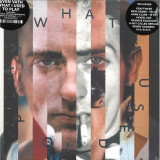
Sven Väth - What I Used To Play (12x12" boxset)
 
36

For this uniquely personal retrospective spread over twelve vinyl discs, Sven Väth takes us back to the early days of his DJ career. On What I Used To Play we meet great pioneers of electronic music, gifted percussionists, obscure wave bands, and innovative producers of a bygone 'new electronic' era. Rough beats and irresistible grooves from the identification stage of house, techno, and acid remind us not just how far electronic music has evolved over the past four decades, but how great it was to dance to EBM, techno, and house for the very first time.

If there is one protagonist of the electronic music scene who has remained curious, innovative and at the very cutting edge of music for over four decades, it's Sven Väth. His multi-layered artist albums and Sound of the Season mix compilations have been defining the genre for over two decades, and even today, he is constantly on the lookout for the next top tune to add to the highlights of his next set. At least, that's the case when he's not producing them himself as an artist or remixer. "Actually, it's always been part of my DNA to think ahead," and nothing had been further from his mind than looking back at his past, but when in spring of 2020 the international DJ circuit had to be scaled down to virtually zero, the 'restless traveler' suddenly had time. Time to stop and reflect on "how it actually was back then, at the very beginning of my career..."

"It was a great trip and with every track, beautiful memories came flooding back".
In the London apartment, he had just moved into, Sven has set up a "little music room", where he cocooned himself for several days, "to look way back for the first time and review my musical journey through the eighties, so to speak."

The interim result was six thematically oriented playlists with a grand total of 120 tracks from 'early 80s' to 'Balearic late 80s', together with excursions into afrobeat, European new wave, and EBM sounds and a few epochal techno/house tracks from the USA in between. From these 'Best of Sven Väth's favorites', the project What I Used To Play crystallized. Sven remembers how the Cocoon team reacted to his proposal: "They found the idea of making a compilation out of it MEGA from the beginning and everyone said 'Sven, go for it', but then, of course, the work really started, namely, to clear the rights and to get clean sounding masters of the up to 40-year-old tracks. There was also disappointment, of course. We couldn't clear certain titles because the rights holders in the USA had fallen out with each other or simply disappeared from the scene. In short, it wasn't easy, but now I can safely say we got the most important tracks."

Finally, after two years of research, curation, design, and administrative fine-tuning, the "little retrospective" from 1981 to 1990 is available. The exquisitely packaged, and three-kilo heavy box set is not only physically impressive, WIUTP is also the definitive record of Sven Väth's musical development. On each of the twenty-four sides of vinyl, you can trace track by track, what influenced him during which phase, and how he took off as a DJ from his parents' Queen's Pub straight into the spotlight at Dorian Gray. There and at Vogue (later OMEN), Sven became the style-defining player in the DJ booth that he still is today.


1981 - 1990: Future Sounds of Now

In the early eighties, the crowd in clubs like Vogue and Dorian Gray danced to what nowadays we call 'dance classics' - mainly disco, funk, soul, and chart pop. It was up to a new generation of DJs, including Sven Väth, the youngest protagonist in the Rhine-Main area at the time, to create their own club-ready music mix. Good new tracks and potential floor-fillers were rarities that had to be sought out and found, in order to prove oneself worthy.
Without MP3s, internet streaming, or other digital download possibilities, music didn't just gravitate to the DJ, instead, it had to be tracked down. In well-stocked record stores in Frankfurt and Wiesbaden or even in Amsterdam, London, or New York, Sven and friends sourced the material for countless magical nights. On WIUTP we can follow Sven's very personal journey through this wild, innovative era in which synth-pop, funk, hip-hop, and disco were successively replaced as 'club music' by house, techno, acid, and breakbeat. By the end of the decade, it was clear to see that these once exotic 'fringe' phenomena would soon become 'mass' phenomena.


Early 80s

Dirty Talk by the Italian-American duo Klein & M.B.O. represents the most innovative phase of the Italo-disco genre in the early eighties like no other track. Mario Boncaldo (I) and Tony Carrasco relied entirely on the original synthetic drum and percussion sounds of the Roland TR-808, coupled with the raunchy vocals of Rossana Casale and guitar accents of Davide Piatto. Of course, other tracks from this period were also influential in style, most notably Unit by Logic System, which worked as the perfect soundtrack to the laser lighting system at the legendary Dorian Gray club. With stomping beats and robotic rap interludes, Bostich by Yello also belongs on Sven's eternal playlist - after all, it caught the attention of Afrikaa Bambaataa, who invited the Swiss duo to perform at the Roxy in New York in 1983.


EBM Wave - Mid 80s

From today's point of view, the almost ten-minute-long, downtempo track Giant by Matt Johnson's band project The The, would probably not be considered an obvious club classic. However, a closer (re)listen reveals the rhythmic intricacies of the percussion overdubs by JG Thirlwell (aka Foetus) on Johnson's composition, and it becomes clear why this exceptional piece of music is one of Sven's absolute favorites. Other classics from this phase include Kaw-Liga by the mysterious The Residents, the hypnotic-synthetic Our Darkness by Anne Clark (and David Harrow), and last but not least, the somber, monotonous anthem Where Are You? by 16Bit, one of Sven Väth's projects together with Michael Münzing, Luca Anzilotti from 1986.


US House - Late 80s

You certainly can't talk about Chicago house without mentioning Frankie Knuckles. The resident DJ at the Warehouse not only gave the name to an entire genre, but also produced epochal floor fillers on the Trax label like the timeless Your Love, sung (and moaned) by Jamie Principle. Acid house protagonists Phuture also hail from Chicago, and on We Are Phuture (also released on Trax) we hear the chirping acid sounds of the legendary Roland TB-303 in full effect. Another featured classic is No UFO's by Detroit's Model 500 aka Juan Atkins, who is rightly considered the 'Godfather of Techno' even if the genre-defining track from 1985 still breathes with the spirit of hip-hop and electro from the first breakdance era.


Afrobeat

Le Serpent, by Algerian-born Abdelmadjid Guemguem, is a track that sounds completely different from everything else on WIUTP. Made in 1978, it's a monumental, rousing groove created without bass or synths, just with five congas! Even though Guem sadly passed away in 2021, his immortal, acoustic beats are understood all over the world and will continue to enrich many thousands of DJ sets for years to come. Another classic that not only Sven appreciates beyond measure is Hugh Masekela's Don't Go Lose it, Baby. In addition to being one of the most important jazz pioneers, the trumpeter and freedom fighter from Johannesburg was very experimental, integrating electronic sounds into his music in later years, in a similar vein to Miles Davis and Herbie Hancock. Dutch jazz pianist Jasper van't Hof's afrobeat project Pili Pili has also aged well. The trance-like, almost sixteen-minute-long track of the same name, manages to fill a whole side on the seventh of twelve vinyl discs in the WIUTP box.


UK-US-Euro - Late 80s

Time for a change of scene, in the truest sense of the word, and from a musical perspective, this section is like landing on another planet. First up is Andrew Weatherall's classic remix of Primal Scream's Loaded, featuring the iconic Peter Fonda sample (lifted from the 1966 biker film Wild Angels) that came to personify the mood triggered by the British Second Summer of Love in the late eighties: "We wanna be free to do what we wanna do, and we wanna get loaded...". This period also saw the emergence of M/A/R/R/S whose only single, 1987's Pump Up The Volume, became a club classic with support from DJ legend CJ Mackintosh. In this most eclectic of sections, we also encounter New York house and reggae producer Bobby Konders and his seminal Nervous Acid.


Balearic - Late 80s

Those who know him, know that Sven had already lost his heart to the 'magic island' of Ibiza as a teenager, so with that in mind, the WIUTP project couldn't end without a Balearic chapter. Inspired by Manuel Göttsching's E2-E4, the immortal, eponymously titled Sueño Latino belongs in there without question. Equally popular on the island was, and still is Break 4 Love by Raze, which thinking about it, would also fit perfectly into the house chapter. Last, but not least, there's an overdue reunion with Sven Väth himself, in his role as frontman of the successful Frankfurt trio OFF. Together with Michael Münzing and Luca Anzilotti (later of Snap!) this 'Organization For Fun' created the off-the-wall club hit Electric Salsa in 1986 which incidentally turned into an international chart smash, putting Sven in the enviable position of having to decide between pop stardom and a DJ career. Well, we all know how that decision turned out and the rest, as they say, is history. A not insignificant part of his story is What I Used To Play. Enjoy!

out of Stock

Order now and we will order the item for you at our supplier.

184,83

Last In: 9 months ago
Idealism x Lucid Green - Undone

Idealism X Lucid Green

Undone

12inch823R007LP
823 Records
03.02.2023

Perth-based artistic hub 823, led by producer / creator-extraordinaire Taku, joins forces with producers Idealism & Lucid Green for “Undone,” a genre-melting LP that bridges sonic comfort, textured tones and lush timbres into one serene, 10 track experience. LP arriving February 3rd, 2023 via 823 x Jakarta Records.

Finnish-born producer and pianist Idealism (1.5mil Spotify Monthly Listeners - SML) and French transplant Lucid Green (568k SML) are no strangers to each other’s subtle, yet potent productions. Having worked together on a number of past releases, their upcoming, fully collaborative LP “Undone” is a natural journey into the beautiful ambient, downtempo, lo-fi worlds they’ve each created. Through visits to Lucid’s flat in Paris and ideas being exchanged remotely, the duo experimented with different sounds, instruments and aural environments, in the process crafting a natural partnership that sits in a comfortable, melancholic pocket. With lulling guitar and poignant piano progressions that provide a pillow to rest your ears, and downtempo percussions that keeps you ebbing and flowing along on a subtle current, unsure where one wave ends and the next begins, only the albums progressions dictate the head-nod. Featuring the likes of Yutaka Hirasaka (220k SML) and Charlie Kurata (aka Charlie – 200k SML; Duumu – 109k SML), the album soars, reminiscent of life’s simple, yet wholly memorable moments that bring you a nostalgic pause.
As with all 823 releases, the project is a visual one as much as it is a musical project. The first singles visualizers are a fusion of Hopes & Dreams Club & 823’s design aesthetics with personal super8 footage captured by Idealism & Lucid Green, beautifully expressed from Hopes & Dreams Club member Mindi Ossi. Each visualizer and single art will easily stand on its own, transporting you to worlds familiar, yet undeniably groovy and sonically comfortable.
823 is a multifaceted Perth-based record label, fashion brand, and artistic community, founded by Australian producer and all-around creative, Ta-ku (852k SML). With an astute attention to detail and an ethos that appreciates the everyday things in life, 823 doesn’t stick to any particular genre. Past 823 releases include “So Far To Go” EP via Cabu (753k SML), Ta-ku and matt mcwaters’s duo project “Black and White,” featuring Masego collaboration “Flight 99” (17mil streams on Spotify), the “All Things Considered” compilations, a curated, collaborative series featuring both budding and wellestablished artists around the world and have included Idealism, Wun Two, pastels, L.Dre, Flobama, SwuM, Jinsang, Tenderlonious, among a host of others, as well as multiple sold out clothing capsules.

out of Stock

Order now and we will order the item for you at our supplier.

21,81

Last In: 3 years ago
LONDON ODENSE ENSEMBLE - JAIYEDE SESSIONS VOL. 2

The second instalment from London Odense Ensemble digs deeper into the group's vision of what modern psychedelic jazz should sound like. Cut from the same sessions as Jaiyede Sessions vol. 1, released last summer, vol. 2 presents a more nuanced approach to the material. On this set the ensemble focuses on shorter, layered pieces - travelling from deep spiritual jazz grooves to gorgeous free-flowing minimalism to full-on acid jazz. There's echo-drenched flutes being absorbed into layers of analog synth pads and guitars, bossa beats and double bass sequences merging with electronics. It's an intoxicating mélange of sounds and styles, spanning wide temporal and geographical distances. London Odense Ensemble came together when two of the finest exponents of London's flourishing jazz scene, flautist and saxofonist Tamar Osborn and keyboard specialist Al MacSween, came over to Denmark to explore new sounds with Causa Sui's Jakob Skott and Jonas Munk, as well as local bass player Martin Rude. For two days the group laid down grooves and ideas and experimented in the studio, and later the best segments were edited and mixed by Jonas Munk, who took a somewhat liberal approach to the mixing process, often dyeing the material with external effects and synthesizers. Jaiyede Sessions are the kinds of records that defy genre-terms, yet have its own instantly recognizable fingerprint. It carries a unique shared vision between the players of what modern psychedelic jazz sounds like. bios: Tamar Osborn: Saxophonist, composer and multi-wind instrumentalist is the creative force behind modal jazz ensemble Collocutor (On The Corner Records). She is a member of the Dele Sosimi Afrobeat Orchestra, performs and collaborates regularly with Sarathy Korwar, Jessica Lauren, Emanative, Ill Considered and DJ Khalab. Al MacSween: Keyboard player & founding member of Kefaya. Collaborations include American jazz legend Gary Bartz, Syrian qanun master Maya Youseff, London Community Gospel Choir, Palestinian jazz singer Reem Kelani & kora player Kadialy Kouyate. Martin Rude: Multi-string instrumentalist & lead singer in Sun River & Edena Gardens with members of Papir & Causa Sui. Jakob Skott: Drummer in Causa Sui with a slew of side projects on El Paraiso, including Chicago Odense Ensemble, Jonas Munk: Guitarist in Causa Sui & studio wizard on most releases on El Paraiso.

pre-order now03.02.2023

expected to be published on 03.02.2023

28,36
Baraka - Baraka

Baraka

Baraka

12inchBRK001
Baraka
02.02.2023

«I am the bridge between the day and the night that never ends, I am the acid drop that beads on your dancing body, I am the metallic breakthrough that crosses your being when I catch your wet hands, I am the brutal wave that grazes your dark gaze and your tired eyes, I am the titanium and the cyprin, I am the adrenaline, I am that being that invents, desires and revolts, I am that jolt of desire that tears me when it is dark, I am a psychoactive substance diluted in honey, I am the back that you caress, I am our first and last dance, I am the one who seduces you, I am the one who obsesses you, I am the solitary dance that bewitched me the first time we met, I am the cry muffled by our restless bodies, I am the movement that pierces and unfolds as if it were the last. I am solid and liquid, mechanical and organic, I am your first and last time, I am Baraka.»

French duo Baraka present their first eponymous EP.
Dive into their cathartic universe in which they celebrate their love for club culture using powerful TR8s, incisive break beats, synthetic layers inspired by trance and trip-hop as well as cavernous female voices.

This alliance of electronic music, 90’ aesthetics and dreamy undulations intertwine like the yin and yang and promise a mystical universe with futuristic imagery.

out of Stock

Order now and we will order the item for you at our supplier.

15,08

Last In: 19 months ago
Rubinho E  Mauro Assumpcao - Perfeitamente, Justamente Quan

Rubinho E Mauro Assumpção's 'Perfeitamente, Justamente Quando Cheguei' has to be up there as one of the finest Brazilian-psych-folk-MPB records we know. Unfortunately, it's very hard to find in the wild; even on digging trips to Brazil, an original copy rarely shows up, and when it does, it comes with a hefty price tag.

This highly sought-after rarity was released on the Brazilian label Tapecar Records in 1972 and is the one and only album by the sensational pairing of Rubinho and Mauro Assumpção. Effortlessly blending folk, MPB, funky-psych, rock, and relaxed, swaggering samba, this record ought to be heralded as a true Brazilian classic. However, maybe due to its scarcity and the previous reissue predominantly being only available to the Brazilian market, it has not had a chance to fully shine and find the wider audience it deserves. Through our reissue we hope to put things right. Fans of records by Milton Nascimento and Lô Borges are sure to enjoy the same magic and allure in 'Perfeitamente, Justamente Quando Cheguei'.

In addition to being the album’s songwriters, Mauro Assumpção took on the role of producer and Rubinho was co-producer as well as playing piano, organ, acoustic guitar and performing vocals. The record features the drummer Gegê who worked with Milton Nascimento, Edu Lobo, Nana Caymmi, Dom Um Romão and more. It also features guitarist Rick Ferreira, who played with Erasmo Carlos, Gal Costa and other greats. Rounding off the players on the album are Darcy Da Cruz and Formiga who have graced many a fine recording on horns.

'Perfeitamente, Justamente Quando Cheguei' is a truly stunning work that washes over you with beauty. Delve in and savour.

out of Stock

Order now and we will order the item for you at our supplier.

25,42

Last In: 3 years ago
Pop Wallpaper - Strawberry Letter 23

Glasgow’s Seated Records return with more archival Scottish New Wave material; this time, in the form of Pop Wallpaper’s disco-not-disco interpretation of the Shuggie Otis classic, “Strawberry Letter 23”. And interpretation is the right word, guitarist Evan Henderson confesses that the lyrics sang by Audrey Redpath on the record were, “err inaccurate due to pre-internet home recording translation”.

The Edinburgh band first released “Strawberry Letter 23” in 1986 as a double A side 12” alongside original song, “Nothing Can Call Me Back". The 1986 record’s sleeve states that the original - “Strawberry Letter 23" has been “re-modelled for special pleasures, namely on the dance floor”. Here the re-model has been re-modelled once more. The track is recontextualised for 2022 playing on a four track 12” that includes an unreleased instrumental demo version of the track, as well as mixes from label founder Pigeon Steve and close friend of the label, Useful Tom.

Wallpaper’s first EP “Over Your Shoulder” was released in 1984. The release received a considerable amount of radio support, not least from Radio 1’s John Peel and Janice Long, which culminated with a live session for Long’s show at the BBC’s studios in London. Released a couple of years later, Strawberry Letter received similar levels of radio play. Despite (much to the band’s confusion) being tracked by Motown UK at one point, Pop Wallpaper did not go on to receive commercial success and eventually went their separate ways.

“Strawberry Letter 23” sits in the singular historical, cultural context of mid-80s Britain. Following the explosion of punk at the end of the 1970s, in the 1980s many British bands began experimenting with new styles and instruments - always keeping an eye firmly on their punk roots. The loose percussion and synthesiser melodies have an almost new-age, balearic mood, while the falsetto vocals of singer Audrey Redpath are an unmistakable embodiment the Post-punk style of the time. The prominent bass-line suggests a reggae or disco inspiration, and bass player Myles Raymond admits that he obsessed over a Sly & Robbie Taxi records compilation around the time the band put the tune together.

This reissue includes an unreleased, unheard instrumental demo-version of the cover, “SL23”. The band recorded the demo during an nighter at Wilf’s Planet studios in Edinburgh, just after Wet Wet Wet had just finished up their own demo for “Wishing I Was Lucky” (Pop Wallpaper all insist they thought it would never be a hit). In this version, we hear the band messing around with drum machines and synths which, in a similar style to Kevin Low and Fiona Carlin on Seated 001, creates a stripped back dance floor work-out that bares almost no resemblance to any version of “Strawberry Letter 23”. In an attempt to emulate the Trevor Horne production style of the time, the band’s drummer Les Cook recalls pushing for more and more reverb on the drums during the session to a reluctant producer Chic Medley, who “eventually obliged, but needed a lot of persuading”. Much to Cook’s disappointment “the reverb was toned down when we got to the final release”.

On the B side, label boss Pigeon Steve delivers a dubbed-out and acid drenched, cosmic rendition of the track with “SL24”, before Useful Tom (son of Pop Wallpaper bass player Myles Raymond) brings the EP to an end with spacey de-construction of fractured vocals and gliding synths on the B2 with “SL25”.

out of Stock

Order now and we will order the item for you at our supplier.

12,82

Last In: 3 years ago
Sophie Lloyd feat. Pauline Taylor - Angels By My Side (Remixes)

With ‘Angels By My Side', Sophie Lloyd delivered another exceptional release on Classic Music Company, powered by a leading topline from Pauline Taylor over a disco-driven, stomping bassline. Pegged as an anthem in waiting, father-daughter duo Robert and Lyric Hood, best known as Floorplan, now gear up to deliver their remix package, including a floor filling Main Mix and synth padded Dub. Classic Music Company veterans, the two consistently deliver evergreen records on the imprint, providing multi-dimensional cuts bursting with club appeal much like their 2021 releases ‘Right There / Holy Ghost’ and ‘Get My Mansion Ready / Out Of Control’. Born out of a desire to explore Robert’s soulful, spiritual influences, the project continues to evolve into a wondrous family affair as daughter Lyric moves further into the fold. Floorplan are well versed in the value of records that pump the dancefloor with life, with this remix being no exception.

out of Stock

Order now and we will order the item for you at our supplier.

14,24

Last In: 8 months ago
Billie Holiday - Lady In Satin

Lady in Satin was released in 1958 on Columbia Records, catalogue CL 1157 in mono and CS 8048 in stereo. It is legendary singer Billie Holiday's penultimate album completed by the singer and released in her lifetime (her final album, Billie Holiday, being recorded in March 1959 and released just after her death).

AllMusic says: "The feeling and tension she manages to put into almost every track set this album as one of her finest achievements. 'You've Changed' and 'I Get Along Without You Very Well' are high art performances from the singer who saw life from the bottom up."

The song material for Lady in Satin derived from the usual sources for Holiday in her three-decade career, that of the Great American Songbook of classic pop. Unlike the bulk of Holiday's recordings, rather than in the setting of a jazz combo Holiday returns to the backdrop of full orchestral arrangements as done during her Decca years, this time in the contemporary vein of Frank Sinatra or Ella Fitzgerald on her Song Books series. The album consists of songs Holiday had never recorded before.

Bandleader Ray Ellis used a 40-piece orchestra, complete with horns, strings, reeds and even a three-piece choir. It would turn out to be Holiday's most expensive music production. Soloists on the album included Mel Davis, Urbie Green, and bebop trombone pioneer J. J. Johnson.

Now with our 45 RPM release, mastered from the original analogue tape by Bernie Grundman, and pressed by our own Quality Record Pressings, the best-sounding version of this historic album gives listeners an even richer sonic experience. The dead-quiet double-LP, with the music spread over four sides of vinyl, reduces distortion and high frequency loss as the wider-spaced grooves let your stereo cartridge track more accurately.

Original album produced by Irving Townsend, and engineered by Fred Plaut.

pre-order now30.01.2023

expected to be published on 30.01.2023

92,40
H.C. MCENTIRE - EVERY ACRE

H.c. Mcentire

EVERY ACRE

12inchMRGLP802
Merge
27.01.2023

If naming is a form of claiming, of being claimed, how is one tethered to both the physical landscape that surrounds us, as well as our own internal emotional landscape_at times calm, at times turbulent, and ever changing? H.C. McEntire's new album Every Acre grapples with those themes_themes that encompass grief, loss, and links to land and loved ones. And naming_claiming land, claiming self, being claimed by ancestry and heritage_permeates the hauntingly beautiful landscape that is this poignant collection of songs. The songs straddle the line between music and poetry. In "New View," McEntire cites poets "Day, Ada, and Laux, Berry, and Olds"_fixtures in the world of writing, whose works are beacons of light over bleak horizons. The beginning of the song is backed by soft guitar plucks that fall on the downbeat and spangle like stars, and, throughout, guitar, bass, and drums swell together gently, mimicking ebbing and flowing tides under the moon. McEntire's voice (at once tender and fierce) intones the truth of both giving and taking, releasing and claiming: "Bend me, break me, split me right in two. Mend me, make me_I'll take more of you." Permeated by heartbeat-like drums, "Shadows" develops quiet ruminations on surrender and loss_reminiscing, moving on. This ponderous, dreamlike song asks the question of how "to make room." How does one make room, for self and for renewal and surrender, when it is so difficult to leave what you know behind? Playing with slivers of descending chromatics, along with the occasional downward-stepping bass, here McEntire yearns for home, and for nesting. Perhaps one of the more grief-stricken songs, "Rows of Clover" is a lamentation, one that touches on the loss of a "steadfast hound." The lone piano in the beginning of the song is rhythmically hymn-like. The stark verse arrangement gradually leads to a chorus that reads like a moody exhale, swollen with lush guitar strums and a Bill Withers-esque understated soul groove. But what stands out the most is an image of being "down on your knees, clawing at the garden"_the only explicit mention of a person in the song. "It ain't the easy kind of healing," sings McEntire, seemingly from further and further away as her voice echoes; and healing ta;kes time, time takes time_truths that linger painfully. "Dovetail" is a song that tells of various women. The song moves back and forth between solo piano and the addition of bass and drums under vocals. McEntire's gentle, trembling vibrato_harmonized in thirds in a celebratory manner_calls to mind a rejoicing psalm and shines through these images, leaving the listener cuttingly fraught with emotions_such as wonder, sadness, nostalgia_that can only arise with these juxtapositions. Gracious (and graceful) with its lilting melodies and lush harmonies, Every Acre ex - plores the acres of our physical and emotional homes. These songs are reaching for the kind of home that we all seek: one where we can rest and lay down (or tuck away) our burdens of loss. And maybe, moving through every acre of a world that often tries to tear our sense of identity and heritage down, McEntire sheds light on what it is to be human in this life_both stingy and gracious, both hurtful and kind.

pre-order now27.01.2023

expected to be published on 27.01.2023

21,81
H.C. MCENTIRE - EVERY ACRE

H.c. Mcentire

EVERY ACRE

12inchMRGLPC1802
Merge
27.01.2023

Orange Viny

If naming is a form of claiming, of being claimed, how is one tethered to both the physical landscape that surrounds us, as well as our own internal emotional landscape_at times calm, at times turbulent, and ever changing? H.C. McEntire's new album Every Acre grapples with those themes_themes that encompass grief, loss, and links to land and loved ones. And naming_claiming land, claiming self, being claimed by ancestry and heritage_permeates the hauntingly beautiful landscape that is this poignant collection of songs. The songs straddle the line between music and poetry. In "New View," McEntire cites poets "Day, Ada, and Laux, Berry, and Olds"_fixtures in the world of writing, whose works are beacons of light over bleak horizons. The beginning of the song is backed by soft guitar plucks that fall on the downbeat and spangle like stars, and, throughout, guitar, bass, and drums swell together gently, mimicking ebbing and flowing tides under the moon. McEntire's voice (at once tender and fierce) intones the truth of both giving and taking, releasing and claiming: "Bend me, break me, split me right in two. Mend me, make me_I'll take more of you." Permeated by heartbeat-like drums, "Shadows" develops quiet ruminations on surrender and loss_reminiscing, moving on. This ponderous, dreamlike song asks the question of how "to make room." How does one make room, for self and for renewal and surrender, when it is so difficult to leave what you know behind? Playing with slivers of descending chromatics, along with the occasional downward-stepping bass, here McEntire yearns for home, and for nesting. Perhaps one of the more grief-stricken songs, "Rows of Clover" is a lamentation, one that touches on the loss of a "steadfast hound." The lone piano in the beginning of the song is rhythmically hymn-like. The stark verse arrangement gradually leads to a chorus that reads like a moody exhale, swollen with lush guitar strums and a Bill Withers-esque understated soul groove. But what stands out the most is an image of being "down on your knees, clawing at the garden"_the only explicit mention of a person in the song. "It ain't the easy kind of healing," sings McEntire, seemingly from further and further away as her voice echoes; and healing ta;kes time, time takes time_truths that linger painfully. "Dovetail" is a song that tells of various women. The song moves back and forth between solo piano and the addition of bass and drums under vocals. McEntire's gentle, trembling vibrato_harmonized in thirds in a celebratory manner_calls to mind a rejoicing psalm and shines through these images, leaving the listener cuttingly fraught with emotions_such as wonder, sadness, nostalgia_that can only arise with these juxtapositions. Gracious (and graceful) with its lilting melodies and lush harmonies, Every Acre ex - plores the acres of our physical and emotional homes. These songs are reaching for the kind of home that we all seek: one where we can rest and lay down (or tuck away) our burdens of loss. And maybe, moving through every acre of a world that often tries to tear our sense of identity and heritage down, McEntire sheds light on what it is to be human in this life_both stingy and gracious, both hurtful and kind.

pre-order now27.01.2023

expected to be published on 27.01.2023

21,81
H.C. McEntire - Every Acre

H.c. Mcentire

Every Acre

12inchMRG802LP
Merge Records
27.01.2023

If naming is a form of claiming, of being claimed, how is one tethered to both the physical landscape that surrounds us, as well as our own internal emotional landscape at times calm, at times turbulent, and ever changing? H.C. McEntire’s new album Every Acre grapples with those themes that encompass grief, loss, and links to land and loved ones. And naming claiming land, claiming self, being claimed by ancestry and heritage permeates the hauntingly beautiful landscape that is this poignant collection of songs. The songs straddle the line between music and poetry. In “New View,” McEntire cites poets “Day, Ada, and Laux, Berry, and Olds” fixtures in the world of writing, whose works are beacons of light over bleak horizons. The beginning of the song is backed by soft guitar plucks that fall on the downbeat and spangle like stars, and, throughout, guitar, bass, and drums swell together gently, mimicking ebbing and flowing tides under the moon. McEntire’s voice (at once tender and fierce) intones the truth of both giving and taking, releasing and claiming: “Bend me, break me, split me right in two. Mend me, make me I’ll take more of you.” Permeated by heartbeat-like drums, “Shadows” develops quiet ruminations on surrender and loss reminiscing, moving on. This ponderous, dreamlike song asks the question of how “to make room.” How does one make room, for self and for renewal and surrender, when it is so difficult to leave what you know behind? Playing with slivers of descending chromatics, along with the occasional downward-stepping bass, here McEntire yearns for home, and for nesting. Perhaps one of the more grief-stricken songs, “Rows of Clover” is a lamentation, one that touches on the loss of a “steadfast hound.” The lone piano in the beginning of the song is rhythmically hymn-like. The stark verse arrangement gradually leads to a chorus that reads like a moody exhale, swollen with lush guitar strums and a Bill Withers–esque understated soul groove. But what stands out the most is an image of being “down on your knees, clawing at the garden” the only explicit mention of a person in the song. “It ain’t the easy kind of healing,” sings McEntire, seemingly from further and further away as her voice echoes; and healing takes time, time takes time truths that linger painfully. “Dovetail” is a song that tells of various women. The song moves back and forth between solo piano and the addition of bass and drums under vocals. McEntire’s gentle, trembling vibrato harmonized in thirds in a celebratory manner calls to mind a rejoicing psalm and shines through these images, leaving the listener cuttingly fraught with emotions such as wonder, sadness, nostalgia that can only arise with these juxtapositions. Gracious (and graceful) with its lilting melodies and lush harmonies, Every Acre explores the acres of our physical and emotional homes. These songs are reaching for the kind of home that we all seek: one where we can rest and lay down (or tuck away) our burdens of loss. And maybe, moving through every acre of a world that often tries to tear our sense of identity and heritage down, McEntire sheds light on what it is to be human in this life both stingy and gracious, both hurtful and kind.

pre-order now27.01.2023

expected to be published on 27.01.2023

25,00
Fucked Up - One Day

Fucked Up

One Day

12inchMRG801LP
Merge Records
27.01.2023

With One Day, Fucked Up have delivered one of the most energizing and intricate albums of their career, a massive-sounding record that arrives in deceptively small confines. The Canadian hardcore legends have been known for their epic scale in the past, so it might be a surprise that Fucked Up’s sixth studio album is their shortest to date, written and recorded in the confines of one literal day (hence the title). Don’t mistake size for substance, though: The band’s sound has only gotten bigger, more hard-charging, with even denser thickets of melody. “I wanted to see what I could record in literally one day.” That singular idea came to mind for guitarist Mike Haliechuk in the closing months of 2019. Haliechuk got himself into a studio and proceeded to write and record the record’s ten tracks over three eight-hour sessions, reconnecting with the core the band’s songwriting essence in the process. Initially, Fucked Up vocalist Damian Abraham was also set to complete his vocals in similar fashion—that is, before the lockdowns of 2020 took place. As it turns out, the isolation yielded creative dividends, as Abraham returned to contributing lyrics as well for the first time since 2014’s Glass Boys. “It almost felt like it might be the last time I’d ever get to record vocals for anything,” Abraham says of the stakes he felt while putting his part to tape, before reflecting on how he approached the lyrical process: “What do I want to say to friends who aren’t here anymore? What do I want to say to myself?” Over swarms of tuneful noise that evoke Sonic Youth circa Daydream Nation, Abraham lets loose on gentrification in “Lords of Kensington,” which was inspired by an “incredible” Toronto neighborhood that was regularly subject to life-ruining police surveillance and structural violence. “The police chief during that era he just opened a cannabis store,” Abraham explains. “It’s so cynical and gross, what society has come to but by being in a band, we’re culpable in changing the neighborhood, too, since the punk spaces and cool happenings that pop up are part of gentrification. Are you building a culture? Or are you ruining something that’s already been there?” Then there’s the dusky burn of “Cicada,” a sonic cousin to Dose Your Dreams’ excellent standout “The One I Want Will Come for Me” that features Haliechuk taking lead-vocal duty. The song is dedicated to lost friends, and in his words, it’s about “what life is like after you lose people, and our responsibility to carry them forward into the future, using the things they taught us as a light. I like to imagine the sound of cicadas as a metaphor for our strange life in the subculture we all just live these weird little hidden lives under the dirt, and then once in a generation, one of us gets to bust out of the dirt and intone their song so loud that it can be heard all over.” One Day is an undeniable work of confidence from a band that continues to operate at the top of their game, making music that’s guaranteed to last a lifetime and beyond.

pre-order now27.01.2023

expected to be published on 27.01.2023

25,00
CHRISTIAN DEATH - ONLY THEATRE OF PAIN - 2LP+BOOK+POSTER-BOXSET(SLIPCASE)

CHRISTIAN DEATH was formed by Rozz Williams in Los Angeles, California in 1979. Williams was eventually joined by guitarist/songwriter Rikk Agnew of ADOLESCENTS, James McGearty on bass and George Belanger on drums. This CHRISTIAN DEATH line-up was responsible for recording the band's iconic 1982 debut, ONLY THEATRE OF PAIN, widely regarded as the #1 American goth album of all-time. This exclusive double-LP version of OTOP commemorates its 40th anniversary- the first disc is the digitally remastered, original version of the album while the second disc is comprised of "Dogs" from HELL COMES TO YOUR HOUSE, four pre-Frontier demos, two studio demos made for a second Frontier Records' LP that never happened and two alternate studio mixes from OTOP. The gatefold LP jacket is printed in its original its black and metallic gold, includes a Colver collage poster and a hardcover copy of the photo book, ONLY THEATRE OF PAIN and all come in a hard slipcase. The oversized 12" x 12" book features rare and never-before-seen photos of CHRISTIAN DEATH as well as new interviews with photographer Edward C. Colver, the surviving band members, Frontier's Lisa Fancher and others. Colver befriended the band and followed them around in late 1981 and early 1982 at more than a dozen concerts as well as photo shoots in Rozz Williams' family home (used on the back cover and insert of ONLY THEATRE OF PAIN) and a session of now famous images at a Pomona CA cemetery. Info: Just as the theatrically-minded LA punk scene was beginning to give rise to such morbidly themed outfits as 45 Grave and the Flesh Eaters, an androgynous teenaged street performer named Rozz Williams (né Roger Painter) founded CHRISTIAN DEATH, one of the most prolific, enduring, and beloved gothic acts of all time. Williams' otherworldly groan can make "Only Theatre of Pain" difficult going for those that aren't the gothic faithful, but the loud/not-too-fast music (courtesy of ex-ADOLESCENTS guitarist Rikk Agnew and the walking-dead rhythm section of bassist James McGearty and drummer George Belanger) is appropriately doom 'n' gloomy, with inventive arrangements and clear sound - thanks to Frontier Records' go-to punk production legend, Thom Wilson- capturing the mood in full B-movie fidelity. The lyrics sacriligiously address horror topics and religion: they're overwrought (the backwards masking of 'Mysterium Iniquitatis' being one clever exception) but easy to overlook in the wash of inspired rock noise. The original lineup's recorded debut is a gem. Artists inspired by CHRISTIAN DEATH include Danzig, Craddle of Filth, Paradise Lost, Korn, Type O Negative, Nine Inch Nails, Marilyn Manson and Jane's Addiction. Press: "A depraved masterpiece, this was punk rock made poetic, subversive, and gracefully savage."- AV Club "The Gothic album to out-gothic all others" - Melody Maker "Only Theatre of Pain's influence should not be underestimated" - Record Collector Limited availability!

pre-order now20.01.2023

expected to be published on 20.01.2023

80,63
Items per Page:
N/ABPM
Vinyl