Even in trying times, “there is no love without electricity.” Electricity is the fourth and most progressive album from Ibibio Sound Machine, and like all good Afrofuturist stories, it begins with an existential crisis. “It’s darker than anything we’ve done previously,” says Eno Williams, the group’s singer. “That’s because it grew out of the turbulence of the past year. It inhabits an edgier world.”
Electricity was produced by the Grammy Award and Mercury Prize nominated British synthpop group Hot Chip, a collaboration born out of mutual admiration watching each other on festival stages, as well as a shared love of Francis Bebey and Giorgio Moroder. The fruits of their labor reveal a gleaming, supercharged, Afrofuturist blinder. Electricity is the first album Ibibio Sound Machine have made with external producers since the group’s formation in London in 2013 by Williams and saxophonist Max Grunhard. True, 2017’s Uyai featured mixdown guests including Dan Leavers, aka Danalogue, the keyboard jedi in future-jazz trio The Comet Is Coming, but Hot Chip and Ibibio Sound Machine worked together more deeply throughout the process, collaborating fully. Along the way, the team conjured a kaleidoscope of delights that include resonances of Jonzun Crew, Grace Jones, William Onyeabor, Tom Tom Club, Kae Tempest, Keith LeBlanc, The J.B.’s, Jon Hassell’s “Fourth World,” and Bootsy Collins.
The hook of opener “Protection From Evil” has Williams wielding a massive synth line from Hot Chip’s Al Doyle like a spiritual shield against unspecified, malign forces unspecified because Williams is speaking in tongues. Her lyrics are onomatopoeic: their meaning is defined in her energetic delivery. As Electricity takes off, so do Williams’ words towards a brighter future, alternating between English and Ibibio, sometimes within verses, and propelled by Joseph Amoako’s unabating afrobeat. She digs into this sentiment further on single “All That You Want,” coolly assuring her romantic interest while also requesting reciprocity. Meanwhile, Scott Baylis’ playful Juno synth guides the listener’s feet along the dancefloor.
Electricity is a deep and seamless realization of Williams’ and Grunhard’s ambitious founding manifesto to combine the singularly rhythmic character of the Ibibio language which Williams spoke growing up in Nigeria with a range of traditional West African music and more modern electronic sounds. While the band enjoys veering further into electronic territory with the help of mutuals like Hot Chip, Grunhard emphasizes, “For us, it’s not just a matter of embracing new technology. What’s key is to keep the music grounded in African roots.” Ibibio Sound Machine best exemplify this on Electricity’s “Freedom.” That track was inspired by the water-drumming rhythms of Cameroon’s Baka women, which in turn fueled its lyrics, which in turn prompted Hot Chip and Ibibio Sound Machine to layer joyfully kinetic electronic counterparts on top in the studio. As the track culminates with the mantra of “rage, hope, cope, soul,” it’s clear that Ibibio Sound Machine have channelled, harnessed, and distilled these words as guiding principles, both for the album and for the turbulent world that awaits it.
out of Stock
Last delivered 3 years ago available to reorder, subject to availability
DJ Stingray 313's highly-praised FTNWO LP returns to heed its sonic warnings and powerful messages on his own label, Micron Audio. Originally released on WeMe Records in 2012, FTNWO displays the high-tempo, ever forward production DJ Stingray 313 is known world around for. DJ Stingray 313 says "FTNWO was conceptually centered on conspiracy theory, science, prepper doomsday preparation / survivalism and social commentary," and the foreboding introduction of "Evil Agenda" sonically explains just what lies ahead for the listener. The stark warning leads into DJ Stingray 313's stomping "Dark Arts", beginning the FTNWO experience. "Room Clearance" gets straight to business with raw, gritty and true-to-the-art Detroit electro sounds, along with a heavy, quivering lead to piece the track together.
FTNWO's cyber-explorations continue with "Denial Of Service". "I NEED a computer!" shouts a destitute voice throughout the track, as a hypnotic siren lead weaves through pounding 808s. The uptempo onslaught continues with "Interest Rate" - pads that give a feeling of falling accompany samples lamenting the realities of debt in modern society. These statements in the samples permeating the aptly titled track eerily foretell many present-day situations in 2022, as well as prove testament to DJ Stingray 313's ahead-of-the-curve production techniques. "No Knock" also carries on with arpeggiated square waves and dissonant FM stabs laced intricately over thundering drums. "Outsourced" has a call and response feel, with lush, bright tiny synths talking with each other over a thundering rhythm akin to a drum & bass arrangement.
DJ Stingray 313's sound also stretches to more melodic planes, as "Reverse Engineering" displays. Brooding pads and icy percussion engage in a sonic dance. In the same on "Image Search", cold drums and riffs intertwine the warmer layering pads and leads. Both create two powerful compositions on FTNWO that move unlike any other. "Remote Viewing" only moves lower in tempo compared to the rest of FTNWO, DJ Stingray 313's keen ear to melody still burning brightly. F.T.N.W.O. remains an ageless album - an ominous piece from a near-distant past, back again as part of the Micron Audio catalog to soundtrack the new and uncertain times we live in.
out of Stock
Last delivered 2 years ago available to reorder, subject to availability
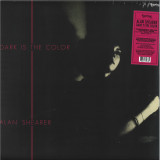
Favorite Recordings presents Dark Is The Color, the first LP by Alan Shearer reissued on vinyl for the first time. Despite being initially composed and produced for the French library label PSI, this rare
and obscure in-demand gem from 1985 sounds retrospectively like a proper album with great coherence and sophistication all along. Indeed, these 11 tracks will delight synthesizers addicts. Expect deeply emotive instrumental compositions, with ingenious analogue sequencing on stimulating chord progressions. The result is a highly retrofuturistic album, sometimes almost anticipating 90's videogames
scores. Just imagine Wally Badarou in a bunker with Talking Heads watching New York 1997 from John Carpenter.
Composed mostly step by step on a Sequential Pro-One synthesizer, Dark Is The Color is the product of the exciting state of mind from the 80's era with new sounds, new tools and new trends on the music spectrum. Influenced by bands like Talking Head or Japan, the sirens of the new wave scene strongly resonate here with Alan Shearer's familiarity and craftmanship with synthesizers.
Back in the days, Alan Shearer aka Frédéric Viger was working for his father’s music label, “Musique Pour L'image”, and their sublabel “PSI”. He started with Marathon Life under his real name before taking the Alan Shearer monitor. These records were produced for radio, TV and cinema industries but as well for companies’ internal communication. They represented a real investment from the label and these catalogues are usually full of amazing music from great artists such as Martial Solal, Vladimir Cosma, Joël Fajerman, Harlem Pop Trotters and even Manu Dibango.
About his musical illustration process, Alan Shearer tells: "Soundtracks are indeed my biggest influences and I'm a real fan of American composers as Jerry Goldsmith or Elmer Bernstein. I've always considered soundtracks as the new classical music or classical music of our century. There is a real state of mind producing music for illustration: you have to stick to the video. You should not tell what the image is saying but accompany what it is saying. You have to find a unique link, people always told me music should not be noticed for itself in a movie, that's what makes it good.”
out of Stock
Last delivered 3 years ago available to reorder, subject to availability
The Ricardo Villalobos / Samuel Rohrer partnership has yielded increasingly interesting results over the past few years, with the former’s remixes of the latter’s trio Ambiq being supplemented by further reinterpretations of Rohrer’s solo work and live meetings at select events like Berlin’s Funkhaus and Radialsystem V. As should be the case with any strong collaboration, this partnership has been based on mutual challenge rather than compromise,
seeing each participant shuttle key technical and emotive aspects of the other’s work to previously unexpected places.
Those who have been closely following this relationship will notice a definite sense of continuity between previous outings and the new collaborative release entitled MICROGESTURES. As with those earlier Villalobos / Rohrer pairings, these four new pieces are defined by a special quality of being many things that once: that is to say, depending on the listener’s own level of focus, these can feel very tightly constructed and disciplined, or playful and freely wandering. That the tracks are equally engaging regardless of one’s chosen listening “mode” is a testament to the level of thought put into them; you could almost imagining the creators poring over some elaborate sketched set of architectural blueprints rather than coolly monitoring the usual multi-track editing software.
Altogether the music here is firmly a-melodic and percussive, but within these deliberate limitations there is still a greater variety of individual sounds than most would bother with. Each track is its own observatory of microgestures clustering together into a dense communicative fog or a sort of robotic sound swarm. Yet while all
these tracks are variations on that theme, each one has its own character and, consequently, its own rewards in terms of the exact sectors of the imagination that it activates.
Take for example “Cochlea” and its twin “Helix,” on which the magnetizing, busy layers of percussion are tempered with mischievously disruptive blossomings of digital noise, as well as sampled radio communications (which again bring us back to the idea of listeners’ attentiveness changing the meaning of this music - these
curious transmissions can either be taken as a purely aesthetic element or as something to be actively decoded).
Club-oriented elements are also not absent from this suite, particularly on “Incus” with its traditional sequenced baseline, crisp synthetic trap and hats, and dizzily sliding set of bell-like tones laid on top.?
Yet this track, too, is powered as much by its restless desire to deviate as by its rhythmic consistency: throughout the eleven-minute running time, a mass of ambiguous and restless machine sounds build a parallel narrative, and will maybe prompt the occasional glance over the shoulder as they seem to be taking on their own life. “Lobule” rounds out the program with the most rhythmically eventful sound set off the five.
What this all adds up to is a confident music which builds that quality from its faith in possibilities rather than firm conclusions: it’s an inspiring addition to both the musical landscape and reality in general
out of Stock
Last delivered 3 years ago available to reorder, subject to availability
The Effect Of Heavy Music: Rock Music And Revolution In 70s Zimbabwe. Eye Q’s music has never been collated and issued outside of its country of origin. Now, as part of the Now-Again Reserve series, their rare singles and even rarer album are presented in full. Just as the hippie era came to an end in America, a second 60s was beginning: in what is now Zimbabwe, young people created a rock and roll counterculture that drew inspiration from hippie ideals and the sounds of Hendrix and Deep Purple. The kids in the scene called their music “heavy,” because they could feel its impact, and it resonated from Zambia to Nigeria. At its peak in the mid-70s, the heavy rock scene united tens of thousands of young progressives of all racial and social backgrounds. The country was called Rhodesia then, one of the last bastions of White rule in Africa, and heavy rockers defied segregation laws and secret police to make a stand for democratic change. Eye Q is one of the greatest bands of the scene: their rock stands on par with the early Zamrock of WITCH and Ngozi Family. Please The Nation encapsulated Eye Q’s desire to forge forth, in a new, free country, and this set collates their 7” singles, ultra-rare album and songs from master tape and presents their music for the first time outside of Zimbabwe. In the accompanying oversized booklet, a trio of authors collaborate to tell the Eye Q story, and to investigate the genesis of the heavy rock scene under Ian Smith’s racist, oppressive government, and its dissipation after Zimbabwe’s liberation. The set also includes a download card for WAV files for all vinyl tracks, as well as bonus tracks.
out of Stock
Last delivered 4 years ago available to reorder, subject to availability
Following hot on the heels of his recent mini-album for Elephant Gait, Italian producer Joseph Tagliabue is back with a full-length album on Glasgow's Invisible, Inc.
With Un' Altra Forma Di Vibrazioni Tagliabue continues to expand on the cosmic foundations laid by such pioneering experimental forefathers as Franco Battiato and his ground-breaking abstract ambient work of the '70s and Klaus Schultze whose legendary Innovative Communications label birthed the “Berlin school” sound at the start of the '80s, then tracing a path toward later luminaries like Boards of Canada and Plaid. There's a personal, emotive and ethereal quality also present here conjuring feelings of 4AD's glory years and the likes of This Mortal Coil and Dead Can Dance. However, backwards-looking music this is not. It's fair to say the Milan-based producer is developing his very own distinct sound as he matures from one release to the next and regardless of his wide range of influences, it's Tagliabue's firm grasp of sound design and audio engineering that takes this album far beyond the realm of just “electronica” or “psychedelia” and plants it firmly into a distinctly forward-looking contemporary space of its very own that's as much music for the heart as it is music for the head.
Tagliabue provides some insight: “Un' Altra Forma Di Vibrazioni (meaning Another Form Of Vibration in Italian) is a concept album inspired by one of the most sensational scientific discoveries of recent years, namely evidence of the existence of the "Cosmic Web". The album is comprised of ten tracks, each linked to one another, much like the various forms of matter in the cosmic web, and whose meaning can only be understood by listening to them as a collective whole, rather than as separate pieces of music. The album therefore is a well constructed sonic experience fusing elements of ambient, psych, rock, experimental and trance and is designed to be listened to continuously from start to finish; the album's journey through the universal elements is reflected in each track, whose rhythms resonate in harmony with the phenomena they represent, whilst a backdrop of drones and mesmeric grooves contribute to an atmosphere of otherworldly mechanical oneirism."
out of Stock
Last delivered 2 years ago available to reorder, subject to availability
Kadi Yombo, published in 1989, is the most successful album in the quest for a fusion between tradition and modernity in Bwiti harp music of the Tsogho people of Gabon. Combining beating rattles with a layer of synthesizers, Papé Nziengui blends in a contrapuntal dialogue characteristic of harp playing: male song in appeal and female choir in response, male voice of the musical arc and rhythms of female worship. But above all it’s Tsogho ritual music and modern studio orchestration. The result is an initiatory itinerary of 10 musical pieces which are all milestones likely to be simultaneously listened to, danced, meditated on, and soon acclaimed. In the years since, Nziengui has traveled he world from Lagos to Paris, from Tokyo to Cordoba, from Brussels to Mexico City to become a true icon, the emblem of Gabonese music.
Like Bob Dylan, "electrifying" folk and Bob Marley mixing rock with reggae, some purists have criticized Nziengui for having distorted the music of harp by imposing a cross with modern instruments. They even went so far as to claim that Nziengui was just an average harpist covering his shortcomings with stunts that were only good for impressing neophytes; like playing a harp placed upside down behind his back or playing two or three harps simultaneously. Sincere convictions or venomous defamations, in any case, Nziengui never gave in to such attacks, imposing himself on the contrary to pay homage to the elders (Yves Mouenga, Jean Honoré Miabé, Vickoss Ekondo) while instructing the maximum of young people. He is thus the promoter of many young talents, the most prominent of which is certainly his nephew Jean Pierre Mingongué. In a conservative society where the sacred is confused with secrecy, exposing the mysteries of Bwiti in broad daylight can be punished by exclusion or even execution.
Papé Nziengui has always claimed that he faces such risks because he never felt enslaved to a community that governs his life, that regulates his conduct, that has a right of censorship over his activities. Like Ravi Shankar, the famous sitarist, Papé Nziengui is a man of rupture but also of openness, a transmitter of culture. As proof, he has established himself in Libreville, Gabo’s capital, as the main harpist for sessions and concerts, accompanying the greatest national artists (Akendengué, Rompavè, Annie-Flore Batchiellilys, Les Champs sur la Lowé, etc.) as well as foreign artists (Papa Wemba, Manu Dibango, Kassav', Toups Bebey, etc.). In 1988, he was the first harpist to release an album in the form of a cassette produced by the French Cultural Center (Papé Nziengui, Chants et Musiques Tsogho). At the same time, he created his own group (Bovenga), combining traditional music instruments (musical bow, drums, various percussion instruments, etc.) in the framework of a true national orchestra, which gave the first concert and the first tours of a traditional music that was both modern and dynamic, thus "democratizing" the harp, to the dismay of certain purists.
On the other hand, in modern music, dominated by the logic of profit or even commercialism, artistic creation must often be adjusted for a specific audience based on reason rather than heart. But instead of allowing himself to be distorted, Papé Nziengui has always tried to produce music that is not a caricature, worthy in its expression as in its content, of the sacredness and transcendence of the music of the Origins. This is what makes Nziengui not only the musician, but the man someone whose age hasn’t altered any of his freshness or authenticity
Kadi Yombo, published in 1989, is the most successful album in the quest for a fusion between tradition and modernity in Bwiti harp music of the Tsogho people of Gabon. Combining beating rattles with a layer of synthesizers, Papé Nziengui blends in a contrapuntal dialogue characteristic of harp playing: male song in appeal and female choir in response, male voice of the musical arc and rhythms of female worship. But above all it’s Tsogho ritual music and modern studio orchestration. The result is an initiatory itinerary of 10 musical pieces which are all milestones likely to be simultaneously listened to, danced, meditated on, and soon acclaimed. In the years since, Nziengui has traveled he world from Lagos to Paris, from Tokyo to Cordoba, from Brussels to Mexico City to become a true icon, the emblem of Gabonese music.
Like Bob Dylan, "electrifying" folk and Bob Marley mixing rock with reggae, some purists have criticized Nziengui for having distorted the music of harp by imposing a cross with modern instruments. They even went so far as to claim that Nziengui was just an average harpist covering his shortcomings with stunts that were only good for impressing neophytes; like playing a harp placed upside down behind his back or playing two or three harps simultaneously. Sincere convictions or venomous defamations, in any case, Nziengui never gave in to such attacks, imposing himself on the contrary to pay homage to the elders (Yves Mouenga, Jean Honoré Miabé, Vickoss Ekondo) while instructing the maximum of young people. He is thus the promoter of many young talents, the most prominent of which is certainly his nephew Jean Pierre Mingongué. In a conservative society where the sacred is confused with secrecy, exposing the mysteries of Bwiti in broad daylight can be punished by exclusion or even execution.
Papé Nziengui has always claimed that he faces such risks because he never felt enslaved to a community that governs his life, that regulates his conduct, that has a right of censorship over his activities. Like Ravi Shankar, the famous sitarist, Papé Nziengui is a man of rupture but also of openness, a transmitter of culture. As proof, he has established himself in Libreville, Gabo’s capital, as the main harpist for sessions and concerts, accompanying the greatest national artists (Akendengué, Rompavè, Annie-Flore Batchiellilys, Les Champs sur la Lowé, etc.) as well as foreign artists (Papa Wemba, Manu Dibango, Kassav', Toups Bebey, etc.). In 1988, he was the first harpist to release an album in the form of a cassette produced by the French Cultural Center (Papé Nziengui, Chants et Musiques Tsogho). At the same time, he created his own group (Bovenga), combining traditional music instruments (musical bow, drums, various percussion instruments, etc.) in the framework of a true national orchestra, which gave the first concert and the first tours of a traditional music that was both modern and dynamic, thus "democratizing" the harp, to the dismay of certain purists.
On the other hand, in modern music, dominated by the logic of profit or even commercialism, artistic creation must often be adjusted for a specific audience based on reason rather than heart. But instead of allowing himself to be distorted, Papé Nziengui has always tried to produce music that is not a caricature, worthy in its expression as in its content, of the sacredness and transcendence of the music of the Origins. This is what makes Nziengui not only the musician, but the man someone whose age hasn’t altered any of his freshness or authenticity
Kadi Yombo, published in 1989, is the most successful album in the quest for a fusion between tradition and modernity in Bwiti harp music of the Tsogho people of Gabon. Combining beating rattles with a layer of synthesizers, Papé Nziengui blends in a contrapuntal dialogue characteristic of harp playing: male song in appeal and female choir in response, male voice of the musical arc and rhythms of female worship. But above all it’s Tsogho ritual music and modern studio orchestration. The result is an initiatory itinerary of 10 musical pieces which are all milestones likely to be simultaneously listened to, danced, meditated on, and soon acclaimed. In the years since, Nziengui has traveled he world from Lagos to Paris, from Tokyo to Cordoba, from Brussels to Mexico City to become a true icon, the emblem of Gabonese music.
Like Bob Dylan, "electrifying" folk and Bob Marley mixing rock with reggae, some purists have criticized Nziengui for having distorted the music of harp by imposing a cross with modern instruments. They even went so far as to claim that Nziengui was just an average harpist covering his shortcomings with stunts that were only good for impressing neophytes; like playing a harp placed upside down behind his back or playing two or three harps simultaneously. Sincere convictions or venomous defamations, in any case, Nziengui never gave in to such attacks, imposing himself on the contrary to pay homage to the elders (Yves Mouenga, Jean Honoré Miabé, Vickoss Ekondo) while instructing the maximum of young people. He is thus the promoter of many young talents, the most prominent of which is certainly his nephew Jean Pierre Mingongué. In a conservative society where the sacred is confused with secrecy, exposing the mysteries of Bwiti in broad daylight can be punished by exclusion or even execution.
Papé Nziengui has always claimed that he faces such risks because he never felt enslaved to a community that governs his life, that regulates his conduct, that has a right of censorship over his activities. Like Ravi Shankar, the famous sitarist, Papé Nziengui is a man of rupture but also of openness, a transmitter of culture. As proof, he has established himself in Libreville, Gabo’s capital, as the main harpist for sessions and concerts, accompanying the greatest national artists (Akendengué, Rompavè, Annie-Flore Batchiellilys, Les Champs sur la Lowé, etc.) as well as foreign artists (Papa Wemba, Manu Dibango, Kassav', Toups Bebey, etc.). In 1988, he was the first harpist to release an album in the form of a cassette produced by the French Cultural Center (Papé Nziengui, Chants et Musiques Tsogho). At the same time, he created his own group (Bovenga), combining traditional music instruments (musical bow, drums, various percussion instruments, etc.) in the framework of a true national orchestra, which gave the first concert and the first tours of a traditional music that was both modern and dynamic, thus "democratizing" the harp, to the dismay of certain purists.
On the other hand, in modern music, dominated by the logic of profit or even commercialism, artistic creation must often be adjusted for a specific audience based on reason rather than heart. But instead of allowing himself to be distorted, Papé Nziengui has always tried to produce music that is not a caricature, worthy in its expression as in its content, of the sacredness and transcendence of the music of the Origins. This is what makes Nziengui not only the musician, but the man someone whose age hasn’t altered any of his freshness or authenticity
"...a fascinating piece of Brutalist techno that pivots between crisp machine-like minimalism and granulated noise." - Clash
"A piece of immediately engaging techno it reveals more of itself with each listen." - CMU Daily
Nik Colk Void is well established with her work as one half of Factory Floor, one third of Carter Tutti Void (alongside Chris Carter and Cosey Fanni Tutti) and with the late Peter Rehberg as NPVR, but perhaps surprisingly, "Bucked up Space" is her first solo album release.
Void explains, "When Peter Rehberg initially asked me to produce a record for Editions Mego, I didn't feel quite ready and asked if we could make a record together instead. Collaboration is so ingrained into what I do, I only felt ready to make this album after working through ideas live, using the audience in place of the collaborator."
Bucked Up Space combines Void's love of improvisation with the driving force of beat-driven music absorbed from performing in galleries, residencies and clubs across the UK and Europe. She goes on to say, "You find out more about yourself when you explain your ideas to others, and that's how I felt the live performance worked for me."
The process steadily teased out a language and Void employed a variety of tactics in the recording process including a methodical approach of collecting data at her home studio in a manner not dissimilar to keeping a diary. Her microscopic focus on raw instrumental noise, layered and reformulated, resulted in a sound catalogue that Void divided into groups for their tone, density and texture.
These initial pieces were taken to a studio in Margate to put them into a more cohesive compositional context. Something that pragmatically started as cold and detached was given warmth, unity and emotion in the studio. Via improvised repetition co-existing alongside organised production, Void conjures new sonic muscle with tracks such as 'Interruption Is Good' and 'FlatTime'. Initial recordings are rendered into sequences initiating the organic rhythms, triggering awkward jerks of high hats and percussion, or used to activate the margins of post effects detectable in the tracks like 'Demna', 'Big Breather' and 'Oversized'.
Void explains: "It was important to me that the simplicity in the work disguised a lot of complexity, I want this work to be absorbed instinctively."
The sleeve image, a still from We Are City by Brazilian artist Maria de Lima, was chosen to illustrate Bucked Up Space, which Void describes as "a distorted reality, the space that lives at start of an idea, then floats in public view, before returning to inform my understanding of the idea. Once the idea is out in the world, it moves and morphs into something else entirely."
Written, performed and produced by Nik Colk Void, the album was engineered by James Greenwood, mastered by Rashad Becker and tracks 1, 4, 5, 7 and 9 were mixed by Marta Salogni.
Bucked up Space is the result of the ideas and resulting sounds of free exploration morphing into a personal structured album that fearlessly moulds patience, listening and restraint. It's a sharp focussed work embracing collective action through the lens of the self. All this, and also one of the best abstract dance records you will hear in some time!
out of Stock
Last delivered 4 years ago available to reorder, subject to availability
The artistic oeuvre of Berlin-based Sonja Deffner is as extensive and diverse as its contexts are high-profile: If the classically trained musician could in recent years be heard as a member of the groups Jason & Theodor, Die Heiterkeit, Globus and PTTRNS, as part of Christiane Rösinger's touring band, or as a recording musician on Andreas Spechtl's (Ja, Panik) albums, she has at the same time produced an acclaimed graphic work, video works and made her theater debut. Under the name Kalme, Deffner now presents her solo debut »Neue Sprache«, which feels like a culmination: Deffner doesn't need much space to present an artistic position of spectacular incisiveness and maturity.
The formal language of Kalme's debut evolves with reference to experimental pop and R&B, but equally informed by ambient electronics or dub techno. Analog and digital sound synthesis meet Deffner's characteristic use of field recordings, acoustic instrumentation (clarinet, percussion) meets musical post-production, sampling meets expressive synthesizer playing. At the center of the album, however, are Deffner's remarkable lyrics, written in German for the first time. Deffner creates a language of stark, emotional poignancy that is as conspiratorial as it is precise. The themes of the tracks develop between the poles of movement and stagnation, understood as motifs of biographical as well as musical ways of being or relating. In this forcefield, personal and political considerations coincide again and again, for example when Deffner reflects on her experiences with the social conditioning of femininity and motherhood.
The album title »Neue Sprache« (»New Language«), then, describes a search for forms of articulation of solidarization: language as a tool of a new relationship to the world that allows testimony to individual experience without reproducing categories of repression. In this way, Kalme's debut simultaneously achieves a radical intimacy, just as, on the other hand, the confrontation of language and sound repeatedly opens up fissures that deny any semblance of comfort. »Neue Sprache« does not stop at this modernist gesture, however, but unquestionably takes a stand. That's what Kalme's »Neue Sprache« ultimately is: the taking of a position. A statement.
Seabear return with a new album. After a hiatus of 12 years - the bands most 'recent' LP dates back to 2010 - the much loved Icelandic collective presents »In Another Life«, a mesmerizing collection of songs, oscillating between indie pop and classic singer-songwriter material.
Sometimes, a long break is all it takes. Seabear, the band featuring the talents of Guðbjörg Hlín Guðmundsdóttir, Halldór Ragnarsson, Kjartan Bragi Bjarnason, Örn Ingi Ágústsson, Sindri Már Sigfússon (aka Sin Fang) and Sóley Stefánsdóttir (aka Sóley), did exactly that. Producing an album takes up a lot of energy. You do promotion, you tour quite a bit and afterwards you... well, you just do different things. "We had all focussed on other projects", Kjartan Bragi explains. "Solo careers, playing with other projects, other forms of art, working 'normal' jobs to make a living etc. It's nice to finally come together again with old friends and make music." During the break, music has been an integral part of the members’ daily lives. Sóley started a remarkable solo career (she just released her fourth solo-album), as did Sindri, under the name of Sin Fang, while Guðbjörg worked with Sigur Rós. However, all this was made possible by the disarming folk music of their 2007 debut LP »The Ghost That Carried Us Away«.
"We stayed in touch all along", adds Sindri. "During dinners etc. one question came up again and again: What would Seabear sound like today? After accomplishing so much together, we were indeed thinking a lot about the past, how it all began. This is what sparked the reunion and is also reflected in the lyrics, resurrecting our youth, hopes and dreams."
Now, in 2022, the band is ready to set a mark in the musical landscape once again – with 11 new songs coming straight from the heart, aimed at all who value emotions, the warmth and intimacy of songwriting, big yet subtle soundscapes, capturing the smallest tones and feelings.
"We have all matured on our different paths apart. It's exciting to make something new", says Kjartan. "We are 6 friends coming together again 10 years later to make songs and have fun doing it. We are now in a more relaxed environment to compose the music."
The songs on »In Another Life« sound and come across like a musical diary of sorts. A diary found by accident, split across 11 records, without any further info and all details scratched out. There is just the music to speak for itself. Even if you are familiar with Seabear's previous music: the opener »Parade« will make you wonder who came up with this wonderful tune, full of assuring harmonies, delicate melodies and compositional surprises. Seabear once more are delivering the perfect soundtrack for all kinds of emotional states. With driving yet subtle drums, intimate, yet fleeting vocals and lyrics, an orchestral sense of production, emphasizing small details rather than counting on the big "studio bang". An approach which came naturally: "The album reflects our relaxed attitude when it comes to recording and exchanging ideas."
»In Another Life« indeed feels like the start of a new chapter. Full of hope. And hopefully, all Seabear fans won't have to wait as long anymore in the future.
out of Stock
Last delivered 4 years ago available to reorder, subject to availability
Mitch Stahlmann's solo debut release Into The Wish is a kaleidoscopic adventure in sound. Resulting from the Oakland-based musician's personal practice of experimenting with ways to process and reintroduce the flute, the music on this record draws inspiration from the instrument's everlasting breath. Paying respect to its archaic history as well as leaving room for more strange, clownish impersonations, Into The Wish is a varied collection of flute-inspired pieces. The album traverses seamlessly between what sounds like ancient, sacred incantations and more playful, chaotic collage pieces where the flute is processed, reprocessed and performed using samplers.
Each piece offers a glimpse into a whole world that could be explored in depth, but Stahlmann's curiosity is ceaseless. The opening “Petrified Cloud” is a gentle piece, a velvety, digital introduction, whereas “Moon Arch” follows with more mystery and tropical drama. “Flat Earth” offers sonic depth and channels Hassell's fourth world music ideas into immersive, winding flute passages. “Paris 2107”, “Mega Mart” or “Real Life Drama”, on the other hand, move largely beyond the sound of the flute, burying it in layers of digital processing and (re)sampling. While extremely diverse, Stahlmann's Into The Wish is a fascinating, colourful exploration of his instrument.
Gondwana Records sign LA bassist and composer Seth Ford-Young's Phi-Psonics project and announce a remastered deluxe-edition of The Cradle featuring bonus material
Phi-Psonics is a meditative, immersive instrumental group from Los Angeles, led by bassist Seth Ford-Young and featuring Sylvain Carton on woodwinds, Mitchell Yoshida on electric piano, and Josh Collazo on drums. Their deeply soulfulmusic draws on jazz and classical influences together with Ford-Young's own musical experiences, relationships, and his introduction to spirituality, yoga and philosophy at a young age, to create something uniquely its own. Phi-Psonics' name and ultimate aim is to find 'Phi' – the golden mean – in art, nature and self. Ford-Young explains:
"It's a bit of a cliché, but music saved my life many times and instilled in me a belief in the great power of healing through art. It is my hope and intention that this music provides healing to someone somewhere."
Originally from Washington DC area, Ford-Young moved to California in the early 90s and fell in love with the deep sounds of the upright bass and the music of Charles Mingus, John and Alice Coltrane, and Duke Ellington along with Bach, Chopin, Pärt, and Satie. He immersed himself deeply in music and keen to learn combinedintense personal study with collaborations, tours, and recordings with artists such as Tom Waits, Beats Antique, and John Vanderslice. In 2010 he moved from the San-Francisco Bay area to the Los Angeles hills and continued his explorations. But great music is rarely just about music and Ford-Young's meditative, soulful music draws on more than just the twin wellsprings of jazz and classical music:
"My mother was a yoga teacher from the early 70's until recently and taught me yoga and meditation at an early age, my stepfather is an Aikido instructor and student of the teachings of Gurdjieff. Those were all early areas of study that I came back to many times throughout my life. Phi-Psonics has been a project that unapologetically synthesizes some of these ideas into our music".
It's this mixture of influences, musical and extramusical, that gives the music of Phi-Psonics it's immersive quality and quiet power. Revealingly the music that would becomeThe Cradle, wasn't written specifically for an album, originally Ford-Young was just writing down what was coming through. As time went by and the album began to take shape, the world situation seemed to be getting darker and his compositions aim to offer hope as a response to the negative influences that abound today. Remarkably for such a beautiful sounding record, it was recorded at the composer's home, rather than in a studio, but the relaxed nature of this process gives the music an airy lightness that propels the music to some magical spaces.
Originally self-released on vinyl in a limited run just as the world went into lockdown, The Cradle reached Matthew Halsall (founder of Gondwana Records) when he aws looking for music for his Worldwide FM show and he was blown away, hearing a kindred spirit at work. Halsall explains:
"Phi-Psonics make beautiful, humble and honest music, it's not showy, but it has a deep vibe that will elevate your mind and soul if you let it. When we heard The Cradle we reached out and are really super delighted to welcome Seth and his band to our label". Whereas for Ford Young: "Connecting with Matthew and the Gondwana records family has been a light in the darkness of the last years - to have my music make connections even as we are more isolated."
Ford-Young is currently putting the finishing touches to the second Phi-Psonics record, but aware that only a select few had heard The Cradle, let alone had the chance to buy a copy, and entranced by its deceptive simplicity and elevating energy, Halsall suggested that Gondwana present the album as a remastered 'deluxe edition' with an extended running time featuring extra tracks and new artwork from Daniel Halsall.
The Cradle starts with First Step, perfectly setting the tone for the whole album, it is a beautiful, soulful slice of musical calm gently propelled by Ford-Young's resonant bass and elevated by sublime flute and Wurlitzer electric piano solos. The seductive title track The Cradle was written way back in 2011 during a time of great personal change that led the composer to a feeling of newness and nurture. The magical, winsome Desert Ride is inspired by many rides through the grandly cinematic Mojave Desert. You can experience how incredibly full of life it's harsh landscape is if you slow down to its tempo. The gentle, sublime Mama is a tribute to mothers of all kinds, beautiful and heroic. Drum Talk was largely improvised, Ford-Young and the band agreed on a topic and recorded their conversation. Choosing their notes based on how Josh's drums were tuned. Like Glass is named for the special properties of Glass. Like some music, glass is delicate, yet has structure. The first of the two bonus tracks Still Dancing was written during the early days of 2020 in response to the challenges we all were facing then. It's a reminder that the figurative dance continues and that real dancing is essential. And the second, The Searcher, also written as a response to 2020, is a gently hypnotic song about the introspection and growth that can spring from a difficult situation.
This then is The Cradle, a quiet self-contained masterpiece, life-affirming and elevating in equal measure and the first offering from a wonderful new voice in spiritual jazz and the latest members of the global Gondwana Records family.
out of Stock
Last delivered 4 years ago available to reorder, subject to availability
Planet Mu presents ‘ADDLE’ – Bogdan Raczynski’s first album of new music in 15 years. Marking a change from the high-octane jungle tekno braindance for which he is most commonly known, here we find the Polish American musician in a more melodic and zen-like place of peace, which is ergonomic and decluttered, whilst also bittersweet and tinged with melancholy. ‘ADDLE’ is closest in spirit to 2001’s tender ‘myloveilove’, or the light-hearted ditties of this year’s ‘BANANS’ EP, but is also a markedly new milestone. A robust and bottom-heavy rhythm section juxtaposes with sad electronic tear jerkers, at points laced with the soft cooing wail of his vocals, which are loaded with a haunting, heavy and almost wounded emotion. Bogdan comments “Calm is great. You need to take a breather in the eye of the storm now and then. But the real growth happens in turbulence, when your feelings oscillate in and out of sync. It’s not dry land you’re after. You’re trying to build a new island while on a piddly raft. Beleaguered and weary you lay the foundation with your bare hands while the rain lashes your back; a new place for you and yours to moor yourself to until the next storm hits. ‘ADDLE’ is about that storm, its adjacent periphery, and what you look like, in and out, when you set foot. As space and time push against you, that process of adapting becomes an anchor. Among that state of being addled, out of flow, seemingly untethered, there is beauty.”
Although less unhinged and riotous than some of his previous work, ‘ADDLE’ is no less impactful. Lean, punchy and purposeful, this seemingly simple combination of beats and melody belies a razor sharp skill, which bursts with verve and virtuosity. Across its eight unique and moving tracks the listener experiences tenderness, feelings somewhere between unease and comfort, and a sense of reflection, with Bogdan seemingly gazing at twinkling stars, but with his view distorted by welling-up. Sonically, spaces range from razor-sharp choppage, juddering heavyweight head-nodders, bit-crushed siren squall and something akin to Philip Glass’ ‘Candyman’ score played through a high-tech-fairy-tale music box. There’s also a warming, life-affirming moment as close to deep house as Bogdan will ever comfortably get, neck-snapping metallic percussion, Casiotone on steroids and reverberant warehouse throb. Booming drum machines are a prominent factor too – reminiscent of early hip hop instrumentals – but spirited off somewhere, lost in purgatory. Bogdan Raczynski (born 1977) is a Polish-American electronic musician. Raczynski’s work draws inspiration from the chaotic breakbeats of jungle and hardcore rave as well as traditional Polish music and other sources. He has collaborated with Bjork, remixed Autechre, CLPNG and Jonsi from Sigur Ross, and toured with Aphex Twin, who commented how “his records are so underrated.” Bogdan was also a roster mainstay of Richard James’s seminal Rephlex label, with additional releases on Warp, Ghostly, Disciples and Unknown to the Unknown. A keen proponent of tech, he created a sample pack using pollution and recently collaborated with Polyend on a custom made banana-themed tracker.
out of Stock
Last delivered 4 years ago available to reorder, subject to availability
In the vast musical archive that is Roman Flügel’s discography, Ro70 holds a special place. Written, performed and produced between January and July 1995, it is his debut album as a full-fledged solo artist. Enquired and inspired by a certain David Moufang from Heidelberg, who used to share a classroom with Jörn Elling Wuttke at the SAE Institute and revealed himself to be an Acid Jesus fan and also of the Roman IV 12“ project, it seemed like a good fit for his (and Jonas Grossmann’s) Source Records label.
In the days before file sharing that meant going back and forth with various DATs in his mom’s Volkswagen Polo Fox for actual listening sessions between Darmstadt and Heidelberg. The time was as special and idiosyncratic one as was the sound of Source Records and of course Ro 70 itself. While the rave-olution was ready to eat its kids with the commercial outlook of former underground phenomena looked bright and the scene’s prophecy seemed grim, enterprises like Source and artist like Roman Flügel were defying any competition out of those corners with their own means.
Listening back to the ten tracks of Ro 70, it proves them, their taste and artistic vision right. Probably still being put into the ambient, downtempo, electronica or chill out sections of most record shops, this music could have been made, relished and cherished anytime between 1995 and now. Made in Roman’s home studio in his parent’s house or in the Klangfabrik studio in Egelsbach, this was made for before or after the rave – or for people who din’t want to have to do anything with it at all. His signature is all over it. Well balanced soundscapes with an almost uncanny presence and clarity. Bittersweet symphonies that doesn’t seem to be in an inferior position to modern classical or electronic studies.
It is also a very personal testament to a time in the artists’s life that was ready to get caught in the maelstrom of the oscillating techno city called Frankfurt am Main and its halcyon days between the Delirium record shop, Sven Väth’s marathon sets, the early days of the label triumvirate Playhouse, Klang & Ongaku. In a musical journal without lyrics, those memories will have to stay pantomimic and private. All for the better, that we can at least still listen to them.
out of Stock
Last delivered 3 years ago available to reorder, subject to availability
The Psychedelic Romance experience is birthed, combining future-facing electronic music, art and healing. The venture is a collaboration between former Trouw & De School resident JP Enfant, energy practitioner & artist Cuevawolf and artist & label manager Maren Monika Brombeiss. It will offer an immersive sensory experience to its audience via an event series and label, with music produced at 432hz, a frequency known to uplift emotional wellbeing.
The trio linked in Amsterdam last year. JP had been previously running Psychedelic Romance events at the legendary Trouw, an opportunity he used to explore the musical terrain linking techno, UK bass and ambient. Over the years, the cream of the underground scene was invited to play, from Pearson Sound to boundary-pushing dubstep/bass producer 2562. He met Cuevawolf by chance mid-way through 2020, after fate would have the Mexican artist “stuck” in the Dutch capital during the pandemic. The click was instantaneous. Seasoned music industry professional and yoga practitioner Maren Monika completed the triangle. Together they seek to combine their passion for cutting-edge electronic music with consciousness-raising events and healing.
The label strand of Psychedelic Romance comes to life via JP Enfant’s ‘Somewhere Else EP’, a veritable musical Rubik’s Cube encompassing techno, ambient and bass. The five-track work includes a remix of lead track ‘Muzieklokaal’ from Bristol’s acclaimed experimental producer LCY, who reworks the playful original into a dynamic pastiche of industrial breaks and techno.
Dubbed a “local legend” of the Amsterdam scene by RA, JP Enfant has built up a credible reputation with gigs across Europe including Berghain, Melt Festival and fabric. His nuanced approach to techno has seen releases on Planet X, a.r.t.less and DGTL Records.
The conscious ethos of the project runs through every thread of Psychedelic Romance. Alongside the music being produced at 432hz, a frequency believed to support a calm body and mind, at upcoming Psychedelic Romance events, Cuevawolf will play the crystal singing bowls, which will transition the night from an uplifting sound healing session into an immersive electronic rave experience, led by JP. “Our goal is to create purposeful healing frequencies through music and art that ultimately raises and harmonizes our audience’s vibration,” Cuevawolf explains. “The idea is to marry electronic music and spirituality providing a safe space for transcendental and self-healing experiences that evolve onto a dancefloor.”
Psychedelic Romance hosted an intimate family and friends gathering during ADE week at Amsterdam’s Pamela, with music led by JP and emerging Amsterdam selector DJ Corridor. On the label front, other artists slated for appearances on Psychedelic Romance include Dutch techno artist Mary Lake and ascendant Austrian talent Arthur Robert.
out of Stock
Last delivered 4 years ago available to reorder, subject to availability
With Plum, the songwriting partnership rooted in the creative rapport between bandleader Molly Hamilton and guitarist Robert Earl Thomas continues to expand on shared visions, delving deeper into what was always there: dusty guitars, ear-worm melodies, warm expansive arrangements. Each entry to their catalog has marked a subtle reimagining of Widowspeak's sound, though perennial points of reference remain the same: 90's dream pop, 60's psych rock, a certain unshakeable Pacific-Northwestness. Speaking to the timeless feeling of each, the albums continue to be discovered well beyond their respective PR cycles, made beloved by new listeners through word of mouth. The band's fifth album feels comfortable and lived-in: humble in structure, heavy on mood. Perhaps that came taking time off from the touring grind, instead working full-time jobs and settling into the rhythm of daily life in a small upstate New York town. Plum was recorded over a handful of weekends last winter by Sam Evian (Cass McCombs, Kazu Makino, Hannah Cohen) at his Flying Cloud studio in the Catskills, and was mixed by Ali Chant (PJ Harvey, Aldous Harding, Perfume Genius). In addition to Hamilton (vocals, guitar) and Thomas (guitars, bass, synth), it features instrumental contributions by Andy Weaver (drums), Michael Hess (piano), and Sam himself (bass, synth). Plum nestles into the band's canon like it was always there, but with new textures coming to the fore, like the polyrhythmic pulse of "Amy" and "The Good Ones", or the watery, Terry Riley-influenced track "Jeanie" Plum navigates the spaces between the lesser emotions of modern life. Hamilton's lyrics speak to the unique turmoil of anyone who creates as their work, who must somehow survive off such "fruits of their labor." Yet, Widowspeak have always made a bitter pill much easier to swallow. The majestic "Breadwinner", the luminous "Even True Love" - these songs here were made to be listened to, enjoyed. "Money" is particularly hypnotic, built around a repeating, cyclical motif that serves as both skeleton and body. "Will you get back what you put in?" Hamilton asks over an insistent guitar riff. The line is delivered with a knowingness that transcends its surface critiques of late-stage capitalism, asking both herself and the listener whether this is, in fact, the world we want to live in. Through Plum, Widowspeak have brought something into the world that seems to know its own worth, even as it wonders aloud about what is to come. What value and meaning do we assign ourselves, our time, and how do we spend it?
out of Stock
Last delivered 4 years ago available to reorder, subject to availability
Chris Imler likes to play drums standing up. He‘s the dandy with the killer offbeat, or, as one major German newspaper once put it, the "Grand Seigneur of the Berlin Underground". He has been making his mark on countless Berlin musical affairs since long before the fall of the Wall, with The Golden Showers, Peaches, Oum Shatt, Driver &Driver, Die Türen, Jens Friebe, to name but a few. He has also been perfoming across Europe as a solo artist for the past decade.
In "Operation Schönheit" (German for "Operation Beauty"), he has recorded his most, well, beautiful album to date. But Benedikt Frey's warm production subverts its own beauty with a multitude of clanking and ingling synth sounds, making the work very much about the cosmetic surgery it performs on itself. It's all in the tradition of the more experimental and electronic side of post-punk in which Imler and his unique groove are rooted. It doesn't take insider knowledge of Berlin's post-punk underground to realise that that Imler groove consists of rhythm that sings, vocals that dance and a look that fits, as illustrated by "Disappoint Me", his latest video: https://youtu.be/YeVJ75ljjB8
Elsewhere - such as in "Movies" - the rhythm sings, less electronically reduced, into the acoustics of an old, high-ceilinged Berlin apartment; metal clatters, a zither trembles and Imler plays with the metronome. Sometimes he moves ahead of time, sometimes trails behind it. He always manages to be in his very own groove, which carries everything along. And this is precisely the essence of the Imler rhythm, which lends itself to being applied to the very rhythm of life: Stretch and compress your time and loop it according to your own groove! Optimise nothing but feel everything! And dance to it! Even when contemplating everyday information overload, as Imler's high-speed mumbling suggests in the hectic yet smooth opening track "Temperature".
But being the ultimate night owl he is, Imler manages to make even the odd bout of paranoia seem like a good thing: like some kind of krauty, groovy B-horror-soundtrack-inflected high-pressure environment, "Whip Me" is a cross between Conrad Schnitzler and Bauhaus. In the title track, whose lyrics were written together with Jens Friebe, he intones: "You want to be something greater / You break your leg / When it heals again / You break it again" and sounds like the most gleeful fatalist you can imagine. Because in his city, one can still lose oneself better than anywhere else - a night easily becomes a whole universe that can be traversed, marvelled at and played with, and one might find one's old self again only when hearing "church bells" and "small birds singing". At least that's how Imler illustrates it in "Emptiness full of stars", and it seems likely that those "stars" are the human companions of the Berlin night in question.
And so once again Imler becomes Berlin's most important cultural ambassador: that scene of the eternally, and somehow successfully, failing creatures of the night, once the envy of the international postmodern bohème, has, despite many claims to the contrary, not been completely "optimised away", and its attitude to life is perfectly summed up in Imler's groove. And, of course, his look. "Schau Hin" (German for "Look!"), he sings in the track of the same name, masterfully dubbed out with the help of Melbourne's Leo James.
Hip Hop Collected will take you on a musical journey through the history of hip hop. This 2LP covers the first 20 years of the genre, showcasing 25 early pioneers who participated in the rise of hip hop. This compilation features music from the new labels that started to rise from the underground scene, like Sugar Hill Records, Profile and of course Def Jam. Including artists that defined a genre, a lifestyle and most of all, artists that inspired millions of young kids with both socially critical lyrics as well as classic party anthems.
This hip hop compilation album is part of the new Collected compilation series, which is a collaboration between Universal Music and Music On Vinyl. The compilations bring together the biggest and best names of its genre, combined with forgotten hits and less discovered gems, giving the listener an experience of both nostalgia and uncovering new musical grounds at the same time.
The 2LP features Kurtis Blow “The Breaks”, Grand Master Flash & The Furious Five “The Message”, Beastie Boys “She’s On It”, Rob Base & DJ E-Z Rock “Get On The Dancefloor”, and Eric B. & Rakim “Paid In Full” amongst many others.
Hip Hop Collected is available as a limited edition of 5000 individually numbered copies on red (LP1) and white (LP2) coloured vinyl. The album includes an insert with liner notes, photos and credits.
out of Stock
Last delivered 4 years ago available to reorder, subject to availability
During 1978 to 1980, Fashion released one album and a handful of indie club hit singles mixing Punk & Reggae vibes. They toured the US extensively supporting The Police in 1979. Limited Edition of 800 copies 2LP set with printed inner bags. All tracks completely remastered. Contains every studio recording of the first lineup of Fashion including US singles. Includes unreleased tracks. Liner notes from lead singer & Guitarist Luke Sky. Fashion went through several line-up overhauls during its initial existence between 1978 and 1984. John Mulligan (synthesiser, bass) and Dik Davis' (drums) were constants, but the band's frontman changed with each of the band's three albums. Post-punk years: Fàshiön Music Fashion was formed originally as Fàshiön Music, in Birmingham, England, in 1978, and consisted of John Mulligan (bass, synthesizer), Dik Davis (drums), and Al James (vocals, guitar). James became known as Luke Sky, or simply Luke or Lûke (short for "Luke Skyscraper" - a reference to the Star Wars character Luke Skywalker and the fact that James was tall and thin), while John Mulligan was known simply as Mulligan and Dik Davis simply as Dïk (or "Dik Mamba" on their debut single). In 1978, they also founded their own Fàshiön Music label; from this point forward, the band was generally (though not completely consistently) identified as Fashion, as distinct from the name of their self-owned label. Fashion released their first two singles ("Steady Eddie Steady" and "Citinite") as independent issues on the UK in November 1978 and June 1979 respectively. The group was quickly picked up by I.R.S., who put out a third single in the US in September 1979, "The Innocent". Their sound was varied, playing punk, post-punk and indie repertoire, although Mulligan at that time also had a synthesizer which later characterized the future synthpop years of the band. Still signed to I.R.S., in 1979 they recorded and released their first album, Product Perfect. All three members were credited as having written the songs collectively. Between 1978 and 1980, Fashion played shows with performers such as Toyah Willcox, UB40, Hazel O'Connor, & Billy Idol, who later became well known. A then-recently formed Duran Duran opened their shows; they toured the UK with U2, both the UK and US with The Police, and opened for The B-52's on their first British tour. In March 1980, no longer associated with I.R.S., Fashion released their "Silver Blades" single, again on their own Fàshiön Music label. Later in 1980 they also released one more song, "Let Go", on a Birmingham bands compilation called Bouncing in the Red (EMI). In June 1980, after a last gig in London with U2, Luke James left the band, and later moved to the United States.
Recorded in 1991 by the quintet of vocalist Billie Ray Martin and Birmingham-based electronic musicians Brian Nordhoff, Joe Stevens, Les Fleming and Roberto Cimarosti, Electribal Soul was conceived as the sequel to the band’s 1990 debut album, Electribal Memories.
Electribal Memories had yielded the hits ‘Talking With Myself’ and ‘Tell Me When The Fever Ended’ and pushed Electribe 101 to the forefront of a crossover electronic scene that fused dance music with pop savvy. They were snapped up by Phonogram, managed by Tom Watkins and hailed as “the next band to meet the Queen” by i-D. The band took the coveted support slot for Depeche Mode on their epochal World Violation tour and supported Erasure at Milton Keynes Bowl. Seen as the next big thing, everything pointed toward enduring critical success for Electribe 101, and the band settled into putting their second album together.
“There was a degree of confidence among us when we came to write the second album,” recalls Billie Ray Martin. “To me, the songs we put down sound like some of our finest moments.” More immediately lush and warm than the dancefloor-friendly structures of Electribal Memories, the clue to the sound of Electribal Soul lies in the second word in its title: soul. Songs like the aching sensuality of opening track ‘Insatiable Love’ or the emboldened defiance of ‘Moving Downtown’ showcase Billie Ray Martin’s distinctive vocal range as it moves from haunting quiet to dramatic, euphoric rapture. Lyrics from ‘Moving Downtown’ had found their way into ‘Pimps, Pushers, Prostitutes’ by S’Express, and the song would appear as ‘Running Around Town’ on Martin’s 1996 solo album. The strikingproduction on the version of the song presented on Electribal Soul suggests classic late sixties soul influences, such as those of legendary Motown producer Norman Whitfield, with the long shadow cast by Kraftwerk never being far away.
‘Deadline For My Memories’, the song that provided the title for Martin’s first solo album, was originally intended for the second Electribe 101 album. Its lyrics document a sense of freedom and liberation from the darkness of a bad relationship, accompanied by jazzy piano and organ sounds over a quiet rhythm and discrete electronics. In contrast, ‘A Sigh Won’t Do’ finds Martin in soothing vocal mode, despite its devastating message about the final ending of a strained relationship, her lyrics framed by restrained and subtle beats and sounds.
To spend time with Martin’s voice on Electribal Soul is to find yourself moved deep into the ordinarily impenetrable emotional corners of your own psyche. “I was into big ballads at the time and listening to all kinds of US and UK singers, and I was also young enough to want to prove myself as a belter of ballads,” explains Martin of the classic soul edge the album showcased.
Electribal Soul heads into darker territory with ‘Hands Up And Amen’. Originally written by Martin in Berlin in the period before moving to London and forming Electribe 101, the song was then perfected and enhanced by the band’s production nous. ‘Hands Up And Amen’ savagely documents the mugging of a woman in Queens, NY at gunpoint, only to resolve itself with a middle section that nods reverently toward gospel tradition. The song coalesces around a regimented break and burbling synths, finally ending with layers of urgent synth sounds.
Meanwhile, a cover of Throbbing Gristle’s ‘Persuasion’ takes us into a seedy world of sexual coercion and creepy infatuation, predating Martin’s chilling version of the track with progressive house unit Spooky two years later. Supported by a minimal, nagging rhythm and barely-fluctuating sounds, Electribe 101’s take on ‘Persuasion’ makes for uneasy listening, even though Martin manages to inject a sort of twisted sympathy for the protagonist as the song progresses.
That Electribe 101 were as comfortable offering complicated, nuanced tracks like ‘Persuasion’ alongside pop house bangers like ‘Space Oasis’ – written by Billie Ray Martin with Martin King before Electribe 101 was formed – is testament to the way the band wove their way effortlessly through electronic music reference points. Framed by light, jazzy piano melodies and string sounds, the energy of ‘Space Oasis’ soars so high that it could easily reach the moon, while highlighting how well-suited Martin’s voice has always been to club music. We hear the same reminder of her dance music credentials on ‘True Memories Of My World’, finding her describing a Hollywood actress who reflects on being used by directors to sell her ‘tears’.
Hooking up with the Birmingham-based Nordhoff, Stevens, Fleming and Cimarosti after placing a Melody Maker ad in 1988 (“Soul rebel seeks musicians – genius only”), it was clear that Martin had found a group that recognised the unique power and importance of her voice. Having worked with genres as diverse as reggae, rock and R&B, the four producers proved to be perfect collaborators, presenting carefully-sculpted backdrops that emphasised the towering emotional dexterity of her voice.
“Listening back to these tracks now, I was reminded of what a bunch of great musicians they were,” says Martin. “They had a rule that if a part still sounded good after a day or two then it could stay. If it bothered the vocals, it would go.” Even more so than on Electribal Memories, Electribal Soul places Martin at the captivating centre of these pieces, surrounding her voice with everything from dubby rhythms to chunky R&B beats to nascent trip hop breaks; wiry, acid-hued synths uncoil gently without ever dominating, while horn samples and lush, disco-inflected strings provide a rich, naturalistic accompaniment for Martin’s emotional outpourings.
The band finished mixing the album at London’s Olympic Studios in 1991. They were assisted by Apollo 440’s Howard Gray on production duties for ‘Deadline For My Memories’, ‘Insatiable Love’ and ‘Space Oasis’, with Gray supported by talented engineer Al Stone. Pre-release promo tapes were issued and an enthusiastic energy started to build around the band’s anticipated second album.
It was not meant to be. Against a backdrop of a worsening relationship with Tom Watkins, and a disinterested Phonogram, instead of receiving a positive reaction to the new tracks, Electribe 101 were swiftly dropped by their label. Electribal Soul languished, unreleased, and the band yielded to pressures that had been building and split up. After collaborating with Spooky and The Grid, Billie Ray Martin went on to release her seminal debut solo album in 1996, with it securing the era-defining hit ‘Your Loving Arms’, while the other group members continued to work together as The Groove Corporation.
Thirty years after the songs were recorded, we’re now finally able to hear what the second and final chapter of Electribe 101’s story sounded like. Electribal Soul shows that the band had really only just got started when they dropped their first album in 1990. Heard only by a select and privileged few, what followed elevated the band’s music to a completely new level, making Electribal Soul musical buried treasure of the most precious and rare variety.
Electribal Soul will be released on LP, CD and digital formats on 18th February 2022 through Electribal Records. The physical formats include extensive liner notes from Billie Ray Martin, and the album sleeve features unseen archive photographs by Lewis Mulatero from the original 1990 sessions with the band that were never used in the sleeve designs for Electribal Memories.
out of Stock
Last delivered 4 years ago available to reorder, subject to availability
A harrowing classic, Billie Holiday's personal favorite among her '50s albums captures the singer 17 months before her death, her once honeyed voice, scarred and weakened from punishing life, its ravages highlighted by the 1958 session's crisp sonics and the contrasting "satin" of Ray Ellis' sleek string arrangements. Yet it is that very contrast that explains the power of these performances: In revisiting its torchy standards, Holiday reduces them to their core of pain and longing, transforming "I'm a Fool to Want You," "You Don't Know What Love Is," and "You've Changed" into naked declarations as mesmerizing and unsettling as a horrific accident. Any postrocker that presumes pop standards and string sections automatically translate to "easy listening" hasn't listened to this. This 1997 version adds unreleased takes and a beautiful 20-bit digital transfer to extract every shivering pang of Holiday's music. --Sam Sutherland
out of Stock
Last delivered 4 years ago available to reorder, subject to availability
First Word Records is very proud to welcome back Don Leisure, with a brand new 25-track album 'Shaboo Strikes Back'.
Five years have passed since the first 'Shaboo' album was released. A collection of beats and pieces that documented the road trip of Don's youth - hip hop music interspersed with Asian radio station jingles of old, dedicated to Bollywood actor, Nasser 'Shaboo' Bharwani - Don Leisure's late uncle.
This album was heralded as "the best album of its kind since J Dilla's 'Donuts'" and deemed "unmissable" by the folks at Piccadilly Records. It also had strong support from BBC 6 Music's Tom Ravenscroft ("very, very good this indeed"), Huey Morgan ("my beat of the week"), Worldwide FM's Lefto ("defo down with this"), Rob Da Bank ("this is wicked") and the likes of Mathieu Schreyer (KCRW, LA), Alex Ruder (KEXP, Seattle), Kid Fonque (5FM, South Africa), Om Unit, Jon1st, Mr Thing, Rob Luis (Tru Thoughts), Dom Servini (Wah Wah 45s), Tim Parker (NTS) and tons more from across the globe.
Don Leisure is a DJ and producer based in Cardiff, Wales, sometimes known as one half of Darkhouse Family, along with Earl Jeffers. He's been a prolific beat-maker for many years, releasing under a variety of monikers for labels such as Metalheadz, International Anthem, Fat City, Izwid, Earnest Endeavours and Group BraCil. His most recent release was a remix for Gruff Rhys, which was released on Rough Trade.
In 2020 he was nominated for the Welsh Music Prize for his 'Steel Zakusi' project, and has dropped several releases for First Word, including the acclaimed 2019 'Halal Cool J' album and various Darkhouse Family projects, including collabs with artists as diverse as Charlotte Church, Om'Mas Keith and Children of Zeus's Tyler Daley, additionally to remixes from DJ Spinna and label-mate, Kaidi Tatham. As a DJ he has provided mixes for BBC 6 Music, NTS, Rinse FM, Solid Steel and Boxout FM in India, as well as performing at The Jazz Cafe, Fabric and on Boiler Room.
'Shaboo Strikes Back' is a much-awaited sequel to the 2017 smash, and again features a modest 25 tracks. Psychedelic fuzzy samples and phat beats aplenty, Don Leisure once again takes us on a far-out trip across soundscapes. A real tapestry of flavours, from jazz to reggae, and from the soulful to the spiritual, this time round he's invited a few special guests to join him on his travels - most notably Welsh legend Gruff Rhys provides the vocals on 'Neon Drizzle (Hotel Shaboo)', whilst acclaimed multi-instrumentalist Angel Bat Dawid and Jazzman-signed harpist Amanda Whiting lend their talents to 'All Praises Due'. There is even a special cameo appearance from his young daughter, (aka Shaboo's great-niece!), Naima, on 'Naima's Dream'.
Once again, this is a journey into sound.
'Shaboo Strikes Back' is released on vinyl & digital by First Word Records, March 2022.
Dedicated to Nasser 'Shaboo' Bharwan
x 24: Neon Drizzle (Hotel Shaboo) feat. Gruff Rhys
out of Stock
Last delivered 4 years ago available to reorder, subject to availability
Gondwana Records sign LA bassist and composer Seth Ford-Young's Phi-Psonics project and announce a remastered deluxe-edition of The Cradle featuring bonus material
Phi-Psonics is a meditative, immersive instrumental group from Los Angeles, led by bassist Seth Ford-Young and featuring Sylvain Carton on woodwinds, Mitchell Yoshida on electric piano, and Josh Collazo on drums. Their deeply soulfulmusic draws on jazz and classical influences together with Ford-Young's own musical experiences, relationships, and his introduction to spirituality, yoga and philosophy at a young age, to create something uniquely its own. Phi-Psonics' name and ultimate aim is to find 'Phi' – the golden mean – in art, nature and self. Ford-Young explains:
"It's a bit of a cliché, but music saved my life many times and instilled in me a belief in the great power of healing through art. It is my hope and intention that this music provides healing to someone somewhere."
Originally from Washington DC area, Ford-Young moved to California in the early 90s and fell in love with the deep sounds of the upright bass and the music of Charles Mingus, John and Alice Coltrane, and Duke Ellington along with Bach, Chopin, Pärt, and Satie. He immersed himself deeply in music and keen to learn combinedintense personal study with collaborations, tours, and recordings with artists such as Tom Waits, Beats Antique, and John Vanderslice. In 2010 he moved from the San-Francisco Bay area to the Los Angeles hills and continued his explorations. But great music is rarely just about music and Ford-Young's meditative, soulful music draws on more than just the twin wellsprings of jazz and classical music:
"My mother was a yoga teacher from the early 70's until recently and taught me yoga and meditation at an early age, my stepfather is an Aikido instructor and student of the teachings of Gurdjieff. Those were all early areas of study that I came back to many times throughout my life. Phi-Psonics has been a project that unapologetically synthesizes some of these ideas into our music".
It's this mixture of influences, musical and extramusical, that gives the music of Phi-Psonics it's immersive quality and quiet power. Revealingly the music that would becomeThe Cradle, wasn't written specifically for an album, originally Ford-Young was just writing down what was coming through. As time went by and the album began to take shape, the world situation seemed to be getting darker and his compositions aim to offer hope as a response to the negative influences that abound today. Remarkably for such a beautiful sounding record, it was recorded at the composer's home, rather than in a studio, but the relaxed nature of this process gives the music an airy lightness that propels the music to some magical spaces.
Originally self-released on vinyl in a limited run just as the world went into lockdown, The Cradle reached Matthew Halsall (founder of Gondwana Records) when he aws looking for music for his Worldwide FM show and he was blown away, hearing a kindred spirit at work. Halsall explains:
"Phi-Psonics make beautiful, humble and honest music, it's not showy, but it has a deep vibe that will elevate your mind and soul if you let it. When we heard The Cradle we reached out and are really super delighted to welcome Seth and his band to our label". Whereas for Ford Young: "Connecting with Matthew and the Gondwana records family has been a light in the darkness of the last years - to have my music make connections even as we are more isolated."
Ford-Young is currently putting the finishing touches to the second Phi-Psonics record, but aware that only a select few had heard The Cradle, let alone had the chance to buy a copy, and entranced by its deceptive simplicity and elevating energy, Halsall suggested that Gondwana present the album as a remastered 'deluxe edition' with an extended running time featuring extra tracks and new artwork from Daniel Halsall.
The Cradle starts with First Step, perfectly setting the tone for the whole album, it is a beautiful, soulful slice of musical calm gently propelled by Ford-Young's resonant bass and elevated by sublime flute and Wurlitzer electric piano solos. The seductive title track The Cradle was written way back in 2011 during a time of great personal change that led the composer to a feeling of newness and nurture. The magical, winsome Desert Ride is inspired by many rides through the grandly cinematic Mojave Desert. You can experience how incredibly full of life it's harsh landscape is if you slow down to its tempo. The gentle, sublime Mama is a tribute to mothers of all kinds, beautiful and heroic. Drum Talk was largely improvised, Ford-Young and the band agreed on a topic and recorded their conversation. Choosing their notes based on how Josh's drums were tuned. Like Glass is named for the special properties of Glass. Like some music, glass is delicate, yet has structure. The first of the two bonus tracks Still Dancing was written during the early days of 2020 in response to the challenges we all were facing then. It's a reminder that the figurative dance continues and that real dancing is essential. And the second, The Searcher, also written as a response to 2020, is a gently hypnotic song about the introspection and growth that can spring from a difficult situation.
This then is The Cradle, a quiet self-contained masterpiece, life-affirming and elevating in equal measure and the first offering from a wonderful new voice in spiritual jazz and the latest members of the global Gondwana Records family.
out of Stock
Last delivered 4 years ago available to reorder, subject to availability
Phantasy are proud to present the vinyl re-issue of Mystery Jets’ seminal 2008 album ’Twenty One’. Produced by Erol Alkan, the beloved LP includes hit singles ‘Young Love’ and ’Two Doors Down'.
The LP is available to pre-order now on deluxe coloured vinyl. The deluxe edition features a bonus disc of previously unreleased demos and rare B-sides.
“Of all the messages we’ve received from our fans over the intervening years, the single question that has come up more than any other, is ‘When will Twenty One will be released on vinyl again?’. Much to our frustration, our response has never been anything more than a helpless, resounding shrug. That is, until now.
The year being 2021, and all the band being firm believers in the powers of numerology, we felt there would be no better time of telling you that for the first time since its release, Twenty One will finally be available to own on vinyl again. As well as reissuing the original album, we have also dug through the archives and compiled a special selection of never-heard-before outtakes, demos and rarities from that era to accompany the deluxe version of the album.
We are delighted to be reissuing the record via Phantasy, the label founded by Erol Alkan, who produced Twenty One and mentored us to make an album we’re still immensely proud of. This is the record you have been asking for, and the one we always wanted you to hear.
out of Stock
Last delivered 4 years ago available to reorder, subject to availability
Phantasy are proud to present the vinyl re-issue of Mystery Jets’ seminal 2008 album ’Twenty One’. Produced by Erol Alkan, the beloved LP includes hit singles ‘Young Love’ and ’Two Doors Down'.
The LP reissue is available to pre-order now!
“Of all the messages we’ve received from our fans over the intervening years, the single question that has come up more than any other, is ‘When will Twenty One will be released on vinyl again?’. Much to our frustration, our response has never been anything more than a helpless, resounding shrug. That is, until now.
The year being 2021, and all the band being firm believers in the powers of numerology, we felt there would be no better time of telling you that for the first time since its release, Twenty One will finally be available to own on vinyl again. As well as reissuing the original album, we have also dug through the archives and compiled a special selection of never-heard-before outtakes, demos and rarities from that era to accompany the deluxe version of the album.
We are delighted to be reissuing the record via Phantasy, the label founded by Erol Alkan, who produced Twenty One and mentored us to make an album we’re still immensely proud of. This is the record you have been asking for, and the one we always wanted you to hear.
out of Stock
Last delivered 4 years ago available to reorder, subject to availability
First vinyl pressing is Limited to 1500 copies in 2 Colour variants. Transparent Aquamarine and green twisted stripe and transparent blue and cherry twisted stripe vinyl (Indies Only). Gatefold sleeve. Full download included as well. CD package is a 4 panel digipack, with a 4 page booklet. New Heavy Sounds is proud to present the new album by Mammoth Weed Wizard Bastard. now known simply as MWWB. There has been some speculation amongst fan circles that the final part of the trilogy of albums that preceded this, marked the end of Mammoth Weed Wizard Bastard’s five-year mission. Not so. We can categorically confirm that having officially slimmed their name down to the acronym, MWWB are continuing their voyage through the far reaches of the galaxy. The first phase of that journey is their new album ‘The Harvest’. ‘The Harvest’ is the band’s fourth album, and of course it is a record shot through with the trademark heavy MWWB sound, and their unique blend of metal and shoegaze. However it also sees the band adding more experimentation, a progressive approach, and going a bit more left field conceptually. To some extent, it shares similarities with Pink Floyd’s ‘Dark Side Of The Moon’. Not only by having the mix of experimentation and melodicism as that seminal record, but also in the way that it has been engineered and constructed as a seamless piece. Nine tracks flowing into one another. Space age riff monsters segueing into shorter musical interludes, where John Carpenter, rubs shoulders with Pink Floyd and a maelstrom of moog and mellotron. There are surprises, and of course a bucketload of heavy shit. With ‘The Harvest’ MWWB have refined and honed their sound, it’s a carefully crafted distillation of ideas, written, conceived and sequenced to be listened to in its entirety (preferably in one sitting). MWWB have always loved film scores and this new album is in many ways, the soundtrack to a film. MWWB provides the musical narrative (the song titles also provide a pointer) and the listener's imagination does the rest. ‘Oblok Magellana’ and its spooky atmospherics set the scene. before things really kick in with the riffs of title track ‘The Harvest’. A grooving Sabbathian chug intro’s Jessica Ball, who at the top of her game throughout. Her voice simultaneously sweet yet dark; almost neofolk; which when put against those riffs, is always a startling juxtaposition, nevertheless it perfectly crystallises MWWB’s distinctive dynamic. ‘Interstellar Wrecking’ is a succinctly crafted nugget of John Carpenter-esque drama, you can imagine the thundering mothership forging its way through the universe on some nameless quest before encountering ‘Logic Bomb’ and its fat fuzzed-up ride through light and shade guitar/vocal interplay. Ball’s voice soaring and shimmering throughout. ‘Betrayal’ gives a nod to Pink Floyd’s ‘On The Run’ but with its freaky spoken word and four on the floor kick it’s almost a dance track, yet there’s no incongruity here. ‘Altamira’ is epic MWWB, adding large doses of psych into a melodic concoction of dreampop and metal. Ball’s vocals here are many layered and textured effortlessly gliding through the weight of the backing. ‘Let’s Send The Bastards Whence They Came’ is another little gem. A plaintive repeating synth figure that builds with bass, drums, mellotrons and synths into ‘Strontium’ which rounds off the album’s ‘heavy’ numbers, a blend of monster grooves, and Ball’s swooning vocals. Finally, and outstandingly, Jessica strips things back to a distorted guitar and voice on ‘Moonrise’. Shorn of the layers of fuzz, it is a simple, beautiful and fitting catharsis to an epic voyage. MWWB are a thrilling proposition. They demonstrate that you can seamlessly mix crushing power, experimentation and delicate vulnerability into something that transcends any genre. MWWB are Jessica Ball, vocals and synths. Paul Michael Davies, guitar and synths. Stuart Sinclair, bass and Dom McCready, drums.
First vinyl pressing is Limited to 1500 copies in 2 Colour variants. Transparent Aquamarine and green twisted stripe and transparent blue and cherry twisted stripe vinyl (Indies Only). Gatefold sleeve. Full download included as well. CD package is a 4 panel digipack, with a 4 page booklet. New Heavy Sounds is proud to present the new album by Mammoth Weed Wizard Bastard. now known simply as MWWB. There has been some speculation amongst fan circles that the final part of the trilogy of albums that preceded this, marked the end of Mammoth Weed Wizard Bastard’s five-year mission. Not so. We can categorically confirm that having officially slimmed their name down to the acronym, MWWB are continuing their voyage through the far reaches of the galaxy. The first phase of that journey is their new album ‘The Harvest’. ‘The Harvest’ is the band’s fourth album, and of course it is a record shot through with the trademark heavy MWWB sound, and their unique blend of metal and shoegaze. However it also sees the band adding more experimentation, a progressive approach, and going a bit more left field conceptually. To some extent, it shares similarities with Pink Floyd’s ‘Dark Side Of The Moon’. Not only by having the mix of experimentation and melodicism as that seminal record, but also in the way that it has been engineered and constructed as a seamless piece. Nine tracks flowing into one another. Space age riff monsters segueing into shorter musical interludes, where John Carpenter, rubs shoulders with Pink Floyd and a maelstrom of moog and mellotron. There are surprises, and of course a bucketload of heavy shit. With ‘The Harvest’ MWWB have refined and honed their sound, it’s a carefully crafted distillation of ideas, written, conceived and sequenced to be listened to in its entirety (preferably in one sitting). MWWB have always loved film scores and this new album is in many ways, the soundtrack to a film. MWWB provides the musical narrative (the song titles also provide a pointer) and the listener's imagination does the rest. ‘Oblok Magellana’ and its spooky atmospherics set the scene. before things really kick in with the riffs of title track ‘The Harvest’. A grooving Sabbathian chug intro’s Jessica Ball, who at the top of her game throughout. Her voice simultaneously sweet yet dark; almost neofolk; which when put against those riffs, is always a startling juxtaposition, nevertheless it perfectly crystallises MWWB’s distinctive dynamic. ‘Interstellar Wrecking’ is a succinctly crafted nugget of John Carpenter-esque drama, you can imagine the thundering mothership forging its way through the universe on some nameless quest before encountering ‘Logic Bomb’ and its fat fuzzed-up ride through light and shade guitar/vocal interplay. Ball’s voice soaring and shimmering throughout. ‘Betrayal’ gives a nod to Pink Floyd’s ‘On The Run’ but with its freaky spoken word and four on the floor kick it’s almost a dance track, yet there’s no incongruity here. ‘Altamira’ is epic MWWB, adding large doses of psych into a melodic concoction of dreampop and metal. Ball’s vocals here are many layered and textured effortlessly gliding through the weight of the backing. ‘Let’s Send The Bastards Whence They Came’ is another little gem. A plaintive repeating synth figure that builds with bass, drums, mellotrons and synths into ‘Strontium’ which rounds off the album’s ‘heavy’ numbers, a blend of monster grooves, and Ball’s swooning vocals. Finally, and outstandingly, Jessica strips things back to a distorted guitar and voice on ‘Moonrise’. Shorn of the layers of fuzz, it is a simple, beautiful and fitting catharsis to an epic voyage. MWWB are a thrilling proposition. They demonstrate that you can seamlessly mix crushing power, experimentation and delicate vulnerability into something that transcends any genre. MWWB are Jessica Ball, vocals and synths. Paul Michael Davies, guitar and synths. Stuart Sinclair, bass and Dom McCready, drums.
For Susanna, nothing happens in a vacuum. Every creative act responds to what's come before. And by exploring this dialogue, we can learn new things about ourselves and the world. This idea has inspired the Norwegian artist throughout her near two1decade career. It's behind her unforgettable covers of classic songs and her interpretations of the paintings of Hieronymous Bosch. And it found its purest expression on 2020's Baudelaire & Piano, a stripped back song cycle setting texts from the 19th century French poet's The Flowers of Evil. In Elevation, its followup, Susanna's engagement with Baudelaire's work blossoms into a collaborative enterprise, combining tape, spoken word and song. The result is a unique musical conversation spanning centuries and disciplines; a "time travelling" project, as Susanna puts it, that moves between creative dimensions. She brings collaborators back into the process, nurturing connections made over a series of Baudelaire & Piano live shows presented in 2020 and 2021. Composer1improviser Delphine Dora offers teasing renditions of the original French texts, layering spoken recitation and otherworldly singing in a set of atmospheric vignettes. And tape recorder soundscapes from Stina Stjern-familiar from Susanna's Hieronymous Bosch project Garden of Earthly Delights (2019)-frame the album with hiss, hum and soft fingers of melody, like mist settling on a landscape. These contributions deepen the album's mystery and its evocative power. The result is an engrossing interleaving of sounds and registers; and, as Susanna describes it, "an intuitive and collective ceremony of the ethereal and mystical in life." Elevation features work by American occultist artist Cameron (1922-1995), an adherent of Aleister Crowley's Thelema movement. Her illustrations "Witch Woman", "Pan" and "Danse" adorn the release, which will be available on cassette as well as in the usual digital, CD and vinyl formats.Oslo-based artist Susanna has released music as Susanna and the Magical Orchestra and 'just' Susanna since 2004, through labels like Rune Grammofon, ECM Records and her own outlet SusannaSonata. She has collaborated with artists like Jenny Hval, Bonnie 'Prince' Billy and John Paul Jones, highly active with different projects, songwriting/composing, and making personal interpretations of other people's songs.
Following two stunning singles, prodigiously talented producer and composer Frederic Robinson is set to drop his debut album,
'Mixed Signals', on Blu Mar Ten Music on 14th October. The album is the culmination of over a year's work and a lifetime of musical
obsession for Robinson, comprising of a series of intricately crafted and delicately emotive tracks exploring a forward-thinking
electronic vision, which he describes as "music for the listener with a broad horizon and a short attention span'.
Over its eleven tracks, 'Mixed Signals' gives Robinson the canvas to showcase the full breadth of his talents like never before.
Amalgamating the many influences that inform his productions, from drum & bass and electronica to contemporary classical
composers, 'Mixed Signals' is a brilliantly crafted and coherent artistic statement that draws upon his talents as a classically trained
multi-instrumentalist as well as an electronic producer. Filled with light and shade, impact and intricacy, 'Mixed Signals' is much more
than a drum & bass record or a collection of club tracks; this is an album in the truest sense of the word.
"So far, this album is my biggest musical project and my greatest achievement. I worked on it for about a year and went through many
different creative phases in that time, all of which are represented somewhere on the LP. It is a summary of my current talents, skills
and interests. It marks the end for some ideas and concepts and the beginning for many others." - Frederic Robinson.
Built from a collage of acoustic and electronic elements, Robinson's music is a dense patchwork of skittering rhythms, found sound
and lush instrumentation, which harnesses a compelling emotional draw as much as it does an undeniable dance floor energy. Both
immediate and nuanced, 'Mixed Signals' is a brilliant balance of contrasts.
The sweeping drama of previous single 'Theme Park' opens the album, remaining as fresh and brilliantly unique as ever, while 'Off
Topic' and 'Bloom' featuring Stray both also provide familiar touchstones, exploring esoteric manifestations of 170 bpm's outer
possibilities. Three vocal tracks are scattered throughout the tracklist, with the soft, otherworldly tones of Melanie Robinson providing
an entry point to Robinson's world of broken percussion and wandering melodies.
Elsewhere, 'Vamp Till Ready' balances rich string orchestration against a wave of skittering percussion and 'Shut' offers an expansive
beauty in its naïve, dreamlike melodies. 'Particles' showcases an innate understanding of drum & bass constructs, warping tight
breaks and deep bass against bold blasts of colour while the eponymous track explores a playfully off-kilter and delicately nuanced
downtempo vision, before the album is played out on wave of hazy melodies and light-footed rhythms with closer 'Static Float'.
'Mixed Signals' provides the broad canvas that Robinson thrives in painting with his sprawling musical influences and complex
arrangements, and the results are phenomenal. The album is a masterpiece in dance floor escapism from a talent whose career is
undoubtedly in the ascendant.
out of Stock
Last delivered 4 years ago available to reorder, subject to availability
With its lyrical thunderbolts, lightning-flash fretwork and ground-shaking grooves, Black Wind Howlin’ is a record to blow your roof off – and Samantha Fish is stood at the eye of the hurricane. Released on September 20th through Ruf Records, Black Wind Howlin’ flips a finger at the cliché of the ‘difficult second album’, firing off 12 classic tracks that chart Samantha’s evolution as songwriter, gunslinger
and lyricist. While lesser artists work to a template or settle into a pigeonhole, Samantha shifts her shape across the Black Wind Howlin’ tracklisting. She can be brutally rocking on cuts like the tourbus snapshot of Miles To Go (“Twelve hours to Reno/ten hours til the next show”), the swaggering Sucker Born (“Vegas left me weary, LA bled me dry/skating on fumes as I crossed the Nevada line…”) and the
venomous Go To Hell (“Oh, this ain’t my first rodeo/You hit yourself a dead end/ Your voodoo eyes, ain’t gonna cast a spell/ So you can go to hell!”). And yet, elsewhere, backed by the versatile production of Royal Southern Brotherhood guitarist and longtime collaborator Mike Zito, you’ll find Samantha shifting gears to the aching slide- guitar balladry of Over You (“Echoing words, said I’d never make it on my own…”) and the redemptive country strum Last September (“Don’t
remember the curves of my face/Can’t feel the warmth in my embrace/Well I’m here to remind you…”). She might stop off for a gritty cover of Howlin’ Wolf’s.
Who’s Been Talkin’, and co- wrote Go To Hell with Zito, but all other tracks are Samantha’s self-penned originals, and it’s a mix to keep listeners on their toes. “I wanted this record to have a modern rocking sound,” she explains of the lightfooted vibe. “I also wanted it to have elements of Americana, country and roots.”
Therefore she had support from a first- call band that included Royal Southern Brotherhood rhythm section Yonrico Scott (drums) and Charlie Wooton (bass), back- up guitar and vocals from Zito, plus guest appearances from Johnny Sansone (harmonica), Bo Thomas (fiddle on Last September) and Paul Thorn (vocals on Go To Hell). So here it is. Harder, darker, bolder and better than even its revered predecessor (Runaway), this is the sound of an artist on the brink of the huge-time with both hands on the wheel.
EVEN THE CHIMERA is the debut album by Wild Terrier Orchestra, a new project by Dimitris Papadatos, aka Jay Glass Dubs, based on interchangeability and open improvisation. A newer, freer incarnation of Papadatos’ creative intent, the project acts more like an open container of disparate and idiosyncratic contributions from a mutable cast of musicians and artists. Often times not provided according to a pre-planned structure, these contributions are actually more likely to arrive in the form of free improvisations, unconnected musical segments and fragmented splinters of sound. This allows Papadatos to aggregate all the constituent parts according to an intuitive process that bridges between the detailed craft of electronic music production and surrealist techniques such as the Cadavre Exquis and the Cut-Up. It’s both a harmonization of contrasting tones and a research for commonality within difference, although none of the wild terriers are ever nearly tamed. Unsurprisingly, the main inspiration for this new chapter came from a a pinnacle of avantgarde literature: poet Andreas Embirikos’, considered Greece’s first surrealist and all-out paradoxical figure. Specifically, this release is guided and instigated by his poem OKTANA, in which Embirikos inscribes a manifesto for a hedonistic utopia years ahead of any accelerationist theories, bursting with contradicting presences and mutating identities. Written in the aftermath of the Greek civil war, the poem calls for a time of eternal poetry and spiritual intoxication that can only be reached through a painful process of violent deconstruction. Thus, EVEN THE CHIMERA was born: a culmination of Papadatos’ decades long research on traditional Greek and Byzantine music, free jazz and free improvisation. Firmly spread between two side-long tracks, the contributions of American singer and musician Cruel Diagonals on vocal duties as well as Greek artist and musician Fotini Korre on ney suggest the existence of a filament that connects the west and the east through the creation of ‘’possible musics’’. This happens in accordance to Papadatos’ practice of a counterfactual approach to the process of what music history dictates. It is also directly shaped by the musician’s frequent dwellings in the isle of Cyprus, a land in which the clash of worlds and culture has often taken both violent and beautiful shapes. The long drones, acoustic ghosts and unbalanced choirs that form the album seem to call from the Mediterranean itself, not only from its history but also from its possible futures and unreal narrations, invoking it as a nexus of diversity and possibility.
With ‘Love on My Mind’ - the six-song mini-album, mixed by Claudius
Mittendorfer (Tennis, Parquet Courts, Johnny Marr) - Bambara condense all the energy and darkness that have made them so compelling and rearrange it into something defiantly new.
Opening track, ‘Slither in the Rain’, all hissing high-hat and spectral
synthlines, is a true statement of intent. It’s minimal and atmospheric,
foregrounding Bateh’s raw vocals as he introduces one of ‘Love on My Mind’s main characters years after the events of the album are over, a lonely man who throws bottles at airplanes and dances a two-step in the pattern of a figure-8. While Bateh has always been adept at character sketches, tracks like ‘Slither’ introduce a newfound vulnerability that runs true through the entire album and cause the songs to hit on a more human level.
Similarly, ‘Point And Shoot’ - in which each stanza describes the louche, lawless scenes of “rooftop girls / standing shoulder-to-shoulder, naked figures with their hips / cocked,” busted up jaws, and couches full of burnholes captured by the snapshots of ‘Love on My Mind’s female lead - displays an autobiographical intimacy that is not as apparent in Bambara’s previous releases. This tenderness is echoed on ‘Birds’, a rare love song (from which the EP’s title is derived), and album closer ‘Little Wars’, a gripping finale of loneliness and isolation.
But while these songs may display a softer side of Bambara, it’s important to note that they haven’t lost the thrill of what attracted so many people to them in the first place. ‘Mythic Love’ (featuring vocals from Bria Salmena), with its driving bassline and ricocheting guitar lines, brings to mind past rave-ups like ‘Serafina’ and ‘Sunbleached Skulls’ but obliterates them in the process, while ‘Feelin’ Like A Funeral’ - a dangerously oscillating tale of a city knifing - is probably the most thrillingly anthemic song the band have ever recorded.
Taken together, ‘Love on My Mind’ amounts to another massive step forward for Bambara - the boldest thing they’ve ever done - and the sound of yet another breakthrough.
“Engrossing, dark and irresistible… an adventurous group, who just keep getting better all the time.” - CLASH
“Never anything less than captivating.” - Upset
“What Athens, Georgia bunch Bambara do, they do very well… the trio’s commitment to the dark side is never in question.” - DIY
“Bambara are ice cold and sharp as a knife’s edge.” - Loud & Quiet
“Brooklyn based doom-mongers delight… the trio go further than most in their quest to rattle.” - Q (4/5)
For fans of Daughters, Protomartyr, IDLES, King Krule, Ice Age.
First Ever Release Outside Of The African Continent.
Comes With Insert/Liner Notes.
180g BLACK vinyl limited to 500 copies (w/obi strip) - Non-Returnable.
THE FRIIMEN MUZIK COMPANY (also known as FRIIMEN) was formed after the Biafran war in 1973-1974 in the town of ABA in the eastern part of Nigeria. Aba was the Number 1 Music Hub in the entire Eastern Region of Nigeria. While bands and artists like ‘Ofege’ and ‘Fela Kuti’ ruled the LAGOS scene, bands like ‘Friimen’ and ‘The Apostles’ were ruling the ABA scene.
Before forming the band, most of its members were already working together as freelance session musicians backing up solo artists on several recordings and concerts (or were playing in military bands that gradually became civilian bands because the war had just ended). FRIIMEN members’ credits were numerous and they played, wrote or performed on recordings from well-known acts like The Funkees, The Jets, The Apostles…and countless others.
When they started concentrating on writing their own songs, the group instantly took off and became an overnight hit that resulted in them doing multiple successful nationwide tours. FRIIMEN would go on to record three albums: Free Man (1976), We Can Get It On (1978) and Merry Man (1979). All three albums were released on the Aba based label Anodisc Records (THE key label to be on if you wanted your music heard and out there), Anodisc also released hit records by ‘Sweet Unit’ and ‘Voice Of The Cross’ but The Friimen Muzik Company was the label’s signature band.
The Friimen Muzik Company was so solid that every new group or artist wanted the Friimen to back them up in the recording studio. As a result, Anodisc Records received tons of demo cassettes from aspiring artists…the label would then first consult the Friimen members to see if these new acts were worthy of giving a chance to record and release an album for Anodisc. Over the course of the years the band went through several line-up changes…but in 1980 the band finally broke up and their story came to an end.
The album we are presenting you today (Free Man from 1976) was recorded at the famous Decca Studios in Lagos and comes swinging right out of the gate with a set of no less than EIGHT monster tunes. Expect nothing less than crazy afrobeat and over the top melodic funk influenced by a wide array of artists (both local and international). Mesmerizing solos, captivating grooves, impeccable sequences that turned many heads…everything you need to get a dancehall into a complete uproar. The musicians’ skills are just plain incredible! FREE MAN is a quintessential record that every serious collector or fan needs to have in his/her collection.
This reissue also comes with an insert featuring pictures of the band and extensive liner notes from band-member Arthur Freds.
Tracklist:
Release Yourself , Free Man , My Dreams , Funky Workshop , Word of the Lord , We'll Get Our Share , You Can't Change Anything , Gimme Some Time
If you are serious about Heavy Metal, then most likely CRYSTAL VIPER doesn’t need an introduction. The band was founded by the singer and guitarist Marta Gabriel, and released its debut album in 2007. Since then, they toured in more than 15 countries, played in both tiny clubs and at huge open air festivals, released 8 studio albums, and bunch of singles. So one thing is sure: they are one of the most hard working and most determined bands of their generation. Their latest studio album entitled "The Cult" is still hot: it came out in 2021, and brought CRYSTAL VIPER back to their roots: the traditional and pure Heavy Metal, full of epic melodies, classic riffs and guitar harmonies, ripping solos, and catchy refrains. The band couldn’t tour properly and promote the album due to pandemic, but instead of sitting and waiting for better times, they decided to record more material. Their newest release, "The Last Axeman » starts with a new version of the early CRYSTAL VIPER classic and fan favorite: "The Last Axeman", and is followed by a brand new song entitled "In The Haunted Chapel" (which like all the songs from the newest album "The Cult" has lyrics inspired by an H.P. Lovecraft story). The band knows their brand of Metal very well, so included is a surprise cover song: remake of "Ulitsa Roz", originally written by the Russian Heavy Metal heroes ARIA. Follows a remake of "It’s Electric", the classic headbanger of NWOBHM heroes DIAMOND HEAD, then 4 songs taken from "The Cult" album, but recorded live in studio, as part of the #RockOutSessions series. These new, stripped down and rough versions of "The Cult", "Asenath Waite", "Whispers From Beyond" and "Flaring Madness", show the pure and untamed energy of the band, and were also released as a 20 minutes long music video. CRYSTAL VIPER are here to stay. They are passionate about Heavy Metal. They represent the Metal Nation !
We finally made it: BEWITH100LP! And what better way for a re-issue label to celebrate such a landmark catalogue number than to give it to a record of new music. We couldn’t resist when the artist is Official Be With Family Member Kenny Dickenson and when the music is his lovely, lovely score to French-Vietnamese artist Mai Hua's 2020 documentary film “Les Rivières”. If you enjoy the more minimal, intimate piano of the likes of Nils Frahm or John Carroll Kirby’s solo work, you’re certain to fall for this beautiful album.
Taking six years to make, Mai’s film explores what happened when she brought her dying grandmother to France, pulling together four generations of women from the same family. Kenny’s score accompanies all the pretty things, sad things, dirty, beautiful, happy, broken and reborn moments of these women’s experiences.
The whole score is built around delicate, sparkling piano motifs. At times they’re joined by cello and complemented with ambient chords and other flourishes. It’s a very particular palette that Kenny and Mai established early on, as Kenny explains: “We had agreed on a particular sonic aesthetic early on in the process - to use specific and relatively minimal instrumentation, reflecting the intimacy of the picture. So piano and cello were quite prominent in instructing a sense of space and immediacy. Until I had to get the junkyard percussion out… ”
When it comes to describing the end results, Kenny’s happy to wear his influences on his sleeve:
“When the director and I sat down for the creative meetings early in the process, we watched ‘Wolf Children’, a Japanese animation film by Mamoru Hosoda. The amazing soundtrack by Masakatsu Takagi was a launching point for me and thereafter I leaned into more modern classical composers - Reich, Sakamoto, Glass as well as Jon Hassell’s Fourth World output. Richard Reed Parry’s ‘Music for Heart and Breath’ was a good early touchstone for me and Mark Hollis’ sparse, considered and deliberate approach was a constant presence. Also labels like Ghostly, ASIP and the ubiquitous Erased Tapes should probably get a nod here too…”
We’d even suggest there’s the occasional Yann Tiersen moment in there too.
Out of sheer necessity the collaboration between Kenny and Mai continued beyond this initial creative direction. With Kenny speaking neither French nor Vietnamese, Mai acted as translator, a process that naturally lead to discussing the film beyond just what was being said in the footage. Mai herself explains just how successful this relationship felt to her: “Music plays a very important role in all my work, particularly in Les Rivières. I cried every time Kenny sent me a new composition. I felt understood in a way that words cannot describe. It was absolutely magical and I am so happy if this music can make your soul vibrate too.”
Kenny composed much of the music in London, at the same time that Mai was shooting and editing. As the film took shape and the music also evolved, another challenge presented itself when Kenny relocated to Los Angeles part way through, resulting in Arnulf Lindners beautiful cello taking on new shapes- multi sampled, played and manipulated by Kenny into new compositions.
What Kenny has put together for the film score release is definitely a “soundtrack LP”, with the music arranged to work as a proper album in its own right that should be listened to from start to finish. Indeed the album also includes a new piece “Pour Marthe” that Kenny composed in memory of Mai’s grandmother who died after the film was finished.
Kenny’s personal highlight is also ours: “When I listen back to the album as a whole now, I never want part II of the Trilogy (Belles Larmes) to end. I have fond memories of recording it and I love how the dynamic of the piece gradually evolves from falling on the ‘1 and the 3’ to the ‘1 and the 2’. It’s so short and sweet, I keep wanting it to last for longer. But it’s kind of perfect as it is.”
Pretty much our sentiment for the album as a whole.
Running a record label means we often get asked advice about pressing a record. In this case the music was too good not to offer to release it ourselves. To Kenny, having the Les Rivières score on vinyl also feels like the final part of the project.
“It’s a beautiful thing to have it on vinyl. It’s quite an intimate soundtrack so there’s something really perfect about being able to listen to it on that format. When I was a kid, my Uncle Pat who used to work at Woolworths would visit and bring random records from their record department over to us. I can remember listening to “Theme From Exodus” by Ernest Gold. I had no idea what it was about but the imagery it conjured up when listening to that record was just mind blowing to me at that age. Soundtracks can have their own life on vinyl I think, and removed from their original context is this unique format for reinvention. So I’m excited that people who haven’t (and have for that matter) seen the film can have that experience.”
This might not be a re-issue, but the Les Rivières film score album has still been given the full Be With treatment. The vinyl has been mastered by Simon Francis (under Kenny’s ever-watchful eye/ear, of course), cut by Pete Norman and pressed at Record Industry. The sleeve follows the film’s poster and other promotional material, including Lucile Gomez’s almost magical illustration.
We’re under no illusions that many people reading this will have seen “Les Rivières”, but that doesn’t really matter when it comes to listening to the score. Just on its own, Kenny’s music still captures the robustness and the delicacy of lives lived.
out of Stock
Last delivered 3 years ago available to reorder, subject to availability
Kitjen celebrates its 10th release with old and new friends to showcase the variety of artists and sounds it became well known for.
Lauer teams up with Kitjen chef Igor Tipura as Lauiggi, Kasper Bjørke contributes the second track of the A-Side while Robert Dietz and Gustaaf shape the Record’s B-Side with a deeper and more mellow mood.
Let’s Party like it’s 2019!
out of Stock
Last delivered 3 years ago available to reorder, subject to availability
A collection of Elvis Presley covers recorded by the duet David Fenech & Pierre Bastien. The idea of "Suspicious Moon" started at a party around the topic of blue color. David Fenech had chosen to play "Blue Moon" and Pierre Bastien asked to join in. It was a very enjoyable party and then they recorded the song and decided to plan an album exclusively based on covers of the King. Not that we were absolute fans of Elvis... but as a starting point to go somewhere else. And this is what we reached: in many aspects a premiere for the two musicians. Pierre focuses on (prepared) trumpet for the very first time, while David is heard extensively as a vocalist and is more than ever responsible for all arrangements and textures. Playing other people's material is also a premiere for both of them. 11 tracks around very well known standards. Like familiar places that are changed when seen in a different light. Please enjoy. "Our choice of the Elvis Presley song book for this record may seem strange to many. It seems strange to me as well. Not that I dislike the original music, but before our sessions it had never been a direct source of inspiration. Paradoxically, this distance gave me freedom and flowing ideas. I hear similar qualities in David's parts too. We hope that our relaxed attitude and its positive outcome will be reflected in this album" - Pierre Bastien "The strange thing about these recordings is that the creative process was so fluid and natural_ that it seems that through playing other people's music, we almost reveal something of ourselves. As if these tracks were our creation, as if they were our own children!" - David Fenech