‘’Ace Todmorden label makes a significant discovery on its own doorstep: a superb cache of ‘loner folk’ songs recorded in the early-70s by Hebden Bridge’s answer to Nick Drake’’ UNCUT PLAYLIST
"This is music that can confidently hold its own with pioneers such as Davey Graham, Michael Chapman, Bert Jansch and Jackson C Frank, as influenced by jazz, blues and steel guitar as any of the old songbook classics from ancient Albion.” Benjamin Myers
"Defiantly Northern and out of this world" Folk Radio
Anti-counter culture loner folk from a teenage attic in the heart of rural Northern hippiedom.
Today the valley town of Hebden Bridge in West Yorkshire is world-renowned as something of a bohemian backwater. It wasn’t like this back in the late 1960s and the early 1970s, when a disparate selection of radicals, drop-outs, heads, musicians, artists and writers started to be attracted to the Calder Valley. Local lad and future poet laureate Ted Hughes called the area “the fouled nest of industrialisation”.
Over time, those seeds of radicalism and collectivism ensured Hebden Bridge evolved into a place where people could be themselves and all shades of individual oddness not only tolerated but actively encouraged. But back at the turn of the dreary 1970s it remained a monochrome world defined by its unforgiving surrounding landscapes, where the old gritstone over-dwellings were stained with soot and rain lashed down for weeks.
It was here that Trevor Beales, who was born in 1953, grew up, and from where he drew musical and lyrical inspiration.
Perhaps it was this dual nationality heritage, unusual in the valley’s largely white working class population at the time, that gave the teenager Trevor Beale’s music an outsider’s perspective. The discovery of Bob Dylan, Django Reinhardt, The Byrds and James Taylor at a young age, lead to him picking up a guitar at the age of ten, and he was soon writing his own originals and performing them at local (though often remote) folk clubs and pubs.
Recorded in the attic of the family home at Ivy Bank in Charlestown on the verdant wooded slopes at the edge of Hebden Bridge between 1971 and 1974, these early recordings are collected here for the first time and mark Trevor Beales long-overdue solo debut.
In these songs is a suffer-no-fools sense of realism that is defiantly Northern, yet also expresses a worldliness that belies Beales’ young years, whilst also showcasing an inherent storyteller’s ear for narrative. Here is a postcard from the past at that crucial musical period of transition, when the idealistic exponents of the 1960s emerged into an austere new decade that was to be shaped by strikes, rising unemployment and economic upheaval.
Two aspects of this music make it remarkable: Beales’ natural ability showcases a sophisticated guitar-picking style that was leagues ahead of many of his (older, more recognised) contemporaries. This is music that can confidently hold its own with pioneers such as Davey Graham, Michael Chapman, Dave Evans, Bert Jansch and Jackson C Frank, as influenced by jazz, blues and steel guitar as any of the old songbook classics from ancient Albion.
Secondly, his lyrics are a far cry from either the naïve bedroom scribblings of a teenager who has barely left his upland home, nor do they fall foul of the type of lazy cliches and sub-Tolkien imagery that was still in abundance in the early 1970s. Most remarkably the earliest songs here were laid down less than a year after he left school (an unearthed report written by his headteacher on July 3rd 1970 noted he had “a considerable ability and interest in music”, though his education ended abruptly when he simply walked out of a science lesson one sunny day while at sixth form, never to return).
Trevor’s music is grounded in reality – his reality. ‘Then I’ll Take You Home’, for example, considers the Guru Marajai, who encouraged his acolytes to give over their worldly possessions, yet who drove a Rolls Royce and lived like a playboy. Unsurprisingly, this latest in a long line of spiritual charlatans found several followers in Hebden Bridge, and Beales casts a disdainful eye over the growing popularity for such false prophets.
With its ancient narratives and propensity for myth-making, folk has certainly produced it’s fair share of cult figures who have enjoyed rediscovery or career resurgence and with this debut compilation of home recordings, rescued from cassette tapes, Trevor Beales might just be the latest addition. Certainly he was the real deal.
Crucially, Beales' music is never jaded or cynical, but instead possesses a poet’s ear, a strong sense of self and some sound critical faculties. And much of it recorded at an age when he could neither vote nor order a pint of heavy.
Trevor Beales died suddenly and unexpectedly on March 29th 1987, aged 33. He left behind Christine and their young child Lydia.
quête:wes rock
Indie exclusive red vinyl, ltd ed /100. First new studio album in 20 years, produced by J. Robbins & Liars Academy. Indie Exclusive opaque red vinyl. Limited edition of 100. After two decades on pause, Liars Academy return with Ghosts their most massive album to date. Unofficially a followup to 2004's Demons, Ghosts is an evolutionary step forward for the band and testimony to the timelessness of rock music. The swirling energy of 70's guitar rock and the anthemic swagger of 90's radio rock inform the 11 song trip packed with massive riffs, razor-sharp hooks, and scream-along chest beaters--a spectacular come-back album by a band at its peak. Steadfast Records is proud to present the brand new album from Liars Academy. Ghosts is a relentless cache of rock hits from the post-Demon's powerhouse quartet of Ryan Shelkett, Chris Camden, Fred Fritz, and Eric Fauver. Produced by J. Robbins and Liars Academy, mastered by Adam Boose, and vinyl masters cut by Bob Weston.
Das erste Album in voller Länge seit fünf Jahren von den kanadischen Melodic-Metal-Helden Gatekeeper! Eine fesselnde Reise mit acht Songs, die epischen, melodischen Heavy Metal neu definiert! From Western Shores ist messerscharfen in Ausführung und Produktion. Der gefragte Arthur Rizk (Cavalera Conspiracy, Kreator, Sonja) übernahm die Mixaufgaben. Letztendlich verdoppelt sich From Western Shores auf die Elemente, die Gatekeeper zu einem internationalen Metal-Schwergewicht gemacht haben. Die epischen Teile sind epischer und die traurigen Teile - wie die Band unterstreicht - "sad as fuck". Es verstärkt die Vorstellung, dass Gatekeeper ein Schmelztiegel von Stilen ist, anders eben als diverse Protagonisten in der Melodic-Metal-Szene.
Umfangreiche Presse- und Online-PR durch Sure Shot Worx
Reviews / Features / Ratings: Deaf Forever, Rocks, Classic Rock, Eclipsed, Rolling Stone, Visions, Slam Magazine, Rock Tribune, Rock Hard, Legacy, Rock Hard, Rockway, Metal Invader, Loud and Proud u.a.
Red Vinyl
Super smooth and funky 2 track EP, limited red 10 Inch. UK Duo Flying Mojito Bros have their unique sound, mixing several US styles together to make their own brand: Disco, Westcoast and Swamp/Stoner Rock become: Swamp Disco! (side b of our release is an edit for none other than the Grateful Dead!) They have a huge following and just released their debut album. The duo has their boots firmly planted in dusty 70s sunsets, their pan-USA productions take cosmic country funk and rock to modern dancefloors via NYC latin disco and baggy acid house - on a bed of hefty contemporary rhythms. Their music has turned party people loose in clubs, parties and late-night festival tents at Glastonbury, Bestival, Pikes Ibiza, Austin City Limits and beyond. In addition to residencies at The Social, Spiritland and Nobu, they've been invited to work their hoodoo on remixes of Flamingods, Raf Rundell (The 2 Bears), Black Peaches, Jouis, 77:78, Scott Hirsch, James Matthew VII, Katy J Pearson, Jeffrey Silverstein, Rudy Norman and more - releasing on prestigious independent labels such as Heavenly, Paper Recordings and Ubiquity. The Flying Mojito Bros have seen over a million streams worldwide and a mushrooming US fanbase.
Nearly five years on from their acclaimed debut, Bennett Wilson Poole reveal the follow up. It's been a long time coming, but...
That eponymous first album was only ever intended as a one-off collaborative project — a serendipitous series of events which began with a late evening session where the trio wrote ‘Hate Won't Win’. A response to the murder of MP Jo Cox, it was something of a fresh take on Crosby Stills Nash and Young’s classic protest song ‘Ohio’. The release saw Bennett Wilson Poole embraced by the Americana community, playing live on the Andrew Marr show and crowned as ‘UK Artist of the Year’ at the 2019 UK Americana Awards, in front of a watching crowd including Graham Nash himself.
The new album came together in similar fashion; Robin (Bennett) and Danny (Wilson) started writing new songs late into the night whilst on tour to promote the first record — a tour which unfolded from a three-night residency in a London pub into a year-long odyssey culminating in a headline show in Hall One at King’s Place — and before they knew it, there were enough songs to begin recording an unplanned second album.
Where the first record drank deep from 70s US west coast folk-rock, the second has been heavily spiked with 1960s British psychedelia, even featuring a cover by legendary counterculture artist John Hurford (whose credits include 60s artwork for Oz Magazine and International Times).*
Tony Poole’s meticulous and inspired production has spun Robin and Danny’s fresh batch of songs into a delicate web of musical delight. Fans of the ‘spot the reference’ game Tony started on the first record won’t be disappointed this time either, as there are plenty more to be found here.
As with the first album, the lyrics don’t shy away from current affairs – by the end of that year of touring, the band were already playing “I Wanna Love You (But I Can’t Right Now)”, reflecting on the state of US politics, yet optimistic that the problems are only temporary.
Many of the tracks on the new album feature live rhythm section Fin Kenny (drums) and Joe Bennett (bass) for the first time on a BWP record.
The title of the album comes from the lyrics of ‘Help Me See My Way’, the first single, a prayer for strength in difficult times, the trippy animated video for which was originally issued during lockdown. The dreamy positivity of the line "I saw a star behind your eyes" is tempered with the plea "don't let it die away", a message which feels as important as ever two years on.
All three collaborators have had critical acclaim in their own right. Danny Wilson’s credentials go back to his days in Grand Drive with brother Julian, and his consistent high calibre output with his Champions of the World led them to sweeping the board at the first UK Americana Awards with Album, Artist and Song of the year awards richly deserved; Tony Poole’s Starry Eyed and Laughing were hailed as “the English Byrds” on the back of their two CBS-released albums in the mid-seventies and he has since built an enviable reputation as producer and engineer; Robin Bennett has been relentlessly turning out timeless songs from his Oxfordshire base in bands from Goldrush to The Dreaming Spires
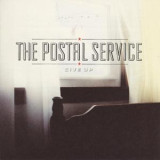
Nachdem 2013 zum 10-jährigen Jubiläum die Deluxe Version veröffentlicht wurde, ist ,Give Up" nun wieder als einfache LP im Original Format zu haben. Man kann alle Zeit und alles Geld der Welt darauf verwenden, das perfekte Pop-Szenario zu erschaffen, aber manchmal müssen sich die Sterne von ganz allein in die richtige Position rücken. Und obwohl die Mitglieder von THE POSTAL SERVICE schon früh darüber Witze machten, dass ,Such Great Heights" der ,Hit" ihres Debüalbums ,Give Up" sei, konnte niemand ahnen, was für einen Einfluss diese Album haben sollte, das in Schlafzimmern des Mittleren Westens konzipiert wurde. Über zehn Jahre sind ins Land gegangen, seit das kleine Projekt aus Ben Gibbard von DEATH CAB FOR CUTIE und Jimmy Tamborello (DNTEL, FIGURINE) scheinbar aus dem Nirgendwo anrauschte und sich tief in die Ohren all derer eingrub, die in Kontakt mit dem ansteckenden Electropop von THE POSTAL SERVICE geraten waren. Natürlich war die Musik von THE POSTAL SERVICE zu jeder Zeit viel mehr als nur Electropop. Die Kraft, mit der Jimmy und Ben den Zeitgeist des Indie Rocks der frühen Nuller Jahre heraufbeschworen, machte sie zu einem derartigen Phänomen, dass Künstler wie BEN FOLDS, AMANDA PALMER, STREETLIGHT MANIFESTO und CONFIDE ,Such Great Heights" gecovert haben. Ein Zeugnis des zauberhaften Funken und der melodischen Kompaktheit des Songs. Der Sound der Band ist ein derartiger Meilenstein, dass der Terminus ,Postal Service-esque" ein akzeptiertes Adjektiv in der Musikwelt ist. Es war unmöglich, vorherzusagen, wie groß ,Give Up" werden würde, aber schon 2003 war klar, dass diese Herren etwas ganz Besonderes erschaffen hatten.
- A1: Derrick L Carter - End Of The Line (Got Change For A $20)
- A2: Monolith - Something Wonderful (Club Mix)
- B1: Smoke City - Mr. Gorgeous (And Miss Curvaceous) (Mood Ii Swing Vocal Mix)
- B2: Armando - The Future (Cajmere's Vision)
- C1: Anneli Drecker - Sexy Love (Röyksopp Romantiske Sløyd)
- C2: A Man Called Adam - The Calling (Stay With Me - Vocal Mix)
- D1: Ten City - That's The Way Love Is (Underground Mix, Extended Version)
- D2: Freaks - Flywithme (Part 1)
Part 1[29,20 €]
A tribute to the late Kenny Hawkes, London's dark lord of house music. Lovingly selected and curated by Luke Solomon, Jonny Rock and Leon Oakey.
Running from 1995 to 2002, 'Space' was a Wednesday night founded by Kenny Hawkes and Luke Solomon. It inhabited the underground world of Bar Rumba right in the heart of London's West End and took place each and every week. Kenny and Luke had both been regular fixtures on infamous London Pirate Radio station 'Girls FM', and were seeking a suitable place to play the kind of music they supported on their respective radio shows. They were presented with a weekly opportunity at Bar Rumba and snapped it up.
'Space' was THE place for 7 solid years, hosting local and international guests from the house music community week in week out, to 200+ hardcore and dedicated followers. Regular guest bookings read like a 'who's who' of the music scene with sets from Derrick Carter, Andrew Weatherall, DJ Harvey, Tom Middleton, A Man Called Adam, Ralph Lawson and Huggy, Harri and Domenic, Francois Kevorkian, Salt City Orchestra, Carl Cox, Chez Damier and Ron Trent.... the list goes on and on and on! Music from seminal record labels such as Classic, Prescription, Cajual, Paper, Relief was played on rotation amongst a killer mix of Disco classics, alternative 80s music, left-field B-sides and techno. The night undeniably became a cauldron of amazing music and midweek hedonistic chaos.
As Soho changed beyond recognition and clubbing moved Eastwards, Kenny and Luke decided to call it a day. Sadly, Kenny Hawkes died in 2011, leaving a huge hole in the dance music community. Kenny was a legendary figure with an unmistakable sound and DJ style, he had a warped sense of humour and a huge personality and he continues to be dearly missed by all to this day.
As a tribute to Kenny, his musical partner in crime Luke Solomon alongside 'Space' regular and DJ / Editor supreme Jonny Rock, and former Classic Records label boss Leon Oakey have joined forces to celebrate his life through music. 3 years of tweaking, pooling music and clearing tracks have culminated in 2 very special double albums and a digital compilation. A collection of 'Space' classics, underground jams and the tracks that shook the Shaftesbury Avenue dance floor, shaping one of London's most revered midweek sessions.
All profits from the compilation will be donated to the British Liver Trust.
Existing somewhere between the post-psychedelic period of Soft Machine and the electric funk of Herbie Hancock's Headhunters, Black And White, the 1976 album from Norway's Vanessa is without question a formidable beast of a jazz-rock record. A potent brew of sonic experimentation and pulsating off-kilter groove. Taking their name from the genus of Nymphalidae butterfly, Vanessa was founded in 1971 by saxophonist Svend Undseth and pianist Frode Holm, the founder of the Oslo record store turned imprint, Compendium Records. Unsurprisingly analogous to the music championed across the Compendium catalogue Black And White is clearly influenced by the UK Canterbury scene, highlighted by Compendium's focus on the recordings of Soft Machine alumni Hugh Hopper and Elton Dean. Vanessa's spirit also lies synonymous with the collective pedigree on the label's roster including British progressive jazz stalwart Keith Tippett and Mirage (a UK group consisting of ex-members of Centipede and The Mike Westbrook Orchestra), together with the avant-rock collective Henry Cow and the experimental synthesiser-jazz of US ex-pat Joe Gallivan (together with Charles Austin).
Often dubbed the 'Compendium house band' owing to Holm's association with the label, the Vanessa sound is inherently familiar yet undeniably original. Each of the album's four long compositions are a meld of complex angular jazz laced with swirling electronic textures - furious rhythms that surge in intoxicating intensity before easing into fluid passages of soulful post-bop. The dichotomy of these styles plants the group firmly into radical new jazz territory alongside their Canterbury contemporaries. Despite their brief existence, the band, alongside the label left an indelible mark on Norwegian jazz-rock and the headier side of European progressive music at large.
Reissue of 1976 Norwegian Jazz-Rock album.
Post-psychedelic period Soft Machine meets the electric funk of Herbie Hancock's Headhunters
Transferred and restored from the original master tape.
Tripping Daisy is a neo-psychedelic pop rock band that was formed in Dallas, Texas, by lead singer/guitarist Tim DeLaughter in 1990 along with Jeff Bouck (drums), Wes Berggren (guitar) and Mark Pirro (bass). The group disbanded in 1999 following the sudden death of Berggren. The remaining members reformed for a few reunion concerts in 2017 and 2019. Their debut album Bill was released in 1993 and features 10 tracks which are evidence of the early 90’s alt-pop sound.
Bill is available on vinyl for the first time and includes an insert.
• 180 GRAM AUDIOPHILE VINYL
• INCLUDES INSERT
• 1993 DEBUT ALBUM FEATURING “MY
UMBRELLA” AND “BLOWN AWAY” A.O.
• AVAILABLE ON VINYL FOR THE FIRST TIME
• FEATURING “MY UMBRELLA”, “BLOWN AWAY” A.O.
Created between Palm Springs, California and Hilo, Hawai'i, V is the first double album from the Hawaiian-New Zealand singer-songwriter, multi-instrumentalist and producer Ruban Nielson's Unknown Mortal Orchestra band. Designed to play as one continuous movement and road-tested on dry California freeways, V is the definitive Unknown Mortal Orchestra car record. It's also the fifth full-length album Ruban has released in twelve years. Across fourteen sunbleached songs - written solo or with his brother Kody - Ruban draws from the rich traditions of West Coast AOR, yacht rock, weirdo pop and Hawaiian Hapa-haole music. Over a laidback blend of singalong anthems and cinematic instrumentals, he evokes blue skies, afternoons spent lounging by hotel swimming pools and the alluring darkness that lurks below perfect, pristine surfaces. It's a duality expressed in the dilapidated sunset blues and the saltcorroded soul Ruban explores through tracks like `Layla' and `Nadja. ' During the pandemic's early days, Ruban reunited with Kody at a cousin's wedding in Hawai'i. With assistance from their father, Chris Nielson (saxophone/flute) and longstanding Unknown Mortal Orchestra member Jake Portrait, they brought everything Ruban had been thinking about together. The result was V, due for release on March 3, 2023, through Jagjaguwar. When they talked about records that moved them in that spine-shivering manner, Ruban started thinking about the 70s AM radio rock and 80s pop songs that had lurked on the edge of his subconscious mind for most of his life. He wanted to write his version of records like that, leading to the two glorious uptempo singles Unknown Mortal Orchestra released in 2021, `Weekend Run' and `That Life'. However, the golden good times never last forever. Not long after, health issues began to plague his extended family.Putting his recordings aside, he helped his mother and his uncle move home from New Zealand and Portland to Hawai'i, and began dividing his time between Hawai'i and Palm Springs. During this period he reconnected with his relatives, reassessed his past, and started to look at things with fresh eyes. Hawai'i brought back memories of the darker side of his parents' lifestyle as entertainers. On those trips, he heard those classic AM radio rock records everywhere. They were inextricably intertwined with the palm trees, swimming pools, and glamorized hedonism he'd internalized from his childhood. There's a type of music in Hawai'i called Hapa-haole (Half white). You can hear it expressed in signature Unknown Mortal Orchestra style through the humid guitar-led atmosphere of V's penultimate song, `I Killed Captain Cook'. Although the songs are presented in a traditional Hawaiian manner, they're mostly sung in English. Having been influenced by Hawaiian music since Unknown Mortal Orchestra's first album, Ruban saw a space for himself within the tradition. When he reflected on his success, he realised he had the responsibility and platform to represent Hapa-haole music on the global stage.
Yellow Vinyl
Created between Palm Springs, California and Hilo, Hawai'i, V is the first double album from the Hawaiian-New Zealand singer-songwriter, multi-instrumentalist and producer Ruban Nielson's Unknown Mortal Orchestra band. Designed to play as one continuous movement and road-tested on dry California freeways, V is the definitive Unknown Mortal Orchestra car record. It's also the fifth full-length album Ruban has released in twelve years. Across fourteen sunbleached songs - written solo or with his brother Kody - Ruban draws from the rich traditions of West Coast AOR, yacht rock, weirdo pop and Hawaiian Hapa-haole music. Over a laidback blend of singalong anthems and cinematic instrumentals, he evokes blue skies, afternoons spent lounging by hotel swimming pools and the alluring darkness that lurks below perfect, pristine surfaces. It's a duality expressed in the dilapidated sunset blues and the saltcorroded soul Ruban explores through tracks like `Layla' and `Nadja. ' During the pandemic's early days, Ruban reunited with Kody at a cousin's wedding in Hawai'i. With assistance from their father, Chris Nielson (saxophone/flute) and longstanding Unknown Mortal Orchestra member Jake Portrait, they brought everything Ruban had been thinking about together. The result was V, due for release on March 3, 2023, through Jagjaguwar. When they talked about records that moved them in that spine-shivering manner, Ruban started thinking about the 70s AM radio rock and 80s pop songs that had lurked on the edge of his subconscious mind for most of his life. He wanted to write his version of records like that, leading to the two glorious uptempo singles Unknown Mortal Orchestra released in 2021, `Weekend Run' and `That Life'. However, the golden good times never last forever. Not long after, health issues began to plague his extended family.Putting his recordings aside, he helped his mother and his uncle move home from New Zealand and Portland to Hawai'i, and began dividing his time between Hawai'i and Palm Springs. During this period he reconnected with his relatives, reassessed his past, and started to look at things with fresh eyes. Hawai'i brought back memories of the darker side of his parents' lifestyle as entertainers. On those trips, he heard those classic AM radio rock records everywhere. They were inextricably intertwined with the palm trees, swimming pools, and glamorized hedonism he'd internalized from his childhood. There's a type of music in Hawai'i called Hapa-haole (Half white). You can hear it expressed in signature Unknown Mortal Orchestra style through the humid guitar-led atmosphere of V's penultimate song, `I Killed Captain Cook'. Although the songs are presented in a traditional Hawaiian manner, they're mostly sung in English. Having been influenced by Hawaiian music since Unknown Mortal Orchestra's first album, Ruban saw a space for himself within the tradition. When he reflected on his success, he realised he had the responsibility and platform to represent Hapa-haole music on the global stage.
- 1: Novaks Kapelle - Garbage Man
- 2: Charles Ryders Corporation - White Flames
- 3: Expiration - It Wasn't Right
- 4: Maybe Hair - War
- 5: The Seals - Stop This War
- 6: The Cop Stigh - War History
- 7: Albatross - I Am Dead
- 8: Rocky F. Holicke - Ready For Take Off
- 9: Beatniks - Fernost...komm Wieder
- 10: Jack Grunsky - Sally Mc Gregor
- 11: Les Sabres - Yes I See
- 12: V-Rangers - Make Love
- 13: Les Marquis - Silence On The Shore
- 14: The Hush - Giny
- 15: Generation 2000 - All Right
- 16: Wallflowers - Blumen Im Haar
The Schnitzelbeat goes on ..... und wir finden uns am Übergang zweier Jahrzehnte wieder. Woodstock hat gerade das offizielle Ende des Summer Of Love besiegelt, die Beatles befinden sich im Stadium des Zerfalls und The Stooges läuten mit unbarmherzigem Lärm ein neues Zeitalter ein. Zurück in Österreich ... die Stadt Wien dämmert weiterhin selig im bornierten Mief der Nachkriegszeit. Gelegentlich weht der Wind den Klang einer Ziehharmonika und eines Jodlers vom Land in Richtung Stephansdom. Die eingeweihten Hörer der Schnitzelbeat-Serie ahnen es allerdings bereits: da war noch etwas Anderes, etwas Wildes, Ungutes, ein dröhnender Faustschlag in die hornbebrillten Gesichter der Spießbürger. Doch wer hätte gedacht, dass die gelungenste Annäherung an den Proto-Punk der Blue Cheer oder MC5 ausgerechnet auf dem Volksmusiklabel Alpenton erscheint? (Albatross, "I am dead"). Da fährt schon ein Aufschrei des Entsetzens aus der Lederhose. Und ein Lächeln puren Glücks in die Gesichter aufgeklärter Fans obskurer Rockmusik. Auch The Seals erweisen sich 1969 als würdige Kämpfer im Krieg der Generationen: "You know nothing about the new generation / because you live in the U-Bahn-Station" stellen die Psychedelic-Punks aus Wien interessanterweise in ihrer Nummer "Stop this War" fest. Und auch sonst ist der Krieg ein geläufiges Thema: der 2. Weltkrieg (The Cop Stigh, "War History"); der Vietnamkrieg (Maybe Hair, "War"); der Krieg der Geschlechter (Young Society, "It's War"). Doch was wäre die Zeit der Hippies und Kommunarden ohne freie Liebe, Blumenarrangements und von allerlei Substanzen unterstützte Ausnahmezustände? "Nicht auf die Blumen in dem Haar, auf euer Herz kommt es an / denn Liebe nur allein alles ändern kann" singt die Casting-Boyband The Wallflowers, aufs trefflichste begleitet von einem Kinderchor, der leider nicht immer ganz textsicher ist. Die Aussage an sich würden aber sicher auch The V-Rangers unterschreiben ("Make Love"). Oder Hannes, Erich, Peter und Arno von der Salzburger Beatband Les Marquis, die einen Westcoast-Liebestraum an den Stränden des Salzkammerguts lebendig werden lassen ("Sand on the Shore"). Zur Halbzeit von Schnitzelbeat Vol. 3 wird ein unvergesslicher Höhepunkt gereicht. 1973 veröffentlicht Rocky F. Holicke die ultimative psychedelische Hymne aus heimischer Produktion: "Ready for Take Off" ist ein unbeschreibliches Monument eines Songs, eine wahrhaft überirdische Erfahrung musikalischer Transzendenz. Wenn es schon über die Wolken geht, dann bitte so, Herr Reinhard Mey. Und natürlich auf Holickes eigenem Label, Aero-Sound. Wo sonst? Während Hide & Seek auf den Spuren von Cream wandeln und ebenfalls von jeder Flugangst befreit durch den Orbit segeln ("I can fly"), blasen aus den Triebwerken von Karl Ratzers Gitarre längst sengend heiße "White Flames". Der legendäre Musiker und Frontmann der Charles Ryders Corporation ist nicht nur einer der besten Jazzgitarristen die Österreich je hatte - er nimmt es auch mit James Marshall Hendrix auf, wenn alle Effektpedale bis zum Bühnenboden durchgedrückt sind. Etwa zur selben Zeit findet sich eine oberösterreichische Ministrantenband - heimlich, nächtens - am Wochenende im Musikzimmer einer Mühlviertler Volksschule ein. Und nimmt dort eine brandgefährliche Granate hochexplosiven, psychedelischen Garagenpunks auf. Mit mehr Fuzz, Wah-Wah, Echo und Farfisa-Orgel als selbst der Leibhaftige persönlich erlaubt hat (The Hush, "Giny"). Und dies ist nicht die einzige weithin unbekannte Super-Rarität, die der Archivar, Subkulturforscher und Rare-Track-DJ Al Bird Sputnik und sein Team von den Trash Rock Archives zusammengetragen haben: die verschollene erste Single von Novaks Kapelle erscheint hier erstmals in einer komplett restaurierten Version, ohne Nadelhüpfen und mit relativ wenigen lästigen Nebengeräuschen ("Garbage Man"). Von den lediglich 10 angefertigten Exemplaren der einzigen Platte der Austrian Brothers ("Brother") konnte die einzige Kopie ohne Pressfehler aufgetrieben werden. Und um endlich der 7" von The Cop Stigh habhaft zu werden, musste sogar jemand sein letztes Hemd verkaufen und die Hose bis zu den Knöcheln runterlassen. Aber "All right", um es mit den Worten der steirischen Acid-Rocker Generation 2000 zu sagen: es hat sich ausgezahlt. Schnitzelbeat Vol. 3 fügt der vergessenen Frühgeschichte der österreichischen Rockmusik wieder zahlreiche faszinierende Kapitel hinzu. Begeben Sie sich mit Al Bird Sputnik und den Labels Konkord und Digatone auf eine weitere Reise in die Tiefen wohlsortierter Plattenkisten und pilgern Sie vor einem Himmel voller Schwedenbomben und Mannerschnitten über Gebirge verzerrter Gitarren in die entlegensten Regionen der österreichischen Popkultur. NOVAK
For a quarter of an hour, Zürich was the navel of the world. Let's look back: at New York's CBGB's, pre-punks were shredding away, Malcolm McLaren, as a man with a fine-tuned taste for the hip, imported the sound to London, where his sweetheart Vivienne Westwood dressed the test-tube band The Sex Pistols. A few pop magazines later (we are in an analog world!) punk bands sprouted everywhere, like shiny pimples on poorly fed teenagers. Contrary to legend, even back then, it was often those with a musical background who were the most successful. One such example, Henrich "Wüste" Zwahlen, who had learned the violin, attended a jazz school and went into prog-rock before joining the Nasal Boys, one of the first punk bands in Zürich. The scene included the female band Kleenex (cover: Fischli of art heroes Fischli/Weiss), whose minimalism was praised by the London music press, while the world's most important rock theorist, Greil Marcus, wrote an ode highlighting Zürich's role as the birthplace of Dadaism. A fertile ground for the militant youth movement that exploded in 1980 and stirred up the city of banks, protestantism and boredom with raw wit and expressive violence. Gathering at concerts of local bands and fueled by endogenous and artificial substances - they paid homage to exuberance and self-indulgence.
The mantra of "everything-is-possible" was driven forward on the musical front by progress in terms of means of production: analog electronic instruments were no longer reserved for hippie nerds, who sat in front of large plug-in boards like autistic-psychedelic switchboard operators connecting cables for their sound carpets. Now snazzy stage personnel elicited fast-paced sounds from handy devices often made in Japan. Kraftwerk was fashionable, the Zurich duo Yello experimented with new synthetic sounds, and the groundbreaking album "Alles Ist Gut" by the Düsseldorf based duo D.A.F. (Deutsch Amerikanische Freundschaft) was released, which chanted its program of provocation times danceability with lines such as "Tanz den Jesus Christus, tanz the Mussolini, tanz the Adolf Hitler." In England meanwhile, electronically backed New Romantic bands were replacing New Wave. The Human League, Heaven 17, Duran Duran, OMD, Depeche Mode or Visage stormed the charts.
In Zürich's underground, the duo Aboriginal Voices caused a stir at that time. A couple, good-looking, styled, looking cool into the cold neon light, with a danceable beat and sequenced electro sounds, to which Micheline gave a very unique touch when she sang in French and English. Micheline had a classical piano education, had left home early, worked as a lighting technician in a strip joint and at Booster, the hottest boutique in town (one of the relicts that still exists). Voilà: a musician who was as stylish as she was tough. She was already playing with Wüste in the band "Doobie Doos", a band where everyone played an instrument they didn't master. In 1980 the Aboriginal Voices were formed, initially with vocalist Magda Vogel (of later UnknownmiX fame), who was trained as a classical singer.
Frustrated by organizational friction and constant hassles with band lineups, Wüste and Misch decided to do everything as a twosome: self-mixed, self-styled, self-produced. With the top-of-the-line Linn drum machine clocking the beat, Wüste's guitar and Micheline on the Yamaha synthesizer created a unique sound of danceable electronic music. Whereby the Aboriginal Voices acted as a kind of proto-influencer, receiving the latest equipment to try out, especially since they made it a point not to work with tapes, but to design everything for live shows. They had an interface built for the legendary Roland MC-4B, who sequenced the modular Roland System 100M but where one output controlled a light show synchronized with the sound. A pioneering act that fit well into the DIY spirit of punk, with its self-distributed tapes and fuck-you attitude towards the cretins of the music industry. Consequently only two cassettes and an EP were released. There was something futuristic about the sound, the vestiary style and the electronics, while the attitude remained rebellious. Of course something so deeped in the Zeitgeist wasn't meant to last. Wüste moved to New York, Micheline stayed in Zurich, both still active in the music scene to this day.
Sven Regener, head of the band Element of Crime and one of Germany's most successful pop writer said a few years ago when asked if he knew of any Swiss music: "Of course! In 1983, a Swiss band called Aboriginal Voices played with us at a festival in Zurich. Great, avant-garde electro-pop. That was my first encounter."
If you ever saw them live, you never forgot them, and so over the years you belonged to a teeny-tiny circle of insiders, happy to be joined after all these years by new aficionados who appreciate the sound of that quarter-hour, when Zurich was ravishing, creative and exciting.
- Thomas Haemmerli
- A1: Rashoumon (Feat The Blue Jeans)
- A2: Sado Okesa (Feat The Bunnys)
- A3: Tsugaru Goze (Feat The Blue Jeans)
- A4: Tsugaru Jongara Bushi (Feat The Blue Jeans)
- A5: Abashiri Bangaichi (Feat The Blue Jeans)
- B1: Dannoura (Feat The Blue Jeans)
- B2: Tsugaru Hanagasa (Feat The Blue Jeans)
- B3: Taiyou Ni Sakebou (Feat The Blue Jeans & Rui Takahashi)
- B4: Komoro Oiwake (Feat The Bunnys)
- B5: Amefuru Machikado (Feat The Blue Jeans)
Japan's guitar hero Takeshi Terauchi reworks traditional songs and lets everything go wild with his magnificent and frenzied guitar sound. Enter the electrifying world of Eleki!
Gatefold 180g heavy vinyl LP, reverse board print. Comes with extensive liner notes by Japanese pop culture writer Julien Seveon (Cinexploitation)
All tracks licensed by King Record Co., Ltd., Tokyo, Japan.
Mastering and lacquer cut by Jukka Sarapää at Timmion Cutting Lab, Helsinki, Finland.
Artwork by Nker
The aftermath of World War II gave rise to a global phenomenon that saw new generations of young people rise up determined to forge new paths from their elders – culturally, politically, and musically. Japan was no exception and the recent past made the local youth angrier, hungrier and even more determined to fully experience something different from their parents. The country caught on to the early rock & roll craze almost in tandem as it was happening in the States. Teenager Chiemi Eri singing "Rock Around The Clock" and Kazuya Kosaka with "Heartbreak Hotel" were among the first to make what would soon be called Rokabiri accessible to a large audience. Teacher and parent associations showed concern regarding this new music when teenagers started missing school to attend afternoon shows – one of which most notably being the Nichigeki Western Carnival where all the top names of Rokabiri played to sold out audiences. But by the end of the 1950s, the youth of Japan had moved on to something else entirely: Eleki.
The 50s and 60s were a time of rapid change that saw trends come and go. Japan, like all other industrial countries, saw its youth move from one musical sensation to the next. And in the early 60s, there was one band in particular that created a distinct new flavor: The Ventures. Leaving behind vocals and focusing strictly on the impact of the sound of the electric guitar, The Ventures drove kids crazy all over the world. Other bands followed, most notably The Shadows, but in Japan, no other instrumental rock band managed to leave such an impact. The sound of The Ventures helped boost guitar sales in Japan and soon hundreds of cover bands were popping up all over the country. The Eleki Bumu (electric boom) was now in full effect with Takeshi Terauchi emerging as its first and greatest guitar hero.
Terauchi was born January 1939 in the prefecture of Tochigi, north of Tokyo. His mother taught music and played the shamisen – a traditional Japanese stringed instrument – while his father ran, among other things, an electronics shop. Their respective professions were to be decisive in the path that Terauchi would later take. Serendipitously, at the age of five, Takeshi was given his first instrument – a guitar. His destiny sealed, he quickly began experimenting with different tools from his father's shop to give his instrument a stronger sound. The technological approach came from his father, the technique from his mother. Terauchi's signature playing style owes a lot to his mother's instrument of choice, as he attacks the notes on his guitar as one plucks the strings of a shamisen.
This exceptional compilation you are holding in your hands explores some of the best works by Takeshi Terauchi, recorded between 1966 and 1974, where the guitar hero looks inwards to Japan for inspiration. A meeting between traditional folk songs and the unique way Terauchi and his band play: the content is explosive, inspired, and highly addictive! The 60s and 70s were undoubtedly Terauchi's finest hours, and in the late 60s, one Japanese critic said that Terauchi was not only the best guitarist in Japan, but also in the world. You can now find out why.
Freestyle puts out another reissue 12" in their drive to unearth rare and classic UK funk, soul & boogie records - this time a much needed pressing of the late Candy McKenzie's heavy boogie-funk cover of Patrice Rushen's classic Remind Me. Produced by Candy's late cousin, and seasoned session bass player, John McKenzie (and licensed from the family estate) this was originally released in 1983 - and comes with an excellent dubbed-out 'Different Style' instrumental version on the flip.
-----------------------
Candy McKenzie (1953-2003) was a North West London-based vocalist from a Guyanese family heavily steeped in musicianship . She began learning the piano at a young age, picking up vocal harmony from her father, a jazz bass player. Her brothers Bunny & Binky, were also celebrated bassists. Candy would marry young in 1970 at the age of 17, though just one year later her brother Binky (who played with the likes of Cream, Alexis Korner & John Mclaughlin in the late 60s) tragically killed her mother and father, along with Candy's husband in an attack at the family home to which Candy was present. Candy was also injured but escaped with her life.
In the years that followed the tragedy Candy, regularly accompanied by her brother Bunny, would find reggae vocal session work - often at the Chalk Farm Studios frequented by many key producers & acts. She found her way onto Aswad's first album and Keith Hudson's legendary Flesh Of My Skin Blood Of My Blood LP - and a little while later on a couple of sessions with Bob Marley for Island, under the supervision of Lee Perry.
The latter two parties took a keen interest in Candy, with Island wisking her away to Jamaica in 1977 to record an album at the legendary Black Ark. Her vocals found their way onto The Congos seminal Heart of the Congos LP, but the album she recorded with Perry was shelved - with just the Black Art holy grail 12" Disco Fits / Breakfast in Bed finding it's way to release at the time.
Back in London, Candy spent the early to mid 80s recording various lovers and funk/soul 12"s, including this fantastic cover of Patrice Rushen's Remind Me, produced by her cousin John. She went on to record singles for labels like Elite & Cooltempo throughout the '80s and early '90s, and appeared as backing vocalist with the likes of Leonard Cohen, Whitney Houston, Elton John and Diana Ross. She passed away in 2003, with her one and only album recorded at the Black Ark finally seeing release on Trojan in 2011.
Candy's cousin John McKenzie got his starts in the music industry in the mid 70s as part of prog group Man and communal festival rockers Global Village Trucking Co., as well as playing with the likes of Annette Peacock and Steve Hillage. His father Mike McKenzie was also a key Carribbean jazz figure in the UK throughout the early 1950s, through to the '60s and '70s. John would become a heavily in-demand session musician - playing with everyone from the Eurhythmics to Bob Dylan - while also finding time to produce this record, alongside a couple of excellent 12"s with Mel Gaynor as Finesse, between 1982 and '83. He would regularly tour the world as a live musician for a huge array of headline acts, appearing on multiple chart hits, and in his later years was a member of the excellent group Ibibio Sound Machine. He lost his battle with cancer in 2020.
This reissue is dedicated to the memory of both John & Candy McKenzie.
- A1: Go Hard
- A2: West Coast
- A3: Fyi
- A4: Cow's Milk
- A5: No Beef
- A6: Lice Team Baby (Feat. Aesop Rock)
- A7: Sheesh (Feat. Aesop Rock)
- B1: Lovin It
- B2: Go Hard Inst
- B3: West Coast Inst
- B4: Fyi Inst
- B5: Cow's Milk Inst
- B6: No Beef Inst
- B7: Lice Team Baby (Feat. Aesop Rock) Inst
- B8: Sheesh (Feat. Aesop Rock) Inst
- B9: Lovin It Inst
"I wrote half of these songs when my energy was either headed in the wrong direction or already there. I wrote the other half while my energy was moving in a direction I'm more excited about, that I find to be more enriching. They're all still my songs though. My mother, and lots of my relatives, used to call me "Angelito."
Little Angel. The taijitu is the symbol for yin and yang. Opposites that make a whole. Given the dualistic/ duelistic nature of the songs on the record, put it all together and what do you get, Anjelitu.
With his new album, Gecko Turner confirms that he is a standout artist in the global groove scene, a must for the outernational sounds aficionados.
Somebody From Badajoz is the fifth studio album in his much lauded discography and his first in seven years, eagerly anticipated by both his fans and himself: "this business of dedicating yourself to music and making songs... it's a long game."
With the release of his first two, remarkable, albums, Guapapasea! (2003) and Chandalismo Ilustrado (2006), Gecko started cultivating what one astute journalist defined as Afro-maduran soul—the "maduran" bit referencing Extremadura, a region in central-western Spain.
Badajoz, Gecko's birthplace, is the biggest city in the area, on the border with Portugal, by the Guadiana River. It is a place that oozes history, where there is constant movement at the border, and people's character is friendly and open-minded with foreign habits.
Gecko's Afro-maduran soul isbuilt on Afro-American music and drenched in Brazilian, African, Latin American and Jamaican sounds. There are also echoes of a youth marked in equal parts by our man's admiration for the Beatles and the flamenco that could be heard everywhere in Badajoz in the seventies. It makes for a singular sound and a musical language of its own—spicy, succulent, full of nuances, but with a very personal flavour.
The album opens with the Nigerian talking drums of Twenty-twenty Vision, (neo) soul in a magical falsetto, carried by a sumptuous orchestral arrangement with a cinematic flavour: "I'd been thinking about doing something called 'Twenty-twenty Vision' for some time, making a play on words with the vision we have of the world after the year 2020 and the medical expression, which, in ophthalmological terms, means 'normal or complete vision.' Beyond that particular song, I think that's the mood of the album: a look at society in the twenties of the 21st century and the feelings and demons it produces."
It's followed by De Balde, a very special song born from a posthumously discovered lyric by the great writer Carlos Lencero, a regular collaborator of Camarón, Pata Negra, and Remedios Amaya, and also from Badajoz. While conceived as a fandango, Gecko has moulded it into his sound in such a seamless way it now seems as if the words could only have been written to be embraced by the percussion, brass, and backing vocals heard on the album. It's the only lyric on Somebody From Badajoz not written by Turner, still it sits rather comfortably with the rest, sharing the same emotivity and sensitivity, as well as the trademark humour and irony.
Other tracks see more protagonism for the rhythm.The beat-driven Ain't No Fun Preachin' to the Choir features Gecko's vocals walking the thin line between singing and talking over a phenomenal afro-disco-funk-infused trailblazer. In Am I Sad? it's impossible to not bob your head to the queen of Papatosina's mongrel rhythm, as close to the banks of the Guadiana river as it is to the shores of the Mississippi. Qué Siesta Tan Buena, He Babeao Y To! is an ode to the snooze in true Afro-Maduran fashion. And in Come And Try, the Caribbean influence is evident—lovers' rock that invites you to dance in good company.
In these songs, and throughout the album, for that matter, the musicians accompanying Gecko, who himself plays many of the instruments as well, shine brightly. All hailing from Extremadura, Javi Mojave (percussion), Álvaro Fdez 'Dr. Robelto' (bass), and Rafa Prieto (guitar) have been carrying him with delicate forcefulness since he started out as a solo artist. At the same time, the wonderful and essential voices of Deborah Ayo, Astrid Jones, Fani Ela Nsue, and Miriam Solís give the album a sunny variety of colours. And there are many more—a sensational group of musicians contributes dazzling harmonic bursts to many of the songs. The palette of sounds is very diverse and rich in textures and nuances, including, for example, the ngoni, bells, and various repurposed kitchen utensils.
The groove is always around, moving between the magical border sound of Everybody Knows Somebody From Badajoz and Little Dose, the silky soul of The Sibariteo Appreciation Society, and the exultant celebration of End Of The World (which surprisingly sees Gecko turning to the occasional use of autotune), a piece that could be used for the final credits of a Monty Python film and, in fact, closes the album.
Gecko Turner has done it again with Somebody From Badajoz, looking to the future without losing sight of the roots. In times of upheaval all over the globe, when people are looking for purity, he delivers a formidable piece of work: risky, optimistic in spite of everything, and with a decidedly bastard sound. Let's rejoice.
It's hard not to see the hype around BRUIT= as the next big thing in post-rock. While their 2018 EP Monolith provided a promising indication of their son- ic ambition, it was their debut LP The Machine is Burning and Now Everyone Knows It Could Happen Again which really set off the trig- ger. Receiving rave reviews around the globe and selling out the first vinyl pressing of 3.000 copies within less than a year, BRUIT= have no need to prove themselves beyond what they have already achieved so far. Consisting of three musical meditations, Apologie du Temps Perdu Eng. apology for time wasted sees BRUIT= cut down on their massive sound in favour of a more subtle contem- plation. In contrast with their recent streaming single «Parasite (The Boycott Manifesto)» with its direct message for Spotify CEO Daniel Ek and his listeners, the band have seemingly forgone their activist agenda paring back the grand thematic gestures and poignant spoken-word excerpts. Instead, BRUIT= let the music do the talking, reaching an activism which is more visceral, but all the more personal. "This ambient EP is conceived as a comma between our first album and the next one," explains bass player & violinist Cle'ment Libes about the purpose of this record. "It is an invitation to lose time, a parenthesis in the frantic race of our society." Existing somewhere between the grand genius of soundtrack composers like Hans Zim- mer and Ramin Djawadi, and the experimental prowess of fringe pop artists like Radio- head and Darkside, Apologie du Temps Perdu reveals the hidden power of film scores. We all know that moment in which we cease to be conscious of the musical accompani- ment and we become truly absorbed in the story. The music becomes part of scenery, and in this moment we lose track of time. Talking of his own work Ramin Djawadi (Game of Thrones, Westworld) notes: "If you were to turn the picture off, there is a story there and a connection to the characters and the plots." In the same way, through the sweeping strings of «La Sagesse de Nos Ai"eux», the ethereal tape loops of «Re^veur Lucide» and the undu- lating synths of «Les Temps Perdus», worlds are created to get lost in, and we experience the full power of music with our eyes and ears open. RIYL Hans Zimmer, Nils Frahm, Godspeed You! Black Emperor, Balmorhea, Max Richter, Olafur Arnalds, A Silver Mount Zion, Boards Of Canada