Ein neues dynamisches Kapitel in der Diskografie von villagerrr: Carousel, das fünfte Album von Mark Scott als villagerrr, bewegt sich von Slowcore zu Shoegaze, von Log-Cabin-Folk zur beschleunigten Glückseligkeit des Rocks, der wie geschaffen ist für eine leere Autobahn. ,Carousel" ist das bisher kühnste und feinfühligste Album des Songwriters aus Ohio und eine umfassende Erkundung dessen, was es bedeutet, in einem überbelichteten und einengenden Zeitalter aufrichtige Kunst zu schaffen, in dem Scotts große Songs aus dem Mittleren Westen von dem Wunsch geprägt sind, in einer von Kommerzialisierung geprägten Ära nach bleibender Bedeutung zu suchen. Scott stellte die Musik im Laufe von zwei Jahren zusammen und ließ den kollaborativen Geist seines vorherigen Albums aufblühen. 2024s ,Tear Your Heart Out" führte zu Tourneen mit Real Estate, Greg Freeman und Momma, einem neuen Plattenvertrag mit Winspear und einer kürzlichen Deluxe-Neuauflage, wodurch sich der Kreis der Zuhörer und Mitwirkenden vergrößerte. ,Carousel" enthält eine Mischung aus Scotts aufstrebenden Folk- und Indie-Rock-Kollegen wie Boone Patrello von Teethe, h. pruz und Carolina Chau e von Hemlock und wurde von Scott selbst gemischt, nachdem er sich die Aufnahmen angehört hatte. ,Carousel" bietet eine Mischung aus Scotts aufstrebenden Folk- und Indie-Rock-Kollegen wie Boone Patrello von Teethe, h. pruz und Carolina Chau e von Hemlock und wurde von Scott gemischt, nachdem er sich die Rohfassungen auf langen Autofahrten oder beim Laufen angehört hatte. Mit Scotts feinem Gehör für Details und weitläufige Landschaften fühlt sich das Hören von villagerrr an, als würde man in das Gras der Prärie spähen, um zu sehen, was dort krabbelt, und dann plötzlich aufstehen, um die Pracht eines herannahenden Sturms zu beobachten. Carousel hegt eine gesunde Skepsis gegenüber der Welt, in der wir leben, aber es liefert auch den Beweis, dass man, wenn man seine Schutzmauer fallen lässt und auf andere Menschen zugeht, kreative und bereichernde Beziehungen aufbauen kann - und damit die Grundlage für ein tiefes, sinnvolles Leben schafft. Das Album wurde von Scott gemischt, nachdem er sich die Rohfassungen auf langen Autofahrten oder beim Joggen angehört hatte. Mit Scotts ausgeprägtem Gespür für Details und weitläufige Klanglandschaften fühlt man sich beim Hören von villagerrr wie beim Beobachten von Insekten im Präriegras, um dann plötzlich aufzustehen und die Pracht eines herannahenden Sturms zu erleben. Carousel hegt eine gesunde Skepsis gegenüber der Welt, in der wir leben, aber es liefert auch den Beweis, dass man, wenn man seine Schutzmauer fallen lässt und auf andere Menschen zugeht, kreative und bereichernde Beziehungen aufbauen kann - und damit die Grundlage für ein tiefes, sinnvolles Leben schafft.
Search:west k
Ein neues dynamisches Kapitel in der Diskografie von villagerrr: Carousel, das fünfte Album von Mark Scott als villagerrr, bewegt sich von Slowcore zu Shoegaze, von Log-Cabin-Folk zur beschleunigten Glückseligkeit des Rocks, der wie geschaffen ist für eine leere Autobahn. ,Carousel" ist das bisher kühnste und feinfühligste Album des Songwriters aus Ohio und eine umfassende Erkundung dessen, was es bedeutet, in einem überbelichteten und einengenden Zeitalter aufrichtige Kunst zu schaffen, in dem Scotts große Songs aus dem Mittleren Westen von dem Wunsch geprägt sind, in einer von Kommerzialisierung geprägten Ära nach bleibender Bedeutung zu suchen. Scott stellte die Musik im Laufe von zwei Jahren zusammen und ließ den kollaborativen Geist seines vorherigen Albums aufblühen. 2024s ,Tear Your Heart Out" führte zu Tourneen mit Real Estate, Greg Freeman und Momma, einem neuen Plattenvertrag mit Winspear und einer kürzlichen Deluxe-Neuauflage, wodurch sich der Kreis der Zuhörer und Mitwirkenden vergrößerte. ,Carousel" enthält eine Mischung aus Scotts aufstrebenden Folk- und Indie-Rock-Kollegen wie Boone Patrello von Teethe, h. pruz und Carolina Chau e von Hemlock und wurde von Scott selbst gemischt, nachdem er sich die Aufnahmen angehört hatte. ,Carousel" bietet eine Mischung aus Scotts aufstrebenden Folk- und Indie-Rock-Kollegen wie Boone Patrello von Teethe, h. pruz und Carolina Chau e von Hemlock und wurde von Scott gemischt, nachdem er sich die Rohfassungen auf langen Autofahrten oder beim Laufen angehört hatte. Mit Scotts feinem Gehör für Details und weitläufige Landschaften fühlt sich das Hören von villagerrr an, als würde man in das Gras der Prärie spähen, um zu sehen, was dort krabbelt, und dann plötzlich aufstehen, um die Pracht eines herannahenden Sturms zu beobachten. Carousel hegt eine gesunde Skepsis gegenüber der Welt, in der wir leben, aber es liefert auch den Beweis, dass man, wenn man seine Schutzmauer fallen lässt und auf andere Menschen zugeht, kreative und bereichernde Beziehungen aufbauen kann - und damit die Grundlage für ein tiefes, sinnvolles Leben schafft. Das Album wurde von Scott gemischt, nachdem er sich die Rohfassungen auf langen Autofahrten oder beim Joggen angehört hatte. Mit Scotts ausgeprägtem Gespür für Details und weitläufige Klanglandschaften fühlt man sich beim Hören von villagerrr wie beim Beobachten von Insekten im Präriegras, um dann plötzlich aufzustehen und die Pracht eines herannahenden Sturms zu erleben. Carousel hegt eine gesunde Skepsis gegenüber der Welt, in der wir leben, aber es liefert auch den Beweis, dass man, wenn man seine Schutzmauer fallen lässt und auf andere Menschen zugeht, kreative und bereichernde Beziehungen aufbauen kann - und damit die Grundlage für ein tiefes, sinnvolles Leben schafft.
- A1: Chihei Hatakeyama / Gloaming Western Ocean
- A2:
- A3: Kaoru Inoue / A Distant Coast
- A4: Yakenohara / Heavenly Pale Waves
- A5: Calm / Shiono Ka
- B1: Natural Calamity / Wipe Out
- B2: Shimon Hoshino / Blue Horizon Memory
- B3: Hiroto Taniguchi / Still
- B4: Moshimoss / Unsaid
- B5: Yosuke Konuma / In Harmony With The Flow
■ The latest installment in the popular ocean themed compilation series “SALT... meets ISLAND CAFE”, curated by the beach life magazine/media SALT...,
is DEEP BLUE the series’ first ever ambient music compilation. Centered around the title concept inspired by the deep, tranquil blue of the ocean, the album
presents soothing music tailored to modern lifestyles, spanning chillout, Balearic, meditation, and healing sounds.
■ Ten artists each highly trusted by discerning listeners across the ambient, chillout, Balearic, and surf‑music scenes have created brand‑new, original ambient
tracks inspired by the theme. From pioneers active since the ’90s to cutting‑edge trackmakers, this compilation brings together a stunning collection of
ocean‑themed ambient music.
■ Mastering is handled by ambient/Balearic maestro Calm, who is also featured as one of the contributing artists, delivering an exceptional sonic experience.
Enjoy all ten tracks, each expressing its own unique interpretation of DEEP BLUE.
■ The artwork features an artistic photograph by Pedro Gomes, a Brazil born, Japan based surf photographer, with design by Masato Maekawa (tAnkers inc.),
known for his work across apparel and outdoor brands. Under the supervision of SALT..., the visuals perfectly capture the compilation’s immersive world.
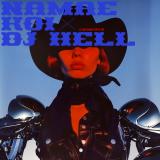
[b] a2. [.que] / deeply
Namae Koi - AAVA (Artificial Audio-Visual Artist), voice without a body, child of cinema and code - meets DJ Hell, godfather of electroclash, myth in motion.
This record is a split mirror:
Two originals by Koi.
Two reworks by Hell.
Four versions of desire, memory, and beat.
"U Can Dance With Me" is a digital western - a flirt in boots and chrome. A line pulled from a movie that never existed.
"Mars" travels forward by looking back - retro-futurist pulses, melancholic satellites, soft resistance.
DJ Hell bends both tracks into something darker, sweatier, more physical.
Koi stays crystalline. Watching. Whispering. Undressing the beat.
A future duet with no fixed timeline.
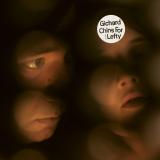
Chins For Lefty is the debut album and first recording by Gichard, a new duo chronicling the absurdities of end-stage capitalism and mouldering social rituals from their vantage point in Glasgow, Scotland. Recorded primarily in the band’s home studio straight to tape, Chins For Lefty combines gorgeous, ramshackle melody, DIY kosmische punk, drum machine + synth and, in vocalist/lyricist Lisa Jones, an absurdist commentator on the human condition as it navigates the anxieties of the modern world. Instrumentalist Chas Lalli’s swirling music accompaniment stitches an evocative mix of musical styles, the ragged wind beneath the lyrics’ wings.
Although the duo first collaborated in their previous group Dragged Up, their disparate musical and artistic backgrounds make for an alluring mix in Gichard. Lalli has spent the last 20 years in the Glasgow underground, most notably in the noise rock group VOM, while Lisa Jones’s practice was in poetry and spoken word. Beginning as co vocalist in her previous band, in Gichard her lyrics are centre stage; the vision concocted alongside Lalli amounts to a total world-build.
Chins For Lefty scans almost like a novel, with each track elucidating a skewed universe that bears only some resemblance to the one you and I partake in. Like all works of fiction Gichard’s songs are rooted in reality and the lived experiences of its authors, but here characters are exaggerated, social mores and habits are pulled apart to reveal their inherent alienness. Universal emotions are laid bare, the bright light of anxious examination searching out every hairline fracture in our relationships. Distorted and cracked, the mirror that Gichard hold up to our world is also pretty damn funny.
Opener Cholesterol Test launches an expansive, cosmic guitar and synth intro that belies the Tascam-tape recorder it was recorded onto, like a Chromatics cut substituting anxiety for overt sexuality. Here Jones intones an apology to a non-responsive recipient, in the medium of a long voice note forensically deconstructing an interaction from the night before. Over punk guitars and shuffling, lo-fi drum machine splutters, the narrator in Asking The Apes “prefers things to people” before being taken hostage in the city zoo to confess an obsession which consumes the protagonist, ending with the immortal two liner “I sleep in a cocoon of old newspapers at the end of your street / And I think I have been fired from my job,” On album standout Posthumous Hologram, the narrator is faced with a human simulacra, in this case an undead pop star; the face of the encroaching technological singularity. Yes, it does requests, it can do My Way in 200 different language options. But what are the implications? While you’re left pondering, the alternating deadpan verse delivery and undeniably catchy chorus keep you company.
By the time Break Up With Johnny Dogbirth rattles into view, the band are satirising a suburban inanity blown up to cartoon proportions, soundtracked with a drawled musicality that recalls Rowland S. Howard’s post-Birthday Party balladeering. This approach is furthered on Human Resources: over an angular guitar+bass track, Jones’s short story recalls Dry Cleaning’s erudite lyrical post punk. On Soft Face, Lalli’s guitar and drum machine are swathed in echo and delay, as Jones dissects dating rituals with a west of Scotland drollness. Hamming It Up brings a porcine perspective in a short story that begins with the line “I was breastfeeding discreetly in the service station. She didn’t mind.” What follows is a passage punctured with canned laughter and a narrative involving tribute acts, modern farming techniques.
Brilliant first single Your Private Hell closes the album, the closest the group get to earnest perhaps, filtered through a surreal central Scottishness. While Your Private Hell might seem like a sardonic take down of romance, perhaps it’s the very distillation of love in all its awkwardness, selflessness and weirdness. Here there’s a distinctive Glasgow-ness to this doomed romance: the protagonist falls for an outsider, offers them cheap jarred hot dogs and carbolic soap (the infamous, excoriating soap dished out in schools and government buildings throughout Scotland), offers to cover up a murder, stalks them in the all-night Spar. It’s a short story of intrigue, murder and the irresistible pull of self-sacrifice to share in someone else’s suffering. If that’s not love, what is it? You can see this vision mapped out in black and white on their video for 'Your Private Hell'.
DJ support: Soul Clap, Walla P (Voyage Funktastique), Moniquea
The first lady of MoFunk Records is also considered by many to be one of the queens of modern funk music. Her latest, “Womp In My Spirit,” fuses a wide range of styles within its ten tracks and shows the true versatility of funk music. On one end, the deep g-funk bounce of songs like “Womp In My Spirit” & “However You Are” show you Moniquea's west coast roots clearly, while uptempo boogie bangers like “Get It Together” sit in the lane that MoFunk is best known for. Tracks like “Red Light” go in a more dancey direction, welcoming the sleekness of house music to mingle with g-funk whistles and rubbery synth bass, a track that recently caught the ear of Soul Clap and was remixed by them on their recent “Soul Clap vs. MoFunk” EP. The majority of production on the album was handled by MoFunk head honcho XL Middleton.
- A1: Return Of The Knödler Show 2 52
- A2: The Frogs Of Miwa - Cho (1) 4 52
- A3: Waiting (I) 5 38
- A4: An Old Friend Passes By 3 46
- A5: Coco Bolo Strip (1) 5 25
- B1: Peace And Pipe Utopia 3 14
- B2: Unidentified Dancing Object 1 44
- B3: The Call (I) 2 41
- B4: Wenn Das Rohr Dommelt 4 03
- B5: Mariahilf (Live Version) 3 36
- B6: Watching The Shades (I) 2 59
- B7: Playing The Table Music (Ii) 2 43
- C1: Could Be Nice Too 5 29
- C2: Ox Of Inner Depth 4 51
- C3: Ymir Shows Up 3 58
- C4: Could Be Nice 5 24
- C5: Playing The Table Music (I) 4 23
- D1: Coco Bolo Strip (Ii) 4 52
- D2: Locusts Looking Like Men 5 55
- D3: Waiting (Ii) ︎ 3 36
- D4: No Stove 2 29
- D5: An Old Friend Passes By Again 3 00
- D6: Heimkehr Der Holzböcke 3 16
Black Truffle is thrilled to announce Dalbergia Retusa, an extensive double LP selection of the solo guitar music of Hans Reichel, compiled by Oren Ambarchi. Last heard on Black Truffle as one quarter of the joyously anarchic Bergisch-Brandenburgisches Quartett, Hans Reichel (1949-2011) is one of the great figures of experimental guitar music. Though perhaps lesser known than peers like Derek Bailey, Fred Frith and Keith Rowe, Reichel’s rethinking of the instrument was in some ways the most radical of all. Early on, he dispensed with existing guitars to build a series of his own that explored the use of additional strings and fretboards, moveable pickups, extra bridges, special capos, and other innovations documented in the extensive booklet accompanying this release.
Reichel was a long-term resident of Wuppertal, the small Western Germany city that became an unlikely centre of European free jazz in the late 1960s, also home to Peter Brötzmann and Peter Kowald. His solo debut Wichlinghauser Blues was an early entry into the FMP discography and began a relationship with the label that stretched into the 1990s; all the solo performances heard here were first released on FMP. As Reichel says in the charming archival interview with Markus Müller included here, he was ‘always a cuckoo’s egg at FMP’, a label that began as an outlet for roaring European free jazz. What strikes the listener right from the opening selection on Dalbergia Retusa—‘Return of the Knödler show’, from 1987’s The Dawn of Dachsman—is the extraordinary beauty of Reichel’s music, at once alien in the shimmering sonorities and unconventional pitch relationships made possible by his invented instruments, and deeply lyrical, even romantic in its harmonic content. Growing up in West Germany in the 1960s, Reichel’s formative influences were mainly British and American rock bands, a background that shines through in many of the pieces included here: ‘An old friend passes by’ is haunted by the ghost of Hendrix’s rhythm guitar, and the wild closer ‘Heimkehr der Holzböcke’, taken from a rare 1975 7” and the only piece to use overdubbing, layers errant hammer-on and slide tones over a Canned Heat boogie chug.
Reichel was an important source for the development of Oren Ambarchi’s own extended approach to the electric guitar. Appropriately enough, his selection opens with the very first piece by Reichel he ever heard, on a flexidisc included with a 1989 issue of Guitar Player magazine. Though Reichel collaborated with others extensively in many settings and also performed on violin and his other major contribution to instrument invention, the daxophone, his music for solo guitar remains at the core of his oeuvre. Focusing exclusively on solo pieces recorded between 1973 and 1988, the 23 pieces on Dalbergia Retusa showcase the range and consistency of Reichel’s work, allowing the listener to see how his performances developed hand-in-hand with his instrumental inventions. On a piece from his very first LP, played on an 11-string instrument (partly strung with piano strings and using a schnapps glass a slide), we hear his intensive exploration of fret-hammering to create zither-like, chiming tone, which Reichel would hone further in later years with a double fretboard guitar specifically designed to be hammered rather than fretted and picked. On a piece from 1979’s Death of the Rare Bird Ymir, Reichel uses two steel-string acoustic guitars at once, with beautiful results: ‘some even say too beautiful’, he jokes in the interview included here. Many of the pieces from the 1980s make use of varieties of the ‘pick behind the bridge guitar’, instruments of uncanny harmonic richness primarily designed to be played on the ‘wrong’ side of the bridge. At times the unexpected behaviour of attacks, resonance, and decay can almost seem electronic, conjuring up the technology-assisted work of Henry Kaiser or even Fennesz, but realised solely through Reichel’s unorthodox techniques on his invented instruments. Extensively illustrated with photos and Reichel’s own plans and drawings of his instruments, Dalbergia Retusa is an essential introduction to the unique world of Hans Reichel. Rarely has music been at once so strange and so beautiful.
STRICTLY LIMITED TO 100 COPIES ARTIST PROJECT After discovering techno at La Concrète, invited by my girlfriend, it was a revelation, and I very quickly felt the urge to contribute in my own way. My intention has been to create tracks infused with positive energy (even if the creative process sometimes leads into slightly darker corners of music). Still, I realized—rather late—the importance of the musical genre known as “techno.” Here is my reflection on it: Nothing is closer to village music (with everything that implies among indigenous peoples, for example—important and respected moments of communion) than techno. On one side, you have basic organic instruments and the voice; on the other, the most advanced technology available. But fundamentally, the difference is only superficial—the essence is the same: a guide, and people who participate intuitively, ultimately finding or discovering their own inner paths… individuation. Techno represents the re-emergence of a kind of initiation rite that had been missing in the West for quite some time—a sort of continuation of Woodstock, more spread out over time but just as powerful from a societal perspective. This release is my contribution to that revival, in the same way a villager might feel free to join trance music with a simple stick that sounds right, or a drum—something intuitive that all our ancestors must have practiced naturally at one point or another. In short, nothing pretentious—just something made with heart
- A1: Black Line - Myele
- A2: Mbamina - Nzoumba I-Robots 1975 Unreleased Edit-44100
- A3: Mbamina - Watchiwara
- B1: Oxid - Bright Heron
- B2: Oxid - Oxid Trail
- C1: Stratosferic Band - Nowhere - Reverberated Unreleased Version
- C3: The Boston Garden - Lady Pick-Up
- D1: Mbamina - Nzoumba Unreleased-44100
- D2: Oxid - Oxid Trail Unreleased Extended Version
Daniele Baldelli
"A pleasant surprise to find in this release various atmospheres and sounds that have always been part of my DJing. It even made me rediscover M’Bamina, whom I used to play back in 1974 at the Tabù Club in Cattolica.
There are afro vibes as well, with Black Line – Myele, which is featured on one of my Cosmic tapes, and Nowhere by the Stratosferic Band recalls a track I used to play at the Baia degli Angeli…
Excellent work!"
Voom Voom Music was an independent Italian record label based in Turin, founded and managed by record producer Ivo Lunardi (Turin, December 6, 1940 – December 9, 2010). A pivotal figure in the Piedmont music scene, Lunardi was active both as a DJ and as the owner of several disco clubs.
The label operated for several years in the latter half of the 1970s, releasing mainly productions connected to the Italian dance and pop scene.
Since 2016, the original master tapes from the Voom Voom Music catalog have been owned by Gianluca Pandullo (I-Robots), a close friend of Ivo and Luca Lunardi. Through his labels Opilec Music and Turin Dancefloor Express, Pandullo oversees their preservation and historical enhancement.
The artistic direction of Voom Voom Music was marked by a distinct sonic identity — eclectic yet visionary. The Turin-based label founded by Ivo Lunardi embraced a sound that blended disco, pop, and rock influences, interwoven with African American grooves in a pioneering, international perspective.
Voom Voom Music was among the first Italian labels to introduce this kind of musical language in the country. A prime example is the Italian edition of the debut album by B.T. Express, Do It ('Til You're Satisfied), released in LP, 8-Track Cartridge, cassette, and 7" single formats.
The label’s productions clearly reflected the influence of black and funk music, as evidenced by the references and inspirations running through its catalogue. The track “Lady Pick-Up”, for instance, includes direct nods to “Do It Good” by KC & The Sunshine Band and Manu Dibango’s iconic “Soul Makossa”, revealing a musically refined and contemporary sensibility.
Among the label’s most representative works is Splash (1977) by the Stratosferic Band, a project conceived by Luigi Venegoni — producer, songwriter, and guitarist of Arti e Mestieri. Venegoni’s artistic journey spanned from progressive rock to space and Italo disco. The album artwork was designed by Piero D’Amore (1944 - 2022), a charismatic and multifaceted figure of Turin’s art scene (one of his works was even acquired by the MoMA in New York).
The record includes a disco reinterpretation of Van Morrison’s classic “Gloria”, and “Splashdown”, a track fusing the disco-rock energy of Rockets and Space. In contrast, “Nowhere” revisits the 1975 single by Hokis Pokis, a soul/disco band from Nassau County (New York), transforming it into a vibrant disco-funk number.
Another significant expression of the label’s catalogue is the afro-rock sound of M’Bamina, an Italo-Congolese group whose rhythmic energy and dialogue between African percussion and Western funk evoke the style of international formations such as Osibisa — themselves linked to a rich artistic history in Italy.
Limited run 10” vinyl, arrives in risograph printed cover, with additional insert.
Elijah Minnelli returns to Accidental Meetings, following stand out records for FatCat Records, ZamZam & his own BCC imprint, which have garnered support and AOTY charts from The Guardian, The Quietus and The Wire to mention a few.
Minnelli has a unique dub-wise take, fusing eastern & western folk influences with cumbia and earthy drones, cumulating in his own distinct sonic world and his ever evolving lore. Within Ball & Socket, Minnelli pushes his own vocals to the forefront for the first time, compared to the more accustomed background approach previously. The record also sees a collaboration with Osaka's Kiki Hitomi (Waqwaq Kingdom, ex King Midas Sound) on Unkind, the two intertwining throughout. Fans of the pairing will be happy when it gets a re-up halfway through on the Discomix.
Ball & Socket is a personal record on many a level for Minnelli, and the result ends up as one of his most beautiful body of works yet. It finds it's home on the Bristol imprint Accidental Meetings, four years after his first outing on the label.
Design by Oliver Kay, photography by Aleksandra Sandakow, printed & assembled by The Error Press.
- 01: Explanation
- 02: Hits Like Hank
- 03: Renaissance (While We)
- 04: Them That’s Got
- 05: Through These Streets
- 06: A.t.u. Is In The House Tonight
- 07: L.a. Styles Back
- 08: Mass Men Baby
- 09: No Regrets
- 10: Front Row
- 11: Just Like Akira
- 12: They Ryde
- 13: Showgun
- 14: Why Oh Why
- 15: L.a. Styles Back (Project Blowed Remix)”
Red "Eruption" Marble Blend" Doppel-Vinyl, inklusive 16-seitigem Booklet mit Texten und ausführlichen Liner Notes. Ursprünglich 1998 veröffentlicht, fing ,South Central Thynk Taynk" von Abstract Tribe Unique (Abstract Rude, Fat Jack, Zulu Butterfly Priest, Irie Lion King und DJ Drez) einen entscheidenden Moment in der Underground-Szene von Los Angeles ein - als junge schwarze Künstler den Hip-Hop von Grund auf neu erfanden. Mit einer Mischung aus jazzigen Beats, spiritueller Einsicht und einer äußerst unabhängigen Produktion wurde das Album zu einer Hymne auf Selbstständigkeit und kreative Rebellion. Jetzt wird dieser lange nicht mehr erhältliche Klassiker von Rhymesayers Entertainment als Deluxe-2xLP-Set mit einem Text-Booklet und einem Bonustrack neu aufgelegt und kehrt für eine neue Generation zurück. Im kulturellen Zentrum der Platte steht Project Blowed, eine legendäre Crew aus L.A., die von Abstract Rude und Aceyalone gegründet wurde und eine Reihe von Rap-Innovatoren hervorbrachte, deren Einfluss bis heute im globalen Hip-Hop zu spüren ist. Während der Mainstream-Rap den G-Funk-Boom der Westküste aufgriff, schlug die Blowed-Crew einen anderen Weg ein - geprägt von Jazz, radikaler Politik und afrozentrischem Futurismus. ,South Central Thynk Taynk" ist eine vielschichtige Zeitkapsel aus dieser revolutionären Zeit, die Ab Rudes tiefgründige Lyrik mit Fat Jacks genreübergreifendem Produktionsansatz verbindet und eine poetische Reflexion über Familie, Kampf und künstlerische Bestimmung schafft. Diese Neuauflage enthält den Titel ,L.A. Styles Back (Project Blowed Remix)" mit einer generationsübergreifenden Besetzung von Schwergewichten - Aceyalone, Myka 9, Medusa, Pigeon John, Blu, 2Mex, Ellay Khule, Riddlore und NGAFSH -, die unterstreicht, wie die Underground-Szene von L.A. seit Jahrzehnten ein kreatives Epizentrum geblieben ist. ,South Central Thynk Taynk" ist mehr als ein Kultartefakt; es ist ein lebendiges Dokument der Transformation, der Gemeinschaft und der künstlerischen Kraft.
[o] 15 : L.A. Styles Back (Project Blowed Remix)” [feat. Aceyalone, Myka 9, Medusa, Pigeon John, Blu, 2Mex, Ellay Khule, Riddlore, NGAFSH]
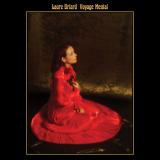
- A1: Rocking Chair
- A2: Le Train
- A3: Golden Sun
- A4: Miroir
- A5: Voyage Mental
- A6: Surprises
- B1: Je Comprends Pas
- B2: Respire
- B3: Sentimental Lies
- B4: Force Invisible
- B5: C’est Quoi Ces Gens
- B6: My Two Hours Of Sleep
- B7: Astrale Maison
Every so often in music, we come across voices that achieve a certain timelessness, so naturally do they encapsulate both past and present. Laure Briard is one of these voices, retro in form but contemporary at heart, spanning a career rich in aesthetic twists and turns, never without her signature magic, a special kind of eternal filter. Her first album, Révélation (2015), reveals her yé-yé influences, a testament to her love for ‘60s French pop music. Her second studio album, Sur la piste de danse (2016), follows in this vein and finds Laure accompanied as always by her long-time bandmates who share an affinity for warm, catchy arrangements that never lose their appeal. Her tour of Brazil marks a turning point in her career, introducing her to the local indie scene and thus launching her collaboration with the band Boogarins, as well as inspiring the release of multiple EPs composed and performed in Portuguese. Today, her music is embellished by touches of bossa nova and a folk sensibility, boasting increasingly intricate arrangements, as exemplified by her 2019 release, Un peu plus d'amour s'il vous plaît. Several years later, the Californian desert captures the musician’s imagination with Ne pas trop rester bleue, a poignant musical journey inspired by the rich history of Western legends and the role they play in shaping our collective consciousness.
In Voyage Mental, Laure Briard draws upon an inner energy unearthed during a new stage in her life, where the thrill of spontaneous adventure is not accessible in quite the same way. The result is a collection of sophisticated, introspective songs, narrating a young mother’s quest for balance in the face of routine. The album, nostalgic but always tethered to the present moment, is also the fruit of her collaboration with Gaëtan Nonchalant, a talented musician known for coaxing poetry out of the mundane. The two of them co-wrote and recorded five tracks at Studio Nocturne, accompanied by her long-time sidekick Pieuvre, aka Vincent Guyot, Léo Blomov, Pierre-Louis Vizioz, and Hedi Bensalem. The gentle pop opener “Rocking Chair” sways steadily to the rhythm of dynamic drums, followed by “Train,” a ballad that extends an invitation to set sail and daydream alone. The folk escapade continues with “Golden Sun,” a duet featuring the 1960s cult American musician F.J. McMahon, who Laure contacted via the internet on a whim. “Golden Sun” is an unlikely encounter between two generations and two cultures, giving new life to an old forgotten demo on the other side of the Atlantic. And while Laure sings of wide open spaces, cowboys, and sunsets sinking into the sea, we feel the city surrounding her in “Miroir,” a song composed by Hedi Bensalem that laments the suffocation of living in a crowded metropolis where the sky is a distant gray smudge. This pressing need for air, this search for rest and total disconnection, is one of the album's central themes. It may also explain the ever-present sense of nostalgia that pervades the songs, a welcome respite in our current era of doomscrolling and darkness. Along the way, Laure soothes us with melancholy guitar, delivers poetry set to scattered piano notes, and takes us by the hand during lively, uptempo passages. We climb onto her wings, never straying too far from the ground, soaring joyfully above her moods.
- 01: The Legend Of Ashitaka
- 02: The Journey To The West
- 03: The Land Of The Impure
- 04: The Encounter
- 05: Kodamas
- 06: The Forest Of The Gods
- 01: Lady Eboshi
- 02: The Young Man From The East
- 03: Requiem
- 04: Will To Live
- 05: San And Ashitaka In The Forest Of The Deer God
- 06: Princess Mononoke
- 07: Adagio Of Life And Death
- 08: Ashitaka And San
- 01: One Summer’s Day
- 02: A Road To Somewhere
- 03: The Dragon Boy
- 04: Sootballs
- 05: Yubâba
- 06: Bathhouse Morning
- 07: Lonely, Lonely
- 01: The Sixth Station
- 02: The House At Swamp Bottom
- 03: Solitude
- 04: Chihiro’s Waltz
- 05: Always With Me
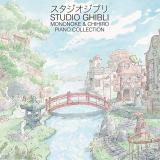
Immerse yourself once again in the worlds of Princess Mononoke and Spirited Away, the two Studio Ghibli masterpieces created by Hayao Miyazaki and set to music by Joe Hisaishi, in this new original production for solo piano!
Based on the official piano scores by the original composer of the Studio Ghibli films, Joe Hisaishi, this album is a new journey of discovery into the two beloved worlds of Hayao Miyazaki, performed by pianist Nicolas Horvath, a Steinway & Sons artist renowned as a first-rate interpretor of composers such as Philip Glass, Franz Liszt, Claude Debussy, and Eric Satie.
The album features a total of 26 tracks from the two cult films Princess Mononoke (Mononoke Hime) and Spirited Away (Sen to Chihiro no Kamikakushi), composed by Joe Hisaishi.
- A1: Zar 12
- A2: Unchanging Game
- A3: Wana Leih
- A4: H. Z. K. (Haga Zay Kidda)
- B1: Dawsha
- B2: Bahlam Biyoum (Dream Of A Day)
- B3: Somoud
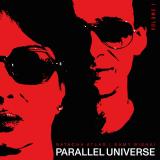
Parallel Universe – Volume 1 marks the latest collaboration between Natacha Atlas and Samy Bishai — a bold reimagining of the musical crossroads between East and West. While its textures echo retro-futurism and electronic lineage, the spirit of the record is unmistakably present-tense — rooted in a boldly contemporary vision of Arabic pop, refracted through experimental production.
- A1: Intro + Dreams Feat Liv East
- A2: Fruits Of The Universe Feat Douniah
- A3: Define Us Feat 30/70 & Dreamcastmoe
- A4: High Feat Cor.ece
- B1: Vibin Feat Ben Westbeech & Sanity
- B2: Without The Sun Feat Oliver Night
- B3: Bells
- C1: Rearrange Yourself Feat Ben Westbeech & Obi Franky
- C2: Downstream With Life On Planets
- C3: Be Real Feat Life On Planets
- D1: Looks Like It (Space Talk)
- D2: Illusions (Midnight Dub) Feat Ava Lavá & Life On Planets
- D3: Simulate Feat Goya Gumbani & Javonntte
DJ Support: Laurent Garnier, Dennis Cruz, Girls Of The Internet, Horse Meat Disco, Stacey Pullen, Elliot Schooling, Solomun,Marco Carola, Joseph Capriati, The Martinez Brothers, Dam Swindle, Soul Clap, Luke Solomon, Riva Starr, Franky Rizardo, Archie Hamilton, Silvie Loto, Fouk, Austin Ato, Salomé Le Chat, Blackchild, Jean Pierre, Black Loops, Kassian, Seamus Haji, Melvo Baptiste, Rimarkable, Sophie Lloyd
In-demand Amsterdam-based duo Makèz step into new ground with the release of their album ‘Arriving Home Elsewhere’, via ANOTR’s No Art label. A kaleidoscopic project that moves between deep house, cosmic jazz, R&B, broken beat, and club-ready energy, the record is both a declaration of identity and a dissolution of boundaries - proof of the duo’s rare ability to merge worlds without diluting or compromising their true essence.
Where most albums that span electronic realms lean on functionality, ‘Arriving Home Elsewhere’ reaches for something much more expansive. The project is a true hybrid: half shaped for the intimacy of a headphone listen, half designed for the electricity of the dancefloor. together forming a seamless continuum between reflection and release. Tracks like ‘REARRANGE YOURSELF’, ‘BE REAL’, and ‘LOOKS LIKE IT (SPACE TALK)’ are stripped to the core of house music’s driving pulse, made for bigger systems and peak-time release. In contrast, ‘Dreams’, ‘Fruits of the Universe’ (with douniah), and ‘Without The Sun’ (with Oliver Night) explore lush, textured arrangements where live instrumentation and improvisation carry equal weight to rhythm and groove.
Collaboration is at the heart of the LP, with Makèz inviting a constellation of voices who each expand the project’s palette. Ben Westbeech, Liv East, and SANITY bring soulful intensity; 30/70 and dreamcastmoe connect Amsterdam to Melbourne and DC; Cor.Ece and Oliver Night weave delicate threads of emotion; Goya Gumbani and Javonntte guide the production with their vibey, groove-led performances; while Life on Planets reprises his role as a core creative partner, appearing across the album on tracks including the standout ‘BE REAL’ and the previously released ‘ILLUSIONS’ alongside rising Amsterdam talent AVA LAVÁ. Together, these contributions shape an album that feels less like a singular statement and more like a living, breathing ecosystem.
For Makèz, ‘Arriving Home Elsewhere’ is as much about philosophy as it is about music. The title encapsulates a tension central to their art: the feeling of belonging to multiple worlds without ever being confined to one. Jazz, house, soul, and experimental club sounds are not separate influences but parallel languages, and in merging them, the duo has created a record that mirrors the fluidity of contemporary identity and expression. And while it may speak in many voices, the LP tells one clear story - that of Makèz, arriving, again and again, home elsewhere.
Deep Steppe 003 moves boldly into the next level, honoring the roots while bridging California & Arizona's underground with a cast of rising selectors shaping tomorrow's sound. The A-side opens with west coast legend, Halo Varga's "Logan Square," a slow-burner built for the late hours, followed by Crypt Keepers' "Bomba," a percussive trip balancing swing and tension in equal measure. On the flip, Pily & Paul West unleash "Chandelier Swing," a drum-machine workout described by early listeners as a shiny Charizard of a tune. JJ Selects closes with "Here We Are," an acid-tinged roller that unravels with hypnotic precision, locking the record into a final pulse. Limited to 300 copies.
Veteran UK Singer PAUL FOX offers here a fresh vocal, riding an uplifting riddim built by King Warrior Music. The tune denonces economical injustice in the western wolrd, with simple words. Comes with instrumental dub on Side B
Mix by Simon Nyabinghi at All Nations Records Studio.
- 1: Eureka 378-B
- 2: Brain Of The Firm
- 3: Rotation I
- 4: Playing And Reality
- 5: Rotation Ii
- 6: First Galactic Utopia
- 7: Rotation Iii
- 8: Before The Law
- 9: After The Last Sky
- 10: A City Yet To Come
- 11: Second Galactic Utopia
- 12: Demand To Be Taken To Heaven Alive!
WHITE VINYL[23,49 €]
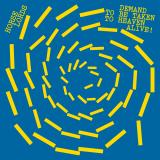
Die Musik auf Horse Lords' "Demand to Be Taken to Heaven Alive!" wirkt zugleich unglaublich detailliert und zutiefst menschlich. Die zwölf versammelten Stücke sind vielschichtig, verflochten, tonal und rhythmisch komplex - moiré-artige Muster aus Interaktion und Verzahnung, die sich sowohl körperlich als auch geistig entfalten, voller klanglicher Gänge mit einem unausweichlichen Groove. Künstler sind nicht notwendigerweise Wissenschaftler, Logiker oder spirituelle Führer, doch durch ihr persönliches Verständnis von Ordnung und Erfahrung eröffnen sie einen unmittelbaren Zugang zu gesteigerten Zuständen von Materialität und Immaterialität. Horse Lords wurden 2010 in Baltimore gegründet; sie gingen aus einer anderen Gruppe namens Teeth Mountain hervor und starteten als Trio mit Gitarrist Owen Gardner, Bassist Max Eilbacher und Schlagzeuger Sam Haberman, bevor der Altsaxofonist Andrew Bernstein zum Kernensemble hinzustieß. Obwohl das Quartett aus einer fruchtbaren Noise- und Experimental-Rock-Szene hervorgegangen ist - einem legendären Umfeld für Künstler und Außenseiter, das viele einflussreiche Bands hervorgebracht hat (Lungfish, Matmos) - war ihr Ansatz über sechs Alben, zahlreiche Kollaborationen und als gefeierte Liveband weit vielseitiger, als es die punktierten Rhythmen instrumentaler elektrischer Rockmusik vermuten lassen. Für dieses Projekt wird die Band durch Bassklarinettistin Madison Greenstone, Posaunist Weston Olencki und - erstmals bei Horse Lords - durch Gesang von Nina Guo und Evelyn Saylor ergänzt. Der Entstehungsprozess von "D2BT2HA!" brachte geografische Hürden mit sich, da die vier Mitglieder seit 2021 in unterschiedlichen Städten leben. Nach sechzehn Jahren als funktionierende Band übersteigt ihre gemeinsame Sprache jedoch jeden Ort. Die aus Deutschland stammenden Gardner, Eilbacher und Bernstein trafen sich in Berlin für die Aufnahmen, während Haberman die Schlagzeugparts in Baltimore erarbeitete. Beim Hören würde man dies nicht unbedingt erkennen, und gemeinsames, räumlich getrenntes Arbeiten ist heutzutage ohnehin keine Seltenheit mehr. Die Band merkt an, dass "es wichtiger war, den Konzepten und Visionen der jeweils anderen zu vertrauen, als Abschnitte immer wieder zu spielen, um zu überprüfen, ob die Musik funktioniert - obwohl dieses Vertrauen nur durch sehr enges gemeinsames Arbeiten möglich wurde". Obwohl "D2BT2HA!" nicht im engeren Sinne eine Suite ist, beeinflusst und durchdringt sich die Musik in komplexen Verknüpfungen selbst. Horse Lords erklären: "Uns gefällt die Vorstellung von Kunst als Werkzeug zur Perspektivveränderung - dass man Ideen rotieren kann und sie aus einem anderen Blickpunkt sehen/hören/fühlen kann." Oder, wie es der Swami Satchidananda Saraswati zugeschriebene Satz ausdrückt: "Understanding is standing under where you are already standing." Das Eröffnungsstück ,Eureka 378-B" ist ein Arrangement von sakraler Harfenmusik aus dem 19. Jahrhundert, getragen vom Gesang von Guo und Saylor; seine Melodie entfaltet sich weit und setzt einen tonalen Startpunkt für vieles, was folgt. Dazu kommen die kurzen "Rotations", die Fragmente aus anderen Stücken isolieren. Offensichtlich tragen die Titel der Stücke einiges an Bedeutung, und "D2BT2HA!" bildet da keine Ausnahme - Transzendenz und Erhebung sind der Musik inhärent, und wenn jede Kunst politisch ist, so sind die Tendenzen von Horse Lords optimistisch und gemeinschaftsorientiert. Transformation und Neubetrachtung sind nicht nur kompositorische Strategien, sondern eine philosophische Haltung, was sich in Titeln wie ,A City Yet To Come", dem Titeltrack oder utopischen Bezügen zeigt. Wie sie selbst sagen: "Wir versuchen Musik zu machen, die den Status quo herausfordert und dem Hörer einen Weg zur Befreiung eröffnet. Das Studium und die Erforschung von Klang und Musik hat eine spirituelle und ekstatische Dimension, und wir haben große Ehrfurcht vor ihrer Wirkung auf den Einzelnen und die Welt." "D2BT2HA!" enthält unzählige klangliche und konzeptuelle Schichten, doch angesichts der unverkennbaren Kraft und Menschlichkeit der Musik ist der Prozess, sie zu entschlüsseln, begeisternd und zutiefst lohnend. Selten ist eine Platte, die einen so unmittelbar packt und zugleich bei jedem Hören vollkommen neu erscheint.