An immersive long-form composition in two parts that seamlessly blends a collage of spoken word, field recordings and drones with elements of dub, jazz, fourth world and ambient music.
Son Of Chi is the latest project of Rotterdam-based multi-instrumentalist, composer and producer Hanyo van Oosterom. Van Oosterom’s prolific career spans multiple decades and genres; among countless projects he has been involved in, he is known for founding the Dutch ambient collective CHI in the early eighties, and in recent years for his prolific collaboration with CHI co-founder Jacobus Derwort as Chi Factory. Following Derwort’s passing in 2019, van Oosterom decided to close the CHI circle with the birth of Son Of Chi.
Sonically, the world of ‘We Carry Eden’ is fully immersive; it ripples with depth and shimmers in detail. Motifs, ideas and fragments, arise and disappear like passing thoughts, drawing the listener deeper and deeper inwards. For those familiar with Oosterom’s work as Chi Factory, the depth and meditative nature of the work will come as no surprise; however it is Oosterom’s skill with grooves that shines equally bright here; his infectiously dubby basslines and percussion rise up from the ether, grounding the listener to the earth. ‘We Carry Eden’ at times invokes the fourth world landscapes of Jon Hassell, (with whom Oosterom has collaborated) but as a whole, it remains the unique work of an artist fully in tune with their vision.
Thematically, storytelling traditions lie at the heart of ‘We Carry Eden’, with van Oosterom’s long-time collaborator Omar Ka playing a central role. Ka, who hails from the West African nomadic Fulani tradition of storytelling, responds to the collage of field recordings and sounds collected by Oosterom. His voice is woven throughout ‘We Carry Eden’, creating a narrative that binds the multiple sound sources of the album together.
As with much of van Oosterom’s musical output, inspiration is drawn from the Greek Island of Patmos and the wisdom and prophecies of the Native American Hopi Tribe. Since his work with CHI in the early eighties, van Oosterom has often incorporated quotes from Hopi Elders into his music. Gods, spirits, animals and humans, all existing in one unchangeable relationship tied to nature; ‘We Carry Eden’ is rooted in this philosophy, serving as a peaceful message of beauty, harmony and respect for the wisdom of the Elders and ancient traditions.
Sleeve art and design by Michael Willis.
Cerca:west k
Positive Reaction is a vinyl-focused electronic music label founded by HMEHDI. Rooted between Tunisia and Berlin and looking outward to the global scene, the label aims to build a cultural bridge between North Africa and the rest of the world by spotlighting both local and international talents.
Drawing heavy inspiration from the raw energy of ’90s electronic music, Positive Reaction blends genres such as electro, breakbeat, techno, and especially trance — vibrant, nostalgic, and emotional.
Positive Reaction is more than a label — it is a timeless journey.
Producer powerhouse duo Crate Classics release their electric debut album, Green Lanes. With a plethora of features from fresh talent to dance music veterans, Crate Classics are working with the likes of Pesolife, Liam Bailey, Bay-C, Jodian Natty, LA Salami, Omar+, Nia Chennai, Not3s, Cres, Joe Cain, Tills & Aphrah. Green Lanes brings an eclectic mix, from dancefloor bangers to sweet melodic bops, spanning the rich practices of Jungle, RnB, Afrobeats and Reggae.
This vinyl includes a sample of tracks from Green Lanes, remixes from the likes of Missing, Potential Badboy & Tyke, and 2 exclusive bonus tracks. Featuring an exclusive Congo Natty Remix of Crate Classics & Jodian Natty's 'Anything'.
A multifaceted artist, who over his career has traversed between singer-songwriter, hit producer, DJ and curator, Ben Westbeech now arrives on Glitterbox Recordings with a fully realised artistic vision on his new album Everything Is Within You.
Encapsulating Ben’s appreciation of the power we all have within us to achieve joy and peace, as conveyed sonically by all the musicians involved, Everything Is Within You came together organically. His first full length solo LP since the acclaimed There’s More To Life Than This on Strictly Rhythm in 2011, Everything Is Within You showcases Ben’s artistic development as a songwriter, curator and producer as he steps into his role as producer and arranger, away from lead vocalist.
“This album is about speaking the truth. The truth from within. Luckily, I have been blessed to come across the paths of other artists that shared the same sentiment over the seas that dwell. These artists all feature heavily on this record. It isn’t about me or you. It’s about everything that is within.” – Ben Westbeech
Spotlighting featured artists such as Dames Brown (recorded by Moodymann in Detroit), RAHH, Karen Harding, DAVIE and Obi Franky, with co-production credits including Honey Dijon, Luke Solomon and Chris Penny, as well as Mousse T., the record was born out of a Glitterbox writing camp in London at Defected’s studios. The collection of records that were made that week became a catalyst for the full album, now arriving on Defected’s Glitterbox Recordings.
An artist with a rich musical history, from the release of his mature debut album Welcome to the Best Years of Your Life for Gilles Peterson’s Brownswood, to his chart-topping club records as Breach, and work as The Vision on Defected, the path to this new album has included periods of sobriety, self-work, spiritual exploration and the integration of a healthier outlook all round. Now based in Ibiza, the omnipresent energy of the magical island has permeated into the music on his new album, as well as the influence of his personal and spiritual growth.
Exploring a range of genres across the LP, from neo soul to house influences, the breadth of Ben’s musical knowledge is demonstrated throughout the eight tracks. From the blissed-out piano grooves of ‘Times Are Changing’, since remixed by house royalty Louie Vega and Josh Milan as Two Soul Fusion, to the uplifting ‘Do Me Right’ and the emotional soundscapes of ‘So Good To Me’, Everything Is Within You puts the emphasis on the guest vocalists. With exquisite live instrumentation and songwriting that give the record an evergreen feeling, this is a timely album that exudes a contagious, positive feeling throughout, something the world needs right now.
The Infinite Wheel are a visionary duo who emerged from the DIY and Anarcho-Punk underground of the early ’80s West Country scene. Both members have been deeply involved in numerous influential projects, releasing chart-topping music under names that are instantly recognisable.
But it’s their groundbreaking work in the ’90s that truly captured our attention at Midnight Drive. Their deep dive into studio experimentation, dubwise mixing, and hardware-driven sound manipulation gave rise to a body of work that remains as compelling as ever. That journey has led us to these two stellar tracks, featured on our 10th release.
"Java Dub / Enviro" are immersive, longform explorations that stay true to the dub tradition—expansive soundscapes that pull the listener in, treating the mixing desk as an instrument in its own right. Thunderous basslines and cavernous echoes intertwine with tribal percussion and celestial ambient synths, creating a rich, enveloping sonic universe for both deep listeners and dancers alike.
Reissued and presented with the full involvement of The Infinite Wheel and featuring a brand-new centre label designed by the band themselves, this release more than marks a fitting milestone for Midnight Drive.
Jules Elipse from Paris, Tursio from Australia and Drowncast from West Coast US on the first in a series of collaborative releases.
Three flavours of jungle, from the raw late leanings of WBD to the jump up inspired Wanna Be and the more melodic vibe of Celestial Plain. Something for everyone, assuming everyone is a fan of jungle that sounds like it was made in the mid 90s.
180 G. BLACK VINYL WITH LINER NOTES IN CREOLE, FRENCH, ENGLISH
Originally released in 1979, "Spiritual Sound" lives up to its name, a soaring, triumphant album, six tracks of spirit magic from Guadeloupe.
Telluric, intense, terribly alive, the gwoka drums of Guadeloupe carry the identity of a painful and fervent island. Marked forever by the crime of slavery, Guadeloupe's créolité cherishes the ka drums and their natural environment: the low-pitched boula drum with male goatskin, the high-pitched soloist makè drum with female goatskin, the chacha, ti bwa, triangle, calabash and other percussion instruments that surround them, and the voices - the fiery, proud, timbred, urgent voices of the gwoka.
This album is also a legend for its voices: in his then dazzling youth, singer Lukuber Séjor was one of the first gwoka artists to largely feminize the chorus of répondè, who converse with his text delivered in a straight and powerful voice.
And everything here sets new standards. In 1979, Mizik Filamonik - Spiritual Sound proclaimed a spiritual patriotism of ferocious intensity. The album by Lukuber Séjor - whose spelling alone is a battle - sets out to give Guadeloupe the intangible weapons of self-respect and self-knowledge, through a singular practice of traditional music.
The genesis of gwoka music is less straightforward than one might imagine... The drums performed the servile task of accompanying the work of slaves in the fields and during the “corvées” imposed by the administration, before being freely practiced by the common people after the abolition of 1848. At the heart of the conviviality of the Guadeloupeans furthest from the cities - geographically and socially - the gwoka drums come out for carnival, funeral wakes and neighborhood celebrations, but also during strikes, fits of anger and armed vigils of the riots and revolts that have punctuated the island's history. For generations, governors of the colony and then the prefects of the overseas department of Guadeloupe have been viewing the gwoka as a potential for turbulence and a threat to public order.
But as the Beatlesmania, “chanson engagée” and rock revolutions unfolded in Europe, young people turned to the drums of mizik a vié nèg (“bad negro music”, in Creole), which Guadeloupeans had learned to despise by following the “assimilation” process advocated by the school system and most of the political class. At the end of the sixties, in a Guadeloupe mourning the deadly repression of the May 1967 social movement, they played traditional music, refusing to wrap it up in tourist prettiness and madras folk costumes. Instinctively, they played a rough and contemporary gwoka, led by the incendiary Guy Konkèt. This was the era of decisive 45 rpm records such as Robert Loyson's Kann a la richès, which brought to light the fieriest words of union rallies.
At his home in Sainte-Anne, Lukuber Séjor played with flautist Olivier Vamur and his brother Claude Vamur, who cobbled together a drum kit from tin crockery and became, a few years later, the most influential drummer in Kassav'.
These were the years of the Bumidom program, when young Guadeloupeans were encouraged to emigrate to mainland France. At the age of twenty, Lukuber Séjor embarked on the liner Irpinia, disembarking at Le Havre and taking the train to the Gare Saint-Lazare - the route taken by thousands of young West Indians who went on to study or looked for work, all the while trying to maintain a link with their homeland. In this case, it's at the Antony university residence, where Lukuber played the drum and participated in a thousand gwoka updates and aggiornamentos, while exile reinforced the need for a spiritual link with the native land.
In 1978, Guy Konkèt played at the Salle Wagram, a historic event for West Indian music. After serving as répondè - i.e. backing vocalist - on one of his home-recorded albums, Lukuber joined his live band. Little by little, he became one of the key artists on a circuit parallel to French show business. At a student party in Caen, he met a young woman from Martinique who, at the time, was more motivated by her ambitions as a visual artist than by her vocation as a musician. Her name was Jocelyne Béroard and, a few years before she plunged into the Kassav' adventure and became the greatest West Indian singer of her generation, she designed the cover of Lukuber Séjor's LP.
This ambition was obvious and imposed its will. A more or less regular band was formed, with Roger Raspail, Rudy Mompière and Éric Danquin on ka drums, Claude Vamur on ti bwa, Olivier Vamur and Françoise Lancréot on flutes and Annick Noël on keyboards. Lukuber Séjor is set on wanting to extend the gwoka palette to other instruments, as the jazz-rock revolution opens a thousand new doors. Annick Noël will play a wide range of timbres and textures on electric piano and synthesizer. Another novelty: the répondè are two men and two women, Roger Raspail, Olivier Vamur, Françoise Lancréot and Maryann Mathéus ...
Mizik Filamonik - Spiritual Sound is a self-production in which the singer and leader sank all his savings, allowing him no more than a single day in the studio. The first side is more of a musical manifesto, with the first two tracks, Éritage and Penn é plézi, being instrumentals. The third, Son, forcefully celebrates the need for Guadeloupeans to connect with the gwoka. In fact, Jocelyne Béroard's cover shows a tambouyé in the shadow of a cloudy sky, against which a radiant sun is rising and whose light will soon flood the entire landscape. The silhouette and face of this man strongly evoke the immense Vélo, master of the ka, rejected at the time on the fringes of society.
The second side of the LP is surprising. Formally, three tracks are explicitly linked like the three parts of a triptych. Primyé voyaj evokes the appalling tribulation of Africans deported as slaves to Guadeloupe; dézyèm voyaj speaks of the Bumidom program and the economic, political and social forces driving young Guadeloupeans towards the mirage of prosperity in France; twazyèm voyaj closes the cycle with the emigrants' return from Europe after years away from their island...
This gwoka, obsessed with the need to save Guadeloupe spiritually, appeals far beyond the politicized audience. Mizik Filamonik - Spiritual Sound instantly became a classic, although Lukuber Séjor never really made a career for himself as a musician.
After all, the album was released in 1980, with no promotional resources in France or Guadeloupe - and therefore no concerts. The thirty-two-year-old author, composer and performer made his own third trip back to Guadeloupe. He set up a small woodworking business, which he lost in Hurricane Hugo in 1989. His other activity, teaching in a medical-educational institute, became the core of his professional life. He continued to be an active campaigner - a campaigner for the Creole language, a campaigner for the reawakening of identity, a campaigner for special education, a campaigner for a thousand causes that he ignited with his generous and perceptive enthusiasm, such as the defense of breadfruit fries...
The echoes of his 1979 album have not died down. Of course, the use of Penn é plézi as the theme tune for Radio Guadeloupe's funeral notices from 1980 to 1992 kept him in the collective memory, but he continues to sing and compose sporadically, as with his all-female
vocal group Vwapoulouéka... Still convinced that music is a means of liberating the spirit, he continues the journey of a young man eager to deploy the power of Creole music and language.
Bertrand Dicale
Forms is the debut release from Naturalisten. Behind this name is Rado, one of the founders of the Unknown Species collective. They’ve put together some great underground parties in London through the years, giving space to new talents and sounds, and blissfully ignoring trends and fads.
Rado’s colourful and imaginative take on deep techno shines through all the six tracks here. Fans of the sounds we often hear on the likes of Delsin, Nous’Klaer Audio, Spazio Disponibile, Bitta, Animalia, are likely to find plenty to love here. Starting with the subtlety of “Release The Tension”; passing through the swampy “Against The Tide”, the bleepy minimal drum’n’bass of “Woodpecker”, the acid deepness of “Aves Acid”; and landing on the early-morning atmospheres of “Canopy Dreams”, which we find very much reminiscent of some exquisite James Holden moments from a time long gone.
The final touch to an already beautiful body of work is added by Forest Drive West with his remix of the opening track “Release The Tension”. His reinterpretation slowly creeps in and wraps you up in a wave of low frequencies, before blossoming into an epic outro.
Early support for this release came from Sunju Hargun, Sybil, Aaron J, Benedikt Frey, among others.
TAMIZDAT Records, the forward-thinking, club-driven stem of MixCult Records, returns with its third vinyl release — Panacea EP TMZ003, a potent compilation of cutting-edge Tech House crafted by rising prodigies: Caputi, Osman Öz & SUBMINIMAL, Dawn Gab and Nikdo.
Designed for the dancefloor yet rich in sonic nuance, Panacea EP strikes a delicate balance between raw bassline power and refined beauty. Each track showcases an evolutive approach to club music — immersive, rhythmic, and brimming with personality. The artists push boundaries while maintaining an irresistible groove that keeps the body moving and the mind engaged.
TAMIZDAT carves its own lane within the MixCult universe, channeling dub techno aesthetics into a club-forward format that feels both current and timeless. This EP is a declaration of intent: sleek, bold, and undeniably danceable.
Whether you're spinning late-night sets or deep-diving into thoughtful listening, Panacea EP delivers on all fronts. Don’t miss out on this essential slice of modern club culture — get your hands on TMZ003 VA – Panacea EP and feel the pulse of the future.
MixCult Records unveils TAMIZDAT, which in Russian TAM means “there” (as a reference of an aboard, western location), and IZDAT means “to publish”. It was the name for banned books and magazines published "there", that is, abroad.
Limited edition.
Prick up your ears everybody: Uluru number 3 is ready to take off!
This time Little Beat More's sub-label Uluru, featuring highly acclaimed remix/mash up series, sees the participation of living legend Jstar.
The west London reggae hero delivered a smoothly bouncing rework of the classic “Eye of the tiger” by the Survivor, that originally gained fame through being the anthem of Rocky III.
The flip sees the debut of an Italian duo called “The Dynamates” (The Rebel and Dibba). They put their hands on another precious song that made history, namely “You got to love” from Candi Staton.
Pull up guaranteed!
Pressed on high quality black and yellow lime vinyl (48 gr.)
Edition of 350, coming with “hand stamped” vintage yellow paper sleeve.
ULURU 2020
“Mind Control, Modern Slavery”
Klasse Wrecks is happy to welcome a young new producer to its ranks, hailing from the magical city of Sheffield in the North of the UK Kwake is fresh on the scene with a debut EP brimming with style and function. The 'Nucleus' EP is a well curated selection of 303 and breakbeat sprinkled dance tracks, powerful enough to move the feet but with enough consideration to inspire the mind.
South Londons’ indomitable Medlar delivers an ambitious new album
The long-time underground favourite has collaborated with the likes of Dele Sosimi, Rebekah Reid, Deevoenay, Finn Peters, Sam Virdie, Afla Sackey and Arnau Obiols on an album that finds him taking his production to new levels.
From roots playing illegal raves in the South West to building up a cultured catalogue that bounces between house and garage, Medlar has long been part of the underground conversation. He has dropped a previous album and many innovative remixes and edits for the likes of Billy Cobham and Shirley Lites, worked in the studio and on stage with Afro legend Dele Sosimi and most recently released an album under his own name that collected myriad different sonic sketches from the past 15 years.
Islands is an altogether different proposition that comes after establishing himself as a mix engineer and producer of other people's music. In that time, Medlar has honed his skills, learnt new tricks and grown more able to express himself in sound. The result is an album that explores a more electronic palette inspired by '80s fusion sounds whilst maintaining a loose, organic flow through his use of live instrumentation. “The idea for the LP was for a collection of music which could sit alone as club tracks, but would work equally well as part of a whole. The name Islands came from this, as there's some connecting ideas but the tracks sit independently in their own little sonic worlds. I took a lot of inspiration from early 80’s electronic music produced during early years of MIDI technology… proto house, jazz fusion, electronic disco and experimental ambient. I wanted to juxtapose some of these methods with more contemporary production and make something that's ultimately quite fun!” says Medlar of the record which could easily soundtrack a summer road trip.
Across 11 tracks, he blends old-school techniques like a fusion of live instruments, FM synthesis and MIDI triggered vocal samples with more contemporary touches such as punchy, club-friendly drums and dub inspired, speaker-wobbling low end. The result is less reliant on samples than his previous works and makes for a perfect blend of retro authenticity and future freshness.
Antoni Maiovvi is an artist like few others. “Knights of New Haven” summarises his unique ability and unparalleled range. This return to the Bordello reflects the influence of the West Coast Sound of the Netherlands as well as that machine music of his adopted home of the U.S. “Later Not Lately” bends bars above a throbbing kick, hi-hats ruffling the clean arcs of string. Echoes of Chicago and Detroit penetrate the EP. Melting melodies fold and oscillate under the crashing cymbals of “Slack Blabbath”, staggered synthlines jolted by tight percussion patterns. A brother-in-arms opens the flip, Danny Wolfers drafted in under his Legowelt moniker to turn his magic to “Later Not Lately”. Undulating undertones are sliced by serrated snares before a sordid TB303 is unsheathed, Wolfers’ soulful and squalid retelling of the original. “The Madness in the Method” closes. Fizzing static blurs drum patterns, a taut note piercing the dense bass fog. Teetering between the profound and the profane, Maiovvi pivots his horror disco trademark sound with driving house drums and devil-may-care grandeur. An EP of epic proportions.
- Everything Is Connected Too is the second instalment of Blancmange's finest moments on vinyl.
- The companion to 2024's Everything is Connected, Everything is Connected Too delves further from recent moments like 2024's 'Again I Wait For The World' and 'Bliss' (both on vinyl for the very first time) to 'Sad Day (Original)', one of their very first outings from 1981. The collection traverses 4 decades of the band's inspired take on leftfield pop.
- Limited Crystal Clear vinyl - Record Store Day 2025 Exclusive.
Hard Times proudly welcomes a new release from an artist deeply connected to the label’s storied past. Alex Arnout presents BLACK LOGIC with their debut EP, ‘Pull Up’, a project born from passion, collaboration, and a return to House music's soulful roots
Hailing from West Yorkshire, Arnout spent his formative years on the Hard Times dancefloors, absorbing the beats and vibes that would later shape his own productions. His journey with the label reignited when he was invited to remix Michael Watford’s classic 'Love Change Over' and Steve Silk Hurley’s fresh hit 'All I Need'. Now, he returns with something truly special
“Black Logic was born out of the pandemic,” says Arnout. “I wanted to move away from drum machines and synths, getting back to sampling jazz and the deep house sounds of the ‘90s - taking inspiration from artists like Bugs in the Attic, Jazzanova, and Ernest Saint Laurent.
What began as a solo project soon evolved into a collective effort. Bassist and guitarist Alan Riggs, a former member of Delta 5, joined the sessions, bringing warmth and groove to the productions. Vocalists Tempo O’Neil, Anthony Beckford, Mariana Orsho, and Sophie Barker added their distinct voices, completing the vision.
The ‘Pull Up’ EP is the first of a debut double-header from Black Logic, delivering five stunning tracks that blend jazzy keys, deep grooves, and rich, soulful vocals. From the warm basslines to the celestial closing moments, this EP is a statement of intent - a wonderfully fresh, yet nostalgic take on deep house from a collective of masterful musicians.
Repress!
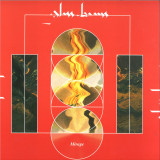
Research Records indicate their inclination for cosmic instrumentation and kraut pervaded polyrhythms once again with an introduction to newcomer Glass Beams. Recorded at the beginning of 2020, Mirage is the first release from the artist, issuing four compositions that lend from a profusion of sounds and influences.
The album's opener and title Mirage arrives with a coiling vocal mantra that conspires with a sliding bassline and transcendent synthwork, reminiscent of early 70's prog jams yet inverted and futuristic. Taurus is a brisk arrangement, steeped with spaghetti-western elements and space-jazz to pave the way for the agile Kong. Rife with psych-fusion guitar phrases and instrumentation, Kong unfolds like a forecast lysergic voyage. The finale Rattlesnake nudges the serpent with intergalactic scales and spellbinding riffs. We may not know much about the enigmatic Glass Beams but Mirage is one epic inauguration, leaving the listener with more questions than answers.
Forgotten Paradise is a new vinyl series from Western Lore, focussed on exploring the full breakbeat hardcore &
Jungle Tekno tempo range through a collection of 12” singles & EPs
After an under the radar, vinyl only bootleg 12” kicked off the series in 2024 (and flew out so rapidly on Bandcamp, none of the ltd run of copies made it to retail), FP2 sees Dead Man’s Chest & Thugwidow roll out two gully slices of 140bpm(ish) hardcore heaven, with a naughty 160 jungle edit thrown in for measure.
Breaks, vocals, bleeps, pads, pianos, mentasms and a hefty measure of bass, all thrown in the mix and weaved together in Dead Man’s Chest & Thugwidow’s signature waved out styles.
Written and recorded in singer-poet Karsyn Henderson, guitarist-banjoist Paul Lecours and percussionist Ryley Klima’s basement alongside bassist Chris Clegg, then mixed and mastered by longtime collaborator Noah Baxter, this self-produced introductory effort from the Montréal four-piece stylishly amalgamates elements from hardcore, punk, shoegaze, sludge, and folk.
Violence is a brazenly poetic homage to small town roots, a mashing of modern Western Canadian hardcore and folk. Extensive in scope, this debut full-length by Truck Violence takes the listener through wide-ranging dynamics, from solemn acoustic ballads to wrathful electric anthems. Deftly fractured rhythms and breakdowns, complex harmonic entanglements, emphatic screams of discontent, are met with hopeful, melodic tracks musing about the steady grip of a tight-knit community.
From somber, deceivingly happy banjo sequences to crashing noise and cries, Violence uses expression as a mirror, looking upon oneself with clarity, aiming to attain a sense of unadulterated truth of the matter. There is little modern music taking an honest look at the Western Canadian countryside, tackling themes such as addiction, abuse and dysfunction.
Truck Violence’s first album does just that, uniquely capturing this involuted setting through a wide lens to both contextualize and emphasize what it means to be overwhelmed, to feel shame, to struggle with self-destructive ways, to thrust oneself into art as an escape.