The Silhouettes Project was founded by community organisers Jaden & Asher (aka Eerf Evil & Asher Kosher), and is a platform for the new generation of underground hip-hop, jazz, and soul artists in the UK. It aims to shine a light on artists who are making ground-breaking music but who are in need of a solid structure to work within - artists who they felt deserved more recognition. This led to the name ‘The Silhouettes Project’, as they wanted to shine a light on those artists in the shadows. In 2020, they released a number of singles that culminated in their self-titled debut LP, which has gained 65 million streams to date, & featured some of London’s foremost underground rappers & singers like ENNY, Lex Amor, & Kofi Stone. They will be releasing their second album in Q1 2024, The Silhouettes Project Volume II, starting the campaign this September with 'Knocked Down'. All proceeds from the album will go back into the organisation to support and sustain its running, its artists, and the non-profit studio ROOT 73 where the project was created. The contributors all receive an even split of the album, rather than of their specific track, which stays true to their ethos.
Cerca:west
Remastered and first worldwide release (previously only limited availability in Iceland) Since first bursting onto the global punk scene in 2018, Icelandic trio GRÓA have thrilled audiences across the world by fully embracing an unruly freedom. Made up of sisters Hrafnhildur Einars Maríudóttir (aka Hrabba, age 22) and Karólína Einars Maríudóttir (aka Karó, age 20) and their childhood friend Fríða Björg Pétursdóttir (also 22), the Reykjavík-bred band merge elements of post-punk and noise-rock and art-pop with absolute abandon, arriving at an explosive yet magnificently arranged sound unlike any other. A local favorite, the Icelandic government has recently been sponsoring worldwide travel to share GRÓA with the rest of the world and in 2023 they have played shows around the world including in UK, Western and Eastern Europe as well as USA dates including Washington DC, Seattle, Chicago and New York City. They have recently recorded an in studio performance at KEXP which will be broadcast worldwide in January 2024 and more worldwide touring is planned for early 2024 to support the vinyl and CD releases. Listing iconoclasts like Sonic Youth, PJ Harvey, and Bikini Kill among their longtime inspirations, the Icelandic punk band GRÓA pursued their experimental impulses with more intensity and confidence on Í Glimmerheimi, matching the album’s shapeshifting sound with a surrealist but emotionally potent form of lyrical storytelling. “It’s about a girl who’s trying to escape the world she’s stuck in—this glitter world that looks so good on the surface, but it’s not where she’s meant to be,” says Karó in discussing the album’s concept. “There’s a song called ‘Jetpackstelpan,’ or ‘Jetpack Girl,’ where she leaves the world on a jetpack and flies away to the moon, and she’s never coming back again.” Opening on the kaleidoscopic rhythms and rowdy call-and-response vocals of “Fullkomið” (“Perfect”), Í Glimmerheimi brings that narrative to frenetic and dazzling life, ultimately closing out on “Skrímslið er að ná þér” (“The monster is getting you”): a serpentine and strangely mesmerizing epic whose swirling textures, otherworldly vocals, and sparse yet complex guitar tones illuminate the immense scope and depth of GRÓA’s artistry.
- A1: Ale Hop - Head Transplant
- A2: Daniela Huerta - Tza Tun Tzat
- A3: Debashis Sinha - For The Waters Ever Taste The Heavens Up Parts I-V
- B1: Hexorcismos - ¿Acaso De Veras Se Vive Con Raíz En La Tierra?
- B2: Hexorcismos & El Irreal Veintiuno - Interferencias
- B3: Jessika Khazrik - Gebera
- C1: Khyam Allami - Mix V6
- C2: Kloxii Li - Anhaga
- C3: Kmru - Hidden Options
- C4: Maf - What's Heard Once Entered (Nommo)
- D1: Portrait Xo - Mutualism_151122
- D2: Simina Oprescu - Granularities
- D3: Visions Of Lizard - Barranca Del Muerto
For the last seven years, sound artist, technologist, and electronic musician Moisés Horta Valenzuela (aka Hexorcismos) has been studying artificial intelligence and generative art, wondering how these new technologies might be augmented into his musical process. Born in Tijuana and currently based in Berlin, Hexorcismos has long attempted to break down the permeable borders between musical styles and expressions, using the spaces in between to reinforce his politics and worldview. And on 'MUTALISMX - becoming sonic network', he expands his vision, inviting artists from across the globe to collaborate on work that questions the biases inherent in AI models, offering a collective alternative that could serve as a blueprint for further research.
The majority of AI art at this stage works with "big data", taking ideas from the cultural canon and muddying them with our contemporary reality. But if we accept that mass culture is always politically biased, always swaying towards historical prejudices, then there must be a counter-narrative. Hexorcismos began to develop a bottom-up approach, using "small data" to interrogate his idiosyncratic approach to art; he built a tool called SEMILLA.AI based on neural audio synthesis that could not only mimic his sonic fingerprint but transform it into another. So when he offered the synth to his network of collaborators, he gave them the option of either using only their data or sharing the signatures of each other artist involved in the project, blurring their identities into a mutual voice.
The result is a compilation that unspools with the coherence and fluidity of a single-artist album or adventurous DJ mix, genreless and boundless but unified by a singular message. Hunanese-American artist Kloxii Li for example takes rugged percussion and tense, industrial ambience, smudging her soundscape into a swirling gust of ghostly dissonance. Hexorcismos himself contributes two compositions: the lengthy, hypnotic 'Acaso de veras se vive con raíz en la Tierra', an AI-powered scramble of his pointed tribal guarachero experiments; and 'Interferencias', a collaboration with Mexican club veteran Bryan Dálvez, aka El Irreal Veintiuno that drives intense dancefloor rhythms into a dense haze of frozen drones and radio static. Elsewhere, Berlin-based Lebanese artist and writer Jessika Khazrik dissolves her voice into a mesh of obscured rhythms and dissociated whirrs, blending the organic with the artificial but retaining an overpowering sense of humanity.
Some artists were drawn to the nebulous aspects of the technology, searching for truth in a soup of different sounds, while others, such as KMRU, used Hexorcismos's synthesizer the examine their output. On 'hidden options', the Kenyan sound artist fed his immense catalog into the neural net, bringing out his mannerisms and tendencies in the process. Each track is singular but myriad, prompting both mutual respect and a sonic becoming, a feedback process between the artist and the tool, the individual and the collective. Data sets are made by people, and by engaging directly with musicians, Hexorcismos suggests a new way of utilizing a technology demonized and glorified without careful examination. Each artist owns their AI model, and alongside the album Hexorcismos will release SEMILLA.AI to the public (with custom-made models to start the process), allowing anyone to access this revolutionary technology.
Even the album's artwork reflects the political message, conceptualized by Chilean duo hypereikon, who used AI processes to develop a visual reflection of the technology and its possibilities. Operating outside of academia and capitalist enterprises, MUTUALISMX proposes an alternative future - one without borders that's not beholden to the Western canon, where independent labor can be prioritized and celebrated, and where creativity can truly flourish.
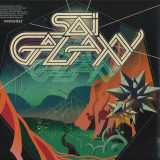
The star-studded Sai Galaxy project returns, bringing together West African legends Steve Monite and Rob with multi-instrumentalist Simon Durrington, guitar maestro Alfred Bannerman and Egypt 80 trumpet player Bade for a second EP of vital Afro-disco and soul.
The EP follows up 2022’s Get It As You Move EP, blending layers of vocal harmonies and synth washes with a rock-solid disco base. The sound stays faithful to the analogue production techniques of the 70s and 80s, adding a modern touch informed by Durrington’s Digital Afrika project.
Lead single ‘Hold You Tonight’ features Nigerian disco icon Steve Monite (best known for his mega hit ‘Only You’), revisiting his 80s origins with a dancefloor-ready slice of dubbed out boogie. ‘Rich Man Poor Man’ (featuring Ghana’s very own ROB) slows down the tempo and brings the highlife influence to the fore, while ‘Sometimes It Rains’ brings a neo soul bump with the Omar-esque sound of Fijian vocalist Kaivili.
- Ifetayo
- You People
- Save D Musician
- Kilimanjaro
- Aspire
- Umbala
- Imo
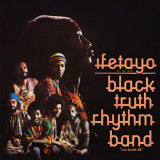
Soundway presents a long-awaited remaster and re-cut of the 1976 album ‘Ifetayo’ by Black Truth Rhythm Band, an important and overlooked chapter in Trinidad’s rich musical history that blends West African influences with jazz, funk and the social commentary of the calypso tradition.
Led by the charismatic Oluko Imo, the group drew on the strong connections to Yoruba culture and Orisa traditions in Trinidad, looking to Africa for inspiration and reflecting the burgeoning Black Power movement of the time.
“I like to work with a variety of instruments and set ups,” says Mark Van Hoen, sometimes known as Locust or Autocreation but here working under his own name on the excellent Plan For A Miracle, his first physical release of solo music since 2018’s Invisible Threads. ”Sometimes it’s literally in my studio, with all the hardware electronics available. Sometimes the laptop, using software instruments. Some of the tracks on this record were recorded in the desert (Joshua Tree) using a 4-track tape machine and small modular synthesiser set up. Each track was recorded in different location using different instruments, which accounts for the distinction between each piece. It’s also about my own reaction to my environment, and what’s going on in my life at the time.”
The Croydon-born Van Hoen started musical life in the early 1990s, signing for R&S records in 1993 but developing his own, myriad and distinctive style across a range of releases on Touch, Editions Mego and other labels, using a battery of instruments, including analogue synthesizers and taking a number of different approaches to recording, rather than ploughing a single sonic furrow. He has worked on a number of collaborations, including with Nick Holton and Neil Halstead of Slowdive, under the moniker of Black Hearted Brother - their Stars Are Our Home was released in 2013. “I have known Neil Halstead since 1992,” says Van Hoen. “He shared a house with me for a couple of years, and the music I was making and listening to along with clubs I was attending had an influence particularly on Pygmalion, the final Slowdive album on Creation.”
Each track on Plan For A Miracle does indeed sound like a world unto itself, a mini-environment, a weather condition, an ecosystem created for the moment. It’s a collection of tracks recorded over the past few years, released on Bandcamp - despite his apparent absence, Van Hoen works constantly. Opener “Climates”, in its exquisite limpidity, feels like a homage to Brian Eno, one of his most formative influences in his teen years, commencing with Music For Films, which he bought in 1979. “This Is For Them”, feels like a ghostlike throwback to early drum & bass or electronica, reminiscent of his own, earliest outings. “There have been a number of requests from labels to make some more music like my very early releases on R&S,” says Van Hoen. “This is part of ‘letting go’ and realising that there’s nothing less creative about going back to those styles again.”
“Pencil Of Spheres” is something else again, a magnificent, imaginary glass structure, shimmering, refracting, without visible means of suspension, a thing of impossible beauty. “Electric Lights” evokes an abandoned fairground, its lights still pulsating, its music lingering. “The Underpass”, meanwhile, insofar as it reminds of anything at all, is faintly reminiscent of Cluster or Neu’s! West German ambience, the urban mundane rendered magical, the sodium lights, the whitewashed walls. The reverberant, faintly oriental chimes of “Insight” transport us yet again, burgeoning and intensifying.
The landscapes, the skyscapes rendered on Plan For A Miracle feel unpopulated as a rule - but when he does introduce vocal elements, Van Hoen has a history of doing so to spectacular effect - think of “Real Love” from 1998’s Playing With Time, the seductive intonation of its title recurring throughout like a series of massive holograms, echoing, stuttering, breaking up, surging. Here, there are just the faintest of vocals, barely distinct, disquieting. “There’s been a bit of a game changer in recent times,” explains Van Hoen. “AI software that enables you to extract vocals and instrument parts from virtually any recording. That means sampling individual parts from existing sources is no longer limited to the original mix exposing certain parts soloed. The vocal parts I use are from multiple sources and often pitch shifted altered rhythmically and melodically.“ There’s further vocal chatter on “I Really Do”, proceeding at a faster pace as if giving chase, or being pursued - distant, enigmatic. “The Music”, meanwhile, its beat tolling, lost in its own fog of static, features a curious intonation, like the ghost of a lost Walker Brother.
Sadly, the album’s title is in reference to a personal tragedy on Van Hoen’s part - the loss of his wife. Titles such as “I Won’t Give Up”, which faintly reminds of another Eno masterpiece, Another Green World, in its nautical hurly-bury, or the pastoral strains of “Mrs Who”, heavily clouded with sadness, seem to allude to this. “In fact the record was recorded entirely before she passed away,” says Van Hoen, “most of it before she even became very ill. The title was given to the album when it started to look like she wasn’t going to make it beyond a few months. It was something Osho said - “plan for a miracle” - so it was a statement of hope. Unfortunately it was not to be.” Although the album is non-thematic, non-specific in its atmospheres, sound paintings, elegant structures it most certainly stands as a magnificent monument to Osho’s memory.
-David Stubbs.
- A1: George Michael - "Praying For Time" (4 34)
- A2: Elton John - "Sacrifice" (4 55)
- A3: The B-52'S - "Love Shack" (4 13)
- A4: Belinda Carlisle - "(We Want) The Same Thing" (4 09)
- A5: Kylie Minogue - "Better The Devil You Know" (3 45)
- A6: Kim Appleby - "Don't Worry" (3 25)
- A7: Roxette - "It Must Be Love" (4 10)
- B1: The Klf - "What Time Is Love" (Live) (3 47)
- B2: New Order - "World In Motion" (4 21)
- B3: Duran Duran - "Violence Of Summer (Love's Taking Over)" (3 23)
- B4: Halo James - "Could Have Told You So" (3 38)
- B5: Julee Cruise - "Falling" (4 02)
- B6: Chris Isaak - "Wicked Game" (4 41)
- B7: Pet Shop Boys - "Being Boring" (4 43)
- C1: Deee-Lite - "Groove Is In The Heart" (3 50)
- C2: Snap! - "The Power" (3 44)
- C3: Whitney Houston - "I'm Your Baby Tonight" (4 04)
- C4: Dusty Springfield - "Reputation" (4 08)
- C5: Go West - "The King Of Wishful Thinking" (3 52)
- C6: Paul Simon - "The Obvious Child" (3 59)
- C7: Sting - "Englishman In New York" (The Ben Liebrand Mix) (4 22)
- D1: Adamaski & Seal - "Killer" (3 41)
- D2: Bass-O-Matic - "Fascinating Rhythm" (4 01)
- D3: Happy Mondays - "Step On" (4 14)
- E4: Lonnie Gordon - "Happenin' All Over Again" (Hip Hop Radio Mix) (3 15)
- E5: Adventures Of Stevie V - "Dirty Cash (Money Talks)" (3 51)
- E6: Blue Pearl - "Naked In The Rain" (3 46)
- E7: Dna & Suzanne Vega - "Tom's Diner" (3 41)
- E8: Vanilla Ice - "Ice Ice Baby" (3 36)
- F1: Sinead O'connor - "Nothing Compares 2 U" (4 54)
- F2: Jon Bon Jovi - "Blaze Of Glory" (5 24)
- F3: Tina Turner - "Steamy Windows" (3 53)
- F4: Alannah Myles - "Black Velvet" (3 54)
- F5: Cher - "Just Like Jesse James" (3 58)
- F6: Maria Mckee - "Show Me Heaven" (3 43)
- F7: Deacon Blue - "I'll Never Fall In Love Again" (2 42)
- D4: The Stone Roses - "One Love" (3 22)
- D5: The Charlatans - "The Only One I Know" (3 53)
- D6: Candy Flip - "Strawberry Fields Forever" (4 04)
- D7: They Might Be Giants - "Birdhouse In Your Soul" (3 13)
- D8: The Beautiful South - "A Little Time" (2 51)
- E1: Pet Shop Boys - "So Hard" (3 56)
- E2: Jimmy Somerville - "You Make Me Feel (Mighty Real)" (3 48)
- E3: Kylie Minogue - "Step Back In Time" (3 00)
NOW Music is proud to present the next instalment in our ongoing ‘Yearbook’ series – and the second to celebrate the ‘90s, NOW – Yearbook 1990; 79 tracks from a fantastic year in Pop! Available on 4CD deluxe book format with 79 tracks , 4CD std digi with 79 tracks and 44 tracks from a fantastic year in Pop, pressed on gorgeous translucent triple orange vinyl. Disc One includes #1s from New Order, New Kids On The Block, Steve Miller Band, and The Beautiful South, as well as Pop smashes from The KLF, The B-52’s, Kylie Minogue, Whitney Houston Kim Appleby, and concluding with the theme from Twin Peaks, Julee Cruise’s ‘Falling’, Chris Isaak with ‘Wicked Game’ and Pet Shop Boys defining ‘Being Boring’. Dance floor-fillers kick off Disc 2 from Deee-Lite with ‘Groove Is In The Heart’, #1s from SNAP!, and from Adamski & Seal plus club classics from Bass-O-Matic and Adventures Of Stevie V with ‘Dirty Cash (Money Talks)’, plus the unexpected collaboration between DNA & Suzanne Vega. Disc 3 opens with the still-breathtaking interpretation of Prince’s ‘Nothing Compares 2 U’ from Sinéad O'Connor. Up next are film related hits; Maria McKee’s ‘Show Me Heaven’, from the ‘Days Of Thunder’ soundtrack, and the ‘Young Guns II’ track ‘Blaze Of Glory’ from Jon Bon Jovi
- A1: Gary's Gang - Keep On Dancin’
- A2: John Davis & The Monster Orchestra - I Can't Stop - Album Version
- A3: Rhyze - I Found Love In You
- A4: B B.c.s. & A. - Rock Shock
- B1: Greg Henderson - Dreamin
- B2: Vicky 'D' - This Beat Is Mine
- B3: Convertion - Let's Do It
- B4: Komiko - Feel Alright
- C1: John Davis & The Monster Orchestra - Love Magic
- C2: Gary's Gang - Let Lovedance Tonight
- C3: Lucy Hawkins - Gotta Get Out Of Here
- C4: Mike & Brenda Sutton - Anyway You Want My Love
- D1: John Davis & The Monster Orchestra - Up Jumped The Devil
- D2: K I.d. - Hupendi Muzik Wangu?! (You Don’t Like My Music)
- D3: Steve Shelto - Don't You Give Your Love Away
- D4: Glen Adams Affair - Just A Groove - Single Edit
This is the story of the one the great disco labels, a legendary label who were at the forefront of a genre during it fruition and creative peak. Sam Weiss started SAM Records in Long Island City, New York in 1976. Sam, and his brother Hy, were born in Romania before moving to the Bronx in New York City when they were young. Sam and his brother were no strangers to the music business having been in the industry since the mid-50s running labels Old Town and Parody Records. • During the mid-1970s Disco took New York by storm and emerged into a revolutionary musical force that re-shaped the face of the City. It was however a genre major labels largely ignored initially. It was the smaller, independent labels that led the way in disco’s early years. Founded in 1974, Salsoul was the first. Sam’s new label SAM Records arrived a year later, followed by West End and Prelude in 1976: four labels from which umpteen disco classics emerged. • This compilation compiles all of the classic material that SAM release during the years 1975 and 1983. Offering up a treasure trove of disco essential this compilation features tracks from Gary’s Gang, John Davis & The Monster Orchestra, Komiko, Rhyze, Convertion, Vicky “D”, Greg Henderson alongside deeper cuts by Lucy Hawkins, K.I.D and more. • The audio used here has been sourced from the SAM archives and in many cases the mixes are appearing in their truest 12-inch form. The set is complete with extensive liner notes by The Guardian’s chief music critic and disco authority Alexis Petridis. • SAM Records has forever left its footprint on the Disco and music history, and this compilation is an essential addition to anyone’s collection.
This special edition joint Subtle Audio / Bustle Beats 10 inch serves as a tribute to Conor / Code's late wife Louisa Donnelly who sadly passed away in June 2020. There's a one-off catalogue number - LOUISA001 in her honour on the 10 inch press. The Bustle Beats side of the vinyl features a very special track by D-Fect called 'Flowers' - a tune he made specially in Louisa's memory and as something positive for Conor and his daughters in the wake of her passing. The art on the sleeve is something that was drawn by Louisa back in 2018 - her beautiful Sunflower sketch that ties in with the lyric of D-Fect's tune perfectly ... 'flowers will grow'.
On the flipside is a tune by Code called 'Atlantic'. In his own words - 'Lou loved to visit the coast of Ireland, in particular the west coast and to see and hear the wildness of the Atlantic ocean. When I thought of all the tracks I had made over the years, this really seemed to be the one that reminded me of her the most - not just because of the track title and the waves spraying and hissing in tune itself, but also because the atmospheric sounds have a purity of spirit that, to me, symbolise how Louisa was a person'
The very prolific ATD Records Founder, Gustavo Lima, brings 5 techno cuts on Tar Hallow for the first release of 2024. Early support by: Amotik, Answer Code Request, Ben Klock, Charlton, Chontane, Gary Beck, Kessell / Exium, Krenzlin, Kwartz, Leiras, Marco Bailey, Nastia, Perc, Steffi, W.I.R.E. and more.
A counterculture movement united by an expansive, experimental and deeply soulful sensibility, Japan’s rebel protest music challenged the status quo and changed the country’s music industry in the process.
The birth of Japan’s nascent acid folk scene was rooted in the messy and invigorating political climate of the late 1960s. It is a story of Dadaists, communists, pharmacists and cult leaders, led by a young generation of upstart students, artists and dreamers hellbent on turning their world upside down.
Born on the campuses of Tokyo, Kyoto and Osaka, and centred around newly formed independent label and left-wing stronghold URC, this uniquely Japanese form of folk expression provided an outlet for musicians who were tired of aping Western sounds and instead found ways to sing in Japanese and integrate traditional forms in new ways.
At the forefront of this movement was Yellow Magic Orchestra’s Haroumi Hosono, a polymath innovator whose band Happy End released the first Japanese language rock album, and whose influence would go on to be felt across Japanese music for decades. Alongside, and informed by the Kansai scene’s Takashi Nishioka and Happy End collaborator Ken Narita, they experimented with cadences and accents of the Japanese language to open the door for others to experiment with their own forms of psychedelic folk too.
Some, like Nishioka, were more inspired by Dadaism than drugs, while others, like Kazuhisa Okubo, would ultimately find work as a chemist, having founded two further folk groups that flirted with varying levels of success. Obstinately uncommercial, relentlessly creative, the music featured on Time Capsule’s Nippon Acid Folk represents a broad church of influences.
Perhaps the wildest addition to this congregation however was Hiroki Tamaki, a classically-trained violinist and committed iconoclast, whose synth-prog odysseys hinted at his obsession with the divine. Subsumed by the teachings of Bhagwan Shree Rajneesh, he penned an album in praise of the infamous religious leader of which two superbly mind-bending tracks are featured on this compilation.
Charting the decade from 1970 to 1980 as the dreams of political and spiritual liberation seeded in the ‘60s turned to dust, Nippon Acid Folk surveys a little explored corner of Japanese music history, but one which ultimately laid the foundations for an independent music industry, launching the careers of Hosono and others in the process.
Nippon Acid Folk 1970-1980 is pressed on 12” vinyl and represents the start of Time Capsule’s deep dive into Japan’s rich history of folk and psychedelic soul music.
What Do We Do Now is the fifth solo studio LP recorded by J Mascis since 1996. This is obviously not a very aggressive release schedule, but when you figure in the live albums, guest spots, and records done with his various other bands (Dinosaur Jr., The Fog, Heavy Blanket, Witch, Sweet Apple, and so on), well, to paraphrase Lou Reed, "J's week beats your year." What Do We Do Now began to come together during the waning days of the Pandemic. Utilizing his own Bisquiteen Studio, J started working on writing a series of tunes on acoustic with a different dynamic than the stuff he creates for Dino. "When I'm writing for the band," he says, "I'm always trying to think of doing things Lou and Murph would fit into. For myself, I'm thinking more about what I can do with just an acoustic guitar, even for the leads. Of course, this time, I added full drums and electric leads, although the rhythm parts are still all acoustic. Usually, I try to do the solo stuff more simply so I can play it by myself, but I really wanted to add the drums. Once that started, everything else just fell into place. So it ended up sounding a lot more like a band record. I dunno why I did that exactly, but it's just what happened." Two guest musicians are playing this time out; Western Mass local Ken Mauri (of the B52s) plays piano on several tracks. Since J himself has some experience with keys, when asked why he needed a hired gun, he says, "Ken is great, and he plays all the keys. I tried playing some keyboards on the first Fog album, but I'm really only comfortable playing the white notes, so it's kind of limiting. laughs Nowadays, I could just turn the pitch on a mini Mellotron to play different sounds, but black keys just seem hard. For whatever reason, I just like banging on the white ones. Seems like it's harder to figure out how to stretch your fingers around the other ones." Mauri has no such qualms and plays all the keys very damn well. He sounds especially great on "I Can't Find You," where he is Jack Nitzsche to J's Neil Young, creating one of the album's loveliest tunes. The other guest musician, Matthew "Doc" Dunn, is also prominent on this track. Dunn's steel guitar manages to both widen and soften the musical edges of the music, giving it a full classicist profile. Dunn is an Ontario-based polymath who J met through Matt Valentine. After J played on Doc's great 2022 Sub Pop single, "Your Feel," he figured it was time for payback. Both Dunn and Mauri add beautifully to the songs here, helping to transform them from acoustic sketches into full-blown post-core power ballads. What Do We Do Now is the finest set of solo tunes J has yet penned, and the way they're presented is just about perfect. Asked if he would be touring to support the album, J says he'll be doing some weekend dates, but he probably won't be putting a band together. And I'm sure these songs will sound great solo and acoustic, but the arrangements on this album are truly great and put a cool, different spin on Mascis' instantly Recognizable approach to making music. So, what do we do now? Not sure. But apparently, what J does is to make one of his most killer records ever. Hats off to him. - Byron Coley
- A1: Griselda
- A2: West Coast
- A3: War
- A4: Dario
- A5: Amilcar
- A6: Matriarch's Plan
- A7: Fernando
- A8: Centac
- A9: La Madrina
- A10: El Sicario
- A11: Martha Ochoa
- A12: June
- A13: Miss Blanco
- A14: Carmen
- B1: One Kilo
- B2: Mala Madre Madhouse
- B3: Extraordinary Amounts Of Cocaine
- B4: Alberto
- B5: Gente Rica
- B6: Rivi
- B7: Emeralds
- B8: Viuda
- B9: Medellin
- B10: Que Juntos Hagamos Oro
- B13: Nada Nunca Se Acaba
- B14: The Last Cigarette
- B11: Michael Corleone
- B12: Farewell
Der Soundtrack von Carlos Rafael Rivera zur neuen Netflix-Miniserie GRISELDA, die am 25. Januar 2024 startet. Die Kolumbianerin Griselda Blanco ('The Godmother') gründet ein eigenes Kartell und hebt die männlich dominierte Welt des Drogenbusiness aus den Angeln. Mit Sofia Vergara in der Hauptrolle.
Bob Balch hier. Diese Aufnahmen gehen in das Jahr 2021 zurück. BIG SCENIC NOWHERE spielten eine Show in Joshua Tree, und da wir alle am selben Ort waren (Tony, der Sänger, wohnt etwa 20 Stunden entfernt), dachten wir, wir sollten zwei Tage lang im Studio jammen. Normalerweise produzieren wir unsere Aufnahmen, indem wir frei jammen und diese Jams dann in Songs umwandeln. Der Song "The Way Down" war der letzte Jam dieser Session. Wir wollten gerade einpacken, als Tony Reed anfing, das Hauptriff zu spielen. Manchmal ist das alles, was es braucht, um in einen 25-minütige Jam einzutauchen.
Black Vinyl[19,96 €]
Bob Balch hier. Diese Aufnahmen gehen in das Jahr 2021 zurück. BIG SCENIC NOWHERE spielten eine Show in Joshua Tree, und da wir alle am selben Ort waren (Tony, der Sänger, wohnt etwa 20 Stunden entfernt), dachten wir, wir sollten zwei Tage lang im Studio jammen. Normalerweise produzieren wir unsere Aufnahmen, indem wir frei jammen und diese Jams dann in Songs umwandeln. Der Song "The Way Down" war der letzte Jam dieser Session. Wir wollten gerade einpacken, als Tony Reed anfing, das Hauptriff zu spielen. Manchmal ist das alles, was es braucht, um in einen 25-minütige Jam einzutauchen.
Wir sind mit Groove-Jazz groß geworden, mit Marcus Miller, David Sanborn oder den Brecker Brothers, das ist unsere DNA“ sagt der Altsaxofonist Jakob Manz „aber wir wollten für das zweite Album von The Jakob Manz Project auch neue Inspirationen, die uns herausfordern und weiterbringen.“ Diese lieferten vor allem ein Aufritt beim Papjazz Festival auf Haiti. Die Lebensumstände und die Musik des Landes, sowie die dortige Begegnung dem Pianisten Meddy Gerville aus La Réunion bewegten die Band zutiefst. So hören wir auf „The Answer“ wieder Jakob Manz atemberaubende Virtuosität, die jedoch immer im Dienst der Musik steht. Wir hören von amerikanischem Soul- und Pop-Jazz geprägte Grooves und Melodien. Aber auch neue Farben und Schattierungen, welche die Beschäftigung mit Musiken jenseits der westlichen Welt mit sich gebracht hat. Diese neuen, erweiterten Klangräume erobert sich Manz mit seiner Band bestehend aus Hannes Stollsteimer am Piano, Frieder Klein am Bass und Paul Albrecht am Schlagzeug, nun erweitert um Perkussionisten Karl Degenhardt. Dazu kommen Gäste aus den unterschiedlichsten Richtungen: Lionel Loueke steuert mit Gesang und Gitarre eine faszinierende westafrikanische Note bei, Alexandra Stollsteimer einen klassischen Geigenklang und Matthias Schriefl Trompete und Alphorn - letzteres sicher ein Novum im Groove-Jazz-Genre. Wie so oft ist Jazz auch auf „The Answer“ vor allem ein Vokabular, mit dem Musiker:innen auf der ganzen Welt ausdrücken, was sie bewegt und beeinflusst und ihr Publikum dies miterleben lassen.
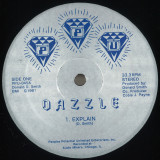
Dazzle rolled deep. Very deep. In the 1980s, it wasn't unusual for the Milwaukee-based group to show up at various Midwest night clubs in a caravan of 30-40 cars and vans. Their live following was hard won over a career that spanned 20+ years, many line up changes, and a handful of project names. Friends, family, and fans made the journey with them weekend after weekend, a testimony to both the musical prowess of the group and the tight-knit community that they emerged from.
Donald Smith, band leader, was there the whole time - joined by many of his siblings and friends - first as founder of the Ghetto Players, a early 70's nine-piece which also included siblings Michael, Ronald, and Charles. They played hard funk in the style of early Kool and the Gang, and although they sadly left no recordings, the strength of their live act managed to catch the eye of local Milwaukee R&B music entrepreneur Cobie Joe Payne. Cobie had made a couple of records locally in the early/mid 70s as a singer, including the impossibly weird and amazing rare afro-blues-funk 45 "Sweet Thing", but had never enjoyed national success. When the Ghetto Players disbanded in the early-mid 70s, Donald soon put together a new group, C on the Funk (the 'C' referring to lead vocalist and sibling Charles), under Payne's tutelage. Sister Lorrie Smith came in as the drummer, the line-up being fleshed out by brothers David and Melvin Johnson, and friend Robert Mitchell. After a few years as a strictly live attraction, they drove to Chicago and produced a single, "In the Disco" / "A Place" for Payne's small record label Sweet Thang Records in 1980. Lacking the financial backing needed to supply the local R&B disk jockey's "promotional fees" , this single sadly languished in obscurity, gathering dust inside the local tavern jukeboxes and manilla promo envelopes that comprised Payne's DIY distribution network.
C on the Funk were traveling the Mid West extensively at this point, and making some important friends on the road. Ike Wiley Jr. of the Dazz Band/Kinsman Dazz took particular interest and the band was re-christened Dazzle, partially as a tie-in with Dazz, partially to embrace the new sounds that would distinguish the 70s disco scene from what record collectors and DJs would now refer to as the "Boogie" era. There no doubt was a stigma attached to the word "Disco" as the eighties began, and as we see in this collection C On the Funk's "In the Disco" is remixed and transformed into the psychedelic synth instrumental of Dazzle's "Disco's Out", a title which embodies both the next-step approach Smith and company were pushing for, and humorously comments on the state of black dance music in the early 1980s. The Dazzle recording, done in Chicago in 1982, updated the sound and featured an expanded line up, most notably a second synth player (Charles Washington), and a percussionist/second lead vocalist (Greg McDonald). The added synth textures and deep percussive grooves give the Dazzle recordings an elegant late night vibe that resonate just as well in a good pair of headphones as they do on the dance floor. The trance inducing cough syrup-warble of "Explain" may best exemplify this here. Sadly, a pressing flaw in the 12" halted production and promotion, and the EP and the songs within were lost to the ages. The group, having done a much better line in the live music business, followed that path instead all the way to the early 90s. --bio provided by andy noble
Daniel Land's new album, "Out of Season", is his most ambitious record to date, a series of reflections on history, memory, and post-Brexit Britain, which was inspired by his return to the landscapes of his youth – the rugged, underpopulated west coast of Somerset. The album was written and partly recorded in Daniel’s studio in a static caravan, overlooking the coast, during the period when the UK was tearing itself apart over its relationship to Europe. "I didn't set out to write about Brexit", Daniel says, "I have a kind of horror of political music. But I couldn’t escape the atmosphere of the time – this strange, distorted version of ‘Englishness’ in the national psyche. I’ve always been interested in memory and nostalgia; Brexit illustrates the dangers of taking seductive, possibly false memories at face value”. Songs like “White Chalk”, “Island of Ghosts”, and the album’s title track, represent a series of attempts to reclaim an older, more peculiar idea of England which, Daniel says has been “Lost in the nationalist mythmaking of the past decades” – the island of misfits and outsiders exemplified by the works of Derek Jarman, for example, whom Daniel was rediscovering while working on the album. “I must have read 'Modern Nature' ten times over the years”, Daniel says. “What I love about Jarman is that he had a deep, abiding love for England, but it was a very complicated, critical and a very queer kind of love. That was very much my mood, going into the making of this album”. Like Jarman’s work, "Out of Season" probes national identity whilst also displaying resolutely queer themes throughout. Daniel’s voice – once described by The Guardian as "The spawn of Elizabeth Fraser and Anthony Hegarty” – is less heavily reverbed than before, bringing to the fore his often-confessional lyrics, inspired by the frankness of modern queer poets like Andrew McMillan, Seán Hewitt, and Ocean Vuong. A lyrical highlight is the gorgeous “Southern Soul”, a deceptively straightforward recounting of a decades-old hookup with a closeted guy from his hometown which, Daniel says, “Serves as a metaphor for everything I’m talking about in the album”. And in keeping with the album’s nods to the heroes of gay literature, Daniel’s self-styling of the album as a “Dream Pop Album on National Themes” deliberately references the full title of Tony Kushner’s era-defining play "Angels in America", whose central character is namechecked in the hook-laden “Lemon Boy” – a song which must surely stand as Daniel’s most deliciously pop moment yet. Lauded by Mark Radcliffe, Guy Garvey, Tom Robinson, and many others, Daniel Land makes music that, in the words of BBC Radio 1, "You can't help but think the late John Peel would have loved".
Erupt Records has suffered its first Unrest Hazard. After keeping the lid on a beast this explosive, what did you think was going to happen?
This new series of '4 on 1' EPs from the mighty label, will showcase several of the best producers from the UK (sometimes even beyond!) breakbeat hardcore/jungle scene on 1 record, be they old or new.
The first track from Schoco (Omni Music) is "I Need". Let yourself go to wispy, dream-state synthlines over ferocious breakz.
Track 2 is a bouncy piano anthem for anybody who likes hearing the words "1993" and "happy" in the same sentence. This one is brought to you by After The Zenith. Usually resident cover artist for Erupt, this time he grabs the steering wheel and gears up to present you a bit of his own 'ardcore.
Next up is some brutality from Tactical Aspect. Need no more be said than these lads are one of Australia's finest purveyors of hardcore junglism, with a portfolio including works for Reinforced Records. But, with a recent move back to Yorkshire, and following an initiation into the West Yorkshire Jungle Collective, it only made sense for TA to deliver some unrelenting '93 style breakbeat hardcore brutality to celebrate.
The final track "When Did We Forget" is a get together from the lads at Kool FM, Code and Subbreak, with D-Region. Any time you see these names together, it commands serious respect. This is one for anybody who likes those hazy breakbeat hardcore tracks that tread a fine line between hard and euphoric.
What are you waiting for?
Erupt Records was established in 2016 to cover tougher, faster styles of electronic dance music, with a view of openness towards introducing contemporary influences alongside the familiar; Hardcore that reflects today, not yesterday. The objective? Push the boundaries, keep the drums raw, compromise for noone.