Pixl has been sending me so much of the music that he's been doing solo as well as his collabs with Duburban, Ark X & Peeb. I've been playing quite a few of them on my shows on NTS Radio & it only made sense to eventually put together a full release of them, so here is Old Citrus by him & Peeb, representing the atmospheric style of jungle that they are both excellent at.
Big up to both of them on this release & to Equinox for his fantastic remix of Old Citrus.
He runs a label called Western Lore which I've featured on previously, with 2 different remixes I did of Plastic Face by Response & Pliskin, as well as a track featured on the first Blunted Breaks compilation. It only made sense to eventually work on a joint label project as his label is a key figure in the current wave of jungle music, plus I hadn't put any music from him on Future Retro London yet so now I can finally tick him off the list!
Big up to Dead Man's Chest for his work on the collaborations & for his involvement in making this release a reality.
Buscar:west
- A1: Swingtime
- A2: Pokhara + C H. Revisited
- A3: A Wave
- A4: The Cleaner
- A5: Wah Bass
- A6: The Attic
- B1: Razorblades
- B2: White And Whiter Still!
- B3: Wapping
- B4: Life In Shadows
- B5: The English Style Of Rowing
- C1: Whichever Way You Are Going, You Are Going Wrong
- C2: Lovelorn
- C3: Ruby Ruby
- C4: Rosehips
- C5: Tibetantrains
- C6: It's Love (Reworked)
- D1: Baa Lamb
- D2: Twinkle Toes
- D3: Dobbins Lost His Coconuts (Revisited)
- D4: A Western Sunset
- D5: The Very End Of The Attic
Black Vinyl[35,92 €]
Two Lisbon mainstays from contiguous generations join forces as Scam Dust for the new Paraiso record: Tiago, Lux Fragil resident, world-renowned DJ's DJ and all-round music whizz plus Shcuro, Paraiso's co-founder, scene documenter and impeccable selector & producer. Funnily enough they also live in contiguous beach towns in the outskirts of the capital, Parede and Carcavelos. That's where they zig-zagged amid home-studios and, four hands in various machines, concocted this refreshingly to-the-bone record. Like a non-local entanglement between Lisbon, Sheffield, The Hague and somewhere in the American Midwest, 'Gastric Pulse' EP opens with a saturated, modulated acid line over a tight, industrial-tinged techno beat, peppered with sonic dirt of the highest order. It sounds like music projects like Downwards and Mathematics would put out. 'Enzyme Breaks' follows suit with a comparably raw spirit, adding some mysterious atmospheric scintillation and drum variations. A certain recluse techno (is that a thing?) comes to mind (and heart), Unit Moebius style. Toms abound in 'Pepsin Drive' - always a promising sign in our book - and the playfulness continues in the cheeky bassline and the intricate clap work. Soulful stabs give the tune extra magic via the mantra-like structuring power of repetition. The final track in the record comes from Pacific North-West transplant Doc Sleep and her collaborator Elias FS step in for remix responsibilities and flip the B1 into a hypnotic, dubby - and yes, jazzy - piece complete with a dive into glitchy, sonic sculpture territories towards the end of the arrangement. Quite the brilliant take. Music still counts (and always will), after all is said and done - and nothing like two hard-working music-makers to remind us of that.
- A1: Ros Serey Sothea - Jam 10 Kai Thiet (Wait 10 More Months)
- A2: Yol Aularong - Yuvajon Kouge Jet (Broken Hearted Man)
- A3: Pan Ron - Why Follow Me Wav
- A4: Tet Somnang & Meas Samon - Khnyom Jah Karake
- A5: Houy Meas & Dara Chom Chan - Nek Na Min Rom (Who Isn't Dancing)
- A6: Choun Malai - Jomreang Oun Chreang
- B1: Sinn Sisamouth - Navy A Go Go
- B2: Liev Tuk - Rom Sue Sue (Dance Soul Soul)
- B3: Thra Kha Band - Do You No Wrong Again
- B4: Yol Aularong & Liev Tuk - Sou Slarp Kroam Kombut Srey (Rather Die Under The Woman's Sword)
- B5: Eng Nary - I Wonder. B6- Baksey Cham Krong + Mol Kamach De Quoi Pleures - Tu
Repress!
Before the Khmer Rouge took power in 1975, unleashing a horrifying genocide, Cambodia had one of the most vibrant and exciting music scenes in Asia. With a mixture of traditional Khmer music and a myriad of western genres (from French and latin music, to rock-and-roll , rhythm-and-blues, surf, psychedelia, soul and many more) the few pre 75 Cambodian recordings that survived -most of them were destroyed- are enough to make anyone with a taste for good music shocked by the amazing quality of the sounds created during those golden years. Gathered in this amazing album are some of the most talented and unique musicians from that amazing era with an explosive collection of tracks sure to blow the mind of the listener. A celebration of some of the best music ever made.
Repressed!!
Peggy Gou is proud to announce the launch of her own independent record label, Gudu Records. The label's first release will be the Moment EP - a two-track 12' featuring the tracks 'Starry Night' and 'Han Pan'.
'Moment' sees Gou continue to explore the charismatic facets of her musical and personal identity, drawing on her Korean heritage and language and her love for house & disco's Eighties heritage, with particular nods to the output of labels such as Prelude and West End Records in the decade's nascent years.
Gou's own singing voice, known to so many from last year's 'Once' EP, returns here to confidently guide the rhythm on 'Starry Night'. Mixing both Korean and English vocals over a tumbling cascade of percussion and piano house keys, the track builds to incorporate layers of instrumental samples and subtle acid lines. Romantic, anthemic and timeless in its feel, it reaffirms Gou's skill as a songwriter with appeal that resonates beyond crowded dancefloors, not to mention language barriers.
'Han Pan' follows as an instantly rhythmic affair that draws energy from a memorable and delicately tuned pan-drum. Alongside some expert and understated arrangement, as well as another, contrasting vocal performance, 'Han Pan' transmits a different but equally powerful energy.
It’s with great pride that we announce this amazing album on Optimo Music from Portland-based duo Natural Magic. It was the final vinyl release that Keith McIvor aka JD Twitch put into production before his untimely departure in late September this year.
Having been a long time lover of everything krautrock, space rock, experimental and psychedelic it seems more than fitting that he leaves us this LP as his parting gift; because this sublime album is all these things wrapped up into one and much more.
The album’s opening track “Galaxy Builder”, with its driving tempo, monolithic bass and screaming guitars might give the impression we’re about to hear a Neu for the 21st Century, but no, by the 2nd track we’re already on the first of several wild detours into uncharted territories: part shoe gaze, part ethereal, part psychedelia it’s a unique piece of beautiful euphoria from start to finish. By the time we reach the end of the A-side’s closing track “Distant Bells” the whole place is in tears after hearing possibly one of the most poignant pieces of electronic music of the entire year.
The B-side takes us even deeper into this trip through the duo’s homeland in the Pacific Northwest opening with “Skyward Eye”. If the Orb had ever teamed up with Slowdive and gotten Andrew Weatherall on production this could be it. “Get It Right” is a fuzz-filled epic with heavy dub leanings and meanings...it soars high up into the beyond and prepares us for “Ride”; an unashamed space voyage in the true sense…cosmic guitars, laden with FX; before returning gently down to the rolling green hills of Earth with the closing track “Chugsby’s Theme”. Whoever Chugsby is, his vibe is organic, deeply grounded and beautiful.
In the duo’s own words:
“Natural Magic II is a west coast road trip soundtrack for the fading summer. Taking inspiration from the majesty and myths of their home in the Pacific Northwest, the seven track album is culled from the late night, dimly lit, live sessions of Mike McKinnon on keys/drums and Matthew Quiet on bass. Overdubs of guitar, synths and percussion followed. All this from the same space they throw their legendary Limited Edition parties - all-night free experimentation celebrations in their own right. The album art work is handmade flower pigments, opium poppy pollen ink and wood-scrap charcoal by their friend and collaborator Pith Cocomici. Roll the widows down, tilt the seat back and turn it up. Gas, grass or black mass... there's magic in the hills.
The Drowning In Your Love EP features longtime collaborator and magnetic vocalist Shaun J. Wright (Hercules & Love Affair / Classic / Midnight Magic), whose heartfelt delivery and lyrical poise ensure the title track sticks in your head long after the needle has left the record. The trio have created a timeless club track evoking the spirit of the tripped-out sounds of golden-era west coast house — dubby FX, a hint of breaks, soulful vocals, and that unmistakable Soul Clap swing — all put together with a flair that will move any dancefloor worth it’s salt.
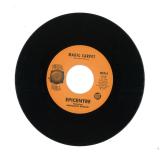
Epicentre was an R&B/funk group formed in Seattle, Washington by keyboardist Ric Ulsky. The band developed a loyal following, playing the extensive NW club, concert and dance venues throughout the mid-to-late 1970s. Their sound was a blend of melodic R&B and powerhouse funk that dependably filled music venues throughout the Western US. Bernadette Bascom was the lead vocalist, who captivated audiences with her powerful yet velvet-smooth voice and commanding, magnetic stage presence.
In 1978, Epicentre worked with Seattle producer Don McKinney to record their music in Seattle's now legendary Kaye-Smith studios. The result was seven strong, fully -produced R&B songs, with occasional horn and string orchestrations tastefully added to the final versions.
Their music quite literally sat on a shelf for decades until McKinney decided that all the hard work and talent should no longer remain undiscovered and it needed to find its audience. He restored and digitized his copies of the master tapes and looked for an opportunity. A chance call to the former leader of the group, Kell Houston, led to a serendipitous introduction to UK boutique/funk/R&B label founder Russell Paine. The result was an agreement to release their music, starting with two songs, "When You Were In Love With Me", and "Magic Carpet."
Footnotes: Lead singer Bernadette Bascom became a protegé of Stevie Wonder, and was the first artist to be signed to his label Black Bull , starting a period of collaboration between the two. Bermadette is the daughter of Reverend Dr. Marion C. Bascomb (1925-2012), one of Baltimore's major civil rights voices and pastor emeritus of Baltimore's Douglas Memorial Community Church. Ric Ulsky eventually left the group to play keyboards and tour extensively with The Association. You can also find Epicentre's music on the compilation album "Seattle Funk, Modern Soul & Boogie: Volume II 1972-1987." In addition to Bernadette, the musicians on the 1978 sessions are Kell Houston, keyboards, Michael Cox, bass, John Carmondy, guitar, and Ricky Lynn Johnson, drums and vocals. While their recorded material is primarily original, Stacy Christensen from Seattle's Gabriel contributed two of his compositions. Label credits: Epicentre featuring Bernadette Bascom. Recorded at Kaye-Smith Studios, Seattle, Washington, August 1978"When You Were in Love With Me" and "Magic Carpet" written by Bernadette Bascom. Produced for Epicentre by Don McKinney
- A1: Doctor For My Heart (12" Version)
- A2: Wings Of Love (12" Version)
- A3: Colder Than Ice (12" Version)
- A4: Lost In Paradise (Extended Version)
- A5: Red For Love (12" Version)
- B1: (Find My) Tracks In The Snow (12" Version)
- B2: In The Rain Again (Extended Version)
- B3: Break Away (12" Version)
- B4: Stranger In My Life (Sharm West Power Mix)
- B5: California Train (12" Version)
DJ Support: Sasha, Marco Faraone, Robin M, Just Her, FKA Mash, Paul Van Dyk, Adriatique and CamelPhat
Bedouin joins forces with vocalist Marieme for their latest release ‘Reason’, available now on the duo’s Human By Default label. The track marks part of the imprint’s fifth anniversary celebrations.
‘Reason’ blends Bedouin’s hypnotic grooves and emotive melodies with Marieme’s soulful, evocative voice. Her lyrics explore themes of identity, freedom, and self-perception, resulting in a collaboration that balances movement with emotional depth.
Comprised of Tamer Malki and Rami Abousabe, Bedouin has spent over a decade developing a genre-blending sound rooted in their Middle Eastern heritage and Western upbringing. Their music has appeared on Crosstown Rebels, Big Beat, and more, while their Ibiza residency SAGA—now at Chinios Ibiza—has become a staple of the island since 2017. The duo has also performed at Coachella, Tomorrowland, Kappa Futur, Burning Man, Ushuaïa, and Hï Ibiza.
Marieme, born in Mauritania and raised between Senegal and the US, brings a distinctive storytelling approach through her recent singles ‘Harmony’, ‘Tell Me’, and ‘Havana Nights’. Her work promotes self-love and liberation, expressed with a powerful vocal presence.
- A1: Seki Taneko - Akemi&Apos;S Poems
- A2: Kusunoki Shigeo - Longing For The Shadow
- A3: Yayoi Tanaka - Sad Gull
- A4: Akasaka Koume - Please Forgive Me
- A5: Ichimaru - If You Go Down The Tenryū
- A6: Mitsuko Nemoto - Cosmos Elegy
- A7: Ichirō Fujiyama - Tokyo Daughter
- A8: Chiyako Sato - Skyscraper
- A9: Yayoi Tanaka - The Dream Is Short Lived
- B1: Ichirō Fujiyama &Amp; Masao Koga - Is Sake Tears Or Sighs?
- B2: Otomaru - Yoneyama Sanri
- B3: Hamako Watanabe - I Don&Apos;T Forget
- B4: Akasaka Koume - Asama Smoke
- B5: Yoshio Tabata - Farewell Ship
- B6: Ichirō Fujiyama - Farewell Youth
- B7: Kouta Katsutaro - Stand Up Tomorrow
DEATH043[10,04 €]
Emerging during the early stages of the recording industry in Japan, the ryūkōka style adopted western classical, blues & jazz elements into traditional and classical Japanese music.
This collection of 1920s & 30s ryūkōka recordings follows on from the Kouta Katsutaro tape we put out a couple of years back, and further captures the hauntingly unique sound of a cultural merging that was starting to reflect itself via popular song, ahead of the widespread influence of western pop music during post-war US occupation.
"Death Is Not The End are on a mission to expand the musical archive, with compilations of everything from Jamaican doo wop to pirate radio idents and adverts weaving new threads into the history of music. Longing For The Shadow: Ryūkōka Recordings, 1921-1939 goes back to the beginnings of the recording industry in Japan, and a style merging traditional Japanese forms with western pop and classical. Swooning orchestrations and prominent vocals capture some of the melodrama and bombast found in US and European music of the time, but beds of plucked and strummed instruments give an ordered elegance, tying it firmly to Hogaku tradition. Not much has been written about Ryūkōka, and a 2017 book by Hiromu Nagahara gives some clue as to why, arguing that although popular with the public, it was dismissed by critics both for its adoption of western sounds and its dwelling on Japanese traditional styles. Close to a century later, those are some of the qualities that make this compilation so fascinating." - The Quietus
- A1: Intro
- A2: Dogg Pound Gangstaz
- A3: Respect
- A4: New York, New York
- A5: Smooth
- B1: Cyco-Lic-No
- B2: Ridin', Slipin' And Slidin
- B3: Big Pimpin 2
- B4: Let's Play House Ft Nate Dogg
- C1: I Don't Like To Dream About Gettin' Paid
- C2: Do What I Feel
- C3: If We All
- C4: Some Bomb Azz
- D1: A Doggz Day Afternoon
- D2: Reality
- D3: One By One
- D4: Sooo Much Style
Tha Dogg Pound (Daz Dillinger & Kurupt) sind Mitbegründer der West Coast G-Funk-/Gangsta-Rap-Szene. Ihr markanter Rap- und Produktionsstil prägten einen Teil des Death-Row-Sounds der 1990er Jahre. "Dogg Food" ist ihr 1995er Debüt-Studioalbum auf Death Row und ein wichtiger Bestandteil des Labelrosters Mitte der 90er Jahre. Tha Dogg waren stark connected zu Snoop, Nate Dogg, The Lady of Rage und der gesamten Death Row Family-Ästhetik.
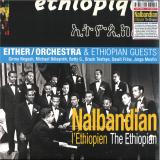
The Éthiopiques series returns! Essential archive recordings from an extremely fruitful period in Ethiopian music.
Before “Swinging Addis” took over the world, there was Moussié Nerses Nalbandian — the Armenian-born composer who shaped modern Ethiopian music. Mentor, arranger, and pioneer, he laid the foundations of Ethio-jazz.
This Éthiopiques volume revives his forgotten legacy, recorded live by Either/ Orchestra First issue ever with new exclusive photos and in depth liner 8-page insert.
“Ethiopian jazzmen are the best musicians that we have seen so far in Africa.
They really are promising handlers of jazz instruments.”
Wilbur De Paris
(1959, after a concert in Addis Ababa)
አዲስ፡ዘመን። *Addis zèmèn* **A new era.**
The time is the mid-1950s and early 1960s, just before "Swinging Addis" bloomed – or rather boomed – onto the scene. Brass instruments are still dominant, but the advent of the electric guitar, and the very first electronic organs, are just around the corner. Rock’n'Roll, R’n’B, Soul and the Twist have not yet barged their way in. Addis Ababa is steeped in the big band atmosphere of the post-war era, with Glenn Miller's *In the* *Mood* as its world-wide theme song, neck and neck with the Latin craze that was in vogue at the same period. Life has become enjoyable once again, with the return of peace after the terrible Italian Fascist invasion of Ethiopia (1935-1941). The redeployment of modern music is part and parcel of the postwar reconstruction. *Addis zèmèn* – a new era – is the watchword of the postwar period, just as it was all across war-torn Europe.
The generation who were the young parents of baby boomers** were the first to enjoy this musical renaissance, before the baby boomers themselves took over and forever super-charged the soundtrack of the final days of imperial reign. Music is Ethiopia's most popular art form, and very often serves as the best barometer for the upsurge of energy that is critical for reconstruction. Whether it be jazz in Saint-Germain-des-Prés or the *zazous* who revolutionised both jazz and French *chanson* after the *Libération*, be it Madrid's post-Franco Movida, or Dada, the Surrealists and *les années folles* that followed World War I, the periods just after mourning and hardship always give rise to brighter and more tuneful tomorrows. Addis Ababa, as the country's capital, and the epicentre of change, was no exception to this vital rule.
**Two generations of Nalbandian musicians**
Nersès Nalbandian belonged to a family of Armenian exiles, who had moved to Ethiopia in the mid-1920s. The uncle Kevork arrived along with the fabled "*Arba Lidjotch*", the** "*40 Kids*", young Armenian orphans and musicians that the Ras Tafari had recruited when he visited Jerusalem in 1924, intending to turn their brass band into the official imperial band. If Kevork Nalbandian was the one who first opened the way of modernism, pushing innovation so far as to invent musical theatre, it was his nephew Nersès who would go on to become, from the 1940s and until his death in 1977, a pivotal figure of modern Ethiopian music and of the heights it. Going all the way back to the 1950s. Nothing less. And it is Nersès who is largely to thank for the brassy colours that so greatly contributed to the international renown of Ethiopian groove. While the younger generations today venture timidly into the genealogy of their country's modern music, often losing their way amidst a distinctly xenophobic historiographical complacency, many survivors of the imperial period are still around to bear witness and pay tribute to the essential role that "Moussié Nersès" played in the rise of Abyssinia's musical modernity.
Given the year of his birth (15 March 1915), no one knows for sure if Nersès Nalbandian was born in Aintab, today Gaziantep (Turkiye/former Ottoman Empire) or on the other side of the border in Alep, Syria... What is certain is that his family, like the entire Armenian community, was amongst the victims of the genocide perpetrated by the Turks. Alep, the place of safety – today in ruins.
Before Nersès then, there was uncle Kevork (1887-1963). For a quarter of a century, he was a whirlwind of activity in music teaching and theatrical innovation. *Guèbrè Mariam le Gondaré* (የጎንደሬ ገብረ ማርያም አጥቶ ማግኘት, 1926 EC=1934) is his most famous creation. This play included "ten Ethiopian songs" — a totally innovative approach. According to his autobiographical notes, preserved by the Nalbandian family, Kevork indicates that he composed some 50 such pieces over the course of his career. This shows just how much he understood, very early on, the critical importance of song as Ethiopia's crowning artistic form. Indeed, for Ethiopian listeners, the most important thing is the lyrics, with all their multifarious mischief, far more than a strong melody, sophisticated arrangements or even an exceptional voice. (This is also why Ethiopians by and large, and beginning with the artists and producers themselves, believed for a long time — and wrongly — that their music could not possibly be exported, and could never win over audiences abroad, who did not speak the country's languages).
Last but not least, one of Kevork's major contributions remains composing Ethiopia's first national anthem – with lyrics by Yoftahé Negussié.
Nersès Nalbandian moved to Ethiopia at the end of the 1930s, at the behest of his ground-breaking uncle. Proficient in many instruments (pretty much everything but the drums), conductor, choir director, composer, arranger, adapter, creator, piano tuner, purveyor of rented pianos,... he was above all an energetic and influential teacher. From 1946 onwards, thanks to Kevork's connexion, Nersès was appointed musical director of the Addis Ababa Municipality Band. In just a few years, Nersès transformed it into the first truly modern ensemble, thanks to the quality of his teaching, his choice of repertoire, and the sophistication of his arrangements. It was this group that would go on to become the orchestra of the Haile Selassie Theatre shortly after its inauguration in 1955, which was a major celebration of the Emperor's jubilee, marking the 25th anniversary of his on-again-off-again reign.
At some point or other in his long career, Nersès Nalbandian had a hand in the creation of just about every institutional band (Municipality Band, Police Orchestra, Imperial Bodyguard Band, Army Band, Yared Music School…), but it was with the Haile Selassie Theatre – today the National Theatre – that his abilities were most on display, up until his death in 1977. To this must be added the development of choral singing in Ethiopia, hitherto unknown, and a sort of secret garden dedicated to the memory of Armenian sacred music, and brought together in two thick, unpublished volumes. Shortly before his death (November 13, 1977), he was appointed to lead the impressive Ethiopian delegation at Festac in Lagos, Nigeria (January-February 1977).
His status as a stateless foreigner regularly excluded him from the most senior positions, in spite of the respect he commanded (and commands to this day) from the musicians of his era. Naturally gifted and largely self-taught, Nerses was tirelessly curious about new musical developments, drawing inspiration from the very first imported records, and especially from listening intensely to the musical programmes broadcast over short-wave radio – BBC *First*. A prolific composer and arranger, he was constantly mindful of formalising and integrating Ethiopian parameters (specific “musical modes”, pentatonic scale, and the dominance of ternary rhythms) into his “modernisation” of the musical culture, rather than trying to over-westernise it. It even seems very probable that *Moussié* Nerses made a decisive contribution to the development of tighter music-teaching methods, in order to revitalise musical education during this period of prodigious cultural ferment. Flying in the face of all the historiographical and musicological evidence, it is taken as sacrosanct dogma that the four musical modes or chords officially recognised today, the *qǝñǝt* or *qiñit* (ቅኝት), are every bit as millennial as Ethiopia itself. It would appear however that some streamlining of these chords actually took place in around 1960. It was only from this time onward that music teaching was structured around these four fundamental musical modes and chords: *Ambassel*, *Bati*, *Tezeta* and *Antchi Hoyé*. A historical and musical “details” that is, apparently, difficult to swallow, especially if that should honour a *foreigner*. Modern Ethiopian music has Nersès to thank for many of its standards and, to this day, it is not unusual for the National Radio to broadcast thunderous oldies that bear unmistakable traces of his outrageously groovy touch.
- A1: Matchgame Tour Guide 0 49
- A2: Motivators (Remix) Feat A Tribe Called Quest 2 41
- A3: Word Play (Remix) Feat A Tribe Called Quest 3 01
- A4: The Jam (Remix) Feat A Tribe Called Quest 2 42
- A5: Mind Power (Remix) Feat A Tribe Called Quest 4 10
- A6: Rock-N-Roll (Remix) 3 07
- A7: Willy Overnite (Broke Niggaz) (Remix) Feat Lo-Income 4 43
- A8: Weekendz (Remix) 3 12
- B1: Niggaz Get Knocked 3 13
- B2: Charge! 2 39
- B3: Electric Feat Kanye West 3 38
- B4: The Bidding War (Freestyle) 2 10
- B5: Itch? 1 17
- 6: Stick Up Feat Q-Tip
- B7: Get Money Feat Mobb Deep
Polymania is a collaboration between Earl Grey and Aroma Nice, both of whom hail from the North West of the UK and are known for their genre-pushing productions in and around the overlapping modern Drum & Bass, Jungle and Drumfunk spheres. This record is a euphoric ravey jungle affair with strong acidic inflections, extrovert and dancefloor-focussed, where effortlessly slick percussive flair shines and rolling acid lines squirt out through the seams - the result of two long-time friends with heaps of production experience having a lot of fun.
A-side opener 'Farce of Nature' sets the tone with high energy stabs and a big grooving bassline, rooted in 90s jungle techno but rendered in full high definition, while 'Happy Slaps' continues the theme with crisp drums dancing over an undulating resonant acid line. 'Tank Ammo' deftly ramps up the euphoria with a spiralling melody rising towards a lethal switch-up midway, using filtered choppage to burst the tension with extreme precision. Bouncy acid breaks bubbler 'Give U Up' closes the EP slowing the tempo a touch and dialling up the funk - a refreshing palate cleanser laced with rich braindance melodies and an infectious vocal hook.
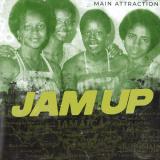
Emerging from the University of the West Indies (UWI) in Jamaica during the late 1970s, Main Attraction was a group of talented singers whose music captured the social and political energy of their time. With a sound that blended reggae and soulful ballads, their songs were both a reflection and a response to the challenges of the era.
The group originally featured Sonia Copeland, a gifted writer, arranger, and back-up singer, alongside Sharon Jones, whose velvet voice led many of their reggae tracks. They were joined by Allison Smith, Marjorie Smith, and Shahiba Ali, forming the group’s first lineup. As time passed, Michelle Thompson and Lileth O’Connor joined, further enriching the group’s dynamic harmony.
Main Attraction’s musical journey began with their debut recording, a cover of Once Upon a Time, produced by David Haughton under the management of Clayton Downie. Later, with Owen Palmer as their manager and producer, the group expanded their horizons, performing in cabaret gigs with the band Mind Benders and embarking on an overseas tour that showcased their talent in New York City. While Sharon Jones led reggae tracks like Jam Up, Allison Peart and Shahiba Ali brought their soulful touch to R&B songs, creating a rich, versatile repertoire that captivated audiences.
Jam Up was the group’s first original recording, composed and arranged by Sonia Copeland. Performed as part of the Reggae Song Competition during Carnival in 1978, the song is a rallying cry for unity and progress. With powerful lyrics and a Shaka rhythm, Jam Up calls on Jamaicans to come together, strive for economic growth, and uplift the nation collectively.
Sonia’s vision was clear: that Jamaicans from all walks of life would find inspiration in the song’s message, motivating them to improve their standard of living and contribute to the country’s growth and prosperity. Decades later, the lyrics remain just as relevant — a timeless call to action for social and economic strength.
Hold this record in your hands, let the music play, and feel the enduring power of reggae music to transform, uplift, and connect.
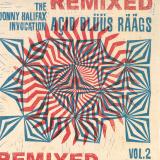
‘Açid Blüüs Räägs Vol.2’ is the latest evolution of the sound of last year’s Volume 1. The debut album was described by Joe Banks for Shindig! Magazine as; “Shivering slabs of drone blues transcendentalism…a burning junkyard of sheet metal blues… Hot stuff.” Volume 2 builds on the skronk blues guitar, sax and electronic drones of it’s predecessor, to explore cosmic free jazz, concrete exotica and dub, channelling influences of Moondog, Terry Riley, 75 Dollar Bill and Wolf Eyes. Playing like the imagined film soundtracks to a dystopian, re-wilded, post eco crash world in the style of Tarkovsky's ‘Stalker’ and ’Solaris’, Jodorowsky's surreal desert western ‘El Topo’, or the early novels of JG Ballard. This new collection sees the addition of minimal analogue drum machine loops as well as live instrumental contributions from the new players of the ever evolving Invocation band, plus some superstar guest contributors.
Featuring five brand new tracks, including the forthcoming single; ‘Cosmic Fanfare’, has already picked up BBC 6 Music support from Gideon Coe. The new album was mixed by Alex McGowan (aka Captain Future) of Space Eko Studios and features Invocation band regulars Rick Jensen of Apocalypse Jazz Unit, Skronk and Oneirologist on sax and bass clarinet, Will Emms aka Tiki Eerie on melodica, horns and claviola, plus special guest appearances from Duke Garwood on clarinet and Mikey 'Moondog' Chestnut of Snapped Ankles on bass synth. “….Acid fried kosmiche blues meets drone raag transcendentalism”. Jonny Halifax is a primitivist free blues outsider, sonic shaman of the acid fuzzed lap steel guitar, demented blower of the howling harmonica of doom. His new band project now combines avant swamp blues heaviosity with kosmic free jazz experimentalism in a fluid collective of godless raag brut improvisations - sonic visions of an hallucinatory apocalyptic near future. Inspired by Henry Flynt’s avant bluegrass experiments fusing country blues with eastern acoustic musical stylings, Spacemen 3’s contemporary sitar music, and the monolithic drone doom immersion of Sunn 0))), THE JONNY HALIFAX INVOCATION build hypnotic instrumental soundscapes using lap steel and homemade slide guitars, harmonica and alto sax. Underpinned by layers of acoustic and electronic drone instruments and fed through an arsenal of pedalboard electronics that would make Kevin Shields weep, the blues are transmogrified, unhinged, reduced and re-imagined as intoxicating, trance-inducing, feedback-drenched noise paintings. THE JONNY HALIFAX INVOCATION follows Jonny’s junkshop skronk blues one man band Honkeyfinger, and the Julian Cope endorsed gospel fuzz psychedelia of Jonny Halifax & The Howling Truth, whilst not forgetting his ambient drone metal side project; Deathenteredinerror. His musical CV also includes studio contributions to tracks by Andrew Weatherall’s Two Lone Swordsmen, UK metal behemoths Orange Goblin, Heck and Melting Hand.
Limited Algae Sea Vinyl. CocoRosie is Bianca and Sierra Casady. Sierra sings and plays guitar and flute. Bianca sings and does percussion (rattles things, makes things squeak, shakes a gold chain belt). They write all the music together. La Maison de Mon Réve was written and recorded in a tiny apartment in the 18th district of Paris during the spring of 2003. La Maison de Mon Réve was released by Touch and Go Records in March 2004. La Maison de Mon Réve is deceptively innocent; enchanting and sweet yet eerie and twisted. An acoustic guitar paints melody through a haze of cryptic sounds and perversely angelic voices. A broken radio transmits a music box orchestra. Tiny field mice sing opera. This 20th anniversary edition of CocoRosie's debut album La Maison de Mon Réve is pressed on transparent algae sea vinyl and limited to 1500 copies worldwide. Packaged in a gatefold jacket with neverbefore-seen photos, the vinyl includes the full album along with a previously unreleased bonus track, "Hairnet Paradise."
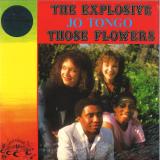
Following the acclaimed reissue of Sa Discossa earlier this year, Jo Tongo's third solo album Those Flowers returns to the spotlight.
Originally released just a year and a half after Sa Discossa, this 1982 gem came out on the small Context label and, in Tongo's own words, the two records are "like twins." Recorded with many of the same musicians, Those Flowers continues the vibrant fusion of disco-funk and reggae - this time dedicating one side to each, leaning slightly more into his Western influences.
But there's more than groove beneath the surface. Tracks like "People Need Peace" and "We Human Beings" channel his enduring themes of resistance, identity, and freedom. The synthesizer at the beginning of the song mimics the ominous drone of warplanes, and lyrics speak directly to global struggles - reminders that his music is both deeply personal and powerfully political. "I paid for these ideals in my career," Tongo reflects, alluding to the personal costs of his outspoken stance against colonialism and injustice.
Still, Those Flowers carries joy at its heart. Songs like "Ain't No Man Like A Real Friend" celebrate trust and loyalty, while the title track offers a tender ode to love and kindness - "picking flowers from the soul," as Tongo puts it. These songs reveal the inner world of a man who has always viewed music as a mirror of life.
This reissue marks the second installment in the African Edge series from The Outer Edge label. Fully restored and remastered, Those Flowers is now set to bloom again - another vital chapter in the legacy of Jo Tongo.